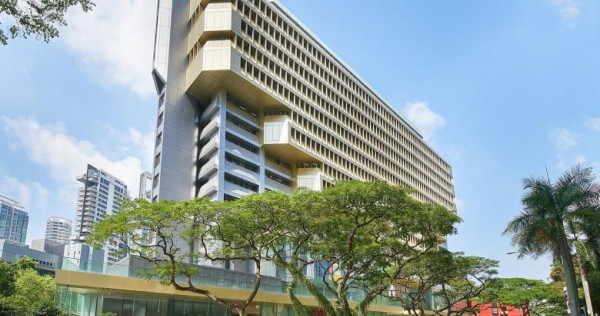
It was like buying a Lamborghini and not letting people know about it.
First, there was frenzied anticipation over who would be buying a $145 million bungalow in Cuscaden Road, part of Singapore’s affluent Orchard district, in 2016.
Then mystery, as the identity of the buyer was not revealed for a week, said ERA Realty head of research and industry veteran Nicholas Mak. “A Singapore developer would have announced it. But maybe it’s his style,” Mak said.
The buyer was Stanley Ho, the high-profile billionaire owner of glitzy casinos in Macau, who died on May 26 in Hong Kong. The mansion was sold by the late Tan Hoon Siang, great-grandson of well-known local philanthropist Tan Tock Seng, who had bought the freehold property for S$18,591 in 1949.
While the Circuit Breaker Period may have seen us stay at home for extended periods, it hasn’t been all bad for our health says Fitbit and is an indication that health and wellness remains a priority even while people have remained largely indoors.
Change in resting heart rate Jan-Apr Fitbit shared insights gleaned from anonymised and aggregated global user data and found that that the resting heart rate for all Singaporean users improved during the Circuit Breaker period from January to April 2020.
Women and younger users aged between 18-29 years of age, showed even more improvement.
The resting heart rate is the number of times your heart beats per minute when you are still and at rest. Besides tracking your level of fitness, it can also alert you of potential health issues such as illness, high-stress levels, sleep deprivation, dehydration, overtraining, and underlying medical conditions.
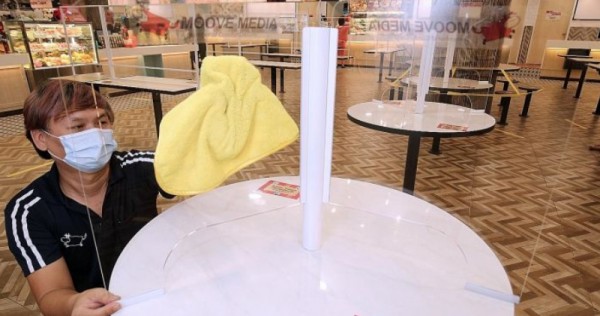
Acrylic table shields might be a regular sight at food and beverage (F&B) establishments when dining in is allowed again during phase two of the post-circuit breaker reopening.
At Thomson Plaza’s Koufu foodcourt, 3mm-thick clear acrylic sheets will be installed at 50 tables to separate diners seated across from or next to one another.
Moove Media, the advertising arm of taxi giant ComfortDelGro Corp, said yesterday that it is sponsoring a month-long trial of these acrylic shields, which are similar to the plastic V-Shields currently trialled in 400 ComfortDelGro taxis.
The acrylic partitions are affixed to aluminium holders a distance above the table surface, so that cleaners can wipe the tables without having to remove the shields each time.
TungLok Group, which has 15 brands including Dancing Crab and TungLok Signatures, is also looking at similar prototypes for its restaurants.
Mr Andrew Tjioe, chief executive of TungLok Group, said: “The screens will be an added protection on top of other safety precautions. It’s something that will help customers feel more at ease while dining in.”
Third-generation greengrocer Al Hafiz Abdul Rashid was struggling to keep his business afloat after Malaysia entered a period of partial coronavirus lockdown in March.
With shops shut and residents staying at home, sales had slowed significantly – giving him the idea of bringing his business online.
“At first, I thought why not? You don’t hear of market vendors using an app to sell their fresh produce,” said Al Hafiz, whose family has sold vegetables, traditional spices and other goods at the popular Taman Tun wet market in Kuala Lumpur for some 20 years.
After signing up to an initiative from ride-hailing app Grab designed to help market vendors in Malaysia and Indonesia sell goods online, Al Hafiz said he has received 10 times the number of orders he did before the pandemic – with as many as 40 orders placed in one particularly busy 15-minute period.
Businesses across Southeast Asia have been forced to rethink their operations and find new ways to reach out to customers as antivirus restrictions are slowly eased across the region and residents adapt to what governments are calling the “new normal”.
Covid-19 has changed the way we live our lives. For one, people are heading out less due to social distancing measures, and circuit breaker put a halt to social gatherings, especially since entertainment venues were forced to close since March.
As local coronavirus cases in Singapore decline, the nation will enter into Phase 2 of reopening, but life may not return to normal as it was pre-Covid-19. Instead, precautionary measures are likely to still be in place to ensure no spike in cases or emergence of clusters.
SINGAPORE: Christabel Sia has no qualms about walking away from clients who insist on intimidation tactics to recover their debts, even if it means forgoing a hefty commission for her agency.
One client wanted Sia’s agency, Rocket Debt Collection, to stalk and kidnap the debtor’s child to coerce the debtor into repaying the S$500,000 debt. His contract was terminated.
Another, a potential client, wanted the agency to visit the debtor specifically during the Chinese New Year reunion dinner — and offered a 50 per cent commission on a debt of almost a million dollars, instead of the typical 20 per cent.
“I said, I’m sorry, I won’t do that,” recounts Sia, the agency’s 41-year-old director and founder.
Others whom she turned down had said the agency’s plain shirts with a small company logo were “too friendly”. They wanted the shirts to state “O$P$”.
Christabel Sia speaking to CNA Insider on Zoom.
“Every agency has its ways of collecting, and every client has their preferred way of how they want you to collect. If those two factors don’t match, then unfortunately, it wouldn’t be a working relationship,” she says.
She started Rocket Debt Collection less than a year ago, after being a client of another agency and realising there was a “better way” to run a business in this industry than “trying to squeeze blood from a stone”.
It seems idealistic, but she is not alone in thinking that it is only realistic to have a heart in this job.
Especially with the COVID-19 pandemic, many debtors are unable to work or have lost their jobs, cites Winston Chin, the founder and director of KX-Unit.
Winston Chin visiting a debtor before the circuit breaker. (Photo: KX-Unit)
This means his debt collection agency, which has been around for five years, has been developing closer relationships with debtors to reach a compromise.
“If you’re not an essential worker, or if you don’t have an income, I don’t think it’s appropriate to ask you for money. Our clients also won’t want us to do that. Everyone’s taking a hit during this time,” says the 36-year-old.
“If they have income and they want to make partial payment, it’s fair. But if they don’t have income at all and want to defer until Phase One before resuming their instalment plan, that’s also fair.”
COVID-19 has changed things for debt collectors, who are still not allowed to be out and about, operating as normal, during Singapore’s first phase of reopening.
But for Rocket Debt Collection and KX-Unit, what they are certain is not going to change despite all the challenges is the role of empathy in retrieving debts.
ADAPTING TO NEW REALITIES
During the recent “circuit breaker”, KX-Unit saw more debtors defaulting on their loan repayments than the usual 10 to 20 per cent of cases.
But when debtors hang up on the agency or block its number, the inability to visit the debtor’s home or office means the important “follow-up” in the debt collection process is missing, says Chin.
These follow-ups are usually timed “close” to each other to make payment evasion harder, with “consistent and immediate follow-ups” the best way to negotiate with those who are likely to lapse on their instalments.
Still, some debtors have taken the initiative, for example, to update KX-Unit on their application for the Temporary Relief Fund before they can pay the money owed.
“We also have a woman who makes payments for her husband, who’s the debtor, because he’s hospitalised due to an ongoing medical condition,” shares John Lim, the 26-year-old operations controller of KX-Unit.
“Even during April and May, she made consistent payments, and she was prompt in contacting us.”
This relationship with debtors is something Rocket Debt Collection has tried to keep up so that the collection process can be easier once site visits can resume.
“Sometimes we joke with debtors, like we say, ‘You break my heart, you know? Why didn’t you answer my call?’” says Jason Pang, the agency’s 35-year-old operations manager.
His boss, Sia, counts her blessings that she has understanding clients who even ask if her team “needs masks or any errands run”.
On the flip side, there are difficult debtors who have used the COVID-19 situation to skirt payment, even before the circuit breaker.
For instance, in March, Lim and Chin visited a debtor’s home after suspecting her of faking three consecutive five-day Stay-Home Notices.
Previously she had tried to gain sympathy for her situation and buy time. But every time a payment deadline came, she broke her promise.
When the two debt collectors arrived at her place, what they did not expect was the debtor coughing on them to shoo them away.
“When somebody wants to chase you away, they can do it directly, like tell you to get lost. Or they can do it indirectly … like her,” says Lim.
“We maintained a firm response, as unpleasant as it was, and kept a 1.5-metre distance. We persisted until she decided to talk to us.”
She agreed on another payment date, but then came the circuit breaker and, now, the phased reopening.
For Lim, these past few months have been instructive. “Just because a debtor is contactable doesn’t mean (he or she is) cooperative. And just because they’re cooperative doesn’t mean they have the means to repay the debt,” he says.
AN APPROACH THAT WORKS
KX-Unit exercises empathy with debtors as long as they are “genuine” and “keep to their word”. And its debt collectors are encouraged to put themselves in a debtor’s shoes to settle a debt.
“Anybody who’s decent enough to be part of a legal debt collection business will feel a sense of unpleasantness when dealing with debtors,” says Lim
“But we try to (help them see) that renegotiation can work to their advantage, so they’re more motivated to pay up.”
His team’s strategy of mediation boasts a success rate of about 60 to 70 per cent, which includes full payment, fulfilled instalment plans as well as partial settlement agreed by all parties and collected in full.
Similarly, Rocket Debt Collection has a success rate of about 70 to 80 per cent, comprising debtors who have made full payment and those who are on instalment plans.
Those figures are partly due to certain characteristics both agencies look for in their debt collectors.
KX-Unit enforces strict rules on three V’s — no vulgarities, no vandalism and no violence. Any such breach on the ground results in termination, while speaking vulgarities in the office leads to a S$10 penalty.
“The older generation might have had bad experiences with debt collectors in the past and formed the impression that they’re from secret societies. But we’re moving into a new era,” says Lim.
In this era of professionalism, someone like Pang, who sports full sleeve tattoos on both arms, disarms debtors with his gentle demeanour and street smarts, according to Sia.
His “common sense” enables him to discern whether a debtor is trying to pull a fast one or truly has difficulty repaying the debt.
“It doesn’t mean that the more tattoos you have or the bigger (your) size … (the) better (the) results. I don’t deliberately employ big guys because they’re already intimidating,” says Sia, who fired a previous collector for his temper.
“If you push a debtor too hard, they can choose to disappear or not to pay, which is what we don’t want. We’d rather work out a realistic payment plan that they can commit to.”
Occasionally, even debtors’ neighbours help out upon realising that Pang and the licensed debt collectors he manages are non-threatening.
Neighbours once tipped them off about a debtor’s son who had just got married and how many guests attended the wedding banquet. This gave Pang’s team a better indication of the debtor’s financial status.
“(Another debtor’s neighbour) advised that I should come back at 9pm because (this debtor) would return home then,” recalls Pang.
Rocket Debt Collection could earn more money, admits Sia, if she were not so resolute that her debt collectors “stick to ethics” instead of threatening debtors with brute force.
But she would “rather earn less than not be able to sleep at night”.
So her agency’s fees depend on various other factors, such as the age of the debt and how much information the client can provide. Old debts might take longer to recover, while scant information means spending money researching a debtor.
Commissions can dip to as low as eight per cent if the debt collected is exorbitant, say, a couple of million dollars.
DOUBLING DOWN ON DECENCY
Not only is Sia quick to debunk the stereotype of debt collectors as bullies, she also describes how the boot is on the other foot sometimes.
For example, she has been harassed by debtors who do not want to pay up, so much so that she moved house to protect her family.
“I also see the amount of vulgarities and abuse that get screamed in my team’s faces through the pinhole cameras that they wear,” she says.
“Much of the verbal abuse comes from the upper class, (as if) they think we’re beneath them and don’t have the right to breathe the same air, when they’re the ones who owe money.”
These debtors do not deny owing money, she adds, yet “they’re the ones calling the police” and sending her staff on “another trip to the police station”.
“There are some who accuse us of destroying their property, like breaking their things, but we’re always able to show that we haven’t done anything wrong through our pinhole camera.”
The more enraged debtors get, says Pang, the more civil he gets. He believes they would calm down if they feel that their behaviour is “too much”.
If anything, COVID-19 has made it more apparent to both agencies that staying on the right side of the law beats resorting to underhand or strong-arm tactics like spray-painting a debtor’s walls.
While unscrupulous competitors might secretly begin operating now, Chin from KX-Unit shows his clients an email from Enterprise Singapore to clarify that debt collection services are not yet permitted to resume.
“Whether you want to choose another agency to (help you) during this COVID period … is your own choice,” he says.
Although the pandemic and economic fallout are showing up “a lot of lines that haven’t been defined” for the debt collection industry, Lim is confident that his team will “continue to look for debtors” to repay their debt going forward.
“Even if they can get away once, it might be because there are other cases. But this is for a short period. Eventually, we’ll come back for them. We’ll still talk about renegotiation,” he says.
Meanwhile, with productivity taking a hit from face-to-face interaction grinding to a halt, the team at Rocket Debt Collection are giving vent to their feelings during their weekly online meetings. They are “frustrated and angry”, says Sia.
They have also offered to take a 50 per cent pay cut, since there has not been much revenue in the past two months and probably not much change during Phase One.
But Sia refused — in the same way she does not kowtow to some requests from clients nor budge on her belief that showing a little empathy for debtors goes a long way.
She is not losing any sleep over her approach either. Since the start of Phase One on June 2, Rocket Debt Collection has closed six cases, with debtors making full payments voluntarily, including those who defaulted before the circuit breaker.
SINGAPORE: The glass doors open up into a spacious lobby where a friendly salesperson waits to give you a tour around the showroom.
As he takes you through the colourful displays, he makes sure to stop at every product and introduce it in careful detail. There are curtains by fashion designer Jean Paul Gaultier, motorised blinds and even smart partition screens that can be toggled between opaque and transparent.
But this is not a physical tour of curtains and blinds retailer mc.2’s showroom. This is mc.2’s virtual group buy demo, a Facebook Live tour for anyone who logs on to their livestream.
“Why we use Facebook live to conduct this group buy demo is because it’s interactive. The viewers can ask questions any time and our salespeople will be able to answer them. Or if they want to see certain products … we can always pull them out and let them see,” said mc.2 founder Wilson Chew.
The company has seen some success with the platform, attracting over 100 viewers for their first live session. This is double the number of people they usually have in their shop at any one time.
Developing an enhanced online browsing experience is one way companies have adapted to the new circuit breaker measures. All non-essential businesses have to suspend operations for the duration of the circuit breaker.
As companies see the benefits of going online, several of them told CNA that they plan to incorporate digital selling methods into their businesses even though the circuit breaker has ended.
ONLINE RETAIL HERE TO STAY
With people forced to stay indoors, businesses that have traditionally relied on physical sales have taken to new platforms, including livestreams and video conferencing tools.
PropNex Realty’s agents use Zoom and Skype to contact customers. The company also has its own Personal Assistant App, which helps their salespeople call up project information, financial calculators and analyses for them to enhance their presentation and “add value” to clients, said CEO Ismail Gafoor.
“As the art of communicating via platforms like Zoom or Skype is definitely different than face to face interaction, our salespersons are also provided with training to boost their confidence in terms of delivery and presentation via virtual platforms,” he added.
According to Mr Gafoor, while the volume of sales may not be comparable to those conducted through physical viewings, it is “encouraging”, with PropNex salespeople closing more than 1,000 transactions during the circuit breaker.
Digitalisation has improved productivity and speed for PropNex, as buyers can shortlist two to three houses online before viewing and buying, compared to viewing 10 to 15 residential properties physically. Paying deposits and signing leases have also gone online.
“We are witnessing buyers in the market embracing new strategies in their property journey,” said Mr Gafoor, adding that the company was hoping to incorporate these methods in the future.
An Audio House salesperson introduces TV set to customers on their Facebook live broadcast. (Facebook/Audio House)
Meanwhile, home appliance retailer Audio House has adopted Facebook livestreaming, with their salespeople also learning how to use Whatsapp, calls and email to sell appliances.
The firm also has a one-to-one customisation service called the Audio House Online Concierge Service and a same-day delivery service.
With over 1,800 viewers on a recent Facebook live, managing director Alvin Lee said that the response was “very good”, as it proves that customers are “willing to accept new ways of selling electronics”.
Before the circuit breaker, 95 per cent of their sales were made in person.
However, as customers get used to shopping online, Mr Lee said that the company plans to incorporate the chat services and the online concierge service into their sales methods.
“This circuit breaker gave us insight into new customer behaviour in the future. Because of this two to three months, with customers purchasing online – we believe that for certain customers, this will become their norm in the future,” he said, adding that Audio House would expand its online concierge service for customers who prefer to shop at home.
Even though the company will still rely on physical sales, Mr Lee estimated that online sales could go up to 10 per cent after the circuit breaker.
“A lot of people see the circuit breaker measures as a threat to the business and the industry. To us, it’s not a threat, it was also an opportunity to explore the business. It gave us more opportunity as well,” he said.
SUPPORTING AN ONLINE PRESENCE
While experts said that the circuit breaker would push more companies online due to changing customer expectations, the longevity of digital sales would depend on whether sellers can sustain an online and physical presence.
“With most staying at home and spending more time on social media, marketers are making sure they are where their customers are – on social media. Hence, online shopping has witnessed a boom,” said Assoc Prof Ang Swee Hoon from NUS Business School’s marketing department.
While millennials and those from Gen Z have contributed to the boom, baby boomers – who generally have more disposable income – have also started to adapt to online retail shopping, she said.
The longer the pandemic lasts, the more likely consumers are going to get used to online shopping, with the habit becoming “sticky”. Brick-and-mortar shopping may then “become the exception rather than the norm”, she added.
“There will always be a segment of consumers who are raring to do physical shopping. But I see the number of consumers becoming more comfortable with online shopping increasing.
“It would also vary by product category. For products that require fitting (e.g. shoes), online shopping may be limited,” said Assoc Prof Ang.
But even with changing customer expectations, moving to online sales would depend on the companies’ ability to support their digital presence, said Singapore Polytechnic School of Business lecturer Lim Xiu Ru.
“Depending how business picks up, perhaps retailers might not really be looking at employing someone full-time to manage online channels for the time being. So the existing staff will have to balance. Whether (online sales) stays, it really depends on the retailer, whether they are able to support these options,” she said.
SINGAPORE: Last week, I was introduced to two businessmen who wanted to start a fund to help micro-enterprises tide through this period.
They wanted to put money into the pockets of those least covered by the generous government support. The only condition? The recipients be offered an opportunity to give back when their business had stabilised.
For example, hawkers could pay it forward with free meals to those in need once they were back on their feet.
These men didn’t want fanfare, they just wanted to help.
Recently, we also read of the anonymous funeral token contributions from the Sheng Siong supermarket management to support families in their neighbourhoods.
When tagged on social media, they promptly untagged themselves.
Like the two humble businessmen, it wasn’t for the publicity – it was just the right thing to do when presented with a clear need.
Beyond individual acts of charity, we are also witnessing shifts in business practices, perhaps inspired by leaders but hopefully sustained by purpose.
COVID-19 has revealed that most of us underestimated this pandemic and the way it has rippled through society and the economy.
But the signs from these past months are encouraging and show that businesses have begun to rethink risks and reimagine their role and purpose in society.
PUTTING PEOPLE FIRST
As many as 99 per cent of businesses in Singapore are SMEs, which employ 65 per cent of our workforce, with 80 per cent of them in the service industry.
People are a vital asset and pillar of our economy, yet most businesses think of shareholders and not stakeholders first. With a single-minded focus on profitability, we have cut corners and shown profit in the short-term but havenot created lasting value.
For example, squeezing margins often ends up meaning squeezing people and the resultant quality. And while technically permissible, awarding a tender based on quality, and not just the lowest cost, raises more eyebrows than affirmation.
We even have language that places a halo around cost-savings such as value-engineering and tax-efficiency.
SMEs in Singapore.
With COVID-19 however, we have seen the emergence of leadership that acknowledge people as the heart and soul of our businesses.
Businesses continuity has meant ensuring employees’ well-being during this period, like the companies which proactively sought safe living conditions for their Malaysian staff when many were stranded because of the circuit breaker.
I recall a friend offered his empty property to another to shelter their employees at no cost, asking only that this company pay it forward in the future.
Many businesses are also realising that retaining workers by retraining or redeploying them now is a better option than retrenchment, which is a costly exercise since it involves pay-outs now and recruitment and training costs in the future.
Following the Government’s paycutsat the top, senior leadership of corporates including Singtel, SATS and Comfort DelGro followed, while seeking to retain the jobs of their general workforce, especially those with low-wage workers.
The founders of start-up Klook even decided to forgo salaries to keep their business alive and created a customer engagement and revenue stream to help feed 5,000 migrant workers with their Klook Cares initiative, which partnered vendors like Casuarina Curry, Ananda Bhavan, Chef in a Box and Curry Nations, to provide lower-cost meals to the Migrant Workers Centre and the Alliance of Guest Workers Outreach.
FoodXervices leveraged its food donation platform the Food Bank Singapore and delivered over 500kg of dates during Ramadan through partnerships with local mosques and Roses of Peace, and tens of thousands of meals through a network of SME caterers.
Staff now focus on cooking for the needy as part of their training and engagement instead of being unproductive at a time of such great need.
This in turn tends to lead to higher staff engagement and productivity. According to NVPC’s Corporate Giving Survey 2017, 96 per cent of companies in Singapore saw more satisfied employees after engaging in corporate giving.
RETHINKING THE OPTIMAL LEVEL OF PROFIT
It is easy for cynics to brand some of these moves as a public relations exercise. But there is a deeper reason behind why more businesses have come forward to give during COVID-19.
In 2007, one of the world’s largest private enterprises, Mars Corporation, asked itself: “What is the correct level of profit for us?”
Their Chief Economist Bruno Roche spent the next few years rigorously developing the Economics of Mutuality framework and metrics to determine how a company should evaluate the total flow of what it takes, gives and the value it creates over time in financial, human, social and environmental capital.
For a family-run business that was in the game for the long term, sustainable growth meant a more conservative view of risk and value and a resistance to maximise profit across the business.
According to NVPC’s Corporate Giving Survey 2017, 96 per cent of companies in Singapore saw more satisfied employees after engaging in corporate giving.
This meant each supplier, customer or contractor was not squeezed each quarter and were aligned and invested for the longer term. Instead of exacting the lowest price from their suppliers, they focused on competitive pricing that enabled suppliers to also invest in quality, innovation and building resilience.
Make no mistake though – companies are not charities. But every company exists to create value in society and if well-managed, many can play their part when crises strike.
The purpose of companies is to find profitable solutions to solve problems faced by society. Intelligent businesses are also optimising how they contribute to society, even in lean and disrupted times like these.
For example, by using resources that they already owned or where they enjoyed competitive cost structures, companies have found ways to add value.
During COVID-19 in Singapore, Grab launched GrabCare for healthcare workers who were being shunned on public transport. Fullerton Health launched a symptom checker app which now operates in multiple languages and territories.
EtonHouse developed an e-book to teach children about the coronavirus, while Oddle has been helping food and beverage (F&B) clients establish and grow an online presence following the stay home circuit breaker measures.
The Singapore Metal & Machinery Association mobilised a donation of 3,800 sets of personal protective equipment (PPE). Manufacturers shifted production to make protective equipment at cost, while others like Ramatex directed innovation towards providing cheaper, better quality masks.
Temasek, with their strong supply chain relationships, offered hand sanitisers to every household in Singapore.
Every Singapore household will receive 500ml of free zero-alcohol hand sanitiser, announced Temasek Foundation on Tuesday (Mar 17) (Photo: Gaya Chandramohan)
Today, more companies are trimming the fat off less strategic giving and consciously using their core businesses and sharing their margins to uplift and sustain others in society as part of a broader social compact.
FROM EGOCENTRIC TO ECOSYSTEM
Crises are also when the weakest links are revealed and teams with the strongest leadership shine.
Gift-a-meal and pay-it-forward initiatives have sprouted in abundance as the paradox of food insecurity and food waste are brought to light.
Food Bank’s Feed The City programme has been working with various F&B businesses to prepare and deliver more than 10,000 meals daily, while Project Belanja by Blossom World Society, in collaboration with the Restaurant Association of Singapore, has focused its efforts on catering meals for migrant workers supported by ItsRainingRaincoats, with various corporates contributing both food and funds.
Further, as many as 32 companies made the news for donating or returning S$35 million of Jobs Support Scheme credits from the government so that others in greater need could benefit.
We have also seen great leaps in efforts to achieve digital inclusion by helping disadvantaged students, seniors and households get internet access or digital devices.
SMEs like Xpointo Media created the Bridge the Digital Divide project to repurpose and redistribute quality laptops to charity partners, while Engineering Good set up a wider partnership to do likewise with various corporate and community donations.
Mental health efforts have also increased with small cracks becoming larger fractures at home and at work, placing an emphasis on work-life balance and how businesses can support strong family lives, relationships and communication skills.
The National Council of Social Services WorkWell Leaders Workgroup has been championing mental health in the workplace to this end.
The face shields and bottles of hand sanitiser will be given out as students return to school. (Photo: Temasek Foundation)
In February, mental health champion Jardine Matheson joined with Splash and BusAds to create a series of stickers to raise awareness of mental health support hotlines available. The stickers were pasted at 54 Giant, Cold Storage and Guardian outlets across Singapore.
These are areas that may have been part of sporadic corporate social responsibility (CSR) efforts in the past but now they add value to a wider ecosystem.
The most common reason why CSR efforts fail is because they are seen as a peripheral function unlinked to the business and often one-off, reactive activities devoid of a larger strategic intent.
Public scepticism is liberally applied to all, but those who earn trust and credibility are those who have consistent, value-driven and value-creating efforts.
With this new awareness,corporate giving is moving towards the core of business’ purpose and influencing strategy and operations in more sustainable and thoughtful ways.
Recovery is still distanceaway, but with more collaborative and strategic thinking about the drivers of societal and business resilience, we have cause to be hopeful. COVID-19 has taught us that none of us are truly safe or prosperous until all of us are.
SINGAPORE: With Singapore in Phase 1 of a post-circuit breaker new normal, the country is treading carefully in reopening the economy.
While there is some level of acceptance infection numbers will go up, business, education and family activities must conform to specific, imposed constraints to mitigate the emergence of a second, unmanageable wave that necessitate the reversion to circuit breakers to curb movements and non-essential activities.
The impact of the pandemic has been swift and undiscriminating. With more than 5 million infected worldwide and the death toll hovering at 300,000, COVID-19 has revealed the vulnerabilities of economies and industries, especially healthcare, tourism and retail.
Globally, the World Bank’s most optimistic scenario predicts a fall of 2 per cent in global GDP this year.
Drastic measures enacted, including the closure of non-essential businesses, have created massive economic shocks to business activity, trade and supply chains. Sluggish growth and growing unemployment may be the world’s new normal for a while.
Governments are in a delicate position, having to balance the health of citizens against the rupture of entire enterprises and numerous jobs.
The circuit breakers have bought Singapore valuable time to ramp up testing and help the healthcare system cope with the surge in the foreign worker dormitories.
The Government’s plan in containing the pandemic is a three-prong strategy of the identification of symptoms, determination of the virus through testing and contact tracing, and the isolation of suspected cases, including quarantine and stay-home-notices.
Singapore has already allocated a total of S$92.9 billion or 19.2 per cent of GDP to save livelihoods through four different budgets – Unity, Resilience, Solidarity and Fortitude.
While we are fortunate that public coffers can afford such cash injections, the larger question is what novel approach can truly overcome this fear of a seemingly inevitable second wave.
A ROADMAP TO RESPONSIBLY REOPEN ECONOMIES
Enter Nobel laureate and former World Bank chief economist Professor Paul Romer. Dr Romer has proposed a roadmap to responsibly reopen economies. He calls it a “comprehensive periodic test and isolate policy”.
At the heart of it is a systematic plan to test everyone, isolate the infected and retest every two weeks. He believes this would make it safe for Americans to return to work while keeping the infection rate below 5 per cent of the population until a vaccine is ready.
The plan outlines how 7 per cent of Americans are to be tested once every 14 days at an estimated investment of US$100 billion per year, assuming US$10 per test.
He argues doing nothing is worse. The US economy suffers a loss of US$500 billion from lost output each month and lost capacity to produce in the future.
This new system would need new technological innovations, primarily, rapid real-time testing that is easy to administer on-site, can detect asymptomatic cases and is cost-effective.
It would also require governments to invest in a pandemic surveillance infrastructure that is scalable, accessible to the public and able to deliver immediate results onsite.
With this approach, a country can determine and isolate hidden reservoirs of infections within the two- to 14-day incubation period.
There is a higher chance economic activities can resume, with lower risks of job loss. If standards can be agreed on, borders need not be closed as asymptomatic cases can be detected at point-of-entry.
In fact, the economy might benefit as the country becomes a “safe haven” for non-infected travellers, since they need not be quarantined.
The Singapore Government is ramping up testing, with the launch of a first drive-through test site for priority groups and an announcement of four ad hoc screening centres in Singapore, but more can be done to leverage and scale up emerging technology in this fight.
The drive-through swab test facility at One Farrer Hotel. (Photo: Temasek Foundation)
In particular, instead of swab tests, new breath analyser devices developed by the National University of Singapore’s Nanoscience and Nanotechnology Institute that can detect lung cancer and tuberculosis can be re-purposed for the mass screening of COVID-19 for real-time and on-site analysis.
Other studies have used the same technology to detect influenza in asymptomatic patients.
Clinical trials are currently ongoing at the National Centre of Infectious Diseases to determine the technology’s sensitivity and specificity for COVID-19.
A PANDEMIC SURVEILLANCE PLAN FOR SINGAPORE
COVID-19 has cost Singapore dearly. The Government has spent a great deal, including tens of billions in support for wages, rental and cash payments.
A systematic approach to testing will not come cheap.
Using the current standard of polymerase chain reaction (PCR) testing, which typically takes more than four hours for results, would cost S$1.14 billion to test 5.7 million residents at S$200 per test in existing testing and laboratory facilities in our estimates. To test everyone every 14 days over one year would rack up a bill of S$29.7 billion.
Serological tests are not suitable for pandemic surveillance as they are only useful for identifying people who have previously been infected with the coronavirus. They do not show whether a person is currently being infected.
For breath analysis testing, the same approach will incur an initial investment of S$2.75 billion comprising a one-time infrastructure deployment of 2,700 stations in residential estates, workplaces and points of entry at S$1.35 billion that can last 10 years, and an annual testing cost of S$1.4 billion for the 5.7 million residents at S$10 per test every 14 days.
This is less costly than the S$3.8 billion budget that DPM Heng has allocated to support 75 per cent of workers’ salaries for the extension of circuit breaker for four weeks ending 1 Jun.
Entry to business, commercial and community premises for large-scale, one-off events like the National Day Parade, Formula 1 Grand Prix, concerts or wedding banquets, can be facilitated through such testing facilities onsite, enabling mobility and movement even if there are unlinked infection cases in Singapore.
Such plans could also build resilience for the long-term when such breath analysers can be deployed to detect other infectious diseases and aid economies to continue with activities, including keeping borders open.
With consensus among countries on such testing protocols, Singapore may also be on a stronger footing to explore the issuance of “pandemic-free visas” by partnering with arrival and destination ports.
If this technology can be further developed to put reusable, pocket breath analysers in the hands of Singaporeans and a system of declaration and checks be instituted, that will be another game-changer negating the need for stations and the manpower to operate them.
A PARADIGM SHIFT
Countries need a paradigm shift to tackle COVID-19 that doesn’t involve pulling circuit breakers if cases spike, which kill businesses and can endanger livelihoods.
Our healthcare spending should look at pandemic prevention and management so that we can break out of the forced choice of health or the economy when an infectious disease hits.
It will be a bold challenge for Singapore to find a novel approach in tackling the scourge of COVID-19 but we can meet that with confidence.
Download our app or subscribe to our Telegram channel for the latest updates on the coronavirus outbreak: https://cna.asia/telegram
Adjunct Associate Professor Neo Kok Beng teaches technology innovation and entrepreneurship at the National University of Singapore. He is the lead instructor of Graduate Research Innovation Programme (GRIP), the flagship innovation programme for DeepTech ventures.
Dr Jia Zhunan is co-founder and CEO of Breathonix, a NUS GRIP venture in breath analysis. She has a PhD in Breathomics from the NUS Graduate School for Integrative Sciences and Engineering.
A recent post on anonymous confessions Facebook page I’m starting to lose interest in this girl I met from Tinder after realising she only has 1k IG followers. So I am still…Posted by NUSWhispers on Monday, June 8, 2020″ target=”_blank”>NUSWhispers managed to generate quite a bit of ruckus online — mainly over how exceedingly conceited the original poster appears to be.
Published yesterday (June 10), the man wrote about the first-world dilemma of dating a girl with only a little over 1,000 Instagram followers.

.jpg "kilyan-sockalingum-nW1n9eNHOsc-unsplash-edited.jpg")