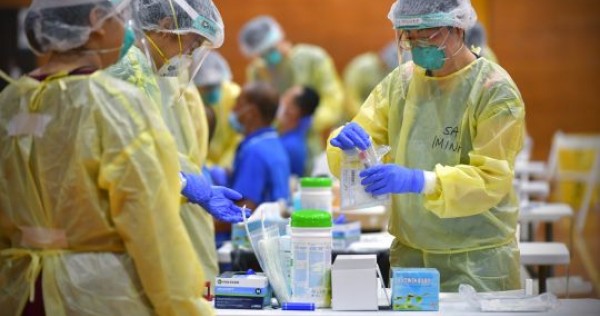
Amid fears of a “second wave” of coronavirus infections, videos and photos capturing scenes of people failing to adhere to social distancing measures in Singapore have been met with fury by netizens.
One particular video circulating on social media since June 4 showed a swarm of migrant workers living in a dormitory crowding around a fence and then rushing out the gate the moment it was opened.
The clip quickly went viral, garnering over 3,400 shares online, with many netizens voicing their concern over the lack of safe distancing.
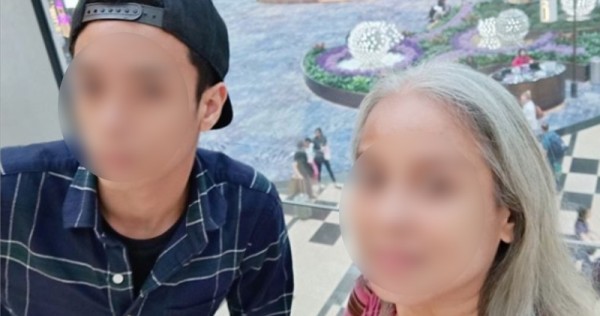
A teenager and his mother who had no qualms yelling the n-word on Instagram Live, despite being told not to, have since gone under police probe after several reports were lodged against them.
The police confirmed that a 19-year-old Singaporean male and his 53-year-old mother are under investigation for their suspected involvement in uttering racial slurs and vulgarities on social media with deliberate intent to wound the racial feelings of others.
The two suspects have been the topic of intense discussions on social media over the past week. The teen is a cover singer who performs on Instagram Live, and someone pulled up a 2016 video in which he dropped the n-word.
On an Instagram Live session on June 3, the teen responded poorly to the criticisms against him over using the offensive slur. Failing to see how he was being disrespectful, he became hostile and proceeded to drop even more n-bombs despite netizens trying to educate him. His mother got involved, and both of them went on a spree of verbal abuse using the racial slur.
Most Singaporeans are aware of their civic duty to vote, but did you know that there’s more you can do as a member of the public?
Come election time, each political party will be calling for volunteers to act as polling agents.
What exactly does that entail? Let’s break it down.
What do they do?
Polling agents are appointed by candidates or their election agents in order to ensure a fair election.
In a nutshell, they make sure that the poll is carried out in accordance with the law.
On Polling Day, polling agents will be allowed to monitor the proceedings from a position that will not compromise the secrecy of voters’ ballots.
Things they will have to look out for include: attempts to intimidate voters, campaigning on the day, or bias on the part of the presiding officers.
This means that polling agents will have to go through training before Polling Day to familiarise themselves with proper polling procedure, as well as the legal powers and duties of the presiding officers.
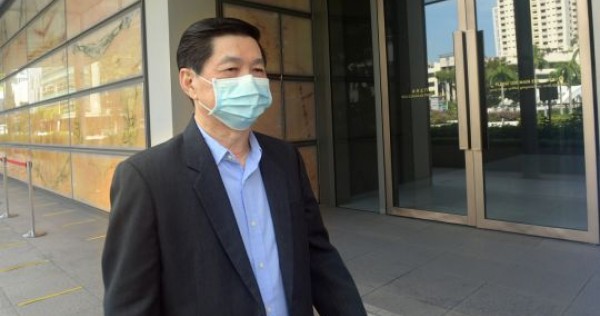
SINGAPORE – General practitioner Wee Teong Boo, who was accused of raping and molesting a patient at his Bedok clinic, was completely cleared of all charges on Wednesday (June 10) after the Court of Appeal overturned his conviction.
After the verdict, Dr Wee, accompanied by his family, walked out of the courtroom to applause from supporters waiting outside, some of whom spontaneously hugged one another before being reminded of safe distancing rules.
Dr Wee, 69, declined comment when approached by reporters.
He was originally tried for molesting the patient, then a 23-year-old student, during a medical examination in November 2015 and for raping her during another visit one month later.
Last year, Justice Chua Lee Ming cleared him of rape because there was reasonable doubt as to whether it would have been physically possible for Dr Wee, who had erectile dysfunction, to have sexual intercourse with the woman unaided.
The High Court judge, however, convicted him of sexual assault, based on Dr Wee’s admission that he had inserted his fingers into the patient in what he said was a pelvic examination.
SINGAPORE: A confluence of warm and rainy weather, a shift in the dominant dengue strain and the “circuit breaker” could have resulted in a surge in dengue cases in recent months, an expert has said.
As of 3pm on Tuesday (Jun 9), the number of dengue cases in Singapore has reached 10,234, with 870 cases in the first week of June.
The increase since the start of May has been particularly steep. While the year started off with about 300 to 400 cases per week from January to April – already a higher number than usual; in May, that number ranged between 500 and 800.
NEA officers conducting fogging at the Woodleigh Close dengue cluster. (Photo: National Environment Agency)
The National Environment Agency (NEA) said on Jun 3 that the number of dengue infections in the first five months of 2020 was the highest since 2013, when Singapore saw its largest outbreak in recent history.
The number of dengue cases this year is expected to exceed the 15,998 cases reported in 2019, and may even surpass the 22,170 cases reported in 2013. There have also been 12 deaths from the disease this year, with victims aged between 56 and 80 years old.
There are several reasons for this year’s increase in cases, said Associate Professor of Infection and Immunity Luo Dahai from Nanyang Technological University’s Lee Kong Chian School of Medicine.
Recent weather conditions have encouraged mosquitoes breeding, while more people stayed at home during the circuit breaker period, providing fodder for the mosquitoes.
The Aedes aegypti mosquito, which spreads dengue fever, lives mainly indoors and generally bites during the day, according to NEA.
“Warmer weather and rainy days since the beginning of this year favour mosquito breeding across the country,” Assoc Prof Luo said.
“Circuit breaker due to COVID-19 is another likely factor, making this year’s situation worse. When more people stay at home all day, there could be more residential mosquito breeding and more opportunities for ‘blood meals’.”
The mean temperature in the last three months is about 1 degree Celsius higher than the preceding months, said NEA.
NEA dengue inspection officer checking for mosquito breeding at a construction site after a rainy day. (Photo: National Environment Agency)
The agency added that there has been a five-fold increase in the incidence of Aedes mosquito larvae detected in homes and common corridors in residential areas during the two-month circuit breaker, compared to the two months before. The incidences of larvae being observed at construction sites has also doubled.
As of Tuesday, 192 active dengue clusters were identified, including large clusters reported in Woodleigh Close, Tampines Avenue 7, Potong Pasir Avenue 1, Aljunied Road and Elizabeth Drive, among others.
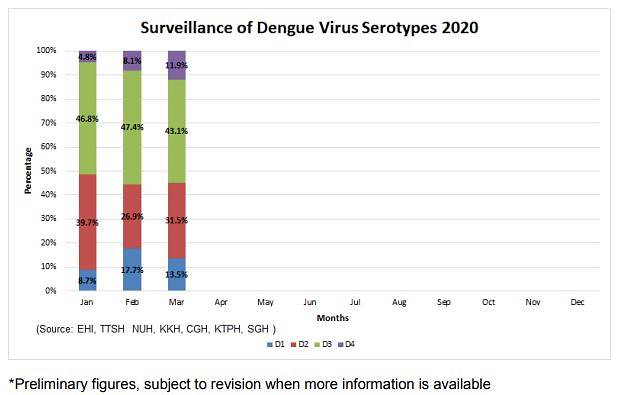
The increase in the number of cases this year is compounded by the fact that a less common dengue virus serotype 3 (DENV-3) has been making the rounds.
On why a lesser known serotype may lead to more infections, Assoc Prof Luo explained that there are four dengue serotypes, and the body’s immune system develops customised protective responses to each one.
“Protective immune response against one dengue type may not be effective in protecting against the challenge from a second dengue serotype,” he said. “More concerning is how secondary dengue infection may lead to more severe dengue disease.”
(Source: NEA / dengue surveillance data, Jan – Mar 2020)
NEA said that DENV-3 was last dominant in Singapore about three decades ago, which means there is now low immunity in the population.
“This likely explains the unusually high number of weekly cases, hovering between 300 (and) 400, since the start of the year,” the agency said.
Cases are also peaking as Singapore enters the traditional dengue peak season, which could last until October, said NEA.
“Weekly dengue case numbers are likely to continue to rise, and more dengue clusters will form in the coming weeks to months,” said Mr Chew Ming Fai, director-general of NEA’s Environmental Public Health Division.
Urging the public to take preventive measures, NEA said that it has continued with dengue inspections despite circuit breaker measures.
Assoc Prof Luo said: “Based on past experience, increase in mosquito population is likely the major factor. So the advice is to eliminate mosquito breeding and avoid being bitten by the mosquito.”
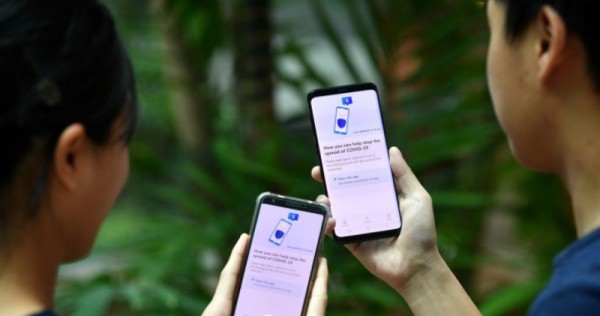
Singapore kicked off a global rush to develop contact tracing apps for the novel coronavirus when the city state launched an apparently new system in March.
But the project actually drew inspiration from a 2014 US high school project that won an international prize but found no backers – until now.
It all started when Rohan Suri created an app at Thomas Jefferson High School in Alexandria, Virginia, to tell his mom to leave home for the bus stop when he was seven minutes away.
As the Ebola epidemic ravaged western Africa at the time, Suri and schoolmate Claire Scoggins connected the dots between tracking apps and contact tracers who ask patients whom they may have spread viruses to.
A Singaporean biotechnology firm, Tychan, will begin human clinical trials next week for a potential monoclonal antibody treatment for Covid-19, it said in a statement on Wednesday.
The first phase of the trial will be conducted on healthy volunteers to determine the safety and tolerability of TY027, a monoclonal antibody or immune system protein that specifically targets the virus that causes Covid-19.
Antibodies are generated in the body to fight off infection.
Monoclonal antibodies mimic natural antibodies and can be isolated and manufactured in large quantities to treat diseases in patients.
For the latest updates on the coronavirus, visit here.
SINGAPORE -There are 451 new coronavirus cases confirmed as of Wednesday noon (June 10), taking Singapore’s total to 38,965.
These include seven community cases, comprising three Singaporeans or permanent residents, and four work pass holders, said the Ministry of Health (MOH).
Migrant workers living in dormitories make up the other cases.
More details will be announced later on Wednesday by the MOH.
On Tuesday, 218 Covid-19 cases were announced, the lowest daily tally since April 11 when 191 new cases were reported.
Six of the new cases on Tuesday were community cases. All of them are work pass holders who were asymptomatic.
Three of the six are workers in the construction and marine sectors picked up by the MOH’s screening of those in essential services. They are not linked to known cases.
The other three are housemates of a previously confirmed case and were swabbed during their quarantine in government facilities.
The remaining 212 cases are migrant workers living in dormitories.
The number of community cases has increased since Singapore began its phased reopening last week.
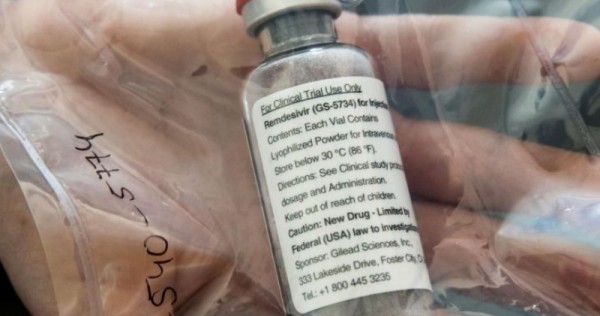
Antiviral drug remdesivir can now be used to treat seriously ill Covid-19 patients in Singapore, making the country one of the first to get the nod for using the drug to treat the virus.
The Health Sciences Authority (HSA) has granted conditional approval for Gilead Sciences’ remdesivir, allowing infectious diseases specialists to administer the drug to some patients, the authority said on Wednesday (June 10), The Straits Times has learnt.
Remdesivir is the only treatment so far shown to benefit Covid-19 patients in a robust clinical trial.
As part of the conditional approval, Gilead is required to collect the relevant safety data and to monitor the use of the drug. The approval was obtained in less than three weeks – Gilead filed for registration of remdesivir in Singapore on May 22.
Patients the drug can be administered to include those with low oxygen saturation levels less than or equal to 94 per cent, or who might require supplemental oxygen or more intensive breathing support such as extracorporeal membrane oxygenation – a type of life support, or invasive mechanical ventilation, HSA said.
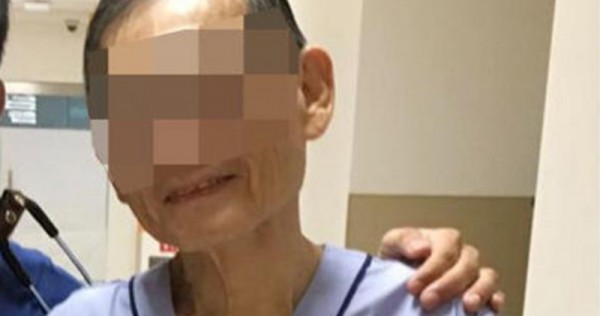
“It felt like I was drowning and I couldn’t breathe. It was the scariest thing to ever happen to me.”
For one 67-year-old man, his battle with Covid-19 caused him so much suffering that he wanted to pull the plug on himself. He would have done it too had it not been for his grandchild.
He was one of the 407 cases discharged last Wednesday (June 3).

.jpg "hzballot0504-1.jpg")