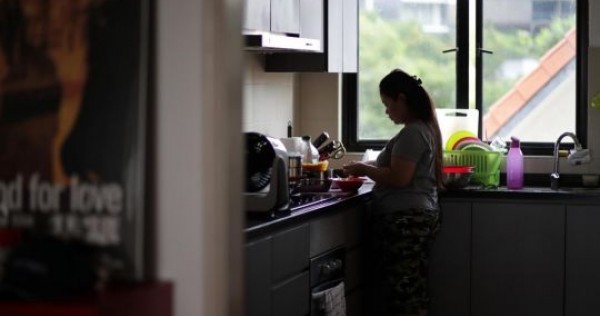
Cooped up at home during the circuit breaker period, which ended only earlier this month, people in Singapore turned to exercise, hobbies and household chores to keep busy and healthy.
Ironically, this led to an increase in related injuries.
Though hospitals and general practitioner clinics were unable to provide exact figures, healthcare providers confirmed that it was true.
Doctors at Mount Alvernia Hospital said they have seen more cases involving falls, sprains and hobby-related injuries.
Dr Oh Jen Jen, consultant and head of the hospital’s 24-hour clinic and emergency services, said the hospital has seen a number of injuries that occurred in the kitchen, such as falls after slipping on the wet floor, cuts from knives and scalds from hot oil and water.
“Most injuries appear to be related to food preparation, with a smaller number related to do-it-yourself projects,” said Dr Oh.
The clinic has also seen a number of hobby-related injuries, including children who cut or burned themselves doing art and craft activities.
SINGAPORE: When he was confirmed as COVID-19 positive,what 23-year-old Lionel Tan felt was not worry nor sadness; it was relief.
“I was relieved because based on what my symptoms were, I was quite sure I had COVID-19,” the Hougang United defender told CNA. “I didn’t want to stay home because I wanted to keep my family safe.”
Tan, who at that point was a full-time national serviceman (NSF), had been on medical leave from Apr 1 after a wisdom tooth extraction. He was due to report to camp a week later but had been told to stay home until further notice due to the COVID-19 situation.
“(Those of us staying at home) were not allowed to go anywhere apart from doing essential activities,” said Tan. “I didn’t really go anywhere apart from down (to) my park (for exercise) … or to the coffee shop to buy food.”
Tan only returned to camp once – for a standard medical check up prior to his operationally ready date (ORD), marking the end of his full-time stint in national service.
At that point, he was not displaying any symptoms of the virus.
“CFC (NS) Lionel Tan cleared his ORD medical check up at Mandai Hill Camp on 9 Apr 2020 and thereafter did not enter any SAF (SIngapore Armed Forces) premises,” said MINDEF in response to CNA.
On Apr 13, Tan began to feel an unusual sense of fatigue as well as an intense backache which meant that he couldn’t sleep at night.
“I started feeling weak, just heavy fatigue and having an intense backache, which affected my sleep because I couldn’t even lay still without feeling the ache,” he said. This was accompanied by cough and flu symptoms, which went away after self-medicating for one day.
But the aches and pains did not. Tan figured it might have been from his daily workouts, but this felt different.
“Normally, the next day I would recover, I would feel good – but this was just persistent,” he recalled. Then Tan lost his sense of taste and smell.
“It didn’t kick in that it might be COVID-19 … I thought maybe it (the loss of senses of taste and smell) might have been from the flu,” he said.
But with the symptoms continuing to persist, Tan decided to see a general practitioner several days later.
“I told the doctor about my symptoms – she said that I didn’t have any contact with positive COVID-19 patients, and I hadn’t travelled in the last 14 days, so it was very unlikely that I had the virus in me,” he recalled.
“I remember myself saying that I had a loss of taste and smell as well, but she told me to my face that it was not the symptom of COVID-19. But prior to that, I had been googling and finding out what the symptoms were and I had read that the loss of taste and smell was a symptom as well.
“But she said that – and she’s a doctor so I assumed she’s right.”
Despite the medication Tan was given, things did not seem to improve. On the advice of a friend, he got himself checked again, this time by a different doctor at the same clinic.
This time, he was immediately referred to a hospital for a COVID-19 test. On the night of Apr 23, Tan was told that he had tested positive.
“It just felt unreal that I actually had COVID-19 although I was not so scared and panicky about it,” said Tan. “At the isolation room, there are two panels of glass doors between you and the nurses.” he added. “It shows how serious the virus is.”
‘THERE WAS A BIT OF WORRY’
Tan spent one night in the isolation room in Ng Teng Fong General Hospital before he was transferred to a ward where there were five foreign workers.
File photo of Ng Teng Fong General Hospital.
“Two of them in my ward had been in Singapore for almost ten years, they have family back in Bangladesh,” Tan explained. “My understanding is that their family members don’t know that they have COVID-19. They told me that they don’t want to worry their family members because if their family members know that they have COVID-19, they would be crying, they would be very worried.”
His time spent on the ward with the foreign workers also opened his eyes to how vulnerable they are, added Tan.
“It was a good experience for me because it makes me realise that they are more vulnerable and people who need more help,” he said. “We became friends and I’m still in contact with one of them. He does video call me every now and then … I never really spoke to them or heard them open up before this.”
Tan was later transferred to the community care facility at D’Resort, where he would eventually spend almost three weeks recuperating. Having spent some time away from home in 2019 to attend training camps and competitions with the Singapore Under-22 football team, staying there “wasn’t exactly torturous”, said Tan.
Living in a room on the first floor meant that he could stand at the balcony to enjoy the sun and even strike up conversations with other patients who lived in rooms above him.
“My neighbours whom I spoke to when I was there would try to motivate each other, so we had a group chat for this group of people in D’Resort. Everybody is there to cheer each other up, to help each other, and motivate each other,” he said.
“It’s something I don’t think I could experience if I weren’t a patient. It seldom happens where strangers just come together and form a group and then start talking. Soon there were more people joining the group and we got to know each other. We even played some games online together just to keep each other company.”
Later in his stay at D’Resort, Tan roomed with his brother, who had tested positive for the virus a day after him.
D’Resort NTUC, a COVID-19 community isolation facility (Photo: Gaya Chandramohan)
“I share a room with my brother at home so when I saw him the first thing was that we laughed quite a bit because it just felt weird seeing each other again … Apart from ordering food together and just doing our own thing, it felt obviously more comfortable to see your own family member again,” he added.
Having signed a contract to join Singapore Premier League side Hougang United, Tan said that the support the team provided him was also something he appreciated.
Singapore’s domestic football league, the Singapore Premier League, has been suspended since March 24.
“The management together with my coach, be it call or text, they would always try to check on me, see how I’m feeling,” he recalled.
“You never know when you might be out (discharged). Maybe during the process, the league might have returned, but I wouldn’t be safe to return to training or unable to train. Football has always been the only thing on my mind, that’s what I want to do so there was a bit of worry but Hougang definitely gave me the assurance for that.”
The “family environment” fostered at the club means that players and staff alike care for each other, said Hougang’s head coach Clement Teo. This, he stressed, is “crucial”.
“I have friends who also contracted COVID-19, and they were at the resort and I told him (Tan) what he needs to bring. He sounded well and I told him to just be aware of what’s next,” said Teo.
Club staff also made it a point to keep in touch with Tan regularly to make sure he was coping well, Teo added.
“I have my general manager who checked on him as well as players who linked up with him as well. They were already informed that Lionel would be a part of us when he finishes his NS. He has some good friends within the club, they contacted him and they spoke,” he said.
‘EVERYONE WANTS TO GET BACK TO PLAYING’
Tan was eventually discharged from D’Resort on May 17, after testing negative for the virus.
“I was quite surprised when they told me I had tested negative for the second time,” he said. “I was just super relieved, super happy that I was COVID-19 free before I returned home, and I can go back to training with the team.”
While the return date for the Singapore Premier League has yet to be confirmed, Tan is determined to return to full fitness after spending close to a month away from home.
“Before COVID-19, I was definitely a bit fitter than I am now, but ever since I was out, I never really took an off day from working on myself,” he said. “On top of the programme that the club gave to me, I know that I have to catch up and I have to be better than I was last year … Being sick in the month of May definitely affected my fitness but I’m pretty sure that probably soon when we start training I will get back everything.”
On top of Hougang’s training sessions, Tan now also clocks extra workouts of his own.
Hougang United players celebrate a goal. (File Photo: Matthew Mohan)
“My goal is to start off the season where I left off last year and be better than myself. I think I need it for my career to move forward,” he said. “I’m very excited to get back into the changing room, have my teammates around me, enjoy football again, and just work hard for the result.
“When I was there (in D’Resort), a few of my teammates texted me, Fabian (Kwok), recently, even Stipe (Plazibat), he texted me to see how I was doing and how I felt. From there you can tell that everyone cares for each other … Everyone wants to get back to playing.”
Tan’s return to Hougang will be a homecoming of sorts for the centre-back, having turned out for the Cheetahs prior to enlisting.
“He played for Hougang before he enlisted into the army and we still kept in contact from time to time, even during his National Service when he was playing for the Young Lions. So it is more like: ‘Welcome back’ and we expect him to do well,” Teo told CNA. “He has not changed. He is still young and the will to do well is still very high and I’m very pleased with how he is coping.”
Tan still does not know how he might have contracted the virus, and he was keen to highlight that it is not to be trifled with.
“I really have no idea whether it was my brother or me that got it first. It shows us that the virus can be anywhere and in anyone. So if you have any symptoms that you think you might have caught it, just go and get yourself checked. The test is not as scary or painful as what people say. If it gives you assurance, just go and do it,” he said.
“From my experience with COVID-19, I learnt to be more patient and appreciative – anything can be taken away from you anytime.”
HONG KONG – A Hong Kong riot cop who was filmed chanting “black lives matter” and “I can’t breathe” on patrol during a demonstration on Friday (June 12) has been reprimanded by authorities, according to media reports.
A clip of the officer who was in Yau Ma Tei, in Hong Kong’s Kowloon neighbourhood, was posted online, including the government funded public broadcaster RTHK’s website, in which he was seen making the comments in reference to Mr George Floyd’s death in Minneapolis on May 25 while in police custody, which sparked protests across the United States.
The man was recorded saying “black lives matters” in English and “I can’t breathe” three times each and “this is not America” in the 20-second clip that was published on the RTHK website on the weekend.
Police were carrying out identity card checks of the crowd, according to media, at the time the officer made the comments.
A Hong Kong police spokeswoman told the South China Morning Post the officer had been reprimanded over the incident.
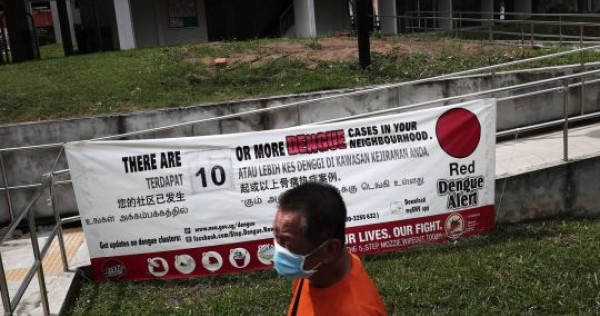
SINGAPORE – The weekly number of dengue cases in Singapore has reached a record high, with 895 people diagnosed in just five and a half days – surpassing the 891 infections reported for one week in 2014.
The country, which is now in its peak dengue season, has seen a surge in dengue infections this year. More than 10,700 have been infected, and at least 12 have died.
Singapore’s worst dengue outbreak took place between 2013 and 2014, when more than 40,000 people were infected and 14 died from the mosquito-borne disease, which can cause very high fever, severe headache and joint and muscle pain.
Ahead of the traditional peak dengue season between June and October, Singapore has already seen twice as many infections compared with the same period last year. This has been due to the rise of a less common dengue virus serotype, as well as warmer temperatures and more rain, which has caused the population of the Aedes aegypti mosquito, which transmits dengue, to increase.
Between January and April, there were 300 to 400 new cases each week.
In May, the number of weekly cases began to increase sharply.
SINGAPORE: One morning in January 1972, early risers at Raffles Hall, the all-male dormitory at the University of Singapore campus at Bukit Timah, found the flagpole at the front of their building festooned with panties and bras.
The Straits Times published a picture of the lingeried flagpole. There was a flurry of follow-up news reports and commentaries, investigations were done, and action was taken against some students.
It was, as far as I know, the last time there was a panty raid on a Singapore campus.
I was then a student at the university and a resident at Eusoff College, the all-female dormitory a 5-minute walk away from Raffles Hall. The underwear strung up on that flagpole belonged to Eusoff women.
WHEN THINGS STARTED TO CHANGE
Panty raids were a thing then, one of several Eusoff-Raffles annual traditions. The women who had their underwear stolen wouldn’t have been too pleased, but generally it was regarded as part of the fun of campus life.
We did not then see those raids as an intrusion into our personal space, as a demonstration of toxic masculinity. We didn’t have the concepts, the language to see it that way.
This was the early 1970s. The women’s movement was well under way in America and Europe, but it would be at least another decade before women in Singapore began to see that these troubling incidents belied a larger problem they needed to do something about.
Screengrab from Google Maps of Raffles Hall at the National University of Singapore.
While the one or two panty raids that took place when I was at Eusoff College may indeed have been just good fun, the sexual underpinnings of the practice showed themselves in a raid in 1967 when some 70 male students stormed the Eusoff corridors. They didn’t just steal underwear; they broke windows and doors and painted pornographic images and words on walls.
I’d forgotten about these panty raids until someone pointed to the recent report about a man with an underwear fetish who, who over a two-year period, had stolen more than 100 bras and 41 panties, and was sentenced to 23 weeks of jail time. It got me thinking about those panty raids of 50 years ago, so I did a little checking.
THE LADDER OF ESCALATION
In January 1972, a Raffles Hall resident wrote to The Straits Times to protest against their coverage of the panty raid. It was harmless, he said, “merely an outlet for pent-up emotions and feelings of depression” of the students who had been studying hard for examinations.
Similar explanations, or excuses, were, I believe, initially offered in some of the recent cases of voyeurism on our campuses.
There is no excuse for acts, whether they are driven by pent-up emotions or depression or a fetish that impinge on the privacy and safety of anyone.
We have every right to possess and practise harmless fetishes, but not fetishes that inflict physical or psychological violence upon others – whether that involves stealing underwear or filming people without their permission in the shower, bedroom or MRT.
We may laugh at the idea of someone climbing over the back gates of homes and sneaking into the laundry area to get to the bras and panties, but the needs that drive this person to such acts can, if unchecked, lead to much more serious sexual crimes.
This is why the last year was so important – it forced our universities to take clear and firm action against voyeurism and other behaviour they had tended to treat too lightly.
But having, and being ready to apply, clear laws and rules is just part of what’s needed to deal with the problem. How do we get these people to change their behaviour? Counselling, behavioural therapy and other treatments are needed.
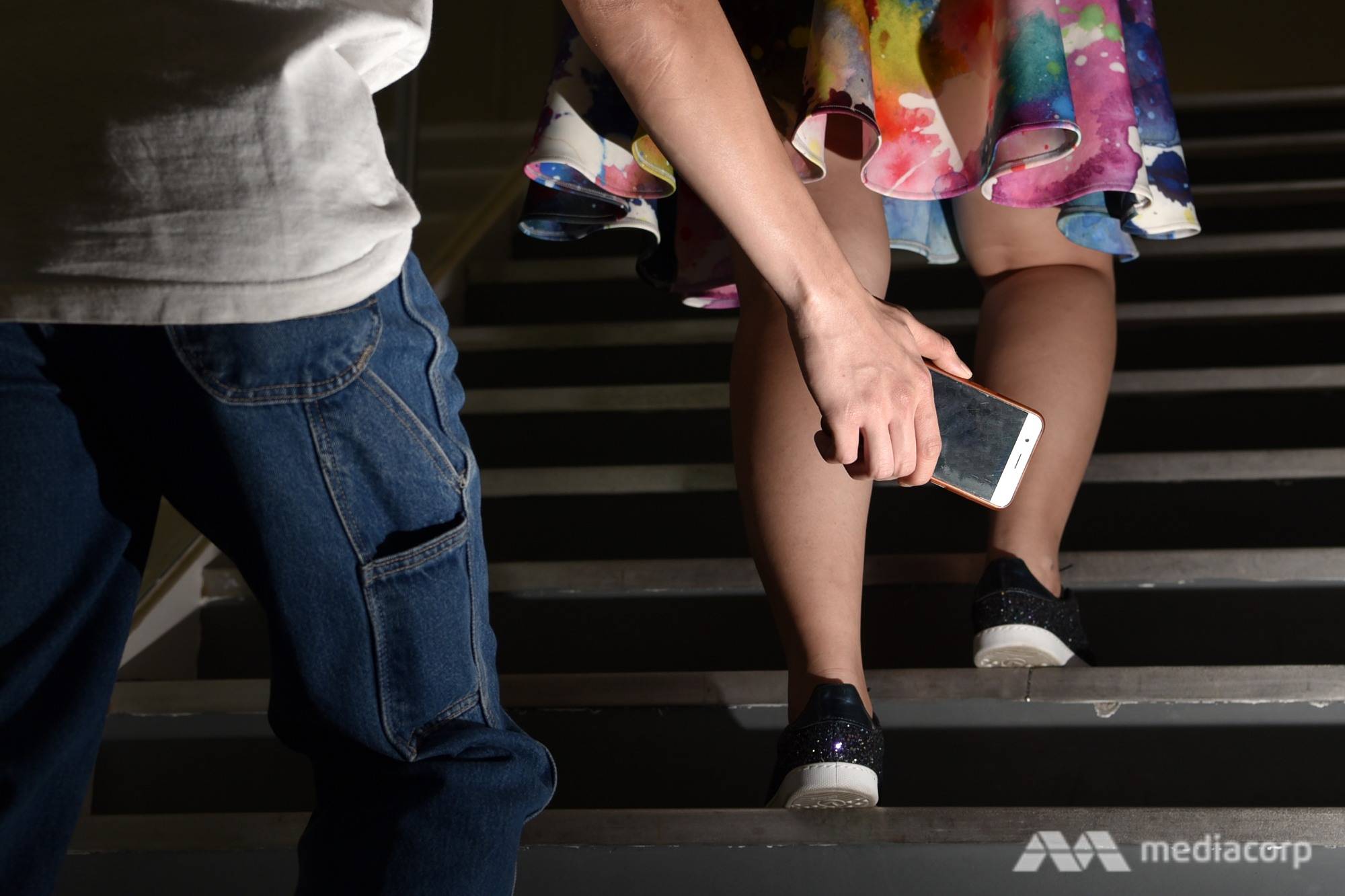
Photo illustration of a man taking upskirt photos (Photo: Jeremy Long)
When your obsession with women’s underwear drives you to go out and steal bras and panties, the fetish becomes a disorder.
Psychiatrists say the disorder often begins in early puberty. As a boy’s sexual urges grow, if he somehow get aroused by underwear and develops an association around the object with sexual pleasure, he may in time develop an overwhelming need for this object and possibly to stealing it, or worse.
Singapore psychiatrist Dr Lim Boon Leng believes early intervention can help.
In an interview last year, he said:
I feel that sex is such a taboo subject that we sometimes underestimate the fact that we need to learn proper sexual practices. Because of that, children and youth may start learning the wrong things maybe from TV, Internet and somehow associate sexual gratification with objects. Having open dialogues about healthy sexual practices may be useful.
Sexuality education in Singapore schools has had a rather chequered history. Schools have over the years sometimes used external vendors to conduct sexuality education programmes, but since 2017 they have relied on the Education Ministry’s programme.
This syllabus is centred on abstinence and notably light on discussion of actual sexual activity (whether intercourse or fetishes). But a responsible and comprehensive sexuality education programme should not be silent on these matters.
Parents could be more proactive too in the realm of sexuality education. Indeed, MOE’s website states that: “Parents play the primary role in educating their children and are responsible for teaching and transmitting values on sex and sexuality.”
Yet AWARE’s experience, from workshops conducted with around 80 parents in 2019, is that many don’t know that they are expected to play this primary role. They feel ill-equipped both in terms of knowledge as well as the necessary communication skills required to talk to their kids about sensitive issues such as sex and consent.
Both our Government and our families need to take more responsibility for our children’s healthy development. Everybody in Singapore deserves non-judgmental and helpful discussions about sexual practices, including fetishes.
We are now well into the 21st century. We can’t keep clinging to the excuse that Singapore is still largely a conservative society. We need to talk openly about sex, sexuality and sexual practices.
Margaret Thomas is President of AWARE and a former journalist.
CHANGES IN THE DYNAMICS BETWEEN CLINICIAN AND PATIENT
Going online or calling in for therapy has equalised the relationship between psychologist and client.
Some of my clients never thought to simply leave the therapy room when they wished to avoid speaking about something.
But now, they can simply “walk out” of a psychotherapy session, with the click of a button. Although my clients laugh when I point this out, this ability makes clients feel less obligated to their therapist.
(Photo: Pexels/energepic)
Such a dynamic has been empowering to children, adolescents, and adults I work with, leading them to take greater ownership over their progress.
Some told me remote therapy has allowed them to open up more easily. They fear less about being judged when they aren’t in the same room as me.
For one young person, I offered to cover my camera so she couldn’t see me. She was surprised at how it was easier than she had thought to voice difficult feelings.
Over the years, many clients shared they could not commit to therapy because of work, school and other priorities – not to mention fears of how they could be perceived by others if they said: “I need time for therapy.”
Some were afraid to be recognised even when they decided to attend.
Others were so afraid, they shuttered their windows and pretended they weren’t home when I came over, back when I worked in a community mental health team.
According to a 2016 study by the Institute of Mental Health, more than three-quarters of respondents with a mental health condition did not seek any professional help.
Be it from stigma or a learned fear, this unwillingness to get counselling can be changed with remote psychotherapy.
A woman bows her head in pain. (Photo: Unsplash/Volkan Olmez)
A young client of mine found it so distressing to come into the clinic, she never made it to therapy for a year.
With video-conferencing, she was able to cope by using the virtual background to “hide” herself through the distorted onscreen image. She could also type instead of speaking aloud.
This medium allowed her to access care she couldn’t get face-to-face and gave her enough distance to feel safe.
During sessions, the therapy room is a protected, welcoming space for both therapist and client.
A place where all can speak in confidence is needed to conduct psychotherapy safely.
Yet during the circuit breaker, things got tricky. Video-conferencing may have allowed us to press on with sessions but not everyone has a large home where they can speak without being overheard.
Some of my clients shared that they speak leaning out the kitchen window because they share a 1-room flat with the entire family.
Some just had no safe space at home, as their family members could eavesdrop on the session, and use what they overhear against them in quarrels and fights.
I encouraged such clients to text us via the hospital’s secure messaging platform. They could also attend therapy via video-conferencing and type their responses in the chat box.
But if it’s unsafe for clients to do that, we can revert to face-to-face sessions.
Even those lucky enough to have privacy for an hour have hurdles to clear. They need to secure a safe space for therapy (commonly the office or bedroom), get an earpiece, and ensure their device is fully charged and updated.
Ironically, while these might present a higher barrier to remote therapy, they also prod clients to take charge and invest in their sessions to their benefit.
File photo of a man sitting on steps in despair. (Photo: Try Sutrisno Foo)
After I asked clients to brainstorm on how they could maximise their sessions, whether face-to-face or remote, they tell me these brainstorming exercises gave them a sense of emotional validation and greater autonomy.
Remote psychotherapy has helped clients engage with sessions, improving their chances of progress. As opposed to being passive guests in a curated clinic room, clients are less inclined to see themselves as helpless, passive pawns in their treatment.
KEEPING IT REALISTIC AND ORGANIC
As much as therapists do their best to understand our clients’ backgrounds and living circumstances, we can only imagine how they live from description, unless we made home visits.
However, thanks to video-conferencing, we now have a glimpse of our clients’ homes and can tailor our advice accordingly.
One of my clients had difficulty identifying situations that distress him, giving us little to work with in sessions.
During our video call, he immediately expressed embarrassment about the stacks of papers and books strewn across his room. This clutter had been distressing him for days.
Just like that, we immediately had a situation that was raw and relevant to him. I prompted him to apply his learnt skills to this situation, rather than have him search for another less visceral scenario.
If not for the use of video-conferencing and phone, I would not have gained these insights into their lives. Home visits are typically expensive – but technology circumvents the high cost.
Regardless of what medium we use to communicate, the most essential part of therapy is still the human connection and ability to share freely.
One of my client has a protective dog. As she’s usually distressed and tense, he’s constantly on guard to support her.
But, as the session progressed, he might have realised she became calmer and more relaxed, because he settled comfortably on the floor to rest his head on her lap and promptly fell asleep. It made me feel like I passed his test in that instance.
If therapists hold on to the core of our work and remain open-minded to leveraging technology for therapy, these online sessions can make a significant difference in helping our clients achieve emotional breakthrough and complement face-to-face meetings, no matter which stage of combating this pandemic Singapore is in, or even after.
SINGAPORE: At the start of the year, Toh Thiam Wei, whose company runs walking tours for tourists, was finalising new itineraries that would make up a key part of his business expansion plans in 2020.
Edgar Lim’s events space at the Esplanade mall was already receiving bookings for later in the year and even enquiries for 2021, while Pan Jia Jian and his shareholders were making plans to spruce up their café along Tanglin Road with a new look and menu.
Just months later, these would be completely turned on their head by a novel coronavirus outbreak.
Bookings dried up for Mr Lim, and when the “circuit breaker” aimed at curbing the spread of COVID-19 kicked in on Apr 7, non-essential businesses like his had to be closed.
The safe distancing rules and a ban on dining in under the circuit breaker also threw a curve ball at Mr Pan and his team who ditched the revamp to focus instead on survival plans such as offering deliveries.
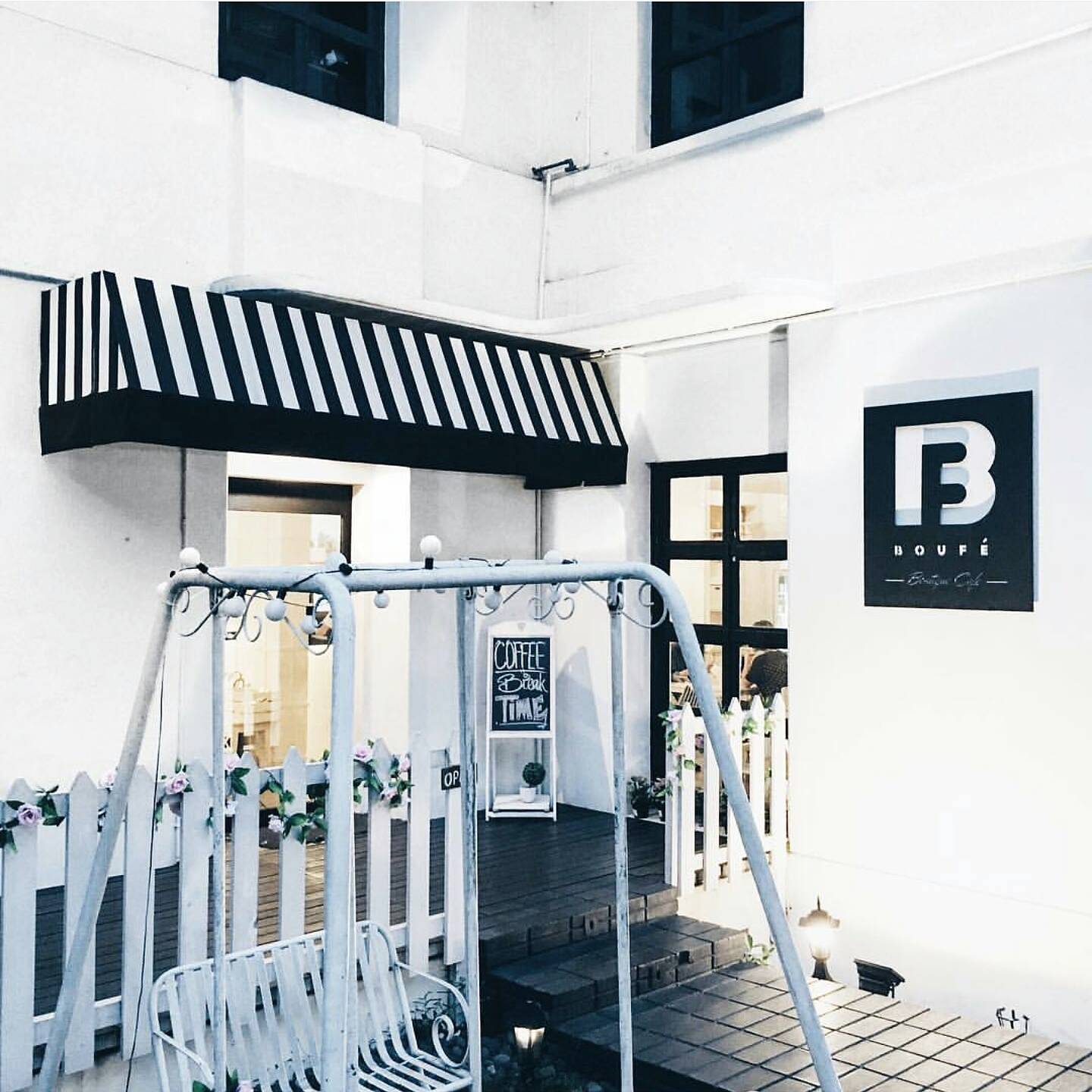
But losses ran up as the months went by. The Boufe Boutique Cafe, which marked its fifth anniversary in February this year, will close for good when its lease runs out on Jun 30.
“We definitely did not foresee that things would deteriorate so rapidly,” Mr Pan said.
TRAILS OF IMPACT
The impact of COVID-19, initially on selected sectors before broadening out to envelope much of the economy, has been swift.
This prompted the Government to draw up an unprecedented combination of four Budgets containing wage subsidies, tax rebates and rent relief to give companies and workers more help over a longer period. These added up to almost S$100 billion.
Still, a worst-ever recession is on the cards, with the Singapore economy expected to shrink between 4 and 7 per cent this year. Just four months ago, policymakers were looking at growth of 0.5 to 2.5 per cent.
“I heard from others in the travel industry that even SARS (severe acute respiratory syndrome) was not as bad,” said Mr Toh, who founded Indie Singapore six years ago.
The trail of damage started just before Chinese New Year for the tour guide when participants for his pay-as-you-wish walking tours dropped to below 10, from the usual 15 to 20.
When February came, cruise lines were cancelling their port calls in Singapore and passengers on board these ships wanted to call off their private tours. “A lot of our private tours come from these cruises,” said Mr Toh, adding that refunding the deposits for these cancelled bookings was a “big hit”.
As travel restrictions were stepped up in Singapore and around the world in March, he recalled seeing his “booking calendar empty out, with cancellations up until tours booked for August”. It became obvious that the launch of the new tour itineraries would have to wait.
On Mar 26, Mr Toh conducted his final tour with travellers before the suspension of all such tours kicked in at 11.59pm. Barely two weeks later, his remaining source of income dried up as corporate and school tours became off limits during the circuit breaker.
“More cancellations,” he said. “That’s the final nail in the coffin.”
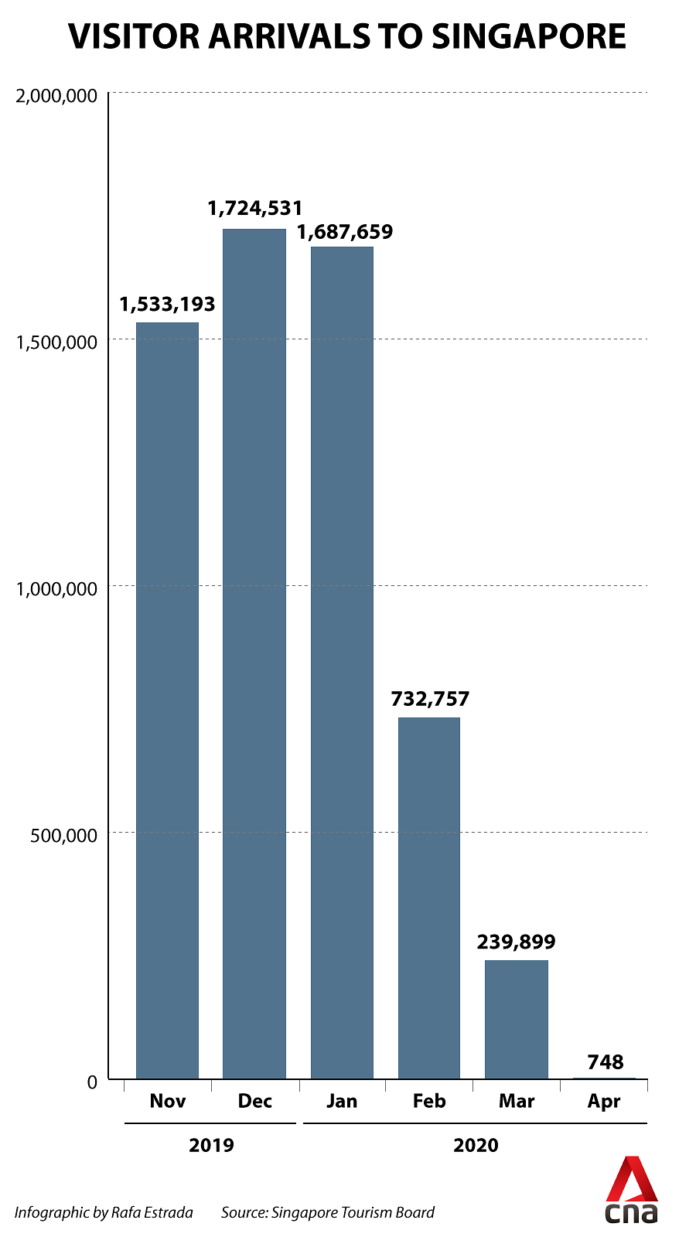
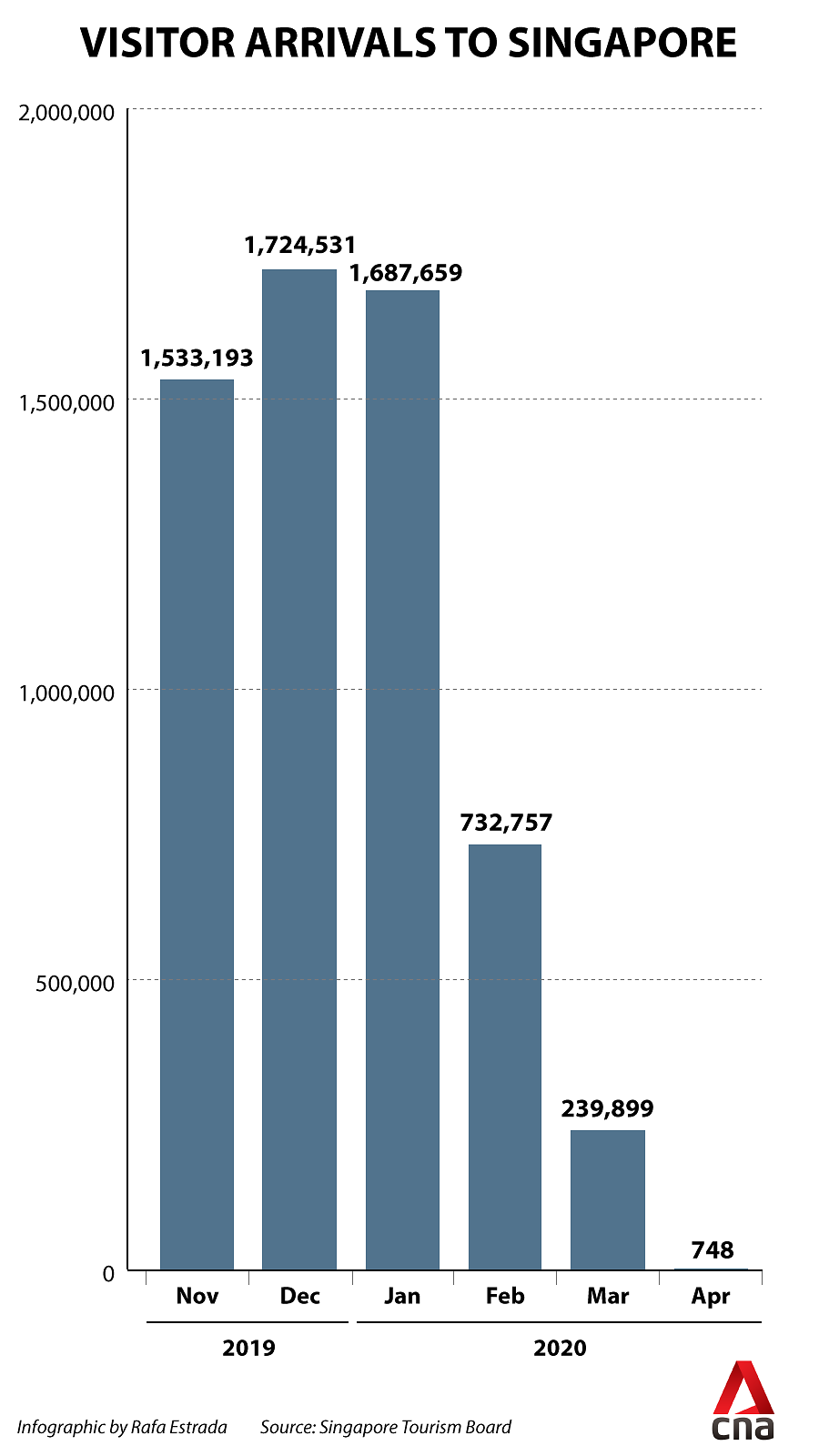
Official data thus far shows tourist arrivals to Singapore in free fall amid the pandemic. Visitor numbers plunged to 239,899 in March, from about 1.7 million in January and 732,757 in February. A ban on short-term visitors that took effect on Mar 24 took the monthly figures to a historic low of 748 in April.
As a business that relied on crowds, Mr Lim, who runs events space room2f, saw the impact unfolding as early as Feb 7 when Singapore raised its DORSCON level to Orange.
The 39-year-old recalled getting scores of cancellation and postponement enquiries that day. It marked the start of a “drastic drop” in sales and the business, which until then was making monthly profits, began seeing losses.
But the biggest hit came when it had to be shut for the circuit breaker period. “(It is now a) 100 per cent drop in revenue,” Mr Lim said. The business remains closed as only those that operate in settings with low transmission risks can reopen under the first phase of easing circuit breaker restrictions.
room2f, an events space located within the Esplanade mall, has been shut since the “circuit breaker” banned all non-essential businesses. (Photo: Yeo Kai Wen/room2f)
Rental rebates from his landlord have helped to relieve some pressure but there are still bills to pay such as utilities and insurance. To cut manpower costs, he stopped employing part-timers.
With zero revenue for two months now and possibly in the near future, Mr Lim said he is focusing on “survival for the rest of this year” – a much more pessimistic outlook compared to the start of the year.
“Moving towards 2020, we had hoped to be on the same trajectory as we did in 2019,” he said, noting that business had picked up since relocating to the Esplanade mall early last year. It had at least five event bookings a week, ranging from corporate seminars to private parties. On days with no events, people could walk in to relax or work by paying an hourly fee.
Like many others in the food and beverage industry, Boufe, where Mr Pan is head chef, has been financially pummeled by the coronavirus outbreak.
A 70 per cent drop in walk-in customers saw monthly sales fall to S$20,000 for the months of February and March but expenditure, including rent, manpower and food costs, held up at about S$30,000 a month. To make sure it could issue salaries and pay suppliers, the owners took up a S$20,000 loan in February and even dipped into their savings.
When dining-in became a no-go due to the circuit breaker, the cafe pivoted to deliveries and jazzed up its menu to stand out from the competition. But these added to the costs as it had to ramp up marketing, deploy more manpower and absorb delivery fees for orders above a certain amount.
Boufe Boutique Cafe along Tanglin Road will close when its lease ends on Jun 30. (Photo: Boufe Boutique Cafe/Facebook)
A slight increase in April sales to nearly S$30,000 was not enough to stop the bleeding, and the owners decided it was perhaps better to call it a day when the tenancy ends in June.
“Our biggest issue lies in having a sufficient amount of immediate cash flow as we still have to make payment to our suppliers and issue salaries to our staff,” said Mr Pan.
Breaking the news to his 10 full timers was “one of the hardest things” to do as most have been with the cafe for years and there are sole breadwinners among them.
“This is truly the last resort … Dismissing them was not (what) we wanted.”
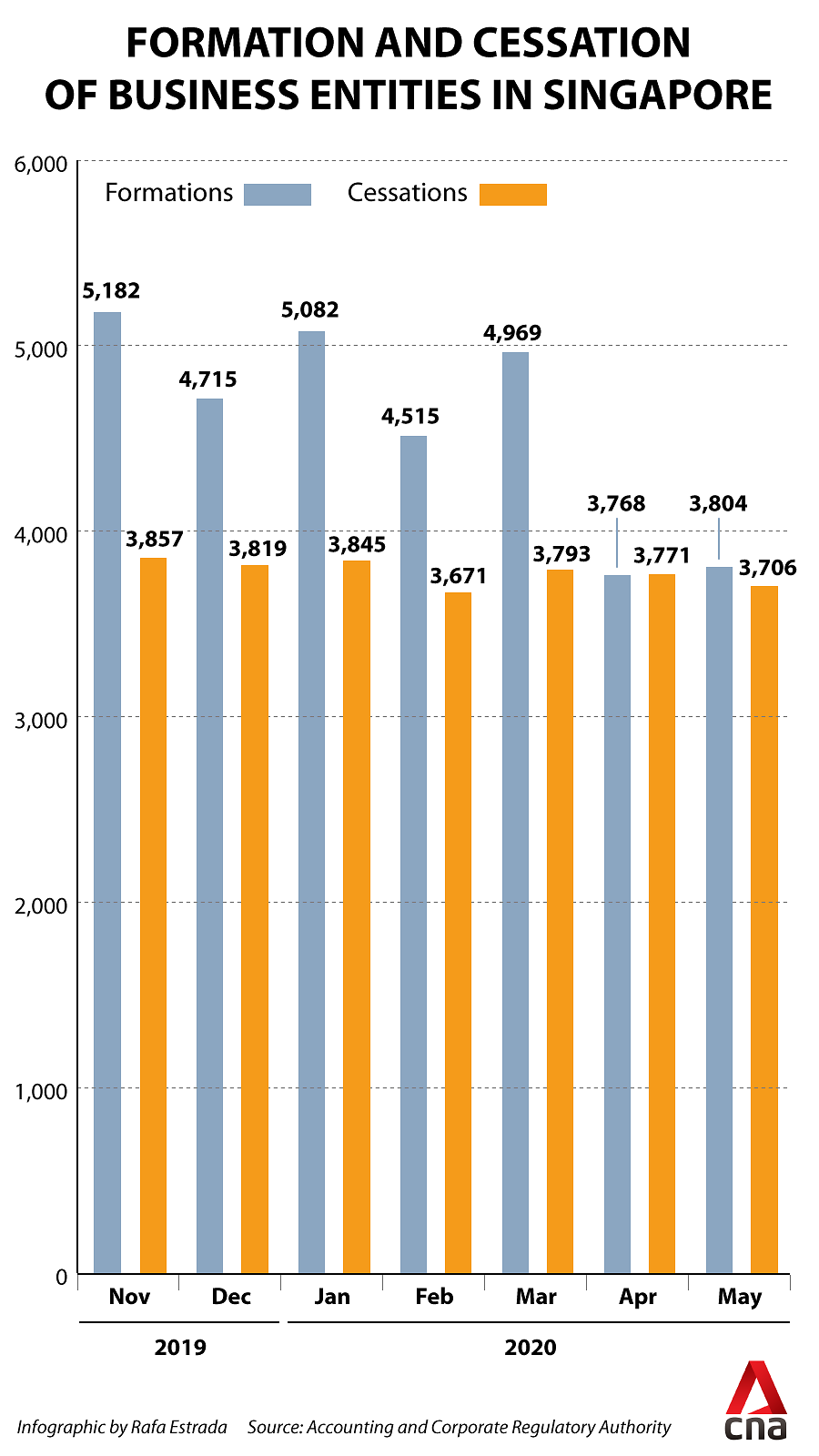
Figures released by the Department of Statistics this week showed 3,706 business closures in May.
Cessation numbers have thus far stayed within a tight range of 3,671 to 3,845 over the past five months. And while the latest monthly figure was a shade below April’s 3,771, the likely scenario is that there will be more like Boufe that decide to throw in the towel.
Economists noted that cessation numbers tend to be lagging indicators and with the Government’s relief measures providing support to some extent, more closures will only show up later.
Casualties would likely come from the worst-hit sectors like tourism and hospitality, said OCBC’s head of treasury research and strategy Selena Ling. They could also be smaller entities that do not have the capability to digitalise, or those that were already weakened by the trade tensions last year.
COVID-19 has also added new impetus to some ongoing structural shifts such as online shopping, which DBS senior economist Irvin Seah said will pile on the pressure for some businesses.
“Even more people will turn to e-commerce post-COVID-19 and you might see more retail shops closing for good,” he said.
Other measures of the economy have showed signs of a worsening impact.
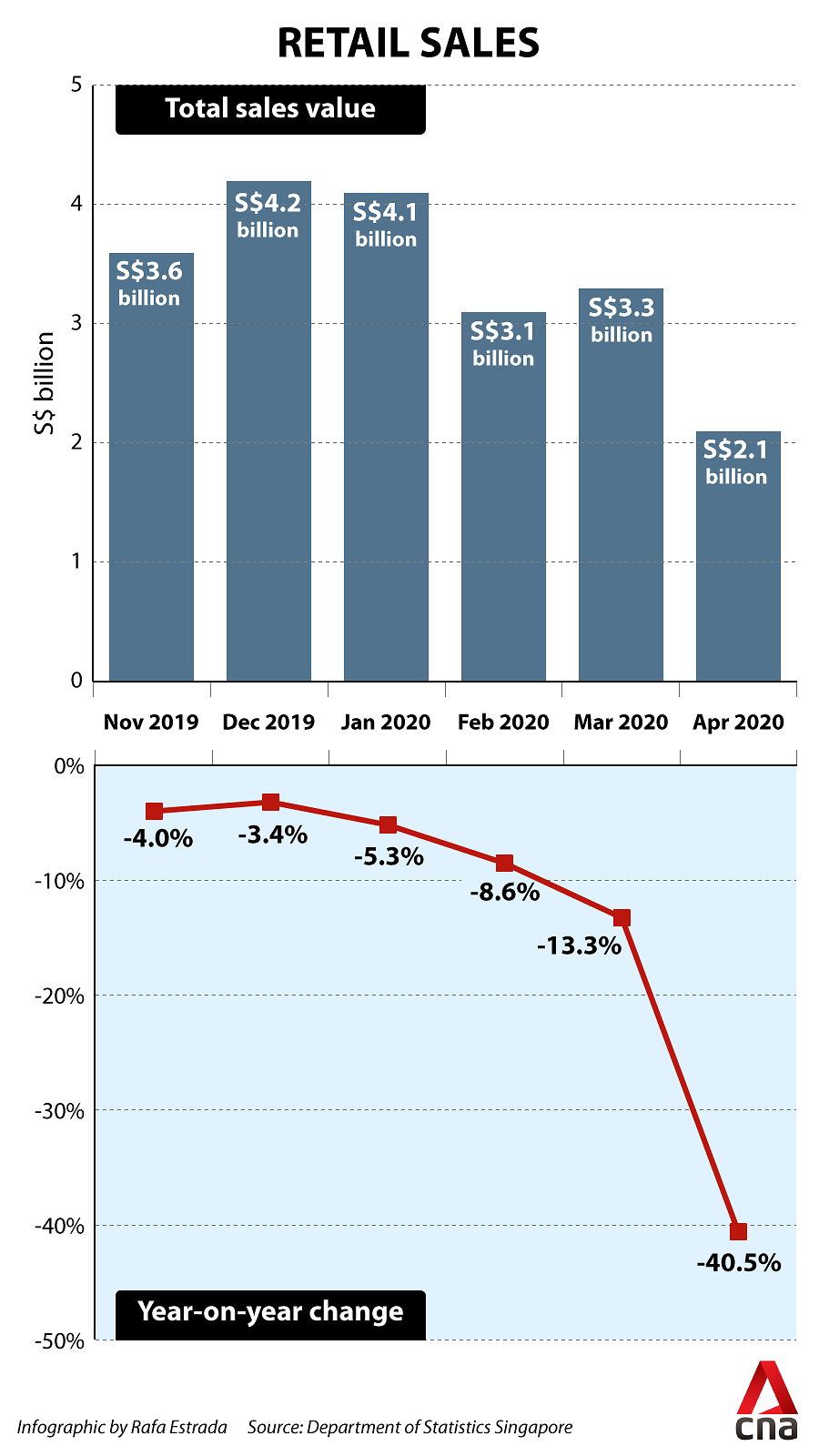
Retail sales, one of the key monthly indicators, plunged 40.5 per cent in April as the circuit breaker curbs shuttered a large swathe of business activities across the country. This marked the index’s biggest drop since 1986 when Singapore’s growth rate records started.
At the most recent briefing on Singapore’s economic performance, the Ministry of Trade and Industry (MTI) said second-quarter gross domestic product (GDP) will likely bear the brunt of the COVID-19 hit.
Private-sector economists have since thrown out some eye-watering forecasts for the April to June quarter, ranging from eight to 20 per cent contraction on a year-on-year basis. The economy shrunk 0.7 per cent in the first three months of 2020.
A gradual recovery could take shape later in the year, policymakers and economists said, but a myriad of uncertainties remain.
These include the risk of subsequent waves of infections in major economies and further disruptions on global economic activity. Domestically, lifting the circuit breaker in three phases will also keep activities muted for a while longer.
Meanwhile, simmering geopolitical uncertainties may pose more risks, said Standard Chartered chief economist for ASEAN and South Asia Edward Lee.
Economists have ruled out a “V-shaped” economic recovery – a short, sharp collapse followed by a bounce back to pre-virus levels of activity.
They have compared the potential recovery to the shape of other letters of the alphabet, such as a U, which indicates a sharp collapse followed by a sustained period of weakness before a recovery gains quick momentum. Others expect a “swoosh”, which would involve a longer steep decline to the bottom of the economic cycle before a slow recovery takes hold.
Mr Seah expects the economic contraction to last for at least five quarters until the first quarter of 2021.
Overall real GDP may only return to pre-virus levels by the end of next year, he added. That translates into a 24-month recovery cycle, compared to the 18 months it took for the economy to get back on its legs after the Asian financial crisis in 1998 and the global financial crisis in 2009.
Office workers wearing face masks take their lunch break at the central business district amid the COVID-19 outbreak in Singapore on Jun 2, 2020. (Photo: Reuters/Edgar Su)
The slower-than-usual recovery will hammer the labour market.
“Growth must improve if you want employment to improve but this will be quite different from past recessions,” Mr Seah said. “This recovery is going to be very slow.”
For the first quarter, overall unemployment inched up from 2.3 per cent to 2.4 per cent. Retrenchments rose to 3,000 from 2,670 in the previous quarter, according to preliminary data released by the Ministry of Manpower (MOM) in April.
An MOM official has said that labour market conditions will deteriorate from the second quarter. “We have to be prepared for a rise in retrenchments,” he said at the recent briefing on Singapore’s economic performance.
Perhaps a sign of what’s to come could be gleaned from the number of job advertisements.
Job postings in Singapore have decreased 24 per cent at the end of May compared to a year ago, according to data from global job site Indeed. The fall was across most sectors, with those affected most by the circuit breaker registering the biggest declines. These include food and beverage (F&B) and hospitality.
Another report from JobStreet showed job listings in event management, retail and F&B down between 81 and 85 per cent in May. Ads from the aerospace industry tumbled 95 per cent and those related to beauty and fitness fell 92 per cent.
To be sure, both reports also noted sectors that are still hiring, such as healthcare, software, production and manufacturing, as well as computing and IT.
“Nevertheless, the impact of COVID-19 may persist for some time. It is unlikely that the Singapore labour market will rebound immediately to what it was pre-crisis,” Indeed’s Asia economist Callam Pickering said.
For the full year, Ms Ling from OCBC is expecting total unemployment to hit 3 to 3.5 per cent. Mr Seah, the DBS economist, thinks this figure could go up to 3.6 per cent by the year-end and total retrenchments to be around 45,600.
For comparison, the overall unemployment rate hit a high of 4.8 per cent in September 2003 during the SARS outbreak. In September 2009 amid the global financial crisis, it was 3.3 per cent.
The Government has since unveiled a slew of relief measures, including giving wage subsidies under the Jobs Support Scheme, a S$2 billion SGUnited Jobs and Skills Package to create 100,000 job and training opportunities and forming a new National Jobs Council.
New graduates entering a grim labour market also get help – S$100 million has been set aside to fund the SGUnited Traineeships Programme which will create 21,000 traineeship positions.
Economists said these relief measures will help to cushion the impact. They can also go some way in deterring longer-term unintended effects of a recession, such as underemployment and possible weaker wages and career advancements for recession graduates, said Mr Seah.
Darren Ching is among the 48,500 fresh graduates hoping to enter the workforce this year. But after sending out more than 50 job applications over the past two months, calls for two interviews were all he got and the job hunt continues.
The communications studies graduate from Nanyang Technological University (NTU) has his eyes set on full-time consulting and business-related jobs. He had started off by applying to technology firms before broadening his search to other industries and internship positions.
He said he’s been told “not to be too picky” amid a dismal job market but he wondered if taking up a job he has no interest in would be the right thing to do.
“A big discussion among us graduates right now is the concept of settling,” said Mr Ching.
“There are people who have told us that we cannot afford to be choosy or picky – we know but there’s a voice in us that’s saying ‘Why not hang in there for a while more before you raise the white flag’.”
Nevertheless, he has given himself a deadline.
“To be responsible, if I don’t hear anything or have any leads by the end of June, then it’s probably time for me to grab anything,” he said.
Mr Toh has a similar plan – to finish the projects on hand before mulling his options in September.
Working out of a home office and being the only employee for his company have spared him from the burden of overhead costs, but he said he would not be able to last too long if the situation of zero income continues. Already, he knows of tour guides who are considering switching careers.
“The outlook is grim,” said the 39-year-old.
Toh Thiam Wei, owner of Indie Singapore, seen with tourists during a walking tour around Singapore in early 2019. His travel business has been severely affected by the COVID-19 pandemic. (Photo: Indie Singapore)
Tourists are unlikely to restart travel plans soon and even if they do, they might tighten their purse strings, he said. Locally, it could also take a while to get demand for corporate and school tours going again if rules on large group gatherings and guided tours remain.
“Obviously, this business isn’t something that I’m willing to give up so easily but if we continue to see this (downturn), I will have to re-evaluate a few months down the road,” said Mr Toh.
“Because at the end of the day, there are still bread and butter issues to take care of.”
Mr Lim wants to press on as he is “cautiously hopeful” that 2021 will be better. But from now until then, things are uncertain such as how safety guidelines could evolve.
“The current advisory limits gatherings to a small number of people. It would help a great deal if the authorities could specify the number of people gathering to a given size of space,” he said.
For Mr Pan and the shareholders of Boufe, the many uncertainties ahead are why they decided to cut losses now.
“With the (lease) deadline looming over us, we had to make a decision … It was a dilemma which we spent weeks going back and forth, and eventually coming to the conclusion that we would be taking too huge a risk if we were to head into the unknown and renew our lease.”
Asked for their plans after closing the cafe this month, Mr Pan said others in the management will venture out of F&B. His passion, however, lies in cooking.
“I too am uncertain and worried about future prospects however I believe that when one door closes, another one opens,” he said. “We just have to look in the right direction.”
SINGAPORE: A 73-year-old man linked to the COVID-19 cluster at SAFRA Jurong has died, taking Singapore’s total coronavirus deaths to 26.
The man, a Singaporean, died from complications due to COVID-19 and had a history of hypertension, hyperlipidaemia and chronic kidney disease, said the Ministry of Health (MOH) on Saturday (Jun 13).
SINGAPORE: A ministerial committee will be formed to oversee and coordinate Singapore’s digitalisation push which has been ramped up in light of challenges from the COVID-19 pandemic, said Minister for Communications and Information S Iswaran.
He will co-chair the new ministerial committee for digital transformation with Minister for Trade and Industry Chan Chun Sing.
Key priorities of the committee include helping people to learn new skills and seize technology-related jobs, as well as getting more small businesses, especially those battered by the pandemic, to go digital.
It will also be looking at how to boost digital adoption among hawkers and the elderly – segments in the society which have been seen by some as “the most challenging in terms of digitalisation”, Mr Iswaran said in a virtual interview on Thursday (Jun 11).
He noted that this push to go digital isn’t new, but has “taken on added relevance and salience” as the pandemic forced businesses to scramble online to stay afloat and home offices became the norm for many workers during the “circuit breaker” period.
The circuit breaker kicked in on Apr 7 to curb the spread of COVID-19 by closing schools and most workplaces, and banning all dine-ins at food places. It ended on Jun 1, although restrictions will be lifted in three phases.
“One of the biggest impacts of COVID-19 has been to demonstrate that digitalisation is no longer an optional extra. It’s actually a critical necessity for a business,” the minister said.
The Government has ramped up efforts on this front recently such as setting up the SG Digital Office and expanding initiatives to create more jobs in the thriving information and communications technology (ICT) sector. These plans currently involve various agencies and ministries.
“We have decided that Government has to double down and make a concerted push for digitalisation. To oversee this, we are establishing a ministerial committee which will be jointly chaired by me and Mr Chan Chun Sing,” said the minister.
“Through this committee, we will be able to oversee and coordinate the effort towards enterprises, whether they are large enterprises, SMEs or micro enterprises, and also the digital inclusion effort … with seniors, our broad population, our workers and so on,” he added, noting that the new digital office will be the “point of coordination” for these efforts.
WHERE THE JOBS ARE
Last week, Mr Iswaran announced the expansion of the company-led training (CLT) programme which will train 3,000 Singaporeans to take on tech jobs such as cybersecurity and data analytics, over the next two to three years.
The CLT is one of the many programmes under the TechSkills Accelerator (TeSA) – a SkillsFuture initiative administered by the Infocomm Media Development Authority of Singapore (IMDA) and in partnership with other agencies – that helps workers to acquire relevant skills and match them to ICT jobs.
Another initiative – the TeSA Mid-Career Advance programme – will run in parallel to create an additional 2,500 jobs for mid-career professionals aged 40 and above over the same period.
These will aim to create a wide range of tech jobs – from “tech-light” to “tech-heavy” ones with varying requirements of technical knowledge, said Mr Iswaran during the interview.
Training will be provided to help people take on these new roles, he said: “Our priority is to get Singaporeans into those jobs.”
But the Government is also aware of the skills gap in the local workforce. Efforts to bridge this gap will take time and companies “may need to move faster”.
“We need to find a balance. So our strategy has always been to find a way to complement the local talent base with a judicious component of foreign talent so that it comes together in a way … that makes opportunities bigger for everyone,” he said in response to a question on the possibility of firms turning to foreign talent to fill tech-related jobs.
GO “DEEPER” INTO COMMUNITY
Meanwhile, businesses will get help to quicken the pace of digital transformation, with those in the badly-hit food and beverage (F&B) and retail sectors getting extra aid.
Under the new Digital Resilience Bonus, businesses can receive a payout of S$2,500 if they adopt business process solutions and an additional S$2,500 if they build an online shopfront or e-commerce platform. They will qualify for an additional S$5,000 payout if they adopt advanced digital solutions like data mining and data analytics.
Mr Iswaran also talked about how the digital push has to move “deeper” into the community to reach two groups – hawkers and the elderly.
It was announced on May 31 that a new SG Digital Office will recruit 1,000 ambassadors to help 18,000 hawkers and 100,000 seniors to go digital. The plan was for digital ambassadors to cover all 112 hawker centres and wet markets in June to nudge hawkers to adopt SGQR codes for e-payment.
The SGQR code, compatible with payment schemes such as PayNow and Nets, was rolled out in 2018 as a way to simplify QR code payments in Singapore.
Thus far, 200 ambassadors have covered nearly half of the 112 hawker centres and are “committed to finish their first sweep of all the hawker centers in the next week or two”, said Mr Iswaran.
These two groups also get dedicated programmes, namely the Hawkers Go Digital and the Seniors Go Digital initiatives.
The former gives hawkers who sign up for the unified e-payment solution and fulfil minimum transaction requirements a bonus of S$300 per month over any five months. Hawkers who have already adopted the unified e-payment solution are also eligible for this bonus.
Meanwhile, the Seniors Go Digital Programme will introduce one-on-one coaching at community places, options for seniors to sign up for small group learning with their friends and other hands-on learning opportunities.
Minister for Communications and Information S Iswaran at a webinar with hawkers from West Coast on Thursday (Jun 11). (Photo: Ministry of Communications and Information)
But to get everyone on board, Mr Iswaran said it is important to address concerns.
For instance, hawkers had questions about the QR code technology and related set-up costs, as well as how to check if the transactions went through.
One solution that the authorities are exploring with e-payment firm Nets is to allow hawkers to hear an “audio signal” in either English or Mandarin when the transaction is completed, said Mr Iswaran. And when it comes to costs, Nets has waived transaction and subscription fees for hawkers until end-2020.
Language is similarly a concern for some seniors, while there are other worries about how the push to go digital may leave the elderly feeling lost and alienated.
He stressed that digitalisation should be seen as “a means to a better life”.
“As far as our focus is concerned, these digital initiatives are to give our seniors more options … in the way they get information, the way that they communicate with the family and the way they transact or make payments and so on. It is not about taking away existing options,” said Mr Iswaran.
“So at the end of the day if it is too difficult, then obviously the existing solutions are available to them … But I don’t think we should underestimate the ability of our seniors to … make this transition.”
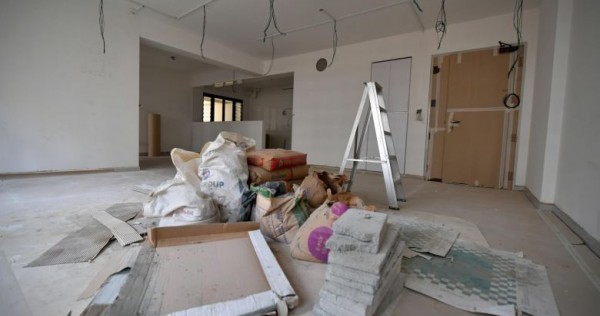
SINGAPORE – More than 19,000 suspended home renovation projects have received approval to resume since the circuit breaker period ended on June 1, said the Building and Construction Authority (BCA) on Saturday (June 13).
From next Monday, all other types of renovation work, including new and previously suspended renovation works for non-residential premises, will be allowed to submit applications to the BCA to start work.
This will be dependent on the companies’ availability of manpower and supplies.
If companies employ construction work permit and S Pass holders, and if these workers were not listed in earlier approved applications to restart suspended residential renovation works, companies should also submit applications to the BCA.
The BCA has also approved more than 300 construction projects to resume work.
The authority is working closely with construction firms on another 250 projects to help them meet the requirements necessary for their projects to resume safely.