SINGAPORE – There are 347 new coronavirus cases confirmed as of Saturday noon (June 13), taking Singapore’s total to 40,197.
These include five community cases, comprising two Singaporeans or permanent residents and three work pass holders, said the Ministry of Health (MOH).
Migrant workers living in dormitories make up the vast majority of the other cases on Saturday, said MOH. More details will be announced on Saturday night.
Singapore had recorded 463 new Covid-19 cases, including 18 community cases, on Friday.
Six Singaporean men working in dormitories, who were picked up by MOH’s proactive screening, were among the 18 community cases.
The oldest is a 72-year-old who works in the Woodlands Lodge 1 dormitory. He showed symptoms on June 7.
A 22-year-old Singaporean woman, unlinked to previous cases, was also confirmed. She showed symptoms on June 5.
The only permanent resident among the community cases is a 40-year-old man who is a close contact of a previous case and was already in quarantine.
Two work pass and eight work permit holders were among the community cases recorded on Friday.
SINGAPORE – The trial of two Singapore Civil Defence Force (SCDF) officers allegedly involved in a 2018 ragging incident, in which national serviceman drowned in a pump well, closed on Friday (June 12), with the court set to deliver its verdict on July 10.
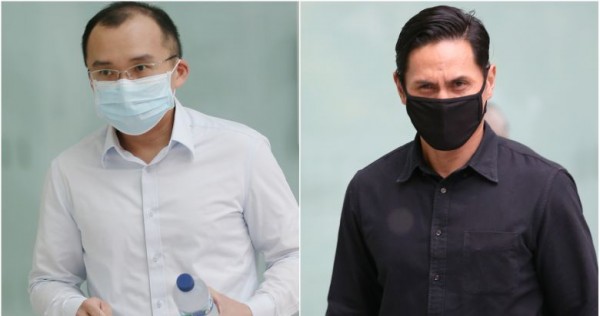
Kenneth Chong Chee Boon, 37, and Nazhan Mohamed Nazi, 40, are each contesting one charge of intentionally aiding a group of SCDF servicemen to cause grievous hurt to full-time national serviceman (NSF) Kok Yuen Chin, 22, via a rash act endangering human life on the night of May 13, 2018.
They are accused of doing so by failing to prevent the group from pressuring Corporal Kok to enter the 12m-deep pump well at Tuas View Fire Station that night — an activity known as kolam — to mark the impending completion of his national service.
Chong was commander and Nazhan, deputy commander, of the station then.
Cpl Kok eventually drowned after he was pushed into the well by another serviceman, Muhammad Nur Fatwa Mahmood.
Three regulars, including Nur Fatwa, have already been convicted and sentenced for their involvement in the death.
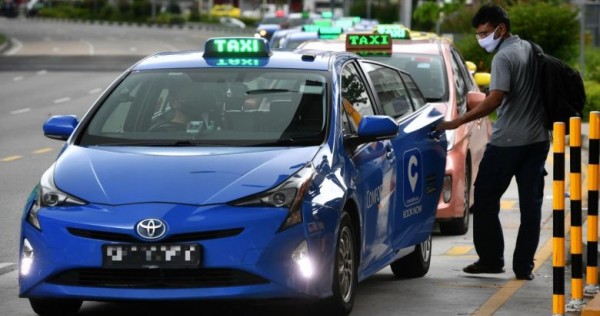
SINGAPORE – Taxi drivers will now have to issue printed receipts for all street-hail and phone booking trips or risk a $50 fine, regardless of whether the passenger asks for them.
The Land Transport Authority (LTA) rule kicked in on Thursday (June 11) and is aimed at facilitating contact tracing efforts. Passengers are “strongly encouraged” by LTA to keep the receipts for at least 14 days.
But the rule has raised eyebrows amongst stakeholders and drivers, who have urged the authority to reconsider the rule’s effectiveness.
Ang Mo Kio GRC MP Ang Hin Kee, who is the executive adviser to the National Taxi Association, said he also hopes LTA will not make it a punitive measure.
“Nowadays taxi drivers can earn $50 only if it is a good day (with the Covid-19 situation). A $50 fine will wipe out their entire day’s earnings.”
In messages to drivers seen by The Straits Times, the various taxi operators told drivers this week that those who fail to issue receipts to passengers “will be liable to a composition fine of $50”.
SINGAPORE: Foreign domestic workers must continue to stay at home during their days off under the first phase of Singapore’s post-“circuit breaker” reopening, the Ministry of Manpower (MOM) said on Saturday (Jun 13).
The advisory to employers came after some foreign domestic workers were seen gathering at hotspots such as City Plaza, Lucky Plaza and Peninsular Plaza last weekend.
Foreign domestic workers “must continue to stay at home during their rest days,” MOM said in the advisory.
They will be able to go out to run errands and buy meals, but are not allowed to meet up with friends or gather in public areas and should return home immediately after their errands.
This was “in line with the rest of the community”, MOM said.
People queuing outside Peninsula Plaza in Singapore on Jun 7, 2020.
Singapore exited its circuit breaker as planned on Jun 1. It will gradually reopen the economy in three phases.
Under Phase 1, students have returned to schools on a rotational basis and certain businesses and services have reopened.
Retail shops, consumer services and sports facilities such as stadiums and swimming pools will be allowed to reopen under Phase 2, as will limited dining-in and social gatherings.
Phase 2 could start before the end of June, depending on the number of COVID-19 transmissions in the community in the first two weeks of the reopening, the authorities said last month.
Singapore authorities first issued an advisory on Mar 21 for foreign domestic workers to adhere to safe distancing practices on their rest days, in line with stricter measures announced by the Health Ministry.
It issued another advisory on May 21, informing employers that domestic helpers “should stay at home” during Phase 1 of Singapore’s reopening.
However, some domestic helpers were seen gathering in groups with their friends last weekend at hotspots such as City Plaza, Lucky Plaza and Peninsular Plaza, said MOM.
People queuing outside Peninsula Plaza in Singapore on Jun 7, 2020.
“Some of them were queuing up to remit money, and some were seen to have gathered in groups with their friends. The FDWs were asked not to loiter or gather in groups, and to return home immediately after they were done with their errands,” said MOM.
Safe distancing ambassadors will continue to be on the ground this weekend, the authority said, adding that those who disregard MOM’s advisory to return home immediately after running their errands will face firmer action, including warnings and revoking of work permits.
Separately, the Monetary Authority of Singapore (MAS) has worked with the licensed remittance agents in City Plaza, Lucky Plaza and Peninsula Plaza to serve customers by appointment on Saturdays, Sundays and public holidays, said MOM.
“Employers are advised to inform their FDW on the need to make an appointment if they wish to remit money at these locations,” said MOM.
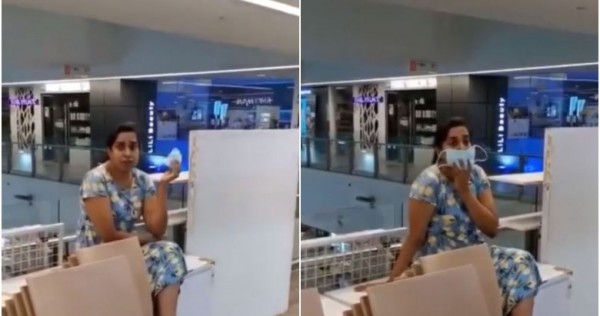
SINGAPORE – A woman who was caught on video berating at least two men in Sun Plaza shopping mall after refusing to wear a mask told a district court on Friday (June 12) she has “extreme rage” and “multiple personalities” issues.
Appearing in court via video-link, Kasturi Govindasamy Retnamsamy said: “Even if I were to plead guilty, what evidence is there that I would be given proper help?”
District Judge May Mesenas replied that Kasturi, 40, may be served a mandatory treatment order (MTO), which would compel her to undergo treatment for mental conditions in lieu of jail time.
The jobless Singaporean decided to admit to her offences when she heard this and added: “Show me some help… Give me some help.”
Kasturi pleaded guilty on Friday to one count each of harassment, using criminal force on a policewoman and an offence under the Covid-19 (Temporary Measures) Act.
Three other counts of harassment will be considered during sentencing.
Kasturi was spotted with a mask in her hand while in the mall at around noon on April 29. When told to put it on, she refused.
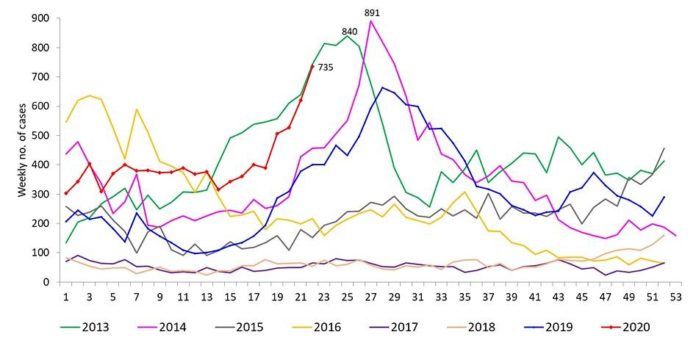
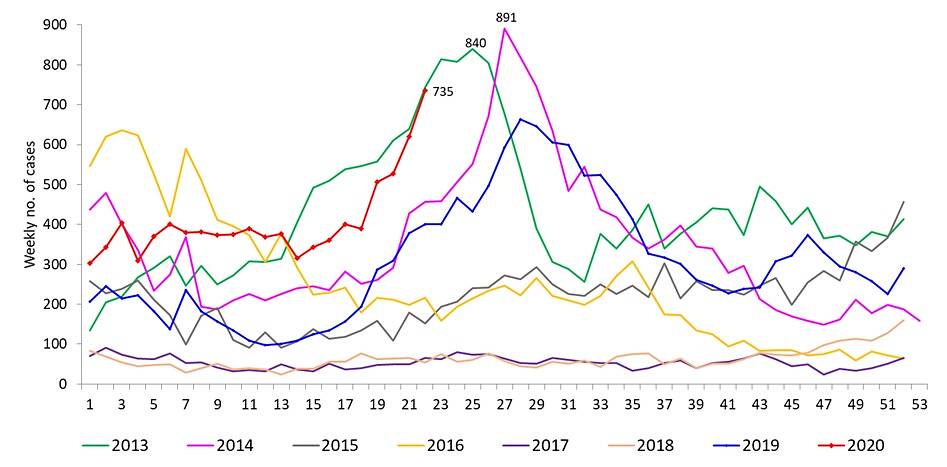
SINGAPORE: The weekly number of dengue cases in Singapore has surpassed the record high reported in 2014, with 895 people infected in just five-and-a-half days.
That brings the total number of dengue cases in Singapore in 2020 so far to 10,732, according to data from the National Environment Agency (NEA).
The 895 cases were reported between Jun 7 and 3pm on Friday (Jun 12). NEA’s weekly report of dengue cases takes into account infections diagnosed between Sundays and Saturdays, meaning the number of cases this week is likely to rise further.
At least 12 people have died from dengue this year, with the victims aged between 56 and 80.
With Singapore just entering the traditional dengue peak months – from June to October – the agency warned last week that the number of cases weekly could “exceed the historical high of 891” cases unless “urgent collective community action” is taken.
Singapore has also not seen such a high weekly number of cases since the peak years in 2013 and 2014, when the weekly cases hit a high of 840 and 891 respectively, NEA said on its website.
Graph showing the “historical high” of 891 dengue cases, recorded in 2014, and the peak of 840, recorded during Singapore’s largest outbreak in 2013. (Graph: NEA)
The total number of cases in Singapore this year is expected to surpass the 15,998 cases recorded last year, and the 22,170 cases reported during the country’s worst outbreak in 2013, the agency said last week.
In the first four months of this year, the weekly number of cases hovered between 300 and 400, already high for those months.
But it surged to between 500 and 732 cases per week in May, and climbed above 800 in June. Last week, between May 31 and Jun 6, the country recorded 870 dengue cases.
As of Saturday, there were 210 active dengue clusters, of which 66 are deemed as “high-risk” by the agency.
These include a cluster of 207 cases in the Woodleigh Close area, 142 cases in the Potong Pasir Avenue 1, Avenue 2 and Avenue 3 areas, as well as 135 cases in the Tampines Avenue 7 area.
“The traditional dengue peak season could last for a few months, from June to October, thus immediate action must be taken to break disease transmission,” the agency said.
“NEA urgently seeks the community’s support to ensure that their homes (including common corridors where domestic items, such as potted plants and pails, are kept) and gardens in their compounds are free from mosquito breeding, and to use aerosol insecticide spray and mosquito repellent to protect themselves and their families.”
The spike in early May coincided with Singapore’s COVID-19 “circuit breaker” period, NEA said. The Aedes aegypti mosquito, which spreads the dengue virus, dwells mainly in indoor spaces and bites primarily during the day.
With more people staying at home, this means more “blood meals” for the mosquitoes, especially in residential areas where the mosquito population is high.
There has also been a sharp rise in the number of mosquito breeding areas.
NEA officers observed a five-fold increase in the incidence of Aedes mosquito larvae detected in homes and common corridors in residential areas during the two-month circuit breaker, compared to the two months before. For construction sites, that figure doubled during the circuit breaker.
Workers wearing face masks fumigate a construction site to prevent the spread of dengue fever in Singapore on Apr 17, 2020. (Photo: AFP/Roslan Rahman)
The re-emergence of a less common dengue virus serotype – DENV-3 – is another factor for the rise in cases.
The serotype was last in a “dominant position” in Singapore about 30 years ago, which means there is low immunity in the population and a rapid disease transmission.
And as Singapore enters the traditional peak dengue season, the warmer weather is facilitating “faster multiplication” of the Aedes aegypti mosquito and the dengue virus, further increasing the chances of transmission.
A majority of the dengue clusters are in residential areas. Residents are “strongly urged” to take steps to protect themselves and prevent mosquitoes from breeding.
This include spraying insecticide in dark corners of the home, such as under the sofa and bed or behind curtains and in toilets, NEA said.
Spatial mosquito repellents, such as mosquito coils, can also be used in well-ventilated areas of the home, and residents should consider using mosquito screens.
Last month, more than 300,000 bottles of mosquito repellent were issued to households in cluster areas. People should apply mosquito repellent to protect themselves from being bitten, the agency said.
People should also prevent potential mosquito breeding grounds. They should flip flower pot plates, tip vases, leave pails overturned or clear the roof gutter and drains within compounds.
SINGAPORE: I was but one of their thousands of passengers so they will hardly recall our encounter.
Yet I clearly remember the taxi drivers who engaged me in lively conversations about the state of banking in the region, the evolution of the manufacturing sector, and the challenges of the retail industry.
Each of them left me with a sense of admiration but also regret. They had clearly been successful in their careers, and shared knowledgeably about their areas of expertise.
However, through the unhappy confluence of environmental factors, broader industry transformations and sheer bad luck, they had become jobless around their 40s and, since they were unable to find suitable alternatives, turned to driving taxis to make ends meet.
Each of these trips left me with a heightened appreciation for the plight of the mid-career jobseeker. Despite having worked their way up their respective organisations, the forces of globalisation and digitalisation had left them with skills that are no longer in demand or simply cannot command an equivalent price tag.
Furthermore, their relatively high salaries make them unattractive hires despite their proven track records. In the ruthless world of business, they are sadly not deemed to be value for money.
TIMELY TRAINEESHIP PROGRAMME
I therefore greatly welcome the introduction of the new SGUnited Mid-Career Traineeship Programme provided for by the latest Fortitude Budget. Aiming to roll out 4,000 traineeships for mid-career unemployed locals, this scheme is especially timely as COVID-19 batters our economy and triggers more job losses.
As mature workers, mid-career jobseekers are understandably anxious about the drastic confluence of digital disruptions, outmoded skills and ageism working against them.
Compared to fresh graduates, their needs are more complex as many also constitute the sandwich class, juggling lifestage obligations of parenting and eldercare, thus shouldering more onerous financial commitments.
As mature workers, mid-career jobseekers are understandably anxious about the drastic confluence of digital disruptions, outmoded skills and ageism working against them.
Even though they have years of experience under their belts, they will find it harder to pivot, having honed their skills in industries that may be on the decline. And yet, with their maturity and life skills, they still have much to offer our society and ample potential to grow.
A lot therefore hinges on the outcomes of the Mid-Career Traineeship scheme. Companies that successfully retrain and transition such jobseekers can offer a workable template for other employers to do the same.
Trainees who flourish from the scheme will furnish valuable insights into which training approaches are most effective.
Most significantly, positive results for both employers and trainees will help to change stubborn biases around mid-career job seekers being difficult to train and they in turn will be more motivated to consider opportunities in new industry sectors.
Now that the government has provided generous funding for these traineeships, what more must be done to ensure their success?
PROVIDING THE RIGHT EXPERIENCE
Principally, industry leaders recommend that expectations of both parties must be carefully managed to heighten mutual understanding and satisfaction with the programme.
The participating companies should be supported with instructive guidelines on how best to integrate and upskill their trainees.
The Ministry of Manpower should also provide some flexibility and support for employers across a group of complementary companies to offer cross-training opportunities.
For example, career portal Mums@Work has successfully experimented with developing consortia of companies in related industries collaborating to collectively train returning talents so that they can be exposed to a broader swathe of skills.
Trainees can thus explore multiple career paths and better identify their transferable strengths in the process.
With such innovative arrangements, companies can offer their trainees a wider range of skills upgrading opportunities and support each other without incurring prohibitive overheads.
Companies should also be upfront with their trainees about the potential for longer-term job prospects or the lack thereof and share in advance the kinds of post-traineeship support they can provide.
They would do well to be more explicit about articulating their criteria for retention if they can afford to increase their headcount. That way, the trainees will not feel like they have been led down the garden path.
Besides such substantive issues, the approach that participating companies adopt in hosting these trainees can also make or break a traineeship.
Horror stories abound of job attachment schemes where mature trainees must sign in daily for a visitor’s pass, or who are supervised by very junior colleagues with no managerial experience to speak of.
These socioemotional aspects of mid-career training must be effectively addressed to ensure win-win gains for everyone. Above all, the scheme must accord trainees with a sense of inclusion, purpose and dignity.
MAKING IT COUNT
On their part, trainees must also pull their weight and not regard the traineeship as a paid sabbatical.
Mid-career interns from earlier programmes have admitted to feeling initially demoralised at starting from the bottom all over again. But they also realised that without humility and the willingness to venture into the unknown, they would remain at status quo.
Such mental blocks will invariably impede individual advancement.
Hence, trainees must be psychologically prepared for the programme and offered pointers on how to make the most of their stints. Perhaps peer-to-peer interactions of such mid-career trainees across different companies and sectors can also be organised so that they can share tips and encourage one another.
Fundamentally, these traineeships should offer a combination of substantive skills and career planning competencies that will empower these jobseekers for their next move.
In this regard, the experience of the Singapore Computer Society’s Career Compass programme is highly instructive.
Besides providing training in technical skills relating to growth areas such as artificial intelligence (AI), cyber security and enterprise architecture, the programme also offers career preparatory training in areas such as professional branding, resume building, interview skills and one-to-one mentoring.
Senior Minister Tharman Shanmugaratnam who chairs the newly formed National Jobs Council has announced that they will pay special attention to this group of jobseekers.
With a careful and concerted design of SGUnited Mid-Career Traineeship offerings and actionable guidelines for participating companies and trainees, this scheme can help to critically prepare mid-career workers for the next phase of their professional journeys.
Through thoughtful and well-calibrated support schemes, we can better nurture the mature talents in our midst and most importantly, transform mind sets too.
Download our app or subscribe to our Telegram channel for the latest updates on the coronavirus outbreak: https://cna.asia/telegram
Lim Sun Sun is Professor of Communication and Technology and Head of Humanities, Arts and Social Sciences at the Singapore University of Technology and Design, and a Nominated Member of Parliament.
SINGAPORE: What would you do if you saw someone not wearing a mask in public?
Mind your own business, or perhaps advise the person to wear a mask because it is now required by law and helps reduce the spread of COVID-19?
Another option might be to report the infringement to the authorities. However, some people have decided on a different approach: Snap a photo and post it on social media.
With numerous Facebook groups and Telegram chats providing a platform for this in Singapore and elsewhere, experts CNA interviewed have explained why online vigilantism has appeared to become more prevalent during the pandemic.
They said some see it as a social responsibility borne out of genuine concern for public health, while others cannot stand seeing others get away with breaking the rules as they themselves are compliant.
Some of these vigilantes might also be motivated by jumping on the bandwagon and seeing their posts go viral, the experts added.
But observers said this behaviour risks inciting unhappiness and rallying the online mob, influencing others to attack the alleged offenders with sometimes xenophobic comments.
They added that vigilantes could also end up doxxing alleged offenders or identifying them wrongly, while victims may suffer public shame that far outweighs the official punishment.
A man reading a sign posted on the cordon of the chess playing area, a popular spot in Chinatown, during Singapore’s “circuit breaker” period. (Photo: Jeremy Long)
However, supporters of vigilantism said it acts as a deterrence for would-be offenders, whose actions could harm public health and prolong stifling COVID-19 restrictions.
Ultimately, the experts agreed that vigilantes would be better off reporting potential infringements directly to the authorities.
COVID-19 RULES HERE TO STAY
Earlier this month, the Government amended the COVID-19 regulations to ensure they remain in force indefinitely, and beyond Singapore’s exit of the “circuit breaker”.
These regulations allow authorities to legally enforce safe distancing and other preventive measures like masking up to prevent the spread of the coronavirus.
Those who do not comply could be fined S$300 for the first offence, and may face higher fines or prosecution for subsequent offences.
In light of the law, Facebook groups like SG Covidiots and SG Dirty Fella have encouraged users to call out offending acts.
SG Covidiots, created in April during the early days of the circuit breaker, has more than 30,000 members. The group’s banner calls itself a “movement to stop the COVID-19 pandemic”, with a description that says “covidiots doing their best to (sabotage) us all”.
The SG Dirty Fella page says it showcases “the unhygienic acts, behaviours that promote the spreading of infectious diseases by people living in Singapore”. On Mar 27, the page’s admin created a group in the same name. It now has close to 3,000 members.
A deserted Lau Pa Sat during Singapore’s “circuit breaker” period. (Photo: Jeremy Long)
Posts in the groups usually comprise photos or videos of possible infringements, including not wearing masks, gathering in groups or not keeping a safe distance. While some of the content is grainy and taken from a distance, others can clearly identify the people in them.
WHY ONLINE VIGILANTISM
Dr Jiow Hee Jhee, Digital Communications and Integrated Media programme director at the Singapore Institute of Technology (SIT), pointed to several notable incidents of online vigilantism in recent months.
This includes “furore over the SG Covidiots Facebook group which has named and shamed a variety of individuals from young to old”, he told CNA.
Lau Pa Sat hawker stall operators waiting for customers. (Photo: Jeremy Long)
“Many may feel frustrated as their routines are heavily disrupted, and as such, could be more likely to lash out due to said frustrations,” he said of the reasons for online vigilantism, highlighting that rules for behaviour are constantly evolving during the pandemic.
“As such, society is constantly adjusting to it, and some may feel that others who violate the new ‘social norm’ are not taking this seriously, and therefore lash out at the ‘violators’.”
National University of Singapore (NUS) sociologist Tan Ern Ser said some vigilantes could dislike the rules themselves but feel compelled to comply, and so “can’t stand the thought of offenders getting off with impunity”.
“They want to ensure that there is fairness in the sense of ‘if I am complying, why can’t they’,” he said.
(Photo: Pexels/Adrianna Calvo)
Associate Professor Edson Tandoc Jr of the Nanyang Technological University (NTU), who researches social media use, said vigilantes could expect others to take the same precautions out of “genuine concern”.
“Some initial studies in online vigilantism found that people who engage in it tend to report high levels of social responsibility,” he said.
Others might also be doing it as a form of “uncertainty management”, he added, explaining that filming someone seemingly not following rules could give them some form of control over a seemingly uncontrollable situation.
Assoc Prof Tandoc said some vigilantes are also motivated by wanting to go viral, with other viral posts providing incentive to engage in the same behaviour for the same kind of attention.
“Some individuals might be motivated by what others term as a bandwagon effect – everyone is doing it so I might as well do it,” he added. “This has become much easier with camera phones, social media access and universal Internet connection.”
Dr Tan said the echo chamber of online vigilante groups reinforces users’ belief that “what is wrong ought to be punished”. “It also makes them feel good about themselves, that they are the law-abiding ones.”
HARMFUL EFFECTS
But Dr Jiow said there are many examples of how vigilantes can end up exposing the wrong person, especially as many people leave a large digital footprint in this day and age.
“As social media has become a large part of many of our lives, the images, videos, comments and captions that we post form our digital footprint,” he said.
“While we may not think much about it, even if our accounts are private, this information can still become public if someone screenshots your posts or comments. In cases of mistaken identity, this can be the result of pure coincidence and sheer bad luck.”
A man using a laptop. (File photo: Jeremy Long)
Dr Jiow, who is also a member of the Media Literacy Council, said this makes it important for people to better manage their digital footprint. This can include turning off geo-tagging or location settings, setting accounts to private and avoid oversharing information.
“Not only does it matter in this particular example of being wrongly identified, which may feel far-fetched to many, it has other far-reaching consequences,” he continued, highlighting exploitation by cybercriminals as one example.
In perhaps the most notable case of mistaken identity in recent times, vigilantes wrongly identified the head of a tech company as a woman who was repeatedly caught on video not wearing a mask in public, and who declared herself “sovereign” in one clip that went viral.
The Singaporean woman Paramjeet Kaur, 41, has been charged in court for offences including refusing to wear a mask and being a public nuisance.
The tech company in a statement thanked everyone for “promptly redacting the misinformation once they uncovered the truth”, and quoted its chief executive as saying she was grateful for the well-wishers who reached out and stood up for her.
For those who were mistakenly identified, Dr Tan it might not be so easy for them to convince others, especially acquaintances, that they were not the culprits.
A Grab food delivery person walks along Raffles Place on the first day of Singapore’s “circuit breaker” period. (Photo: Jeremy Long)
Even for those who were correctly identified, “the public shaming may far outweigh the S$300 fine they have to pay if convicted”, he added.
Dr Jiow said the way online vigilantes behave encourages the naming and shaming of offenders. “As a result, individuals can often incite each other towards unhappiness and chaos,” he said.
RACISM AND XENOPHOBIA
One consequence of such posts is xenophobia, Dr Jiow said, with many netizens jumping on board to call out the offending person based on race.
“This can be extremely damaging to the community, especially in a multi-racial society like Singapore,” he stated.
A Lau Pa Sat hawker stall attendant sleeps during Singapore’s “circuit breaker” period. (Photo: Jeremy Long)
One video posted on Apr 16 to Facebook page Tiagong, which is described as a Singapore gossip page after the Hokkien word for hearsay, shows a man hounding a couple who were purportedly out for a run and seemingly of Indian descent.
The video showed the man not wearing a mask, with the person who took the video tailing the couple for a distance and saying: “I would like to see you run.” Those engaging in strenuous exercise can temporarily remove their masks.
The video was captioned: “Tiagong should send them back to India if they choose not to follow our measures.”
Culture, Community and Youth Minister Grace Fu said in a speech on May 30 that the COVID-19 pandemic has divided societies across fault lines, including the issue of foreigners.
“In another case of a lady who proclaimed herself a ‘sovereign’, the instinctive reaction of many people was to label her a foreigner,” she said.
“And when another person of a similar profile emerged at Sun Plaza, a stereotypical labelling along racial lines was made by netizens.”
MANAGING VIGILANTE GROUPS
On SG Covidiots, its admins have set rules that prevent hate speech or bullying. “Bullying of any kind isn’t allowed, and degrading comments about things like race, religion, culture, sexual orientation, gender or identity will not be tolerated,” the rule said.
Its founder created a poll on May 26 that asked users if admins should censor and delete posts that “try to play the race card and stir tension”, or leave them for users to denounce. As of publication, majority said they supported the censorship option.
A Facebook logo is displayed on a smartphone in this illustration taken on Jan 6, 2020. (Photo: Reuters/Dado Ruvic/Illustration/File Photo)
The approach is different on SG Dirty Fella, where one admin told CNA that potentially racist or xenophobic comments are left untouched for authorities to take action.
“Everyone is responsible for their comments,” said the 30-year-old admin, who only wanted to be known as Ganesan. “We try not to remove these comments so that it will be evidence for those who feel offended to lodge a police report.”
However, Mr Ganesan said admins remove personal particulars and addresses from posts, but do not censor faces or vehicle plate numbers as authorities might use these to track down alleged offenders.
When asked about the group potentially encouraging a mob mentality, Mr Ganesan said “only those who break the law are unhappy as they feel ashamed”. “What is posted are not false and backed with photographic and video evidence”.
Boat Quay near Singapore’s Central Business District is quiet amid circuit breaker measures to stem the spread of COVID-19. (Photo: Marcus Mark Ramos)
He said admins will try to verify the authenticity of posts “as much as possible” through online sources and contacts, adding that the posts serve to help authorities identify and catch alleged offenders.
Ultimately, Mr Ganesan said the group was created to raise awareness of unacceptable behaviour before mistakes are made.
“During these difficult times, we need to be supportive of the Government’s policy and rules to fight COVID-19,” he stated. “This pandemic is currently affecting everyone financially and in their daily lives.”
GETTING THINGS WRONG
NTU’s Assoc Prof Tandoc acknowledged that some of these posts are well-meaning, with a few assisting authorities in investigations.
After a Facebook user posted photos of crowds gathering outside food and beverage outlets along Robertson Quay, police were able to trace several individuals involved. Seven people were eventually charged for the offence.
However, Assoc Prof Tandoc also pointed to several cases where online vigilantes got things wrong.
“Social media platforms have not only made it easier for just anyone to access a potentially mass audience, but to some extent this access also seemingly comes with no accountability,” he added.
In one incident in March, a picture posted on social media showed a couple transporting cartons of eggs in public, with commentators accusing them of panic buying – a hot topic leading up to the circuit breaker.
But a subsequent post by a netizen who claimed to know the couple’s child said the couple were school canteen vendors who needed the eggs for their business, and that they were unable to get their usual supply due to actual hoarders.
FILE PHOTO: A man and a child wear protective masks, looking at empty shelves of canned food and instant noodles as people stock up on food supplies, after Singapore raised coronavirus outbreak alert level to orange. (REUTERS/Edgar Su)
In an Apr 29 Facebook note titled The Idiocy Behind SG Covidiots, user Wei Li Fong said the “demonising comments” accompanying such posts are usually made without knowing the personal circumstances surrounding the incident.
For instance, he said a grandmother could be eating at a void deck because her daughter-in-law had forced her out of the house, or an elderly man walking around with his mask down might have momentarily removed it because he had difficulty breathing.
“These may not be valid reasons for breaking laws, but they sure are grounds that ought to spare someone from being subject to unbridled online vitriol,” he wrote.
REPORTING TO AUTHORITIES
So, what should people do if they see potential infringements?
NUS’ Dr Tan said if their intent is to correct the action, rather than ensure the person gets due punishment, they should try approaching and gently reminding him to do the right thing. Those who forgot to put on a mask deserve a second chance, he added.
“Perhaps if you are carrying an extra mask with you, offer it to them,” SIT’s Dr Jiow said. “You might be surprised by how others respond to kind words and actions.”
An SG Clean ambassador cautions members of the public on safe distancing measures at Geylang Serai Market, Apr 9, 2020. (Photo: Try Sutrisno Foo)
If there is a fear that the person might not take it well and create scene or start a fight, Dr Tan said the safer way might be to take a video and report him directly to the authorities.
Authorities have urged the public to submit feedback on safe distancing infringements via the OneService app, saying this will help them identify hotspots for enforcement. The app has received about 700 reports each day since the function was launched.
Dr Jiow said it is important for people to ask themselves about their purpose of recording or photographing an individual and posting his image online, and the consequences of these actions.
“I believe ‘civic duty’ can be expressed by reporting those ‘deviant’ acts to the authorities directly – there is no need to publicise it,” he said.
Dr Jiow said individuals should not take the law into their hands, with Assoc Prof Tandoc saying authorities have the skillset, mandate and resources to investigate and verify potential offences.
In cases where users misinterpreted what they saw, Assoc Prof Tandoc said there should be a way for users to inform or notify others who saw the original post that it had been corrected or clarified.
“Some of them posted corrections, apologies and clarifications, which reached a much smaller audience than their original misinformed posts,” he added.
SPREAD LOVE, NOT HATE
Nevertheless, Dr Jiow said it is encouraging that groups have emerged to counter online vigilante communities.
One such Facebook group is SG (not) Covidiots, which invites users to “spread positivity and solidarity” instead of public shaming.
“On top of discouraging negative behaviours, we can also participate in and encourage positive online behaviours to fill the space with more positivity,” Dr Jiow said, pointing to donations and mass shows of support for various groups during the pandemic.
“If you see your friends or family (engaging in online vigilantism), you should talk to them about it and recommend some of the proper channels to address their concerns.”
On Wednesday (June 10), the Instagram account of Bloomberg Green put out a rather alarming graph.
Comparing the amounts of solid waste produced by 22 key countries around the world, Singapore sits right on top of the heap. According to the graph (with data sourced from World Bank), the Little Red Dot generates way more waste than the likes of the United States, Canada and Germany.
Or even China for that matter, which is ranked in the bottom three of the graph alongside the Philippines and Vietnam.
That’s insane, you might think — how can a country with a smaller land area than Hong Kong put out so much more trash than the entirety of the US?
Singapore-based electronics maker PCI has won a bid to supply 300,000 dongles for a government project that could eventually see everyone in the city-state given the wearable device to help identify people who have interacted with Covid-19 carriers.
The $6 million tender, equivalent to $20 a unit for the bluetooth-enabled TraceTogether Tokens, was awarded by Singapore’s Government Technology Agency (GovTech) to the firm on May 14, according to a government notice.
The pilot project comes after an earlier smartphone-based contact tracing app had limited take-up as it did not work efficiently on some devices.
“GovTech has contracted PCI to manufacture an initial batch of TraceTogether Tokens,” the agency said in an email to Reuters, adding it will tender for the design, manufacturing and delivery of further batches.
PCI Private Ltd, which started as a Silicon Valley circuit board manufacturer in 1972 and was bought by American private equity firm Platinum Equity for $265 million last year, declined to comment on the tender.