Extraordinary circumstances call for extraordinary measures, and so two of the biggest tech companies in the world are actually working together to face down the global pandemic.
Last month saw Apple and Google launching software that will allow public health authorities and governments to create or enhance mobile apps that could detect and notify users if they may have gotten into contact with someone who tested positive for the coronavirus.
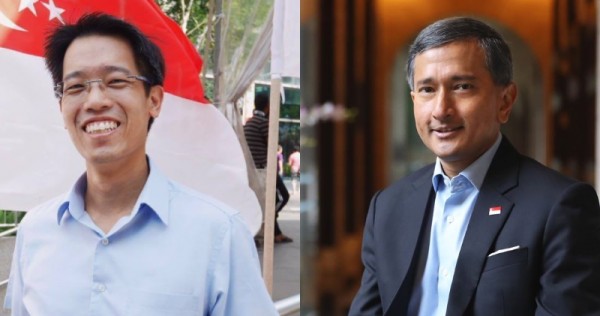
This “exposure notification” tool, however, isn’t being used in Singapore — despite the Government Technology Agency (GovTech) having built their own contact-tracing app TraceTogether. It’s something that Workers’ Party figure and Non-Constituency Member of Parliament (NCMP) Gerald Giam pondered in a blog post yesterday (June 14).
SINGAPORE: Jacqueline Ang’s eldest daughter was 10 years old when it happened for the first time.
The girl was at home lying on the floor, her body trembling. After a while, she got frustrated and cried.
“What was she doing?” wondered Ang, who could not imagine at first that her daughter was trying to masturbate. It was also not something she could ask her daughter, whose severe form of autism meant she was non-verbal.
After observing the girl for a period of time, however, her actions became apparent.
“She’d put her hands at her private parts, and then she’d even try to put things at her private parts,” recounts Ang, 44. “Eventually, she also did it at school. So the teacher also saw it.”
The girl’s younger twin sister followed suit a year later.
Jacqueline Ang with her twin girls.
Both of them were diagnosed with a similar form of autism when they were two and a half years old. Now at the age of 18, they have the intellectual development of two-year-olds.
In taking care of their special needs growing up, it had not crossed Ang’s mind that she would have to confront the issue of sexuality in a special way too.
“I thought it would just come naturally and they’d adapt to it naturally, and that was it,” she says. “As parents, we always focused on … whether they could go to school (or) take care of their own daily living.”
But when puberty struck, this conservative mother had to find ways to support their sexual development while coming up against the taboo around the topic.
Ang grew up in a single-parent family, where sex was never discussed.
It was only last year when the Disabled People’s Association (DPA) organised its first sexuality workshop for people with mental and physical disabilities, and their carers.
The event was a small one and not publicly promoted. But that was when Ang saw that she was not alone in trying to get a handle on sexuality in youngsters with autism.
She also found practical advice to put into action — all part of a journey she has learnt to embrace.
THREATS DIDN’T WORK
When her eldest daughter started masturbating at school, Ang’s first reaction was to threaten her if she did not stop, for example by taking out the cane to scare her.
Ang with her eldest girl.
“That’s how we were brought up,” says the mother of three. “When we didn’t behave, our parents punished us, and then we’d fear the punishment (and) not do the behaviour.”
That approach, however, quickly got her nowhere.
“I realised that it wasn’t effective … The more we scolded her, in fact, (the more) her emotions just broke. The meltdowns were very frequent. Then we also got frustrated,” she recounts.
She decided to bring the subject up during a yearly assessment with the paediatrician. The advice she got was to guide her daughter to a private setting and “give her space because she needs to have that space”.
Ang hoped that the issue would go away, but it got to a point where, with both twins trying to masturbate, she had to deal with it daily.
WATCH: Sexuality and my teenage children with autism (7:25)
“I think the more we tried to stop (it), the more they’d come back (to it),” she says. “When they … didn’t get to do what they’d wanted to do, they’d scream, cry, and we could see that they were frustrated.
“Even if you gave them toys, food, things that we could give usually, they wouldn’t calm down.”
They also tried to masturbate in public, the effect of which went beyond their parents having to face “embarrassing moments”.
“We wouldn’t feel like wanting to go out, until maybe months later that we manage to pick up the courage,” says Ang, who works at the Singapore University of Social Sciences.
“Because every single time we go out, it requires a lot of planning, especially if we’re going to new places and we know that they’re going to have new experiences. And we don’t know how they’d react.”
She went online to look for more information, but what she found was “very general and (scratching the) surface”. The only solution, it seemed to her, was to give her twins space.
In the twins’ room.
It was hard for her to speak to other parents — who seemed to share their experiences only if they had boys, and not girls, with special needs — or even to her husband and other family members.
“I also had a mental block. As Asians, we’re very shy of talking about such things,” she says.
“But over the years … I realised that I shouldn’t stop them but see what ways I can help them to cope with it. But honestly speaking, I just thought, ‘But I don’t know how.’”
The best she could do, besides giving them space, was to buy bolsters and big soft toys for them to hug for comfort.
Ang felt that bolsters were a “socially acceptable” solution.
PRONE TO MISCONCEPTION
Relationship counsellor and clinical sexologist Martha Tara Lee acknowledges that it is only human for parents of youngsters with special needs to react in the way Ang first did when her twins tried to express their sexuality.
“Parents are just trying to do what they can, based on what they know,” says Lee, referring to the tendency to punish.
“Besides deterrence, I think it’s also avoidance, like ‘I don’t want to deal with this — maybe this is just a one-time thing’. But if it goes on for a long period of time, then it can become a habit.”
Hence it is important that youngsters with special needs “learn the difference between public and personal space”. For carers to teach these things, however, it would help to change their misconceptions first.
Dr Martha Tara Lee.
“We just assume people with disability don’t think about sex (or) have sexual needs,” cites Lee, who attributes this to a lack of representation of people with disabilities in popular media.
“With people with mental disability, they may not understand what’s going on, but … as they come into puberty, they find themselves getting horny. They may find themselves getting erections (or) having wet dreams.
If nobody explains all these to them, then they may feel confused (or) scared.
DPA advocacy lead Sumita Kunashakaran agrees that carers are often taken aback because these sexual awakenings “seem to come out of nowhere”.
She also thinks these are hard conversations for parents to have because of “the environment that we’re in”, where the topic of sex and “what healthy sexual relationships look like” is “culturally sensitive”.
Sumita Kunashakaran.
For this story, CNA Insider had reached out to other parents too, and all declined to talk.
Discussing sex is not something that is often done for people with mental disabilities even in clinical settings, acknowledges psychiatrist Chong Siow Ann, the Institute of Mental Health’s vice chairman of its Medical Board (Research).
“To be honest, sexuality is rarely discussed during clinical consultations with mental health patients, unless it’s in the context of some specific sexual disorder or as a possible side effect of some of the medications we prescribe,” he says.
“The normal and natural sexual interests and desires of people with serious mental illness don’t often seem as important or even relevant, and are usually submerged by other clinical priorities.”
SEX ED FOR SPECIAL NEEEDS STUDENTS
In schools, mainstream sex education for students with special needs focuses a lot on personal hygiene and care rather than emotions and relationships, says Kunashakaran.
“For example, for females, what do you do when having your period, how do you put on a pad, how you use a pad, when you should change it, how often you should wash your private areas,” cites the 32-year-old.
It’s helpful, but I don’t think that’s the be-all and end-all of the conversation.
The Ministry of Education started a pilot in sexuality education in six special education (Sped) schools in 2013.
In 2015, the ministry also awarded a S$24,000 tender to a company to develop a guide to help Sped schools design programmes in personal safety and relationships — amid growing concern over youngsters becoming sexually active and lacking a good understanding of consent.
Special education students at Pathlight School. (File Photo: TODAY/Koh Mui Fong)
Research overseas has shown that without proper guidance, people with developmental disabilities are more likely to be sexually exploited than others.
This is one of the reasons disability organisations in Singapore also run sexual education programmes.
“Most of them tend to focus on what’s appropriate behaviour in public, what’s safe (and) what are unsafe touches,” says Kunashakaran. She sees a need, however, for “a lot more of an in-depth conversation” on relationships.
“(Sex education) is very much about how you can address (your feeling or urges) in a safe manner, whether for yourself or the other person that you’re with.”
At the MIJ Special Education Hub, where there are youths in their 20s, the topic of boy-girl relationships is covered under the school’s sex education.
In co-founder and director Faraliza Zainal’s experience with her students, however, behavioural issues tend to be the kind of thing the school mostly works on with parents.
Faraliza Zainal has a Diploma in Teaching and Supporting Children with Special Needs.
For example, one 15-year-old boy with moderate to high autism used to masturbate up to five times a day in the toilet.
So the teachers gradually increased the interval between his toilet breaks while educating him on masturbation according to Islamic teachings, until the point where they were confident that he had stopped.
Faraliza has been open about discussing masturbation with her son Ashraf, who has autism too and is now 20 years old. But it has not become an issue for her.
“As he grew older (and) went into puberty, there were a lot of mood swings … I had to handle. Sometimes he could be happy, then in a split second, he could be very upset about something,” the 49-year-old recalls.
“But nothing about masturbation … I think because we never allowed him to be on his own, doing nothing. Because the moment he’s doing nothing and he’s exploring … touching his private parts, that’s when it would lead to something else.”
Mum applies essential oils on Ashraf’s face to help him with speaking.
LET’S TALK ABOUT SEX
For parents with a lot of questions about their children’s sexuality, the DPA held its first such workshop last year, run by Lee.
It was open to association members, whose children have a range of disabilities: Physical, sensory, learning, intellectual and psychosocial. And the response was “overwhelming”.
“We opened it up to about 20 slots, but I think we had about 50 parents,” says Kunashakaran. “We had to close the registration.”
The workshop topics included personal boundaries, bodily changes, sexual reproduction, emotional and physical sexuality, sexual diversity and societal expectations.
The parents were shy at first, recalls Ang, who attended with her husband. But when she saw Lee “speaking so openly” as a Singaporean woman about the same age as herself, she determined to “take it as a normal (discussion).”
“When I started to share, I realised that the other parents were like, ‘wah, this mother is sharing’. So they also shared. In that way, we started to understand … this wasn’t an isolated problem,” Ang recounts.
Until that point, even the DPA had reservations about the workshop content because it was “so far out” compared with the association’s usual policy-related work, says Kunashakaran.
We were concerned that … (it) would be a little bit out there for the parents whom we work with, but they’ve embraced it, and a lot of them were a lot more excited than we expected.
Lee and the DPA are now planning an expanded programme called Di-Sex, including one-on-one consultations as requested by some parents — so people with disabilities or their parents can get “customised information about how they can go through their sexual relationships or the journey through puberty in a healthy way”.
COVID-19 has derailed plans for classes this year, but the DPA hopes to resume the programme in March.
Ang is keen to learn more. She has already been advised to show her twins more physical affection, which she “didn’t do that much” in the past.
“Now, I’m more relaxed. So every day I’d tell my elder one, ‘come let’s have a hug’, or things like that. I just want to give this kind of emotional assurance,” she says.
The girls, who go to Rainbow Centre — where they pick up daily living skills like getting dressed — are now masturbating “much less”, she adds.
She even bought a sex toy online, after hearing from Lee that it could be a useful outlet for their needs. But now she “can’t imagine” them using it, or bringing herself to test its safety and guide them.
Having to grapple with their sexuality, however, meant she was able to overcome her inhibitions to talk through the birds and bees to her youngest daughter, who is neurotypical, studying in a mainstream school and seven years the twins’ junior.
“I practically showed her everything — what a male and female part is … the science part and the emotional aspect,” recounts Ang. “She seemed to understand when she was eight. Now she’s 11, she knows.
“She did tell me, ‘Huh? I don’t want to have puberty, can or not? It’s a lot of trouble.’”
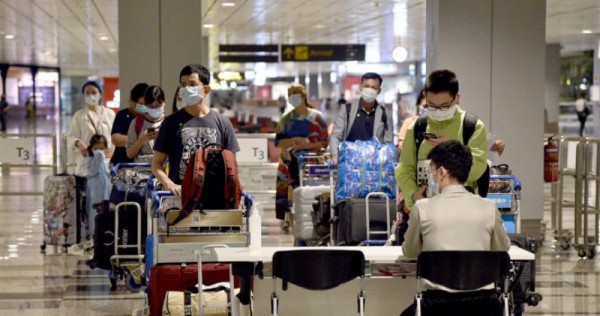
A Bangladeshi man who came to Singapore to seek medical treatment that was not related to Covid-19 later tested positive for the coronavirus, making him the first imported case here since May 10.
He is among the 407 new coronavirus cases reported in Singapore on Sunday (June 14), said the Ministry of Health (MOH).
The patient arrived in Singapore on Wednesday (June 10). His health declaration submitted before immigration clearance indicated that he did not have any Covid-19 symptoms, and had not been diagnosed or suspected to have the infection.
He was subsequently tested for Covid-19 and his results came back positive on Saturday (June 13).
MOH said that the imported case was placed on stay-home notice upon arrival in Singapore, and could only leave his designated place of residence for medical consultation and follow-up.
The Health Ministry said that contact tracing is ongoing, and that identified close contacts have been placed on quarantine.
The Straits Times understands the man does not hold a long-term pass here.
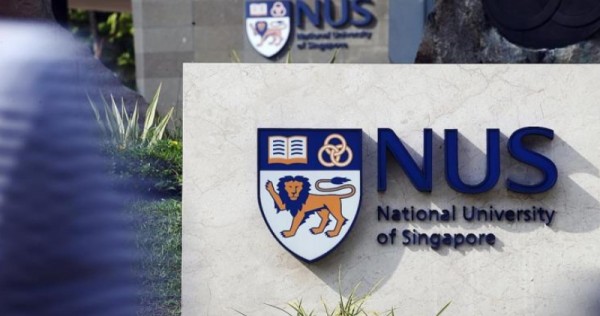
A handful of National University of Singapore (NUS) students who cheated on a practical examination they were allowed to take home in March were punished last Tuesday, when results for the module were released.
On top of receiving zero marks for the exam, they have been barred from exercising the satisfactory/unsatisfactory option for the module.
The option to write off grades for up to 10 modular credits for any module taken last semester was made available to NUS students in light of the disruption to learning caused by the pandemic.
The students have been reprimanded, and the plagiarism offence will be included in their formal educational records at the university, said a spokesman for the NUS School of Computing last Thursday.
The spokesman declined to reveal how many students were caught but told The New Paper: “Thorough plagiarism checks were conducted to look into allegations of plagiarism in a practical examination for CS1010E programming methodology.
“Following the plagiarism checks, some of the students in class, which comprises engineering students, were found to have plagiarised in this practical examination.”
Safe distancing and GE: PAP taps live chats, WhatsApp to reach out to residents
Parliament Speaker Tan Chuan-Jin (right), MP for Marine Parade GRC, holding an online meeting with community leaders in his ward. Weekly Meet-the-People Sessions have also switched to a remote format. PHOTO: TAN CHUAN-JIN/FACEBOOKGetting candidates to go door to door alone or in small groups, holding online dialogues, and using WhatsApp to reach residents – these are some ways the People’s Action Party (PAP) intends to campaign in the upcoming general election, say party activists.
A public servant has been arrested for allegedly leaking classified information to the public on the resumption of activities in phase two of reopening Singapore’s economy before it was officially released.
The 50-year-old Singaporean man was arrested on Saturday (June 13) for the offence of wrongful communication of information under Section 5(1) of the Official Secrets Act.
Police said they received a report on Friday (June 12) that information about post-circuit breaker plans was circulating via WhatsApp messages among members of the public.
Preliminary investigations revealed that the man, who was an authorised recipient of the classified information, had allegedly shared the information on Thursday with members of a private WhatsApp chat group.
The information was subsequently disseminated from the chat group, which was not authorised to receive the information, and circulated widely, said the police.
SINGAPORE: COVID-19 has forced many companies to adopt flexible and remote working arrangements – hastening a trend that had threatened to disrupt the way we work for years now.
While this is a step in the right direction to keep in line with technological advancements, work-life balance and modern work approaches, there is another human resource practice that needs to be disrupted. Remote working brought about by COVID-19 can nudge employers to do so.
The performance review is a traditional HR method by which the job performance of an employee is documented and evaluated. It is typically conducted annually and is mostly a retrospective review of the past year’s work results according to pre-determined key performance indicators.
According to the quarterly survey Randstad Workmonitor, in the first quarter of 2019, 47 per cent of respondents globally still have regular annual performance reviews despite as many as 88 per cent of them feeling that such performance reviews are a one-sided affair that is mainly used by the line manager to provide feedback.
The COVID-19 situation has only complicated matters.
Given that performance is measured and benchmarked only at the end of each year, most managers gravitate to other means to keep their team in check on a regular basis.
This means visually checking in your employee’s punctuality every morning and a headcount check on who is putting in extra hours at the end of the day.
Remote work at present may not allow managers to do this sort of monitoring. Although I have heard of companies where bosses mandate their employees to be logged onto Zoom the entire work-day so that their movements can be monitored.
Clearly a better and more adaptive performance review process is needed to keep employees accountable, drive their performance and maintain the sanity of traditional managers.
NOT A FAIR GAUGE OF PERFORMANCE
The main grouse about the annual performance review would be its frequency.
COVID-19 has forced many companies to adopt flexible and remote working arrangements. (Photo: Unsplash/Priscilla Du Preez)
Lumping everything good and bad over the span of 12 months and distilling it over one sitting towards the end of that period is not only daunting but perhaps not reflective of the employee’s entire gambit of contributions and value-add to the organisation for the entire year. It is almost like a workplace PSLE every year.
There is also the lag effect – whatever that was formalised at the beginning of the year fails to adapt to what actually evolves over the next 12 months.
New scope of work may have been added or even a re-designation. The often overly generic catch-all performance review form can barely accommodate the change.
For instance, many office administrative executives are now being nominated to be Safe Measurement Officers (SMO) as part of the requirements on safe management at the workplace.
With a wide scope of duties, it may take up considerable hours within a week. This may have a material negative impact on employees’ abilities to carry out their pre-defined scope of work and not accounted for by the performance benchmarks set earlier in the year and could result in a bad review by the year end.
If it is not well-documented, few can accurately recall what may have occurred over the earlier part of the period. It is then likely to lead to a “recency” effect as management tend to focus on what their employees had done in the few weeks or months leading up to the evaluation, rather than on what had been done over the duration of the year.
Such a system may be unfair to employees who had front-loaded their efforts in the earlier part of the year and either could not sustain them or did not have enough projects or opportunities to showcase their work in the later part of the year.
A better and more adaptive performance review process is needed to keep employees accountable, drive their performance and maintain the sanity of traditional managers. (Photo: Unsplash/rawpixel)
Some employees may also game the system by stepping up their performance closer to the evaluation exercise making the annual performance review an unequitable tool for the employer too.
INEFFECTIVE IN MOTIVATING EMPLOYEES
Part of the annual performance review also includes a forced ranking of employees.
Developed in the mid-1980s by then-CEO of General Electric (GE) Jack Welch, it calls for employees to be distributed across a bell curve where 20 per cent are on top, 70 per cent of them are doing their jobs well but not excelling, and 10 per cent are hurting the company by underperforming and should be fired.
Much as this is heavily credited for the success of GE, it is also the same grading system that crippled Microsoft’s ability to innovate according to a 2012 Vanity Fair report.
Employees became so fixated on outperforming colleagues that they diverted their attention away from organisational goals to maximise individual success.
In any case, according to global advisory firm Gallup, annual performance reviews don’t really do the job in getting employees to improve productivity with only 14 per cent of employees strongly agreeing that their performance reviews help them to improve.
A REVIEW ITSELF IS USEFUL
It is unfortunate that many companies are still using such an archaic annual process. According to talent management platform provider ClearCompany, as many as 69 per cent of companies still rely on annual or bi-annual performance reviews
Simply increasing the frequency of the performance review can bring wider benefits to both employers and employees.
FILE PHOTO: Retired CEO and Chairman of General Electric Jack Welch speaks to students at the Sloan School of Management at the Massachusetts Institute of Technology in Cambridge, Massachusetts April 12, 2005. REUTERS/Brian Snyder/File Photo
It could lead to a much better understanding of employees’ strengths and limitations if you see how their performance is progressing over relatively shorter periods of time, while regular feedback for the employee can help him better align his performance with expectations too.
Regular check-ins also make it easy to compare notes and minimise any form of miscommunication while keeping employees engaged.
According to Jim Harter, Chief Scientist at Gallup Research, engaged employees report 22 per cent higher productivity. The same organisations also see lower turnover and lesser safety incidents.
Most importantly, it shows that managers care and give their employees the time and opportunity to perform well.
Even Welch acknowledged that the annual process’ most important function is to provide candid feedback to the employee. “As a manager, you owe candour to your people,” he noted in a 2013 essay in the Wall Street Journal. “They must not be guessing about what the organisation thinks of them.”
REGULAR CHATS CAN DO THE TRICK
If candid feedback is its biggest value-add, and one that we agree employees can benefit from, then the key problem with annual performance reviews is primarily its frequency and one that can easily be addressed.
Instead of one big annual session, companies could look into weekly or monthly mini-sessions that allocate a dedicated period of time for check-ins.
Adobe, for instance, moved from yearly performance rankings to frequent “check-ins” where managers provide employees targeted coaching and advice, resulting in as many as 78 per cent of employees reporting that their manager is open to feedback from them – higher than before.
FILE PHOTO: The corporate logo of software company Adobe is seen in Posa Studio school in Caracas, Venezuela October 9, 2019. REUTERS/Manaure Quintero/File photo
This can be done easily in real-time or remotely. Such a framework could be best adopted in the current remote working environment brought upon us by COVID-19.
Since managers currently don’t have face time with their employees, they simply need to schedule a weekly 10-minute chat with their staff to assess how they are faring and provide feedback.
This is especially since some of the traditional metrics used in performance review exercises such as punctuality and hours spent in the office may now be difficult to track.
BETTER EMPLOYEE ENGAGEMENT
In my previous business, we simply sent a questionnaire out weekly to stay informed and address issues related to performance, engagement and work culture through questions such as learning what is going well in that week, key challenges, any improvement ideas and top priorities for the coming week.
Employees would feel that the goals set for them are much more achievable given the smaller milestones. The small wins gained in achieving them will go a long way in building employee confidence and satisfaction.
Happier people do a better job and are more productive, according to a study conducted by the University of Oxford’s Saïd Business School.
Coupled with a quarterly performance snapshot to look back on the feedback and conversations that took place over the previous three months, both employees and employers can get clarity on performance relative to the quarterly goals and discuss concerns for the coming quarter.
It is no wonder that more companies are doing away with this annual exercise. According to a report in the Harvard Business Review, by 2016 more than one-third of US companies had done away with the traditional annual appraisal process.
Besides Adobe, other technology giants like Dell and IBM led the way, according to the article, joined later by Accenture, Deloitte and PwC.
CAN BE MORE COST EFFECTIVE
Some may lament that doing weekly and quarterly sessions equates to a lot more paperwork compared to the annual performance review. And it isn’t environmentally friendly either.
(Photo: Unsplash/Charles Deluvio)
Actually, structured annual performance review exercises can end up being costly affairs if you take into account the managers’ and employees man-hours in conducting the review, completing the lengthy paperwork before and after and any human resources solutions licensed or purchased.
The frequent short calls, on the other hand, could be a lot more effective with less resources employed.
Moreover, technological innovation in the performance space has also grown in leaps and bounds to help companies better organise and manage their people’s performance.
Affordable performance apps available in the market would not just digitalise that process but enable regular check-ins and the ability to provide real-time feedback with full analytical insights based on proven performance methodologies.
The key to this is still overcoming an archaic mind-set that is bent on using last century’s tools to manage current and future teams.
As organisations currently embrace themselves for disruptions in business models and how they work, it is also timely for them to review how they can build a happier, more engaged and productive workforce through updated tools.
Download our app or subscribe to our Telegram channel for the latest updates on the coronavirus outbreak: https://cna.asia/telegram
Adrian Tan is Practice Leader – Future of Work Tech at PeopleStrong after spending a decade in recruitment and outplacement. He writes regularly on HR tech.
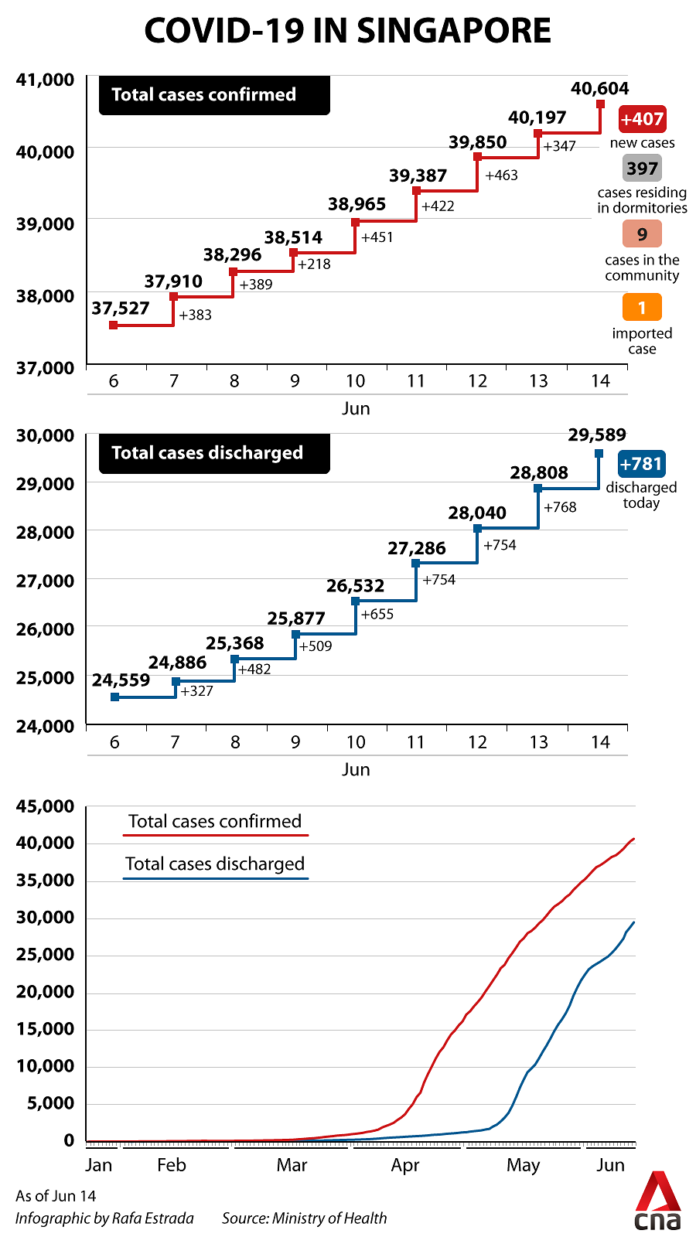
SINGAPORE: Singapore reported 407 new COVID-19 cases as of noon on Sunday (Jun 14), taking the total number of coronavirus infections in the country to 40,604.
Among the new cases were nine in the community – four are Singaporeans and five are work pass holders.
There was also one imported case reported on Sunday – a Bangladeshi national who arrived in Singapore on Jun 10 to seek medical treatment that is not related to COVID-19.
“His health declaration submitted before immigration clearance indicated he did not have any COVID-19 symptoms, and had not been diagnosed or suspected to have COVID-19 infection,” said the Ministry of Health in its evening update.
“He was subsequently tested for COVID-19 after arrival in Singapore and his results came back positive on 13 June. Contact tracing is ongoing, and identified close contacts have been placed on quarantine.”
The rest of the 397 new cases were work permit holders living in dormitories.
MOH said that another 781 cases have been discharged from hospitals or community isolation facilities, bringing Singapore’s total recoveries to 29,589.
There are currently 238 confirmed cases still in hospital, most of whom are stable or improving. Two patient are in critical condition in the intensive care unit.
There are 10,751 cases in isolation and cared for at community care facilities. These cases are those with mild symptoms or are clinically well, but still testing positive for the virus.
No new clusters were reported.
EARLIER CASES
On Sunday, the Ministry of Education (MOE) said all 47 students at St Anthony’s Canossian Secondary School who had been in close contact with a COVID-19 case tested negative for the coronavirus.
Twelve staff members have also been placed on leave of absence or home quarantine. Only those those on quarantine are being tested for COVID-19. Their results have not been confirmed.
On Saturday, MOH reported that a 73-year-old Singaporean man linked to the cluster at SAFRA Jurong died from complications due to COVID-19 on Friday.
He had a history of hypertension, hyperlipidaemia and chronic kidney disease, and tested positive for the coronavirus on Mar 9. He was warded at the National Centre for Infectious Diseases (NCID).
He was the 26th person to die in Singapore from the coronavirus.
HUMAN CLINICAL TRIALS TO START
Singapore-based company Tychan is set to start human clinical trials next week for a treatment that could slow down the progression of COVID-19 in patients.
The treatment could also help patients recover faster and provide temporary protection against the coronavirus, the company said.
The tech firm announced earlier this week that it has received approval from the Health Sciences Authority to begin phase one of a clinical safety trial in healthy volunteers.
On Saturday, it was announced that a ministerial committee will be formed to oversee and coordinate Singapore’s digitalisation push which has been ramped up in light of challenges from the COVID-19 pandemic.
It will be chaired by Minister for Communications and Information S Iswaran and Minister for Trade and Industry Chan Chun Sing.
Key priorities of the committee include helping people to learn new skills and seize technology-related jobs, as well as getting more small businesses, especially those battered by the pandemic, to go digital.
It will also be looking at how to boost digital adoption among hawkers and the elderly – segments in the society which have been seen by some as “the most challenging in terms of digitalisation”.
SINGAPORE – There are 407 new coronavirus cases confirmed as of Sunday noon (June 14), taking Singapore’s total to 40,604.
They include nine community cases, comprising four Singaporeans or permanent residents and five work pass holders, said the Ministry of Health (MOH).
Migrant workers living in dormitories make up the vast majority of the other cases on Sunday, said MOH.
More details will be announced on Sunday night.
On Saturday, the ministry announced that a 73-year-old Singaporean man died on Friday from complications due to Covid-19.
The patient, identified as case 161, was confirmed with the coronavirus on March 9, and had a history of hypertension, hyperlipidaemia and chronic kidney disease. He is linked to the cluster involving a dinner function at Safra Jurong.
His death brings the total number of deaths from complications due to Covid-19 to 26. Ten others who tested positive for the coronavirus have died from other causes.
Singapore reported 347 new coronavirus cases on Saturday, bringing the total number of infections past the 40,000 mark.
Doctor, nurse, cleaner, garbage collector, hawker – these are the jobs that Singaporeans consider most essential in today’s society.
Yet, many shun most such work themselves, with 57 per cent of respondents in a survey saying they do not want to be garbage collectors, and 42 per cent rejecting cleaning jobs.
Conversely, occupations such as business consultant and human resource manager were ranked among the five most “non-essential” jobs, but were also among the top jobs people want to do.
“A big factor in the calculus (of how people choose jobs)… is the ‘social prestige’ attached to the job – essential or otherwise,” said National University of Singapore sociologist Vincent Chua.