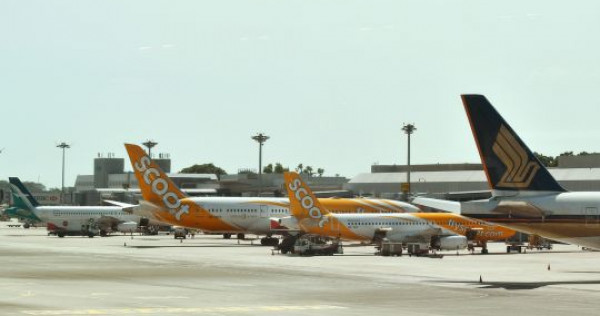
SINGAPORE – Singapore Airlines’ budget carrier Scoot is suspending flights from Singapore to 11 cities in mainland China on Friday (Jan 31) due to the growing scale of the Wuhan virus.
The budget airline will also be reducing flights to eight other cities.
Singapore Airlines (SIA) and SilkAir will also be reducing capacity on selected routes to mainland China in February, subject to regulatory approvals.
In a Facebook post on Friday, Scoot announced that the airline would be making adjustments to its network in China, Hong Kong and Macau “due to weak demand and operational constraints arising from the growing scale of the novel coronavirus outbreak”.
SINGAPORE: A total of 967 students and employees from schools in Singapore have been placed on a leave of absence because of their recent travel history to China, said the Ministry of Education (MOE) on Friday (Jan 31)
MOE had announced on Monday that students and staff members of government schools – including kindergartens, primary, secondary, special education schools, junior colleges and the Millenia Institute, polytechnics and the Institute of Technical Education (ITE) – will have to take a compulsory leave of absence after returning from China as part of measures to protect schools from the Wuhan virus.
“A leave of absence is issued to students and staff who are healthy, but have recently travelled to mainland China. It is a precautionary measure,” MOE said.
“Although (not legally binding), we strongly urge those on a leave of absence to be socially responsible and comply with it.”
The leave of absence provisions cover students, teachers, non-teaching staff such as administrators as well as other non-school staff, including canteen vendors, security guards, kindergarten and student care centre staff.
As of Jan 30, 852 students and 115 staff were on leave of absence across schools, polytechnics and ITE.
The breakdown is as follows:
“As per the health ministry’s guidelines, students who have visited Hubei and are currently serving their leave of absence may be issued with quarantine orders if they are at a higher risk,” MOE said.
“Otherwise, they will continue to serve their 14-day leave of absence.”
Students who have been placed on leave of absence will be supported by a home-based learning plan, said MOE.
“Teachers will assign work from the textbook and workbook to help the affected students keep up with their classmates,” said MOE.
“Students will also have access to the Singapore Student Learning Space, an online platform with a range of curriculum-aligned resources to support their learning.”
One question addressed the provision of hand sanitisers in classrooms. MOE said that hand sanitisers are not necessary if hands are washed thoroughly and regularly with soap.
“Some individuals may also be sensitive to sanitisers. Toilets in our schools and institutes of higher learning are well stocked with liquid soap. We will also be stepping up the cleaning of toilets to ensure they are clean.”
It also explained why schools are continuing to hold assemblies, co-curricular activities and other events.
“There is yet to be evidence of community spread of the Wuhan virus in Singapore,” the ministry said.
“With the precautions we are taking such as temperature taking and leave of absence, health experts have advised that schools can continue to have mass sessions like assembly.”
On the issue of delaying the opening of schools for seven or 14 days after the Chinese New Year holidays, like Hong Kong did, MOE said that such a measure was not necessary.
“We had considered this, took advice from medical experts, and concluded that it is not necessary to do so, because there is currently no evidence of community spread of the virus in Singapore,” it said.
“Ours is a different situation compared to Hong Kong’s. Hong Kong is closer to the epicentre of the Wuhan virus outbreak and is closely connected to mainland China. The number of students and staff returning from mainland China are likely to be many times ours.”
The ministry added: “We assessed that the number of students and staff returning from China recently is manageable, and a 14-day leave of absence will be more targeted, while allowing schools to open and life carry on as normally as possible, which is an important aspect to safeguard in an emergency situation.”
On Thursday, Singapore announced three new confirmed cases of the Wuhan virus, bringing the total of infected patients in the country to 13. All cases to date are Chinese nationals.
The World Health Organization on Thursday declared a global emergency over the virus, which has also spread to more than 15 other countries.
SINGAPORE – Three more people have tested positive for the Wuhan virus in Singapore.
All are Chinese nationals from Wuhan, and there is no evidence of community spread in Singapore, the Health Ministry said on Thursday (Jan 30).
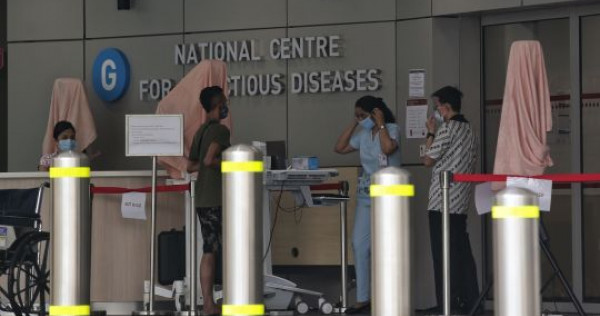
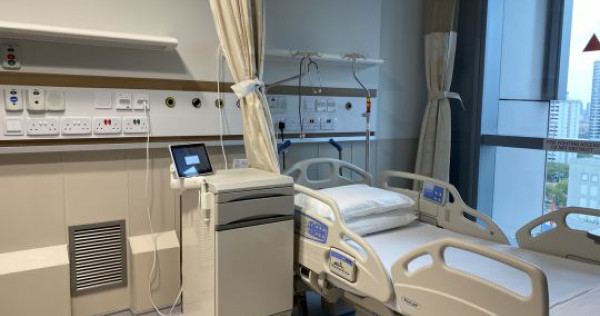
The latest patients are all in stable condition and warded in isolation rooms at the National Centre for Infectious Diseases. They are:
A 31-year-old woman who arrived in Singapore on Jan 22. She was a travelling companion to someone who had been confirmed as having the virus earlier, and had been quarantined from Sunday.
A 37-year-old woman who arrived in Singapore with her family on Jan 22.
She developed symptoms on Sunday and took a taxi to Tan Tock Seng Hospital on Wednesday.
Before being hospitalised, she stayed at Village Hotel Sentosa, Hotel 81 Princess and Home Suite View Hotel, both in Geylang. She had visited Orchard Road and Geylang, and had travelled by taxi.
A 73-year-old woman who arrived in Singapore on Jan 21.
As for the 10 earlier cases, none is critically ill, all remain in stable condition, and most are improving.
SINGAPORE: Travel agencies in Singapore have seen cancellations on holiday bookings made for China as the Wuhan virus continues to spread, leading some to suspend all tours to the country for the coming weeks.
Dynasty Travel said about 200 travellers who have made bookings to visit China in February and March, have cancelled or postponed their trips.
“People are worried,” said director of public relations and communications Alicia Seah, adding that the cancellations have risen after enhanced measures against the novel coronavirus, including a 14-day leave of absence for those working in certain sectors upon returning from China, were announced in Singapore earlier this week.
“At this point in time, we are liaising with hotels and airlines for amicable solutions for our customers,” she told CNA.
At EU Holidays, all tours to China starting from Jan 26 to the end of March have been cancelled amid rising concerns among its customers. A majority of those affected have thus far opted to change tours or postpone their trips to China, said the spokesman.
For China-bound tours departing in April, EU Holidays said it continues to assess the situation and will provide relevant updates promptly.
Likewise, Chan Brothers Travel told CNA that it is “suspending tours to China progressively with departures till Feb 29, 2020 for now”.
A woman is seen wearing a protective face mask at Orchard Road, Singapore on Jan 28. (Photo: Gaya Chandramohan)
Apart from holidaymakers having second thoughts about visiting China, inbound tours from China have also come to a near standstill following the country’s recent ban on overseas group tours, tour operators said.
The ban was announced over the weekend by Chinese authorities in an attempt to control the spread of the flu-like virus.
In response to CNA’s queries, a spokesperson from the National Association of Travel Agents Singapore (NATAS) said: “Currently, there is full cancellation of inbound tours from the China market.”
With its travel bookings from China for the month of February “all been cancelled”, Dynasty Travel’s Ms Seah said: “We are now worried about both inbound and outbound travel to and from China.
“As you know, the largest inbound tourist market for Singapore is China, accounting for about 18 per cent so the industry is actually quite reliant on Chinese tourists.”
CAUTIOUS ABOUT IMPACT AHEAD
Speaking at a multi-agency press conference on Monday, Minister for Trade and Industry Chan Chun Sing warned that the global outbreak will affect Singapore’s economy, with tourism-related sectors being of “immediate concern”.
Economists have said the repercussions on tourism could start showing as soon as next month and cautioned that if the outbreak is prolonged, it could chill travel demand worldwide and have a negative impact such as that seen during the Severe Acute Respiratory Syndrome (SARS) outbreak in 2003.
Then, at the peak of the epidemic in April 2003, many countries in the Asia Pacific reported falls in tourist arrivals by more than 50 per cent as passenger demand in the region plunged 45 per cent, according to the International Air Transport Association.
In Singapore, overall visitor arrivals fell by 15 per cent in March, followed by a steeper drop of 61 per cent in the first 13 days of April. As a result, average hotel occupancy rates fell sharply to between 20 per cent and 30 per cent, compared with normal levels of 70 per cent or above, official statistics showed.
For now, about 20 per cent of inbound tour groups from other countries have requested postponements or cancellations, NATAS said.
“NATAS is deeply concerned of the current situation,” its spokesperson said, adding that the association has sent out an advisory to all tour operators and guides as of Jan 29 “to seek their cooperation in adhering to the guidelines to prevent any spread of virus”.
These include the daily cleaning of all coaches and rescheduling of itineraries to avoid over-crowded areas for tour operators, according to the guide seen by CNA. Tour guides are to don appropriate masks when on duty, practice good hygiene, look out for symptoms among tourists and arrange for immediate medical attention upon detection.
EU Holidays said it has seen a “handful of passengers” holding back their holiday plans to the region so far.
“Business will definitely be affected,” said the spokesman from EU Holidays. “We are cautious but confident with how (the outbreak) is handled by the Singapore Government.”
Dynasty Travel’s Ms Seah also expressed hopes that the rapid containment measures adopted by governments around the world, as a result of the SARS experience, will mean “short-term pain for the long-term gain”.
To tide through the upcoming uncertainties, travel agencies said they have started reducing advertising spending on the Chinese market and are shifting their attention to other destinations instead.
“We are negotiating deals with our travel partners to stimulate more travellers to other destinations,” said EU Holidays. “We will have new measures to address the increasingly cautious sentiment.”
Meanwhile, NATAS declined to comment if its travel fair planned for Feb 21 to 23 at the Singapore Expo will go on as planned.
Given how the outbreak continues to unravel, travel agencies that have previously signed up as exhibitors said they are taking a wait-and-see approach.
Ms Victoria Chong, marketing communications executive from Chan Brothers Travel, said “now might not be the most opportune time for such an event”.
EU Holidays said while it remains a participant of the travel fair for now, it will continue to monitor the situation and might pull out if it feels that the risk exposure for its staff and customers is too high.
The new virus, which originated from the Chinese city of Wuhan, has killed at least 170 and infected more than 7,700 people in China, the country’s authorities said on Thursday.
It has also since spread to other countries such as Australia, Cambodia, Germany, Japan, Malaysia, Thailand and the United States.
Singapore has thus far confirmed 13 cases of the virus, with all of them being Chinese nationals from Wuhan.
Subscribe to our Telegram channel for the latest updates on the Wuhan virus outbreak: https://cna.asia/telegram
SINGAPORE: Governments around Asia are racing to implement measures to stem the spread of the deadly Wuhan virus.
Many have rolled out border health screenings, including Singapore and Malaysia, travel bans or require civil servants to work from home, like Hong Kong.
In the corporate space, many companies and facilities management in Asia have already implemented hygiene measures such as entrance temperature checks, restaurant or co-working space location closures, increased availability of hand sanitisers, and, at the behest of governments, reviewed their business continuity plan.
These high-stakes efforts cannot be understated, and require a wide range of actions, from assurances that frontline staff are safe to ensuring manufacturing operations can continue apace.
Aeon, Japan’s largest supermarket operator, expects sales to plummet by half, spokesperson Makoto Sueyoshi said on Monday (Jan 27).
Apple has already provided a wider-than-usual forecast for this quarter’s earnings given the uncertainty, as most iPhones are assembled in facilities in China.
Managing a virus outbreak requires collaboration and coordination, as Senior Minister of State Dr Lam Pin Min said last December at an Infectious Disease conference.
However, in our experience, levels of preparedness in the corporate world across Asia still vary widely from the best practices (which we grade with green), to the minimally prepared (an amber ranking), to the unprepared (or a red ranking).
The Apple Inc. logo is seen hanging at the entrance to the Apple store on 5th Avenue in Manhattan, New York, U.S., October 16, 2019. (File photo: REUTERS/Mike Segar)
These provide a gauge for firms to benchmark how ready they are should the Wuhan virus situation escalate further.
GREEN: BEST PRACTICES REQUIRE ALL-OF-COMPANY APPROACH
Best practices require the activation of business continuity committees or other mechanisms that include representatives across work streams.
The most immediate best practice is to audit recent employee travel to identify employees who visited Wuhan or other parts of China, and require home isolation for the duration of the coronavirus’s fourteen day incubation period.
Many firms in Singapore are following this practice set by the Singapore Government. In Hong Kong, banks including Credit Suisse Group to Morgan Stanley have asked staff returning from China to work from home.
Prudent employers will implement home isolation requirements region-wide, rather than only in locations with confirmed coronavirus cases.
Employers, including UBS Group and Goldman Sachs, have also begun to ban all employee travel to China, though a concurrent measure should be to also ban visits by all China-based staff to locations outside China, especially with coronavirus deaths reported in Beijing, far from the epicentre in Wuhan.
For both the spread of severe acute respiratory syndrome in 2003, and the influenza A (H1N1) pandemic in 2009, air travel was the cause of the introduction of this new virus into countries not primarily affected.
A man walks past a UBS logo projected on a screen in Singapore, Jan 14, 2019. (File photo: REUTERS/Feline Lim)
Thus, careful employers are also gathering data for all recent employee data should an outbreak be traced to transportation hubs such as airports, or specific flights and trains.
When it comes to insurance, well-prepared companies will review their business interruption coverage, supply chain, civil authority coverage (in the event of government ordered business closures), commercial general liability, environmental and employee travel insurance policies.
Standard policies vary and may be subject to certain exclusions, while non-standard insurance policies are expensive.
However, post-SARS and following other outbreaks in recent years, the corporate world was put on notice and companies with a culture of risk mitigation would have purchased insurance cover.
Employers ahead of the curve are also liaising with healthcare providers, especially those connected to a company medical plan, to ensure that measures are in place to screen and deal appropriately with suspected Wuhan virus cases both at the company office and at the healthcare provider.
Some general practitioners, like Banyan Clinic in Singapore, have isolation rooms stocked with necessary equipment to isolate ill employees until transport to a hospital can be arranged.
Firms with regional offices should expect to see a wide range of illness patterns across locations, with strategies and responses to be adapted for each.
Communications in local language discouraging employees from sharing rumours or other unverified information are thus also a critical best practice.
Singapore authorities’ move to stem misinformation through general correction orders may also be instructive for company leadership concerned about business continuity, reputation and accuracy of news.
In China, firms from Foxconn to Didi Chuxing have issued masks, hand sanitisers or rolled out measures to disinfect corporate premises using internal staff or external service provides. US delivery giant FedEx is also distributing alcohol wipes to teams and teams.
A Didi sign is seen on a car during the China Internet Conference in Beijing, China June 21, 2016. (File photo: REUTERS/Stringer)
But these measures, while helpful, are half-measures if implemented with insufficient management oversight.
Companies that have issued masks to employees in recent days should provide training on proper use so that employees do not have a false sense of security just because they put on a mask, and also ascertain that the masks are in working order.
Similarly, hand sanitisers provided at the office are only effective if the product is property certified and staff are trained in proper use.
For cleaning and disinfecting offices, Singapore’s Ministry of Health and National Environment Agency have published up to date standards and best practices, including how much bleach or alcohol to use, and what precautions to take after the clean-up. If a service provider cannot meet these standards, companies should consider a change.
When it comes to employee travel history, some companies are good at compiling data. However, without a tested contact tracing capability that can trace the precise movements of people, the data is of limited utility.
The challenges in contact tracing guests who stayed at Hong Kong’s Metropole Hotel at the onset of the severe acute respiratory syndrome (SARS) in February 2003, at which an infected medical doctor from Guangdong became the superspreader for the international spread of this dreaded virus, is a reminder how important contact tracing will be in the coming weeks.
Organisations remiss in preparations, or, out of fear of offending foreign governments or customers from a country or territory with an outbreak, put employees and other stakeholders such as customers and vendors, at risk.
For these reasons, even well-resourced organisations can be slow to respond to a crisis.
Around the region, companies that regularly interact with large numbers of customers such as inter- or intra-city bus services, mass transit, hotels, cinemas, malls and the like can do better to train staff on proper hygiene measures or regularly disinfect the premises.
Passengers wear masks to prevent an outbreak of a new coronavirus, as they arrive at Hong Kong West Kowloon High Speed Train Station Terminus, before its temporary closing on Jan 29, 2020. (Photo: REUTERS/Tyrone Siu)
Similar failures are an ongoing risk at companies with large numbers on-site employees such as at call centers or other campus-type settings.
This increases the public relations and legal liability risks, especially when companies in the same industries have already set the standard for best practices.
Small- and medium-sized enterprises (SMEs) might lack the resources to implement risk mitigation measures such as temperature checks or to provide masks and hand sanitisers on-site.
But flexible work and telecommuting arrangements, which government agencies are encouraging companies to implement, as well as employee travel bans, are within the means of SMEs. Guidelines from Singapore’s Manpower Ministry updated this past week provide some instructive pointers on more precautionary measures.
Regardless of company size, office cultures in Asia that encourage long working hours are common, but employers who do not monitor employees on-site presence and discourage excessive working hours increase the likelihood that run-down employees will be susceptible to illness.
Similarly, if the office culture discourages sick workers from staying home, or there is a fear of reprisal for doing so, employee health can be jeopardised.
Ross Darrell Feingold is director, business development at SafePro Group, a consultancy that advises corporate clients about travel safety and risk mitigation around the world.
Subscribe to our Telegram channel for the latest updates on the Wuhan virus outbreak: https://cna.asia/telegram
Of all the complaints to receive, this one topped one flight stewardess’ list.
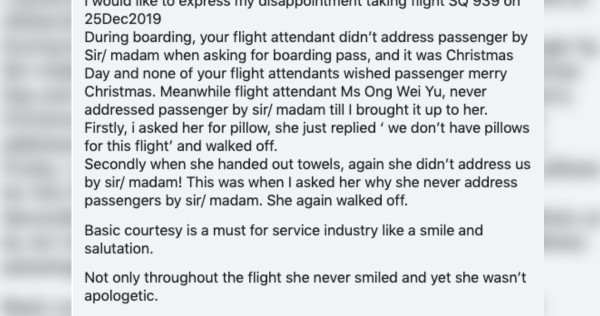
Ong Weiyu, an air stewardess for Singapore Airlines (SIA), found herself on the receiving end of an open complaint from an unsatisfied passenger who had issues with her attitude and service — she had allegedly not addressed her as Madam.
Disgruntled by the passenger’s complaint, she ranted about it on Facebook yesterday (Jan 29). The post has since been removed.
Singaporean actor-singer Aliff Aziz is in the spotlight for the wrong reasons yet again after he was arrested for behaving aggressively following a physical altercation in Geylang on Monday (Jan 27).
Several Stompers alerted Stomp to videos circulating online of the incident that happened at Lorong 21 Geylang.
In the videos, a man is seen chasing Aliff and throwing punches at him as he tries to run away.
At one point he is on the ground as the other man pummels him and kicks his head.
Later, he is seen being escorted away from an eatery while looking disoriented.
A voice is heard shouting at him in Malay to stay away from Geylang and to go to Jurong instead.
In response to a Stomp query, the police said they were alerted to a case of voluntarily causing hurt along Lorong 21 Geylang at 8.40pm.
SINGAPORE: The Wuhan coronavirus will cause current economic uncertainties to escalate, but Singapore’s economy is prepared to weather the impending financial impact, said Manpower Minister Josephine Teo on Thursday (Jan 30).
Speaking at a media interview, Mrs Teo said that there were already headwinds going into 2020 due to rising global conflict and trade tensions that had not been fully resolved. But with growing alarm worldwide over the spread of the Wuhan virus, economic uncertainty has heightened and “investment decisions are bound to be reexamined”.
Yet, while no one knows how long this health crisis will last, it is unlikely that the situation will persist, Mrs Teo said.
“It will not be business as usual because we know businesses have to take more precautions than before, but life must somehow go on, businesses must operate, workers must still be able to go to work,” she said.
She also said that current circumstances are “significantly different” than during the 2003 Severe Acute Respiratory Syndrome (SARS) epidemic.
“When you look at SARS, practically everyone was caught by surprise,” she said.
There was much that was not unknown and difficulty identifying the strain of coronavirus then. However, after the contagion first broke out in Wuhan, the Chinese government quickly released the genome sequence of the virus.
During the SARS outbreak, there was a “fairly long period of time where it was just … grappling in the dark”, said Mrs Teo. “Today it’s all about organising the response.”
Singapore’s economy has also diversified significantly since 2003. Tourism and the hospitality sector may still be an important economic growth engine but it is a “relatively modest contributor”, she pointed out.
People are seen wearing a protective face mask at Orchard Road, Singapore on Jan 28. (Photo: Gaya Chandramohan)
Within the tourism sector, the origin of tourists and reasons they come to Singapore have also become more varied, she added. While the country still attracts recreational visitors, many are here for meetings, incentives, conferencing, exhibitions (MICE)-related activities as well.
When asked how the economic outlook will impact the employment status of Singaporeans in the coming months, Mrs Teo said that employers she spoke to are well-aware of the situation and are “making every effort to try and carry on with their daily lives and their work”.
“It’s not a case of everything coming to a standstill, but they are exercising greater caution,” she said.
“For example, business deals that involve Chinese contacts … may moderate a little bit, but they will then look for other opportunities at this time,” she added.
Mrs Teo also said that companies will adapt. For example, they may hold teleconferences with clients instead of travelling overseas to meet them. Other firms may see this as an opportune time to train their staff.
“The important thing is people know that it will come to pass,” she said.
Get Out!! is a bi-weekly video series where our hosts go out and discover new things around Singapore.
This week, Le En and Walter visit Uncle Dough to try out youtiaos that are topped with interesting ingredients and flavours.
When youtiao is mentioned, my mind automatically thinks of crispy fried dough fritters paired with silky beancurd. But all that’s about to change after trying the ones at Uncle Dough.
Founded by Noorman Mubarak and his business partners, the stall located within Yishun Park Hawker Centre has been the talk of the town since its opening in Oct 2019, and for good reasons.
Unlike regular youtiaos that are served plain, Uncle Dough’s fritters are decorated with an assortment of toppings and sauces, making them oh-so delightful to dig into.
“I saw a gap in the halal and snack market in Singapore, that’s why we wanted to open up a youtiao stall,” Noorman, 41, said.
SINGAPORE – There are three new cases of Wuhan coronavirus infection in Singapore, said the Health Ministry (MOH) on Wednesday (Jan 29), bringing the total number in the country to 10.
Like the previous cases, all three are Chinese nationals from Wuhan, and there has been no evidence of the virus spreading in the community yet.
The eighth and ninth cases are husband and wife, both 56 years old.
They arrived in Singapore on Jan 19, and are currently warded in isolation rooms at the National Centre for Infectious Diseases (NCID).
Both reported that they had no symptoms during the flight to Singapore.
They developed symptoms on Friday and took a taxi to Tan Tock Seng Hospital on Monday. They were classified as suspect cases and immediately isolated at NCID, said MOH.