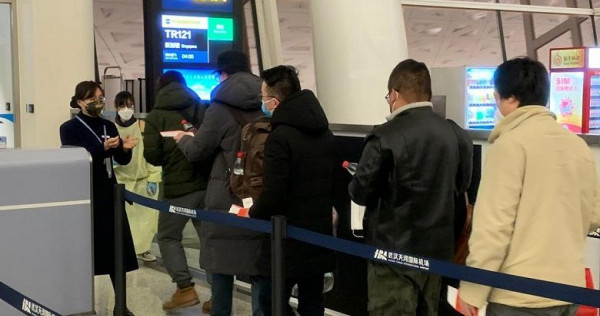
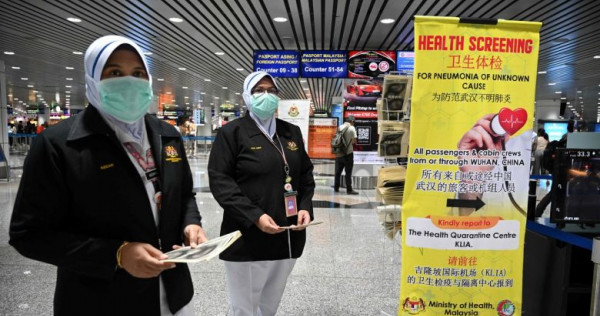
SINGAPORE – 92 Singaporeans touched down in Singapore on Thursday morning (Jan 30) after departing from Wuhan, the city at the centre of a coronavirus outbreak.
In a statement, the Ministry of Foreign Affairs said the returning Singaporeans will undergo medical screening upon arrival at Changi Airport.
The statement said: “MFA consular officers accompanied the Scoot flight to facilitate the ground operations at Wuhan.
“In a telephone call with PRC State Councillor and Foreign Minister Wang Yi yesterday, Foreign Minister Dr Vivian Balakrishnan expressed the Singapore Government’s appreciation to the PRC government, Hubei provincial government, Wuhan city government, and the PRC Embassy in Singapore for facilitating the safe return of these Singaporeans.”
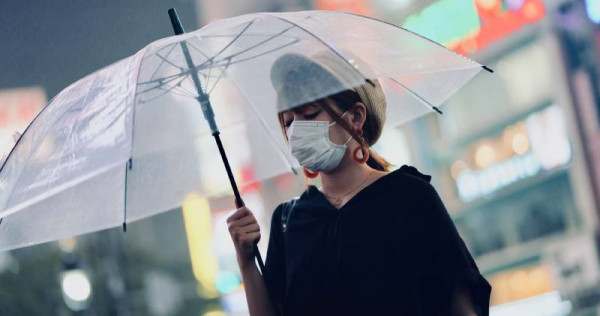
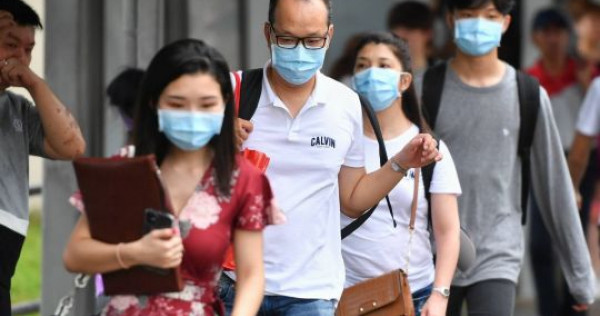
More people can be seen out and about wearing surgical masks, whether in MRT trains, at work or at gatherings in public spaces.
Wearing such masks could soon be a part of daily life in Singapore as the Wuhan virus outbreak worsens, even though it offers only limited protection.
Dr Chia Shi-Lu, chairman of the Government Parliamentary Committee for Health, told The New Paper yesterday that surgical masks should be used by people who are ill, and is not necessary for those who are healthy.
Dr Chia said: “The surgical masks can prevent the passing of virus from a wearer, but when it comes to protecting (a healthy wearer), the masks won’t protect from viruses.”
SINGAPORE: Singapore will have enough masks for its residents provided they are managed “appropriately”, said Trade and Industry Minister Chan Chun Sing on Thursday (Jan 30), amid concerns over the availability of masks as protection against the deadly Wuhan virus.
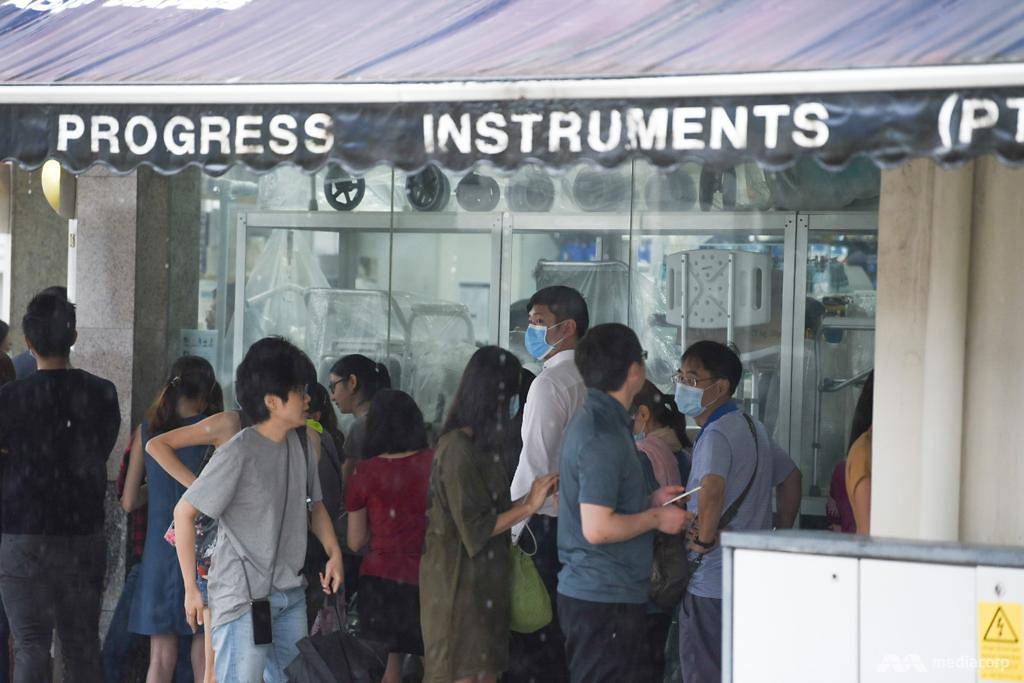
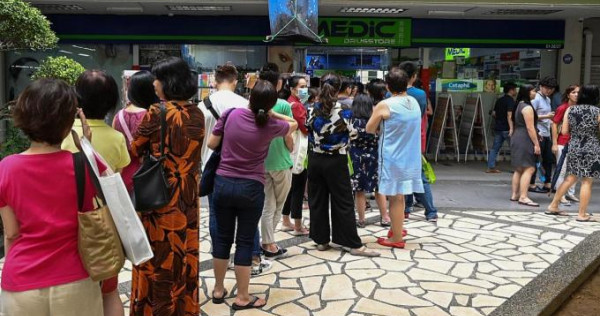
There have been long queues and empty shelves at several retail outlets islandwide since at least Jan 24, when the second and third cases were confirmed, with shoppers snapping up masks, thermometers and hand sanitisers.
“I understand many Singaporeans are concerned whether we have sufficient masks in our stockpile,” said Mr Chan.
“Whether we have sufficient masks or not will depend on three factors: How much we have in our physical stockpile, our usage rate, and our resupply quantum and frequency.
“We will have enough if we manage these three factors appropriately,” he added.
Should personal mask usage not be managed, the entire healthcare system could be “jeopardised”, said Mr Chan. This would “not allow” the government to “take care of those who need it the most”, he added.
The Ministry of Trade and Industry (MTI) has released 5 million masks to retailers in the past nine days, but the usage has been much higher than expected.
To ensure mask availability, it plans to source for new suppliers and ramp up purchases for traditional sellers.
“So far, the usage rate in the last one week has been much higher than what would be reasonably expected,” said Mr Chan.
“But we understand when people are fearful there is a tendency for them to panic buy or to hoard, but this is not useful to the entire system.”
He also cautioned that many producers are prioritising supply to China because it is the epicentre of the virus outbreak. Supply is also further constrained because certain places, such as Taiwan, have banned the export of surgical masks, he added.
Demand is also coming from other parts of the world who also have healthcare needs, such as the Philippines and bushfire-stricken Australia.
Going forward, Singapore will prioritise the resupply of masks to medical institutions.
“While we manage our stockpile we must also manage our usage rate to prioritise those who need it the most: The healthcare workers, the vulnerable ones,” said the minister.
People should “only use it when we are going to seek medical help when we are not well”, he added.
“Prepare for the long haul but never, never succumb to the short-term fears and panic buying and hoarding behaviours, because this will destroy the entire system that we have,” Mr Chan stressed.
Many were seen queueing at a medical supply store at Sturdee Rd in Singapore on Jan 29 to purchase surgical masks. (Photo: Gaya Chandramohan)
While the “vast majority of Singaporeans are staying calm”, he noted that “some in the local community that have taken to hoarding the supplies” of masks.
“Such behaviour – they are not appropriate, they are selfish and they are not helpful to our collective defence,” said Mr Chan.
“We must all act in unison, act together, and not jeopardise the entire system by doing things that we think might benefit ourselves, protect ourselves, but to detriment of everyone else in the society.”
Retailers profiteering from the situation will be taken to task, said Mr Chan, adding that warning letters will be sent to errant sellers.
He called out retailer Deen Express, which is suspected of profiteering by selling masks at high prices, saying that they will be required to explain the basis of the prices set, the cost price of their mask and their reasons for doing so.
It is “wrong for the resellers to try to take advantage of this situation to profiteer”, he said. “We will not allow this to happen.”
“We do not stand for such (profiteering) behaviour in Singapore, and we also urge Singaporeans not to support or give in to such profiteers because we do have our means to provide the necessary supplies,” said Mr Chan.
He applauded efforts by e-commerce platforms such as Qoo10 and Carousell to weed out such profiteering, and said that they will be asked to cooperate with the ministry and provide information on errant sellers.
SINGAPORE – All 1.3 million households in Singapore will be given four surgical masks, the Government announced on Thursday (Jan 30) even as it reiterated that only people who are unwell should be wearing them.
About 5.2 million masks will be given out and will be made available progressively from Saturday (Feb 1), at the 89 community centres (CC) and 654 residents’ committee (RC) centres.
They should all be handed out by Feb 9.
The masks are free and can be collected only once for each household. Those collecting have to bring along their identity card.
Those living in HDB flats can collect them from CCs and RCs from Feb 1 to Feb 5 .
Thereafter, those living in private housing estates can collect them from CCs. Those who did not collect them earlier can also get them at their RCs.
The masks will be delivered to those who are vulnerable and can’t collect them.
About 5.2 million masks for over 1.3 million households will be given out this way, but over the past nine days, the government has already released five million masks to retailers, it said.
SINGAPORE: Each Singapore household will receive four surgical face masks, National Development Minister Lawrence Wong said on Thursday (Jan 30), amid worries over the Wuhan coronavirus and long queues for masks at retailers across the island.
The masks – a pack of four sealed in a bag – will be made available progressively at 89 Community Centres (CCs) and 654 Residents’ Committee (RC) centres.
Collection will start on Feb 1 and is expected to be completed by Feb 9.
The move to distribute masks came after long queues and empty shelves for face masks were seen at retailers islandwide.
Minister for Trade and Industry Chan Chun Sing said 5 million masks have been released to retailers in the past nine days, but the usage has been much higher than expected.
A sign at the Watsons outlet at Nex stating that face masks have been sold out. (Photo: Gaya Chandramohan)
“We understand when people are fearful there is a tendency for them to panic buy or hoard,” Mr Chan said.
But not managing the usage “will jeopardise our entire healthcare system, not allowing us to take care of those who need it the most”.
National Development Minister Lawrence Wong said the distribution is a “one-time exercise” where masks from Singapore’s national stockpile are being released directly to the public.
“We are doing this to assure Singaporeans that every family will have access to masks if someone in your family really needs it,” he added.
People queueing at a medical supply store in Singapore on Jan 29 to purchase face masks. (Photo: Gaya Chandramohan)
Priority for the stockpile will be given to healthcare workers at the frontline, said Mr Wong.
For public distribution, priority will be given to areas with high numbers of vulnerable residents as well as rental block residents and Pioneer Generation residents.
For residents who are not able to collect the masks themselves, the People’s Association will mobilise volunteers to send the masks to them, said Mr Chan, who is deputy chairman of the association.
Subsequent needs for additional masks will be evaluated on a case-by-case basis, he added.
The Singapore Armed Forces (SAF) will pack the masks and deliver them to the CCs, where the People’s Association will distribute them to the public.
It will take seven days to pack the masks, with about 200,000 expected to be packed each day.
This is not the first time the SAF is conducting such an operation – during the haze crisis in 2013, it similarly packed and distributed more than 1 million masks to the public through the People’s Association.
Masks will be distributed first at RC centres within Housing and Development Board (HDB) estates from Feb 1 to Feb 5. It will then be distributed at CCs starting from Feb 6 for private estate residents and HDB residents who did not collect previously at RC centres.
Residents will have to bring their NRIC to verify their address when they collect the masks.
Collection hours on Feb 1 will be from 2pm to 10pm and on subsequent days, from 10am to 9pm.
Residents can check RC noticeboards, digital display panels and the Government’s social media platforms on when and where to collect the masks.
Mr Wong urged Singaporeans to use the masks responsibly. “Do not open up the packet and start using them right away. Use it only if you’re unwell and have to go out to see the doctor,” he said.
The recent Wuhan virus outbreak has caused a large outcry amongst some Malaysians, whose xenophobic views and crazy theories have become more prominent than ever, especially among the Malay-Muslim community.
Malaysia confirmed three new cases yesterday (Jan 29), bringing its total cases up to seven, with all of those infected being Chinese nationals.
Since the virus started spreading to other parts of the world, it started gaining attention on social media, as well as many Malaysians calling for a ban on tourists from China.
Malaysia announced a ban on visitors from Wuhan and its surrounding Hubei province on Monday (Jan 27).
Despite this, a petition named “Banned People’s Republic of China citizen from entering Malaysia” was created on that same evening, saying: “The government should think more about the health of Malaysians”.
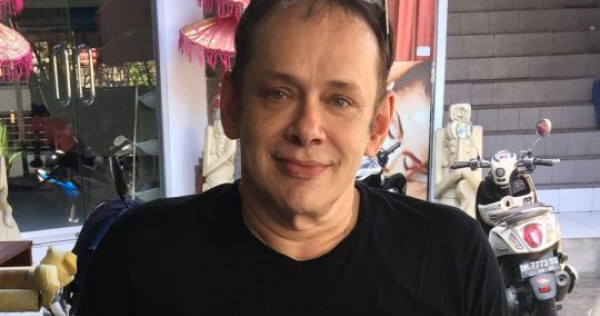
SINGAPORE – An Australian man who sexually abused dozens of boys in South-east Asia while he was based in Singapore was jailed for 35 years on Wednesday (Jan 29).
Boris Kunsevitsky, 53, was sentenced by a Melbourne court after he pleaded guilty last May to 59 charges involving sexually abusing children under 16 years old and producing child pornography.
The charges also involve inducing a child to have sex with another child, persistent sexual abuse of a child and importing child pornography material.
He will serve at least 28 years of the sentence before he is eligible for parole.
The offences took place over 15 years in the Philippines, Indonesia, Australia and Singapore, and involved 47 victims. Five of the victims were in Singapore.
According to court documents provided by the Australian authorities to The Straits Times, Kunsevitsky, who was married with a child, was based in Singapore when he committed most of the crimes.
He reportedly moved to Singapore in the early 2000s, and would travel regularly to Indonesia and the Philippines, where most of his victims lived.
To wear or not to wear? That is the question as people all over are gripped by fear of the Wuhan virus, which has claimed at least 130 lives so far in China.
In Singapore, the answer is clear from the long queues outside stores selling face masks, which have been flying off the shelves.
At Resorts World Singapore (RWS), some front-line staff were upset after they were apparently told not to wear face masks at work in case they alarm the guests.
In text messages seen by The New Paper, several guest services staff at Universal Studios Singapore in RWS discussed their concern about having to interact with tourists, including those from China.
Yesterday, the Ministry of Health (MOH) confirmed three new cases of infection, bringing the total to 10.
As in the previous seven cases, all three new patients are from Wuhan in China’s Hubei province.
A member of the RWS message group confirmed the message exchange as authentic but declined to comment further.
One message said: “I don’t feel comfortable coming to work knowing that there is no precaution for us other than sanitisers.”
That was the word Health Minister Gan Kim Yong used on Jan 22 when describing the possibility of an imported case of the Wuhan coronavirus in Singapore.
Singapore is a global transport hub, he reasoned. And the situation in China is constantly evolving, with Thailand then Japan also announcing confirmed cases.
It all started at the turn of the new year, when Wuhan in China’s central Hubei province announced the outbreak of a cluster of severe pneumonia. More than two weeks later, on the same day Mr Gan spoke to reporters, 17 people in China had died from the new virus, with more than 470 confirmed cases.
People are seen wearing a protective face mask at Orchard Road, Singapore on Jan 28. (Photo: Gaya Chandramohan)
Mr Gan also announced that he would jointly lead a multi-ministry task force to tackle the spread of the virus in Singapore. After SARS infected 238 and killed 33 people here in 2003, this was serious business.
Just a day later, the inevitable happened.
Singapore had its first case of the Wuhan virus.
HOLIDAY TO HOSPITAL
On Jan 20, a 66-year-old Wuhan resident flew with his family to Singapore from Guangzhou on a China Southern flight. The next day, he developed a fever and began coughing.
When he visited Singapore General Hospital on Jan 22, he was immediately isolated, diagnosed with pneumonia and identified as a suspect case at 10pm. The next evening, he tested positive for the new coronavirus.
A man seen wearing a protective face mask in Singapore on Jan 28. (Photo: Gaya Chandramohan)
In China, authorities locked down Wuhan in an attempt to contain the fast-spreading virus. Scoot, the budget arm of Singapore Airlines, cancelled flights to the city.
Before the first case was announced, Prime Minister Lee Hsien Loong took time out of the annual economic meeting in Davos to give his first public comments on the situation. After the SARS episode, Singapore was better prepared to deal with another outbreak, he reassured.
Additional measures came swiftly. Singapore expanded temperature screening to land and sea checkpoints, as authorities braced for a high volume of travel during the Chinese New Year holiday.
In the early hours of Jan 24, Mr Lee in his yearly Chinese New Year message said Singaporeans should be calm but watchful. The Government was implementing measures to keep everybody safe and healthy, he added.
Later that afternoon, the Ministry of Health (MOH) announced two more confirmed cases of the virus: The 37-year-old son of the first case and a 53-year-old woman from Wuhan who arrived in Singapore via a Scoot flight on Jan 21.
According to MOH, the woman had visited Orchard Road, Marina Bay Sands and Gardens by the Bay, and used public transport like taxis and the MRT. But officials stressed that the risk of transient contact was low.
This did not stop Singaporeans from snapping up masks, thermometers and hand sanitisers at pharmacies islandwide, with reports of long queues and empty shelves. MOH, however, said the supply of masks was more than sufficient.
A note on the glass door of a Watsons store in Singapore on Jan 28 informs customers that masks are out of stock. (Photo: Gaya Chandramohan)
Also that day, Malaysia announced its first three cases of the Wuhan virus, all linked to Singapore’s first case.
FOURTH AND FIFTH CASES
On the evening of Jan 26, Singapore confirmed its fourth case: A 36-year-old Chinese man from Wuhan who arrived in Singapore with his family on Jan 22.
The next day, the task force announced to a packed press conference that it was ramping up measures to combat the outbreak. This included increased border checks and compulsory leave of absence for students, teachers, healthcare and eldercare workers returning from China.
People are seen wearing a protective face mask at Orchard Road, Singapore on Jan 28. (Photo: Gaya Chandramohan)
Furthermore, several university hostels, government-linked chalets and the Outward Bound camp on Pulau Ubin were being prepared as quarantine facilities, as authorities anticipated a potential spike in the number of people needing to be isolated.
National Development Minister Lawrence Wong, who co-leads the task force, said Singapore should be psychologically prepared that the Wuhan virus could be worse than SARS, although he said it was too early to tell how the two compared.
People are seen wearing a protective face mask at Orchard Road, Singapore on Jan 28. (Photo: Gaya Chandramohan)
Meanwhile, the World Health Organization updated its Wuhan virus risk level to “very high in China, high at the regional level and high at the global level”. It admitted that it had incorrectly stated in previous reports that the global risk was “moderate”.
MOH officials highlighted that the ministry was working with healthcare stakeholders to improve its virus testing capabilities, even as scientists around the world scrambled to find a vaccine.
Later that evening, Singapore confirmed its fifth case: A 56-year-old Chinese woman from Wuhan who arrived in Singapore with her family on Jan 18. This comes as the WHO said it was still probing if the virus could spread before symptoms emerged.
SIXTH AND SEVENTH CASES
On Jan 28, Singapore announced its sixth and seventh cases, both Chinese nationals from Wuhan: A 56-year-old and another 35-year-old man who arrived in Singapore on Jan 19 and Jan 23, respectively.
The Government had indicated that it was prepared to do more if necessary, with such efforts soon becoming apparent.
A person wearing a protective face mask at Orchard Road, Singapore on Jan 28. (File photo: Gaya Chandramohan)
At the same press briefing, authorities announced that Singapore would stop entry or transit for new visitors who have travelled to Hubei in the last 14 days, as well as holders of Chinese passports issued in Hubei.
The country would also suspend new visas being issued for holders of Chinese passports issued in Hubei, as well as previously issued short-term visas and multiple-visit visas. The measures follow similar restrictions in places like Malaysia, Mongolia, Hong Kong and Macau.
People are seen wearing a protective face mask at Orchard Road, Singapore on Jan 28. (Photo: Gaya Chandramohan)
Social media had been buzzing with discussions, questions and speculation about the virus.
Later that evening, the Protection from Online Falsehoods and Manipulation Act (POFMA) Office issued a targeted correction direction to Facebook over two posts claiming that Woodlands MRT station was closed due to the virus.
It was the second correction notice issued in relation to the Wuhan virus, following a HardwareZone Forum post claiming that a person in Singapore had died from the virus. Earlier, the Government had stressed the need for swift action against such falsehoods.
NO END IN SIGHT, BUT SOME GOOD NEWS
This is especially as the virus is expected to stick around for some time.
Experts warned that the outbreak could last months, as research emerged that the virus could have been present in China since Dec 1, a full month before Wuhan raised the alarm.
A boy wearing a mask plays with a toy at Singapore General Hospital, Jan 28.
Global efforts to combat the virus also started to pick up momentum. On Jan 29, the United States announced that it was developing a vaccine for the deadly virus, although the process could take six months before moving to the next phase.
Scientists in Australia also said they had successfully developed a lab-grown version of the Wuhan coronavirus, the first to be recreated outside of China, in a breakthrough that could help combat the global spread of the illness.
The virus sample would be used to generate an antibody test, allowing detection of the virus in patients who had not shown symptoms, and create a vaccine.
Russia also revealed that it was working with China to develop a vaccine, stating that Beijing has handed over the virus genome to rapidly develop express-tests that can identify the virus in the human body within two hours.
EIGHTH, NINTH AND 10TH CASES
In the evening of Jan 29, Singapore confirmed its three latest cases, again all Chinese nationals who travelled from Wuhan.
The eighth and ninth cases are a married couple – a 56-year-old woman and 56-year-old man. They arrived in Singapore on Jan 19 and are currently isolated at the National Centre for Infectious Diseases (NCID).
The 10th case is a 56-year-old man who arrived in Singapore on Jan 20. He developed symptoms on Jan 21 and was admitted to NCID a week later, after being identified as a suspect case at a health screening station at Marina South Pier.
“This is consistent with our assessment that more imported cases are expected from Hubei province,” MOH said, reiterating that there is currently no evidence of community spread in Singapore.
WHAT NEXT?
With China reporting more cases and deaths as the days go by, and the virus continuing to spread to more countries, the global challenge to contain the virus is self-evident.
In Singapore, efforts to deal with the challenge have intensified, with more in the pipeline if necessary. Still, as Mr Lee pointed out in a Facebook post on Jan 26, people have to go about their work and lives, to make sure the country’s systems continue to run smoothly and things get done.
He said: “We must remain vigilant and take precautions to protect ourselves, but as the saying goes, Keep Calm and Carry On.”
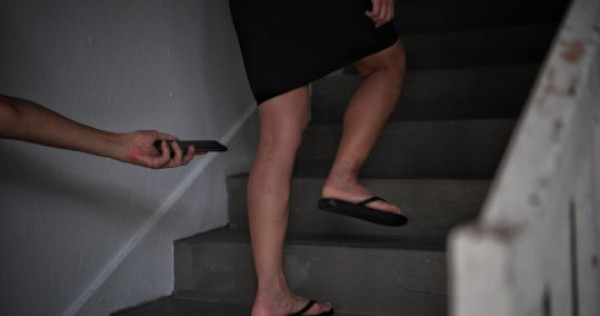
SINGAPORE – A hairdresser set up an account on online marketplace platform Carousell in 2016 and offered to pay female students who were willing to record upskirt videos of themselves while wearing their pinafores.
Ivan Seah Kim Ming, who called himself “upsktfan”, offered the girls $35 for a two-minute video and $45 for a three-minute one.
He told the girls to record their videos from a few angles and offered to pay them $10 to $20 more if the footage showed their underpants.
Seah also provided the girls with a script and offered additional cash if they recited from it.
These included phrases such as “Hey what are you looking at? Do you like to see me adjust my shirt?” and “Do you like to look at my panties underneath?”
The court heard that he also set up an account on online classifieds website Locanto with similar information. Three girls later approached Seah and sent him their videos, the court heard.
Besides these, he also recorded upskirt videos of at least 25 different victims at various places, including his home and MRT stations.