Home Blog Page 507

Wuhan virus: Temperature screening, quarantine facilities in place at foreign worker dormitories

0

SINGAPORE: Foreign worker dormitory operators have taken steps to help residents minimise the risk of getting infected by the the Wuhan virus following recommendations from the Ministry of Manpower (MOM). 

Since Jan 24, MOM officers have been in regular contact with dormitory operators to brief them on the current situation and the precautionary measures to take, a ministry spokesperson said in response to queries from CNA. 

The operators have been tasked to regularly check and monitor their residents, and perform supervised temperature checks on those who had travelled to China in the past 14 days, the spokesperson said. Dormitory operators also have procedures in place to manage residents who are unwell. 

READ: Wuhan virus in Singapore: What we know about the confirmed cases

READ: Pre-schools implement additional measures to protect children from Wuhan virus outbreak

A resident who falls ill will be brought to the sick bay situated within the facility and given medical attention.

Dormitories licensed by MOM are required to have sick bays and contingency plans, the spokesperson said. If there is an infectious disease outbreak, they must be equipped to quarantine workers. 

“MOM has also issued an advisory based off the MOH (Ministry of Health) advisory to all dormitories, to be put up prominently so that residents are aware of the preventive steps to take,” the spokesperson added. 

READ: Some Singapore-listed firms announce temporary closures, shorter hours in China amid Wuhan virus

Dormitory operator Centurion Corporation, which manages five dormitories with 28,000 beds in Singapore, said that it activated its pandemic management plan over the Chinese New Year weekend. 

It issued advisories to all employees, put up education posters for its residents and ensured all lodging sites were stocked with personal protection equipment such as surgical masks, thermometers and sanitisers, said a spokesman in response to CNA queries. 

Residents are being screened for their temperatures – security officers will take the temperatures of those who have travelled overseas in the past 14 days using contactless digital infrared hand-held thermometers before they are allowed to enter the accommodation premises, said the spokesperson.

Thermometers will be provided and they will be required to take their temperatures twice a day and report their daily temperature readings for 14 days following their return, the spokesperson added. 

Officials monitor thermal scanners as passengers walk past upon arrival of a flight from Hangzhou,

Officials monitor thermal scanners as passengers walk past upon arrival of a flight from Hangzhou, China at Changi Airport, Singapore January 22, 2020. REUTERS/Yiming Woo

New and returning residents also have to declare their health and travel history. 

In addition to the existing sick bays, each dormitory has set aside at least two apartment units comprising at least 32 beds to serve as isolation and quarantine facilities, the spokesperson said. These units have their own kitchen and toilet facilities. 

The spokesperson added that while the group currently houses close to 27,000 residents, only 1,267 – or less than 5 per cent – of its foreign worker residents are from China.

Among the Chinese national residents, 135 are known to have returned home for the Chinese New Year holidays.

A Keppel spokesperson said that Keppel Housing has adopted measures that are in line with the advisory issued by MOM for dormitory operators, which includes closely monitoring the health of residents who have been in China in the last 14 days.

According to the MOM website, there are 45 licensed foreign worker dormitories in Singapore. 

On Jan 26, the Building and Construction Authority released an advisory for contractors and other employers in the built environment sector on how to safeguard their employees’ health. 

The number of cases of those with the coronavirus in Singapore rose to 10 on Wednesday evening. So far, all cases are Chinese nationals from Wuhan.

Subscribe to our Telegram channel for the latest updates on the Wuhan virus outbreak: https://cna.asia/telegram
Source link

Commentary: Wuhan virus – when social media and chat groups complicate crisis communication

0

SINGAPORE: In as much as the Wuhan virus is a challenge for our medical facilities, it is also proving to be a trying test of our communication infrastructure.

Specifically, are people being adequately and accurately informed about the virus, its spread and impact, and the measures we can take to protect ourselves while supporting its containment?

How can the different authorities manage their communication to ensure that this crisis propels everyone to act sensibly, while not triggering a state of panic? 

COMMUNICATION HAS BEEN TRANSFORMED SINCE SARS

When SARS reared its head in 2003 and cast a gloomy pall over Singapore, the situation was significantly different but presented critical lessons for us as we now race to manage the fallout from the Wuhan virus.

Seventeen years ago, our media landscape was vastly more manageable than the cacophonous environment we inhabit today. Smartphones were yet to be invented, and social media was but a fledgling phenomenon.

The position of trusted and long-established news providers was still strong, albeit challenged by the rise of alternative online media outlets.

READ: Commentary: SARS was scary, but the experience was invaluable in shaping our Wuhan virus response

MORE: Our coverage on the Wuhan virus and its developments

The public relied principally on news purveyors that practised gatekeeping measures and were held to professional best practices of authentication and verification.

During SARS, public communication from the government and businesses was conveyed mainly through press releases and media coverage.

Most importantly, in 2003, the ordinary person did not wield the communicative power then as they do now.

Tourists in masks at Jewel (1)

A boy wearing a protective face masks takes a picture at Jewel Changi Airport (Photo: Gaya Chandramohan)

Whereas we can share information through multiple social media and messaging platforms more easily and swiftly today, this rapid propagation of news and information was previously the exclusive preserve of media companies.

The democratisation of media production and dissemination we currently enjoy has heralded a lively but rambunctious world where official communication fights with user-generated tweets, memes and videos for eyeballs.

It is in precisely such a climate that misinformation and disinformation about an unfolding crisis thrive.

A PROLIFERATION OF MISINFORMATION AND FALSEHOODS

Already, we have seen a proliferation of rumours and online falsehoods misleading the public on the Wuhan virus, including accounts of miraculous recoveries and reports that someone in Singapore had already died from the disease.

Thankfully, the latter was swiftly dealt a blow from the office administering the Protection from Online Falsehoods and Manipulation Act (POFMA).

More egregiously, hate speech that demonises people from China or wild allegations about the disease emerging from a systematic bio-terrorism programme seem to be spreading more rapidly than the disease itself. Such falsehoods only serve to stoke racism and xenophobia, needlessly straining our social fabric.

READ: China vows to slay ‘devil’ virus, as countries scramble to evacuate citizens

READ: Commentary: Why the Wuhan virus situation could get worse soon

With their sensationalist and inflammatory nature that tap into people’s innate fear of the unknown, these falsehoods possess an alarming potency, coursing through social networks much like a contagion does.

In a fast-evolving crisis where we need voices of authority to provide clarity, navigating such a chaotic media milieu is tantamount to steering a dinghy through stormy waters.

People wearing protective face mask at Orchard Road

A man seen wearing a protective face mask in Singapore on Jan 28. (Photo: Gaya Chandramohan)

SOME CALM TO A PRECARIOUS SITUATION

In Singapore, some positive steps have helped to lend calm to a precarious situation.

The convening of a high-level press conference involving ministers from a swathe of key ministries signalled the severity of the problem and the seriousness with which it is being tackled. That it was held on a public holiday further underlined the urgency of the situation.

These high-profile efforts were accompanied by the launch of a gov.sg WhatsApp subscription for people to request updates on the virus and a Ministry of Health website dedicated to providing the same.

Such initiatives are valuable because they target people on platforms they are comfortable with and active on, drawing them in as potential allies in the fight against falsehoods.

READ: Commentary: Does it really matter if WHO hasn’t designated Wuhan virus a global public health emergency?

READ: Commentary: Wuhan virus sparks questions over local Chinese officials’ disclosure of information

However, the low frequency of posts on the gov.sg WhatsApp account, and the clinical way with which the information is presented — as standard text messages – fails to give the accurate information they are sharing the traction that it needs.

In a media environment replete with attractively packaged falsehoods, official voices must work harder and smarter to seize the audience’s already limited attention.

If official advisories are not accompanied by eye-catching infographics and tip sheets, such critical information will not attain the virality it needs to ensure that people take sensible precautions.​​​​​​​

People wearing protective face mask at Orchard Road

A man is  seen wearing a protective face mask and gloves at Orchard Road, Singapore on Jan 28. (Photo: Gaya Chandramohan)

Essential information must be packaged so that people will liberally share and disseminate them, as willingly as they do hoaxes and urban legends. For senior citizens who have a fondness for sharing videos via WhatsApp, short and snappy videos in multiple languages should be produced to explain the protective steps individuals can take.

Some may recall that considerable effort was poured into public communication after SARS was declared a national emergency, an experience which is highly instructive.

A SARS rap and SARS song were aired on television, while cartoons and accessible language were used in posters, pamphlets and newspaper infomercials, thus adding to their reach.

Above all, official communication must exude empathy. Sociologists have long identified and lauded human beings’ unique ability to see things from another person’s perspective.

When political leaders and government officials acknowledge people’s anxieties and apprehensions, while prescribing the appropriate course of action, their voices will ring louder and clearer. 

For example, Prime Minister Lee Hsien Loong struck the right note in his latest Facebook post by recognising people’s concerns before he explained prudential measures and cautioned against succumbing to rumours and hearsay. In anxious climes, a compassionate voice is a much more persuasive one.

Mechanically dispensed advice is no match for falsehoods born out of clever social engineering that exploits people’s cognitive biases and human foibles.

Effective crisis communication must thus be empathetic, responsive and timely to quell worries and boost confidence. Furthermore, a proactive communication approach will help to avert speculation and fear-mongering. 

In our prevailing reality, information is vulnerable to the dynamics of social media and communicators must both confront and ride this beast.

Unless there is strategy and sensitivity in crisis communication during such troubled times, our populace will fall prey to conjecture, confusion, and conspiracies.

Lim Sun Sun is professor of communication and technology and head of humanities, arts and social sciences at the Singapore University of Technology and Design. She is also a Nominated Member of Parliament. Her latest book is Transcendent Parenting: Raising Children in the Digital Age.

Subscribe to our Telegram channel for the latest updates on the Wuhan virus outbreak: https://cna.asia/telegram
Full coverage: https://cna.asia/wuhan-virus

Source link

Singapore's Shiok Meats hopes to hook diners with lab-grown shrimp

0

[ad_1]

SINGAPORE – Shiok Meats, a Singapore-based start-up whose name means very good in local slang, aims to become the first company in the world to bring shrimp grown in a laboratory to diners’ plates.

Demand for meat substitutes is booming, as consumer concerns about health, animal welfare and the environment grow.

Plant-based meat alternatives, popularised by Beyond Meat Inc and Impossible Foods, increasingly feature on supermarket shelves and restaurant menus.

But so-called clean meat, which is genuine meat grown from cells outside the animal, is still at a nascent stage.

More than two dozen firms are testing lab-grown fish, beef and chicken, hoping to break into an unproven segment of the alternative meat market, which Barclays estimates could be worth US$140 billion (S$190 billion) by 2029.

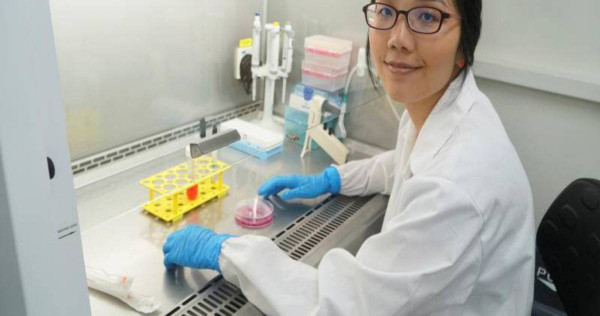
Shiok grows minced meat by extracting a sample of cells from shrimp. The cells are fed with nutrients in a solution and kept at a temperature of 28 deg C (82 degrees Fahrenheit), which helps them multiply.

The stem cells become meat in four to six weeks.

[ad_2]

Source link

Pre-schools implement additional measures to protect children from Wuhan virus outbreak

0

SINGAPORE: Pre-schools here have moved to implement additional measures, on top of a two-week Leave of Absence (LOA), to safeguard children under their care from the threat of the Wuhan virus outbreak which began in China.

Anchor operator MY World Preschool said only 1 to 2 per cent of its teachers and students are affected by the compulsory LOA measures, and that it “may face operational issues due to the rapidly evolving situation”. 

Aside from the LOA measures, MY World Preschool has implemented more frequent temperature checks and cleaning, temporarily halted large scale centre events and excursions, and restricted entry into its centres. 

READ: Singapore confirms 3 new cases of Wuhan virus; total of 10 infected

READ: Number infected by Wuhan virus rises to nearly 6,000 in China; death toll at 132

EtonHouse Pre-school and anchor operator E-Bridge Pre-school, both run by EtonHouse International Education Group, have “a small number” of staff who are affected by the LOA measures, said executive director Ng Yi Xian, adding that school operations are not affected as the number is “insignificant”. 

These individuals have to report their temperature daily to HR and get clearance from a doctor before returning to work, he added. 

My First Skool pre-school hand sanitiser

A parent is given hand sanitiser by a staff member at the My First Skool centre in Buangkok. (Photo: Matthew Mohan)

A CORONAVIRUS PORTAL

EtonHouse Pre-school has also set up a working committee to “respond swiftly to mitigate any potential risks”, said Mr Ng. 

The EtonHouse Pre-school team has also created a coronavirus portal to ensure documents like live data of the travel declaration responses, an epidemic response plan and the standard operating procedure for suspected cases are accessible to staff. 
 
“We will remain vigilant in conducting health checks and monitor closely the health of children and staff. We have also stocked up on child and adult surgical masks and thermometer supplies,” said Mr Ng.

Global EduHub, which runs over 20 pre-schools including Mulberry Learning, Little Greenhouse and Alphabet Playhouse, said that aside from staff returning from mainland China, teachers who were in recent close contact with individuals from China are also required to take a paid LOA. 

READ: Wuhan virus outbreak at a glance

MORE: Our coverage on the Wuhan virus and its developments

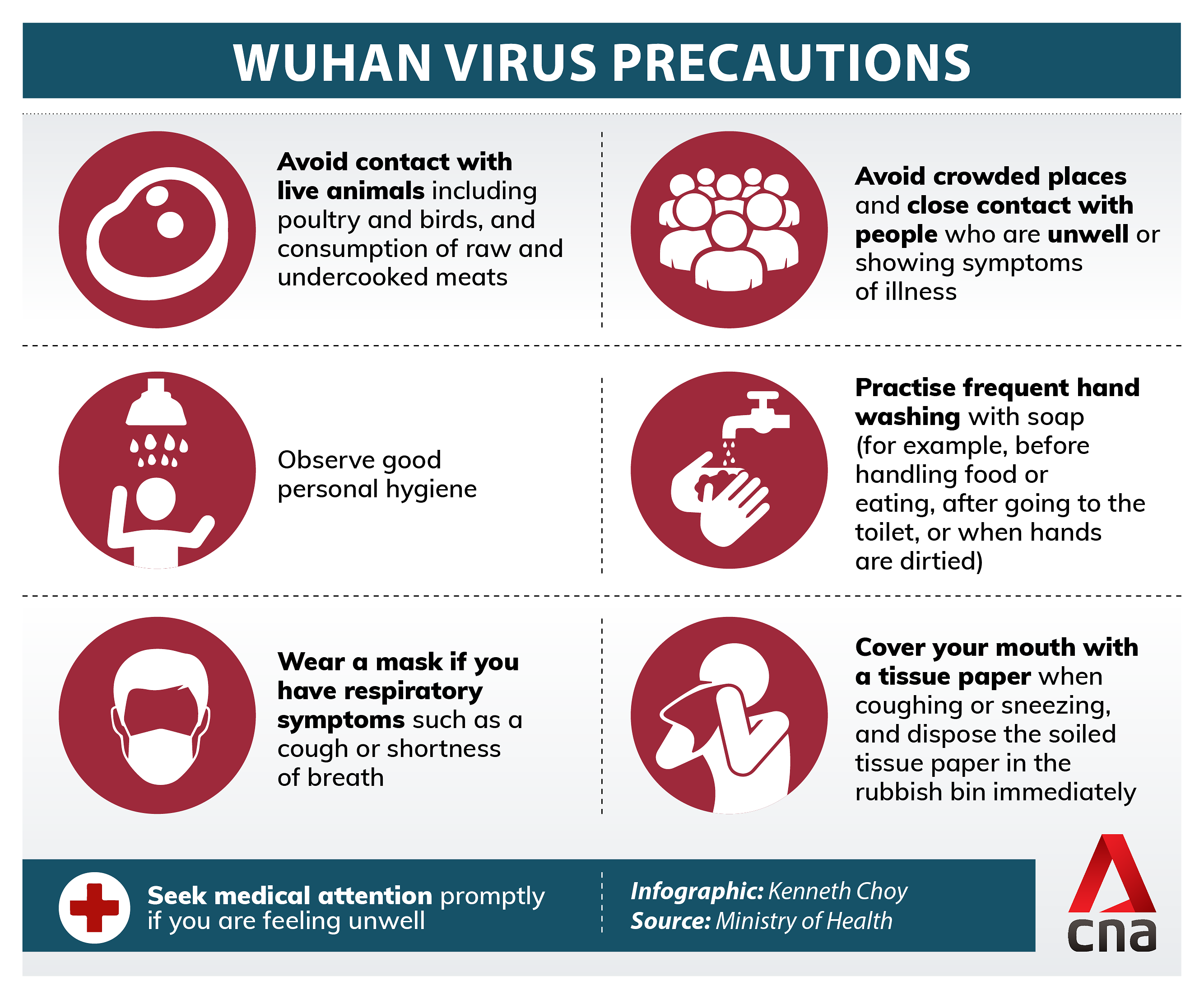
Wuhan virus protecting yourself graphic

PLANS TO REIMBURSE MEDICAL CONSULTATIONS

According to chief operating officer Peh Yi Han, Global EduHub also plans to reimburse the cost of medical consultations so that affected children or staff can have a doctor certify them fit and free of respiratory illness before they resume classes at the centres. 

“We believe these additional measures can help protect our children and staff, and are worth the additional cost to the organisation,” said Mr Peh.

In a media release on Wednesday (Jan 29), anchor operator PCF Sparkletots said that less than 3 per cent of the PAP Community Foundation pre-school and eldercare staff, or about 200 of more than 7,500 will be required to take 14 days of LOA, said assistant CEO of PAP Community Foundation (PCF) Tan Lee Jee. 

“We will be making manpower adjustments between the centres to cater for those who will be on LOA and we do not foresee this to affect our operations,” she added.

This follows the announcement on Monday of a two-week LOA for all pre-school students and staff members returning from mainland China to Singapore from Jan 14.

READ: Wuhan virus in Singapore – What we know about the confirmed cases

READ: Singapore to impose travel restrictions on holders of Chinese passports issued in Hubei

Minister for Social and Family Development Desmond Lee said that all pre-schools were notified in an advisory from the Early Childhood Development Agency (ECDA) on Monday morning, and that all operators should provide paid leave of absence to affected employees and monitor their health. 

About 500 to 600 pre-school teachers had gone to or returned from China for various reasons such as study trips and vacations, said Mr Lee. 

He also estimated that about 1,000 out of 180,000 pre-school children in Singapore would have gone to or returned from China.

“We believe it’s manageable. We are closely working with some 400 pre-school operators to make sure that this is smoothly managed,” he said, adding that ECDA and MSF will be visiting various pre-schools to check on implementation and provide support to the sector. 

“ROBUST MEASURES IN PLACE”

On Wednesday evening, the Health Ministry announced another three new confirmed cases of the coronavirus – all three Chinese nationals from Wuhan.

This brings the total number infected in Singapore to 10. 

In a visit to a My First Skool centre in Buangkok on Tuesday, Mr Lee assured parents that there are “robust measures in place” and that the respective ministries and agencies are working closely with pre-school operators. 

My First Skool, which has more than 140 centres islandwide, has ramped up cleaning of its facilities and increased the frequency of temperature taking to safeguard students and staff, said general manager Ms Thian Ai Ling on Tuesday. 

Transient staff, parents and visitors who have a fever or display respiratory symptoms will not be allowed to enter centre premises. The centres will also avoid events involving large groups and reschedule excursions. 

When CNA visited the centre on Tuesday, staff wearing surgical masks were observed taking the temperatures of parents and children, as well as ensuring their hands were sanitised. Staff members also checked on the travel histories of parents and children who did not complete a travel declaration form sent out last week. 

“Given the current situation, what we have stepped up is an additional layer of temperature taking as well as (during) multiple periods throughout the day, we are closely watching our children’s well-being, ensuring that they do not show any symptoms,” Ms Thian had said. 

“Should they do (show symptoms), we will contact parents immediately,” she added.

Subscribe to our Telegram channel for the latest updates on the Wuhan virus outbreak: https://cna.asia/telegram
Source link

Fire breaks out at Concord Primary School in Choa Chu Kang, 1,400 people evacuated

0

[ad_1]

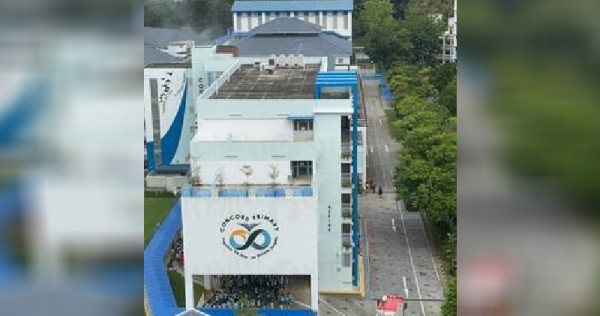
SINGAPORE – A fire broke out at Concord Primary School in Choa Chu Kang on Wednesday morning (Jan 29).

The Singapore Civil Defence Force (SCDF) responded to the fire at around 10.30am. The fire involved the contents of a sports equipment storage room and was extinguished by firefighters using a hose reel.

About 1,400 people, including pupils and teachers, were evacuated by staff of the school before firefighters arrived. There were no reported injuries.

An eyewitness – who wanted to be known only as Mr Tan and who lives opposite the school at a Housing Board flat at Block 472 Choa Chu Kang Avenue 3 – said that he could smell smoke in his room at around 10am.

“I saw smoke coming from the school and the students were being evacuated to an open sheltered area on the ground floor,” the 24-year-old undergraduate told The Straits Times.

The cause of the fire is under investigation.

[ad_2]

Source link

Online mall Qoo10 removes listing selling 30 'anti-coronavirus' masks for $10,000

0

[ad_1]

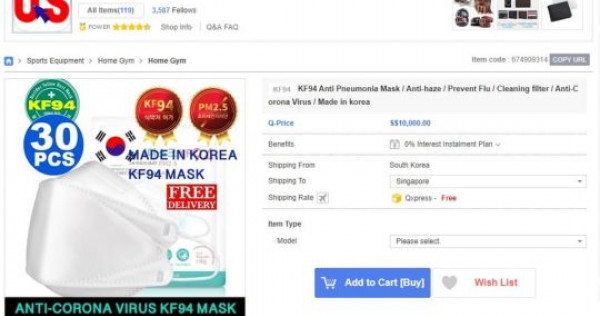
SINGAPORE – Online mall Qoo10 has removed a listing that advertised 30 “anti-coronavirus” masks for sale at $10,000 on Wednesday (Jan 29).

The listing claimed that the product was also “anti-pneumonia” and “anti-haze”, and the merchant “US Buyer” said that the masks can be shipped from South Korea to Singapore.

It was listed for sale at $10,000 from Monday to Wednesday, before it was taken down.

A packet of 10 surgical masks usually costs around $5 and 20 N95 masks cost about $40.

Qoo10 Singapore told The Straits Times that it does not condone excessive profiteering.

“We do not condone and will not tolerate merchants who escalate prices to unreasonable levels in an attempt to profit off the general public’s worry and panic, or even as a joke,” said Qoo10 general manager Sam Too. “Merchants found guilty of such behaviour may be temporarily suspended as part of our investigation process.”

He added that the $10,000 mask listing was removed while Qoo10 speaks to the merchant to understand if there are any legitimate reasons for such a pricing.

[ad_2]

Source link

Singapore-based Australian paedophile who sexually abused dozens of children gets 35 years’ jail

0

SINGAPORE: An Australian paedophile who was based in Singapore and sexually abused dozens of children around Southeast Asia has been jailed.

Boris Kunsevitsky was sentenced by a Melbourne court on Wednesday (Jan 29) to 35 years in prison, after he pleaded guilty to sexually abusing children for more than 15 years and producing child pornography material in which he induced children to have sex with other children.

Among his 47 child victims were five who resided in Singapore, where he lived until he was arrested in Australia in September 2017.

READ: 5 children in Singapore sexually abused by Australian paedophile who was employed by local company

He pleaded guilty to 59 charges in total, including having sex with a child, making child pornography material, inducing a child to have sex with another child, persistent sexual abuse of a child, and importing child pornography material.

The 53-year-old will serve at least 28 years of his jail sentence before he is eligible for parole.

Boris Kunsevitsky abused dozens of children in Southeast Asia

Boris Kunsevitsky had lived in Singapore and travelled around Southeast Asia abusing children. (Photo: Facebook/Nha khoa thẩm mỹ Smile Care)

“This sentence is comprised of the term of imprisonment for the two State charges, which was 11 years with a non-parole period of 8 years, plus the term of imprisonment for the Commonwealth charges, which was 24 years with a non-parole period of 20 years,” a spokesperson for the Supreme Court of Victoria said.

State charges refer to crimes committed in Victoria, Australia while Commonwealth charges relate to the crimes in the Philippines, Indonesia and Singapore.

Court documents showed Kunsevitsky had grown up in Russia and migrated to Australia with his family when he was 12. He moved to Singapore in the 2000s.

He was employed with local firm Esthemedica, where he was a director selling aesthetic equipment. The company previously told CNA it did not know of Kunsevitsky’s crimes.

READ: Singapore-based Australian paedophile filmed himself sexually abusing dozens of children: Report

MORE THAN 15 YEARS OF SEXUAL ABUSE

Court documents show his victims were aged between 10 and 17 years old, with the majority of the offences in the Philippines. He also abused children in Singapore and Indonesia.

Details of the children and others affected by the case have been redacted by the court.

His crimes date back to January 2001, when he had sex with a child under 16 in the Philippines.

Between September 2002 and August 2003, he had sex with a victim in Singapore, taking 17 photographs of the boy, who was about 12 to 14 years old at the time. This happened at Kunsevitsky’s home.

Police also found 28 photographs of another boy. These images, dated back to November 2002 when he was living in Singapore, and showed him committing sodomy and a boy performing oral sex on him.

The other victims in Singapore are not mentioned in court documents.

Among his multiple crimes, Kunsevitsky had maintained a sexual relationship with a child – who was between 13 and 15 years old at the time – in Melbourne between Jan 1, 2004 and Oct 31, 2005.

Between Jun 11, 2010 and Jun 16, 2011, and again between Feb 20, 2013 and Jun 11, 2013, Kunsevitsky engaged in “persistent sexual abuse” of five children outside of Australia.

Boris Kunsevitsky pleaded guilty to sexually abusing dozens of children

Boris Kunsevitsky, 53, had to sexually abused dozens of children. (Photo: Facebook/thammyquoctebally)

He also induced children to have sex with other children in his presence.

Between May 18, 2010 and Apr 28, 2015, Kunsevitsky created more than 1,000 photographs and videos depicting children engaged in sexual activity with each other, under his direction, or pictures and films of him sexually abusing the children.

On at least one occasion, he showed those pictures and videos to other children he also abused, and also distributed the images on the internet.

“The offender was a prolific traveller. In his police interview, he explained that he travelled extensively for work,” prosecutor Krista Breckweg said.

“Some of his offending occurred in Singapore, where he was based for most of the charged periods (January 2001 to September 2017).

“He also travelled regularly to the Philippines and to Indonesia, with most of the offending occurring in the Philippines. Often his trips to these Asian countries were brief and the arrival date coincided with the commencement of the offending.”

ARRESTED IN AUSTRALIA

His crimes went undetected until a victim was identified in 2016. German police had found 55 child pornography images of an Australian boy who was groomed and abused by Kunsevitsky.

An arrest warrant in Australia was issued, but it could not be executed because he was in Singapore.

On May 2017, charges were filed in Australia while he was overseas. Kunsevitsky was arrested when he returned to Australia on Sep 4, 2017.

Police officers found thousands of images and videos on a laptop and two hard drives, showing him sexually abusing children. The laptop and hard drives had been shipped over by Australian authorities from his home in Singapore.

Officers found a folder named “Jailbait”, where he kept subfolders labelled with his victims’ names. Jailbait is an informal word for someone who is perceived by some to be sexually attractive, but younger than the legal age of consent for sex.

Kunsevitsky, who was diagnosed with paedophiliac disorder after he was arrested, pleaded guilty in May last year to his crimes.

Source link

Latest North Korea quake shows legacy of instability at nuclear test site: South Korea

0

[ad_1]

SEOUL – A small natural earthquake detected in North Korea on Wednesday (Jan 29) was likely a result of seismic instability lingering in the area since North Korea conducted its sixth and largest nuclear test in 2017, the South Korean government said.

A magnitude 2.5 earthquake was detected at 9.33am (8.33am Singapore time) in Hamgyong province, the location of North Korea’s shuttered Punggye-ri Nuclear Test Site, according to South Korea’s Meteorological Administration (KMA).

“It was a natural earthquake, presumably caused by the sixth nuclear test,” the administration said in a statement on its website.

“The area is about 3km south-east of the sixth nuclear test site.”

Punggye-ri is the only known site in North Korea used to test nuclear weapons. At least six tests were conducted there between October 2006 and September 2017.

In early 2018, North Korea said it would close the site, saying its nuclear force was complete.

The entrances to tunnels at the site were blown up in front of a small group of foreign media invited to view the demolition, but North Korea rejected calls for international experts to inspect the closure.

[ad_2]

Source link

Riot breaks out at Clarke Quay club, man taken to hospital

0

[ad_1]

A 31-year-old man was taken to hospital after a riot broke out in a club at Clarke Quay in the early hours of Monday morning (Jan 27).

Several Stompers alerted Stomp to a video circulating online of the incident that happened at Club Illusion.

In the video, several people are seen shouting, shoving and throwing punches at one another.

Items including a stool, glasses and a drink tower are seen flying through the air.

Someone is heard shouting at people to ‘get out’ in Malay as security personnel work to break up the brawl.

Towards the end of the video, a man is heard saying: “He took their Martell some more, you know.”

In response to a Stomp query, the police said they were alerted to a case of rioting at 3A River Valley Road at 3.09am.

[ad_2]

Source link

Govt debunks fake news linking closure of Woodlands MRT station to Wuhan virus

0

[ad_1]

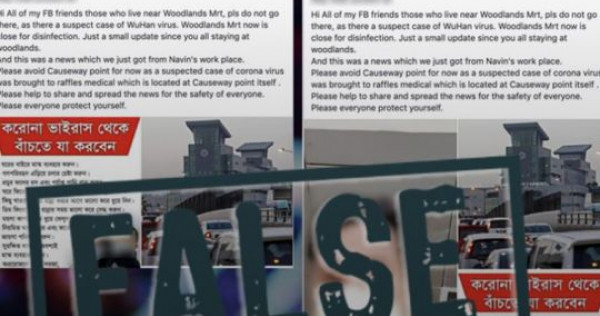
SINGAPORE – The Woodlands MRT station was not closed because of a suspected case of the Wuhan coronavirus, as claimed by several Facebook posts, said the Government on Tuesday (Jan 28) as it invoked Singapore’s law against fake news for the second time in relation to the virus.

As misinformation swirled online about the virus, two posts circulating on Facebook told people to avoid the Woodlands MRT station, claiming a suspected case was discovered there.

The posts, put up by different accounts, also falsely claimed the station was closed for disinfection.

Debunking the fake news, the Ministry of Transport said in a Facebook post: “We would like to clarify that this is not true. Woodlands MRT was not closed on 28 Jan 2020; it was fully operational.”

The ministry also asked people not to speculate and spread unfounded rumours and to get the latest updates on the Wuhan virus situation through government channels such as www.moh.gov.sg or the Gov.sg Whatsapp group at https://go.gov.sg/whatsapp.

[ad_2]

Source link