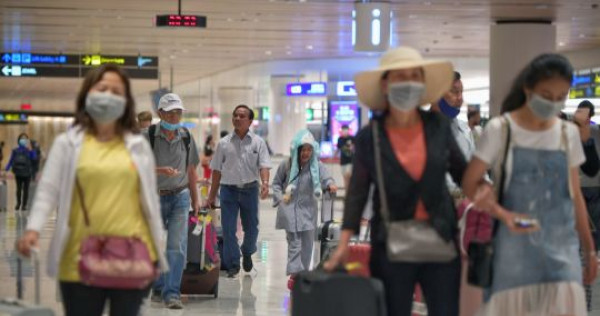
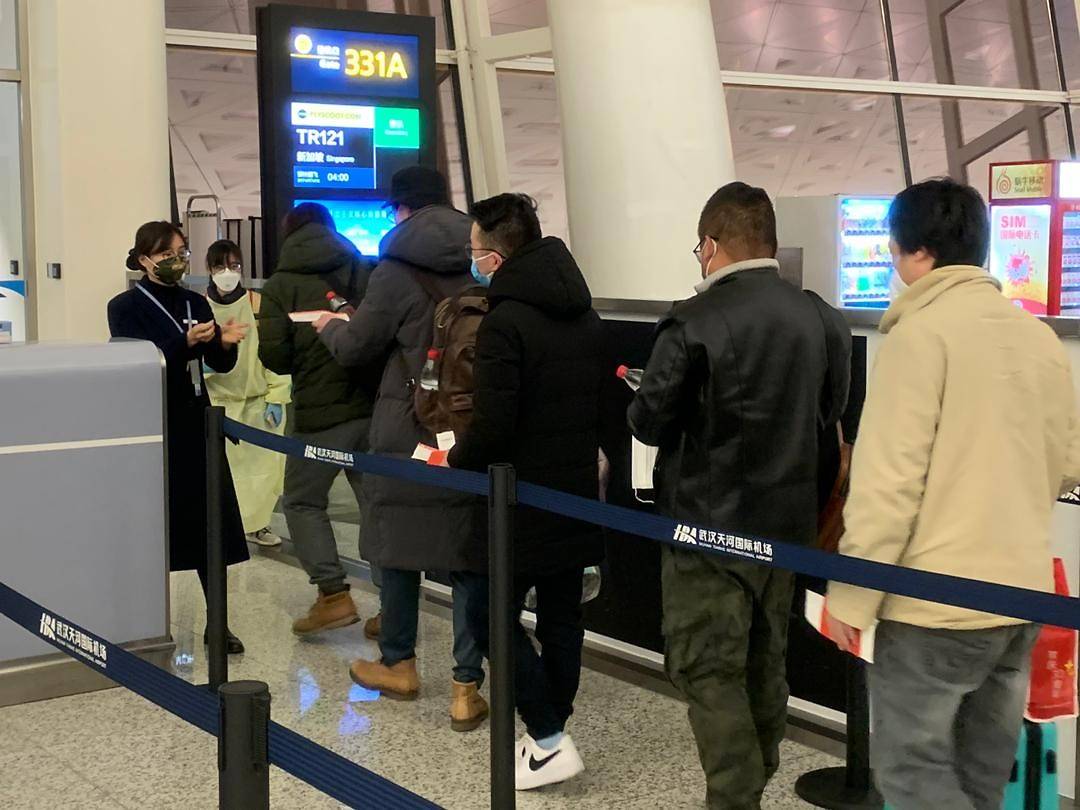
SINGAPORE – All travellers arriving from mainland China who had been there in the past 14 days, as well as anyone with a China passport, will be barred from entry or transit in Singapore, as the nation ramps up measures to keep the Wuhan virus at bay.
The new measures will kick in at 11.59pm on Saturday (Feb 1).
Singaporeans, permanent residents and long-term-pass holders can return, subject to a leave of absence of 14 days, said Minister for National Development Lawrence Wong on Friday (Jan 31).
“On top of everything we’ve already introduced, this will enable us to limit the number of new imported cases here and reduce risk of community spread in Singapore,” he said at a press conference on Friday.
“The situation remains fluid, it’s constantly changing, and we do not rule out taking further measures,” added Mr Wong, who is co-chair of the multi-ministry task force tackling the spread of the Wuhan virus here.
The tough new measures come on the heels of the World Health Organisation’s (WHO) announcement on Thursday that the coronavirus epidemic in China now constitutes a public health emergency of international concern (PHEIC).
SINGAPORE: A total of 1,500 Singapore Armed Forces (SAF) personnel are packing 5.2 million surgical masks for distribution to the public, as Singapore continues its fight against the Wuhan coronavirus.
The round-the-clock packing operation at the SAFTI Military Institute in Jurong started on Thursday (Jan 30) evening after the multi-ministerial task force announced that each Singapore household will receive a pack of four masks.
The SAF will use large vans and operational utility vehicles to deliver the masks to 89 community centres and clubs, after which the People’s Association (PA) will distribute them to the public.
The SAF personnel are working eight-hour shifts, with each shift expected to pack 200,000 masks. They will aim to deliver the first batch of masks on Friday evening and finish the operation by Saturday evening.
Soldiers packing masks at SAFTI MI on Jan 31, 2020, ahead of distribution at Residents’ Committee centres and Community Centres. (Photo: Try Sutrisno Foo)
Defence Minister Ng Eng Hen meets soldiers packing masks at SAFTI MI on Jan 31, 2020, ahead of distribution at Residents’ Committee centres and Community Centres. (Photo: Try Sutrisno Foo)
Defence Minister Ng Eng Hen said the SAF is “very aware” that all agencies in Singapore have to “lean forward” to do its part in tackling the Wuhan coronavirus.
“Every new biological outbreak can be very serious if we are not quick enough to take up the right measures,” he told reporters at the packing area on Friday.
This comes as Trade and Industry Minister Chan Chun Sing said on Thursday that there is sufficient supply of masks in Singapore if managed properly, amid concerns over a lack of availability at retailers islandwide.
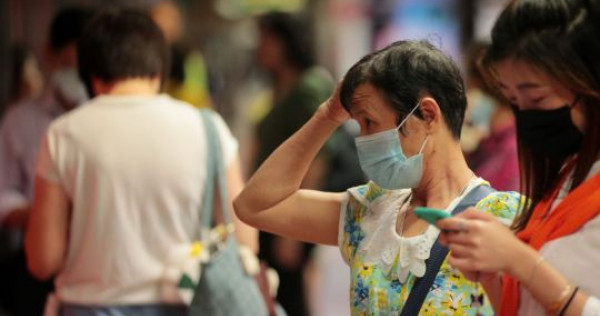
Many people in Singapore are donning surgical masks as a form of protection against the coronavirus, although experts have cautioned it could create a “false sense of security” if not used properly.
On Friday, 450 servicemen wearing gloves, masks and hair nets sat at rows of tables in a large hall – chosen for its sterile environment and proximity to a transport line. Servicemen who leave the hall have to sanitise their hands before returning to the tables.
They removed masks from a small box and placed four of them in a Ziploc bag. These then go into a larger carton that can contain 400 of such bags. Each van can carry up to 25,000 bags.
Singapore Armed Forces (SAF) personnel packs face mask for distribution to the public at SAFTI Military Institute in Jurong on Jan 31. (Photo: Try Sutrisno Foo)
Singapore Armed Forces (SAF) personnel packs face mask for distribution to the public at SAFTI Military Institute in Jurong on Jan 31. (Photo: Try Sutrisno Foo)
Other servicemen help to pack the large cartons and move them to vehicles waiting outside. After this 8am shift ends at 4pm, another will take over.
The SAF personnel include non-uniformed staff as well as full-time national servicemen and regulars from the Combat Service Support Command.
Dr Ng said the servicemen took a few hours after being activated to prepare the entire set-up, including getting materials like masks, ziploc bags and packing boxes from various agencies.
Nevertheless, he said the servicemen were “on track” with their progress, adding that they were in good spirits.
Singapore Armed Forces (SAF) personnel packs face mask for distribution to the public at SAFTI Military Institute in Jurong on Jan 31. (Photo: Try Sutrisno Foo)
“You know that when you do this, you’re doing it to protect your family and fellow Singaporeans, and you’re very proud of it,” he stated.
It is not the first time the SAF is conducting such an operation – during the haze crisis in 2013, it packed and distributed more than 1 million masks to the public through the PA.
CONTACT TRACING, TEMPERATURE SCREENING
The SAF is also helping out in other areas of the battle against the Wuhan coronavirus.
Dr Ng said that as part of contact tracing, SAF personnel are making a hundred calls a day to Chinese citizens from Hubei who are in Singapore to ask about their condition.
They are also manning thermal imagery equipment at airports and will inform airport staff if they detect symptomatic passengers.
The minister stressed that these SAF personnel were not in direct contact with passengers, adding that they were not trained to do so.
Soldiers packing masks at SAFTI MI on Jan 31, 2020, ahead of distribution at Residents’ Committee centres and Community Centres. (Photo: Try Sutrisno Foo)
Dr Ng had also said in a Facebook post on Thursday that the SAF is using its premises for quarantine cases.
On Friday, he said the SAF is “careful” to ensure it maintains operational readiness even as it deploys resources to contain the Wuhan coronavirus.
“Even though it’s a national effort, we want to make sure that the SAF keeps its eye on its primary responsibility,” he said.
“We will not compromise security, even though this is important, and that is why we mobilised the Combat Service Support Command, whereas other operational units are still on tasking.”
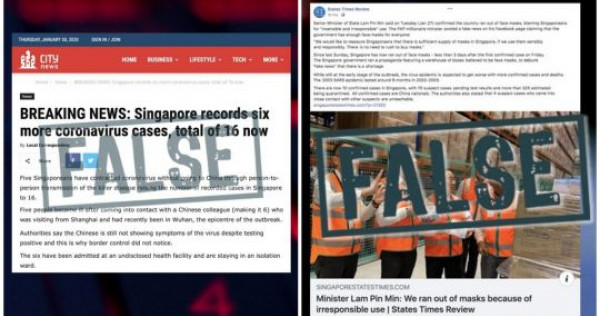
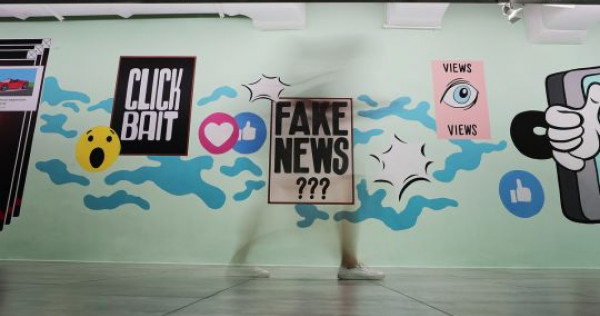
SINGAPORE – No Singaporean contracted the Wuhan coronavirus without going to China and Singapore has not run out of masks, said the Government on Friday (Jan 31) as it invoked Singapore’s law against fake news for the third and fourth time in relation to the virus.
On Thursday, a website called AB-TC City News published an article that claimed that five Singaporeans had contracted the Wuhan coronavirus without going to China.
The article was subsequently shared by opposition party leader and lawyer Lim Tean and the Facebook group Say No To PAP via their Facebook pages.
On Friday, Health Minister Gan Kim Yong ordered City News, Mr Lim and Say No To PAP to issue corrections notices with the article.
“While both parties have taken down their Facebook posts containing the falsehood, they are still required to carry a correction notice on their respective Facebook pages. This will ensure that persons who had viewed their posts are informed of the facts,” said the Protection from Online Falsehoods and Manipulation Act (Pofma) Office in a statement.
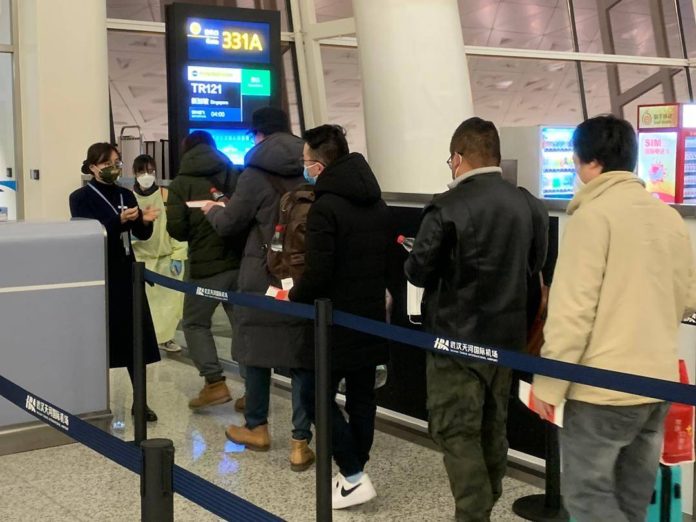
BEIJING: Countries are scrambling to airlift their citizens from the Chinese city of Wuhan as it struggles to get to grips with the spread of a SARS-like virus which has claimed more than 200 lives nationwide.
The United States, Japan and Singapore are among nations that have already sent aircraft to remove their nationals.
China has sealed off the city, effectively quarantining more than 50 million people in Hubei province, including thousands of foreigners.
Here are five questions on the evacuation efforts answered.
WHAT ARE THE RISKS?
Authorities will have to “really, really clean the airports and prevent transmission at every step of the logistics – it’s a huge risk”, said Wang Linfa, director of the Emerging Infectious Diseases programme at Duke-NUS Medical School in Singapore.
The International Air Transport Association (IATA) says the risk of contracting a disease on board a plane is in general similar to other confined, crowded spaces such as buses or trains.
“That said, the risk on airplanes is probably lower than in many confined spaces because modern planes have cabin air filtration systems equipped with HEPA filters,” it adds.
Singaporeans returning home from Wuhan on Jan 30, 2020. (Photo: Ministry of Foreign Affairs)
HOW ARE AIRLINES PREVENTING INFECTION?
Singapore airline Scoot, which flew home 92 people on Thursday, provided surgical masks to all passengers and required its crew to wear N95 masks and surgical gloves.
To limit physical interaction, food packs were left on seats before take-off and no meals or drinks were distributed in-flight.
Scoot said temperature screening was conducted at check-in and again before boarding, and those with a fever were prevented from flying.
Air India enforced similar measures in New Delhi’s evacuation effort on Friday.
“There are risks but on the other hand, the risks of leaving them at the epicentre of the global outbreak are significantly higher with the strain on resources there,” said Dr Paul Tambyah, an infectious diseases expert at the National University of Singapore.
International aviation agencies have protocols for evacuations that include having empty seats between passengers and ensuring good air quality and flow, he added.
Scoot crew walking out of Changi Airport Terminal 1 arrival hall on Jan 30. (Photo: Gaya Chandramohan)
WHAT ABOUT THE FOREIGNERS LEFT BEHIND?
Thousands of non-Chinese citizens remain trapped in Wuhan watching helplessly as others are flown home on government-chartered flights.
Many left in the city have described an atmosphere of fear and confusion as well as uncertainty about food supply. Wuhan is a virtual ghost town, with restaurants and shops shuttered.
“It’s unfortunate but citizens of countries that don’t have that kind of diplomatic wherewithal are going to have to deal with the situation that they’re presented with,” said China analyst Drew Thompson, a former US Department of Defense official.
“They’re going to have to hunker down … and stay in contact with their embassies, and make do, just like their Chinese friends and counterparts.”
Singapore authorities said some Singaporeans were unable to return because they had symptoms of the disease.
It was “not safe” for them to be on the same plane as the 92 Singaporeans who returned, said National Development Minister Lawrence Wong.
The Singapore embassy is in touch with all of them to ensure their welfare, he added.
WHAT HAPPENS AFTER THEY RETURN HOME?
Quarantine arrangements for evacuees vary from country to country.
Japan’s policy of “self-quarantine” has sparked fierce criticism.
Two of Wednesday’s returnees initially refused to be tested for the virus although officials said the pair were later willing to be checked.
“It’s a difficult scenario,” said Wang. “You just do your best to … educate the citizens, to say, “‘we’ll help you to help us'”.
“In most circumstances self-quarantine is more than enough if the citizen is educated.”
In South Korea 18 passengers on an evacuation flight were immediately sent to hospital on arriving back in their country Friday after displaying symptoms of the coronavirus.
A chartered plane carrying a total of 368 South Korean citizens has arrived in the South from Wuhan AFP/Jung Yeon-je
The 92 Singaporeans who returned had to undergo medical screening at Changi Airport. Those with fever or respiratory symptoms were taken to hospitals for further examination.
HOW LONG IS THE QUARANTINE PERIOD?
The returning Singaporeans who do not have symptoms of the virus, as well as the consular officers who accompanied them, will be quarantined for 14 days.
French and British returnees will undergo a 14-day quarantine, while Americans will be voluntarily isolated for three days at a US airbase.
The virus’s incubation period, during which patients are infected but show no symptoms, is between two and 17 days, meaning a two-week quarantine should catch about 99 per cent of cases, said Wang.
“It’s all about risk assessment,” he said. “There’s no such thing as a single quarantine (type) for all citizens in all countries coming from any part of the world.”
SINGAPORE – A number of search engines and social media platforms – including Google, Baidu, Facebook and Twitter – must now comply with general correction directions under the fake news law.
Several Internet intermediaries were temporarily exempted from such directions when the Protection from Online Falsehoods and Manipulation Act (Pofma) took effect last October.
However, that exemption will be lifted on Friday (Jan 31), the Ministry of Communications and Information (MCI) said on Thursday, adding that “this move is critical given the evolving situation with the Wuhan coronavirus”.
Misinformation on the spread of the virus has swirled online recently, in Singapore and globally.
General correction directions are different from targeted correction directions that require a user or Internet platform to carry a correction notice on a post, article or other content containing a falsehood.
SINGAPORE: Singapore has done well so far in handling the Wuhan coronavirus situation, Prime Minister Lee Hsien Loong said during a visit to the National Centre for Infectious Diseases (NCID) on Friday (Jan 31).
Mr Lee said the country was able to quickly catch cases of the virus, as well as isolate and treat them, adding that doctors have told him the patients are faring well.
“But we have to continue to be vigilant, because the outbreak is far from over. In fact, it may still be accelerating in China,” said Mr Lee.
“We have to continue to be on guard,” he said, adding the Government and healthcare workers were prepared.
Continuing on this path would help ensure community spread of the virus is not a problem here, he said.
“There’s every reason to be watchful, but there’s also every reason to be confident,” said Mr Lee.
Prime Minister Lee Hsien Loong talks to staff at the National Centre for Infectious Diseases on Jan 31. (Photo: Gaya Chandramohan)
The World Health Organization (WHO) on Thursday declared the virus outbreak a “global emergency”, with more than 9,800 confirmed cases and more than 200 deaths in China alone.
The WHO’s assessment “confirmed Singapore’s view of the situation”, he said, adding the team of ministers tasked with handling the situation is evaluating what to do next.
On Thursday, National Development Minister Lawrence Wong announced that the Government would issue four masks to each household here.
This came amid reports of many retailers islandwide running out of the items, over widespread concerns of the Wuhan coronavirus.
He also said there should not be discrimination against Chinese nationals, noting the virus can infect people of any race.
“They (China) are trying very hard to fight it, and I think we should work with them to help make sure this is not a global problem,” he said.
Prime Minister Lee Hsien Loong talks to the media at the National Centre for Infectious Diseases on Jan 31. (Photo: Gaya Chandramohan)
One key difference from the SARS crisis is that social media is allowing rumours about to spread more quickly, said Mr Lee, adding he was “very glad” the authorities had the Protection from Online Falsehoods and Manipulation Act (POFMA) to address the spread of untruths.
Some of these rumours are “malicious and deliberate”, he said, made up by people whose aim was to deliberately foment fear, uncertainty and doubt.
These have been promptly addressed by POFMA, he said, adding that the Government is putting out accurate information as quickly as it can be verified.
Mr Lee also thanked healthcare workers on the frontlines, in places such as the NCID, adding he had a lot of respect for the difficult job they had to do.
SINGAPORE – The authorities are cracking down on profiteers, following complaints that some businesses and individuals have been selling face masks for grossly inflated prices amid a surge in demand.
The Government’s Price Controller on Thursday (Jan 30) asked a retailer at 313 @ Somerset mall to explain the basis for the selling prices of its masks, giving it until next Monday to respond.
A packet of 10 surgical masks usually costs around $5 and 20 N95 masks cost about $40. But the masks sold at the Orchard Road store, Deen Express, are alleged to cost much more.
The Ministry of Trade and Industry (MTI) said in a statement that a letter of demand was issued to the retailer and it must provide information such as its cost price and profit margins or face a fine, though it did not state how much the shop had been selling masks for. Deen Express could not be reached for comment.
Letters of demand have also been sent to e-commerce platforms Lazada, Carousell and Qoo10 to request information on any potential profiteers on their platforms, MTI said.
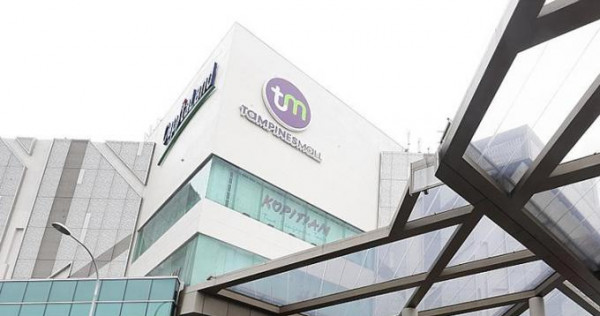
A worker died after falling through the ceiling at Tampines Mall on Saturday.
At about 1.30am, the 26-year-old Indian national was cleaning the walkway above the atrium ceiling on the fourth storey when he fell.
He crashed through a false ceiling and landed on the third storey.
He was taken to Changi General Hospital where he died from his injuries.
In a statement to The New Paper yesterday, the Ministry of Manpower (MOM) said the man was employed by Cleaning Express, and that CapitaLand Retail Management is the occupier of the mall.
The MOM spokesman said it is investigating the incident and has ordered a stop to all cleaning works above the atrium ceiling.
This is believed to be the fourth workplace fatality islandwide this year.
TUGBOAT
In the first three cases, a worker was crushed by a toppled pallet of gas cylinders, another was hit by a falling piece of the structure he was moving, and the third fell from a tugboat into the sea.
In a Facebook post on Jan 19, MOM said the deaths did not augur well for workplace safety and health.
Three more cases of Wuhan Corona Virus attack has been confirmed by the Ministry of Health (MOH) in Singapore. It has now brought the total affected to 10 in the city.
With the deadly virus spreading rapidly to 30 of the 31 provinces of China, serious concerns have been raised regarding the safety of food imported to Singapore, from China.
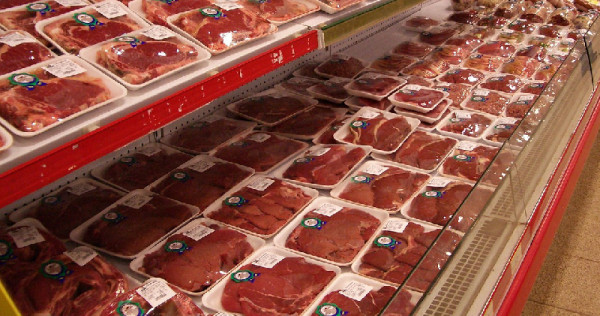
In view of the situation, the Singapore Food Agency has assured citizens that Singapore does not import any livestock or raw meat from China.
In fact, there is no evidence to suggest that the spreading of the Wuhan virus is related, in any way, to the consumption of food.
Despite the ministry’s assurance, Wuhan virus food safety continues to concern the public. In lieu of this, the agency has published a set of food hygiene and safety tips on its Facebook page, to alleviate citizens’ concerns.