Home Blog Page 503

Systems running smoothly at Singapore’s checkpoints during temperature screening measures: Shanmugam

0

SINGAPORE: Systems at Singapore’s checkpoints are running “smoothly” in the face of additional measures to guard against the spread of the Wuhan coronavirus, said Minister for Home Affairs K Shanmugam on Saturday (Feb 1).

Speaking to reporters during a visit to Woodlands Checkpoint where he viewed various temperature screening measures, Mr Shanmugan said immigration officers have performed “exceptionally well”.

“I have to say our officers have performed exceptionally well, they have taken on the load … At the same time, I think it’s been noticeable in the last few days that crowds have reduced, people are not travelling as much as well,” said Mr Shanmugam.

“But systems are running smoothly and our officers have worked very hard.”

Temperature screening for travellers arriving at Singapore’s land and sea checkpoints had began at noon on Jan 24, in response to cases of the novel coronavirus pneumonia that emerged in Wuhan, China and which has since spread to other countries. 

The screenings are conducted by “healthcare assistants”,  the Immigration and Checkpoints Authority (ICA) had said in a news release, with suspect cases will be referred to hospitals for further assessment.

A temperature screening being conducted at Woodlands Checkpoint

A temperature screening being conducted at Woodlands Checkpoint on Feb 1, 2020. (Photo: Matthew Mohan)

READ: Wuhan virus: Temperature screening begins at Woodlands, Tuas and sea checkpoints

READ: Wuhan coronavirus death toll rises to 259 in China with 46 new fatalities

Currently, those entering Singapore by bus will be screened at the alighting bus concourse or bus hall before immigration counters. Bus drivers will be screened at the security check area.

Travellers entering Singapore by train will be screened at the alighting platform before entering the train hall for immigration clearance, while those travelling in cars are required to wind down their car windows for temperature screening at the security check area before immigration counters.

Measures are also in place to screen those entering Singapore by motorcycle and lorry. 
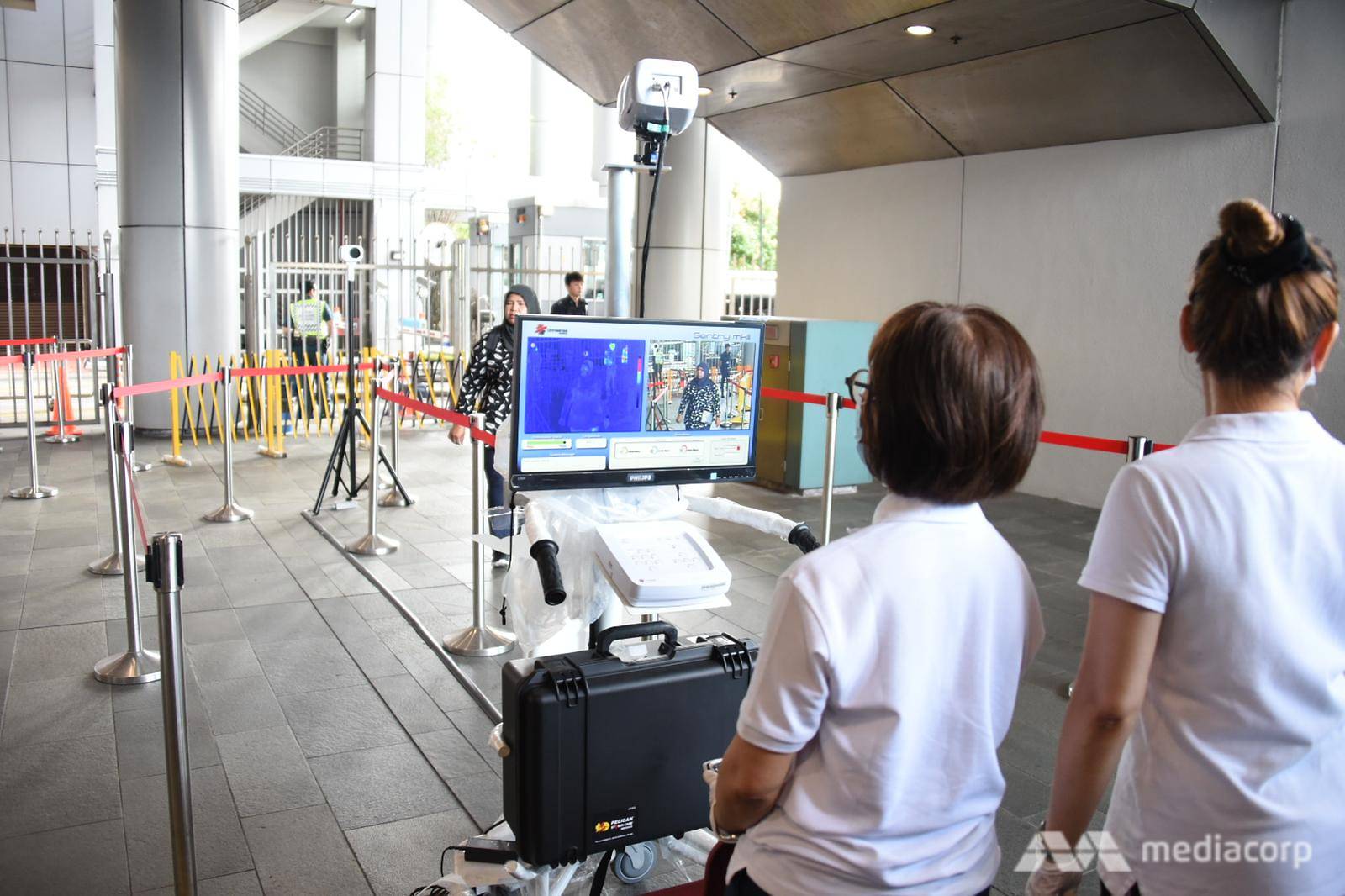
ICA officers at a checkpoint

ICA officers conducting a mass screening at Woodlands Checkpoint on Feb 1, 2020. (Photo: Matthew Mohan)

Mr Shanmugam also pointed out that ICA officers can wear masks if they would like to. But he emphasised the need for them to see a doctor if they are unwell. 

He said: “There’s been some misunderstanding, the point is if you aren’t well, you shouldn’t even be there. Because there is the risk of both infecting other colleagues as well as others. 

“Second, if you feel for some reason the need to wear a mask, you should go ahead wear a mask. I think there’s been some misunderstanding and it should be clear.”

The Ministry of Health (MOH) confirmed three new cases of the Wuhan coronavirus in Singapore on Friday (Jan 31), bringing the total to 16 cases.

All of these cases, including the first case involving a Singaporean, had come from Wuhan in Hubei province. 

READ: Singaporean evacuated from Wuhan among country’s 3 new cases of coronavirus, total now 16: MOH 

The first case of the Wuhan coronavirus in Singapore was confirmed on Jan 23 – about a month after the first cases were reported in the Chinese city.

The number of confirmed deaths from China’s coronavirus outbreak has risen to 259, as authorities in hardest-hit Hubei province on Saturday reported 45 new fatalities. 

Another death was reported in Chongqing, bringing the total number of new deaths in the country to 46.

In its daily update, the provincial health commission also said newly confirmed cases of infection in Hubei continued to grow at a steady pace, with 1,347. Across China, there were 2,102 new cases as of Jan 31. 

BOOKMARK THIS: Our comprehensive coverage on the Wuhan coronavirus and its developments

Download our app or subscribe to our Telegram channel for the latest updates on the Wuhan virus outbreak: https://cna.asia/telegram 
Source link

Wuhan virus: Quarantined cabbies, private hire drivers to receive one-off allowance of at least $100

0

[ad_1]

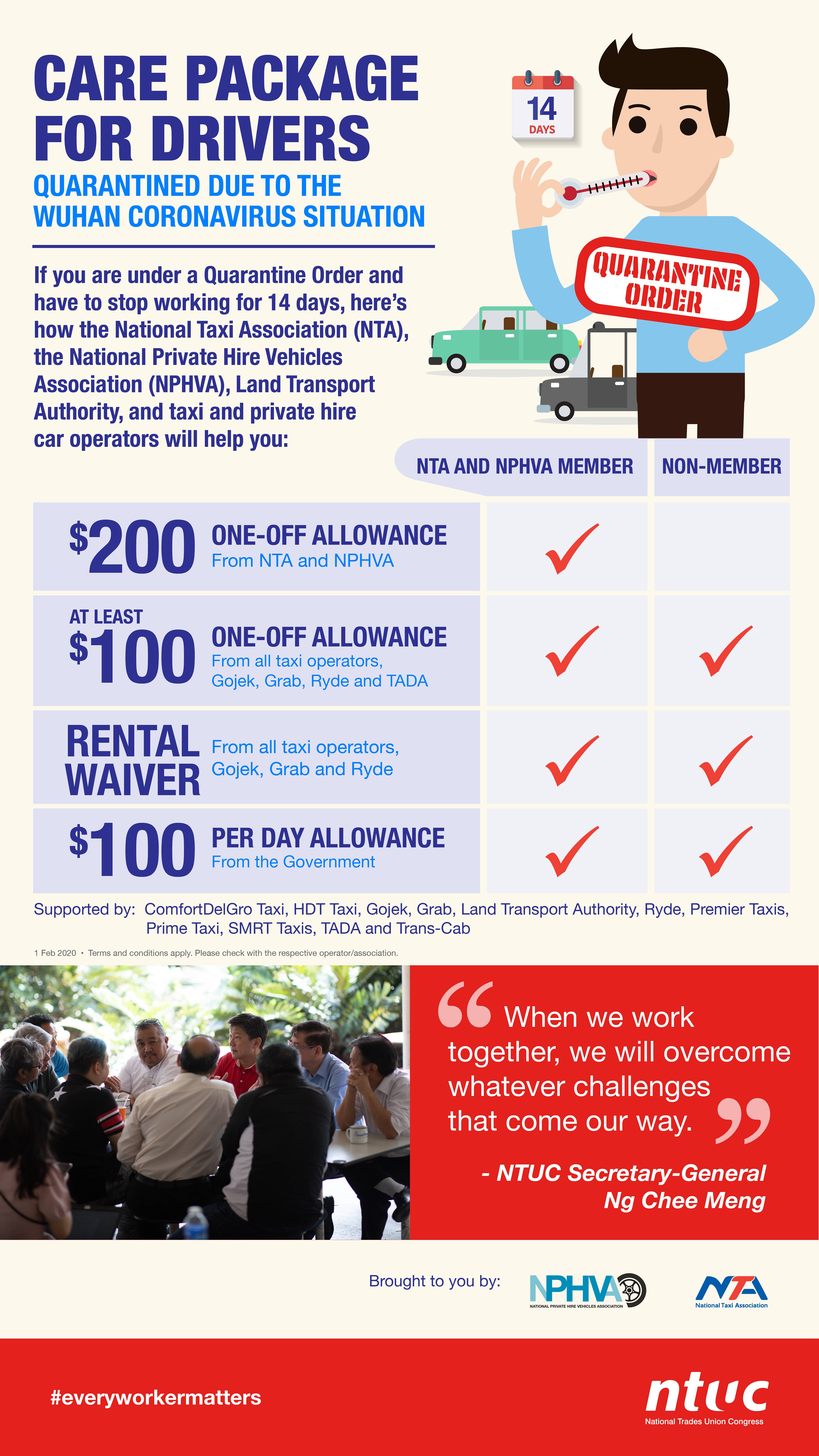
Taxi and private hire operators will be providing a one-time allowance of at least $100 for any cabby or private hire driver who needs to be quarantined for the Wuhan virus.

Members of the National Private Hire Vehicles Association (NPHVA) and the National Taxi Association (NTA) will receive an additional one-time $200 assistance from the associations, National Trades Union Congress (NTUC) said in a release on Saturday (Feb 1).

This is on top of the $100 per day allowance given by the Government.

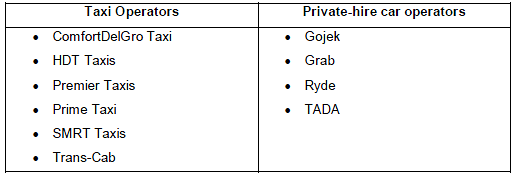
Gojek, Grab, Ryde and their fleet partners will also enjoy rental waiver if they are affected by the quarantine. Taxi operators ComfortDelGro, SMRT, Premier Taxi and Trans-Cab already announced on Monday that affected cabbies will not have to pay rental fees.

The tripartite care package was put together by NPHVA, NTA, the Land Transport Authority, taxi operators and private-hire car operators to support quarantined drivers.

[ad_2]

Source link

Wuhan coronavirus: Quarantined taxi, private-hire drivers to receive care package

0

SINGAPORE: Taxi and private-hire car drivers who have been quarantined due to the Wuhan coronavirus will receive help to mitigate their loss of income during the period they are unable to work.

The National Trades Union Congress (NTUC) announced on Saturday (Feb 1) that quarantined drivers will receive financial relief in the form of a care package comprised of waivers and allowances.

Affected drivers from participating operators will receive a one-off allowance of at least S$100. 

Quarantined taxi, private hire drivers to receive care package

A one-off allowance of S$200 will also be provided for members of the National Private Hire Vehicles Association (NPHVA) and National Taxi Association (NTA), and a rental waiver for private hire vehicles by Gojek, Grab, Ryde and their fleet partners.

Quarantined taxi, private-hire drivers to receive care package

This is in addition to already-announced measures, such as rental waivers for quarantined taxi drivers and a S$100 per day allowance for quarantined people who are self-employed.

The new measures are a collective effort by the NPHVA, NTA, and the Land Transport Authority.

Quarantined taxi, private hire drivers to receive care package (1)

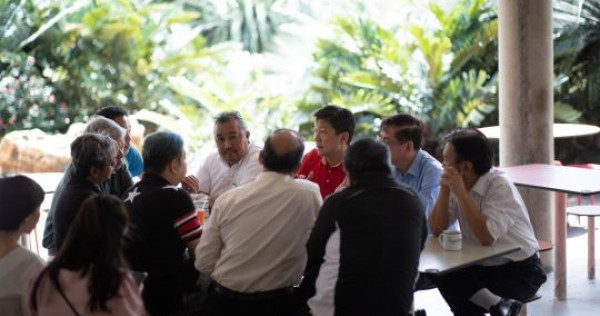
NTUC Secretary-General Ng Chee Meng (in red) meeting taxi and private hire leaders from NTA and NPHVA. (Photo: NTUC)

“I had kopi with some of our taxi and private hire leaders,” said NTUC Secretary-General Ng Chee Meng, noting drivers’ claims that their income has been impacted from a slowdown in tourist arrivals.

“They are concerned for their income and also their health.  However, in the same breath, they told me how our NTA and NPHVA are stepping up to help affected drivers.  

“It is really heart-warming to know that the industry has rallied together to assure drivers that help is available if they need it … NTUC will do what is necessary to help workers. We will overcome challenges when we work together.”

Source link

Wuhan virus: Scoot to suspend all flights between Singapore and China from Feb 8

0

[ad_1]

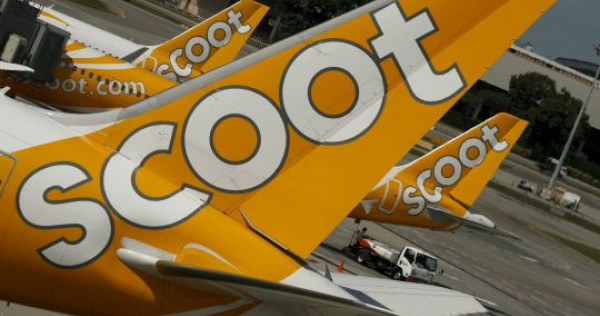
Local budget carrier Scoot will suspend all flights between Singapore and mainland China from Feb 8, amid the growing severity of the Wuhan virus outbreak.

Scoot had said early on Friday (Jan 31) that it would suspend flights to 11 cities and reduce flights to eight other cities, but had stepped up its precautionary measures in line with those announced by the Government later in the day.

Measures that the authorities announced to limit the spread of the Wuhan virus include the barring of all travellers arriving from mainland China who had been there in the past 14 days from entry or transit in Singapore.

Scoot currently operates 100 weekly flights to 18 points in China, excluding Wuhan.

It said that before Feb 8, some flights to China, such as those to Guangzhou and Qingdao, will be operating on reduced frequencies before the suspension kicks in till late March.

Between Feb 2 and Feb 7, the flights operating to and from China will have limited in-flight services with no sales of food and beverage items.

All customers will be provided with a food pack, including water.

[ad_2]

Source link

Commentary: The Singapore Sports School crushed Assumption Pathway 32-0. Nothing wrong with that

0

SINGAPORE: “I always aim to annihilate the opposition.”

Those were the words of the late Kobe Bryant, an NBA legend and one of the fiercest competitors the world had ever seen.

The sentence sounds harsh, perhaps even wrong, but when taken in the context of the “Mamba Mentality” he coined, it fits seamlessly into the gladiatorial ethos of the sportsman.

READ: Basketball: Grieving Lakers return to training after Bryant’s death

On at least one level, you can imagine Kobe nodding his head at the Singapore Sports School (SSP) B Division boys who thumped the Assumption Pathway School (APS) 32-0 in the National School Games football competition two weeks ago.

KOBE’S MAMBA MENTALITY

The Mamba Mentality was about winning at all cost, not in the sense of cheating or cutting corners, but paying more than just your dues in terms of preparation and commitment to training, then executing every move honed when you step out onto the sporting arena.

With this mentality, Kobe’s teams would respect opponents enough to work harder than they did, then show the same respect in the sporting arena by giving nothing less than their best.

The SSP boys did just that, but their massive win has divided opinion in the sporting fraternity in Singapore.

SPORTS A VEHICLE FOR VALUES

Some believe SSP should have taken their foot off the pedal, especially after they were reportedly 20-0 up at half-time. Other critics assert that the SSP coaching staff should get sacked for allowing their better-resourced, better-trained kids to run wild and humiliate their opposition.

I wonder if that is the best approach.

Kobe Bryant

With his Mamba Mentality, Kobe Bryant produced an enduring legacy of achievements in 20 NBA seasons with the Los Angeles Lakers that made him one of the greatest players in basketball history. (AFP/Kevin C. Cox)

Such moves would tell the winning team that it is okay to toy with your opposition, and for the losing side, that there will always be a stop-gap measure to save you when things go horribly wrong.

Both are poor lessons to impart, and what is sport if not a vehicle for life values, especially at this – a school-level competition?

A SYSTEMIC GULF

The word from the grapevine is that SSP did not play with their preferred first eleven, and even set conditions before players were allowed to take shots on goal.

READ: Commentary: Why success should not be the only factor in deciding what is Singapore’s national sport

It also was reported that the SSP players applauded their opponents, with coach Isa Halim addressing the APS players after the game, praising their fighting spirit.

That was a decent show of sportsmanship from SSP that has in place a football programme that has produced several national players such as Safuwan Baharudin.

Under the programme, their students train up to six times a week, and test themselves against some of the best academies across the world – as close as it gets to living and breathing football in the Singapore school system.

safuwan

National footballer Safuwan Baharudin was from the first batch of students at the Singapore Sports School in 2004. 

APS is a specialised educational institution aimed at transforming and empowering students who are unable to access or complete secondary education to help them achieve personal success.

Football is understandably not a dedicated focus for the school that just last year, lost 20-0 to Marsiling Secondary School. 

Why then are these two schools, worlds apart in their approach to sport, facing each other in a match where there are seemingly few benefits on offer for everyone involved?

KID-FIRST APPROACH EXISTS

Before Kobe’s tragic death in the helicopter crash that also claimed the life of his daughter Gianna and seven others, the LA Lakers legend had rekindled his love for basketball – through coaching 13-year-old Gianna and her team.

Despite the monastic approach of his Mamba method that saw him rise at 4am so he could train up to four times a day, Kobe’s approach to coaching was a tad different. It was aimed at providing kids a foundation to help them understand the amount of work and preparation that it takes to be excellent – if it was what they wanted to do. 

READ: Commentary: Why sports still has a place in Singapore

He called for parents “to put the kid first, not the sport”.

To its credit, the Ministry of Education has already moved to implement a more kid-first approach in its National Schools Games, with a tiered competition format that is designed for schools of a similar level to play against each other – once the competition progresses past the preliminary rounds.

This is in stark contrast to the zonal system of earlier decades where schools were grouped by location, and those unfortunate to be in the same vicinity as traditional powerhouses could find themselves booted out of the tournament after just three games.

In its current format, football sees a five-tiered system that provides schools opportunities to give their students more matches, more game time, and against opponents they are likely to be competitive against.

The system could possibly be tweaked even further to prevent such big scores in the preliminary round.

HARD LESSONS ARE HARDLY BAD LESSONS

Or perhaps there could just be a management of the different and sometimes difficult lessons that can actually be drawn from situations of a gross mismatch as was the case between SSP and ASP.

Singapore Sports School (Football 2)

Singapore Sports School football training. 

SSP played to the best of their ability – the greatest respect an athlete can give an opponent – against a team not ready to handle their on-field prowess, then showed heart-warming sportsmanship at the end of the game.

READ: Commentary: Odd new sports at SEA Games aren’t a bad thing for Singapore

And by all accounts, APS matched SSP’s respect for the sport and the sporting arena, by doing their best and not allowing the game to descend into frustrated cheap shots known to occur in amateur league matches here.

Nor did they throw in the towel and walk off the pitch at some point in the game – which would have been tempting for a team of teenagers to do rather than face a more humiliating result – and instead courageously played till the end. That tenacity deserves applause.

The APS footballers would have now seen just how far they are away from being a top school-level team, and hopefully acknowledge the work that needs to be put in, if they want to aim for football excellence.

It is with this knowledge that they will now go into the next stage of the tiered league format competition – a hard lesson, but hardly a bad lesson to learn.  

It may not be perfect, but it has shown – in this case at least – that with the right approach, even within its systemic limitations, school sports can still deliver values and maybe even sow the seeds for Singapore to grow little Mambas of our own.

Perhaps we should calm down, let the kids learn for themselves exactly what is required for sporting excellence and annihilate every opponent put in front of them – or at least try to – that is the essence of sport, no?

Shamir Osman was a former sports journalist for 12 years before crossing the aisle to work in public relations.

Source link

FAQ: Wuhan coronavirus and its outbreak

0

SINGAPORE: The coronavirus originating from China’s Wuhan city is spreading quickly in the country as well as across borders since it was first declared on the last day of 2019. 

Since then, the deadly pathogen has killed more than 200 people and infected nearly 10,000 in China alone. It has also reached more than 20 places across the world, with Hong Kong, Japan and Thailand among the highest counts of confirmed cases. 

In Singapore, there have been 16 confirmed cases so far, all imported.  

CNA asked readers to submit questions on the coronavirus outbreak and had an overwhelming response. Questions ranged from how the virus is spread and whether it will affect pregnant women and their children. 

To answer these, we enlisted the help of medical experts such as those from the Duke-NUS Medical School – Professor Gregory Gray and Professor Wang Linfa, who was also part of the World Health Organization’s (WHO) emergency committee looking into the virus outbreak –  as well as Professor Benjamin Neuman, chair of Biological Sciences from Texas A&M University. 

Their lightly edited answers are as follows:

Question: What is the difference between symptoms of Wuhan virus and flu/common cold? 

Prof Gray: They are very similar. Clinically, it is difficult to distinguish between the two; one really needs to use laboratory-based tests in order to do so.

Prof Wang: Not much.

File photo of person using microscope

File photo of a person using a microscope (MARCO BERTORELLO / AFP)

Q: Can people recover naturally from the Wuhan coronavirus just like the common cold?

Prof Gray: Yes. The vast majority will fully recover after their illness. 

Prof Wang: Yes, and the majority do.  

Q: How does the virus affect pregnant women and will it be transmitted to the unborn child?

Prof Wang: It is not known yet.

Prof Gray: Unknown, but pregnant women are often at increased risk of respiratory infections.

Q: How should parents protect children under the age of 1 from the coronavirus? 

Prof Gray: Avoid having them come in contact with the public, especially people with respiratory signs and symptoms.

Q: Can the virus be spread through water such as via swimming pools? Or through one’s eyes?

Prof Gray: We don’t know, but other respiratory viruses can, such as adenovirus which is a hardier type of virus.

Prof Wang: Transmission through the swimming pool is unlikely unless the person is swimming very close to an infected person. Yes, it is possible to be infected through the eyes.

children swimming

Children at a swimming pool. (Photo: TODAY)

Q: How are those infected with the coronavirus being treated? What’s the success rate?

Prof Wang: It is mostly just normal hospital care for severe cases. I have been told all confirmed cases (of the Wuhan coronavirus) are doing well in Singapore. There are drugs being tried in China, but it is too early to scientifically gauge their success rate.

Prof Gray: There is no specific treatment yet recognised as effective. Success rates are being determined now for supportive care. The mortality rate is low, less than 3 per cent, and likely will be lower as more people fully recover. (According to the WHO, global fatality rate for SARS patients was at 11 per cent)

Q: Is the Wuhan coronavirus going to mutate further? 

Prof Gray: We don’t know, but the good news is that so far the 2019-nCoV virus is not changing.

Prof Wang: All viruses mutate in nature. But so far, the Wuhan coronavirus seems to be quite stable. 

Q: Will tropical weather affect the spread of the virus? If yes, how? 

Prof Gray: Ultraviolet light can often kill respiratory viruses.  

Prof Wang: No scientific evidence for that yet. 

Q: How do you think this coronavirus outbreak will end?

Prof Neuman: As a person who likes to make anti-viral drugs, things that actually slow down the virus, I can say that (better weather patterns or health measures) are probably not going to be the end (of the virus outbreak). And a vaccine will probably not going to be the end. 

It’s old-fashioned stuff like quarantines – basically keeping infected people away from healthy people that actually beat viruses like this. The risk is there are only so many quarantine facilities available in mainland China and only so many facilities to keep people properly treated while they are being treated for the virus. So if there are too many people that turn up sick, and overwhelm the systems that are there, that is potentially a risk.

Medical staff wearing protective clothing arrive with a patient at the Wuhan Red Cross Hospital

In this photo taken on Jan 25, 2020, medical staff wearing protective clothing arrive with a patient at the Wuhan Red Cross Hospital in Wuhan. (Photo: AFP/Hector Rertamal)

We’ve seen China build new hospitals very quickly… so I believe they realise this possible risk and are trying to combat it – which is actually very good news.  

Q: Can you predict how long the virus will last?

Prof Gray: I don’t expect to see a quick resolution. We are seeing the epidemic expand into other countries now. 

Prof Wang: No expert can do such a prediction as this is a highly complex matter. Even the experts at WHO are monitoring and assessing daily.

However, the next two weeks will be critical when the Chinese New Year holiday ends in China. If we see a decrease in two to three weeks, I am hopeful we can control this.

BOOKMARK THIS: Our comprehensive coverage on the Wuhan coronavirus and its developments

Download our app or subscribe to our Telegram channel for the latest updates on the Wuhan virus outbreak: https://cna.asia/telegram 
Source link

Free activities in Singapore this weekend: Magical Shores light display at Sentosa, Chingay Carnival & more

0

[ad_1]

The weekend is finally here!

Don’t waste it away by spending it at home because there are lots of activities happening around the island to enjoy with your friends and family. Weekends will never be the same again with this weekend planner.


MAGICAL SHORES AT SENTOSA

[ad_2]

Source link

Wuhan coronavirus: Scoot to suspend all flights between Singapore and mainland China

0

SINGAPORE: Scoot will suspend all flights between Singapore and mainland China from Feb 8 due to the “growing scale” of the Wuhan coronavirus outbreak that has killed more than 200 people in China and sickened thousands.

The Singapore Airlines Group’s low-cost carrier said in an update on Friday (Jan 31) that the suspension was due to weak demand and “operational constraints” arising from the coronavirus situation.

Scoot had earlier said on Friday morning that it will suspend flights to 11 cities in mainland China from early February until the end of March and that it will reduce frequencies to eight other Chinese destinations.

READ: Wuhan coronavirus: Singapore to widen travel restrictions to all new visitors who recently travelled to mainland China

Scoot had also said customers should expect ad-hoc cancellations of Singapore-Hong Kong and Singapore-Macau flights from Feb 1 to Mar 28.

Affected customers booked on these flights will receive a full refund of unused itinerary value via the customer’s original mode of payment, Scoot said. 

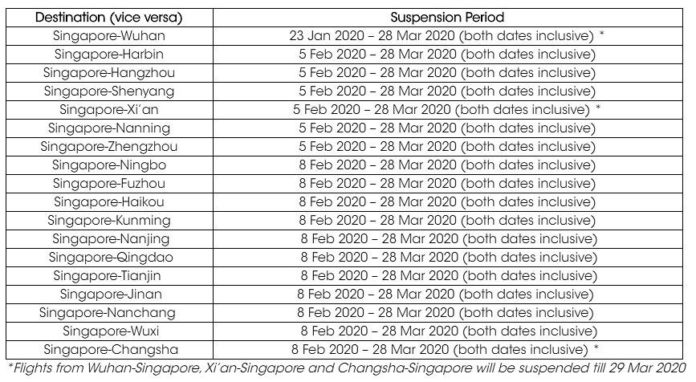
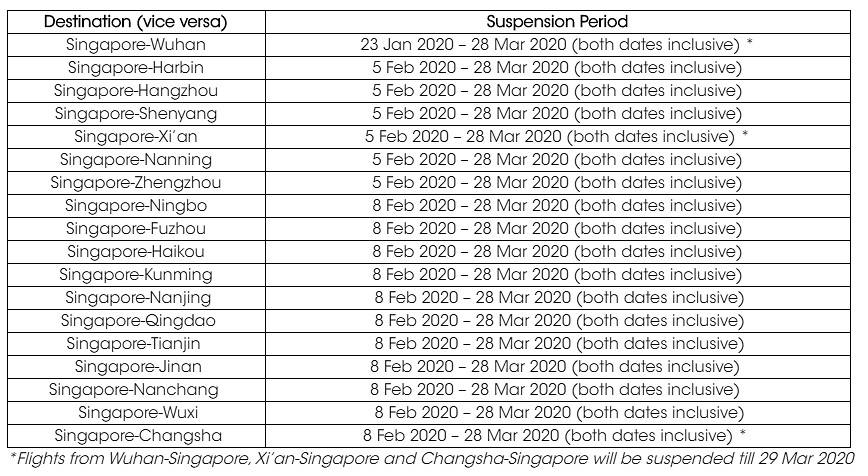
Table of suspended Scoot flights as of Jan 31

A list of suspended Scoot flights. (Table: Scoot website)

Flight frequencies will be reduced for the cities of Fuzhou, Guangzhou, Haikou, Qingdao and Tianjin from Feb 1 to Feb 7, before the suspension on Feb 8.

From Feb 2, flights operating to or from mainland China will also have limited in-flight services with no sales of any food and beverage items and duty-free products.

READ: Wuhan virus outbreak – At a glance

Scoot said that all customers will be provided with a food pack, including water, and that any pre-purchased meals and pre-paid items will be refunded back to the original mode of payment.

From 11.59pm on Saturday, new visitors with recent travel history to mainland China will not be allowed to enter or transit in Singapore.

Taiwan has temporarily restricted entry to some Chinese passport holders while Malaysia has also issued a notice to temporarily halt entry to travellers from Hubei province, Scoot said.

In light of these developments, Scoot said that affected passengers on flights to Singapore, Taiwan and Malaysia who meet the above conditions may not be allowed to board Scoot’s flights.

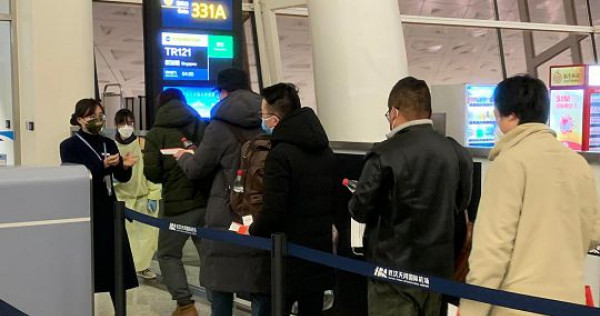
“In compliance with the directives, Scoot will be conducting passport checks during check-in,” the carrier said.

Disinfectants, hand sanitisers and surgical masks will be provided on all flights, in case they are required by crew and passengers. 

All cabin crew and pilots will also have to undergo a “temperature check protocol”, Scoot added.

“Our ground handling agent staff are on standby at various touchpoints in Changi Airport to assist passengers who are unwell and direct them to healthcare assistants as required.

“We continue to advise all passengers to practise good personal hygiene and urge you to seek medical attention if you are feeling unwell. We are also continuing to monitor the situation and will provide updates where necessary,” Scoot said.  

BOOKMARK THIS: Our comprehensive coverage on the Wuhan coronavirus and its developments

Download our app or subscribe to our Telegram channel for the latest updates on the Wuhan virus outbreak: https://cna.asia/telegram 
Source link

First Singaporean confirmed to have Wuhan virus; she was on Scoot flight from Wuhan

0

[ad_1]

SINGAPORE – A 47-year-old woman who travelled to Wuhan with her family has been confirmed as the first Singaporean with the Wuhan virus.

She was one of the Singaporeans evacuated from Wuhan on Thursday (Jan 30) and arrived in Singapore on the same day.

The Ministry of Health (MOH) said this on Friday (Jan 31) as it confirmed three more cases. This takes the total number of infected cases here to 16 as at 2pm.

The woman was asymptomatic when she boarded the Scoot flight, MOH said.

Upon arrival at Changi Airport, she was found to have a fever during a medical screening, and was taken to the National Centre for Infectious Diseases (NCID).

She was tested positive for Wuhan coronavirus infection on Jan 31 at 2pm.

She is currently warded in an isolation room at NCID.

ALSO READ: Visitors with recent travel history to China not allowed entry or transit to Singapore

[ad_2]

Source link

Software glitches that hit online Toto Quick Pick also affected iToto, some telephone 4D Quick Pick bets

0

[ad_1]

SINGAPORE – Some punters who made iToto bets and placed 4D Quick Pick bets over the phone have also been affected by software glitches that were first uncovered in January, said Singapore Pools on Friday (Jan 31).

It also announced details of how affected customers will be compensated for software errors that have been detected so far.

Between Oct 2 and Dec 20 last year, iToto bets that were sold to some online and outlet customers had left the number 49 out of the set of random numbers generated in punters’ bets, Singapore Pools said.

This made up 0.04 per cent of Toto sales, though Singapore Pools declined to give figures on the number of punters affected.

During the same period, the numbers 0 and 9 were also left out of bets that were randomly generated for customers who had placed 4D Quick Pick bets on the telephone. 

When punters place bets via the Quick Pick option, the Singapore Pools system generates a random set of numbers for them. An iToto bet is a Quick Pick System 12 Entry divided into 28 units.

In a System 12 entry, a punter selects 12 numbers between 1 and 49, which is equivalent to 924 ordinary entries.

[ad_2]

Source link