Home Blog Page 496

‘The kampung spirit is still alive’: Punggol residents step up amid coronavirus outbreak

0

SINGAPORE: In several HDB blocks in Punggol West, you can almost smell the kampung spirit in the air – through the faint scent of hand sanitisers and alcohol wipes in the lifts.

Amid fears that the novel coronavirus might spread widely in Singapore, some residents have taken steps to help prevent that.

The virus which originated in China has since killed more than 500 people and infected more than 20,000 globally.

Singapore announced this week that seven Singapore residents with no recent travel history to China had tested positive for the virus, including a six-month-old baby. This takes Singapore’s total number of confirmed cases to 28.

Face masks and hand sanitisers have disappeared from store shelves, prompting the Government to release masks directly from the stockpile to households.

Punggol residents fight spread of coronavirus with kampung spirit (2)

Hand sanitiser in a lift at Block 233C, Sumang Lane. (Photo: Matthew Mohan)

FREE SANTISERS AND WIPES

When CNA visited Punggol West on Wednesday (Feb 5), bottles of hand sanitisers and baskets of alcohol wipes were strapped to the railings in several lifts across multiple HDB blocks.

Handwritten notes encouraged residents to use or take the items.

“Use what you need,” read one note.

“Please take one … From your neighbour, with love,” read another.

READ: Singaporeans have been ‘pitching in’ to deal with Wuhan coronavirus threat: Shanmugam

Residents told CNA that face masks were also available previously in the lifts.

“It’s great, everyone provides these things to bring down the fear of the virus, it’s a community effort,” said Lawrence, a resident of Block 261B, Punggol Way.

The 40-year-old engineer said he believes there are at least two residents placing the sanitisers and wipes in the lifts, as the items appeared at different times.

“Even if you don’t need or use the items, you feel a sense of security, and it makes you really feel the kampung spirit – if you have extra, why not share it?

“Who knows, when the sanitiser runs out, I might contribute too – if I can find any,” said Lawrence.

“It’s a pretty nice gesture, especially since it might be hard to get hand sanitisers now,” said resident Leung Hoi Ki.

“Someone is willing to give one bottle away just so that everybody can use it. I feel that it is quite nice of them,” Ms Leung added.

READ: Minimal queues, thin crowds: First day of free mask collection largely proceeds without a hitch

Speaking to CNA, Member of Parliament for Pasir Ris-Punggol GRC Sun Xueling said that the actions of those residents reflect “the goodness in humanity”.

“When things are organic and people really feel it and want to do it, that’s when outcomes are best. It comes from the heart and doesn’t have to be forced,” said Ms Sun.

“It’s not just the lifts, quite a few residents in Punggol West have been very kind to bring down or deliver food items (for volunteers giving out masks),” she added.

“In difficult times, the best and the worst in people come through,” said Ms Sun. 

“And here, the goodness in humanity shines through – people caring about each other, sharing scarce resources, encouraging each other to be responsible towards community health.”

READ: What we know about the locally transmitted coronavirus cases in Singapore

COUPLE SEARCHED VIETNAM PHARMACIES FOR MASKS, DISTRIBUTED S$1,000 WORTH

When he heard about the shortage of masks in Singapore, Punggol resident Adrian Tan knew he had to do something.

The 39-year-old and his 34-year-old wife Vy Chen were in Vietnam with their children over Chinese New Year when he heard how some people were reselling face masks for a profit.

“Having gone through SARS, we know it’s crucial to prepare not only for our family and friends but the public too,” said Mr Tan.

Mr Tan and his wife roped in the help of friends and family, visited multiple pharmacies over three days in Vietnam, and purchased more than 10,000 masks for about S$1,000. 

When Mr Tan and his family returned to Singapore, they organised their first giveaway at Punggol MRT station on Jan 31, distributing 4,000 masks.

They distributed the remaining 6,000 masks at Punggol MRT station on Feb 1.

Initially, Mr Tan limited the face masks to 10 per person, but later reduced it to five in order to accommodate more people.

His actions also prompted his wife’s friends, also residents of Punggol, to contribute funds for newer batches of face masks.

An additional 7,000 masks were distributed on Feb 4, with another giveaway planned for Feb 8.

READ: Wuhan coronavirus: 1,500 SAF personnel packing 5.2m masks in 24-hour operation

Mr Tan says that the reaction from the public has been good, with many thanking him for his contribution.

“We believe that the kampung spirit is still alive, we just need to set an example,” said Mr Tan.

BOOKMARK THIS: Our comprehensive coverage on the Wuhan Coronavirus and its developments

Download our app or subscribe to our Telegram channel for the latest updates on the Wuhan virus outbreak: https://cna.asia/telegram 
Source link

Commentary: Looks like containment of novel coronavirus not as effective as we had hoped

0

TOKYO: A novel coronavirus is rapidly spreading within China, with more cases discovered outside the country this past week.

The virus is genetically close to the Severe Acute Respiratory Syndrome (SARS) coronavirus , which caused a global outbreak in 2002 to 2003.

Despite their similarities, however, this new virus share few epidemiological characteristics with SARS, which was successfully contained after causing more than 8,000 cases with 774 deaths worldwide.

This new virus may be more difficult to control than SARS. The number of cases has already exceeded the total number of cases of SARS – and in just one month.

It is likely that the Wuhan health authorities tried to contain the new virus using the same strategy previously used for the containment of SARS. However, containment by these means looks like an less effective means to deal with this new virus compared to SARS.

READ: China coronavirus death toll rises to 490 as more countries confirm local transmission

We have insufficient epidemiological data to understand the whole epidemiology of this novel coronavirus because we are still in the early stages of its spread.

At this time, however, we have seen some critical differences between the epidemiology of SARS and this virus that may make this much more difficult to manage than SARS.

HOW EFFECTIVE IS CONTAINMENT?

Active and comprehensive discovery of infected individuals, rapid isolation of cases, and identification of all close contacts by contact tracing were the fundamental strategies for the containment of SARS. However, several conditions must be met for this containment strategy to be effective.

People wearing mask at Orchard Road Singapore Feb 3 (44)

A man holds a mask at Orchard Road, Singapore on Feb 3. (Photo: Gaya Chandramohan)

First, the majority of the infected individuals must develop typical, identifiable clinical symptoms that can be used to distinguish between the target disease and other infections.

Second, only those with typical clinical symptoms can infect others.

Third, infected individuals are contagious only in the late stage of illness.

For SARS, these conditions were met, and quick containment was therefore possible. Most infected individuals developed severe viral pneumonia, which was distinguishable from other infections such as seasonal influenza. Furthermore, only those with severe and typical symptoms could infect others.

Finally, infected individuals were contagious only in the late stage of illness. Therefore, we were able to identify most infected individuals and isolate them as soon as they developed symptoms to prevent further transmission.

READ: Commentary: We know more about the novel coronavirus but uncertainty remains about how virus spreads

READ: Commentary: Hot and humid weather may end the novel coronavirus – as well as the development of a vaccine

Eventually, all chains of transmission were interrupted, and the World Health Organization (WHO) declared a global containment of SARS on Jul 5, 2003 – eight months after the emergence of the virus.

PROBLEMS WITH CONTAINMENT

In contrast, the containment strategy used for SARS has not been successful in containing this novel coronavirus.

This is because this virus does not meet the aforementioned necessary conditions. Unlike SARS, some or many infected individuals developed only mild or no symptoms, precluding the identification of all possible cases.

In Singapore, some Singaporeans who had come into contact with a group of Chinese tourists were diagnosed with the infection, despite two not having any signs of pneumonia when they first presented themselves to healthcare facilities.

People wearing mask at Orchard Road Singapore Feb 3 (38)

People walks with mask on at Orchard Road, Singapore on Feb 3. (Photo: Gaya Chandramohan)

In Japan, five out of the 565 evacuees from China tested positive for the virus despite not having any symptoms.

Furthermore, limited evidence suggests that infected individuals with mild or no symptoms can be contagious.

Asymptomatic infected individuals may not be a driving force for the ongoing outbreak due to a lower chance of successful transmission compared to symptomatic cases. However, if an asymptomatic individual becomes a source of the transmission chain, then contact tracing cannot be used to identify such a chain. This is a critical problem for containment.

Some accounts of transmission suggest that individuals are contagious even during the incubation period, which is the duration between exposure and the onset of symptoms.

READ: 4 locally transmitted cases among new coronavirus patients in Singapore

READ: Commentary: As a parent, I worry about my kids and the Wuhan coronavirus situation. So I’m taking action

There is documented evidence indicating that a traveller from China passed the virus to some of her colleagues during the incubation period in Germany, which the science community is debating over.

If cases are infectious during the incubation period, it may be too late to prevent further transmission, even if we can isolate patients soon after they develop symptoms.

The majority of individuals infected with SARS did not infect any other persons. During that outbreak in Singapore in 2003, more than 80 per cent of infected individuals did not pass the virus to anyone else.

People wearing mask at Orchard Road Singapore Feb 3 (28)

People were seen wearing a mask at Orchard Road, Singapore on Feb 3. (Photo: Gaya Chandramohan)

There were some “super-spreader events” in which one infected individual infected many others. These were the major amplifying factor for SARS. So far, no “super-spreading event” has been documented for the novel coronavirus, but more data is needed before we can rule out such an event.

Because possibly only a small fraction of cases are being detected and reported, it is difficult to know the exact transmissibility between individuals for this virus.

Due to the rapidly increasing number of cases in mainland China, its transmissibility is considered to be higher than that of SARS. In addition, the world of 2020 is quite different compared to that of 2003.

Many more international flights now depart from China to many more countries than before. While SARS spread to more than 30 countries and areas within eight months, the novel coronavirus has spread to more than 20 countries within one month.

READ: Commentary: How effective are mass quarantines in China in curbing the spread of the novel coronavirus?

READ: HIV drugs used to treat ‘small number’ of coronavirus patients: MOH chief health scientist

No sustained human-to-human transmission has been reported outside mainland China. However, “invisible transmission chains” may already have been established in some countries.

Therefore, we may see a sudden increase in the number of cases when such transmission chains are fully realised. This is becoming a real possibility.

SHIFT TO MITIGATION

Because containment appears less feasible and effective, we must shift our objective to mitigate the impact. Thus, the most important goal right now is to reduce the mortality rate to be as low as possible.

Every country should be prepared for an increasing number of severe cases. This may be more challenging in countries with limited healthcare resources. We urgently need to establish a mechanism to support these countries.

It is difficult to predict how the outbreak will evolve in China and other countries, but an imminent risk persists of large outbreaks outside of China. The international community should work together, and China has a critical role in this battle.

Other countries can learn from China’s current experience. For example, we must learn and distribute what measures are effective or ineffective.

The WHO should continue to play a leading role for international coordination, especially with China, to fight against this global threat.

Hitoshi Oshitani is Professor of Virology at the at the Tohoku University Graduate School of Medicine.

BOOKMARK THIS: Our comprehensive coverage on the Wuhan coronavirus and its developments

Download our app or subscribe to our Telegram channel for the latest updates on the Wuhan virus outbreak: https://cna.asia/telegram 
Source link

What we know about the 4 new coronavirus cases in Singapore, including 6-month-old baby

0

SINGAPORE: Four new cases of the novel coronavirus in Singapore – including a 6-moth-old baby – were confirmed on Wednesday (Feb 5).

Three of the four new cases are linked to the local transmission cluster announced by the Ministry of Health (MOH) on Tuesday. The fourth case is linked to a patient confirmed in January.

The four patients are in stable condition, MOH said. Wednesday’s announcement brings the total number of cases in Singapore to 28.

READ: 6-month-old baby among 4 new coronavirus cases in Singapore

This is what we know about cases 25, 26, 27 and 28: 

Cases 25, 27 and 28 are part of a local cluster of transmission involving cases 19, 20, 21 and 24, which can be traced to a Chinese tour group. 

The tour group from Guangxi comprised 20 tourists who had visited Singapore last month.

Two travellers from that group have been tested positive for the coronavirus, Chinese health authorities confirmed.

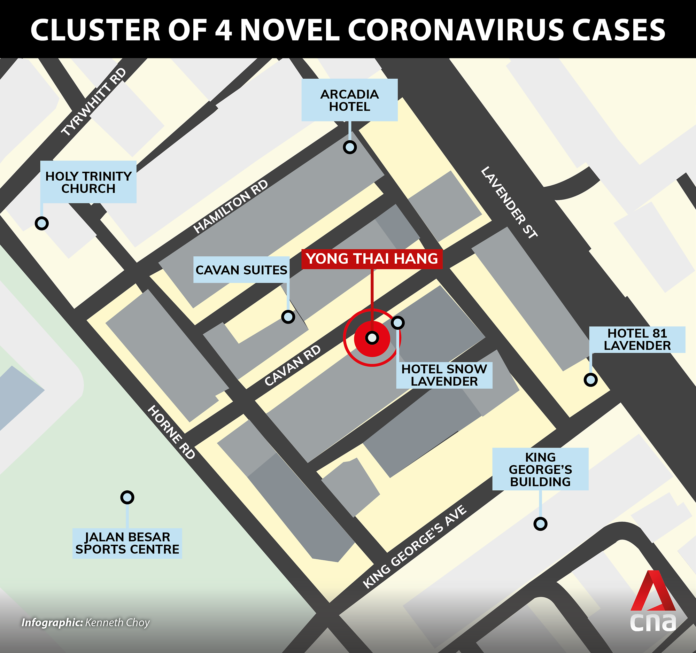
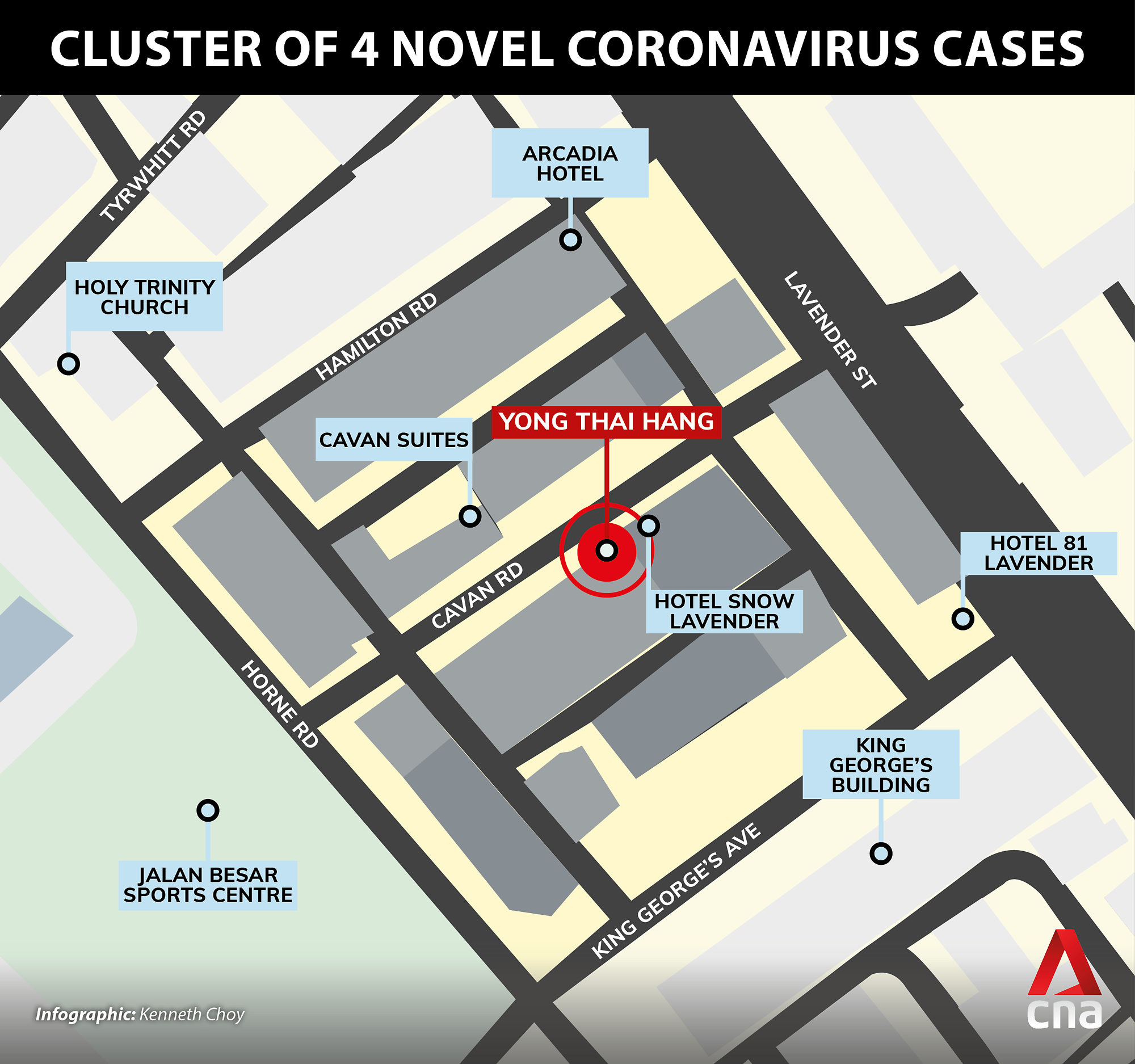
During their time in Singapore, they visited at least six places in Singapore, including Yong Thai Heng, a health product shop.

Coronavirus - Yong Thai Hang map, Singapore locally transmitted cluster

CASES 27 AND 28

Cases 27 and 28 are family members of case 19 – a 28-year-old Singapore permanent resident who works as a salesperson at Yong Thai Heng.

All three do not have recent travel history to China. 

The salesperson was tested positive for the coronavirus on Monday and is warded at Singapore General Hospital (SGH).

Case 27 is her husband, a 45-year-old Singaporean who tested positive for the virus on Wednesday at about 2pm. He is currently warded at the National Centre for Infectious Diseases (NCID).

Case 28 is the couple’s six-month-old son. He also tested positive on Wednesday at about 2pm, and is currently warded in an isolation room at KK Women’s and Children’s Hospital.

The family’s foreign domestic worker (case 21), an Indonesian national with no recent travel history to China, is also warded with the virus at SGH.

Case 20, a colleague of Case 19 at Yong Thai Heng, was admitted to NCID on Monday and tested positive.

CASE 25

Case 25 is the husband of case 24, a 32-year-old Singaporean woman who works as a tourist guide and brought visitors to Yong Thai Hang.

She had gone to NCID on Monday and was confirmed positive on Tuesday at about 2pm.

“While she had previously reported that she was asymptomatic when she went to NCID, she subsequently informed NCID on (Tuesday) night that she had developed a fever on Jan 30,” MOH said.

Prior to admission to NCID, she stayed at her home at Buangkok Green and worked at Jalan Besar. She had visited Hougang Polyclinic on Jan 30 and went to a supermarket near her home.

Her husband – case 25 – is a 40-year-old Singaporean who developed a fever on Jan 24. He visited the same polyclinic as his wife on Jan 30, and self-presented at NCID on Monday, where he was immediately isolated.

He was tested positive on Tuesday, at about 8pm.

Prior to being admitted, case 25 had stayed at home. He worked at Diamond Industries Jewellery Company at Harbour Drive, which the tour group from Guangxi had visited as well.

He had also visited Pasir Panjang Hawker Centre and travelled by public transport.

“The risk of infection from transient contact, such as on public transport or in public places, is assessed to be low,” MOH said.

CASE 26

Case 26 – a 42-year-old Chinese woman from Wuhan – is the daughter of a previously confirmed case, case 13. They arrived in Singapore from Wuhan on Jan 21.

She was conveyed by ambulance to NCID on the same day as her 73-year-old mother on Jan 28 after developing symptoms.

Subsequent test results confirmed on Tuesday that she was infected with the coronavirus.

The elderly woman was a close contact of the second confirmed case, who also arrived in Singapore on Jan 21.

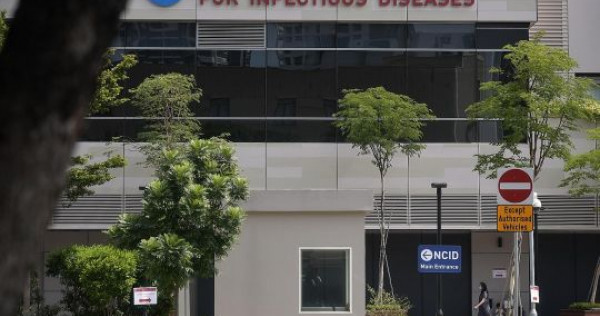
National Centre for Infectious Diseases NCID

File photo of the National Centre for Infectious Diseases. (Photo: Rauf Khan)

OTHER PLACES THE TOUR GROUP VISITED

The tour group of 20 had arrived in Singapore on Jan 22 and left for Malaysia on Jan 24. 

On Jan 27, the group came back to Singapore at about 3am and they left the country at about 6am, MOH said.

Besides Yong Thai Hang and Diamond Industries Jewellery Company, the group also visited:

  • Meeting You Restaurant at 14 Hamilton Road
  • Royal Dragon Restaurant at 2 Havelock Road
  • T Galleria by DFS at 25 Scotts Road
  • D’Resort @ Downtown East at 1 Pasir Ris Close

“It has been almost 14 days since the tourists visited these places,” MOH said.

The ministry has reached out to 142 contacts, of which all but one are well. The person has been isolated as a suspect case and test results are pending.

Contact tracing was also conducted for the crew and passengers of the departing flight on Jan 27. Five are in Singapore and have been quarantined.

BOOKMARK THIS: Our comprehensive coverage on the Wuhan Coronavirus and its developments

Download our app or subscribe to our Telegram channel for the latest updates on the Wuhan virus outbreak: https://cna.asia/telegram 
Source link

Coronavirus: Singapore confirms 4 new cases, including 6-month-old child of infected couple

0

[ad_1]

SINGAPORE – Four more cases of the coronavirus infection were confirmed by the Ministry of Health (MOH) on Wednesday (Feb 5), including the youngest patient confirmed so far, a six-month-old baby who is the child of an infected couple.

Of the four new cases, three are linked to the cluster of local transmission announced on Tuesday, and one is an imported case involving a Chinese tourist from Wuhan.

MOH reiterated that there is no evidence of widespread community transmission in Singapore for now.

This brings the total number of confirmed cases in Singapore to 28.

Outside China, Singapore has the second highest number of confirmed cases of the coronavirus, which originated in China’s Wuhan city. Japan has the most with 33 cases so far.

On Tuesday, the Government said that Singapore recorded its first cases of local coronavirus transmission, with four women here infected who had not travelled to Wuhan, the epicentre of the outbreak.

[ad_2]

Source link

Coronavirus: First patient in Singapore discharged, some given anti-HIV drugs, says MOH

0

[ad_1]

A man from Wuhan, China, who previously tested positive for the coronavirus has since recovered and was discharged from the National Centre for Infectious Diseases (NCID) yesterday, the Ministry of Health (MOH) has said.

Another patient could be discharged in the next few days, the ministry’s director of medical services Kenneth Mak told a press conference yesterday.

The patient discharged yesterday is a 35-year-old Chinese national who arrived in Singapore on Jan 23 and stayed at Marina Bay Sands.

He developed symptoms the next day and was later warded at the NCID. He tested positive for the virus on Jan 27 and became the seventh case to be confirmed here. He is the first to be discharged.

“The patient was discharged well. All symptoms had fully resolved and he had tests over three consecutive days that were all negative,” Associate Professor Mak said.

“We’re quite confident that he’s no longer got any infection.”

Prof Mak noted that there are a number of other patients who have the virus but are well, including at least three who are not showing any symptoms. Many continue to make good progress, he added.

[ad_2]

Source link

'Your grandfather's road ah?': E-bike rider punches pedestrian on Woodlands footpath

0

[ad_1]

“This is your grandfather’s road ah?” was the last thing a 55-year-old technician heard before a fist connected with his chin.

His attacker had been a power-assisted bicycle (PAB) rider.

While walking home on Feb 1, the man and his wife heard a sudden horn from behind. They dodged, only to see a PAB rider blow past them. He stopped just before hitting another pedestrian walking ahead.

Apparently unhappy that they had been in his way (despite the fact that he was riding on a footpath), the rider got off his e-bike and yelled at the couple, reported Shin Min Daily News.

The rider then punched the man, causing him to fall to the ground. He straddled him and continued to punch him.

Although the victim’s wife tried to pull the attacker away, he surged forward and kicked at his ribcage and the lower half of his body.

Fortunately, two female passers-by helped to hold the attacker off as the victim’s wife called the police.

[ad_2]

Source link

Disgust erupts online after Yishun resident gets caught smearing blood on lift door

0

[ad_1]

Intentionally splotching a public area with bodily fluids would be widely regarded as a bad move on a regular day, not to mention when it’s during a global virus outbreak

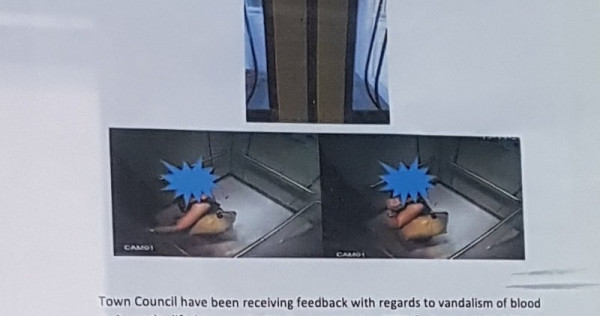
Such is what apparently happened in the infamous neighbourhood of Yishun recently. The Nee Soon Town Council actually had to print out an advisory to urge people from committing such acts after receiving feedback about “vandalism” at a residential estate. 

Embarrassingly, the female vandal had been caught on CCTV smearing blood (presumably hers) on the lift door panels. Thankfully, she wasn’t demented enough to do so on the elevator buttons. 

From the looks of the notice shared on the All Singapore Stuff Facebook page, it appears that the bloodstains aren’t that huge — more blots than splashes. Still, it’s pretty revolting. 

[ad_2]

Source link

Singapore childcare fees: What do you get for $2,000 vs $770?

0

[ad_1]

If you’re enrolling your toddler in a Singapore preschool, you’ll probably be shocked by the huge variation in childcare fees.

Childcare fees can range from about $700 to over $2,000 a month.

Take a look at the infographic below, which shows you the day in the life of a child in a premium preschool (Chiltern House) versus one in a neighbourhood childcare centre (My First Skool).

PHOTO: The Sunday Times

The schedule doesn’t look very different, so what accounts for the disparity in Singapore childcare fees?

ANCHOR OPERATORS KEEP FEES LOW BECAUSE OF GOVERNMENT SUBSIDIES

[ad_2]

Source link

Second Shake Shack burger outlet in Neil Road opens on Feb 7

0

[ad_1]

SINGAPORE – The second outlet of New York’s famed burger chain Shake Shack opens at 89 Neil Road on Feb 7.

Its menu debuts the brand’s Chick’n Shack ($9.20) – which includes a chicken breast slow-cooked in a creamy buttermilk marinade and fried.

It is topped with shredded lettuce, pickles and buttermilk herb mayonnaise.

The burger – first launched in 2016 in the United States – is available exclusively at the Neil Road outlet from Feb 7 to 9.

It will then be available at both the Neil Road and the Jewel Changi Airport outlets from Feb 10 onwards.

Two new frozen custard concretes (from $7.50) remain exclusive to the Neil Road outlet. Eye of the Tiger – a nod to its location, which used to be the former Eng Aun Tong factory that produced medicated ointment Tiger Balm – features vanilla custard blended with lychee, raspberry and shortbread, and topped with lime zest.

[ad_2]

Source link

Jail and caning for tutor who had sex with Primary 6 student

0

[ad_1]

SINGAPORE – A tutor who began dating his student when he was 41 and she was 11 was sentenced to 10 years and 10 months’ jail on Wednesday (Feb 5).

The man, now 43, will also receive 12 strokes of the cane.

He had pleaded guilty to two counts of statutory rape and one count of committing an indecent act with a child. One count of statutory rape and three counts of committing an indecent act with a child were taken into consideration.

He cannot be named due to a gag order to protect the identity of the girl, who is now 13.

The High Court heard that the two met in 2017 while she was attending classes at a tuition centre.

Over time, she became fond of the man, who encouraged his students to call him on his mobile phone if they had any problems and occasionally bought food for the class.

The two began texting each other frequently and their chats became increasingly intimate and personal. He told her that he liked her best, as a student, out of the whole class.

She developed feelings for him and told him that she considered him her “soulmate”. When he asked her to be his girlfriend in April 2018, she said yes.

[ad_2]

Source link