SINGAPORE: Cleaning for areas with high human traffic will be stepped up, Environment and Water Resources Minister Masagos Zulkifli said on Wednesday (Feb 5), a day after Singapore reported the first four cases of local novel coronavirus transmission.
Speaking to reporters after observing cleaners disinfect and sanitise a block in Tampines, Mr Masagos said that all town councils have been “instructed” to clean high traffic areas more frequently.
This includes places like railings, lift buttons and playgrounds, he said.
“NEA (National Environment Agency) has been calling the supervisors to remind them of the proper way of cleaning, the kind of solutions they should be using, the kind of concentration they should be putting in their cleaning solutions,” said Mr Masagos.
He added that town councils will keep up enhanced cleaning until the Health Ministry gives the clear that there is no community spread of the virus in Singapore.
He also reminded the public not to “get swayed by rumours”, especially calls to avoid places with suspected cases of the virus.
“Immediately after we know there’s a case, NEA will supervise the premise owners to make sure the place is properly disinfected and that it is safe for the public to go to,” he said.
“What it leaves us to do now is to step up our own hygiene habits,” said Mr Masagos.
“Let’s be a first world people and keep this up, not only for the purpose of the crisis, but also to make sure that Singapore is the kind of place that everyone practices good hygiene habits.”
WORKPLACES SHOULD BE KEPT CLEAN
Manpower Minister Josephine Teo and NTUC Secretary-General Ng Chee Meng visited Chinatown to check in on how businesses there are faring, and to observe ramped up cleaning practices at a gift shop.
Employees at the shop now clean the surfaces more often than the usual four times a day that was practiced. Hand sanitisers have also been made available to them.
Manpower Minister Josephine Teo and NTUC Secretary-General Ng Chee Meng visiting a shop in Chinatown. (Photo: Gaya Chandramohan)
Speaking to reporters at the shop, Mrs Teo said that the Government understands that people, particularly those who work at the frontlines, may be worried. However, she assured that there are protective steps employers and employees can take.
The first thing to do is to step up cleaning, she said.
“There are, for example, countertops that may be part of human interactions and we want to make sure that the shopkeepers are helping to keep the premises clean,” she said.
She added that it extends to all workplaces that have “high human contact”.
“Employers can also play a part to help their employees in knowing what to do when customers walk in with symptoms such as coughing or sneezing,” she said.
“It may be friendly advice to the customer to go see a doctor, get treated, or perhaps serve them in other ways through the telephone.”
Reiterating Mrs Teo’s message, Mr Chee urged workplaces to use alcohol-based wipes to clean surfaces.
“This is so we can use a second line of defence to prevent transmission,” he said.
Both Mrs Teo and Mr Chee also stressed the importance of personal hygiene.
“Of course, if you are not well, seek medical attention promptly,” Mrs Teo said.
SEOUL/SINGAPORE – An international business gathering at a plush Singapore hotel has been linked to coronavirus cases that have spread across the region, in a worrying sign of secondary transmissions from an epidemic that originated in China.
Malaysia on Tuesday (Feb 4) said its first citizen to be infected with the virus – a 41-year-old man – had attended a meeting in Singapore in mid-January that had included several international delegations, some from China.
A 38-year-old South Korean who came into contact with the Malaysian when he travelled to Singapore for a business conference has also been infected, the Korea Centres for Disease Control and Prevention (KCDC) said on Wednesday.
The South Korean man had a meal with the Malaysian man, as well as several other South Koreans, during the conference, South Korea’s Joongang Ilbo newspaper reported.
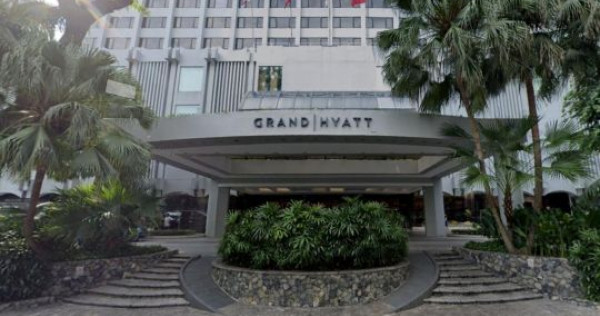
Singapore’s Health Ministry said on Tuesday that the meeting involving the Malaysian took place at the Grand Hyatt Hotel, adding that the city-state was working to identify individuals in close contact with the cases.
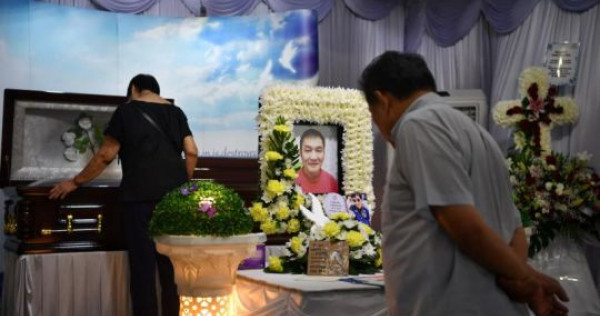
SINGAPORE – Pastor Philip Chan, who dedicated his life to helping drug addicts and co-founded halfway house The Hiding Place with his wife Christina, died on Monday (Feb 3).
Mr Chan, who suffered from liver cancer, was 69.
His only child, Ms Joaquim Chan, a 39-year-old chef, said Mr Chan was diagnosed with stage 4 liver cancer in 2016 and his condition worsened last year. It was his second bout of the disease, after being struck with colorectal cancer in 2006.
Ms Chan said her father died peacefully in his sleep on Monday morning. He is survived by his wife, 73, and daughter.
She added: “I have been given ample time to prepare for this day. But no matter how much time is given, when it (death) comes, it feels like I have been hit by a truck.
“Dad is like a crab, soft on the inside but firm and stern outside. My dad has a very big heart and he will give whatever he has to others. I will definitely miss him so much.”
A former drug addict, Mr Chan used to work as a salesman in his father’s trading firm and led a self-described “havoc” life of drinking and drugs up to his early 20s.
JOHOR BAHRU: Concerns about the novel coronavirus have sparked a shortage of face masks in Johor, with some smaller retailers seen charging above the price ceiling imposed by the government.
The authorities, however, said they have found no evidence of profiteering.
The southern state has become the frontline of Malaysia’s battle against the virus, with seven out of ten confirmed cases across the country detected in Johor Bahru.
Stocks for face masks and hand sanitisers across the city have depleted over the last week.
When CNA visited several major pharmacies on Monday (Feb 3), including those in JB Sentral, Jalan Wang Ah Fook and Taman Sri Tebrau, masks were out of stock.
A notice at Caring Pharmacy in Komtar JBCC asking customers to buy responsibly. The pharmacy has imposed a 10-mask per customer limit. (Photo: Amir Yusof)
Face masks and hand sanitisers were also sold out at Apex pharmacy at JB City Square as well as Guardian Pharmacy and Caring Pharmacy at JBCC Komtar.
Apex Pharmacy at City Square has no stock for face masks, hand sanitisers and disinfectant sprays. (Photo: Amir Yusof)
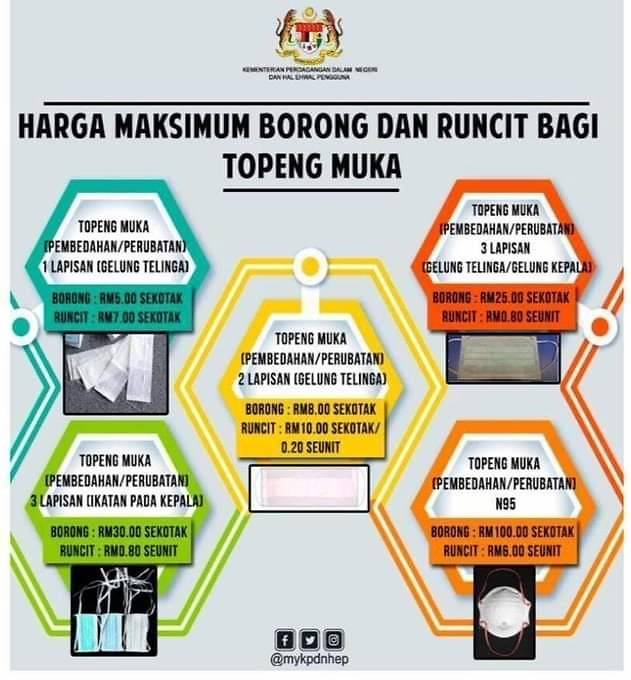
In a Facebook post last Thursday, the Ministry of Domestic Trade and Consumer Affairs’ (KPDNHEP) branch in Johor state said the government had imposed price ceilings for five different types of face masks.
Price ceilings for five different types of face masks. (Image: KPDNHEP Johor)
While the major pharmacies were selling the masks at or below the price ceiling, some of the smaller retailers visited by CNA were selling them at a higher price.
At Taman Sri Tebrau, face masks were being sold at a Chinese traditional medicine shop and a grocery store at above the price ceilings.
The traditional medicine store was selling three-layer surgical masks at RM9 (US$2.18) per pack. This means that the masks cost RM0.90 each, RM0.10 more than the capped amount.
The face masks, which were stored in transparent zip-lock bags, were taken from a room at the back of the shop.
The shop owner, who declined to be named, told CNA that he was not aware of any regulation on the price of face masks.
Over at the grocery store, each three-layer surgical mask was going for RM1. This was RM0.20 above the price ceiling.
The masks were stored in a cardboard box underneath the counter.
The owner declined to comment on why he was pricing the masks above the set limit.
The surgical face masks sold at the stationery store at Jalan Wang Ah Fook were unsealed. They were also sold at RM1 per mask, 20 sen over the maximum limit. (Photo: Amir Yusof)
Furthermore, a stationery store at Jalan Wang Ah Fook also quoted RM8 for each N95 mask, RM2 above the price cap of RM6.
The store was located close to a Big Pharmacy outlet, which had run out of stock for face masks.
A staff member from the outlet told CNA that workers from neighbouring stores would snap up face masks in “large quantities” before re-selling them for a profit.
“I’ve seen them buying the masks by the boxes when they realise that the pharmacy’s stock has arrived. It’s not right but there’s not much we can do,” said the staff member who declined to be named.
Taman Mount Austin is a popular destination for tourists as it has many bubble tea shops and restaurants. (Photo: Amir Yusof)
Over at Taman Mount Austin, more non-pharmaceutical retailers were also selling face masks for a profit.
A florist shop located near a Guardian pharmacy outlet was selling two-layer surgical masks for RM10 per pack of 10. This was a whopping RM0.80 more than the capped amount of RM0.20 per mask.
The shop owner said that he did not usually sell face masks but decided to stock up because customers were requesting for them.
“I ordered a shipment from a supplier in Pasir Gudang and the boxes just arrived this week. I think RM10 for 10 face masks is a reasonable price,” he said.
There was also huge disparity in prices at different stores.
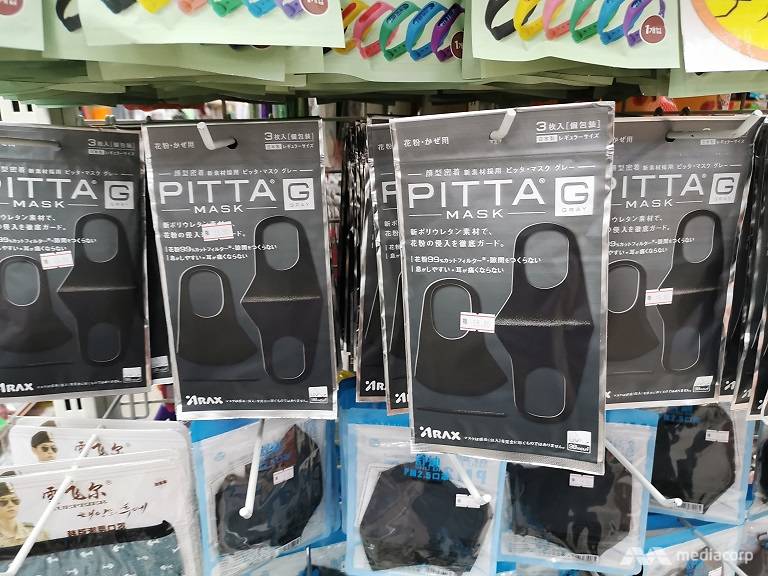
An electronics store in Taman Mount Austin was selling Arax Japanese Pitta masks at RM3 for a pack of three. However, a provision store nearby was selling the same product for RM15.90, more than five times the amount.
Each pack of Japanese Pitta facemasks was priced at RM15.95 at this provision store. The same packs were sold at RM3 in a neighbouring electronics shop. (Photo: Amir Yusof)
Mr Ivan Yeo, who purchased the masks at the provision store said the authorities should ensure that all face masks are priced fairly and consistently across different retailers.
“We as customers are not sure. It’s so difficult to find places that have stock for face masks so we tend to just buy when the stores are selling them,” said Mr Yeo.
NO EVIDENCE OF PROFITEERING: AUTHORITIES
When contacted, a spokesperson for Johor KPDNHEP said checks on retailers across Johor Bahru were conducted over the last week following complaints regarding profiteering.
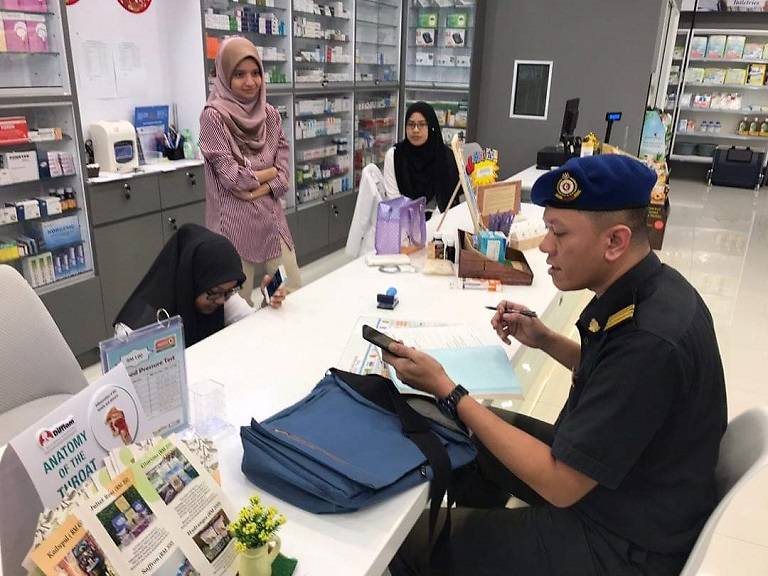
Enforcement checks on retailers have been conducted by KPDNHEP officers in Johor. (Photo: KPDNHEP Johor)
The checks were conducted at shops across Johor Bahru in Bukit Indah, Mount Austin, Setia Eco Park and Taman Daya.
The spokesperson noted that although stocks for face masks were depleted at most outlets, there were no evidence of masks being sold at prices above the maximum ceiling.
In Malaysia, face masks are regulated under the Price Control and Anti-Profiteering Act 2011.
Those caught will face a maximum fine of RM100,000 or imprisonment of up to three years, or both. Errant companies could be fined up to RM500,000.
CNA has contacted the Johor State Government for comment on further enforcement action on errant retailers, as well as plans on how to ensure there is sufficient stock for face masks for residents in Johor.
Meanwhile, pharmacies located near to the causeway said some Singaporeans had been making bulk purchases.
Ms Uvarani Kothandan, the manager for Caring Pharmacy’s outlet in JB Sentral, told CNA that the masks at her store were purchased “mostly by Singaporeans” as they were heading towards the immigration clearance at Bandar Sultan Iskandar.
“They were mostly families carrying Singapore passports. Many came over during the recent Chinese New Year holidays and bought the mask and sanitisers in bulk,” said Ms Uvarani.
Ms Jocelyn Wu, a Singaporean customer at the store who was looking to purchase face masks and hand sanitisers, said buying in Johor Bahru made financial sense as the items were cheaper.
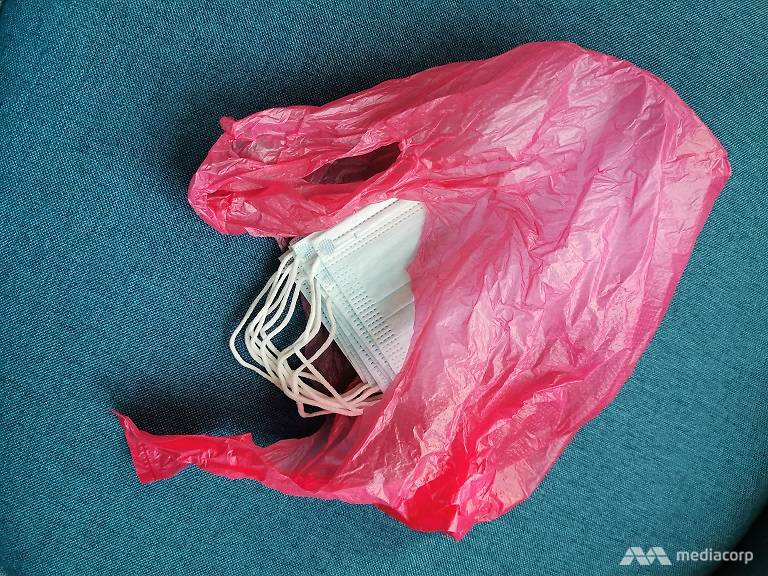
Last week, the Singapore government said each Singapore household will receive four surgical masks from the national stockpile.
The move to distribute masks came after long queues and empty shelves for face masks were seen at retailers across Singapore.
While we’re eagerly waiting for the highly-anticipated (and now delayed) release of Final Fantasy VII Remake, here’s another reason to be excited for Square Enix’s remake of one of the greatest JRPGs of all time: the Final Fantasy VII Remake Orchestra World Tour.
A live orchestra concert of the iconic original theme music from the game will commence this summer beginning at Los Angeles, California on 14 June 2020, and will circle the globe, arriving in Singapore on 4 July 2020. Tickets will go up on sale on 20 April 2020 at 10am SGT.
If you’ve enjoyed the beloved Distant Worlds: Music from Final Fantasy live concert in recent years, then this one is certainly one to consider.
The Final Fantasy VII Orchestra World Tour features the original music composed by Nobuo Uematsu, including the new theme song Hollow, performed by a 100-strong orchestra led by Grammy Award-winning conductor Arnie Roth.
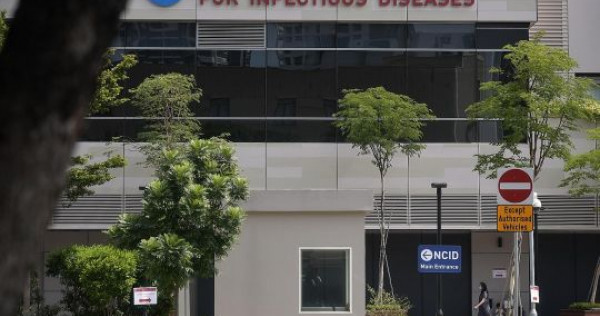
A man from Wuhan, China, who previously tested positive for the coronavirus has since recovered and was discharged from the National Centre for Infectious Diseases (NCID) yesterday, the Ministry of Health (MOH) has said.
Another patient could be discharged in the next few days, the ministry’s director of medical services Kenneth Mak told a press conference yesterday.
The patient discharged yesterday is a 35-year-old Chinese national who arrived in Singapore on Jan 23 and stayed at Marina Bay Sands.
He developed symptoms the next day and was later warded at the NCID. He tested positive for the virus on Jan 27 and became the seventh case to be confirmed here. He is the first to be discharged.
“The patient was discharged well. All symptoms had fully resolved and he had tests over three consecutive days that were all negative,” Associate Professor Mak said.
“We’re quite confident that he’s no longer got any infection.”
Prof Mak noted that there are a number of other patients who have the virus but are well, including at least three who are not showing any symptoms. Many continue to make good progress, he added.
In line with other telcos in Singapore, Grid Mobile has launched a new portal on Feb 1, for customers to help them to gain better visibility over their data usage and help prevent any “bill shock” when it comes time to pay their bills at the end of the month.
A joint venture between Singtel and ST Telemedia, Grid Mobile was launched mid-2019 with plans to woo millennials with its no-contract plans and offerings of additional mobile data.
Using the Grid Mobile Portal, Grid Mobile customers can gain a ‘single pane of glass’ view into their data usage patterns and purchase add-on packs as needed.
For just $24.90 per month, Grid Mobile customers get 40GB of data (up from 20GB when the plan was first launched), 200 minutes outgoing calls, 200 SMS, free unlimited incoming calls and free Caller ID.
Unlike TPG customers, Grid Mobile still offers 1GB of data roaming in Malaysia.
As a comparison, on Circles.Life, it would cost you $48 per month to get more than 20GB of data, which is inclusive of their unlimited data plan top-up for $20.
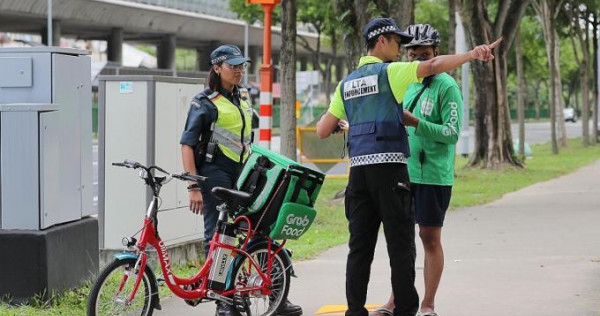
Footpath accidents involving personal mobility devices (PMDs) have fallen by 52 per cent since they were banned from footpaths last November.
Sentiments towards public path safety have also improved, Senior Minister of State for Transport Janil Puthucheary told Parliament.
To continue ensuring the safe use of active mobility devices such as PMDs and power-assisted bicycles, users will soon see the introduction of some new measures under changes to the Active Mobility (Amendment) Bill debated in Parliament yesterday. These include a mandatory online theory test for users.
Starting in April, the ban on mobility devices on footpaths will be extended to other devices, including hoverboards and electric skateboards.
Dr Puthucheary said that while most PMD users are largely law-abiding and ride responsibly, enforcement officers detected about 4,900 offences last year.
“This is not acceptable. To send a stronger deterrent message to this group, we will increase the maximum penalties for certain offences. We will generally double the penalties of key user behaviour offences.”
SINGAPORE: The 2019 Novel Coronavirus (2019-nCoV) that infected more people in China than the Severe Acute Respiratory Syndrome (SARS) outbreak in 2003 has now spread across the globe.
While we are learning more about the virus daily, questions are being raised about its rapid spread. One possibility is that this development could be related to climatic conditions.
CLIMATE, WEATHER AND FLU SEASONALITY
There is reason to believe that the seasonal pattern of novel coronavirus pneumonia may be similar to that of influenza infection and SARS, and thus cases may sharply fall by May, when temperatures in China warm up.
In countries with temperate climates such as China and the United States, the flu season usually starts in December with a peak in January or February, after which cases decrease.
SARS disappeared in the northern summer of 2003 and has not reappeared significantly since. This seasonality of influenza and other respiratory viruses in temperate countries is thought to be related to factors that affect infectiousness (person to person spread) such as the dryness of the air, ambient air temperature and possibly ultraviolet solar radiation.
Human factors may also contribute to the spread of influenza during the colder winters since more time may be spent indoors, presumably in closer contact with other persons.
The 2019-nCoV appears to be similar to other respiratory viruses such as influenza or the common cold (rhinovirus), which are spread by large droplets of saliva or phlegm from one person to another (either directly by cough or sneeze) or by contact. That happens when a person touches a contaminated surface and then touches his or her nose, mouth or eyes, inadvertently transmitting the virus.
In fact, studies have shown that these respiratory droplets spread farther when the air is cold and dry.
Studies done many years ago showed that the “regular” coronavirus (which is one of the causes of the common cold) can survive on surfaces 30 times longer in places with a temperature of 6 degrees Celsius compared to those where the temperature is 20 degrees Celsius and humidity levels are high.
More recently, scientists from Hong Kong University (HKU) including Professor Malik Peiris and Professor Seto Wing Hong showed that low temperatures and low relative humidity allowed the SARS virus to survive much longer than they would in high temperatures and humidity.
More than 20,000 people have now been infected by the virus, with 425 dead, while it has spread to more than 20 countries AFP/DALE DE LA REY
The HKU team argued that this may be the reason warm and humid Southeast Asian countries did not have SARS outbreaks, unlike Hong Kong and Singapore where in their words, there is “intensive use of air-conditioning”.
Thus, just as with influenza, the 2019-nCoV may slow down when the sun starts to shine more and the weather warms up in temperate and subtropical countries.
LESSONS FROM SARS
The SARS epidemic occurred 17 years ago and, since then, public health institutions, medical and laboratory science professionals, and the infectious diseases community are much better prepared to respond to novel and emerging infections globally.
The improvements in communications and social media are undeniable. The genetic sequence of this new type of severe pneumonia in Wuhan was shared relatively early.
This allowed countries all over the world to develop fast and accurate tests: These were not available during the initial weeks of SARS outbreak.
Then, we had to depend on clinical examinations and contact tracing to determine who really was infected with SARS. Near the end of the epidemic, we were able to test everyone and we found out that we had actually missed a significant number of cases – these were only diagnosed after they had recovered.
This has been the biggest difference in that now, low-resourced countries like Nepal and Cambodia are able to conduct relatively fast and accurate diagnosis on-site without having to wait for samples to be sent overseas.
Given that the genetic information about the novel coronavirus was available even before countries had patients with the virus, many labs in advanced countries, including Singapore, are already working on blood tests for rapid detection and studying the immune response to help vaccine development. A trial to test anti-viral treatments has already been initiated in China and is being planned elsewhere.
CONTACT TRACING AND TRAVEL BANS
A basic public health approach to any outbreak is the use of contact tracing.
The virus has spread across China, despite drastic measures like city lockdowns in the worst-hit regions. (Photo: AFP/Noel Celis)
This means that for any patient who is found to be ill, close family members and other persons that he or she had close contact with during the incubation period will be notified that they were exposed to a sick person and quarantined for a further full incubation period, which for this novel infection is indicated to be 14 days.
During the Ebola virus outbreak of 2014, this type of contact tracing was done very manually in many settings, although there were a number of mobile applications which were piloted.
For this 2019 virus infection outbreak, much effort is being placed on high-tech contact tracing. It is too early to tell if this will be more effective, but any method to help contacts monitor themselves during the incubation period and detect symptoms may certainly help to decrease community transmission.
Public health measures including screening and quarantining are similar to what was done for SARS and the Middle East Respiratory Syndrome (MERS), although there have been broader approaches to travellers without direct contact with infected patients because of the extent of community spread in China.
Given that we are not sure as to what extent asymptomatic persons can transmit the virus, many countries have decided to close their borders to Chinese nationals, as they cannot rely on temperature screening to detect who is potentially contagious and necessitating quarantine.
Many countries are also quarantining their own citizens and permanent residents returning from China, in an effort to limit introduction of this virus into the community.
During SARS, the World Health Organization (WHO) imposed global travel restrictions and advisories. When a travel restriction is in effect, a country may feel the need to quickly get the ban lifted and reduce its aggressive screening and case finding. This may have contributed to the resurgence of SARS in Toronto after the initial period of good control.
This time round, different countries have introduced their own travel restrictions which are probably more appropriate to the different situations and their relations with China.
Travel bans are always controversial as they tend to have significant unintended consequences and have to be actually instituted before the virus appears in the country. Otherwise, they are relatively pointless.
Among the concerns about the travel bans instituted this time during the coronavirus is the fact that we do not know how extensive the spread is from people without symptoms.
File photo of people wearing a mask in Singapore on Feb 3, 2020. (Photo: Gaya Chandramohan)
If this is really very widespread, then a blanket travel ban will have limited effects by now as the virus is probably silently spreading among and through most countries. Once there is documented local transmission in a country, as in Germany and the United States, the goal has to be containing the local transmission while at the same time preventing re-introduction of the virus.
Overall, the key strategy has to be good contact tracing and widespread testing so that every case can be identified, tested and treated. That way the chain of transmission can be broken and the virus stopped in its tracks even before the warm weather kicks in.
VACCINES AND DRUG TREATMENTS
Unfortunately, the current way in which drug and vaccine development in modern medicine happens is very much driven by financial considerations. Unlike for example defence or homeland security, the question that always comes up when it comes to treating and preventing human disease is: “Is this financially viable?”
As SARS disappeared 17 years ago and MERS has only occurred sporadically, primarily in the Middle East, there has been no incentive for the pharmaceutical industry to invest the funds needed to develop appropriate drugs and vaccines.
All the interest and enthusiasm which came with SARS disappeared when the virus did not reappear after a couple of seasons. Governments had other priorities and most have actually left this part of national security to private industry.
Hence, if and when the novel coronavirus disappears in May and does not reappear next October or November, we can predict that drug and vaccine development will likely die a natural death.
That is unfortunately the way of the world and hopefully something can be done to change this. But that will require a massive global mindset change. Given the frequency with which these emerging viral infections occur, the world can ill- afford to continue along this road.
Download our app or subscribe to our Telegram channel for the latest updates on the Wuhan virus outbreak: https://cna.asia/telegram
Assistant Professor Jyoti Somani, Department of Medicine, Yong Loo Lin School of Medicine, NUS and Professor Paul Ananth Tambyah, Department of Medicine, Yong Loo Lin School of Medicine, NUS and President, Asia Pacific Society of Clinical Microbiology and Infection.
SINGAPORE: There is a growing realisation that Singapore needs to face head-on numerous challenges posed by the rise of the digital economy.
Local recruitment firms have highlighted the importance of employees possessing ICT specialist skills, while the manufacturing sector has seen the rise of automated work processes.
At the same time, the retail and transport sectors have borne the brunt of disruption brought out by online commerce.
The digital economy that has emerged over recent years has transformed the organisation of labour, production and trade around the world.
This hyper-connected economy is driven by the use of digital technologies such as cloud computing, data analytics, the Internet of Things, Artificial Intelligence (AI) and robotics.
This pace of change will only accelerate as Singapore presses ahead on leveraging AI. A Model AI Governance Framework has been launched to help firms develop their approach to AI.
More recently, Minister for Communications and Information S Iswaran announced the launch of more initiatives to improve consumer trust and governance of AI.
THE DIGITAL ECONOMY WILL DEMAND NEW WAYS OF WORKING
Besides disrupting traditional work patterns, the digital economy also has serious implications for economic, social and cultural relationships.
For instance, AI has enabled the automation of not only more routine administrative tasks but also supposedly higher-level, white-collar work such as legal research.
In 2017, the United Nations Educational, Scientific and Cultural Organisation (UNESCO) published a report that addressed the issue of digital skills needed for life and work. The report outlined three broad sets of skills.
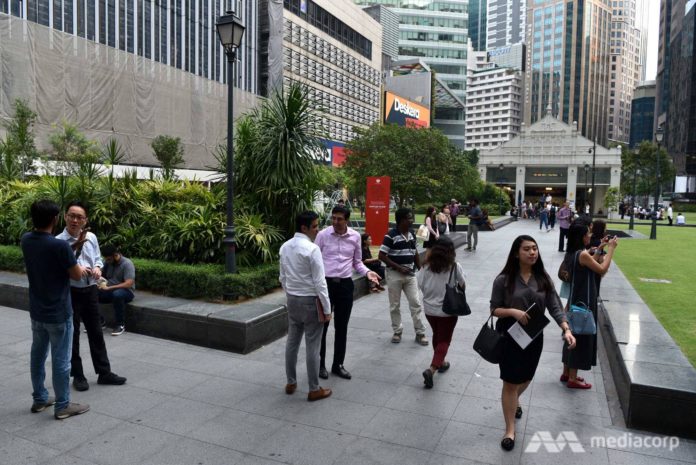
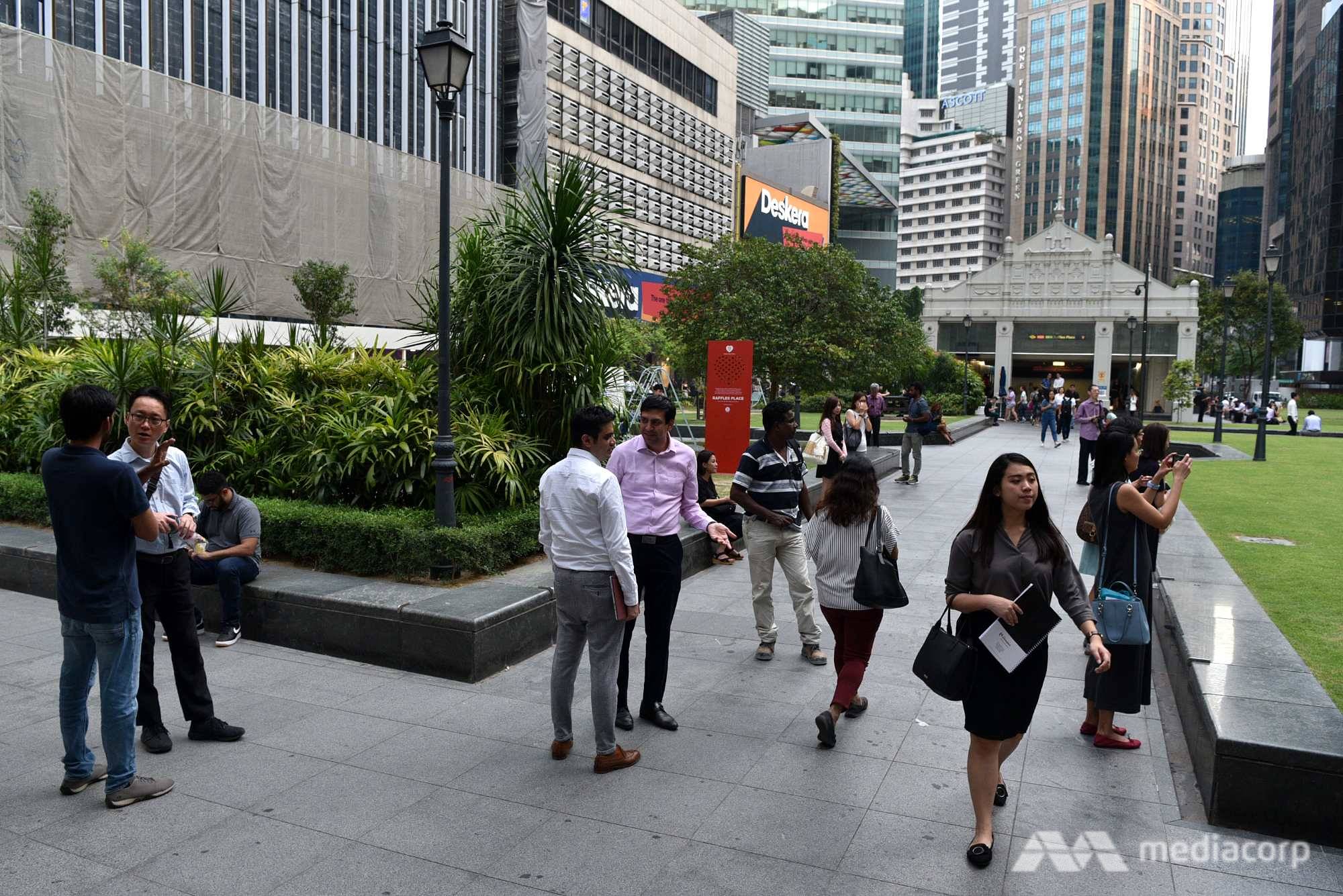
File photo of office workers at Raffles Place in Singapore’s CBD (Photo: Jeremy Long)
First, basic digital skills that enable students to access and make functional use of digital technologies.
Second, an intermediate range of generic digital skills that include the ability to understand, contextualise and critically evaluate how technologies are being employed.
Third, a set of highly technical skills, such as computer programming and data analysis, which are advanced and are not normally well developed or needed in ordinary users of technology.
Beyond these skills, the UNESCO report highlighted “ICT-complementary skills” such as critical thinking and problem-solving, creativity, innovation, entrepreneurship, collaboration and teamwork, and communication.
Additional skills mentioned in the UNESCO report include critical information literacies, which will enable individuals to be active consumers, rather than passive recipients, of information, and to make informed decisions when using online and offline information.
Another skill category revolves around critical data literacies, which involve strengthening awareness of the ways in which digital data are obtained or monitored by digital devices and systems.
These skills are especially pertinent in the light of some of the major risks posed by the digital economy. These include cybersecurity breaches, illegal economic activities, and changing conceptions of privacy.
(Photo: Unsplash/Tran Mau Tri Tam)
At the same time, the UNESCO report warned of the danger of digital inequalities across the lines of factors such as socio-economic status, educational attainment and physical abilities.
HOW TO CREATE RAISE DIGITAL-READY NATIVES
In the light of the publication of the UNESCO report, how does the Singapore education system stack up? What is the Ministry of Education doing to better prepare students for the digital economy?
In the face of the growing significance of the digital economy, are our schools keeping up in terms of preparing digital-ready citizens?
On its part, the Ministry of Education has been striving to ensure students are adequately prepared for the digital economy.
Speaking in Parliament in January, Minister for Education Ong Ye Kung said that all upper primary school students would from 2020 onwards participate in a Code for Fun enrichment programme.
Some primary schools would begin offering Applied Learning Programmes in technology-related areas such as robotics and coding in 2023.
Secondary school students could also participate in various technology-related Applied Learning Programmes and Computing subjects.
He also pointed out that Singapore would continue to focus on Mathematics and Science in schools, while encouraging students to study Science, Technology, Engineering and Mathematics (STEM) subjects or courses.
The reality of a future characterised by the oft-used term VUCA (volatility, uncertainty, complexity, ambiguity) means that schools will likely be engaged in the constant task of playing catch-up with rapidly evolving changes in the digital economy.
It may therefore be more helpful to move beyond the imparting of hard skills and equip students as well with more enduring skills (which the UNESCO report refers to as “ICT-complementary skills”) to help them navigate their futures.
EDUCATION FOR THE DIGITAL ECONOMY
On this front, Singapore schools have been actively trying through various Character and Citizenship Education programmes as well as through mainstream curriculum subjects to impart these so-called 21st century skills.
However, various observers have pointed out the difficulty of doing so in a highly competitive school system that is accompanied by a ubiquitous private tutoring industry, which is already trying to move away from an overly heavy emphasis on academic performance.
The Ministry of Education faces an uphill task in ensuring that its current efforts to de-emphasise the importance of results and promote the joy of learning, such as the reduction of tests and examinations in primary and secondary schools, manage to convince teachers, students and parents of the need to focus as well on these 21st century skills.
Besides the skills that have been discussed so far, there are also calls to re-examine the traditional forms of teacher-student interaction and classroom-based instruction in schools, as well as to promote inter-disciplinary learning to break down subject boundaries.
The Ministry of Education building. (File photo: Ngau Kai Yan)
Advocates of these further reforms claim that well-established patterns of organising lessons and schools are a by-product of previous waves of industrialisation and are ill-suited to the task of preparing students for the Fourth Industrial Revolution.
Although a range of wholly online lesson delivery mechanisms such as Massive Open Online Courses (MOOCs) currently exists, there is still an enduring demand for forms of instruction that involve face-to-face interactions with others in social settings, especially for younger students.
Furthermore, the development of interpersonal skills is best done within an environment where students learn alongside other students rather than one in which students learn in isolation.
There is probably a considerable inherent value attached to the socialising function of schooling.
This means that traditional classroom arrangements will probably prove resilient, while being increasingly supplemented by technology-enabled pedagogies (such as augmented reality) both within and outside of classrooms.
Large-scale inter-disciplinary teaching in schools would involve a complete rethinking of such issues as timetabling, assessment systems and teacher competencies.
It would also call into question the adequacy of teacher preparation for such teaching, since teachers have completed their studies in institutes of higher education that are characterised by specialisation in various courses of study.
WHAT NEW TRAINING TEACHERS NEED
This leads to another pressing challenge, namely, teacher preparedness. How prepared are our teachers for helping their students to face the digital economy?
Teachers are dealing with so-called digital natives who have grown up with digital devices and platforms, and who may be much better acquainted with digital technologies than themselves.
In addition, teachers need to keep abreast of the bewildering speed of change and disruption in order to better prepare their students for what seems at times like an unpredictable future.
Students attending a mathematics class at a primary school. (File photo: TODAY)
In this respect, the policy of allowing teachers to enjoy sabbaticals that involve external workplace attachments is a positive step.
Irrespective of the specific subject content that they are teaching, the Ministry of Education has called on all teachers to play their part in helping students develop a broad range of 21st century skills as well as critical information and data literacies.
Another priority mentioned in the UNESCO report that is relevant for Singapore is that of digital inequalities. The Ministry of Education needs to ensure that all of our students have equitable access to basic and generic digital skills while supporting some to acquire advanced proficiency.
In other words, another item has been added to the list of priorities as the Ministry of Education attempts to address issues such as socio-economic inequalities, social mixing in schools and greater inclusivity.
The urgency of addressing the digital divide has been reiterated in the World Economic Forum’s Global Social Mobility Report 2020 and discussed at Davos last month.
While this commentary has focused on schools, it is important nevertheless to remember that what happens in schools is only one part of the answer to adequately preparing all Singaporeans for the current, as well as, future disruptions.
The schools’ efforts have to be complemented by other measures.
These include encouraging more workers to avail themselves of SkillsFuture courses, ensuring fair employment practices and macro-economic strategies that boost Singapore’s economic competitiveness within a VUCA environment.
In March 2020, the inaugural CNA Digital Economy Leadership Summit 2020 will bring together some 200 key decision makers from Government, diplomatic circles and the private sector from around Asia, to explore key issues that include: How to grow and innovate in a digital economy, as well as how to manage talent and ensure sustainability in the digital economy.