Home Blog Page 290

Commentary: The future economy has arrived. It’s mostly digital and contact-free

SINGAPORE: COVID-19 has reminded me of my university days studying Stephen Jay Gould’s evolutionary biology theory of “punctuated equilibrium”.

The concept refers to long periods of stability in nature that are upset and disrupted by short periods of rapid change.

For example, a species of sea animal that has existed for thousands of years, but is suddenly forced to adapt when sea levels suddenly change. Its body develops to accommodate this environmental change, and from that point on it is evolutionarily different from its ancestors.

Its world has forced a change in behaviour by default, and that becomes the new normal.

COVID-19 OUR HUGE DISRUPTION

Punctuated equilibrium has parallels in the technology world. Throughout history computer systems have often demonstrated extended periods of stasis followed by disruptive change.

We have moved from transistors to vacuum tubes to massive mainframe computers to minicomputers to PCs and laptops. Today, we have incredibly powerful computers in our pockets that we refer to as phones.

READ: Commentary: The biggest restructuring exercise facing Singapore businesses has just begun

READ: Commentary: Remote working promised freedom, but seems to be delivering the exact opposite

In the technology world‚ we often cite Moore’s Law as an example of constantly increasing change, but that isn’t strictly correct. New chips come along every couple of years, but the big, industry-transforming events have tended to appear more like every decade.

So, considering the theory of punctuated equilibrium, COVID-19 is our next huge disruption that we have to manage. Among the various possible scenarios, one thing is certain: New trends will emerge.

The coronavirus disease (COVID-19) outbreak in Singapore

People wearing face masks cross a street amid the coronavirus disease (COVID-19) outbreak in Singapore June 1, 2020. (Photo: REUTERS/Edgar Su)

Enterprises will need to focus more than ever on building new customer relationships through effective digital experiences, since physical interaction with them will be far less. With so many end-users and customers quarantined in their homes, these digital experiences will matter more than ever.

Companies must be robust. Those that will thrive will be those able to retain customer trust during the COVID-19 pandemic and subsequently lead those customers out of it. 

Governments must also take part to support companies and businesses to adapt seamlessly to these new trends.

READ: Commentary: Soon you may be competing with talent globally. The Fortitude Budget is a wake-up call

READ: Commentary: The circuit breaker was a time many of us want to forget. Let’s make it count

There is strong momentum to achieve rapid digital transformation in Singapore. The Singapore Government recently announced that about S$500 million of the Fortitude Budget will be allocated to support the digital transformation of businesses.

Highlighting the sharp rise in e-payment by businesses with 50,000 more businesses adopting PayNow Corporate since April, Deputy Prime Minister Heng Swee Keat emphasised that more help will be given to boost the use of digital solutions for enterprises that have not been able to implement such tools yet.

THE RISE OF THE CONTACTLESS ECONOMY

There is a high likelihood that APAC will morph into being what will effectively be a contact-free economy. Online shopping was already proving increasingly popular with consumers in the Asia-Pacific (APAC) before COVID-19, but lockdowns and stringent restrictions have sent it through the roof.

Online shopping Asian flush products

(Photo: Unsplash)

China has seen consumers begin to shop online in much bigger numbers, while 13 per cent of Europeans said in April that they were planning to investigate e-tailers for the first time.

Italy, one of the hardest-hit nations in the world during COVID-19, reported an 81 per cent increase in e-commerce transactions since the end of February.

I expect APAC consumers to follow suit. E-commerce in APAC was forecast to be worth US$3.5 trillion by 2021, according to the eMarketer 2019 Global E-commerce Forecast.

While the emergence of the contact-free economy is likely to see this number revised upwards, APAC ecommerce platforms like Lazada, Shopee, ShopBack and Zalora are helping brands and consumers during COVID-19. According to research by Ipsos, Vietnam has seen 57 per cent of shoppers shifting their purchasing online, with India at 57 per cent and China at 50 per cent not far behind.

READ: Commentary: Why we can’t resist splurging on online shopping

READ: Commentary: We are becoming a ‘dabao nation’ – why does it feel like a bad thing?

On top of e-commerce, we can expect e-health to see big increases in use in the post COVID-19 world. Digital solutions like telemedicine and online crowdsourced health monitoring are moving from an initially slow adoption path to a record uptake pace.

Solutions like the new Bluetooth-powered app for contact tracing launched by the Singapore government, TraceTogether, show great potential. 

Data will be central to all the advances we make in e-health and e-commerce, as companies use customer experience and feedback to build insights that help make offerings better and relationships with end-users stronger.

TECHNOLOGY WILL POWER THE NEW NORMAL

Other digital technologies will play vital roles in our new future in APAC and beyond. It is a lesser known fact that an AI epidemiologist raised the first alarm bells on the COVID-19 pandemic in December 2019.

Wuhan virus: Screening at a railway station

A picture taken on Jan 21, 2020 shows thermal scanning equipment set up in Hankou railway station in Wuhan, in China’s central Hubei province. (Photo: AFP)

In the future, automation and AI adoption will play a critical role for early detection and timely response to such pandemics. Drones are already being utilised during the COVID-19 lockdown, and the pandemic is likely to drive longer-term adoption of autonomous vehicles and robotics.

Autonomous vehicles are being used in the US to deliver COVID-19 tests to laboratories, while in China, delivery app Meituan Dianping is using autonomous vehicles to deliver grocery and food orders to customers as part of a “contactless delivery” initiative.

In general, autonomous vehicles could help ease the strain on existing delivery services and supply chains, while reducing the risk of exposure for citizens.

READ: Commentary: Life in China after COVID-19 lockdown gives normal new meaning

READ: Commentary: Even China is sticking to a semi-formal lockdown

Companies that want to thrive during and after the pandemic will need robust infrastructure. Cloud connectivity on demand will ensure remote workers have sufficient bandwidth, split tunnelling will optimise networks and remote gateways will help companies add numbers to remote working teams quickly without losing performance.

In terms of autonomous vehicles and drones, Internet of Things (IoT) spending in APAC has typically been smaller than other world regions. But expect that to change as distancing drives decisions and the contact-free economy becomes more commonplace.

Data analytics company GlobalData has stated:

The pandemic will only accelerate the demand for digital transformation, and IT vendors in APAC will do well to prepare for the impending explosion in opportunities around digital transformation.

Kitty Fok, Managing Director of market intelligence firm IDC China, agrees: 

Digital-first will be at the core of business transformation as the digital economy progresses, and companies will face new, more daunting challenges from huge changes taking place in the global macro environment due to the COVID-19 pandemic. Companies can deliver more value by adopting digital-first business models that enable ‘ultra-fast speed, ultra-high scale and ultra-wide connections.

The post-COVID-19 future will need companies to be resilient and sustainable and that will mean innovation powered by digital technologies and data.

LISTEN: How Singapore businesses and workers can thrive in a post-pandemic new normal

BOOKMARK THIS: Our comprehensive coverage of the coronavirus outbreak and its developments

Download our app or subscribe to our Telegram channel for the latest updates on the coronavirus outbreak: https://cna.asia/telegram

Nick Lambert is Senior Vice President APAC at Orange Business Service.
Source link

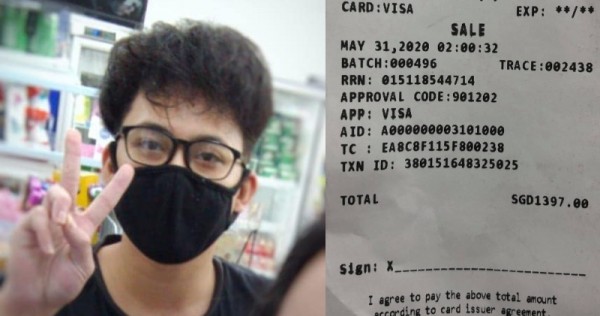
After viral post, minimart finds customer who was accidentally charged $1,397 instead of $13.97

[ad_1]

An unfortunate mistake left a man unknowingly paying $1,383 more than what he was supposed to for his purchases at a minimart in Ang Mo Kio. 

And since it was paid with a credit card, it was likely that he would have only noticed the expensive error sometime later after receiving his monthly statement. 

What was fortunate though is that the management behind local convenience store chain Angel Supermart realised what happened and quickly went on social media to look for the customer. 

What apparently transpired at the Angel Supermart outlet in Ang Mo Kio in the wee hours of Sunday (May 31) morning was that a cashier accidentally forgot to key in a decimal point in the purchase. So what was supposed to be a charge of $13.97 became an exorbitant $1,397 — quite a sky-high amount for what seemed to be a standard minimart run. 

[ad_2]

Source link

Probation for student who took upskirt videos even at his own school

[ad_1]

A Republic Polytechnic (RP) student who recorded upskirt videos of multiple women at different places, including his own school, was sentenced on Tuesday (June 2) to 18 months’ probation.

As part of his sentence, Rayson Chee Rui Sheng has to remain indoors from 10pm to 6am every day and perform 100 hours of community service.

His parents were also bonded for $5,000 to ensure his good behaviour.

A district court heard on Tuesday that the 20-year-old is suspended from school but hopes to return to continue his studies.

Chee pleaded guilty in March to three counts of insulting a woman’s modesty.

Four other charges involving similar offences were taken into consideration during sentencing.

The offences came to light on Nov 19, 2018 when he recorded an upskirt video of a 21-year-old woman while in school.

[ad_2]

Source link

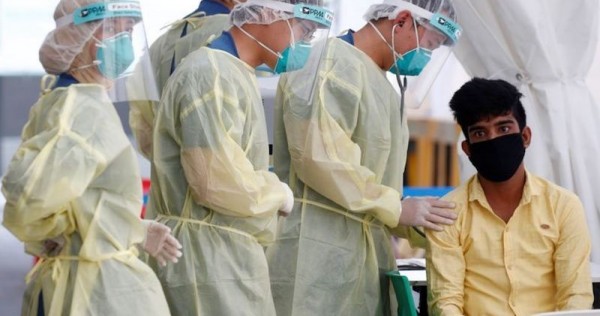
Coronavirus: 4 community cases including 80-year-old female Singaporean reported on Tuesday

[ad_1]

[UPDATE: 10.27pm]

The Ministry of Health has confirmed an additional 544 cases of Covid-19 infection in Singapore on Tuesday (June 2), the vast majority of whom are Work Permit holders residing in foreign worker dormitories.

There are four community cases – one is a Singaporean, two Work Pass holders, and one Work Permit holder. The Singaporean case is an 80-year-old female family member of a previously confirmed case, and had already been placed on quarantine earlier.

Among the three Work Pass and Work Permit holders, one had been picked up as a result of proactive screening of migrant workers working in essential services. One is a contact of a previously confirmed case, and had already been placed on quarantine earlier. Epidemiological investigations are ongoing for the remaining case.

709 more cases have been discharged from hospitals or community isolation facilities.

[ad_2]

Source link

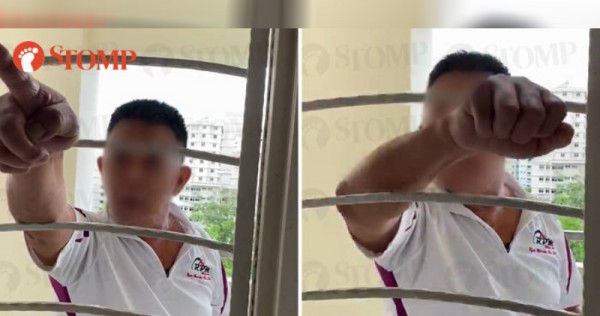
Maskless neighbour calls man on SHN 'stupid idiot', challenges him

[ad_1]

Stomp contributor Anonymous has been estranged from his next-door neighbours for years, with the dispute reaching a breaking point last month after a heated confrontation.

Anonymous said he has been living with his wife and three young children at Block 711 Pasir Ris Street 72 for 10 years, while a family of four moved in next door six years ago.

The Stomp contributor said: “Ever since they moved in, they have been inconsiderate. They keep slamming the door and gate (four people can slam four times, then slam again in the evening when they are back from work).

“They have two grown-up daughters who love playing the piano loudly without thinking about how it would affect my babies, disturbing my children’s nap and sleep all the time.

“They also frequently dirty our corridor with dog pee and droppings without cleaning up after themselves, to the extent where I had to clean everything myself many times.

[ad_2]

Source link

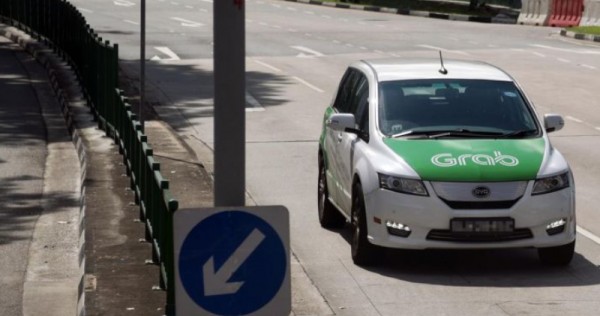
Coronavirus: Passengers to be banned from front seat of Grab car; have to declare health and hygiene status

[ad_1]

SINGAPORE – Commuters looking to book trips with ride-hailing firm Grab will soon be banned from sitting in the front seat of the vehicle alongside the driver.

They will also have to fill in health and hygiene declarations before each trip.

These are among a series of precautionary measures the firm is introducing from end-June amid the coronavirus pandemic, Grab said on Tuesday (June 2).

“As part of our enhanced precautionary measures, Grab will enforce safe distancing within Grab vehicles by disallowing passengers to ride in the front seat beside our driver-partners.

“This means for instance that a regular four-seater car will only take up to three passengers.”

It also said that drivers and passengers will both be able to cancel rides if the other party appears to be unwell or is not wearing a mask.

The party who cancels the trip will not be liable to any penalty.

On the requirements to declare health and hygiene statuses, Grab said its drivers and delivery riders have already been submitting health declarations daily.

[ad_2]

Source link

From dawn to dusk, Singapore as it exits its COVID-19 circuit breaker: In pictures

SINGAPORE: People across Singapore started returning to work and school on Tuesday (Jun 2) as the country entered Phase 1 of lifting its “circuit breaker” measures, seven weeks after the curbs were implemented.

Circuit breaker measures first came into effect on Apr 7, and were further tightened after three weeks as COVID-19 continued to spread. The restrictions included the ban of social gatherings, suspension of schools, closing of workplaces and shuttering of most businesses, among many others.

Singapore primary school students make their way to school (3)

A primary school student crosses the road to school at Potong Pasir in the early hours of the morning on Tuesday (Jun 2), the first day of Phase 1 of reopening after Singapore’s circuit breaker period. (Photo: Jeremy Long)

Singapore primary school students make their way to school (1)

A primary school student cycles across the bridge along Kallang river in Potong Pasir, as schools reopen on Tuesday (Jun 2), the first day of Phase 1 of reopening after Singapore’s circuit breaker period. (Photo: Jeremy Long)

Here’s what the day looked like for Singaporeans who began adjusting to the “new normal”, post-circuit breaker.

7am: Wearing masks of various colours and patterns, primary and secondary school students across Singapore streamed into school on what would have been the first week of their usual June school holidays.

Parents see their kids off outside the gates of St Andrew’s Junior School

Parents see their kids off outside the gates of St Andrew’s Junior School on Tuesday (Jun 2), on the first day of Phase 1 of reopening after Singapore’s circuit breaker period. (Photo: Jeremy Long)

student wearing mask

A primary school student crosses the road to school in Tampines on Jun 2, 2020 the first day of Phase 1 post circuit-breaker. (Photo: Gaya Chandramohan)

With the COVID-19 situation escalating at the tail end of April, authorities announced that the school holidays would be brought forward to start on May 5, so that it coincided with the extended circuit breaker period.

schoolchildren masks

A student alights from the bus in the early hours of the morning on Jun 2, 2020, the first day of Phase 1 post circuit-breaker. (Photo: Gaya Chandramohan)

Singapore primary school students make their way to school (1)

A primary school student cycles across the bridge along Kallang river in Potong Pasir, as schools reopen on Tuesday (Jun 2), the first day of Phase 1 of reopening after Singapore’s circuit breaker period. (Photo: Jeremy Long)

In Phase 1, students from graduating cohorts in primary and secondary schools are allowed to return to school on weekdays, while other cohorts rotate weekly, alternating between home-based learning (HBL) and returning to school for lessons.

READ: Safe distancing measures in classrooms need to be in place when schools reopen, Indranee Rajah says

8am: In the central business district, the morning rush hour was a far cry from the crowds that used to throng the public transportation system daily.

mrt station masks

Commuters alighting at Raffles Place MRT station during morning rush hour on Jun 2, 2020, the first day of Phase 1 post circuit-breaker. (Photo: Gaya Chandramohan)

Woman on train

A commuter enters the train at Raffles Place MRT station during rush hour on Tuesday (Jun 2), the first day of Phase 1 post circuit-breaker. (Photo: Gaya Chandramohan)

In the trains, commuters in masks sat next to each other – something that had not been possible for the last few months, with stickers on alternate seats that promoted social-distancing measures.

mrt passengers wearing masks

Commuters on the train during rush hour on Jun 2, 2020, the first day of Phase 1 post circuit-breaker. (Photo: Gaya Chandramohan)

The central business district itself was noticeably quieter, as the only employees who were allowed to return to the office were those who needed to access specialised systems that could not be accessed from home. 

scanning safeentry

An office worker scans a QR code to check in before entering the building on Jun 2, 2020, the first day of Phase 1 post circuit-breaker. (Photo: Gaya Chandramohan)

Those reporting for work had to “check in” at their offices using SafeEntry, a national digital system that logs details to facilitate contact-tracing efforts.

temperature taking

An office worker gets her temperature taken before being allowed to enter the building on Jun 2, 2020, the first day of Phase 1 post circuit-breaker. (Photo: Gaya Chandramohan)

Security personnel at the entrance were also tasked with temperature-taking for anyone entering the building.

READ: Trains and roads more crowded after Singapore exits circuit breaker

9am: In the heartlands, snaking queues formed outside various bank branches as they too reopened for the first time in weeks. 

People in line continued to practice social distancing measures, and had to check in and out using SafeEntry when entering and leaving the bank’s premises.

people lining up

A snaking queue of patrons waiting to enter the UOB branch at Tampines, on Jun 2, 2020, the first day of Phase 1 post circuit-breaker. (Photo: Gaya Chandramohan)

patrons waiting to enter the POSB branch at Toa Payoh Central - phase 1 circuit breaker

A long line of patrons waiting to enter the POSB branch at Toa Payoh Central on Tuesday (Jun 2), the first day of Phase 1 of businesses reopening after Singapore’s circuit breaker period. (Photo: Jeremy Long)

10am: Behind the scenes at the NTUC First Campus’ My First Skool at 50 Sengkang Way, teachers were cleaning toys in an industrial steriliser after children had played with them.

disinfecting toys preschool

A pre-school teacher from My First Skool places toys inside an industrial toy steriliser. (Photo: Gaya Chandramohan)

A cleaner was also seen wiping down frequently touched surfaces like these cubby holes with disinfectant.

cleaning preschool

Cubbyholes at My First Skool being wiped down. (Photo: Gaya Chandramohan)

Pre-schools will gradually reopen from Jun 2, with kindergarten children returning to school first, followed by those in nursery levels, and finally, those in infant care or playgroups on Jun 10.

cpf building after circuit breaker

A long line of patrons waiting to enter the CPF building at Tampines on Jun 2, 2020, the first day of Phase 1 post circuit-breaker. (Photo: Gaya Chandramohan)

Snaking queues seen at the HDB hub - phase 1 circuit breaker

Snaking queues were seen at the HDB hub on Tuesday (Jun 2), as HDB reopens service counters by appointment only. (Photo: Jeremy Long)

11am: As government service centres like the Housing Development Board Hub (HDB) and Central Provident Fund (CPF) reopened their service counters today, long queues were seen outside their buildings in Tampines and Toa Payoh. 

In the interest of safeguarding public health, the services are only available to those who make appointments beforehand.

hairdresser after circuit breaker

Hairdressers and barbers are allowed to resume offering all hairdressing services beyond basic haircut services starting from the first day of Phase 1 post circuit-breaker. (Photo: Gaya Chandramohan)

Hairdressers and barbers had already been allowed to reopen since May 12, when some circuit breaker measures were eased. At the time, they were allowed to offer only basic haircuts. This has now been extended to the full range of hairdressing services, and today saw many salons filled with customers getting perms, colouring jobs and other hair treatment, even as they kept their masks on.

However, most retail outlets and establishments offering other personal services are still not allowed to reopen during Phase 1.

Raffles Place - phase 1 circuit breaker

Office workers at Raffles Place during lunch hour on Tuesday (Jun 2), the first day of Phase 1 of reopening post-circuit breaker. (Photo: Jeremy Long)

1pm: Whether it was in the central business district or the heartlands, restaurants and F&B outlets remained empty, save for the smattering of people waiting outside the premises for their takeaway orders.

people queuing

Dining in at F&B outlets continues to be disallowed on Jun 2, 2020, the first day after the circuit breaker is lifted. (Photo: Gaya Chandramohan)

Food takeaway

Dining in at F&B outlets continues to be disallowed on Tuesday (Jun 2), the first day of Phase 1 post circuit-breaker. (Photo: Gaya Chandramohan)

Dining in at F&B outlets continues to be disallowed in Phase 1, in an effort to curb the spread of COVID-19.

2pm: Students at a primary school are seen leaving at the end of their first day back at school.

students wearing masks

Students seen after their school session ended on Jun 2, 2020, the first day of Phase 1 post circuit-breaker. (Photo: Gaya Chandramohan)

Air-conditioner servicing and basic pet grooming are some of the services that were allowed to reopen for business today, and those offering such services saw their first customers in weeks.

puppy

Basic dog grooming services were allowed to resume on Jun 2, 2020, the first day of Phase 1 post circuit-breaker. (Photo: Gaya Chandramohan)

aircon specialists continue their operations - phase 1 circuit breaker

Mr Gino Wong (centre) and his team of aircon specialists resume operations on Tuesday (Jun 2), the first day of Phase 1 of businesses reopening after Singapore’s circuit breaker period. (Photo: Jeremy Long)

Other services allowed to resume today include motor vehicle servicing, school bookshops and retail shops selling school uniforms.

Home-based food businesses were allowed to resume operations on May 12, but other home-based businesses that ran on a delivery-and-collection model were not given the green light until today. 

Outside the SingPost branch at Tampines Central, people stood patiently in line with large bags of parcels to mail out.

Customers at SingPost

A long line of customers waiting to mail out packages at the SingPost branch at Tampines on Jun 2, 2020. (Photo: Gaya Chandramohan)

Customers at Singpost

A long line of customers waiting to mail out packages at the SingPost branch at Tampines on Jun 2, 2020. (Photo: Gaya Chandramohan)

READ: Transition to a ‘new normal’ after circuit breaker: How will measures be lifted beyond Phase 1?

6pm: As the day drew to a close, taxi drivers gathered in the CBD in the hope of getting a fare as office workers headed back home.

Taxis Jun 2 circuit breaker phase 1

Taxis wait in line along Battery Road during the evening peak hour in The Central Business District of Singapore on Tuesday (Jun 6), the first day of Phase 1 post-circuit breaker. (Photo: Jeremy Long)

Raffles Place Jun 2 circuit breaker phase 1

Human traffic was sparse during evening peak hour at Raffles Place on Tuesday (Jun 6), the first day of Phase 1 post-circuit breaker. (Photo: Jeremy Long)

Raffles Place, which is usually abuzz with people, was quiet as the last few stragglers left their offices for home.

Raffles Place MRT Jun 2 circuit breaker phase 1

Human traffic was sparse during Raffles Place evening peak hour on Tuesday (Jun 6), the first day after the circuit breaker was lifted. (Photo: Jeremy Long)

7pm: As the sun set on the first day after the circuit breaker’s 49-day grip on people’s routines, dozens headed out for a stroll, jog or bike ride.

Jubilee Bridge Jun 2 circuit breaker phase 1

Runners and cyclists along Singapore’s Jubilee Bridge in the evening of day one post-circuit breaker. (Photo: Jeremy Long)

For many, their first day back at work will be a new routine to get used to, after weeks of staying home.

Esplanade Drive Jun 2 circuit breaker phase 1

As the evening sun starts to set, the underpass at Esplanade Drive drew large numbers of runners and cyclists on Tuesday (Jun 2). (Photo: Jeremy Long)

READ: Singapore’s circuit breaker and beyond – a timeline of the COVID-19 reality

READ: Singapore to gradually reopen borders, plans to resume essential travel among countries with low COVID-19 transmission rate

BOOKMARK THIS: Our comprehensive coverage of the coronavirus outbreak and its developments

Download our app or subscribe to our Telegram channel for the latest updates on the coronavirus outbreak: https://cna.asia/telegram

Source link

Man calls the cops on customers 'gathering' at bar table outside Boat Quay restaurant

[ad_1]

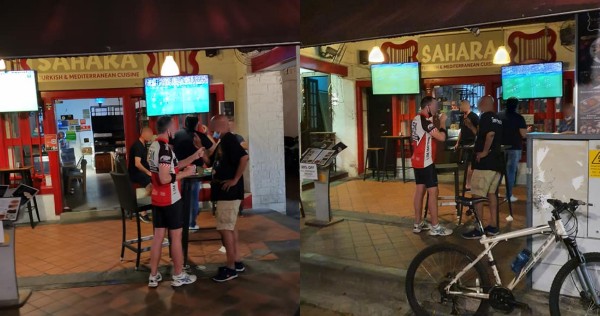
Following reports of illegal social gatherings at Robertson Quay last month, one restaurant in neighbouring Boat Quay has been slammed online after being accused of breaching circuit breaker regulations.

But the men accused of congregating at their establishment were simply customers waiting for their food, Sahara Bar & Restaurant told AsiaOne on June 2.

The men drew flak online after a Facebook user, one Richard Ang, posted photos of them in front of the restaurant in Boat Quay with their masks pulled down on May 31.

Two of the men appeared to be engaged in a conversation while standing at a bar table, one of them holding an unidentified beverage in his hand.

In his post, Ang claimed that he had walked past the group of men at 7.50pm. They were still at the restaurant when he passed by again at 8.55pm, he added.

[ad_2]

Source link

Requested to wish recipient happy birthday, Grab rider sings birthday song at doorstep

[ad_1]

As anyone who has had to celebrate their birthdays while sheltering in place from the global pandemic would know, it’s a bummer. Merrymaking at home without the company of friends just isn’t the same even if the candle-blowing and birthday-song-singing are done over Zoom. 

A deliveryman by the name of Remi Abdul Rahmat, however, managed to make things a little brighter for a birthday boy stuck at home. 

On Sunday (May 31), the Grab rider received an order from a customer to deliver a package to her friend — an order that was accompanied with a request to wish the recipient a happy birthday. 

Remi, a jovial character who still tYpeS liKe tHis, went beyond the call of duty by singing the man a birthday song right at his doorstep. The topless birthday boy could only blush and laugh while being serenaded, not expecting to be on camera. 

[ad_2]

Source link

Man calls the cops on customers waiting for their food at Boat Quay restaurant

[ad_1]

Following reports of illegal social gatherings at Robertson Quay last month, one restaurant in neighbouring Boat Quay has been slammed online after being accused of breaching circuit breaker regulations.

But the men accused of congregating at their establishment were simply customers waiting for their food, Sahara Bar & Restaurant told AsiaOne on June 2.

The men drew flak online after a Facebook user, one Richard Ang, posted photos of them in front of the restaurant in Boat Quay with their masks pulled down on May 31.

Two of the men appeared to be engaged in a conversation while standing at a bar table, one of them holding an unidentified beverage in his hand.

In his post, Ang claimed that he had walked past the group of men at 7.50pm. They were still at the restaurant when he passed by again at 8.55pm, he added.

[ad_2]

Source link