SINGAPORE: Over the last three years, foreign worker dormitory operators have flouted dormitory management rules about 80 times a year, the Ministry of Manpower (MOM) said on Wednesday (June 3).
About 60 per cent of these breaches were for “minor lapses”, such as failing to maintain tidiness and cleanliness in one part of the dormitory, MOM said in response to CNA’s queries.
These breaches were found during MOM’s inspections of dormitories licensed under the Foreign Employees Dormitory Act (FEDA).
Last month, Minister for Manpower Josephine Teo revealed in Parliament that about 20 operators are penalised every year under the Act. This accounts for nearly half of the 43 FEDA-licensed foreign worker dormitories in Singapore.
“As MOM takes action even for minor breaches, it should not be surprising that slightly under half of the entities have previously breached a licensing condition,” a ministry spokesperson said.
“In all cases, the operators and employers were asked to rectify the lapses immediately. MOM followed up with inspections to ensure the rectifications were satisfactory.”
According to the Act, dormitory operators who flout the regulations can be fined up to S$50,000, jailed for up to a year, or both.
MOM said that if breaches are observed across the dormitory, or are repeated, operators can be fined up to $50,000.
But in “egregious cases” where the operator has shown a “blatant disregard” for the welfare of their residents, the ministry will prosecute the operator.
In July last year, dormitory operator Labourtel Management and its director Parvis Ahamed Mohamed Ghouse were charged after several dormitories were found to be in “filthy and unacceptable” living conditions.
They were the first to be prosecuted under FEDA and pleaded guilty in March this year.
Employers who choose to house workers on their own are also inspected by the ministry.
Over the last three years, MOM took action against an average of 1,200 employers every year for failing to ensure acceptable accommodation for their workers.
The most common offence involved housing workers in overcrowded units or in unsanitary conditions, the ministry said.
“In addition to imposing a fine of up to S$20,000 on these employers, MOM will withdraw their work pass privileges and bar them from hiring foreign workers,” the spokesperson said.
MOM has about 100 full-time dormitory inspectors who work under the Commissioner for Foreign Employee Dormitories, two Deputy Commissioners and eight Assistant Commissioners, Mrs Teo had previously said.
They conducted about 1,200 inspections and about 3,000 investigations across all housing types last year.
More than 300,000 foreign workers live in various types of dormitories across Singapore, from large purpose-built dormitories to smaller factory-converted dormitories and makeshift living quarters near their worksites.
With the vast majority of COVID-19 cases stemming from foreign worker dormitories, calls have been made to improve their living conditions.
In her speech in May, Mrs Teo said that the Government will study the issue and “look into areas where we could have done better, so that we will be better prepared the next time”.
On Monday, the Government announced its intent to develop new foreign worker dormitories, and refit unused state properties as part of plans to reduce the current density in the dormitories.
The former Nexus International School is one of the vacant state properties that will be used to house foreign workers temporarily this year. (Photo: Google Street View).
About 60,000 workers will be housed in temporary sites by the end of this year, while the authorities build new purpose-built dormitories over the next few years that will hold up to 100,000 workers.
Besides expanding housing availability for foreign workers, new dormitory specifications include increasing workers’ living space, having more sick bay beds, reducing the number of beds in a room, and cutting the number of people who have to share one toilet and bathroom.
SINGAPORE: A drive-through site for COVID-19 swab tests has been launched in Singapore to test “priority groups” for the coronavirus.
Located at One Farrer Hotel, the drive-through facility is being used to “ensure the continuity of critical functions and services”, the Health Promotion Board (HPB) said on Tuesday evening (Jun 2) in response to queries from CNA.
It did not elaborate on when the drive-through facility was launched or which groups were being tested.
Health authorities said earlier that all pre-school staff and nursing home staff and residents are being tested for COVID-19. Swabbers and swabbing assistants have also been hired on short-term contracts to support testing efforts.
On May 4, Health Minister Gan Kim Yong said the Government is working to progressively scale up its testing capacity from 8,000 to 40,000 tests a day.
“We will also do more testing and monitoring to pick out asymptomatic and pre-symptomatic cases among priority groups such as nursing home residents and staff, to prevent clusters from developing,” he told Parliament in a ministerial statement.
At One Farrer Hotel, cars entering the test site will park head-first in a large parking lot. A swabber in full personal protective equipment then takes a sample from the patient, who does not need to alight.
Another swabbing assistant standing at a portable table next to the parking lot collects the sample. Once the process is completed, the car reverses out and drives away.
A sign outside the hotel saying swab tests are in operation.
One Farrer Hotel general manager Gilbert Madhavan told CNA that “relevant authorities determine who are selected for testing based on public health priorities”.
Mr Madhavan said the hotel could have been chosen as a drive-through test site due to the size and isolated nature of its drive-through area, as well as its proximity to Farrer Park Hospital.
The hotel has been repurposed into a temporary hospital facility since April, Mr Madhavan said, and all hotel operations like guest stays and food and beverage outlets have been suspended.
“One Farrer Hotel and Farrer Park Hospital together provide the ground organisation and staff for the COVID-19 test facilities,” he added.
SWAB TEST BOOTHS
Located adjacent to the drive-through lots are swab test booths for patients who turn up on foot. Queues of people have been seen waiting to get tested.
The swab test booths for patients on foot.
The booths are manufactured by Esco Aster, a contract development and manufacturing organisation under Esco Group, a Singapore-based life sciences company.
According to Esco Aster’s website, the test booths are designed for “mass swabbing” of potential COVID-19 patients, and can test about 12 to 15 patients an hour.
The booths are also “cost-effective and easy to expand for the number of units needed per hospital or location”, and offer improved protection for both testers and patients, the website said.
The unrest over issues of injustice in the United States has had a far-reaching effect across the world. Even Singapore’s social media influencers — typically apolitical — are expressing solidarity with the Black Lives Matter movement to speak out against racism.
But bigotry very much exists right here, with a portion of Singaporeans expressing prejudice against people from other backgrounds and countries.
Though the stress of the Covid-19 outbreak on social faultlines was something that Minister for Culture, Community and Youth Grace Fu addressed over the weekend, it didn’t take long for displays of racism and xenophobia to pop up again. Case in point: the uproar and snark in response to the government’s plans to build new foreign worker dormitories with better standards. Some of which will be built near residential estates.
Enjoy huge savings and satisfy your cravings with the latest foodpanda June 2020 codes
This month, discover pickup and save 15% on your next order.
Save 15% on pickups – no code needed!
Out for essentials? Switch to Pick-Up and self-collect your food in 15 minutes!
Order now with 15% off*, no code needed.
foodpanda promo codes & discounts
DEAL
PROMO CODE
VALID UNTIL
50% off platform-wide foodpanda & pandamart capped at $8, min. spend $10. Valid for first foodpanda order only
SAVE50
31 July
$5 off CapitaLand malls vendors capped at $5. min. spend $20
CLMALL5
7 June
20% off shops & pandamart capped at $5, min. $15 spend
SAVEMART
30 June
Enjoy great savings when you use these bank cards
DEAL
PROMO CODE
VALID UNTIL
Citibank $5 off for new customers. Min spend of $10, single use only
CITINC
31 December
Citibank Get through the week with $6 off! Min. spend of $30. Valid till 30th June 2020 Valid for limited redemptions only. Valid for checkout using Citi Credit Cards via Online payment only.
CITIJUN
30 June
Citibank $12 off for existing customers! Min. spend of $50. Valid till 30th June 2020. Valid for limited redemptions only. Valid for checkout using Citi Credit Cards via Online payment only.
CITIJUN12
30 June
DBS $8 off min spend of $15 on first order. 1 x $8 voucher will be added to your voucher wallet. Offer for single use only
DBS8NEW
31 December
DBS 30% off for DBS/POSB Cardmembers! Min spend of $20, discount is capped at $8. Capped at 200 redemptions daily. Code refreshes at 11am. Valid for checkout using DBS/POSB Card via Online payment only. Valid till 30th June 2020
DBSJUNE
30 June
DBS Get Free Delivery with PayLah! Min spend $18. Valid till 30th June 2020 Valid for checkout using PayLah! only. Capped at first 500 redemptions daily.
PLFD
30 June
HSBC $5 off your Shell Select orders! Min. spend of $15 required. Limited to first 2500 redemptions. (*Valid for check out using online payment via HSBC credit cards only.)
SHELLHSBC5
30 June
UOB $5 off first 3 orders. Use the code once and get 2x$5 vouchers in your voucher wallet. (*Valid only for checkout using online payment via UOB card)
UOB5NEW
31 December
UOB Get through the week with $6 off! Min. spend of $30. Valid for first 3,500 redemptions only. Valid till 30th June 2020. Valid for checkout using UOB Cards via Online payment only.
UOBJUN
30 June
UOB Weekends with UOB! Min. spend of $40. Valid for the first 100 redemptions per day, capped at 1 redemption per user, for Saturdays and Sundays only. Valid till 30th June 2020. Valid for checkout using UOB Cards via Online payment only.
UOBJUN10
30 June
UOB 20% off your pandanow order! Enjoy 20% off your pandanow order (min. spend $20). Valid for first 1,500 redemptions per month. Valid for a maximum of 2 redemptions per user. Discount is capped at $6. Valid till 31 June 2020.
With every Original Glazed Dozen Doughnuts, you get a FREE Half Dozen ‘Joy Boy’ at $31.20 only! (Usual Price: $48.90)
Terms and Conditions:
ONLINE
Promotion is valid from 2 to 30 June 2020.
Promotion is applicable across all online delivery platforms: Foodpanda and Deliveroo.
Promotion is applicable to all Krispy Kreme outlets except Krispy Kreme Changi Airport Terminal 2, Terminal 3 and Resorts World Sentosa.
Promotion is available to locations within 3km radius from existing Krispy Kreme outlets.
Promotion is available under ‘June Promotion’ in Krispy Kreme’s page.
Pre-orders and pick-ups are available on Foodpanda.
Ensure correct button is pressed: ‘1 Dozen Original Doughnut + FREE Half Dozen Joy Box’.
Product availabilities are on a while stocks last basis.
OFFLINE
Promotion is valid from 2 to 30 June 2020.
Promotion is extended offline for takeaway and self-collection at all Krispy Kreme outlets except Changi Airport Terminal 2, Terminal 3 and Resorts World Sentosa.
Promotion is applicable to only Original Glazed dozen doughnuts.
Promotion is applicable to first 50 dozen doughnuts per store, per day.
Each customer is entitled to a maximum of 2 Dozens of doughnuts.
No exceptions shall be made for purchases on behalf of others.
Doughnuts will be packed in boxes of 12, no exceptions. Additional packaging will be charged accordingly.
FREE Half Dozen Joy Box is applicable to random Assorted doughnuts only, no substitutions or choosing allowed.
No pre-orders or reservations are allowed for this promotion.
Product availability are on a while stocks last basis.
Find your nearest outlet here (note: available only at above-mentioned outlets)
A youth not only spat on his family’s domestic helper and threw a metal mug at her face, leaving her with injuries, but also told her that she was “only a maid, was poor and had no right to be in Singapore”.
Ng Jia Sheng, 20, pleaded guilty on Tuesday (June 2) to using criminal force on Ms Estabillo Soledad Agustin in 2018, as well as causing her grievous hurt by a rash act endangering her personal safety.
He also admitted to using insulting words on the 41-year-old Filipino that caused her alarm, which is an offence under the Protection from Harassment Act.
Two other charges will be taken into consideration during sentencing on a later date.
The court heard on Tuesday that Ms Agustin has returned to her home country.
According to court documents, Ng and Ms Agustin were involved in a dispute at Ng’s family home along Greenwood Avenue in Bukit Timah on June 7, 2018. She was employed as a maid by Ng’s mother at that time.
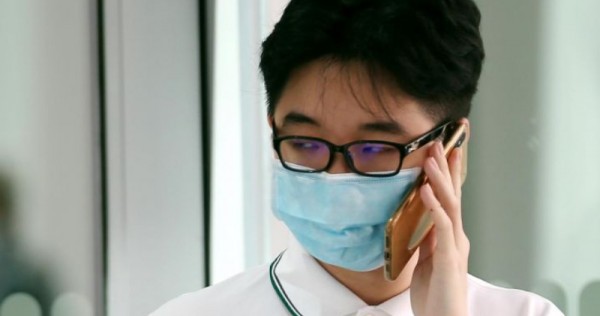
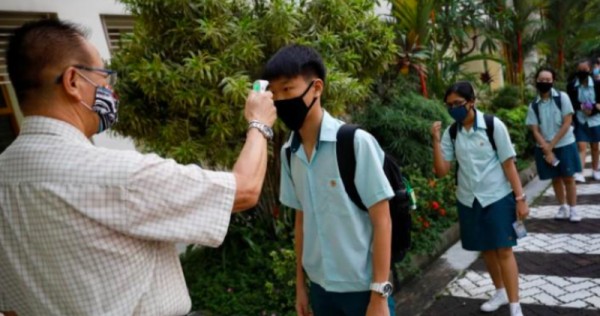
With temperatures checked, masks fitted, and hand sanitisers at the ready, many Singapore children returned to school on Tuesday after a novel coronavirus lockdown of nearly two months.
Across the island, the hum of the morning rush hour resumed while staff at schools urged students to maintain a safe distance as they lined up to return to class.
With one of the highest coronavirus tallies in Asia, Singapore has said it will ease restrictions gradually, with the registry of marriages and some businesses, including pet salons, also reopening on Tuesday.
“You have to restart your normal life at some point,” said Harsha Yavagal, who was sending his boys aged five and 12 back to school.
“Schools are taking all possible measures to cope with the virus,” he said.
SINGAPORE – Troubled water treatment firm Hyflux is under criminal investigation for false and misleading statements, as well as non-compliance with accounting standards, the authorities said on Tuesday (June 2).
The investigation, which also involves the company’s existing and former directors, follows a review of Hyflux-related disclosures and compliance with accounting and auditing standards which was announced in April last year.
The review, conducted by financial regulators Monetary Authority of Singapore (MAS), the Accounting and Corporate Regulatory Authority (Acra) and the Singapore Exchange Regulation, uncovered reasons to suspect that several offences may have been committed.
The joint investigation undertaken by Acra, MAS and the police’s Commercial Affairs Department (CAD) will ascertain if there were lapses in Hyflux’s disclosures concerning the Tuaspring integrated water and power project, as well as non-compliance with accounting standards between 2011 and 2018.
Among the directors under investigation is Hyflux’s executive chairman, Ms Olivia Lum, who was the company’s only executive director during that period.
SINGAPORE: Cyberbullying has claimed yet another innocent victim. R Thivya Nayagi was just 20 when she took her own life on May 20 in Bukit Tengah, Malaysia, allegedly due to relentless cyberbullying on video-sharing social network TikTok.
The video Thivya posted of herself and her male colleague – a migrant worker – on TikTok had sparked criticism, and went viral after being shared on other social media sites, particularly by fake Facebook accounts. She was inundated by hateful messages.
“The post had been widely shared by netizens who continue to make derogatory remarks, suggesting that she was an easy character,” her elder sister, R Logeswari, told media afterwards.
“Although we know the truth of her relationship with the boy in the video, yet she was feeling down over the things being said about her.”
Let’s pause for a moment to think about how excruciatingly painful Thivya’s life must have been prior to taking the extreme step. To be judged, harassed, humiliated, and threatened in a repetitive and continuous manner causes extreme anguish.
On social media, where most of our lives are lived out, there is often no place to retreat, which can take a huge toll on victims, including social isolation, depression, substance abuse, suicidal thoughts and self-harm.
Tragically, bullycide, or death by suicide due to bullying, has been on the rise for the past decade among young people worldwide, fuelled by online bullying that accompanies traditional bullying.
ADULT CYBERBULLYING IS ALSO ON THE RISE
Cyberbullying has taken on epidemic-level proportions worldwide, especially among the youth.
While we often associate cyberbullying with teenagers and young adults, even younger children aren’t exempt.
The inaugural 2020 Child Online Safety Index report found that almost 60 per cent of children in the age group of 8 to 12years old in 30 countries were exposed to one or more forms of cyber risks, of which 45 per cent were affected by cyberbullying, either as bullies themselves or as victims.
Cyberbullying takes various shapes and forms, but at its core comprises repeated vicious and highly personalised attacks with the intent to demean and harass.
Victims are targeted in a variety of ways – from name-calling to more severe tactics such as being insulted based on their race, body size, gender or sexual orientation.
Increasingly, there is the realisation that cyberbullying isn’t just a phenomenon associated with impressionable young minds.
Adult cyberbullying is real, it’s vicious and is on the rise.
Workplace cyberbullying is growing. Here, power and gender disparities are exploited by repeated uncivil, aggressive, and inappropriate interactions via technology.
Outside such formal institutional spaces, social media platforms provide perfect opportunities for cyberbullying and other types of online harassment, such as trolling, stalking, and image-based sexual abuse.
EXAMINING THE ROLE OF SOCIAL MEDIA
What is it about social media that tricks us into thinking that it is acceptable to demean and hurt others publicly? A lot actually.
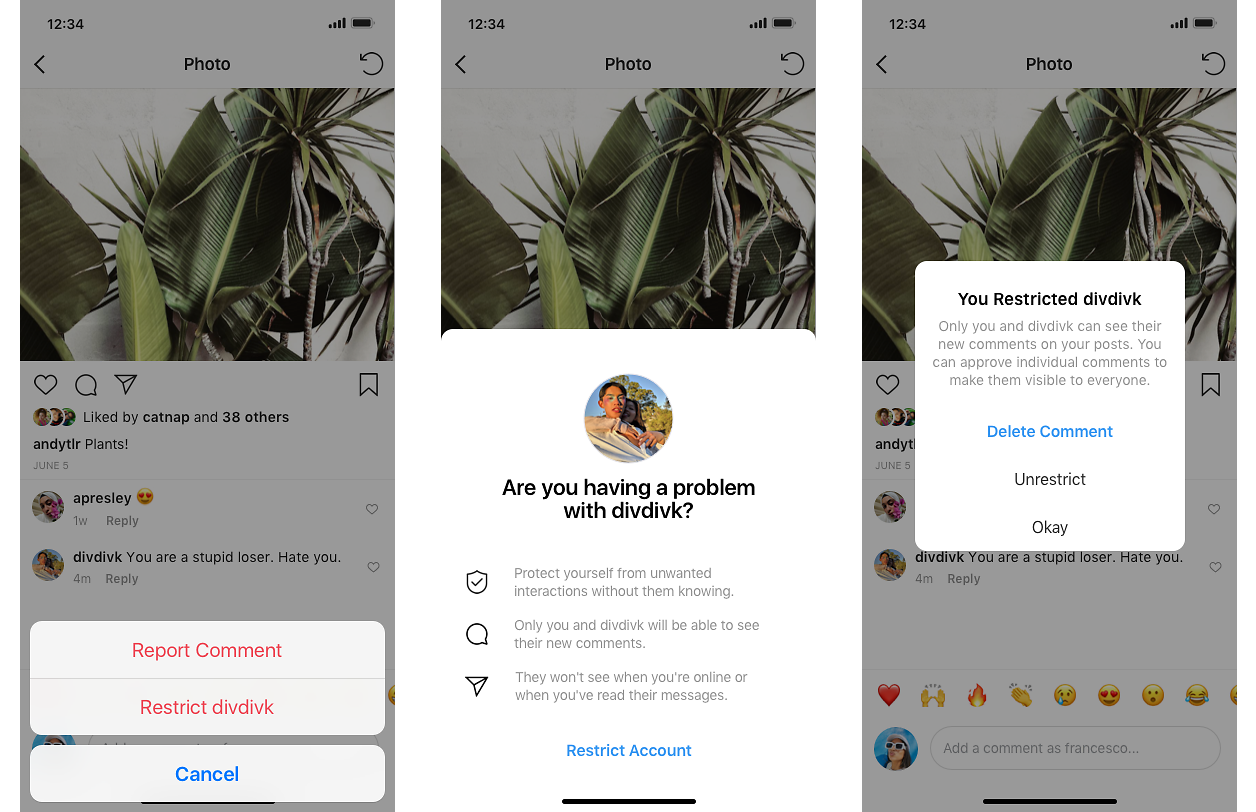
Instagram also aims to limit the spread of abusive comments on a user’s feed. (Photo: Instagram)
Social media platforms and apps have certain design features that allow for, and in some cases encourage, uncivil behaviour.
This includes anonymity – it’s easy to create fake profiles or post under a pseudonym – which allows people to post nasty things that they wouldn’t ordinarily say in face-to-face or real life situations.
Further, the lack of physical and social cues – we can’t actually see how people respond to our comments – means that there is a tendency to feel less empathy in online interactions.
In fact, many studies show a co-relation between increased social media use and negative impacts on social and communicative skills.
This is particularly the case with children and young adults, who are spending more time communicating online, which can inhibit their emotional and social development.
In his 2018 book, psychology professor at California State University, Dr Mark Carrier, highlights how the shift to personal digital technologies has eroded empathy among children and young adults.
In the absence of face-to-face interactions and the physical cues that accompany them, such as eye gaze, important social skills such as conversations and empathy are on the decline.
Low empathy is as a characteristic commonly found in cyberbullies. Studies, such as the one by media psychologist Julia Barlińska and colleagues, have also pointed to the crucial role of empathy in increasing online bystanders’ intervention in cyberbullying cases.
Lack of parental oversight or communication regarding children’s online activities and behaviour is another factor that exacerbates this problem.
On their part, although social media companies have taken steps to tackle bullying on their platforms, these have been belated, inconsistent and inadequate.
A UK report found that young people wanted social media companies to domore to tackle cyberbullying. The report argued that the duty to protect children online is relevant to both large and small social media companies, including start-ups.
This is an important detail, as newer social media platforms, such as TikTok, have gained great popularity among young people, but continue to remain cyberbullying hot spots.
Social media giants YouTube, Facebook, Twitter, Snapchat and Instagram have tools like flagging, blocking and reporting abusive content, as well as safety and help centre features, to protect users.
These, and Instagram’s introduction of artificial intelligence (AI) in 2019 to detect and remove abusive content in photos, videos and captions have been steps in the right direction.
But there is still a long way to go to make social media spaces safer and kinder.
BE AWARE OF YOUR SOCIAL MEDIA IMPRINT
In Asian societies as well, adult cyberbullying has become common and worryingly normalised.
For instance, cyberbullying has become a huge problem in conservative South Korea. This issue was thrust into the spotlight with K-pop star Sulli’s bullycide last year, which also shone light on the country’s toxic celebrity culture, and precipitated collective soul-searching and a law change campaign.
K-pop star Sulli, a former member of the all-girl band f(x) had experienced online bullying (Photo: AFP)
With workplace bullying exceedingly high in Singapore – Kantar’s Inclusion Index 2019 found that 24 per cent of workers were bullied in Singapore, the highest among 14 countries surveyed – cyberbullying has also crept into the workplace.
The study also highlights gender and ethnic discrimination in the workplace and there is anecdotal evidence suggesting that, unsurprisingly, women are the likelier target of cyberbullying and cyber-harassment in the workplace.
Generally, cyberbullying happens because, increasingly, people do not stop to think before shaming, hurting, or insulting others online.
There is a general lack of consideration or self-reflection about our online behaviour and its harmful impacts – whether on ourselves or others.
Sue Schueff, author of Shame Nation: The Global Epidemic of Online Hate, notes that social media envy and poor judgement compel many users to post and publish things that reflect poorly on them or get them into trouble.
This boils down to a lack of critical digital literacy or the ability to discern how to use new technologies in ways that are empowering and productive.
Instead, social media has allowed users to indulge in behaviours, such as naming and shaming, which would have been unthinkable earlier.
This is not to suggest that cyberbullies are victims. Rather they are engaging either knowingly or unwittingly in such deviant behaviour with full or limited understanding of its harmful effects.
But studies have consistently shown that there is a high co-relation between cyberbullying victims engaging in bullying themselves later, as they develop problematic behaviour.
A 2018 survey on cyberbullying commissioned by Talking Point found that in Singapore, about 63 percent of the 353 youths surveyed – largely in the age group of 13 to 19 – have been both a victim and a bully in the social media space.
The temptation to whip out one’s mobile phone, take a picture of “offensive” behaviour, and share it online along with a rant has become a common impulse. During this circuit breaker period in Singapore there has been a proliferation of such behaviour.
We have seen this happen to people who are violating social distancing norms and government directives. Social media vigilantes have deemed it their mission to trail, harass, and post about people not wearing masks, for instance.
This type of harassment is not cyberbullying per se, since the individual is not tagged on social media posts nor aware of this harassment.
In theory, cyberbullying and stalking are different types of online harassment, along with doxing and sexual harassment such as image-based sexual abuse.
But it can lead to cyberbullying, especially when other people jump on the bandwagon, and target individuals by tagging them in posts, for example.
Once their social media pages are filled with hate, this is clearly cyberbullying.
THE MISSING LINK
There are legal remedies for cyberbullying in Singapore. Under the Protection from Harassment Act (POHA), which was enacted in 2014, cyberbullying and other types of online harassment are offences.
Although legislation on its own may not be an adequate deterrent, these are indeed positive steps.
However, legal recourse is just one part of the solution. Like other complex social issues, tackling cyberbullying effectively will require a whole-of-society approach, involving efforts at the individual, community, and national level.
In Singapore, there have been greater efforts at all levels to address this growing social malaise.
In schools and educational institutions, digital literacy efforts have included a focus on digital citizenship, which includes public awareness and education on cyberbullying and other cyber-wellness issues.
Students attend a cyber bullying prevention class by the National Police Agency in Seoul, South Korea, November 27, 2019. REUTERS/Won Chae-youn
The Media Literacy Council, which comprises members from the people, private, and public sectors, has done a great deal of work to push the idea and knowledge about digital and media literacy to the wider community, as well as advise the government on appropriate policy responses.
Technology companies, too, are taking more initiative to curb cyberbullying on their platforms.
However, there is still a weak link — in the form of adults and parents in their late 30s and above.
They may have never received the kind of digital and media literacy training and sensitisation that children and young adults regularly receive today.
Since a great deal of research has shown that most people are ignorant of their social media behaviour and hence unaware of how to deal with it, knowledge can bean effective way to deal with this issue – just like with fake news or cyber-crime – until laws, policies, technologies and other deterrent mechanisms fall into place.
This includes how to communicate ethically and responsibly online, the dangers of oversharing, how to ensure privacy and personal safety in cyberspace, and the legal repercussions of deviant online behaviour.
Hence, they may be ill-equipped to handle being cyberbullied or recognise that they are, or to advise their children or wards, and worse, may be unknowingly engaging in cyberbullying and other forms of harassment themselves.
This group forms a substantial chunk of netizens, and critical digital literacy for such groups must also be addressed, to shore up the long fight against cyberbullying.
Download our app or subscribe to our Telegram channel for the latest updates on the coronavirus outbreak: https://cna.asia/telegram
Dr Anuradha Rao is the founder of CyberCognizanz, a training and communications company in Singapore that focuses on cybersafety, with an emphasis on critical digital literacy.