Stay in the know with a recap of our top stories today.
1. From $354 million to $313 billion: 5 lessons from how Temasek invests
You have to hand it to Temasek Holdings. Since its inception in 1974, Temasek has grown its investment portfolio’s net portfolio value from $354 million to $313 billion as of March 31, 2019…. » READ MORE
2. Quan Yi Fong bids farewell to house, netizens wonder if she’s leaving Singapore
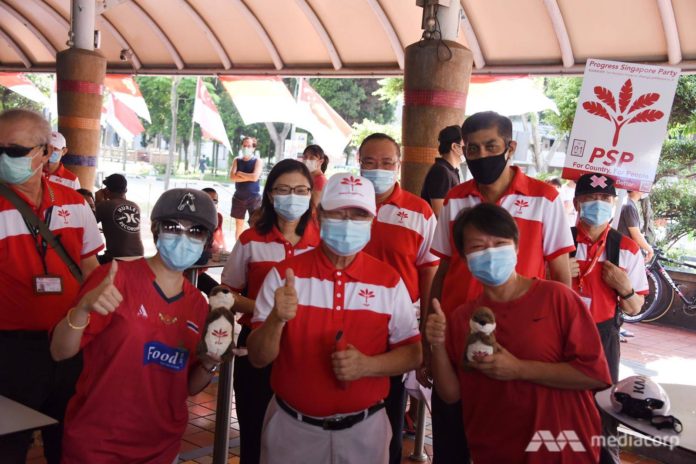
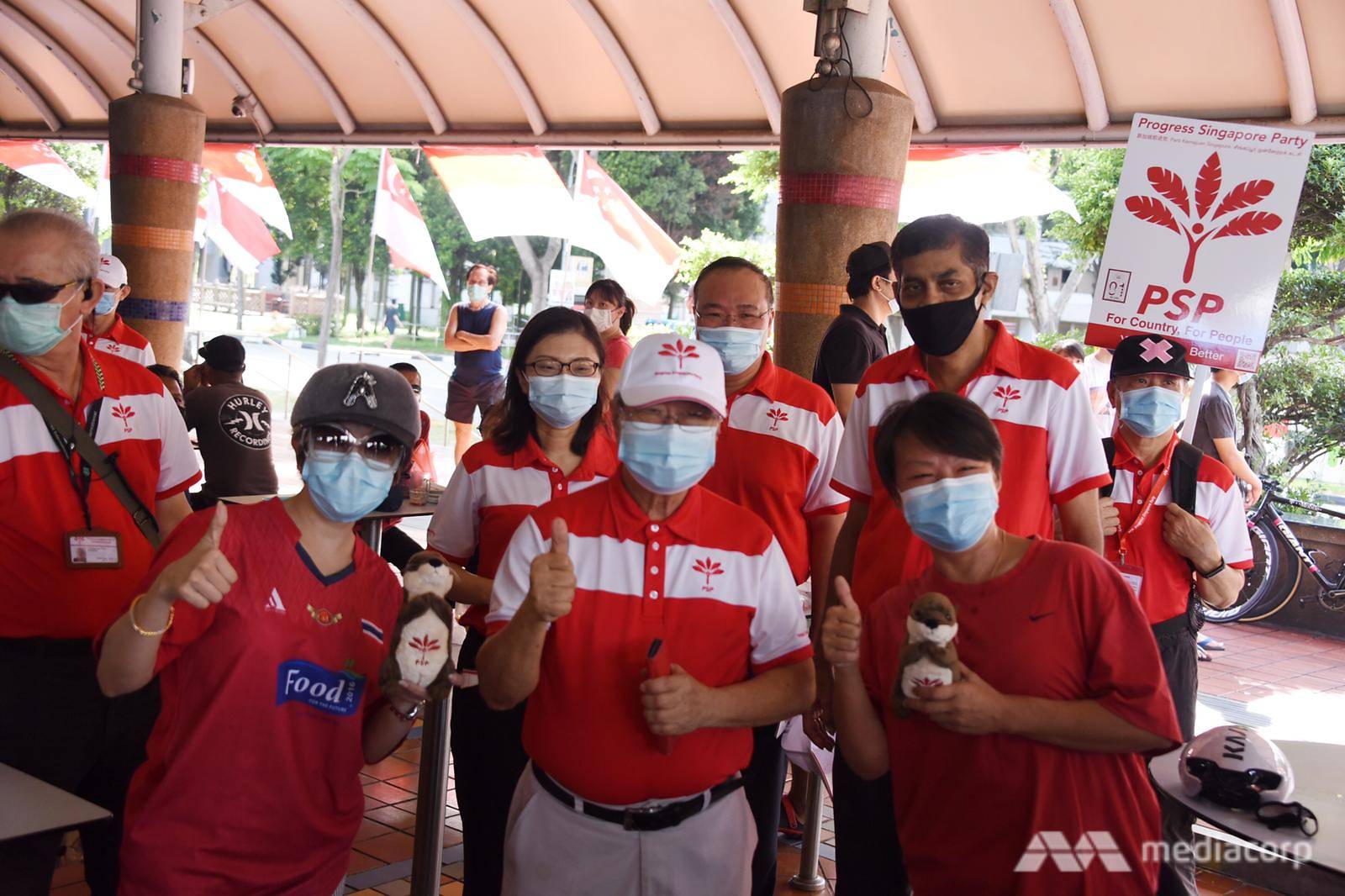
SINGAPORE – The Progress Singapore Party (PSP) has chosen assistant secretary-general Leong Mun Wai and vice-chairman Hazel Poa to fill the two Non-Constituency MP positions it secured in the recent general election.
The announcement was made by party chief Tan Cheng Bock on Tuesday (July 14) in a press conference at PSP’s headquarters in Bukit Timah Shopping Centre.
Dr Tan had previously ruled himself out of the seat, saying that he has been an MP before and would rather his teammates go into Parliament and understand the parliamentary process .
Mr Leong and Ms Poa were on the party’s West Coast GRC slate that secured 48.31 per cent of the vote against the PAP team led by Minister for Communications and Information S. Iswaran, emerging as the best losers in the July 10 polls.
SINGAPORE – The labour movement’s top leadership has reaffirmed its support for labour chief Ng Chee Meng and said he will remain secretary-general of NTUC.
Questions have been raised about Mr Ng’s position in the labour movement after the PAP team he led in Sengkang GRC lost to the Workers’ Party in last Friday’s (July 10) election.
In a statement on Tuesday, NTUC president Mary Liew said Mr Ng will retain his position in NTUC.
She said: “As an NTUC elected position, it is a position which stands independent of political appointments. The members of the NTUC central committee stand in unanimous support for Brother Ng Chee Meng as secretary-general of NTUC.”
A Cabinet minister has held the secretary-general post for the last 40 years. Mr Lim Chee Onn was the first labour chief to be appointed Minister in the Prime Minister’s Office in 1980.
It took some time, but Google’s answer to Apple’s AirPods Pro is finally available in Singapore.
The new Google Pixel Buds (not to be confused with the finicky 1st gen ones from 2017) are completely wireless and connect to devices via Bluetooth. Like AirPods, the Pixel Buds makes connecting super easy — you just need to flip up the Pixel Buds’ case.
The catch here is that you’ll need to have a Google Pixel phone for the auto-pairing to commence. But it shouldn’t be a problem for other Android phones or even iOS devices — hit pairing mode on the case and go into your device’s settings to establish the connection.
While many other wireless earbuds (even Huawei’s own Freebuds 3i) have gone all-in on active noise cancelling, the minimalist Pixel Buds doesn’t offer that. Which is great if you prefer to have some awareness of your surroundings, but will definitely bug those who prefer total sound isolation.
The music video for this year’s National Day Parade (NDP) theme song, Everything I Am, features Singaporeans who joined in the fight against Covid-19 and lent a helping hand to fellow Singaporeans.
Released today (July 14), the video features the OK Chicken Rice owners who delivered free chicken rice to healthcare workers, local deaf dance crew Redeafination, and local initiative Come Makan With Me, where Singaporeans invite foreign workers for meals in their homes.
Music video director He Shuming said he drew inspiration from real-life stories of Singaporeans. “I hope for Singaporeans, after they watch the music video… we think about the people around us that have impacted us, that have inspired us, and that it’s a difficult year but we can go through it together – we don’t have to be in this alone.”
Composed by Joshua Wan and performed by Nathan Hartono, the theme song aligns with this year’s parade theme “Together, A Stronger Singapore”, which rallies Singaporeans to emerge from the crisis stronger as a nation.
Tan Tock Seng Hospital (TTSH) said on Tuesday (July 14) that human error in its laboratory had led to a false diagnosis of a student who was reported as having Covid-19.
A Secondary 1 female student from Jurong West Secondary School was reported last Friday to have tested positive for coronavirus.
She was swabbed because she had been in contact with a schoolmate, a 13-year-old boy, who was previously confirmed to be infected.
With the latest findings, there is no second confirmed case in Jurong West Secondary or student-to-student transmission in the school, said Ms Liew Wei Li, Ministry of Education’s (MOE) director of schools.
In a Facebook post on Tuesday, Education Minister Ong Ye Kung said: “On 10 July, all of us at MOE were dismayed when we learnt that at Jurong West Secondary School, a student who caught the Covid-19 virus at home, has infected another classmate.
“This would have been our first recorded Covid-19 infection in school, despite all our precautionary measures.”
He added: “To our relief, TTSH and MOH have clarified that it was a case of erroneous reporting by the testing laboratory.”
SINGAPORE: Progress Singapore Party (PSP) members Hazel Poa and Leong Mun Wai will take up the two Non-Constituency Members of Parliament (NCMP) seats offered to the party, it announced on Tuesday (Jul 14).
They were part of the five-member team which contested West Coast GRC, along with PSP secretary-general Tan Cheng Bock, Mr Jeffrey Khoo and Mr Nadarajah Loganathan.
As the “best losers” of the Jul 10 General Election, PSP’s West Coast team were given the opportunity to pick two of the five candidates for the NCMP positions.
It garnered 48.31 per cent of the vote against the People’s Action Party (PAP) team led by Minister for Communications and Information S Iswaran.
Ms Poa and Mr Leongwill join the 10 elected members from the opposition Workers’ Party in Parliament.
Progress Singapore Party candidates (front centre) Tan Cheng Bock; (back, from left to right) Hazel Poa, Jeffrey Khoo, Nadarajah Loganathan; and (not in picture) Leong Mun Wai. (Photo: Ruth Smalley)
The NCMP scheme allows losing opposition candidates with the highest percentage of votes to be offered seats in Parliament – if the number of elected opposition members falls short of 12.
In the case of this General Election, two NCMP seats were offered, to ensure that the new Parliament has at least 12 opposition MPs.
Dr Tan had said during the election campaign that he would not take up the NCMP role if he got the opportunity, calling the scheme a “ploy” to entice voters from opposition parties.
Dr Tan added, however, that he would leave the decision to the party.
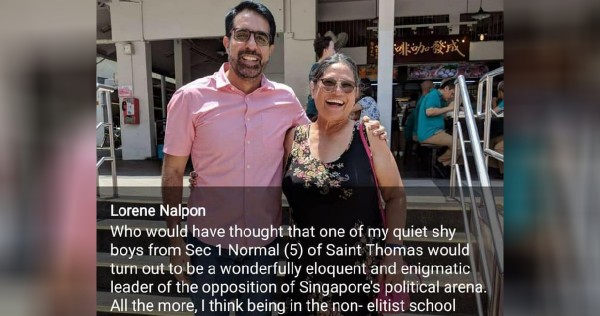
He may have been a “quiet” and shy” schoolboy but Pritam Singh, the secretary-general of the Workers’ Party (WP) and official Leader of the Opposition has certainly come a long way.
Fresh off the high of GE2020, where Singh led WP to its best election showing in history by scoring two GRCs and one SMC, his alma mater took to Facebook on July 12 to congratulate him, sharing a post from a former teacher that highlighted Singh’s humble beginnings.
In the post, originally shared in 2018, Lorene Nalpon reminisced about her days teaching Singh at St. Thomas Secondary School, writing:
“Who would have thought that one of my quiet shy boys from Sec 1 Normal (5) of Saint Thomas would turn out to be a wonderfully eloquent and enigmatic leader of the opposition of Singapore’s political arena.
“All the more, I think being in [a] non-elitist school prepares an individual to understand and appreciate all that we have in Singapore and how to truly move society forward.”
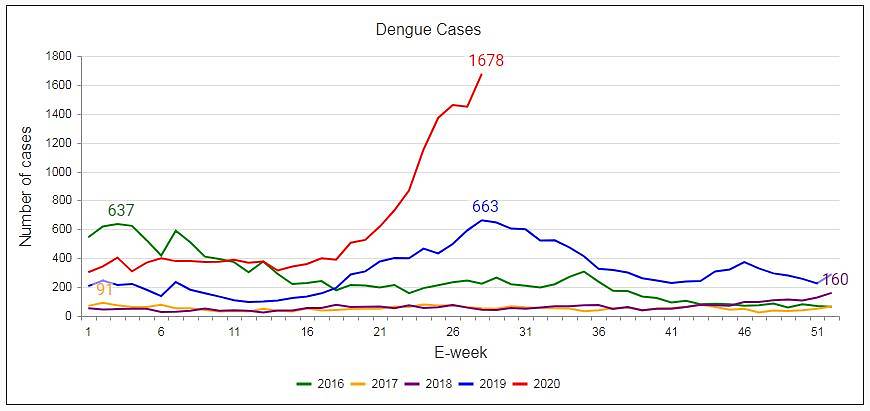
SINGAPORE: The number of dengue cases in Singapore this year has surpassed the total number of cases for the whole of 2019, data from the National Environment Agency on Tuesday (Jul 14) showed.
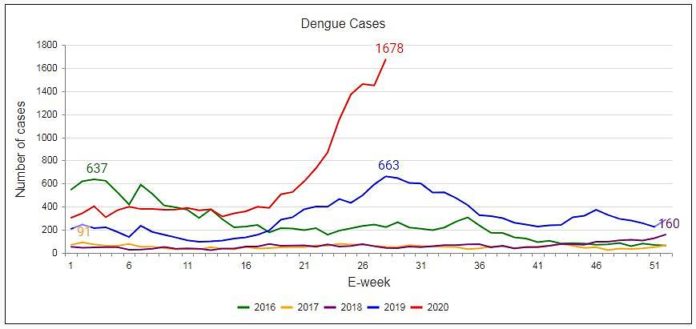
A total of 1,678 dengue cases were reported in Singapore last week, making it the fifth consecutive week the weekly numbers have breached the 1,000 mark. The NEA’s weekly report of dengue cases takes into account infections diagnosed between Sundays and Saturdays.
As of 3pm on Monday, there were 17,249 dengue cases recorded in Singapore in 2020, more than the 15,998 dengue cases recorded for the whole of 2019.
The total number of cases this year is expected to exceed the 22,170 cases reported in 2013, the largest dengue outbreak in Singapore’s history, NEA said on its website.
Last month, the weekly number of dengue cases in Singapore crossed the ‘historical high’ of 891 cases, recorded in 2014.
Data compiled by the Communicable Diseases Division, MOH as found on NEA’s website.
As of Monday, there were 371 dengue clusters in Singapore, of which 133 were deemed “high-risk areas” with 10 or more cases.
These include areas in Geylang, Bukit Panjang, Potong Pasir, Serangoon North and Tampines. The full list of clusters can be found on NEA’s website.
Singapore is currently in the traditional dengue peak season, which is expected to last until October.
NEA said “immediate action” must be taken to break disease transmission, and urged people to destroy mosquito breeding habitats.
Members of the public are also advised to use aerosol insecticide spray in their homes and to apply mosquito repellent to protect themselves.
There has been a five-fold increase in the incidence of Aedes mosquito larvae detected in homes and common corridors in residential areas during the “circuit breaker” period, NEA said on its website.
“During NEA’s recent inspections, we still continue to detect egregious cases of premises with multiple mosquito breeding habitats, and habitats with profuse mosquito breeding.”
The latest dengue figures come a day before heavier penalties are to be meted out to households with repeated mosquito breeding offences and multiple breeding habitats.
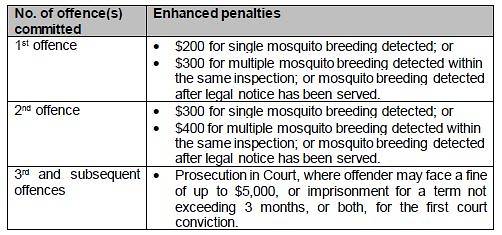
Currently, households are issued a composition sum of S$200 if mosquito breeding is detected at their residential premises, regardless of the number of breeding habitats detected. Offenders are sent to court for the fourth offence.
These penalties will change from Wednesday.
First-time offenders will be penalised with a S$200 fine for a single instance of mosquito breeding, and S$300 for multiple breeding instances during the same inspection or mosquito breeding detected after a legal notice has been served.
Repeat offenders will also be given heftier penalties or sent to court.