A mother found out her elder son was a serial sexual predator who had attacked and raped 19 girls, many of them minors, from a newspaper article.
Madam Linda Tahir fainted from the shock at the hawker centre where she works as a cook.
On June 12, Muhammad Anddy Faizul Mohd Eskah was sentenced to 22 years in prison and given the maximum 24 strokes of the cane after he was convicted of nine charges of rape, aggravated statutory rape, statutory rape and sexual assault.
Another 59 charges, including criminal intimidation and insult of modesty, were taken into consideration for sentencing in what High Court Justice Chan Seng Onn called “one of the most shocking and horrifying” cases of sexual crimes to come before the court.
Madam Linda, 50, told The New Paper that she knew Anddy was in trouble with the law, but he refused to give her any details.
“When Anddy was due to be sentenced, he told me not to go to court as he was afraid I would faint. So I found out what he had done only after the news reports came out,” she said in Malay.
“My mind went blank and I fainted after my boss read me the first paragraph.”
The past two weeks of election campaigning has had candidates busy from morning to night, doing walkabouts and door-to-door visits as they speak to residents, knock on doors and canvass for votes.
This translates to long hours away from home and away from their loved ones.
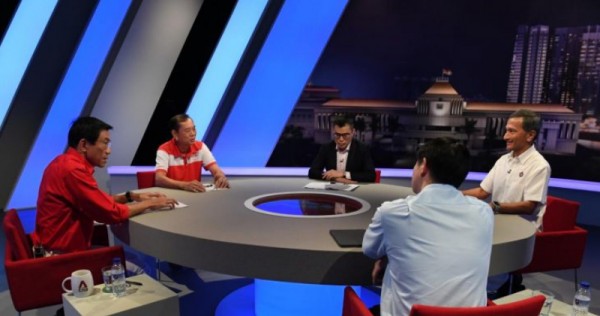
And several Workers’ Party (WP) candidates have taken to social media in the aftermath of the election to express their gratitude to their significant others for always having their backs, not just during their campaigning period, but also ever since they entered politics.
While physical rallies were absent during the hustings for the recently concluded general election, some politicians did not seem to need them.
By the midpoint of the campaign, Progress Singapore Party (PSP) chief Tan Cheng Bock was able to reach out to 12,000 followers with each Instagram post – thrice the capacity of Clementi Stadium, where rallies for West Coast GRC were held in past elections.
The veteran politician wooed younger voters online by posting videos of himself responding to their attempts to educate him on slang terms like “woke”.
Dr Tan, who now has over 70,000 Instagram followers – more than local celebrities like TV personality Denise Keller and rapper Sheikh Haikel – was among the politicians who thrived in what experts have dubbed Singapore’s “first truly Internet election”.
Political parties have traditionally relied on mass rallies to rouse the electorate and drum up support.
But this time, restrictions on large gatherings due to Covid-19 measures saw the battle for hearts and minds take place mostly in the digital realm.
Singtel is investigating how a customer’s mobile line was allegedly terminated by a scammer posing as him.
In a Facebook post on Sunday night, Mr Dave Tai detailed how he suddenly found his mobile line with Singtel terminated by someone who claimed to be running a scam known as SimSwap.
The scammer claimed to have hacked the telco and retrieved Mr Tai’s personal details from its records, including his address.
He demanded that Mr Tai provide a code to him, and assist in the scheme by facilitating transactions in bitcoin.
In his post, Mr Tai appeared to be convinced the scammer had accessed Singtel’s customer database. He warned the public to be careful as he felt the telcos had been compromised.
He wrote: “Without my number, I cannot even access SingPass or change any of my passwords.
“What’s even scarier is that the telco’s official communication channels can become part of a scammer’s tool.”
The Housing and Development Board (HDB) and Public Utilities Board (PUB) have responded to a woman’s complaints of water supply to her Bedok flat being contaminated and affecting her family’s quality of life.
Geraldine Tang shared with Stomp the issues she has been facing since 2015 when she moved into her Design, Build and Sell Scheme (DBSS) flat at Belvia in Bedok Reservoir.
Tang, who is in her early 60s, listed them in a Facebook post she published on July 4.
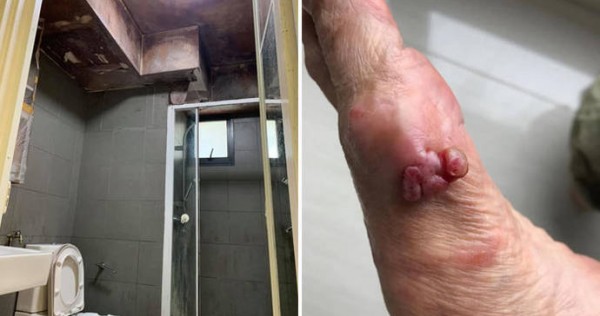
Describing the problems as “impossible”, she said that her bathrooms are smelly and invaded by “sewage and foul odours” from her neighbours. https://developers.facebook.com/geraldine.tang.79/posts/174246200789101
She shared photos of stains on the walls of her flat and said that their feet itch due to “microbial debris” on the floor.
Tang alleged that the bathrooms turn into “saunas” when her neighbours take hot showers and that they have a “hot toilet bowl” because heat rises from there.
She also shared that there is “bacteria” in her tap water making it unusable and that her family fear suffering skin and urinary infections from contact with the water.
SINGAPORE: The coronavirus shock has led many countries to take extreme actions to either shut down entire sectors or force them to keep safe distances and operate far below normal capacity.
Most have borne witness to a wholesale crash in consumption simply after months of lockdowns and other restrictions saw empty malls dot cities around the world.
Even reopening may not resuscitate economies when fear drives consumers to refrain from going out. Lost income and uncertainty about the future will continue to dampen spending.
Negative demand shocks are just one side of the story.
Richard Baldwin, a prominent trade economist from the Graduate Institute in Geneva, predicted the trade collapse in 2020 will far outweigh the “Great Trade Collapse” of 2008.
He argues the fall in the global financial crisis was mostly demand-driven. The fall of Lehman Brothers did massive damage to the financial sector.
The contagion to other sectors started only when firms and customers held off investment and spending plans as feelings of insecurity and anxiety emerged.
COVID-19 is also fuelling massive disruptions on the supply side too, exacerbated by the massive expansion of global value chains in the past. When Chinese manufacturers resumed production in April, they were again constrained by insufficient supplies from Europe and Southeast Asia.
Despite huge fiscal and monetary packages supporting households and business owners rolled out, the outlook for 2020 is bleak.
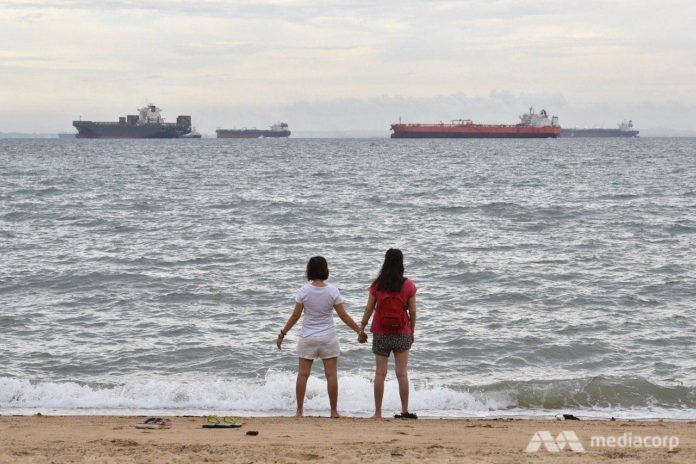
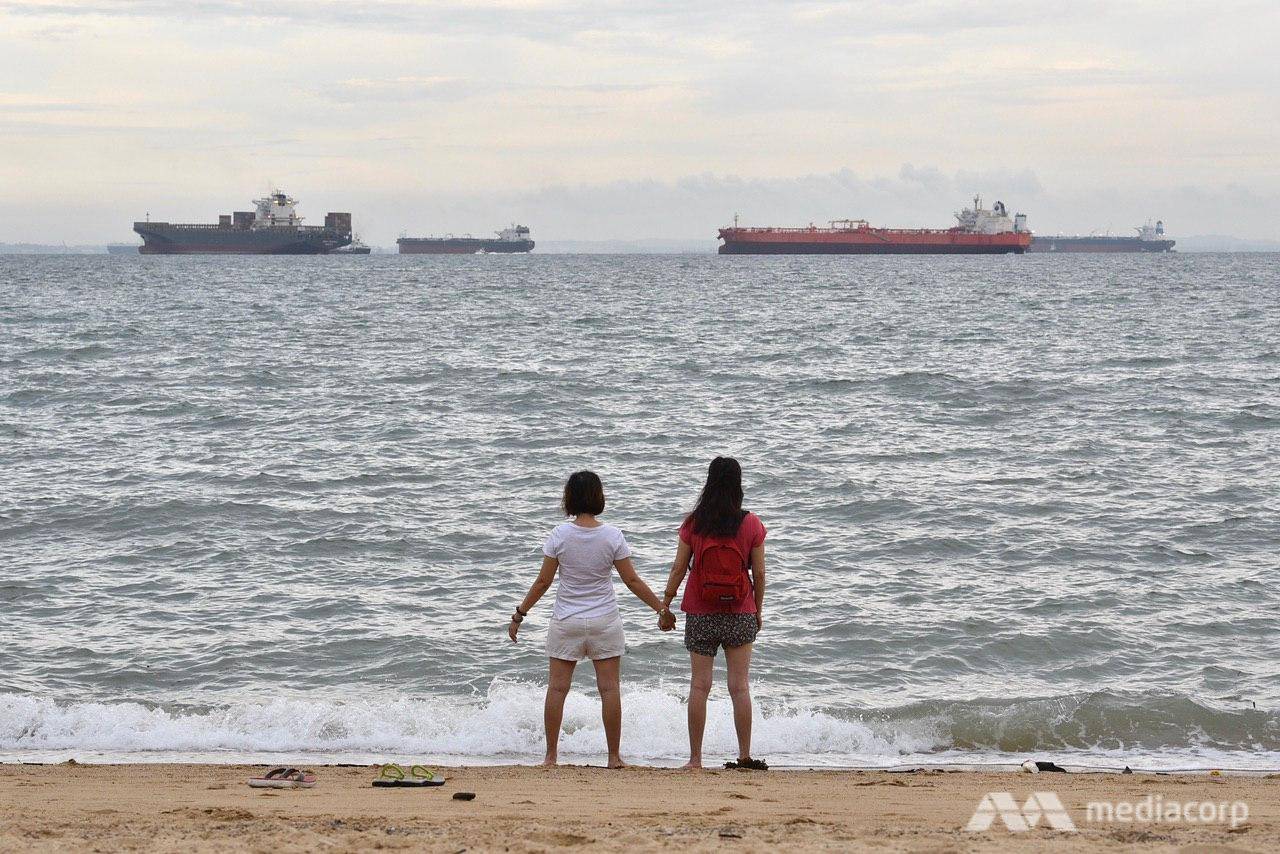
Beachgoers take in the view at East Coast Park on Friday evening (Jun 19), the first day beaches are reopened to the public after Singapore’s COVID-19 circuit breaker. (Photo: Jeremy Long)
Trade is expected to decline by between 13 per cent and 32 per cent, with only partial recovery in 2021, according to the World Trade Organization (WTO).
As a small, open economy heavily dependent on international trade, Singapore cannot isolate itself from the global economic downturn.
The Singapore economy is projected to contract by 5.8 per cent in 2020, according to a Monetary Authority of Singapore survey, with particularly pessimistic outlook for the wholesale and retail trade sector.
The Singapore economy has already entered a technical recession, after shrinking by 41.2 per cent quarter-on-quarter, according to preliminary Ministry of Trade and Industry second quarter estimates released on Tuesday (Jul 14).
DEGLOBALISATION AND THE RISE OF PROTECTIONISM
While the pandemic has shone the spotlight on economic shutdowns, the reality remains that international trade was already slowing in 2019 before the pandemic started, with total value of world merchandise trade falling by 3 per cent.
A number of factors have been at work, including the flattening of the growth in global supply chains over the last decade.
China remains an exporter powerhouse, but the country has begun to turn inward by focusing more on domestic consumption.
The country’s merchandise exports as a share of GDP falling from 31 per cent in 2008 to 17 per cent in 2019, according to China’s National Bureau of Statistics and General Administration of Customs.
These trends have accelerated under President Donald Trump’s “America First” policy and a US-China trade war. Bilateral trade between the world’s two largest economies shrank by more than 15 per cent over 2019.
US President Donald Trump, after pursuing a trade war with China, is waging a blame game over coronavirus. (Photo: AFP/JIM WATSON)
With deep integration into global value chains, Singapore is exposed to blows thrown around in the US-China trade war. When Trump raises tariffs on Chinese goods, demand for intermediates from Singapore was also affected.
But the ongoing COVID-19 crisis is driving the world to retreat from integration and accelerated deglobalisation, as national priorities take centrestage and uncertainties over alliances and international cooperation seethe.
About 75 countries, including some EU countries, India and Indonesia, have imposed export restrictions and other protectionist policies to boost local availability of masks and personal protective equipment (PPE).
Political leaders have voiced new thinking about the shape and form of economic integration. French President Emmanuel Macron has said that it was clear that this kind of globalisation was “reaching the end of its cycle”.
Policymakers also called for greater self-reliance as western countries imported millions of masks and PPEs from China.
GROWING CALLS FOR REGIONALISATION
In this context, the idea of regionalisation has unsurprisingly gained traction. Many supporters of regionalism, however, mistakenly equate it with shifting away from China.
Yet, regionalised supply chains is agnostic on this question, where the concept simply involves more trade with neighbouring countries. An American firm relocating its factories from China to Vietnam would not be categorised as an example of regionalisation.
Regionalisation first emerged as an alternative form of trade liberalisation when the Doha Round Negotiation of the WTO failed in the early 2000s.
Many countries turned to regional trade agreements that reduced tariff and non-tariff trade barriers between member countries.
For the US, further developing regionalised supply chains can be difficult. The North America Free Trade Agreement and its new formulation under a US-Mexico-Canada Agreement, have already drastically reduced trade costs between the United States, Canada and Mexico.
U.S.-Mexico-Canada Agreement (USMCA) signing in Mexico City. (File photo: Reuters)
A study by Lorenzo Caliendo and Fernando Perro, prominent trade economists, found that NAFTA augmented aggregate intra-bloc trade by 118 per cent for Mexico, 11 per cent for Canada and 41 per cent for the U.S.
Similarly, the European Union’s trade is already regionalised to a large extent, thanks to the internal single market developed in past decades.
The next hotspot for regionalisation is probably East Asia, the centre of two mega-regional trade agreements – the Comprehensive and Progressive Agreement for Trans-Pacific Partnership (CPTPP) and the near-to-completion Regional Comprehensive Economic Partnership (RCEP).
RCEP involves all 10 ASEAN member countries and five of its largest trading partners, aiming to progressively reduce tariffs on many products within the huge regional trade bloc. CPTPP, on the other hand, involves eleven countries from the Trans-Pacific region.
While neither was originally planned to be East Asia-centric, circumstances have led to both deals entrenching greater economic regionalisation in this part of the world. India opted out of RCEP in November 2019.
The CPTPP, the world’s largest free trade agreement, has seen the US withdraw from the agreement soon after Donald Trump was elected in 2016.
The result will be to refocus East Asia’s economic ties in the region which is good news. A study released by the Peterson Institute of International Economics predicts the two free trade agreements can fully offset the negative effects of the trade war globally.
In addition, the trade war makes the RCEP especially valuable because it strengthens East Asian interdependence and leads to greater value creation on the whole, raising trade among members by US$428 billion and reducing trade among non-members by US$48 billion.
SINGAPORE MUST DEEPEN TRADE LINKS
Singapore actively participated in the negotiations of both agreements. To offset the negative impact of the COVID-19 pandemic on Singapore’s trade, greater involvement in the region’s trade liberalisation seems inevitable.
Looking ahead, Singapore should focus efforts in promoting trade in services. The country’s total merchandise trade decreased by 3.2 per cent in 2019, but total service trade increased by 1.3 per cent.
Singapore’s economy grew by less than one percent in 2019, with exports hammered by the bruising US-China trade war. (Photo: AFP/Roslan RAHMAN)
Services have taken a huge hit this pandemic season. Among sectors contributing most to Singapore’s service exports, the travel and transport sector, contributing to more than 20 per cent of GDP in 2019, have been more seriously hit.
The Government must strike a delicate balance between public health and economic recovery. Regional “travel bubbles” suggested by Minister for National Development Lawrence Wong is a possible solution.
The financial sector, on the other hand, seems less affected as a large proportion of related tasks can be completed remotely. Trading floors in Singapore and other financial centres around the world have been much less crowded as traders remotely log in to their work computers from home.
However, a functioning financial sector without physical contact requires rapid and reliable network and advanced IT hardware.
Slower networks at home may put traders into a disadvantageous position. With large transactions, even milliseconds matter. Further improvement in the network quality can also help the IT service industry, another major contributor to Singapore’s service exports.
Education is another sector that could boost Singapore’s service exports. Witnessing the rise of social unrest and poor attempts to cope with COVID-19 in the US as well as the turmoil in Hong Kong, more students from China have considered Singapore as their top destination for higher education.
Universities in Singapore should think about expanding internationally by opening up new campuses within the region, especially in China.
Universities from Hong Kong have passionately formed joint ventures and established educational institutions in neighbouring Guangdong province. New York University and Duke University, both prominent US institutions also founded independent campuses in Shanghai metropolitan area.
Yuan Mei is an Assistant Professor of economics at Singapore Management University. His research fields are international trade, spatial economics, and development economics.
SINGAPORE: Two new locations have been added to the list of places visited by COVID-19 cases in the community during their infectious period, the Ministry of Health (MOH) said on Tuesday (Jul 14).
The new locations comprise JEM shopping mall and a food facility at Admiralty.
Those identified as close contacts of confirmed COVID-19 cases would have been notified by MOH, said the ministry.
It added that people who have been at these locations during the specified timings should monitor their health closely for 14 days from their date of visit.
“They should see a doctor promptly if they develop symptoms of acute respiratory infection (such as cough, sore throat and runny nose), as well as fever and loss of taste or smell, and inform the doctor of their exposure history,” said MOH.
“There is no need to avoid places where confirmed cases of COVID-19 have been.”
The National Environment Agency will also engage the management of affected premises to provide guidance on cleaning and disinfection.
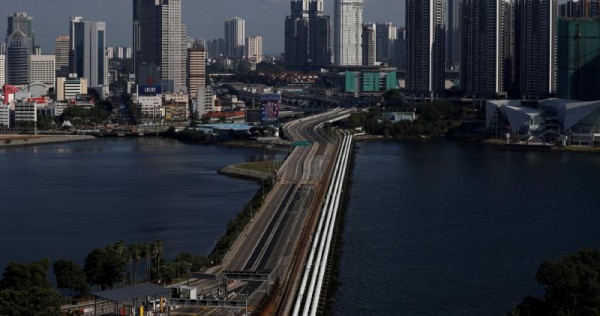
SINGAPORE – Singapore and Malaysia are to resume essential business and official travel between their countries, they said on Tuesday, letting people cross their border for the first time since most movements were suspended because of the coronavirus in March.
The neighbours are also putting in place travel arrangements for their residents who hold long-term immigration passes for business and work in the other country, their foreign ministries said in a joint statement.
They hope to launch the exchanges on Aug. 10, they said, adding that they had also agreed to develop other schemes for cross-border movements, including for daily commutes by workers.
Before the border was closed to people to stop the spread of the novel coronavirus, tens of thousands of Malaysians commuted daily to wealthy Singapore to work in businesses from restaurants to semiconductor manufacturing.
Malaysia is also a major source of staples for Singapore, which imports more than 90 per cent of its food supplies, and goods have been crossing the border since the restrictions on people were imposed in mid-March.
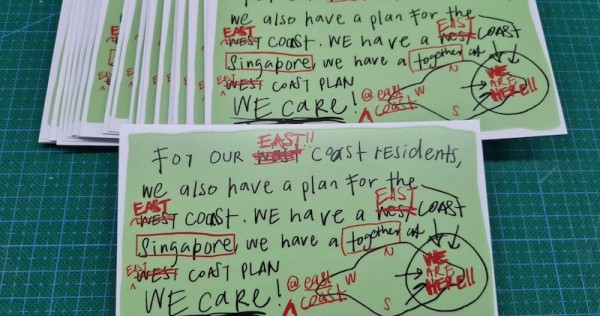
Exactly two weeks ago, the nation watched one of the funniest occurrences of GE2020 on TV: Deputy Prime Minister Heng Swee Keat’s all-encompassing plan for East Coast GRC on Nomination Day.
’Twas a surreal moment following an already surprising revelation that morning. The longtime MP of Tampines GRC suddenly joined the People’s Action Party’s (PAP) team for East Coast to helm the lineup, taking on a Workers’ Party (WP) team that included comeback candidate Nicole Seah.
SINGAPORE: More than 10,600 companies have taken up loans amounting to about S$9.4 billion under schemes overseen by Enterprise Singapore in the last four months from March to June.
This is more than seven times the amount for the whole of 2019, when about S$1.3 billion in such loans was extended.
The Government bears 90 per cent of the risk for these loans, allowing financial institutions to provide them on more favourable terms, said Senior Minister of State for Trade and Industry Chee Hong Tat on Tuesday (Jul 14).
About 80 per cent of the 10,600 firms that benefited were micro and small enterprises, he noted, referring to companies which see less than S$10 million in annual revenue.
More than half of the companies which benefited were from three sectors, with wholesale trade making up 21 per cent of the firms, construction 15 per cent and manufacturing 14 per cent.
Allowing companies easier access to cashflow and credit is one of the ways in which the Government supports firms in Singapore, especially during the COVID-19 crisis, said Mr Chee.
He also gave updates on other initiatives to support local businesses, such as the e-commerce and food delivery booster packages targeted at helping firms in these sectors digitalise in the wake of the coronavirus pandemic.
More than 700 retailers and 10,000 food and beverage establishments have tapped on the respective packages.
In addition, in the first half of the year more than 10,000 projects were undertaken under ESG’s productivity solutions and enterprise development grants, which are aimed at helping businesses restructure, he said.
Mr Chee was speaking to reporters on the sidelines of a visit to printing firm Markono Content Solutions in Pioneer.
He noted that Markono was one example of a firm which had benefited from ESG’s support to invest in improving its systems, processes and technology.
The company has automated many of its processes, for example by using a fleet of 30 small automated guided vehicles to transport items around its warehouse.
“We want to support more companies like Markono to be able to grow, so that they can create new jobs for Singaporeans,” he said.
Printing firm Markono Content Solutions uses automated guided vehicles to transport items in its warehouse. (Photo: Zhaki Abdullah)
Mr Chee added that despite being in a “traditional sector”, Markono has been able to use technology to improve its productivity and enhance its competitiveness.
Markono’s managing director Edwin Ng said that the firm is currently working on an upgrade to its enterprise resource management system.
“This lays the foundation for us to deploy solutions more seamlessly in the future, as well as to automate some of the work processes that are currently conducted manually by our colleagues (who are) doing admin, finance, all the way down to sales and customer service,” he said.
Mr Chee also announced that an initiative to help companies better navigate which schemes and initiatives would benefit them the most would be launched in August.
Called E-Advisor, the initiative is a function on the GoBusiness platform which recommends suitable schemes based on a company’s needs.
The initiative is a collaboration between the Ministry of Trade and Industry, the Government Technology Agency and the Smart Nation and Digital Government Office.