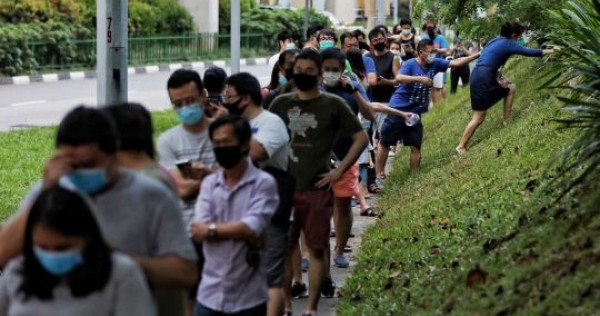
The Elections Department (ELD) did its best to keep voters safe on Polling Day and it is too early to say if infections would occur as a result of voters having to wait in line for upwards of an hour in some places, said National Development Minister Lawrence Wong yesterday.
“Whether or not anything happens after this, whether there will be any cases emerging, we will not know now… So I think let’s not jump to the conclusion just because we see queues forming,” said Mr Wong.
“Queues form everywhere, not just when people go and cast the vote. Queueing per se is not an activity that will necessarily cause the transmission of the virus.”
The voting process in the election on July 10 could have been lengthened because of the extra precautions that had to be taken.
Mr Wong said the ELD did its best in implementing safety measures, such as providing hand sanitisers and spacing voters out.
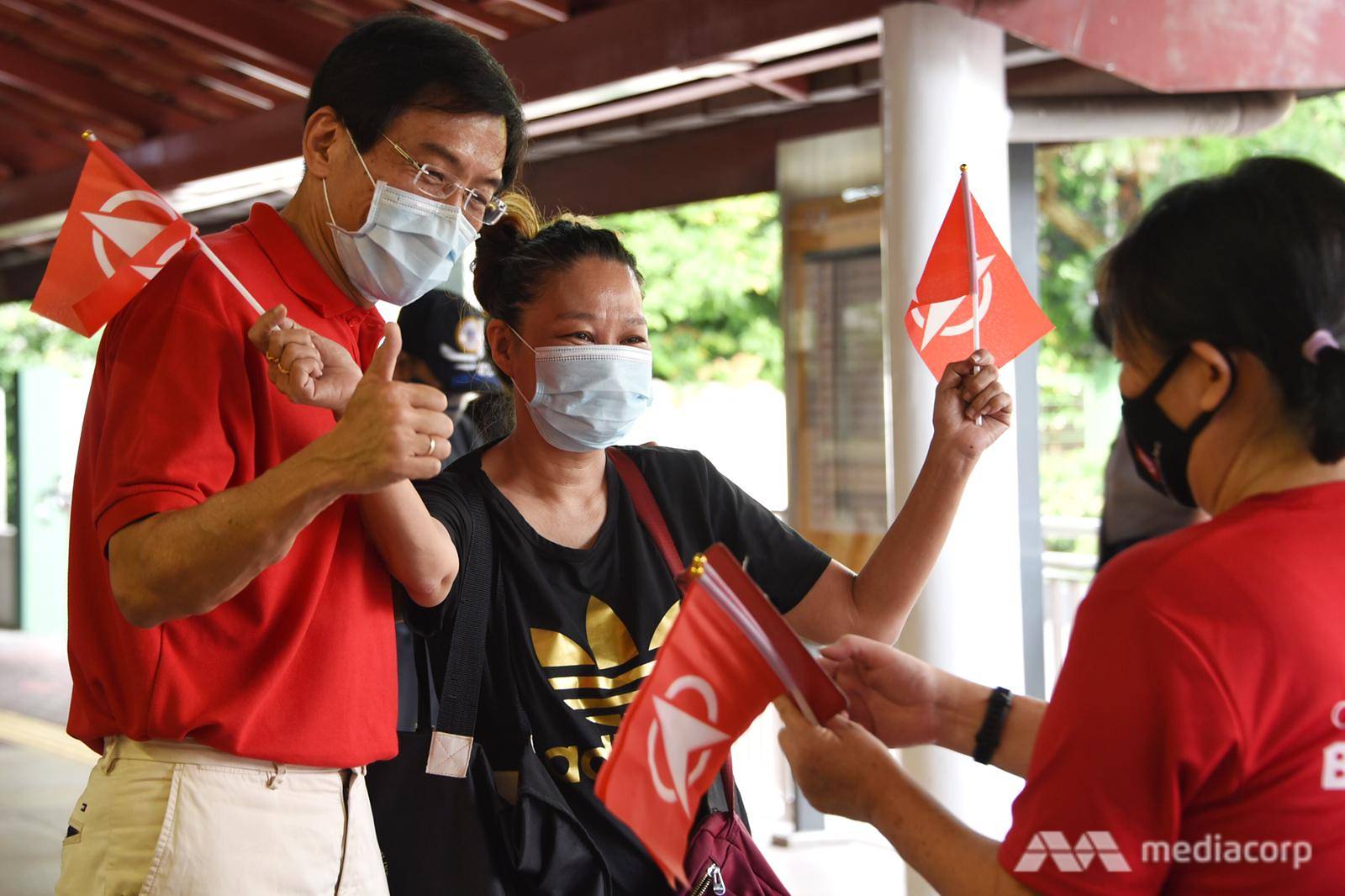
He also said the crowds of people who gathered in some places to celebrate as results came in may have put themselves and others at risk of contracting Covid-19.
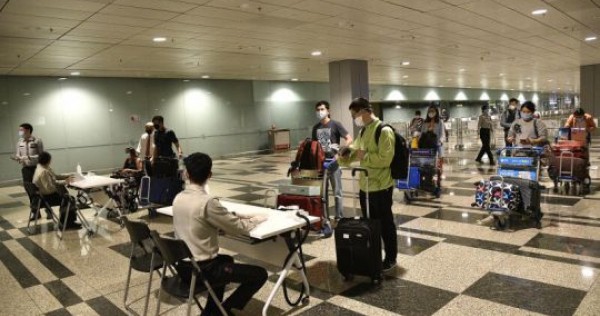
SINGAPORE – From next Monday (July 20), travellers entering Singapore after visits to – including transits in – Japan, Hong Kong and the Australian state of Victoria within the last 14 days will be required to serve their stay-home notice (SHN) at dedicated facilities instead of at their own place of residence.
They will also have to undergo a Covid-19 test before they end their SHN.
The new measures come as these places have seen a recent resurgence of Covid-19 cases.
Specifically, travellers who left Singapore from March 27, despite the prevailing travel advisory against leaving the country, are required to pay for their stay at dedicated SHN facilities. Travellers who are not Singapore citizens or permanent residents are also required to pay for their stay at dedicated SHN facilities.
The Straits Times understands that the cost of each 14-day stay is about $2,000. The Covid-19 test for each person costs an additional $200.
SINGAPORE and JAKARTA: Airlines round the world are expected to face a long and painful road to recovery.
Border closures and curbs on air travel due to the COVID-19 pandemic, coupled with lingering concerns over travelling in crowded and confined spaces, will make it difficult for travel demand to surge, at least in the near future.
So what can airlines do to ensure their continued survival beyond tapping government support, accessing credit facilities and even considering mergers?
Experts believe the answer lies in airlines restoring public confidence by making the travel experience as safe as possible.
This means, however, that travellers will have to get used to stringent health checks, minimal inflight entertainment and even the way food is served on board.
Here are five ways flying is set to be different once people can travel again when countries start lifting their restrictions.
Delta Air Lines passenger planes parked owing to flight reductions amid the COVID-19 pandemic, at Birmingham-Shuttlesworth International Airport in Alabama, United States. (File Photo: Reuters/Elijah Nouvelage)
1. MIDDLE SEATS MAY BE BLOCKED
Several airlines, including Garuda Indonesia, are planning to keep middle seats empty.
This, said Garuda chief executive officer Irfan Setiaputra, will keep the load factor on its aircraft “decreased significantly” — even if Indonesia lifts its current regulatory limits on flight capacity.
For example, on Garuda’s Boeing 737 aircraft with three-plus-three seating configuration in economy class, the middle seats will be kept empty “so there’ll be distance between passengers in the same row”, he told the programme Insight. (Watch the episode here.)
In the United States, Delta Air Lines, Southwest Airlines and JetBlue Airways have also blocked seats in the name of social distancing.
Recent research from the Massachusetts Institute of Technology estimates that blocking the middle seat on airplanes could halve the risk of being infected by the coronavirus — with the assumption that all passengers are wearing masks.
But if airlines are going to be forced to keep the middle seat vacant, “they’re not going to be able to make money”, pointed out Asian Aviation editor Matthew Driskill.
Empty seats are a huge cost for airlines. (Photo: AFP/Goh Chai Hin)
Compared to pre-COVID-19 times, airfares will be more expensive “for sure”, said Irfan. “We’re in discussions with the regulator to make sure that the increase in the price is still at acceptable levels.”
The International Air Transport Association (IATA) has said social distancing measures on aircraft would “shift the economics of aviation” by slashing the maximum load factor to 62 per cent, “well below” the average industry break-even point at 77 per cent.
“Compared to 2019, airfares would need to go up dramatically — between 43 and 54 per cent, depending on the region — just to break even,” the IATA stated on its website.
2. EXPECT INTERACTION TO BE MINIMISED
There will be not only fewer passengers, but also less interaction on board.
On Garuda flights, the crew enforce safe distancing “from the moment (passengers) board the aircraft” to when they sit down and when the plane lands, said senior flight attendant Thamy Karamina.
Garuda Indonesia senior flight attendant Thamy Karamina.
“We need to make sure the interaction in the airplane isn’t going to spread the virus,” Irfan explained. That includes interaction between cabin crew and passengers.
“In business class, we used to kneel to maintain good eye contact when we interact with passengers,” said Thamy. “The aim was to make passengers feel more comfortable. We no longer do that right now.”
United Airlines has also reduced contact between flight attendants and customers, for example during snack and beverage service. And its passengers would be asked to disembark in groups of five rows at a time.
Thamy feels that travellers will see the merits of the new measures.
“This is a new form of attention that we’re giving our passengers. In the past, passengers would be happy to get attentive service, but now, social distancing is part of the service,” she said. “It’ll make passengers feel more comfortable.”
3. INFLIGHT SERVICES WILL BE PARED
Passengers will be served “properly”, promised Irfan. But with the new realities, that service will look different in other ways too.
IATA regional vice president (Asia-Pacific) Conrad Clifford said on-board catering could be “very simple”.
“It’ll be delivered to you probably as you board, and then it’s up to you to sort of serve yourself,” he added. “There won’t be the elegant, big meals that you’ve seen in the past, unfortunately.”
Singapore Airlines, for example, has suspended meal services for flights within Southeast Asia and to China; upon boarding, passengers are given a snack bag with water and refreshments instead.
The SIA Group reported a loss of S$212 million for the 12 months ending Mar 31, driven by the collapse in air travel caused by the COVID-19 pandemic. (Photo: AFP/Roslan Rahman)
Newspapers, magazines and back-of-the-seat literature have also been removed from SIA’s aircraft and replaced with its electronic library, which is available via the SingaporeAir mobile app. This provides access to more than 150 international newspaper and magazine titles.
What the IATA has emphatically recommended is that crew members and passengers wear masks, “to make that risk of infection very minimal”, said Clifford.
“(But) we don’t want to see too much movement around the cabin in order to reduce any risk of movement of air from possibly infected people to other people,” he added.
A traveller wearing a mask on a plane at Cairo International Airport in Egypt on June 18. (File photo: Reuters/Mohamed Abd El Ghany)
SIA’s cabin crew will be wearing masks throughout their flight, as well as goggles or eye visors when interacting with customers, and gloves when serving any meals.
Since last month, all airlines in the SIA Group have also provided passengers with a “care kit” containing a surgical mask, anti-bacterial hand wipes and a hand sanitiser.
American Airlines and United Airlines have even taken steps to ban passengers who refuse to wear a mask.
5. COVID-19 TESTS MAY BECOME A NORM
As global travel resumes, COVID-19 testing could become the new normal.
The IATA said last month that this should, ideally, take place prior to travel or at departure. A positive result would mean the passenger cannot travel as planned.
If testing is required on arrival and a passenger tests positive, then the passenger should be treated according to the requirements of the receiving country, said the association.
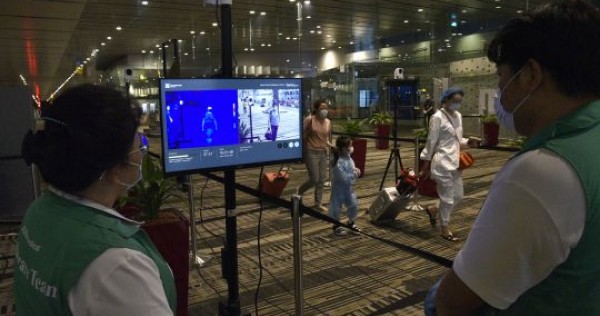
Hong Kong International Airport was one of the world’s first airports to introduce mandatory COVID-19 testing — in April — whereby inbound travellers are sent to an off-site testing centre. They must also wait for their test result at a designated location.
In South Korea, the government introduced “walk-through” COVID-19 testing stations at Incheon International Airport in March, where a medical staff member collects samples from arriving passengers.
Medical staff in protective gear taking samples from a foreign passenger at a coronavirus testing booth outside Incheon International Airport near Seoul. (Photo: AFP/Jung Yeon-je)
New arrivals must also download a government smartphone app that tracks their location and requires them to report any symptoms, reported Reuters.
With such measures proposed or already implemented, including safe distancing, Singaporeans “can expect inconvenience and delay” when air travel rebounds, Transport Minister Khaw Boon Wan said in a Facebook post in May.
“But public health safety mustn’t be compromised, if we want passengers to take to the skies again,” he added.
Watch this episode here. The programme Insight airs on Thursdays at 9pm.
SINGAPORE: As political parties campaigned during General Election 2020, first-time voter Mr Yap Zheng Yi, 26, often found himself sifting through a variety of offerings on social media.
Mr Yap got his election news through articles from the mainstream and alternative media, memes and viral videos, as well as widely shared, well-written observations by people online. Facebook’s algorithms meant he barely saw content from the parties or candidates themselves.
Many of the articles, memes and videos poked fun at candidates and showed the lighter side of the hustings. Candidates fumbling their nomination and vernacular speeches made for viral content. Political broadcasts were a source of entertainment too.
Some of it was more serious and made a meaningful impact.
Mr Yap, a university undergraduate who lives in Marine Parade GRC, read an article about Marine Parade People’s Action Party (PAP) candidate Tan Chuan-Jin. It quoted Mr Tan as saying he learns more from his failures and inadequacies. “That sentence resonated with me,” he said.
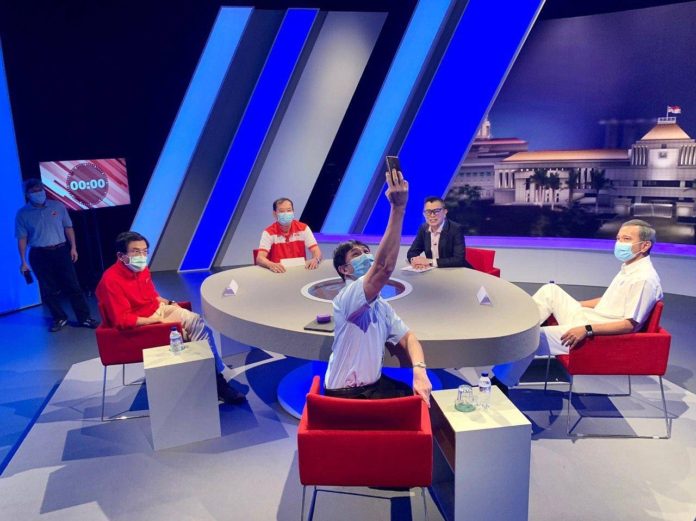
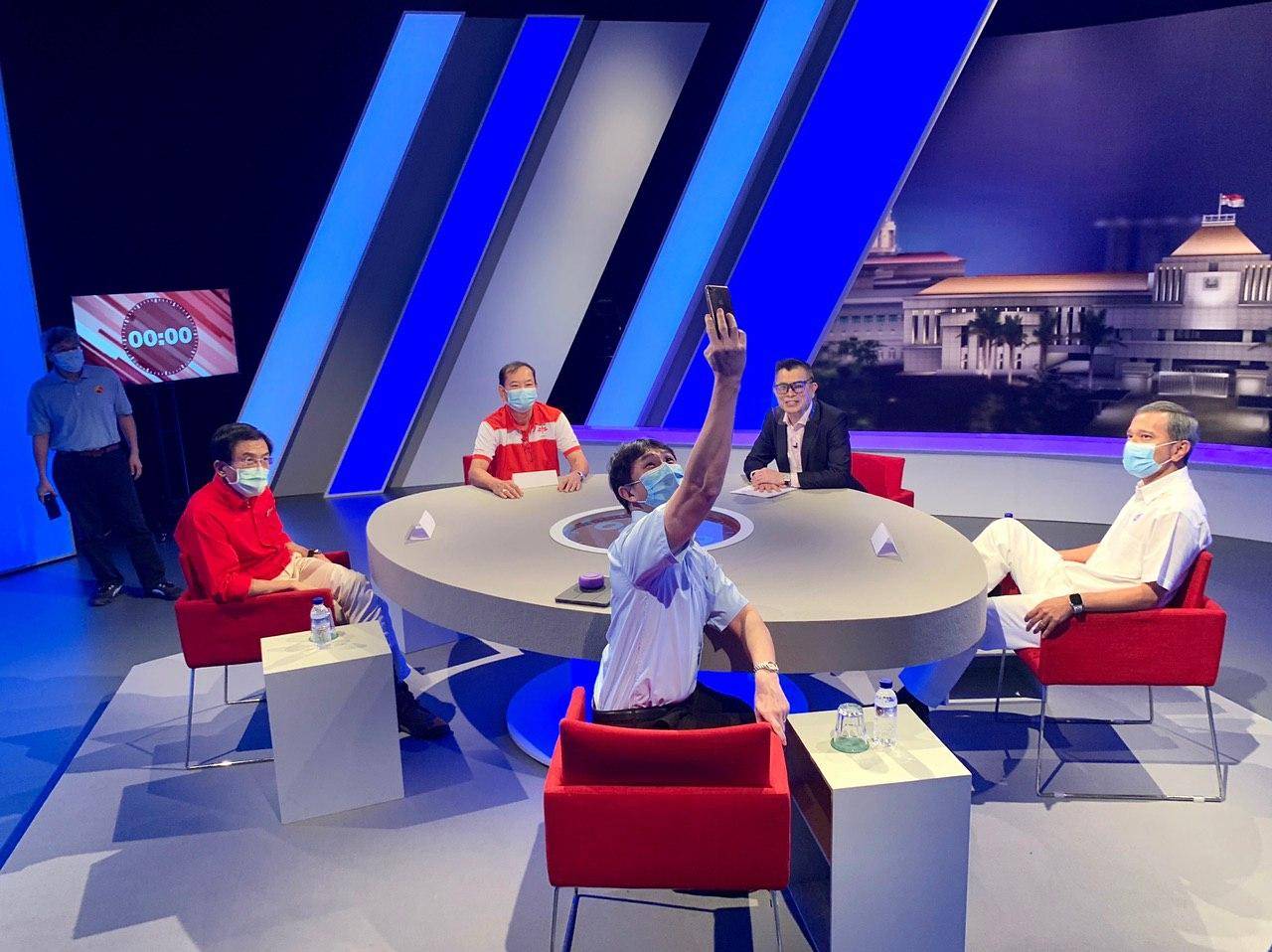
Workers’ Party’s Jamus Lim takes a “wefie” with other participants of the Singapore Votes 2020: Political Debate before air-time: Singapore Democratic Party’s Chee Soon Juan, Progress Singapore Party’s Francis Yuen and People’s Action Party’s Vivian Balakrishnan. The debate was moderated by CNA Digital chief editor Jaime Ho. (Photo: Jeremy Long)
But Mr Yap said one particular thing stood out because it was heavily liked and shared, popping up regularly on his news feed.
It was a snippet from a live televised political debate on Jul 1. In it, Workers’ Party (WP) candidate Jamus Lim said the WP was not trying to stop the ruling PAP from getting a strong mandate, but to deny it a “blank cheque” in Parliament.
Dr Lim’s comments left a positive impression, said Mr Yap. “That’s when I thought this opposition party has potential,” he added.
THE PANDEMIC ELECTION
Singapore’s 2020 election put huge significance on online campaigning, with parties producing their own talkshows and e-rallies, and exploring different ways and platforms to connect with voters.
The PAP and WP held its respective Straight Talk and Hammer Show talkshows. The Progress Singapore Party’s (PSP) secretary-general used millennial slang terms to connect with younger voters, while Singapore Democratic Party (SDP) candidates took part in “Ask Me Anything” dialogues. Other opposition parties organised Facebook Live or Zoom sessions.
An episode of Straight Talk with PAP, hosted by former CNA presenter Yvonne Chan. (Photo: Facebook/People’s Action Party)
Beyond producing their own content, public relations (PR) experts CNA spoke to said some parties managed to get a publicity boost through viral memes or videos, and controlled the online narrative by responding effectively to negative incidents. These helped them reach out to more voters.
The consensus view among the experts was that the WP had the strongest online campaign with its personal and authentic style coupled with some viral elements,while the PAP’s trademark polished brand did not have the same broad appeal.
The WP and PAP did not respond to queries about their online campaigns.
But political analysts also said a better online campaign does not necessarily translate to votes. The PAP eventually retained its supermajority by winning 83 out of 93 seats. The WP clinched the remaining 10.
Nevertheless, PR experts said parties’ online campaigns played a significant role in determining their performance at the polls. Candidates who garnered more mentions on social media largely did better, an analysis of the data showed.
The WP’s win in Sengkang GRC is one example, experts said, citing how its candidates Jamus Lim and Raeesah Khan had attracted positive chatter on social media.
Moving forward, the analysts said online campaigns are here to stay, although physical rallies remain relevant. Parties are likely to go with more targeted and comprehensive online strategies that complement traditional methods, they added.
Political observer and Singapore Management University (SMU) law professor Eugene Tan said some parties’ online campaigns were more successful than others.
“But what is clear from GE2020 is that parties would have seen online campaigning in a different light (if they haven’t), and will redouble their efforts in online campaigning,” he said.
“Now that they have experienced the potential, pitfalls, and the power of online campaigning, we can expect parties to exploit this during the period in between elections.”
WP “PERSONAL”; PAP “PROFESSIONAL”
The parties started rolling out their online campaigns early in the proceedings.
On Jun 24, a day after the Writ of Election was issued, the WP released a slick 15-second video introducing some of their candidates. They shifted slightly and smiled into the camera, against a backdrop of movie-like orchestral music.
PR experts said the video set a high bar.
Among the 12 faces featured in the Workers’ Party video are (from left) Dr Jamus Lim, Ms Nicole Seah and Mr Yudhishthra Nathan.
Mr Edwin Yeo, general manager of PR firm SPRG Singapore, said everything about it was “balanced and nuanced”.
“It was just short enough to hold our attention span, well-made enough that it looked like something a YouTuber could have made, but not so slick that it looked insincere and expensive,” he said.
Bishan-Toa Payoh GRC resident Ganesan Chinniah, 57, said he was “really impressed” by the way the WP candidates presented themselves in the full-length version of the intro video.
“My first impression was that we are getting … a real good opposition party that is going to be taking the present Government to task,” he said.
Second-time voter Joel Lim, 27, said the video was not only well-produced but also timely. “The production values, scripting and soundtrack of the video made it exciting for audiences to watch,” the PR and events executive said.
The Workers’ Party (WP) candidates for Sengkang GRC, He Ting Ru and Jamus Lim, interacting with residents during a walkabout at Rivervale Plaza on Jul 7, 2020. (Photo: Marcus Mark Ramos)
SMU’s Associate Professor Tan said the really effective thing about the WP campaign was how “the authenticity of their candidates and party shone through clearly even online”.
“That meant they connected well with voters and that their campaign messaging did engage voters and won them ballots as well.”
Beyond its own content, Mr Yeo said the WP managed to inspire social media to generate positive content on its behalf, pointing to how Dr Jamus Lim repeated his “warms the cockles of my heart” catchphrase during speeches, spawning memes in the process.
The “ultimate compliment” for a campaign is when it “becomes a noun or a meme”, said Ms Wong Pei Wen, who teaches PR at the Nanyang Technological University (NTU).
“Generally, good campaigns, not just political ones, are the ones that create buzz,” she said.
People’s Action Party (PAP) secretary-general Lee Hsien Loong at Ang Mo Kio bus interchange on Jun 1, 2020. (Photo: Marcus Ramos)
While political analyst Felix Tan said the WP had adopted a “good strategy” of finding a balance between serious and frivolous for its campaign, he highlighted how the PAP went with a more straight-laced style.
This showed in its Straight Talk series, he said. It was hosted by a former news presenter and featured serious topics like jobs and education.
“There are people who love the PAP style of professionalism,” said Dr Tan, an associate lecturer at SIM Global Education. “(But) there will be a group that will doubt the attempts by the PAP, because if you watch it over and over again, it just feels so contrived.”
Tharman Shanmugaratnam of the People’s Action Party speaks during a Facebook Live broadcast on Jul 7, 2020. (Photo: PAP)
Nevertheless, PRecious Communications managing director Lars Voedisch said “professional-looking” content can help voters build confidence in a party.
“Content that is professional-looking can help position a party to be seen as credible and build confidence in abilities and strategies,” he said. “Some of the long-term serving PAP candidates are very versed in those more formal environments.”
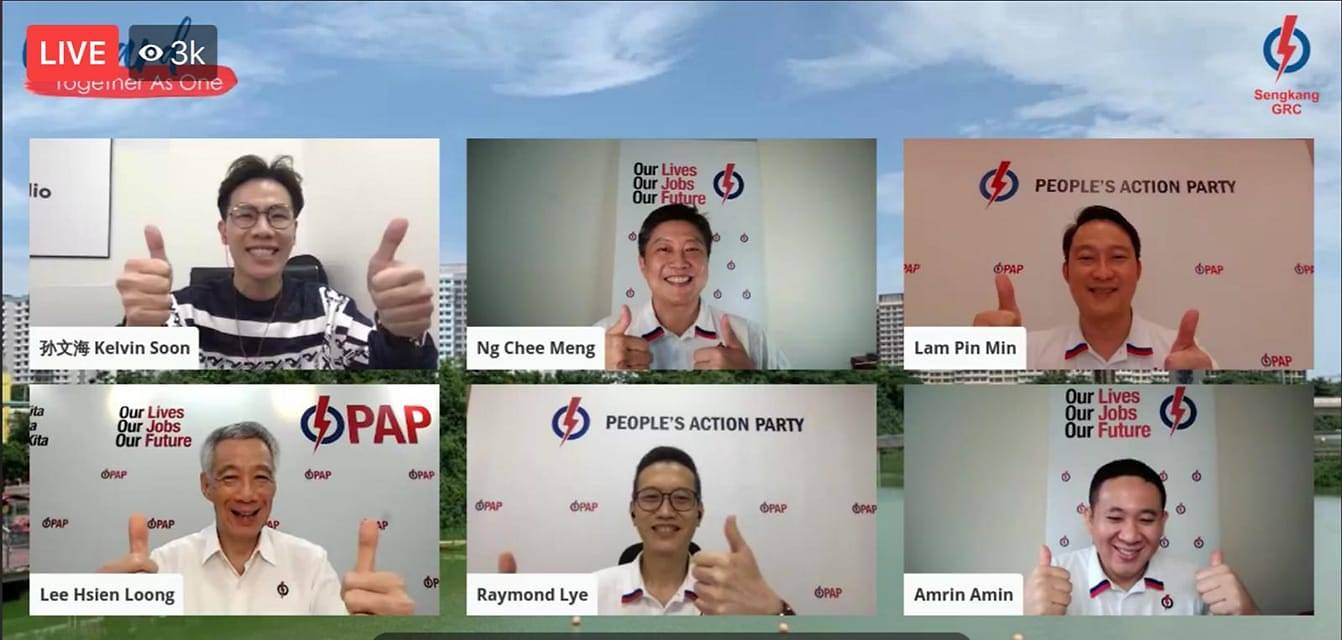
Prime Minister Lee Hsien Loong and PAP’s Sengkang GRC candidates participate in a web chat session. (Photo: Facebook/Sengkang GRC)
The PAP also held more informal talkshows at a constituency level. Some voters felt that several of its candidates produced commendable content.
The second-time voter Mr Lim, who in his leisure time had analysed parties’ political content on his Instagram account, said Sembawang GRC candidate Ong Ye Kung’s “measured but sincere videos” and Marine Parade GRC candidate Tan Chuan-Jin’s “playful and self-deprecating memes” were successful in resonating with different audiences.
Still, Dr Tan believes the PAP needs a “complete overhaul” of its media structure, with a campaign leader who can drive a consistent style and messaging throughout the party.
“Obviously, the PR has failed. Obviously, their creatives are not that creative,” he said. “I think they really need to get people who can think out of the box, and I think the PAP needs to be open to new ideas.”
Assoc Prof Tan pointed out that there had been “too many moving parts” for the PAP online campaign.
“This meant duplication and perhaps even the lack of a coherent message,” he said. “For a party that is big on consistent messaging, they did not grasp fully how the many initiatives online did not click well and so they got less bang for their buck.”
Mr Voedisch noted that the PAP could have been at a disadvantage from the start as the party that has had the strongest mandate across all demographics for a long time.
“This means that it has to be appealing to a very wide spectrum … leading to a more factual narrative that might come across as less exciting,” he said.
“On the other hand, opposition parties are more free to take a risk, appear less polished and through this come across more authentic and relatable. Many social media styles and formats are supporting that kind of image.”
80-YEAR-OLD “HYPEBEAST”
Apart from the PAP and WP, experts highlighted notable efforts by other parties as they tried to reach out to voters via social media.
This includes PSP chief Dr Tan Cheng Bock’s use of Instagram and youth lingo like “woke” and “hypebeast” to engage younger voters. He would also interact regularly with his followers, reposting videos they shared with him.
“Woke” refers to awareness of social justice issues, while “hypebeast” describes a fashion trendsetter.
“One of the biggest surprises was to see 80-year-old Tan Cheng Bock becoming an Instagram star with more followers than some well-known local celebrities,” Mr Voedisch said.
First-time voter and East Coast GRC resident Mr Kelly Wong, 22, said Dr Tan Cheng Bock’s campaign bore similarities with American politician Bernie Sanders’ presidential campaign.
“Both are elderly but also at the same time they managed to appeal to the young crowd,” said Mr Wong, a university undergraduate. “(Dr Tan’s) was very clever. It is a technique that I don’t think has ever been used here before – having that adorable grandpa perception.”
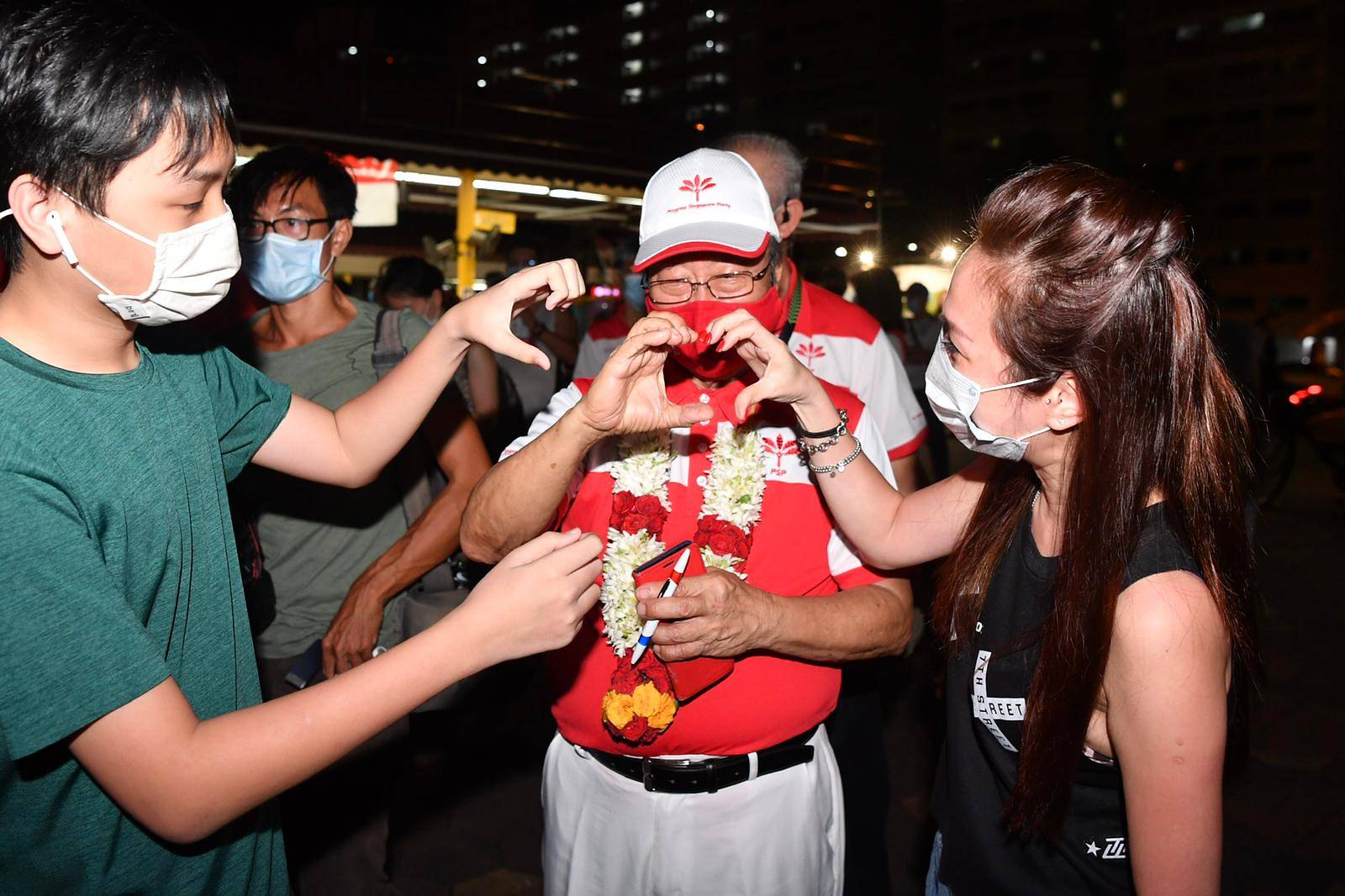
Progress Singapore Party’s secretary-general Tan Cheng Bock poses with residents at Jurong West, Jul 8, 2020. (Photo: Jeremy Long)
Dr Tan’s Instagram account currently has close to 75,000 followers, more than the PAP’s roughly 42,000 followers, the WP’s 41,100 followers and his own party’s 16,300 followers.
“You don’t hear the Workers’ Party or the PAP using that sort of lingo all the time,” SIM’s Dr Tan said. “But I think what the PSP has done is to attempt to connect with social media users using their language, so that matters as well.”
The PSP could not respond to requests for comment by the time of publication.
Dr Tan also highlighted the SDP’s “Ask Me Anything” sessions on Reddit, which allowed Internet users to have a direct discussion with their candidates.
“It’s their approach of being open and being anything can go,” he said. “It entices a certain group of people who love that kind of honesty and directness of discussion.”
The Singapore Democratic Party’s (SDP) candidate for Bukit Batok SMC, Chee Soon Juan, at a walkabout at Bukit Batok MRT station on Jul 7, 2020. (Photo: Ruth Smalley)
An SDP spokesperson told CNA that targeting its audience forms an important part of its online outreach efforts, noting that the party has been using the online medium since before the 2011 election.
“We have, for instance, videos in the vernaculars to reach the older population and talk shows to reach the younger generation,” the spokesperson said.
“Over time, our productions have improved in quality and increased in quantity. What the COVID-19 pandemic did was it underscored, many times over, the importance of such online reach.”
The party reviews comments on its posts as initial feedback, the spokesperson said, adding that both Facebook and Google analytics provided further information.
SDP candidate Paul Tambyah during a walkabout on Jul 1, 2020.
“Voter preferences are varied. Whether it is through online campaigning or conventional methods, we must reach out to our voters,” the spokesperson said. “We will be doing them – and ourselves – a disservice if we ignore one or the other.”
DO BETTER ONLINE CAMPAIGNS EQUATE TO MORE VOTES?
Experts, however, emphasised that a good online campaign is only part of the process and does not necessarily result in success at the ballot box.
“You might have all those memes popping up, you might have everyone viewing one particular video or making it viral or sharing it with everyone else – it does not necessarily equate to votes for that particular party,” said Dr Tan.
“It’s just like when you go to a physical rally, you know there are certain opposition parties that will garner a turnout by the thousands, yet it does not necessarily reflect that kind of vote swings.”
Pasir Ris-Punggol GRC resident Mdm Rukilah Abdulah, 53, said she went on social media to keep up with the latest election developments and better understand parties and candidates. But she said the content did not form the basis for how she voted.
“I know who is running here and when I vote, it is not based on what I read on social media,” said Mdm Rukilah, a homemaker.
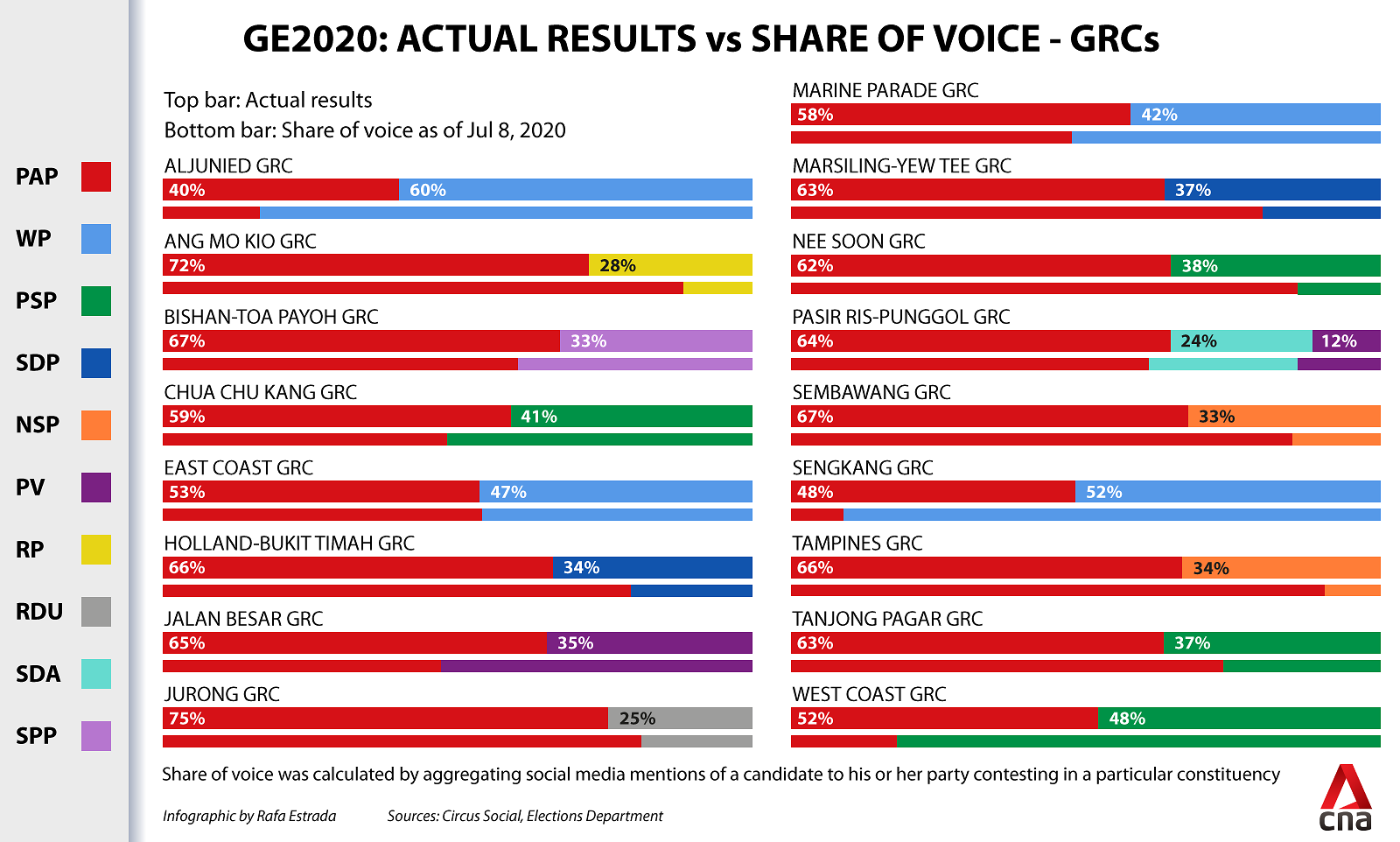
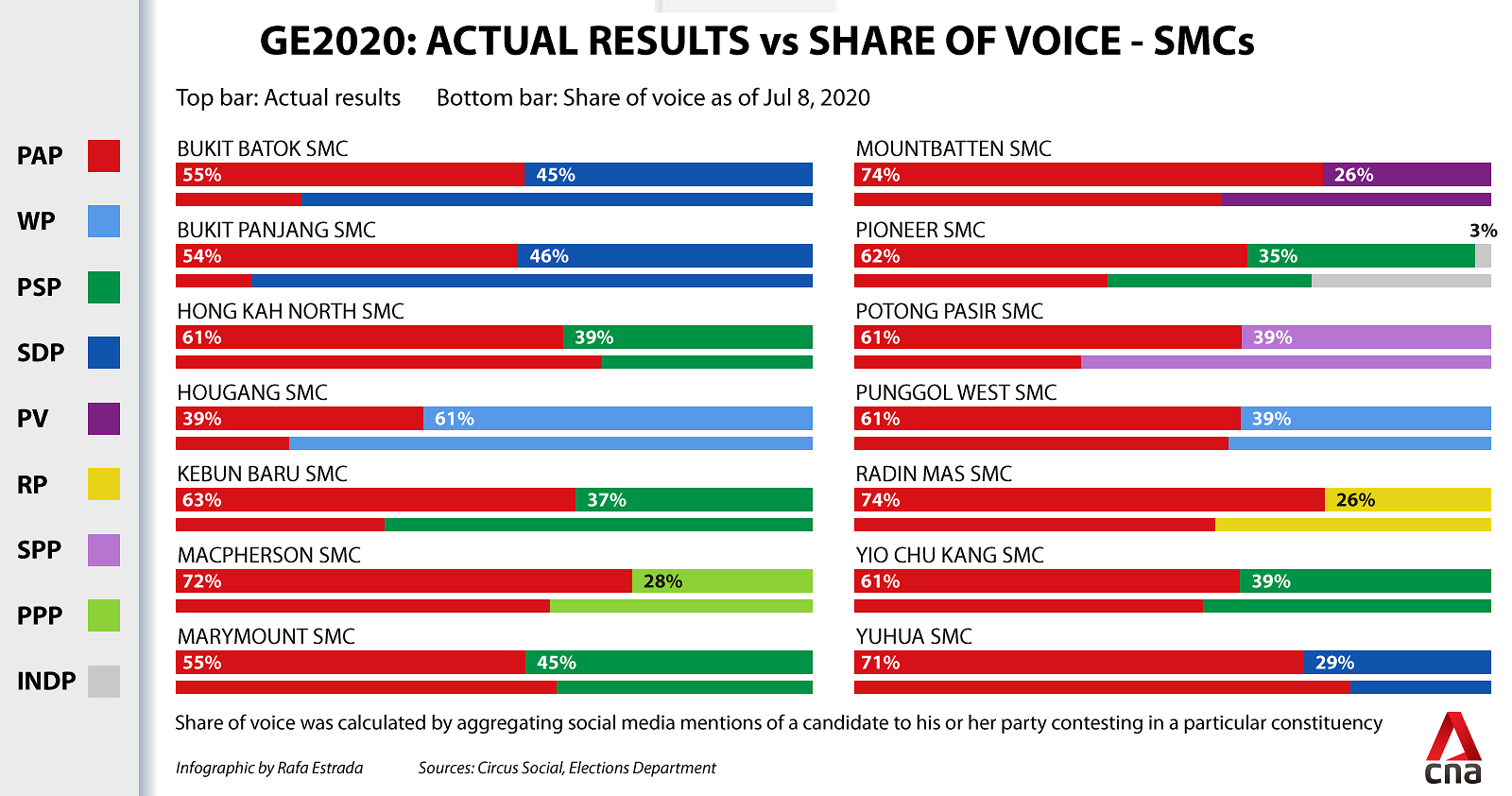
But data from social media monitoring and intelligence company Circus Social paints a somewhat mixed picture. The figures showed that candidates who got the most mentions on social media from Jun 23 to Jul 8, or the full campaigning period, generally did better at the polls.
For instance in Sengkang GRC, the WP’s slate of candidates garnered a 91 per cent share of the chatter, compared to the PAP team’s 9 per cent. The WP eventually won Sengkang with 52 per cent of the vote.
There were a few exceptions, however. While opposition candidates in Marine Parade GRC and Bukit Batok SMC attracted more mentions, the PAP emerged victorious in both constituencies.
SPRG’s Mr Yeo noted that online campaigns had a “big impact” on the result in the newly formed Sengkang GRC, marking the first time that an opposition party will hold two of multi-member constituencies since the scheme came into effect in 1988.
He gave the example of the episode involving its WP candidate Ms Raeesah Khan, who is being investigated by police over comments she made online about race and religion.
Police announced that it was investigating Ms Khan on Jul 5, in the middle of the campaigning period, following several reports made against her. Ms Khan apologised for her “insensitive” remarks later that evening.
In a statement the following day, the PAP called on WP to clarify its stand on Ms Khan’s posts, questioning why it still considered her “worthy of consideration as an MP”.
Workers’ Party candidate Raeesah Khan speaks to members of the media on Jul 5, 2020. (Photo: Gaya Chandramohan)
“From my chat groups, I could see that even pro-PAP supporters were uncomfortable with the press release that PAP wrote, and the sharing of that release in the groups was met with disdain,” Mr Yeo said.
“No one defended the PAP, even those who thought Raeesah was wrong. Coupled with social media movements such as #Istandwithraeesah and the endless memes of Jamus, you could argue that online campaigns had a big impact on the Sengkang result.”
Mr Voedisch had no doubts about the “significant importance” of online campaigns in relation to a party’s performance at the polls.
“Whether one garnishes a good result will depend entirely on how well they connect with the voters and they should leverage online campaigns to boost their poll results,” he said.
PARTIES WORKING WITHIN LIMITATIONS
Still, given that this year’s election marked the first time that parties had to adapt to a “fully fledged online strategy”, SIM’s Dr Tan felt they did okay.
“So to be fair, I think it’s not their fault that they were not prepared,” he said. “I think everybody was trying to grapple with the changing landscape and changing media usage.”
A poster showing People’s Action Party (PAP) candidate Gan Siow Huang, seen at Bishan Street 22 on Jun 30, 2020. (Photo: Marcus Ramos)
In addition, there are also limits on election expenses, with parties spending an amount commensurate to the number of registered voters in each electoral division they contested in. The current limit is S$4 per registered voter.
With parties forking out on the usual election collaterals like banners, posters, flags and flyers, some relied on volunteers contributing their expertise to their online campaigns.
Deputy Prime Minister Heng Swee Keat giving a pamphlet to a boy near Simei MRT station on Jul 3, 2020. (Photo: Ruth Smalley)
“We are fortunate to have a battery of professionals who volunteered and contributed to our productions. Many of whom brought not only their equipment to share but their particular sets of creativity,” SDP said.
Volunteers aside, some professionals also contributed to an online campaign in the course of their passion projects.
Professional photographer Mr Edwin Koo, who has been documenting the elections through different parties since 2011, decided to follow a number of WP’s candidates this year as part of a “natural progression of the narrative”.
The WP’s candidates also shared some of his photos, usually taken in a black-and-white, emotive style, on their official social media accounts. Mr Koo said it was just a case of “friends sharing each other’s photos”.
“In the usual campaigning, the days often end off on a high with the rallies, especially the well-attended ones,” he told CNA.
“But this year, there were no rallies, so there were no epicentres where we can capture the buzz and drama characteristic of hustings.
“This is also a very special election. It was very personal, resident-by-resident, house-by-house, walk-the-ground campaigning. At the same time, the buzz on social media is tremendous, and that probably rang well with younger voters.”
EXPECT MORE SPENDING ON ONLINE CAMPAIGNS
Moving forward, experts pointed out that parties are likely to ramp up their online strategies at and in between elections, given the larger number of younger voters.
For one, NTU’s Ms Wong predicts that parties could spend a larger portion of their election budget on targeted advertising and different engagement mediums.
“We may see significant budgets diverted to digital advertising in the next GE to target specific content at different audiences,” she said.
“Different platforms should be used for different target audiences, but the key is in having variance in your messaging to target different audiences and having different formats to appeal to wider demographics.”
Mr Oo Gin Lee, a former technology editor who now runs the PR firm Gloo, said he expects to see parties produce lighthearted content for younger voters and nostalgic elements for the older generation.
A PAP rally held in Tiong Bahru during the election in 2015. (Photo: Lam Shushan)
Ultimately, there is no one size fits all approach to online campaigns, said Ms Wong, highlighting that people have different information needs and things they care about.
But Mr Oo believes that online campaigns will not replace “the real thing” in the form of physical rallies, where supporters chant slogans and candidates fire up the crowd.
SPRG’s Mr Yeo said there is still “a kind of emotional energy that physical rallies generate that cannot be replaced online”, noting that a combination of both online and traditional methods might be the way forward.
“Look at football matches today, it’s just not the same playing to empty stadiums,” he added. “COVID-19 might have forced us to distance ourselves from each other, but ultimately, humans are social creatures and that physical human interaction can never be replicated online.”
The crowd at a WP rally during the election in 2015. (Photo: Siti Bazilah)
Mr Voedisch said parties could create the “emotional experience” of a physical rally, which is orchestrated to build tension and a story, then keep this alive on social media.
“By nature of the setup, large scale events like rallies are more orchestrated to build up tension and a story. You can … create emotional euphoria and tell stories people connect to. However, often that’s not long lasting and by default limited to those in attendance,” he said.
“So a key target for the future would be to create that emotional experience of a rally and then keep that feeling and enthusiasm alive through retelling the story via social media.”
All that said, Mr Oo said parties are “just starting out” on their digital journeys.
“This might be the watershed election which marks the arrival of digital marketing for elections, and I am confident that digital will be one of the key focuses of online campaigning for future elections,” he stated.
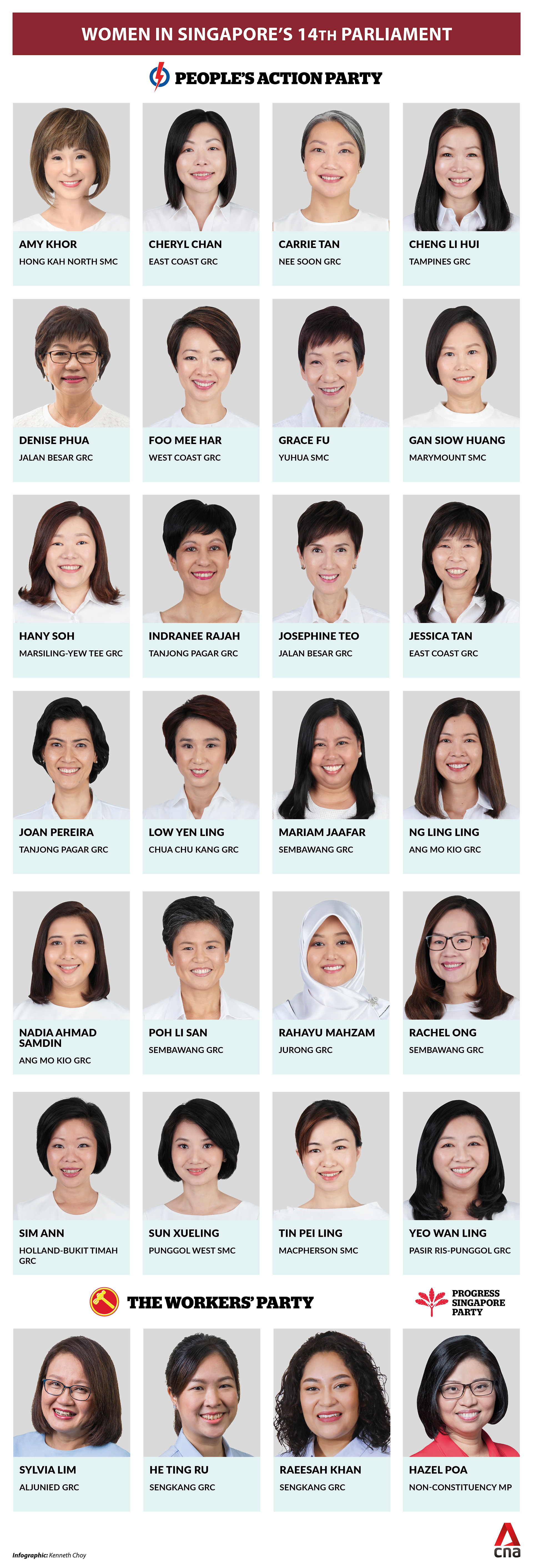
SINGAPORE: A record number of women lawmakers will enter Singapore’s Parliament after the General Election, a milestone that the incoming female parliamentarians said will add more diversity and balance in policy-making.
Out of the 93 seats for elected Members of Parliament (MPs), 27 – or 29 per cent of the elected seats – will go to women, compared to 21 out of 89 seats after the 2015 polls, and just four seats two decades ago.
One of the two Non-Constituency MP seats will be taken up by a female candidate – Progress Singapore Party’s Hazel Poa – as well.
“There was a conscious choice to include more women candidates in this term of Parliament as women bring important issues to the table and also offer different perspectives,” said Ms Sun Xueling, the Punggol West SMC MP-elect and the Senior Parliamentary Secretary for Home Affairs and National Development.
The People’s Action Party’s (PAP) candidate for Punggol West SMC, Sun Xueling, speaking to residents at a food court at Block 273C Punggol Place on Jul 5, 2020. (Photo: Anne-Marie Lim)
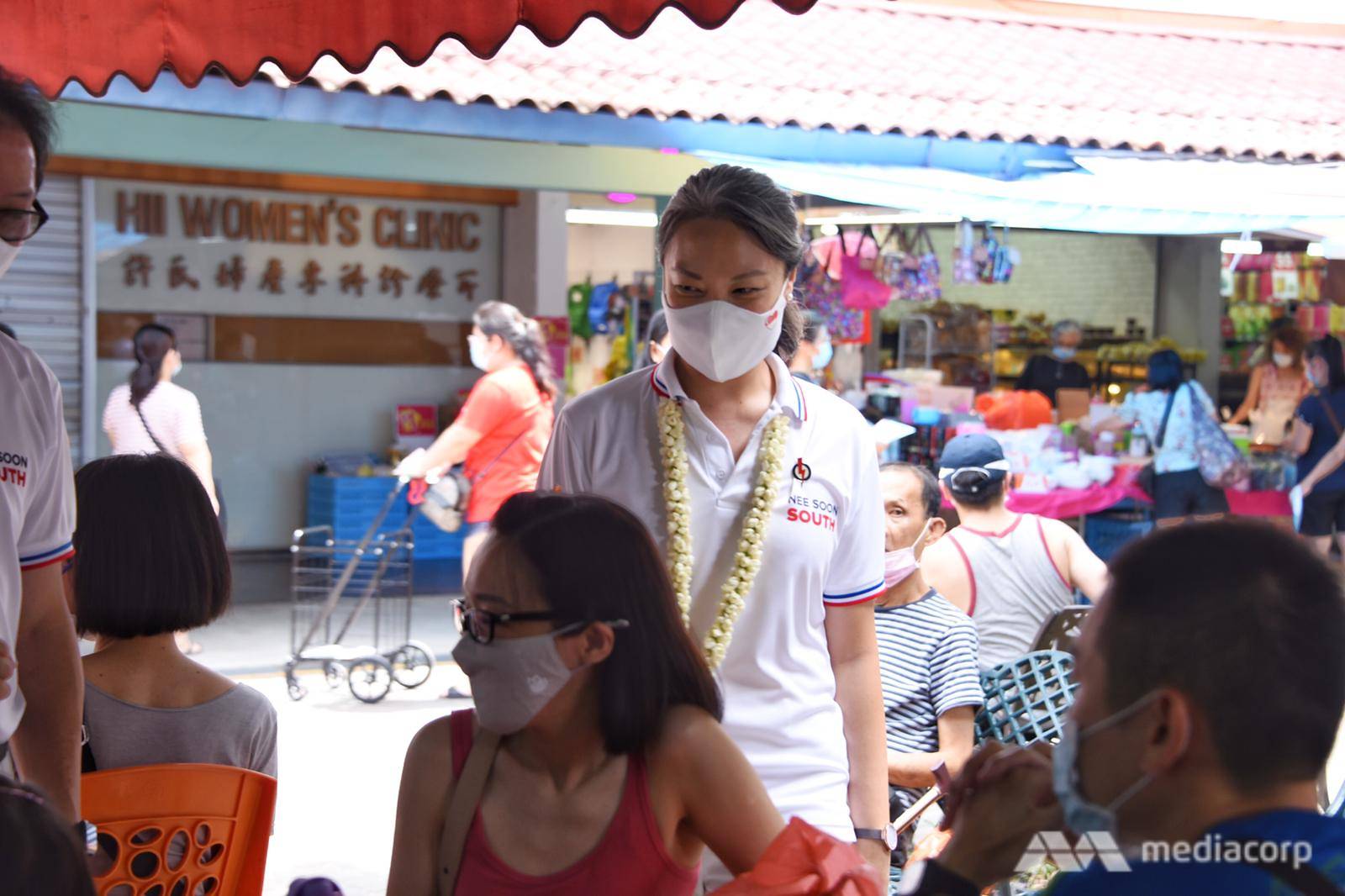
Ms Carrie Tan, a newly elected People’s Action Party (PAP) MP for Nee Soon GRC, told CNA that women are able to provide a “more emphatic interpretation” in Parliament for policies, and especially so on topics like caregiving and family needs.
And if there is one thing the electoral results have shown, it is that Singaporeans are yearning for their feelings to be addressed, said Ms Tan, who professes to “wear my heart on my sleeve”.
Ms Poa said that the step-up is a “good development”, especially in light of how the world is welcoming more female political leaders, and countries with them at the helm are doing well in managing the pandemic.
While much can still be done to up the level of diversity in Parliament, the latest figures are “very heartening” and “encouraging”, said MP-elect for Jurong GRC Rahayu Mahzam.
“I believe it signals that we, as a community, are moving on the right track in making it conducive and in motivating women to do this,” she said.
Female politicians are known to be more inclined towards engaging on topics outside the traditional bread-and-butter concerns like the economy, said Ms Nydia Ngiow, a senior director at public policy consultancy BowerGroupAsia.
Citing the example of MacPherson MP-elect Tin Pei Ling, Ms Ngiow said that the parliamentarian has championed issues that were not widely discussed such as mental health and difficulties facing single parents.
Her work appears to have paid off. This election, Ms Tin won 71.7 per cent of the votes in her constituency – more than she garnered in 2015, and putting her among the candidates that won with the highest election margins this year.
Progress Singapore Party candidates (front centre) Tan Cheng Bock; (back, from left to right) Hazel Poa, Jeffrey Khoo, Nadarajah Loganathan; and (not in picture) Leong Mun Wai. (Photo: Ruth Smalley)
POLICIES BROUGHT INTO THE FRAY
All of those interviewed said that in the upcoming term, they will bring up matters related to caregiving, such as the cost of pre-school and flexible work arrangements.
Ms Sun told CNA she will continue to do what she had done in the last term of Parliament – speaking up on making pre-school options more affordable and accessible for young parents.
“I will also work with other women MPs to look at causes relevant to young unmarried women, young mothers and caregivers,” Ms Sun added.
Ms Poa said that there needs to be better family-friendly policies in the workplace, and more help for those who face domestic abuse.
Caregivers should also receive greater recognition, which could come in the form of financial support when they retire, she suggested.
Some ideas Ms Tan posed to ease childcare cost include extending subsidies to home-base childminding, giving homemakers money to recognise what has essentially been unpaid labour, and a scheme that allows households to share a domestic helper’s time so that more families can afford to engage one – and perhaps raise the helper’s salary while at it.
The People’s Action Party’s (PAP) candidate for Nee Soon GRC, Carrie Tan, during a walkabout at 744 Yishun Street 72 on Jul 5, 2020. (Photo: Ruth Smalley)
The founder of Daughters of Tomorrow, a charity that helps underprivileged women, also highlighted the issue of the digital divide – a problem she noted does not occur just between the young and the old, but also among those from low-income families.
“It’s very hard for anyone to conceive of the idea that a someone in her 20s … may not have touched a laptop for 10 years because she left school in her teens and has since not touched any tech.”
Many of these women who Daughters Of Tomorrow works with lack access to computers because they do not have the money to purchase such big-ticket items. Ms Tan said she could raise the possibility of providing them with the hardware or even Wi-Fi access in all rental homes.
As for whether existing laws need to be revised to include the concept of gender equality, MP-elect for Tanjong Pagar GRC Joan Pereira said that the term is ever-evolving.
Rather, what needs to be done is to “ensure that with all policies, while observing gender-neutrality … take into account the reality in many of our families that women continue to shoulder a higher proportion of household and caregiving responsibilities, while continuing to pursue meaningful careers in the workforce,” she told CNA.
Last year, she worked with Ms Sun, Ms Rahayu and other female PAP MPs on a paper about parenthood, which recommended removing the age cap for in-vitro fertilisation and creating more spaces in government or government-supported pre-schools, among other points.
Joan Pereira from the People’s Action Party greets residents during a walkabout at Bukit Merah View on Jun 29, 2020. (Photo: Jeremy Long)
Ms Ngiow expects new MPs with backgrounds in women advocacy work like WP’s Raeesah Khan, an MP-elect for Sengkang GRC, to make sure issues such as gender discrimination and domestic violence remain at the top of the legislative agenda.
That is not to say that male MPs will stay silent, she added, referencing Nee Soon GRC MP-elect Louis Ng, who has often spoken up for more parental leave and spreading the burden of care among both parents.
“But these instances are few and far between, and ideally the increased presence of women in Parliament will inject even greater urgency and momentum to push such issues along,” she said.
Workers’ Party candidate Raeesah Khan speaks to members of the media on Jul 5, 2020. (Photo: Gaya Chandramohan)
STILL TRAILING OFF
While the country will witness its largest cohort of female parliamentarians yet, female political representation in Singapore is still lagging behind “for seemingly no good reason”, said Ms Ngiow.
She pointed out that back in 2009, Singapore’s first female minister Lim Hwee Hua had set a target for women to form 30 per cent of Parliament. The figure is recognised by the United Nations as the minimum ratio necessary to ensure a critical mass of women parliamentarians.
That goal has not been met, Ms Ngiow said, who added that this year’s election results show that voters are ready for greater diversity among politicians.
Given that diversity is crucial in politics, should the main goal then be for women to fill half of Singapore’s parliamentary seats?
No, said most of the respondents.
“As we celebrate the general uptrend from every election in the number of female MPs, we should not be too obsessed with percentages and numbers,” said Ms Pereira. “I believe that every female MP is elected based on what they can contribute.”
A focus on chasing numbers could lead to an exercise in affirmative action, she added, as opposed to a genuine effort to identify and bring in more women who can contribute to the country.
Rahayu Mahzam on a walkabout thanking Jurong residents after the 2020 election. (Photo: Facebook/Rahayu Mahzam)
Similarly, Ms Rahayu said what is most important is “getting the best people who can represent the different groups within the community”, while acknowledging that some barriers might need to be removed if diversity “does not naturally surface”.
The PSP’s Ms Poa said that her party should definitely aim for equal gender representation, and it would be setting up a Women’s Wing to attract more females to join them.
“In fact, why settle for fifty-fifty? In my view, the more the merrier,” she said.
However, the challenge is women usually wear many hats, she added, alluding to how many women have to manage both full-time jobs and domestic responsibilities at the same time.
“This makes it more difficult for women to find time to participate in politics. But when there is a will, there is a way.”
Given the lack of women in Singapore politics, the improved female representation is in itself a significant step forward, said Ms Ngiow, as the younger generation turns to these politicians as role models and inspirations to further crack the glass ceiling.
To make even greater strides towards gender equality in politics will not be easy, the women interviewed agreed. Ultimately, what needs to change is the long-held attitude that it is fine for men to put their jobs first as breadwinners, while women are supposed to prioritise family over their career.
“I think within the family setting, women (are still expected) to be the ones responsible for the children and caretaking at home,” said Ms Tan.
“How do you put all that into 24 hours – being main caregiver within the family, hold a job and still juggle being an MP, especially for those with young children? I believe those who manage to do that have amazingly supportive spouses and care support at home.
“It’s a broader cultural and societal shift that we need,” she added. “Maybe we can see real change when women no longer struggle about choosing between their family and their career.”
CNA reached out to WP for its views on this issue, but the party did not respond by press time.
SINGAPORE: If losing one’s sense of taste is a symptom of having COVID-19, then judging by my slew of recent interests, some might say I have the virus.
Being a reporter, I tend to be drawn to serious hobbies that overlap with my work, from diving into 10,000-word non-fiction articles to spending days going down rabbit holes after watching a gripping documentary. Even outside of work, I genuinely enjoy keeping abreast with local current affairs and frequently seek out different perspectives on policies.
But since the pandemic set in, my pastimes have turned comparatively asinine.
I binge-watched Netflix reality TV show Love Is Blind and Korean drama Crash Landing On You over several days, even before the circuit breaker kicked in.
At the height of my obsession, I spent hours scrolling through the actors’ Instagram accounts. Each curated square satiated my curiosity about their homes, their relationships and their lives, and gave me more fodder for overly invested analyses about their social media personas.
While I previously turned up my nose at mainstream food trends, I now relished every video documenting another deranged attempt at whipping up Dalgona coffee.
I developed an unhealthy obsession with ASMR mukbang. One moment I’d be watching someone eat fried chicken dipped in cheese; the next, I’d be thinking about KFC at 2am.
I might not have picked up baking because I wasn’t too keen to burn down my house, but I readily jumped onboard the burnt cheesecake bandwagon. Suddenly, I wanted nothing more than to hunt down every bakery that sold these sweet and salty desserts.
I also began to devour far more lifestyle blogs, pinning several pop culture sites to the top of my Facebook feed as a way to counter the perpetually gloomy COVID-19 news cycle.
And as far as work went, I ditched news sites and turned to Instagram meme accounts and Tik Tok videos to understand everything going on in the world, including local politics during our General Election.
These banal pursuits were the main sources of comfort getting me through this hell of a year. Yet not too long ago, I would’ve classified them as “guilty pleasures” and be less inclined to embrace them, lest I appeared hopelessly mainstream, shallow and plebeian.
Not to be dramatic, but the pandemic made me confront my subconscious cultural snobbery.
(Photo: Mollie Sivaram/Unsplash)
THE GUILT IN GUILTY PLEASURES
With COVID-19 as a backdrop to our everyday lives for the foreseeable future, we’ve inevitably begun to carry around collective dread and uncertainty, adding a sense of heaviness to the new normal. Because we can’t travel like we used to, the desire to escape is even stronger.
Prior to 2020, embracing guilty pleasures was an encouraged indulgence at best.
But the news cycle fatigue from being increasingly bombarded with heavy topics, like politics, social issues and the latest COVID-19 deaths, almost makes it necessary to pursue hobbies and interests that are deemed peak frivolity.
That said, exacerbated by current circumstances, my newfound appreciation for the lighter aspects of life, such as watching Tik Tok dances over reading the news, isn’t exactly escapism. Choosing mindless pursuits doesn’t mean I wilfully turn a blind eye to the state of the world.
After all, humans contain multitudes. We should be able to debate issues on race in the same breath that we discuss celebrity breakups during quarantine.
Even then, these relatively trivial pursuits started to feel self-indulgent over time.
In my case, I felt like I was disappointing the proverbial cultural elite whenever I chose to tune out current affairs to pursue interests with zero intellectual value, as though I accorded myself a luxury we can’t afford in this climate.
Once upon a time, I used to entertain online debates with friends and strangers about social issues, enthusiastically dishing out hot takes on the topic of the day. I’d feel accomplished whenever I managed to sway someone’s opinion, and similarly, when I absorbed new perspectives.
Now, I wanted nothing more than to discuss the relationship dynamic of the couples in Love Is Blind or watch another video of a micro-influencer trying to bake bread or make Dalgona coffee — and I felt guilty for this preference.
Banana bread is not a bread at all, but a cake. (Photo: Unsplash/Whitney Wright)
IT’S NOT ABOUT ESCAPISM, IT’S ABOUT JOY
I suspect part of the guilt stems from an elitist mindset that dictates certain TV shows, films, books or songs are too lowbrow to be taken seriously. That is, anyone who openly professes a liking for these forms of popular culture or mainstream trends should feel embarrassed for appearing uncultured.
Part of the concept of guilty pleasures lies in the value that society places on suffering or pain.
In a New Yorker interview with Laura Frost, an American professor of literary studies, she addresses the “troubled relationship between pleasure and modernism”.
Frost suggests that modernists “distinguished between pleasure that was too easy and the difficulties of real art”, yet they were “so invested in dismissing easy pleasure that they could feel righteous in their preferences”.
Essentially, pure enjoyment without educational value is frowned upon.
But this school of thought inadvertently turns personal enjoyment into another person’s responsibility, when their judgments about the quality of what brings you enjoyment should have little to no effect on your experience.
(Screengrab: Youtube/ddulgi)
Likewise, The Atlantic contributor Noah Berlatsky writes about the pointlessness of being ashamed of personal taste: “Society imposes guilt and denies pleasure. To be true to yourself, to resist social control, you need to own your authentic loves.”
But being unabashed about what you love doesn’t immediately render all forms of guilt unproductive, as guilt can sometimes signal “real and valuable individual uncertainty” about one’s tastes, argues American essayist Mark Dery.
In such instances, Dery states that guilt is okay if it’s a sign of intellectual honesty and genuine ambivalence, rather than due to a fear of mockery from other people who only act as repressive killjoys.
In the end, the fads that came and went with the circuit breaker reminded me that it was necessary to continue doing comparatively mundane things when the world was falling apart.
From ordering surprise meals for friends to reposting Instagram bingo templates, not only do these activities keep us sane, they also bring genuine enjoyment.
Appreciating these basic and mainstream trends without shame, especially since they made me happy, wasn’t about burying my head in the sand and choosing to remain oblivious about the world.
Quite simply, it was a conscious decision to make space in my life to cultivate unadulterated joy — arguably, the most effective form of rebellion in a world that is progressively depressing.
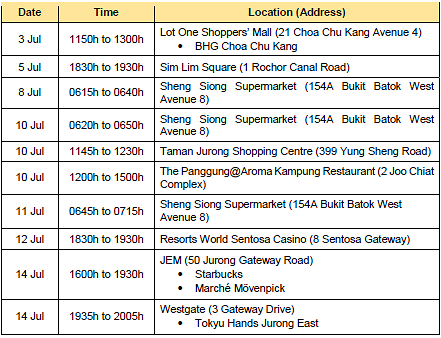
SINGAPORE: Several new locations have been added to the list of places visited by COVID-19 cases in the community during their infectious period, the Ministry of Health (MOH) said on Friday (Jul 17).
The locations include Resorts World Sentosa Casino and Sim Lim Square.
Several shopping malls were also added to the list – Lot One Shoppers’ Mall, Taman Jurong Shopping Centre, JEM and Westgate.
Those identified as close contacts of confirmed COVID-19 cases would have been notified by MOH, said the ministry.
It added that people who have been at these locations during the specified timings should monitor their health closely for 14 days from their date of visit.
“They should see a doctor promptly if they develop symptoms of acute respiratory infection (such as cough, sore throat and runny nose), as well as fever and loss of taste or smell, and inform the doctor of their exposure history,” said MOH.
“There is no need to avoid places where confirmed cases of COVID-19 have been.”
The National Environment Agency will also engage the management of affected premises to provide guidance on cleaning and disinfection.
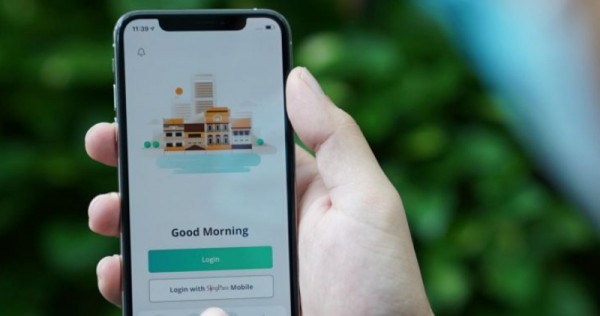
OCBC Bank customers in Singapore can now use their SingPass to access digital banking services via the bank’s mobile app or Internet banking.
OCBC is the first bank in Singapore to offer this service, which started on July 4, the bank said on Thursday (July 16).
The SingPass Mobile app serves as an alternative to the traditional method of logging in with an access code and a PIN, and eliminates the need to remember multiple such codes for different accounts.
“Inclusion and accessibility have been core to our digital transformation narrative,” said OCBC’s head of digital business for Singapore and Malaysia Aditya Gupta.
“I believe that offering SingPass – a trusted and widely used mode of digital authentication in Singapore – as an alternate login will give more of our customers the confidence and convenience to bank with us digitally.”
The SingPass Mobile app, launched in late 2018, allows its 1.6 million users to access government e-services from more than 60 public agencies, including the checking of their Central Provident Fund balances and applying for public housing.
Singapore’s streets and central business district were quiet during its eight-week circuit-breaker to curb the spread of the coronavirus , but its private housing market was not snoozing entirely.
During the city state’s partial lockdown in April and May, 1,340 units changed hands – almost 40 per cent (3,391) of the level of transactions in the same time period last year.
Instead of viewing countless homes and show flats, examining finishes and nooks and crannies that might need renovation, buyers based their decisions on virtual tours and online viewings.
And the homes that changed hands didn’t come cheap. According to data from the Urban Redevelopment Authority’s Real Estate Information System (Realis) on June 18, the most expensive transaction was a 8,740 sq ft unit in a condominium called Ardmore Park in central Singapore that sold for $27.65 million (US$19.85 million) and is freehold.