SINGAPORE – The search for antibodies that can neutralise the coronavirus in a Covid-19 patient can be like looking for a needle in a haystack, but researchers in Singapore have prevailed.
They have found antibodies, a key element of the human immune system, that bind to four important sites of the coronavirus.
In binding to these sites, the antibodies prevent the virus from either hijacking a human cell, or replicating inside of it.
These findings by scientists from the National Centre for Infectious Diseases (NCID) and the Agency for Science, Technology and Research (A*Star) were announced at a virtual press conference on Friday morning (July 17).
Their discovery could pave the way for better diagnostics, to identify people who recover from the infection without symptoms, for example, or lead to improved treatment for patients.
It could also guide vaccine discovery, or validate the effectiveness of one, the researchers said.
Professor Leo Yee Sin, executive director of NCID, said Sars-CoV-2 – the coronavirus that causes Covid-19 – has challenged the international scientific community with numerous unsolved questions.
SINGAPORE: The Land Transport Authority (LTA) has awarded four contracts for the Jurong Region Line (JRL), worth about S$682.5 million in total.
In a news release on Friday (Jul 17), LTA said the contracts cover the construction of three JRL stations and their associated viaducts, the provision of the signaling system and half-height platform screen doors, the delivery of an integrated supervisory control system and the communications system for the line.
The contract for the design and construction of the three JRL stations and their associated viaducts was awarded to Daewoo Engineering & Construction – Yongnam Engineering & Construction Joint Venture at a value of S$320.4 million.
LTA said this contract covers the design and construction of Toh Guan, Jurong Town Hall and Pandan Reservoir stations as well as viaducts spanning 3.6km.
Toh Guan station will serve existing residential developments along Jurong East Central, places of worship and educational institutions such as Crest Secondary School, while Jurong Town Hall station will serve commuters travelling to and from International Business Park.
Artist’s impression of Toh Guan station for the Jurong Region Line. (Image: Land Transport Authority)
Pandan Reservoir station will cater to residents around Teban Gardens and West Coast Road, as well as places of worship and Commonwealth Secondary School which are adjacent to the station.
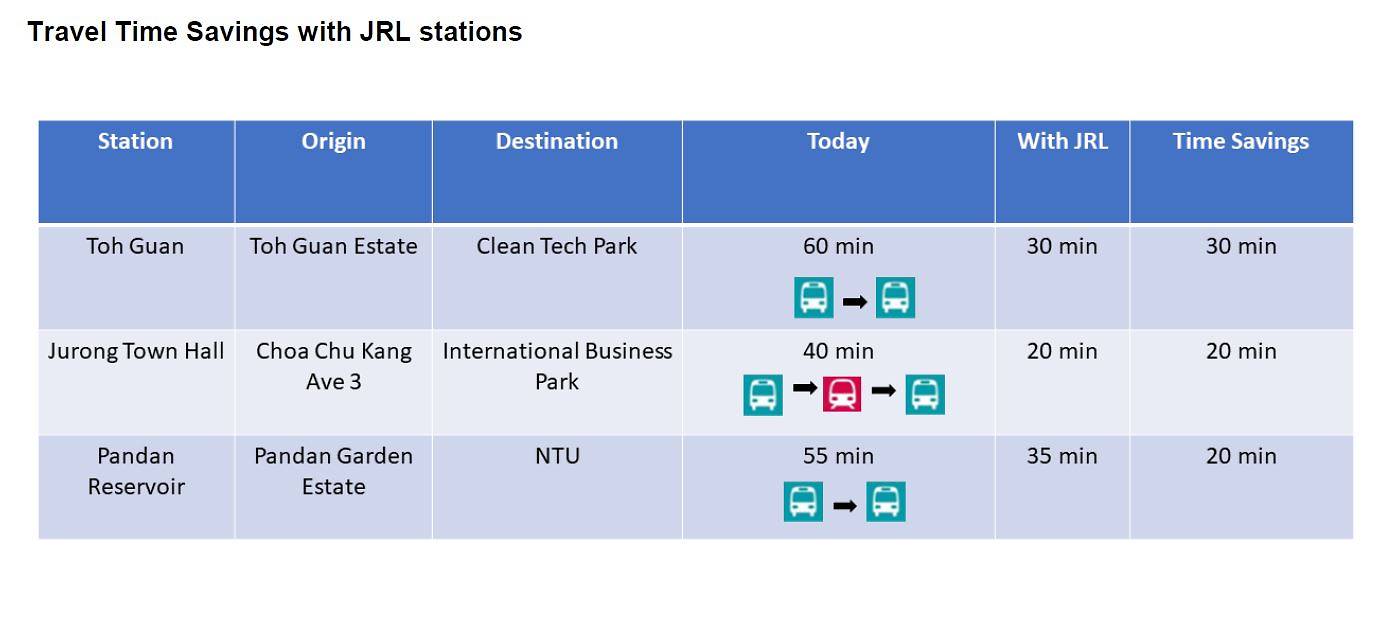
Construction works for the three stations under this contract are expected to start later this year. LTA said residents and commuters who use these stations when the JRL is completed can expect to see significant time savings.
Daewoo is currently involved in the construction of Stevens station on the Thomson-East Coast Line while Yongnam is involved in the construction of the North-South Corridor. Yongnam was also involved in the building of Canberra station on the North-South Line.
Location of proposed JRL Toh Guan station. All station names used are working names. (Photo: Land Transport Authority)
The contract for provision of the signalling system and half-height platform screen doors for the JRL was awarded to Siemens Mobility – Siemens Rail Automation, SAU Consortium at about S$215.5 million.
The contract includes the design, manufacture, supply, installation, testing and commissioning of the signalling system and half-height platform screen doors for the entire line.
The signalling system’s design is based on the communications-based train control (CBTC) signalling technology and supports fully-automated train operations. It will also be equipped with condition monitoring capabilities to support predictive maintenance over the life cycle of the system.
Artist’s impression of Pandan Reservoir station along the Jurong Region Line. (Image: Land Transport Authority)
“Siemens’ SIRIUS CBTC system is used in the Downtown Line (DTL) in Singapore and several metros around the world, including the Este in Madrid, the Marmaray Rail Tube Tunnel in Istanbul and the Metro L2 in Changsha,” LTA said.
Siemens is also currently involved in the implementation of the signalling system and full-height platform screen doors for the DTL3 extension. It is also setting up the CBTC simulation facility for DTL.
Location of proposed Jurong Town Hall station. (Image: Land Transport Authority)
Two contracts for the provision of the integrated supervisory control system (ISCS) and the communications system for the JRL were awarded to ST Engineering Electronics (STEE) at an approximate combined value of S$146.6 million.
The ISCS is an important part of efficient rail operations as it provides the basic framework to enable a rail line’s operation control centre, depot control centre and passenger service centre to remotely supervise and control other electrical and mechanical systems and services, as well as civil equipment.
Location of proposed Pandan Reservoir station. (Image: Land Transport Authority)
The communications system for the JRL comprises sub-systems such as the communications backbone network, digital trunked radio, video surveillance, public address, telephone and travel information systems. This system is critical to ensure the safe and efficient operation of a fully-automated train system.
“STEE has a proven track record and a strong presence in the rail market in Singapore. It is currently involved in the implementation of ISCS and communications systems for Circle Line 6 and DTL3 extension projects,” LTA added.
Travel time savings with Jurong Region Line stations. (Image: Land Transport Authority)
Three teenagers who brazenly used an electronic vaporiser on board an MRT train, and posted the act on social media, have been hauled up by the authorities.
In a statement on Friday (July 17), the Health Sciences Authority (HSA) said an 18-year-old boy was fined $500 for using an e-vaporiser.
The battery-powered device heats a liquid called “vape juice”, which contains nicotine, to produce a vapour that is then inhaled.
The HSA said a 16-year-old girl was fined $200 for the same offence, and was also given a conditional warning for providing false information during the investigation and possessing a packet of cigarettes.
A third member of the group – a 13-year-old girl – was given a conditional warning for using an e-vaporiser.
The HSA said it was alerted on March 29 to a video of the teenagers using the e-vaporiser in the MRT cabin. The video was filmed and uploaded on social media by one of the teens.
An eight-second video circulating online shows a teenage girl inhaling from a pen-like object and blowing vapour into a boy’s shirt while someone else films them.
The 10 million population number was always a planning parameter and not a target for Singapore, said former chief planner Liu Thai Ker.
In an interview with Chinese daily Lianhe Zaobao published on Friday (July 17), Mr Liu said sustainable development requires long-term planning.
If Singapore is to continue to preserve the quality of its landscape in spite of space and resource constraints, he said, it must plan on the basis of a large enough population.
He was responding to claims during the election hustings by the Singapore Democratic Party, that the Government plans to increase Singapore’s population to 10 million.
The SDP maintains that the 10 million figure was from a Straits Times report on remarks by Deputy Prime Minister Heng Swee Keat at a dialogue with Nanyang Technological University students in March last year.
The article said Mr Heng cited Mr Liu, who said in 2014 that Singapore should plan for 10 million people for it to remain sustainable in the long term.
Mr Heng had cited Mr Liu in his response to a question on the Government’s 2013 Population White Paper.
Three teenagers who brazenly used an electronic vaporiser on board an MRT train, and posted the act on social media, have been hauled up by the authorities.
In a statement on Friday (July 17), the Health Sciences Authority (HSA) said an 18-year-old boy was fined $500 for using an e-vaporiser.
The battery-powered device heats a liquid called “vape juice”, which contains nicotine, to produce a vapour that is then inhaled.
The HSA said a 16-year-old girl was fined $200 for the same offence, and was also given a conditional warning for providing false information during the investigation and possessing a packet of cigarettes.
A third member of the group – a 13-year-old girl – was given a conditional warning for using an e-vaporiser.
The HSA said it was alerted on March 29 to a video of the teenagers using the e-vaporiser in the MRT cabin. The video was filmed and uploaded on social media by one of the teens.
An eight-second video circulating online shows a teenage girl inhaling from a pen-like object and blowing vapour into a boy’s shirt while someone else films them.
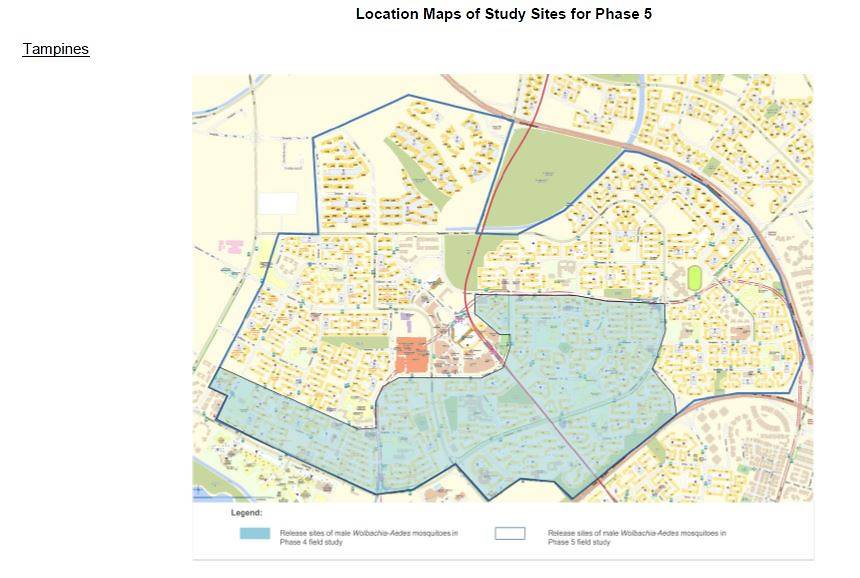
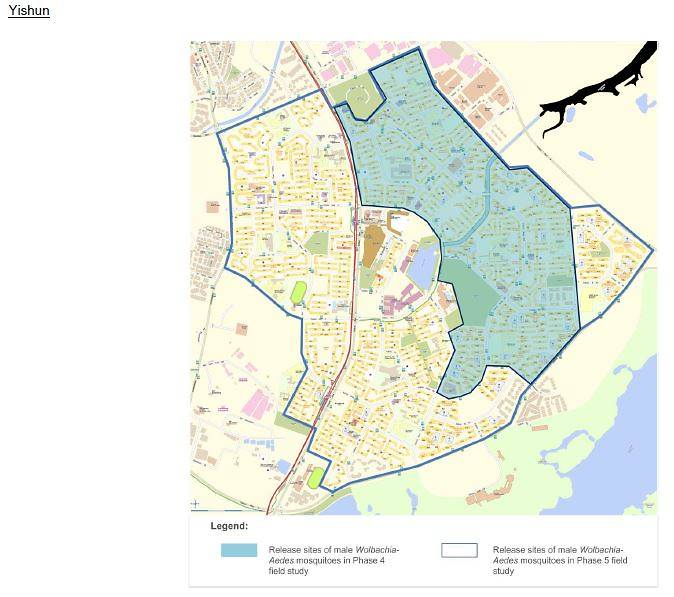
SINGAPORE: A project to combat dengue by releasing specially bred mosquitoes will be widened to cover all Yishun and Tampines HDB towns from July, encompassing about 15 per cent of HDB blocks in Singapore, the National Environment Agency (NEA) said in a news release on Friday (Jul 17).
This phase will progressively cover a total of 1,455 HDB blocks across both towns by March 2022 and is part of Project Wolbachia – Singapore.
Since 2016, NEA has been conducting phased field studies to evaluate the use of male Wolbachia-Aedes mosquitoes to suppress the urban Aedes aegypti mosquito – the primary vector of dengue, chikungunya and Zika viruses in Singapore.
When the released male Wolbachia-Aedes mosquitoes mate with urban female Aedes aegypti mosquitoes, the resulting eggs do not hatch.
“Over time, continued releases of male Wolbachia-Aedes mosquitoes are expected to bring about a gradual reduction in the urban Aedes aegypti mosquito population, hence lowering the risk of dengue transmission at the release sites,” NEA explained.
Over in Yishun and Tampines, Phase 4 of the field study that started in November 2019 covered 293 and 260 blocks and saw significant changes to the mosquito population, said NEA, which described the results as “promising”.
“At release areas where urban Aedes aegypti mosquito populations were high (up to 20 to 30 mosquitoes caught per 100 Gravitraps per week), the mosquito population had dropped significantly by May 2020, to as low as two mosquitoes caught per 100 Gravitraps per week in some areas.
“The risk of dengue transmission is correspondingly lower at this low Aedes aegypti mosquito population level.”
NEA’s preliminary analysis also showed that in 2019, there were 65 to 80 per cent fewer dengue cases at the Yishun and Tampines study sites, when compared to areas without releases.
File photo of an Aedes aegypti mosquito, as seen through a microscope. (Photo: AFP/Mauro Pimentel)
“With the releases, residents may notice more non-biting mosquitoes around their homes,” said Associate Professor Ng Lee Ching, director of NEA’s Environmental Health Institute.
“While this is something we are not used to experiencing in Singapore, the data shows a clear benefit to residents at the release sites. Significantly fewer female dengue mosquitoes mean fewer Aedes mosquito bites and less dengue.”
With the endorsement of its Dengue Expert Advisory Panel (DEAP), NEA will gradually expand male Wolbachia-Aedes mosquito releases to all 686 and 769 blocks in Yishun and Tampines respectively.
Phase 5 of the field study at Yishun and Tampines will start on Jul 27 and Aug 11, respectively, and is expected to fully cover the two towns by March 2022.
This will cover about 15 per cent of HDB blocks in Singapore, up from the current 5 per cent.
(Image: NEA)
(Image: NEA)
“This is an exciting and very important next step in the Project Wolbachia – Singapore scale-up strategy,” said Professor Duane Gubler, DEAP chairman and emeritus professor at Duke-NUS Medical School, Singapore.
“Based on the extensive preliminary research conducted by NEA, I fully expect this scale-up to be successful.
“If so, the roll-out at Yishun and Tampines will be a seminal demonstration to the world that male Wolbachia-Aedes mosquito releases can be used to help control dengue in highly endemic cities.”
However, even as the project “continues to show good results in keeping the Aedes aegypti mosquito population low”, NEA cautioned the technology is “not a silver bullet”.
“Wolbachia-Aedes mosquito releases are currently only being conducted in a small number of neighbourhoods,” the agency said.
“It is intended to complement – not replace – traditional vector control measures, such as comprehensive mosquito surveillance, source reduction of mosquito breeding habitats, and use of insecticides where necessary.
“With dengue endemic in Singapore, our population’s low immunity and the impact of climate change, we need to constantly refresh and update our tools and measures to keep dengue under control in Singapore.
“Project Wolbachia – Singapore should be seen in this light.
So far, the number of dengue cases in Singapore this year has surpassed the total number of cases for the whole of 2019, data from the National Environment Agency on Tuesday showed.
A total of 1,678 dengue cases were reported in Singapore last week, making it the fifth consecutive week the weekly numbers have breached the 1,000 mark.
After a year of testing, Mozilla today launches its VPN service in six countries.
The Mozilla VPN runs on a global network of servers powered by Mullvad using the WireGuard protocol.
This protocol encrypts the network traffic and protects the private information.
The lightweight code of Mozilla VPN makes it easier for security analysts to review and audit than current VPN protocols.
Mozilla states that it does not log, track or share any of the network activity, and only collect the most minimal data required to keep the VPN service healthy and operational.
Other features include device-level encryption, no restrictions on bandwidth and the ability to connect up to five devices.
Available at US$4.99 (S$7) per month in the US, UK, Canada, New Zealand, Singapore and Malaysia, Mozilla VPN is compatible with Android and Windows 10 (64-bit).
iOS VPN client is in beta while Mac and Linux versions are coming soon. Mozilla is also offering a 30-day money-back guarantee.
A 20-year-old Singaporean woman who allegedly assaulted a 71-year-old taxi driver was arrested yesterday (July 16) for her suspected involvement in a case of rash act causing hurt, the police confirmed.
The woman had reportedly boarded the taxi without wearing a mask, refused to pay her fare, and attacked the driver with a wooden serving pan on July 15.
She is believed to be involved in prior cases of fare evasion, the police said, adding that the Land Transport Authority and the Public Transport Council are looking into the matter.
She will also be investigated for breaching safe distancing measures under the Covid-19 (Temporary Measures) Act.
For the offence of rash act causing hurt, she could face up to one year of imprisonment, a fine of up to $5,000, or both.
For failing to pay her taxi fare, she could be fined up to $1,000 for her first offence. If she is a repeat offender, she could be fined up to $2,000, jailed for up to 6 months, or both.
It’s finally Phase 2 in Singapore, where we can be out and about while adhering to safety measures in place, because we’re not out of the Covid-19 woods yet.
Here’s what you can do this weekend:
Catch a movie
View this post on Instagram Hello everything at Train To busan Fans, we have already released 15 July in 2020 (South korea) A post shared by Train To Busan 2 peninsula (@traintobusanmovie2) on Jul 8, 2020 at 1:17am PDT
Despite numerous calls to the authorities, 11 police reports and a Magistrate’s Complaint, one family has suffered continuous harassment from a mystery man for the past three years.
Now, they may finally have a respite — the police have confirmed that the 57-year-old Singaporean man was arrested on July 16 for allegedly performing an obscene act in public on July 5.
According to the victim, who had taken to Facebook to air her frustrations on July 15, the man had performed the obscene act while lying near her doorstep.
He had left the scene shortly after the act but was identified and arrested following police investigations.
However, this is not the first obscene act he has committed, nor is it his first time being arrested, according to the victim, who goes by the handle S Ai Leen.
Her family’s tribulations began in December 2017, when the man first showed up on their doorstep at a housing block along Hougang Street 51.




.jpg "prinsep-1.jpg")