SINGAPORE: The move to resume some cross-border travel between Singapore and Malaysia by Aug 10 has been heralded as a first step towards both countries possibly lifting more travel restrictions.
Foreign Affairs Minister Vivian Balakrishnan was quick to caution Singapore was likely to take a “step-by-step approach” on reopening its borders with Malaysia earlier in June.
While Minister Lawrence Wong also tried to manage expectations that Singapore might open travel bubbles with other countries in highlighting on Jul 18 that leisure travel may not be possible this year, there has been worldwide momentum to review how air travel can be safely resumed.
As some governments around the world move to waive quarantine requirements for arriving passengers from certain countries and territories, such as the recent list of countries from which passengers may enter England, Northern Ireland and Wales, other governments are considering more cautious option of a travel bubble.
In my view, there is yet to be a successful travel bubble. Countries in Asia with success to date managing COVID-19 such as Vietnam are reluctant to open their doors to foreign arrivals.
The oft-discussed Australia – New Zealand travel bubble fell victim to a sudden spike in COVID-19 and implementation is delayed for now.
But if there is a location well situated to participate in a travel bubble, Singapore is it.
Changi Airport’s grip on best airport awards, Singapore Airlines consistent recognition as among the top airlines in the world, and effective government communication on COVID-19 to the public gives Singapore the know-how to lead the way on bubble implementation.
INDUSTRY BENEFITS FROM A TRAVEL BUBBLE
Opening a bubble is important not only for purposes of facilitating air travel, but also to keep Singapore’s air services economy operating and preparing for when virus conditions improve regionally and globally and additional traffic can resume.
Companies such as SATS are working closely with customers to reimagine air travel in a post-pandemic world.
Seats in the transit holding area are vacuumed and wiped regularly with disinfectant. (Photo: Changi Airport Group)
A bubble that allows for additional flights out of Changi Airport will ensure services such as aircraft maintenance, catering services, and other related industry activities can continue to function, so that further pay cuts and redundancies can be reduced.
Cargo traffic will probably resume faster than passenger travel. Logistics routes within bubble partners will help in the transport of essential cargo and reduce the stress on crews from non-bubble destinations who may be restricted to turn-around flights or quarantines upon arrival.
TRANSIT VIA THE BUBBLE
With the recent opening of Changi Airport to transit passengers, both Changi Airport staff and Singapore Airlines have quickly gained significant experience maintaining and tracking the health of airport staff including health and security personnel, airline staff, and transit passengers.
The re-opening for transit passengers occurred simultaneous to the June increase in COVID-19 cases in Singapore, which travellers should view as a sign that passenger safety can be managed notwithstanding virus conditions in the community outside airports.
Transit passengers are also at lower risk than tourists as they do not mingle with the local population and are generally confined to restricted transit areas in the airport.
BUBBLE IMPLEMENTATION CHECK LIST FOR GOVERNMENTS AND TRAVELLERS
A bubble can only safely proceed if, and when, there is mutual recognition and acceptance of national quarantine procedures, COVID-19 testing regimes, hospital resources and contact tracing mechanisms, if not harmonisation of standards.
Importantly, the relevant counterpart country cannot be a high-risk destination, though even the status of low- and medium-risk locations can quickly change.
Taiwan, for example, recently removed Australia and Hong Kong from the list of locations for which quarantine requirements were relaxed for arriving passengers.
Unlike pre COVID-19 travel when travellers briskly walked by an infrared temperature check at airports in Asia, bubble travel will require significant technology and financial preparedness.
Businesses may see essential travelled allowed if travellers have sponsorship and obtain prior approval, similar to the conditions imposed by the Singapore-China Fast Lane.
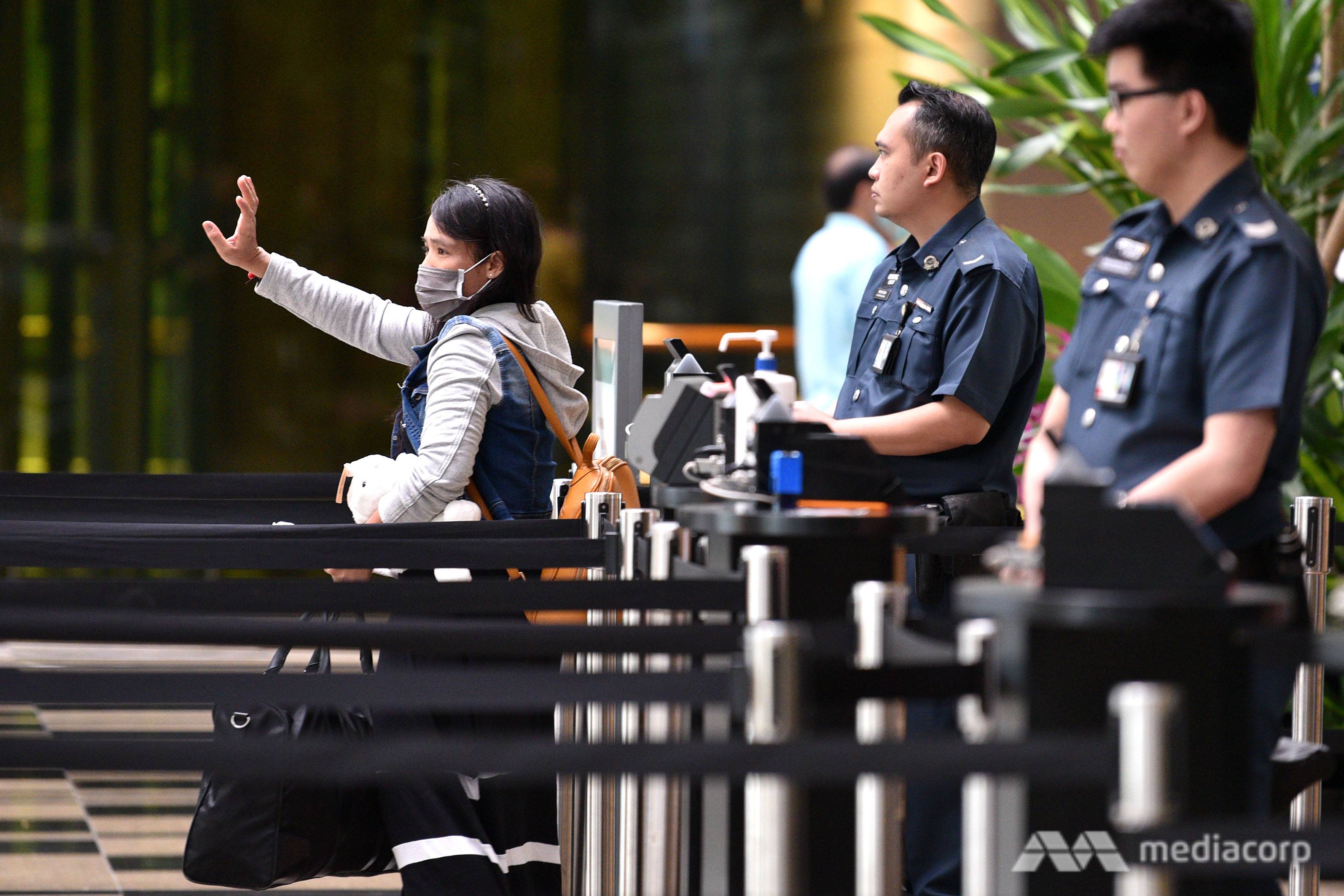
A woman waves goodbye before entering customs in Changi Airport Terminal 3 departure lounge on Mar 30, 2020. (File photo: Jeremy Long)
Travellers should expect to enroll in a health pass platform, supported by an app or other technology that allows authorities to track the wellbeing of each traveller and enable rapid contact tracing so that clusters will not develop should there be a confirmed COVID-19 case among a visitor or someone the visitor came into contact with.
For some travellers, personal privacy concerns might outweigh the desire to avail themselves of a bubble travel opportunity.
As Singapore is a densely populated country, visitors who exit from airport restricted areas will have significant interactions with the local population. This might come as a surprise to the public who, in recent months, have not encountered the normal number of business and leisure travellers.
Authorities must be prepared for an influx of questions or even inaccurate reports that a visitor violated quarantine requirements.
These concerns make measures to regulate the inflow of bubble travellers desirable at least in the early days of a bubble’s implementation. Even where counterparts to the bubble reciprocate, there may be quotas on inbound arrivals.
WHICH LOCATIONS SHOULD BE PART OF SINGAPORE’S BUBBLE
A key motivating factor for travel bubbles is to partner with destinations for which citizens and residents have strong familial connections. For Singapore this includes China, India, Indonesia, Malaysia and Vietnam.
However, industry might also want bubble agreements with travel hubs such as Beijing, Hong Kong, London, Sydney and Tokyo to facilitate transit passengers staying in Singapore for short term visits prior to flying to third destinations.
Business travellers should not expect to benefit though. Short turnaround trips such as for one or two day business meetings are unlikely to be feasible especially if there are quarantine requirements in a traveller’s country of residence upon return, as quarantines would impose significant time and monetary costs.
WHAT MIGHT CAUSE YOUR FINANCIAL BUBBLE TO BURST
Many travellers during the COVID-19 era have dealt with the frustration of trying to obtain refunds for cancelled flights and accommodations. The small print, including in travel insurance policies, certainly matters.
The Immigration and Checkpoints Authority has upgraded the automated immigration lanes at Changi Airport with a new biometric system that uses face and iris recognition technology. (Photo: Changi Airport Group)
The same applies to health insurance policies or government programmes to provide coverage for COVID-19 tests or treatments.
Before travelling within a bubble, obtain the latest information on what a health insurance policy or government subsidy programme will cover if one becomes ill.
These rules may differ for infections that occur overseas versus after return to Singapore. They may also differ depending on whether the traveller is a citizen, permanent resident, long term, or short-term pass holder.
Travellers must also consider the risk that while overseas within the bubble, a sudden spike in cases might disrupt air travel, forcing the traveller to incur significant accommodation and other costs until flights resume.
Download our app or subscribe to our Telegram channel for the latest updates on the coronavirus outbreak: https://cna.asia/telegram
Ross Darrell Feingold is director, business development at SafePro Group, a consultancy that advises corporate clients about travel safety and risk mitigation around the world.
The vulnerability of middle-aged and older workers is largely rooted in the somewhat pervasive assumption that an older workforce is less productive regardless of his actual abilities. This phenomenon has been described as ageism.
Gerontologist Robert Butler coined the term ageism in 1969. He defined it as a process of stereotyping and discrimination against people because they are old.
File photo of an older office employee.
A negative stereotype of the old has been prevalent in global popular culture and idiomatic sayings. A study from Cambridge University trawled through 76 pop songs in 2014 and concluded that “mainly negative representations of age and ageing” influence popular music texts.
Just think also of how often we hear people (regardless of their age) use the term “senior moment” to describe a momentary memory lapse?
Call it unconscious bias but when people share common attitudes and stereotypes about a certain group of workers, these beliefs can find their way into discriminatory practices and actions, further entrenching such thinking into our culture.
Like a virus, ageist myths can also be internalised by older people. Studies have shown that if a person is told often enough that he is useless, he will eventually grow to believe and behave as if he is useless. This learnt helplessness lowers self-esteem and contributes to social isolation, a factor associated with elderly suicides.
AN AGEING WORKFORCE YET AGEIST MINDSETS REMAIN
Today, six in 10 of the Singaporean workforce is 40 years or older.
That has not hindered Singapore’s march towards automation and digitalisation efforts. Despite an ageing workforce, Singapore’s productivity has increased by about 30 per cent over the past decade.
Much credit should be given to senior workers. Senior Minister Tharman Shanmugaratnam during the National Broadcast last month described them as a “hardworking and vigorous generation who have accumulated valuable skills and experience over the years, and still have many good years ahead of them.”
However, at the national level, ageism obstructs the development and deployment of such human capital.
Because of ingrained ageism, older workers in Singapore believe they won’t have as many chances to hone their skills.
In a February 2020 survey on ageism in the workplace, recruitment agency Randstad found that 57 per cent of Singaporeans feel there will be fewer training opportunities the older they get, with 64 per cent of those aged 55 and above feeling that way.
This perceived loss of opportunities ultimately affects morale and prospects for career advancement.
An ageist workplace typically presumes the older worker to be part of a homogenous group with outdated skills. They are viewed as less flexible, not technologically orientated and more expensive hires.
File photo of office workers.
Regardless of their individual abilities, older workers are stereotypically ranked lower in creativity, alertness, health, ambition, physical strength and productivity. They’re ranked higher in susceptibility to accidents, and resistance to innovation and change.
Organisations therefore adopt the practice of not hiring older workers, an action that reduces the average age of their workforce.
Research by the American Association of Retired Persons following the 2008 global financial crisis showed older workers faced a greater likelihood of long-term unemployment, which, coupled with age discrimination and other barriers added to the challenges in finding a new job.
Even older jobseekers who do find work have trouble recovering financially, with many accepting jobs at lower pay, fewer hours and limited benefits.
Forbes further reports some employers may even use the challenging economic conditions wrought by COVID-19 as a pretext to lay off older employees because they hold views that seniors are less likely to function well in a remote-work setting requiring tech skills.
The issue of ageism at the workplace has been raised in Parliament in recent years. Much has been said about the difficulties faced by older workers to find new jobs because of age.
The cost of hiring and retaining older workers have also been the subject of many debates, when increases in the CPF contribution rates were announced in August 2019.
The setting up of the National Jobs Council, plus the various schemes such as SGUnited Jobs and Skills Package, and Skills Future are all steps in the right direction to help the unemployed find jobs and upskill.
The Fair Consideration Framework by Singapore’s Ministry of Manpower for employers to avoid discriminatory hiring practices also signals the Government’s stance on ageism. Five employers were recently penalised in March for age discrimination in hiring.
More can be done to help the older worker.
Today, the life expectancy of the average Singaporean is about 83 years. With better health and longevity, many workers will see the need to continue working beyond the current retirement age of 67.
The longevity dividend from longer lifespans is fuelling massive transformations in the workplace.
In more progressive economies that recognise the older workforce as a valuable source of human capital, governments, employers and labour unions are working together to help older people gain employment in sectors facing shortages in skills, knowledge or manpower.
In Japan, it is not uncommon to see staff from vastly different age groups working together.
Singapore aspires to be a progressive economy that fully maximises its human capital, as it reaches a critical stage in its digital transformation journey. A successful breakthrough may be hampered by anachronistic boundaries within social structures that reinforces ageist stereotypes.
The retirement age may be one such boundary. Although expressed in legislation as the minimum retirement age, it is in reality treated by most employers and even the employees themselves as the “best before” date.
Public and private sectors can address the issue of ageism by getting organisations to value diversity and engagement with the older population.
A NATIONAL CAMPAIGN NEEDED
Singapore has done well over the years in shaping national attitudes through various campaigns such as those to save water or quit smoking.
A similar effort to raise public awareness about ageism issues and bust the myths of ageist stereotypes can reshape attitudes in the workplace and society at large.
Eradicating ageism from our organisations must be a goal corporate leaders get behind. After all, ageism stands out from other forms of discrimination where the victims may be our future selves.
Megan Ching is a lifelong learner who holds a law degree from the National University of Singapore and an accounting diploma from ACCA. She is currently a Master of Gerontology student at the Singapore University of Social Sciences under scholarship from the Alice Lim Memorial Fund.
SINGAPORE: In February, as bustling shopping malls in Singapore began to empty out due to the spread of a then little-known novel coronavirus, a small group of worried retailers got together on WhatsApp.
Some had seen sales tumble by more than one-third and, as small businesses operating on thin profit margins, they were starting to fret over tightening cash reserves. Rent – one of their biggest costs – was top of their concerns.
“We realised that this was going to be a real disaster,” said Terence Yow, whose company Enviably Me is the official distributor of Melissa shoes in Singapore.
As the calls for help grew, some members like Mr Yow suggested coming together as a group to appeal to their landlords, most of which are large property developers. “We can keep complaining and get nowhere or try presenting a case to the landlords coherently and collectively,” he said.
Several others agreed and the Singapore Tenants United for Fairness (SGTUFF) was formed.
By then, the Restaurant Association of Singapore (RAS) was already asking mall operators for rent cuts and at one point, locked horns with those it deemed as dragging their feet. SGTUFF, which had ballooned to represent more than 300 retailers by early-March, joined in the call.
This rally for rental reliefs continued as the COVID-19 fallout deepened with a “circuit breaker” that shut down non-essential businesses like retail and made dine-ins off limits for food and beverage (F&B) operators. Some landlords announced relief packages in various forms, but renters fired back saying these were too little and too slow amid heightened restrictions.
Eventually, the Government stepped in with a new law in April, mandating landlords to pass on their property tax rebates in full to tenants. Last month, policymakers followed up with another rule that required landlords to waive up to two months of rent for tenants.
Alongside the tussle for rent breaks, SGTUFF also wanted something else: A relook at the Fair Tenancy Framework.
This framework was a set of voluntary guidelines drawn up by a workgroup under the Singapore Business Federation (SBF) in 2015 after firms reported continuous increases in rents.
At the launch, then-SBF chairman Teo Siong Seng described such increases as “unsustainable” and that many businesses were “subjected to one-sided lease terms” that only protected the landlords’ interests.
The framework aimed to foster data transparency and fairer negotiations between landlords and tenants, but made little headway with a lack of support from the private landlords. Five years since it was launched, only Jurong Town Corporation endorsed the guidelines.
“Even though we are very concerned about the immediate problems, we know that if we all want to remain in business for a long time, having a strong fair tenancy framework is becoming more critical,” said Mr Yow.
By early-March, SGTUFF had met and shared its idea with various trade associations and government agencies. The following month, it joined hands with four other business associations – the Singapore Business Federation SME Committee, Association of Small and Medium Enterprises (ASME), Singapore Retail Association and RAS – to start work on a proposal.
The business groups, which called themselves the Fair Tenancy Framework Industry Committee (FTFIC), put up a 64-page position paper to the Government on May 21, in which it laid out 15 recommendations for fair tenancy law and a new commission for enforcement and dispute resolutions.
For FTFIC chairman Kurt Wee, the tug of war for rental relief has shown off “the ugly head of the landlords”. And the fact that the Government made a rare move to step in is telling of a longstanding problem – an increasingly lopsided relationship between tenants and their landlords, he said.
“As early as 2014, I had called out institutional landlords for behaving like a cartel with aggressive leasing behaviour and for me to have done that then means it had been going on for years prior to that,” said Mr Wee, who is also ASME president and chairman of the SBF SME committee.
“There’s a clear and growing lopsidedness, and a need for fair tenancy regulations. If we don’t act, businesses won’t be able to survive.”
POWER DISPARITY – WHO’S TO BLAME?
One might ask: What are the reasons behind this perceived power imbalance between landlords and tenants?
The emergence of real estate investment trusts (REITs) in Singapore 18 years ago is one answer that has been tossed up in many discussions.
REITs are funds that invest in real estate assets such as offices, shopping malls and hotels. They make money off these assets, largely from rental income, and distribute them to investors on a regular basis.
The first REIT to be listed on the Singapore Exchange (SGX) is CapitaLand Mall Trust in 2002. Since then, Singapore has grown into a major REIT market with more than 40 REITs. Of these, 11 are retail REITs. CapitaLand Mall Trust, whose portfolio includes 15 malls in Singapore, is the biggest REIT by market capitalisation.
File photo of real estate developer CapitaLand’s logo. (Photo: AFP/Theresa Baraclough)
According to a report by SGX Research last month, Singapore-listed REITs boast an average dividend yield of 7.2 per cent, outperforming other asset classes. The yields of retail REITs averaged at 7.4 per cent, second highest among the seven categories of REITs.
These steady returns have made REITs a long-time investor favourite but retail tenants said this has come at their expense.
“The landlord-tenant relationship by nature is a lopsided one … but the imbalance started to tilt even more towards the landlords when the concept of REITs first started in Singapore,” said Mr Yow who started his company in 2009.
“With the onset of REITs, which is very focused on payouts to unitholders, it was a clear swing to rental extraction as the key principle for landlords. You could very quickly see the contracts start becoming more heavily weighted towards them.”
These, according to other tenants that CNA spoke to, include shorter leases and steep rental increments during renewals, as well as the popularisation of gross turnover (GTO) rent where rent is based off a percentage of store sales.
The latter is now a common fixture in tenancy agreements for malls, where monthly rent is defined as a base rent plus a small percentage of GTO or a percentage of GTO only, whichever is higher. Savills Singapore’s executive director for research and consultancy Alan Cheong described this as a “win-win situation” that ensured landlords with steady rent incomes in both good and bad times.
To be sure, REIT-owned malls have raised the bar for mall management with frequent asset enhancements and changes to tenant mix, as well as marketing and promotional activities to keep shoppers coming, said National University of Singapore (NUS) Associate Professor Sing Tien Foo, who noted that these moves incur costs.
He cited a 2014 report by the Ministry of Trade and Industry (MTI) on whether REITs were driving up rents. That study found that better locations and enhancement works, instead of ownership, were the reasons behind higher rental costs at REIT-owned malls.
With better footfall comes higher demand from businesses for shop spaces, which likely played a bigger role in driving up rents, said Assoc Prof Sing.
Even so, industry players pointed out that landlords often take reference from one another’s business practices.
Noting that the “aggressive rent-seeking behaviour” has since been picked up by other institutional landlords, Mr Wee said: “We often find the same lawyers drafting (leases) for the smaller landlords as well so the aggressive rent-seeking behavior has become very proliferated.”
In 2014, when asked by then-Workers’ Party Non-Constituency Member of Parliament Yee Jenn Jong if the Government agreed with MTI’s report, then-Minister of State for Trade and Industry Teo Ser Luck said REITs may have a “signalling effect” on other landlords in its vicinity, according to a TODAY report.
When contacted, the REIT Association of Singapore (REITAS) said the REIT model has benefited both tenants and investors in Singapore.
Retail landlords make “significant long-term investments” and take on “very significant financing risk” when it comes to owning and running quality malls, while at the same time ensuring mall concepts stay fresh, it said in an emailed response.
This has contributed to a vibrant retail and F&B scene in Singapore, while investors, with many being Singaporeans, have benefited from the REITs’ regular stable distributions, REITAS added.
Other factors also contributed to the dynamics of the relationships between landlords and tenants.
Mr Cheong, who described the commercial property market as a “semi-competitive oligopoly”, said years of slow land supply have seen many of the shopping malls here, excluding strata-titled ones, coming under the hands of a few property firms.
“A control of land supply prevents rents from falling through but on the other hand, you strengthen the holding power of the landlords,” he said.
Meanwhile, a lack of resources to comb through tenancy contracts also means that some smaller tenants have put their names on the dotted lines “without understanding the terms or negotiating”.
“As a result, the lopsidedness became bigger and bigger,” Mr Wee said. “Pricing mechanisms became more complex and clauses became more onerous – all done to ensure fewer risks for landlords and more responsibilities on tenants, both in good times and bad times.”
THE ISSUE OF RENT
CNA spoke to several tenants in retail and F&B about how this has affected them. Rising rents were a common concern.
For one retailer, while sales have fallen by an average of about 8 per cent every year since 2015, rent for his store located in a prime mall along Orchard Road has gone in the opposite direction.
People are seen wearing protective face masks at Orchard Road, Singapore on Jan 28, 2020. (Photo: Gaya Chandramohan)
Even when the lease was up for renewal in 2018, falling sales did not get him out of the yearly step-up in base rent. That lease structure continued, albeit at a smaller increment of S$0.50 per square foot (psf) every year from the previous S$1 psf after he negotiated.
His rent is now S$52 psf per month.Inclusive of a small percentage of sales rung up at the tills and other marketing charges by the mall, his monthly rent adds up to slightly over S$20,000.
In a good month for business, he pays more as the clause on GTO rent – where rent is based off a percentage of store sales – kicks in. This can go up to as much as S$36,000 in the month of December.
“Just when you think you are earning more, you pay more to the landlord,” said the retailer who requested for his identity and store location to be kept anonymous due to “broad” confidentiality clauses in his tenancy agreement.
Taken altogether, nearly one-fifth of his total sales in 2019 went to his landlord, up from about 15 per cent in 2015.
“People will ask do you choose to renew the lease? You can choose not to, but you need to reinstate the space and renovate a new space,” said the retailer.
“It’s also not so easy to leave because in one locale, there may just be one supplier of grade-A shopping malls so the question is how much of a choice do tenants really have?”
Tenants have charged that the inclusion of GTO in rental contracts has forced them to give up sales data through the use of the mall’s point-of-sale systems.
“They know we’d want to stay on because there’s so much pain involved in moving. And when they know your monthly sales, it’s not too difficult to work out your P&L (profit and loss statement) and how much they can extract out of you before you’d say no,” said Mr Yow.
Landlords, on the other hand, provide little to no information on footfall or how the mall is performing, he added. “When they know everything about you but you know nothing about them, every negotiation we lose.”
This is why the group lobbying for fair tenancy law is calling for the base rent to be calculated using objective metrics of a landlord’s actual cost for running the premises and for the component based on gross sales to be negotiable.
The FTFIC is also asking for a public rental information database to be set up, as well as for landlords to provide mall-level productivity and performance data to level the playing field during negotiations.
As it stands, there is official data on retail rents although it has been showing a different trend from the concerns on the ground.
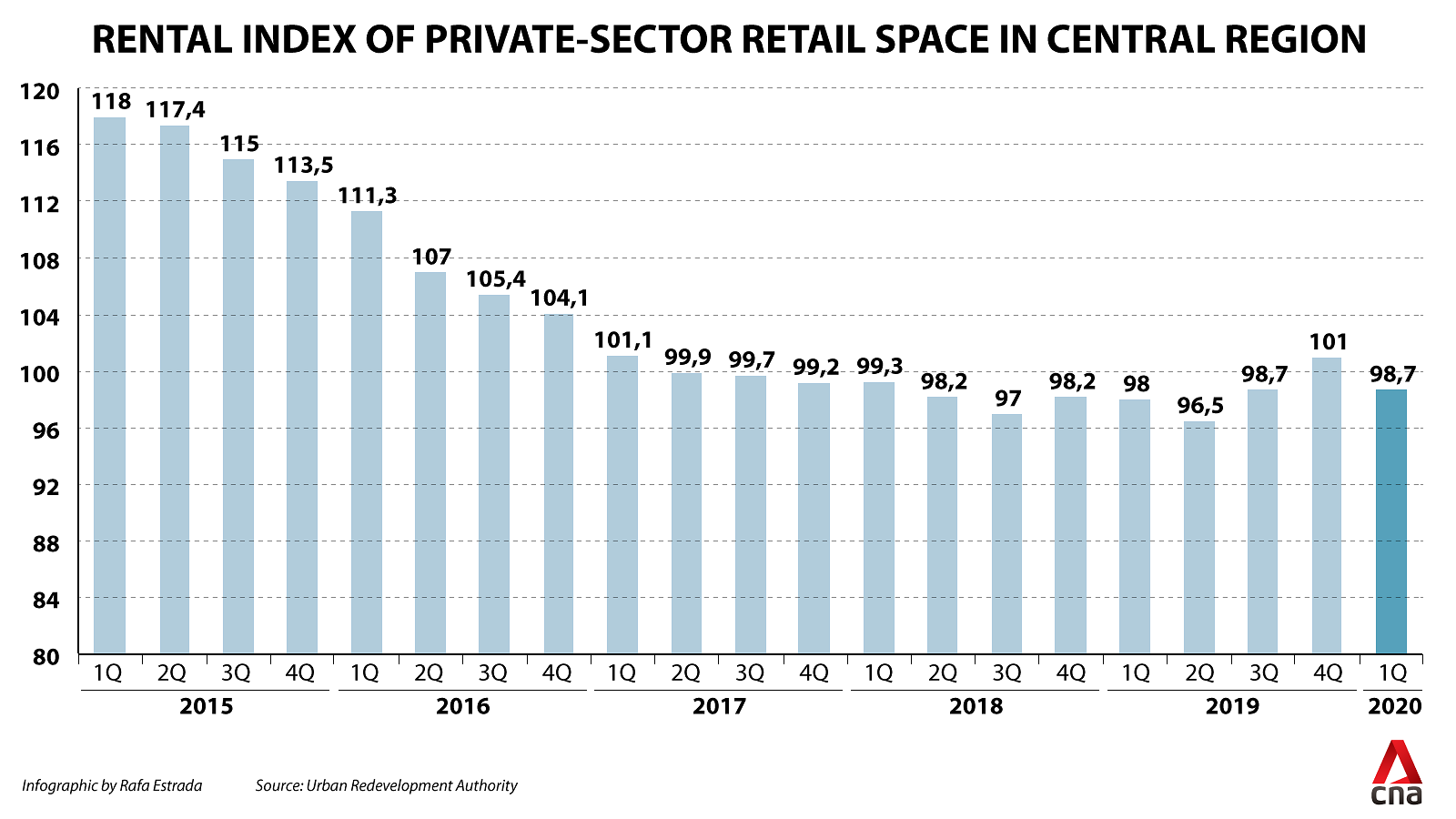
The Urban Redevelopment Authority (URA) publishes a quarterly index tracking rentals of retail space. This has seen a general decline since the first quarter of 2015, although it picked up towards the last two quarters of 2019. For the first quarter of this year, it eased 2.3 per cent.
To put things into perspective, the index only covers Singapore’s central region and includes a broad swathe of private retail spaces including strata malls. This is why tenants told CNA that the index is too generic to help them with rent matters.
The index being an average of all private retail spaces may not also accurately reflect rents at shopping malls, which are “very sensitive” to location, said Mr Cheong from Savills Singapore. “Even within malls, which level you are located matters.”
He added: “Retail rents are going down for (the) strata-unit type but when it comes to the malls, it’s very hard to ascertain what’s going up or down. Reason being that landlords don’t share the information across the board. It’s all on a negotiation basis,” he said, adding that this has subjected retail tenants to a “prisoners’ dilemma”.
And even with a less-than-rosy outlook ahead, rent hikes for individual businesses seem to be continuing.
When lease renewal talks began in March for Edward Lim’s pizza restaurant located at myVillage mall in Serangoon Garden, he was informed by his landlord that rent would be going up from S$16 psf to S$18 psf. Mr Lim and his co-owners tried negotiating for a reduction but failed.
After considering their sunk costs – S$70,000 on renovations that were done just a year ago – and a reinstatement bill that could come up to S$14,000 if they did not renew their lease, the owners decided it was perhaps better to accept the terms and stay put.
“After thinking about all the costs, we decided to stay but with a last try on negotiations … We asked if we could pay S$17 for the first year and S$18 in the second year given the uncertainties of COVID-19.”
That was rejected by the mall and the pizza restaurant, The Peel 1889, shifted out last week when its lease ended.
When contacted, myVillage’s senior marketing manager Kenneth Lim said the mall was “returning to the original rental rates prior to the lease” given that it did not re-negotiate terms when The Peel 1889 took over the lease from a previous tenant.
As part of its guiding principles, the mall has a “consultative manner when it comes to leases” and has also done its best to help by offering solutions for online orders and deliveries while passing on government-granted tax rebates.
The rebates, according to restaurant owner Mr Lim when he spoke to CNA in June, were dispersed in three tranches that totalled up to about S$4,600. He pays about S$7,000 for rent every month.
On this, the mall said it is giving out the property tax rebates in tranches and has “shifted a significant portion” of that ahead of the year-end deadline to help tenants with rental costs. It is waiting for additional guidelines on rental waivers from the authorities and “will work quickly” once those are made clear.
A retail assistant cleans the shutters in Singapore on Jun 19, 2020. (Photo: Reuters/Edgar Su)
THE UNFAIR CLAUSES
Lease agreements at malls have also been populated with “harsh” terms and conditions, tenants said.
One main gripe is how landlords can terminate leases for any reason without compensation even before the lease is up. Tenants, however, are unable to do the same and will have to pay up the rent amount remaining on their leases.
Landlords also do not have to compensate the tenant if they decide to redevelop the building and relocate the latter.
In recent years, tenants said they have also been made to bear other costs, such as the legal fees of drafting lease agreements, stamp duty fees and “administrative charges to the mall’s leasing department”.
“If you’re in the leasing business, wouldn’t this be part of your normal operations?” asked the retailer with a store in Orchard Road, who noted that these administrative charges can come up to about S$800.
Echoing that, Mr Wee said: “The rent-seeking behaviour has gone beyond just the dual-pricing rent model and into generating revenue off the tenants from other sources.”
Mr Desmond Sim, who heads research for Singapore and Southeast Asia at CBRE, offered a perspective from the landlords: “A landlord’s biggest fear is a sudden vacancy … You can have vacancies in an office building and nobody will know, but in a mall, it will be obvious. So these are protective clauses as landlords also want to protect their business.”
Unfortunately, these clauses “are usually seen as more harsh” for the small and medium-sized enterprises (SMEs), he added.
All these have made it hard for retail tenants to save up for rainy days or invest in their business and employees.
“The current situation should highlight that retailers and F&B operators have so little ability to retain earnings that they cannot deal with a crisis. It is time for policymakers to ask themselves: Is this the business condition they want to have in Singapore?” the retailer said.
The retailer said he attended the launch of the SBF’s Fair Tenancy Framework in 2015. Held in a hotel’s ballroom, it had seemed a grand affair and he remembered feeling “very hopeful”.
“But if you read all the articles now and compare it with what was said in 2015, you’d know that nothing has changed.”
ROOM TO IMPROVE LEASING FRAMEWORK: REITAS
But sentiment among private landlords may be finally changing, at least according to Cynthia Phua who led the committee behind the 2015 framework.
During the FTFIC’s press conference in May, she said a representative from CapitaLand had sat in for one of the meetings earlier this year.
When contacted for this story in June, a spokesperson said CapitaLand has “kept and will continue to keep (its) channels of communication open” as part of its commitment towards building a sustainable retail ecosystem in Singapore with all stakeholders.
The property giant did not answer other questions pertaining to this article and referred CNA to a previous press statement.
In that statement dated Jun 8, it said it would further waive and potentially defer rent for qualifying SME tenants as required by the COVID-19 laws, but doing so will have an “adverse impact” on its earnings this year.
“We therefore maintain our conviction that the impact of the regulatory intervention be applied objectively, transparently and proportionally, as a shared responsibility across all stakeholders,” said chief financial officer Andrew Lim.
Seven other mall operators that CNA reached out to for this article in June declined comment or did not respond. The Real Estate Developers’ Association of Singapore (REDAS) also did not reply to queries.
REITAS reiterated its stance that there is a “long-term symbiotic business partnership” between landlords and tenants.
“Despite news reports of some landlords not passing on rent rebates to tenants until the Government stepped in to mandate the same, to the best of our knowledge, most or all of REITAS’ REIT members had already been helping tenants during this trying period,” it said.
“Notwithstanding this, we believe that there is room to improve the existing leasing framework and together with other commercial landlords, we are committed to engaging our tenants in good faith to do so.”
It added that a self-regulating framework with a code of conduct that is “mutually conceived and updated over time together with tenants” will present a “more flexible and invested approach, rather than having to rely on legislation”.
THE WAY FORWARD?
A new attempt to deal with this issue is now under way.
There will also be mechanisms to ensure compliance with the framework, and allow parties to seek recourse and resolve disputes, the SBF said. The committee aims to complete its deliberations by the end of the year before drawing up an implementation timeline.
The FTFIC said in the Jun 26 press release that it is hopeful that common ground can be found so as “to rectify imbalances … in a timely fashion”. Representatives of REDAS and REITAS said it is a “timely opportunity” for key stakeholders to address industry disruptions “by looking for ways to improve existing landlord-tenant practices”.
Among those that CNA spoke to, the appropriate way forward has drawn differing views. Some like NUS Assoc Prof Sing said legislation may be a “blunt” tool and preferred the set-up of a committee to first “bridge potential gaps” between parties.
Mr Sim also called for more conversations. “I’m sure landlords, under the threat of occupancy, will be very open. They themselves know if they don’t show a bit more flexibility, it will affect their occupancy no matter what.”
Mr Cheong, on the other hand, preferred legislation as institutional landlords will need more nudging. That said, he acknowledged that mall operators are not immune to the economic toll of COVID-19.
As a first step, he said landlords could consider offering rent based on GTO until the crisis is over, noting that there have been instances of landlords experimenting with this model prior to the pandemic.
Meanwhile, concerns have emerged that smaller individual landlords are being left out of the discussions.
Already, these landlords who “are as SME as the tenants”, are reeling from the requirement of having to provide additional rental waivers, said Victor Ng who owns two retail units at Bugis Cube.
Mr Ng, who is also vice-chairman of the management corporation strata title (MCST) committee at the commercial property, said smaller landlords are unlike large corporates with deep pockets to withstand economic downturns.
These are often individuals who have through their own savings manage to invest in property, such as small commercial shophouses, as a form of retirement income. Many still have mortgages to service and deferment programmes offered by banks are not much of a relief due to “steep” additional interests.
These landlords also charge much lower rent and do not collect extra marketing or maintenance fees, added Mr Ng who said smaller landlords “definitely need representation in the committee”.
Henry Mok, who is chairman of the Bugis Cube MCST committee, has started a petition calling for the Government to recognise this disparity and “accord a fairer set of rules” for smaller landlords.
“It is discriminating to have the smaller landlords compared and treated like big landlords for the Fair Tenancy Framework,” said the petition, which has garnered more than 300 signatures.
Resolving this fractured relationship between tenants and their landlords here will come as the retail industry braces for more pain ahead, given that impact from the COVID-19 pandemic is likely to be prolonged.
For instance, malls in Orchard Road could be in the doldrums for a while longer as tourists may not return so quickly, said Mr Sim.
Beyond COVID-19, ongoing structural changes could gain steam. More people could turn to online shopping, meaning more pain for already-battered brick-and-mortar retailers while shopping malls will also need to evolve to stay relevant.
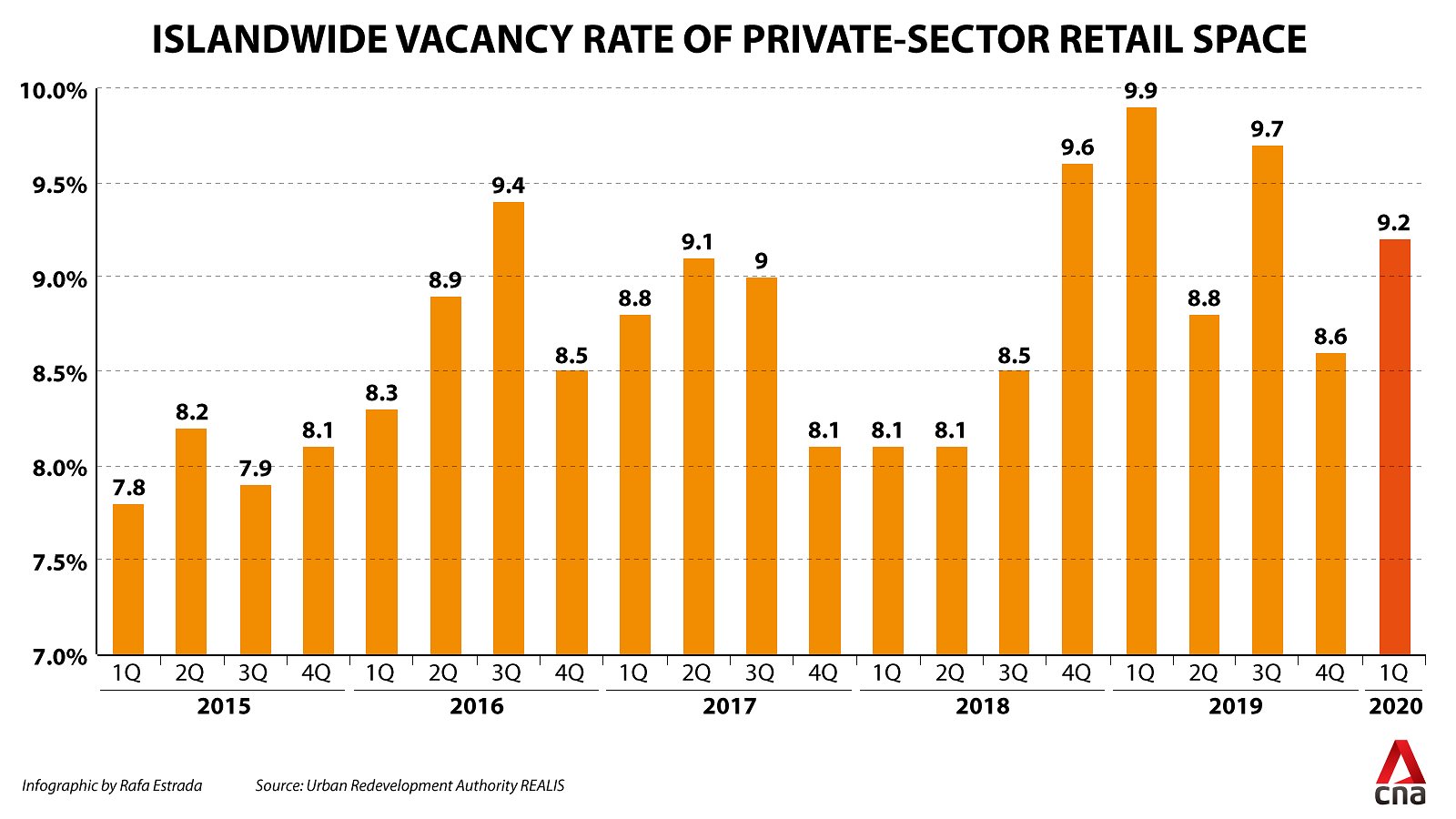
Given this grim outlook that could see higher mall vacancy rates, landlords and tenants will need to come together, industry watchers said.
“What’s at stake is not just businesses and jobs, but Singapore’s reputation on the retail front,” said Mr Cheong.
Mr Yow, the representative of SGTUFF, agrees: “The landlord-tenant relationship has reached a break point given the systemic shifts of COVID-19 but I think what we all want is something that can benefit all stakeholders – landlords, tenants and Singapore.”
SINGAPORE: Two shopping malls and two food and beverage outlets were among the new locations added on Friday (Jul 24) to a list of places visited by COVID-19 cases in the community during their infectious period.
The locations include Hillion Mall in Bukit Panjang, JEM in Jurong East, Fu Chan Food Paradise in Jurong and Gandhi Restaurant on Chander Road, said the Ministry of Health (MOH).
Hillion Mall appeared on the list twice – having been visited once on Jul 10 and once on Jul 14. The Jul 10 visit involved the My Briyani House outlet in the mall.
MOH on Friday also reported a new COVID-19 cluster at Bukit Panjang Integrated Transport Hub, which is linked to Hillion Mall.
Those identified as close contacts of confirmed COVID-19 cases would have been notified by MOH, said the ministry.
It added that people who were at these locations during the specified timings should monitor their health closely for 14 days from their date of visit.
“They should see a doctor promptly if they develop symptoms of acute respiratory infection (such as cough, sore throat and runny nose), as well as fever and loss of taste or smell, and inform the doctor of their exposure history,” said MOH.
“There is no need to avoid places where confirmed cases of COVID-19 have been.”
The National Environment Agency will also engage the management of affected premises to provide guidance on cleaning and disinfection.
Singapore reported 277 new COVID-19 cases on Friday, bringing the national total to 49,375.
There were three community cases, all work permit holders.
There were also two imported cases, both dependant’s pass holders who had returned to Singapore from India on Jul 12. They were put on stay-home notice upon arrival and were tested for COVID-19 while serving this notice.
The remaining cases are work permit holders residing in foreign worker dormitories.
Imran Rahim has publicly released a statement on his Instagram account, denying the allegations of sexual misconduct hurled against him by GE2020 candidate Charles Yeo.
The 32-year-old lawyer added that he did not know Yeo and that he “will be taking the necessary steps to vindicate [himself]”.
View this post on Instagram A post shared by Imran Rahim (@imranrahim_) on Jul 23, 2020 at 4:31am PDT
Remember that episode in the US sitcom Friends when Chandler peed on Monica’s leg after she got stung by a jellyfish because Joey said it would lessen the pain? Well, it’s a lie.
And, according to some experts, peeing on a jellyfish sting will actually make it worse.
In Singapore, at least two people have been stung by deadly box jellyfish recently, with four sightings reported just this month alone, according to The New Paper.
Two of the sightings were at Sentosa’s One Degree 15 Marina and Palawan beach, where a four-year-old girl was stung on July 17.
The girl’s quick-thinking mother poured vinegar on her daughter’s leg, easing the child’s pain and possibly saving her life.
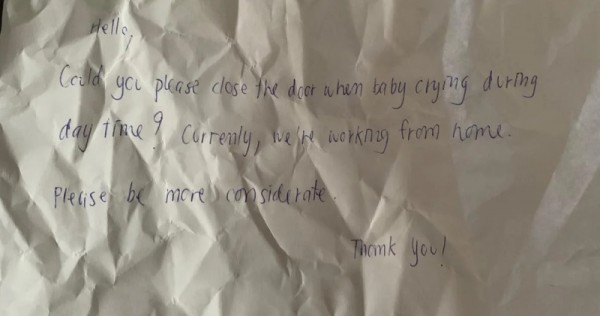
With more individuals working from home during the pandemic, tension levels could run at an all-time high.
Take it from Geralyn Amy Yeh, mum of a 5-month old baby who received a feedback note from her neighbour. PHOTO: Facebook/Geralyn YehAccording to Yeh, neighbours who were working from home were frustrated by her baby’s cries. In the note, they requested her to close the door during the day.
The note — which was left unsigned — also urged Yeh to be more considerate. PHOTO: FacebookBut turns out, the note was not the only outlet for the neighbour’s displeasure. According to Yeh, the neighbour even came over to scold and shout at her helper.
Sharing hot takes on the internet is not always rainbows and butterflies, as one local artiste found out after her opinions on the lesbian, gay, bisexual, and transgender (LGBT) community were not well-received, to say the least.
Local artiste Joanna Theng, 22, has received a wave of backlash after linking the lesbian, gay, bisexual, and transgender (LGBT) pride movement and its six-colour rainbow flag to Satan in an Instagram video on July 22.
The 14-minute video was the final instalment in a three-part series by City Revival (CR), which describes itself as a “inter-generational” and “inter-denominational” Christian community.
As part of the series, Theng and another member of the community, Jaime Wong, delved into the Book of Revelations, the final book in the Bible, and discussed its relevance in today’s world.
While the first two episodes largely flew under the radar, Wednesday’s episode attracted controversy for its portrayal of the LGBT community.
Theng and Wong kicked off the video by introducing one of the main antagonists in the book, Satan.
SINGAPORE: The Singapore Army is trialling a titanium-made exoskeleton designed to reduce the stress on soldiers carrying heavy loads.
A section of the Singapore Armed Forces (SAF) Day video released on Jul 1, captioned “Exoskeleton Trial”, showed a soldier wearing a green exoskeleton on top of his army fatigues.
In response to queries from CNA, the Ministry of Defence confirmed that the army is studying the use of an exoskeleton to improve soldier performance.
“The Singapore Army is constantly looking for ways to enhance the performance of our soldiers, and the exoskeleton is one such example that the Centre of Excellence for Soldier Performance (CESP) is studying,” it said.
The CESP, set up in 2017, helps to develop the full potential of soldiers in areas like fitness and nutrition, pre-habilitation and rehabilitation, resilience and soldier systems.
Based on the SAF Day video, the exoskeleton’s appearance and logo indicates that it is the Canadian science and technology company Mawashi’s Ultralight Passive Ruggedized Integrated Soldier Exoskeleton (UPRISE) system.
The system, which the company says was initially developed for special forces and is made of high-strength titanium, comprises a flexible spine, sliding belt and fully articulated legs.
UPRISE allows for a 50 to 80 per cent load transfer to the ground and a “high degree” of mobility for users, the Mawashi website said.
An UPRISE factsheet said it increases combat effectiveness and reduces fatigue as well as musculoskeletal injuries. It did not specify how much the system costs.
A soldier trying out the exoskeleton with full combat gear. (Video screengrab: Facebook/The Singapore Army)
A defence analyst told CNA that while exoskeletons are common in heavy-lifting civilian industries like construction as well as search and rescue, military applications are relatively new.
Mr Chen Chuanren, Singapore representative at Shephard Media – which provides business information for the defence industry – said the US, French and Australian armies have shown interest in exoskeletons, although he pointed out that challenges to implementation include cost and mobility.
The US Army Natick Soldier Research, Development and Engineering Center has been exploring how to use commercially developed exoskeletons for military purposes under a US$6.9 million (S$9.6 million) agreement.
One defence firm involved in the project is Lockheed Martin, which produces an ONYX lower-limb exoskeleton to increase mobility and reduce fatigue.
Software being used to analyse a soldier’s physical performance while wearing the exoskeleton and full combat gear. (Video screengrab: Facebook/The Singapore Army)
The soldier in the SAF Day video is seen walking on a treadmill in what appears to be a stress test. He is wearing full combat gear on top of the exoskeleton, including helmet, rifle, field pack and load-bearing vest.
Mr Chen expects UPRISE to be distributed in the Singapore Army not as a standard issue item, but to specalised units that do heavy lifting over long distances, like some anti-tank infantry and special forces soldiers.
“Through its innovative and ultralight design, this exoskeleton achieves an unparalleled level of freedom of movement,” Mawashi said on its website.
“(It) allows for all the movements involved during tactical maneuvers as well as other tasks required by dismounted soldiers and special operations forces operators.”
CNA has contacted Mawashi for comment.
IS THE EXOSKELETON SUITABLE FOR THE SAF?
Mr Chen said UPRISE is suitable for the Singapore Army as troops that operate in the tropics tend to see lower levels of endurance due to the humid climate.
“There is a higher chance that they get tired a bit more, so I think it would be very useful for them to have this kind of system,” he said.
“If you look at UPRISE especially, the load actually gets passed down to the ground through the leg brace from the spine … instead of having the load on your shoulders or back.”
A soldier wearing the exoskeleton on a treadmill. (Video screengrab: Facebook/The Singapore Army)
But Mr Chen said it is not practical to issue UPRISE to every soldier in the army as the titanium-made product is “very, very expensive”.
“It’s likely that it will be fielded to the special forces which operate behind enemy lines and usually carry very heavy loads,” he added. “They have to do trekking and long-distance missions.”
A fiery clash between a food handler and two safe distancing ambassadors (SDA) took a turn for the worse when one of the SDAs asked for the woman’s IC — not to take down her details, but to verify her gender.
Police investigations are ongoing after the food handler showed “signs of aggression” towards the two SDAs, the Singapore Food Agency (SFA) noted in a statement today (July 24).
The altercation was captured on camera by the food handler, Asyurah Roslan, and uploaded to Facebook on July 21 where it has garnered over 18,000 views as of the time of writing.
The five-minute-long clip showed Asyurah confronting two SDAs near a coffee shop located at 60 Changi Road after one of them was allegedly rude to her.
Referring to the SDAs as “social distancing officers”, Asyurah filmed the pair from a distance before approaching them.
“From just now, I listen to you. The way you actually approach people is very rude,” she said to the first SDA.
The second SDA appeared to mistakenly refer to her as “sir” while attempting to diffuse the situation, to which Asyurah retorted, “I’m a woman, okay? I’m a woman, not sir.”




.jpg "SDA_fb-1.jpg")


