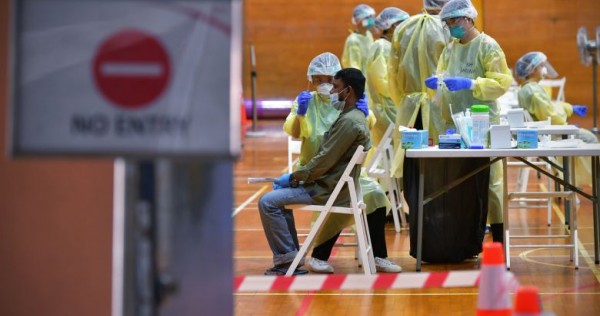
SINGAPORE – A Covid-19 vaccine may become available in sufficient doses only towards the end of next year, the Health Ministry director of medical services Kenneth Mak said.
He said Singapore is proactively working with vaccine developers, pharmaceutical companies and research institutions on research efforts into a Covid-19 vaccine.
Discussions have also begun to ensure Singapore will have access to vaccines when they become available, he told a virtual press conference on Friday (July 24).
But even though a number of companies have announced that they have started on phase three trials, which are a “relatively later stage” of the process of vaccine development, Associate Professor Mak said there may yet be failures in delivering a vaccine that is safe and effective.
“Practically speaking, we expect, realistically, a vaccine to be available perhaps next year rather than this year,” he said.
SINGAPORE: Four first-time Members of Parliament (MP)-elect have been appointed Ministers of State in the Cabinet reshuffle announced on Saturday (Jul 25).
They are Marymount SMC’s Gan Siow Huang, Tanjong Pagar GRC’s Alvin Tan, Pasir Ris-Punggol GRC’s Desmond Tan, and East Coast GRC’s Tan Kiat How.
Ms Gan, a former Singapore Armed Forces (SAF) brigadier-general, will be appointed Minister of State in the Ministry of Education and the Ministry of Manpower.
Mr Alvin Tan, a LinkedIn senior executive who was previously at Facebook, will be appointed Minister of State in the Ministry of Culture, Community and Youth (MCCY) and the Ministry of Trade and Industry (MTI).
Mr Desmond Tan, a former chief executive of the People’s Association, will be appointed Minister of State in the Ministry of Home Affairs and the Ministry of Sustainability and the Environment.
Mr Tan Kiat How, a former chief executive of the Infocomm Media Development Authority, will be appointed Minister of State in the Prime Minister’s Office and the Ministry of National Development. He will also be chairman of REACH.
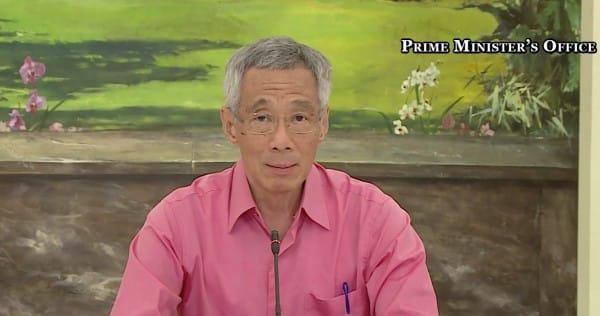
Prime Minister Lee Hsien Loong said at a press conference announcing the reshuffle on Saturday that the new MPs-elect must have commitment, leadership, ability and experience.
“In particular with the new ministers, I have looked very hard to find people who have experience with the grassroots operations, with community outreach, with some policy work, and also with private sector experience, which is an area which I have often spoken about, but have not found it so easy to find people to come in and complement the talent mix, an experienced mix, which my cabinets have,” he said.
Prime Minister Lee Hsien Loong announcing Singapore’s new Cabinet on Jul 25, 2020.
WHAT THE NEW FACES BRING
Mr Lee said that Ms Gan will help push the Government’s education and skills training agenda in her new portfolio.
“While I have had a lot of experience working with people from all walks of life in the SAF and and also more recently as part of the labour movement, I’ve seen how livelihoods could be affected and Government policies and schemes and implementation can make a real difference,” said Ms Gan, who was at the press conference.
“So, I feel very honoured and privileged to now be in the Cabinet, to be able to make a difference, and I hope to be able to improve the lives of Singaporeans.”
Mr Lee said Mr Alvin Tan’s knowledge of social media and the digital media industry will be useful at MTI and MCCY, while Mr Tan Kiat How will work on Government outreach and communications.
Mr Alvin Tan said in a Facebook post on Saturday that he was “humbled to be entrusted with this responsibility to serve my country during these extraordinary times”.
“I will do my very best for Singapore and our people,” he wrote.
Mr Tan Kiat How also said on Facebook that he is “humbled and honoured by PM’s trust” in him. “I look forward to contributing in my new roles and working with my colleagues and all Singaporeans to build a better home for us and generations to come,” he wrote.
OTHER NEW POLITICAL OFFICE HOLDERS
Mr Lee also announced that new Tanjong Pagar MP-elect Eric Chua will be appointed Parliamentary Secretary in the Ministry of Social and Family Development (MSF) and MCCY. Mr Chua was a former director of the SGSecure Programme Office.
Mr Lee said Mr Chua’s “extensive experience with youth and community work will prove invaluable” in MCCY and MSF.
Second-term MP-elect for Jurong GRC Rahayu Mahzam will also be appointed Parliamentary Secretary in the Ministry of Health. Mdm Rahayu said she will do her best and looks forward to working with other office holders and civil servants at MOH.
“I am humbled by this trust and opportunity to continue serving in a different capacity,” she wrote in a Facebook post on Saturday.
Mr Lee noted that Mdm Rahayu, a lawyer, has been in the “private sector for some time now”.
“The Cabinet needs people not only from the public sector, but also from the private sector who have run a company, who have had to make a P&L (profit and loss statement) work, who have been on the receiving end of policies, and who know what policies can work, and how the impact is on people,” he said.
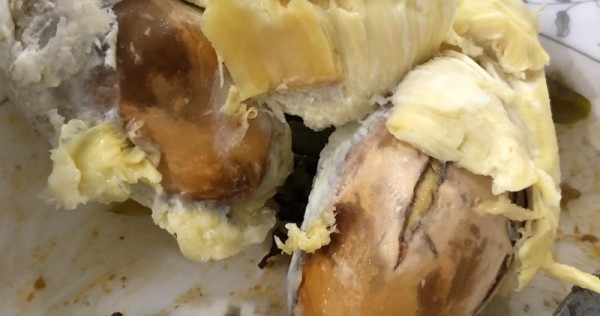
It’s durian season and folks expect nothing less than the best when biting into their pricey orders of premium Mao Shan Wang and Black Gold.
A local durian delivery service, however, has been causing quite a furore among its customers — so much so that the latter even set up a Facebook group to recount their rotten experiences.
Called “Victims of duriansexpressdelivery.com”, the Facebook group is exactly that — a support group of sorts for those who’ve had bad encounters with the online durian store.
In a deep dive by 8 Days, these aggrieved customers have noted that the durians they’ve gotten from the store have been gravely dreadful. Some have received rotten, inedible durian while others received barely defrosted ones.
SINGAPORE: The Cabinet reshuffle which was announced on Saturday (Jul 25) by Prime Minister Lee Hsien Loong saw a number of changes to key ministerial appointments.
National Development Minister Lawrence Wong will take over at the Ministry of Education from Mr Ong Ye Kung, who will become Minister for Transport. Mr Wong, who has helmed the Ministry of National Development since 2015, will remain as co-chair of the multi-ministry taskforce on COVID-19.
It was also announced that the Ministry of the Environment and Water Resources will be renamed the Ministry of Sustainability and Environment. This ministry will be helmed by Ms Grace Fu, who was formerly Minister for Culture, Community and Youth.
Mr Masagos, the Minister for the Environment and Water Resources, has been appointed as Minister for Social and Family Development and Second Minister for Health. He will remain the Minister‐in‐charge of Muslim Affairs.
Mr Desmond Lee will be appointed Minister for National Development, taking over from Mr Wong. Mr Lee was elected as a Member of Parliament (MP) in 2011, and took on the role of Minister for Social and Family Development in 2017.
Mr Desmond Lee speaking at a press conference announcing Singapore’s new Cabinet on Jul 25, 2020.
The swearing‐in ceremony for the Cabinet and other office holders will take place at the Istana on Monday.
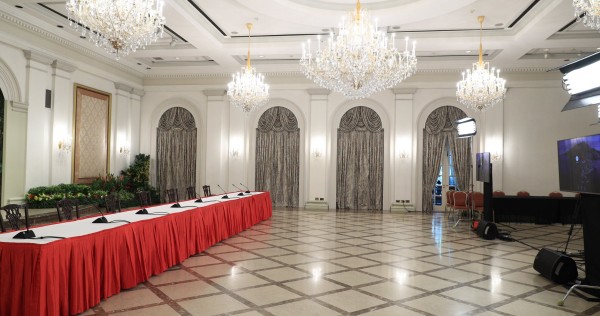
Speaking at a press conference at the Istana, Mr Lee said the new Cabinet seeks to balance continuity, exposure and renewal, and be a team that leads Singapore through the current public health and economic crisis and into the future.
He noted how he was rotating ministers, especially the younger ones in order for them to gain “exposure and experience”.
Mr Wong was elected as a Member of Parliament in 2011 and later held positions in a number of ministries including the Ministry of Defence, the Ministry of Education and the Ministry of Culture, Community and Youth.
“He (Mr Wong) will build on the good work of Ong Ye Kung and previous education ministers and continue improving our education system to bring out the best in every child and student,” said Mr Lee.
“He will also focus on lifelong learning for adults and work with companies to integrate learning with the new demands at our workplaces.”
Mr Ong, who was elected as a Member of Parliament in 2015, took over the full education portfolio as Minister for Education in 2018. He will replace Minister for Transport Khaw Boon Wan, who announced in June that he would be retiring from politics after 19 years.
“In the last five years, MOT’s (Ministry of Transport) priority was engineering work, especially getting our public transport system in good shape, and to improve its reliability. Khaw Boon Wan has done an excellent job of this,” said Mr Lee.
“In the next few years, MOT’s emphasis will shift to envisioning and realising Singapore’s post COVID-19 connectivity, by land, sea and air.”
The ministry will also need to be engaged with Malaysia and Indonesia on major bilateral projects, said Mr Lee, and needs to be helmed by a “very good minister” with Cabinet experience and political nous.
Prime Minister Lee Hsien Loong announcing Singapore’s new Cabinet on Jul 25, 2020.
While he will now helm the Ministry of National Development, Mr Desmond Lee will continue to retain a role in his previous ministry as Minister-in-charge of Social Services Integration, said Mr Lee.
“This is to allow him to complete the unfinished work of integrating our social services. We have made progress in this, for example, setting up Social Service offices in the heartlands but there is more to do to make our social services more citizen-centric and to provide comprehensive support, bringing together financial assistance with education, healthcare, employment and other issues,” said the prime minister.
Mr Lee also pointed out that the renaming of the Ministry of Environment and Water Resources was done so as to “better reflect its future role”.
“Sustainability has become an increasingly important part of our national agenda. We are planning our climate change defences and managing our carbon footprint,” he said.
“And COVID-19 has also shown Singaporeans how important the work is which goes on behind the scenes on issues like food security and safety.”
In addition, Ms Indranee Rajah will be appointed Second Minister for National Development, and relinquish her appointment as Second Minister for Education. She will remain Minister in the Prime Minister’s Office and as Second Minister for Finance.
Dr Tan See Leng speaking at a press conference announcing Singapore’s new Cabinet on Jul 25, 2020.
New face Dr Tan See Leng will be appointed Minister in the Prime Minister’s Office, Second Minister for Manpower and Second Minister for Trade and Industry.
Dr Tan was part of a team that contested in Marine Parade GRC in the recently concluded General Election, winning with 57.76 per cent of the vote.
For new ministers, Mr Lee said that he had looked “very hard” to find people with experience in the grassroots operations, with community outreach, some policy work and also with private sector experience.
One of these individuals with private sector experience was Dr Tan See Leng, said Mr Lee.
Speaking to the media, Dr Tan said his appointment was an affirmation of the importance of the sector.
“This particular crisis requires the support and the partnership of everyone in the country to work together and I see this as an affirmation of the importance of the private sector coming in, working in partnership,” he said.
“And I hope to be that bridge to be able to bridge this moving forward.”
In a widely expected post-election Cabinet reshuffle, Singapore ’s Prime Minister Lee Hsien Loong has retained veteran politicians in key positions, but younger ministers seen as future heavyweights were rotated to new portfolios.
Lee’s designated successor Heng Swee Keat, who won his multi-seat constituency by a thin margin, will continue as Deputy Prime Minister and Finance Minister, while taking on an additional role as coordinating minister for economic affairs.
Tharman Shanmugaratnam and Teo Chee Hean, respected veterans of the ruling People’s Action Party (PAP) and former deputy prime ministers, retained their portfolios as senior ministers in the cabinet.
Foreign Minister Vivian Balakrishnan, Defence Minister Ng Eng Hen, Home Affairs and Law Minister K. Shanmugam, Communication Minister S. Iswaran, Health Minister Gan Kim Yong, Trade and Industry Minister Chan Chun Sing, and Manpower Minister Josephine Teo all remain in their previous positions.
Lawrence Wong, the point man for the country’s coronavirus response, will take over as Education Minister.
SINGAPORE – There were 513 new coronavirus cases confirmed as of Saturday noon (July 25), taking Singapore’s total to 49,888.
They included two community cases, both of whom are work pass holders, said the Ministry of Health (MOH).
There were also six imported cases who had been placed on stay-home notices upon arrival in Singapore.
Migrant workers living in dormitories made up the vast majority of the other cases.
More details will be announced on Saturday night.
On Friday, one of the three Covid-19 community cases announced by MOH was linked to three previous cases, forming a new cluster at Bukit Panjang Integrated Transport Hub.
He is a 28-year-old work permit holder who went to work at Ulu Pandan Bus Depot and the transport hub.
The Malaysian national was confirmed to have the virus on Thursday after showing symptoms on July 1.
He was detected as part of the ministry’s proactive case finding of individuals working at a newly emergent workplace cluster.
In total, there were 277 new coronavirus cases confirmed on Friday.
SINGAPORE – A 33-year-old man and a 25-year-old woman are expected to be charged on Saturday (July 25) with the murder of the woman’s four-year-old daughter.
The two, as well as a 30-year-old woman, are also accused of disposing the body of the girl to hide what happened to her.
The police said in a statement on Saturday morning that they received a report on Monday at 5.36pm that the four-year-old girl had gone missing.
They established that the girl had died and identified the three suspects, who are believed to be involved in her death and the disposal of her body.
The 25-year-old woman is the biological mother of the girl.
The offence of murder with common intention carries the death penalty.
Those found guilty of disposing a corpse to prevent detection of an offence with common intention can be jailed for up to seven years.
This article was first published in The Straits Times. Permission required for reproduction.
SINGAPORE: A National University of Singapore (NUS) PhD student who went to Beijing to give a presentation on politics was recruited by Chinese intelligence operatives and went on to work for them, collecting sensitive information about the US military and government.
Singaporean Yeo Jun Wei Dickson pleaded guilty on Friday (Jul 24) to using a fake consultancy business in the United States as a front to collect sensitive US information for Chinese intelligence. He entered his plea in federal court in Washington to one charge of operating illegally as a foreign agent.
In his plea, Yeo admitted to working between 2015 and 2019 for Chinese intelligence, spotting and assessing Americans with access to “valuable non-public information”.
This included information from a civilian working with the US Air Force on the F-35B aircraft programme, another from a US officer working in the Pentagon about the withdrawal of troops from Afghanistan, and a report about a person in the State Department about a US Cabinet member.
He recruited these people on social media under orders from the Chinese intelligence service, meeting operatives on more than 20 occasions.
RECRUITED WHILE DOING DOCTORATE IN NUS
Yeo’s work with Chinese intelligence operatives began as early as 2015, when he travelled to Beijing to give a presentation on the political situation in Southeast Asia, court documents show.
At the time, he was studying to receive his Doctorate of Philosophy in Public Policy from NUS.
After his presentation, he was recruited by individuals who claimed to be China-based think tanks. They offered Yeo money in exchange for political reports.
“Yeo came to understand that at least four of these individuals were intelligence operatives for the PRC (People’s Republic of China) government. One of the intelligence operatives later asked Yeo to sign a contract with the PRC People’s Liberation Army (PLA). Yeo refused to sign the contract but continued to work for this and other (Chinese intelligence service) operatives,” a signed statement of facts said.
The operatives tasked him with providing them information about international political, economic and diplomatic relations. They said they wanted “non-public information” – information that they referred to as “scuttlebutt”.
Scuttlebutt is a slang for rumours or gossip.
Tensions are rising between the US and China as they battle for global supremacy. (Photo: AFP/Jason Lee)
“At first, the taskings were focused on Southeast Asia. Over time, the taskings became focused on the United States,” court documents read.
“Although these (Chinese intelligence service) operatives used pseudonyms in their interactions with Yeo, they were open about their affiliation with the PRC government. One of the operatives told Yeo that he and his boss worked for the PRC’s main intelligence unit.”
During one of Yeo’s trips to China, he met this operative and two others in a hotel room. During the meeting, the operative instructed Yeo with obtaining non-public information about the US Department of Commerce, artificial intelligence, and the trade war between China and the US.
He met operatives in various locations across China, and met with one Chinese intelligence contact about “19 to 20 times”. He met another operative about 25 times.
Whenever Yeo travelled to China for the meetings, he would be taken out of the customs line and brought to a separate office for admission into China.
He raised this issue with an operative, but they told Yeo they wanted to “conceal his identity” when he travelled into China.
USING SOCIAL MEDIA TO CONNECT WITH TARGETS
Yeo used social media to find and recruit US citizens who could provide him information. In 2018, a Chinese intelligence operative instructed him to create a fake consulting company and post job listings for the company on an online job-search website.
He used the same name as a prominent US consulting firm that conducts public and government relations. More than 400 resumes were sent in, with 90 per cent of them from US military and government personnel with security clearances.
Yeo would send the resumes to Chinese intelligence service operatives if he believed they would find the person’s resume interesting.
A “professional networking website” that was focused on career and employment was used by Yeo to find individuals with resumes and job descriptions that suggested they were likely to have access to valuable “non-public” information.
After he contacted potential targets online, the website began suggesting additional potential contacts.
“According to Yeo, the website’s algorithm was relentless,” court documents said.
“Yeo checked the professional networking website almost every day to review the new batch of potential contacts suggested to him by the site’s algorithm.
“Later, Yeo told US law enforcement that it felt almost like an addiction.”
File photo of a man making a call.
FINDING TROUBLED TARGETS
After he identified his potential targets, he worked to recruit them to provide information and write reports.
He received guidance from Chinese intelligence contacts on how to recruit potential targets, including asking whether the targets were dissatisfied with work, were having financial troubles, had children to support, and whether they had a good rapport with Yeo.
The court was told of three people he managed to recruit to provide him with information.
In and around 2015, he spotted a civilian working with the US Air Force on the F-35B military aircraft programme. The person has high-level security clearance, and confided in Yeo that he was having financial trouble.
Yeo recruited him to write a report, and the civilian also provided information about the geopolitical implications of the Japanese purchasing F-35 aircraft from the US. Yeo drafted a report and sent it to his contacts in Chinese intelligence.
Between 2018 and 2019, Yeo spotted another person on the professional networking website. This person was employed at the US Department of State at the time, and told Yeo he was feeling dissatisfied at work and was having financial trouble.
He said he was worried about his upcoming retirement.
At Yeo’s direction, the man wrote a report about a then-serving member of the US Cabinet.
The man said he feared that if State Department officials discovered he had provided information to Yeo, it would jeopardise his retirement pension. Yeo paid him S$1,000 or S$2,000 for the report.
Another person was recruited via a social networking app, an US Army officer who was assigned to the Pentagon.
Yeo met the officer on multiple occasions, building up a “good rapport” with him. The officer confided in Yeo that he was traumatised by his military tours in Afghanistan.
File photo of a man using a laptop. (Photo: AFP/Frederic J Brown)
Yeo asked the officer to write reports for clients in Korea and other Asian countries, but did not say it would be given to a foreign government.
The officer wrote a report on how the withdrawal of US military forces from Afghanistan would impact China, and was paid S$2,000 or more for the report. The money was transferred to the officer’s wife’s bank account.
Yeo was told to recruit the US officer to provide more classified information, and was offered more money if the officer could become a “permanent conduit of information”.
After Yeo returned to the US in November 2019, he planned to ask the officer for the classified information and wanted to reveal who he was working for.
However, when he landed at the airport, he was stopped by law enforcement and arrested before he could ask for more information from the officer, court documents said.
COMMUNICATING FROM THE US
The statement of facts shows Yeo lived in Washington from about January 2019 to July 2019. Besides recruiting people online, he attended multiple events and speaking engagements at DC-area think tanks, making contact with several individuals from lobbying firms to defence contracting firms.
Yeo was told not to communicate with Chinese intelligence operatives when he travelled to the US over concerns their communications would be intercepted.
He was instructed to email operatives from a local coffee shop, if he needed to do so. Another told him not to take his phone and notebooks while travelling to the US.
WeChat logo. (File photo: AFP/Martin BUREAU)
Yeo was also given a bank card to pay his American contacts for the information they provided. When Yeo was outside the US, he communicated with a Chinese intelligence operative through WeChat.
He was asked to use multiple phones and to change his WeChat account every time he contacted the Chinese intelligence service operatives.
“Yeo failed to notify the US Attorney General that he would be acting in the United States as an agent of a foreign government or foreign government official,” the court documents said.
Yeo faces a maximum of 10 years imprisonment and will be sentenced on Oct 9.
SINGAPORE: It is a conspicuous addition to Singapore General Hospital’s (SGH’s) landscape, though it looks little more than a large canvas tent, with a long ramp leading to a set of double doors.
“From the outside, no one’s going to know what it looks like inside,” said nurse clinician Thurgathavi P Vellasamy.
That was also her first thought that sprang to mind the first time she set foot in the site meant to be the hospital’s newest isolation ward. “What’s this going to look like?” she wondered.
In mid-May, it was an open-air car park. But in 50 days, it was transformed into a full-fledged ward capable of housing up to 50 suspected and confirmed COVID-19 cases.
Before construction began in mid-May, this was what the space looked like.
With its opening on July 15, the hospital’s isolation capacity has doubled. Prior to this, SGH had a total of 51 beds in Ward 68, its isolation ward comprising 35 single rooms and 16 beds in shared rooms.
A gust of air conditioning and a brightly lit interior greet staff and patients who now enter the doors of the new ward.
From the wide reception space, two aisles lead to 50 purpose-built container rooms, each outfitted with a single bed, en-suite bathroom, desk and chair as well as negative pressure, so air does not flow out when people enter or leave.
The ward, named Ward@Bowyer for its proximity to the hospital’s Bowyer block, also includes facilities that feature in any other hospital ward: Nurses’ stations, a rest area and changing rooms for staff and on-call rooms for doctors.
Each unit has en-suite toilet and shower facilities. (Photo: Hanidah Amin)
“It’s amazingly nicely done,” said Ms Thurgathavi, the nurse clinician in charge of the ward.
NO MORE CALL BELLS
What also stands out inside, however, is what does not feature in regular hospital wards, for example wearable biosensors.
Patients are each given a biosensor to wear on their wrists. It wirelessly transmits their heart rate, respiration rate and oxygen saturation readings to a mobile app, which allows staff to monitor their well-being continuously and remotely.
Patients themselves can access the data through an in-room smartphone, a device they can also use to call for the assistance of their care team via video conferencing or through an app called MyCare Lite.
This allows doctors or nurses to assess patients in the room without bringing additional equipment.
The in-room smartphone. (Photo: Hanidah Amin)
“It reduces the turnaround time for nurses to meet patients’ requests,” said assistant nurse clinician Esther Fan, who estimated that it could save 10 minutes per trip.
“Previously they’d have to press a call bell, and the nurse would have to come into the room, ask them what they need and then go out to gather the necessary items.
“It also reduces the time the staff are exposed to the virus.”
Within the facility, there is also an X-ray unit housed in its own customised container.
Designed by SGH’s diagnostic radiology department, it features a booth separating the patient from the radiographer. This means the radiographer need only wear an N95 mask instead of full personal protective equipment (PPE).
The X-ray unit.
Given the ward’s design and features, it is best placed for patients who are generally more stable, ambulant and can take care of themselves, said SGH’s medical board chairman, Associate Professor Ruban Poopalalingam.
It serves a different function, however, from community care facilities such as the Changi Exhibition Centre, which are for those who “don’t really need to be in a hospital”.
“It’s not the same as what we have here,” said Assoc Prof Poopalalingam. “These are patients who still need to be admitted to hospital, but they need isolation facilities, with the appropriate care.”
The 3,200-square-metre ward is also different from the medical posts set up for foreign workers at their dormitories, which he likened to “an HDB block with a GP clinic at the bottom”.
“If they’re unwell, they can come down and see the doctors there,” he said.
“The team there would then decide what they need to do … Should (they) send (the workers) to the hospital or … give them simple medications and they can go back to the dormitory?”
HOW IT BEGAN
The story behind the ward began one Sunday in mid-April, when SGH chief operating officer Tan Jack Thian received an email from the Ministry of Health (MOH), asking if the hospital would be interested to take on the project.
It took him all of two days to decide.
“Of course I asked my colleagues … Are we able to get it up?” he recalled. “When they came in and said, yes, we can do it, I had full confidence in them.”
SGH chief operating officer Tan Jack Thian.
He also drew confidence from the hospital’s experience in setting up a similar “container city” during the Severe Acute Respiratory Syndrome period.
“A lot of our staff involved in the project had the experience and expertise,” he said, adding that the new ward incorporates several “design concepts” of the container city.
He and his team were determined to complete the project as quickly as possible. But there were challenges and delays, which stretched the construction process from its intended 40 days to 50.
The biggest challenge, he said, was a manpower shortage, as the project was implemented during the “circuit breaker” and foreign workers were unable to leave their dormitories.
“We were quite fortunate that our contractors managed to get Singaporeans and permanent residents to come and help us,” he said. “It was only towards the last two weeks of the project that we managed to get some foreign workers.”
He added that contractors also had problems getting construction supplies in owing to supply chain issues, and thunderstorms on some afternoons forced them to suspend work, which added to the delays.
LOOKING FOR CREATIVE SOLUTIONS
While construction was ongoing, other teams sprang into action with planning and meetings involving staff from all over the hospital. They came together to adapt processes for the new ward.
“We started with lots and lots of meetings with all the stakeholders,” said Ms Thurgathavi.
“Though I worked here for 22 years, I didn’t know a lot of people. Now, I’ve got to know a lot more people, especially those from the facilities department.”
With staff from many departments and specialities, like oncology, being deployed to the ward, she said orientation was a priority in order to familiarise them with infection control practices.
“We wanted to make sure they were well-trained before we started,” she added, citing a week-long induction programme that all staff assigned to the ward had to complete.
She herself came from a colorectal surgery ward. “Nursing isolation patients is very different from nursing patients in a general ward,” she noted.
“You have to don the full PPE, and you need to have a lot of isolation processes at your fingertips.”
Creative solutions also had to be found for situations they previously took for granted, such as carrying out a Code Blue — resuscitating a patient. “There were so many possible solutions and recommendations that came up,” she recalled.
In normal wards, she said, staff can resuscitate and intubate patients in the room and send them to the intensive care unit. But the isolation rooms in the new ward are smaller and narrower, so they now use scoop stretchers.
“Ambulances would use this, but we’ve never had to do this in the wards, because we just need to push the whole bed,” she said.
“We need to scoop the patient onto the stretcher, bring the patient out of the room and place him or her on a long trolley, then push the patient all the way to the resuscitation bay to continue the resuscitation.”
Simulations of the process took a week, she added. “The nurses trained so many times, and we did so many drills.”
All this work, she stressed, is to ensure that patient care is not compromised. “Patients here will receive the same care they receive in the main SGH block,” she said. “The processes, protocols and guidelines are still the same.”
USING THE WARD FOR AS LONG AS POSSIBLE
While the ward may not be a permanent addition, Assoc Prof Poopalalingam hopes that it will continue to be used even as the COVID-19 patient load goes down. Indeed, it is built to last “a few years”.
“It’ll take care of the COVID-19 pandemic at this point but will also be useful for other infectious diseases,” he said.
This is why patients with infectious diseases like tuberculosis and whooping cough, besides COVID-19, can be cared for at the ward. “We’ll continue to use it for as long as we are able to,” he added.
Meanwhile, as the ward begins to fill with patients, Mr Tan cannot help but look back at how it began with that Sunday email and, most of all, the belief in his team’s ability to bring the project to fruition.
The past few months were by no means all plain sailing. But his most satisfying moment came when he saw the first container unit being lifted and placed on the ward platform.
“We’d crossed the first hurdle,” he said. “Then it was just a matter of time to complete the project.”
He also remembers feeling excited, and even comforted, the first time he walked through the completed ward, which was already starting to buzz with activity before its first patient was admitted.
“I just felt so good about this whole project,” he said. “Our teams got together, and you really get to see the teamwork at SGH.
.jpg "ct-vaccine-2407-1.jpg")