Months into Singapore’s battle against Covid-19, some people still remain defiant of public health rules.
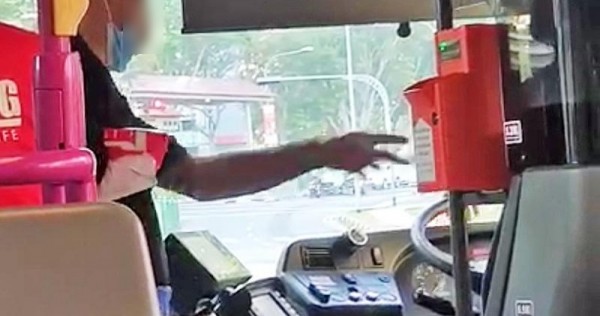
Another commuter has made headlines for refusing to wear his face mask properly on a bus on Saturday (August 8).
Despite the bus captain’s repeated advice to put on his mask properly, the passenger pulled it under his chin as he crossed swords with him, Shin Min Daily News reported.
A woman who boarded bus service 54 in Bishan that evening said she saw the bus captain approaching the man seated at the back about his mask.
“It was the third time that the man had been asked to wear his mask properly. The bus captain told him he’d have to get off the bus if he refused to comply with the rules,” she told Shin Min Daily News.
The bus captain’s words of advice, however, fell on deaf ears.
Agitated, the middle-aged passenger walked over to the driver’s seat and confronted the bus captain. He only stopped when the latter said he would call the police.
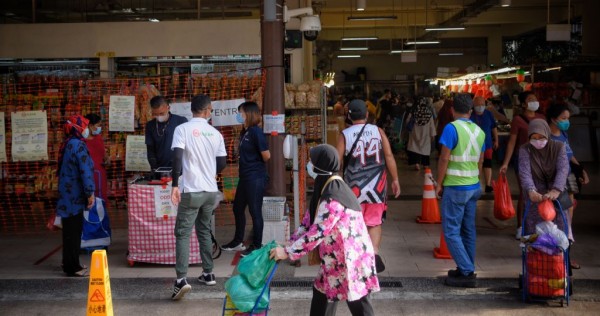
SINGAPORE – Entry restrictions at four popular wet markets will be eased from Thursday (Aug 13) after a noticeable reduction in weekday queues, according to a circular from the National Environment Agency (NEA) to stallholders seen by The Straits Times.
The four wet markets are: Geylang Serai Market, Chong Pang Market at Block 104/105 Yishun Ring Road, the market at Block 20/21 Marsiling Lane and the one at Block 505 Jurong West Street 52.
Dated Tuesday (Aug 11), the circular said that the rule which allowed shoppers to visit these markets on alternate days – depending on the last digit of their identity card number – would be lifted on weekdays.
The aim is to further reduce crowding on weekends by allowing people more time to shop during the week, it said.
Since the rule was implemented on April 22, crowding at the four markets during weekdays has been reduced to the point where short or no queues are observed.
“NEA has been monitoring the situation closely for the past three months,” the letter read. “We have observed that the odd/even date entry restriction has been effective in reducing the queues.”
The National Parks Board (NParks) has responded to allegations of animal cruelty involving a gigantic stingray that was caught and reeled in at Bedok Jetty on July 30.
An angler had earlier recounted how he “landed” the 80kg leopard whipray after “three hours of hard work” and shared photos of him posing with his big catch.
He wrote on his blog: “We had to cut up the fish and weigh it part by part to get the actual weight of the fish. Final weight add up to 80kg. The fish was shared among many friends.”
Reactions online have been mixed. Some netizens and fellow enthusiasts were awed by the unusual catch, while others felt that the whipray had been subjected to unnecessary suffering.
Facebook user Samantha Lee shared photos showing the bloodied whipray, as well as videos of the creature being sliced open and its flesh cut out.
In her post, Lee slammed the angler for using “various tools” to “poke, stab, hook, [and] string” the whipray up onto the jetty for pictures and then killing the animal, instead of releasing it back into the water.
SINGAPORE – Singapore will not return to a pre-Covid 19 world, and must chart a new path by building a new economy now, said Trade and Industry Minister Chan Chun Sing.
At a press conference on Tuesday (Aug 11) where it was announced that Singapore’s economy contracted 6.7 per cent in the first half of this year and is expected to shrink by between 5 and 7 per cent this year, Mr Chan said the “painful truth” is that the country will not return to a pre-Covid 19 world.
He said that recurring waves of infection and disruption mean that recovery will take time. “Recovery will be uneven across sectors. Some sectors will progressively recover, while others will be permanently changed.”
He also cautioned that the current crisis is unlike the 1998 Asian financial crisis or 2009 global financial crisis, where “if we hunker down, things will improve in a few months”.
“If we wait it out, we will likely be in worse shape than we are now,” he said, adding that the Republic must start now to build a new economy and create more and better job opportunities for people. “We cannot wait for Covid to blow over.”
SINGAPORE: Nine tonnes of ivory worth S$18 million will be destroyed from Tuesday (Aug 11), as a show of Singapore’s commitment to combat illegal trade in wildlife, said the National Parks Board (NParks).
This is the largest seizure crushed globally in recent years and the event will be livestreamed on the NParksSG Youtube page to commemorate World Elephant Day on Aug 12, said NParks in a press release.
“Crushing the ivory we have seized ensures that it will never re-enter the market and will help disrupt the global supply chain of illegally traded ivory,” said Minister for National Development Desmond Lee, who launched Tuesday’s ivory crushing.
“This sends a clear signal to poachers, traffickers and dealers that Singapore resolves to stamp out the illegal trade in wildlife passing through our city.”
Singapore is a signatory of the Convention on International Trade in Endangered Species of Wild Fauna and Flora (CITES), which bans the global trade in ivory. But the country is also a major transit point for the illegal ivory trade.
The ivory was seized from various shipments from 2014 to 2019, including the confiscation of 8.8 tonnes of tusks in July last year from the Democratic Republic of Congo destined for Vietnam.
The tusks were estimated to come from the killing of nearly 300 African elephants and the operation was the largest ivory seizure in Singapore.
Authorities intercepted a transshipment bound for Vietnam. (Photo: Jeremy Long)
NParks also launched Singapore’s first Centre for Wildlife Forensics (CWF), which aims to strengthen detection and diagnostic capabilities in identifying and analysing specimens involved in the illegal wildlife trade.
It will focus on wildlife most affected by the illegal trade, such as elephants, rhinoceros, pangolins, sharks and rays and songbirds.
Working with the Centre for Animal and Veterinary Sciences, the CWF will carry out wildlife forensics – using DNA techniques and other types of diagnostics such as next generation sequencing, mass spectrometry and isotope analysis – to gather information to help global enforcement efforts against poaching and illegal trade.
The centre will produce greater resolution and deeper insights on seized items, such as determining the origin of the population of poached species, said NParks.
The CWF will also combat the illegal trade of timber through the new Singapore Xylarium, a collection of timber references, timber samples and a timber DNA library.
Housed within the Singapore Botanic Gardens Seed bank, the collection of timber specimens in the Xylarium will enable researchers to compare and identify timber species using “a combination of wood morphology, genetics and chemical analysis” said NParks.
This will help Singapore investigate and prosecute any illegal trade of timber more effectively, it added.
“The launch of a Centre for Wildlife Forensics in Singapore represents a major step towards strengthening the country’s knowledge and capabilities,” said CITES secretary general Ivonne Higuero.
“The Centre will establish a dedicated capacity building entity for enforcement officers, providing training for the complex task of detecting illegal wildlife and wildlife products,” she added.
“This is exactly the kind of response that is needed to tackle illegal wildlife crime. Forensic applications must fully be used to combat illegal trade in wildlife.”
SINGAPORE: More than a month has passed since Singapore entered the second phase of its circuit breaker exit, but business has barely picked up at Mr Wong Yuen Lik’s two retail stores at Capitol Singapore and Velocity@Novena Square.
For the month of June, he only raked in less than S$10,000 in combined sales, compared with S$80,000 in the same period last year. His shops mainly sell winter and outdoor adventure apparel, which has seen plummeting demand as international travel grinds to a near halt due to the COVID-19 pandemic.
Despite getting four months of mandated rental waiver and wage subsidies for his staff through the Job Support Scheme (JSS), Mr Wong said he is still losing money and has had to cut the salaries of his nine employees in July.
With several government support measures due to expire soon, Mr Wong is bracing himself for more bleak times ahead.
Mr Wong Yuen Lik’s two retail stores at Capitol Singapore and Velocity@Novena Square sells mainly winter and outdoor adventure apparel, which has seen plummeting demand as international travel grinds to a near halt due to the COVID-19 pandemic. (Photo: TODAY/Ooi Boon Keong)
“If landlords start chasing for rent, we definitely cannot survive… I will see how much I bleed, if I need to shut, I have to shut,” said Mr Wong, who is the director of his two shops Icebreaker and X-Boundaries.
Mr Adam Esoof Piperdy, chief executive officer and founder of events company Unearthed Productions, is in a similar predicament.
With large-scale events cancelled since March to curb the coronavirus’ spread, the last physical event which he worked on was the Chingay Parade in February. Although he has pivoted his company’s business model to focus on holding virtual events, he said that it is a gamble as the industry is still finding its footing in this “uncharted territory”.
While he and his team — whose size has been cut from 25 to 20 — are working hard to make the transition, Mr Piperdy said that he will only know whether the new model is sustainable in five to six months, as that is when most of the government support measures will end.
Apart from getting wage subsidies through the JSS, he has about two months of rent waived. He has also been able to defer repayment of his bank loan, and receive traineeship and job redesign grants from the Government.
“When all (the support measures stop) at the end of the year, that’s when s*** will hit the fan and that’s when we need to decide (whether it is worth continuing to run the business) … I think everybody is living on borrowed time right now,” he said.
Mr Adam Esoof Piperdy, chief executive officer and founder of events company Unearthed Productions, said that although his company has transitioned to holding virtual events, he will only know whether the new model is sustainable in five to six months, as that is when most of the Government support measures will end. (Photo: TODAY/Ili Nadhirah Mansor)
His staff, Ms Jasmin Chen, 26, is fully aware of the possibility that she may be out of a job in the next few months if the firm’s transition proves unsuccessful. Meanwhile, having to learn new skills such as digital marketing is also a challenge for her, she said.
Despite the uncertainty, Ms Chen, who heads the projects team, has not started looking for another job as she enjoys being in the events industry, and believes that Mr Piperdy’s foray into virtual events is worth a shot.
Besides Mr Wong and Mr Piperdy, small and medium enterprise (SME) owners in other sectors spoken to also painted a similarly grim outlook for the future.
Several said they have managed to hold on thus far due to various government help schemes, but may have to make the heart-wrenching decision to put up the shutters if business still remains sluggish after the support measures end.
And that deadline is looming, with several of these lifelines set to expire some time in the next few months. The rental waiver, for example, ended in July and the JSS subsidies will cease this month, with companies receiving the payout in October.
Keeping companies afloat through various support schemes has been the leitmotif of governments’ response to the coronavirus-induced economic distress globally, and Singapore is no exception.
However, such official assistance has also led experts around the world to caution against the danger of using taxpayers’ money to prop up struggling firms, especially “zombie companies” which were already heavily in debt and having problems staying afloat even before COVID-19 struck.
Since the coronavirus first surfaced in Singapore in late January, the Government has pumped in nearly S$100 billion, via four Budgets, to support the trade-reliant economy which has been battered by plunging overseas demand, disruption to the supply chains, and restrictions on international travel.
The measures to help businesses include:
The JSS, where the Government will subsidise a portion of a Singaporean worker’s salary
A mandated rental waiver of four months, with the costs to be shared equally between the Government and landlords
An option to apply for relief from contractual obligations, such as rent
Traineeship grants
While these support measures have been aimed at preventing mass business closures and a spike in retrenchments, there is one unintended side effect: Saving unviable businesses that would have folded in normal times.
However, while the problem of zombie companies has plagued several countries, experts said it is unlikely to become prevalent in Singapore due to various factors. The number of such companies is unlikely to be high here, though there are no statistics available, they reiterated.
“The focus (of the support measures) is not to keep unviable companies alive. We don’t have a serious case of zombie companies. But of course this is a concern. It raises the concern of whether resources could be put to better use,” said Mr Irvin Seah, senior economist at DBS Bank.
THE WALKING DEAD
Globally, experts have warned against the rise of “zombie companies”, which may reach unhealthy levels due to the large swathes of cash that governments have injected into their pandemic-stricken economies.
Historically, the term was used to refer to failing Japanese companies kept alive by credit provided by the banks during the “lost decade”, which saw the country’s economy stagnating from 1991 to 2001.
While there is no official definition of what constitutes a zombie company, it is generally understood to refer to businesses that are unable to earn enough profits to cover their debt-servicing costs.
Although the problem started in Japan, the Eurozone economies and the United States have also seen a rise in the number of zombie companies, long before the Covid-19 outbreak.
Contributing to their proliferation is the low interest rate environment globally, which was meant to stimulate the economy after the 2008/2009 financial crisis.
The US Federal Reserve had been inching up the interest rate to 2008 levels over the last 10 years before the coronavirus pandemic saw the central bank slashing rates to almost zero again.
Low borrowing costs mean that tottering companies have been able to take out loans to finance their debts.
Deutsche Bank Securities has estimated that the proportion of zombie companies in the US has tripled to more than 18 per cent since the global financial crisis, the Financial Times reported in June.
As public funds are now being channeled to prevent business closures and job losses, the pandemic may have created new zombie firms by prolonging their existence beyond their natural expiration date.
Apart from wasting precious resources on them, zombie companies can also have a deleterious effect on a country’s economy.
According to the Financial Times article, these companies can be a drag on productivity growth and hinder the reallocation of labour and skills to more productive parts of the economy.
In Australia, the Treasury Department’s recent review of one of its Covid-19 support measures, known as the Jobkeeper wage subsidy, found that “perverse incentives” were created through the scheme and the problem would intensify when the economy recovers, reported the Sydney Morning Herald in July.
“It distorts wage relativities between lower and higher-paid jobs, it dampens incentives to work, it hampers labour mobility and the reallocation of workers to more productive roles, and it keeps businesses afloat that would not be viable without ongoing support,” the Treasury found.
In Singapore, while there is cause for concern about zombie firms roaming in the business jungle, experts said they do not expect the “walking dead” problem to become widespread here.
Associate Professor Lawrence Loh, director of the Centre for Governance, Institutions and Organisations at the National University of Singapore (NUS) Business School, said there is a need to distinguish between good and bad zombies.
“Even if you are a zombie, you can be a temporary zombie, you can be resurrected when the situation improves. You are a viable company, you are just hit temporarily by Covid-19. When some normalcy returns, you can come back to life in a viable form,” he said.
“A non-viable zombie has no chance at all to survive whatever support you give.”
A waitress at an eatery in Bugis+ Shopping Mall taking orders from customers on Aug 6, 2020. (Photo: TODAY/Ili Nadhirah Mansor)
Assoc Prof Loh said government agencies are therefore in a moral bind, given that they are using public funds to prop up the ailing economy.
“The tension is how do we actually identify these problematic zombies,” he added.
Dr Chua Hak Bin, an economist from Maybank Kim Eng, said that keeping zombie companies alive will soak up financial resources, including Singapore’s fiscal reserves, and under-utilise the country’s manpower.
While resources should ideally be used as efficiently as possible, instituting too many requirements in a bid to prevent unviable companies from getting help would inevitably lead to some “good zombies” slipping through the cracks, said experts.
“It’s a fine balance between more efficient use of resources versus comprehensiveness of policy measures,” said Mr Seah.
Assoc Prof Loh said government agencies are in a difficult position when determining how help for businesses should be distributed across the economy.
“They need to give help fast, so they cannot have too much administrative, bureaucratic submissions … Otherwise, nobody will get help,” he added.
In Singapore, experts said these factors help to prevent a proliferation of zombie companies:
The relative ease in setting up and shutting down businesses here
The Government’s prudent nature when doling out financial assistance
The way the support measures have been designed
Assoc Prof Loh said that the structure of Singapore’s economy allows companies on the brink of collapse here to make an exit relatively quickly due to the absence of cumbersome obligations, unlike in Japan.
Cultural factors in Japan, such as the fear of “losing face” when shutting down a company, also makes its economy more susceptible to having a higher number of zombie companies than Singapore.
While the Singapore Government has thrown a lot of lifelines and has gone “much, much further” than it would have in the past, Ms Selina Ling, the head of treasury and research at OCBC Bank, noted how the authorities here generally still prefer to use market forces to direct resources to where they are needed most.
“Looking at the playbook of the Singapore Government, they have very few sacred cows that they ‘die die’ must protect,” she said. She cited the national carrier Singapore Airlines as possibly the rare exception.
The temporary nature of the various support measures would also help prevent unviable companies from languishing in the twilight zone, she added.
In past crises, governments around the world have supported zombie companies, such as inefficient airlines, automakers or financial institutions in the form of bailout packages, because they are deemed to be too big or too important to the state to fail.
Mr Seah also pointed to how the Singapore Government provides support only for salary and rental costs. But companies still have other cost components, such as raw materials, which they have to bear themselves.
In addition, the fact that the JSS only applies to Singaporeans and is designed to be tiered — whereby higher wage subsidies are given to sectors more badly hit by COVID-19 — shows that the focus of the scheme is not to keep unviable companies alive.
“Of course some companies stay alive because of the support. That’s an unintended outcome but I don’t think the number is very high,” he said.
According to the Department of Statistics, the number of business closures for the months since COVID-19 hit has not been significantly higher than the same period a year ago.
Logically, the numbers should have gone up considering that Singapore is going through its worst economic crisis since independence.
However, economists say data on business closures may not provide the complete picture.
Ms Ling said the whole process of a company choosing to wind up after a crisis could take months or even years, while Mr Seah said a better indicator would be to look at the net number of companies being set up.
The figure has historically hovered at around 1,600 a month, he noted, but that figure drastically dropped to 148 in April and 261 in May. The number improved to 1,200 in June but is still below the average, suggesting that numbers are starting to reflect the struggles on the ground.
With most of the government support set to expire by the end of this year, experts said the number of business closures and retrenchment will continue to go up through the year and into 2021, though it will be spread out over a few months.
Indeed, several business owners spoken to are considering the very real possibility of closing shop at the end of this year if things do not look up.
Mr Joshua Lin, founder of Cultures Specialty Coffee, a cafe in Marina Bay, said his sales have nosedived by at least 70 per cent. With remote working as the default arrangement now, the Central Business District (CBD) has become a ghost town, he added.
Though he has not paid rent for four months and receives wage subsidies from the Government, Mr Lin said that he is still making losses every day.
“If I were to fork out money from my own pocket to continue to pump into the business just to stay open and make losses every day, it doesn’t make business sense,” he said.
He is now in the midst of negotiating with his landlord for rent to be tabulated based on a percentage of his monthly sales. If that is not successful, he might close by the end of this year.
Mr Joshua Lin, founder of Cultures Specialty Coffee, a cafe in Marina Bay, said his sales have nosedived by at least 70 per cent. With remote working as the default arrangement now, the Central Business District (CBD) has become a ghost town, he added. (Photo: TODAY/Ili Nadhirah Mansor)
The chief executive officer of F&B chain Attap House, Mr Edmund Koh, said he might have to close three or four outlets – out of seven – in the CBD in two to three months if his landlords are not agreeable to offer more help.
The revenue earned from his CBD outlets are not enough to cover his workers’ salary, suppliers, and of course rent.
“If there’s no more help, I’m not sure what’s going to happen to be honest … For us, we are holding out as long as possible. We are still optimistic that the Government will still probably help us,” he said.
The owner of a fitness gym, who only wants to be known as Mr Goh as he is in the midst of negotiating a new rental space for his business, has a longer runway as he has taken out a bank loan that will tide him through the end of the JSS and rental waivers.
Even so, he has been losing S$20,000 to S$30,000 every month on average since the circuit breaker started, and the money can only last him till June next year if he continues bleeding at the same rate every month.
Though he has been allowed to resume business since the start of Phase Two, capacity limits due to safe distancing requirements as well as sluggish demand mean that he is only operating at 70 per cent of pre-Covid levels.
“If (business) is really tough, how to go on? I’m already so-called resigned to my fate. As a business owner, I think if it fails, it fails. Then I got to work my way through again … I’m already preparing myself mentally to be bankrupt,” he said.
WORKERS’ WELFARE A KEY CONSIDERATION: MOF
Responding to queries, a spokesperson from the Ministry of Finance said that the support measures introduced over the four Budgets are meant to protect workers against sudden disruption and loss of livelihood in this unprecedented crisis.
“The economic situation beyond Covid-19 is highly uncertain, and it is too early to label affected companies as zombie companies. Our support measures are thus intended to preserve capabilities and give companies the best chance of emerging stronger during the eventual economic recovery,” said the spokesperson.
Kitchen staff preparing food in a restaurant in Bugis+ Shopping Mall on Aug 6, 2020. (Photo: TODAY/Ili Nadhirah Mansor)
Besides help aimed at relieving manpower and rental costs, the Government has also calibrated its support to provide more help to harder-hit sectors, such as aviation and tourism.
Over the longer term, there are also measures to help firms build capabilities for the eventual recovery, such as the enhanced Enterprise Development Grant, SG United Jobs and Skills Package.
“Overall, our priority has been to roll out the support measures in a timely manner. The nature of the crisis continues to evolve globally and in Singapore. We will continue to monitor the situation closely and make adjustments to our schemes and programmes as necessary,” said the spokesperson.
A spokesperson from the Ministry of Trade and Industry said that the COVID-19 pandemic has affected all sectors, though more more than others. Hence, the Government has implemented “broad-based measures” to cushion the shock to businesses and workers.
In view of the need for businesses to adapt, the MTI spokesperson said it has enhanced support for companies to transform their business and retrain their workers.
“This will enable them to stay competitive and relevant, and be well-equipped to capitalise on the upswing when the global economy recovers,” the spokesperson added.
WHEN AND HOW SHOULD LIFELINES BE CUT?
Nevertheless, the Government cannot extend lifelines indefinitely, experts stressed.
However, they cautioned that the sudden withdrawal would give rise to a “cliff effect” where companies have to start bearing their full costs overnight. Policymakers need to prevent that in the way they design how support measures would be weaned off.
The key is timing, the experts noted.
Mr Seah said the Government should only begin to unwind the support when growth starts picking up.
“Has growth really improved? I can only say that it has not gotten worse. The improvement is marginal,” he said.
Since the coronavirus first surfaced in Singapore in late January, the Government has pumped in nearly S$100 billion, via four Budgets, to support the trade-reliant economy which has been battered by plunging overseas demand, disruption to the supply chains, and restrictions on international travel. (Photo: TODAY/Ili Nadhirah Mansor)
One way forward is to extend support measures in a more targeted manner, the experts said. This will also help ensure that the life support for companies is gradually turned off.
For example, the amount of wage subsidies given through the JSS could be gradually reduced, or continued support could be provided only to industries worst hit by the crisis, while withdrawing help from sectors doing relatively well, such as manufacturing or information and communications technology.
In response to queries, the National Trades Union Congress (NTUC) has urged the Government to consider extending the JSS beyond August.
NTUC Assistant Secretary-General Desmond Choo said that companies suffering from the slowdown would likely fail and worsen the current unemployment situation if the support measures stop.
“Keeping some of these companies alive, especially the ones that are strategically important to the economy, will ensure that they can contribute to employment and productivity,” he said.
Assoc Prof Loh suggested that the Government should start distinguishing between “good” and “bad” zombies by looking at companies’ cash flow position and monetisation strategy to ensure more efficient use of public funds, yet still helping companies with growth capabilities.
He said that companies which fall into the grey area should submit a business plan for government agencies to assess.
Dr Chua from Maybank Kim Eng said that it will also be less costly for the Government if it were to provide unemployment benefits for three to six months for workers who have just been retrenched, as compared to a blanket wage subsidy scheme.
“A blanket wage subsidy scheme will cover nearly two million workers, while an unemployment support scheme for retrenched workers will cover about 50,000 to 100,000 workers. This is less than 5 per cent of the number covered under a wage subsidy scheme and will be more effective and targeted,” he said.
Senior Minister Tharman Shanmugartnam had said earlier that Singapore has managed to keep its unemployment rate low because it has been able to quickly coordinate a range of programmes that involve retraining workers, placing them on attachments and traineeships, and getting them back in jobs more quickly.
Unemployment benefits are only needed in countries with high structural unemployment over time and Singapore may have to consider instituting that if the current approach fails, he added.
In the meantime, Mr Choo and human resources experts said that workers in struggling companies should keep an open mind to reskill themselves and be on the lookout for available opportunities in the job market.
“Training and upskilling remain critical for workers who are in these hard-hit industries, so that they can tap into new opportunities if need be,” said Mr Choo.
Mr Paul Heng, founder of corporate coaching firm Next Career Consulting Group, said: “The workers must have seen the writing on the wall. They must be proactively looking around … (for) meaningful gigs.”
For companies that are trying to transit to a new business model, workers should also try to pick up the necessary skills required, they said.
Mr David Ang, director of corporate services at Human Capital Singapore, said that employers should be open with their staff about the difficulties they are facing, and share the thinking behind any decisions to cut staff, given how the uncertain economic situation has caused high levels of mental stress.
The anxiety over what lies ahead was palpable among the business owners spoken to.
Ms Elayne Neo, owner of beauty parlour Emerald Allure, said she has been worrying that her revenue will not be able to cover her rents every single day since her business reopened in Phase Two.
She and several others have started dipping into their savings just to sustain the business and keep as many workers as she can, although many have had to institute pay cuts.
However, the business owners also said they were trying their very best to hold on, with some starting to transform their business to cater to the needs arising from the pandemic.
Mr Wong, the winter and outdoor adventure apparel retailer, has started selling protective personal equipment to the healthcare sector. “I have a positive mind. It is tough but we’re going ahead,” he said.
Still, many are circumspect about the situation and braced for the worst: All their efforts in building up their business over the last few years may come to naught due to the unprecedented pandemic.
“This is something that all business owners need to be prepared for. Financially as well mentally. I think the mental part is the most difficult. Because you’re giving up your baby you have spent the last 15 years growing,” said Mr Piperdy.
Indeed, many SME owners are facing the fight of their lives to keep their business afloat.
And DBS’ Mr Seah noted: “The need to buffer the economy from the impact of the pandemic far outweighs the unintended outcome of keeping unviable companies afloat.”
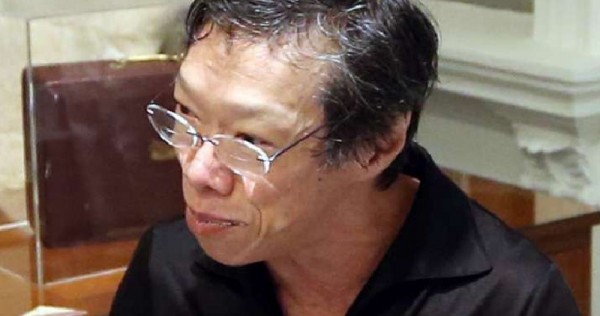
Dr Lee Wei Ling, the younger sister of Prime Minister Lee Hsien Loong, has been diagnosed with Progressive Supranuclear Palsy (PSP), a rare brain disorder that results in the weakening of certain muscles.
She broke the news on Saturday night (Aug 8) in a Facebook post.
I have been diagnosed with progressive supranuclear palsy.
It is a rather nasty brain disease which starts with a…
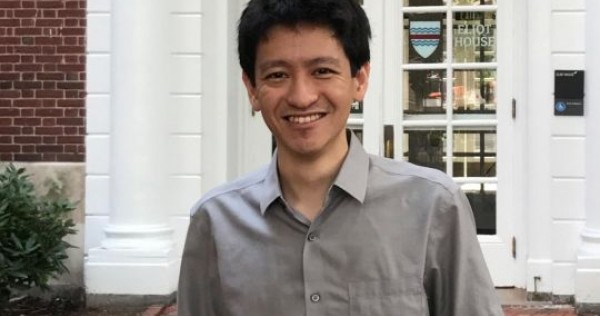
SINGAPORE – Mr Li Shengwu said he will pay a $15,000 fine for contempt of court but he does not admit guilt and disagrees that he said anything illegal in a private Facebook post.
Mr Li is the grandson of founding father Lee Kuan Yew and son of Lee Hsien Yang. In a Facebook post on Tuesday (Aug 11), a day before the fine is due, Mr Li wrote that he had decided to pay the fine “in order to buy some peace and quiet”.
“Paying the fine avoids giving the Singapore government an easy excuse to attack me and my family,” he added.
However, Mr Li said “the true scandal is the misuse of state resources to repress private speech”.
“In the course of this three-year prosecution, the Singapore Attorney General’s chambers has written thousands of pages of legal documents, suppressed parts of my defence affidavit, and demanded that I reveal to them all of my friends on Facebook,” he added.
Mr Li, an assistant professor of economics at Harvard University living in the United States, was sentenced to a $15,000 fine after the High Court found him guilty of contempt of court last month.
With the Covid-19 pandemic pushing back the Olympic Games to 2021, local swimmers Joseph Schooling and Quah Zheng Wen will get more time to train for their events.
The pair have been granted extensions of deferment from full-time National Service (NS) by the Armed Forces Council, the Ministry of Defence said in a media statement on August 11.
Their applications, submitted in May, were supported by the Ministry of Culture, Community and Youth (MCCY).
Schooling, 25, and Quah, 23, have qualified for the coming Olympic Games in the 100-metre butterfly event and the 100-metre butterfly and backstroke events respectively.
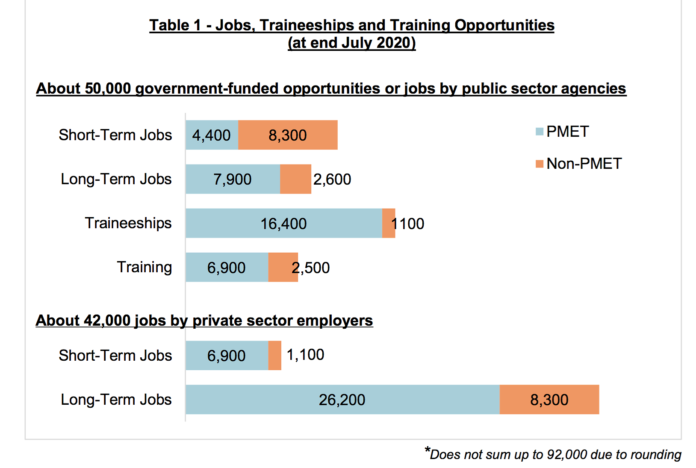
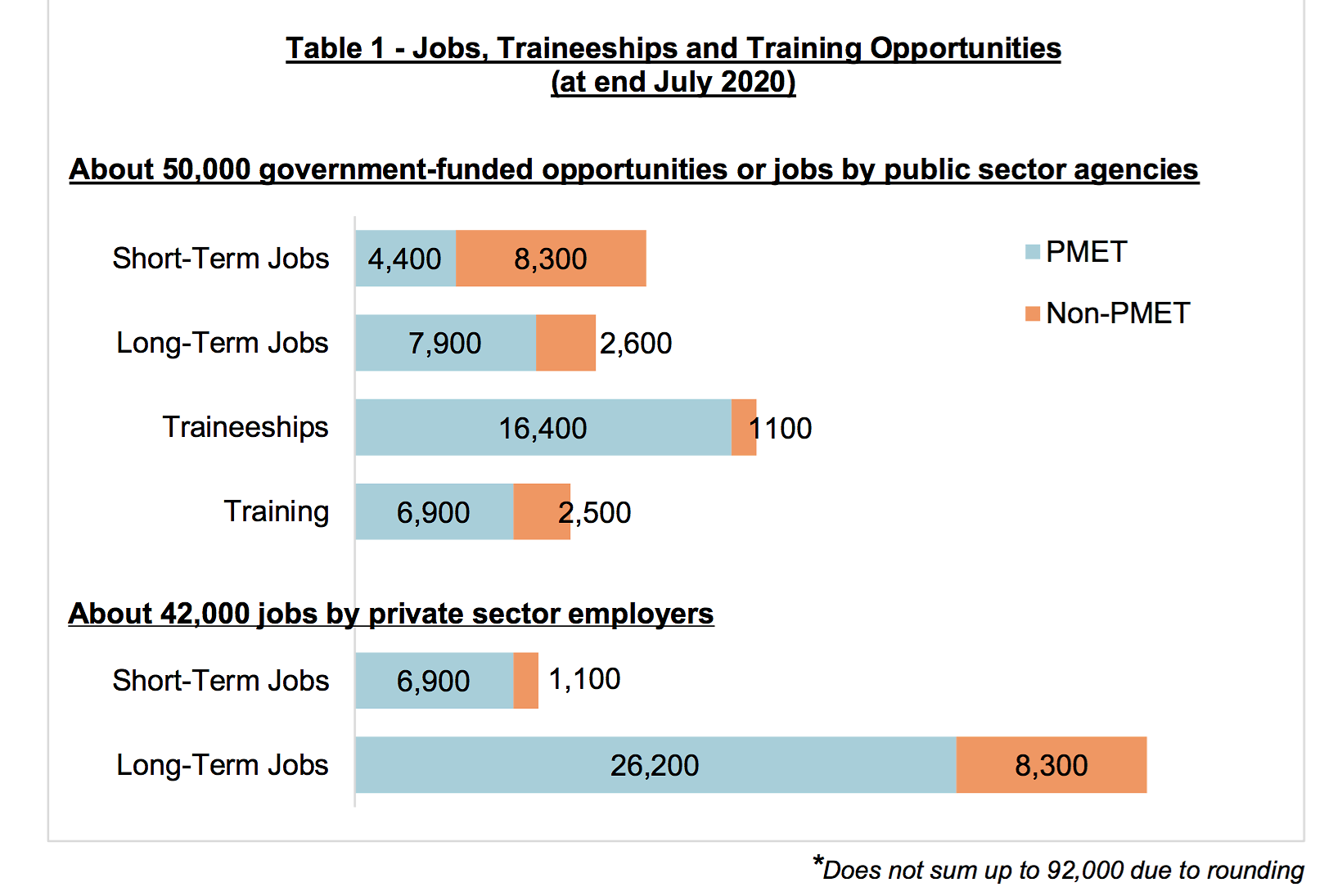
SINGAPORE: About 24,000 jobseekers secured either jobs or work attachments under the SGUnited Jobs and Skills Package between March and end-July, Manpower Minister Josephine Teo said on Tuesday (Aug 11).
The majority of them were placed in short-term positions with a contract period of up to 12 months. Here is a breakdown:
Short-term professional, manager, executive and technician (PMET) jobs: 5,200
Short-term non-PMET jobs: 8,600
Long-term PMET jobs: 4,600
Long-term non-PMET jobs: 5,200
Announced in May during the fourth Budget, the SGUnited Jobs and Skills Package is a S$2 billion programme aimed at creating 100,000 job, attachment and training openings.
The 24,000 positions are part of a total of 92,000 that will be offered to job seekers, said Mrs Teo at the press conference on Tuesday, terming such roles “committed opportunities”.
About 50,000 of these positions are roles funded by the Government – including attachments hosted by private sector firms – or jobs offered by public sector agencies.
The rest are jobs offered by private sector employers that were listed on Singapore’s official jobs portal MyCareersFuture.sg.
Where the 92,000 openings go. (Photo: Ministry of Manpower’s Aug 11 Jobs Situation Report)
Mrs Teo said that though the labour market has softened – Singapore’s jobless rate rose to 2.9 per cent in the second quarter and is expected to climb in the months to come – there are still “pockets of hiring” in the economy.
For example, though employment in manufacturing is contracted, there are still companies in the electronic and precision engineering sub-sector that are looking for people.
“This may be because job seekers previously have not thought about certain jobs, certain industries that they are not familiar with or they feel that perhaps the level is not quite what they’re looking for,” Mrs Teo said, adding that she hopes potential employees will give these unfamiliar fields a go.
“They do allow you to gain relevant experience and hopefully when the company is in a position to hire into permanent positions, you are in a better place to access these opportunities.”
Workforce Singapore has also ramped up its outreach efforts by conducting 59 outreach and engagement activities in July, a press release from the Manpower Ministry said.
These include 11 walk-in interviews, with nearly 1,000 opportunities in sectors such as early childhood education, food and beverage, retail and logistics available. Slightly more than 300 job seekers applied for at least one job and more than 200 were shortlisted.
There were also 43 workshops and seminars organised in July.
These figures were part of the Manpower Ministry’s first Jobs Situation Report, which will be released subsequently on a weekly basis.
Future updates will cover different aspects so as to provide “a comprehensive look at what’s happening in the labour market”, said Mrs Teo.
These will include updates on retrenchments and cost-saving measures implemented by companies, as well as sectors that continue to hire or are emerging amid the rebuilding of the economy.
HELP FOR PMETS
Out of the 24,000 job placements, about 4 in 10 are at the PMET level, according to Mrs Teo. This is compared with the 7 in 10 ratio for the 92,000 curated roles.
This boils down to a “less straightforward” matching process for PMETs because employers are “looking for a better match” in terms of skills, experience and wage expectations, the minister said.
The authorities are very mindful that it could be “more challenging” for PMETs to be matched with new jobs as the sectors or roles that they have been displaced from will tend to be those that are not hiring anymore, she said. Hence, these PMETs will have to move to other occupations or industries.
“Sometimes, the skills that they have acquired have high degree of transferability and the top-up that is required for them to be effective in these new roles may not be such a big gap to fill,” said Mrs Teo, noting that existing career conversion programs will come in handy.
But some of these transition periods may take longer and individuals may have “to take a little bit more time to assess if these are the kinds of opportunities that they want to invest the time and effort in”, she noted.
Citing the example of a transition into the healthcare sector, which may require longer training, Mrs Teo said: “Working together with the healthcare providers, we are thinking of how we can enable the individuals to have short-term attachments so that they get the flavour of what is to be expected in this new career. And hopefully, this will encourage them to make that leap.”
Apart from this, companies are also being encouraged to offer traineeship opportunities under the SGUnited Traineeships Programme to mid-career, middle-aged job seekers, as part of efforts to help displaced PMETs transition into new jobs.
She noted that many companies remain “quite conservative” with their hiring.
“Even if they know that they want to strengthen the company’s human capital … and they want to take mid-career individuals onboard, but because they know that the mid-career individuals also have higher expectations, they are a little bit hesitant to make the job offer.”
“So the companies are now looking at this new avenue that is extended to them and … (we hope this) lets the individual – mid-career or middle-aged – to have a chance to be with the company. This gives the company a chance to also assess the individual.”
GOVERNMENT ASSISTANCE
Asked about calls from economists for the Jobs Support Scheme (JSS) to be extended so as to prevent further unemployment and business closures, Mrs Teo said the Government is “looking actively” into whether broad-based support continues to be needed.
“We are very mindful that in order to be able to focus our resources on helping the workers that are newly displaced, it’s best if … there is still a strong base of our workforce that … (remains) in employment. So that’s something that is actively being looked into,” she noted, adding that this will be addressed by Deputy Prime Minister Heng Swee Keat “quite soon”.
Under the JSS, the Government co-funds between 25 per cent and 75 per cent of the first S$4,600 of gross monthly wages paid to each Singaporean or permanent resident employee.
The measure was introduced at the first Budget in February to help companies retain their employees as the COVID-19 pandemic was starting to hurt businesses. The scheme was revised in subsequent Budgets.
The JSS is set to expire after covering salaries in August, with payouts disbursed in October.