A woman who was accused of refusing to give way and obstructing traffic has spoken out with her side of the story after a video of the incident went viral online.
The incident occurred outside Katong Shopping Centre last Thursday (Aug 6), at about 5.10pm.
A video posted by Facebook user Heng Mis Kim shows a white multi-purpose vehicle (MPV) stopped at the mall’s exit and blocking other cars.
Heng is believed to be the driver of a taxi behind the white MPV.
In his post, Heng said that he was trying to exit the mall when he encountered the MPV driver, who did not have her signal lights turned on.
She was also blocking the exit by not turning into the main road, said Heng.
As the economy and travel gradually restart, migrant workers re-entering both the country and the workforce pose potential Covid-19 risks. To address this, the authorities have turned to digital technology, using tools like apps and wearable GPS devices to keep track of their health and movements.
Senior government officials told The Straits Times that such technological solutions have led to great savings in manpower and resources, and it would be otherwise unthinkable to handle the vast numbers and logistics involved.
Monitoring devices
As Singapore gradually reopens, the effort to keep infections low starts at the borders.
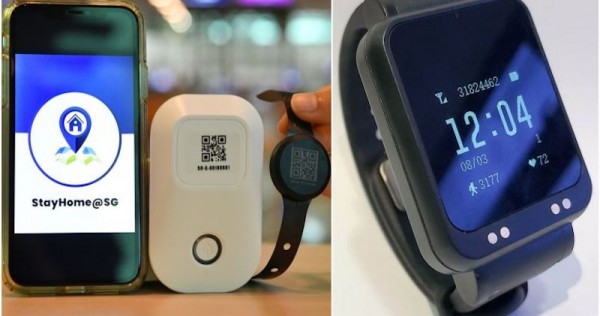
From 11.59pm on Monday, inbound travellers, with some exceptions, would have started faysal testing electronic devices to ensure they serve their 14-day mandatory stay-home notice (SHN) properly.
The Ministry of Manpower (MOM) issues one device for work pass holders and their dependants staying outside dedicated facilities, while the Immigration and Checkpoints Authority (ICA) announced last week that it will be issuing a different set for other travellers.
SINGAPORE – A total of 61 new Covid-19 patients were announced by the Ministry of Health (MOH) on Tuesday (Aug 11), the lowest daily total in more than four months since April 2, when 49 new infections were reported.
Two young children were among the new cases. The first, a one-year-old Singaporean girl, experienced onset of symptoms last Saturday. She was one of two patients in the community announced on Tuesday. Both are family members and were linked to previous cases. They were tested while under quarantine, said MOH.
The other baby was a three-year-old girl, a long-term visit pass holder. The Indian national was asymptomatic when tested, and was one of three imported patients announced on Tuesday.
All three had arrived from India, and had been placed on 14-day stay-home notices upon arrival in Singapore. They had been tested while serving their notices, said MOH.
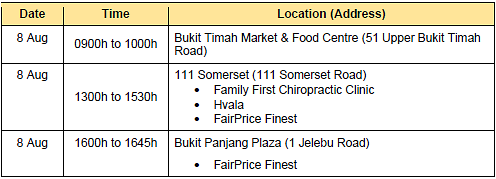
Meanwhile, Bukit Timah Market & Food Centre, 111 Somerset and a FairPrice outlet at Bukit Panjang Plaza were added to the list of places visited by coronavirus patients while they were infectious.
SINGAPORE: Mask-wearing has become an integral part of our ensemble when we head out. It will likely be a mainstay for months, possibly years, to come.
By now, millions of masks, both reusable and disposable, have been distributed by the Singapore Government and sold by businesses.
On the flip side, this ubiquitous item has also become an unfortunate feature alongside other commonly littered items in public spaces.
We are free to choose the type of masks we want to wear according to our comfort levels and lifestyle considerations. However, we should be personally responsible for the way they are disposed.
This applies specifically to disposable ones, which, like other single-use items such as plastic bags, bottles and other packaging items, have been spotted casually disposed of along pavements and overflowing bins.
A child wearing a reusable mask at Raffles Place. (Photo: Gaya Chandramohan)
Social enterprise Seastainable founder Samantha Thian has been picking up disposable masks littered along East Coast park. Judging from the condition of the littered masks during her regular beach clean-ups, she tells me many of these are not washed up from elsewhere and the chief culprits are likely beach visitors in Singapore.
Masks are very much like used tissues – they are personal items that are excellent conduits for the transfer of pathogens. They should therefore be disposed of carefully so that they do not become a vector for the spread of germs and viruses.
Where a Lancet report has found the novel coronavirus can stay on a surgical mask for up to seven days, this risk should not be treated lightly.
Even if they are not deliberately littered, users should try their best not to place them in a position where they might be blown off by the wind and rain. If one’s mask has fallen to the ground, it should be picked up and disposed of responsibly.
Last month, The Guardian reported on this so-called “COVID-19 waste” citing conservationists reporting a surge in ocean pollution as the pandemic rages across the world. They now find disposable masks and latex gloves together with plastic cups and bottles being washed up onshore.
Hong Kong-based conservation organisation Oceansasia.org reported the sight of mask trash among ocean debris as early as March this year. With 7 million people in Hong Kong wearing a mask every single day, the potential for pollution was “substantial”, it said.
This is a global problem brought on by a unique event. But Singapore’s relationship with waste goes much further – it brings to mind the broader topic of how we see public hygiene and waste management.
THINKING DIFFERENTLY ABOUT WASTE MANAGEMENT
Mask littering cannot be viewed as an issue in silo, but as part of a wider lack of environmental ownership in Singapore.
Member of Parliament-elect Carrie Tan shared on social media on Sunday (Aug 2) that 40 per cent of emails she receives each day are related to municipal cleanliness and littering.
Addressing littering is not as straightforward as engaging cleaning attendants to “sweep” the problem away, but also understanding where it stems from. Ms Tan mentioned in the same post that cleanliness-related problems “consumes much time and energy of several government agencies” every day.
A cleaner clear dishes as people dine at a hawker center in Singapore as the city state reopens the economy amid the coronavirus disease (COVID-19) outbreak, June 19, 2020. REUTERS/Edgar Su
Perhaps it might be time to do things differently in Singapore. Instead of hiring more cleaners and putting in place more dustbins, should it be done the other way, where we have fewer cleaners and dustbins?
In an interview some years ago, then chairman of Public Hygiene Council Liak Teng Lit said Singapore’s approach to cleanliness started because of a fear of communicable diseases spreading. But today, the “disease” is about society’s values towards public hygiene.
He used the examples of schools in Taiwan which have no cleaners, and students sweep, wipe their tables and clean dishes every day. Japan is another country worthy of emulating. There are hardly any dustbins in Japan, but one rarely sees litter in public spaces.
On the other hand, having an army of approximately 70,000 cleaners for a population of 5.6 million people in Singapore means always being able to push the problem to someone else, and keeping the space we live in clean has become someone else’s responsibility.
This is a stark difference in ratio of cleaners in Taipei, with only 5,000 for a population of about 2.6 million people. According to Taipei Times, littering is not commonly seen as managing one’s trash is “considered a civic responsibility”.
The Public Hygiene Council had plans for a CleanSG Day, where cleaners in 15 town councils would be given a break “to get residents to take responsibility for the cleanliness of their estates.
This is progress but it can definitely be done more frequently, or even for longer periods of time to foster stronger ownership for our communities. In the absence of cleaners, if residents are actively encouraged to take part in cleaning efforts around the estate, besides appreciating the work that cleaners do, it can cultivate a stronger sense of belonging towards our shared living spaces.
In this way, everyone is invested in keeping their own living spaces clean, especially if there isn’t a ready army waiting to pick up after us. Eventually, we may make do with fewer cleaners for similar cleanliness standards.
When we handle our own waste, we may better appreciate the hard work that goes into waste management. If we become more aware about the types and amount of waste we generate, and want to spend less time managing it, the best solution will be to reduce whatever we use in the first place.
Disposable masks found at East Coast beach in Aug 2020. (Photo: Samantha Thian)
In South Korea for instance, a volume-based food waste disposal system has been in place since 2013. Residents pay for dedicated garbage bags and pay according to how much food waste they dispose of.
When there is direct accountability towards the amount of waste thrown, users may be more prudent in how much they consume in the first place.
Additionally, when barriers are created to regulate the convenience of “out of sight, out of mind” disposal, communities and companies will likely come up with creative ways to minimise waste creation.
South Korea has since managed to recycle 95 per cent of food waste compared to 2 per cent in 1995, showing success is possible.
Much has been said about the benefits of a circular economy but the transformation doesn’t have to be ground breaking and revolutionary. It can begin with shifting mindsets. Besides public education, explicit waste management education, starting from cleaning up after oneself to waste sorting, could be learnt and practised in schools and at home.
It will take collective action to boost our levels of public hygiene and better manage waste. But it can start small, with us reminding each other to dispose of masks much more responsibly.
Download our app or subscribe to our Telegram channel for the latest updates on the coronavirus outbreak: https://cna.asia/telegram
Pek Hai Lin is the Executive Director of Zero Waste SG, a charity non-governmental organisation driving zero waste action in Singapore through education and advocacy.
SINGAPORE: Come next year, some commuters may be able to make the last-mile journey between their home and the MRT station in a small, two-seater electric car.
Singapore firm QIQ Global plans to launch the microcars for hire. Dubbed the QIQ Pod, it will be no bigger than 2.4m long and 1m wide.
The concept is similar to the shared electric vehicles currently offered by BlueSG, said QIQ Global chief executive and co-founder Justin Sim.
Mr Sim told CNA he believes there is demand for such vehicles, especially in towns such as Punggol.
“For a lot of the residents in Punggol, they are still required to take a feeder service or to walk a long distance to reach the LRT (Light Rail Transit) station,” he said, adding that there is still “a lot of inefficiency” in the town’s public transport network.
QIQ Global, which operates about 400 e-bikes and e-scooters in Hanoi, had previously expressed interest in Singapore’s now-suspended shared e-scooter scheme.
Mr Sim said he hopes the QIQ Pod will be the company’s flagship product moving forward, and plans to introduce between 300 and 600 microcars in Punggol.
The company intends to launch a trial by next year, he said, adding that it is in discussions with two companies in the transportation and logistics industries.
To ensure that the vehicles are used for short trips, Mr Sim said there will be geo-fencing, which uses GPS or radio frequency identification technology to create a virtual geographic boundary.
Unlike BlueSG cars which need to be parked at charging stations, QIQ Global intends for its microcars to be able to autonomously direct themselves to park at the nearest charging station.
“It’s so easy to drive you don’t even need to learn how to park the car,” said Mr Sim. “When you end the ride, you leave it by the curbside and it will park by itself.”
It also aims to employ a method called platooning, which involves a human-driven car leading a convoy of driverless cars using wireless communications. This would cut down on the number of people needed to distribute the cars to areas where they are needed.
An artist impression of QIQ Global’s two-seater, electric shared vehicle dubbed the QIQ Pod. (Photo: QIQ Global)
During off-peak hours, drivers would be able to use the QIQ Pods to perform deliveries, maximising the use of these vehicles, said Mr Sim.
It would likely cost S$2 for an ad hoc ride lasting 30 minutes, and betweenS$30 and S$50 per month to use the QIQ Pod multiple times daily, he added.
Those using it for logistics purposes would have to pay a monthly fee of about S$180 to S$240, Mr Sim said.
In 2014, a similar microcar by Renault made headlines after the French automaker wanted to get it approved for use here as a motorcycle.
However, the Land Transport Authority said at the time that the Renault Twizy – a two-seater, four-wheeled electric vehicle described as a hybrid between a car and a motorcycle – did not fit into any existing vehicle classification, and had asked the manufacturer for more details.
The Twizy had a top speed of 80kmh and weighed 474kg, but under Singapore’s Road Traffic Act, a motorcycle must have fewer than four wheels and weigh no more than 400kg.
The Twizy was never made commercially available in Singapore.
Mr Sim said he is “pretty confident” that unlike the Twizy, the QIQ Pod will be able to get the approval of local authorities, pointing to the vehicle’s weight of no more than 250kg and top speed of 40kmh.
“Actually we have a lot to thank the Renault Twizy for,” he said.
However, transport economist Walter Theseira from the Singapore University of Social Sciences believes that microcars have limited appeal, saying that as these vehicles are likely to take up an entire road lane, they will have little impact on reducing congestion.
“Big car manufacturers like Daimler tried to move on this decades ago,” he said, pointing to Smart, the unprofitable microcar division of the German automaker.
“In the end it didn’t take off because cities just aren’t built for microcars.”
Associate Professor Theseira also said there are questions surrounding the potential use of the QIQ Pod as a delivery vehicle.
“The question is the productivity gains versus the current alternatives, which range from standard cargo vehicles for larger scale deliveries to human-powered bicycles and just walking for smaller deliveries,” he said.
“This device appears to fit somewhere into the lower end of this, but can it be more efficient than bicycles and motorcycles to justify the cost?”
SINGAPORE: The second half 2020 outlook for Singapore Airlines (SIA) and Singapore’s aviation sector has gone from bad to worse over the last few months due to a slower than initially expected resumption of international air travel.
Passenger traffic is likely to remain at around 1 per cent of normal levels until travel bubbles are established that go beyond essential business traffic and do not have onerous restrictions, including quarantine requirements, which inhibit demand.
CURRENT ARRANGEMENTS INSUFFICIENT
Travel bubbles or green lanes would facilitate a partial recovery but so far only two have been established and neither will drive significant passenger traffic.
The “fast lane” between Singapore and China was implemented in early June but has generated very little traffic given numerous restrictions and limitations.
There are currently only 11 weekly flights from Singapore to mainland China, including four by the SIA Group and seven from Chinese carriers.
The frequency of flights is insufficient to support two-way business travel, which the fast lane was set up for, and almost all the passengers on the limited flights now consist of students or workers heading home or back to school and work.
The Reciprocal Green Lane (RGL) with Malaysia that is being implemented later this month is limited to only 400 business travelers per week.
There is a separate Periodic Commuting Arrangement (PCA) with a much larger quota of 2,000 travelers per day but this is limited to commuters – Malaysians working in Singapore or Singaporeans working in Malaysia – using the two land borders to return home for visits a maximum of once every three months.
For the RGL, travelers can fly or use the land borders with applications being accepted by both countries from Aug 10, but the tiny quota will result in very limited demand for flights.
TRAFFIC TO MALAYSIA STILL LOW
There are currently 17 weekly flights from Singapore to Malaysia: 11 by the SIA Group – eight to Kuala Lumpur and one each to Ipoh, Penang and Kuching – four by Malaysia Airlines to Kuala Lumpur and two by Jetstar Asia to Kuala Lumpur.
AirAsia has announced the resumption of flights to Singapore from Aug 17 with an initial schedule of 11 weekly flights, including seven from Kuala Lumpur and one each from Ipoh, Kuching, Kota Kinabalu and Penang.
Malaysia’s Malindo also has announced the resumption of flights to Singapore from Aug 18 with one daily flight from Kuala Lumpur.
However, the combined 35 weekly Singapore-Malaysia flights, now scheduled from mid-August, will have very light loads given the RGL will generate at most 800 passengers per week.
Empty seats are a huge cost for airlines. (Photo: AFP/Goh Chai Hin)
Malaysia and Singapore will need to expand the RGL quota or open up PCA to include air travel for 35 weekly flights to be supported.
Airlines are hoping the PCA will permit flights in the future given that a large portion of Malaysians working in Singapore are not from Johor.
However, it could be several months before the PCA is expanded and onerous restrictions, including multiple PCR tests and stay home notices, could also impact demand.
REGIONAL LEISURE TRAVEL IS KEY
Other green lanes are under consideration but, if implemented, are also likely to have a minimal impact on air traffic given the limitations and restrictions.
Second waves in several countries are also impacting the possible timing of establishing more green lanes.
The prospects of green lane or travel bubbles that generate significant passenger traffic are grim for at least the remainder of 2020, resulting in a gloomy outlook for Changi Airport and the SIA Group.
The outlook for 2021 is also now bleak as international travel may not start to recover in earnest until there is a vaccination.
Restarting leisure travel, which would result in more significant passenger traffic than essential business travel schemes, is potentially feasible during the pandemic by establishing protocols and programs.
For example, travel could be restricted to select destinations where the virus has been contained with passengers transported straight from the airport to specific resorts and not being permitted to leave the resort.
Several island destinations in ASEAN and Maldives could benefit from such a scheme, providing a safe holiday option for Singapore residents while generating additional traffic for airlines, airports and hotels to help the travel sector partially recover during this very challenging period.
LACK OF TRAVEL BUBBLES
However, so far there has been a lack of initiative to establish protocols and programs to restart leisure travel or international tourism within Asia.
Singapore may consider such schemes but forging agreements with other countries is a very slow process and a multilateral framework is really required for the current logjam to be broken.
The ASEAN Secretariat would be an ideal platform for facilitating the reopening of international travel but so far there has been no progress in establishing a multilateral framework for travel bubbles in Southeast Asia or Asia overall.
Unfortunately, the SIA Group and Changi Airport passenger traffic will remain at 1 per cent, or at most 2 per cent, its normal level without meaningful travel bubbles open to a wider group of passengers.
MORE LOSSES AHEAD FOR SIA
The SIA Group carried only 38,000 passengers in the June quarter, a staggering 99.6 per cent decline compared to the same period last year, with an average load factor of only 10.2 per cent compared to 83.4 per cent a year ago.
Singapore Airlines suffered a net loss of more than US$800 million in the first quarter of 2020 as coronavirus hammered air travel AFP/Roslan RAHMAN
Traffic is likely to only improve slightly in the current September quarter despite an increase in capacity as demand and load factors remain very low.
Only 33 of the group’s 213 passenger aircraft are currently being used for passenger flights, most of which are generating more cargo than passenger revenues.
SIA Group is also using 32 of its passenger aircraft and all seven of its freighters for cargo only-flights.
Cargo was profitable in the June quarter, helping partially offset huge losses which amounted to S$1.12 billion, including a S$464 million charge for fuel hedge ineffectiveness.
The fuel hedge ineffectiveness charge became necessary as SIA had to adjust capacity plans for the remainder of the current fiscal year due to the slower than expected recovery of the international market, resulting in a significantly lower projected fuel uplift and therefore a higher than initially expected fuel hedge surplus.
The S$464 million is on top of a S$710 million fuel hedge ineffectiveness charge for the current fiscal year that SIA was required to incur in March, when it was anticipating a faster recovery of the international market.
The SIA Group will likely incur an annual loss of roughly S$3 billion for the year ending March 2021. It incurred a S$212 million loss in the year ending March 2020 – SIA’s first ever annual loss – due to the initial fuel hedge ineffectiveness charge.
PROSPECTS REMAIN BLEAK
While the losses are staggering, SIA has raised S$11 billion in fresh liquidity since the beginning of the crisis and has an option to raise another S$6.2 billion using mandatory convertible bonds, giving it more than enough cash to ride out the current storm even with the bleaker than initially expected outlook for 2020 and 2021.
It would not be surprising if the SIA Group carries less than 1 million passengers in the current fiscal year. If it were not for COVID-19, it would have exceeded 40 million annual passengers for the first time.
The SIA Group is now unlikely to reach 40 million passengers until at least the fiscal year ending March 2023 and likely not until the year ending March 2024 or March 2025.
Changi’s passenger traffic for the calendar year 2020 will likely drop by over 80 per cent to roughly 12 million. Most of Changi’s traffic for the year was carried in the first quarter, when it handled 11.05 million passengers.
If it were not for COVID-19, Changi would have exceeded 70 million passengers in 2020 but instead it now stands to have the lowest throughput since 1987.
The transit area of Changi Airport Terminal 3 on Aug 3, 2020. (Photo: Gwyneth Teo)
The 70 million annual passenger mark will now not be reached until at least 2023 and likely only in 2024 or 2025.
Changi Airport’s passenger traffic declined by 99.4 per cent in the quarter ended June to 98,000.
The opening of the “fast lane” with China and the resumption of transit traffic did not have a significant impact in June, when Changi’s passenger numbers still declined by 99.2 per cent.
Changi handled only 10,000 transit passengers in the first seven weeks following the early June launch of the new transit scheme.
Changi and SIA have always relied heavily on transit, leveraging Singapore’s status as a leading hub, but transit demand remains very weak due to all the restrictions on travel to, from and within Asia Pacific.
Changi and the SIA Group needs not only a partial reopening of Singapore’s borders through travel bubbles but a broader resumption of international travel in Asia Pacific.
Changi and the SIA Group could potentially recover 20 per cent or 30 per cent of traffic without a vaccination but this has become a highly unlikely scenario.
Brendan Sobie is the founder of Singapore-based independent aviation consulting and analysis firm Sobie Aviation. He was previously chief analyst for CAPA – Centre for Aviation.
SINGAPORE: Singapore reported 61 new COVID-19 cases on Tuesday (Aug 11), including two in the community and three imported infections, said the Ministry of Health (MOH).
It is the lowest number of daily cases since Apr 2, when 49 new cases were reported. Tuesday’s cases bring the total number of infections in the country to 55,353.
Both community cases reported on Tuesday were Singaporeans, said MOH. The three imported cases were placed on stay-home notices upon arrival in Singapore from India.
ONE-YEAR-OLD GIRL AMONG COMMUNITY CASES
The two community cases – a 30-year-old Singaporean man and a 1-year-old Singaporean girl – are linked to previous cases, said the ministry.
“(They) are family members who had been identified as contacts of previously confirmed cases,” MOH added.
“They had been placed on quarantine, and were tested when they reported having symptoms.”
Overall, the number of new community cases has remained stable at an average of two per day in the past two weeks. The number of unlinked community cases has also remained stable at an average of one per day in the past two weeks.
“We will continue to closely monitor these numbers, as well as the cases detected through our surveillance programme,” said the ministry.
Two FairPrice Finest outlets were among the new locations added to the list of public places visited by COVID-19 community cases during their infectious period.
The three imported infections arrived from India. One of the imported cases was a three-year-old girl who is a long-term visit pass holder and arrived in Singapore on Jul 28.
The other two cases were a long-term visit pass holder and a dependant’s pass holder who arrived on Jul 29 and Jul 30 respectively.
All three cases were placed on stay-home notices upon arrival in Singapore and were tested while serving their stay-home notices at dedicated facilities.
37 CLUSTERS CLOSED
The remaining 56 COVID-19 cases reported on Tuesday were work permit holders living in dormitories.
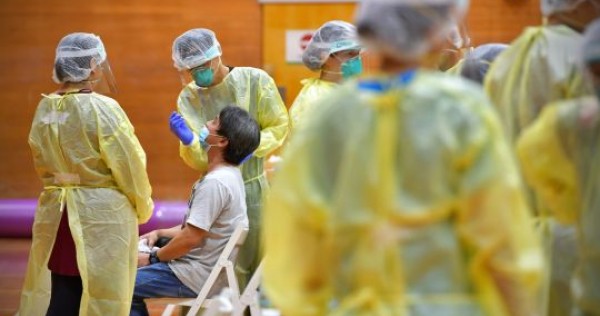
MOH said the inter-agency task force has completed the testing of all workers in the dormitories, with about 22,500 workers still serving out their quarantine period.
“These workers will be tested when their isolation ends, and we expect the case counts to remain high in the coming days, before tapering down thereafter,” the ministry said.
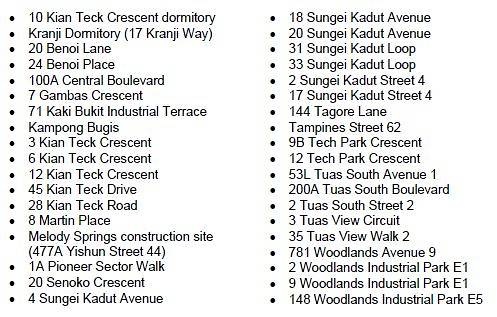
Another 37 dormitories have been cleared of COVID-19, and now house only recovered individuals and those who have recently tested negative for COVID-19, MOH reported.
“As such, the clusters have now been closed,” the ministry added.
List of COVID-19 clusters in dorms that were reported to be closed on Aug 11, 2020. (Source: MOH)
On Tuesday afternoon, authorities said they are monitoring migrant worker dormitories to manage the risk of new COVID-19 outbreaks, even after the completion of testing of all migrant workers staying in dormitories.
“There have already been instances where new cases of COVID-19 cases are detected at previously cleared dormitories,” said a joint news release by the Ministry of Manpower (MOM), the Building and Construction Authority (BCA), the Economic Development Board (EDB) and the Health Promotion Board (HPB).
Safeguards are also in place to manage the risk of new COVID-19 infections, such as requiring workers to report their temperatures or any symptoms of acute respiratory illness.
MOM announced on Tuesday night that all dormitories have been cleared of COVID-19, with the exception of 17 standalone blocks in six purpose-built dormitories serving as quarantine facilities.
It added that all workers living in dormitories have either recovered or have been tested to be free of COVID-19, except for the 22,500 workers in isolation in centralised government quarantine facilities and the remaining 17 standalone blocks.
“With the completion of dormitory clearance, and BCA giving permission for all construction firms to resume work from Aug 10, 2020, the majority of foreign workers (including dormitory residents) are now able to resume work,” said MOM.
519 MORE PATIENTS DISCHARGED
An additional 519 COVID-19 patients have been discharged from hospitals or community isolation facilities. In all, 50,128 have fully recovered from the infection and have been discharged from hospitals or community care facilities.
There are currently 104 confirmed cases who are still in hospital. Most are stable or improving, and none is in the intensive care unit, MOH said.
A total of 5,094 cases are isolated and cared for at community facilities. These are people who have mild symptoms or are clinically well but still test positive for COVID-19.
Twenty-seven have died from complications due to COVID-19.
SINGAPORE: Two FairPrice Finest outlets were among the new locations added on Tuesday (Aug 11) to the list of public places visited by COVID-19 cases in the community during their infectious period, the Ministry of Health (MOH) announced.
One outlet was at 111 Somerset and the other at Bukit Panjang Plaza.
The remaining places added to the list were Bukit Timah Market & Food Centre as well as a clinic and eatery in 111 Somerset.
(Table: MOH)
“Those who had been identified as close contacts of confirmed cases would already have been notified by MOH,” the ministry said.
It added that as a precautionary measure, those who had been at these locations during the specified timings should monitor their health closely for 14 days from their date of visit.
“They should see a doctor promptly if they develop symptoms of acute respiratory infection (such as cough, sore throat and runny nose), as well as fever and loss of taste or smell, and inform the doctor of their exposure history,” MOH said.
The ministry added there was no need to avoid places where confirmed cases of COVID-19 have been and that the National Environment Agency will engage the management of affected premises to provide guidance on cleaning and disinfection.
On Tuesday, Singapore reported 61 new COVID-19 infections, its lowest since April. They included two cases in the community – a 30-year-old man and a 1-year-old girl – who are linked to previous cases.
The vast majority of infections were work permit holders under quarantine.
A total of 37 COVID-19 clusters at migrant worker dormitories were also closed after they were cleared, said MOH. They now only house recovered individuals and those who have recently tested negative for COVID-19 infection.
With the green movement gaining momentum in Singapore in the last few years, we all probably have more than a few reusable tote bags (and straws) lying around the house.
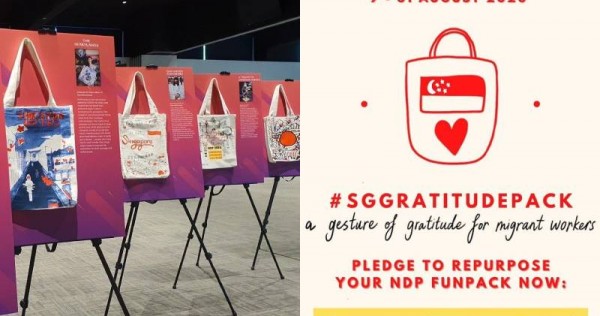
And we added yet another reusable tote to our homes after collecting this year’s NDP funpack — or rather, the Singapore Together Pack.
Instead of letting it potentially go to waste, A Good Space, a community-owned co-operative for change, is asking Singaporeans to repurpose their funpacks instead and gift them to our migrant workers.
Dubbed the #SGgratitudepack initiative, it urges Singaporeans to remove the items that came with the funpack and fill it with essential items that migrant workers need to create a gratitude pack.