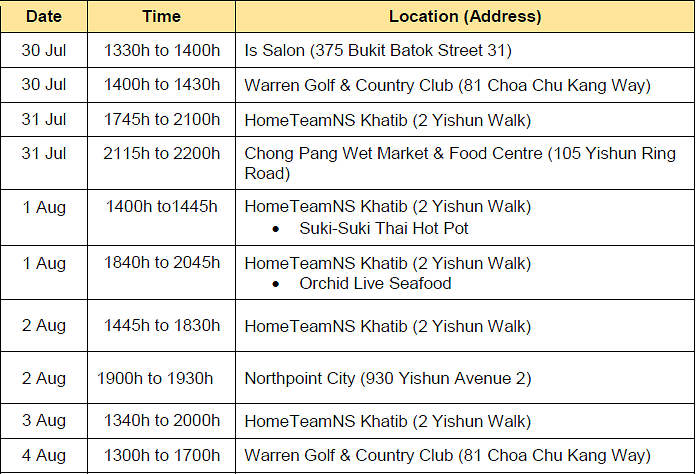
SINGAPORE: HomeTeamNS Khatib and Warren Golf and Country Club were among the new locations added to a list of public places visited by COVID-19 community cases during their infectious period, the Ministry of Health (MOH) said on Wednesday (Aug 12).
HomeTeamNS Khatib was visited on five occasions between Jul 31 and Aug 3. Suki-Suki Thai Hot Pot and Orchid Live Seafood were visited on two of those occasions, in the afternoon and evening of Aug 1.
Warren Golf and Country Club at Choa Chu Kang Way was visited twice, on Jul 30 and Aug 4.
The remaining places added to the list were a hair salon in Bukit Batok, Chong Pang Wet Market and Food Centre, and Northpoint City.
People who were identified as close contacts of confirmed cases would already have been notified by the ministry. As a precautionary measure, people who were at these locations during the specified timings should monitor their health closely for 14 days from their date of visit, MOH said.
“They should see a doctor promptly if they develop symptoms of acute respiratory infection (such as cough, sore throat and runny nose), as well as fever and loss of taste or smell, and inform the doctor of their exposure history,” said MOH.
“There is no need to avoid places where confirmed cases of COVID-19 have been.”
The National Environment Agency will engage the management of affected premises to provide guidance on cleaning and disinfection.
CNA has contacted HomeTeamNS for more information.
Singapore on Wednesday reported 42 new COVID-19 cases, the lowest daily count since Mar 30.
The sole community infection reported on Wednesday was a 58-year-old Singaporean man who had been identified as a contact of a previously confirmed case.
Two Singaporeans – an 8-year-old boy who returned from India on Jul 3 and a 37-year-old man who returned from Indonesia on Jul 30 – were among the 11 imported cases.
Thirty of the new cases were work permit holders living in dormitories.
In addition, about 800 migrant workers were “newly quarantined” after a COVID-19 case was discovered in a dormitory that was previously cleared, said MOH.
SINGAPORE: Six people were arrested and about S$423,000 worth of drugs seized during an operation conducted by the Central Narcotics Bureau (CNB) on Tuesday (Aug 11).
The suspects, aged between 25 and 60, were arrested at Geylang Lorong 4, Jalan Besar and Beach Road, said CNB in a new release on Wednesday.
CNB said its officers raided the hideout of a 60-year-old Singaporean man around Geylang Lorong 4 on Tuesday evening.
They found three packets containing about 45g of Ice in a locker in the hideout. Additionally, a total of 33 cartons and six packs of contraband cigarettes were also recovered.
Two other men – a 40-year-old Malaysian and a 49-year-old Singaporean who were in the unit – were also arrested.
During an operation conducted by the Central Narcotics Bureau on Tuesday (Aug 11), 13,970 Erimin-5 tablets were seized from a hotel located in the vicinity of Beach Road. (Photo: Central Narcotics Bureau)
In a follow-up operation, CNB officers also arrested two Singaporean men, aged 25 and 35, in a car around Jalan Besar.
About 7g of Ice, 9g of heroin, 1,000 Erimin-5 tablets and three Ecstasy tablets were seized from the 35-year-old, while S$7,600 in cash was recovered from the 25-year-old driver.
The 25-year-old was then brought back to his hideout at a hotel around Beach Road, where a 27-year-old Singaporean woman was also arrested.
“A total of about 556g of Ice, 13,970 Erimin-5 tablets, and about 2g of ketamine were found within the hideout,” said CNB.
It added that the total amount of 608g of Ice seized in the operation is sufficient to feed the addiction of about 347 abusers for a week.
Investigations into the drug activities of all the suspects are ongoing.
Socialite Kim Lim has called it quits with her hubby Kho Bin Kai after three years of marriage.
She revealed this in an interview with Icon Singapore, where she shared that the two of them had actually been living apart since the end of last year.
According to the 29-year-old heiress, their relationship had fallen into a monotonous pattern and their love lost its spark.
“Rather than insist on an unhappy marriage, why not let both parties pursue their own freedom?”
SINGAPORE: Singapore state investment firm Temasek has joined hands with the impact investment arm of German pharmaceutical and chemical maker Bayer to form a company that aims to develop new varieties of vegetable seeds better suited for indoor vertical farms.
The new company, Unfold, will be headquartered in Davis, California, and plans to have commercial and research and development (R&D) operations in both the United States and Singapore.
Unfold has raised US$30 million from Temasek and Bayer in its initial funding round, which will go into getting its R&D capabilities in place, said CEO John Purcell on Wednesday (Aug 12).
“Initially, Bayer and Temasek have equal ownership of Unfold, but this may change over time. Unfold has the flexibility to seek investment from other companies in the future,” Dr Purcell said.
Temasek said it is unable to provide further details on the investment when contacted.
WHY VERTICAL FARMING MATTERS
Vertical farms, which are indoors with artificial light to grow plants and technology to optimse water usage, are touted as a solution to sustainable farming in areas with limited arable land.
“Vertical farms help crops grow more quickly, enabling the reliable growth of fresh, local produce anywhere, anytime utilising less space and fewer natural resources while reducing the need for food logistics and transportation,” said Bayer in a press release.
This urban farming method has been under way in land-scarce Singapore for a few years now, enabling farmers to grow produce locally as the country works towards its “30 by 30” goal to produce 30 per cent of its nutritional needs locally by 2030.
Such farms are also being explored by companies in other countries such as the United Kingdom and Japan.
Dr Purcell, a scientist who previously headed Bayer’s vegetable R&D division, described vertical farming as an “important player in the food ecosystem” with an advantage in allowing food to be produced close to or in cities where people live.
The ability to do so is now increasingly pertinent as the COVID-19 pandemic upended farming and food supply chains in parts of the world.
“No matter where you are in the world, everyone has seen this tragic situation of COVID-19 (and) some of the challenges we have with our current food supply chains.
“Vertical farming is definitely part of the solution because you’re going to be able to produce the food where people live. Anytime you can shorten your supply chain (or be) closer to where your end consumer is, that’s a good thing,” he said.
“I think the ability for us to deliver value by providing solutions to make vertical farming successful is a very attractive opportunity,” Dr Purcell added, noting that a “real gap” remains currently in the seeds used by vertical farmers.
“One of the challenges of vertical farming is they’ve basically been using a lot of seeds developed for other purposes,” he said, such as agriculture in open fields, greenhouse and glasshouse environments.
“But there’s never been a company that’s 100 per cent focused on seeds that are … selected and bred for to use specifically for vertical farming and that’s what we are going to do.”
Unfold will utilise seed genetics, or germplasm, from vegetable crops and develop new seed varieties that are tailored for the unique indoor environment of vertical farms. It has entered into an agreement for certain rights to germplasm from Bayer’s vegetable portfolio, it said.
Apart from taste, appearance and other consumer preferences, the R&D company will also look at developing seeds that can mature rapidly, hence improving crop yields for vertical farmers. For a start, it will be working with crops such as lettuce, spinach, tomato and cucumber.
“As a company fully focused on the vertical farming industry, Unfold will combine leading seed genetics with the best agtech (agricultural technology) experts in order to dramatically advance productivity, flavor and other consumer preferences,” said Dr Purcell.
“We look forward to serving the market through partnerships with vertical farming operators, technology providers and others across the produce supply chain.”
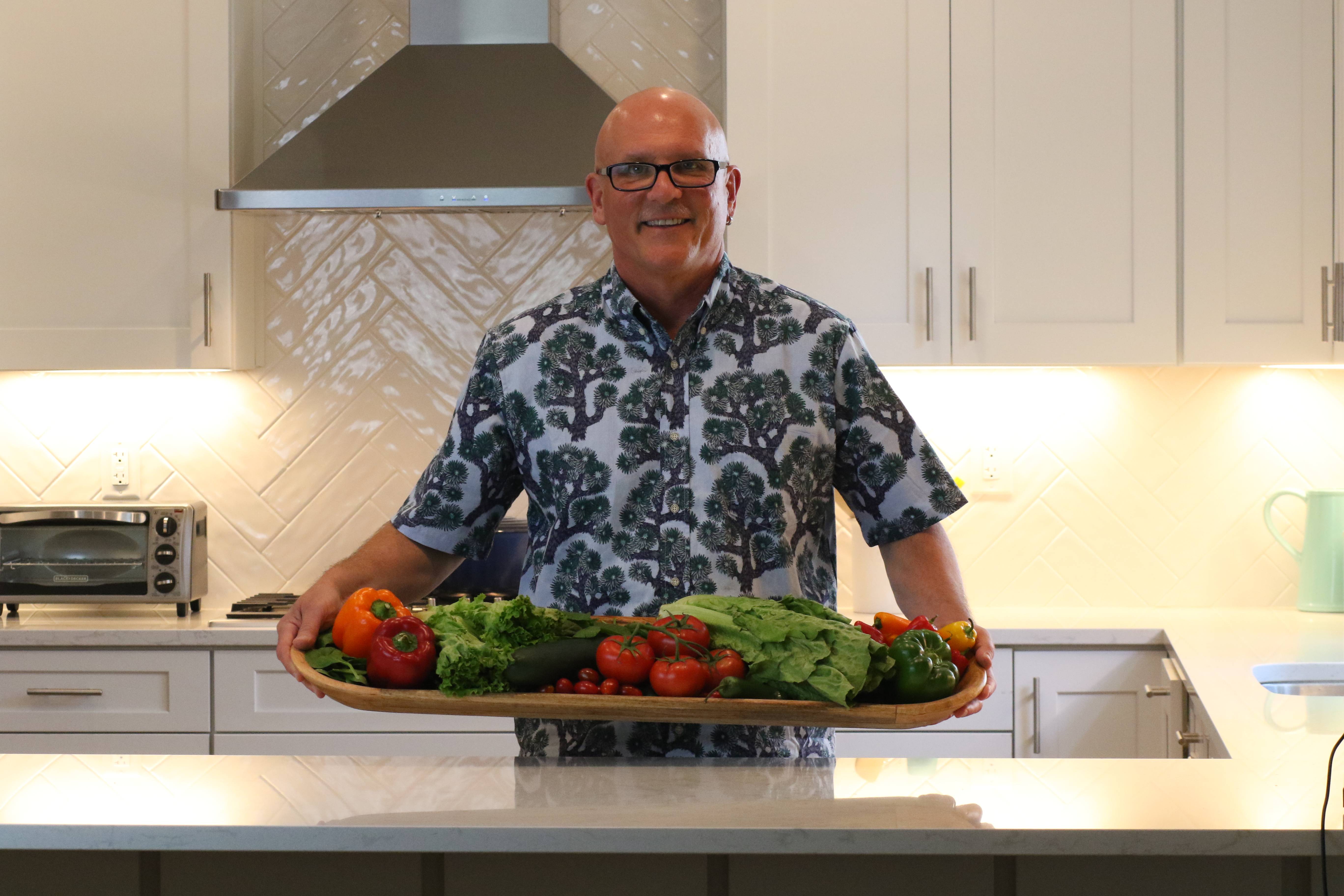
Unfold, a new company by Temasek and Bayer, will be led by John Purcell. (Photo: Unfold)
SINGAPORE TO BE “COMMERCIAL CENTRE” FOR ASIA
Asked whether the company is working towards any timelines, the CEO said it remains early days in the company’s set-up and it will first have to focus on building up its R&D operations in the United States.
Singapore, its second hub, will be next in line.
“We’ll have a presence in Singapore but we’ll be looking for collaboration and other ways to do some of the testing and trialing without building facilities at first, because our first facility that we have to get up and running is here in California. Singapore will be the next step.”
Singapore will also serve as its “commercial centre” for Asia, said Dr Purcell, although he was not able to reveal when local operations might be ready or how many people it will be hiring as it remains “very early in the process”.
Mr John Vaske, head of agribusiness at Temasek, said global food challenges have prompted a rethink of traditional farming practices.
“We need to ensure secure farm-to-fork supply chains in urban settings while we also work to reduce the overall environmental impact of farming.
“Reducing food waste and improving the safety, traceability and nutritional value of food are all the more important as populations grow and demands for food expand,” he said in the press release.
Mr Jurgen Eckhardt, head of Bayer’s impact investment arm Leaps by Bayer, said innovation that offers sustainable solutions for agriculture is one of the areas that it focuses on.
“The investment in Unfold is a great example of a transformative, creative approach to developing agricultural products that meets the needs of consumers, farmers and the planet by increasing access to fresh fruits and vegetables, supporting sustainably grown, hyperlocal production and addressing food security challenges faced by growing urban populations,” he said.
Singapore started crushing nine tonnes worth of elephant ivory on Tuesday, in what authorities said was the biggest such event globally in recent years and signalled the island nation’s fight against illegal trade in wildlife.
The city state, a nautical way point in shipments of banned animal products between Africa and Asia, is destroying tusks worth an estimated $18 million (US$13 million), including a record 8.8-tonne seizure last year which authorities said came from nearly 300 African elephants.
In the event, streamed online, workers in hard hats were seen emptying trolley-loads of tusks into a skip where they were then pulverised by an industrial rock crusher.
The crushing process may take several days and the fragments will then be incinerated.
“The destruction of the ivory … will prevent it from re-entering the market and will disrupt the global supply chain of illegally traded ivory,” the National Parks Board said of the event, which comes ahead of Wednesday’s World Elephant Day.
When a video clip of a boy dashing out onto the roads made its rounds on social media this week, many netizens were quick to blame his parents for negligence.
In the dashcam footage, a man was seen running after the child, scooping him up in his arms and carrying him back to safety on Sunday (Aug 9) night.
With scarce information shared in the Facebook posts, the man who saved the boy was mistaken for his father.
However, the child’s mum has revealed what happened that day.
In a Facebook post on Aug 10, she shared that her son had slipped out of their home in Pasir Ris as the handyman working on the CCTV had left the gate open.
Realising that her son was missing, the worried mum immediately ran out to look for him at the nearby pond.
However, the boy had headed in the opposite direction and later dashed onto a road along Pasir Ris Drive 1.
“He has no sense of danger as he is a child [with special needs],” she wrote.
A former Chinese University president and gastroenterologist hailed as an “Asian hero” during the Sars epidemic in 2003 has been appointed as the medical dean of Singapore’s Nanyang Technological University (NTU) and will move to the city state next year.
Joseph Sung Jao-yiu, 60, took the helm of Chinese University as its president and vice-chancellor in 2010, after years spent in teaching and research, before deciding to step down in 2017.
The gastroenterology scientist, who called Hong Kong his “sweet home forever” in a social media post on Tuesday, said he was both sad and excited about the move, but added he did not view it as truly leaving Hong Kong, as his family would be staying in the city.
SINGAPORE: The Housing and Development Board (HDB) said on Wednesday (Aug 12) it has launched more than 7,800 new flats for sale, including the first batch of units near Singapore’s first car-free town centre in Tengah.
A total of 7,862 flats are available in the August Build-To-Order (BTO) exercise, which includes units held over from the May sales exercise after it was cancelled due to the COVID-19 “circuit breaker” period.
Besides Tengah, the new flats are located in the non-mature towns of Choa Chu Kang and Woodlands, as well as the mature estates of Bishan, Ang Mo Kio, Geylang, Pasir Ris and Tampines.
The flats range from two-room Flexi to five-room units to meet the diverse housing needs of first-timers, second-timer families, the elderly and singles, HDB said in a news release.
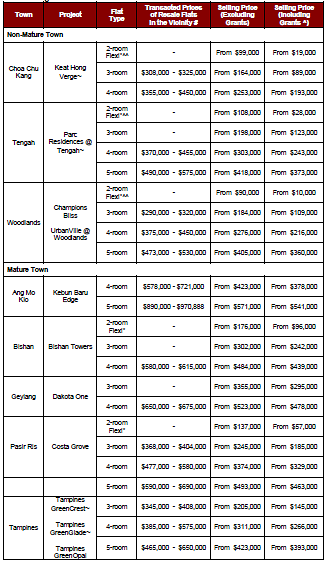
Starting prices for flats in non-mature towns range from S$90,000 for a two-room Flexi unit in Woodlands to S$418,000 for a five-room unit in Tengah, excluding grants.
For mature estates, starting prices range from S$137,000 for a two-room Flexi flat in Pasir Ris to S$571,000 in Ang Mo Kio.
Among the new developments is Parc Residences @ Tengah, which comprises 12 residential blocks designed with unique curved rooflines.
It will be the first public housing development located in the new Park district, located near Tengah Park Avenue and Tengah Drive. A total of 1,044 units – ranging from two-room Flexi flats to five-room flats – are on offer.
Artist impression of Parc Residences @ Tengah, an integrated development with public housing and a neighbourhood centre. (Photo: HDB)
Flats in the development will also have features such as smart lighting in common areas to reduce energy usage and a centralised cooling system. Prices start at S$108,000 for a two-room Flexi flat to up to S$489,000 for a five-room unit, excluding grants.
Keat Hong Verge, bounded by Keat Hong Link and Choa Chu Kang Grove, will offer flats with shorter waiting times. A total of 571 units in three residential blocks are available, starting from S$99,000 for a two-room Flexi unit to up to S$326,000 for a four-room unit, excluding grants.
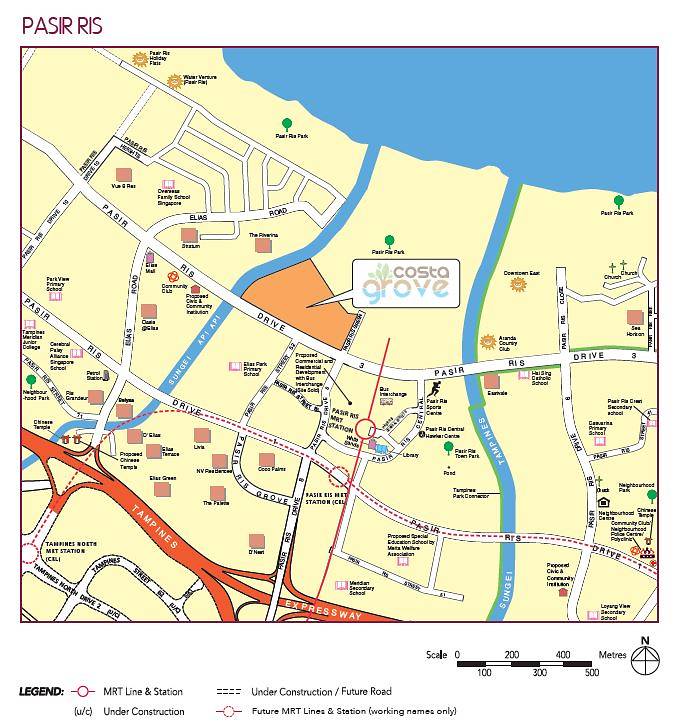
Costa Grove in Pasir Ris, bounded by Pasir Ris Drive 3 and Pasir Ris Green, will have 1,070 flats on offer.
These comprise nine residential blocks, two of which will also house rental units. Including another block of rental flats, the development will have a total of 10 blocks.
Prices for flats in Costa Grove start from S$137,000 for a two-room Flexi to up to S$581,000 for a five-room unit, excluding grants.
Residents can choose from 1,070 units of 2-room Flexi, 3-, 4-, and 5-room flats at Costa Grove, housed in 9 residential blocks with varying heights from 9 to 18 storeys. (Map: Housing and Development Board)
HEAVY SUBSIDIES
The new flats are heavily subsidised, taking into considering the location, attributes and prevailing market conditions, said HDB.
“HDB’s prices are considerably lower than the transacted prices of comparable resale flats in the vicinity. In addition, 2-room Flexi flats are priced taking into account the lease chosen,” it added.
Eligible first-time families will also receive up to S$80,000 under the Enhanced CPF Housing Grant (EHG). Under the grant, buyers could pay as little as S$10,000 for a two-room Flexi unit, S$89,000 for a three-room, S$198,000 for a four-room and S$360,000 for a five-room.
First-timer families will be continue to be given priority in flat allocation. Applicants who wish to live close to their parents or married children in the same BTO project can also submit a joint application under the Multi-Generation Priority Scheme.
Application for the new flats can be made online between Wednesday and Aug 18.
The next BTO launch in November will offer about 5,700 flats in Bishan, Sembawang, Tampines, Tengah and Toa Payoh. Another 3,500 flats in Bukit Batok, Kallang Whampoa, Tengah and Toa Payoh will be launched in February next year.
SINGAPORE – The organisers of the National Day Parade (NDP) this year have apologised for errors in the Tamil text that was broadcast live on television in the evening show on Sunday (Aug 9).
Referring to a line of animated Tamil song lyrics that were displayed on the LED screens as part of a performance, chairman of the NDP2020 Executive Committee, Brigadier-General Frederick Choo, said: “Unfortunately, the animation effects resulted in one line of the Tamil song lyrics having misaligned characters.”
He added: “The NDP2020 Exco apologises for the error. The Exco had engaged Tamil translators to ensure the accuracy of the Tamil song lyrics and the Tamil translations of the films and performances in other languages.
“All lyrics for projection were accurate prior to digital animation. We will further strengthen the production process and be mindful for future NDPs.”
The executive committee worked with broadcaster Mediacorp to correct the animated text for the online footage streamed on YouTube and meWatch, he said.