Home Blog Page 136

‘Way beyond my budget’: Malaysians entering Singapore for work under PCA scramble to find rental options

0

SINGAPORE: Ms Norashikin Rahman is worried she may not have a shelter over her head next month.

The 29-year-old Malaysian, who lives in Johor Bahru, is scheduled to enter Singapore via the Periodic Commutive Arrangement (PCA) scheme on Sep 1. The scheme allows her to resume work for her company, a computer chip manufacturing firm based in the north-eastern part of Singapore.  

As part of the PCA, she will serve a seven day stay-home notice (SHN) upon arrival, at a facility paid for by her company, and undertake a COVID-19 swab test.

After she finishes her SHN and tests negative for COVID-19, Ms Norashikin would need to move to a place to stay.

The mother of two young children has been trying for weeks to secure a suitable room that is close to her work place and within her budget, but to no success.

“My budget is only S$300, but for rooms in Yishun, the rent I have been quoted for are at least S$650.

“The prices quoted are way beyond my budget. I won’t have enough money for my family or my living expenses in Singapore,” she said when interviewed by CNA.

READ: Generally smooth process at Singapore-Malaysia border crossing on first day of RGL, PCA

Ms Norashikin is one of many Malaysians who are heading to Singapore to resume work under the ambit of the PCA, but are struggling to find suitable homes on short notice, at the right price and with short rental leases.

Some of them are using social media groups to find rental options and connect with other Malaysians looking to rent rooms at similar locations.

Woodlands Singapore Malaysia Causeway 17 August (3)

Vehicles and people can be seen crossing the Woodlands causeway linking Malaysia and Singapore on Aug 17, 2020. (Photo: Try Sutrisno Foo)

For instance, the Facebook group Bilik Sewa Singapore (Malaysian), or rooms for rent in Singapore for Malaysians, has been abuzz with many posts in recent weeks, with people looking for roommates and landlords posting rental opportunities.

Although there are options available, Ms Norashikin said many landlords are looking for tenants who are willing to commit for between six months to a year.

She is not willing to do this as she plans to return home after three months. Subsequently, she is hoping that the two governments can find a solution to resume daily commuting across the border.

“For the long term, I don’t think I want to continue renting here. It’s important for me to be close to my child and family and see them every day,” she said.

READ: FAQ: How can workers travel between Singapore and Malaysia and what are the COVID-19 protocols in place?

Another Malaysian who will also be entering Singapore to work via PCA in September is Mr Fakhrul Adlee, who works in the western part of Singapore.

He told CNA that he has been looking for suitable rental options on the Bilik Sewa Singapore Facebook group for a couple of weeks but has found it “challenging”.

He noted that there were limited options for rooms in the area he wants to stay in – near Jurong East or Toh Guan.

“Also, the rent quoted is quite high. My budget is S$350, slightly flexible, but so far nothing falls into the range I can afford,” he said.

Mr Fakhrul added that many of the options available were only for female tenants, and virtually none for males.

RENT ON THE RISE FOR UNITS NEAR INDUSTRIAL AREAS: PROPERTY ANALYSTS 

According to Mr Nicholas Mak, ERA Realty’s research and consultancy head, Malaysian workers who are looking for rental units are typically “more budget conscious”. He also said that a total of six tenants would usually share an entire HDB unit to lower costs.

Moreover, there has been an increase in demand for HDB rental units recently, especially near industrial estates in Jurong, Tuas, Woodlands, Yishun and Kaki Bukit, he said.

“Malaysians who are coming here to work is a big factor in driving up demand for these units. They are far from the city centre and are popular among Malaysian workers, who prefer to live in a place easily accessible to their places of work,” added Mr Mak.

HDB flats

File photo of HDB flats. (Photo: Hester Tan)

He said that this has led to some landlords in these areas raising the prices.

“For example, the rent for a 4-room HDB unit in Joo Koon would typically cost around S$2,300 but recently, the prices have spiked to around S$2,700. This price is what you usually see for flats closer to the city.”

Ms Christine Sun, head of research and consultancy at OrangeTee & Tie, said that the increase in HDB rental demand can be linked to Malaysians working in Singapore.

“Anecdotally, we have observed strong rental demand from Malaysians working in Singapore since the start of the circuit breaker period.

“Even now, with some of the border lockdowns being eased recently, many are still reluctant to travel back as they need to serve their stay-home-notice and have continued to rent a unit in Singapore,” she added.

According to SRX flash estimates released on Aug 12, the prices for the HDB rental market in July increased by 1.4 per cent from June.

Ms Sun said this was possibly due to landlords raising their rent after observing a sudden surge in demand.

Malaysian worker Imran Malik told CNA that he is due to enter Singapore via PCA in two weeks but he is “feeling anxious” because he believes the higher demand has priced him out of the market.

“It’s obvious, many of the landlords have noticed an increase in demand for their units so they upped their asking price. Some have even refused to reply to my queries to negotiate price,” he said.

“And to share a room, they are charging around S$700. It’s not worth it because some of them have no air-con even,” added Mr Imran.

READ: Johor bus services to take RGL, PCA travellers across the Causeway to Woodlands

The issue of Malaysian workers having difficulties finding temporary shelter in Singapore first surfaced in March, after the Malaysia government imposed the Movement Control Order to curb the spread of COVID-19.

Under the order, all Malaysians were barred from travelling abroad, including around 300,000 Malaysians who travel across the Woodlands Causeway and Tuas Second Link every day for work. 

It was then reported that some Malaysian workers who had crossed over to Singapore before the travel restrictions kicked in were unable to find accommodation.

Subsequently, Singapore’s Ministry of Manpower (MOM) said it found 14 Malaysian workers who were sleeping rough at Kranji MRT station and took them to a “temporary relief centre” in Jurong East.

Ms Sun of OrangTee & Tie said if the landlords and tenants can find an equilibrium now, it may help to prop up Singapore’s property market going forward.

“We have quite a number of Malaysians working in Singapore. Therefore, the PCA and some lockdown restrictions that are still currently in place may deter Malaysians from going back. This will continue to prop up the rental market in Singapore,” she said.

However, she noted that the long term future of these workers might not be secure given how COVID-19 has impacted the Singapore economy.

“There will also be other considerations such as whether the economic uncertainties will impact the job security and employment of Malaysian workers in Singapore,” Ms Sun noted.

BOOKMARK THIS: Our comprehensive coverage of the coronavirus outbreak and its developments

Download our app or subscribe to our Telegram channel for the latest updates on the coronavirus outbreak: https://cna.asia/telegram

Source link

Prata eatery inflated monthly salaries of foreign workers in work pass applications

0

[ad_1]

SINGAPORE – To secure work passes for its foreign employees, a company inflated their monthly salaries in its applications to the Ministry of Manpower (MOM).

This was to fulfil the minimum salary requirements for the work passes to be granted.

In one case, the company declared that a cook would be paid $3,150, when in fact, his salary was less than half that amount.

The company, 7Star Restaurant, was fined $52,000 on Thursday (Aug 20) after pleading guilty to four charges relating to falsely declaring the salaries of four employees to MOM.

Eight other charges, involving the salaries of other employees, were taken into consideration during sentencing by District Judge Adam Nakhoda.

At the time of the offences, which took place between 2013 and 2017, the company operated a restaurant outlet named 7 Star Restaurant Indian/Malay Food in Upper Serangoon Road. The Straits Times understands that the restaurant has closed.

According to court documents, the company overstated the salaries of two workers when applying for their S Passes. It did so for one employee in June 2013 and for another in February 2017.

[ad_2]

Source link

Secondary school student helps elderly man bleeding from fall, thanks to NCDCC training

0

[ad_1]

“We learn, we lead, we serve” is the motto of the National Civil Defence Cadet Corps (NCDCC), which was exactly what 16-year-old Muhammad Aniq did when he found out a man in his 90s had suffered a bad fall at home.

His act of bravery was lauded on Facebook by his brother and grassroots leader, Norizam Baharon, on Wednesday night (Aug 19).

A LIFE SAVED

Aniq and I were preoccupied revising for an Accounting paper at the study area of block 270 Tampines…

[ad_2]

Source link

We spoke to the actor in the viral, quirky Uptown at Farrer condo ad

0

[ad_1]

Commercials for residential properties are pretty predictable if you’ve seen a bunch of them. Typically, they could be simple photo montages with voiceovers or corny video tours featuring property agents dramatically exaggerating the size of a tiny apartment. 

Ultimately, they’re mostly forgettable. Not so for this recently launched ad that manages to get the property development’s name stuck in our heads: Uptown at Farrer. 

On Aug 16, the marketing team behind the upcoming condominium complex next along Perumal Road posted a promotional ad for the property.

Generally, it showcased the condo’s close proximity to various amenities (including Farrer Park MRT Station, City Square Mall and Farrer Medical Centre), but netizens were smitten by how the message was delivered — through a hilarious storyline featuring a quirky, fourth-wall-breaking character. 

More importantly, it’s all interspersed with the catchphrase “Uptown at Farrer”. 

[ad_2]

Source link

Jade Rasif reveals she's working on Covid-19 frontline, becoming a nurse, after prostitution rumours

0

[ad_1]

For the past four months, local influencer Jade Rasif has been quietly doing her part to fight the pandemic, working at the front line alongside her new colleagues.

The 26-year-old, who is known for her acting stints and as a prominent local DJ, had kept her new job secret, revealing it only to her closest friends.

But on Instagram two weeks ago, Ms Rasif posted a picture of herself in an N95 mask and personal protection gear, revealing that she is now working full-time in the healthcare sector.

Speaking to The New Paper yesterday, Ms Rasif explained that she revealed her new job as there were rumours she was selling sex to support herself.

“There was a sugar baby website using my photos, and some people were saying because I didn’t have a job any more, (because of the pandemic) I must have been selling my body to support myself,” she said.

Ms Rasif said she volunteered with the Singapore Healthcare Corps in April and underwent training before being deployed in May.

[ad_2]

Source link

We feared contact tracers' calls were scams, say Chinese couple charged with withholding information

0

[ad_1]

SINGAPORE – Being a foreigner familiar with scam callers, it would be reasonable to expect Chinese national Hu Jun to be wary of callers claiming to be officials.

This was the argument put forward by lawyer Dhanwant Singh on Thursday (Aug 20), to explain why Hu, 38, and his wife Shi Sha, 36, had not been frank with contact tracers who called them to confirm their whereabouts from Jan 29 to Feb 3.

The couple have been charged with holding back information about Hu’s whereabouts to contact tracers after he was confirmed to have been infected with Covid-19 on Jan 31.

The court heard that on Feb 4, Hu expressed his concerns and shared his experiences regarding scammers with the lead investigating officer in the case as he feared the contact tracers who called him were not legitimate.

In cross-examining investigation officer Chin Shan How, who is a senior manager at the Ministry of Health’s enforcement branch, Mr Singh said: “(With Hu) being a foreigner and not a frequent traveller, there is a vast difference between face-to-face interview (and those held) over the phone.”

[ad_2]

Source link

Only 15% Singaporeans feel govt didn't manage Covid-19 well, survey finds

0

[ad_1]

SINGAPORE – A recent survey on workplace resilience has found that close to six in 10 Singaporeans were satisfied with how the Government managed the Covid-19 situation, though they may feel stressed by the pandemic.

About 57 per cent of the respondents felt that the Government had a good grasp of the situation. About 29 per cent was neutral on this, while around 15 per cent felt the Government did not have a good grasp of the Covid-19 situation.

The survey also found that some 75 per cent of the respondents said they were satisfied with the timely and useful information the Government had provided on the Covid-19 situation, with 20 per cent feeling neutral and just five per cent who felt they were not receiving useful and timely information.

The survey was conducted by the National University Health System’s (NUHS) Mind Science Centre, with the help of community resource platform iamaccb.sg. Launched on the platform on May 20, the survey had attracted 1,407 respondents by the time it wrapped up on June 15.

The respondents could choose from five answers – from strongly agree to neutral to strongly disagree – when responding to 10 statements.

[ad_2]

Source link

Ngiam Tong Dow, former top civil servant and later critic, dies

0

[ad_1]

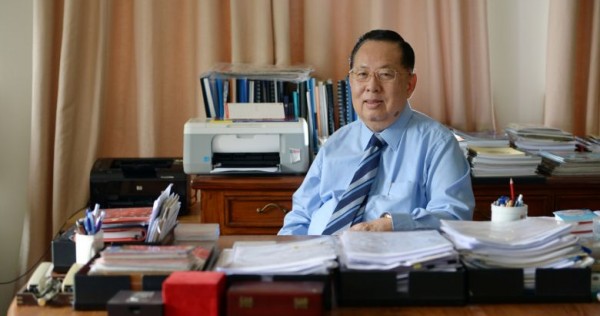
SINGAPORE – Mr Ngiam Tong Dow, son of a court interpreter and a washerwoman from Hainan who rose to be a top civil servant and later an outspoken critic of the public service and the Government, died on Thursday morning (Aug 20).

He was 83.

His family told The Straits Times that he had been in ill health for four and a half years.

Mr Ngiam spent 40 years in the apex Singapore Administrative Service where he became the youngest permanent secretary at age 33 and won top accolades like the Distinguished Service Order in 1999 when he retired at age 62.

He was a forceful leader in developing policies on the economy, defence technology, transport, savings and retirement, as well as housing.

Mr Ngiam worked closely with founding leaders such as Prime Minister Lee Kuan Yew and his successor Goh Chok Tong, former Deputy Prime Minister Goh Keng Swee and former Finance Minister Hon Sui Sen; and played a pioneering role as a member of the National Wages Council.

[ad_2]

Source link

Companies seek new opportunities to stay afloat amid COVID-19 pandemic

0

SINGAPORE: After seeing its sales revenue plummet by 40 per cent in 2019 due to protracted international trade tensions, Certact Engineering was bracing for even more pain this year with the COVID-19 pandemic. 

But a shift to focus more on the niche segment of plastic engineering has since worked out for the precision engineering firm, with new orders flowing through in recent months. It now expects its annual sales revenue for this year to double from a year ago to about S$8 million. 

Certact Engineering made the “risky move” when it was approached by a customer that required plastic parts to produce more DNA sequencing machines, said its managing director Ellis Eng.

This was both an opportunity and a challenge for the local firm whose core business lies in producing metal parts for semiconductor manufacturers. While it had plastic engineering as part of its business, it was a “small department” that made up just 10 per cent of sales revenue.

“But with our sales coming down, we know that we will face even more challenges if we don’t go into this,” said Ms Eng.

The local firm, which was established in 1968, quickly got down to action by redeploying its manpower but the real test came in April when the “circuit breaker” was imposed.

“That was when we had to increase production but one of our suppliers handling the secondary process for us was not allowed to operate. So we decided to quickly start our own process and production line.”

Certact Engineering pivots into plastic engineering (2)

An employee checks on the plastic component parts needed for a DNA sequencing machine, which is used in efforts to combat COVID-19. (Photo: Certact Engineering)

With no time to lose, the firm bought new machines and its employees ran trials to work out the new processes, all within a week.

“If we lose more time, we will lose the customer,” Ms Eng told CNA. “We have no choice.”

Altogether, Certact Engineering invested almost S$150,000 into pivoting its business – a rather “big sum” for a small and medium-sized enterprise (SME), it said – but it has paid off. 

The company’s ability to invest in new capabilities has instilled confidence in customers, according to Ms Eng. It has since received new contracts from a local developer of X-ray test equipment and another S$2 million order from a company looking to manufacture data storage equipment.

“I was very worried initially because of the trade war and then with the pandemic, I thought we will be in deep trouble,” said Ms Eng.

Citing a Chinese idiom that meant seeking out opportunities in times of crisis, she added: “COVID-19 was a catalyst to get us to transform and we are glad we did.”

Moving forward, Certact Engineering plans to grow its plastic engineering business to account for 60 per cent of sales revenue.

READ: ‘We are not returning to a pre-COVID-19 world’: Chan Chun Sing maps out ‘new path’ for Singapore

RETAIL, TRAVEL FIRMS EXPLORE NEW BUSINESSES

Elsewhere in the retail and travel sectors, two companies are also diversifying as the coronavirus outbreak annihilated their industries.

With the tourism industry at a standstill, Nam Ho Travel is gearing up to launch virtual tours and an online store for consumers to purchase “trending” snacks and produce from overseas.

“As domestic travel is now possible in several countries, we are planning to do livestreams with our overseas presenters visiting hidden gems and … introducing not only the place(s), but also what the viewers can buy there,” said its director Marshall Ooi.

“With Singapore’s borders not opening any time soon, we can assist viewers in doing certain purchases.”

The online store, Buy Beyond Borders, had a soft launch earlier this month and the final details are being worked on.

Meanwhile, Nam Ho’s inbound travel arm, Nam Ho DMC, has turned more than 10 of its mini vans, which used to ferry tourists around Singapore, into school buses and delivery vans since March.

It plans to venture deeper into logistics and warehousing services moving forward, said co-founder Mahesh Pawanaskar, noting “huge” longer-term demand in these areas where the company can “integrate both (its) old and new business together”.

Mr Pawanaskar added that the firm is in the midst of signing an agreement for a warehouse in Woodlands, and plans to build up a fleet of heavy vehicles by October.

These new business plans have since required employees at the travel firm to take on very different tasks. As such, Nam Ho has sent most employees to attend courses, such as the Singapore Workforce Skills Qualification (WSQ), in recent months.

“Our drivers went from sending passengers to picking up school children and doing deliveries for logistics and shopping platforms. Our staff, who used to be marketing travel products, are now sourcing for trending items that we can feature on our online platform, helping with packaging and doing deliveries.

“Change is not easy but everyone knows we have to do something,” said Mr Ooi, who noted that Nam Ho’s revenue in Singapore has seen “a sharp drop” since the coronavirus outbreak. Previously, its annual revenue in Singapore was more than S$55 million, with equal contribution from inbound and outbound travels.

Thus far, the travel firm has invested S$200,000 into purchasing products for its online store. It estimates that its venture into logistics and warehousing will require a heftier investment of more than S$1 million.

“We have applied and will be applying for some grants from both Enterprise Singapore and Singapore Tourism Board in assisting us … on our new business ventures,” said Mr Ooi. 

Meanwhile, fashion retailer FJ Benjamin announced its foray into the health and wellness business last week, with an exclusive distributorship agreement with Portugese air purifier maker Airfree.

Describing health and wellness as “an industry with long-term growth potential”, the Singapore-listed retail group and luxury brand distributor said it is on the lookout for other brands to broaden its offerings.

“While the COVID-19 pandemic has made the move very timely and appropriate given the renewed consumer interest in health and wellness, the diversification is part of a larger strategy we have been working on for some time now to ensure long-term growth outside our core business of fashion retail,” said Group CEO Nash Benjamin.

He added that the company decided to partner Airfree as the Portugese manufacturer is a trusted brand with distributions in more than 60 countries.

Asked how the company plans to break into the new market, Mr Benjamin referred to the product’s unique characteristics, as well as the company’s plans to use both online and offline channels including online marketplaces, chain stores such as Mothercare and Motherswork, and other brick-and-mortar channels.

POSITION FOR A POST-PANDEMIC WORLD

As the COVID-19 pandemic continues to wreck havoc on economies around the world, including Singapore’s, businesses have been urged to persevere with transformation.

READ: Singapore narrows 2020 GDP forecast range as economy sees record quarterly slump in Q2 

READ: Some economic bright spots remain for Singapore despite the overall challenging conditions

Such nimbleness will help when it comes to seizing new opportunities, said Deputy Prime Minister Heng Swee Keat in his ministerial statement on Monday (Aug 17) where he cited Certact Engineering as an example of a company doing so.

In the same speech, where he also announced a further extension of wage subsidies among other support measures, Mr Heng said Singapore has to continue with its economic transformation given how it “will not be business-as-usual” in a post-pandemic world.

One expert that CNA spoke with pointed out a pitfall that businesses should take note of when attempting to transform.

“Businesses are doing all they can to keep the lights on and to keep employees on the payroll. These are commendable but they also need to ask themselves, will this be a sustainable solution? Can they do it permanently?” said EY’s Asean strategy and transactions leader Vikram Chakravarty.

He added that the larger challenge remains for local firms to make an intrinsic shift.

“Despite everything, the operating model has not changed and they have not embraced digital for example. Everyone thinks ‘Yes, we are doing something in digital analytics but actually it’s all peripheral stuff.’ Has it fundamentally changed the company is what businesses need to ask themselves.”

Mr Tan Chee Wei, KPMG Singapore’s head of consumer tax and retail, said there is urgency for businesses to identify new trends, opportunities and develop the right strategies with the world unlikely to return to pre-COVID-19 days.

He added that the extended wage subsidies under the Jobs Support Scheme (JSS), while helpful for the survival of businesses, may not be sufficient for such transformation in a post-pandemic economy.

“A supplementary top-up of SkillsFuture credit would have been a great complement to the JSS extension in reskilling and retraining employees,” Mr Tan added. 

READ: Extension of Jobs Support Scheme among S$8 billion worth of measures announced by Heng Swee Keat

The revised JSS will see support extended to wages paid up to next March for most sectors, and up to December this year for sectors which are managing well.

The tweaks in wage subsidies are made based on the projected recovery of the different sectors, said Mr Heng, who is also Finance Minister.

Precision engineering is among the sectors that will see wage support end in December.

For Certact Engineering, any form of support will be useful. While the earlier payouts under JSS helped to alleviate the pressure it had in adjusting its business, it acknowledged that companies “cannot keep depending on the Government”.

“If the car engine is dead, you cannot keep pushing the car. You need to change the engine,” said Ms Eng.

“We need to sustain through this pandemic by finding ways to transform our business, improve or cut costs. After that, there will be opportunities.”

BOOKMARK THIS: Our comprehensive coverage of the coronavirus outbreak and its developments

Download our app or subscribe to our Telegram channel for the latest updates on the coronavirus outbreak: https://cna.asia/telegram

Source link

Commentary: Why do you not feel like working from home? You’re probably procrastinating more

0

SINGAPORE: As raindrops fell gently against our window, the wife was drawn to the convenient placement of our king-sized bed, right next to her home workstation, a 73cm by 50cm table from the popular Swedish DIY furniture store.

She did not resist, falling into its welcoming comforts that immediately embraced the contours of her being.

“So comfortable!” she squealed, “I don’t feel like working today!”

It took some persuasion and a couple of reminders of her 8.45am meeting to crank her engine into motion.

The distance from the bed to the desk was a mere 2cm, but the struggle was very real.

READ: Commentary: Please don’t end work from home. It’s not that bad​​​​​​​

LISTEN: Disruption 101: How COVID-19 is revolutionising work

MIXED FEEDBACK TO REMOTE WORKING

Not all occupations provide such a luxury of business continuity through work-from-home options. For those who can afford to, the current coronavirus pandemic has brought about a variety of reactions.

Some love the accompanying sense of freedom and independence, and the fact you do not have to face your colleagues. Others absolutely miss the social interaction and benefits of working together as a team in a physical location.

A University of Innsbruck study showed telecommuting generates higher productivity when employees work on creative projects requiring deep thinking.

Another study from Stanford University concluded that working from home leads to a 13 per cent performance increase, greater work satisfaction and a 50 per cent drop in employee turnover.

Man using laptop

Many companies still seem reluctant to allow their staff to travel, at least internationally. (Photo: Unsplash/Campaign Creators)

For those of us doing so while supervising our children’s home-based learning, we are quite certain those researchers did not factor in employees having to multi-task childcare or even eldercare responsibilities.

Indeed, even without including such variables, there are studies that argue lower levels of productivity accompany such arrangements.

Japanese think tank, the Research Institute of Economy, Trade and Industry, concluded employees have trouble adjusting. Remote IT software that is not user-friendly, the loss of instant face-to-face interaction resulting in longer communication times, and a poorly fitted work environment at home all contribute to lower productivity.

Closer to home, the Pulse of the Singapore WorkForce study released in June found 43 per cent of employees aged above 50 report being less productive. This figure was 32 per cent for employees aged below 30.

LISTEN: Recovery, restructuring and possibly rebound? The outlook for the Singapore economy

READ: Commentary: Let’s face it. Zoom meetings are exhausting

PROCRASTINATION A BIG CULPRIT

Procrastination may be one of the biggest contributing factors to our lack of productivity. Canadian Associate Psychology Professor Timothy Pychyl says our work behaviours have shifted due to a perceived lack of peer pressure from the rest of our colleagues and the physical absence of our supervisor.

With such external motivation missing, and left to our own devices, procrastination, defined by the University of Pittsburg Medical Centre as the avoidance of work or necessary tasks by focusing on more satisfying activities, has risen.

While neuroscientists believe procrastination is a result of a battle between the pleasure centre and the decision-making controls of our brain, psychologists think procrastination is a response to how we cope with emotions.

READ: Commentary: I’ve been career oriented my whole life, until the COVID-19 pandemic took my ambition

slack phone laptop

(Photo: Unsplash/Austin Diestel)

At the heart of it, procrastination may be attributed to anxiety. Procrastination helps moderate our feelings of being judged by others, as well as our fear of failure and condemnation of oneself.

While others might perceive us as irresponsible because we postpone work we ought to do right away, our delay helps us avoid pain and instantly affords us relief.

In other words, instead of viewing the challenge as a time management problem, scientists think a sharper focus on how we regulate our emotions and anxieties may tackle the problem better.

PROCRASTINATING IS NOT HELPFUL

We all know procrastination is unhelpful. We might put off a task for the moment, but will eventually have to revisit it because our organisation depends on us to deliver. The increased stress from rushing at the last minute could result in mistakes and decisions made without careful consideration.

Whether physically at work or working from home, one area where we frequently procrastinate in is when having to confront a colleague. Most of us are non-confrontational by nature.

LISTEN: Unfair firing and hiring practices under scrutiny during Singapore’s worst recession

READ: Commentary: Do you really want to work from home forever like some Twitter employees can?

Addressing an underperforming colleague, a supervisor who overstepped boundaries or even clarifying a misunderstanding are too often put off with the excuse we will find a better time to address the issue yet that opportune chance often never arrives. Meanwhile, the unresolved matter can blow up into our faces.

Procrastination may lead to us to miss deadlines – requiring added resources and colleagues re-deployed to help us complete our work, when many already have much on their plate.

BREAKING OUT OF THE PROCRASTINATION CYCLE

How do we help others break out of the procrastination cycle? For starters, recognise that procrastination has roots in unregulated emotions and anxiety.

Supervisors can help create smaller bite-sized goals that are easily attainable. Find out why your subordinate is procrastinating, especially if it is not typical of that person’s character. 

You might discover the individual has a fear of being judged, of clarifying a problem or even of being wrong, and this is especially the case in perfectionists.

office colleagues

Two colleagues in a discussion. (Photo: Unsplash)

Individually, one can practise positive self-talk to help clarify and process one’s anxieties that lead to procrastination. 

Ask yourself what the source of your fear is and if those thoughts are true. Think about whom you could seek help from to share your fears and find solutions through obtaining emotional support.

HOW NAVY SEALS OVERCOME ANXIETIES

The United States Navy SEALs are a key special operations force in the United States Navy with exceptionally tough qualification standards averaging around a 25 per cent passing rate.

The high standards, coupled with tough training often cause anxiety in trainees, resulting in many dropping out.

Some years back, military psychologists began introducing intervention methods to help trainees overcome their anxieties. The intervention included setting very short-term achievable goals and speaking aloud positively to mitigate fear and negative thoughts. 

This simple intervention method helped managed their anxieties and increased the passing rate to 33 per cent.

READ: Commentary: Burned out while working from home? You should check your work-life boundaries

Some of us cannot understand the increased frequency in our procrastinating behaviour when working from home. We may have concluded our behaviour is a result of our poor work attitude but this may not be the case.

In the midst of this pandemic, it is perfectly normal to have feelings of uncertainty and anxiety. The challenge is whether we take action to tackle the source of our concerns.

After all, if Navy SEALs need help, we all could probably use a little assistance too.

READ: Commentary: Hello COVID-19 remote working, goodbye cult of presenteeism

BOOKMARK THIS: Our comprehensive coverage of the coronavirus outbreak and its developments

Download our app or subscribe to our Telegram channel for the latest updates on the COVID-19 outbreak: https://cna.asia/telegram

Dr Paul Lim is a Lecturer of Organisational Behaviour and Human Resources with the Lee Kong Chian School of Business at the Singapore Management University. His research focuses on the areas of millennials, generation Z, mentoring and resilience.

Source link