Home Blog Page 137

PM Lee, China’s top diplomat express appreciation for mutual support during COVID-19 pandemic

0

SINGAPORE: Prime Minister Lee Hsien Loong and China’s top diplomat Yang Jiechi on Thursday (Aug 20) expressed appreciation for the mutual support between Singapore and China during the COVID-19 pandemic, said the Ministry of Foreign Affairs (MFA).

Mr Yang, Director of China’s Office of the Central Commission for Foreign Affairs and a member of the Communist Party Politburo, is on a visit in Singapore from Wednesday to Friday.

In a meeting on Thursday, Mr Lee and Mr Yang affirmed the strong ties between Singapore and China, said MFA in a press statement. This year marks the 30th anniversary of diplomatic relations between Singapore and China.

“They also expressed appreciation for the mutual support between Singapore and China during the COVID-19 pandemic, and welcomed the continued good progress in bilateral cooperation in spite of COVID-19,” the ministry said.

Mr Lee and Mr Yang also exchanged views on global and regional developments and reaffirmed the importance of strengthening cooperation within a rules-based international order, said MFA.

PM Lee Hsien Loong Yang Jiechi China Singapore visit meeting Aug 20 2020

Politburo member and Central Foreign Affairs Commission Office Director Yang Jiechi called on Prime Minister Lee Hsien Loong at the Istana on 20 Aug, 2020. (Photo: MCI)

Mr Lee said in a Facebook post on Thursday night that he had a “fruitful meeting” with Mr Yang.

“Despite the ongoing pandemic, it’s a good feeling to return to some semblance of normalcy,” said Mr Lee.

He also expressed hope that the “fast lane” arrangement for essential business and official travel between both countries will be able to be expanded to include more places “if the situation stays under control”. The arrangement currently covers six Chinese provinces and municipalities.

“Our ties with China are substantial and multi-faceted. I am confident that by working with each other and with the international community, we can make more progress in the post-COVID world,” said Mr Lee. 

READ: Singapore, China to launch ‘fast lane’ arrangement with COVID-19 measures for essential business, official travel

Chinese top diplomat Yang Jiechi calls on Deputy Prime Minister Heng Swee Keat

Call on Singapore Deputy Prime Minister Heng Swee Keat by Member of the Political Bureau of the Communist Party of China Central Committee and Director of the Office of the Central Commission for Foreign Affairs Yang Jiechi at The Treasury, Singapore on Aug 20, 2020. (Photo: MCI)

During his visit, Mr Yang also called on Deputy Prime Minister Heng Swee Keat.

They discussed the “substantive and multi-faceted cooperation” between Singapore and China, said MFA.

Both countries had worked closely to combat the public health and economic impact of COVID-19, including through the “fast lane” arrangement that was launched in June, said MFA.

Mr Heng and Mr Yang agreed that both countries should work together, and with other countries, to strengthen supply chain and cross-border connectivity to facilitate economic recovery, the ministry said.

MFA said both sides are looking forward to the 16th Joint Council for Bilateral Cooperation – the highest-level annual forum between Singapore and China – which will be hosted by Singapore this year.

Mr Heng said in a Facebook post on Thursday night that this was his first in-person meeting with a foreign leader since the COVID-19 situation escalated.

“As we gradually resume daily activities and reopen our borders, we can look forward to more high-level exchanges, with safe measures in place, as we strengthen our ties with countries around the world,” he said.

“COVID-19 has highlighted how interconnected we are as a world. And we must work in close cooperation with all countries to overcome this pandemic and emerge stronger,” he added.

READ: Singapore, China agree to strengthen cooperation to address global COVID-19 threat

During his visit, Mr Yang was also hosted to lunch by Senior Minister Teo Chee Hean, during which both sides discussed global and regional issues.

“They reaffirmed the importance of strengthening collaboration to deal with global challenges and to shape a more cooperative and constructive region,” said MFA.

Mr Teo and Mr Yang also visited a commemorative marker for former Chinese leader Deng Xiaoping along the Singapore River, as well as the Tang Shipwreck Exhibition at the Asian Civilisations Museum.

DPM Heng Swee Keat Yang Jiechi China Singapore visit meeting Aug 20 2020

Senior Minister Teo Chee Hean and Politburo member and Central Foreign Affairs Commission Office Director Yang Jiechi visited the Deng Xiaoping Marker at ACM Green, Aug 20, 2020.  (Photo: MCI)

Earlier, Mr Yang was also hosted to breakfast by Foreign Affairs Minister Vivian Balakrishnan. Both men exchanged views on regional and international developments, and affirmed the positive momentum of bilateral cooperation, said MFA.

Mr Balakrishnan and Mr Yang also witnessed a cheque presentation ceremony for a charity project initiated by the Singaporean community in China to support poverty alleviation in Chongqing’s Pengshui county.

Source link

Goal for Sports Hub is to remain ‘relevant’ amid the COVID-19 pandemic, says new CEO

0

SINGAPORE: The sight of hundreds of purple tents set up neatly across the floor of the 55,000 capacity National Stadium is a reminder of how this year has been unlike any other for Singapore Sports Hub’s new CEO Lionel Yeo.

Mr Yeo, who took over the role in February this year, has witnessed how the COVID-19 pandemic has curtailed the momentum of 2019, when the Sports Hub held 225 events and saw a total of 3 million in event attendance and venue activities.

But when the pandemic hit, the Sports Hub pivoted, converting the National Stadium and the OCBC Arena to temporary accommodation to house migrant workers.

“We asked ourselves: ‘What does it mean to be relevant as a national asset during a year like this?’ One of the answers was – we can offer ourselves up to be temporary housing facilities for migrant workers,” said Mr Yeo in an interview on Thursday (Aug 20).

The move was a “no-brainer” said Mr Yeo, and was a way that the Sports Hub could contribute to the national effort.

And as restrictions are slowly eased, the goal of the Sports Hub is to remain relevant, even in the midst of a pandemic, said Mr Yeo.

“Longer term, we are building the affinity with Singaporeans, we’re building the mindshare that the Sports Hub is a place where even during COVID-19, you know you can come and get your sports fix, you can come and get a little bit of entertainment fix. That’s important.”

READ: Some foreign workers to be housed in ActiveSG, Sports Hub halls

COMMERCIALLY CHALLENGING YEAR

2019 saw the $1.3 billion Sports Hub play host to a number of high-profile sporting events such as the International Champions Cup (ICC) and the HSBC Singapore Sevens, while concerts headlined by acts such as U2, BTS, and Jay Chou were also big draws.

FILE PHOTO: International Champions Cup - Juventus v Tottenham Hotspur

Tottenham’s Toby Alderweireld and Juventus’ Gianluigi Buffon lead their teams out at the ICC 2019 in Singapore. (Photo: Reuters/Feline Lim)

In contrast, this year has been a commercially “challenging” one so far, admitted Mr Yeo. Event attendances declined 85 per cent in 2020, with popular international sports events such as the ICC forced to cancel.

Footfall from January to June this year was also down about 50 per cent from 2019, added Mr Yeo.

READ: Football hub, Singapore’s first velodrome proposed for Kallang makeover

“That certainly has a commercial impact on us. And mind you, the Sports Hub is not just one business, it’s actually several businesses,” Mr Yeo said.

“(But) at the same time, my shareholders understand that this is a global phenomenon. Nobody wanted this to happen. It’s happening all around the world. And they realise that there will be, hopefully, (only) a short-term hit to the bottom line.”

With facilities in the Sports Hub having reopened in line with Government directives, poeple have started to return, said Mr Yeo. Being relevant to the community will be important for the Sports Hub to remain commercially successful, he added.

Crowd at a BTS concert at National Stadium

A crowd at National Stadium hours before a concert in Singapore. (Photo: Jovi Ho)

“If we want to be commercially successful, it is tied to the question of relevance as well. Because if people don’t come, they don’t spend money,” said Mr Yeo, who was appointed in November last year and is the fourth person to helm the Sports Hub since 2011.

“Which is why, as we think about Phase 2’s opening up, we are keen to … be able to deliver a lineup of programs and activities that can start to bring people back. 

“And it may not be big numbers initially, because we’re not going to jump from zero to 50,000 overnight. It may not be big numbers, but we have to start somewhere, because we need to build up that confidence that we can do things in a safe and responsible way.”

As such, the Sports Hub is keen to explore “new formats” for events down the road, said Mr Yeo, who did not go into further specifics.

“Our plans revolve around how would we mine domestic content, how do we make the best of what is available to us domestically. And I think we have got some good ideas which hopefully we can execute on.”

Apart from major “tentpole” events, Mr Yeo also pointed out that the Sports Hub has built up “momentum” in the community event space.

“The team has been investing efforts to build up programming around community sports events. And I think that’s something which has seen encouraging results,” he noted.

“(During) my first month of work in February … every evening when I left the office and my office is right at National Stadium and I come out onto 100 Plus Promenade, it’s crowded, it’s full of people. 6pm, 7pm, 8pm, it’s really lively. Some of them are organised by us, some of them are organised grounds-up by individuals and private groups,” added Mr Yeo.

“So there’s a bit of an organic thing happening as well. It’s not just entirely Sports Hub driven or Sports Hub organised. So I think it’s really nice to see, and we would like to be able to build on that as soon as circumstances allow.”

Calling the Sports Hub a “national asset”, Mr Yeo said for it to be successful, there is a need for policy success, commercial success, as well as public success.

“So policy success means from a perspective of Government, we are hitting the policy objectives. Commercial success because the PPP (public-private partnership), I represent the group of private sector companies that are involved in operating the facilities, the venues. So commercial sustainability and success is important,” he explained.

“Even with the first two, I think the third is as important, if not most important – and by public success I mean, how do ordinary Singaporeans feel about the project? Are we relevant? Do they feel something for the Sports Hub? Are (we) relevant to the National Sports Associations or NSAs? Are we part of their future? Are we part of their development plans?

“I think if we are not a success in the eyes of the public, then, something’s also missing. So to me, we need to hit all three.”

Source link

Geylang fight sees woman delivering failed flying kick, whacking man with shoe and traffic cone

0

[ad_1]

Two people were arrested after a fight broke out in Geylang during the wee hours of Tuesday (Aug 18).

In response to Stomp queries, the police said they were alerted to a case of affray at 6 Lorong 9 Geylang at 2.25am.

Several Stomp contributors alerted Stomp to videos of the incident that have been circulating on social media, showing a man and a woman involved in the fight outside a coffee shop.

The barefooted woman can be seen swaying about on her feet and trying to rush towards the man, only to be pulled back by an onlooker.

Meanwhile, the man removes his shirt, drapes it on another onlooker and approaches the woman despite attempts to stop him.

The woman tries to deliver a flying kick at the man, but is beaten down to the ground by him.

She then picks up her shoes, which she uses to repeatedly whack the man.

[ad_2]

Source link

‘There is no magic bullet’: Doctor who served in Wuhan warns against COVID-19 treatments without evidence

0

SINGAPORE: A Chinese doctor who was at the epicentre of the COVID-19 outbreak in Wuhan has warned against developing treatments based on anecdotes rather than evidence, adding that there is “no magic bullet” for the disease.

Professor Cao Bin, vice-director of the National Clinical Research Centre for Respiratory Disease in China, had moved from Beijing to Wuhan to help during the initial surge of COVID-19 cases in China. 

He developed early trials of using HIV drugs to treat coronavirus patients.

READ: Shadow of COVID-19 slowly lifts from epicentre Wuhan

Speaking at a National University of Singapore (NUS) webinar on Thursday (Aug 20), Prof Cao recalled that during the early days of the pandemic, people were grasping at straws to find a treatment for COVID-19.

“We have heard a lot of stories about the successful treatment of this disease, such as a new drug, or even a kind of drink … for the ill patients,” he said.

“But unfortunately, there is no magic bullet – not only during the early days, but for now.”

Community worker in protective suit disinfects a residential compound in Wuhan

FILE PHOTO: A community worker in protective suit disinfects a residential compound in Wuhan, the epicentre of the novel coronavirus outbreak, Hubei province, China March 6, 2020. REUTERS/Stringer

He detailed how hydroxychloroquine was initially granted approval by the US Food and Drug Administration (FDA) after US President Donald Trump touted it as way to ward off the coronavirus.

The anti-malaria drug was then used on patients in the US and other parts of the world.

READ: COVID-19: US FDA revokes emergency use status of drug hydroxychloroquine

But in June, the FDA revoked the emergency use status for hydroxychloroquine, saying that it is “unlikely to be effective in treating COVID-19”.

“Additionally, in light of ongoing serious cardiac adverse events and other potential serious side effects, the known and potential benefits of chloroquine and hydroxychloroquine no longer outweigh the known and potential risks for the authorised use,” said the FDA on Jun 15.

Treating some COVID-19 patients is “complicated”, with some developing severe pneumonia, kidney injury and cardiac injury, said Prof Cao.

The drug hydroxychloroquine, pushed by U.S. President Donald Trump and others in recent months as a

FILE PHOTO: The drug hydroxychloroquine, pushed by U.S. President Donald Trump and others in recent months as a possible treatment to people infected with the coronavirus disease (COVID-19), is displayed at the Rock Canyon Pharmacy in Provo, Utah, U.S. May 27, 2020. REUTERS/George Frey

“Even during a pandemic, even during fear or helplessness, we clinicians should trust evidence, and we should not trust anecdotes,” Prof Cao added.

“I think smart clinicians should make clinical decisions based on evidence, even in the era of COVID-19.”

Instead of a “magic bullet”, he called for “smart strategies” – patients who develop different complications should be treated on a case-by-case basis. Some might have acute kidney injuries, while others might have heart failure or blood clots, he noted.

Prof Cao was one of the first doctors in the world to use antiviral drugs lopinavir and ritonavir – normally given to HIV patients – to treat COVID-19 patients.

In the early days of the clinical trials, he used patients who had severe COVID-19.

READ: Alarm among global health experts after Russia’s COVID-19 vaccine set to be approved without full trial data

“(If) I start to design the antiviral clinical trial now, maybe I would not (choose) the severe pneumonia patients,” he said.

Most patients he saw in the early days had pneumonia, he explained, saying he wanted to get a treatment to “rescue such patients”.

“You can tell that as doctors, you want to find a magic bullet. To tell you the truth, this is what I thought in the early days of January 2020.

“My colleagues and I wanted to get a kind of magic bullet, but after … we have gathered all the evidence … I have to admit that it’s hard to get a kind of magic bullet.”

Vehicles travel on a road near the Yellow Crane Tower in Wuhan, the epicentre of the novel coronavi

Vehicles travel on a road near the Yellow Crane Tower in Wuhan, the epicentre of the novel coronavirus outbreak, Hubei province, China February 24, 2020. REUTERS/Stringer

Recalling the “fear and helplessness” in Wuhan when the outbreak first started, Prof Cao noted that early patients developed complications such as severe pneumonia, kidney injury and cardiac injury, without doctors understanding why.

In the community, family and friends were getting infected, and young people and healthcare workers were dying from the disease.

“The reason for fear is partly due to … we had no knowledge of this new disease. During the early months of this year, there was only fear and anger,” he said.

“Our daily lives were interrupted by this pandemic.”

Prof Cao said concerns only grew as more places were closed and put on lockdowns, followed by the influx of information online.

And few people expected the pandemic to grow like it did. 

“During the early days of January, most of the countries had no experience of the disease,” said Prof Cao.

“But soon, we learnt that the disease spread to other parts of the world. First, Iran, Italy, Korea and Spain, France, England, United States – now the most cases in the United States.”

China eventually managed to control the spread of COVID-19 with public awareness, the use of masks in every city and “very strong testing capacity”, Prof Cao said.

Early diagnosis is key, he noted.

“The severe patients are centralised into medical centres where specialists all over the country are working together to take care of the patients,” he added.

Thanking healthcare workers for their hard work, Prof Cao said: “I will show respect to all healthcare workers in the diagnosis and treatment of COVID-19 in mainland China.”

BOOKMARK THIS: Our comprehensive coverage of the coronavirus outbreak and its developments

Download our app or subscribe to our Telegram channel for the latest updates on the coronavirus outbreak: https://cna.asia/telegram

Source link

NUS researchers come up with glove that could replace keyboards and gamepads in gaming

0

[ad_1]

We’re long past the halcyon days of Nintendo’s Power Glove, but with the modern accessibility to virtual reality and other bleeding-edge tech concepts, developers are still trying to make glove-based video game controllers a thing. 

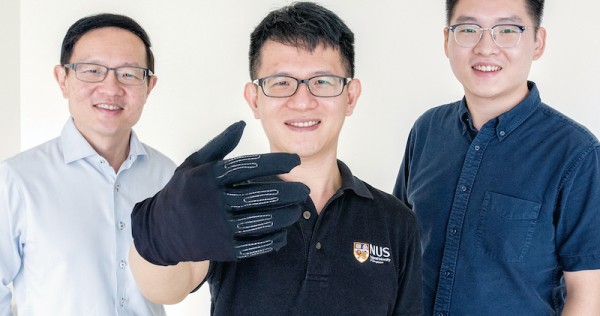
A team of researchers from the National University of Singapore (NUS) has now officially entered the fray with an invention called the Infinity Glove. And yes, it’s totally inspired by Thanos’ weapon of mass extinction. 

Headed by Professor Lim Chwee Teck, the director of the NUS Institute for Health Innovation and Technology, the project that the team has been working on for years was officially revealed earlier today (Aug 20): a wearable gaming controller glove that allows users to mimic in-game controls using hand gestures. 

The most obvious application for the gloves would be in first-person shooter games, of course. Without keyboards, mice or gamepads, the user will be able to access in-game commands — pretending to pull a trigger by flexing index fingers, for instance.

[ad_2]

Source link

2 Singaporeans imprisoned for arranging sham marriage

0

[ad_1]

SINGAPORE – Two Singaporean men have been jailed for arranging a marriage of convenience between a Singaporean man and a Chinese woman.

Choo Yong Sheng and Yap Junlian, both aged 38, were convicted on Aug 4 and Aug 12 respectively for offences under the Immigration Act, said the Immigration and Checkpoints Authority (ICA) on Tuesday (Aug 19).

Both men were sentenced to 32 weeks of jail. Choo will be jailed for an additional 12 weeks for hurting police officers in a dispute unrelated to the sham marriage.

Choo and Yap will also be fined $3,000 and $2,000 respectively.

Investigations by the authority revealed that in 2015, Choo had offered to help Chinese national Zhang Fengyu, 42, prolong her stay in Singapore by finding her a Singaporean husband.

Zhang, a long-term visit pass holder under the study mama scheme for foreign women accompanying their children who study in Singapore, wanted to remain in the Republic after her son completed his education.

In return for arranging a sham marriage for her, Choo asked Zhang for a payment of $18,000 and received a deposit of $3,000 from her.

[ad_2]

Source link

Man, 72, guilty of killing son-in-law in front of CBD lunch crowd

0

[ad_1]

SINGAPORE – Unhappy with how his son-in-law had treated his daughter and believing that it was part of a plan to cheat him of his business, the semi-retired founder of a shipping company repeatedly stabbed the younger man in front of a lunchtime crowd in the Central Business District three years ago.

Before the police arrived, Tan Nam Seng phoned his daughter to tell her what he had done.

“I can’t sleep at night. I have done it. I have killed him. Don’t cry. I am old already. I am not scared (of) going to jail,” he told her.

On Thursday (Aug 20), Tan, 72, pleaded guilty to a reduced charge of culpable homicide for stabbing 39-year-old Spencer Tuppani in the chest three times outside a Telok Ayer Street coffee shop at about 1.20pm on July 10, 2017.

CCTV footage was played in court showing Tan attacking Mr Tuppani, who was having lunch with three friends at the coffee shop.

Footage was also shown of Mr Tuppani running away after being stabbed and then collapsing in front of a restaurant on Boon Tat Street.

Tan was seen in the footage kicking Mr Tuppani twice in the face and chasing passers-by away.

[ad_2]

Source link

Domestic worker jumps from Toa Payoh flat after attempting to stab housemate

0

[ad_1]

A domestic helper from Myanmar jumped from the fourth floor of an HDB flat after a failed attempt to stab her housemate.

The incident occurred on Sunday morning (Aug 16) at Lorong 1 Toa Payoh.

Speaking with Shin Min Daily News, the housemate recounted how she had finished taking a shower that day when the 26-year-old woman attempted to stab her with a pair of scissors.

The housemate managed to dodge the attack and escape into the living room, where other inhabitants tried to restrain the attacker.

However, she managed to break free and started running up and down the corridor, even hitting her head against the wall at one point.

Despite their best efforts at reigning her in, they were unable to do so. One of them sustained light injuries on their arm in the process.

But before anyone could call the police, the helper suddenly turned tail and ran towards the end of the building and threw herself off the fourth storey ledge.

A neighbour was woken up by screams of “call the police”, he told the Chinese daily.

[ad_2]

Source link

Ride-hailing app TADA wants to bring ‘sense of nostalgia’ with new wet market delivery service

0

SINGAPORE: When Mr Jonathan Chua was young, his mother used to travel to Tekka Market just to buy lamb.

Years later, the general manager for ride-hailing firm TADA in Southeast Asia still remembers, with great fondness, those trips his mother used to take.

He wants to bring that sense of nostalgia to shoppers today through TADA’s latest product – a wet market delivery service.

“I remember (when I was young) my mother would always say that, ‘Oh, I’m going to Tekka Market just to specifically buy lamb’,” said Mr Chua.

“Wet markets have this sense of nostalgia,” he said, adding that they can also offer more competitive prices and fresher produce.

Similar to the online grocery shopping experience offered by the likes of RedMart or FairPrice, TADA Fresh Market aims to act as an “online multi-wet market shopping platform”, delivering fresh vegetables, fruit, seafood, meat and poultry from 36 stalls at Tekka and Tiong Bahru markets.

Shoppers need to place an order of at least S$30 worth of groceries to shop on the TADA Fresh Market website, with free deliveries for orders above S$50. 

READ: TADA: New ride-hailing app, driven by blockchain, launches in Singapore

BOOSTING INCOME FOR DRIVERS AND STALLHOLDERS

TADA Fresh Market was identified as a delivery partner for Tekka Online Market by the Infocomm Media Development Authority (IMDA), which is seeking to digitalise the wet market industry. 

The new delivery platform is also an additional source of income for TADA’s private-hire drivers, whose livelihoods have been greatly affected by the COVID-19 pandemic and restrictions to curb the spread of the outbreak.

With more people working from home and limiting their social outings, the company explored “different ways and ideas” on how drivers could be supported during the pandemic, said Mr Chua.

“It’s not possible to bring them back to the days where they can do 20 jobs (a day), just by the nature of the pandemic,” he said. 

Noting TADA had already launched a delivery service in Cambodia, Mr Chua said TADA Fresh Market was a way of using its technology and driver network in Singapore to bring wet markets online and provide drivers with an expanded customer base.

Tekka market vendor Seeni Mohammed

Mr Seeni Mohammed, who sells lamb and mutton at the Tekka wet market, is one of 36 vendors selling groceries under the TADA Fresh Market platform. (Photo: TADA)

Such a delivery service also provides an additional revenue stream for stallholders during the ongoing pandemic, said Mr Chua.

Earlier this year, then-Minister for Transport Khaw Boon Wan announced that taxi and private-hire car drivers would be allowed to perform food and grocery deliveries until the end of September, as part of efforts to help supplement drivers’ incomes while also meeting the higher demand for home deliveries.

READ: Tekka market stalls turn to live-streaming to sell fresh produce, as people stay home amid COVID-19

Since its soft launch during the “circuit breaker”, TADA Fresh Market has acquired about 3,000 customers, who are served by about 100 drivers, said Mr Chua. 

These customers use the TADA Fresh Market website to shop for their groceries at least once every two weeks, he said. 

TADA works directly with wet market stall owners. Orders are consolidated late at night each day and sent to the wet market merchants for preparation. TADA drivers are then dispatched to fulfil the deliveries. 

The orders are sent to the merchants via WhatsApp messages, said Mr Chua, as this is the form of technology that most of them are familiar with.

TADA does not charge merchants a commission for orders; instead, the company adds a “small markup” on the products. These markups are clearly visibly to customers on the website, said Mr Chua.

READ: Delivery slots run dry as more turn to online grocery shopping amid COVID-19 concerns

While TADA currently works primarily with stall owners at Tekka and Tiong Bahru markets, it will be expanding to include several merchants from the wet market at Block 216 Bedok North Street 1 within the next two weeks.

Mr Chua said TADA aims to bring in more wet markets in the Bedok area by the end of the year. It also aims to focus on the smaller, less well-known markets outside of central Singapore. 

While there are other wet market merchants who have gone online, Mr Chua believes offering consumers a one-stop platform to buy from multiple vendors across different markets, as well as “trusted, reliable service” will help differentiate TADA Fresh Market from other players. 

He adds that there are no plans to compete with the likes of Foodpanda or GrabFood in food delivery, although users can also use its platform to order small food items such as kueh and dumplings from the Tiong Bahru market. 

READ: Changing the face of the wet market to appeal to new customers

Mr Chua said that while he is aware that online shopping will not be able to completely recreate the wet market experience for shoppers who are accustomed to seeing and touching the produce and interacting with stallholders, he hopes that TADA Fresh Market will spur younger shoppers to purchase from wet markets and keep the industry alive. 

“If we can present the benefits of the products of the market conveniently to the users, I believe that a proposition (of buying groceries from the wet market) will be a long-term one,” he said. 

TADA currently operates in Singapore, Vietnam and Cambodia. Earlier this month TADA’s parent company MVL announced it had raised US$5 million in funding, which it said would help in its plans to manufacture electric tuktuks for the Southeast Asian market. 

Source link

Mask-less crowds gathering at game courts breaches of Covid-19 measures: Grace Fu

0

[ad_1]

While it’s good to lead an active lifestyle, safety is still the priority as Singapore weathers the Covid-19 pandemic.

In a Facebook post on Monday (Aug 17), Grace Fu reminded the public to abide by prevailing public health rules when they exercise outdoors.

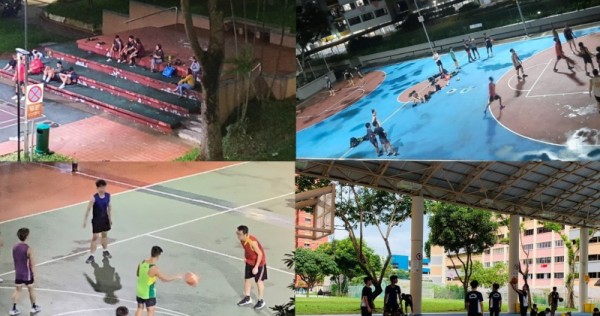
The Minister for Sustainability and the Environment noted that she has received numerous feedback regarding breaches of safety measures at public spaces such as game courts located in various HDB estates.

“Large groups of residents continue to gather frequently at the game courts for games, and often without their masks when they are not engaging in any sports or strenuous activities,” she wrote.

This, despite the efforts of safe distancing ambassadors and enforcement officers on the ground.

[ad_2]

Source link