Home Blog Page 121

Hard to make catch and release fishing compulsory, say NParks, anglers after giant ray cut up

0

SINGAPORE: Visit Bedok Jetty in the heart of East Coast Park on any day of the week, and chances are you will find recreational anglers trying to land the biggest catch of their lives. 

Some will release anything they catch, as the thrill of their hobby is all about the challenge of hooking a fish and reeling it in, then weighing it and taking a picture.

For others, their catch could end up in the boiling waters of a soup pot, rather than back in the salty ocean waters surrounding Singapore.

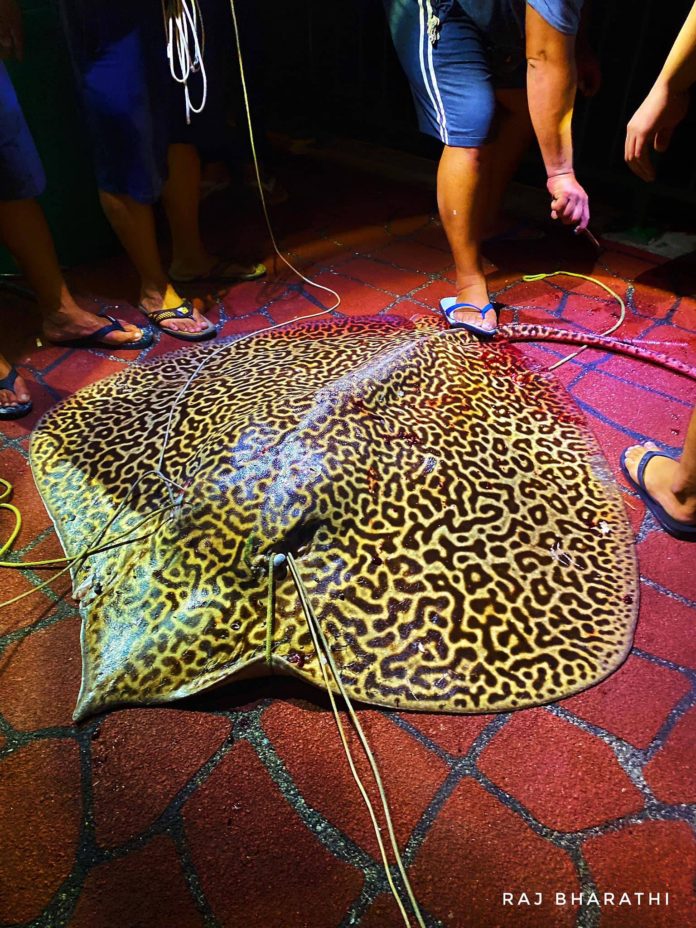
The difference in approaches to catching fish was in the spotlight recently after a honeycomb whipray estimated to weigh 80kg was caught at Bedok Jetty on Jul 30 before being cut up and distributed as the makings of a tasty dish.

Several members of the public and the animal welfare group Animal Concerns Research and Education Society said the vulnerable species should have been released.

But the National Parks Board (NParks), anglers and experts told CNA it would be a challenge to make catch and release fishing mandatory by law, citing difficulties like enforcement and low survivability among some fish that have been caught.

This is not to say the importance of sustainable fishing is not recognised. Anglers that CNA spoke to said they practise selective catch and release fishing, while NParks pointed to several initiatives to educate the community on these measures.

This includes a trial to put up signboards with some form of catch and release guidelines at the Changi Boardwalk and Labrador Park, and spreading the word through environmental groups with ties to the fishing community.

Nevertheless, there remains a lack of solid data on how recreational fishing affects marine populations in Singapore, NParks and experts said, adding that studies are ongoing to determine angler habits as well as what and how much they actually catch.
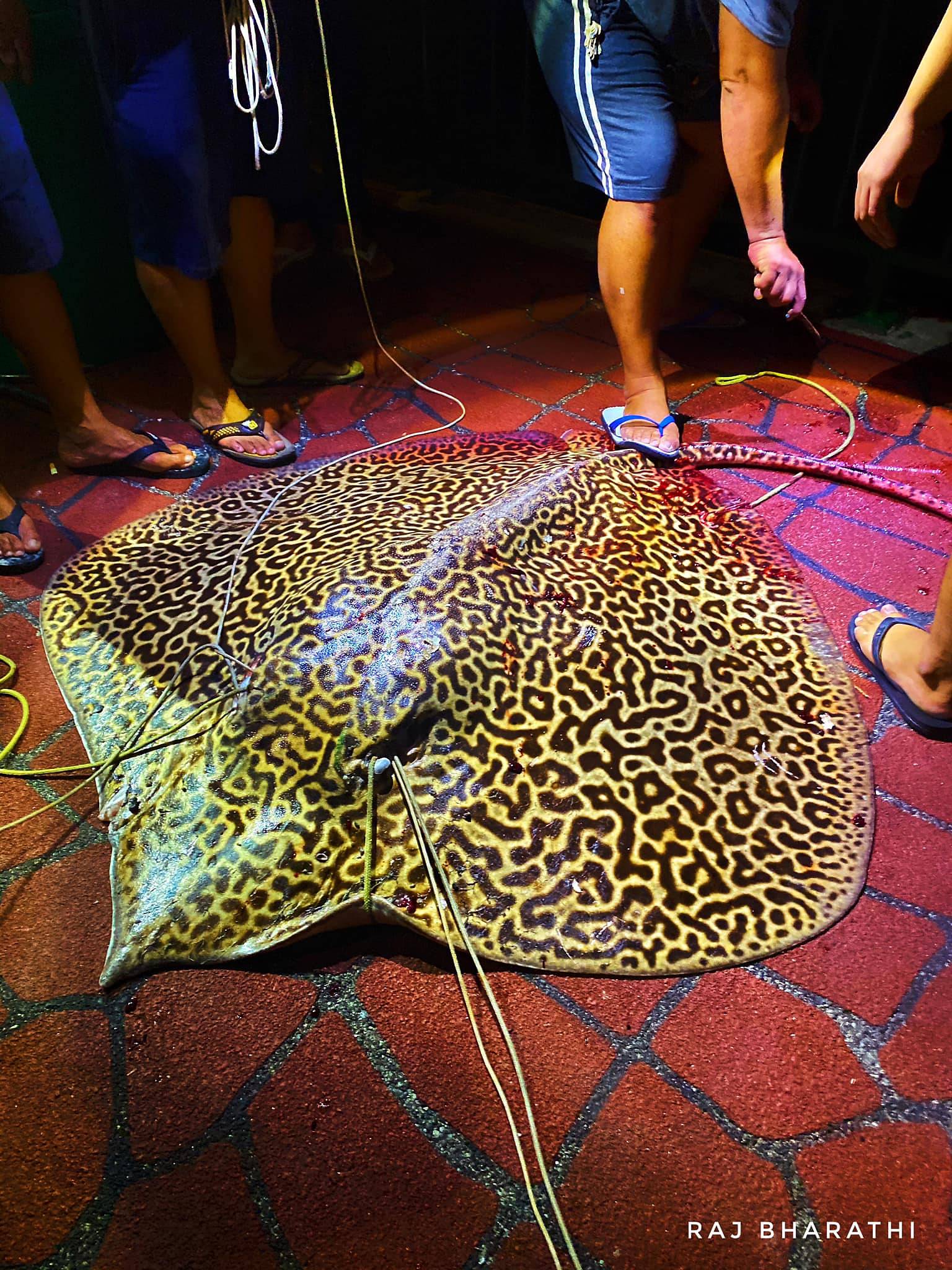
honeycomb whipray bedok jetty

The honeycomb whipray caught at Bedok Jetty on Jul 30, 2020. (Photo: Facebook/Raj Bharathi)

While there are no laws on catch and release fishing, the Marine Stewards, a non-profit group promoting sustainable fishing, has worked with anglers and marine researchers to come up with three guidelines supported by NParks. 

First, juvenile fish should be released to allow them to grow to maturity and repopulate the sea. The group provides on its website maturity lengths for about 50 species of fish commonly found in Singapore waters, including groupers and snappers.

Second, the critically endangered shovelnose ray, which restaurants usually serve as shark head, should always be released.

Third, anglers should always keep hybrid groupers as these non-native fish can compete with their native counterparts for food and disrupt the local ecosystem.

marine stewards catch and release guidelines

The Marine Stewards sells waterproof cards containing its guidelines. (Photo: Facebook/Marine Stewards)

But the Marine Stewards did not include the honeycomb whipray under its “no take” category. A spokesperson for the group told CNA its “first priority” is to protect species that face the highest level of threat, before looking to others in need of conservation.

The International Union for Conservation of Nature classifies the shovelnose ray as “critically endangered”, two rungs above the “vulnerable” honeycomb whipray.

LEGISLATING CATCH AND RELEASE DIFFICULT

The Marine Stewards said it hopes the shovelnose ray will eventually be protected as an endangered species under Singapore law, but admitted that it would take a “very long and involved” process to turn its broader guidelines into legislation.

“So we do what we can as a non-governmental organisation at the ground-up level, to spread the word and educate about sustainable fishing,” it said.

anglers near changi beach

Anglers fishing at a canal near Changi Beach. (Photo: Aqil Haziq Mahmud)

Some jurisdictions have mandated catch and release for some types of fish. In Northern Ireland, salmon and sea trout of any size must be released. Anglers are required to pay for a rod license and fishing permit, and submit a catch return application to tell authorities what they release.

Dr Jeffrey Low, a senior manager at NParks’ coastal and marine branch of the National Biodiversity Centre, said “you need to be very precise with legislation and regulations”.

“The total number of fish species Singapore has is apparently about 800,” he said in an interview with CNA. “Even if say, one-third of that is fished by the anglers, then how are you going to legislate for every single fish?”

READ: IN FOCUS: How urbanised Singapore is learning to live with its wildlife

Other factors that could make legislation challenging, Dr Low said, include whether a fish had swallowed a hook and is still alive when caught. Anglers said fish must be de-hooked and carried to shore before being released. Some are close to death even before that.

Enforcement would also have to cover numerous fishing spots in Singapore on top of those who go out to sea by boat, Dr Low said, adding that fishing can take place day and night.

“It means someone needs to be at the marina 24/7, it can be quite challenging,” he stated.

A man prepares his fishing rod at the Labrador park waterfront in Singapore

A man wearing a face mask prepares his fishing rod at the Labrador park waterfront in Singapore on Aug 17, 2020. (Photo: AFP/Roslan Rahman)

Dr Zeehan Jaafar, who studies marine ecosystems at the National University of Singapore, said the Marine Stewards guidelines are a “good first pass” in the absence of legislation.

“While best practices can be adopted, factors such as species, physiology and anatomy of the fishes are important in the final outcome,” she added.

“Studies show that some species exhibit high mortality after being released even when best practices are in place.”

READ: PUB releases thousands of fish in Pandan Reservoir to combat midges

Dr Neil Hutchinson, a fisheries expert at James Cook University Singapore, said any legislation should be science-based and developed with research scientists.

“What cannot be overemphasised would be the need for investment in a number of areas such as policing of guidelines,” he added.

“For example, in many Australian states there are active fisheries officers who check people’s catches, and fishers breaking the rules can be on the receiving end of some hefty penalties.”

Singapore does not have such a system, Dr Low acknowledged, stating that NParks has opted for a softer, ground-up approach instead.

“(This) is why we’re taking the community approach, because everybody talks to each other and generally by consensus agrees that these are some of the best practices,” he added. “I think that for us might be an easier approach.”

MORE RESEARCH NEEDED

In any case, NParks and experts agreed that guidelines and legislation should be based on scientific studies that determine the impact of recreational fishing on fish populations. Dr Low said there have only been anecdotal accounts of dwindling stocks in fishing spots.

To that end, Dr Low is involved in a number of research projects with several universities to better understand the impact. This includes studying past catches and how big these fishes are, as well as interviewing anglers on their fishing habits.

“We’re in the process of trying to analyse all that data; it’s quite a large data set and it’s hard to analyse so we haven’t come up with any concrete outcomes yet,” he said.

“We don’t even know how much (anglers) catch, to be honest. So to say there is a sufficient impact to the environment is perhaps jumping the gun a little bit.”

fishing pond pasir ris park

A man fishing at a pay pond in Pasir Ris Park. (Photo: Marcus Mark Ramos)

Dr Hutchinson said “we simply don’t know the extent to which different species are being fished, how healthy local populations are, or indeed the basic ecology of many of these fish species”.

“There is also a real need to develop tools such as stock assessments of key species to enable some form of management moving forward based on future research findings,” he said.

READ: Overfishing on the rise as global consumption climbs: UN food agency

Despite that, Dr Hutchinson said research elsewhere has shown that recreational fishing can have an impact on local fish stocks, stressing the need to conduct more research in this field locally and “act accordingly”.

In the absence of large-scale commercial fishing in Singapore, the Marine Stewards said most of the country’s fishing pressure comes from recreational fishing, with every angler playing a part.

“If one angler chooses to release 500g of fish every two weeks, multiplied by 1,000 anglers, that amounts to one ton of fish per month, or 12 tons a year,” the group said. “These fish get to grow big and spawn, so there is a multiplier effect.”

SOME ANGLERS CATCH AND RELEASE

Angler Muhammad Iskandar Samri understands this, telling CNA that he releases juveniles and only keeps plate-sized catch to distribute to friends and family for food.

“It’s healthy for the ecosystem and it’s healthy for us as we can keep going fishing,” said the 36-year-old who fishes twice a week. “The fish can grow, breed and attract other fishes to come in.”

fishing signboard changi beach

An NParks signboard at Changi Beach showing fishing etiquette guidelines. (Photo: Aqil Haziq Mahmud)

But Mr Iskandar, who works in the service line at the airport, acknowledged that some anglers keep even small fish, adding that this practice is frowned upon in his fishing circles. 

“An individual can influence other people in the group, and if they think that (catch and release) is a better practice, they will follow,” Mr Iskandar said.

“For some, they will just bring back everything, whether they eat the fish or not. If it goes to the waste, we have no idea.”

Angler Muhammad Hairul Ibrahim, 39, explained that those who keep everything see their catch as a “gift” borne from their hard work and years of fishing. “It’s like a prize trophy,” he said.

READ: PUB removes 140 stingrays from Lower Peirce Reservoir, reopens fishing grounds

Fellow angler Mr Amirul, 27, knows what this kind of practice could lead to.

He was fishing near Changi Beach when he showed CNA two small fish that anglers had probably left on the rocks to die. He put them under a bench and would later properly dispose them.

“It is up to individual preference, how their mentality is,” he said.

NParks’ Dr Low said this is why it is important to work with the Marine Stewards and other groups with access to the larger angler community to educate them on sustainable fishing.

“Maybe the target audience that we should focus on is the seasoned but slightly younger group,” he said. “Because this new group will have no traditions, so it’s easier to instill some of these habits in them.”

Involving the community would also ensure that if Singapore ever turned to legislation, it would be something that is accepted by various stakeholders, “as opposed to something that is imposed”, Dr Low added.

PROS AND CONS OF LEGISLATION

But Mr Iskandar said he was against legislation, noting that many anglers already fish responsibly by going to legal spots, keeping the place clean and releasing their catch where possible.

The added cost would not make the hobby worth it, said Mr Amirul.

“Laws will definitely make things difficult because in Singapore the catching rate is already very low,” said Mr Iskandar. “Then you have to spend money on a licence and put people on enforcement. For me it’s not the way to go.”

shore angling competition pasir ris beach

Anglers take part in a competition at Pasir Ris Beach. (Photo: Facebook/Marine Stewards)

On the other hand, angler Jia An Ng, 30, said the regulation of recreational fishing could benefit the community in the long run.

The money from licence applications could be used to develop the industry, he said, with better facilities for anglers and opportunities to improve their skills. Authorities could also release more fish at spots where anglers report low catch rates, he added, citing the example of Australia.

“It could develop this sport to a higher level,” said Mr Ng, who has worked in the fishing industry for 10 years and was most recently a guide at a sport fishing company based in Papua New Guinea.

“It would benefit the average fishing catch rate, the environment or even tourism as a whole. We actually enjoy a fair bit of tourists coming into Singapore … who do a bit of fishing for for a couple of days. And I believe there’s a big industry for it.”

COMBINATION OF KEEP AND RELEASE THE WAY TO GO

Nevertheless Mr Ng, who practises catch and release unless friends make special requests for certain types of fish for food, said the trend is shifting towards sustainable fishing.

“If you were to be fishing 10 years ago, catch and release is very rarely heard of. But in recent years, it has been widely promoted,” he said.

“There are a lot of guys on the ground showing anglers how to release fish the right way, what equipment you should use to cause less damage and stress.

“We have to make it clear that if we are promoting it as a sport, this is the encouraged way. But again, you still can go fishing, catch a fish and enjoy it for dinner. It’s all about co-existing together.”

fishing bedok jetty

Anglers at Bedok Jetty. (Photo: Facebook/Marine Stewards)

The Marine Stewards acknowledged that Singapore started out as a fishing village, with fishing becoming an important part of its history and culture.

“It is okay to catch a fish to eat,” the group said.

“In fact, when you catch a fish with rod and line, that is probably a more sustainable way of catching fish compared to some of the fish that you get at the market that might have been caught by large nets.”

READ: Singapore fishery ports to be consolidated amid review of fresh food wholesale industry

The angler Mr Amirul, who fishes every weekend, only keeps mature fish that he knows will taste good, like snapper and catfish. The latter makes for a good asam pedas dish, he said.

“In Singapore, it’s not really easy to catch desired or good-sized fish unless you take a boat out to sea,” he said. “If you try hard and something bites that is of a good size, that’s your reward. I’m happy to bring it home.”
Source link

How dementia day care helped, when grandpa kept getting lost

0

SINGAPORE: It was 6.30am and Geraldine Lim was about to give up. Her father had not come home since he left for his usual walkabout the afternoon before. 

There was no dial tone when she called his phone, and she had no way of giving him directions to get home, unlike previous occasions when he’d wandered out on this own. 

By 7am, she was ready to go to the police. But just then, 83-year-old William Lim appeared at the gate, back hunched with pain, eyes sunken from roughing out the night. And this is all Geraldine will ever know, for her father can’t remember: He has dementia. 

“He told me some kind stranger sent him back, but where he was the whole night, what had happened to him, he has no clue,” Geraldine, 50, said. 

William on the morning after he disappeared overnight.

The morning after he went missing for a whole night, he reappeared exhausted and back hunched in pain.

Calm and composed by nature, the mother-of-three had always been able to manage the quirks that came with William’s illness: From the time he drank soy sauce instead of water, to when he lost his car.

This time however, she felt, “for the first time, like maybe I can’t cope with this properly”, admitted Geraldine, her voice cracking as she recalled the incident a year ago. 

It was then that she knew help was needed.

READ: Guilt, burnout and sacrifice: Dementia patients’ caregivers ask ‘have I done enough?’

WHO IS/WAS WILLIAM?

To Geraldine, William had been a typical “Asian father” who was a school discipline master: No hugs and kisses, except maybe on her birthday. But he also had a funny, life-of-the-party side. 

William Lim with his wife May and their grandchildren.

William Lim with his wife May and their grandchildren.

In his later years, the lapses in his memory got more and more noticeable.

First, he bought the wrong groceries and insisted he was right. Then, he forgot about the food stalls near his home of 30 years and couldn’t buy lunch. 

And when he could no longer remember the steps during his line-dancing sessions – an activity he enjoyed with his wife – it became clear that this was not just an “old-age kind of forgetfulness”, Geraldine said. 

Yet, he insisted he was fine. Eventually, only one thing moved him to get checked – his wife, who had just been diagnosed with stage 4 cancer, told him: “Think of all the people who are going to have to take care of you.”

In 2013, he was diagnosed with dementia.

LIVING WITH DEMENTIA 

Seven years later, the William of today is a man who, in a short film made by Geraldine’s eldest daughter Bethany Tan, stares at a beautifully-framed photo of a woman he spent 47 years with –  and takes nearly six seconds to identify her as “my… wife”. 

William's wife passed on in 2014, a year after his dementia diagnosis.

William’s wife passed on in 2014, a year after his dementia diagnosis. 

After May died in 2014, William was still capable of living on his own. He was listening to his doctor and taking his medication, and he continued to drive himself to meet friends. 

Even when he eventually moved in with Geraldine’s family in 2016, he went on his own way without a problem. 

Until one day, Geraldine got a call from William: Someone had stolen his car, he said. “To give him the benefit of the doubt, we made a police report and he recalled where he thought he’d parked the car,” Geraldine said. 

Two days later, William finally found it – in a different spot.

He had to stop driving then. But, having developed a tendency to wander – one of the behavioural changes that can occur as dementia progresses – he took to exploring the island by public transport.

But then came the getting lost. 

The first time it happened, William thought he had taken a bus to North Bridge Road but he was, in fact, on a train and wound up at North Buona Vista. Over the phone, Geraldine instructed him to ask for help, and a stranger eventually put him in a cab back to their home in the east.

Sounds simple? It wasn’t. “He was stubborn,” recalled Bethany, 22. “He didn’t want to trouble anyone and we really had to desperately convince him.”

Bethany. a freelance videographer, made a short film about grandpa William's dementia.  

Bethany. a freelance videographer, made a short film about her grandpa’s dementia.  (Photo Bethany Tan)

This situation repeated itself many times. While Geraldine was worried for his safety, she still wanted to accord him his dignity and independence of movement.

So, they’d hook a tracker and his keys on his belt loop every morning, and off William went. The only rule? He had to tell somebody before he left. 

But of course, he didn’t.

CLIMBING THE WALLS

To stop him from slipping out without notification, the family padlocked the front gate.

One morning, noting that the padlock was in place, Geraldine assumed William was home – until she noticed his shoes were gone and he was not in his room.

CCTV footage showed that the resourceful 83-year-old had very slowly clambered over the garden wall. When he returned an hour later, he was unfazed by the scare he’d given them.

“I suppose I did climb the wall,” he shrugged. Subsequent wall-scaling attempts followed; kind (and confused) strangers even stopped to help him down. 

MCI Dementia CCTV footage (Photo Geraldine Lim)

The family’s CCTV footage showed grandpa slowly climbing over the garden wall on one of his escapades. 

Though this had her climbing the walls sometimes, in a manner of speaking, Geraldine had come to terms with her father’s irreversible “second childhood”. “You can either cry or laugh about it, or get angry,” she said. 

My choice is more to laugh with him; there’s no point getting mad at him anyway.

As the disease progressed, William, now 84, forgot to take his meals and medication. He would raid the fridge and eat or drink anything – a whole lemon, chicken stock, even soy sauce. He would stick the shaver in his mouth instead of gliding it across his chin. Geraldine was constantly on edge.

While at work as a manager with the Office for Catechesis, “I had to remember to check the time and call him quite frequently,” she said. “You can’t focus on your work sometimes.” 

In late 2018, after he didn’t come home for a whole night, Geraldine finally sought help – she got a doctor’s referral for William to attend dementia day care. 

WATCH: What happens when grandpa goes wandering (8:!5)

WHAT HELP LOOKS LIKE

On his first day at St Luke’s ElderCare Marine Parade Centre, true to form, William embarked on a little escapade.

Centre manager Jeffrey Ha, 50, said his “heart dropped” the moment his new client ran out the door. “He didn’t just walk, he sprinted!”

William had even rallied fellow newcomers to join him, Geraldine recalled, laughing. “It was actually very funny. He said, ‘no why should we stay here?’ And they all tried to leave the centre together!”

But the experienced Jeffrey coaxed William to go back inside, by simply telling him that Geraldine was on the phone asking for him. Jeffrey had noticed William’s attachment to his daughter when they first met. 

It’s this kind of sensitivity in handling the behaviour of those with dementia that allows caregivers like Geraldine peace of mind when leaving them in the hands of the day care staff. 

St Luke's ElderCare Marine Parade Centre supervisor Jacob Chong

Centre supervisor Jacob Chong, 29, knows from experience with his own grandfather what living with dementia is like. 

Across Singapore, there are about 100 centres like this one that offer dementia day care services for seniors like William, with subsidies for Singaporeans. Overseen by the Agency for Integrated Care, the centres also provide relief and training support for caregivers.

Geraldine soon realised how much she needed this kind of respite. “My reaction at first was that finally, it’s someone else’s responsibility as well,” she said. 

William started by attending day care once a week; then it became his routine every weekday.

At 8.30am, a cab arranged by the centre would pick him up. By 9am, he’d be settled comfortably at the dining area with a bowl of porridge and a cup of coffee for breakfast. 

Sometimes, he’d play basketball on an arcade machine to get his limbs moving. Other times, it would be mahjong or Rummi-O – games that stimulate cognition – with the other seniors. Before the COVID-19 outbreak, the centre also organised mass exercises or Zumba classes.

A mass exercise session at St Luke's ElderCare Marine Parade Centre, before COVID-19 struck

A mass exercise session at St Luke’s ElderCare Marine Parade Centre, before COVID-19 struck

When Singapore’s ‘circuit breaker’ period kicked in in April, all senior care centres were closed. Since St Luke’s ElderCare reopened on Jun 29, precautionary measures have been in place, such as mask wearing, safe distancing, good hand hygiene, and infection control practices, in line with the Health Ministry’s advisories.

Those activities it has resumed are now conducted differently – like reminiscence therapy.

The staff used to bring out nostalgic items from yesteryear – vinyl records, analog phones, even old soft-drink bottles – to trigger clients’ memories of their past. Such therapy is said to have a calming and confidence-building effect on folks with dementia.

Since the pandemic, the staff have switched to using digital tools such as iPads, and with groups of no more than five persons.

READ: The power of memory: Nursing home recreates old streets to help residents

GETTING TO KNOW YOU

Having a variety of activities, said centre supervisor Jacob Chong, is important “to enhance their quality of life and keep them engaged. It also helps to slow down the onset of dementia”.

That’s why the 29-year-old goes out of his way to research new activities to help his clients. He knows, from personal experience with his own grandfather, what it is like to deal with the disease.

In recent years, centre-based care has become a more popular option compared to nursing homes for caregivers of the elderly, a Lien Foundation report in 2018 found. 

St Luke's ElderCare Marine Parade Centre

St Luke’s ElderCare Marine Parade Centre opened in 2018

But even with such help around, the dementia journey is still filled with ups and downs – and care staff have learnt to deal patiently with their clients’ erratic moods.

Said Geraldine of William: “There are good days when he can answer questions very easily. But there are days where he will give up and say, ‘no you tell me, I don’t know’.” 

This means the centre’s 15 care staff have to learn what makes their clients tick – so they know, for instance, when William gets agitated, to assure him that Geraldine was coming for him; or, to put Geraldine on the line to talk to him.

They also know every one of the centre’s 130 clients’ names, what their favourite songs are, how they like their lunch to be prepared, how they like to occupy their time.

In William’s case, it’s hanging out with three companions.

MCI Dementia William (far right) and his couch buddies

William (far right) and his couch buddies

His newfound friendships are a particular joy for granddaughter Bethany. “Before day care, he seemed a bit lonely. So I’m grateful that he’s able to be happy with his friends, even if he doesn’t remember their names,” she said. 

RELAPSE

The difference that the centre has made in their lives was made stark when William had to stay home during its temporary closure.

The family tried to keep him occupied. They created a “grandpa’s playlist” of Elvis Presley hits that they played while he did his exercises. 

The centre held Facebook livestream activity sessions, checked in with clients via phone or video calls, and mailed out worksheets – which inspired Bethany to create her own homework for grandpa.

 Geraldine Lim and eldest daughter Bethany Tan

Geraldine Lim and eldest daughter Bethany Tan, along with others in the family, tried to keep grandpa occupied. But William listens only to Geraldine, who is his main caregiver.

But all this couldn’t compare to having a regular daily schedule and centre staff on hand to care for William. Said Geraldine: “You have to deal with office work (at home) and looking to his needs, so sometimes there’s a tension.”

He began showing “signs of deterioration”, like easing himself in the bedroom; and he would nap much of the day away.

The result was that he was wide awake at night, and fell back into his old escape-artist habits – once climbing over the garden wall in his sarong at 4am, and going missing until 2.30pm.

READ: ‘It can be a lot to bear’: Dealing with dementia during the circuit breaker

When the centre reopened after nearly three months, Geraldine was initially worried he might not be able to slip back into his old routine, and about potentially exposing him to the coronavirus. 

But her concerns were quickly allayed by the centre’s precautionary measures and how instantly William responded to seeing his friends again. “He’s sleeping better at night now,” she said.

Post-circuit breaker, activities are now conducted

Post-circuit breaker, activities are now conducted in smaller groups with safe distancing, (Photo: St Luke’s ElderCare)

LESSONS FROM DEMENTIA

Now able to focus on her work with her mind at ease, Geraldine said: “It’s comforting because you know he’s somewhere safe, meals are provided, and there’s a regular routine.”

William still tries to go wandering – sometimes the moment he gets off the taxi that brings him home. But, the family is no longer constantly on their toes. 

“I think (his dementia) kind of pulled us together, actually,” said Geraldine. “We look out for each other, we look out for grandpa. We just have to adapt as the situation gets worse.”

Said Bethany: “Seeing the way my mum loves grandpa makes me think about all the patience I would need to cultivate, should the day ever come (for my parents).”

Geraldine’s encouragement to those struggling with a loved one’s dementia: You are not alone. From the kind strangers who brought William home, to the day care centre’s staff, to friends and family, she said: “There is always help available – you just need to ask.” 

This story by CNA Insider was done in collaboration with Gov.sg. Up to 80 per cent subsidies are available for Singaporeans for home and centre-based services, depending on household income per capita. Details at www.aic.sg/care-services/day-care

WHERE TO GET HELP:

AIC HOTLINE: 1800-650-6060 or dementia day care centre locator 

DEMENTIA FRIENDS APP for Android and Apple iOS

HPB HEALTHLINE: 1800-223-1313

ALZHEIMER’S DISEASE ASSOCIATION’S DEMENTIA HELPLINE: 6377-0700

Source link

Commentary: Let’s move away from caning and corporal punishment for our kids

0

SINGAPORE: Recently, news about a three year-old boy who was excessively caned by his father again cast a spotlight on disciplinary practices in Singapore. The father was subsequently charged of ill-treating a child by causing him unnecessary physical pain.

Parents who use corporal punishment rarely set out with the intention to injure their children. However, a handful inadvertently cross the line when they are unable to control their emotions and actions.

Last year, the Ministry of Social and Family Development investigated 660 cases of physical abuse in Singapore, which accounts for 60 per cent of all child abuse investigations.

In a study done by the KK Women’s and Children’s Hospital, the hospital’s emergency room diagnosed 1,971 cases of non-accidental injury in children between 2011 and 2016. 

READ: Commentary: From COVID-19 to parenthood, judging each other is back with a vengeance

READ: When caning of children becomes abuse: Lawyers explain the legal parameters

The mean age of these child patients was around 7.7 years old, and the top two types of injury were bruises at 55 per cent and cane marks at 21 per cent. 

Let us understand parents’ perspectives in using corporal punishment, and look at research studies that examine its effectiveness and impact on children.

AN ACCEPTABLE FORM OF DISCIPLINE? 

The American Academy of Pediatrics defines corporal punishment as the “non-injurious, open handed hitting with the intention of modifying child behaviour”. In our context, objects such as canes and hangers are often used too. 

Corporal punishment largely remains acceptable here. It is common to hear claims like, “My parents spanked me, and I turned out okay”. Euphemisms like “a loving smack” further lend legitimacy and even a sense of responsibility that parents have towards their wards from a tender age.

READ: Commentary: Perhaps now, stay-home mums will get the credit they deserve

READ: Commentary: COVID-19 is giving dads more opportunities to be involved at home

Another common view is that corporal punishment is an effective way to correct a child’s misbehaviour if used judiciously. It can elicit immediate compliance, get a child’s attention and assert parental authority.

Parent child parenting

(Photo: Pixabay/Neil Dodhia)

Understandably, the issue of corporal punishment is deeply personal and provoking as carers may take it as an affront on their parenting style.

But today, research into the impact and harm of corporal punishment on child development, studies on child psychology and behaviour, as well as greater familiarity with positive parenting and effective discipline strategies have evolved.

EFFECTIVENESS AND IMPACT OF CORPORAL PUNISHMENT

Some of the most compelling evidence that has emerged in recent times have called the effectiveness of corporal punishment into question.

Studies on the immediate compliance after corporal punishment suggest that while it could deter children from misbehaving in the moment, it does not guarantee that appropriate behaviour will take its place or that misbehaviour will decline. Corporal punishment alone does not teach children what to do in place of the problem behaviour.

In fact, the problem behaviour might return, even if the parent escalates the frequency and intensity of punishment, and this might then cross into physical abuse.

READ: Commentary: A little baby talk is good for your toddler

In a telephone survey with close to 1,500 mothers in the United States, mothers who reported that their child was spanked were three times more likely to also report using harsh punishment that could constitute physical abuse, such as kicking and burning or scalding their child.

Importantly, mothers who reported that their child was spanked with an object were nine times more likely to also report having used harsh punishment on their child.

In addition, findings have consistently shown that corporal punishment does not promote the development of pro-social behaviours.

Conversely, it has been linked with more aggressive and anti-social behaviours. Some argue that by using corporal punishment, parents model aggressive behaviour and studies have shown that children develop attitudes about the acceptability of violence partly from how they are treated by their parents and what they see around them.

We are also beginning to understand the long-term impact of corporal punishment. In a study conducted in Malaysia, researchers found that individuals who reported experiencing more frequent and severe corporal punishment as children had poorer psychological adjustment in adulthood.

The scientific community has recognised the need to consider nuances across societies and cultures, with studies emerging to shed light on this practice in Asian societies. It has been found that the negative effects of corporal punishment are not confined to the West.

In international studies involving Asian populations, such as China, Thailand, and the Philippines, corporal punishment was related to increases in children’s anxiety and aggression over time, even when children have a warm relationship with their mothers.

A boy listens to teacher's instructions at a school in Cisarua, West Java, in a mountainous

A boy listens to teacher’s instructions at a school in Cisarua, West Java, in a mountainous area south of Jakarta. (Photo: AFP/Bay Ismoyo)

There is also the view that if corporal punishment is regarded as a normal parenting practice, like in most Asian societies, the link between corporal punishment and poor child outcomes is weaker. But research has shown that corporal punishment remains consistently associated with poorer outcomes such as aggression and anxiety.

WHAT ARE THE ALTERNATIVES TO CORPORAL PUNISHMENT?

Children are generally motivated to behave well if they enjoy a good relationship with their parents. Parents need to build up their “toolkit” of strategies to respond to children’s behavioural problems, promote healthy development and build strong bonds.

READ: Commentary: Am I a bad mum for leaving my kid in childcare while returning to work?

Here are three questions to re-think your disciplinary approach:

First, what is the ratio of positive and negative experiences in your parent-child relationship? Are you reinforcing positive behaviours?

Think back on your interaction with your child over the last month. How many are positive – for example, asking how your child was and listening to his views – and how many negative, that include putting him down? Experts recommend the ratio to be around 5:1. If there are more negative interactions, you should try to tilt the balance.

Positive reinforcement for alternative behaviours such as providing rewards, specific praises and physical affection, and spending quality time are extremely effective.

Parent child parenting (1)

(Photo: Pixabay/StockSnap)

In addition, children respond better to clear expectations. Beyond “stop” requests such as “Don’t shout” or “Stop crying”, follow on with “start” requests such as “Take a deep breath and speak calmly so I can understand”.

Second, when children present with difficult behaviours, what do they really need?

There are different reasons underlying children’s behaviour. When they throw temper tantrums, are they trying to get attention? Could they be avoiding something painful or are they motivated by feelings of unfairness?

Children need to be taught how to manage their feelings and impulses, how to communicate to resolve conflicts, and what to do when an action is unsafe to themselves or others. Most of the time, the immediate behaviour that children present with does not pose a high risk of danger. 

READ: Commentary: Napping helps your pre-schooler learn better

There is time for parents to pause and think about what their underlying needs are before addressing their behaviours appropriately.

Third, how are you managing your child’s misbehaviour? Are your actions logical, and do they correspond with the misbehaviour?

A familiar Chinese saying goes, “harsh words and deeds can demonstrate one’s love”. While parenting is a labour of love, it does not have to hurt.

Science has not only contributed to help us understand the impact of corporal punishment on children, there is also a plethora of positive parenting strategies that have been proven to work.

As we learn to manage our children’s behaviour better through these alternative ways, we would no longer feel the need to use corporal punishment in raising our children.

Professor Ho Lai Yun is the Chairman of the Research and Advocacy Standing Committee and Vice-Chairman of the Singapore Children’s Society. The Singapore Children’s Society can be reached at info@childrensociety.org.sg

Source link

Several Orchard Road malls among places visited by COVID-19 cases during infectious period

0

SINGAPORE: The Ngee Ann City, Paragon and The Heeren were among malls in Orchard Road that were added on Saturday (Aug 29) to the Ministry of Health’s (MOH) list of places visited by COVID-19 community cases during their infectious period. 

Two shops in Ngee Ann City – Papilla Haircare and Best Denki – are on the list, while the outlets named in Paragon are MUJI, Toys “R” Us and iStudio.

Other places include a Beauty in The Pot restaurant outlet at Westgate mall and Swensen’s at Bugis Junction. 

Geylang Serai Malay Market and Food Centre is listed three times.

The new locations are as follows:

locations table Aug 29

UPDATED MAP: All the places that COVID-19 community cases visited while they were infectious

MOH said that people who were identified as close contacts of confirmed cases would have been notified by the ministry. 

As a precautionary measure, people who were at those locations during the specified timings should monitor their health closely for 14 days from their date of visit, the ministry added.

“They should see a doctor promptly if they develop symptoms of acute respiratory infection (such as cough, sore throat and runny nose), as well as fever and loss of taste or smell, and inform the doctor of their exposure history.”

READ: All public libraries to resume regular opening hours from Sep 1; COVID-19 measures to remain in place

MOH said there is no need for people to avoid places where COVID-19 cases have been, and that the National Environment Agency will engage the management of the affected premises to provide guidance on cleaning and disinfection.

Singapore reported 51 new COVID-19 cases on Saturday, including one in the community and three imported cases.

“All new cases today are asymptomatic, and were detected from our proactive screening and surveillance,” said MOH.

The sole community case on Saturday is a 29-year-old Bangladeshi man whose infection is currently unlinked.

His case was detected as a result of MOH’s bi-weekly rostered routine testing of workers in the construction, marine and process sectors who are living outside the dormitories, said MOH.

A three-year-old Singaporean girl was among the new imported cases. She had returned to Singapore from India on Aug 16. 

The remaining 47 cases are migrant workers living in dormitories. 

Singapore’s tally of cases stands at 56,717, with 27 deaths.

BOOKMARK THIS: Our comprehensive coverage of the coronavirus outbreak and its developments

Download our app or subscribe to our Telegram channel for the latest updates on the coronavirus outbreak: https://cna.asia/telegram

Source link

Coronavirus: Scheme disbursing $500 to hawkers who engage food delivery platforms extended until end-2020

0

[ad_1]

SINGAPORE – A scheme that disburses one-time grants of $500 to hawkers who sign up to food delivery platforms will be extended to the end of the year.

The fund started in April and was initially due to end on June 30, but applications have continued to be accepted.

Cooked food stallholders operating at hawker centres managed by the National Environment Agency (NEA) or by its appointed operators are eligible for the scheme.

Around 1,200 applications had been approved as at Aug 21, noted Senior Minister of State for Sustainability and the Environment Amy Khor on Friday (Aug 28).

The initiative will alleviate the concerns of hawkers who may be hesitant about subscribing to food delivery platforms, which can charge commissions ranging from about 25 per cent to 32 per cent for each order.

Dr Khor, who was visiting the Lifelong Learning Institute, said the extension of the fund is in line with the Government’s broad digitalisation efforts under the Hawkers Go Digital scheme. She hopes it will help to provide an alternative source of revenue for hawkers while empowering them to innovate in their trade.

[ad_2]

Source link

More turtle sightings and nests over the last few years: NParks

0

SINGAPORE: There has been an increased number of turtle sightings and nests over the last few years, said the National Parks Board (NParks) on Friday (Aug 28) after it was reported that 119 critically endangered hawksbill turtle hatchlings were recently released at Sisters’ Island.

“(This is) especially with the NParks Biodiversity Beach Patrol volunteers helping to patrol our beaches to watch out for nesting turtles and hatchlings, as well as increased public awareness to inform NParks when there is a sighting,” said the agency in response to CNA’s queries.

According to NParks, the majority of turtle nesting activities are at East Coast Park, with the rest at the Southern Islands.

Between June and September every year, female hawksbill turtles would select a suitable spot to lay their eggs, which typically hatch after about two months, said NParks.

“As only a handful of turtles from each clutch of between 100 and 150 eggs survive until adulthood, locating the hatchery at the protected Sisters’ Islands Marine Park plays a crucial part in increasing their chances of survival,” it added.

119 critically endangered Hawksbill Turtle hatchlings were released at Sisters’ Islands (3)

According to NParks, only a handful of turtles from each clutch of between 100 and 150 eggs survive until adulthood. (Photo: NParks)

Singapore’s first turtle hatchery, which was set up at Small Sister’s Island in September 2018, consists of a turtle field station and an incubation sand pit area.

“The hatchery provides a conducive environment for the incubation of rescued turtle eggs by keeping them safe from predators, light pollution and human disturbance within specially built incubation cages,” said NParks.

The relatively calm conditions at the lagoon at Small Sister’s Island also allow for hatchlings to make it out to the open sea, it added.

READ: IN FOCUS: How urbanised Singapore is learning to live with its wildlife

Last Sunday, NParks released 119 critically endangered hawksbill turtle hatchlings at Sisters’ Islands Marine Park Turtle Hatchery, after their vital statistics were recorded.

The eggs of these hatchlings were previously relocated from East Coast Park.

119 critically endangered Hawksbill Turtle hatchlings were released at Sisters’ Islands

A total of 119 critically endangered Hawksbill Turtle hatchlings were released at Sisters’ Islands Marine Park Turtle Hatchery on Aug 23, 2020. (Photo: NParks)

On Friday, Minister of National Development Desmond Lee posted a Facebook vide of the hatchlings being released, saying their vital statistics will enhance Singapore’s turtle conservation research.

He also said that NParks relocated 132 hawksbill turtle eggs from another site at East Coast Park to the hatchery on Wednesday, where they will have “a higher chance of survival, away from human activity, light pollution and predators”.

“I hope these baby turtles will grow and return to our shores soon,” Mr Lee wrote, adding that anyone who sees a nesting turtle should avoid disturbing the creatures.

Source link

Covid-19: 51 new cases in Singapore, including 1 in community and 3 imported

0

[ad_1]

SINGAPORE – There were 51 new coronavirus cases confirmed as of Saturday noon (Aug 29), taking Singapore’s total to 56,717.

They included one community case, who is a work pass holder, said the Ministry of Health (MOH).

There were also three imported cases who had been placed on stay-home notices upon arrival in Singapore.

More details on Saturday’s new Covid-19 cases will be announced later in the night.

On Friday, the Health Ministry announced 94 new Covid-19 cases, including four community cases who were all Singaporeans.

Only one of the community cases was unlinked — a 25-year-old woman who started showing symptoms on Aug 22.

She was confirmed to have the coronavirus on Thursday.

There were also 10 imported cases among the new patients, comprising three Singaporeans, four permanent residents, one dependant’s pass holder, one long-term visit pass holder and one short-term visit pass holder.

Among the imported cases was an 88-year-old Singaporean man and a six-year-old girl who is a dependant’s pass holder.

Both had returned from India, and they were confirmed positive on Thursday.

[ad_2]

Source link

With no migrant workers or tourists, shops in Little India suffer but some turn online

0

SINGAPORE: Mr RM Suresh used to do a roaring trade selling mobile phone accessories and sundries to migrant workers who gathered in Little India every weekend. 

The owner of Pamban Trading, a shop at Belilios Lane, is now thinking of switching to goods that appeal to local customers as business has fallen by about 90 per cent in the last four months, ever since thousands of workers were quarantined due to the COVID-19 outbreak.

While he received a rental waiver for a few months, the concession will end this month.

“How to continue the business, I don’t know … I pray to god,” he said with a wry laugh. 

READ: New MOM division to provide support to migrant workers, dormitory operators

Migrant workers living in dormitories make up the vast majority of COVID-19 cases in Singapore, and while the country’s “circuit breaker” period ended in June, allowing retail shops to reopen, most of these workers have to stay in their dormitories except for work.

Most workers now travel only between their dormitories and work places, and the crowds at Little India have not returned. Even the few workers who do patronise Mr Suresh’s shop now buy less than they used to, he said.

Grocery store Little India

Mr Vijayasekaran Ramachandran, who has a provision shop in Little India, says business was affected but has since picked up a little with the return of local customers. (Photo: Chew Hui Min)

When CNA visited on Saturday (Aug 29), the crowds that used to pack the heritage area on weekends were conspicuously missing.

Mr Mohamed Iqbal, whose shop on Dunlop Street is stacked high with shirts, shoes and other goods that appeal to the workers, said that his business has fallen by 50 to 60 per cent. It has never been this bad in the 20 years his shop has been in the area, he said.

“They used to come and buy everything … now they work and they go back to their dormitories,” he said, adding that a lack of tourists in the area has also affected his business somewhat.

Shops selling mobile phone cards and accessories also told CNA that their business has fallen by quite a lot without the workers, especially on weekends.

READ: COVID-19: Authorities monitoring migrant worker dorms to manage risk of outbreaks after new cases reported 

SHOPS HIT BY LACK OF TOURISTS

At the Little India Arcade, traffic was thinner than usual on a Saturday and there were only a few customers at Ms Selvi’s beauty parlour. 

More than 90 per cent of the customers who came to them for henna painting were tourists, she said, adding that demand for beauty services from local customers has fallen even after the circuit breaker period.

“(People) are not coming out so much and they might be thinking: ‘Aiyah, no need to groom myself lah, might as well stay at home’,” she said.

Selvi's

Dr T Chandroo, chairman of the Singapore Indian Chamber of Commerce and Industry (SICCI), speaking to Ms Selvi at her beauty parlour. (Photo: SICCI)

Selvi’s shop was among the places visited by members of the Singapore Indian Chamber of Commerce and Industry (SICCI), who were on a walkabout on Saturday to find out more about Indian business owners’ concerns and challenges amid the COVID-19 crisis.

“Especially in Little India, most of them are dependent on migrant workers as well as the tourist market footfall … that has come to a standstill at this point of time and it’s a very challenging period for them,” said Mr Parthiban Murugaiyan, who is part of an SICCI task force set up to help businesses affected by COVID-19.

The task force set up in May has helped about 1,800 businesses so far, but it wants to reach out to more businesses which may not be aware of the schemes and support measures they can tap, said Mr Chandra Mohan Rethnam, SICCI vice-chairman and the head of the task force.

Chandra Mohan Rethnam vice chair Singapore Indian Chamber of Commerce and Industry

Vice-chairman of the Singapore Indian Chamber of Commerce and Industry (SICCI), Mr Chandra Mohan Rethnam, on a walkabout in Little India on Aug 29, 2020 to reach out to businesses there. He heads a SICCI task force that aims to help businesses hit by COVID-19. (Photo: SICCI)

Businesses have reached out to them to better understand the financial help schemes available, for advice on how to transform their businesses and to set up e-commerce or e-payment systems. There was also a small proportion who asked for help to regionalise or internationalise, he said during a press conference on Saturday.

Footfall in Little India has dropped by about 50 per cent in total, and while local customers have returned, he estimates that number to be about 70 per cent of what it was before, said Mr Rajakumar Chandra, chairman of the Little India Shopkeepers and Heritage Association (LISHA).

“On a weekend, at least 95 per cent of the businesses here depend on (migrant workers) and can you imagine, for the last five months, there’s not a single soul here,” he said. “I think things are going to be very different for many businesses, especially businesses that depend on tourism and on foreign workers. I think they are finding ways to turn around their businesses.”

READ: Employers must ensure that workers undergo routine COVID-19 swab test by Sep 5

But it’s not all doom and gloom for the shops in Little India. CNA observed that grocery stores, minimarts and some shops catering to local residents were relatively busy at about noon on Saturday. A few shop owners told CNA that while business has dropped, local customers have started to return in the past month or two.

VENTURING ONLINE

LISHA chairman Mr Chandra’s shop, Jothi, has put a portion of its wares online after more than half a century on Campbell Lane selling flowers, prayer items and Indian household essentials.

He had thought about adopting e-commerce in the past, but that idea was finally put into action during the COVID-19 crisis, he told CNA, while urging other businesses to do the same.

Jothi Serangoon Road

Jothi Store and Flower Shop has been in Little India since the 1960s. It only started e-commerce when COVID-19 hit. (Photo: Chew Hui Min)

“We are open 365 days in a year, we even open on Deepavali day … Jothi never closes,” he said. “But then the whole scenario just changed when all businesses had to close.”

Immediately, he started uploading information and photos of his products on a website, and within 10 days, he activated his online business and began getting orders, he said.

Another business that has expanded online is SIS premium meats, which has a shop on Buffalo Road. Second-generation CEO Joyce Kingsly said that she broadened their product range from mainly mutton and chicken to other foodstuff, and began home deliveries when the circuit breaker started.

“I thought if I create a meat and seafood bundle, you can sent it to your loved ones because you can’t see each other during that time. Then I went on to fruits, then I went on to snacks and all that,” she said.

“I also did live online bidding for meat and seafood … that’s when I started on to other (things), and invented the sari hamper.”

SIS Premium Meat

Ms Joyce Kingsly of SIS Premium Meat, a business in Little India, said they got even busier with online deliveries since the “circuit breaker”. (Photo: Chew Hui Min)

She is going ahead with plans to open another shop, and now has problems finding workers to cope with the additional delivery orders.

But not every business is convinced that this is the way forward for them. Mr Chandra admitted that many business owners in Little India are busy with their day-to-day operations, and have little time to think about moving online.

Shop owner Mr Mohamed said that he did not think it was practical for small sundry shops like his, while Mr Vijayasekaran Ramachandran, who runs a grocery store, said that he “does not prefer online” but takes orders by phone and via WhatsApp.

“I think that after COVID-19 is over, the workers come back, (then) maybe normal lah,” he said.

BOOKMARK THIS: Our comprehensive coverage of the coronavirus outbreak and its developments

Download our app or subscribe to our Telegram channel for the latest updates on the coronavirus outbreak: https://cna.asia/telegram

Source link

About 300 Toa Payoh residents evacuated after fire breaks out at HDB flat, 3 taken to hospital

0

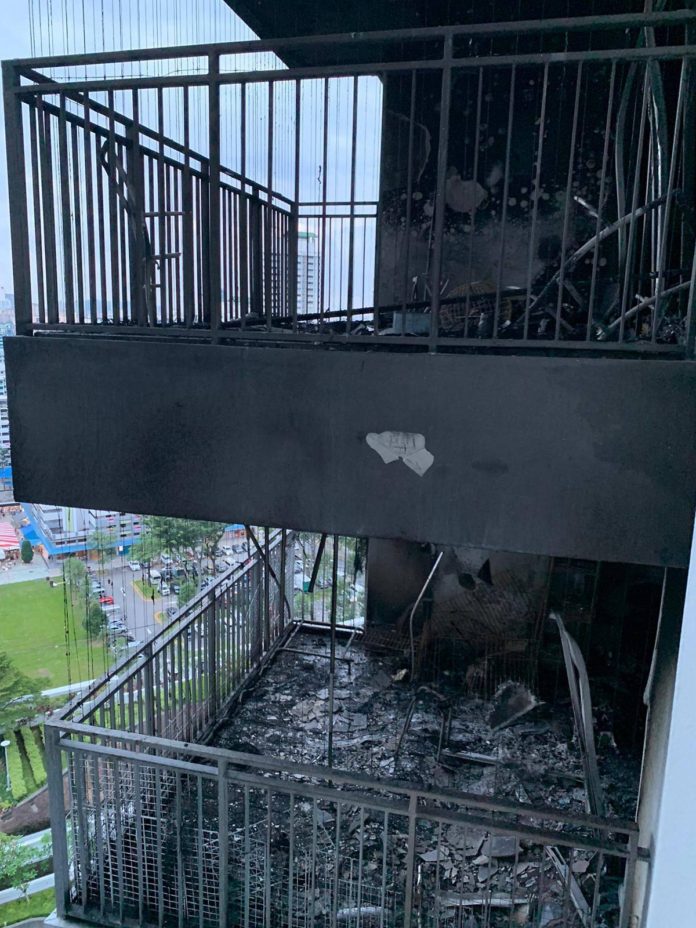
SINGAPORE: Three people were taken to hospital and about 300 residents were evacuated after a fire broke out at a Toa Payoh Housing and Development Board (HDB) flat in the early hours of Saturday (Aug 29).

The Singapore Civil Defence Force (SCDF) said it was alerted to the fire at Block 138C Lorong 1A Toa Payoh at about 2.55am.

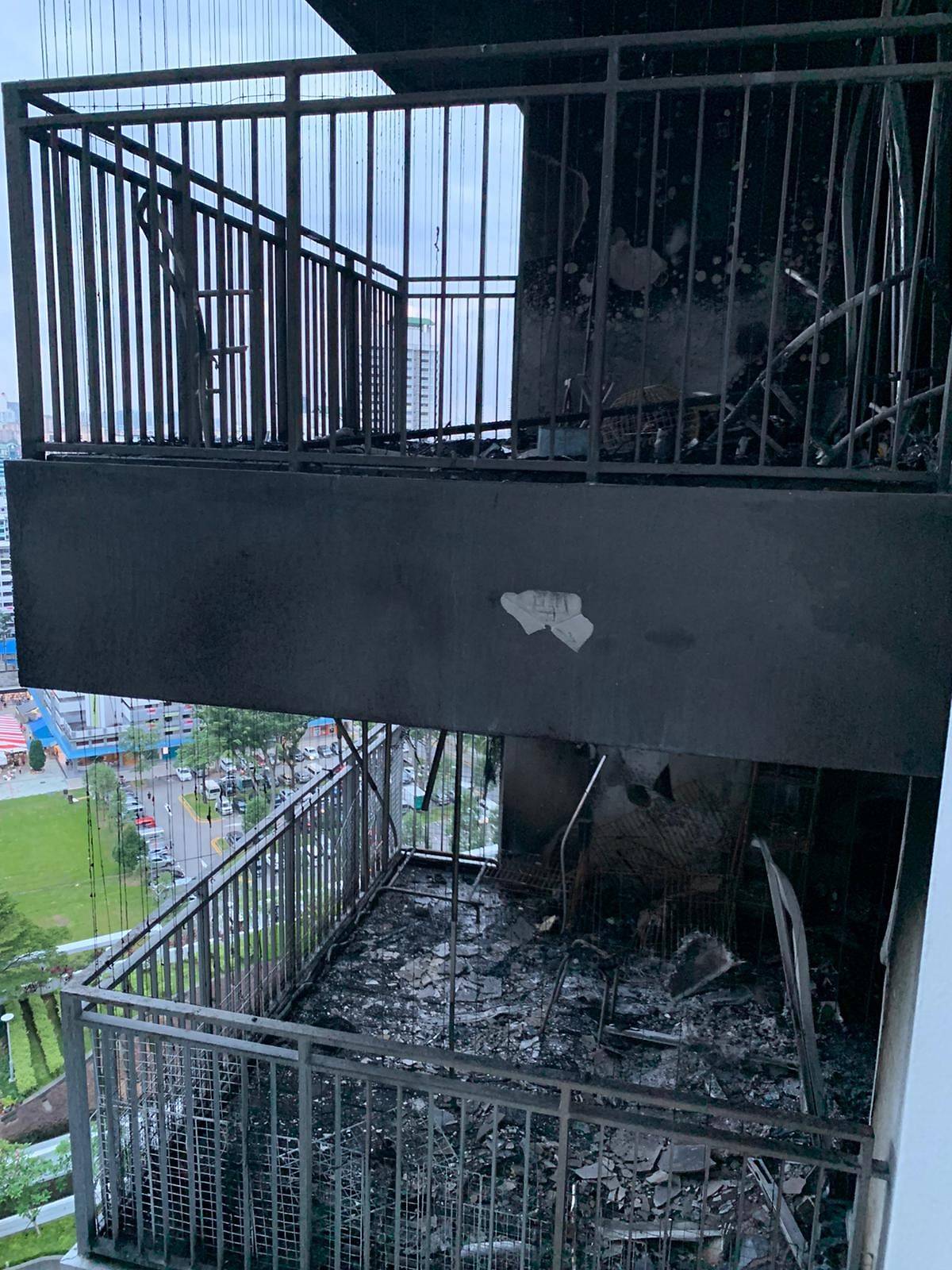
“The fire involved the contents of a unit on the 20th floor and the fire had also affected a unit directly above on the 21st floor,” said the SCDF.

A fire broke out at a HDB flat in Lorong 1A Toa Payoh on Aug 29, 2020 (2)

The fire, which broke out in a flat on the 20th floor, also affected a unit directly above on the 21st floor. (Photo: Singapore Civil Defence Force)(Photo: Singapore Civil Defence Force)

Two people were rescued from the bathroom of the 20th-floor flat and another person in the same unit had evacuated before firefighters arrived, said SCDF. 

“Concurrently on the 21st floor, firefighters conducted forced entry into the unit and extinguished the fire. Occupants of this unit had self-evacuated prior to SCDF’s arrival,” it added.

One person suffered smoke inhalation and burn injuries, while two other people were taken to Singapore General Hospital after complaining of smoke inhalation, said the SCDF.

Photos sent in by CNA readers showed flames and smoke rising from the flat.

The police evacuated about 300 people from neighbouring units as a precautionary measure, said SCDF.

Lorong 1A Toa Payoh fire on Aug 29, 2020

A fire broke out at a HDB flat in Toa Payoh on Aug 29, 2020. (Image: Paul Teo)

The cause of the fire is under investigation.

This story came from a reader tip-off. If you would like to send in information, photos or videos about something newsworthy, submit your news tips on CNA Eyewitness.

Source link

COE supply set to increase due to higher deregistrations in July

0

[ad_1]

COE premiums rose across the board in the most recent bidding round
In the most recent 19 August COE bidding exercise, premiums for Cat A, for cars up to 1,600cc in engine capacity and with an output of no more than 130bhp, increased by $2,701 (8.2per cent) and ended at $35,710 this bidding round. Premiums are now at a 12-month high.

Premiums for Cat B, for larger cars with more than 130bhp or engine displacements larger than 1,600cc, took a jump this bidding round by $1,700 (4.6per cent) and ended at $38,802. Premiums for this round are now at the 65th percentile of the 12-month trailing average.

“The record high Cat A premium is due to the backlog created as a result of the circuit breaker, coupled with the shrinking quota pushing the price up. Short term wise, prices will remain stable and not increase significantly due to the weak economy,” highlights Nicholas Wong, General Manager of Kah Motor.

[ad_2]

Source link