Local cinemas are open to the public once again with precautionary measures taken. But hazard arrived in another form earlier today (Aug 30) for moviegoers at Shaw Theatres NEX.
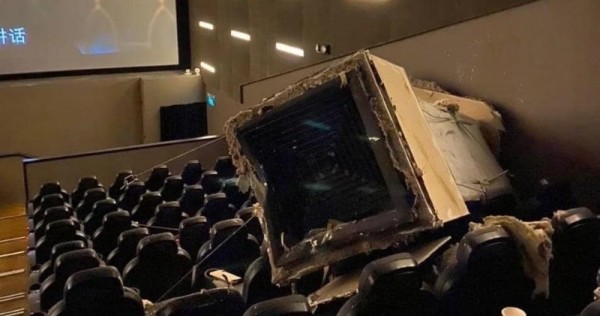
Attendees watching a screening of Christopher Nolan’s Tenet earlier this afternoon were left in a state of shock in the middle of the movie. Not by a plot twist or a complex exposition about time inversion though, but by the partial collapse of what seems to be the ventilation system.
MustShareNews reported that a massive segment of a ventilation duct crashed through the ceiling at Hall 6 of the cinema sometime before 5pm.
Pictures shared on the SG Dirty Fella Facebook page show the Singapore Civil Defence Force (SCDF) and Singapore Police Force (SPF) officers at the scene, speaking to witnesses.
SINGAPORE: A minister arrives for an event when gunmen open fire. The minister’s Personal Security Officer (PSO) quickly shields him and pulls him towards his car, crouching as they go.
From the rear, two black unmarked sports utility vehicles switch on their sirens and charge forward, forming a barrier between the gunmen and the minister. In the vehicles are officers from the Singapore Police Force’s (SPF) Counter Assault Unit (CAU), decked in full tactical gear and armed with assault rifles.
They swing open the door as cover and return fire, allowing the minister’s car to move off safely. They do not stop until the gunmen are dead.
This hypothetical scenario could well be out of an action movie, but it is exactly what CAU officers train for.
The CAU is deployed during major events in Singapore and abroad to protect local and foreign VVIPs, or very, very important persons. CAU officers can double up as the already elite PSOs, but are trained to do more than protect VVIPs and get them to safety.
CAU officers go on the offensive to neutralise the threat, and are adept at creating a safe route for evacuation, including breaking down doors and clearing rooms. Unlike PSOs, CAU officers are deployed to specific events and are not tagged to a single VVIP.
The CAU was deployed during the Trump-Kim Summit in 2018, at National Day Parades and during the recent opening of Parliament on Aug 24. The unit was formed in 2006 following the 9/11 attacks and a string of terror incidents that followed worldwide.
On Friday (Aug 28), reporters were given a rare look at the unit’s officers and equipment, which can weigh up to 20kg and include shields and door breachers. Officers’ names and details of their operations are classified.
“They are trained to take a bullet for VVIPs,” said CAU commanding officer Assistant Superintendent of Police (ASP) Bros Leong.
“We look for teamwork, professionalism and last but not least, discipline.”
CAU officers peer through their rifle scopes with both eyes open to maintain optimal situational awareness. (Photo: Hanidah Amin)
On Aug 20, five out of eight trainees graduated from the eighth CAU main course, including its very first female officer. The gruelling three-month course teaches tactical firearms, close-quarter battles like room clearing, as well as methods of entry such as lock breaking.
Trainees also go through scenario-based missions, which can involve working as a team to take down a threat who is played by a fellow trainee.
RIGOROUS TRAINING
The CAU holds a selection once every two years, and is only open to officers from the Police Security Command, which PSOs fall under.
Training ranges from carrying heavy loads like logs and hoses, to shooting at outdoor ranges or out of a moving car. Trainees who cannot work in a team or break down enough doors within several minutes are at risk of failing.
CAU officers are adept at different methods of entry like door breaking. (Photo: Hanidah Amin)
“You must have the discipline to come for training and even more individual discipline. When they’re free we expect them to do their own physical training,” ASP Leong said.
“Then you have professionalism. Because we work with foreign dignitaries, when we are deployed we are so-called the representative of Singapore. So it’s a kind of pride, (be it) how you stand. The way you behave will affect Singapore.”
CAU officers are trained in close-quarter battles like room clearing. (Photo: Hanidah Amin)
With such high standards expected, it is no surprise that ASP Leong described the CAU as a “small and dedicated” team – fewer in numbers than the PSOs.
“Although the selection and training for CAU are both physically and mentally challenging, we are proud to witness the first female officer graduate,” he added, calling it a “significant milestone” for the unit.
FIRST FEMALE OFFICER
Newly minted CAU officer Sergeant (SGT) Anna (not her real name) grew up playing first-person shooter games with an interest in tactical movements. One day, police officers visited her home after her mother reported a suspicious person loitering.
“I saw them in uniform and was very inspired, so I decided to join the police force,” the 28-year-old said.
Sergeant Anna (right) is the first woman to pass the gruelling CAU main course. (Photo: Hanidah Amin)
SGT Anna entered the force four years ago before joining the Security Command two years later. Then she found out about the CAU.
“I was very interested to join it,” she added. “As I was younger, I used to play first-person shooter games. Now I get to do so in reality.”
SGT Anna said she was not afraid of the demands of the course and was “very motivated” to graduate with her male counterparts, describing them as brothers.
“We went through everything together,” she said. “We always cheered each other on and never gave up. Whenever one of us struggled with something, we always helped one another.”
A CAU officer clears a room and shoots at targets inside. (Photo: Hanidah Amin)
ASP Leong said he was impressed by SGT Anna and the effort she put in, adding that she never complained and continued to encourage her team mates, even as she ran around with the heavier weapons and extra ammunition that CAU officers have to carry.
SGT Anna said it is an honour to be the first woman to pass the course, pointing out that she did the same training and was held to the same standards as the rest.
“There were no exceptions for me,” she said.
CAU officers can be deployed via black sports utility vehicles or motorbikes. (Photo: Hanidah Amin)
But perhaps a prouder moment was her first real-life deployment at the opening of Parliament earlier this week. SGT Anna called it a privilege and an “eye-opener”.
“I have to draw a different set of equipment and weapons, and the responsibility is different,” she added. “I hope to motivate other aspiring female officers that they too are able to join the unit as long as they believe in themselves.”
None of the food stalls visited by patients who recently contracted an infectious strain of Group B Streptococcus (GBS) had sold raw fish dishes, said the authorities on Sunday (Aug 30).
The Singapore Food Agency (SFA) also did not detect GBS Type III ST283 — the same bacteria that infected about 160 patients who ate raw freshwater fish in 2015 — in its routine sampling and testing of fish samples between May last year and August this year.
In a joint statement with the Health Ministry (MOH), the SFA said it is conducting field investigations at various locations and collecting information on the patients’ food history as part of its probe into the recent spike in GBS cases.
This included inspecting the food stalls that those patients had visited.
The joint statement follows a Friday circular from MOH to doctors that said public hospitals reported 50 cases of invasive GBS last month — twice the average monthly figure of 25 from earlier this year.
SINGAPORE: Members of the public who consume raw fish should exercise caution, Singapore’s health authorities warned as they investigate a spike in the number of Group B Streptococcus (GBS) cases.
Fifty cases of GBS were reported by public hospitals in July, up from an average of 25 cases a month between January and June, the Ministry of Health (MOH) and Singapore Food Agency (SFA) said in a press release on Sunday (Aug 30).
Laboratory investigations found that 18 of the cases reported in July were GBS Type III ST283. This compares with an average of four cases per month from April to June.
The majority of the cases were patients aged 65 and above. Most have since recovered and have been discharged from hospital, although one patient died of an unrelated cause, MOH said.
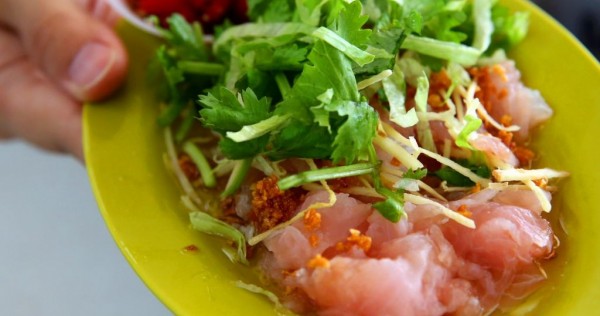
In 2015, the same strain of the bacteria landed more than 160 people in hospital with fever and invasive infections, such as meningitis, after they consumed yusheng, a raw fish dish typically eaten with congee.
Following the outbreak, food outlets were banned from selling raw freshwater fish, after tests showed that such fish had higher bacterial contamination than saltwater fish, and are likely to present higher risks of infection when consumed raw.
For the recent cases, health authorities are collecting information on the patients’ food history and conducting field investigations at various locations to determine possible sources of GBS.
SFA said it has not detected the ST283 bacteria strain in its routine testing of fish samples between May 2019 and August this year.
It also inspected food stalls visited by the patients and found that none of the stalls sold ready-to-eat raw fish dishes.
Ready-to-eat raw fish are intended for raw consumption, and generally sold and marketed separately from other raw fish intended for cooking.
Still, the agency said it is issuing reminders to retail food outlets to adhere to the ban on the sale of raw freshwater fish. Those selling ready-to-eat raw fish have also been reminded to ensure good hygiene practices and proper handling of food.
The health ministry said it has also alerted doctors to report suspected invasive GBS cases.
GBS is a common bacterium found in the human gut and urinary tract of about 15 to 30 per cent of adults without causing disease. However, it may occasionally cause invasive infections of the skin, joints, heart and brain.
The risk factors for GBS, which is usually treatable with antibiotics, include underlying chronic or co-morbid conditions, such as diabetes. Transmission may also occur during childbirth.
“Members of the public who choose to consume ready-to-eat raw fish must be aware of the risks involved. Cooking raw food well is still the most effective way to kill bacteria,” said MOH and SFA.
They cautioned that vulnerable groups of people, especially young children, pregnant women, elderly people or those with chronic illnesses such as diabetes may be more susceptible and should avoid eating raw food.
People can also reduce their risk of infection by washing their hands and kitchen utensils thoroughly before handling food, and using separate sets of knives and cutting boards for raw and cooked food.
Several malls in Orchard Road and Geylang Serai market were among the new places added on Saturday (Aug 29) to the Ministry of Health’s (MOH) list of places visited by Covid-19 patients while they were infectious.
There were also 51 new coronavirus cases confirmed on Saturday, taking Singapore’s total to 56,717.
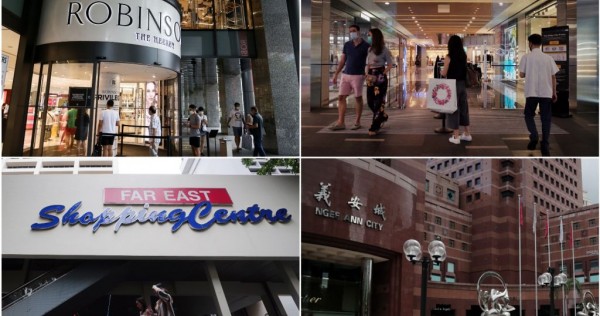
Places visited by those infectious included Papilla Haircare and Best Denki in Ngee Ann City; Muji, Toys ‘R’ Us and iStudio in Paragon; Robinsons in The Heeren; and Far East Shopping Centre.
ABC Restaurant in Far East Plaza, Swensen’s in Bugis Junction, Beauty in The Pot in Westgate, and Joo Chiat Complex were also added to the list.
Saturday’s new cases included one community case, a 39-year-old Bangladeshi man who is a work pass holder, said MOH. This case is currently not linked to any previous cases and did not show any symptoms.
There were also three imported cases who had been placed on stay-home notices upon arrival in Singapore.
One of them is a three-year-old Singaporean girl who returned from India. She was confirmed to have Covid-19 on Friday.
In an interview on Friday (Aug 28), Trade and Industry Minister Chan Chun Sing debunked three misconceptions about the Singapore-India Comprehensive Economic Cooperation Agreement (Ceca).
The free trade pact has come under attack from some quarters on social media in recent months as well as during the general election.
Myth: Ceca grants Indian nationals unconditional access to Singapore and immigration privileges
It is not true that Ceca gives Indian nationals the right to take up citizenship or permanent residency, said Mr Chan. In Chapter 9 of the agreement on movement of natural persons, Article 9.1.2 states: “This Chapter shall not apply to measures pertaining to citizenship, permanent residence, or employment on a permanent basis.”
The proportion of ethnic Indian citizens in the Singapore population has remained stable, he said.
The agreement does not oblige Singapore to automatically grant employment passes (EPs) to Indian nationals. Like all other foreigners, they must meet the prevailing EP criteria, like minimum salary thresholds.
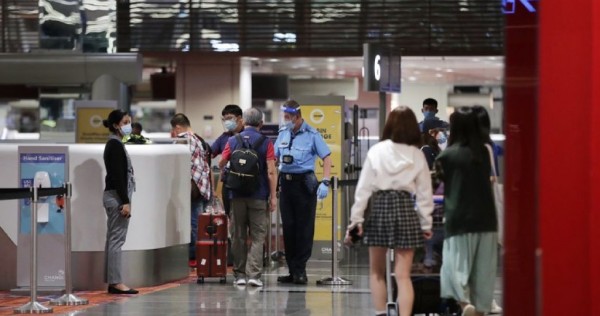
Passengers headed to Guangzhou early Sunday morning (Aug 30) appeared to have no issues boarding Scoot Flight TR100 despite having had to scramble to undergo last-minute Covid-19 tests after the Chinese Embassy announced new requirements.
No passenger was turned away from the 5.15am flight when The Straits Times visited Changi Airport at around 2am on Sunday. When asked to confirm if all passengers were allowed to board, Scoot would only say that the flight departed with 254 passengers and two infants.
Earlier in the week, scores of anxious passengers with a seat on the Scoot flight, as well as other China-bound flights, had turned up at the former Shuqun Secondary School to be tested for Covid-19.
This came after an Aug 21 announcement by the Chinese Embassy- that from Aug 28, all travellers from Singapore to China will have to take a Covid-19 test within five days of their flight to ensure they are free of the coronavirus.
Passengers booked on Flight TR100 were alerted to the new requirement in an urgent e-mail sent by Scoot on Aug 25.
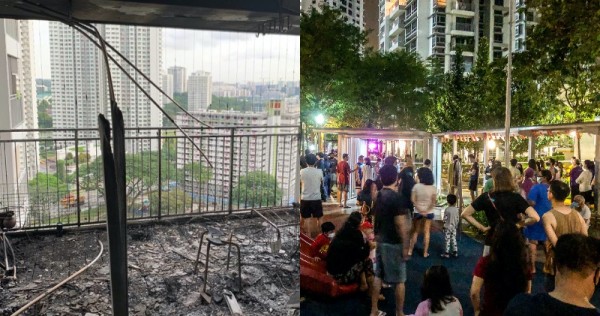
A total of 300 people were evacuated in the wee hours of Saturday morning (Aug 29), after a fire broke out at The Peak in Toa Payoh.
The Singapore Civil Defence Force was alerted to a fire at Block 138C Lorong 1A Toa Payoh at around 2.55am on Saturday, it said in a Facebook post on Saturday afternoon.
The fire at the Housing Board block involved the contents of a unit on the 20th floor and had also affected a unit directly above, on the 21st floor.
Three people from the unit on the 20th floor were taken to Singapore General Hospital with burn injuries and smoke inhalation. Those who were evacuated have since returned to their homes. A total of 300 people were evacuated. PHOTO: Lianhe ZaobaoUpon arrival at The Peak, firefighters wearing breathing apparatus sets immediately proceeded to the burning unit and extinguished the fire.
They rescued two people who were found in a bathroom. Another occupant of the unit had evacuated prior to the SCDF’s arrival
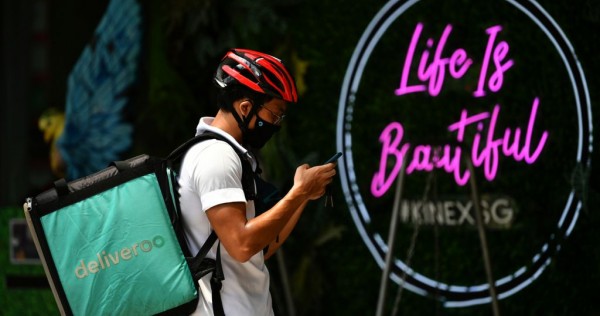
Coronavirus testing will be expanded in the upcoming weeks to groups such as taxi and private-hire car drivers and food delivery personnel, as part of efforts to provide a better picture of infection prevalence in the community.
In a release on Saturday (Aug 29), the Ministry of Health (MOH) said that the community groups which testing will be extended to also include key vendors servicing foreign worker dormitories, as well as stallholders at hawker centres, markets and similar food and beverage establishments such as coffee shops.
This is due to the nature of their working environment, such as the high frequency of interactions with members of the public, even though there has been no local evidence that these groups have a higher risk of getting infected.
The costs of these tests will be fully borne by the Government.
The ministry urged individuals in these identified community groups to come forward and utilise the tests on offer, which will be conducted on a one-time basis.
SINGAPORE: The start of the Hungry Ghost Festival in August means two things.
First, this year we can for a short time be grateful we’re all required to wear masks.
Second, we’re within striking distance of the Mid-Autumn Festival, or for those who like to irritate our more erudite friends, the “Mooncake Festival”.
Historically, the Mid-Autumn Festival was a harvest celebration, noted for both commemorating the gathering of crops with the accompanying symbolisms of new life, sustenance and livelihoods, and the coming together of family.
Today, with global trade and year-round imports, the former becomes far less apparent to city dwellers, while the latter remains significant for many individuals.
Similar to Chinese New Year, the Mid-Autumn Festival becomes an event (or excuse) for socialising and reunions, two things treasured greatly post-circuit breaker, even if it means gathering in groups of five or fewer.
OF LANTERNS AND MOONCAKES
But to many Singaporeans, two pieces of material culture are firmly etched in our psyche when it comes to the Mid-Autumn Festival.
The first is lanterns. I still remember mine – it was a goldfish and we used candles instead of LED lights, take that millenials!
Stalls selling mooncakes at a shopping mall in Singapore. (File Photo: Ang Hwee Min)
The second is mooncakes.
Dense, round and sweet (but enough about me), mooncakes are the ultimate indulgence. Every year Singaporeans will fool themselves by using the “just one more small slice” strategy – only to stare blankly at the empty mooncake box at the end of the evening, and the inevitable calorie reminders from our well-meaning friends at the Health Promotion Board.
And if you’re also drinking bubble tea alongside eating mooncakes, you’re certainly made of sterner stuff.
Like many objects and food used in cultural festivals, mooncakes retain many symbolic gestures synonymous with a “good life”.
Roundness suggests completeness and unity – desirable traits for family structures. Sweetness denotes happiness, and traditional ingredients like nuts and egg yolks are representative of new life, growth or fertility.
Similar symbolisms can be found in other foods used in key life events like birthdays and weddings.
SO MUCH MORE CHOICE
However, in recent years, mooncakes have diversified greatly. No longer are we restricted to mere variations of nuts/no-nuts or half-yolk/full-yolk. Mooncakes now come in all kinds of varieties and sizes.
Where snowskin mooncakes used to be the cutting-edge innovation, today we have savoury, meat-filled, green tea, and even alcohol-infused mooncakes. The list is near-endless.
This diversity is a sign of a global capitalist and consumptive society, where almost everything is commodified into a product for us to buy, and sellers must compete within a market to profit and survive.
As such, it is not surprising to see companies constantly trying to outdo each other by coming up with new (and sometimes disturbing) flavours to entice customers to buy their wares, even those in sectors that on the surface, appear unrelated to mooncakes – like skincare company Innisfree or KFC.
Mooncakes, like wedding dresses, are objects individuals sometimes buy “because it’s the thing to do” or as some might say,“because of tradition”. To this extent, sellers have a bit of a captive audience – not unlike bak kua queues during Chinese New Year.
HOW MUCH FOR FOUR MOONCAKES?
It’s not surprising then to see new, opportunistic entrants into the mooncake arena every year. And when the number of conventional flavour varieties are exhausted, companies will then turn to pretty packaging to make their product stand out even more.
The result is an arms race of packaging and marketing. Instead of simple cardboard boxes, we have intricate designs and mechanisms meant to unveil the goodies.
I call this crouching mooncake, hidden calories. And of course, the more complicated the design, the pricier the package.
An employee poses with an anti-extradition mooncake with Chinese words “Support each other” at Wah Yee Tang Bakery in Hong Kong, China July 12, 2019. (Photo: REUTERS/Tyrone Siu)
All these mean that mooncakes have gone from being a practical object of a ritual to becoming a symbol of both economic and cultural capital. This is not to say one buys the most expensive mooncake to show off, but it can be a useful vehicle to affirm one’s perceived epicurean and aesthetic tastes.
In other words, we are now able to choose mooncakes not because of cultural beliefs, but because they speak to our modern sensibilities and desires.
We are entranced by the marketing, and pay attention most to appearance and brand, perhaps before flavour.
The increasing complexity and ostentatious appearance of mooncakes and their accompanying packaging is not unique to Singapore. In 2013, the Atlantic reported that mooncake packaging in China had cost the country US$318 million.
THE PRODUCTION OF IDENTITY
What do we make of this? I think two things are important.
First, from a sociological point of view, the role of the producer (whether vendor, marketeer or more) is just as important as the consumer when it comes to shaping that consumer’s identity.
Social scientists are often very interested in how and what a consumer consumes, because it gives us clues into how consumers perceive themselves.
But less often do we look at the way the product was created in the first place, and the decisions and strategies that go into making such an object. For example, were these decisions a response to consumers, or a way to make consumers behave in a desired fashion and dole out huge wads of cash?
That is a question I have tried to answer in my research, especially when it comes to wedding professionals, and the roles that they play in dictating, orchestrating and scripting modern wedding rituals.
In the absence of other authority, professionals and producers play a crucial role in developing the identities (social, cultural, ethnic or otherwise) of the people they sell their goods and services to.
IT’S WHAT WE SEE IN THE MOONCAKE
The second is a reminder that more and newer is not always better. As the forces of capitalism gather pace, we are convinced that if something is shinier than it was previously, then it must certainly be better and we should purchase it.
The mooncake industrial complex is symbolic of that wider trend in society.
It is even harder to resist when the product in question is tied in with our sense of identity – that we “must” have it because if not, it would mean we are somehow incomplete. So we spend.
Of course, it is impossible to completely detach ourselves from our things, especially new things. Material objects bring us comfort and act as proxies for a great many things in our lives – identity, memory, communication, self-expression and more.
What is important then is to know that it is not what a thing is, but what it means that makes a difference to our lives.
The full moon during the Mid-Autumn Festival, as seen from Woodlands on Sep 13, 2019. (Photo: A. Kannan)
This perspective suggests that we can spend and buy shiny stuff to make us happy, but it is really more about the values, emotions and meanings we attach to any particular object.
Furthermore, the advent of a global pandemic, lockdowns and circuit breakers have forced a rethink among many people about what really matters to us.
Is the relentless pursuit of material improvement the key to our happiness and satisfaction, or should we try to strike a balance between consumption and the more intangible aspects of life worth investing more effort into, like building good relationships and working towards a more equal society?
As our values change, so do the meanings we attach to objects. And that is something that marketeers should take note of.
In a world where we are acutely aware of climate change and reminded of the fragility of life by COVID-19, is there a way that mooncakes can be bought, gifted and wrapped in ways that appeal and support our increasing awareness around waste and the environment?
Ponder that when you next bite into your “just one more small slice” of mooncake.
Terence Heng is a senior lecturer in Sociology at the University of Liverpool, UK, where he is also an associate at the Centre for Architecture and the Visual Arts.