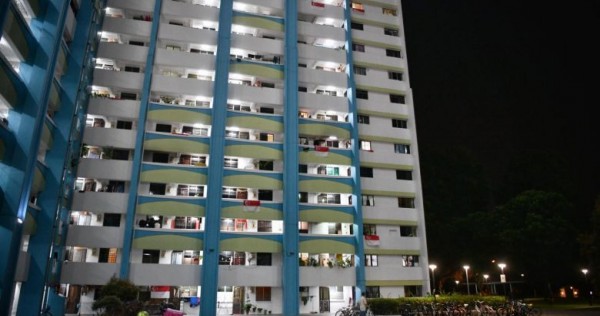
The Ministry of Manpower (MOM) has responded after a resident spotted a domestic helper drying a tennis court at The Anchorage Condominium on July 7.
Stomp contributor PK alerted Stomp to the incident and shared that she was drying the tennis court as it had rained before that, which made the tennis court ground wet.
PK also shared a video that he took of the incident.
“This is not the first time I saw this happen,” PK said.
“When it rains before their tennis court booking, they will send their domestic helper down to dry and clean the whole court alone.
“I feel that this is not right.
“The domestic helper probably already has her hands full doing household chores, so she should not have been asked to do this.
SINGAPORE – A 24-year-old man has been arrested for allegedly murdering his 26-year-old wife in Boon Lay, the police said on Friday night (Aug 28).
Police received a call on Thursday at 6.30pm for assistance at the void deck of Block 211 Boon Lay Place.
Officers arriving at the scene found a woman injured and lying motionless.
She was unconscious when taken to Ng Teng Fong General Hospital and pronounced dead at the hospital at 9.58pm.
Officers from the Criminal Investigation Department and Jurong Police Division arrested the man within three hours of the reported incident, the police added.
Some residents of the Boon Lay block that The Straits Times spoke to said they saw the police cordon off the crime scene on Thursday night.
One resident said he had rushed out of his home to try to help the victim after his younger brother told him a woman was lying motionless at the void deck.
Mr Mohamed Nasrullah, 20, a student and part-time delivery rider, said that when he arrived at the scene, there were about 10 bystanders.
SINGAPORE: When Mr Alvin Chiong was growing up, he watched as his father, who he says was an opium addict, fed his drug habit in the family home.
He did not see anything wrong with it at the time.
“I just felt like it’s normal,” said Mr Chiong, now 49.
During times when his father – who Mr Chiong says was also addicted to alcohol and gambling – did not get his fix and went through withdrawals, his family would have to face his violent outbursts.
When he was seven, his mother had enough and left, leaving him and his brother with their father.
At the age of nine, he decided he did not want to take money from his father anymore and opted instead to work a variety of part-time jobs to support himself, such as selling otak-otak and newspapers.
Unable to find love at home, Mr Chiong said he chose to “outsource” his need for companionship.
“I wanted to be recognised, I wanted to find my own identity. So I mixed with the neighbourhood boys – and most of my neighbourhood boys that I mixed with were all doing drugs,” he said.
“I started glue sniffing, I started taking sleeping pills and I proceeded to marijuana before I even collected my IC (identity card) at 12 years old,” he said.
Though his father was an addict, Mr Chiong admits he gave little thought to the possibility that he was heading down the same road.
“To be honest, my father was not in my mind anymore … I just wanted to feel happy. I just wanted to do what I want to do,” he said.
Mr Bruce Mathieu also had negative influences as a child. He grew up with four relatives who were drug abusers.
“I actually grew up in an environment where drug abuse was very rampant,” said the 50-year-old.
While his mother had told him “drugs are bad for you”, that was the extent of his knowledge of drug abuse. Curiosity got the better of him, and that led him to eventually try drugs for himself.
Mr Mathieu recalled that when he was growing up, his mother had to go out to work all the time.
“Being alone at home, I got a bit lonely. So I started going out looking for friends, for peers,” he said.
He fell into bad company and started getting into fights. Shortly after he entered secondary school, Mr Mathieu joined a gang, mostly out of a need for a sense of belonging, he said. Three months after that, he smoked marijuana for the first time.
“It became my problem for the next 30 years,” he said.
By the age of 15 he was hooked onto another drug – heroin.
“And then heroin became the scourge of my life for many, many years,” he said, adding that he was introduced to yet another drug, meth, in his 20s.
However, the law eventually caught up with him, and at the age of 22, he was imprisoned for drug possession and drug-related offences.
Mr Mathieu said he felt like there was no turning back after his first stint in prison.
“The first time I came out of prison, just imagine … one would think the very first time you’re away from your mum for so long, all you want to do is go back, hug your mother, ask for forgiveness, you know?”
But that was not the case, Mr Mathieu said.
“The first thing I did when I stepped out of prison, I called a cab. I took a cab to my supplier … I smoked heroin, got high and then I went home.”
He ended up going in and out of prison several times over the next three decades.
Mr Chiong and Mr Mathieu are just two examples of inter-generational drug abuse, where drug-taking by parents can play a role in their children developing their own habits and ultimately addictions, later in life.
LINK BETWEEN PARENTAL DRUG ABUSE AND THEIR CHILDREN
In 2017, psychologists from the Singapore Prison Service (SPS) concluded a decade-long study on the impact of parental drug abuse in Singapore.
The study found that of the 7,880 parents incarcerated for drug offences between 2008 and 2017, 1,203 had at least one child who had offended.
This means one in every five children of drug offenders had themselves committed a criminal offence, with the top two being drug-related offences and property crimes such as burglary.
The results of the study were published earlier this year in the Home Team Journal, a publication by the Home Team Academy.
The SPS study also looked at two groups of youths with parents who had previously been admitted for rehabilitation in prison for drug abuse.
Entrance of the Drug Rehabilitation Centre. (Photo: Marcus Ramos)
One group was made of youth offenders from the Reformative Training Centre, the Drug Rehabilitation Centre as well as the Community Rehabilitation Centre – 81.8 per cent of whom had drug antecedents or had committed drug-related offences – while the other group was made up of non-offenders.
It found that parental drug abuse had similar effects on both groups, including weakened attachment to parents, lack of social support as well as exposure to drugs within the home.
“As a result of their parents’ regular drug abuse, 50 per cent of participants grew up in a dysfunctional environment when their home became a drug den for their parents and their parents’ drug-abusing friends,” the report said, noting that children often saw drugs and drug paraphernalia such as syringes left lying around at home.
The study suggested that constant exposure to the drug use of parents could have normalised children to observed antisocial behaviours, noting that a “significant portion” of the participants had developed permissive attitudes towards drugs.
The study’s findings are consistent with other research conducted on the topic, it noted.
Singapore Anti-Narcotics Association (SANA) executive director Abdul Karim Shahul Hameed said SANA’s own observations of its clients mirrored the findings from the SPS study.
“Children whose parents were involved in drugs may adopt a more lax view towards substance use. Oftentimes, these children end up seeking a sense of belonging and acceptance outside the home, and inadvertently end up mixing with the wrong company and getting involved with substance use,” he said.
One of the biggest challenges children in such situations face is the lack of adult caregivers to provide them the care and support that they need, he added.
Since these children are likely to be exposed to confusing and stressful situations such as watching a parent get arrested, it is important for them to have outlets to process these feelings and understand such experiences, said Mr Abdul Karim.
“Children with caregivers who are able to provide emotional and mental support during such situations often fare better, and are less likely to turn to antisocial behaviours to cope,” he said.
“The presence of positive influences through caregivers and relatives will also deter a child from seeking social connections and belonging outside the home, where they are likely to be exposed to antisocial behaviours such as underage smoking and drinking to fit in with others.
“Many children with a family history of drug abuse were constantly confronted with feelings of inadequacy or difference amongst their peers, which makes it even harder to form a strong social circle,” he added.
Mr Abdul Karim added that SANA’s own research on female offenders found that the children of drug offenders are more likely to become “parentified” – that is, they unknowingly take on the responsibility of caring for drug-using parents.
“Parentification involves two aspects – taking on physical tasks for the family such as caring for themselves and their younger siblings or other family members, and emotional parentification where the child takes on the role and responsibilities of an emotional support system for the family,” he said.
“Our study showed that parentification can impact the development of the child, particularly in increasing one’s susceptibility to mental health issues and substance use, something which we have observed in some of our clients,” he added, though he noted that there are also children of drug offenders who have done well for themselves.
SPS said it recognised the impact of drug abuse and incarceration on family stability.
“Through interviews conducted upon the offenders’ admission to the prison, SPS helps to facilitate the timely identification and referral of needs presented by the offenders’ families, including that of their children, to resources in the community,” SPS rehabilitation and reintegration division director Caroline Lim told CNA.
“Offenders can also request for assistance on behalf of their families and children at any time during their incarceration,” she added.
SPS collaborates with the Ministry of Social and Family Development as well as others to help stabilise families affected by incarceration and protect children against the risk of offending, she noted.
Ms Lim also pointed to SPS’ membership in the Community Action for the Rehabilitation of Ex-offenders (CARE) Network, which is made up of government agencies and social service organisations.
“These agencies and other partners work closely with SPS to run programmes and services aimed at addressing the impact of parental incarceration, such as casework and counselling, tuition assistance, parenting programmes, family bonding programmes and so on,” said Ms Lim.
Mr Chiong was around 22 when he was arrested for the first time –albeit for fighting, not drug taking.
Though he was arrested several times after that, there was no worry on his part about getting caught – just concern over whether he would be able to get his supply of drugs.
He turned to drug running, eventually quitting his job in graphic design to become a drug pusher.
Even after getting married and having two children, Mr Chiong was arrested several times for drug activities.
He attempted to mend his ways, on numerous occasions checking himself into a halfway house to try to break his drug habit, though he relapsed each time.
“I told myself, I have to end this once and for all. I decided to let go of everything, I wanted to change my life,” he said.
He checked himself into a halfway house for three years to ensure he would not return to a life of drugs and crime. His wife sought a divorce in 2011, but he stayed on at the halfway house.
After his three years there, Mr Chiong was finally able to turn his life around, reconciling with his wife and working a number of jobs and becoming an anti-drug advocate, volunteering with the prisons and SANA.
Mr Mathieu vowed never to be an absentee parent, after his own experience of growing up without his father.
He got married and had a child, but ultimately lived out his worst fears after being imprisoned.
He recalls a visit from his wife and daughter in April 2013, on the girl’s fourth birthday. She was in a brand new dress, which she wanted to show off to him.
She called to him through the glass partition separating them and asked him to carry her.
“I didn’t know what to do … there was glass there, what could I do? I just shook my head.”
His daughter’s tears were the turning point for him. He renounced his gang affiliations, and found the motivation to turn his life around and committed himself to his Christian faith.
Bruce Mathieu (left) and Alvin Chiong at The Living Well cafe at Tan Tock Seng Hospital, where they work. (Photo: National Council Against Drug Abuse)
The SPS study noted the research pointed to the importance of parents and their caregiving roles in impacting a child’s antisocial behaviour, and highlighted that children inadvertently suffer the consequences of parental drug abuse.
“As a result, children of drug-abusing parents constitute a vulnerable group in the community and they should be provided with the necessary support to reduce the negative impact experienced as a result of parental drug abuse and incarceration, as well as to prevent second-generation offending,” the study said.
Both Mr Mathieu and Mr Chiong worked together at The Living Well Cafe, a social enterprise located at Tan Tock Seng Hospital which employs vulnerable individuals such as ex-offenders.
Mr Mathieu still works there, while Mr Chiong has joined the M2Cafe, another social enterprise located at The Adelphi.
Now an anti-drug advocate, Mr Mathieu says some of the students he speaks to still want to try drugs for themselves, despite having heard about their negative effects.
“Drugs are something that’s not worth meddling with … You always think that you have the upper hand, but that is a lie that your brain invents so that you go and try drugs.
“When drugs have their claws in you, you’re screwed. Because drug addiction is going to be a lifelong battle.”
When asked whether he is worried about his daughter making the same mistakes as him and becoming a victim of inter-generational drug abuse, Mr Mathieu said he is strict but nurturing, and hopes to impart the lessons needed for his daughter to make the right choices.
Mr Chiong meanwhile accepts that his responsibility to his two boys now is to lead by example.
“I’m not worried about anything, they have to make their own choices in life. I can only be by their side to give them advice.
“Any choice you make now, be prepared for the consequences later,” he said.
SINGAPORE: When one works with youths on the streets, as Teng Ziying does, the idea of what makes a safe counselling space can be quite unlike what others have in mind.
She has youths who tell her on the MRT that they engage in self-harm. “Or at a McDonald’s, they’d tell me they’re sexually active, and they’re worried that they’re pregnant,” shares the 27-year-old.
It does not matter to her where they open up, just as long as they do.
“The idea of a safe counselling space is a room which is covered, but with street outreach, you’re the safe person. You create that safety,” she says.
Teng Ziying, in a simulated street outreach. (Photo: Grace Yeoh)
With youths on the streets, however, trust can be difficult to obtain.
That was why, during her job interview with Boys’ Town three years ago, her boss was afraid that she would stick out like a sore thumb and be hard pushed to befriend youths.
Her slight Western accent reflects her privileged upbringing. Her degree in applied theatre and education is a prestigious one she earned in London.
To help youths at risk, she would have to fit in with them — and so she has done together with her fellow youth workers.
Among the things they “learn from the streets” is the importance of “managing the way (they) look” in meeting the youth at their level.
“To make (the youth) feel safe, something we practise … is to make a lot of noise before we approach. So if the youth feel like they want to hide anything, they can,” she says. Things like contraband cigarettes, she notes.
She also maintains eye contact so those who see her approaching are not defensive or guarded.
These “befriending techniques” are crucial to her job in YouthReach, a Boys’ Town programme that has worked with more than 300 youths on the streets annually for the past 10 years, through engagement and specialised intervention.
It complements the charity’s residential services, says Boys’ Town assistant director Ong Teck Chye, 38, who has been running YouthReach for six years.
“Many times I joke that the youth in YouthReach are higher-risk than my residential youth, because they’re the smarter ones who didn’t get caught (by the system),” he adds.
Teng has several arts-based interventions for them, but Ong has reminded her before not to get her hopes up, even though they are great ideas. And she understands why.
“We work with street youths who have no obligation, no school telling them that they’d go to detention if they don’t come for a session, no parents (or) no police case. They’re youths who’ve fallen through the cracks,” says Teng.
FINDING COMMON GROUND
The precarious nature of working with youths on the streets means establishing a sense of trust quickly is paramount. This is where appearance comes into play.
For instance, Teng says her fellow youth worker, Aldrich Jai Kishen, can “look very scary if he’s not smiling” because he has “all these tattoos and his beard”. So he dresses in a “youth-friendly way”, and adopts certain behaviours.
“He smiles and laughs from afar to come across as immediately comical and approachable, to be antithetical to his appearance,” cites Teng.
Jai agrees that he becomes “an exaggerated version” of himself, although his naturally extrovert character often makes youths comfortable enough to broach any topic with him, such as music.
In addition, he does not disclose his age, choosing to tell youths only that he is in his “20s to 40s” so they do not harbour a preconceived idea of him.
For Teng, the tricky task is to “pick parts of (her) personality and upbringing to put into this worker role”.
Her theatre degree has taught her a “sense of openness”, though she is well aware that she is a Chinese woman nearing 30, whereas the youth she often meets are young Malay boys.
“I’m not going to pretend I’m a Malay girl who’s 18. So I’d come across as this auntie, and I’d say, ‘Can you please let this auntie be cool and relevant? Can you please tell me what this term means? Can you tell me how to swear?’” she says.
This strategy has apparently worked: She now stores a growing list of Malay swear words in her phone.
The list first began when she got a youth to teach her what he was swearing. Once she got the hang of the pronunciation, she started using the swear words so liberally that the youth were “shell-shocked” and stopped swearing.
One of them even exclaimed, “Who teach (sic) you this word? Who? I’ll go and beat that guy.”
Playing this role lets youths know that she is not an authority figure, like a police officer or teacher. But she finds a way to make it clear that she is ultimately a youth worker, without compromising the trust and safety she wants to build.
“Sometimes I’d purposely pronounce (these swear words) in a very obviously non-Malay way, which they’d find hilarious,” she says.
Other youth lingo she has picked up include “pondok”, referring to pavilions where youths often hang out, and “sapnu puas”, which reads as “send nudes” when you invert your phone.
NOTHING WITHOUT GENUINENESS
The camouflaging and code-switching must, however, be rooted in authenticity and “interest in every part of their lives”, whether or not relevant to the help YouthReach can render.
“Youths on the streets are very smart and intuitive. I don’t fake anything,” says Teng, adding that youths can generally tell when someone is putting on a front.
“Similarly, when (actors) are on stage … and telling someone else’s story in character, you have to believe it. It’s very clear when you see one person acting, yet there are two characters on stage. You have to internalise it.”
If Teng wants to learn about someone’s family background, she would not jump straight into talking about their parents. She would focus on an object like the person’s e-scooter to delve into further conversation.
“Maybe they use it for GrabFood, and because they’re underage, they had to borrow somebody else’s ID to do it,” she says.
“That may lead to how they’re unable to focus in school because they do deliveries at night, since there’s a surcharge and they can earn more. Then I’d ask why they need so much money.”
There is a “desire to meet them where they’re at” on her part. Empathy is also key, says Jai, and it can start with “remembering that we’ve all been rebellious at one point”.
An old boy of Boys’ Town’s residential services, he remembers that no one asked him why he was angry when he was younger, so he now tries to find out the sources of youthful anger.
“We’re painting them as delinquents, but most of them are victims of circumstances. They’re not ‘at-risk’ youths,” he says.
“I see Harry Potter in real life daily — like kids trapped in broom closets — staying in really small flats, having no personal space. Yet they want to make it (in life).”
The youth workers’ goal is to create the space for youths to express themselves openly, although this also creates grey areas in their work.
For instance, they cannot exactly tell a 15-year-old to stop smoking or ask youths why they are not in school if they are hanging around in uniform. Adopting such a stance risks damaging trust before its seeds are sown.
“Then we’ve lost,” says Teng. “We’ve cut that contact.
“The youth can continue to smoke and not say anything, but it’s about just sitting there and engaging them. This shows them that we’re more than youth workers … They don’t have to hide stuff from us.”
Importantly, the youth workers also maintain their street credibility by keeping youths’ stories confidential. This involves blurring youths’ faces in YouthReach photos, or obscuring any sign that they are from a gang lest the gang should find out.
It does not make for a very publicity-friendly job. “Some stories of change aren’t stuff we can publish because it would ruin our street cred. To us, the work is the priority,” says Teng.
USING ART TO CREATE A SAFE SPACE
Beyond talking to youths on the streets, Teng puts her theatre background to use by involving “accessible expressive arts” in rapport building with youths, helping them express what they can’t and changing their perceptions of art.
Armed with sheets of paper and markers, she and Jai take to distributing these materials in youth spaces to those who are curious about what they are doing.
The two youth workers make sure to demonstrate that there is no “wrong” move in art so the youth are not intimidated. They have also figured out a topic of universal interest to connect with youths: Heartbreak.
Teng recalls a boy who used cigarettes to burn holes in his paper, to represent the holes a girl left in his heart.
Another boy drew a heart, burned one side of it with his lighter and drew a line down the middle before skating over the heart on his skateboard, like performance art.
In one activity Jai did with Teng last year, when they brought a speaker along with art materials, they asked youths to pick a song that reminded them of love and draw freely.
When Jai noticed a gang symbol that a boy drew, the youth said he had drawn it to remember a friend who lost his life because of his gang.
Sometimes Teng and Jai get youths to come into the YouthReach centre in Tampines to talk further, with or without accessible expressive art methods.
“By doing work on the streets, we’re constantly asking youths to be vulnerable. So how do we maintain the safety?” points out Teng.
Jai remembers a heavily tattooed 20-year-old who got emotional after playing with sand and toys, namely a Barbie doll and Hulk action figure.
“The Barbie was out of the box, and The Hulk was covered in sand. I asked him what that meant, and he said his girlfriend broke up with him. The Hulk was covered in sand because he felt ashamed,” recounts Jai.
“He said he was an asshole throughout the relationship, until she gave up. She was the only one who trusted him … and now he had no one. He felt as if the whole world was collapsing.”
With this revelation, Jai was able to pinpoint the boy’s self-worth issues to work on.
When art is used this way, he and Teng believe it empowers youths by helping them reclaim their voice or giving them the option to say no. This is exactly the freedom the youth workers present to youths by asking if they can sit in the same pondok, for example.
“It’s about respecting them enough to let them know that they should be able to communicate their needs. Many of them aren’t given the space to communicate truthfully about what they needed as a child and now as a teenager — in school, at home, in relationships,” says Teng.
“So this is essentially giving them an avenue to say no to us.”
HOW EFFECTIVE IS ART?
But it is a challenge sustaining these changes in youths’ lives — and getting people to see value in their work so they can continue to get funding.
Teng wants people to realise the importance of incremental shifts in behaviour and that a successful shift is not always a black-and-white situation. Take, for example, someone who used to commit gang-related offences but now reoffends only to get money for his mother’s medication.
But she concedes that there will be people who “need hard evidence” on what is being doing and “why they should give us money to sing on a stage or go on the streets to talk to these people”.
This is where a tangible culmination of the the art interventions in YouthReach can change misconceptions about these youths.
In 2018, for instance, Teng organised a project titled Museum of Unlovables, which showcased art installations by youths. Held at the YouthReach centre, one of these installations included a video with youths on the streets expressing their hopes and dreams.
She recollects a visitor telling her, “I always thought youths at risk want very different things. They just want to play, lepak, join gangs and do drugs. Through the video, I was very moved by the reality that they want the same things as everyone else. We forget that.”
After visiting an installation that functioned like a soundscape with audio recordings of youths verbalising some of the harshest things people said to them, another member of the public told Teng it reminded him of his relationship with his father.
“It made him think about how he might be accidentally passing on (habits) to his own children,” she recalls.
“He said, when you’re a child and you receive all that, you feel a certain way. But when you become a parent, you get lost. You start thinking, it’s for the sake of my child. But you forget the impact it had on you.”
The most effective way to get people to see the effect art can have, she says, is when they experience a shift in their perspective on these youths on the streets.
“No matter how many grants or reports I write or how many great photos I post, nothing can be as impactful as your own experience,” she adds.
REJECTION IS COMMON
Putting together a showcase or getting funding, however, is probably less difficult than retaining youths so they do not slip through the cracks again.
Even after good rapport is established, youth are not obliged to stay in touch with Teng or Jai. No matter how caring they are, YouthReach is only a thread in the tapestry of their lives.
“Sometimes when you work with certain youths, you think you’ve got to a certain place, but then an (external) uncontrollable event happens, and it unravels everything. Then they become uncontactable,” explains Teng.
Other times, she senses youths on the streets are not comfortable telling her things with their friends around, so she schedules an appointment with them for another day, but they do not show up.
The “pang seh rate” is “very high”. She estimates that “about 70% of (her) time is spent waiting at McDonald’s”, only to get stood up.
“Youths are very truthful (when they don’t want to meet you). They blue-tick your messages. Or they’d leave you on ‘seen’ when you reply to their Instagram stories,” she says.
To avoid burnout, she goes for clinical supervision with her clinical supervisor once a month, which is “like therapy but work-related”.
“It helps us unpack, for example, why a particular youth triggers you so much. Then you realise, oh, it’s because he reminds me of my brother. And then you unpack that,” she says.
Then, armed with newfound clarity, in addition to role-playing skills and art materials, Teng and Jai crawl through the streets again to listen and learn. If they are lucky, they get to help too.
SINGAPORE: The COVID-19 crisis has swept through the entire world for most of 2020, creating an unparalleled wave of uncertainty and gloom.
Educational institutions, from pre-schools through to universities, have experienced sudden and unprecedented disruption.
A United Nations Educational, Scientific and Cultural Organisation press release in late March estimated that 1.5 billion students in 165 countries, or 87 per cent of the world’s student population, have been affected by nationwide and localised school closures.
In Singapore, schools and institutes of higher learning were not free from this disruption. They had to shift to home-based learning from Apr 8 to Jun 1.
Indeed, educators have had to play new roles, like nurse, IT support and social worker, all at once.
Suddenly becoming health promoters overnight, educators had to first educate students about safety measures such as social distancing, wipe-down routines and personal hygiene and take actions to keep concerns from worried parents at bay.
They also had to pay greater attention to students’ emotional health.
Second, many educators were taken by surprise by the abrupt closure of educational institutions. They had to assume the role of information and communications technology (ICT) champions and managers.
Most have experienced a steep learning curve, grappling with the task of editing videos and conducting lessons through digital platforms without the familiarity of face-to-face contact with their students.
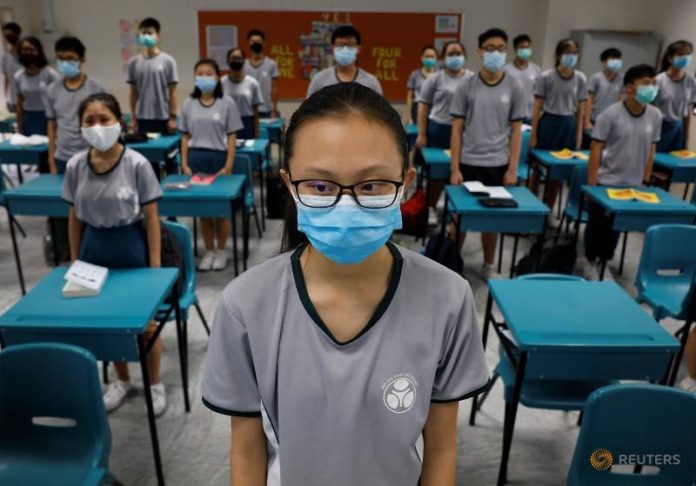
Students wearing face masks stand for the national anthem in class at Yio Chu Kang Secondary School, as schools reopen amid the coronavirus disease (COVID-19) outbreak in Singapore June 2, 2020. (Photo: REUTERS/Edgar Su)
They also had to familiarise their students with these new ways of learning.
Despite initial challenges, the good news is many have emerged adept at this task. Educators have risen to the challenge of returning to their roots to find fresh ways to spark creativity, interest and learning.
USA Today featured the story of Brandon Gilliam, who created science experiment videos that his students could reproduce with commonly found household items in May.
Likewise, Janice Wan, a Geylang Methodist Primary School teacher, taught her students the concept of energy by asking them to study the motion of marbles on home-made roller coasters.
A group of Tanjong Katong Secondary School geography teachers also made YouTube videos and used Google Earth to illustrate the concept of coastal protection.
Third, school teachers had to be social workers as they attempt to ensure inclusivity and equity.
Some students struggled with inadequate home support during home-based learning or lacked access to Wi-Fi and mobile devices needed for online learning.
Teachers had to proactively reach out to these students and their parents in order to ensure a level learning field.
For instance, CNA reported how Innova Primary School teachers made telephone calls to students who had not turned up for online lessons. They also offered parents assistance with accessing online learning platforms and with explaining concepts to their children.
In some cases, students who needed additional academic help were allowed to return to school during the circuit breaker period.
LEARNING AS EDUCATORS
The almost overnight closures of educational institutions left many educators panicking over how to effectively conduct lessons and to ensure continuity in their instructional programmes.
Innova Primary School student Danial Rizal opening up assignments on the Student Learning Space. (Photo: Ang Hwee Min)
Some educators have stepped up to the role of being formal or informal mentors. I have personally witnessed my department colleagues relate their struggles with conducting lessons on the Zoom video-conferencing platform, while others have offered constructive advice on how to facilitate meaningful student engagement.
In addition, educators have been thrust into the spotlight as model learners for their students.
Not only have educators had to summon their ingenuity and resourcefulness in adapting to the adverse circumstances wrought by the COVID-19 crisis, they have also had to cope with initial setbacks in their attempts to harness ICT while collaborating with fellow educators, gaining greater confidence in their craft in the process.
For instance, a group of teacher educators at the National Institute of Education set up a Facebook group for teachers to share ideas on conducting home-based learning. These educators have had to demonstrate, at short notice, the traits of effective learners.
On the bright side, this discussion of educators’ roles has thrown into stark relief the larger purposes of schooling beyond the focus on academics.
The widespread school closures have meant that students lack a physical space in which to interact with their peers. Social distancing measures put in place in the wake of school re-openings have further limited spontaneous interaction among students.
Fortunately, in late July, the Ministry of Education allowed secondary schools and pre-university institutions a limited resumption of co-curricular activities (CCAs), in recognition of the vital role that CCAs play in character development and community building.
A RENEWED FOCUS ON EQUITY AND DIGITAL TECHNOLOGIES
Another major purpose of schooling is to foster equity and social mobility. Once again, educators have had to intensify efforts.
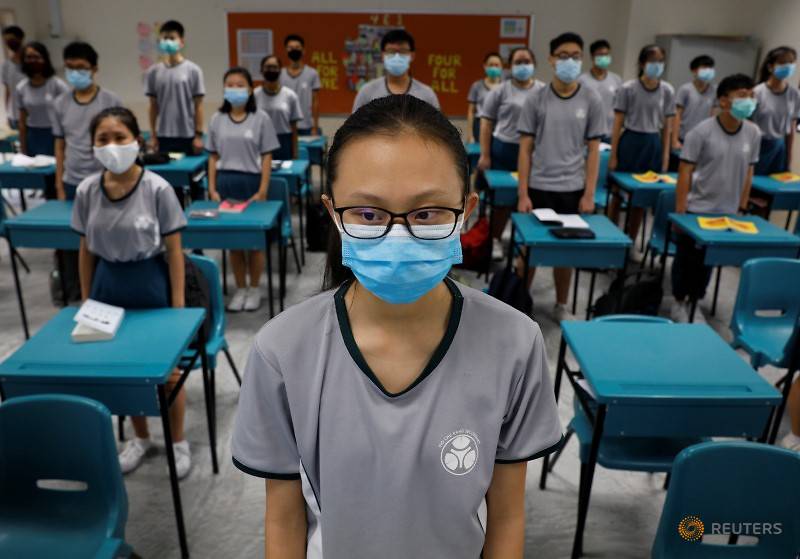
Students wearing protective face masks attend a class at Yio Chu Kang Secondary School, as schools reopen amid COVID-19 outbreak in Singapore. (FILE PHOTO: Reuters/Edgar Su)
Even universities have had to offer greater financial aid to students who have found it more difficult to find part-time employment to pay for their tuition fees and living expenses.
Furthermore, educational institutions have now been forced to re-evaluate and rethink their current teaching and learning practices.
Among the questions being asked is the value of face-to-face student-educator interaction vis-à-vis online learning. Now that students in many cases cannot be in close proximity with their schoolmates and instructors, educators have to open themselves to new possibilities to engage students and leverage new digital technologies.
Such changes were perhaps a long time coming seeing that current cohorts of students have grown up as the first truly digital native generation, with technology an integral part of their everyday lives.
The collective experiences of the past few months have underlined the urgency of educators preparing their students to thrive in a world marked by uncertainty and unpredictability.
If and when a greater sense of normality eventually returns, a fundamental shake-up to improve learning and teaching outcomes in all educational institutions is in order.
The crisis has re-awakened calls to overhaul the industrial model of schooling, in which students study at largely the same pace and are taught the same materials by one adult within a classroom.
Besides greater integration of blended learning, or a combination of face-to-face and online instruction, into school curricula, I hope that schools will be better able to harness individual students’ learning speeds, styles or interests when devising learning experiences.
This is perhaps a tall order given the current predominance of examination preparation within both students’ and teachers’ lives.
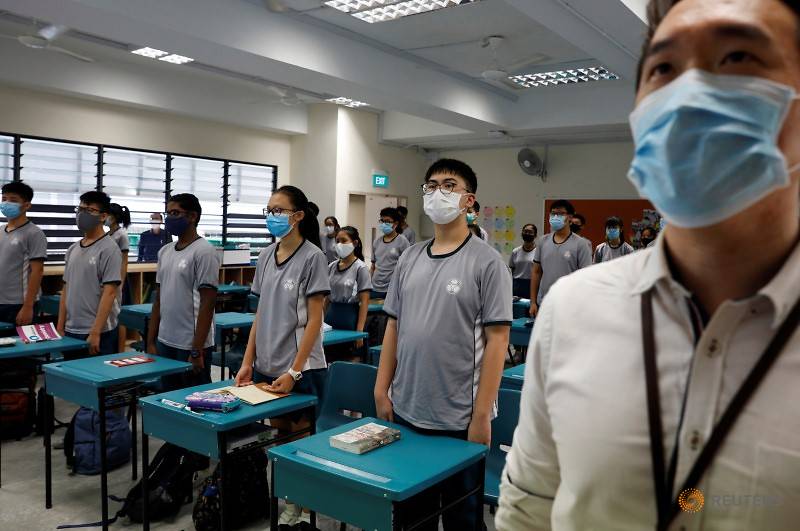
Students wearing face masks sing the national anthem in class at Yio Chu Kang Secondary School, as schools reopen amid the coronavirus disease (COVID-19) outbreak in Singapore June 2, 2020. REUTERS/Edgar Su
But instead of being passive consumers of knowledge, students can be encouraged to develop into self-directed and autonomous learners.
The disruption to schooling has added impetus to move in this direction by raising questions about how much learning can occur at home and away from face-to-face teacher assistance within a classroom setting.
In addition, the Government and the wider community have to redouble efforts to minimise the sorts of inequalities that have been laid bare. At the same time, the emotional health of students and teachers needs to assume greater priority.
The global nature of this pandemic has also highlighted the need to learn, sometimes across national boundaries, from fellow educators and work collaboratively with them, for example, through leveraging publicly available information disseminated by the Organisation for Economic Cooperation and Development on effective teaching strategies during COVID-19.
SINGAPORE: If there is one positive outcome of the COVID-19 pandemic, it could very well be that cycling is finally taking off in Singapore.
Over the past few months, sales of bicycles have been surging and bike-sharing companies are reporting an increase in ridership, some as much as 70 per cent.
As more Singaporeans work from home, with more time to spare on exercise and add to that the impact of the ban on PMDs, which saw food delivery riders switch to bicycles, it is clear there are more cyclists on the road.
Another factor cited by those who are taking up cycling is that they want to avoid more crowded modes of public transport, such as buses and trains.
After all, one can easily cover the distance between a few bus stops or MRT stations on a bike and bike sharing makes this a convenient mode of transport.
During the circuit breaker period, many people also turned to cycling as a form of “socially distant exercise” as it was one of the few activities that was allowed outdoors.
In fact, my social media feed has never been more filled with posts from friends showing off their newly purchased wheels and fitness tracker maps of their biking routes.
But even though an increased interest in cycling in the little red dot has been a long time coming – and could help move the needle towards a car-lite society, which the Government advocates – I can’t help but wonder if this surge will be maintained in the long term.
Or will many of these newfound cycling enthusiasts eventually retire their bikes and give up their bike-sharing subscriptions once it becomes safe to revert to the good old buses and MRTs?
WHY CYCLING IS GREAT
I enjoy cycling. I picked up the habit in the United States where my partner lived for a period of time. When he was based in Silicon Valley, we often preferred to cycle when running small errands over the hassle of driving a car.
Cycling paths in Singapore. (Photo: MEWR)
There was something charming about biking leisurely to the yoga studio for a class or to the farmers market to pick up fresh groceries.
When we returned to Singapore a couple years ago, I invested in a stylish Tokyobike, thinking that I could replicate this idyllic commute in my daily life.
I live in the southern part of Singapore, where the Tiong Bahru neighborhood as well as VivoCity and the Southern Ridges are well within cycling distance.
Even Orchard Road, I reckon, is no more than a twenty minute ride away. I thought it would be cool to rely on this green mode of transport while fitting in some exercise at the same time.
Unfortunately, reality did not match expectations. I quickly realised cycling was not exactly a practical way of travelling from point A to B. While some neighbourhoods like Tampines are known for being bike friendly, that is not the case in my part of Singapore.
As there are few bike lanes in my area, I either have to cycle with an excess of caution on the road shoulder to avoid drivers – some of whom seem oblivious to the presence of cyclists as they pass by dangerously close – or weave around pedestrians on pedestrian lanes.
Neither option makes cycling very enjoyable.
A woman cycling past a row of shared bicycles parked outside Our Tampines Hub. (Photo: Facebook/Baey Yam Keng)
For those who prefer leisurely rides, there is no doubt there have been efforts to build park connector lanes to allow cyclists easier access to parks. But some of these lanes are simply impractical.
The Kallang Park Connector, which links Bishan-Ang Mo Kio Park to Kallang Riverside Park has lovely cycling lanes along most of the stretch.
But there are a few overhead bridges along the way where cyclists have to carry their bikes up the steps of three-storey bridges – wouldn’t it make sense to install ramps where bikes can ride up for a more seamless experience?
Then, there are the cycling lanes that have been partitioned out of walking paths. These often cut past multiple bus stops where the cyclist has to dismount. The alternative is to balance precariously along a razor thin lane between the bus stop and the kerb.
As we all know, there are multiple stops along any given stretch of road, making it close to impossible to cycle efficiently. I have taken to walking or hopping on a train for expediency.
TOWARDS MORE GRACIOUS ROADS
To be sure, there are ongoing efforts to make it easier for cyclists to get around. The newly launched Tengah Park District is touted as Singapore’s first “car-free” town centre where there are plans to build roads underneath ground level to create a safe space for residents to walk and cycle.
A key feature of Park District will be Tengah’s “car-free” town centre which will be integrated with the nearby Central Park. (Photo: HDB)
Recently, Transport Minister Ong Ye Kung also said that plans are underfoot to convert underused road lanes into cycling lanes, in a bid to “re-imagine” Singapore’s road infrastructure.
While there does not seem to be plans to incorporate bike lanes on the roads like those seen in truly bike-friendly cities like Amsterdam or Copenhagen for now, perhaps this option will be considered in the future.
OUR ATTITUDES NEED WORK
Yet, the infrastructure is one thing. The other issue is the attitudes motorists, cyclists, even pedestrians have when it comes to sharing what is a dense population space.
Cyclists on their part should take care to stay close to the side of the road and to observe road rules for everyone’s safety. Some veer dangerously close to middle lanes or don’t give due diligence to buses, who have to share the extreme left lane.
Drivers can make it a point to slow down and give more space when passing cyclists on the road. I have had the unpleasant experience of being horned at multiple times even as I am in the midst of manoeuvring into a better position, or cars coming so close I could feel my bike wobble as they overtake me.
Once a bus whooshed by with so little room to spare, I practically had to stunt hop onto the grass kerb to get out of the way.
And finally, it would make a big difference if pedestrians could take note not to stray onto demarcated bike lanes when they are walking. So it is really an effort on everyone’s part to ensure that each of us have a safe and pleasant journey.
Hopefully with time, people will realise that most cyclists simply wish to get to their destination safely, just like all other commuters out there.
Having had a few rough experiences, I have all but abandoned my Tokyobike, which has recently been relegated to become a glorified handbag display rack.
But I am not giving up on it or my love for cycling just yet and hope I can take it out for a spin someday soon.
Karen Tee is a freelance travel and lifestyle writer.
SINGAPORE: The Maritime and Port Authority of Singapore (MPA) on Friday (Aug 28) announced a slew of measures to facilitate crew changes and ensure safe port operations, including having shorter stay-home notices for some seafarers and setting up a dedicated holding and quarantine facility for ship crew.
“This has been a trying time for seafarers,” said Transport Minister Ong Ye Kung in a release provided by MPA.
“They have been working tirelessly to keep goods flowing around the world. But due to health and safety concerns, many have encountered difficulties to call on ports and undergo crew change, and that has severely affected their well-being. It is therefore very important for all stakeholders to come together to ensure safe port operations and safe crew changes,” he added.
SHORTER STAY-HOME NOTICES FOR SOME SIGNING-ON CREW
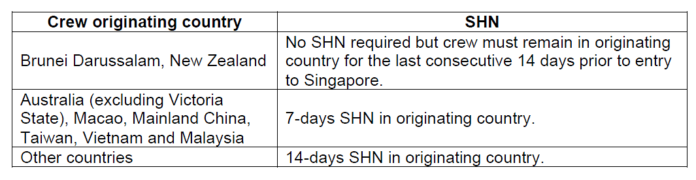
In general, all signing-on crew are required to serve a 14-day stay-home notice in their originating country or region before they arrive in Singapore.
However, in line with the risk-managed approach taken by the COVID-19 multi-ministry task force for travellers arriving in Singapore, seafarers from specific low-risk countries or regions will either no longer be required to serve their stay-home notice or serve a shorter notice of seven days before they depart for Singapore.
(Table: Maritime and Port Authority of Singapore)
Mr Kam Soon Huat, president of the Singapore Organisation of Seamen, said: “SOS is heartened that MPA has taken the move forward to ensure safe and timely repatriation of seafarers and getting fresh crew onboard.
“The streamlined crew change procedures and dedicated facility for sign-on crews are practical solutions to keep the supply chain open and to protect the rights of seafarers.”
In addition to the stay-home notice requirement, if a crew member was previously diagnosed with COVID-19, the date of the first polymerase chain reaction (PCR) test must be more than 21 days from the date of departure from his home country to Singapore.
The crew member must also have a negative COVID-19 test, taken not more than 48 hours prior to departing for Singapore, and be certified fit-to-travel by a doctor at his originating country not more than 24 hours prior to the flight.
Finally, crew members can only arrive in Singapore to join their ship no more than two days before the vessel is set to leave Singapore, said MPA.
SIGNING-OFF CREW TO REMAIN ON VESSEL FOR 2 WEEKS BEFORE DISEMBARKING
For seafarers signing-off, they must not have gone ashore in the last 14 days before disembarking the vessel. Before disembarking the ship, the crew should also be certified fit-to-travel by a doctor in Singapore not more than 24 hours prior to disembarking.
“For crew changes to take place safely, MPA continues to expect all owners, agents, ships and individuals to ensure that the COVID-19 preventive measures are followed strictly.
“Any breach will be taken seriously,” said MPA.
Ship owners, managers or agents must apply for crew change in Singapore by filling up an online form on the MPA website.
For foreign-flagged ships, crew changes will be considered if the ship meets all prevailing requirements, and are in Singapore for cargo operations, bunkering or other marine services, MPA added.
NEW HOLDING AND QUARANTINE FACILITIES AT TANJONG PAGAR TERMINAL
MPA also said on Friday that as of Sep 1, a self-contained crew facilitation centre (CFC) will be set up at Tanjong Pagar Terminal to facilitate more crew changes in a sustainable manner and with minimal health risk to the general population.
Three existing floating facilities at the CFC will be designated as holding or quarantine facilities. These will house sign-on crew who are waiting for their ships’ arrival for up to 48 hours, and a quarantine facility to house close contacts of seafarers who test positive for COVID-19.
There will also be an on-site medical centre in the centre.
“During COVID-19, many vessels were not able to dock at ports for crew disembarkation and embarkation. Sadly, an estimated 250,000 seafarers are now stranded at sea. There is an urgent need to help them ‘change shift’,” said Mr Ong in a Facebook post.
“A dedicated area for them means lowering the risk of COVID-19 transmission on shore,” he added.
Mr Ong Ye Kung at a room inside the new crew facilitation centre at Tanjong Pagar Terminal. (Photo: Facebook/Ong Ye Kung)
Meanwhile, sign-off crew will proceed to depart Singapore or stay at existing designated holding facilities Seacare Hotel or accommodation vessel POSH Bawean for up to 48 hours, and be strictly segregated from the community.
As an international port, many foreign-flagged ships call at Singapore.
MPA told CNA on Aug 16 that 15 Filipino crew members who worked on a vessel that arrived in Singapore from India on Aug 8 for repairs and refuelling had tested positive for COVID-19.
The Bahamas-registered vessel has 22 crew members.
On Thursday, the health ministry reported that one more Filipino seafarer who worked on the vessel also tested positive for COVID-19.
Two technicians who boarded the vessel have also tested positive.
MPA said in its release on Friday that the new measures will enable crew change to take place safely.
“Seafarers play an important role in keeping international trade and global supply chains going, and hence, MPA will take further steps to enable crew change to take place in Singapore safely,” it said.
Ms Mary Liew, general-secretary of the Singapore Maritime Officers’ Union and the president of the NTUC said: “With the new initiative of a dedicated crew facilitation centre which will involve segregating crew in the floating accommodation, we will be able to enhance Singapore’s crew change protocol in a safer manner for seafarers and a more sustainable solution for shipping companies.”
SINGAPORE: A new COVID-19 cluster that emerged at Singapore’s biggest dormitory after it was declared “fully cleared” of the disease has grown to 175 cases in a week.
The Ministry of Health (MOH) on Friday (Aug 28) reported 80 more cases in dormitories, of whom 58 were from Sungei Tengah Lodge.
The dormitory at Choa Chu Kang Road, where more than 16,000 workers stay, was previously declared “fully cleared of COVID-19” on Jul 21 by the Ministry of Manpower (MOM). More than 2,200 cases were linked to it before the cluster was closed by MOH on Jul 18.
Sungei Tengah Lodge was gazetted as an isolation area on Apr 9 – among the first dormitories to go into isolation – under the Infectious Diseases Act. The notification was revoked on Jul 18.
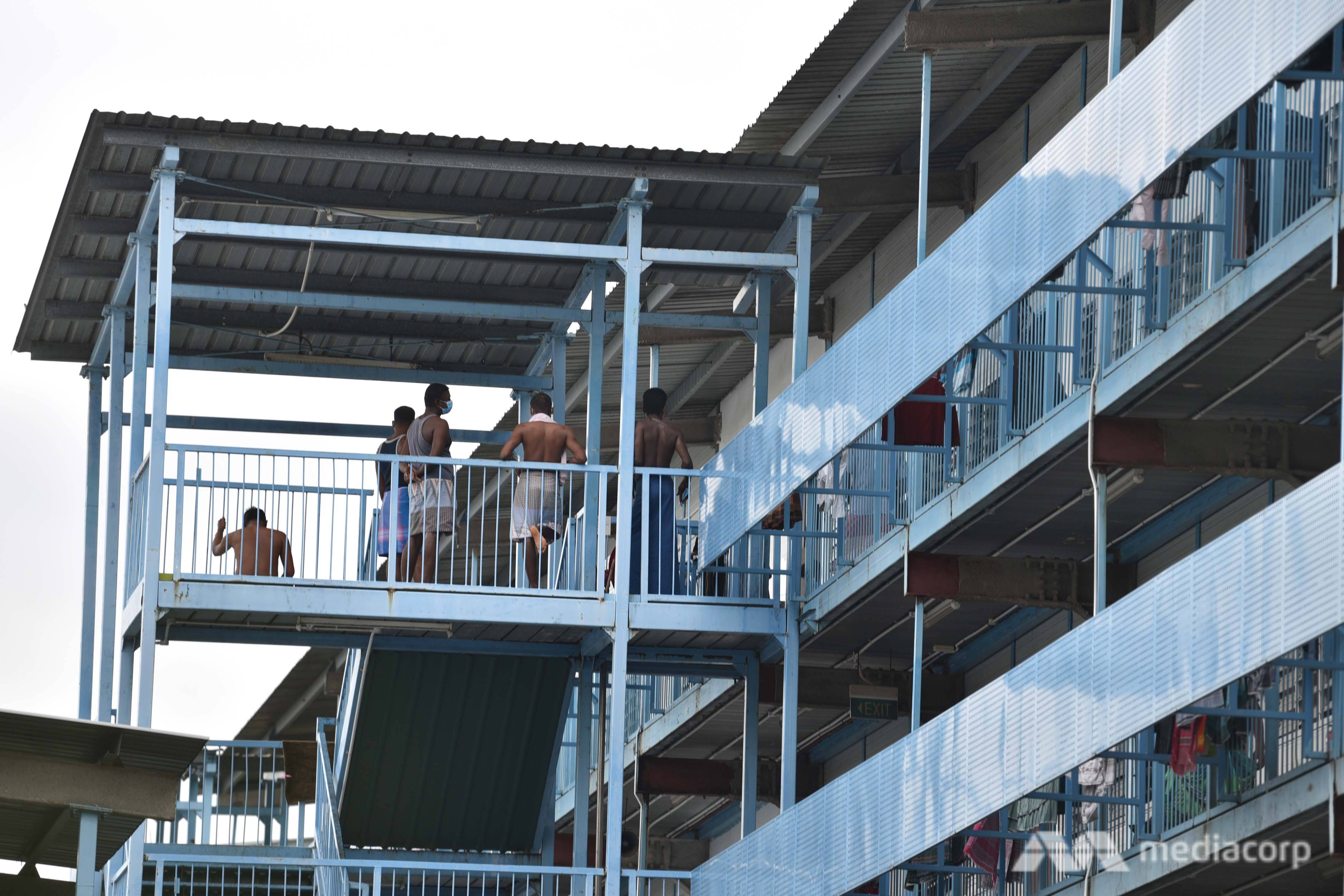
But last Saturday, a new cluster of 57 cases emerged at the dormitory. On Sunday, MOM, MOH and the Building and Construction Authority (BCA) said about 4,800 workers there had been issued stay-home notices as a precaution, and that they would be tested over the “next few days”.
Since then, single-digit increases have been recorded nearly every day at Sungei Tengah Lodge, until Thursday.
On Thursday, 48 new cases were linked to the dormitory cluster, growing it to 117 cases. By Friday, that cluster grew to 175 cases, with the 58 new reported cases.
MOH said that the 58 cases reported had already been placed in quarantine. The “vast majority” of them were tested during quarantine to determine their status, or picked up during the ministry’s rostered routine testing.
It added that about 3,000 workers have been tested so far.
“We expect the number of cases from the dormitory to continue to be high in the coming days as we complete testing of the remaining quarantined workers.”
Sungei Tengah Lodge is not the only migrant worker dormitory where new COVID-19 clusters have emerged, despite being cleared of the disease.
A new cluster of five cases was reported at Homestay Lodge last Sunday, and now has seven cases. Homestay Lodge, a dormitory at Kaki Bukit Avenue 3, was previously cleared of COVID-19 on Aug 4.
A new cluster of six cases was reported at Tuas View Dormitory on Monday. The dormitory at Tuas South Avenue 1 was also previously cleared of COVID-19 on Aug 4.
More than 1,500 cases had been linked to the cluster at Tuas View Dormitory before it was declared to be cleared of COVID-19 – making it one of the biggest clusters in Singapore.
It was gazetted an isolation area on Apr 17 under the Infectious Diseases Act. That notification was revoked on Aug 4.
Foreign workers standing along the common corridor at Tuas View Dormitory on May 6, 2020. Tuas View Dormitory was gazetted as an isolation area to curb the spread of COVID-19. (Photo: Jeremy Long)
Manpower Minister Josephine Teo said on Wednesday that new COVID-19 cases found at the migrant worker dormitories are a result of routine testing, and these cases are surfacing as “part of the plan”.
Under new measures to ensure the safe resumption of work for migrant workers, those living in dormitories, among others, have to undergo COVID-19 tests every 14 days.
“We have planned for every single one in the construction, marine and process sector, as well as the people who come into close contact with them, to be regularly tested. So, the findings today are a result of those testing,” Mrs Teo said.
“That is what we are doing, it is part of the plan and it is surfacing as part of the plan.”
With the routine testing, clusters can be identified early, infected workers can be given appropriate care and their close contacts can be quarantined to contain the spread, she said.
COVID-19 cases among migrant workers in dormitories have formed the bulk of infections in Singapore. Authorities took about four months to test more than 300,000 workers.
Why I Do What I Do is an original AsiaOne series where we showcase people with uncommon professions and what it takes to get there.
Just seconds before she was about to surface from the depths of the ocean, Lim Anqi felt darkness closing in on her as her body reacted to hypoxia, a condition brought about by a lack of oxygen.
But instead of panic, the experience actually left her feeling at peace.
“It was only two or three seconds, but in my memory, it was a much longer time”, maybe at least 10 to 20 seconds, said Anqi of the moment she lost consciousness.
This near-death incident occurred while the Singaporean freediver was preparing for the world championships last year in Honduras, practising for her 51-metre dive (about the height of a 15-storey building).
Freediving is a sport where divers swim vertically into the ocean and up again on a single breath, and the blackout experience was her first in almost five years of practising the sport.
SINGAPORE – From the high balcony of a Singapore public housing block, an environment official steadies his mosquito launcher, the latest contraption authorities have devised to combat a record outbreak of the tropical disease dengue.
With the click of a button and a whirr of a fan, a hatch opens and 150 lab-reared male mosquitoes are sent flying, off in search of a female companion with whom they can mate but not reproduce.
The dengue virus, which in rare cases can be fatal, is carried and spread to humans by infected mosquitoes.
But Singapore’s specially bred mosquitoes carry a bacteria that prevents eggs from hatching, and “compete with the wild type,” leading to “a gradual reduction of the mosquito population,” said Ng Lee Ching, the official heading the Wolbachia project, named after the bacteria.
Some areas with high mosquito populations have seen up to 90per cent declines using this technique, she added.