SINGAPORE – Two telcos here have been slapped with fines totalling $610,000 for causing internet service disruptions during the circuit breaker period which affected many Singaporeans working from home or attending home-based learning.
M1 has been issued a financial penalty of $400,000 for broadband service disruptions in May, while Starhub has been issued a penalty of $210,000 for similar disruptions in April.
Announcing this in a release on Sunday (Sept 6), the Infocomm Media Development Authority (IMDA) said that both the telcos had contravened the 2016 Code of Practice for Telecommunication Service Resilience.
“In determining the final penalty quantum for each incident, IMDA took into consideration relevant factors such as the duration, impact, and customer service measures adopted by the operators to mitigate impact,” IMDA said.
In Starhub’s case, the authority said that the disruptions occurred on April 15 when one of the telco’s staff made a configuration error during a planned network migration exercise.
For the nine years from 2007 that she worked for Changi Airport Group chairman Liew Mun Leong and his family, Indonesian Parti Liyani had a relatively harmonious relationship with its members.
They gave her generous red packets and raised her monthly salary from $300 to $600.
However, from time to time, she clashed with her employer’s son, Karl, over her household chores at the Chancery Lane family home.
Things got more heated when Mr Karl Liew moved out with his family in March 2016 to a house nearby.
The domestic worker was told to go there to help with the chores, as well as clean his office in another location.
It is disputed how often Ms Parti was asked to do the extra work.
Mr Liew Mun Leong’s wife, Madam Ng Lai Peng, said she paid the maid $20 on each of the three occasions she asked her to work at her son’s house.
But Ms Parti, 46, said she cleaned Mr Karl Liew’s office once a week for about a year. She said she received $10 for two to three days of work, and the payment was not regular.
Disputes arose over her refusal to clean a toilet at his home and to cook extra food for him.
SINGAPORE – Forty-one Covid-19 cases which had been added mostly “due to administrative errors” were removed from the country’s total tally on Wednesday (Sept 2), said the Ministry of Health (MOH) on Saturday (Sept 5) evening.
On Wednesday, the ministry had said they were removed “as they were verified to be negative for Covid-19 following further investigations”.
The administrative errors included wrongly recorded or duplicated entries, and took place “over the past few months”, said MOH.
Some were also reclassified following laboratory investigations and clinicians’ assessments.
“Corrective action had been taken early on in the management of all these cases and all necessary public health actions had been taken,” said MOH.
“As such, none of the cases had been exposed to risk of infection due to their initial classification,” it added.
MOH said that it is aligning the administrative records and correcting the case numbers.
Vulnerable individuals and people more likely to be exposed to the infection will be first in line to receive the Covid-19 vaccine when one is available in Singapore.
The vaccine coverage will also be progressively expanded to the rest of the population, said Health Minister Gan Kim Yong in a written reply to a parliamentary question on Friday.
“The vaccination strategy and schedule would depend on several factors, including the suitability of different vaccines for different population sub-groups and the quantity of vaccines available at any point in time,” he said.
Singapore will continue to adapt its vaccination strategy as more information on the various vaccines being developed become available, he added.
He was replying to Mr Ang Wei Neng (West Coast GRC) and Mr Murali Pillai (Bukit Batok), both of whom wanted to know more about Singapore’s Covid-19 vaccine strategy.
Mr Gan said Singapore is working on ensuring it has timely access to an effective and safe vaccine when it becomes available, pointing to the country’s participation in international initiatives and local efforts to develop a Covid-19 vaccine.
SINGAPORE: It’s all too easy to forget that not so long ago, wines from Australia and elsewhere in the New World, including California’s Napa Valley, didn’t enjoy the same prestige they do presently.
“It takes time to begin making good wine,” says Wes Guild, an American sommelier who worked for chef Wolfgang Puck for a decade before taking up his current post, running Singapore’s Bistecca and Artemis restaurants.
“I don’t think they were making great wine in California coming out of the 1960s,” Guild says. With a few exceptions, the same could be said of Australia.
“But with wine, every year you get a new shot at it — and with time and trial and error, after several decades of vintages, hopefully you’ll get it right.”
Guild points out the French and the Italians have been making wine for thousands of years, on farms that have been there for generations.
They have the benefit of experience. Most of China’s aspiring winemakers, meanwhile, only planted their vines within the past 10 or 20 years.
Of course, China is an ancient civilisation and has produced intoxicating beverages since at least as far back as the Shang Dynasty, more than 3,500 years ago.
Though referred to as Chinese wine, this liquor, known as jiu, is not made from fermented grape juice like western wine but instead, is produced using a variety of grains — commonly rice, wheat or sorghum.
GRAPE EXPECTATIONS
Chinese drinkers’ tastes have broadened in parallel with the country’s economic reforms and increasing wealth. Today, the country is the world’s fifth-largest consumer of wine.
Responding to growing local demand and encouraged by government initiatives, production of western-style wine has been on the rise in China for the past 20 years.
Around 40 per cent of the mainland’s wine output comes from Shandong province on the Pacific coast. The wine made here echoes the style of famed French region Bordeaux, which sits on the same latitude as Shandong.
Polyphenols from grapes are thought to have several positive health impacts. (Photo: Unsplash/Maja Petric)
Two years ago, the owners of France’s prestigious Château Lafite Rothschild launched the first vintage from their decade-old Shandong estate, Domaine de Long Dai. Respected British wine critic Jancis Robinson described the 2017 as “suitably Lafite-like … utterly correct if not absolutely stunning.”
Well-regarded Bordeaux-style wines are also grown in the northern Chinese province of Ningxia. This arid region is one of the poorest in the country and the government has encouraged the cultivation of grapes to boost farmers’ incomes.
Despite challenging conditions — vines must be buried during winter to survive the cold — approximately a quarter of China’s wine is now derived from grapes grown in this region, with Legacy Peak and Zhihui Yuanshi among the foremost producers.
Another leading Chinese winery, Grace Vineyard, picked up a gold in the 2019 Decanter World Wine Awards for its Tasya’s Reserve Cabernet Franc 2016, which sells internationally for US$31 per bottle.
EXPORT QUALITY
Most of the wine produced in China is consumed domestically. As yet, there is little demand beyond the country’s borders — even in greater Asia.
The beverage manager of the St Regis Singapore, Raquel Alcantara says although jiu is popular with guests, the hotel’s restaurants have seen few requests for new, western-style Chinese grape wines. “We are working to introduce some to our wine list, notably Ao Yun,” she says.
Ao Yun is the headline-grabbing Chinese red wine that has been developed over the past 12 years. Derived from primarily cabernet sauvignon grapes and grown in the Himalayas in some of the world’s highest vineyards, it’s one of the more popular high-end brands.
There are a variety of other Chinese brands and the most successful wine region is nested in Ningxia. Top producers include Grace Vineyard which picked up a gold in the 2019 Decanter World Wine Awards for its Tasya’s Reserve Cabernet Franc and sells for US$31 per bottle.
David Fiori, head sommelier at the Fairmont Singapore and Swissotel The Stamford, believes interest in Ao Yun is driven in no small part by its novelty, as an LVMH-owned winery situated in the mountains near Tibet.
But the product bears up to scrutiny, he says, and the response from customers who’ve tasted the wine has been overwhelmingly positive.
Luxury conglomerate LVMH Moët Hennessy sourced for ideal vineyard locations and settled in the Yunnan province. (Photo: Ao Yun Winery)
A great deal of time, effort and resources have gone into creating a world-class winery in China.
LVMH spent several years scouring the vast Middle Kingdom in search of the perfect location, before eventually settling upon a series of neighbouring villages situated at altitudes between 2,200m and 2,600m, on the mountainside by the Mekong River in the UNESCO-protected wilderness of Yunnan province.
The vineyards’ proximity to the city of Shangri-La (immortalised in the 1933 novel Lost Horizon and its movie adaptations) sounds romantic.
But the location was chosen for entirely pragmatic reasons, providing not only excellent soil but the ability to regulate sunlight, rainfall and temperature more effectively than elsewhere in China, where grapes often fall prey to extremes of heat, cold, precipitation and humidity.
Winemaker Maxence Dulou explains that while he initially faced scepticism, today Ao Yun is warmly embraced by critics and consumers alike.
“In 2016, when we introduced the 2013 vintage, our first, it was difficult to keep some people engaged. At tastings, we would hear them saying, ‘Oh, I prefer my Petrus’ or whatever French wine,” says Dulou, who previously practiced his art in Bordeaux.
Conferring recognition upon the brand, Ao Yun won the best Chinese red wine category at the inaugural Wine Pinnacle awards hosted by Resorts World Sentosa in Singapore last year.
More broadly, connoisseurs around the world are starting to take note of the wines coming out of China. Chinese reds and whites won seven gold medals in the 2019 Decanter World Wine Awards, the world’s largest wine competition.
PASSING THE TASTE TEST
Judges at wine competitions normally try wines “blind”, unaware of what they are appraising. This prevents preconceptions or bias from affecting their evaluations.
To ensure the wine is judged solely on its merits, Dulou often hosts blind tastings, where Ao Yun is compared incognito against France’s finest wines.
“The result is usually very positive,” he says. “It usually shows people consider Ao Yun to be at the level of the top fine wine in the world.”
Retailing at around S$500 per bottle, a price as lofty as its Himalayan terroir, Ao Yun is well beyond the regular wine drinker’s budget. Fortunately, Dulou sends me a bottle of the 2014 vintage to try.
(Photo: Unsplash/Camille Chen)
I double-decant the bottle as directed and two hours later, serve it with a lightly seasoned fillet steak and garlic sautéed green beans.
My first taste of (western-style) Chinese wine does not disappoint. In fact, it is very good indeed. Deep garnet in colour, with notes of black cherry, aniseed, green pepper, leather and rainforest floor, it’s fresh yet bold, sophisticated but muscular.
Velvety tannins and a meaty, savory quality make Ao Yun ’14 an outstanding complement for beef, though I can see how it would be a fine match for sashimi with soya sauce, a pairing Dulou suggests.
My experience with Ao Yun leaves me convinced that China is capable of making wine every bit as good as France, Italy, the US or Australia.
While many persist in the prejudiced belief that the “Made in China” appellation is synonymous with low quality, certain Chinese wines just might move people to re-evaluate these assumptions.
And as more wine drinkers have their curiosity piqued, it’s safe to say we’ll see Chinese bottles become a common sight on restaurant wine lists and in the cellars of collectors in years to come.
Christian Barker is a Singapore-based journalist and editor who covers luxury, travel, business, culture, and men’s style.
SINGAPORE: When Ms Heather Huang was approaching her due date in early August, she was feeling desperate as she could not hire a confinement nanny.
The 30-year-old business owner was expecting her first born but the agencies she contacted told her that they could not provide one for the dates she requested.
“I was a bit scared because I did not know how to bathe, feed or just take care of the baby when she comes,” said Ms Huang.
“The agencies told me that they had a limited supply and with border restrictions, they needed to make arrangements earlier to ensure the nanny’s work permit and quarantine can all be finalised,” she added.
Ms Huang told CNA that she preferred to hire Malaysian nannies because of the relatively cheaper price for one who would stay-in with her family, and their rich experience.
She is one of the many parents based in Singapore who are keen on hiring Malaysian confinement nannies to cope with the initial challenges when welcoming a newborn.
The nannies typically care for the newborns while the mothers recover from giving birth. When the parents are ready, the confinement nannies would then teach and equip them with basic skills necessary for parenthood.
However, these arrangements were halted in March when Malaysia implemented the movement control order and Singapore subsequently entered the “circuit breaker” period, blocking non-essential travel between both countries.
Now that border restrictions have been eased, workers have been allowed to travel between both countries via the Periodic Commuting Arrangement or Reciprocal Green Lane schemes.
A view of the Woodlands causeway linking Malaysia and Singapore on Aug 17, 2020. (Photo: Try Sutrisno Foo)
Although the confinement nanny industry has not been classified under either scheme, they are still allowed to enter Singapore to work by obtaining a work pass from Singapore’s Ministry of Manpower (MOM) since Jun 17.
Based on MOM requirements, confinement nannies from Malaysia who arrive before Sep 1 are required to seek approval for a work pass, take a COVID-19 swab test and serve a 14-day Stay-Home Notice (SHN) upon arrival before they can work.
However, for confinement nannies entering Singapore from Malaysia after Sep 1, they would only need to serve a seven-day SHN upon arrival.
Thankfully for Ms Huang, after she gave birth to her daughter on Aug 10, her husband’s aunt volunteered to live with the family for two weeks to take care of the baby while she recovered.
“I’m very grateful to her. I wished I did not have to trouble her. But I still felt I needed a nanny to stay with us for a longer period so I tried to contact the agencies again,” said Ms Huang.
She eventually managed to hire one from an agency and she said she has been “very satisfied” by the service from the confinement nanny assigned to her.
“It’s better late than never but I wished I had gotten one (assigned) earlier,” she said.
Confinement nanny agencies CNA spoke to said there is indeed a nanny shortage, due to the COVID-19 restrictions in both countries.
While they grapple to match the demand from Singapore families, new parents have to be prepared to fork out more to help cover the SHN and swab test costs.
The Malaysian nannies, meanwhile, also find their income dipping as compulsory quarantine reduces the number of days they can work in Singapore.
CONFINEMENT NANNY AGENCY UNABLE TO MATCH HIGH DEMAND
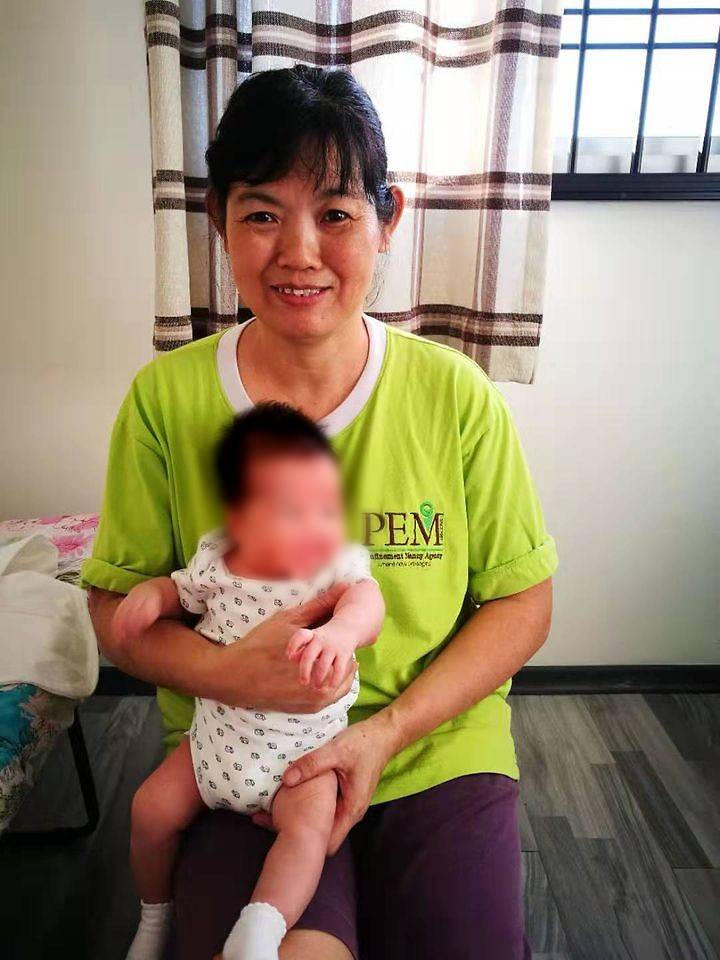
PEM Confinement Nanny Agency’s (PEM) senior business manager Mishell Lee shared that demand for confinement nannies has spiked recently because of the travel restrictions imposed by countries around the world.
Many of these families initially wanted to rely on their parents who are based overseas or were going to employ a domestic helper to help them. However, with travel restrictions, many have turned to confinement nanny agencies.
Ms Lee told CNA that the company is currently able to activate only 200 out of its total manpower of around 400 nannies, at any one time. This is because of the slower rate of approval for their work permits and the need to serve SHN for each trip.
She said that PEM has been unable to match the “high demand” as not all of its nannies are able to be activated at short notice.
“Since the beginning of MCO and circuit breaker, PEM has been receiving a high number of requests from clients to extend the service of their confinement nannies, but we are unable to fulfil (these requests) due to the lack of manpower and this is still going on until today,” she said.
(Photo: Unsplash)
She also pointed out that families would typically hire nannies for 28 days, but for some, especially first-time parents, this is not sufficient.
“Many of the mothers who signed up with us … have not yet fully recovered from delivery and being left alone will make it harder for them to take care of their newborn,” said Ms Lee.
A new parent who wanted to be known only as Ms Long is facing the exact predicament.
She had no issues getting a nanny when she gave birth, but she is currently having problems trying to extend her nanny’s contract for another 28 days.
Ms Long told CNA that she had initially hoped that her parents, who are based in China would be able to travel to Singapore to help her after she gave birth.
However, they were unable to travel due to COVID-19 travel restrictions and she then hired a Malaysian nanny from PEM, who came to stay with them on the day she gave birth, on Aug 8.
Ms Long said she has been very impressed with the service provided by the nanny and has asked PEM if she could extend the service of her nanny for another 28 days, but the agency has so far been unable to confirm if they are able to accede to this request.
“Currently, I have no other options. We want a simple extension for 28 days and it will help us a lot. I would have recovered more and would be better able to take care of the baby,” she said.
ADDED COSTS PASSED ON TO SOME FAMILIES
Due to MOM requirements, there will be added costs for the nanny’s trip as they will be required to stay in a dedicated SHN facility and take the COVID-19 test.
Malaysia, too, requires people arriving from overseas to quarantine at designated facilities for 14 days. Citizens are required to fork out RM2,100 (S$690) of partial costs, while foreigners have to pay the full RM4,700.
The added financial costs could then be passed on to the families, nannies or the agencies, or could be shared between all three parties.
Luckily for parents like Ms Long, PEM has said it will bear all costs incurred for their nannies, including serving the SHN, COVID-19 swab test, as well as other necessities like face masks, which add up to around S$1,700 per trip.
Mr Jason Teo, who hired his Malaysian nanny in mid August, told CNA that the agency he hired from had agreed to share the added financial costs with their clients, and he had to pay an additional S$700 on top of the S$3,000 to hire the nanny for 28 days.
He did not wish to disclose the name of the agency.
“I agreed because I think it’s not fair to expect agencies to absorb all the added costs. And I think it would even be worse to expect the nannies to pay for it,” said the 29-year-old engineer who welcomed his first child on Aug 14.
“The nanny has been great for us so we are fine with it,” he added.
NANNIES SERVE FEWER FAMILIES DUE TO QUARANTINE
The pandemic and the COVID-19 measures have also affected the livelihood of the Malaysian confinement nannies.
The total 28 days of quarantine they are subject to when entering Singapore and returning home to Malaysia means they lose the opportunity to work for close to a month, and are away from their loved ones for a longer period for each assignment.
Ms Tey May Leng, 51, who is employed with PEM, told CNA that she struggled to pay the university fees for her two children over the last three months when she could not leave Malaysia to work in Singapore during the MCO period.
Tey May Leng, a confinement nanny, has not been able to work in Singapore since March 2020. (Photo: Facebook/PEM Confinement Nanny Agency)
“As I have not been working since March, I have lost around RM16,000 of income in total. My children’s university fees are around RM5,000 a month so it has been difficult,” she said.
To support the family, her husband worked odd jobs while they spent less on food and other necessities.
Therefore, Ms Tey is grateful that her work permit has been approved and she can now resume work in Singapore – her first assignment in about six months.
She has been assigned to a family and she made the long trip from her hometown in Gurun, Kedah in the northern part of Malaysia to Singapore on Aug 25, and is currently serving her SHN at a hotel.
“I will serve fewer customers for each trip due to the COVID-19 quarantine duration, but I can no longer afford to be choosy,” she added.
Due to the long quarantine period and extended assignment period, some nannies have to be away from home and their loved ones for a long time.
PEM nanny Ms Yow Yin Fen who has based herself in Singapore and is staying with her daughter, told CNA she has not seen her husband in Malaysia for six months.
“I miss my husband but being in Singapore makes more sense for me. I can serve more families for the agency,” said the 52-year-old from Kulai, Johor.
“But I worry that my husband is home alone and he struggles sometimes,” she added.
Yow Yin Fen is living with her daughter in Singapore but she misses her husband who lives alone in their hometown in Kulai, Johor. (Photo: Facebook/PEM Confinement Nanny Agency)
Ms Yow said she is planning to return to Kulai once the Malaysia government relaxes the restrictions and permits citizens to quarantine at home.
Ms Tey,who entered Singapore before Sep 1, said she will be away from her family for at least 56 days – 28 days for the confinement assignment in Singapore and another 28 days in quarantine facilities. She misses her grandson, whom she has been caring for, and her husband.
“I have a video call with them every day but I also know that I’m working to provide for them,” she said.
SINGAPORE: No one told me that finding the perfect house would invite more judgement than finding the perfect spouse.
Over the last few months, I’ve ramped up my search for the former. I started following a few property accounts on Instagram, created a folder with interior design inspiration for my future home, gotten my brain acquainted with property jargon like “refinancing” and “repricing”, and, yes, begun the actual process of house-hunting.
But this is not a commentary about the painful nitty-gritty of acquiring my bachelorette’s pad, like getting trauma-inducing bank loans or using “psf” so often that my phone stops correcting it to “pdf”.
Neither do I know the best advice on how to pick the best property for investment, where to find the most efficient renovation firm or what floor tiles work best for the bathroom.
This is, rather, about my fascination with the unbridled judgement that we have for others’ living spaces and their decisions in building that space, and the tangible ways we ascribe value to a home, from location to floor plan to cost per square feet.
Talk about buying or renovating a home, and suddenly everyone and their mothers are architects, interior designers, property agents and feng shui masters all at once.
HOME IS WHERE THE JUDGEMENT ABOUNDS
I am guilty of the same judgemental behaviour.
Take CNA Lifestyle’s recent series on homes with quirky renovation designs.
One week, there was a home in Bukit Batok inspired by Balinese resorts. Another time, there was a home decked with nautical decor.
Then there was the Japanese inspired home with furniture sourced from Taobao, even though the owner didn’t speak Mandarin.
The master bathroom’s “splash zone” is demarcated with white pebbles to further expand on the tropical resort feel. (Photo: Design Zage)
The online comments were filled with enough sour grapes to make wine. Some commenters remarked that the stones in the toilet of the Balinese-inspired home would cause mould to fester, while others said its ceiling beams would get dusty easily.
Many bashed the owners for being impractical. A few reminded these commenters that they weren’t the ones living in the house, so they should mind their own business.
Objectively speaking, I can see where all of these comments are coming from. I’d judged these homes from the perspective of a house-hunter, never mind that these owners weren’t selling me theirs. To me, the interior design was crucial if the buyer couldn’t afford to spend tens of thousands to renovate.
These exchanges definitely provided a reality check for any proud home-owner: If you want to share your home (or potential home) with the world, you have to be ready for a slew of comments.
Criticism often stem from widely-held beliefs related to monetary value, like the importance of looking at a home’s resale value before purchase or the common understanding that freehold is better than leasehold.
But I suspect the sentiments underpinning these words go deeper. These homeowners, with their antique paraphernalia or cumbersome blinds, have gone against our national supreme value: Practicality.
YOUR HOME IS AN EXTENSION OF YOU
It always amuses me how deeply impracticality rankles Singaporeans, probably because it doesn’t align with the virtues of Singaporean society. We extol convenience, efficiency, frugality and practicality, and we abhor indulgent and frivolous lifestyles. When others don’t spend their money the way we think we would, we shame them.
Yet, given an infinite sum of money, many of us would indeed jump at the chance to build our dream home and pimp it out, criticism be damned.
After all, our home isn’t just a part of us. We believe it’s also a reflection of who we are and who we want to be.
Every step of the house-hunting and settling-in process is deeply personal.
Incredibly personal considerations pepper the start of our house-hunting journey, that begins with deciding where to stay. We might be willing to forgo convenience for being in a far-flung neighbourhood with our parents, despite investment advisors saying otherwise.
Or we choose to live at Holland Village over Sembawang because we aspire towards a daily routine punctuated with latte fixes in the afternoon at the nearest cafe — a lifestyle that signifies we’ve got our life together.
These also spill into how we want our new nests to look. We might ground our renovation and interior design decisions in intangible measures of happiness and aspiration, beyond dollars and sensibilities.
A miniature sailing ship from the sea-loving Wan Ismail’s collection. (Photo: The Moving Visuals Co)
We want our forest-green wallpaper to symbolise our love for nature, but also our reliability and steadfastness.
Our Muji-inspired living room might be trendy, but the minimalism also represents our priority for inner peace in our lives.
You get the picture.
When we judge someone’s home or property decisions, we’re essentially judging who they are.
It’s not all bad. Sharing your unconventional home online might earn you a fair share of haters, but the people who love your style will be just as unabashed in their admiration.
I recall one commenter praising the owner of the Japanese-inspired home for his ardent love for Japan, while another said the home that was packed with antiques was a house “full of feelings and passion”.
It brought to mind a uniquely pandemic observation: Working from home has made it possible to peer into the homes of my colleagues and bosses over Zoom. I appreciate seeing them have the same standing fan as me, knowing that their bookcase isn’t entirely filled, or realising that they like kitsch curtains.
In a time when it’s easy to feel disconnected from the people we work with daily, these details make them a little more human, just like how someone chooses to renovate their home speaks to their personality.
This isn’t a flat from the 1980s but a brand new BTO. (Photo: Studio Super Safari)
Your home is, ultimately, a mental sanctuary.
After a long day at work, do you want to relax in a space that you built for yourself, or one that you constructed because it was the latest fad? And is it so bad if you want your home to remind you of a fancy hotel?
What is a cosy, welcoming abode to one might feel like a bizarre choice of renovation to another. And sometimes that includes a flat looking like a yacht.
But the best thing about owning your own place is there is no wrong answer.
Of course, it’s crucial to do thorough research before setting aside an arm and leg for a hefty commitment, and not simply fork out a small fortune to renovate your place because you like it.
But once you have a space of your own, it shouldn’t matter that your quirky aesthetics don’t appeal to everyone.
Contrary to the notion that Singaporeans are straight-laced and want cookie-cutter homes, these designs make for a diverse and rich housing tapestry that shows Singaporeans have exciting, varied tastes in interior design and imagination.
I’d like to think there is a lesson in observing the online comments, both good and bad, about other people’s homes, though it’s not one that property blogs will teach you: What a house costs is different from what a home is worth.
SINGAPORE – In the financial sector, Singaporeans in the middle of the income spectrum for citizens earn less than permanent residents and foreigners at the same point in their income spectra.
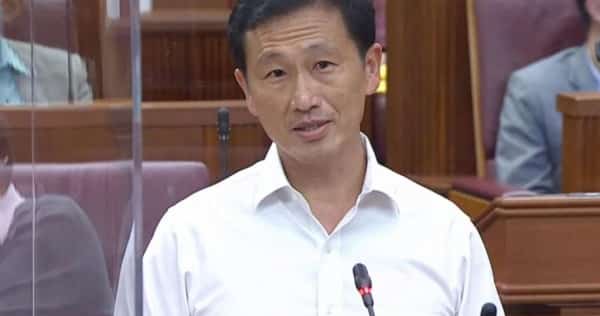
Monetary Authority of Singapore board member Ong Ye Kung told Parliament on Friday (Sept 4) that for Singaporeans, the median wage band is $6,000 to $8,000 a month, while for PRs and foreigners, it is $8,000 to $10,000.
In senior-level positions, about half of Singaporeans and about half of foreigners earn above $30,000 a month, while almost two-thirds of PRs do so, he said, adding that these sets of data are “as one would expect”.
The reason is that financial institutions often bring in higher-earning foreigners to perform specialised, or regional and global roles. Also, Singapore’s rules constrain the inflow of foreigners at the lower end, said Mr Ong, who is also Transport Minister.
This means a larger share of foreigners tend to be earning higher wages and consequently, the median would be at a higher level too.
Miss Parti Liyani kept her trials and tribulations from her family for the past four years, not wanting them to be worried.
She only apologised for not remitting money home.
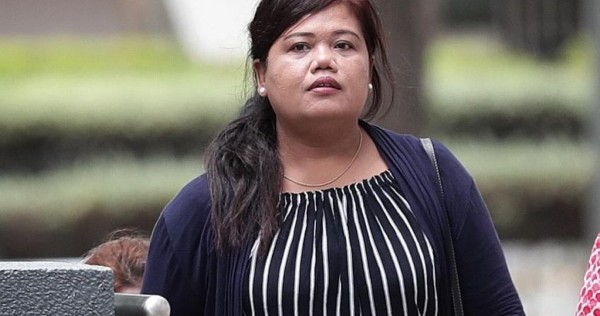
The former maid was accused of stealing from Changi Airport Group chairman Liew Mun Leong and his family. Yesterday, the 46-year-old Indonesian woman from East Java was acquitted in the High Court of stealing over $34,000 worth of items.
Later in the evening, she said she felt no ill will towards the Liew family. Speaking via Zoom, through a translator, she said: “I forgive my employer. I just wish to tell them not to do the same thing to other workers.”
Miss Parti and her lawyer, Mr Anil Balchandani, who is acting pro bono, plan to request compensation from the Liew family that will be tied largely to four years of her pay, which was $600 a month.
Her lawyer said: “Whatever the amount we get, I think we will be necessarily grateful for.”
SINGAPORE: An Indonesian maid who was acquitted of stealing S$34,000 worth of items from Changi Airport Group chairman Liew Mun Leong and his family said she “never thought” of pleading guilty and wanted justice to prevail.
Ms Parti Liyani, 46, was sentenced in March 2019 to two years and two months’ jail after a district judge convicted her of four counts of theft. On Friday, the convictions were overturned after an appeal by Ms Parti.
At a news conference on Friday evening, Ms Parti described some of the challenges she has faced since the allegations were first made.
“I wanted for justice to prevail … during these four years, I have not been allowed to work so I have been stuck in Singapore for four years, and not working,” she said, speaking via a translator.
Her lawyer, Mr Anil Balchandani, who took the case pro-bono, said Ms Parti has not been able to “keep herself occupied” because she was not allowed to work.
“While this case was ongoing, I have been hiding all these news from my family,” Ms Parti said.
“So I tried my best to avoid my family from knowing about my case. They did not know.
“I especially did not want my mother to know, because my mother is already so old and I did not want her to fall sick. So I (told) my mother that I had an issue with my employer, but not to the point that my case had gone to trial.”
“I wasn’t best able to support my family and my hometown, but prior to the trial I had told my family that I would be unable to get money, and I asked for their apology,” she added.
In explaining the decision to acquit Ms Parti, Justice Chan Seng Onn said on Friday “the existence of an improper motive by members of the Liew family” for mounting allegations against her was among the reasons.
Parti Liyani (centre, in grey) with lawyer Anil Balchandani and staff and volunteers from HOME, on Sep 4, 2020. (Photo: Humanitarian Organisation for Migration Economics)
On Oct 28, 2016, Ms Parti had her employment terminated by Mr Liew Mun Leong, after she was suspected of allegedly stealing things from their home.
She threatened to lodge a complaint with the Manpower Ministry, after she was asked to clean Mr Liew Mun Leong’s son’s home and office on multiple occasions.
“In my judgment, there is reason to believe that the Liew family, upon realising her unhappiness, took the pre-emptive first step to terminate her employment suddenly without giving her sufficient time to pack, in the hope that Ms Parti would not use the time to make a complaint to MOM,” Justice Chan said.
“Once she made express her desire to complain to MOM after her sudden termination on Oct 28, 2016, the Liew family followed up with the police report to ensure her return would be prevented.
“In my view, the Liew family might not have made a police report had Ms Parti not made her express threat on Oct 28, 2016 to report the matter to MOM.”
On Dec 2, 2016 she was arrested at Changi Airport upon her return to Singapore to seek employment. She was charged in August 2017.
The court also found that many of the items Ms Parti was accused of stealing were “ostensibly spoilt, broken or lacking in value” to the alleged owners.
Ms Parti said on Friday night: “I forgive my employer. I just wish to tell them not to do the same thing to other workers, what they have done (to me).”
Parti Liyani (6th from right) cheering with volunteers and staff from HOME and her lawyer, Anil Balchandani, after she was acquitted of stealing S$34,000 from Changi Airport Group chairman Liew Mun Leong and his family. (Photo: Facebook/HOME)
She said as soon as she is able to go home to Indonesia, she will return to her hometown and aims to start a small business selling food.
“I do not have plans to return to a Singapore to find new employment,” she added. Ms Parti has been staying at a Humanitarian Organisation for Migration Economics (HOME) shelter over the last three-and-a-half years while waiting for the conclusion of the case.
In a Facebook post, HOME said it has been an “emotional journey” as they fought to provide legal, emotional and social support to Ms Parti while trying to prove her innocence.
“She showed strength, resilience, and a fighting spirit which inspired us,” said HOME.