SINGAPORE: The deadline for Singapore’s SMRT Corporation and Malaysia’s Prasarana Malaysia to form a joint venture company to become the operator of the Johor Bahru-Singapore Rapid Transit System (RTS) Link has been missed, Transport Minister Khaw Boon Wan said in Parliament on Monday (Jul 9).
Mr Khaw said the deadline to do so was Jun 30, but it did not happen as Prasarana Malaysia suspended discussions with SMRT after the country’s general election earlier in May this year.
“This means that both countries should now proceed to call an open, international tender to appoint the RTS Link operator, unless we mutually agree on a postponement of the deadline,” he added.
Mr Khaw also pointed to a Channel NewsAsia report on May 30 citing Malaysia Transport Minister Anthony Loke who said the RTS project will proceed, although the government will “restudy the project in terms of cost and so on”.
“I was made to understand that the cost of the project is RM4 billion (US$1 billion) for the Malaysian government but of course we are looking at how to reduce cost … we have just made the decision, we have to initiate negotiations and discussions with our counterparts in Singapore,” Mr Loke said during the May 30 interview.
The RTS Link was mooted to ease congestion at the land checkpoints and make it more convenient for people to travel between both countries.
Mr Khaw said Singapore will continue to work with Malaysia to reduce congestion through other means in the meantime.
He pointed to how both countries lowered the tolls during off-peak hours at Tuas Checkpoint to encourage motorists to travel outside the peak periods earlier this year. Singapore also agreed to Malaysia’s suggestion to increase the number of KTMB Tebrau Shuttle services from 26 to 31 daily since mid-February, he added.
“These measures have helped to alleviate the congestion but are not the complete solution. We look forward to the completion and operation of the RTS Link, which will be able to transport 10,000 travellers per direction per hour between Singapore and JB,” the minister said.
SINGAPORE: Recent news suggest that it is now cheaper for companies to hire expat staff but one thing that caught most readers’ eyes was how high their compensation package stood at.
The average cost of employing an expat in Singapore has shrunk by over S$16,070 in 2017 compared to the year before, yet the value of a typical annual compensation and benefits package for a middle-manager stands at S$223,095.
The impression one goes away is that a Singaporean middle manager comes at a “bargain price” to most firms. If so, why do many companies still hire expats?
When a firm wants to hire an executive, the labour cost is only half the story. Is he worth the money? How much can he value add? The firm would want to know how much that executive can bring to the table.
In a business decision, the firm would consider unit labour cost (ULC) – the total labour cost over value added when it has to decide whether to employ an executive. Assuming rationality, firms could only hire expats over locals if their ULC was lower.
The labour costs these expats command are high – likely because many originate from higher-income countries, and may have houses and families back home to maintain.
Costs of moving a person to another county may justifiably be higher, where this includes rental, children’s education to international schools, and travel back home for the holidays to see friends and family. Being away used to be seen as a hardship that comes with an allowance compared to salaries they draw at home.
But what about the value added? Do expats really have higher skills and a stronger track record compared to Singaporeans?
There may be a self-selection dynamic, where it is said that it is the most talented, highly-educated and socially mobile who go abroad.
This is especially pertinent in filling senior positions. Most advertisements for the position of CEO often include relevant overseas working experience as one of the necessary though not sufficient conditions.
Most expats who head top companies have significant experience managing overseas business operations.
In contrast, many Singaporeans do not meet this criterion and are almost immediately disqualified from even a first round of consideration. The good news is, this trend is shifting as more young Singaporeans are studying and working overseas.
Mr Foo Tiang Lim, currently the operating partner of seed-stage venture capital firm SeedPlus, described his overseas experience a “life-changing” one for him. (Photo: Tang See Kit)
Another reason might be the problem of principal-agent problem. Company shareholders or founders want to employ the best person for the job with the lowest unit labour cost and the Singapore Government ostensibly want companies to consider hiring locals first.
But in many foreign multinational corporations, the hiring manager who acts as the agent may employ an expat because they themselves are from those countries and they find it easier to work with someone of a similar background, or because they encounter many of such candidates in their professional circles.
INCREASING SINGAPOREANS’ COMPETITIVENESS
There are three ways we can increase competitiveness of Singaporean candidates and also address the issue where expats are seen to be more qualified than locals, thereby raising salary of Singaporean executives.
The Singapore Government has been on the ball in this aspect. They have leadership programmes to allow Singaporeans to work overseas to gain this valuable exposure – including the expansion of the NUS Overseas Campus into the Global Innovation Alliance.
The NTUC also has a similar programme – the U Future Leaders’ Programme to target young and promising Singaporeans so that they have an opportunity to lead overseas operations.
Our Ministry of Manpower has a duty to ensure that firms in Singapore must consider Singaporean candidates first before they are allowed to recruit overseas candidates – and have exercised this duty.
The Ministry had in the past identified companies who write off locals because they have pre-conceived notions that they are unwilling or unable to do the job. Placed on the Fair Consideration Framework watchlist, these companies then have their employment pass are subject to additional scrutiny.
But more can be done. Firms with poor records of employing Singaporeans at high level positions should be told to submit documents to account for the recruitment process.
Yet it is a fine line where going all out to demand Singaporeans be hired might make Singapore seem protectionist, unfriendly to business or worse, discourage foreign firms from trying to set up business here altogether.
500 companies from various sectors have been placed on a watchlist for having pre-conceived ideas that local PMETs are either unable or unwilling to do the job, revealed then Manpower Minister Lim Swee Say in Parliament in 2018.
A better way to increase salary of Singaporeans is to make Singapore an attractive place for quality investment or headquarter operations. Why would a firm want to invest in Singapore? The answer lies in Singapore’s unit business cost (UBC) – the ratio of business cost over corporate earnings.
Singapore as a city has to be cost-competitive. But cost competitiveness is measured in terms of UBC – which measures the ease of doing business.
A commonly used proxy is the business cost over its capita GDP, in which Singapore scores high on.
Mumbai’s UBC is 14 times that of Singapore’s and Shanghai’s three times more. Starting a business in these two cities comes with greater compliance requirements, they are less connected and traveling around these congested cities take more time.
Unfortunately, Singapore’s quality investment does not come from these two cities but London, New York and Tokyo – cities of comparable UBC. We stand a good chance to attract their plants and operations to come to Singapore if Singapore can ensure that business costs remain low while GDP per capita increases.
If Singapore can maintain cost competitiveness over cities in developed countries, we can continue to attract quality investment. High value added operations will then replace the low value-added operations in Singapore and salaries will be higher for both local and expats.
It is worth noting that most of our anxieties about how much expats are paid sometimes stem from the fact that we leave out our CPF contributions when calculating our own annual pay packages. Once we factor those in, the gap may not be as large as it is perceived to be.
Chew Soon Beng is professor of economics and industrial relations at Nanyang Technological University.
The troubled water treatment firm has been granted additional six months to announce its unaudited financial statements for the second quarter, and three more months for the third quarter.
(Photo: Jeremy Long)
(Updated: )
Bookmark
SINGAPORE: Embattled water treatment firm Hyflux said on Sunday (Jul 8) that it has applied for and received extensions from the Singapore Exchange Securities Trading (SGX ST) for the announcement of its upcoming quarterly financial reports.
In an SGX filing, the mainboard-listed firm said it has been given six more months to put out its unaudited financial statements for the second quarter, as well as an additional three months for the third quarter report.
Both financial reports were supposed to be announced no later than Aug 14 and Nov 14, respectively.
Hyflux said the extensions were requested on Jun 28 and approved by the SGX ST on Jul 6 subject to two conditions.
For one, it has to announce the extensions granted, and the reasons and conditions they are subjected to. Hyflux also needs to submit a written confirmation that the extensions do not contravene any laws and regulations governing the company, as well as the articles of association of the company, according to the SGX filing.
It is also facing stringent controls on the usage of its cash, such as only paying critical expenses relevant to the reorganisation.
With the company still negotiating reorganisation terms under a court-supervised process and a six-month moratorium granted by the High Court on Jun 19, the release of financial statements before in-principle agreement of any agreement terms or clarity on the main terms of any financing proposals may “result in inaccurate and incomplete reflection of financial information”.
“It is anticipated that the ongoing discussions surrounding the reorganisation will require at least the time for which the moratorium is granted, and it will only be meaningful for the company to start to prepare the relevant financial statements only when it has certainty regarding the terms of the reorganisation and any financing proposals, which is expected to take additional time,” it said.
SINGAPORE: Man is an amazing creature. We have engineered solutions to send us to the moon, explored the deepest depths of the ocean, and split the atom.
We have written music and produced art that stirs the soul. We have produced criminals and masterminds.
But for all of mankind’s ingenuity to improve an understanding of the world, we retain a tendency to generalise and compartmentalise things.
There is an underlying assumption that we are all created equal. There is the underlying belief that we can deal with our body and mind separately with complete agency. This is not the case.
It is obvious that the mind and body work together. A clear example would be insomnia caused by mental stress. Overtime, sleep deprivation will wreak havoc on the body and lead to serious physical health problems.
MUSICIANS, ARTISTS, MATHEMATICIANS AND THOSE VULNERABLE TO CERTAIN DISEASES
The Human Genome Project (HGP) was an international, collaborative research programme created with the goal of complete mapping and understanding of all the genes of human beings.
The HGP has revealed that there are probably about 20,500 human genes, each gene contributing to the human makeup to a different degree. The cumulative effects of these genes result in who each of us are today.
Some of us will be better musicians or artists, some of us will be good at mathematics and some of us might even be able to better understand quantum mechanics. The variations and therefore the possibilities are endless.
ESA astronaut Tim Peake listens to a technician explaining details about the Eutelsat Quantum satellite, billed as the first commercial satellite to be fully configurable in orbit, at an Airbus Space and Defence facility in Portsmouth, southern England. (Photo: AFP/GLYN KIRK)
This also means that some of us are more vulnerable to developing certain diseases. Examples of diseases with a strong genetic link include cystic fibrosis, haemophilia, sickle cell anaemia and Tay-Sachs disease (which is rare in the general population but relatively common in Ashkenazi Jews).
Other diseases may not have such a strong link, but do show some degree of genetic involvement. Mental illnesses fall within this category.
Most major mental illnesses such as schizophrenia, bipolar disorder, depression and anxiety disorders have multiple causal factors. While there is a clear hereditary or genetic contribution, childhood factors, personality and environmental factors all play a part in the development of mental illnesses.
Mental illnesses can strike at any age. However, for most of them, there are peak age groups for the onset of the disease.
Schizophrenia, a major mental disorder in which a person would experience hallucinations and abnormal beliefs, commonly appears in early adulthood for males and slightly later for females.
Bipolar disorder, a mood disorder characterised by extreme mood swings, commonly appears in early adulthood to when someone is in their 30s. Both anxiety disorders and depressive disorders also tend to manifest in early adulthood.
Composite picture – bipolar disorder, an illness that has highs and lows.
LIFE-CYCLE STRESSES
As we go through life, we will face major events that can cause no small degree of stress. Exams are often cited as a common cause of stress for the young.
In young adults, having to face the final years of education, exploring relationships, dealing with new jobs, getting married, moving to a new home and starting a family are major life events that may have positive connotations but can be causes of stress nonetheless.
In the later years, dealing with family or the lack of, career and eventually retirement can be sources of stress as well. There are also upsetting events that can strike anyone at any time. Illness and the death of a loved one are good examples.
Most of us will be able to navigate through life and cope with each event as it comes along.
However, when there is an existing genetic vulnerability coupled with other factors such as childhood abuse or trauma, the lack of social and family support or even several events happening at the same time can trigger a mental illness.
Once triggered, a delay in seeking treatment or incomplete treatment can increase difficulties and the risk of the illness relapsing. Unfortunately, it has been shown that with each relapse, the chances of recidivism also increase.
However, the converse can also happen. Despite having a genetic vulnerability or pre-disposition, changes in other factors can help prevent the development of a mental illness.
Having a healthy upbringing with positive childhood experiences, good family and social support, a healthy and balanced lifestyle, and matured ways of coping with stress can help build resilience and prevent the development of mental illnesses.
Indeed, this is why in twin studies, it is never a definitive chance that both identical twins will develop the same mental illness.
Twins born in San Diego, United States. (Photo: AP)
Similarly, once having developed a mental illness, it is not just medication that makes a difference. Repeated studies have shown that early detection and proper treatment improves the long-term prognosis of the illness.
Beyond that, good physical and mental health promotes recovery and helps in prevention of future relapses.
LIVE WELL TO COPE WELL
We all go through mixed experiences. We all have different reactions to these experiences.
For some people, mental illness develops due to a combination of influences including genetics, childhood experiences and a host of other factors such as personality, the presence of other disorders, illnesses, drugs or alcohol misuse and the lack of a support structure.
Living well, leading a healthy lifestyle, having a good balance of rest, work, exercise and recreational time, having time for yourself, friends and family, having a faith and contributing to society in terms of helping others − all these, while small tasks in themselves, make a difference.
They help to build resilience and help us cope with the challenges of modern day life, in turn helping with the prevention and recovery of mental illness.
Much like exploring the deepest depths of the ocean, we are only at the tip of the iceberg when it comes to understanding mental illness.
There is much to learn but with increased awareness of what helps to prevent mental illness, we can do our best to support ourselves and others.
Dr Mok Yee Ming is senior consultant and chief, Department of Mood and Anxiety at the Institute of Mental Health.
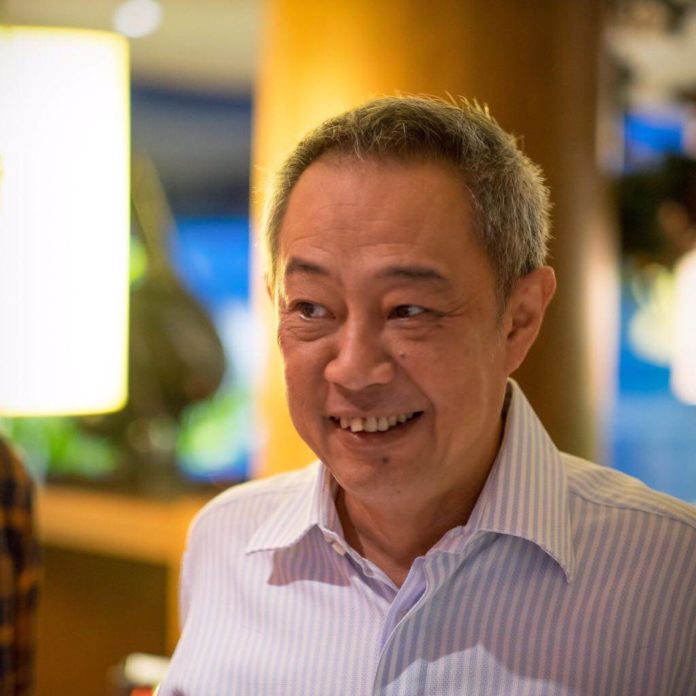
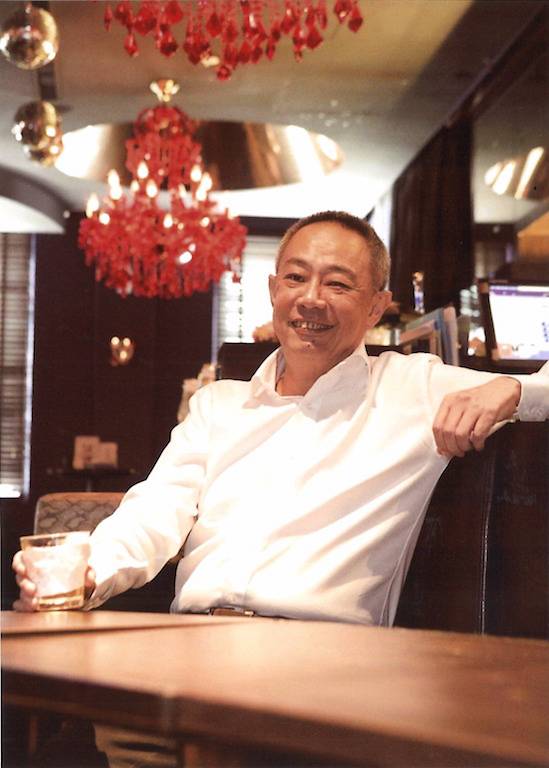
SINGAPORE: “I’m not a drunkard, okay,” says Dennis Foo as we look back on his career as Singapore’s Nightlife King.
He also emphasises that while he is a known proponent of casinos as a tourist attraction, he is “no gambler”.
After 35 years of building and leading some of Singapore’s most popular nightspots such as St James Power Station, the country’s largest one-stop nightlife destination, Mr Foo decided to retire in 2014.
Today, the 65-year-old’s face might be wizened, but his eyes tell a different story.
While they possess a depth that is reflective of his decades of experience, they frequently come alight with an almost innocent, youthful exuberance as he talks about his ideas for the local nightlife and F&B industry during our interview.
But first, he wants to set the record straight. Just because he chose a career in nightlife and frequently hung out in clubs, he is not an alcoholic.
“Everybody assumes I drink all the time. I was there to run a business, not get drunk.”
However, he confesses to “really enjoying” his whisky and wine. Since retirement, pairing his meals carefully with alcohol to “bring out the best in the food” has become a frequent pastime.
His retirement routine includes an early breakfast at the neighbourhood coffeeshops and short walks to work off the prata, lontong, nasi lemak or the pork porridge he might have.
He catches up with old friends at the Singapore Cricket Club twice a week.
“But most of the time I will want to be with my wife whether dining out or staying at home where she sips her wine and I drink my whisky while watching Korean or HK TVB movies.”
Mr Foo stepped down as CEO of St James Holdings after a reverse takeover deal with property developer Perennial Real Estate Holdings.
Although the company had been seeing healthy profits, he cited a saturation in the nightlife business scene, higher business costs and the costs of keeping a company listed as reasons for the deal.
It saw Perennial’s assets injected into Catalist-listed St James which transformed St James into a real estate developer combining Perennial’s assets in Singapore and China.
St James’ entertainment business was divested and taken private under CityBar Holdings. Mr Foo is CityBar’s chairman while his son, Gordon is its managing director.
“You are punishing the diligent operators along with the delinquents. That’s not fair,” says Dennis Foo about shorter liquor licensing hours for establishments in Clarke Quay. (Photo: Dennis Foo)
OBSTACLES IN THE NIGHTLIFE BUSINESS
However, in April this year, live Mandopop music venue and nightclub Shanghai Dolly in Clarke Quay managed by CityBar Holdings had to close its doors.
The younger Mr Foo cited the introduction of shortened liquor licensing hours in 2013 to curb unruly drunken behaviour as a key reason. He had said that business had decreased by 30 per cent since then.
While, Mr Foo describes nightlife as a “tough business”, he never discouraged his son from entering the business.
“He has an interest in it. But to stay relevant, you need to be ever changing and keep up with the times as it’s trend sensitive. Over and above this, it’s especially tough in Singapore because of the small market and high costs of operations. However, if we can create a few world-beating concepts in Singapore and duplicate it overseas, then the scalability is still there. That’s what I have told my son.”
But he, like many other operators in Clarke Quay, still feels that the Government’s shortened licensing rules are unfair, even though I put it to him that law and order issues should not be ignored for the sake of business.
“You are punishing the diligent operators along with the delinquents. Not all the bars have problems controlling their patrons. You should catch the people who are creating law and order issues. You punish them and make them an example That is the way to solve the problem. Instead, you go and penalize all operators.
“When operators came in, they were willing to pay high rents with the understanding that it was a 24-hour party zone. Once you take that away, of course it will hurt business and make it harder to even pay rent.”
While Shanghai Dolly had never received demerit points for incidents of unruly drunkenness, St James Power Station, which houses several clubs, was in the news last year for several incidents, including a murder that took place outside the club.
Mr Foo assures me that measures have been put in place to prevent such incidents, but maintains his stance that there are better, more targeted ways of dealing with such issues.
NOT BEING ABLE TO RELATE ANYMORE
I ask him why he decided to retire when he is still clearly passionate about the business.
“I can’t relate to the market as well as I did before. One of the major things for me when I started was being able to relate to the music and being able to bring in live bands that would draw in the crowds. These days, I can’t relate to the music at all. For example, rap. It’s just not in my DNA. To reinvent the business, this is important. So if I can’t be passionate about it, why continue?”
It was his passion for mainstream pop music of the 1980s that spurred him to turn his father’s Europa Restaurant in Changi Village into a lounge.
His father set it up as a western food restaurant in 1979, but died of cancer a year later.
“His last words then to me were, ‘Take care of this place’. I had worked behind the cash register and bar at Europa, but his words made me realise I had to do more.
“Music is something I always liked since university days. I used to bring bands into campus. So I decided that I would do the same for Europa.”
At the time, live entertainment was mostly only allowed in hotel lobby lounges. He had to make an extra effort to obtain a license for Europa which was in a residential area.
He had to do it gradually.
“The first few times, I would apply for temporary week-long licenses during festive periods, like the year-end Christmas and New Year period and Chinese New Year. That meant that every other month or every month I had to go to the licensing unit. I had to make sure that we had no incidents and noise complaints.
“One day, I think the lady at the licensing unit got tired of me seeing me so she said ‘Okay, I’ll grant you a full-year license’. It was unprecedented at that time for a bar in a residential area,” he says, clearly proud of his achievement.
His belief that live entertainment was key to his business saw him to go to great lengths to optimise conditions for bands and performers.
For example, he would buy premium instruments such as pianos and keyboards to facilitate their performances.
For Singaporean singer Anita Sarawak, he and a friend built a cordless microphone that would enable her to move around the room and interact with the audience while performing.
“Nowadays cordless microphones are common. In the 80s, not so, but I had a friend who graduated from polytechnic and he created a transmitter that was attached to a normal microphone and we had a radio receiver that could transmit very good quality sound. So I invited Anita to perform by showing her that we could help make her performance better with this.”
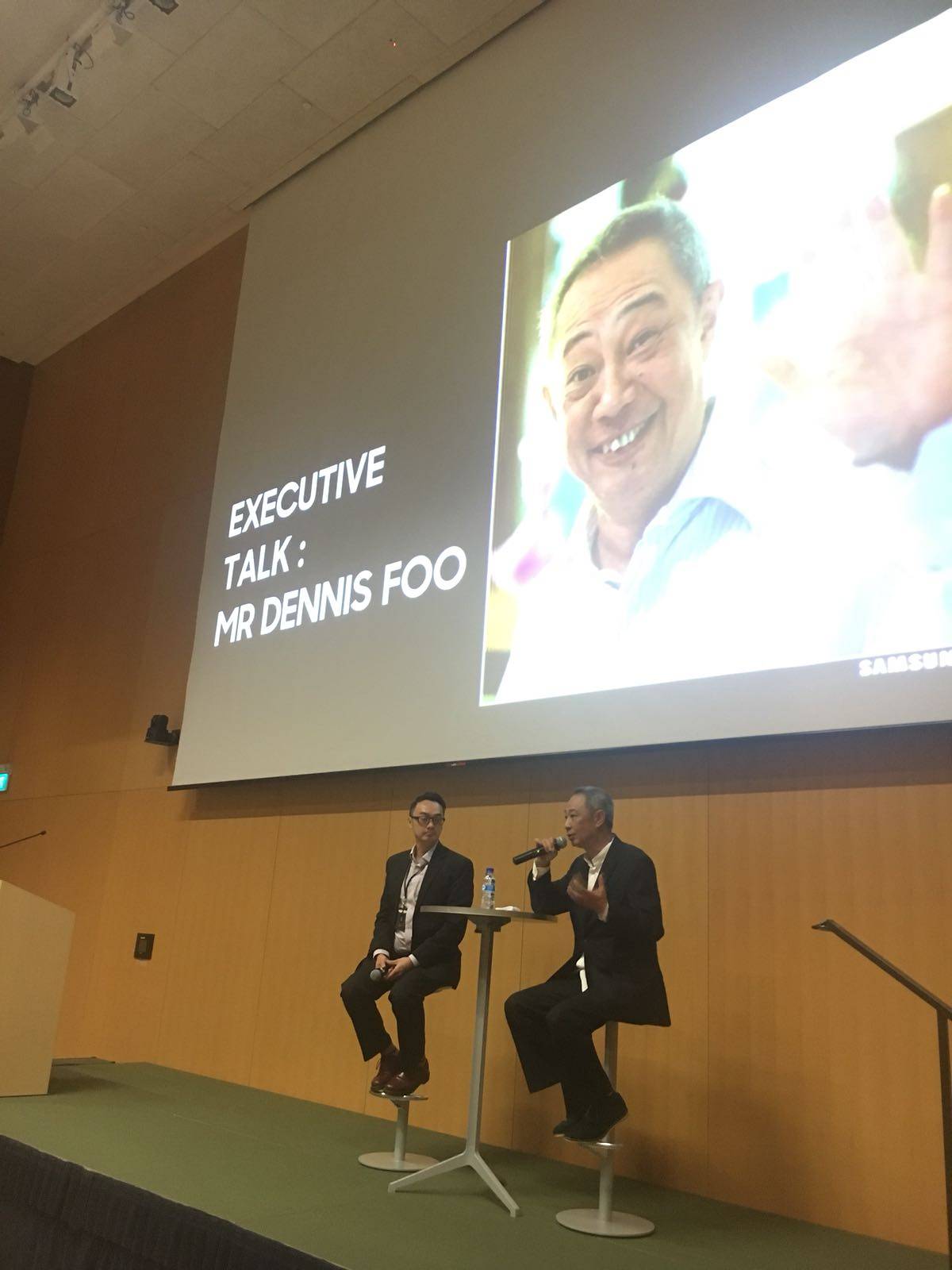
Since retiring in 2014, Dennis Foo spends more of his time giving industry talks. (Photo: Dennis Foo)
“I WAS THE ELDEST SON. THE BURDEN WAS ON ME.”
Before he made it big in the nightlife scene, he endured trials and tribulations that seem to haunt him till today.
As an arts undergraduate, he had to drop out of university to help pay off his mother’s debts.
“She was a businesswoman running a goldsmith shop but her business failed because she was cheated by her employees at that time. So I asked for compassionate leave of absence from school to settle all this. I was the eldest son. The burden was on me.”
He sold insurance for a while to earn money and also worked as a director of a factory building filing cabinets for offices.
“We sold some assets, but also my girlfriend’s father was in the goldsmith business. I invited him to be in partnership with my family and that revived the jewellery business.”
Did he consider returning to school after that?
“In those days, fresh graduates would earn about S$800. I was already earning a few thousand running Europa by then, so I didn’t. But I do think about it sometimes. Maybe I should go back and finish my degree. When I don’t complete something, I don’t feel good.”
I wonder if he felt any resentment towards his mother as her problems were the chief reason for this.
“Yes, I felt resentment, but it’s not my style to lash out. In those days, I just focused on the problem and solved it. Later on I was upset at the situation, but I couldn’t regret it too much. You have to move on.”
BUSINESS FAILURES AND COURTROOM DRAMAS
There were more trials to come.
Two themed theatre lounges he opened – Peppermint Park and Atlantis – did not make it. They closed during the 1987 recession and made a loss of S$4 million.
These failures also had to do with “a lack of market research”.
“People were not ready for a Pirates of the Caribbean-themed lounge like Peppermint Park for instance. I should have looked into it more.”
He circled back to Europa and decided to corporatise it with three partners. By the mid-90s, Europa was the biggest pub and bar chain in the country.
Then came yet another trial.
He and his partners made a bid of S$100 million for a plot of land in Bukit Timah which was to become the Raffles Town Club.
This deal caused him to be sucked into one of Singapore’s longest courtroom dramas.
The club’s management had admitted an excessive number of members which caused a tremendous squeeze on its facilities, prompting a lawsuit by a group of members.
When I ask him about this, he grows visibly pensive.
“This is a period I’d rather not talk but now that you’ve asked, I’ll tell you my understanding of the case. It all started because we overbid for the land. An authority in the property market actually said we should have bid only S$44 million. We bid S$100 million so we brought in partners to pay half the value of the bid. We couldn’t do it with our own resources.
“With all these partners, the money grew too big and the loose ends were not tied up. So we ended up in court. That’s the best way I can describe it.”
Eventually, in 2001, he had to sell Europa Holdings in the settlement.
“The whole incident actually changed me completely. I was no more happy-go-lucky after that. Fifteen years of a life moving in and out of court is not funny. I lost some of my best friends in the process.
“But you learn and you do things more carefully after something like that. At the same time, you tend to be more sensitive and aware to anticipate potential conflicts and avoid them.”
After this incident, he famously declared to his wife that he “had nothing left”.
But her encouragement to “build and even bigger Europa” spurred him to start Devil’s Bar and later St James Power Station in 2006.
Today, as he looks at the nightlife scene in Singapore, he laments the changes in the social landscape that have impacted business.
“Today, people have found other ways to connect with each other rather than in clubs. They meet on social media and dating apps, so that has shrunk the market as well. That’s why clubs today have to be smaller to be sustainable.”
He mentions the closure of other mega clubs over the years such as the Butter Factory and Ministry of Sound.
“I will not redo a mega club like St James because today Singapore cannot sustain multiple mega clubs, especially in one location. I might have done better if I had opened a few small ones in different locations across the island. You have to change your business model. My advice to my son is to start two or three small ones here and if you’re successful, you can duplicate it overseas. This must be the formula going forward.”
Dennis Foo at a Singapore Nightlife Business Association gathering. (Photo: Dennis Foo)
“THEY CAME WITH HAND GRENADES”
He himself never ventured overseas largely because of experiences that he says frightened him.
“Back in the 90s, I went to Ho Chi Minh City to do business. We opened Europa there. Members of the underworld actually came to us and asked us for money. In those days, in Vietnam, they didn’t come with knives. They came with hand grenades. After three years, the lease expired and we gave up. That frightens me from going abroad again.”
He regrets having never done business in China though.
“China clearly is a big market with a huge hinterland. But when I tried to go there to set up in the early 2000s, I realised that even there, if you want to get things done, you have to entertain the politicians, the people who work in government agencies. You have to give them gifts.”
I remark that many businessmen see this as part and parcel of investing in certain countries and ask him why he couldn’t he accept it.
“Because they perpetually have a hold on you. I don’t like that.”
SINGAPORE’S CHALLENGING BUSINESS ENVIRONMENT
He hasn’t lost hope in the Singapore market, although he feels that manpower costs could have been better managed by the authorities as the F&B industry in general is suffering the effects of such costs.
I put it to him that without the levy, it is likely wages for Singaporeans working in the sector would be depressed further.
While nodding, he says it also might be too late to reverse this policy.
“It’s already entrenched in the system. Things like such levies and taxes support a lot of other beneficial Government initiatives for Singaporeans, so you can’t just take them away.”
“The only way to mitigate this situation today is to increase the revenue via a higher average cheque per table at restaurants. The only way to achieve a higher average cheque without people complaining that they are not getting value for it is to introduce another dimension of the dining experience.”
He suggests cultivating a dining culture that more often includes drinking alcohol with meals, something he feels is not a part of Singapore’s culture yet.
“Start cultivating people to, for example in Western restaurants, drink more wine and even at other casual eateries or hawker centres, have wine, beer or spirits to go with the meal.”
He is quick to add that he doesn’t encourage drunkenness, but merely an appreciation of moderately pairing alcohol with meals to bring out the best in the food, while helping restaurants sustain their business.
“It happens all over the world. In Japan you have sake, wine in Europe, rum in Jamaica. Once we do this, the best will survive.”
If F&B outlets do better, he feels it will have a knock-on effect on retail outlets in the vicinity too.
He also feels that more can be done to revive Orchard Road, suggesting music festivals and food trucks which also provide seating for patrons.
“There’s also a lack of nightlife there. So you’ve got to build clusters that support one another. Bars, live performances and food on the street that can support the retail sector too.”
“I STAND BY THE IDEA OF CASINOS”
Among the more controversial suggestions that Mr Foo has made over the years has been that Singapore build casinos, a move that divided Singaporeans and continued to do so even after the Integrated Resorts (IRs) were opened in 2010.
As a member of the Tourism Working Group of the Economic Review Committee, he wrote a white paper on the subject in 2002.
As part of the study, visited casinos in the United States and Australia. He bore the cost of his travels, including a loss of S$250,000 that he incurred while gambling in Tasmania.
“It hurt to lose money, but it was a necessary part of the experience,” he says.
I ask him why he felt so strongly about having casinos in Singapore and what he makes of the objections that are still heard in some quarters about the ill-effects of having them here.
“Back in 2000, I said the casinos were already here in the form of cruise ships to nowhere, sucking money out of Singaporeans and someone up North openly said they built a whole port with Singaporean money. The casino ships ply our waters, but create no jobs and pay no taxes. So I said as a defensive strategy, we should create a casino here.
“Within Asia, we are also unique. We have all the pre-requisites to make it world-class. We have security, infrastructure. We are a trusted brand. We are small and we are well-regulated.”
In spite of the concerns over problem gambling, his view has not wavered.
“In terms of entertainment, casinos offer excitement and all the services built around them – hotels, restaurants, retail, conventions – bring in money too.
“I am aware of the social costs. I stand by the idea of casinos, but I agree the barriers need to be tighter. They charge Singaporeans S$100 per entry, but the S$2,000 annual entry levy is too cheap for unlimited entry for one year. You induce people to go there more. That is wrong.”
While latest reports show Singapore’s IRs making profits, he acknowledges that they continue to face stiff global competition.
“IRs though transformational, are but catalysts to drive the overall tourism product. Only when the other components in the overall tourism ecosystem are really thriving then will we realized the IRs’ true potential.
“Every sector must reinforce itself and support each other. In other words, for our IRs to be competitive, complimentary industries must thrive as well. Still, each IR must develop its own unique selling proposition to attract its core customers.”
Several years ago, he also suggested a legalised red light district in Singapore much like the ones in Amsterdam and Hamburg.
“If they go underground, it is harder to regulate. Right now, the activities are scattered. It’s not just restricted to Geylang. You see it elsewhere in Singapore too. The signals are not clear. It’s the oldest profession in the world. You can’t eradicate it. You can only accommodate it and control it. You accept the problems and create measures to monitor and tackle them.”
Some might describe him as someone who would cast morality aside for a money-making idea. Others would call him a realist making the best of the situation.
He is aware that opinion on such issues is split.
“I know there’s a stigma attached to some ideas. But I think if we can moderate these things and allow them to be commercially viable at the same time, as they already are, but in a more organised manner, why not?”
While Mr Foo says he has no concrete plans to return to the business world formally at the moment, he clearly has ideas waiting to be developed.
“I am a salesman through and through. If I had not taken over my father’s business, I presume I would end up in a sales job or if my entrepreneurial spirit got the better of me, I would have set up companies that would be selling some consumer products or something. Ultimately, I want to be remembered for having contributed something to society.”
SINGAPORE: As the saying goes, you’re not a true blue Singaporean if you don’t queue – especially for good food.
But how long is too long to wait, even for a Michelin-approved meal?
While Michelin stars used to be solely associated with starched white tablecloths and eye-watering price tags, its glory has taken on a slightly different flavour in Singapore.
In 2016, Michelin Guide Singapore bestowed a coveted star each to two hawker stalls – Hill Street Tai Hwa Pork Noodle and Hong Kong Soya Sauce Chicken Rice and Noodle, now better known as Hawker Chan.
Along with these accolades came the snaking, neverending queues. The human traffic is especially chronic at Hawker Chan’s original stall at Chinatown Complex Food Centre, where the hungry and the curious assemble every day.
A long queue forms for Hawker Chan during lunch hours on Jul 2, 2018. (Photo: Low Zoey)
But is it worth waiting up to an hour (or more) for a plate of what some claim is the best chicken in town?
“The rice was a little soft for my liking but the chicken was nice,” said a local, who braved the lunch crowd and sweltering temperatures at the behest of her friend who was visiting from overseas.
“My friend really wanted to try it, she said it was really nice, but I thought it was only okay.”
Ahead of the Michelin Guide Singapore unveiling their star picks for 2018 on Jul 25, we look at five other Michelin-worthy eats in the area for foodies who believe that a good meal doesn’t always have to come with an official seal of approval.
Zhong Guo La Mian Xiao Long Bao (#02-135, Chinatown Complex Food Centre)
These szechuan spicy wantons (S$4.50) come dressed in a mix of chili oil, chili flakes, soya sauce and a dose of black vinegar. (Photo: Low Zoey)
Right across from Hawker Chan is a dumpling stall that has earned a Michelin Guide Singapore mention but has curiously not received a star despite their exceptional and affordable fare.
Skip the “la mian” or pulled noodles and zero in on their “xiao long bao”. These soup dumplings have all the hallmarks of a xiao long bao one might expect to find at a ritzier establishment – delicate skin, rich broth and flavourful pork filling. Not only do these made-from-scratch morsels give Din Tai Fung a serious run for their money, but they also pack excellent value at S$6 for ten pieces.
Also noteworthy are their pan-fried dumplings (S$6) as well as the szechuan spicy wantons (S$4.50). The latter, which comes dressed in a mix of chili oil and chili flakes, pairs best with black vinegar.
Opening hours: 11.30am – 3.00pm and 5.00pm – 8.30pm. (Closed Mon and Tue)
Ma Li Ya (Maria) Signature Virgin Chicken (#02-189, Chinatown Complex Food Centre)
A large plate of soya sauce chicken rice with additional beancurd and egg will set you back only S6^. (Photo: Low Zoey)
Novel name aside, there are no gimmicks when it comes to their chicken rice. Each translucent grain is toothsome, and generously seasoned with sesame oil and a hint of ginger. Their soya sauce chicken is tender and boasts burnished, glazed skin.
However, the runaway winner has to be their beancurd (S$1.40), which bathes in a superior soya sauce blend until it’s ready to be plated upon order. Think of it as a savoury “tau huay” or soya beancurd pudding – but better. The outer layers, dyed brown from the marinade, provide a savoury counterpoint to its still-pale centre. These jiggly silken blocks are so in demand that there’s a minimum order of five pieces for takeaway requests. Truly a near-religious experience befitting their moniker.
Opening hours: 7.30am – 4.00pm (Closed Mon and Fri).
Fei Ye Ye Food Tradition (#02-177, Chinatown Complex Food Centre)
These dumplings or “sui gao” are stuffed with minced pork, water chestnut cubes, shredded carrots and generous chunks of prawn. (Photo: Low Zoey)
In the “blue zone” of the food centre, just a row away from Hawker Chan, is an old-school joint that specialises in springy wanton noodles. Although they also offer soya sauce chicken, the trophy goes to their dumplings or “sui gao” noodles (S$3). Literally made fresh every morning, these delicate parcels pack a unique flavour and textural punch courtesy of the filling made from minced pork, water chestnut cubes, shredded carrots and generous chunks of prawn.
The dumplings also come in a bowl of five pieces for S$3 – perfect for sharing (or not). Those with larger appetites can also opt for add-ons of their handmade wantons or braised chicken feet.
Opening hours: 6.30am – 2.30pm (Closed Mon and Tue)
Feeling hungry? A basic portion is S$3 while a large serving is just S$1 more. (Photo: Burpple/Jeremy Tan)
It’s always a good sign when a stall has an abbreviated menu but still continues to draw a steady stream of regulars. Although Teochew Street only serves two dishes – fishball noodles and “bak chor mee” or minced pork noodles – their unique take on both local classics warrants a repeat visit.
While minced pork noodle purists may baulk at the absence of a strong vinegar flavour, Teochew Street’s version is seasoned to allow their fresh ingredients to shine.
Their iteration of bak chor mee (S$3 and S$4) is served with a bouncy homemade fishball that is shaped and boiled per order. The firm noodles are further complemented by the addition of chili flakes, pork balls, braised shiitake mushrooms and a generous dose of fried lard.
Opening hours: 12.30pm – 6.00pm (Closed on Fridays).
Bai Nian Yong Tau Foo (#01-1144, People’s Park Food Centre)
S$5.50 nets you eight pieces of “yong tau foo”, no substitutions or customisations. (Photo: Low Zoey)
Although the line can stretch on during peak hours, service is prompt because, unlike other “yong tau foo” stalls, Bai Nian serves a fixed combination in two sizes – no modifications allowed and only one broth and one type of noodle are on offer. No laksa, no tom yum soup, no complaints.
Also departing from convention is their incorporation of prawn and pork paste in addition to their smooth fish mix. A large bowl with extra fixings (S$5.50) nets you eight pieces, all made a la minute – prawn paste balls, minced pork nuggets, bitter gourd and a several stuffed tofu skin rolls. The optional addition of bee hoon is included in the price, and upsizing is free.
Their addictive broth, made from a base of anchovies and yellow beans, is pleasantly sweet and good to the last drop, without the thirst-inducing afterburn of MSG.
SINGAPORE: Dressed in a myriad of glittering costumes, the students moved energetically, yet gracefully to the strains of the upbeat music.
It was a whirl of activity at the Esplanade outdoor theatre, as students from various schools around Singapore showcased the best of their dance abilities at a special Singapore Youth Festival celebration performance held late last month. Set against the backdrop of the Singapore River and the twinkling city lights, it was a true visual spectacle.
But one item stood out. Not for its elaborate costumes, as the dancers were simply dressed in white tops and brightly coloured denim jeans. It was also not for the complexity of the moves or their intricate footwork, for the moves were simple, and easily executed.
But it was the awareness that the students on stage had overcome many obstacles to get to where they were that made members of the audience whip out their mobile phones and cameras, and cheer loudly for the performers.
It was a dance improvisation piece titled ‘Connectivity’, the result of a collaboration between Boon Lay Secondary School and St Andrew’s Autism School (SAAS), a special education school for those diagnosed with moderate to severe autism.
OVERCOMING OBSTACLES
In a short introduction to the performance, SAAS dance teacher Cindy Zhuang summed up the experience for the audience.
“It might be very simple movements, and maybe you can even do it yourself,” she told them. “But to these students, it’s one big notch up on their list.”
St Andrew’s Autism School dance teacher Cindy Zhuang speaking to the audience before the performance. (Photo: Hanidah Amin)
Ms Zhuang, a former freelance dance instructor who now teaches dance full-time at SAAS, knew right from the start that it was not going to be easy when her school was invited to collaborate with the dancers from Boon Lay Secondary.
But she went ahead, believing that her students would blossom.
“I was as frank as I can,” she said, recalling the first discussion she had with her counterparts from Boon Lay. “I told them that I’ve tried modern contemporary dance with my students, and it doesn’t work.”
“The one thing they cannot do is imagine,” she explained. “You cannot tell them that you want “soft arms”, because they will think, what do you mean by soft arms? My arms aren’t soft”.
The next barrier, she said, was communication and physical contact. The initial awkwardness of a first meeting was made even worse when she realised that the Boon Lay dancers were all girls, when the two schools had their first combined rehearsal.
“We went through the teenage phase, and you want a girl to touch a boy … and some of my boys are non-verbal,” she said.
“I saw awkward moments, like when they were asked to hold hands,” she said, chuckling. “Some of my boys were also not used to unfamiliar faces, and they started dashing around.”
Preparing to go on stage. (Photo: Hanidah Amin)
But she is thankful for the support she got from her students’ parents, as well as the flexibility of her Boon Lay Secondary counterparts. One logistical issue they initially faced, she explained, was the difficulty in scheduling combined rehearsals for both schools, which are located at the opposite ends of Singapore.
“I was worried that my students would have meltdowns in the bus if it’s stuck in a jam during peak hour,” she said. “So I was so grateful when the Boon Lay teachers said they would come down to us instead.”
“Each time when the girls come, I always tell them that I cannot thank them enough. If there is another word greater than thank you, I would use it.”
Ms Zhuang also conducted a briefing for the Boon Lay students. She told them more about autism, and how each student is unique. Each student was also briefed on the traits and preferences of their individual partners.
“The girls took the feedback very well, and by the end of the next rehearsal, I could see they were much more confident.”
BUILDING CONFIDENCE THROUGH DANCE
That confidence was also seen in 16-year-old Jovan Tan, one of Ms Zhuang’s dance students. He appears nervous, but has a ready smile for his friends and teachers. Strapped in the bus seat next to him is a Pokemon soft toy, which he says is his “lucky charm” for the combined rehearsal at the Esplanade that the students are en route to.
He once refused to dance unless Ms Zhuang played a special song about dinosaurs. But today, he moves with confidence on stage, easily linking hands with his partner, Boon Lay Secondary student Gabriella Roselyn, forming a bridge with his arms and swaying to the beat of the music.
Jovan Tan and his partner, Gabriella Roselyn, rehearsing together. (Photo: Hanidah Amin)
Dance, says his older sister Tan Li Xuan, has done him a world of good.
“He wasn’t that verbal previously,” she said. “But now, he’s getting more talkative and will tell us what he did in school.”
“When he’s at home, he also sometimes plays songs on YouTube and just dances along to them.”
But beyond this, psychologists also point out the benefits students with autism get from regular interaction with their mainstream peers.
“Social interactions help children with autism increase awareness and shape socially-appropriate behaviour,” said Linda Lim, a senior psychologist with St Andrew’s Autism Centre. She explained that children with autism tend to have deficits in social communication skills, and difficulties in emotional expression.
“Due to these challenges, children with autism may feel anxious in a social setting.”
“Being involved in the dance performance collaboration would also help improve their self-esteem, as they feel they are involved and contributing to the community,” she added.
Beyond this, principal consultant from the Autism Resource Centre Lam Chee Meng noted that going through the regular rehearsals can also build language and cognitive skills.
“These rehearsals can take a long time, and this helps them build their stamina,” he said. “That’s actually a very important work skill in later life.”
OPENING UP THEIR HEARTS AND MINDS
But the benefits of such collaborations do, in fact, cut both ways.
“The mainstream students learn to realise that people who may be imperfect can still be relied on, because they have strengths that we may not have,” explained Dr Lam. “I think it will help them with accepting, understanding and building respect for each other.”
And indeed, the transformation of the Boon Lay Secondary students over the course of the collaboration was evident, according to Siti Aishah Zahara, one of the teachers-in-charge for contemporary dance.
“When we first told the girls about the collaboration, they were open to the idea, but I could tell they were scared,” she said. “And when we went over to SAAS and met the students for the first time, I could literally see my girls curling up in their seats, which is really not like them.”
“Some of them also haven’t been exposed to students with autism before, because we don’t usually have them in mainstream schools,” she added.
“But they have opened up their hearts and minds to accept those who may be different from them. And who knows? Maybe they’ll be inspired to help out in such schools in future.”
She has lofty dreams for her students. But in the meantime, progress is charted in baby steps.
Jovan and Gabriella dancing on stage. (Photo: Hanidah Amin)
Jovan’s partner, Gabriella, beamed as she recalled how Jovan – whom she initially described as “a bit shy” – was eventually coaxed out of his shell.
“Some of the other students who are partnered up with my friends don’t really recognise them,” she said. “But every time, Jovan remembers me.”
SINGAPORE: During the recent June holidays, my family took off to Malaysia and explored the rainforests of Kuala Kubu Bharu.
The experience surprised me and gave me a glimpse of what it could be like when they head for Outward Bound School in Secondary 3.
We left for the eco-resort after meeting up with my sister-in-law’s family in Kuala Lumpur.
We had done our research about the rainforest resort we were going to call home for the next few days. It boasted a rustic jungle lifestyle, along with home-cooked foods, and comfortable hut-like rooms that came with picturesque views of either the neighbouring river or the lush forests.
We spared our kids from the romanticism of going back to nature as we wanted them to be mentally prepared. There would be mosquitoes, an amazing array of unidentifiable flying insects, maybe even sandflies, and no TV or wifi (meaning that we’d have to go gadget-free for the three days).
We braced ourselves for complaints from our city kids, but as it turns out, they took to the experience like fish to water and far exceeded our expectations.
It was as if their survival instincts, given the opportunity of finally coming into some use, kicked in.
There were cuts and scrapes, bruises and bites, along with some whining about insects, but these did not seem to make a major dent in their experience.
Instead my Singapore born-and-bred kids seemed to have taken much away from their forest experience. And it made me wonder how we can tap into nature-rich experiences in urban Singapore.
A dense jungle in Wang Kelian, Perlis, Malaysia. (Photo: AFP)
NURTURED BY NATURE
Given the pace of urbanisation, nature has come under the spotlight in recent years. Research generally supports the assertion that increasing nature and nature experiences in urban life has a positive impact on our mental health.
Some studies suggest that being close to nature stimulates learning abilities and reduces the symptoms of neuro-developmental disorders such as attention deficit hyperactivity disorder and autism spectrum disorder.
They tout benefits such as improved attention, reduced anger and stress levels, and increased family interaction.
We witnessed all of that and more over the course of just three days.
DRAWING BOUNDARIES BUT ALSO LETTING GO
Let’s not be idealistic though. Nature can also be terrifying, particularly for us city folks.
My children are comfortable in the water but are not particularly strong swimmers. So we took the resort owner’s advice and allowed them to only explore the river’s upstream, which was gentle enough to not sweep any unsuspecting five-year-old away.
The downstream area was steeper and far more rapid. My husband tried sliding down a natural rock-slide here and was shocked to be swept down so quickly by the current.
Our host also warned us to pay attention to the water’s colour. In the case of rain higher up in the mountains, there can be a surge in the waters. We were instructed to get the children out of the water if the river changes from clear to murky brown.
A forest in Malaysia. (Photo: Melissa Goh)
Thankfully, our four nephews had been to the resort before and were familiar with the grounds. With them as their personal guides, the kids soon found their confidence and learned how to navigate the river’s rocky terrain.
They spent hours each day playing at the river, splashing around, climbing on rocks, and discovering new “toys” made up of bricks, wooden sticks and sand.
It was independent child-led play in all its glory, and I found myself wondering how is it that a simple river could hold the children’s attention for so long.
I admit, I was a little skeptical in the beginning, and also kiasi (afraid to die).
While my sister-in-law relaxed with a book on a large boulder by the river, I stood in the river like a hawk, eyeing the woody riverbanks with a hint of paranoia, ready to spring into action at any sign of danger.
As my kids waded upstream, clambering over rocks and boulders, I resisted the urge to call them back. I wanted to give them some room to play and explore but was also worried about the river’s unknown dangers.
Although they were but small figures in the distance, I could still see quite clearly whenever one of them lost their footing and fell.
What I witnessed on those river jaunts were heartwarming. The children collaborated by pointing out the parts of the river that were easiest to navigate.
The older ones helped to guide the younger kids up and down the slippery boulders. When they started using rubber tires as floats, they also figured out how to avoid letting their tires drift away in the current.
Villagers walking on a bridge in Malaysia. (File photo: AFP/Mohd Rasfan)
As I saw their confidence, problem-solving, and teamwork grow, I relaxed and began to enjoy the river myself.
Through this, I discovered that there is a fine line between protecting our children and allowing them to experience novel experiences.
While we tend to err on the side of caution, over-protecting can sometimes hinder them from taking on, and learning from, new challenges.
Letting go of the reins is a scary but necessary part of our children’s growth.
AWAKENED BY NATURE
The transformative effects of nature were not lost on adults too.
At the resort’s main tendok (a cross between a tent and a pondok, which means rough shelter), there were very little distractions, just the sound of crickets, songbirds, and the people around us.
Over two and a half days, we were forced to entertain ourselves with whatever we had – board games, books, and nature – and let go of our daily habits of checking whatsapp and social media.
With little to do, and no appointment to rush for, we gathered around the table and talked about the recent political resurgence in Malaysia, the kids’ education, and health matters, among other things.
As with most family discussions, there were agreements as well as disagreements. But what amazed me was how nature seemed to slow time down and open up a space for us to connect over real issues.
A picture shows Malaysia’s landmark Petronas Twin Towers seen between trees in Kuala Lumpur. (Photo: AFP/Mohd Rasfan)
VALUING PEOPLE AND RELATIONSHIPS
In the modern world, we value efficiency and getting things done. But in all the achievement, we may have forgotten how to value people and relationships.
This nature-based holiday has inspired me to want to step outside my comfort zones and build deeper relationships.
What is it about the natural world that compels such feelings of collaboration and kinship, where other facets of the modern world obscure them?
There are no easy answers. Perhaps it is only by retreating into the wild can we regain a sense of wonder, peace, and solidarity.
If nature bears such positive effects on our well-being and promotes essential life skills in children, how we can tap into the natural assets that are already abundant in Singapore?
Can we engage more of our young residents to get involved in their community gardens?
Can we ensure that children with different learning needs are regularly exposed to facilitated nature-rich experiences, as a form of early intervention?
We will need to explore such questions in greater detail. Meanwhile, we can all take steps to make time for nature in our everyday lives. Our children and families will likely grow stronger, not just physically, but also mentally and emotionally.
June Yong is a mother of three, an educational therapist and owner of Mama Wear Papa Shirt, a blog that discusses parenting and education in Singapore.
SIEM REAP: Ban Mon Thong is a tuk-tuk driver plying the streets of Siem Reap to support his wife and children. Sofia Goh is single and working in Singapore as a procurement executive.
Despite their cultural and language differences, their friendship is strong: They WhatsApp and send photos to each other regularly, and she has even visited his family.
When she visits Cambodia now, she is more than just a tourist – she is a welcome friend. And it all started with a “pleasant coincidence”.
“There are a lot of tuk-tuk drivers in Siem Reap. It just so happened that he was there at that time, at that place,” said Ms Goh, 25.
Ms Goh travelling in Mr Ban’s tuk-tuk.
That time when they first crossed paths was 2015, when she was teaching in Cambodia on a volunteer trip. And the place was a cafe, where she had noticed Mr Ban parked outside in the rain, getting wet.
Almost on impulse, she invited him to join her and have a drink. “I guess a part of me wanted to connect even deeper with the people and the society that made up the country,” she said.
“Mr Ban was someone who definitely would’ve had a lot of stories.”
Thus did two strangers strike up a rather unique friendship, as featured on the programme Across Asean. (Watch the episode here.)
Ms Goh teaching English at Hope School in Cambodia.
Ms Goh’s hotel was a short 100 metres away, but Mr Ban was not to know that until she hopped on his tuk-tuk later.
“I gave him US$10 (S$14) or US$20. He didn’t need the money from me, but I felt that I appreciated his time,” said Ms Goh.
“So he just told me, ‘Hey, thank you so much. You know I’m saving up for a camera phone. Can you give me your contact number? I’ll send you photos once I get my phone.’”
Some three months later, she received a text from him. “I was like, this guy really texted me!” she recounted. And the more they messaged each other, she added, “the more I felt level with him”.
BUILDING A RELATIONSHIP
For Mr Ban’s part, after their first contact, he thought that she would “forget everything” about him.
“But when she got my WhatsApp message, she replied, ‘How are you? How’s your family? I’ll visit Cambodia during such and such,” said the 30-year-old.
In Khmer, we say she’s a good person and open-minded. Sofia was a tourist, but she wanted to build relationships with Khmer people like me.
Born into a poor family with 10 siblings, he started working in village farms from young, as his parents were unable to finance his education.
When he moved to the city to drive a tuk-tuk, he started learning English. “There weren’t so many people who were literate in my area. Though I’m the son of a farmer, I felt I should study English,” he said.
“At that time, wherever English was taught for free (in the city), I’d go there to study.”
Still, he was always nervous to talk with foreigners. But then he met Ms Goh, and communicating with her gave him confidence.
Not only have they stayed in touch, they would also meet whenever she visits Cambodia every year.
“It’s nice to know a Cambodian,” she told him. “I don’t just see tour guides, I see you, and you’re working, you tell me about your family and you tell me about Cambodia. So that’s very nice.”
At the beginning, however, their relationship was “very business-driven”: She would recommend his tuk-tuk services to friends visiting Siem Reap.
Over time, they bonded through their mutual interest in photography as Mr Ban sent her pictures of Cambodia, his family and tourists.
One of the photos of his family that Mr Ban sent to Ms Goh.
“I like to take photos because I like to capture different places,” he said. “I send the photos to Sofia because I want to share with her the beautiful landscapes and continue our friendship.”
She called their photo correspondence a “picture diary kind of thing”, and added: “It’s really interesting seeing how things are through his perspective and what he chooses to capture.”
Mr Ban has also promised to show her the country whenever she visits. And Ms Goh has “always been curious” about Cambodia. “When I’m there with different people, I experience different things,” she said.
‘BIG STEP FORWARD’ IN FRIENDSHIP
In her latest visit, in April, she got to experience the country through Mr Ban this time.
He brought her to Phnom Krom, near Tonle Sap Lake, where lotus flowers were blossoming in the gardens. “In Siem Reap, this is the only place that has lotus flowers,” he told her.
To usher in the Khmer New Year, he invited her to his home to celebrate with his family and visit a temple to give offerings – much to her surprise.
The festival signifies the end of the harvest season. It is a time for reflection and thanksgiving as Cambodians pay respects to their ancestors and also take to the streets with water guns and pails of water to celebrate.
Said Ms Goh: “It was already a treat that he brought me to the lotus garden. Being able to go to Mr Ban’s house and share the New Year, I was really excited.”
Mr Ban’s house.
He lives in a village not far from the city, with his wife Ty Navy, two young daughters and a third child on the way.
And before her visit, Ms Goh went shopping for them, buying a T-shirt for Mr Ban, toys and dresses for the children and a dress for his wife from a local market.
“To meet his family will be a very big step forward in our friendship,” she said. “Knowing Mr Ban is one thing, but being able to know his family is another.”
Mr Ban’s younger daughter Navin trying on a dress Ms Goh bought.
She was nervous of how they would react to a stranger from a different country, but their warm hospitality not only put her at ease, it also touched her.
They showed her around their home, and together they enjoyed a meal of rice, chicken and fish, which Mrs Ban had cooked. Ms Goh even did some colouring with the children.
Mr Ban said: “We’re just a simple family and don’t really know how to welcome Sofia, but I’m very happy to share and do things for her.”
She even met his grandmother, who was visiting them. “To be able to meet everybody brought me a lot of joy,” she said.
“The Mr Ban whom I first knew was a tuk-tuk driver. He’s now, in my eyes, a father, husband and homemaker. He’s not just a tuk-tuk driver any more.”
UNFORGETTABLE MOMENTS
During the visit, Mrs Ban saw that there was good communication between her husband and Ms Goh. She said she does not, however, feel threatened. “My husband’s friendship is a good thing, and I welcome that friendship,” she said.
Other people would (be) jealous, but for me, it’s not like that … I feel proud that he’s brought a guest to our house.
At the temple, Ms Goh made offerings with the family, and Mr Ban even taught her how to chew a betel nut.
“Being able to share that moment with Mr Ban and his family at the temple felt very, very intimate, and it’s probably an experience that I’ll never ever forget,” she said, citing how he shared stories about their sacred traditions.
When they returned to his house for a party, however, Ms Goh got nervous as she took a while to warm up to his relatives. But they also made her feel welcome, and together they danced and ate some more.
“We couldn’t communicate by words but … it wasn’t about the words any more. It was really just (about) doing this together and having fun,” she said.
“Meeting his family, and being able to spend time with them and share a moment during their new year was really, really overwhelming and something I’ll never take for granted.”
Ms Goh taking a photo of Mr Ban with his relatives.
Cambodia, to her, feels like home, and she appreciates the personal connections she has made with its people, who are “very nice” and “heartfelt”.
She knows that many others may not understand how she and Mr Ban can have a genuine friendship, but at the same time, she thinks it is not difficult to see “how great this friendship is”.
“I learned a lighter insight into life from Mr Ban – that you can have fun while you’re working hard,” she said.
“It kind of makes me want to be more like him. He’s very inspirational because he has a lot of stories to tell, and he’s very willing to tell. The conversation has got a lot deeper.”
The series Across Asean follows five relationships spanning all 10 countries in the region. Watch this episode here.
SINGAPORE: Mildred Chong and her granddaughter Emma Yoon used to live together and were very close. But when Emma turned six, her family moved out. And once the girl went to school, everything changed, lamented Mdm Chong.
“Sometimes I’d go to her house, and she’d either be on the laptop or in her room doing her work. We’d just say hello and ask, ‘Had your lunch?’ That’s all,” said the 71-year-old former army staff sergeant.
“I feel lonely sometimes because I’m away from them. It’s quite sad. I’ve missed her.”
Not only has there been less of a connection, but also little common ground.
Emma, now 15, is an eager environmentalist who has sworn off meat and is ditching single-use plastics, while her grandmother’s first thought on the issue is that reducing waste is “ma fan” (troublesome) and recycling is a waste of time.
“There’s a generation gap between me and Emma. She likes … saving the Earth and all that,” admitted Mdm Chong. “But our generation doesn’t do these types of things … I’d just dump (waste) in the plastic bag and down the chute.”
Having resisted any attempts to make her live a greener life, what would it take to bring them closer now?
That was the challenge faced by Emma and her when they had to work together on the programme On The Red Dot, in a series about four pairs of grandmothers and teenage grandchildren hoping to bridge their generation divide.
It meant confronting their different attitudes, trying to find a common goal and making discoveries about each other.
A BIG CHALLENGE
In Emma’s case, one thing she was determined to change was her grandmother’s non-green lifestyle, which is why she got Mdm Chong to embark on a zero-waste challenge together.
This involved each of them having to limit their rubbish over seven days to fit into a 500-millilitre glass jar, with the teenager inspired by the zero-waste movement she has seen on YouTube.
She brings a reusable lunchbox and cutlery to school, and has a recycling area set up at home, where she encourages her family to do their part. So she already sees such actions as a duty.
But even broaching the topic with Mdm Chong, on the other hand, was not easy. “How can all the trash go into (the jar)? Seven days is a lot,” she said. “Why are we doing this?”
“It’s to make us conscious of how much waste we’re producing,” replied her granddaughter, who cited the eight million kilogrammes of waste produced in Singapore each day.
While that figure caught Mdm Chong by surprise, her response to Emma’s next point – that, at this rate, Singapore’s one landfill will run out of space for incinerated waste by 2035 – did not go down well with the girl.
Said the senior: “It’s still far away. I don’t know if I’ll still be alive … So that’s your problem, not my problem.”
It was a “frustrating” conversation, admitted her granddaughter. “At my every answer, she’d have a reaction to that. Trying to convince her to do it was the toughest thing I’ve ever had to do.
“It made me feel quite sad that she wasn’t really bothered.”
Nonetheless, her grandmother agreed to the challenge. Said Mdm Chong: “It’s a good chance for me to get closer to her. I hope I can understand what Emma wants.”
RUNNING INTO A PROBLEM
But the complaints began as soon as day one, when she started to cook for Emma and herself.
“Every day, I throw at least three bags of waste, sometimes more than that, depending on how much I cook. All this waste inside a small 500ml container? I don’t think I can do it,” she said.
When her granddaughter advised her to let the food rot, she replied: “We don’t have any (plant) around here … Throwing it into the dustbin is easier.”
Pointing to her full jar, she added: “What am I going to do with this now?”
Seeing there was that much waste from making one meal, Emma admitted: “This challenge is a bit harder than I thought it would be.”
But she found a solution: Singapore’s first insect farm, Insectta, where the larvae of black soldier flies are used to break down discarded food. And the next day, she took her grandmother to the farm in Margaret Drive.
At first, Mdm Chong found the maggots creepy. But then she was intrigued, wondering why the food waste they were feeding on was not smelly (they eat it before it decomposes), and how long it takes to become compost (two weeks).
She also asked Insectta co-founder Ng Jia Quan, 29, why he went into this business at his “very young” age (because, he said, food waste is a “very big issue” here).
And it dawned on her that food waste used to be fed to pigs when Singapore had pig farms, while the young generation are letting insects do the job now.
Another thing she learnt was that the larvae can feed on okara – soya bean residue – which caught her interest because she helps out regularly at her son-in-law’s soya bean shop.
“We’ve been throwing it away for at least 10 years,” she said. “If you want, you can (come) and collect it.”
A GROWING REALISATION
And so her gradual awakening began. When she met Emma the next day, she said: “Good thing we managed to recycle our food waste yesterday.”
While her granddaughter recognised her receptiveness to the issue as a “good step forward”, there was another thing the girl wanted to do: Wean her off single-use plastics. And looking at Mdm Chong’s jar, she saw two straws.
“That’s a lot of straws in such a short time,” she remarked. “Maybe you should consider using fewer straws … because they can’t be recycled.”
As part of her action plan, she had decided to take her grandmother to Unpackt, Singapore’s first zero-waste grocery store, in Sembawang Hills Estate.
That meant bringing their own containers. And when Mdm Chong bought soya sauce, she was surprised that it cost only 45 cents, as the store’s food is sold by weight, without the packaging.
Filling up Mdm Chong’s container with soya sauce.
Emma was quick to highlight this, saying: “See, so there are the plus points of not using packaging.”
Her grandmother was reminded of the past once more. “A shop like this is quite interesting to me. It’s like going back to the olden times, when we bought things using our own containers,” she said.
Again she also asked the co-founder of the enterprise, 36-year-old Florence Tay, her reason for being in this line of work.
The reply – that packaging ends up as rubbish and “what we’re leaving for the next generation isn’t wealth and health but plastic pollution for them to handle” – left her looking thoughtful.
Turning to her, Emma asked if she thought the waste issue was still not her problem, to which she said: “Now I understand. A bit.”
What she realised also was that young people like her granddaughter were genuinely concerned about the state of the environment.
NEGLECTED, AND APPRECIATED AGAIN
For Emma’s part, she made a discovery of her own after their visit. When she asked her grandmother how the zero-waste week had been so far, Mdm Chong said: “I’m happy because I got a chance to spend time with you.
“That’s why I took up the challenge. We used to have time together … Nowadays, sometimes I don’t even see you.”
That “really touched” the teenager, who had “no idea” that her grandmother felt neglected. “She never did voice those feelings to me,” said Emma, who tried to reciprocate by expressing happiness about Mdm Chong’s receptiveness to the challenge.
“You’re putting in effort to learn, and you’re asking very good questions,” she told her. “What counts is that you’ve tried.”
The week was not over, however, and on the fifth day, they went to the Love Life Carnival, which aimed to teach visitors how to live a sustainable life.
At the Love Life Carnival last month, which also featured local businesses with sustainable goods.
Emma was hoping that her grandmother would see that “it’s not just young people who are protecting the environment, but people of all ages because it’s everyone’s responsibility”.
That message sank in when Mdm Chong learnt from the exhibits that Singapore’s recycling rate was way below that of other countries – and that plastic could take 100 to 1,000 years to decompose.
“Now I think the environment needs protection because there is a lot of wastage, like food waste and disposable items,” she said.
Just as clear was that both of them had grown closer. And what made Emma “really proud” of her grandmother was the latter’s initiative the next day to display stainless steel straws and reusable mugs for sale at their family’s soya bean shop.
When the week was up, they both also managed to fit their non-recyclable rubbish into their jars. Mdm Chong, however, had one last surprise for her granddaughter.
Having noticed that the girl had been putting mainly tissue in her jar, she gave her a handkerchief to help her “cut down more” on her waste.
Said Emma: “I was definitely not expecting this much enthusiasm and participation from my grandmother … This is one of the best weeks we’ve spent together.
“Now that I know she wants to spend time with me, I’ll definitely make more time for her because our time on this earth is limited. So we should make the best of what we have.”
Emma and Mildred are one of four pairs of grandmothers and grandchildren featured on On The Red Dot. The next episode of the series airs on Mediacorp Channel 5 on Friday, June 13, at 9.30pm.