SINGAPORE: The body of a man was found in the Singapore River near Robertson Quay on Tuesday (Jul 10) morning.
The police told Channel NewsAsia they were alerted at about 6.50am to a case of unnatural death at the Singapore River, where a male body was found motionless in the water.
The man was pronounced dead by paramedics at the scene.
Investigations are ongoing, the police added.
The Singapore Civil Defence Force (SCDF) said it was alerted to reports of a “person who had entered the Singapore River” near 80 Mohamed Sultan Road.
An underwater search operation was carried out by Disaster Assistance and Rescue Team (DART) officers. (Photo: Channel 8)
SCDF officers conducted a “surface search” in the area while an underwater search operation was carried out by Disaster Assistance and Rescue Team (DART) officers.
The body was found submerged in the water at about 12.20pm, and retrieved by DART divers.
The Minister for Trade and Industry says different groups of Singaporeans have different concerns and no single measure will address all cost-of-living pressures fully.
Minister for Trade and Industry Chan Chun Sing speaks in Parliament on July 10, 2018 (Screengrab)
(Updated: )
Bookmark
SINGAPORE: Minister for Trade and Industry Chan Chun Sing addressed in Parliament on Tuesday (Jul 10) the cost of living in Singapore and measures taken by the Government to minimise the impact on low- and middle-income households.
But he first moved to caution that different groups of Singaporeans have different concerns.
“Elderly Singaporeans, retirees and their families will be more concerned with healthcare affordability,” he described. “Families with young children and infants may be more concerned with the prices of milk powder and educational programmes. Yet other families may be aspiring to buy their dream house or car.
“No single measure will express an individual’s ‘cost of living’ pressures fully, given the different needs and wants, the evolving aspirations and the potential gap between aspirations and anticipated means.”
Mr Chan added that certain items consumed daily, such as water and transport fares, could produce a disproportionate psychological impact despite not having the biggest absolute impact.
“The ‘bunching’ of price increases, like the increases in water and electricity prices this month, can also have a disproportionate psychological impact,” he said.
The Minister noted how there are absolute measures of how prices of a particular basket of goods and services change over time, such as the Consumer Price Index (CPI). But there are also factors beyond the Government’s control – such as global economic forces and Singapore’s market size.
Mr Chan then outlined the Government’s eight-point strategy for managing the cost of living in Singapore: By keeping the economy competitive; managing the Singapore dollar; diversifying sources of supply; promoting competition; managing the cost of doing business; focusing help schemes to do more for those with less; enabling consumers’ choice and lastly leveraging social enterprises.
NOT JUST ABOUT LOWER-INCOME
Later, in response to an additional question from Member of Parliament Liang Eng Hwa, Mr Chan stressed that it was not just lower-income groups the Government was concerned with.
“Of course as a general policy we try to do more for the lower-income and perhaps the retirees first,” he said. “Having said that, the Government is very aware of the aspirations and needs of the middle-income group. That is why we have a broad-based swathe of measures that I have alluded to help everyone.
“We try to help everyone in Singapore by making sure that those with the least get the most, but that doesn’t mean that those with more don’t get anything. It’s just a tiering of the help schemes that we have.”
Mr Chan continued: “For many of the middle-income … We try to do as much as we can to help their seniors, to relieve the burden of the middle-income households with elderly parents.
“We want to make sure that their children’s education remains affordable and everyone will have similar opportunities to excel and to fulfil their potential. Our promise as a Government is, so long as someone is capable and committed, they should not need to have to worry about their means, their family circumstances. That’s why we give out as many scholarships, as many bursary awards as possible to help our students excel.”
In his response earlier, he concluded: “Cost of living pressures will always be present in various forms. Managing the challenges is never-ending work … Most importantly, we recognise Singaporeans’ evolving aspirations for a better life for ourselves and our families, and the associated stress of achieving real income growth in a volatile economic environment.”
By ensuring every Singaporean has a good job; helping Singaporeans stretch their hard-earned dollar; and giving the most help to those who may need a bit more – these are the ways the Government is committed to tackling the cost of living issue, said Mr Chan.
The ride-hailing company is “properly run”, so it can launch an IPO if it ever decides to, says CEO Anthony Tan.
Grabs CEO Anthony Tan. (File photo: REUTERS/Edgar Su)
(Updated: )
Bookmark
SINGAPORE: There is “no immediate need” for ride-hailing company Grab to undergo an initial public offering (IPO), but it is ready if it decides to, said CEO Anthony Tan on Tuesday (Jul 10).
The US$1 billion investment by Japanese carmaker Toyota in June has “created tremendous momentum” for Grab’s growth, said Mr Tan.
“This is not small money … it is the biggest investment from an original equipment manufacturer on a ride-hailing company,” he told reporters during a media interview session after the company announced that it is entering the competitive online grocery delivery space through GrabFresh.
And Grab intends to continue building on its growth, the CEO said, pointing to the same-day announcement of GrabPlatform as an example.
The latter is the open platform vision it has to get other companies in the region to build services on top of the tech infrastructure the ride-hailing company has developed over the years such as mapping, logistics and payments.
That said, Mr Tan pointed out that the company is “properly run” from a governance perspective and, with this, will be able to go through the IPO process if needed.
His comments come on the heels of several notable public offerings by Chinese companies.
Mobile phone maker Xiaomi, for one, raised US$4.7 billion when it listed in Hong Kong last month, while Foxconn Industrial Internet garnered more than US$4 billion and became China’s biggest listing since 2015.
Grab will partner grocery delivery provider HappyFresh to offer the new service from July.
Screengrab of a video showing the new Grab app interface with a grocery delivery option.
(Updated: )
Bookmark
SINGAPORE: Technology company Grab on Tuesday (Jul 10) announced it will enter the on-demand grocery delivery business with the introduction of its GrabFresh service.
It will partner regional grocery delivery provider HappyFresh to offer the service via the revamped Grab app, the company said during a media briefing.
More than 100,000 grocery products from more than 50 large supermarket chains and speciality grocery chains will be available via HappyFresh, Grab said in the press release.
GrabExpress drivers and delivery partners can send the groceries to customers’ doorsteps within an hour, or at a pre-arranged time. Customers can reject items that are not satisfactory at the door, it added.
Screengrab of a video showing the new Grab app interface with a grocery delivery option.
GrabFresh jostles into an already busy space, with players like Amazon Prime, RedMart and NTUC FairPrice offering similar services.
It will be available as a beta service in Jakarta from this month, and in Thailand and Malaysia by end of this year. Other countries will follow, Grab added.
This latest service is an example of how GrabPlatform, another announcement made on Tuesday, can be used as a bridge for other companies to partner the ride-hailing company.
GrabPlatform has a suite of application programming interface (APIs) to allow partners to access its technology in areas like logistics and payments, it added.
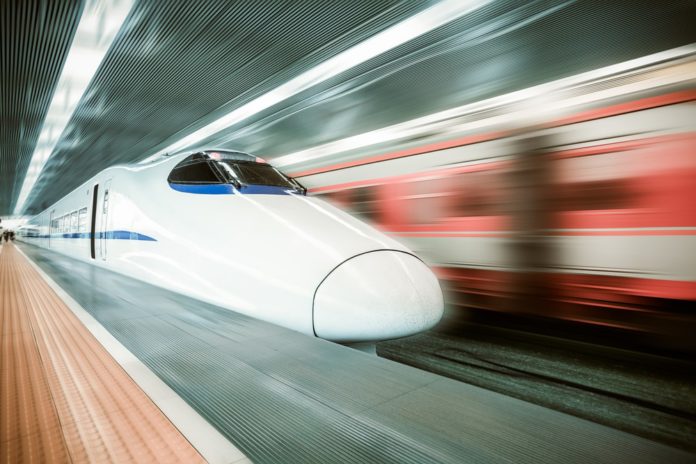
SINGAPORE says it has spent over S$250 million (US$184 million) for the high-speed rail (HSR) project with Malaysia and with the costs growing, the city-state would seek compensation if Kuala Lumpur decides to cancel the project, officials said on Monday.
Malaysian Prime Minister Mahathir Mohamad has said he was cancelling the HSR project to link Kuala Lumpur with Singapore. He said Malaysia would talk to its southern neighbour about any compensation it had to pay.
Singapore’s Foreign Minister Vivian Balakrishnan and Transport Minister Khaw Boon Wan said Malaysia had yet to officially inform Singapore of the decision.
“Should Malaysia cause the HSR project to be terminated, we will deal with the question of compensation from Malaysia for costs incurred in accordance with the bilateral agreement and with international law,” Balakrishnan told parliament.
“The Singapore government has a duty to safeguard public funds by recovering these costs,” he said.
Transport minister Khaw said the total cost for Singapore had exceeded S$250 million as of the end of May and would grow rapidly with time.
Singapore’s Foreign Minister Vivian Balakrishnan and Transport Minister Khaw Boon Wan said Malaysia had yet to officially inform Singapore of the decision. Source: Shutterstock.
Khaw said the costs incurred included land acquired for the project, setting up a government agency to handle the work and for the employment of officials there.
“The public statements made by the Malaysian ministers, and Prime Minister Dr Mahathir himself, on the termination of the project have not been followed through with any official communications to us,” Khaw said, as quoted by Channel News Asia.
Khaw added Singapore is “left with no choice” but to continue with its end of the agreement.
“This is actual money that has already been spent, our taxpayers’ money,” Khaw said.
The project, valued by analysts at about US$17 billion and set to have been completed by 2026, would have cut travel time between Kuala Lumpur and Singapore to about 90 minutes from four or five hours by road now.
Mahathir, who led an opposition coalition to victory on the May 9 election, has made it a priority to cut the national debt and pledged to review big projects agreed by his predecessor that he says are expensive and have no financial benefit.
He has estimated Malaysia could cut almost a fifth of its US$250-billion national debt and liabilities by scrapping such big projects.
MELBOURNE: Defence Minister Ng Eng Hen’s revelation that Singapore will soon decide which aircraft will replace the Lockheed-Martin F-16 Fighting Falcon multi-role jet fighter in the Republic of Singapore Air Force service has re-ignited interest in the programme among the wider defence community.
Speaking to media in the lead-up to the Singapore Armed Forces (SAF) Day, Dr Ng had said that the decision will be made in the next few months, with the new fighters needed by the 2030s when the F-16s will start facing obsolescence issues.
He added that some of the criteria that will be used to choose the new jet will be its capability to defend Singapore’s airspace; whether it can work with other SAF air, land and sea platforms; ease of maintenance; as well as the overall cost.
F-35 THE FAVOURITE
The fighter jet that is being replaced, the F-16, has been the mainstay of the RSAF since 1998, when the first of what will become 60 aircraft were delivered to the RSAF.
Singapore’s F-16s are currently being progressively upgraded by manufacturer Lockheed-Martin, where they will be fitted with a new, more advanced radar, and improved datalinks for better networking with the rest of the SAF’s assets.
Capable as they are, the F-16s will be more than 30 years old by the year 2030 and will be approaching the end of its useful life even with the upgrades.
With this in mind, it had been known as far back as 2013 that the Defence Ministry had been looking at new fighters, with the Lockheed-Martin F-35 Lightning II Joint Strike Fighter being one of the types evaluated and seen by many as the favourite to be chosen as Singapore’s next fighter jet.
As its name suggests, the F-35 is the result of a multinational programme by several nations led by the United States to develop a next generation multirole fighter.
A US soldier adjusts his cap in the cockpit as a Lockheed Martin F-35 Lightning II aircraft at Le Bourget Airport near Paris, France on Jun 18, 2017. (File photo: REUTERS/Pascal Rossignol)
These other development partners include the United Kingdom, Australia, Italy, the Netherlands and Norway. Other users of the F-35 include Israel, Japan and South Korea, all of whom have received their first aircraft.
Described as a fifth generation fighter by Lockheed-Martin, the F-35 is more than a traditional fighter jet. In addition to the “stealthy” design and features that will make it difficult for an enemy to detect it with radars and other sensors, also features a host of other advanced capabilities.
These include an advanced, secure datalink that will allow F-35s to share information about the battlefield and assist each other in targeting adversaries without the risk of inadvertently revealing their own location. There is also what is called the Distributed Aperture System, essentially six electro-optical cameras that will allow the F-35 pilot to “see” all around the aircraft including what is below and behind the aircraft.
The images, as well as other important flight and combat parameters, will be able to be projected onto the visor of the F-35’s unique helmet, allowing the pilot to have improved awareness on what is happening around him compared to today’s contemporaries.
There are three variants of the F-35: The conventional take-off and landing F-35A that has been ordered by the US Air Force and most user nations, the F-35B Short Take-Off Vertical Landing version ordered by the US Marine Corps, the UK and Italy that can take off on shorter runways and smaller aircraft carriers, and the F-35C designed to operate off the full-sized US Navy aircraft carriers.
Several quarters have reported that Singapore’s interest is in the F-35B variant.
Given Singapore’s land constraints as well as the small number of airbases available to the RSAF (especially given Paya Lebar Airbase is set to close in the late 2020s), the choice of a fighter jet that can operate from shorter runways would make sense. It would allow the RSAF to continue generating air power even in the event of its runways being targeted during combat.
The fourth US Air Force F-35A Lightning II aircraft arrives at Nellis Air Force Base, Nevada in this photo released on May 8, 2013. (File photo: Daniel Hughes/U.S. Air Force/Handout via Reuters)
However, the F-35B, which has a large lift fan in the centre of its fuselage to allow it to land vertically, has some restrictions placed on its manoeuvrability as well as being unable to carry as much in its internal weapons bay as a result compared to the other variants.
This opens the possibility that Singapore may opt for a mixed fleet of F-35As and Bs, although this will likely be contingent on how much more it will cost to operate two different variants compared to a homogenous fleet.
OTHER CONTENDERS
During his media interview, Dr Ng also mentioned several other fighter types available on the market although he appeared to stop short of confirming that Singapore had also evaluated these types. These include the European Eurofighter Typhoon as well as Russian and Chinese stealth fighters.
Despite its very impressive performance, the Typhoon is essentially what is known as a “4.5 Generation” fighter which does not offer significant improvements in capability over the RSAF’s F-15SG and upgraded F-16 fighters.
Meanwhile, Russian and Chinese offerings would present significant inter-operability issues with the rest of the SAF’s equipment, which are almost exclusively of western origin.
The RSAF has always operated US-made fighter aircraft with the exception of its first combat aircraft, the British Hawker Hunter acquired in the 1970s.
There are also question marks over the development and capabilities of Russia’s Sukhoi Su-57, with India pulling out of a planned joint development of the type while China is unlikely to export its Chengdu J-20 stealth fighter.
Chinese designs are also further hampered by the use of Russian engines, with Chinese attempts at developing indigenous jet engines hampered by lingering engineering issues.
Chinese J-20 stealth fighter jets fly past during a military parade at the Zhurihe training base in China’s northern Inner Mongolia region on Jul 30, 2017. (File photo: AFP)
A CONSIDERED APPROACH
Singapore’s interest in the F-35 was known as far back as 2013 with Dr Ng saying then that the F-35 was “a suitable aircraft to further modernise our fighter fleet”. However, that has not been translated into an F-35 order from Singapore, with the Defence Minister saying in the meantime that Singapore was in “no particular hurry” to do so with the F-16s expected to serve until the 2030s.
It is possible that in this time, Singapore has been negotiating to ensure that it would be able to maintain as high a level of sovereign capability as possible for its aircraft in the form of customising them for Singapore’s unique requirements like it has done with RSAF’s F-15s and F-16s.
It is also likely that Singapore would have wanted to keep heavy maintenance of its aircraft in-country instead of sending its aircraft to a Lockheed-established regional facility, as well as requested restrictions on what sort of operational data is sent to the cloud-based logistics system designed and operated by the aircraft manufacturer.
The gap in time between Singapore’s initial interest and impending decision is also likely as a result of the Defence Ministry waiting on the F-35 development programme’s maturity before committing to the type.
Due in no small part to the F-35’s cutting edge technology but also because of programme management missteps, the development of the F-35 has been plagued by delays and cost overruns. It is only now that the schedule is mostly getting back on track with the flight test programme in its advanced stages and production starting to ramp up.
As such, an order in the near future means the SAF can be reasonably confident of getting a fully combat-capable aircraft, while at the same time there will be less risk of the aircraft being ordered too late and not being able to be delivered to meet the F-16 retirement dates.
The United States has also started to deploy its own F-35s, with the Marines now operating a squadron of F-35Bs to Japan since 2017 and on board its amphibious ships earlier this year. F-35 pilots who have taken part in the realistic Red Flag wargames in the Nevada desert have also been effusive with their praise of the “God’s eye view” of the battlefield offered by the F-35’s sensors, calling it a “game-changer” in the realm of air combat.
Other partner countries are also starting to receive their aircraft and based on development timelines, receiving aircraft in the 2030s would mean the Singapore will be getting fully mature aircraft with a full set of capabilities.
With the production of what is expected to be an order book of 3,000 aircraft well underway, it would also mean that aircraft unit price and operating costs would have dropped by then, with Lockheed-Martin targeting the price of a single F-35A to be US$80 million, or cheaper than the cost of some of today’s fighters.
Mike Yeo is the Asia reporter for US-based defence publication Defense News.
SINGAPORE: For the past months, bicycle-sharing operators have been ramping up preparations to meet new licensing requirements, leaving no stone unturned as they beefed up their geo-tracking software and deployed teams to prowl the streets, among other things.
The licensing scheme, which started on Saturday (Jul 7), comes with strict conditions on fleet size and responsible parking by users. Applications have closed and the Land Transport Authority (LTA) is studying the operators’ submissions. Two-year licences are expected to be awarded by the fourth quarter of the year.
Operators and analysts say the scheme will likely shrink the pool of users and hit the firms’ profitability, given the greater compliance costs among other things.
While the financial hit will be painful, operators acknowledge that the regulations will improve the state of affairs. Ultimately, the new rules will result in a much better space, in contrast to the mess today, firms and analysts say.
But getting there will be painstaking. Behind closed doors, much negotiation and bargaining are taking place.
Testifying to the onerous nature of the new regime, it has already claimed three casualties even before it is in full swing — with oBike being the highest profile among them.
oBike, along with GBikes and ShareBikeSG, called it quits with two of the firms citing difficulties meeting the licensing requirements.
At least four operators — China-based ofo and Mobike, as well as home-grown firms SG Bike and Anywheel — have submitted their applications. But as observers pointed out, it is anyone’s guess how many will remain in business going forward. The coming months could make or break the nascent bicycle-sharing industry, which many see as having a pivotal role in achieving Singapore’s car-lite vision.
A man docking an oBike at a bicycle parking lot in Ang Mo Kio (Photo: Kenneth Lim)
As the licensing scheme kicks in, bicycle-sharing operators tells us their preparations and the challenges they face, and share what users can expect in the new landscape.
KEEPING UP WITH THE RULES
In March, Parliament passed new laws requiring operators offering dockless shared bicycles, personal mobility devices and power-assisted bikes to be regulated under a new licensing regime.
Under the licensing requirements, operators have to ensure cyclists practise responsible parking. This includes requiring them to scan a unique quick-response (QR) code at designated parking spots as proof of proper parking before they can end their trip. Users who park indiscriminately could be fined by operators or charged continuously until they return the bicycles to a parking space.
Those who flout the rules thrice yearly will be barred from all bicycle-sharing services for up to a year.
In seeking to meet the requirements, operators said that they face several challenges amid a constant back-and-forth with the authorities.
For example, the LTA had earlier required the operators to provide the exact location of all their bicycles in 30-minute intervals. But this would translate into high costs for the operators. In the end, a compromise was reached: ofo, for example, will provide data that reflects changes only for bicycles that have moved.
Other issues which remain up in the air include the penalty for indiscriminate parking.
Some operators are also putting a lid on the number of bicycles in circulation — holding back parts of their fleet — to keep the problem of indiscriminate parking from spiralling out of control.
While the nuts and bolts are still being ironed out, one thing is clear: Operators have to pour in funds, to the tune of millions for some, to comply with the licensing rules.
The higher business costs will place a drag on bottomlines, especially for smaller operators devoid of deep pockets, in a sector that already yields low margins and little in the way of profits.
The regime, for instance, requires operators to fork out a S$60 fee for every bicycle deployed, comprising a licensing fee and a security deposit.
SG Bike, one of the smallest players here with 1,500 bicycles, said the fee was “painful” from a business point of view, though it was necessary to set operators thinking about how their bikes can be maintained and utilised better.
“Now there’s a price tag on the bike … it forces you to rethink your strategy,” its chief operating officer Sean Tay said.
Even the bigger boys are not spared. ofo, which runs a 75,000-strong fleet, cited the S$60 fee as an area in which the regime has gone “a little bit too far”, saying it makes it tougher to turn a profit.
Mr Christopher Hilton, ofo’s head of policy and communications for South-east Asia, said the firm was concerned that a “Government … committed to a car-lite society is making an environmentally friendly and efficient mode of transport more expensive”.
It will be more difficult to keep rides affordable, he added, though the operator is not looking to raise its fees for the moment.
Bikes from oBike, ofo and Mobike in Singapore. (Photo: Mubin Saadat)
The bicycle-sharing firms said the biggest improvements to be made were in their back-end software, to link their systems to the LTA’s network of QR codes that will sprawl across parking spaces islandwide. They will also be required to carry out a second layer of checks — via Global Positioning System coordinates — to verify that users are, indeed, at or near a parking spot with a QR code.
Operators also have to share data with one another so that errant users can be banned. How and where such data will be hosted are still unclear, sparking concern in the industry that firms could gain access to one another’s customers.
Some firms said they would also have to enlarge their teams to meet the stricter rules. For instance, Anywheel, which has 4,000 bicycles, said it has added four operations staff members and another four to its information-technology team.
DETERMINING THE PENALTIES
As the authorities sift through the licence applications, exactly how users will be penalised for indiscriminate parking remains up in the air, operators said.
While operators are required under the licensing framework to charge users continuously for bicycles parked outside the designated areas, ofo pointed out that many of its customers are on monthly subscription passes and “there is no ability” to charge them a continuous fee.
Instead, errant users will face a S$10 fine from the firm, said ofo’s Mr Hilton. The fine will be imposed on users who park on public land “at an area other than one with a QR code”.
At the start of the regime, the LTA has suggested putting in place a “wide” radius around parking spots, so as to allow a broader berth in determining if bikes are parked properly, Mr Hilton said. This is to ensure that those who make an effort to park properly are not fined.
SG Bike’s marketing director Benjamin Oh said its users will face a continuous charge if they park indiscriminately or if the location of a bike does not tally with the parking spot where the QR code was scanned. Users will be given an unspecified “grace period” before they are levied the penalty.
Some operators were concerned that the penalties could drive users from bicycle-sharing services, stressing that the convenience of parking areas was key.
Users may find it challenging if the parking spots are very far apart, said Mr Oh. He added:
At this point, unfortunately, we have no idea where (the parking spots) are, so we have to wait for the LTA’s cue.
As of March, there were 174,000 designated bicycle-parking spots in spaces such as MRT stations, parks and housing estates. The Government plans to add another 50,000 by 2020.
Other factors include how much leeway the system will give users who forget or are unaware of the rules.
Calling it a “big shift”, Mr Oh said much needs to be done to educate users who are “so used to just parking and leaving” on the extra steps they have to take.
A bicycle parking zone outside an MRT station. (Photo: LTA)
Echoing the concerns, Mr Hilton said a S$10 fine was a “serious impediment” to ofo’s users who pay about S$6 for a 30-day pass, for instance. “We are concerned it will drive users away.”
The authorities have not given operators significant direction on how the penalties should be meted out, said Mr Hilton, who stressed that equal enforcement was key among firms.
If we’re being stringent in trying to follow the rules and another operator isn’t, then consumers might move to one of our competitors.
Still, Mobike’s head of international operations Mark Lin said the penalties are to “everyone’s advantage”.
The collective ban will ensure users take greater responsibility when using shared bikes.
“The requirements made by the Singapore Government are actually quite reasonable and conducive to building a responsible sharing community … so whoever is not responsible should not stay in this community,” he said.
THE COST OF COMPLIANCE, AND OTHER CONCERNS
For a majority of the operators, the higher business costs involved were uppermost on their minds.
As part of the new licensing regime, the LTA requires operators to provide data on the locations of their bicycles islandwide in 30-minute intervals, for instance.
Presently, ofo churns this data every three hours via its bicycles’ smart locks.
The firm is concerned that business could be hit as more frequent snapshots would mean the three-year lifespan of its bikes’ batteries could be shortened significantly. This, in turn, means more frequent battery changes, said Mr Hilton.
So, it found common ground with the LTA. Instead of feeding real-time data from each bicycle in its fleet, it would reflect changes only for bicycles that have moved every 30 minutes.
This allows ofo to maintain its plans for its technology, added Mr Hilton.
For the firms, the changes in the pipeline are largely in software and user experience to comply with the rules.
ofo, for instance, is adding an option for manual verification should a QR code be broken, such as allowing users to take a photo of where a bike has been parked.
The Chinese firm, which applied to run an 80,000-strong fleet, said that the S$60 licensing fee per bicycle alone will set it back by S$4.8 million. The fee, which comes on top of engineering and manpower costs, “pushes out our ability to capitalise and become profitable”, Mr Hilton said.
Anywheel, which applied for a licence to run a fleet of 30,000 bicycles, said the fee was “still reasonable”, as the firm expected it to be higher. Its chief executive Htay Aung acknowledged, however, that no other market would levy such a fee, which will hit operators with larger proposed fleets harder.
Still, SG Bike’s Mr Tay said that the fee will force operators to ensure their bicycles do not sit idle on the streets. He added:
Singapore will benefit in the long run from not having random bikes … left out there.
There is also the concern that firms could tap into one another’s customer data for commercial benefit, as they exchange information on errant users.
Mr Hilton said his company has suggested that the LTA host the database, but this would mean costs incurred by the Government. It would be ideal if only data on users who park indiscriminately or are banned is shared among operators, he said.
Mobike’s Mr Lin said his firm was confident that the LTA would be able to protect user privacy, and that it would have given thought to how user information would be exchanged.
File photo of a Mobike parked at a bicycle rack at a HDB void deck in Singapore. (Photo: Elizabeth Khor)
The LTA did not respond to queries on the operators’ concerns over costs, the measures that will be in place to protect user data, and how the penalties will be meted out to commuters.
While industry players and experts had previously said the fallout from oBike’s exit would not have a direct impact on the industry — apart from denting public confidence — transport economist Walter Theseira of the Singapore University of Social Sciences (SUSS) reiterated that it could deter users from committing deposits and other forms of pre-payment.
It may also hit confidence in storing payment methods with the bicycle-sharing mobile applications, Dr Theseira added.
Experts pointed out that by not collecting deposits, firms lose a means to finance the business and secure payment for damages and penalties from errant users.
Associate Professor Lawrence Loh of the National University of Singapore (NUS) Business School said operators are in a “catch-22 situation — damned if you do, damned if you don’t”.
“If you impose deposits, you lose customers. If you don’t, you get to deal with errant customers,” said Assoc Prof Loh, who is director of the school’s Centre for Governance, Institutions and Organisations.
oBike’s departure from the Singapore market on June 25 caught scores of users off-guard. Many are scrambling to recover the deposits — up to S$49 — that they placed with the firm, which is in liquidation.
Just four days after oBike’s exit, Mobike announced it was scrapping the S$49 deposit for Singapore users — it later did away with deposits for its China users as well.
Mr Lin, Mobike’s international operations head, said the decision was not linked to oBike’s exit. The firm had been mulling over removing the requirement for some time as it felt its users were now “quite responsible” and there was no need for a deposit, which was meant to deter irresponsible behaviour.
Mobike’s move means all bicycle-sharing operators here offer deposit-free services presently.
Mr Lin said doing away with customer deposits was not a concern for his firm, which has a “healthy business model”. “The deposit-free policy was a move designed to establish a no-threshold, zero-burden and zero-condition deposit-free standard for the bike-sharing sector in Singapore,” he said.
Derelict oBikes abandoned near Raffles Place a day after the company announced that it will cease operations in Singapore. (Photo: Michelle Teo)
Under the new licensing regime, operators will have to collect users’ details, including their National Registration Identification Card numbers and full names. Mr Aung said firms can send recalcitrant users letters and messages to request payment for penalties.
As for Mobike, Mr Lin said errant commuters will not be able to use its bikes if their balance dips into the red, until they fork out the fines.
HOW THE NEW BIKE-SHARING LANDSCAPE COULD LOOK
Going forward, most operators are confident the licensing scheme would create a more conducive environment for firms and users.
Mobike’s Mr Lin said the regime would encourage a responsible sharing community and hold operators accountable for the bicycles they deploy.
Agreeing, Mr Hilton said a regulated space will allow operators and users to understand their responsibilities, ensuring bicycle-sharing can be sustainable in Singapore.
Still, Mr Tay from SG Bike believes it would be “very, very hard” to change user behaviour initially. In the longer term, the success of the rules will hinge on the effort invested by users, firms and the authorities, he said.
“The LTA needs to also actively take a lead on this. If they just come up with a licence, (but say the operators) go and run it (and we’ll just) poke you from the back, then perhaps instead of it being conducive, everything will just collapse,” he said.
“But if that can be solved, then I think in the long run, this will be great (for Singapore).”
Dr Theseira believes the new rules will likely make bicycle-sharing less convenient, driving away users who perceive the designated parking spots to be inconvenient. He also expects the pool of users to shrink over time owing to concerns over payment.
Mr Lin disagreed, saying that the pool could in fact grow as the bicycle-sharing community becomes more responsible and sheds its association with public misuse.
NEXT ‘6 TO 12 MONTHS’ CRUCIAL
As the industry braces for the stricter rules on the horizon, some observers have questioned the commercial viability of the dockless bicycle-sharing business.
Urban transport analyst Park Byung-joon, who is also with the SUSS, said the next six to 12 months will be keenly watched, as the global bike-sharing market confronts challenges.
Given the low fees collected and high maintenance expenses, companies cannot turn huge profits and thus need to grab a large market share to sustain their business.
Consequently, the market can support only “one or two” players, added Assoc Prof Park.
If dockless bicycle-sharing is found to be financially unsustainable, Assoc Prof Park and Dr Theseira believe the industry will move towards a government-supported docked bicycle-sharing model, which has flourished in some European cities.
Last year, the LTA shelved plans to start a docked bicycle-sharing scheme with about 2,300 bicycles, after private firms began offering dockless services in the same year.
The plan was to launch the service last year covering areas such as the Jurong Lake District, Tampines and Marina Bay — about 230 docking stations had been planned. But the entrance of the private players had obviated the need for a government-run system, the LTA had explained.
Artist’s impression of proposed bicycle-sharing infrastructure in the Jurong Lake District. (Image: LTA)
Assoc Prof Park said: “With the docked system, we have more control over places and numbers, and also we know exactly how to get back to the person who caused a problem.”
For the time being, however, dockless bicycle-sharing operators are seeking other ways to cash in.
ofo is exploring the possibility of diversifying its products to include other equipment such as electric scooters and electric bicycles, although the company declined to give more details.
Anywheel is also looking at adding power-assisted bicycles and e-scooters to its fleet. In the longer run, it could even start a private-hire car-hailing service similar to Grab’s when it has a sufficiently large customer base, said Mr Aung.
Some firms also intend to make their prices more competitive. Anywheel will roll out a monthly subscription programme next year with “competitive prices” for unlimited rides. SG Bike will also roll out a similar programme soon, said Mr Tay.
Ultimately, observers and firms believe the new regime would benefit all. “In the long term, an orderly bike-sharing scene is in the interests of all, including the operators,” said Assoc Prof Loh.
SINGAPORE: The Housing and Development Board (HDB) resale market could see a slight increase in interest from buyers hard-pressed to buy a private property after new cooling measures were introduced last week, but the overall demand is unlikely to be substantial enough to make much of an impact on the market, analysts said.
In a surprise announcement on Jul 5, the Government raised Additional Buyer’s Stamp Duty (ABSD) rates and tightened loan-to-value (LTV) limits on residential property purchases, in an effort to “cool the property market and keep price increases in line with economic fundamentals”.
The move came several days after official data showed that private home prices had jumped by 9.1 per cent year-on-year in the April-to-June period, with analysts predicting that prices could soon recover to 2013 peak levels.
Some analysts have called the measures – which include a 5-percentage-point increase in stamp duties for citizens and permanent residents (PRs) buying second and subsequent homes, as well as 5-percentage-point reduction in borrowing for loans from financial institutions – “heavy-handed” and “draconian”, given that the property market “is in the early stages of a recovery”.
The new measures do not affect stamp duties for first-time buyers who are Singaporeans or permanent residents, nor loans from HDB.
Experts that Channel NewsAsia spoke to said that although the HDB market could see some additional interest from buyers who now find it more difficult financially to purchase a private property, the demand is unlikely to be substantial enough to have much on an impact on the public housing market.
“In terms of real numbers, I would guess it would be several hundred (units) a year,” said Mr Ku Swee Yong, CEO of International Property Advisor.
“It is only beneficial to people who probably wanted to upgrade from HDB to a private property, but given the new measures and the more negative outlook, they decide to upgrade to HDB instead,” he said.
“There is some incremental (increase) but it is not solid enough to push resale prices up,” he added.
Resale prices for flats inched up 0.1 per cent in the March-to-June period compared to the previous quarter, with the Resale Price Index (RPI) coming in at 131.7, according to HDB’s flash estimates earlier this month. That was the first increase in six quarters.
Compared with the same quarter last year, however, resale prices for flats are still down 1.5 per cent.
Mr Nicholas Mak, executive director of ZACD Group, said that regardless of the cooling measures, most first-time home buyers generally buy HDB flats – be it resale or Build-To-Order (BTO) – for affordability reasons.
As such, he believes the HDB resale market is likely to remain at “status quo”.
“In the first place, they are already going to buy an HDB, so the cooling measures have no impact. It is those living in HDB flats and thinking of buying a condominium, these people will be affected,” Mr Mak noted. “There will be some turning from private to resale properties, but this number is so little that it’s not going to make a difference.”
Mr Chris Koh, director of property firm Chris Koh International, added: “On the ground, we’re not seeing any impact on the HDB market … The HDB market is quite distinct from the private sector. People who sell a HDB flat usually buy another one, without looking at the private property.”
He added: “I don’t see an influx in terms of many taking advantage of this.”
Potential buyers look at models of a new public housing estate to be constructed in Singapore. (File photo: Reuters/Edgar Su)
Going forward, some analysts said, pricing is likely to weigh on buyers’ minds.
“Historically, the second and third quarter are good quarters,” said Mr Koh. “So if the second quarter can register good stablisation, it will attract buyers to come back into the market. Many want to let prices slide further, but when they realise that prices are not sliding anymore, then they will come back into the market.”
Speaking in Parliament on Monday (Jul 9), the Minister for Foreign Affairs stressed the importance of reaffirming and protecting Singapore’s reputation as a clean, transparent and trusted international financial centre.
Billions of dollars are said to be missing in the 1MDB scandal, nearly $700 million of which was deposited into Najib’s bank account alone AFP/MANAN VATSYAYANA
(Updated: )
Bookmark
SINGAPORE: Singapore has conducted investigations and taken action against companies and individuals linked to the 1MDB scandal not for political calculations, but because doing so is in its own “national interest”, Minister for Foreign Affairs Vivian Balakrishnan said in Parliament on Monday (Jul 9).
As he gave the House details on the assistance Singapore has given to the Malaysian government on the investigations, Dr Balakrishnan stressed the importance of reaffirming and protecting Singapore’s reputation as a clean, transparent and trusted international financial centre.
“We do not tolerate the misuse of our financial system either as a refuge or conduit for illicit funds,” he said.
“We will continue to assist the Malaysian government in its own investigations. We have also informed the Malaysian government that it can avail itself of due legal processes through our courts to establish ownership and recover any assets seized in Singapore that can be traced to 1MDB.”
While Malaysia’s investigations into 1MDB intensified after Pakatan Harapan took over the government, Dr Balakrishnan pointed out that Singapore has been conducting probes into offences committed here since 2015.
Singapore has shut down two banks and levied fines on others for regulatory breaches, while convicted individuals have also been jailed and fined. “So far, we are the only jurisdiction in the world to have done so,” Dr Balakrishnan said.
He added that Singapore has “responded fully to every single request for information” from Malaysian authorities between March 2015 and August 2016. Singapore has also proactively provided additional information on 1MDB-related fund flows to the Malaysian authorities on multiple occasions.
In total, Singapore has provided 1MDB-related information in more than 30 exchanges during the period, he said.
“Since the change of government in Malaysia, over the past couple of months, Singaporean and Malaysian agencies have met on several occasions on 1MDB matters,” he said. “In fact, the Malaysian authorities have expressed their appreciation to Singapore for our cooperation.”
THREE BILATERAL ISSUES BROUGHT UP BY DR BALAKRISHNAN
The 1MDB scandal was one of three bilateral issues the minister brought up in Parliament, in response to a question from MP Christopher de Souza on the state of bilateral relations between Singapore and Malaysia.
On the 1962 Water Agreement, Dr Balakrishnan reiterated Singapore’s “clear and consistent position” on the issue. He stressed that Singapore would fully honour the terms of the agreement, including the price of water stipulated, and expects Malaysia to also do so.
However, Dr Balakrishnan said the crux of the issue is the sanctity of international law and agreements.
He said he was “heartened” to note comments made by Malaysian finance minister Lim Guan Eng on another project his ministry had undertaken with a foreign commercial party. According to Dr Balakrishnan, Mr Lim had said that should the foreign party not adhere to the terms of the agreement within specified periods, his ministry would be entitled to take certain actions.
“To quote Mr Lim: ‘I think we should look at the agreement. We are bound by the agreement,” he said. “So the point is, Mr Lim Guan Eng himself recognises the importance of maintaining the sanctity of agreements.”
SINGAPORE: Innovative technologies may be the key to making public transport more efficient.
That is at the heart of the 3rd Singapore International Transport Congress & Exhibition (SITCE), which is taking place at the World Cities Summit for the first time this year.
Jointly organised by the Land Transport Authority (LTA) and the International Association of Public Transport, some 100 exhibitors from more than 25 countries and regions are presenting their technologies and services to improve the public transport industry.
One of the technologies on display is ST Engineering’s gateless, hands-free fare deduction system. It can use either long-range RFID or facial recognition to detect and identify a passenger walking through the gantry.
And passengers won’t have to tap a card or do much else – simply walk through the fare gantry.
Bernard Chow, senior vice president of the ST Engineering’s transportation business unit, says this technology allows rail operators to increase passenger volume by 50 per cent. The current industry standard for the speed of fare deduction is 1.5 seconds per passenger, while the gateless technology takes less than a second to do so.
It is also a system that is more user-friendly for people with mobility issues.
Unmanned vehicle for track and tunnel inspection. It is at least 4 times more efficient than current manual inspection. (Photo: Gwyneth Teo)
Other technologies on display include an unmanned vehicle that can be used to inspect rail tracks.
Currently, rail engineers have to manually inspect the tracks, which can give rise to human error. They also only have a limited amount of time to do so during the trains’ off-service hours, which means they can only complete inspection of tracks up to three stations per night.
The unmanned vehicle is able to inspect tracks between eight stations in the same amount of time. Using laser and geothermal imaging, it can also detect cracks as small as 0.2 millimetres, which would enable rail operators to perform preventive maintenance.
Mr Alan Chan, chairman of LTA, said at the opening address of SITCE, LTA emphasised long-term operational and maintenance for its railway network.
“We will work with industry partners to propose solutions that are highly maintainable, and are competitively priced on a life-cycle cost basis. We need to establish long-term relationships with our partners to develop local expertise and strengthen the partners’ local presence and capabilities,” he said.
Suspended trains developed by Skyway Technologies from Belarus. It’s not in operation yet, but it shows what might be efficient for land-scarce countries. (Photo: Gwyneth Teo)
Other countries also provided a vision of what public transport could look like in the future. Skyway Technologies Co. from Belarus presented its vision of an elevated rail system that can also run a tram beneath it.
It could reduce public transport infrastructure on the whole, and the cost of building and operating it. The system would also free up land space for other uses.