Home Blog Page 997

How to build a smart city – the blueprint

0


SMART cities have the power to transform the world around us, making these urban areas a melting pot of culture, community, and business, all powered by technology.

Truth be told, many people think a smart city is a data challenge. But it’s not. It’s also an innovation challenge.

“Innovation will be key for Singapore’s Smart Nation success but data alone will not be sufficient to realise this success,” highlighted Leslie Ong, Country Manager, Southeast Asia, Tableau Software who is working with the Singapore government to elevate its Smart Nation program.

SEE ALSO: Sorry Dubai, London: Singapore is the #1 smart city

However, building a smart city isn’t the easiest thing to do. Many factors come into play and ultimately, it depends on the balance of objectives or vision of what the committees want the city to achieve.

Sometimes cost efficiency takes precedence, sometimes attracting talents and investments from world-class companies are key, and in other cases, the safety and security of citizens are the focus. Smart City imperatives also need to be clear also on the budget and risk profiles.
shutterstock_1062215834

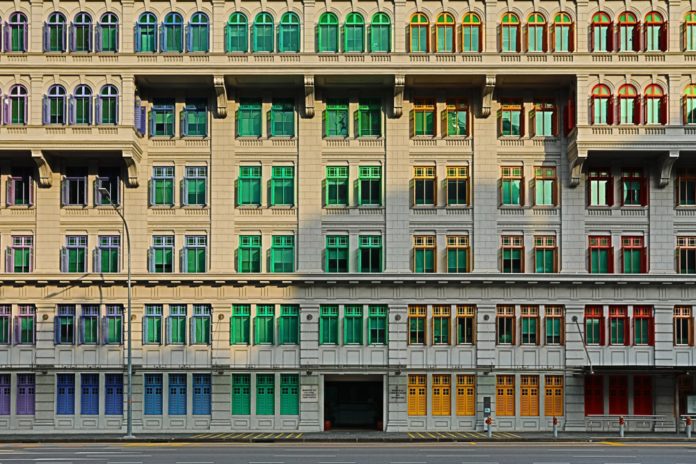
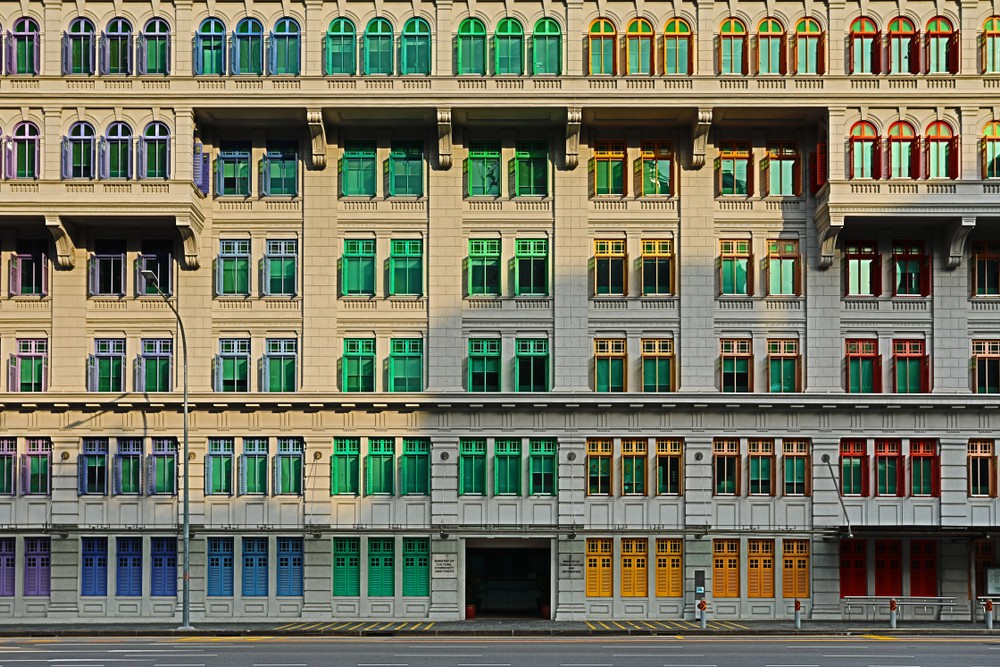
Singapore’s historic Old Hill Street Police Station, now home to its Ministry of Culture, Community and Youth. Source: Shutterstock

In an exclusive interview with Tech Wire Asia, Yeong Chuan Lim, Asean Strategy Director, Honeywell explained some of the subtleties of building a smart city.

“For early-stage technologies, the costs, risk of deployment and take up can be high.  The business model for investment also plays a role: whether the technology is a platform upon which private sector is allowed to rent or freely use to develop applications or a specific application to solve a problem,” explained Lim.

Smart city committees and councils must also understand that the success of the project also depends on the challenge of managing each individual city and the theses for the investments.

Building the infrastructure

Typically, platforming technologies are riskier but can also provide good returns in the longer run.

Platforming technologies are the infrastructure required to build specific applications such as ubiquitous broadband communications, LPWAN, city data exchange, and e-governance workflows. Investments in specific applications such as security, traffic management or routing are easier to assess and may have faster returns.

Returns may come in the way of financial and operational efficiencies, or more likely the improvement in the quality of life or reduction in some sort of intangible costs such the as risk of crime.
larry-teo-380867-unsplash

Source: Larry Teo / Unsplash

When evaluating a smart city project, here’s what Lim suggests:

  • Start by asking what you want the city to be
  • Find the fundamental 20:80 problem that causes many other downstream problems in your city
  • Ask what existing policy, people, and workflows solve before assessing what technologies are available to help
  • Remember that technology may make it faster or cheaper to solve problems but they don’t solve anything by themselves

SEE ALSO: Rise of Megacities: Two thirds of world population will be living in cities by 2050

Are smart cities are more sustainable?

Governments and municipal commissions must also remember that building a smart city can also help achieve sustainability goals. However, it depends on how the city defines sustainability and how it intends to achieve it broadly.

Renewable energy generation, usage efficiency, and storage are trending in the world of sustainability now.

The gradual lowering of costs in computing, data storage, sensors, and communications, for example, allows for better integration and for the more efficient generation and usage of energy.

Technology also makes distributed green energy generation, demand response in utilities, sensor-based energy management systems, and intelligent storage and release of energy possible as well. It’s up to the city to plan how best to make use of the technologies to turbocharge their sustainability program.

2018-07-02T072556Z_1805363825_RC133EE91C90_RTRMADP_3_REC-LAYOFFS-USA

Solar panels to produce renewable energy are seen at the Urbasolar photovoltaic park in Gardanne, France, June 25, 2018. Source: Reuters/Jean-Paul Pelissier

SEE ALSO: Smart cities can improve quality of life by up to 30pc

The long-term view

“In my view, the most important benefits are in operational efficiency and long-term cost management. There are many examples where smart cities concepts have achieved these benefits,” said Lim.

In many Asean cities, e-governance and e-payments have greatly improved the bureaucratic workflow and responsiveness. Application of connected technologies and analytics in surveillance, law enforcement, and situational awareness have made cities safer or at least made crime management more tractable.

More applications are still being developed and we are still learning of more ways to apply smart city technologies effectively especially in this dynamic region.

This article originally appeared on our sister site Tech Wire Asia.

Source link

Hidden gem: The story behind Telok Blangah’s secret Peranakan family cafe

0

Follow our CNA LIFESTYLE page on Facebook for more dining stories and videos

SINGAPORE: If you’re craving some delicious Peranakan food, Telok Blangah Rise would probably be the last place you’d think of going to.

But in one corner of this sleepy old housing estate, there’s a family-run cafe that has been quietly serving Peranakan dishes to loyal regulars and those in the know for the past decade.

Telok Blangah Peranakan food Makko Teck Neo

Mdm Peck Teck Neo (right) and her husband Mr Lim Kian Beng run Makko Teck Neo together with their sons Dennis and Danny. (Photo: Mayo Martin)

Located at the end of a row of neighbourhood shops and just opposite a sparsely occupied wet market is Makko Teck Neo, an unassuming establishment with a laidback vibe.

Outside, visitors are greeted by a lush, cosy setting – lots of plants, black and white bamboo curtains all around, and even a quaint “Tok Panjang Corner” sign that hints at its Peranakan roots. Inside, there’s an assortment of freshly-made kuehs lining the counter, while everywhere on the walls are photos of the many dishes on offer.

Telok Blangah Peranakan food Makko Teck Neo (2)

Makko Teck Neo, a family-run Peranakan cafe at Telok Blangah Rise. (Photo: Mayo Martin)

These include trademark dishes such as the Nyonya dry mee siam and nasi lemak (S$5.80), and ayam buah keluak (S$16.90), as well as other faves such as Nyonya ngoh hiang (S$11.90), and Nyonya kueh pie tee (S$9.90), among many others.

All of these are tightly-guarded family recipes by 66-year-old Peck Teck Neo, after whom the place was named (“makko” is Peranakan for “aunty”).

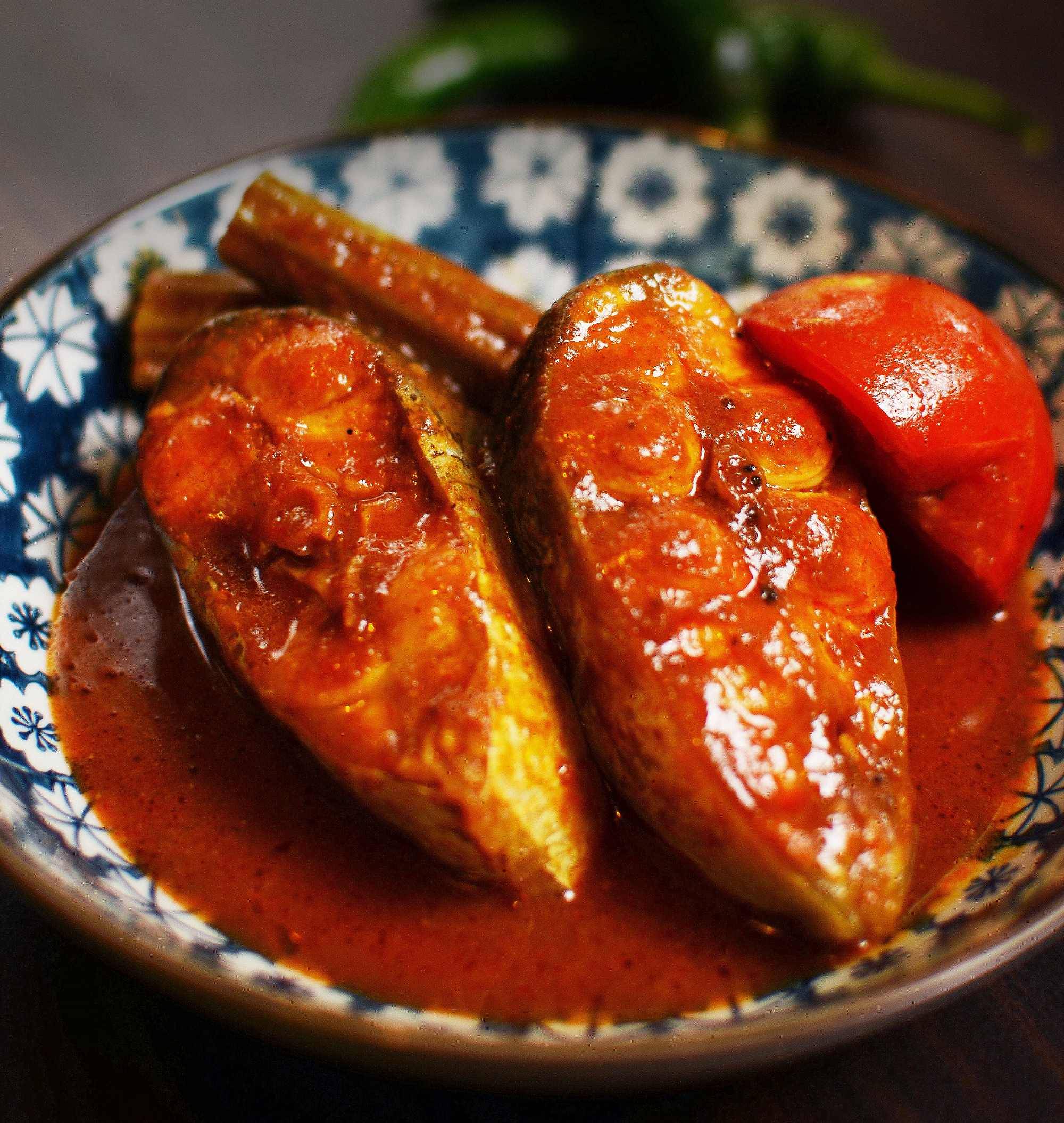
Telok Blangah Peranakan food Makko Teck Neo Assam Fish

Assam fish curry, made with patin fish in a spicy tamarind gravy. (Photo: Makko Teck Neo)

“They’re recipes from my mother and my mother-in-law. I also read books and try to improve on dishes. What I like to make, I make,” said Mdm Peck, who runs the place together with her husband, Lim Kian Beng, 70, and their two sons Dennis and Danny, who are both in their early 40s.

FROM PINEAPPLE TARTS IN THE KITCHEN

Today, it’s the humble Nyonya fare that draws a steady stream of customers to Makko Teck Neo, from nearby office workers on the weekdays to families on weekends.

Telok Blangah Peranakan food Makko Teck Neo ayam buah keluak (2)

Nyonya ayam buah keluak. (Photo: Makko Teck Neo)

But the place wouldn’t even have existed had it not been for one particular Chinese New Year treat – pineapple tarts.

Back in the late 1980s, the family ran a small side business selling pineapple tarts to friends and business contacts, which they would make from their home kitchen in Loyang Valley.

Soon after, both Mdm Peck and Mr Lim were retrenched from their respective companies, and they decided to focus on the tarts, which proved very popular.

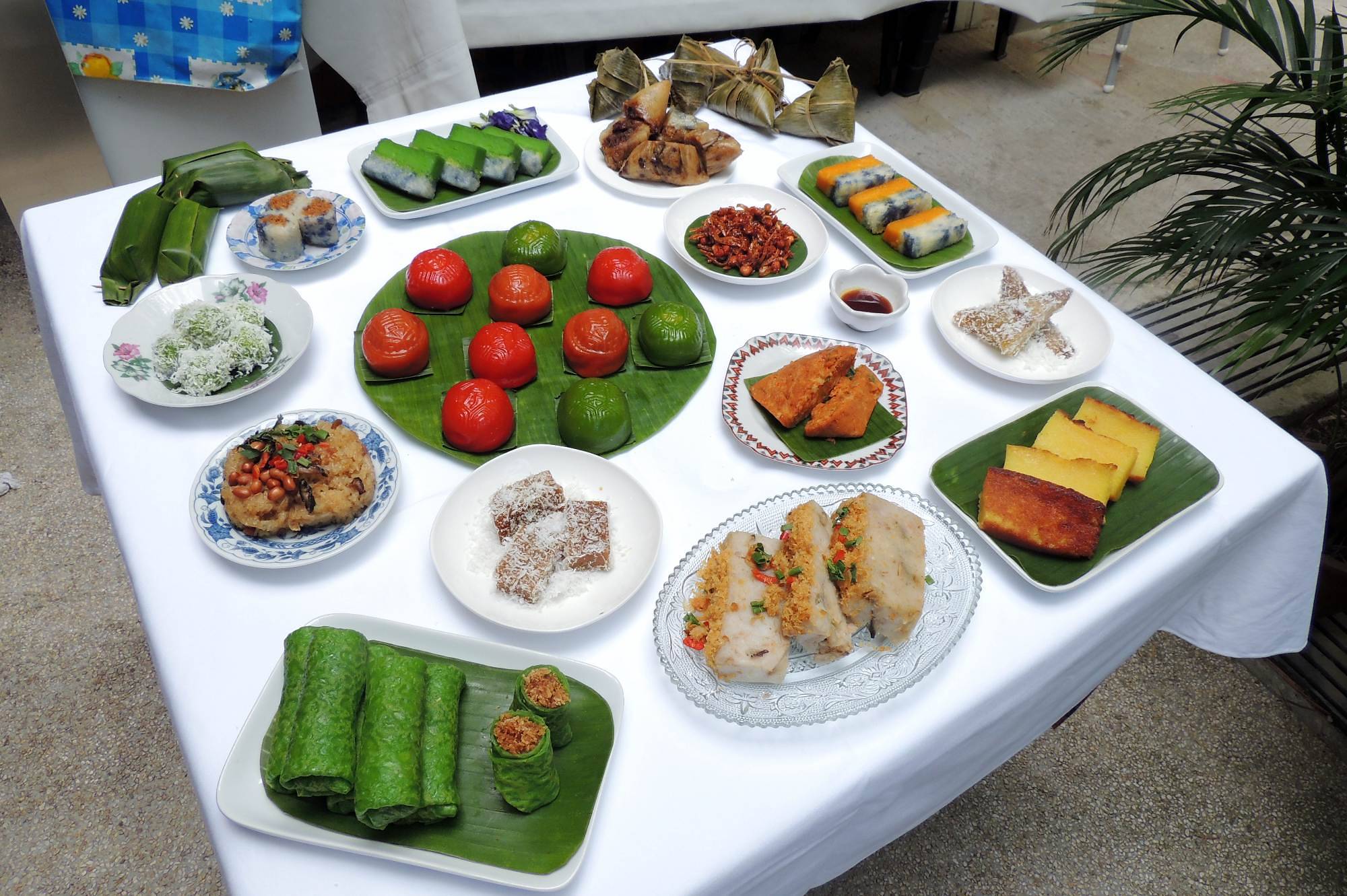
Telok Blangah Peranakan food Makko Teck Neo kueh

A spread of kuehs and other items. (Photo: Makko Teck Neo)

“Back then it was very much homemade and taking small orders. We’d be getting orders during Chinese New Year and at some point, there was an overwhelming demand,” said son Dennis, who recalled those hectic days when they’d be doing “a few thousand tarts a day” together with his aunts, who’d help out.

“My brother and I studied overseas but when we had our term breaks and our friends would have their holidays, we’d come back to help prepare the pineapple jam. Back then, we didn’t have a commercial oven so our last bake would be completed at midnight or one in the morning. Then we’d wait two hours for the tarts to cool before we wrapped them. At three or four o’clock we’d still be wrapping. Then we’d have two, three hours of sleep before starting the entire process all over again!”

But while the pineapple tarts were a hit, that wasn’t the only secret recipe in the household’s arsenal.

Telok Blangah Peranakan food Makko Teck Neo chap chye

Nyonya chap chye. (Photo: Makko Teck Neo)

Mdm Peck’s dry mee siam and nasi lemak were already popular among friends, who often urged them to sell these as well – so the family started distributing packets to factories as well as to establishments like Zouk, for its employees.

THE LITTLE NYONYA GIVES A BIG BOOST

The family took a big leap in 2008, when they decided to go big. Aside from briefly running the cafeteria at Novena Church, they also opened their Telok Blangah Rise outlet.

“It’s definitely an ulu place and no one actually walks by here, but we were fortunate to have some regular customers, who spread the news through word of mouth,” said Dennis.

Telok Blangah Peranakan food Makko Teck Neo kueh pie tee

Their kueh pie tee is filled with turnips, mushroom and prawn, topped with Teck Neo chilli chukar. (Photo: Makko Teck Neo)

They started off selling a few items, such as their kuehs and pineapple tarts, assam prawns, chicken wings and their signature dry mee siam and nasi lemak.

While there were other typical Peranakan dishes they could’ve served, such as chap chye, babi pongteh and ayam buah keluak, it took a while for them to include these, admitted Mr Lim.

“We had the wrong impression that not many people knew how to eat these items, but it turned out quite a lot knew how to appreciate the dishes,” he said.

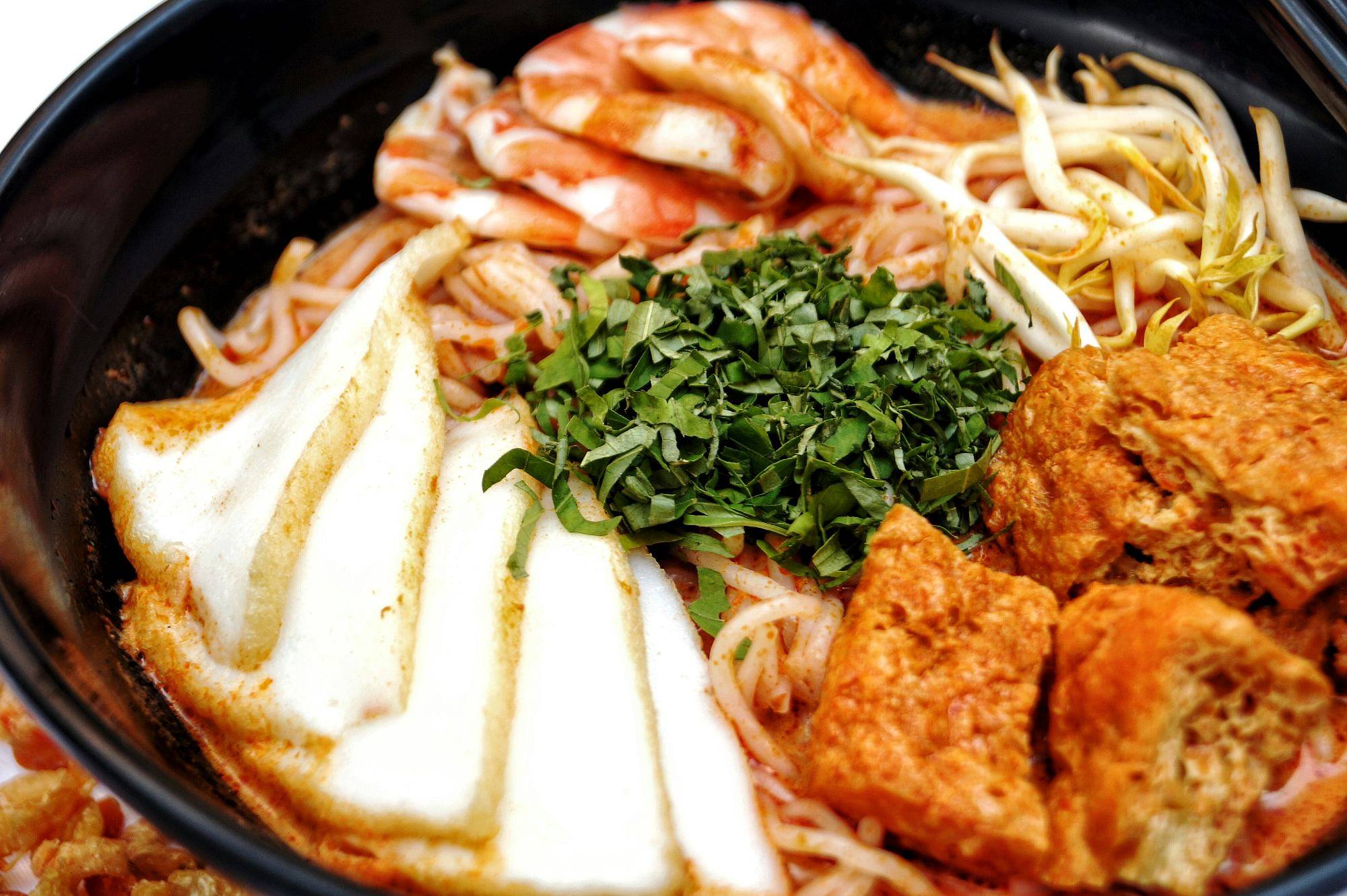
Telok Blangah Peranakan food Makko Teck Neo Nyonya laksa

Nyonya laksa. (Photo: Makko Teck Neo)

His son Dennis admitted: “Back then, there weren’t many notable Peranakan shops around and the cuisine wasn’t as popular as it is right now. Back then, if you went out with friends, it was either you went to a Chinese restaurant or for western food. The last thing people would choose was Peranakan food.”

But that year, the shop – and Peranakan food – got a big boost from an unlikely source.

“There was the TV serial on Channel 8, The Little Nyonya, and it became a big craze. In each episode, the main character prepares a dish, and whenever these came out, people would come and ask whether we had this particular kueh or dish,” said Dennis, who revealed that one of the episodes actually encouraged them to put out what would eventually become one of their signature kuehs, the rempah udang.

Telok Blangah Peranakan food Makko Teck Neo ngoh hiang

Nyonya ngoh hiang served with Teck Neo chilli chukar. (Photo: Makko Teck Neo)

Their pineapple tarts, too, continued to be a hit – they were included in a Singapore Sampler menu for a dinner held for dignitaries during the Asia-Pacific Economic Cooperation conference in 2009.

KEEPING BUSY, KEEPING IT REAL

Despite Peranakan cuisine becoming more mainstream – and with places like Candlenut, True Blue Cuisine and The National Kitchen By Violet Oon earning raves and a Michelin star or two – the family has decided to stick to its guns.

Expansion has been slow. They only just opened a take-away kiosk at Tang Plaza last year, and while they’re amenable to exploring other ways of growing Makko Teck Neo, such as going into food courts, they’re in no hurry to look for investors or partners.

Telok Blangah Peranakan food Makko Teck Neo bubur cha cha

Bubur cha-cha. (Photo: Makko Teck Neo)

Just like how it all began years ago – whether it’s making pineapple tarts in their home kitchen or preparing packets of mee siam for factories – the most important thing for them is maintaining the quality of the food.

Their homemade pineapple tarts – which they still continue to make, although not in the same quantities as before – earned them a shout-out from the Slow Food Singapore movement a couple of years ago.

And to this day, there’s still very much a hands-on vibe in the kitchen. Mdm Peck still personally cooks the ayam buah keluak and chap chye, while closely supervising their cooks for the rest of the dishes. Meanwhile, it’s not unusual to see Mr Lim carrying large bags of onion, garlic and other ingredients to the kitchen, too.

Telok Blangah Peranakan food Makko Teck Neo tok panjang corner

A “Tok Panjang Corner” sign, meaning “long table”, hints at the Peranakan offerings at Makko Teck Neo. (Photo: Mayo Martin)

“Everything is made from scratch. We do our own rempah (spice paste), which is very much my mum’s recipe,” said Dennis.

“And I still remember what one of our customers said to us – that ever since his mum died, this was the closest he could get to eating home-cooked food. At the end of the day, we just want to share a little home-cooked food with everyone.”

Source link

What are Asia’s top ranked universities and how did they get there?

0


TIMES Higher Education (THE) released its Asia-Pacific (APAC) University Ranking 2018 earlier this month. In the respected league table, East Asian countries continue to dominate the region’s higher education sector.

Japan had the most number of universities featured (89) while China came second with 63 universities. South Korea and Taiwan had 27 and 31 institutions represented respectively.

The region’s top university is once again the National University of Singapore, followed by China’s Tsinghua University and Peking University.

SEE ALSO: Singapore’s universities teach the same course to prepare students for future

Asia-Pacific
rank 2018
World University
rank 2018
UniversityCountry/region
1=22National University of SingaporeSingapore
230Tsinghua UniversityChina
3=27Peking UniversityChina
432University of MelbourneAustralia
540University of Hong KongHong Kong
=644The Hong Kong University of Science and TechnologyHong Kong
=652Nanyang Technological University, SingaporeSingapore
848Australian National UniversityAustralia
965University of QueenslandAustralia
1058Chinese University of Hong KongHong Kong
1161University of SydneyAustralia
1246The University of TokyoJapan
13=80Monash UniversityAustralia
14=74Seoul National UniversitySouth Korea
=15=95Korea Advanced Institute of Science and Technology (KAIST)South Korea
=1585University of New South WalesAustralia
17=74Kyoto UniversityJapan
18=137Pohang University of Science and TechnologySouth Korea
19=111University of Western AustraliaAustralia
20=111Sungkyunkwan University (SKKU)South Korea
21=119City University of Hong KongHong Kong
22=134University of AdelaideAustralia
23132University of Science and Technology of ChinaChina
24116Fudan UniversityChina
25=169Nanjing UniversityChina

What makes these institutions the region’s cream of the crop?

The rankings are based on the same performance indicators as the THE World University Rankings 2018, though the methodology has been adjusted account for APAC’s rising young universities.

Over 250 universities from 13 nations were analysed based on these five broad areas: Teaching (the learning environment); Research (volume, income and reputation); Citations (research influence); International outlook (staff, students and research); and industry income (knowledge transfer).

Each area was assigned its own weighting:

Teaching (the learning environment): 25 percent

This refers to the “perceived prestige” of institutions in teaching based on the annual Academic Reputation Survey. This includes how committed an institution is to nurturing the next generation of academics, as well as the number of postgraduate research students, among others.

Research (volume, income and reputation): 30 percent

This looks at “universities’ role in spreading new knowledge and ideas”. To do so, THE referred to  the average number of times a university’s published work is cited by scholars worldwide.

“The citations help to show us how much each university is contributing to the sum of human knowledge: they tell us whose research has stood out, has been picked up and built on by other scholars and, most importantly, has been shared around the global scholarly community to expand the boundaries of our understanding, irrespective of discipline,” according to the website.

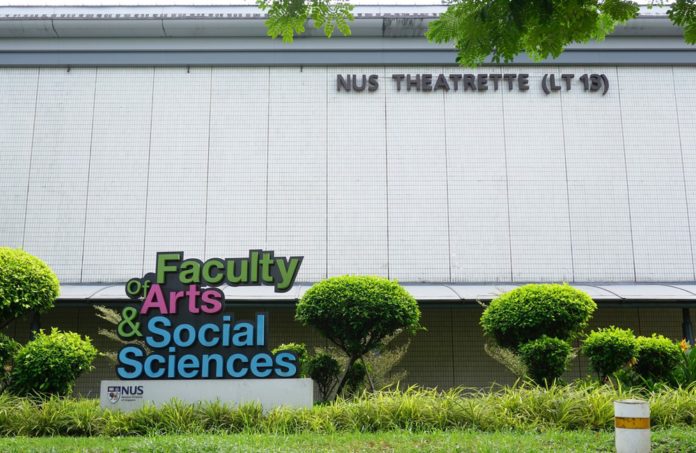
shutterstock_375506494

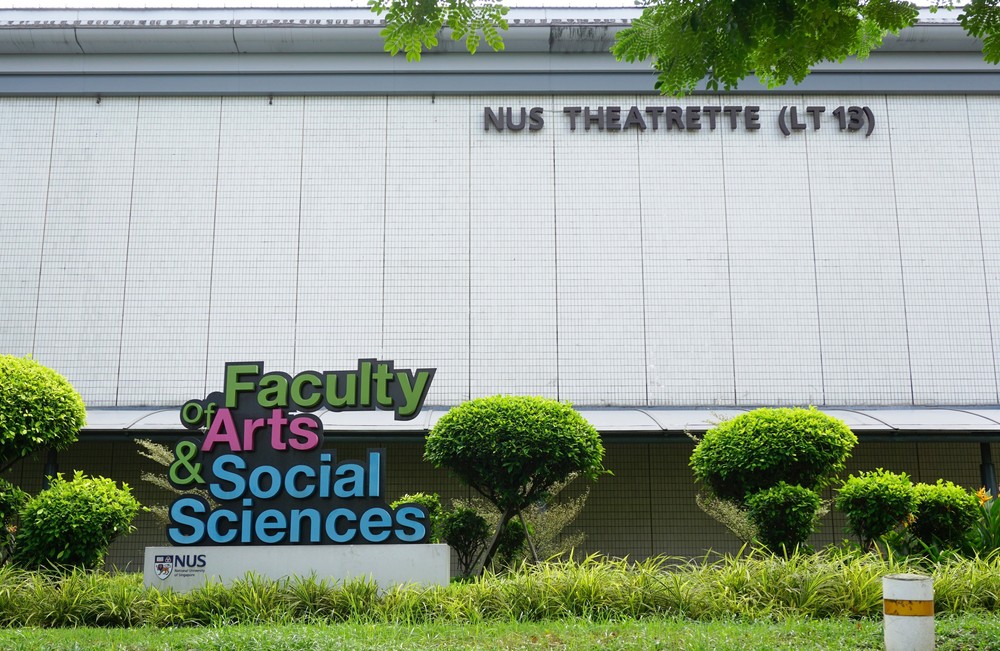
(File) Faculty of Arts & Social Sciences at the National University of Singapore. Source: EQRoy/ Shutterstock

SEE ALSO: These are the most innovative universities in Asia

International outlook (staff, students, research): 7.5 percent

This refers to how attractive a university is to global prospective undergraduates, postgraduates and faculty. This is calculated from the proportion of a university’s total research journal publications that have at least one international co-author and reward higher volumes.

Industry income (knowledge transfer): 7.5 percent

How much a university helps industry with “innovations, inventions and consultancy”. THE’s website explains this as such: “This category seeks to capture such knowledge-transfer activity by looking at how much research income an institution earns from industry (adjusted for PPP), scaled against the number of academic staff it employs.”

A version of this article originally appeared on our sister site Study International.

Source link

Commentary: We may be in the early stages of a new Cold War

0

SINGAPORE: Disputes about global trade practices have reached a tipping point.

The Trump administration has just rolled out new tariffs on US$34 billion of Chinese goods, and Beijing has responded, in kind, with retaliatory tariffs. It’s looking more and more like a series of tit-for-tat retaliatory tariffs are going to disrupt global value chains.

But a looming US-China trade war is only a small component in a much larger, more important narrative: Beijing and Washington’s intensifying geopolitical rivalry.

Technological innovation and intellectual property are now at the centre of this competition. The world is witnessing the early stages of a digital arms race — some would even call it a new Cold War.

The inconvenient truth is that policymakers in both Washington and Beijing have linked technological capability directly to matters of national security, and, consequently, companies will need to start preparing to rethink how they do business around the world.

READ: Fork in the road as brewing trade war hints at revision of US-China relations, a commentary

THREE EMERGING TRENDS

Three key trends are emerging from the Sino-American technology war.

First, there will be an increase in export controls, export licensing and sanctions — aimed at individuals, companies and entire industries. This will cause non-compliant, black-listed parties to be excluded from business ecosystems and strategic partnerships.

There will be extensive collateral damage throughout supply chains when companies violate any of these rules. There will also be an increase in blocked mergers, acquisitions and licensing deals in the tech sector. This will be disruptive to existing value chains.

Second, global businesses will need to localise operations. Unilateral policy measures and non-tariff barriers focused on “national security” will push enterprises to accelerate the localisation of operations.

This transformation is already underway as businesses leverage automation, robotics, 3D printing and artificial intelligence (AI) to meet consumer demands in specialised and rapidly evolving local markets. Data localisation laws regulations will also influence new operational decisions — especially in emerging markets.

President Donald Trump's announcement of China tariffs brings the world's two largest

President Donald Trump’s announcement of China tariffs brings the world’s two largest economies to the brink of all-out trade war. (File photo: AFP/NICHOLAS KAMM)

Third, new innovation clusters will emerge – dynamic innovation and production ecosystems will emerge and will be ring-fenced to protect key stakeholders.

Only entities that have been vetted to meet specific requirements, increasingly regulatory, will be allowed to play in these sandboxes.

In Asia, so-called smart-city locations like Singapore – which, among other things, boasts good governance attributes — will become increasingly attractive as new innovation clusters.

READ: A global revival of nationalists looms, as their resonance with voters grows, a commentary

BLOCKING TRADE IN STRATEGIC GOODS

The ZTE debacle provides a microcosm of the kind of business environment facing multinational businesses. ZTE’s violation of US sanctions resulted in massive monetary penalties, a temporary revocation of its US operating licenses and the denial of access to US technology.

There was extensive collateral damage to ZTE’s extended business ecosystems. Qualcomm, Google, Acacia Communications and host of small first and second tier suppliers were adversely impacted by ZTE’s US technology ban.

The US Commerce Department is currently looking into expanding the list of “strategic trade” items.

“Strategically sensitive” parts, components and technology require businesses to methodically screen buyers and down-stream end-users, as well as trace the movement of thousands of parts, components and widgets throughout value chains. Achieving this kind of supply chain traceability is costly and complicated.

As export licensing requirements and punitive measures increase for US technology, global companies will be confronted to exposure to penalties and catastrophic stoppages of business.  

Data is considered a “strategic good.” Sending a simple email, text message or data transmission can be classified as an illegal export, particularly if sent to a denied party or an entity on a sanctions list.

READ: Broadcom, tariffs and Qualcomm, is the US aiming at other countries? A commentary

FILE PHOTO: A sign on the Qualcomm campus is seen in San Diego

A sign on the Qualcomm campus is seen in San Diego, California, U.S. November 6, 2017. File photo: Reuters)

This means that companies working in research and development communities — for example, in partnerships with academic institutions, start-ups and open source networks — could violate export controls by sharing information with specially designated foreign nationals.

Data privacy is another hot button. Ant Financial, of the Alibaba e-commerce group, was recently blocked from buying MoneyGram, the American remittances company, on the grounds that the private data of millions of US citizens would be compromised in the hands of a Chinese company.

This rationale will lead the Committee on Foreign Investment in the US (CFIUS) to block an increasing number of acquisitions, mergers and license agreements between Chinese and US firms. CFIUS recently blocked Chinese telecom behemoth Huawei from selling equipment to AT&T the US telephone company.

Beyond simple privacy concerns, the National Security Agency, the FBI and other US intelligence agencies have proclaimed that high-tech equipment made by Chinese firms would pose a cyber security and espionage risks to the US government and American consumers.

This puts Beijing’s “Made in China 2025” plan, which is funnelling hundreds of billions in subsidies to high tech firms, directly in Washington’s firing line. Vulnerable sectors include robotics, AI, autonomous vehicles, aerospace and 5G networks technology.

TREND TOWARDS LOCALISED PRODUCTION

Even as increased tariffs are causing companies to think about moving manufacturing and sourcing operations to new locations, the need to manage non-tariff measures regarding technology controls will leapfrog tariff planning.

Regulatory delays, licensing mishaps and mismanagement of buyer-seller relationships, all from an export controls perspective, are more damaging to global businesses than tariffs.

In a trade war with the US, China has other weapons beside tariffs to cause damage including hitting

In a trade war with the US, China has other weapons beside tariffs to cause damage including hitting Boeing which sells a quarter of its planes in China AFP/Daniel SLIM

By shortening supply chains and moving production activities within key markets — many of which are in the growing megacities of Asia — companies are seeking to achieve greater proximity, access and coordination with localised contractors, sub-contractors and strategic partners. This makes regulatory risk management easier and lowers operational costs.

Industry 4.0 and digital innovation is already driving the trend towards localisation. Global firms are responding to demand-driven, highly customised local markets by leveraging new digital technology.

3D printing, e-commerce platforms and new collaborative networks are leading to new business models that favour more agile local supply chains. These new value networks are increasingly replacing traditional offshore global supply chains.

Other non-tariff barriers around technology controls will accelerate the trend towards localised production. In Asia, an increase in data localisation laws are forcing global firms to deal with the fragmentation of data flows and supply chains — Vietnam, Indonesia, Malaysia, Brunei, China, the Philippines and Thailand all have some form of data localisation laws that are in place or are under consideration.   

NEW TECH CLUSTERS

An increase in both American and Chinese tech regulations — such as Beijing’s recent blockage of chip sales by Micron, the American firm — will lead to the emergence of specialised technology clusters around the world.

These clusters will be essential for attracting all the right elements needed in a productive and innovative technology ecosystem, as well as keeping out the wrong, non-compliant elements.

The Singapore Smart-City model provides a compelling example. 

The city-state’s policymakers have succeeded in establishing benchmarks in all the key areas: World-class infrastructure and logistics, strong rule of law that seeks to emphasise transparency and good-governance standards, an emphasis on human capital development and skills, open markets and participation multilateral free trade agreements.

These attributes will result in fully ring-fenced business ecosystems, where only firms that have been vetted for, for example, US technology licensing and controls, will participate.

Excluded entities, many of which could be Chinese firms, will seek to form their own clusters, most likely in China. Other firms wishing to escape the long shadow of American sanctions and technology controls may choose to migrate their activities to a Chinese dominated technology cluster.

The effects of a US-China geopolitical rivalry will be far-reaching. Tariffs will disrupt and re-organise global value chains, but companies need to prepare for the much more pervasive effects of a Sino-US tech war.

Alex Capri is Visiting Senior Fellow with the Department of Analytics & Operations at NUS Business School. The opinions expressed are those of the writer and do not represent the views and opinions of NUS.

Source link

Xu Bin becomes a father after baby arrives 20 days early

0

SINGAPORE: China-born Singapore-based actor Xu Bin introduced his new son to the world on Tuesday (Jul 10), after his wife Wang Yifei delivered 20 days earlier than the estimated due date.

“Little baby was in a hurry to meet everyone and arrived 20 days in advance,” Xu Bin wrote in Mandarin on Facebook and Instagram.

He attached two photographs of his baby in the posts.

xubin and baby

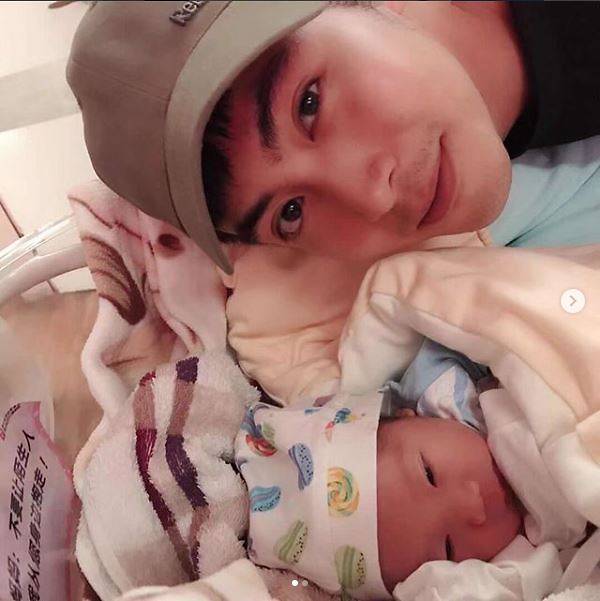
Xu Bin’s baby arrived 20 days earlier than the expected due date. (Photo: Instagram/Xubin)

The 29-year-old actor, who was the first of Mediacorp’s Eight Dukes to get hitched, married his China-born wife in November last year.

He paid tribute to his wife in Facebook and Instagram posts, thanking her for her “hard work” in delivering their baby and for giving him “this happy little family”.

“I know you wanted to baby to come out on the due date, but as you say, the end result was still successful,” he wrote to his wife in the post.

“Thank you for giving me this happy little family. Love you.”

Congratulatory messages flowed in shortly after he made the posts, which garnered 11,500 likes on Instagram and more than 600 reactions on Facebook in under an hour.

Born in Fujian, China, Xu moved to Singapore 17 years ago. He is known for starring in popular Channel 8 dramas such as 118 (2014) and You Can Be An Angel 2 (2016).

Source link

MPs question gender-based premiums, criteria for disability payouts 

0

SINGAPORE: Premiums for CareShield Life – an enhanced version of national disability scheme ElderShield, should not be gender-differentiated, several MPs argued in Parliament on Tuesday (Jul 10).

A total of 20 Members debated the scheme, which was designed based on the recommendations of an ElderShield Review Committee. Several MPs said that the differentiation makes the scheme less inclusive.

MP for Tanjong Pagar GRC Lily Neo said that some women might find it harder to pay for premiums and urged Health Minister Gan Kim Yong to reconsider the higher premiums for women.

“While I can understand that women live longer, I feel that there can be better inclusiveness and fairness. My concern is that women may have less means to pay for premiums compared to men,” she said, adding that women are earning less due to family commitments and may have even less savings to spare with increasing age.

lily neo

MP for Jalan Besar GRC Lily Neo in Parliament.

Workers’ Party’s (WP’s) Sylvia Lim echoed the same view. She pointed to an article by a professor from the London School of Economics, which argued that social insurance schemes for long-term care should not take into account the gender difference in premiums.

According to the article, many women take up unpaid work to care for their families, and women are much more likely to remain outside the labour force. 

BIGGER PROPORTION OF WOMEN EXPECTED TO BECOME SEVERELY DISABLED: AMY KHOR

Responding to Dr Neo, Ms Lim, and others who brought up the same point, Senior Minister of State for Health Amy Khor said that the ElderShield Review Committee had debated this topic extensively and that it was not an easy decision to make. 

“While we have designed CareShield Life to be inclusive, it is equally important for the scheme to be equitable and sustainable. To that end, premiums must be actuarially sound,” she said.

Women live longer than men, and are therefore more likely to spend more years in severe disability, she explained.

To underline the need for differentiation, she said that last year, the average life expectancy at birth for women was 85.2 years, compared to 80.7 years for men. 

Three in five healthy women at age 65 are expected to become severely disabled, compared to two in five healthy men at age 65, she said.

She also pointed to a longitudinal survey of older Singaporeans in 2009 and 2011 to 2012, in which researchers estimated women aged 60 are expected to spend 7.8 years requiring assistance with Activities of Daily Living (ADLs) compared to 2.6 years for men aged 60.

In order for a person to be defined as severely disabled and make a claim from CareShield Life, he or she has to be unable to perform at least three of the six ADLs independently. These are washing, dressing, feeding, using the toilet, moving around and the ability to transfer oneself from a bed to a chair. 

The committee did consider that women have less savings on average, and the costs could therefore be better supported by the men, she added.

“However, on balance, the Committee decided that applying gender-differentiated premiums for CareShield Life would more accurately reflect the differences in risk between men and women, and result in a more sustainable scheme,” she said. 

RELAX CRITERIA FOR CLAIMS, INCREASE PAYOUT

MPs also asked if the Government would consider reviewing the eligibility requirements for claimants.

MP for Hougang SMC Png Eng Huat said that the definition of severe disability has remained “untouched” over the past years during reviews of Eldershield, and is too “restrictive” when insured persons have to file a claim. 

“Not being able to do one of the six ADLs is already a challenge for most of us in this House,” he said, and emphasised his party’s call to review the ADLs test. 

MP for Bukit Batok SMC Murali Pillai urged a more measured approach and questioned if the affordability of premiums and impact on government subsidies will be affected if claims are made easier. 

He said he was concerned about the impact of lowering the threshold on the premiums. 

“Would the premiums remain affordable? If not, how much more subsidy is expected from the Government?” he asked. The annual premium is expected to be S$206 for a man who turns 30 years old in 2020, and S$253 for a woman. These figures do not include subsidies.

Dr Lily Neo, Dr Lee Bee Wah and Mr Melvin Yong also asked whether S$600 per month, the proposed starting payout, will be enough, and if payout increases can continue for life even after a claim is made.

Mr Chee Hong Tat, who was Senior of State for Health till April this year, addressed these suggestions and questions. The Committee discussed these ideas and carefully considered the trade-offs between further increasing the payout amount and lowering the claims criterion versus the need to keep premiums affordable in a universal insurance scheme, he said.

He illustrated how premiums would rise, should payouts be increased and the criteria relaxed.

“If we raise the payout amount from S$600 to S$800 per month, premiums for a 30-year-old male in 2020 could increase by about one-third,” he said.

He added that if additionally, the claims criterion is lowered from three ADLs to two, premiums will further increase by a third. As a result, the annual starting premium will be about 70 per cent higher than the currently proposed premium.

CALL FOR MORE TRANSPARENCY

MP for Pasir Ris-Punggol Zainal Sapari and MP for Nee Soon GRC Lee Bee Wah also asked for the actuarial considerations and premium impact, if the Government were to include those with pre-existing severe disabilities in the existing cohorts from CareShield Life.

Addressing their questions, Dr Khor said the proportion of Singaporeans who are severely disabled in old age is much higher.

“About 7 per cent of Singaporeans aged 65 and above today are severely disabled, compared to less than 0.1 per cent of Singaporeans aged between 30 and 40,” she said. 

She cautioned that including the severely disabled from existing cohorts in CareShield Life would significantly increase premiums by about 30 per cent for the rest of policyholders in these cohorts.

pritam singh

MP for Aljunied GRC Pritam Singh in Parliament.

WP MP Pritam Singh and Non-Constituency MP Leon Perera called for more transparency in the mechanism behind premiums.

“To arrest unnecessary speculation and misinformation about CareShield Life, the Government should commit to publish and be absolutely transparent about the actuarial principles and factors that drive premium hikes, including the investment returns on CareShield Life moving forward,” he said. 

In acknowledging MPs’ views that CareShield Life is not easy for Singaporeans to understand, Health Minister Gan Kim Yong said that the Government will initiate more communications and engagement efforts.

Wrapping up the debate, he said: “We will work with community partners and stakeholders to reach out to Singaporeans. We will continue to explain the schemes to Singaporeans and how they can tap on them to support their long-term care needs.”

Source link

‘Try talking to more than 20 pilots at the same time’: Air traffic controllers behind the NDP aerial display

0

SINGAPORE: The first and only time Captain (CPT) Paul Lim had watched the National Day Parade (NDP) live was when he was a Primary 5 pupil.

Back then, the airspace management coordinator was thrilled to watch fighter jets pull off acrobatic stunts and military helicopters fly in formation.

“At that point of time, I believe I was still too young and didn’t really understand the complexity of how all these aerial displays can be done,” said CPT Lim.

“But now that I’m in this line of service, I think that this is actually not an easy task.”

The 29-year-old was referring to his job of coordinating this year’s NDP flypast as the parade’s overall exercise coordinator.

NDP Air Traffic Controller Paul Lim 2

Captain Paul Lim is the overall exercise coordinator for airspace management at this year’s NDP. (Photo: Mediacorp)

“What people don’t see is that there is actually a team behind the scenes in the ops room. They are ensuring that all these aircraft are safe and well de-conflicted from each other,” said CPT Lim.

He is responsible for designing and translating a comprehensive plan for his team, 203 Squadron, which is made up of 10 air traffic controllers at five main control zones for this year’s parade.

His task is no easy feat, especially since this year’s NDP coincides with the Republic of Singapore Airforce’s (RSAF) 50th birthday. To commemorate its anniversary, the RSAF has promised an “enhanced” aerial display, which boasts one of the most complex aerial designs.

NDP Air Traffic Controller Paul Lim

CPT Lim is responsible for designing and translating comprehensive plan to air traffic controllers. (Photo: Mediacorp)

It also happens to be CPT Lim’s first time as overall in-charge.

“One of the challenges would be translating the plans from the higher-ups back to the squadron and that usually has to be done within a short period of time,” said CPT Lim.

“As a coordinator, I will have to translate these plans in a manner such that my controllers know and understand the plan. I’m also responsible for ensuring the contingency plans will be at their fingertips.”

Training for air traffic controllers began as early as May this year, with rehearsals happening three to four times a week and combined rehearsals taking place every Saturday.

RSAF Captain Seah Guo Jin, 26, is the main controller for the aerial display and is also part of 203 Squadron. He works closely with CPT Lim.

They are both stationed at the Singapore Air Traffic Control Centre in Changi.

NDP Air Traffic Controllers Seah Guo Jin Paul Lim

Captain Seah Guo Jin (left) is the main air traffic controller and he works closely with CPT Paul Lim (right). (Photo: Mediacorp)

“My role requires me to talk to more than 20 aircraft in the air … and that’s the main excitement. Each pilot has their own demands, timings and targets to meet,” said CPT Seah.

“As a controller, I need to manage them and ensure that their demands are being met while flight safety is maintained. It is a job that requires quite a bit of mental capacity and a fair bit of confidence.”

Despite the sheer intensity of the job, which requires them to stay glued to their radar screens, both men say it is a “refreshing and fulfilling” experience.

“At the end of the day if I have managed to complete the entire aerial display and execute it perfectly, I will go home feeling satisfied that my family and friends get to enjoy a spectacular show,” said CPT Seah. “This gives me a very warm feeling in my heart when I make my way back and meet my family.”

“I will take pride and say that my job is definitely not boring. Consider the fact after this NDP, I can always pose a question: ‘Have you ever talked to more than 20 pilots at one point in time?’ If the answer is no, I’ll take it that I brought my point across.”

NDP Air Traffic Controllers Paul Lim Sean Guo Jin

CPT Lim and CPT Seah work closely together. (Photo: Mediacorp)

On a day-to-day basis, the team works with the Civil Aviation Authority of Singapore (CAAS) and provides search-and-rescue operations when the need arises.

In less than a month, the 203 Squadron will be back to its usual business.

In the meantime, rehearsals for Aug 9 are underway and for CPT Lim, his wish to watch the parade “live” will not happen any time soon.

“Even though we are not physically at the show centre, I feel that we are emotionally there because whenever my friends are near Marina Centre, they will tell me about the number of aircraft they see, and the formations that fly past. I feel very happy when they tell me it was a good show,” said CPT Lim.

“And I will tell them, that’s my job.”

Source link

Stamp duty collected rose 46% in 2017: Heng Swee Keat

0

Stamp duty from property transactions made up the vast majority of total stamp duty collection, the Finance Minister added.

condo launch file

Potential buyers at the launch of a new condominium in Singapore. (File photo: TODAY)

SINGAPORE: The amount of stamp duty collected by the Government rose by 45.9 per cent in 2017, with most of the receipts from property transactions, Finance Minister Heng Swee Keat revealed on Tuesday (Jul 10).

This is up from the 14.2 per cent increase in stamp duty collected in 2016 and the 6.2 per cent decrease recorded in 2015.

In a written response to a Parliamentary question by MP Gan Thiam Poh, Mr Heng also said that S$2.2 billion in stamp duties have already been collected in the first five months of this year.

He did not provide the value of the stamp duty collected in the previous years.

Stamp duty is payable on instruments which effect a transfer of interest in properties, and stocks or shares in Singapore.

Stamp duties have been in the spotlight this week after the Government announced on Jul 5 surprise cooling measures including tighter loan limits and a hike in Additional Buyer’s Stamp Duty (ABSD) rates for some buyers.

The curbs, the Government said, were part of efforts to “cool the property market and keep price increases in line with economic fundamentals”. 

In his written reply on Tuesday, Mr Heng also said that S$2.2 billion in property taxes have been collected in the first five months of the year.

The percentage changes in property tax collection over the last three years are: +4.2 per cent in 2015, -1.3 per cent in 2016 and +0.4 per cent in 2017.

The cooling measures implemented last week came a day after Monetary Authority of Singapore managing director Ravi Menon called for caution amid “euphoria” in the property market

Flash estimates released by the Urban Redevelopment Authority (URA) showed that private home prices had jumped by 9.1 per cent year-on-year in the April-to-June period, with analysts predicting that prices could soon recover to 2013 peak levels.

This prompted crowds of potential buyers to flood showflats across Singapore until late into that evening. Several developers even brought their launches forward by a few weeks. 

Source link

Two arrested after foiled attempt to import 3kg cannabis into Singapore

0

SINGAPORE: Two foreign nationals were arrested after a foiled attempt to import more than 4,800 Yaba tablets and 3kg of cannabis into Singapore.

A 27-year-old man – who was on the wanted list for an earlier case of forgery for the purpose of cheating – was arrested by officers from the Airport Police Division while trying to enter Singapore on Jul 9 (Monday).

During a search of his luggage, officers found 4,831 Yaba tablets and another 79 fragments of Yaba tablets hidden in a handphone box, the police and Central Narcotics Bureau (CNB) said in a press release on Tuesday.

Another 3kg of cannabis – enough to feed the addiction of more than 420 drug abusers for a week – was hidden in canisters and boxes labelled as containing food items.

The alleged intended recipient of the drugs – a 24-year-old man – was arrested in the vicinity of Portsdown Road following investigations by the CNB.

Close-up view of cannabis found concealed in box labelled as containing food items

Close-up view of cannabis found concealed in box labelled as containing food items. (Photo: CNB)

Source link

Driver believed to be missing after car overturns in Sengkang

0

SINGAPORE: A car overturned in an accident in Sengkang on Monday (Jul 9) but when medics rushed there, they found no one at the scene.

The Singapore Civil Defence Force (SCDF) said that it responded to an accident along 20 Rivervale Drive at 5.13pm on Monday (Jul 9).

“Upon arrival, SCDF could not find anyone at scene,” it said.

Police said the accident only involved the car and that investigations are ongoing. 

It is understood that the driver of the car is missing and police are still searching for the driver.

Overturned car Sengkang

SCDF said that it “could not find anyone at scene” upon arrival at Rivervale Drive. (Photo: Leow Rong Sheng)

An eyewitness, 28-year-old Leow Rong Sheng, said that he was at home when he heard an unusually loud bang and saw a car overturned on the road opposite his flat. 

The insurance agent said he immediately called the ambulance and went down to take a look.

“The ambulance arrived, but there were no casualties at the scene,” Mr Leow said. 

“According to one man whom I believe witnessed the accident, he said that there were two people in the overturned car and they fled the scene after escaping from the car.

“That same man stayed till the police arrived to provide information on what he saw.”

He added that the ambulance took only five to six minutes to reach the accident scene.

Source link