Home Blog Page 995

Singapore’s sex problem and its declining birthrate

0


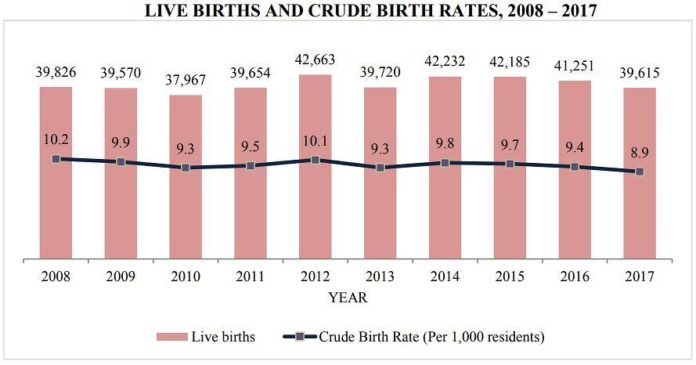
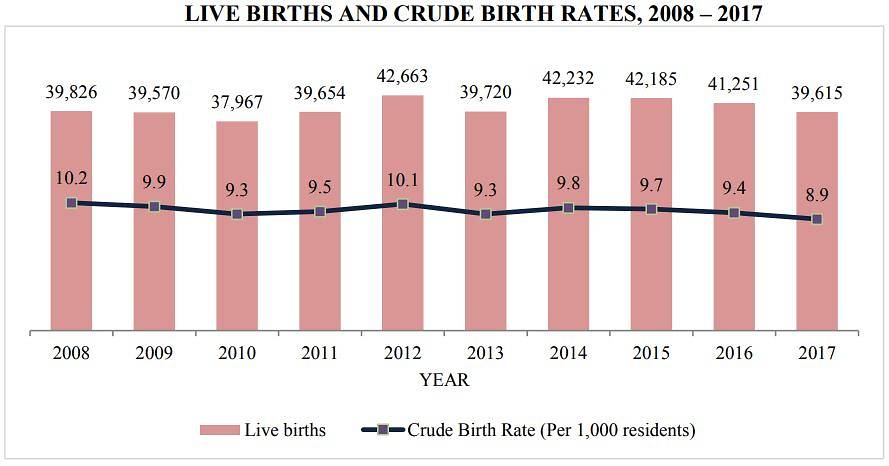
SINGAPORE has seen four a percent decrease in number of births in 2017, falling to 39,615 from 41,251 in the previous year, a report said.

According to the city state’s Department of Statistics, the data showed that the 2017 figure was the lowest number of births since 2010, when 37,967 births were recorded, Channel News Asia reported.

The highest number of birds recorded within these eight years was in 2012, which saw 42,663 births in the year of the dragon.

And while 2017 had the lowest number of births, the tiny country also saw more deaths (20,905) recorded last year, a 4.4 percent increase from 2016.

SEE ALSO: IMF tells Asia to learn from Japan, act early on ageing population 

The bulk of the deaths were recorded in hospitals, of which 17,192 of the deceased were aged 60 or older.

The two most common deaths were due to malignant neoplasms or cancerous tumours and heart and hypertensive diseases.

In 2016, Senior Minister of State Josephine Teo, who oversees the National Population and Talent Division, raised concerns over low birthrates in the country, but courted controversy after telling young couples they “do not need much space to have sex”.

The government also launched a scheme to prioritize first-time married couples in obtaining homes as concerns mount over their abilities to secure housing before starting families.

SEE ALSO: ‘You don’t need much space for sex’, Singapore minister tells young couples

In 2015, the government began dishing out as much as S$10,000 ($7,400) in cash to Singaporeans who have a baby in a bid to enhance its incentives scheme.

shutterstock_407725318

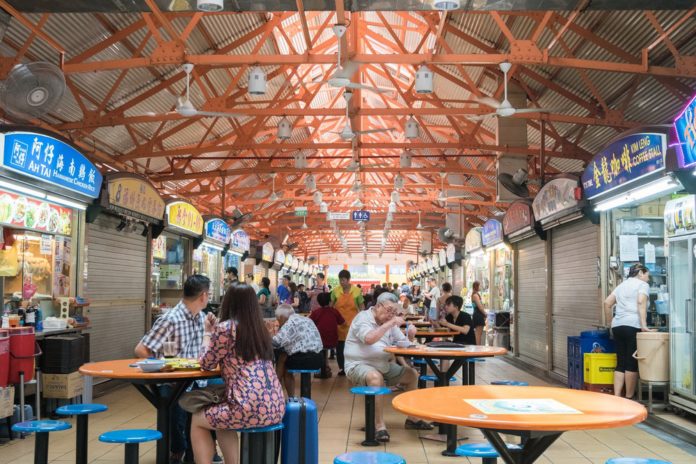
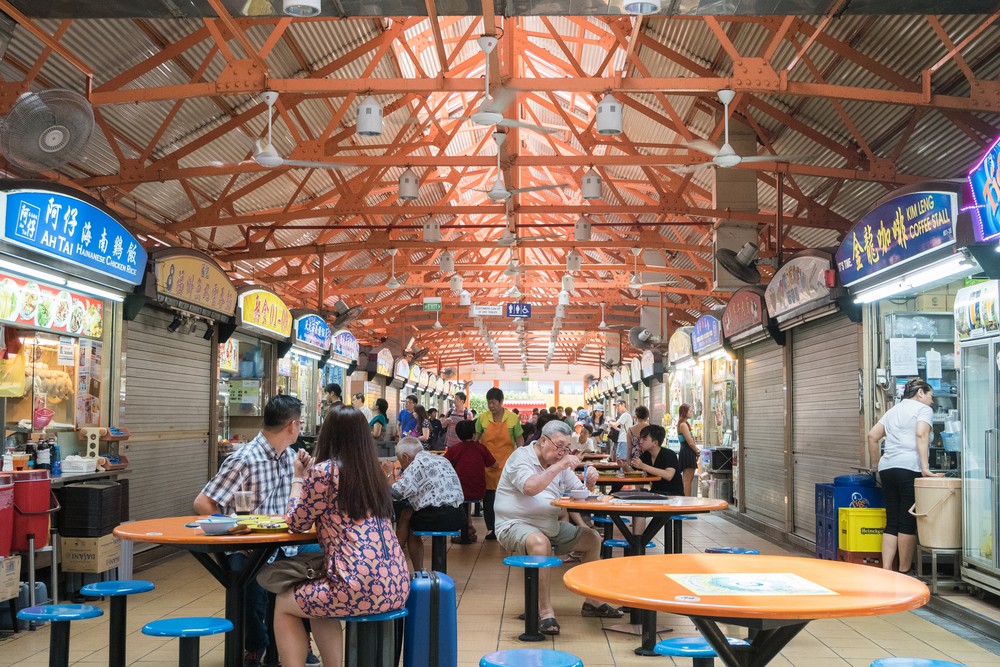
People dine at the Maxwell Road hawker centre in Singapore. Source: Annop Itsarayoungyuen / Shutterstock

But while the government was pushing to address the infertility woes, the minister said it should not be too nosy in the private lives of its citizens.

Teo said encouraging birth rates was better done with persuasion instead of having the “Government poke its nose into the bedroom”. Women, she said, should attempt to have babies when they are younger.


Source link

Coca-Cola to help tackle diabetes scourge, but sugar tax won’t help: CEO

0

SINGAPORE: Despite the diabetes and obesity problem in Singapore, the United States and other parts of the world, The Coca-Cola Company will always make available its classic Coke in its original formula – with the full amount of sugar.

That is nine teaspoons of sugar in a 330-millilitre can, and Coca-Cola president and chief executive officer James Quincey told Channel NewsAsia’s Conversation With that “there’s nothing wrong with it if it’s part of a balanced diet”.

Singapore’s guideline on the daily intake of added sugar is that it should not exceed 10 teaspoons.

For a 330ml canned drink, this is equivalent to the 12-per-cent sugar cap that the seven biggest soft drink firms here, including Coca-Cola, agreed to meet by 2020 in a pact with the Government.

And for a “large part of the population”, that sugar content is not a problem, said Mr Quincey.

READ: 7 major soft drinks manufacturers in Singapore to reduce sugar content in drinks

But he admits that beverage companies like his may have been too slow to give consumers a wider range of healthier options.

Coca-Cola is making up for lost time by focusing on “reformulating some of our products, on innovation, on making packages smaller and on diversifying the portfolio into new drinks”.

“We’re not perfect, but we’re very clear now on what we need to do,” he added. That includes launching tea products with no sugar and making a “big push” with its Coke No Sugar cola.

“Clearly, some people need to take more action than others, so that’s why we’re investing strongly (in the new cola),” said Mr Quincey, adding that the product is growing by “double digits everywhere around the world, including Singapore”.

(dp) CW coke (1)

Coca-Cola president and chief executive officer James Quincey.

SUGAR TAX ‘NOT GOING TO HELP’

Governments are implementing sugar taxes, however, because they think manufacturers are not doing enough. This might be on the cards in Singapore too.

And the likely result of such a tax is that sales would go down, admitted Mr Quincey, who questioned whether the objective of “trying to help people rebalance the way they consume” would be achieved.

“I think the data coming out is (showing that) very narrow taxes on few categories in the context of food and beverages, where there are lots of other options for people to go for, aren’t proving to be effective,” he said.

“There’s a recent study done on the Californian tax, and what it showed is, of course, the sugared sparkling beverages went down. But people bought other food and beverages, so their total calories went up. So it’s not going to help solve it.”

The solution, he added, would involve “many stakeholders”, including manufacturers playing their part. “We embrace that idea. We want to be a part of helping to solve that problem, and yet allow people to enjoy great-tasting beverages.”

COKE’S SECRET INGREDIENT

It has been said that the formula for Coca-Cola, which was invented in 1886 in the American state of Georgia, is probably the most closely kept secret in the food and drink industry.

And the way Mr Quincey described how he was let in on it suggested as much. “There’s a secret ingredient. There’s a secret recipe, and it’s held in a very large safe,” he said with a smile, when asked.

(dp) CW coke 2

Coca-Cola was invented on May 8, 1886 in Atlanta, Georgia.

Despite having worked in the company for more than two decades, even as its chief operating officer, he declared that it was only after he became its CEO last year that he was told the secret, in cloak-and-dagger fashion.

“We make a special trip to the secret location where we have this huge fortress room – multiple feet thick of concrete cube,” he said.

In there is a filing cabinet with the files. And it’s all written down in old typewriting and scribblings on it … And you have to sign the register, (stating) I came in on this day and I read this bit.

Signatures “going back decades” are still there on the page, and the record shows that only “a few tens of people” have known the secret in the company’s long history.

(dp) CW coke 4

While he called this “part of the magic” of the company, some may wonder if Coca-Cola is perfectly all right to drink, with YouTube videos even showing how the soda can be used to scour toilets.

When this was put to him, he said: “Any product, whether it’s Coke or any of the other beverages, is either slightly acidic or slightly alkaline.

“If you want the simple experiment, get a lemon, squeeze some lemon juice and then try it with an orange, or try it with some pineapple juice. You’ll find that all of those liquids, ultimately, will wipe stuff off. So beverages are totally safe to consume.”

Watch the full interview on Conversation With here. New episodes every Thursday at 8.30pm SG/HK.

Source link

E-commerce site Shopee to start charging transaction fees from August

0

A 1 per cent fee will be applied on all successful transactions by sellers based in Singapore, says a company spokesperson.

Shopee screengrab

Screengrab of Shopee’s e-commerce portal. 

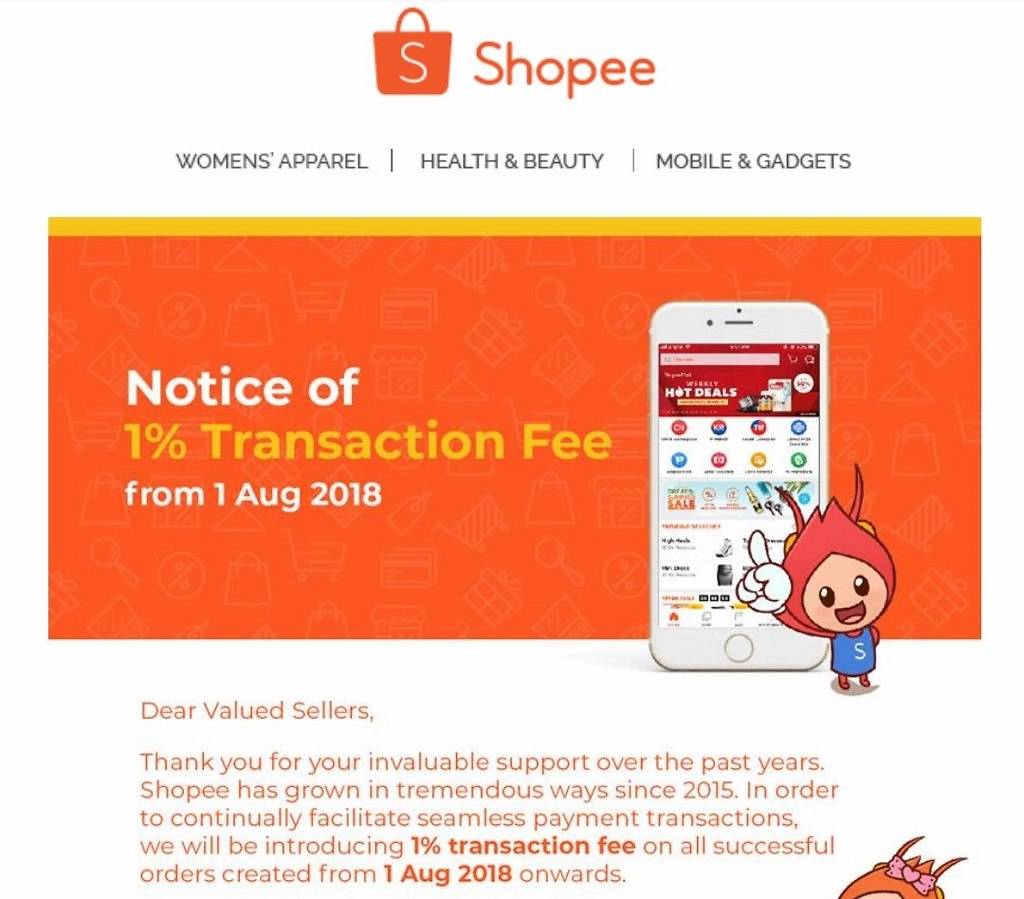
SINGAPORE: Shopee, the e-commerce site by Singapore tech firm Sea, will begin charging sellers a 1 per cent transaction fee for all successful orders beginning next month.

An email was sent out on Wednesday (Jul 11) to notify users of this new charge. Details of what the transaction fee entails can also be found under Shopee’s Help Centre section. 

The company told Channel NewsAsia in a statement that the 1 per cent transaction fee is for processing and handling payments, and that Shopee remains a zero-commission platform. It is applicable to sellers based in Singapore from Aug 1, following on the heels of Taiwan last year.

The fee will be applied on all successful transactions through bank transfers, credit card and Shopee Wallet payments, its website stated.

Shopee 1% transaction fee

An email was sent to Shopee sellers to notify them of the impending change in fees. 

“While the charging of transaction fees is an industry-wide standard, Shopee made sure to only introduce it at a point where we felt our users were ready,” the company said.

“The move to introduce transaction fees at this point in time highlights our shift in focus from merely growing the platform to building a more sustainable e-commerce ecosystem for our users in the long run, and also further cements our position as an established e-commerce player in the market.”

It also emphasised its range of free services for sellers, including free listing and shipping. These have been “very well received” and there are no plans to stop them, it said.

Shopee has more than 1.5 million users in Singapore, the company said. 

Rival platforms, too, impose fees on sellers through a variety of methods. Qoo10, for instance, charged a range between 7 per cent and 12 per cent of the total transaction amount depending on the item’s price and seller grade.

Shopee is part of US-listed company Sea, which announced in June it had raised US$575 million (S$780.2 million) in fresh funds that it intended to use for business expansion and other general corporate purposes, including to support the growth of its e-commerce platform. 

The company, formerly known as Garena, reported a net loss of US$216.2 million for its first quarter this year, nearly triple the loss it logged in the same period last year.

Source link

Coca-Cola to help tackle diabetes, obesity problem, but it’s not all change

0

SINGAPORE: Despite the diabetes and obesity problem in Singapore, the United States and other parts of the world, The Coca-Cola Company will always make available its classic Coke in its original formula – with the full amount of sugar.

That is nine teaspoons of sugar in a 330-millilitre can, and Coca-Cola president and chief executive officer James Quincey told Channel NewsAsia’s Conversation With that “there’s nothing wrong with it if it’s part of a balanced diet”.

Singapore’s guideline on the daily intake of added sugar is that it should not exceed 10 teaspoons.

For a 330ml canned drink, this is equivalent to the 12-per-cent sugar cap that the seven biggest soft drink firms here, including Coca-Cola, agreed to meet by 2020 in a pact with the Government.

READ: 7 major soft drinks manufacturers in Singapore to reduce sugar content in drinks

And for a “large part of the population”, that sugar content is not a problem, said Mr Quincey. But he admits that beverage companies like his may have been too slow to give consumers a wider range of healthier options.

Coca-Cola is making up for lost time by focusing on “reformulating some of our products, on innovation, on making packages smaller and on diversifying the portfolio into new drinks”.

(dp) CW coke (1)

Coca-Cola president and chief executive officer James Quincey.

“We’re not perfect, but we’re very clear now on what we need to do,” he added. That includes launching tea products with no sugar and making a “big push” with its Coke No Sugar cola.

“Clearly, some people need to take more action than others, so that’s why we’re investing strongly (in the new cola),” said Mr Quincey, adding that the product is growing by “double digits everywhere around the world, including Singapore”.

SUGAR TAX ‘NOT GOING TO HELP’

Governments are implementing sugar taxes, however, because they think manufacturers are not doing enough. This might be on the cards in Singapore too.

And the likely result of such a tax is that sales would go down, admitted Mr Quincey, who questioned whether the objective of “trying to help people rebalance the way they consume” would be achieved.

(dp) CW coke 3

A Coca-Cola production line.

“I think the data coming out is (showing that) very narrow taxes on few categories in the context of food and beverages, where there are lots of other options for people to go for, aren’t proving to be effective,” he said.

“There’s a recent study done on the Californian tax, and what it showed is, of course, the sugared sparkling beverages went down. But people bought other food and beverages, so their total calories went up. So it’s not going to help solve it.”

The solution, he added, would involve “many stakeholders”, including manufacturers playing their part. “We embrace that idea. We want to be a part of helping to solve that problem, and yet allow people to enjoy great-tasting beverages.”

COKE’S SECRET INGREDIENT

It has been said that the formula for Coca-Cola, which was invented in 1886 in the American state of Georgia, is probably the most closely kept secret in the food and drink industry.

(dp) CW coke 2

Coca-Cola was invented on May 8, 1886 in Atlanta, Georgia.

And the way Mr Quincey described how he was let in on it suggested as much. “There’s a secret ingredient. There’s a secret recipe, and it’s held in a very large safe,” he said with a smile, when asked.

Despite having worked in the company for more than two decades, even as its chief operating officer, he declared that it was only after he became its CEO last year that he was told the secret, in cloak-and-dagger fashion.

“We make a special trip to the secret location where we have this huge fortress room – multiple feet thick of concrete cube,” he said.

In there is a filing cabinet with the files. And it’s all written down in old typewriting and scribblings on it … And you have to sign the register, (stating) I came in on this day and I read this bit.

Signatures “going back decades” are still there on the page, and the record shows that only “a few tens of people” have known the secret in the company’s long history.

While he called this “part of the magic” of the company, some may wonder if Coca-Cola is perfectly all right to drink, with YouTube videos even showing how the soda can be used to scour toilets.

(dp) CW coke 4

When this was put to him, he said: “Any product, whether it’s Coke or any of the other beverages, is either slightly acidic or slightly alkaline.

“If you want the simple experiment, get a lemon, squeeze some lemon juice and then try it with an orange, or try it with some pineapple juice. You’ll find that all of those liquids, ultimately, will wipe stuff off. So beverages are totally safe to consume.”

Watch the full interview on Conversation With here. New episodes every Thursday at 8.30pm SG/HK.

(dp) CW coke 5

Source link

GIC’s annualised 20-year real return slips to 3.4%; maintains cautious investment stance

0

SINGAPORE: Singapore sovereign wealth fund GIC posted a drop in its key metric of investment performance for the last financial year, as it warned of a challenging environment ahead due to stretched valuations and heightening trade frictions.

For the year ended Mar 31, the 20-year annualised rate of return – GIC’s most important benchmark – slipped to 3.4 per cent from 3.7 per cent a year ago, according to the latest annual report released on Friday (Jul 13). This marked the third consecutive year of decline since the return rate hit 4.9 per cent in FY2014/15.

Nevertheless, GIC said this figure is above the global inflation rate and means that the international purchasing power of its reserves almost doubled during the 20-year timeframe.

CEO Lim Chow Kiat said GIC’s 20-year annualised rate of return was fluctuating around 4 per cent before declining below that in recent years. This is due to years being dropped and added as its 20-year window rolls.

“The high returns at the beginning of the tech bubble period (in the late 1990s) have dropped out,” he told reporters at a briefing, while adding that this effect could continue for a few more years and dampen the 20-year return.

“We don’t know what year will come in (but) what we can do is to focus on our approach, which is to make sure our portfolio is robust, diversified and is able to hold through difficult environments.”

rolling 20-year

In US dollar nominal terms, GIC’s portfolio returns were 5.9 per cent per annum over the last 20 years, slightly below the 5.7 per cent annualised return from its reference portfolio. The latter, made up of 65 per cent global equities and 35 per cent global bonds, refers to the risk that GIC can take to generate good long-term investment returns.

Over the five- and 10-year periods, GIC saw annualised returns of 6.6 per cent and 4.6 per cent in US dollar nominal terms, respectively. These are also lower than the reference portfolio’s 6.9 per cent return over a five-year period and 5.2 per cent over 10 years.

This is due to how GIC’s portfolio has a smaller allocation to developed market equities than its reference portfolio, after lowering its exposure in recent years due to increasingly stretched valuations, said the FY2017/18 report.

REMAIN ‘CAUTIOUS’ BUT READY FOR OPPORTUNITIES

As at the end of March 2018, developed market equities accounted for 23 per cent of GIC’s portfolio, down from 27 per cent a year ago.

This corresponded with a two-percentage-point increase in the allocation to nominal bonds and cash to 37 per cent – the highest level since GIC began issuing annual reports in 2008.

It also increased its allocation to private equity from 9 per cent to 11 per cent.

Emerging market equities, inflation-linked bonds and real estate form the other asset classes in GIC’s portfolio.

Having a smaller portion of its portfolio in developed market equities is reflective of GIC’s “cautious stance” at a time when downside risks are building up and the risk-reward ratio is not as attractive, explained Mr Lim.

The preservation of liquidity also means that the sovereign wealth fund will have “significant dry powder” in times of market volatility, he added. 

Group chief investment officer Jeffrey Jaensubhakij noted that GIC “decided it is prudent to be more cautious” and “did some pruning of the portfolio” earlier this year even though global markets were little swayed by initial threats of trade tariffs then.

“We like to prepare ahead so that when it comes to pass, we will already be prepared and if markets overreact, there may be opportunities to buy things that were otherwise not,” he said, while citing the example of Chinese A-shares which saw a sharp sell-off last month. “It was too expensive to buy but maybe, we can look at it now.”

When asked how GIC views the escalating trade conflict between the United States and China, Mr Lim described it as a “big concern”.

“If it leads to more disruptions of supply chains and difficulties with inflation, this could cause a serious impact on financial markets. As a global investor, we wish not to see that happen.”

Still, GIC is “pretty well prepared” given its diversified portfolio and cautious investment stance over the years.

“Even if the frictions escalate further, I would expect our portfolio to hold up relatively well,” said the chief executive.

Other downside risks shaping the challenging environment also include the increased risk of monetary policy tightening, elevated market volatility, underlying market vulnerabilities and most crucially, stretched valuations across a broad range of markets.

“Stretched valuations is a big challenge because if you go in at a high price, the fundamentals need to be better than what the prices already reflect for you to make good money,” explained Mr Lim.

“Being the manager of the country’s reserves, adopting a prudent approach is very important. The most important thing is to make sure that our portfolio is diversified and at the same time, maintain strong price discipline,” he added.

Nevertheless, Mr Lim said GIC remains ready to capture “idiosyncratic opportunities” or “potential market dislocations”.

For instance, it has set its sights on the technology sector, which has disrupted global economies and reshaped investment outcomes. Innovation in emerging markets, notably China and India, are where opportunities lie, the annual report said. 

The real estate sector, where the Singapore sovereign wealth fund has been active in, also remains on the radar.

As yields in traditional commercial assets like offices fall, GIC has turned to alternative real estate assets, such as student housing and rental apartment, said Dr Jaensubhakij.

In January, it formed a joint venture with the Canada Pension Plan Investment Board (CPPIB) and The Scion Group to acquire a student housing portfolio in the US for approximately US$1.1 billion (S$1.47 billion). It also partnered NOVA, a Shanghai-based property operator and investment manager, in May to set up a 4.3 billion yuan (S$904 million) rental apartment platform in China

Noting that GIC has to be “alert and agile” in its portfolio mix given the challenging environment of low returns and high downside risks, Mr Lim said: “We are prepared for the uncertainty ahead and are committed to delivering steady long-term returns on the reserves placed under our management.”
Source link

The True Monkey King

0

The True Monkey King
from Friday, September 21, 2018 at 10:30 AM to Friday, September 21, 2018 at 11:20 AM

Esplanade Theatre Studio

1 Esplanade Drive, Singapore, 038981 Singapore

Source link

Pipa Virtuoso Wu Man & Huayin Shadow Puppet Band Concert

0

Pipa Virtuoso Wu Man & Huayin Shadow Puppet Band Concert
from Saturday, September 22, 2018 at 7:30 PM to Saturday, September 22, 2018 at 8:40 PM

Esplanade Concert Hall

1 Esplanade Drive, Singapore, 038981 Singapore

Source link

Number of Singapore births in 2017 lowest in 7 years

0

SINGAPORE: The number of births in Singapore fell to 39,615 in 2017 – a 4 per cent decrease from the previous year when 41,251 births were recorded, according to statistics released by the Immigration and Checkpoints Authority (ICA) in June.

Data from the Department of Statistics also showed that this was the lowest number of births since 2010 when 37,967 births were recorded.

Within this eight-year period, the highest number of births was recorded in 2012, the year of the dragon, with 42,663 births.

birth and death rates 2017

Birth and death numbers in Singapore since 2008. (Source: ICA)

While there was a fall in the number of births, there were more deaths recorded in 2017. 

According to ICA, there were 20,905 deaths last year. This is 4.4 per cent more than what was recorded in 2016.

The majority of the deaths were recorded in hospitals and 17,192 deceased persons in 2017 were aged 60 or older.

ICA added that the two most common causes of death in Singapore were malignant neoplasms or cancerous tumours, and heart and hypertensive diseases.

These diseases accounted for 52.8 per cent, or more than half, of the recorded deaths in Singapore last year.

Source link

‘Freezing water with zero visibility but we kept going’: Singaporean diver who took part in Thai cave operation

0

SINGAPORE: When trained rescue diver Douglas Yeo finally emerged from the flooded Tham Luang cave complex on Tuesday evening, he was offered bottles of ice-cold Chang Beer. 

But having spent more than 12 hours in the complex, diving through “freezing” muddy waters, what the 50-year-old Singaporean craved for most was oxygen. 

“There was no excessive celebrations. Some divers were happy but we weren’t sure of the conditions of the boys. It just felt good to remove our masks and breathe the fresh air,” said Mr Yeo. 

He was among the thousands of people from around the world who came to Chiang Rai and helped rescue the 12 boys and their coach from the cave complex where they had been trapped in for more than two weeks. 

Mr Yeo was tasked to help with the last phase of the operation – to evacuate the last four boys and their coach from the depths of the cave. 

In a phone interview with Channel NewsAsia on Thursday (Jul 12) from Chiang Rai, Mr Yeo said he decided to volunteer for the rescue operation after reading the news about the perilous situation the Wild Boars football team were in. 

“I had a calling. I talked about it with my wife and my mother, and they gave their blessing,” said the father of three boys who rushed to northern Thailand via Bangkok on Monday evening after contacting an official involved in the operation. 

Mr Yeo said that the most difficult part of the rescue attempt was the need to be patient. He and his fellow rescue divers, most of whom were Thai Navy SEALs, had to wait for nine hours in cold and wet conditions before they were given the go-ahead to escort the boys out. 

Thai rescue operation Singaporean

Douglas Yeo (extreme right) posing with fellow rescue divers. (Photo provided by Douglas Yeo) 

While waiting, he said he could hear loud murmurs from everyone – divers as well as the boys – praying that they will be safe. 

“I heard different chants and prayers from different religions. But we were all (united) in wanting the operation to be a success,” said Mr Yeo. 

“We had to do everything slowly, meticulously. We moved (the boys) from chamber to chamber, step by step. We wanted no casualties,” he said. 

“The muddy water we were diving in was freezing and we had zero visibility but we kept going. We had to feel our way forward by moving along a rescue line (rope) to get out,” said Mr Yeo, who runs dive school Sunfish Dives in Bintan. 

Although he had 26 years of experience in rescue diving, Mr Yeo said nothing had prepared him for the technical challenges of the operation. 

“There were no machines to help us. We had to do it with the equipment we had,” he explained. 

‘BROTHERHOOD’ WITH FELLOW RESCUERS 

Mr Yeo said that the biggest takeaway from the operation was the friendships he formed with fellow divers, who were mostly Thai SEALs, as well as volunteers from around the world. 

“I don’t have a (biological) brother, but now I have so many brothers from Thailand, Argentina and the UK. Everybody accepted me like one of their own, the spirit is great,” he said. 

Singaporean thai rescue op celebrating

Douglas Yeo (in blue) having a meal with fellow rescuers after the operation ended. (Photo provided by Douglas Yeo) 

Now that the operation was over, he would be joining his new “brothers” to attend the wake of Saman Kunan, the former Thai Navy SEAL who died during the operation. 

“We’re flying there today. I feel for him and his family, and want to pay my respects,” he said.  

Thai cave buddies

Composite image of rescue divers Singaporean Douglas Yeo and Thai rescue diver Joe. (Photos: Douglas Yeo) 

He will be heading to the funeral with his rescue buddy, Joe, who he described as an awesome source of inspiration and guidance during the course of the operation. 

“Joe took care of me. We went to the toilet together, prepared food for each other and we made it out together, mission accomplished,” he said.

“Now, we’re brothers for life.” 

Source link

Singapore, South Korea to expand cooperation in areas of trade, investment and the environment

0

Prime Minister Lee Hsien Loong and South Korean President Moon Jae-in witnessed the exchange of six Memoranda of Understanding (MOUs) on Thursday (Jul 12).

Moon Jae-in and Lee Hsien Loong news conference

South Korean President Moon Jae-In and Prime Minister Lee Hsien Loong at a joint press conference on Jul 12, 2018. (Photo: Ministry of Communications and Information)

SINGAPORE: Singapore and South Korea have agreed to expand cooperation in areas like trade, investment and the environment, as Prime Minister Lee Hsien Loong and South Korean President Moon Jae-in witnessed the exchange of six Memoranda of Understanding (MOUs) on Thursday (Jul 12).

Mr Moon is in Singapore on a three-day state visit at the invitation of President Halimah Yacob. 

Speaking during a joint news conference with Mr Lee, Mr Moon noted that Singapore is South Korea’s second largest trade partner among ASEAN countries. 

“The potential for development will be further magnified if we make the best use of our mutually complementary economic structures,” he said.

In 2017, South Korea was Singapore’s ninth largest trading partner, with bilateral trade in goods amounting to S$45.4 billion, according to information from the Ministry of Trade and Industry (MTI).

Three of the six MOUs were exchanged by MTI and South Korea’s Ministry of Trade, Industry and Energy.

In the first MOU, Singapore and South Korea will launch a Korea-Singapore Free Trade Agreement (KSFTA) implementation review within six months. Both countries will also reaffirm commitment to work towards a substantive conclusion of the Regional Comprehensive Economic Partnership (RCEP) negotiations by this year, MTI said in a news release.

The second MOU aims to enhance cooperation in medical and biotechnology, Artificial Intelligence, and Industrial Internet of Things, while the third will allow both countries to pursue mutual cooperation in smart grids, as well as energy security and Internet of Things applications in energy technologies.

Enterprise Singapore also exchanged two MOUs – the first with South Korea’s Ministry of SMEs & Startups (MSS), and the second with the Korea Trade-Investment Promotion Agency (KOTRA).

The MOUs, said Enterprise Singapore in a news release, establish new partnerships that drive collaboration and co-innovation between Korean and Singapore enterprises, especially among small and medium enterprises and start-ups.

The last MOU, on environmental cooperation, promotes bilateral collaboration in areas such as air and noise pollution, water resource management, climate change mitigation and adaptation, as well as waste and hazardous waste management, according to a release from the Ministry of the Environment and Water Resources. 

Moon Jae-in orchid

South Korean President Moon Jae-in (right) at the orchid naming ceremony at Singapore Botanic Gardens on Jul 12, 2018. (Photo: Ministry of Communications and Information)

Mr Moon was hosted to lunch by Mr Lee after the exchange of MOUs. He and his wife, Madam Kim Jung-sook, also had an orchid named in their honour at the Singapore Botanic Gardens. 

Source link