SINGAPORE: SMRT’s new chief executive officer Neo Kian Hong expressed confidence in earning back the public’s trust as he spoke to reporters about his vision for the transport company.
“We continue to organise our people to deliver well. So as long as we focus on delivering the reliability, over time we should be able to regain their confidence,” Mr Neo said on Monday (Aug 13) in his first interview with the media since his appointment.
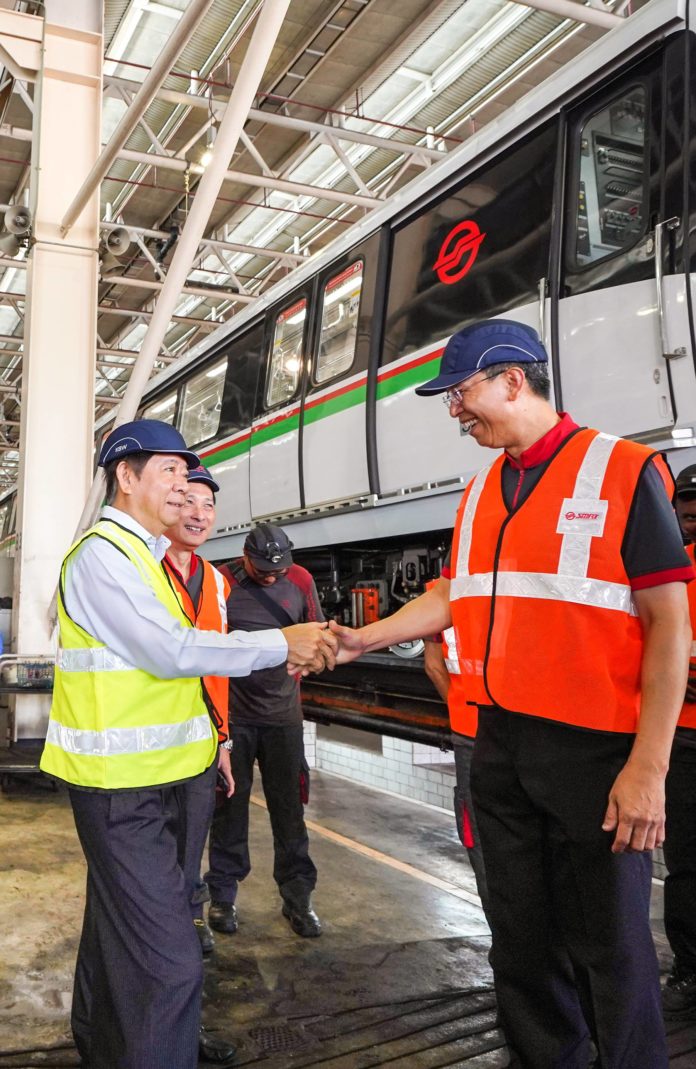
Mr Neo was speaking on the sidelines of a visit to SMRT’s Bishan depot, where he was briefed on the new batch of C151C trains.
SMRT has been at the heart of several high-profile incidents in recent times, including a train collision at Joo Koon MRT station last November and a flooded MRT tunnel in October.
Addressing reporters, he revealed that he has set out three goals for the company – providing reliability, creating sustainability and ensuring continuous improvement.
Mr Neo described reliability of services as a “basic requirement” that the transport operator will need to provide under his leadership. “As a trains company, we will be focused on delivering safe and reliable train services,” said Mr Neo.
GIVING UP CAR TO TAKE TRAIN
In order to better serve in his new role, Mr Neo revealed that he has opted against purchasing a new car and instead take public transport and taxis.
“I sold my car earlier on but I didn’t want to buy a new car because it is more useful for me to take the MRT to understand the issues and take our company’s assets like our taxis and buses and so on because I can do work at the same time even as I am travelling,” he explained.
SMRT CEO Neo Kian Hong shakes hands with Transport Minister Khaw Boon Wan. (Photo: SMRT)
He also revealed that his family shifted to a new home because of his new role.
“It’s because of this job. I moved near Shunfu to be exact, just to make sure I can take the trains to work and that its easier for me and that my family can support me in doing this,” he added.
Mr Neo replaced former CEO Desmond Kuek, who spent five-and-a-half years heading the transport company.
In 2010, the former succeeded the latter as the chief of defence force. After leaving the military in 2013, Mr Neo was appointed permanent secretary for education development at the Ministry of Education before joining the Defence Ministry last year.
He was also appointed a non-executive director of Singapore Technologies Engineering last June.
“CONFIDENT HE WILL MAKE A DIFFERENCE”: SMRT CHAIRMAN
During his visit to Bishan depot, Mr Neo was accompanied by SMRT chairman Seah Moon Ming, Transport Minister Khaw Boon Wan, LTA chief executive Ngien Hoon Ping and LTA deputy chief executive for infrastructure and development Chua Chong Kheng.
Mr Seah said that Mr Neo understood the mission of the company, and is an individual who sees his role as a “duty” to the company and public.
“I am confident that he will make a difference to SMRT,” said Mr Seah. “He is competent to lead and run large organisations well. Over the last two months during the leadership transition, he has worked the ground and understands the ground challenges.”
SMRT has had to defend its appointment of Mr Neo even before he officially took over the reigns, with SMRT’s vice-president for corporate communications Margaret Teo citing the senior civil servant’s “personal values” and “leadership qualities” as key reasons for his appointment in a Straits Times forum letter on Apr 21.
Ms Teo’s letter was in response to another Straits Times forum letter published two days before, in which its author Dr Michael Loh Toon Seng said that he was “disappointed” that SMRT had chosen “another chief executive” without “relevant experience”.
However, Mr Neo said that he has received positive feedback since his appointment was announced.
“The public has been very supportive,” he said. “When it was announced that I am taking over this job, many have come to me and expressed a lot of support. They have also expressed that they are very proud of the rail and that they want us to continue to improve it.”
FOREIGN POLICY prophets have long deliberated on the future of world order.
Some argued the 21st century would belong to China and result in a “Pacific Century”, others contended it would be an Asia-Pacific order, and some went on to claim that the future of world order would be decided in Eurasia.
Perhaps they all spoke too soon. A new space seems to have captured their imagination: the Indo-Pacific.
While the term itself is not novel, its application in contemporary international relations discourse has made it a subject of great interest among policymakers and media pundits alike. Commentators from New Delhi to Tokyo, and from to Canberra and Washington believe the term is here to stay.
For me, though, the jury is still out. Here’s why.
The Indo-Pacific – be it concept, strategy, or simple geography – still lacks a shared understanding among countries that reside in this vast super-region.
While the Indo-Pacific has made its way into the foreign policy lexicon of countries like Japan, the United States, India, and Australia, a closer look reveals that these countries have important differences in how they interpret the term and how it aligns with their foreign policy outlooks.
Let’s begin with Japan, the country that arguably breathed new life into the dormant concept by incorporating the Indo-Pacific as part of its official foreign policy nomenclature.
In his speech at the opening session of the Sixth Tokyo International Conference on African Development (TICAD VI), Prime Minister Shinzo Abe outlined Japan’s vision for a “Free and Open Indo-Pacific” (FOIP).
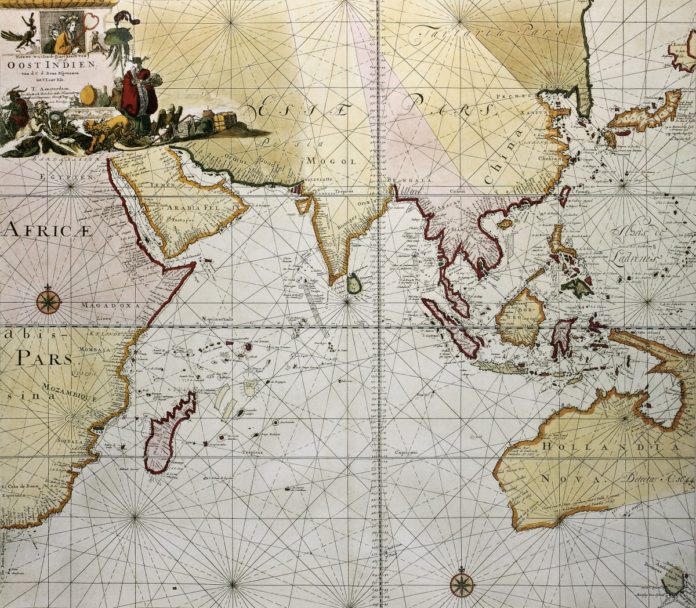
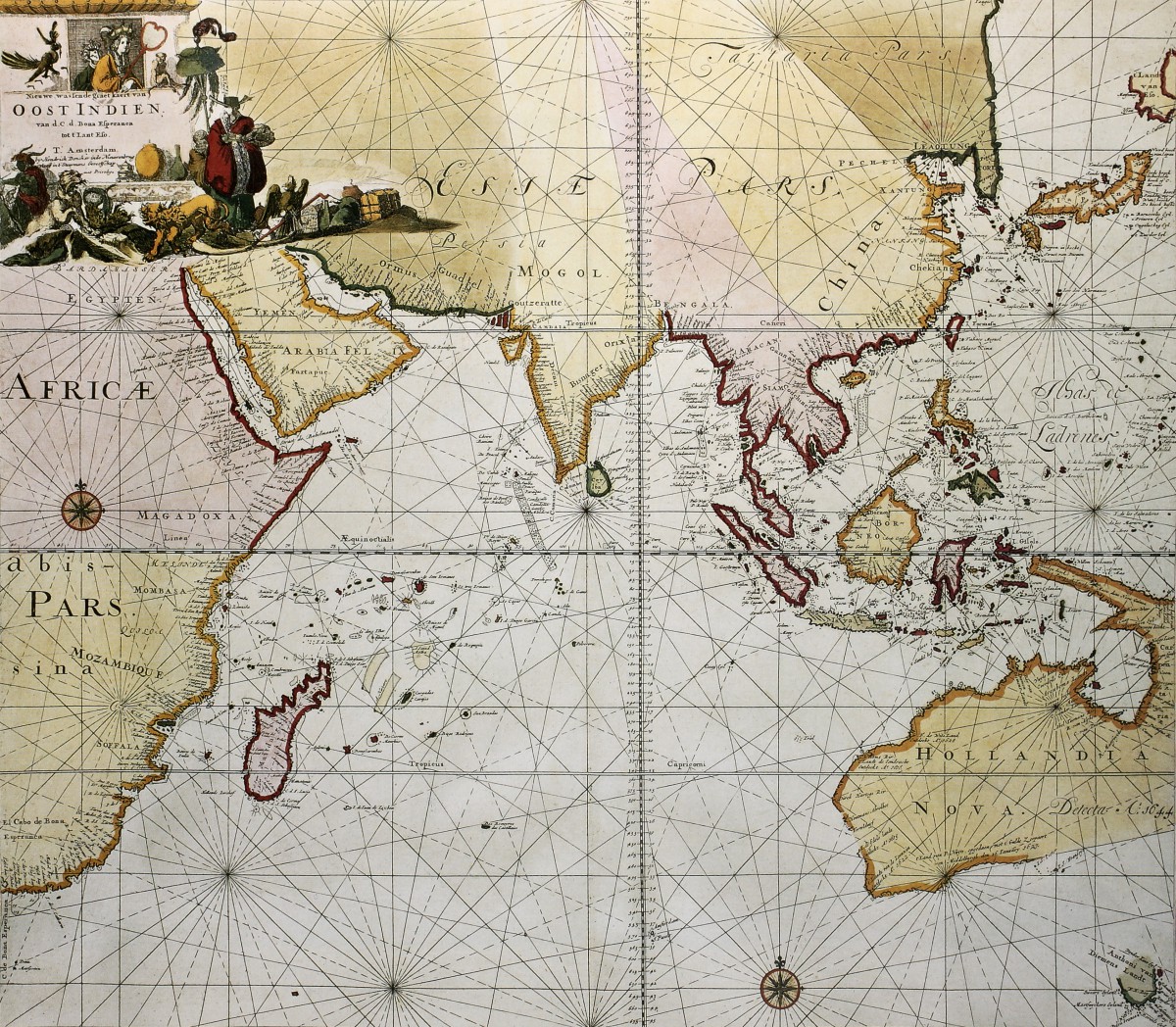
This 1705 map by Hendrick Doncker shows the Indian Ocean covering southern Asia, eastern Africa and west Australia. Source: Shutterstock
He remarked, “Japan bears the responsibility of fostering the confluence of the Pacific and Indian Oceans and of Asia and Africa into a place that values freedom, the rule of law, and the market economy, free from force or coercion, and making it prosperous.”
Abe not only presented external observers with an alternative to the Belt and Road Initiative (BRI), but also signalled Japan’s intention to take on a greater mantle of “responsibility” in the face of declining US leadership.
The FOIP not only represents continuity in Abe’s desire for Japan to play a greater role in the region, but also outlines important elements of Japanese grand strategy.
According to Corey Wallace, instead of openly balancing against China, Japan “…is focused, in the long term, on drawing the centre of regional economic gravity away from China to enable Japan and other regional nations to exist and prosper on the outer rim of Chinese hegemony – and to actively contest it if necessary.”
The Indo-Pacific concept quickly gained traction in Washington and led the Trump administration to incorporate it into their broader Asia strategy. However, unlike Japan, there are notable differences in how Washington interprets the Indo-Pacific.
First, the FOIP provides the Trump administration with a much-needed foreign policy brand to replace the Obama-era pivot.
Second, the US withdrawal from the Trans-Pacific Partnership means that the US lacks an economic component to buttress its FOIP strategy, which has led many observers to speculate that FOIP is simply a euphemism for a China containment strategy.
While some countries would welcome a more assertive US posture towards China, middle powers and smaller states in the region will be wary of endorsing any strategy that frames the future of the Indo-Pacific as a zero-sum competition between Washington and Beijing.
It is against this backdrop of heightened geopolitical tension in the region that one can begin to make sense of India’s stance on the Indo-Pacific.
Although many observers were expecting India to jump on the China-bashing bandwagon at Shangri La, Prime Minister Narendra Modi surprised many when he made the following consequential statement:
“India does not see the Indo-Pacific Region as a strategy or as a club of limited members”.
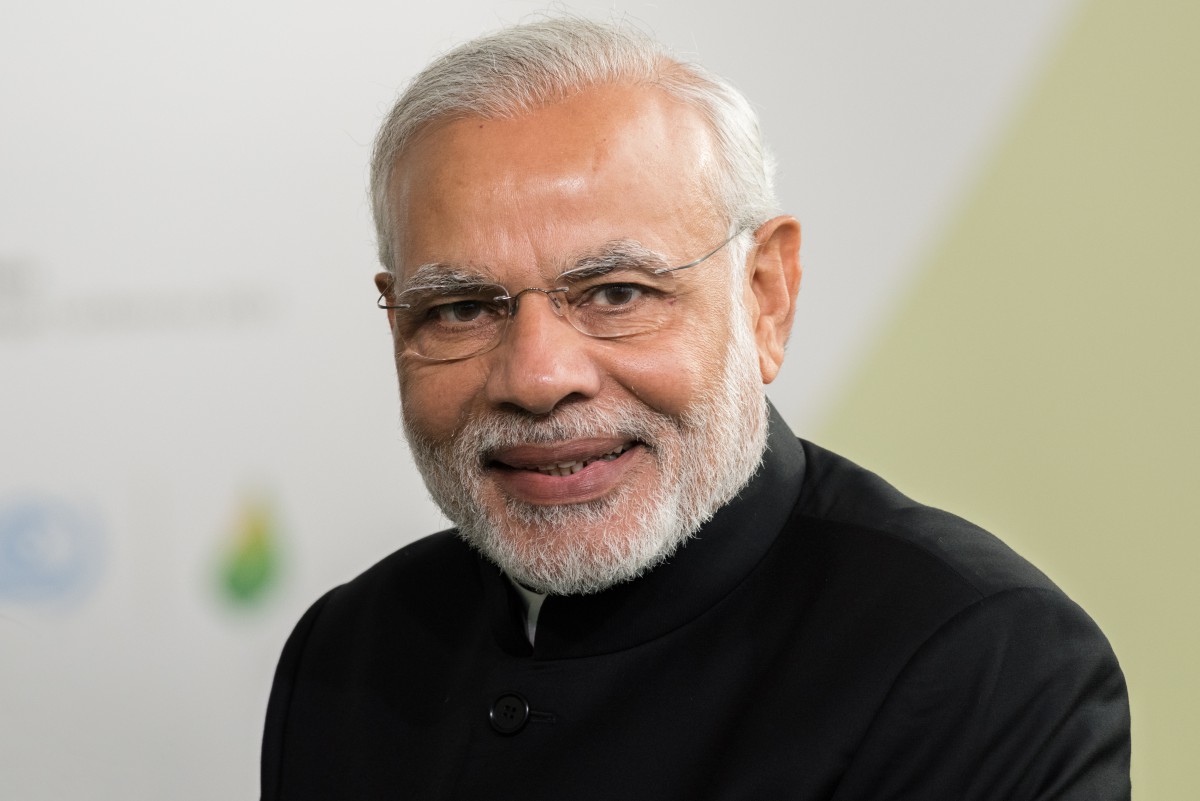
India’s Narendra Modi (pic) has a different stance altogether on the Indo-Pacific. Source: Shutterstock
This was a subtle signal that New Delhi does not endorse the framing of the Indo-Pacific in strategic and divisive terms. Instead, he presented an alternative – positive – vision where middle powers, rather than superpowers, can form a collective foundation for a ‘rules-based order’.
While the Indo-Pacific is indeed gaining currency in foreign policy circles, its varied interpretation reveals a far more fragmented picture.
The article first appeared on Policy Forum, Asia and the Pacific’s platform for public policy analysis and opinion.
SINGAPORE: Water scarcity has been a ticking time bomb across the globe.
Cape Town, one of Africa’s most affluent metropolises, was on the brink of disaster when it rapidly approached “Day Zero” – a moment when dam levels would be so low that taps would be turned off, and people must start queuing for water.
While the city narrowly missed “Day Zero” as predictions pushed the day to 2019, the rest of the world watched closely, reminded that water scarcity is an ever-present threat for all nations.
In Asia, the threat is more present than ever – water demand is forecasted to increase by 55 per cent by 2050, as population also increase. A recent study by MIT found an additional 200 million people across Asia would be vulnerable to severe water shortages by 2050.
Worsening climate conditions such as droughts further dwindle our limited water resources.
The problem varies from country to country: Myanmar loses some 100 million gallons of water daily in the supply process due to theft, metering inaccuracies or leaks caused by wear and tear in pipes from high water pressure conditions.
In Malaysia, high water pressure in ageing pipes results in pipe bursts, causing frequent water supply shortages that affect both citizens and businesses.
Cape Town is now facing the prospect of having to turn the taps off under a so-called “Day Zero” scenario to conserve the city’s remaining water supplies (Photo: AFP/RODGER BOSCH)
In spite of the water agreement with Malaysia expiring in 2061, Singapore’s water future looks reasonably secure thanks to NEWater and desalinated water through reverse osmosis. Sustaining water supply, however, could become an energy-intensive affair.
Reverse osmosis uses about 3.5 kilowatt hours to produce 1 cubic metre of desalinated water.
Singapore uses about 430 million gallons a day, out of which up to 30 per cent are desalinated. This translates to at least 1.68 gigawatt hours of energy a day, equivalent to powering more than 5,000 three-room Housing Development Board flats for more than a month.
Despite national and regional cooperation to tackle water issues, progress is not coming fast enough as Asia’s water woes worsen.
To truly tackle water scarcity in the region, countries need to take a step back and rethink the different aspects of water management. Governments, industries and consumers need to consider new perspectives to improve current practices to meet our water needs.
REDEFINE THE WATER CYCLE
Technology has allowed us to reconsider man’s relationship with the water system, which has traditionally been a one-way process, moving water from supply to demand.
Now, new digital innovations are able turn this relationship into a dialogue – by retrieving feedback throughout the process – and providing new ways to long-standing issues when it comes to water security.
Real-time sensors and data analytics are increasingly used in Singapore and the region to conduct pre-emptive and predictive maintenance of the entire system.
Intelligent technology can also predict changes in demand, and proactively adjust water pressures to prevent excessive stress on pipes. Notably, new technology has been able to address a seemingly simple but serious issue: Water leakage, which is a prevailing problem in many cities.
A water pipe outdoors. (Photo: Unsplash/Luis Tosta)
For example, an intelligent water management pumping solution can automatically adjust water flow through the use of remote sensors, reducing excessive pressure in water pipes. This limits water leakages and losses, minimising cost and energy.
On the demand side, consumers must reconsider our position in the water cycle, and take on a more active role. Data can help increase public awareness of water issues and strengthen conservation efforts. The hope is that knowledge will change our behaviour.
One study by Singapore’s national water agency, PUB, and the National University of Singapore found that a person could save up to 5 litres of water a day using smart shower devices.
The Singapore Government will be deploying these devices over the next two years in new homes under a demonstration project with the Housing Development Board.
BREAK INTO NEW WAYS OF FINANCING
While digitalisation holds vast potential for water conservation, success in addressing global water challenges requires us to not only look at innovation through technology, but also partnerships.
A key barrier across the region to adopting new technologies has been financing, especially for developing countries. Most are unable to afford the burden of these huge infrastructure costs, while some see new innovations as an expense rather than an investment.
Governments can look beyond traditional avenues of water financing, and expand into alternative approaches, such as forward-looking business models, new funding strategies, and new collaborative partnerships.
India, for example, has turned to public-private partnerships (PPPs) to provide much needed funding and investment for numerous projects – such as when the World Bank assisted the Karnataka Urban Water Sector Improvement Project in 2011.
PPPs allow the private sector to contribute in terms of the design, construction or operations of facilities, while tapping into public funding. The partnership can be useful in situations where countries lack the political will to apply cost-recovery tariffs.
Developing countries can also look to institutions that have expressed long-term interest in backing water infrastructure development for the region.
A woman fills jugs with water at a water distribution point in the Naguru Go Down Slum in Kampala. (Photo: AFP/Walter Astrada)
Earlier this year, the Japan International Cooperation Agency signed an agreement with the Myanmar government to provide aid of up to US$22 million to enhance the water supply systems in Mandalay with the installation of new pipes, wells, tanks, pumps and water meters.
A new approach that encourages the adoption of new technology is exploring new business models. Water solutions providers can opt to be flexible in receiving payments in instalments, or innovatively channel efficiency savings made by customers into part of the payment scheme.
In Cambodia, some private water operators have started opting to pay for their pump system through annual instalments, which are financed by the money saved on energy and water bills as a result of equipment upgrade.
Not only would this remove barriers in terms of the usual upfront investment, it also allows solution providers to demonstrate the confidence they have in their products’ ability to “pay back” the amount.
THE FUTURE OF WATER MANAGEMENT
Water management is one of the biggest socio-economic-ecological issues of the 21st century. We can no longer look at traditional practices to address contemporary water challenges.
It is crucial to encourage out-of-the-box, creative thinking in all fields of water resources management, whether it is policy, planning, management, development, as well as institutional, technological and financial aspects.
SINGAPORE: Singapore’s War on Diabetes has captured the attention of a worldwide audience as, for the first time in history, a country declared a whole-of-government approach against a chronic disease.
It is easy to assume the Ministry of Health will be leading the charge in this war, for they hold the mandate on health promotion and screening, as well as on the management of diabetes and its complications.
However, there is a good reason why Prime Minister Lee Hsien Loong announced during the last National Day Rally speech that the whole country needs to come together if we are to win this war.
Many people do not realise that health problems are often the leading indicators that something upstream is very wrong – whether it is our lifestyle and habits, or whether it is the environment that we are exposed to.
For example, chronic diseases such as diabetes and high blood pressure require years of exposure to a lifestyle of imbalanced nutrition with low levels of physical activity. A mass outbreak of dysentery points to a poorly managed and unclean food and water system. The rampant spread of malaria or dengue infections suggest a gap in vector control policies to curb mosquito breeding.
When it comes to promoting and maintaining health, the discourse has often been split between the role of government versus that of individual responsibility. Governments that play an enthusiastic role in protecting the health of citizens with legislation, be it around tobacco or sugar, are often criticised for curbing civil liberties.
But at the same time, will ordinary citizens make the right choices if they are left to their own devices?
What many do not realise, is that what we perceive as our own choices, are often the results of carefully studied, researched and engineered campaigns by people who design the living environment around us.
Take for example the food environment planned by retailers and manufacturers. There is a wealth of literature discussing the psychology of the average consumer in a supermarket, and products are researched and strategically placed with the specific intent to maximise sales.
File photo of a supermarket trolley. (Photo: Reuters)
Many countries have laws on advertising bans and curfews of unhealthy food products high in sugar, fat and salt. Yet, we allow supermarkets to subconsciously and insidiously influence our shopping patterns by strategically placing these products at eye level, end of aisles, or next to the check-out counters, often with eye-catching promotional discounts aimed at maximising sales.
The food and beverage (F&B) industry conduct multiple tests with panels of remunerated subjects in order to identify the “sweet spot” in taste and colour – the perfect combination of sugar, salt and other ingredients that maximises acceptance and desire, and correspondingly consumption and sales.
The implicit incentives with the “up-size” mentality, where portion sizes are increased for a disproportionately small increase in price, also serve to seduce one into consuming beyond typical dietary requirements.
This is why the battle against the excessive consumption of nutrient-poor, high-caloric food cannot overlook the role retailers and the F&B industry play.
Regulation is one way to compel these industry players to behave more responsibly, but another approach is to engage the same marketing and food science experts to design healthy yet tasty versions of mass-consumed food items such as noodles and rice – exactly the approach adopted by Singapore’s Health Promotion Board.
Shoppers at a supermarket in Singapore (Photo: Ruyi Wong)
LIFESTYLE AND PHYSICAL ACTIVITIES SHAPED BY ENVIRONMENT
Often, the environment provides opportunities and constraints that encourage and incentivise particular behaviours. Studies of product placement in vending machines have shown that people tend to choose healthier options or even water, when informed of the amount of sugar and calories present in the available choices.
And yet, the opposite appears to be true as well. It was recently reported that when restaurants charge for plain water, consumers are nudged towards purchasing sweetened beverages.
Think also about fast-food restaurants where changing the bundled soft drinks to bottled water incurs an additional surcharge.
It is not solely the food environment that we are up against. Modern architectural and urban planning designs have resulted in a physical environment that promotes accessibility and convenience, which in turn has reduced incidental physical activity.
(Photo: Pixabay/StockSnap)
The more interconnected our transportation networks are, the lesser we walk and stair-climb between the home and the workplace. It is ironic that these days we need new-fangled appliances such as physical activity trackers and mobile phone applications to remind and nudge us to do something basic such as walking and stair-climbing.
WHY ARCHITECTS AND SOCIAL SCIENTISTS MUST BE INVOLVED
The design of the urban environment also exerts a powerful influence over the amount of physical activity engaged by the masses in a daily manner. Do the stairwells in buildings encourage the inhabitants to take the stairs, especially when moving between consecutive levels?
Are the walkways between transportation hubs to residential estates sufficiently broad, covered and airy to promote walking? Are the park connector networks extensive and connected enough to encourage part of the workforce to cycle to their workplaces?
In fact, the World Health Organisation launched the Healthy Cities Movement in the 1980s to explicitly recognise the importance of urban planning, where developing the built environment landscape through the placements of transportation hubs, food centres and recreation zones, collectively have a sustained impact to promote health-seeking behaviors.
Environmental nudges may be subtle, but they are also ubiquitous and enable persistent modifications to our lifestyles. The F&B industry has been quick to capitalise on the covert role that psychologists, sociologists and marketing consultants play in influencing spending patterns.
At the same time, urban planners and architects are beginning to realise the impact their designs have on human health. It is time that these multi-disciplinary experts are properly recognised and reminded of their roles in encouraging health-seeking behaviours.
A walkway along Parkroyal on Pickering. (Photo: Aqil Haziq Mahmud)
After all, while physicians may hold the key to treating people with diabetes, the key to preventing diabetes in the first place may just lie with social scientists and architects.
Dr Teo Yik Ying is dean of the Saw Swee Hock School of Public Health at the National University of Singapore.
KHEK NOI, THAILAND: While volunteering in a village in northern Thailand, undergraduate Daryl Tay came across a boy who was high on glue and roaming the streets. Asked why he chose to sniff glue, the 15-year-old gave an answer that disturbed the Singaporean.
“He told us, ‘If you had just 20 baht (S$0.82), would you use it to buy a bowl of noodles – it should keep you full for a few hours – or would you spend it on a bag of glue that would keep you full for days?’” recalled Mr Tay.
“His reply shocked us to the core.”
That experience opened his eyes to the complexity of poverty at the transit points of the drug trade between the Golden Triangle and Bangkok. In the village of Khek Noi, substance abuse is rampant among juveniles.
Mr Daryl Tay.
“Some of us asked: Should we blame the poor for being in that condition?” said Mr Tay.
“I believe, after hearing this boy’s reply, that we can’t blame them for the situation they’re in now. They were born into an unequal world.”
From that encounter, he decided to dedicate his life to “making the world a more equal place for people like the boy”.
After getting his economics degree from the Singapore Management University, Mr Tay joined Radion International, the relief and development agency he had volunteered with earlier, as a full-time staff member – one of its eight staff now.
Mr Tay with his team members in Khek Noi.
Founded in Singapore, the Christian organisation’s activities in the 17,000-strong village of Khek Noi, where it has had a field office for 11 years, include shelters for underprivileged children and programmes combating drug abuse and domestic violence.
The 29-year-old’s mission in Thailand is featured in On The Red Dot’s four-part National Day special, as celebrity chef Robin Ho tracks down Singaporeans working for social good in remote locations and harsh conditions. (Watch the episode here.)
JUST A PHASE?
Like many young Singaporeans, Mr Tay, who grew up in a middle-income family, had “ambitions to make it big”. His life had been mapped out: Work in corporate finance, climb the career ladder, get married, settle down and retire early.
Mr Tay (third from left) on his graduation day.
“But I think that’s taken second place to what I feel is my calling,” he said.
His decision did not please his parents, who dismissed it as “just a phase” because “Daryl’s going to maybe spend a gap year in Thailand and he’ll be back – he’ll come to his senses”, he recalled.
One year turned into four, and his father was the most upset initially, as he had wanted his son to flourish in the corporate world.
Said Mr Tay: “In fact, things got a little bit tense in the family when I told him that I had made up my mind to go through this track that was unconventional.”
One from the family album.
It did not help that he gets only a basic allowance for his living expenses, but no salary, from a church in Singapore.
“I had this hope in my heart that one day they’d come up to see what we’re doing here – the good work that we’re doing for these children,” he said. To his surprise, they did, after two years.
“The greatest takeaway from that trip was when my mother started to build a relationship with this young girl. And after that she asked me, ‘How can I help this young girl further?’”
His parents are now the sponsors of two Thai children, and he is “very grateful” to them for having “moved from (being) unsupportive to giving so much towards this work”.
Mr Tay’s parents with children in his programme.
LIKE A MORGUE?
Mr Tay is now in charge of grants, collaborations and the children’s shelter in the village that provides the kids with meals, education and a safe environment conducive to rehabilitation. Today, the shelter has 21 children aged six to 12.
On an almost daily basis, he wakes up at 5am to rouse the children, get them ready for breakfast and send them to school.
His living quarters is a tiny but snug room shared with several children. They each have a capsule bed – his idea for the bedrooms.
The children’s sleeping pods.
Each capsule has power points, a light for reading and a ventilation fan, which also helps to keep out mosquitoes.
“One of them came to us and said, ‘Wow, this is so exciting, but it looks a little bit like a mortuary.’ We were a bit taken aback,” he said, adding that most of the kids, however, were simply excited about the concept.
In the evenings, he would fetch them from school, get them prepared for dinner and help them with their homework.
On why he shares a room with the children, he explained that it “creates opportunities for building relationships”, where he can sit with a child and listen to his story.
“Sometimes you have to intentionally create these moments. You have to put yourself out there,” he said. “Sometimes they won’t approach you, but you just have to make yourself available.”
The children call him “Phi (pronounced ‘p’) Daryl”. “‘Phi’ in Thai means older or big brother, so it’s an affectionate term,” he said proudly.
PLAIN RICE AND SALT
When Mr Tay first arrived, however, he struggled with the language and the harsh environment. “Since I started working here, I’ve attended more funerals than birthday parties,” he said. “The crime rate is high. We see death every day.
Last year, two children, not more than the age of six, drowned in the village river. These are the very real things that happen in the village, things you have to come to terms with.
Poverty there, he felt, has created the most problems. Sometimes both parents must work in the fields, and since many struggle to put their children through school, the kids are often left to their own devices. Accidents and deaths then occur.
Moreover, among impoverished families, meals are not a certainty. Sometimes two meals a day are a luxury.
Twice a week, Mr Tay and his staff visit villagers to bring them much-needed relief, including food, medical care and even counselling.
“A meal sometimes could just be plain rice and salt. And this is supposed to keep a family full for a few days,” said Mr Tay.
“When I see some of the living standards these families have here, it teaches me not to take food for granted.”
With limited choices, some of these families turn to drugs as a source of income, hence the rampant substance abuse.
To break the poverty cycle and give the children “a shot at a brighter future”, the organisation provides them with education from Primary One to Secondary Six.
Three of the children Mr Tay fetches to and from school.
To help finance its operation, every child is tagged to an overseas sponsor, like his parents, who support the child’s school fees, medical bills and living expenses.
HOPE FOR THE CHILDREN
For Mr Tay, the most rewarding part of his work is in witnessing the transformation of his wards. Some of them arrived at the shelter discouraged, but after rehabilitation and education, many have started to believe in themselves.
Like nine-year-old Liza, who went to him with her results slip, proclaiming that she finally came first in her class.
Liza is usually the most talkative of the children at the Radion shelter, according to Mr Tay.
“I saw a very satisfied smile on her face. I’d never seen it before. That moment was very memorable to me because that was the moment she started to believe in herself again,” he beamed.
“When a child believes in herself, suddenly nothing is impossible for her. She’d start dreaming of crazy futures that she wouldn’t have dared to dream before. But that’s the beginning of a brighter future.”
And that is what the volunteers hope for all the children in their programme.
When Mr Ho asked what his motivation was, Mr Tay replied that it was children like Liza, who will “never know the love of a father and may never know the love of a mother”.
It’s the desire to tell children like her that there’s someone out there who still loves them.
Impressed by what this young man has contributed to the village, Mr Ho cooked him a Singaporean meal: Teochew-style braised duck, which Mr Tay thought was roasted duck.
“He’s almost a Thai now … He doesn’t know his food any more,” said the chef, who told him with a laugh: “You’ve been away from Singapore for too long already.”
Indeed, Mr Tay experiences a culture shock whenever he returns home. The warm showers, his comfortable bed and even having burgers make him feel “foreign”, he said.
Having spent some of his best years helping the underprivileged in Thailand, he urged Singaporeans to have compassion for communities and people in need “because not all of them chose to be in these circumstances”.
“Their strength amidst their difficulties is something I really respect,” he said. “That’s the reason we choose to help them – not because we pity them, not because we’re better than them, but because they’re fellow human beings.”
Daryl Tay is one of four Singaporeans on a social mission abroad who feature in On The Red Dot. Watch this episode here. New episodes air on Mediacorp Channel 5 every Friday at 9.30pm.
Prive Group executive chef Robin Ho bringing a taste of home to Mr Tay, and three other Singaporeans striving to make a better world, in On The Red Dot.
SINGAPORE: On top of leaping off a ridge with about 20kg of equipment, Jessica Goh has to manoeuvre from a height of 400 metres and attempt to land precisely on a coin-sized yellow spot on the ground.
In attempting to do that, she runs the risk of being blown off course or twisting her ankle if she lands awkwardly. But Goh, a professional paraglider, takes these hazards in her stride as she goes about her daily training routine.
“I’d like to correct the misperception that paragliding is a hazardous sport,” she told Channel NewsAsia in a phone interview on Monday (Aug 6).
“It’s true that a small error could result in large and drastic consequences. But we pilots emphasise a lot on risk management and safety in flight,” added the 39-year-old.
Instead of being overwhelmed by the dangers, Goh who took up paragliding professionally in 2012 after leaving her job as an executive with a firm in Singapore, focuses on what she loves of the sport.
Goh flying over the Kokol hills in Sabah. (Photo: Jessica Goh)
“(I love) the feeling of peace when I’m out there. It’s really quiet and the rolling hills and clouds are just beautiful. It’s quite something to be floating in the sky,” said Goh.
Goh is set to make history at the 2018 Asian Games by becoming the first Singaporean to compete in a major international tournament in the sport of paragliding. She will be competing in two categories – cross country and accuracy.
Accuracy, which tests a pilot’s landing precision, is Goh’s pet event. She will aim to touch down on a bull’s eye 2cm in diameter in a landing area marked by concentric circles at distances of 0.5 metres, 2.5 metres and five metres.
An electronic pressure sensitive landing pad registers her first point of contact. How well she scores depends on where she lands in relation to the dead centre, the bull’s eye.
Goh landing during the 2015 Paragliding World Cup in Malaysia. (Photo provided by Jesscia Goh)
Goh hit the bull’s eye earlier this year, achieving a perfect score at the Chung Buk paragliding union president open cup in Danyang, South Korea.
For the cross country event, Goh will have to manoeuvre a course determined by the race director in the fastest time possible.
Commenting on her chances of a podium finish in either event, Goh acknowledges that she faces stiff competition from Indonesian and Thai pilots. Regardless, she remains quietly confident.
“I want to give my best for the country, and hopefully my best is a medal at the Asian Games,” said Goh.
Goh was the female champion in the 2015 Paragliding Accuracy World Cup. She poses with the male champion Matjaj Feraric from Slovenia. (Photo provided by Jessica Goh)
“I feel very honoured to be able to represent my country in paragliding at the major level Games, and with it comes the responsibility to highlight to other Singaporeans what the sport really is about,” she added.
CHALLENGING PERCEPTIONS FROM HOME
One of Goh’s main motivations at the upcoming Asian Games is to boost the sport’s profile in Singapore where, according to her, paragliding often gets mistaken for parasailing or skydiving.
Goh is based in Ranau, a mountainous region in Sabah conducive for the sport. Paragliding is not allowed in Singapore due to airspace restrictions and the lack of mountains and hills.
But she said there are members of the Paragliders Association Singapore who use open public spaces in Singapore on weekends to practice ground handling, an essential training component.
Members of the Paragliders Association Singapore practising ground handling at East Coast Park. (Photo: Paragliders Association Singapore/Facebook)
According to Goh, the lack of a designated area in Singapore for these enthusiasts to practice ground handling is an issue and bugbear for the team.
“Not many people understand this sport. So, when (the association) do it, they get a lot of weird stares, many questions, and some ask whether they are even allowed to do this,” she said.
“So when I can go for a competition like the Asian Games, I hope it will bring recognition to the sport. Hopefully, this will allow our paragliders to work closely with the land and aviation authorities to set aside a proper area to practice ground handling, so they can be safer pilots when they go overseas to fly,” Goh added.
She acknowledged that the possibility of Singapore becoming a major paragliding hub is slim due to a lack of natural terrain, but maintains that the popularity of the sport will pick up if the authorities lend their support.
Goh in action in Ranau, Sabah. (Photo: Jessica Goh)
“If I achieve my personal goal of a medal finish, I hope to elevate the status of this sport, and hopefully push it to Olympic level in the future.
“I’d love to expose more Singaporeans to the sport. They can either join us to be paragliders to enjoy the sport or do tandem paragliding (with a pilot). I love it and I enjoy the sport tremendously. They will too,” she said.
SINGAPORE: In the wake of the SingHealth data breach, it behoves both computer users and citizens to remember that cyberspace was originally intended to be the information superhighway for all. It was deliberately designed to be omnidirectional in communication.
Everyone who is on the Internet should ideally be able to reach everyone else. Underpinning this design for accessibility lay large assumptions about gentlemanly conduct, humaneness, and transparency in reciprocal contact.
As it has evolved, cyberspace also affords criminal elements a global presence.
Governments too, reacted understandably to impose “offline law” on cyberspace in the name of protecting their citizens from harm arising from the misuse of information. Theft of personal information, the stealing of identities, hate propaganda, financial fraud and abuse of others’ reputations quickly abounded as the darker side of the information superhighway.
In the course of policing against these harms, certain governments creatively inverted these malpractices as tools for cross-border penetration to pursue their respective national interests.
It is therefore no surprise that when Minister for Communications and Information, S Iswaran, declared that even though Singapore’s Cyber Security Agency (CSA) could identify the “Advanced Persistent Threat” group that hacked SingHealth, he could not publicly name the perpetrators.
This legal conundrum is also a political one: Government-backed hackers operate in the shadows for good reason, and information in the digital age commands an incalculable price.
Minister of Communications and Information S Iswaran (left) and Minister for Health Gan Kim Yong (right).
TRIALS OF STRENGTH BY STEALTH
Insights from academics that study the security implications of cyberspace signal that anonymity, long distance penetration, remote control exercised through information technology, and above all, the quality of stealth add up to a new international order in cyberspace.
This order operates in parallel to what we understand of visible international relations conducted openly in full glare of the world’s press and social media.
In open diplomatic relations, even in overt military intervention, attribution and blame are visible and legally actionable. In cyberspace, the ability to extend communication globally overrides most legal restraints in daily use even if national rules are in place.
Moreover, as the US Defence Advanced Research Projects Agency has declared, the whole idea of the Internet was meant to be an infinitely replicable and survivable communications network.
Even China’s mighty censors have occasionally admitted that cyberattacks inside China cannot be completely prevented and foreign agencies can still attempt to hijack legitimate user addresses to penetrate China’s “sanitised” Internet.
As strategist Chris Demchak has argued, the cyber dimension of international order pits “wars of disruption” against “wars of resilience”.
In relation to the SingHealth incident, we can probably guard against a repeat of the last form of hacking with the benefit of hindsight but we have to be mentally prepared for newer, exotic forms of hack methods, by bouncing back to normality as quickly as possible.
A SingHealth polyclinic signage is pictured in Singapore July 23, 2018. (Photo: REUTERS/Edgar Su)
SHOULD CYBER HACKERS BE NAMED?
The question of whether to name or not to name the cyber hackers revolves around one’s estimation of the severity of damage to national security and the reliability of cyber forensics in being 100 per cent confident in identifying the perpetrator.
The two issues may even overlap. During the suspected Russian-sponsored cyberattacks against Estonia in 2007, the damage had amounted to an assault on both the Estonian banking industry and its entire government.
The damage could even be assessed in millions of dollars. Yet the confirmation of Russian official culpability was never fool-proof.
Smaller airports in the UK and the US have also been systematically disrupted by viruses sent from abroad to mangle passenger booking software. North Korea too has only been heavily suspected of sanctioning disruptions of Sony’s Playstation and interference against South Korean banking operations.
In all of these cases, culpability could not be guaranteed to hold up in any court of law.
In the Middle East, several pairs of longstanding rival states have also taken to cyberspace to conduct tit-for-tat operations with little impact on the main offline political divides.
Sony Corp’s logo is seen at its news conference in Tokyo, Japan November 1, 2017. (File Photo: REUTERS/Kim Kyung-Hoon)
This slew of precedents suggests that the red line of “catastrophic damage” arising from a cyberattack remains mostly in the realm of intelligent projection, with the exception of Estonia’s experience in 2007.
Moreover, most sophisticated hackers have found ways and means to mask their complete identities such that even the best forensic teams will have to surmount a high threshold of proof before producing an indubitable charge.
RISKY TO NAME PERPETRATOR
To name a perpetrator in the absence of incontrovertible proof and catastrophic damage may risk upsetting existing diplomatic relations, sour the bilateral economic climate, or worse, initiate a conventional war which both sides do not want.
In the meantime, cyber hacking of the state-sponsored variety is here to stay.
For some it may be the ultimate form of power politics exercised in the shadows, displacing the confidence of a target population and its government, without direct political exposure.
For Singaporeans, the practical lesson is that digital hygiene is the shared responsibility of government, citizens and private sector.
Practical steps can mean changing personal passwords frequently and scanning access points for unusual patterns of activity. The solution cannot be simply a case of applying more information technology complexity to guard information technology.
Alan Chong is Associate Professor in the Centre of Multilateralism Studies, S Rajaratnam School of International Studies in Singapore.
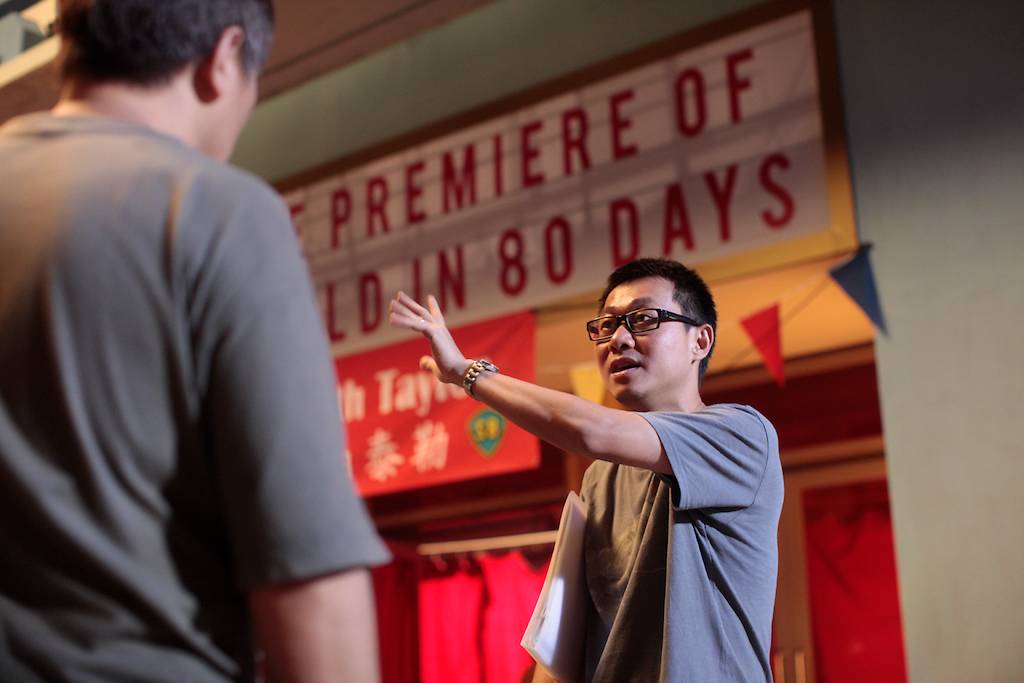
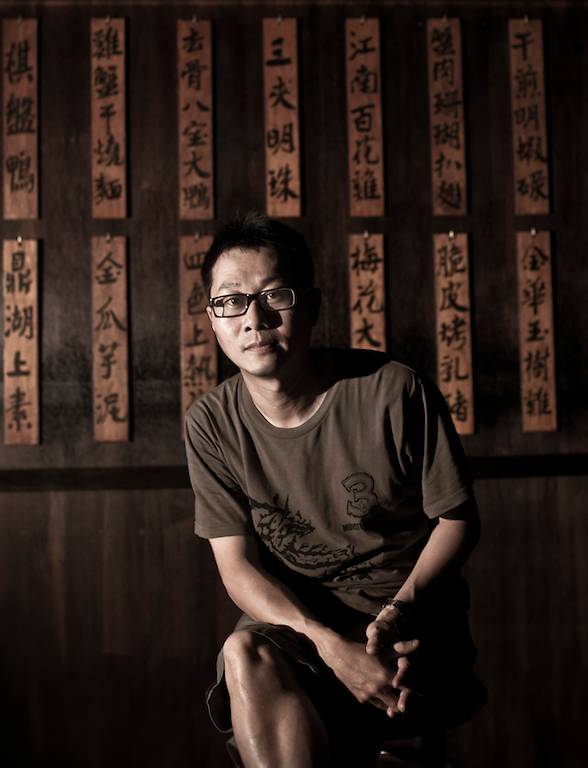
SINGAPORE: “It’s really too early to tell,” says award-winning filmmaker Kelvin Tong when I ask him what he thinks constitutes national identity.
During a week when Singaporeans are celebrating National Day, he is doing a series of interviews publicising his upcoming film Republic of Food, in which food is one of the defining elements of the Singaporean identity.
The 46-year-old’s slight physique belies his accomplishments as a filmmaker.
Before we discuss the larger issues associated with his work, he explains how his interest in theatre and film making began in his secondary school days.
But in university, he studied law.
“There weren’t any film-related courses then and I wasn’t ready to go abroad. So I did what a lot of my peers in the creative line did. We studied law, because we were all humanities students,” he says.
After a short stint at a law firm, his love for writing returned to haunt him and he took on a job as a film critic. This soon led to taking a leap to make a movie of his own.
He made a short film, Moveable Feast, in 1996. His first feature film, was “a motorcycle kung-fu love story”, titled Eating Air.
More recently, he’s been known for making horror films such as The Maid, which broke box office records in 2005, making S$700,000 in its opening weekend. It also won the Asian Award at the European Fantastic Film Festivals Federation.
In 2006, he embarked on a co-production entitled Love Story with Hong Kong’s Focus Films. Tong won the Best Director Award at the Singapore International Film Festival for the film.
In 2014, he became the first Singaporean director to helm a Hollywood film when he started shooting The Faith of Anna Waters.
As he sits down with me to talk about Republic of Food, delving into the deeper issues related to this film and his larger body of work seems inevitable.
Throughout, he maintains his boyish charm and good-natured manner, even while describing the challenges of his career and discussing xenophobia and national identity in Singapore.
IDENTITY IS CEMENTED BY ADVERSITIES
When I put it to him that it seems superficial to define ourselves only by our cuisine, he first begs to differ.
“I think we have managed to capture the kind of power that food has over our memories, and between our past and the things we put in our mouth.”
But he soon admits that there needs to be more to national identity.
“I think cultures need a very long gestation period. Being kiasu, kiasi. Are these meaningful? Maybe, in a caricature-ish way but I think to say our identity is such like the French or the Japanese, I think our story needs to unfold a lot more.”
He adds that he feels national identities are “cemented by adversities”.
“Our very first big look at ourselves in a cracked mirror was of course Japanese occupation, but back then, ours was a Malayan identity. And in fact, a lot of people didn’t feel Malayan, they felt like they were just here to work and after that they’ll go back to China, or they’ll go back to India. So if you look from 1965 onwards, I think we’ve had it very, very good. There were the race riots, there were moments of difficulty, but I think we need a longer road, we need a bumpier road, for what I think truly our national traits to emerge. I really do think it’s too early to tell.”
However, he reiterates that food has “a certain universality” as depicted in Republic of Food.
Actor, Adrian Pang in Republic of Food. (Photo: Boku Films)
The movie, produced by Tong’s Boku Films and supported by the Ministry of Communications and Information (MCI) stars Adrian Pang and Yeo Yann Yann as a couple living in a dystopia where a food-borne virus renders everyone’s favourite dishes banned.
It will be screened at selected Cathay cinemas from Aug 16.
The inspiration for the film came to Mr Tong when he served as a mentor to film-makers on MCI’s Project Lapis Sagu short film competition which was aimed at creating work that looked at cohesion between Singaporeans and immigrants and new citizens.
When I ask if it might be perceived as Government propaganda, he says he thinks of it more as a collaboration.
“Did they control the film? Did they censor the film? Did they tell me what to shoot and what not to shoot? No. I had carte blanche. As a filmmaker, I always have final cut.”
Amid celebrating food as identity, it explores our diverse multi-ethnic community from a refreshing perspective.
XENOPHOBIA IN A CHANGING SINGAPORE
“Adrian Pang’s character is part of this underground food club, which he doesn’t want anybody to know about. But the two foreigners he works with stumble onto that secret and they basically worm their way into that club. For a xenophobe like him, that’s the last straw.
“The film doesn’t mean to point fingers and say xenophobia is a bad thing. It’s actually a very understandable thing. But the film doesn’t attempt to solve anything. It aims to open up the ground to look at some of these behaviours and get people thinking.”
For Mr Tong, the film is also meant to address the changing demographics of Singapore.
“I think the people going into the cinemas have changed. So you can’t count on just good old Singaporeans going into cinemas anymore because the new citizen from China or India is part of this fabric now. So I was reflecting on this sort of change that I was feeling.
“I think locals also forget that part of our identity includes the fact that we were all different when we came. If you look at Singapore circa 1870, 1890, boatloads of people were coming on a daily basis. In fact I think that transformation of Singapore was even more dramatic than what we’re seeing now. I think it is part of our identity to be open. We’ve always been an open society. In fact, ask economists and they’ll say that actually is the reason for our success.”
Our lack of a firm identity, he believes, has also contributed to Singaporeans being harsher when judging local work and only really taking notice after the work has received accolades overseas.
“Familiarity breeds a certain amount of contempt. Singaporeans will always be tough on Singaporeans and I’m used to it actually. I don’t necessarily accept it, but I don’t get angsty about it.
“It’s because our identity is still in a state of flux. Don’t forget because we’re such an open society and so many of the products we use, including ingredients for food, are imported. Till our identity firms up, there will always be this instinctive feeling that our work can’t be that good. It comes from insecurity. It can’t be hurried. It will have to take many more local talents to make it for this to change perhaps.”
“I don’t feel motivated to use cinema as a pulpit. I’m attracted to stories,” says Kelvin Tong. (Photo: Boku Films)
GLAD HE NEVER WENT TO FILM SCHOOL
Life as an aspiring filmmaker was not always easy and Tong has had his share of uncertainties.
“I thought for the longest time, the closest I could get to cinema was to write about it and I was happy writing about it. It was about the third year of my time as a film critic that Jack Neo made Money No Enough. That film moved me a lot because not only did I see Singapore on the big screen, I heard Singapore on the big screen. And I think most importantly, it showed that you could make a Singapore film and not fall fully flat on your face.”
At that point he applied to go to film school in the US and been accepted, but because the opportunity presented itself and he had some savings, he decided to make Eating Air instead.
“That film effectively was my film school.That was how I learnt about the art.”
In fact, he says he is glad he never went to formal film school.
“This is going to sound terrible, but in the course of my work, I do meet a lot of young people and I meet a lot of young people who come from film schools. I generally find that film schools can ironically act as a set of blinders. I think film as a technique can be learnt. But I think if you look at film as a point of view, you might be better off spending the time driving a taxi or being a yoga instructor. You might meet more people and get better stories. When in film school, you just read about films, you just learn about films. But it’s very myopic in that sense because a film can’t be about other films.”
I ask him which of his life experiences have informed his work. His parents who owned a little toy store had something to do with it.
“They were essentially shop keepers, so they were really busy. And I think short of making sure that like we weren’t playing with heroin or knives at home, they pretty much left me and my siblings to do what we wanted. I went to Victoria School and in those days, in schools there was more diversity in terms of socio-economic mix. For example, there was a boy whose father drove him to school in a big BMW, but next to you there is also a boy that tends to come late, because his dad drives a cab. So you had that kind of vibrancy.”
He credits his National Service stint as being instrumental in exposing him to people from different walks of life “whose stories have got that little ring of authenticity”.
“My work comes from all these bits and pieces of Singapore that I know.”
To him, film is simply about stories even though some have wondered whether there are political overtones in some of his work. For instance, does his latest dystopian comedy say something about the political establishment?
“I’m not a political filmmaker. I don’t feel motivated to use cinema as a pulpit. I don’t see films as a sort of a broadcast system or a soapbox. I just don’t, I’m attracted to stories. I think it’s about the human condition. It’s about love, drama, relationships.”
FILMMAKERS IN SINGAPORE “HAVE IT VERY, VERY GOOD”
Just like any other filmmaker, he admits that money is never enough, but over the years, he has managed to garner regional investors.
His horror films were in a way designed to ensure survival.
“Horror films fit really tiny budgets. Nobody ever complains that horror films are too dark because the filmmakers couldn’t afford lighting. There is also very, very little dialogue in horror films. So you won’t annoy audiences with subtitles, especially if they watch it in a foreign land. And I think fear is something that is very, very basic so it is very easily translatable. This is positive for the business side of things and would allow me to survive and make more films.”
But for him, film projects don’t begin with monetary calculations.
“The thought process is that there is this idea that I like, then I look at the genre, then we look at the kind of returns that this film is likely to make. If it is not as commercially viable, then we should find a way to write the script in such a clever way that we can make it for a lot less money. The money side comes later. It is an execution thing. It is not a decision thing.
“I think if you look at someone like Eric Khoo, one of the things that I really, really admire about him is that he never makes a film for more than S$500,000. That’s an amount that even some kid just fresh out of film school would reject, but Eric Khoo does that consistently. So I don’t think budget per se makes a film industry or makes a film. I think the stories and the passion is equally important.”
But he admits that money can be a determining factor in success and the lack of it could disadvantage Singaporean filmmakers.
“You’re going up against the forces of very talented filmmaking entities. Hollywood has made this a science. If you look at something like Pixar. The kind of resources that they apply to crafting their stories, to creating that product, I don’t think it is realistic to take them on consistently. We don’t have the critical mass, we don’t have that kind of financial muscularity.”
His own investors are varied.
“Sometimes it will be either a distribution company that actually takes a stake in the film, or it could be say, be a talent agency. Instead of paying us the full amount for the cast, maybe they take equity. So, we try to find ways to collaborate in that sense.”
While other filmmakers bemoan the lack of state funding, he feels differently. He mentions the Singapore Film Commission’s support several times.
“I think we, filmmakers in Singapore have it very, very good already. I think if you go to a lot of other countries where people have amazing stories to tell, basically the government’s not interested in the film industry and the businessmen would rather like plough their money into property.”
“I hope I’ve made them laugh, I hope I’ve scared them, made them cry. I hope I’ve done all that for audiences with a Singapore story,” says Kelvin Tong. (Photo: Boku Films)
“CHURLISH” TO WANT STATE FUNDING, THEN COMPLAIN ABOUT IT
As we talk more about state funding, he reveals that his view on recent instances of state funding being pulled from certain book projects because they challenged established narratives of history is “realistic”.
“If you really want to be independent of influence or censorship, then don’t take the funding. I think it’s churlish to want it, then complain about it.”
However, I point out that artists who complain do so as a matter of principle. Shouldn’t taxpayers’ money be used to fund a variety of work rather than just work that supports the established narrative?
“I’m not saying that censorship is desirable. But censorship is inevitable and it’s not unique to Singapore. Every society practices censorship, simply because I don’t think the freedom to express whatever view will actually lead to eventual happiness because there are a lot of conflicting views and some views can hurt. And I do think every society arrives at its own balance of what do we allow, what do we not allow.
“Are the parameters too narrow? I’m not sure, and I’ll never be sure. But I think every time a work comes up and it causes a certain reaction, then we see where the parameter is drawn, and then it’s up to the arts community and even members at large to push back to weigh in with their opinions. You may not be able to push the parameter back this time round but simply through the views that people put forward in a rational way, I do think the powers that be enforce the parameters on our behalf.
He believes it is a “conversation”, rather than a “pugilistic duel”.
As Tong continues to make his mark in the world of film, and while he has several projects in the making including one on Singapore in the 1970s, most of all, he wants to have made a personal impact on his audience.
“The ability to look at Singapore from different genres and try to tell those stories from different angles is important to me. I hope I’ve made them laugh, I hope I’ve scared them, made them cry. I hope I’ve done all that for audiences with a Singapore story.”
SINGAPORE: He sits hunched over the sewing machine, hands slowly guiding the pink fabric under the grind of the needle.
A heartbeat later, he pauses, studies his handiwork, and stops the needle. The stitches are inlaid perfectly.
Once his hands are off the sewing machine, the slight tremors are immediately noticeable.
For over 40 years, Mr Chan Huen Meng has worked tirelessly in his tailor shop, Meng Yee Alteration.
“I usually work for seven days a week, and it gets busier around the holidays due to the festivities. Sometimes in the weeks before prom nights, we get many orders too,” he said.
While the onset of Parkinson’s disease is hastening his retirement, Mr Chan has groomed an apprentice to take over his business.
‘My kids have received education and pursued careers in other industries so I won’t ask them to take over my business. Actually, this industry is tough, because the hours are long and the money is little. You don’t get holidays as a boss so you need to work from day to night,” he explained.
He became a tailor’s apprentice at 13, before diving into his first venture in East Coast, at 23.
“But business failed, because I was inexperienced and rushed into it without a proper plan,” he said.
“It was a small shop with a small capital. But I picked myself up after that and tried again. You need buyers and a good skill, but my skills weren’t that good last time, so I failed.”
Since then, Mr Chan has had shops in Lucky Plaza, specializing in customized western suits, and then in Far East Plaza.
It was in his present location, that he found himself taking on more alteration requests.
For more than 40 years, Mr Chan Huen Meng has worked tirelessly in his tailor shop, Meng Yee Alteration. (Photo: Deborah Wong)
His daughter Chan Wai Yeng explained that this was partly due to the rise of e-commerce.
“Making your own clothes went out of fashion in the 90s, where there were many clothes you could buy off the rack cheaply. My father recognised that it was not a business he could continue, but he also realized that there was a significant amount of customers who wanted altering of their clothes. And because of that he slowly pivoted to that business,” she said.
Ms Chan added that as more consumers use online shopping portals, business has picked up.
“People were buying clothes online without even trying. When there are good sales, they just want to get the item and see if they can fit it through an alteration shop,” she said.
While this seems to resonate across the old-school tailor enclaves, there are still customers who appreciate the value of artisanal tailoring skills.
Tailors in Tekka Market say made-to-measure orders still make up a significant part of their sales.
Komathy Muthiah may be a seamstress but she prefers to be known as an artist for the intricate works of art she creates with fabric. (Photo: Deborah Wong)
Ms Komathy Muthiah is a seamstress who has been in the trade for nearly 20 years. She works about 12 hours daily at her shop, Three Stars Fashion Design, and even more so during festive seasons like Hari Raya and Deepavali.
“Customers may make appointments, but sometimes their orders will be delayed because the workload is only shared between one other person and me. I’m just thankful that they are understanding.”
And busy she was. Even during the interview, Ms Komathy’s hands were full; briefly stopping awhile to take measurements, or to close a sale.
She added that as most of her customers are regulars, she is open to discussing designs with them.
“A lot of customers, even with the option of retail, they are not satisfied. They do come back to me, because they have their own ideas of how their dress should look.”
Ms Komathy Muthiah is a seamstress who has been in the trade for nearly 20 years. (Photo: Deborah Wong)
This also means that Ms Komathy has to keep up with current fashion trends. She says that designs from the 90s are making a comeback – such as boat neck collars and bare back blouses.
Her hours may be long, but seeing her designs come alive, makes it all worth it.
A simple sari blouse starts at $35, and one with more intricate embellishments or finishing can go up to $100.
Ms Komathy started as a home tailor, after quitting her job in a factory. Like Mr Chan, she didn’t have an easy start, but her perseverance eventually paid off.
“I first started a small shop in Teck Whye, but I struggled so much because I didn’t have the manpower to meet all my orders, since I was shouldering the business alone.”
The single mother then took her business home, and began sewing clothes for her family and friends, before slowly building up enough capital to start her shop at Tekka Market.
A needle and thread can go a long way; and these tailors have stitched their way into businesses to feed their family and their passion.
“It is very hard work – you see everybody has a skill in them right?” Ms Komathy said, pointing at a green and gold baju kurong that she had just sewn.
“So my skill lies in my hands. I love to do something different. I don’t just do stitching. I also do knitting, crocheting, also beads-work. Something creative. I love to do this, it’s in me.”