Home Blog Page 968

‘I can never say no to football’: The Singaporean who played in five different continents

0

SINGAPORE: South Africa, Australia, USA, Germany, Switzerland, Hungary, Thailand, Mongolia, Iceland, New Zealand, Italy, Cameroon, Portugal and the Netherlands.

The list of countries which 34-year-old David Low has visited reads like a traveller’s dream. His usual itinerary, however, is a straightforward one: Eat, sleep, football, repeat.

Here is a footballer who never played professionally in Singapore, but since 2007 has turned out in foreign leagues that no Singaporean had ventured to.

The midfielder’s career had taken him to five continents: Africa, Australia, North America, Europe and Asia. He has had to brave racist remarks and Malaria-transmitting mosquitoes, all because he had one goal in mind: To test himself as a footballer at the highest level possible.

Football is my passion, I just fell in love with the game,” said Low. “I wanted to challenge myself to be the best I could.”

OUT OF AFRICA

Low’s love for the game blossomed on South Africa’s streets, rather than Singapore’s street soccer courts. His father decided to relocate the family to the city of Newcastle to pursue business opportunities there when Low was 10.

“I didn’t have a proper coach,” Low recalled. “I played in school; I played street football all the time.”

Much to his parents’ annoyance, too. Low would tell them he was attending extra lessons in school, when he was actually out playing football.

His parents would eventually find out what he had been up to. “When I didn’t do well in school or my grades were poor, they would ban me from playing,” Low said. “But that only made me more determined to make it.”

David Low with members of his high school team

Low (back row, second from right) with members of his high school football team, including his twin brother Joshua. (Photo: David Low)

Life in South Africa for the family was different, too. The crime rate there was high – his parents had their car windows smashed twice and Low remembers hearing gunshots on the streets – and so the family eventually returned to Singapore. 

In 2002 Low enlisted for National Service in the Army. After he completed his stint he trained with Tampines Rovers’ Prime League team, but nothing came out of it.

“I thought I had a good chance to break into the team,” he said. “But I was told that the National Football Academy (NFA) and the Under-18 boys were given preference as they came through the system and were mostly 18- to 20-year-olds while I was already 22.”

Undeterred, Low decided to look abroad. In January 2007 he left for Australia, where he signed a contract with semi-professional side South West Phoenix FC.

“It wasn’t very far from Singapore, the flight didn’t cost much and I have a family friend there,” he explained. “(At that point) I was (already) prepared to be kicked out of the house for football – I had to do what I had to do.”

But an ankle injury meant that Low had to fly back to Singapore for treatment later that month. “I was not used to playing with big, physical players,” he said. “Their fitness was on another level … the way they trained, the facilities, they were very professional.”

He returned to Australia in June and remained there until the end of the year. He was not offered a new contract, so he left for the US in 2008. 

But later that year, Low got an opportunity to attend a training camp with German fifth division side Freiburger FC. 

Khoromkhon FC's David Low

Low signed his first professional contract with Mongolian side Khoromkhon FC. (Photo: David Low)

It’s one of Germany’s oldest clubs, but Low was unhappy with the way Freiburger’s coaches treated him. 

“They looked down on Asian players, especially if you’re not from Japan, Korea, China or the Middle East,” he said. 

Instead Low signed with Offenburger FV, another fifth division team, where he played for eight months.

HOME NOT SO SWEET HOME

Stints in Switzerland, Hungary and Thailand followed before Low returned home to try out once again in the S.League (now Singapore Premier League).

But he did not make the cut at one club and his wage demands proved a stumbling block at another.

“I just felt I deserved to be in but the coaches had their own opinions,” said Low. “It didn’t really bother me anyway.”

His next stop: Mongolia, where he played for Khoromkhon FC in the country’s top division in 2012.

“Some of the Mongolians had no clue Singapore even existed,” Low recalled. “I had to tell them ‘Malaysia? Do you know Malaysia? It’s somewhere around there’.”

Due to extreme weather in Mongolia, clubs would play outdoors in the summer and indoors – in a 5-a-side futsal league – during the winter, Low said.

And things were going well on the pitch. Low was part of the side that won the Mongolian Cup and the team finished runners-up in the league.

Yet he was already aiming for bigger and better things. “I had already pre-planned that I was not going to stay put,” Low said. “While the season was ongoing, I was already talking to agents and coaches from other countries.”

He went on to play in Iceland, France, New Zealand, Italy and again in the US. 

“After Italy and US, I told myself, ‘That’s it for me’,” said the globetrotting Low. “My parents were telling me that I’d better settle down and get married. I said okay, I will try to please my parents for once.”

David Low with fans in Cameroon

David Low with local fans in Cameroon. (Photo: David Low)

That was until he received a call from former Cameroon international Emmanuel Maboang Kessack, who knew the Singaporean from his short stint with a recreational side of African players in Paris. Kessack asked if Low was keen on a trial with a Cameroonian side in the top division. 

“Without hesitation, I packed my bags and left,” Low said.

THE ‘CHINESE MAN OF COSMOS’

Landing in the Cameroonian capital of Yaounde in 2015, he saw a city unlike any he had seen from his travels. 

“There were no malls, no high-rise buildings,” he said. “A lot of the terrain was rocky and mountainous. Everything was different.”

The locals found him strange, too. “I was the only white guy there,” he explained. “The last time an Asian played there was in 2007. I was an alien.”

Fans would swarm Low for photographs after training sessions. He also recalled attending a trial match where the opponents wanted pictures with him as well.

“They would come in hordes,” said Low, who signed for Canon Yaounde after a two-week trial. “The fan clubs there had power. If you didn’t play well in training sessions, they would tell the coaches not to play you in games.”

Low joined his second club in Cameroon the following year, linking up with Cosmos de Bafia.

“I was loving it in Cameroon,” explained Low, who was given the nickname Cosmos Chinois (Chinese in French) or Cosmos Le Blanc (the White) by fans. “I was being tested at a high level of football and that was what kept me going. I had a place to stay and my basic necessities were met, so I was happy.”

“The mosquitoes were the most difficult thing about living in Cameroon,” he added. “We had to burn a lot of mosquito coils and use a mosquito net. There could be 10 in a room if you didn’t close your door at night!”

He returned to Singapore in mid-2016, preparing to wind down his career. 

David Low during a training session with Cosmos de Bafia

David Low during a training session with Cosmos de Bafia. (Photo: David Low)

A TOUGH TRANSITION

The following year, Low found a job as a security systems administrator in a bank.

For a man who has travelled all over the globe, being bound to a desk was the hardest part. 

“I was a bit depressed because I was not playing competitive football,” he admitted. “I felt that I was not in my element, I could not express myself and living a fake life doing a nine-to-five office job. But I have no complaints because I know this is the way it is in Singapore.”

Earlier this year, Low turned down an offer from Cameroon champions Coton Sport due to concerns over accommodation and safety – the club are based in the country’s North, not far from the Nigerian border where militants Boko Haram rule.

But just days after his interview with Channel NewsAsia, he jetted off to the Netherlands – signing as a non-contract player for Dutch side NEC Nijmegen. 

David Low poses for a photo

David Low, a Singaporean footballer who has played in five different continents. (Photo: Matthew Mohan)

He will be based there till Christmas, playing with the top-tier side’s third team and assisting with youth coaching.

This time around, Low has got his parents’ blessing. “The funny part is that before I went to Holland, they told me to go and enjoy myself, go and do what I love. They saw that I was struggling when I was working the nine-to-five job,” he said.

Low is adamant that youngsters who aspire to be full-time footballers should be in the game for the right reasons. For him it was never about the money, he insisted.

“Whatever the clubs could give me, and whatever is a decent wage for a single man like me, I would take it,” said Low, who earned a monthly wage of between US$1,500 and US$2,500 in Mongolia and Cameroon.

He does not foresee himself playing at the professional level for much longer.

“Maybe after Holland, I might stop playing,” he said. “But for me to go into coaching is also a no-brainer  I can never say no to football, it’s part of me now.”
Source link

1- and 2-room HDB households in North East District to get vouchers for free LED lights

0

SINGAPORE: All households living in one- and two-room Housing and Development Board (HDB) flats in the North East District will receive a S$25 voucher to buy LED lights, in a bid to encourage these households to use more energy-efficient lights.

The National Environment Agency (NEA) and North East Community Development Council (CDC) announced this initiative on Saturday (Aug 18), at the launch of the “Switch and Save – Use LED” @ North East programme.

Households can reap “both energy and cost savings” by replacing incandescent or compact fluorescent lights with LED lights, said NEA and North East CDC in a joint release.

More than 13,000 households in the North East District will benefit from this programme, they added.

According to the Household Energy Consumption Study conducted by NEA in 2017, only 28 per cent of households in one- and two-room public housing flats use LED lights – the lowest adoption rate among household size types.

Lights are one of the top five electricity-consuming applicances in a home, according to the study.

“If all these households switch to LED lights, they are expected to collectively save about 360,000 kWh annually – equivalent to more than S$70,000 in energy savings – and reduce carbon dioxide emissions by more than 150 tonnes per annum,” said NEA and North East CDC.

READ: PM Lee to talk about cost of living, housing at National Day Rally

LED 1

Minister Masagos speaking on the benefits of LED lights. (Photo: NEA)

Due to a growing population, Singapore’s total household electricity consumption has gone up by about 17 per cent in the last decade, said the two bodies.

“As electricity is largely produced by the burning of fossil fuels, lowering our electricity consumption can help reduce the environmental impact of resource mining and emissions produced to generate electricity,” the statement added.

All eligible households in the North East District will be notified via mail to collect their vouchers from designated collection points, such as their nearest community centre.

The S$25 voucher can be used at all Home-Fix, Selffix and Sheng Siong stores across Singapore, Philips Light Lab, as well as roadshows organised by NEA and North East CDC.

More details can be found at NEA’s Clean & Green Singapore website

“Taking care of the environment can be done though simple ways,” said NEA Chief Executive Officer Ronnie Tay. “By choosing energy-saving appliances, households can not only save energy and reduce their utility bills, but also reduce carbon emissions.”

“Switching to LED lights is a simple first step all can take. I urge everyone to do his part to conserve electricity and reduce his household carbon footprint to mitigate climate change.”

READ: 10 ways to slash your bill as water and electricity prices rise

LED 2

From left: NEA CEO, Mr Ronnie Tay, Minister in Prime Minister’s Office and Adviser to Pasir Ris-Punggol Grassroots Organisations, Mr Ng Chee Meng, Minister for the Environment and Water Resources, Mr Masagos Zulkifli, and Mayor of North East District and Assistant Secretary-General of NTUC, Mr Desmond Choo, launching the “Switch and Save – Use LED” (SSUL) @ North East programme. (Photo: NEA)

The programme was lauched at Punggol North by Minister for the Environment and Water Resources Masagos Zulkifli.

Source link

‘Right now, it’s not quite the sale worth waiting for’: How to revitalise the Great Singapore Sale

0

SINGAPORE: After 25 years of the Great Singapore Sale, is it time to refresh or retire the campaign?

That is a question that might spring to mind following the dip in retail sales figures at department stores in June.

Although the Great Singapore Sale (GSS) was underway at the time, retail sales fell 7.3 per cent compared to the month before.

Year-on-year, retail sales for department stores were 1.9 percent lower.

Food retailers, supermarkets, sellers of furniture, household equipment, optical goods and books did not fare well either.

However, executive director at the Singapore Retailers Association, Rose Tong, was not disappointed by those results.

She explained why in this week’s Asia Business First podcast.

“In the month of June, COE prices for cars were the lowest. There were windfalls from en-bloc sales. All this, I imagine, led to shoppers thinking, ‘I have more money right now. I can go on more extended holidays.’ There were also more property launches, so that’s where all the money went.

“GSS is actually a household name today and definitely one that is known worldwide. If you search for ‘GSS’ online, it will pop up all over and it is recognized as one of the top five shopping festivals. I do not think people have fallen out of love with GSS. But expectations have been raised that GSS has to be better.

“Shoppers have been conditioned to seeing sales all year round, so right now [the GSS] is not quite the sale worth waiting for.”

Michael Chiam, senior lecturer in Tourism at Ngee Polytechnic, agreed.

“In the past, you only have sales at certain points in the year – four times a year. But today you have sales almost every day. If you want to make the GSS something extraordinary, it has to be out of the norm. You must have sense of excitement to engage customers.”

people in orchard road

People cross a traffic junction in the Orchard Road shopping district in Singapore on May 27, 2017. (File photo: AFP/Roslan Rahman)

To bring back the buzz, Ms Tong said the Singapore Retailers Association has been exploring the idea of shortening the GSS period, which is currently 10 weeks long.

“I think 10 weeks long could be a bit limiting and exhausting. And if we have it too long, it could reduce the urgency to shop.”

Another possibility is renaming the Great Singapore Sale.

“We would still keep the acronym ‘GSS’ because it is great for branding. But we might not call it a ‘sale’. Calling it a ‘sale’ limits the ability to do other things and there are some retailers who do not want to be specifically associated with a sale. So we thought it could be a Great Singapore Shopping Festival.”

Mr Chiam also said that the notion of a sale could have negative connotations.

“I think a carnival or festival may be a better thing than a sale, because a sale can be associated with cheap things.”

With the preponderance of chain stores in local shopping malls, the Singapore Retailers Association is well aware of the need to promote products that are “uniquely Singapore” in nature, so as to attract both local and foreign shoppers alike.

Ms Tong gave a hint of what to expect in next year’s GSS.

“We want to promote Singapore, and this is where the Singapore brands could be largely promoted. And if you don’t call it a ‘sale’, the Singapore brands will feel that they will not be associated with the sale. I think it is time to take the Singapore brands to the fore and see them as being able to help Singapore differentiate itself.”

To hear the suggestions for revitalizing Singapore’s retail scene, listen to the full podcast here.

Source link

Inside the women’s prison: Empathy, rigour and help to turn inmates’ lives around

0

SINGAPORE: The prison officer waited outside the room as the inmate spoke to her family. These opportunities, which come twice a month for prisoners, can be joyful or upsetting – this time, it was the latter.

When she came out, she was hysterical. “Her brother had passed away in his sleep the night before,” said Rehabilitation Officer 2 (RO 2) Nurul Hazirah Abdul Halim, 25, who knew that the two siblings were very close.

What added to the inmate’s grief was that her family didn’t ask for her to be allowed to attend the funeral. And RO 2 Nurul Hazirah, her personal supervisor, was there to console her.

Being a source of comfort might seem a job for counsellors, rather than prison officers. But the latter are now spending more time engaging inmates meaningfully, as CNA Insider found out after gaining an unprecedented level of access to Singapore’s only women’s prison.

Institution A4, formerly known as Changi Women’s Prison, houses approximately 1,200 inmates, one tenth of the prisoner population.

(dp) womens prison 22

And at the heart of it all – from the programmes and workshops for inmates, to the counselling and family visits – are the all-women team of approximately 90 officers running the prison.

They are not only warders but also a listening ear, both for inmates unburdening their angst about personal problems as well as for more mundane requests that range from changing cells to changing the food boxes.

The role of the guard been evolving more toward inmate rehabilitation, and for the officers it means adding more tools to their repertoire – beyond the batons and pepper foam that are a part of their standard carry – like empathy.

Said Assistant Superintendent of Prisons 1 Evelyn Tan, 25: “While we empathise, it’s not because we pity them, I think. It’s more because we want to understand what they’ve been through so that we can help them to be better.”

(dp) womens prison 20

An inmate speaking to her family via teleconference, which is useful for those who live far away.

And the inmates typically have been through a lot to end up in jail, the officers note.

WHY THEY ARE THERE

Relationships, alcohol and traumatic experiences like sexual abuse were some of the starting points for many female inmates. RO 2 Nurul Hazirah said:

Sometimes when you speak to the inmates, and you find out they’re here because their husband forced them to take drugs and all that, as a woman you get very angry.

Among young inmates, especially those from broken families, it often started with peer pressure and the need for attention and love.

“When they found a group of friends who were willing to like, ‘let’s do this and stuff’, then they felt accepted,” said Sergeant 3 Alysa Naqeera Mohd Isa, 23, a business diploma holder who joined the prison service to learn why people commit crimes and to teach them alternatives.

(dp) womens prison 18

Hanging out at the recreation yard, which is like a sports hall.

Many inmates also told the officers that a lack of control was their downfall.

Deputy Superintendent of Prisons 1 (DSP 1) Ottilia Hoo, 35, said: “So in a moment of folly, they took drugs, they went with their friends to do some shoplifting, things like that.”

Sometimes the drug-taking happened because of body image issues. Whatever the reason, some 75 per cent of the women inmates are drug offenders – not that their officers view them through the prism of their crime.

“They can be murderers or drug addicts, it doesn’t matter,” said RO 2 Nurul Hazirah. “Our job is to just render help when needed.”

WATCH: An unprecedented look at life behind bars (8:39)

And to help, these officers must take a professional approach. DSP 1 Hoo, an 11-year veteran, said: “I think it’s very easy to judge when you read the papers and you read about crimes that in your opinion are horrific.

“But at the same time, it’s knowing that when we put on the uniform every day, we have a duty to discharge, and it has to be done impartially, regardless of how we’re feeling.”

She has also seen enough to know there are misconceptions about prison and its occupants. “People think we’re dealing with hardened criminals because of what they see in popular fiction,” she said.

But at the end of the day, you realise that an inmate is still a person. This person could have been your neighbour or someone you sat next to on the bus.

(dp) Women's prison 11

Deputy Superintendent of Prisons 1 Ottilia Hoo talking to an inmate with a request.

The officers themselves come from varied backgrounds – from those with a degree in history and Southeast Asian studies, to those who had worked in other Home Team agencies and wanted to do more than catch the bad guys.

And just as the inmates do not easily fit the stereotypes of them, the officers too are not quite what some expect.

For example, when DSP 1 Hoo was just a job applicant who “thought the chance to interact with people and hear their stories sounded like a meaningful career”, someone questioned her suitability for the role of prison officer.

“He looked at me and said I reminded him of an office lady,” said the diminutive woman. “I think it’s the way I look.”

(dp) womens prison 25

A walkie talkie, baton and pepper spray, along with a listening ear, are part of the standard equipment every prison officer has.

WHAT INMATES GO THROUGH

While the officers believe that prison is about second chances, the inmates must adjust to the rigours of incarceration before they can be rehabilitated.

In the first stage of their jail term, known as the deterrence phase – which varies in duration depending on each inmate’s sentence and needs – they are confined to their cells for 23 hours a day, which means minimal rehab programmes.

They are allowed one book at a time, and no visits are permitted, except from lawyers, embassy officials or counsellors. The experience allows them to “reflect on their past actions”, according to the Singapore Prison Service (SPS).

(dp) Women's prison 14

Inside one of the cells, inmates’ belongings and rolled-up straw mats.

Their cells are spartan. Spotted in one were four transparent boxes of the occupants’ belongings, lined neatly against a wall. An arm’s reach away, white flannels hung from four of the five hooks on the wall.

All inmates are issued a standard set of toiletries, a wrist tag they must wear wherever they go, and for their bed, they have a straw mat. A low wall separates the sleeping area from the toilet.

There are no mirrors to be found, only a polished stainless steel plate hung in a sports hall, their Recreation Yard. It is the only way inmates can catch their reflection, and queues are common in the one hour of free time they are allowed outside their cells each day.

(dp) womens prison 17

An inmate checks herself in the stainless steel mirror that hangs in the Recreation Yard.

It gets better for inmates when they move on to the “treatment phase” of their sentence. They can have up to six books – three from their family and three from the library – in their cell.

Unlimited letters from their family are allowed, while they get to send two letters a month. Importantly, they can receive two visits a month, either a combination of a 20-minute face-to-face meeting and a 30-minute teleconference, or two 30-minute teleconferences.

(dp) womens prison 23

Inmates can have up to six books in their cell.

In the day room, the area right outside their cells, there is a television and newspapers in Singapore’s four official languages.

With no internet access, these together with the family visits are the inmates’ touchpoints for the outside world, although certain articles like crime reports are screened out of the papers.

(dp) Women's prison 3

Sometimes the inmates would go to the day room instead of the yard.

(dp) womens prison 16

CNA Insider’s visit was a rare sight for the inmates. But it also necessitated DSP 1 Hoo’s reassurance to them that neither their faces nor their identity would be revealed.

FOCUSING ON REHABILITATIVE WORK

As the Officer in Charge of the institution’s Housing Unit 1, she is responsible for its overall management. Yet, despite the weight of the daily operations, she went about with a smile, even bantering with the inmates about prison food.

The use of technology has freed up officers like her for their higher-order work of rehabilitative engagement.

READ: Changi Prison raises tech bar with automated checks, surveillance system that detects fights

In the Recreation Yard stood an example of the automation of routines. At a blue kiosk, two inmates were peering at the screen to check the status of their requests, such as for dental treatment and religious reading material.

Called the Inmate Self-Service Kiosk, it allows inmates to make administrative requests, obtain inmate-related information and even redeem privileges like the purchase of snacks, stamps and greeting cards.

(dp) Women's prison 1

The Inmate Self-Service Kiosk (iKiosk) was rolled out to all prison institutions in October 2015 to allow inmates to perform administrative tasks.

But it is not just technology that is transforming the nature of the officers’ work. In recent months, pilot workshops have been run for them so that they can work more closely with the Correctional Rehabilitation Specialists.

This helps the officers to relate to the inmates better. “The rehabilitative effort is a concerted effort of everybody,” said DSP 1 Hoo.

But dealing with the issues from day to day is largely (done) by officers. We engage more, we see them more.

She leads a team of Housing Unit officers and personal supervisors, and the latter oversee the welfare of inmates and their daily activities.

There are about 20 inmates under each personal supervisor, and through their interactions in their respective housing unit, the officers come to know the profiles of their inmates.

(dp) Women's prison 16

Over lunch in the canteen, for those inmates on the vocational programmes, is a chance for prison officers to chat with them and hear requests.

​​​​​​​

Now that the officers are being taught by the correctional rehabilitation specialists, however, they are better able to reinforce the psychological skills training the inmates receive and to encourage them.

Read: At Changi Prison’s Institution A4, women get help to deal with emotions

Ms Charlotte Stephen, SPS senior assistant director of Correctional Rehabilitation Services (Women), explained: “So when (an inmate) gets angry, the officer would remind her, ‘Do you know what you’ve learnt? Instead of shouting, practise your deep breathing, capture your thoughts … and then do it in a way that’s more acceptable.’”

(dp) Women's prison 6

Ms Charlotte Stephen.

Correctional rehabilitation specialists like her do group interventions, each comprising about 10 inmates in the treatment phase.The psychological-based programme typically runs for six to nine months, with two-hour sessions held thrice a week.

Such rehabilitation remains a work in progress, as part of efforts to reduce the female reoffender rate of nearly 25 per cent within two years of release.

(dp) Women's prison 7

One of Ms Stephen’s group counselling sessions.

Inside the prison, however, Ms Stephen can see the gains being made with the inmates, who were responsive and relaxed during one such session that CNA Insider observed.

As one of them shared, “I’m quite a quick-tempered person. But as time went by during my incarceration here, I managed to mellow down and change a lot of my thoughts and behaviours, to overcome problems I’ll face in future.”

(dp) womens prison 19

Inmates in one session seemed relaxed and responsive.

LOOKING FOR HAPPINESS BEHIND BARS

Apart from the programmes that aim to address stress, drug addiction, anger management and violence, there are family programmes tailored to meet the inmates’ needs as mothers and daughters.

There is also vocational training. The women’s prison school includes an art room and a bakery as well as a hair salon opening this year. The certified courses already available include hairdressing, baking and Microsoft Office, besides the academic ones.

Only during such times, when the inmates have rehabilitation activities, do they get to have their meals in the dining hall instead of their cells, if that is more convenient.

(dp) Women's prison 5

There is also a work programme – a tailoring workshop for inmates to mend linens for hospitals – which they can qualify for if they meet the eligibility requirements. These include good conduct and personal interest.

They can save the allowance they receive and use the balance to buy items from the self-service machines in prison. They are also encouraged to send the money to their families.

“Doing actual work, instead of just programmes that equip them with basic skills, gives them an opportunity to have a sense of contributing back to society,” said DSP 1 Hoo.

(dp) Women's prison 4

The tailoring workshop is part of the rehabilitation programme for inmates with longer sentences.

The pursuit of happiness behind bars is no easy feat. That is why even the little things count for the inmates – like Ms Stephen’s choice of the “beanbag room” for one group session, which prompted a delighted inmate to go “Whee!”

Or take, for example, the pre-recorded TV programmes they are allowed to watch. They get “quite a wide variety” of shows, including films, but they have their favourites.

“In general, inmates do prefer watching variety shows such as America’s Got Talent. Things that have a feel-good factor help them to feel happier,” said DSP 1 Hoo.

That explained the bright colours of their Housing Unit and the murals of motivational messages around them. “Nobody can go back and start a new beginning, but anyone can start today and make a new ending,” read one.

(dp) Women's prison 8

For one woman CNA Insider spoke with, satisfaction comes from her role as an inmate worker who DSP 1 Hoo said helps to escort other inmates from point to point, like when they have programmes in rooms on another floor.

The foreigner, who has been incarcerated for about two years now, used to speak very poor English, but the officers encouraged her to learn the language slowly.

The other inmates did not listen to her initially, but now they do. When DSP 1 Hoo asked how she felt about that change, she replied: “Very happy lah. Sometimes I’m scared the officers (would) scold us, but now okay.”

(dp) Women's prison 2

WHAT THEY GET OUT OF THE JOB

When people think of prison, fear might be a word that comes to mind – that inmates are afraid of the guards, acknowledged Sergeant 2 (SGT 2) Nazurah Mohamad Nassir, who started service this year.

“But I think we’re approachable. We listen to them a lot,” said the 22-year-old, the youngest of the officers.

The officers’ hope is that the inmates do not fall into hopelessness.

“No matter how many times (they’re incarcerated) – it can be the first or the fourth – at some (point), they’d realise that there’s someone who wants to help them,” said SGT 3 Alysa Naqeera.

(dp) Women's prison 12

Sergeant 2 Nazurah Mohamad Nassir has sisters in the Singapore Civil Defence Force and the police, so she wanted to be a uniformed officer too, choosing the prison service because she thought it was something different.

The journey to becoming an officer is not easy, however. The training at the Home Team Academy is the same for both genders, entailing the physical aspect, tactical skills as well as classroom lessons on legislation and prison rules.

“At the end of every day, you just lie flat on your bed and you’re like, ‘Why did I do this?’ But it was what I expected,” recalled DSP 1 Hoo.

Her parents are supportive, though her mother initially had some concerns about her safety and “continues to worry till this day, as mothers do”.

“But she knows I’m doing well. I think they see that I’m happy, despite being tired,” said their daughter. “I guess the fulfilment shows on your face when you get home.”

(dp) Women's prison 13

The officers have eight- to 12-hour working days. But it is also the “emotional journey” of steering the inmates and hearing their stories – of striving to live up to the tagline Captains of Lives – that can be draining.

“Sometimes, as a woman, you feel for them. You can get angry on their behalf. At the same time, you have to bring them back and tell them to make the best of their time here,” said DSP 1 Hoo.

But it takes just a thank you for their help to make the job rewarding, “simple and cliched as it sounds”, said SGT 3 Alysa Naqeera.

“Just seeing that little happiness from them when we get to answer their questions makes me feel like, at least I did something good today.”

Her boss added: “And when they see you’re willing to help them genuinely, they warm up to you. They respect you.”

(dp) womens prison 24

Source link

‘I thought of my mother’: Moving on from the teenage suicide pact that shook Singapore

0

SINGAPORE: Looking back to his life 10 years ago, Andy (not his real name) didn’t think he would be where he is now.

The 26-year-old recently graduated from Nanyang Technological University (NTU) with an engineering degree, and he is about a month into his first job.

Every weekday, he leaves his home in Tampines at 5.30 in the morning to catch one of the first few trains to his office in Boon Lay. He only gets back at 8.30 in the evening.

But he doesn’t mind as it’s a decent job, he says, which allows him to work on driverless vehicles and protect their systems from being hacked.

This, however, is a big turnaround from the events of Aug 23, 2008, when Andy was a taxi ride away from what he firmly believes would have been the end of his life.

“If I had sat inside that taxi, I wouldn’t be here talking to you,” he told Channel NewsAsia over lunch at a McDonald’s near his workplace. “Witaya said ‘faster come in, we need to go back and do this’.”

Andy was referring to Ku Witaya, the teenage student who jumped from a ninth-floor window and died in a suicide pact involving seven other friends.

A coroner’s inquiry held a year later revealed that Witaya, 16, had convinced the group that another world war was coming, and their job was to destroy demons and save the world. But to do so, they first had to die and be resurrected as “slayers”.

In the wee hours of that August day, Witaya and his friend Sia Chan Hong, also 16, leapt first. The rest were supposed to follow in two batches of three, but backed out after seeing their friends below.

Andy is adamant that had he followed them in the cab to Witaya’s home at Bedok Reservoir, he would have been in the first three to jump. Earlier, the group had been celebrating one of their birthdays at a barbecue at East Coast Park.

“I said no, I want to go back,” he said, adding that Witaya tried convincing him up till they got in the taxi. “Because I thought of my mother.”

SHINING IN SCHOOL

The incident happened as Andy, a struggling Secondary 4 Normal (Academic) student in Tampines Secondary School, was about to take his N-Levels. He had only been narrowly promoted after failing all but two of his subjects in Secondary 3.

Andy was still grieving as he took a Chinese composition paper, so he found himself writing about his friends and repeating the same phrase over and over: “It’s very painful to lose them.”

“My teacher singled me out and talked to me,” he said. “She said you really need to move on.”

That was a turning point in his journey towards a brighter future.

Andy’s teachers became his pillar of support. His form teacher Ms Tan Shin Shin, someone he described as very patient and his biggest inspiration, advised him to work hard for his N- and O-Levels.

“You will see the fruit of your labour,” he remembered her saying. “Your parents will get old one day and you will need to support the family.”

Andy gave everything he had in those final few months. He said he’d never studied harder during all his years in the school. It paid off: Andy aced the N-Levels, and continued getting good grades through to his O-Levels.

“Slowly, I shifted focus,” he said. “Instead of focusing on their deaths, I focused on my studies.”

His report card, filled with ‘F’s in Secondary 3, gleamed with ‘A’s a year later. His class position, he recalled with a smile, went from 38/40 to 1/40. Andy also topped his Normal (Academic) cohort for his prelims, then came in second for his O’s.

“From there I saw the success of the work I put in,” he added. “I saw that if I put in this amount of hardship in my studies, I can achieve this. It was quite a good recognition.”

The hard work never stopped while Andy was studying Biomedical Engineering in Temasek Polytechnic, and this eventually earned him a spot in NTU.

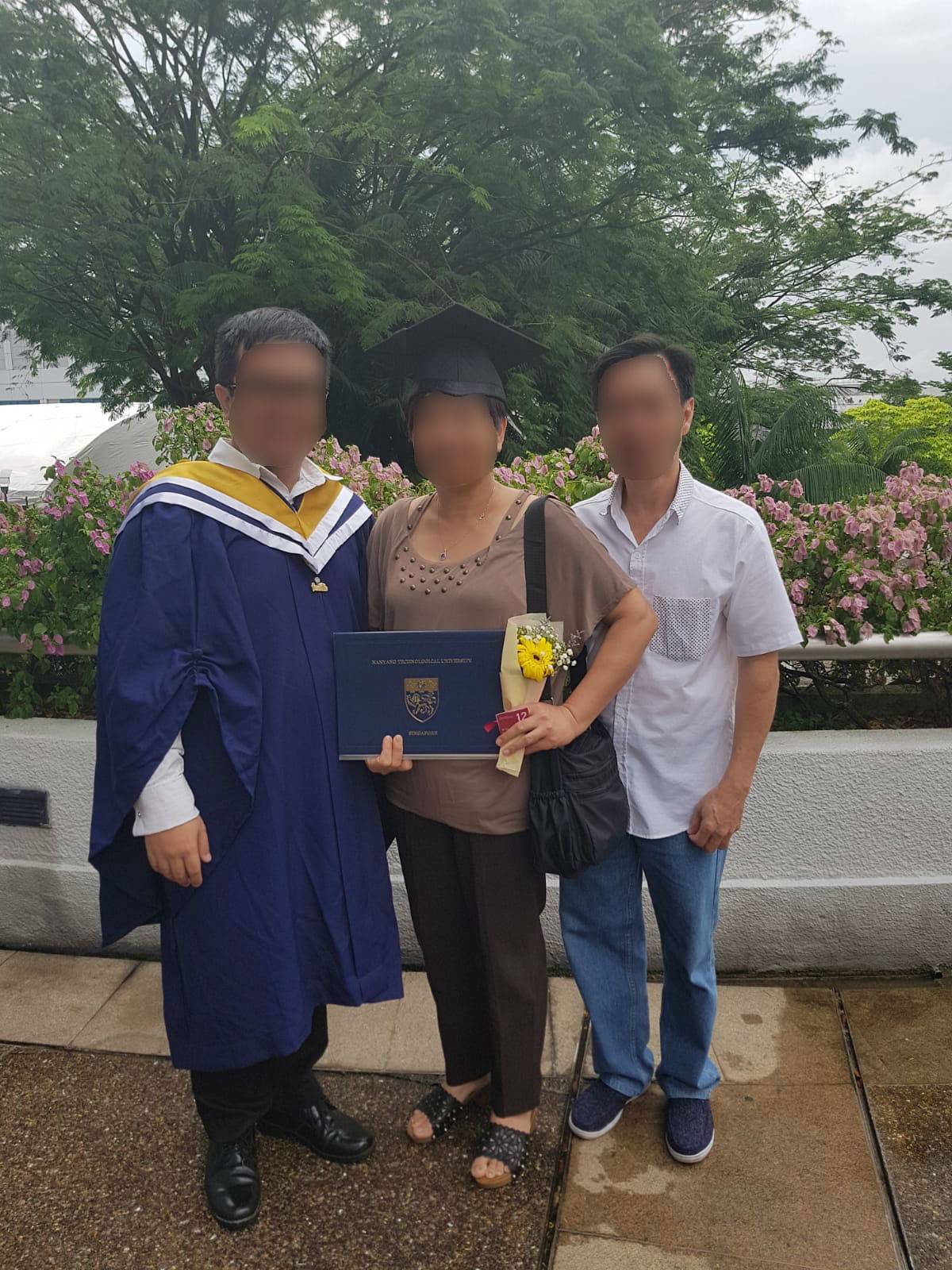
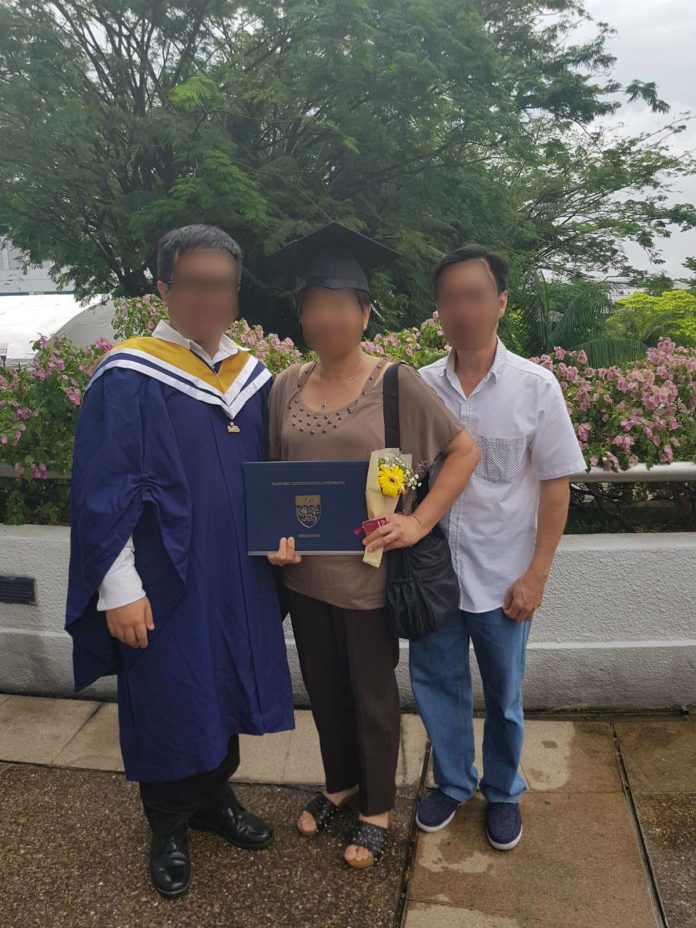
andy graduation photo

Andy posing for a photo with his parents after graduating from NTU in July. (Photo: Andy)

Back at McDonald’s, Andy whipped out his phone and proudly showed off his post-convocation photo, which he also sent to Ms Tan in a WhatsApp message thanking her for her support. Ms Tan is still teaching at his old school.

In the picture, Andy is beaming in his graduation gown and standing beside his parents. His mother, donning his mortarboard, is holding his certificate and some flowers.

“My mother cried over the incident,” he said. “It was lucky that I didn’t follow them. If I did, I wouldn’t have been able to take this photo with them. That’s why I’m very grateful.”

BROTHERS FOR LIFE

During their days in Tampines Secondary School, many in the group followed and looked up to Witaya, whom Andy described as a natural leader who was fearless and charismatic.

Most of the nine friends met as Secondary 1 classmates, and like many of their peers they bonded over basketball and video games. They also gathered regularly at Witaya’s home.

“He really took care of us,” Andy said, referring to Witaya. “He really did it for you.”

When one of them ran into trouble with bad company, Witaya was the first to stand up to them. When another one ran up huge gambling debts, Witaya was the first to sell his Sony Ericsson phone to help pay it off.

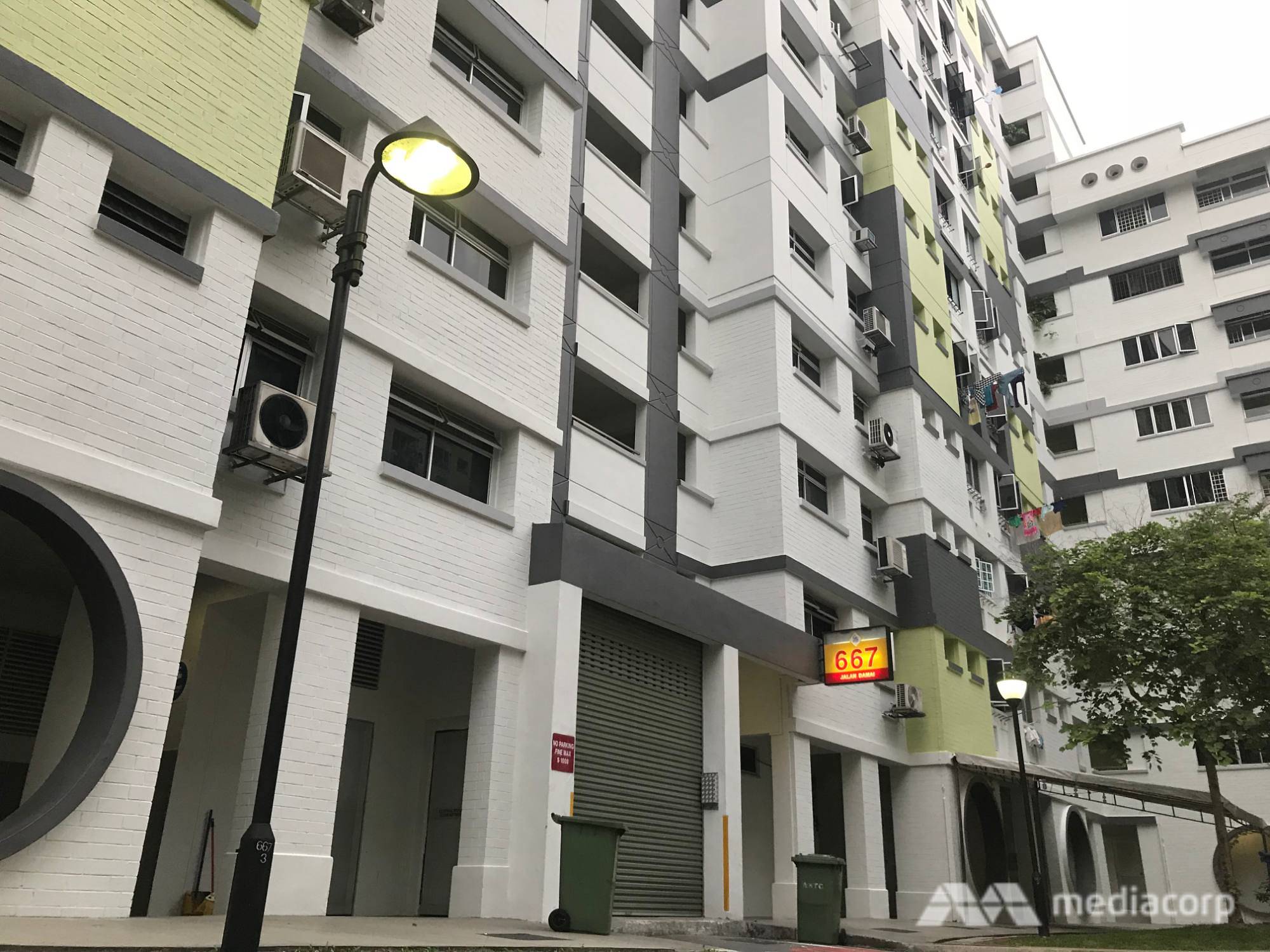
block 667 jalan damai 2

The boys would frequent Witaya’s home in Bedok Reservoir. (Photo: Aqil Haziq Mahmud)

While the group stayed tight-knit throughout the years, school threatened to divide it.

At the end of Secondary 3, some of the members, including Witaya, were retained because they did poorly in their exams. Andy got labelled the smart one because he was promoted. “We are still brothers,” he had insisted.

Andy admitted to drifting slightly apart, but still got invited to that fateful barbecue. It was an ideal occasion to get together like the good old days.

“I hugged Sia Chan Hong, I hugged him for very long,” Andy said, recalling what happened at the barbecue. “He was very sad; he just said goodbye to me.”

The incident dominated the headlines a decade ago. Reporters appeared at the group’s homes and spoke to their relatives. 

And while many years have passed, the incident is still mentioned by some. For instance, it appears on The Smart Local website in a list of incidents that “shook” Singapore. It is also used as a law case study at a Taiwanese university, Andy said.

LEAVING BEHIND THE PAST

But for the group, Andy said they have moved on and the scars have healed. 

The boys still meet once or twice a week, and more frequently during holidays like Christmas and Chinese New Year, though some have drifted a little because of work and family.

Still, Andy is in a WhatsApp group with three of them, who are now an interior designer, wedding photographer and undergraduate also doing engineering at NTU. Two others are helping with a family construction business and the last member is a fitness trainer.

“I pulled him with me and mentored him,” Andy said, referring to the undergraduate who’s also the youngest in the group. “I told him he must really study and shift his focus to the right track.”

“Most of them are okay now, able to survive and find their own livelihood,” he added.

They don’t talk about the incident either. Instead, topics involve applying for Build-To-Order flats or their current jobs, which means complaining about difficult design projects or getting lowballed for a wedding shoot.

“It’s been too long already,” Andy said. “Everybody was like okay, life goes on.”

For Andy, what remains of the past are his regular Friday visits to Witaya’s home. When he’s not too busy with work, he goes there with a few of the group to care for Witaya’s elderly grandmother and help with the housework.

FAMILY AND REGRETS

Nevertheless, details from a decade ago, like their statements to the police and testimony to the coroner, are still easily recalled. “It really hurt you a lot, so you remember,” Andy said.

But when asked if he regrets not doing more to stop the incident, he paused to think.

“If you took my mindset now and looked back, I would have gone and punched Witaya and asked him to stop all this,” he said. “But last time, we were still young and not mature in our thinking.”

That is not the case now, as Andy offered some advice for teens who might be tempted by friends to do something they would later regret.

“Think of your family first,” he added. “Friends come and go, but family is the one that never leaves you.”

Where to get help: Samaritans of Singapore operates a 24-hour hotline at 1800 221 4444, or you can email pat@sos.org.sg. You can also find a list of international helplines here. If someone you know is at immediate risk, call 24-hour emergency medical services.

Source link

Commentary: ‘Super mums’ have one simple request. Don’t hinder them from returning to work

0

SINGAPORE: Mother, Member of Parliament, and partner at a legal firm.

Rahayu Mahzam’s juggling of work and motherhood has been an uplifting tale for readers this week.

Her return to her MP duties one month after giving birth to her son Ayden has earned her the moniker of “super mum” among inspired readers.

She credits the help she gets from loved ones.

But the unfortunate reality for many new mothers is that re-entry into the workforce is neither easy nor seamless, especially for those without extended family support.

WHY SO HARD TO RETURN TO WORK?

Some say mums opt out because they find work less appealing after experiencing the joys of full-time motherhood.

But many mothers say it’s because their bosses see them in a different light – as being less committed and more saddled with family distractions. Such attitudes lead them to feel less valued by their organisations.

There may not be wrongful dismissal or overt discrimination against pregnancy or motherhood that provide grounds for action to be taken against employers.

But small things can add up, like when mothers say they cannot can’t stand the looks from supervisors when they have to take urgent leave because of unforeseen child emergencies, an experience some dads say they share.

Rahayu Mahzam  1

MP Rahayu Mahzam with her son, Ayden, in a photo taken in June 2018. (Photo courtesy of Rahayu Mahzam) 

These frustrating but familiar dilemmas can be easily resolved if mums negotiate for themselves, some say. Do new mothers know what they need to balance career duties and the new demands of motherhood? Are they upfront with their bosses about their expectations?

Yet we cannot ignore the reality that mothers bear most of the caregiving burden for young children and feel powerless to insist that their company accommodates them at every stage of their kids’ development.

Societal norms may be part of the issue. Through the school years, just think about who schools are more inclined to call first when a child falls sick or gets into trouble – mum or dad?

NOT WORKING HARMS WOMEN TOO

Mothers who drop out, even for a little bit, suffer adverse effects in terms of income and career progression. This is worrying when national trends show the workforce participation rate in Singapore for women dips after age 25.

Much as the situation has improved, the Government recognises this challenge and the impact it has on women.

Manpower Minister Josephine Teo highlighted in Parliament in March that fewer women achieve retirement adequacy in terms of being able to meet their CPF Basic Retirement Sum compared to men, when more stop working because of reasons like childcare.

Parl Josephine Teo (10)

“Women are more likely to exit the workforce, or have intermittent patterns of work, for reasons, such as childcare and sometimes caring for the elderly,” said Josephine Teo speaking in Parliament in March as then Second Minister for Manpower.

The best way to tackle these issues is to enable women to remain in the workforce and continue to advance in their careers, she concluded.

READ: Address our bias in the pursuit of gender equality, a commentary

READ: For women of different cultures, classes, backgrounds and age – it’s still a man’s world, a commentary

STRONGER CHILDCARE SUPPORT IS CRITICAL

Strengthening childcare support can give working mothers the peace of mind her kids are in good hands and a better chance of holding down a job.

Prime Minister Lee Hsien Loong’s announcement to increase pre-school places by 40,000 over the next five years at last year’s National Day Rally is a step in this direction to broaden access to affordable and quality childcare, and has received strong public support.

Many agree childcare is one area that deserves more attention for some groups of mothers.

Enhancing childcare options by licensing child minders and providing night childcare services, were a few of the recommendations made by local advocacy group AWARE this week, to help new mothers from lower-income households who may have to work shifts get back to work.

childcare centre singapore

In the case of mothers who managed to secure places in childcare centres, they were also unable to get care support when the childcare centre closed for functions, or when the child was not well, AWARE’s report says. (Photo: Chan Luo Er)

READJUSTING TO WORK NOT EASY

While childcare is critical, it is not sufficient in helping mums adjust to work after some time away.

Mothers themselves recognise this and are doing something about it. Since last year, a new programme by local group Mums@Work helps match companies to PMET mothers who took a career break. It also helps mothers get used to a working environment again.

But are companies buying it? Only half of surveyed companies in Singapore say they’ve hired a woman who wants to rejoin the workforce, according to a 2017 study by recruitment agency Robert Walters.

Perhaps the best approach is to ensure mums don’t leave in the first place, like what Mrs Teo said.

COMPANIES MUST BE MORE FAMILY FRIENDLY

Companies have the power to make their workplaces more family friendly and aid mothers in this regard.

After all, they have a vested interest in retaining this talent pool, since mothers who drop out are likely to be as qualified and competent as their male counterparts.

The key may be not to single out mothers by giving them some sort of special dispensation but improve work-life integration as a whole.

Some know this and give all staff time off or allow them to start later. Local precision engineering firm Feinmental does this, despite being a small company with 50 or so employees.

Josephine Teo at Feinmetall

Second Minister for Manpower Josephine Teo with Feinmetall staff members. (Photo: Janice Lim)

Surely larger enterprises can adopt more aggressive flexible work arrangements, including telecommuting and giving their staff the option of working part-time.

You might not expect those in a fast-paced sector like banking to afford these kinds of practices, but OCBC has seen at least one vice-president take the plunge into part-time work for more than a year to spend time with her children, according to news reports.

This would certainly require firms to have sufficient backup coverage, so that co-workers having to pick up the tempo to compensate doesn’t become the norm and lead to resentment.

I also wonder whether organisations will be brave enough to abandon the time clock altogether and switch to a results-only system, where performance is measured against whether timelines are met and objectives achieved.

This may be near-impossible for those in operational roles.

But for others, it’s worth noting that research shows organisations with strong work-life practices enjoy higher productivity, stronger employee engagement and satisfaction, and higher rates of retention.

WE NEED A DIFFERENT CULTURE

Perhaps mindsets are at the core of this issue. Do we over-value presentism and face time?

Do colleagues cast judgment if someone needs to take off because of a child emergency, regardless of whether the child is a toddler or a teenager?

Do bosses trust employees to fulfill their responsibilities? And do they have their employees’ welfare at heart, or do they expect them to shed their personal identities, emotions and responsibilities when they get to work?

Instead of a fixation about what is lost when companies give employees more flexibility, can we focus on what is gained?

The most equal and happy societies have companies with admittedly ambitious pro-family practices, but it’s worth looking at them to think out of the box.

Swedish company IKEA’s move to offer fathers, including those working in Singapore, month-long paternity leave is one refreshing example of how family-friendly organisations help mums – by giving dads the space to do more at home and be equal partners in the endeavour of raising kids.

READ: IKEA’s month-long paternity leave a shining example to be followed, a commentary

father and child

New fathers working in IKEA’s stores and offices across Southeast Asia get four weeks of paternity leave since Jan 1. (Photo: AFP/ANP/Robin van Lonkhuijsen)

MORE THAN A VILLAGE TO HELP MUMS RETURN TO WORK

It takes a village to raise a child, but it will take more to help a mother get back to work.

There is a happy ending to Mdm Rahayu’s tale of returning to work. Things are less hectic now as Ayden’s schedule has settled into some sort of regularity, she says.

As deputy chairperson for the Group Parliament Committee for Social and Family Development, I have no doubt Mdm Rahayu will do her best to facilitate more of such positive stories of working mothers returning to pick up where they left off.

Meanwhile, there is much to be done to help other “super mums” get there, and we should all be part of this tale.

Lin Suling is executive editor at Channel NewsAsia Digital News where she oversees the Commentary section.

Source link

Well-known religious teacher charged with cheating in Haj tour scam

0

SINGAPORE: A well-known religious teacher was on Friday (Aug 17) charged with one count of cheating in a case involving a Haj travel package.

Fahrorazi Sohoi, 47, is accused of deceiving Mr Mohammad Farehan Mohammad Hussein into paying him S$1,550 to perform “VIP Haj” on the invitation of the Saudi Embassy, the charge sheet said. 

Mr Farehan is one of more than 80 victims affected by the Haj travel scam. 

All of them paid a total of $98,250 to go for Haj, the police said in a news release.

Fahrorazi, also known as Ustaz Fahrurazi Kiayi Kassim among the local Muslim community, was arrested on Wednesday after a police report was lodged earlier that day.

Tour scam cash

Cash amounting to S$196,950 seized by the police for investigations. (Photo: Singapore Police Force)

The victims were scheduled to depart on Thursday but had not received any flight confirmation and visa details, the police said. They had handed over their passports to Fahrorazi, who manages a local tour agency, in order to secure a place on the tour. 

The police seized some Singapore passports and cash amounting to S$196,950. 

Fahrorazi is currently remanded at the Central Police Division. When his charge was read at the State Courts on Friday, he appeared via a live video conference, Berita Mediacorp said.

He was seen wearing a white T-shirt with his hands cuffed, and no plea was made, the report added. 

Fahrorazi has been conducting religious classes since 1995, according to news reports.

He is the son of Mr Kiayi Kassim Adnan, also a well-known religious teacher who taught many of Singapore’s top Islamic clerics.

Fahrorazi has been known to attract crowds of 15,000 to his sermons at the Singapore Expo.

If found guilty, he could be jailed for up to 10 years and fined. The next court hearing will take place at 11am on Aug 24.

Source link

Nearly S$200,000 worth of drugs seized, 5 suspects arrested

0

SINGAPORE: Nearly S$200,000 worth of drugs were seized and five suspected drug offenders arrested over two days this week, said the Central Narcotics Bureau (CNB) and the Singapore Police Force (SPF) in a joint news release on Friday (Aug 17).

Calling it a “large” seizure, the authorities said that the amount of drugs – 2.8kg of heroin, 257g of cannabis and 38g of Ice – is enough to feed the addiction of about 1,400 drug abusers for a week.

On Wednesday, a 52-year-old Singaporean man and a 24-year-old Malaysian woman were arrested at around Jurong Gateway Road. CNB officers had spotted them meeting at a taxi stand and parting ways after a short while. 

CNB officers recovered 470g of heroin in a sling bag on the male suspect, and S$2,800 in cash on the female suspect.

Later that same day, CNB officers arrested a 62-year-old Singaporean man at around Ang Mo Kio Street 64. He is suspected of drug trafficking and is believed to be known to the man who was arrested earlier. 

A search of the vehicle driven by the 62-year-old suspect turned up 132g of heroin and a small amount of Ice. A small packet of heroin was also recovered from the ground beside the vehicle.

Officers also found another 90g of heroin and 7g of Ice at his house.

The authorities added that a 57-year-old Singaporean man suspected of drug abuse was also arrested.

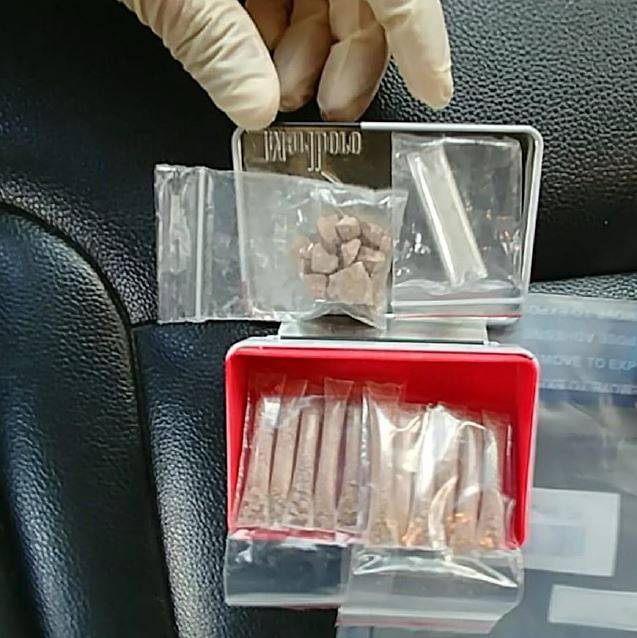
drugs

Some of the heroin recovered from inside a vehicle driven by a 62-year-old Singaporean male suspect who was arrested in a CNB operation on Aug 15. (Photo: SPF, CNB)

On Thursday, SPF officers on patrol along Geylang Lorong 20 slightly after midnight conducted checks on a man and found a straw of suspected controlled drugs on him.

The 49-year-old Singaporean suspect tried to flee, but was subsequently arrested.

A search of his bag uncovered 2.1kg of heroin, 257g of cannabis and 30g of Ice. More than S$3,000 in cash was also found.

Investigations into the drug activities of all the suspects are ongoing.

Source link

Indonesia’s Go-Jek close to profits in all segments, except transport: CEO

0

JAKARTA: Go-Jek, Indonesia’s first billion-dollar startup, is “extremely close” to achieving profitability in all its segments, except transportation, its founder and CEO Nadiem Makarim told Reuters.

READ: Commentary: The humble bajaj three-wheeler and entrepreneurial traffic in a Jakarta jam

Launched in 2011 in Jakarta, Go-Jek – a play on the local word for motorbike taxis – has evolved from a ride-hailing service to a one-stop app allowing clients in Southeast Asia’s largest economy to make online payments and order everything from food, groceries to massages.

“We’re seeing enormous online to offline traction for all of our businesses and are close to being profitable, outside of transportation,” said the 34-year old CEO.

The startup is expected to be fully profitable “probably” within the next few years, Makarim added.

Already a market leader in Indonesia, where it processes more than 100 million transactions for its 20-25 million monthly users, Go-Jek is now looking to expand in Southeast Asia.

Ride hailing services in Southeast Asia are expected to surge to US$20.1 billion in gross merchandise value by 2025 from US$5.1 billion in 2017, according to a Google-Temasek report.

Go-Jek said in May it would invest US$500 million to enter Vietnam, Singapore, Thailand and the Philippines, after Uber struck a deal to sell its Southeast Asian operations to Grab – the bigger player in the region.

READ: Google, Temasek investing in Indonesia’s Go-Jek as ride-hailing rivalry deepens: Sources

Go-Jek is seeing strong funding interest from its backers as it targets an aggressive expansion, Makarim said.

“Since its Aug 1 launch, the app has already grabbed 15 per cent of market share in Ho Chi Minh,” Makarim said. The firm this week opened recruitment for motorcycle drivers in Thailand.

Nadiem Makarim, founder of the Indonesian ride-hailing and online payment firm Go-Jek poses for a p

Nadiem Makarim, founder of the Indonesian ride-hailing and online payment firm Go-Jek poses for a photograph following an interview with Reuters at the Go-Jek offices in Jakarta, Indonesia, August 15, 2018. REUTERS/Darren Whiteside

The startup expects anti-monopoly concerns swirling around the Grab-Uber deal, which Singapore said had substantially hurt competition, to help clear a path for its expansion.

“We’re bringing back choice. The Singapore government is particularly eager to bring back competition,” Makarim said, adding that the order of overseas rollouts had not been set.

OVERSEAS PUSH

Go-Jek’s offshore push comes at a time when Singapore-based Grab is stepping up funding to expand in Indonesia and transform itself into a consumer technology company, starting with a partnership with online grocer HappyFresh.

“Mimicking Go-Jek’s strategy is the highest form of flattery,” laughed Makarim.

He believes Go-Jek’s understanding of food merchants will give it an edge over Grab, which counts investors such as Chinese ride-hailing firm Didi Chuxing and Japan’s SoftBank Group Corp among its backers.

Makarim, who sees food delivery as Go-Jek’s core business, said he was not concerned about funding, without giving details.

Go-Jek was reported in June as being in talks to raise US$1.5 billion in a new funding round and was valued at about US$5 billion in a prior fundraising, sources have told Reuters. The firm had said in March it was considering a domestic IPO.

Makarim noted Go-Jek’s backers were sharing both capital and expertise. The company is collaborating with Alphabet Inc’s Google on platform mobility, Tencent on payments strategy, JD.com on logistics operations, and Meituan Dianping on merchant transactions and deliveries.

Go-Jek has set up a venture capital arm, Go-Ventures, to invest in startups in Southeast Asia “with strategic importance to our business”, the CEO said.

Source link

Multi-sector collaboration needed to strengthen ASEAN disaster management: Shanmugam

0

SINGAPORE: ASEAN must sharpen its disaster management policies amid the threat of natural calamities, said Singapore’s Home Affairs and Law Minister K Shanmugam on Friday (Aug 17). 

Speaking at the 4th ASEAN Strategic Policy Dialogue on Disaster Management, Mr Shanmugam said more needs to be done to include various sectors in the recovery process after a disaster. 

“The social welfare sector can provide social protection and counselling for the elderly, the disabled community, youths and people who are affected deeply and emotionally by loss of lives and loved ones,” he said. 

“The education sector can help train young people to assist in emergency preparedness and disaster management efforts. From the private corporate sector, they can help governments implement disaster risk financing tools, manage economic losses and support rebuilding efforts after a disaster strikes.”

To achieve this, Mr Shanmugam stressed that there must be a “clear definition” of the roles of each stakeholders in what they will handle before, during and after a disaster strikes. 

K Shanmugam Aug 17 ASEAN

Singapore’s Home Affairs and Law Minister K Shanmugam speaking at the event on Friday (Aug 17). 

Mr Shanmugam noted that regionally, ASEAN member states, its sectoral bodies and the ASEAN Coordinating Centre for Humanitarian Assistance (AHA Centre) have been working together, citing the example of how Southeast Asian nations responded to tropical storm Son-Tinh.

Heavy rain because of the tropical storm caused a dam in Laos to collapse, flooding villages. 

“At the national level, the disaster management agencies of Laos worked with the military, local NGOs and regional partners. They conducted search and rescue operations, provided medical care and distributed relief items,” he said.

“At the regional level, the AHA Centre provided regular monitoring and assessment reports. Senior officials from the AHA Centre, including the Director as well as ASEAN, went over and mobilised ASEAN relief items and Laos received some assistance during that very critical period.”

READ: SAF, SCDF deliver humanitarian supplies to Laos for flood relief

At the event, which was attended by around 160 representatives from ASEAN, the United Nations, the private sector and non-governmental organisations, Mr Shanmugam also touched on the need to tap technology. 

It can provide early warning about what might happen and increase the efficiency of response teams. 

Sharing Singapore’s experience, Mr Shanmugam highlighted how Artificial Intelligence, unmanned aerial vehicles and robotics have been used in rescue and firefighting operations. 

These include the Singapore Civil Defence Force’s Life Detection robot, which is equipped with sensors to pick up signs of life in rubble and debris.

Said Mr Shanmugam: “We are seeing the impact and effect of climate change and the threat of natural disasters is likely to worsen. There are also security challenges – terrorism, which can also cause massive damage and loss of life.

“Given these challenges, it is ever more critical that this region – ASEAN – is vigilant and we are prepared to deal with natural disasters, and any type of disasters that strike us.”

Source link