Home Blog Page 965

‘I’m afraid one day it’s going to go’: Saving Singapore’s old buildings one photograph at a time

0

Follow our CNA LIFESTYLE page on Facebook for more trending stories and videos 

SINGAPORE: Since 2006, photographer Darren Soh has been making regular visits to a certain HDB block in the western side of Singapore. There’s nothing fancy about 82 Commonwealth Close but the 42-year-old keeps taking photos of it again and again.
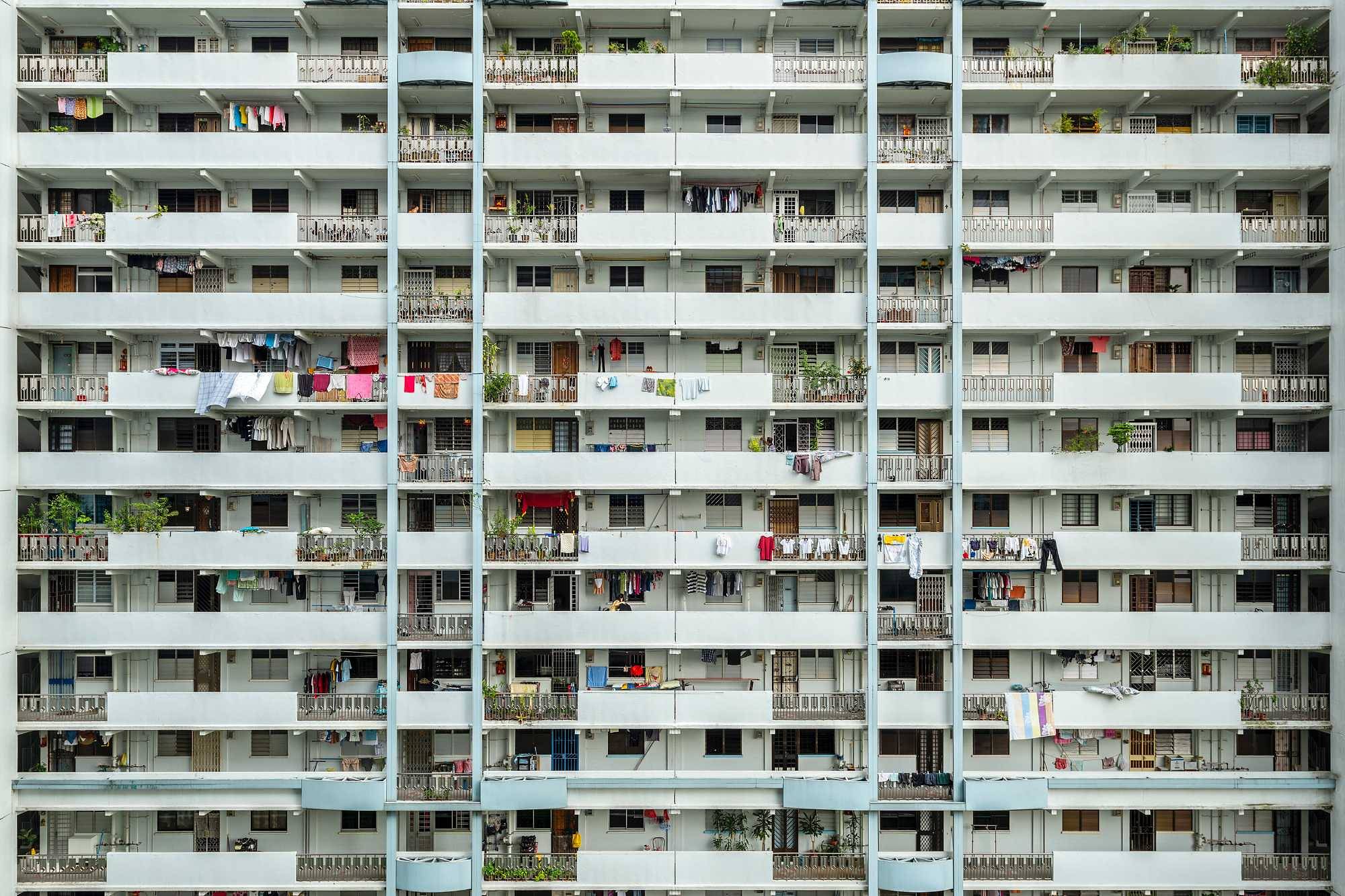
Darren Soh 82 Commonwealth Close built 1963

82 Commonwealth Close, which was built in 1963, was where photographer Darren Soh lived until he was five. (Photo: Darren Soh)

“It’s where I lived from when I was born until the age of five. It was built in 1963 and sits on top of a hill with two other blocks. The view is amazing,” he told CNA Lifestyle.

“Every time I get a new camera, I would go there and take the same picture. I keep going because I’m afraid, one day, they’ll just announce that it’s going to go.”

Darren Soh  406 Clementi Ave 1 built 1977 demolished 2017

406 Clementi Ave 1, built in 1977 and demolished in 2017. (Photo: Darren Soh)

Soh’s childhood home is part of a wall montage of 48 HDB block facades he has taken over the years, which is currently found at the farthest end of the room at the Objectifs gallery.

Seen in its entirety, it’s a mesmerising image of grids and angles that blend into each other anonymously – until he begins singling them out.
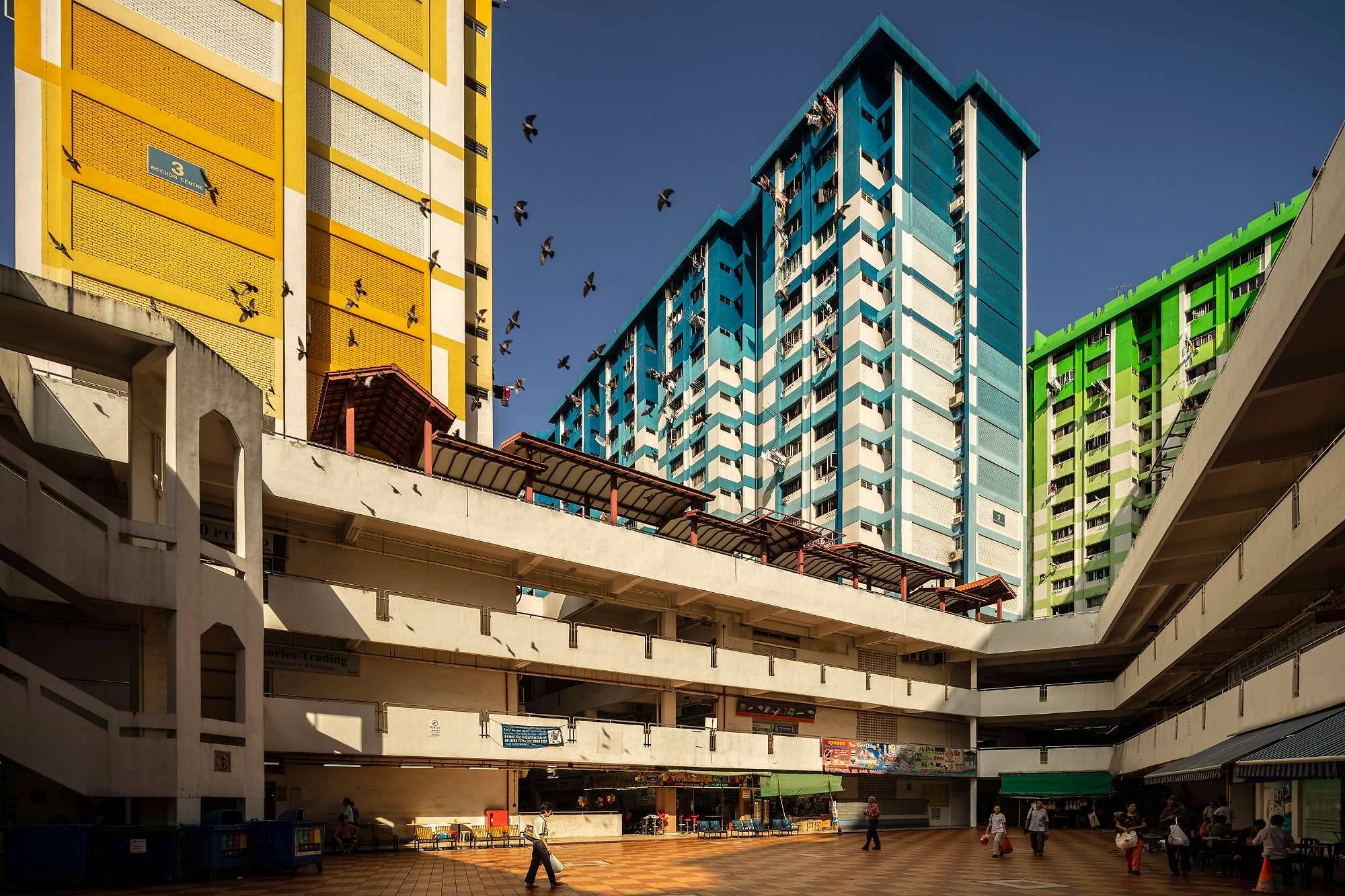
Darren Soh  Rochor Centre

Rochor Centre, which was built in 1977 and demolished in 2018. Its trademark rainbow colours didn’t come until 1994. (Photo: Darren Soh)

“This one at Havelock Road was built in ’67; this is from Redhill, also ’67. This is from Commonwealth Drive, that’s from Geylang Lorong 3,” he said before pausing. “Both have been demolished.

Then, he pointed to yet another image, which vaguely looked familiar. “This is Rochor Centre. If you step outside, you can see it being torn down.”

TALKING ABOUT BUILDINGS

The montage is part of Soh’s latest exhibition, Before It All Goes, which features photographs of buildings built during Singapore’s early independence years from the 1960s and 1970s.
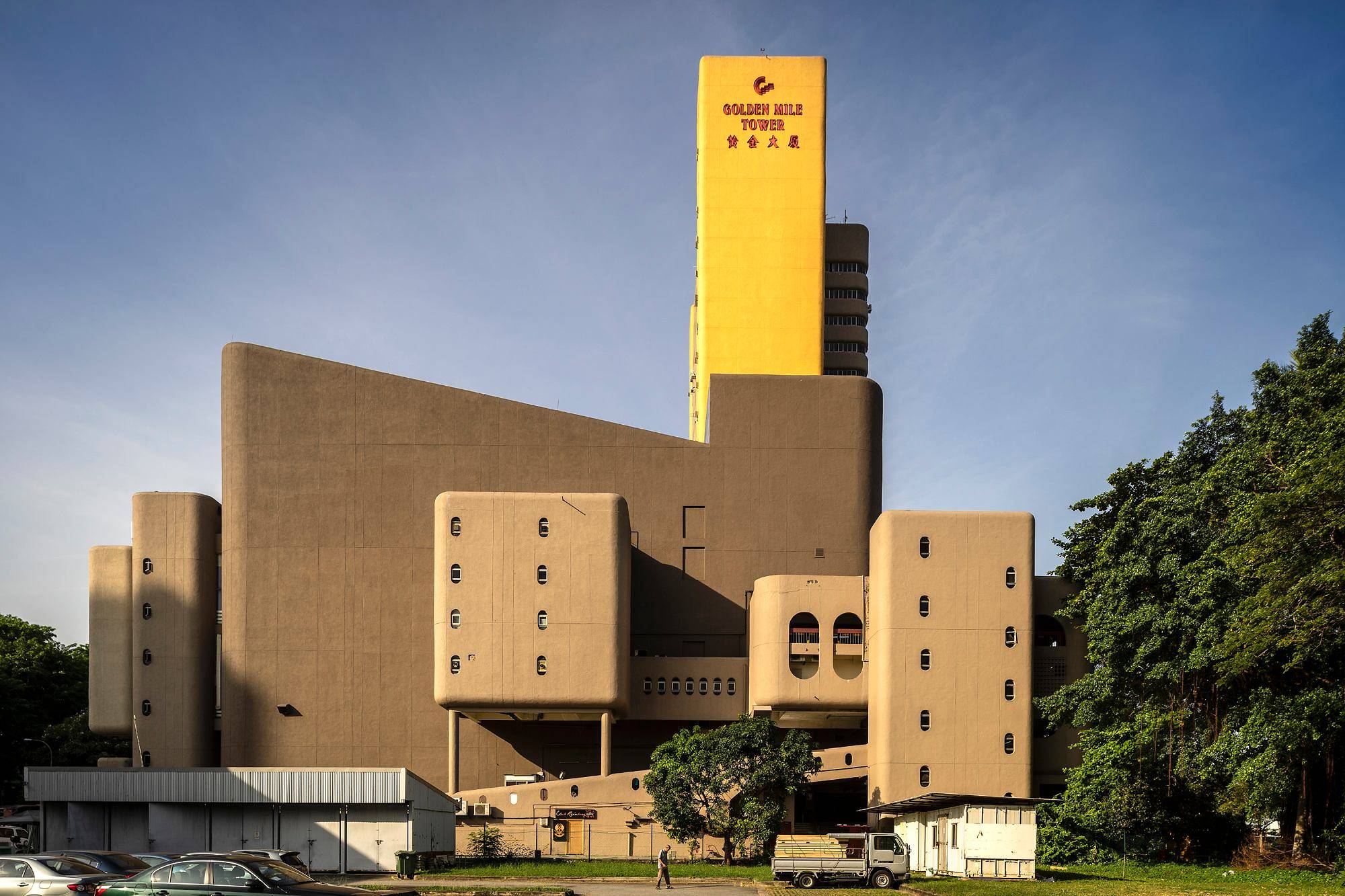
Darren Soh Golden Mile Tower 2

Golden Mile Tower was built in 1974. It was designed by Malaysian architect Goh Hock Guan, who also designed Kallang Theatre. (Photo: Darren Soh)

It’s not just HDB facades. The show also features eight iconic sites, both commercial and public structures, many of which have been in the news recently.

Aside from Rochor Centre, there are also photos of Pearl Bank Apartments, People’s Park Complex, Golden Mile Complex, Golden Mile Tower, Queenstown Cinema, Tanglin Halt Estate, and the swimming complexes in Bedok and Buona Vista.
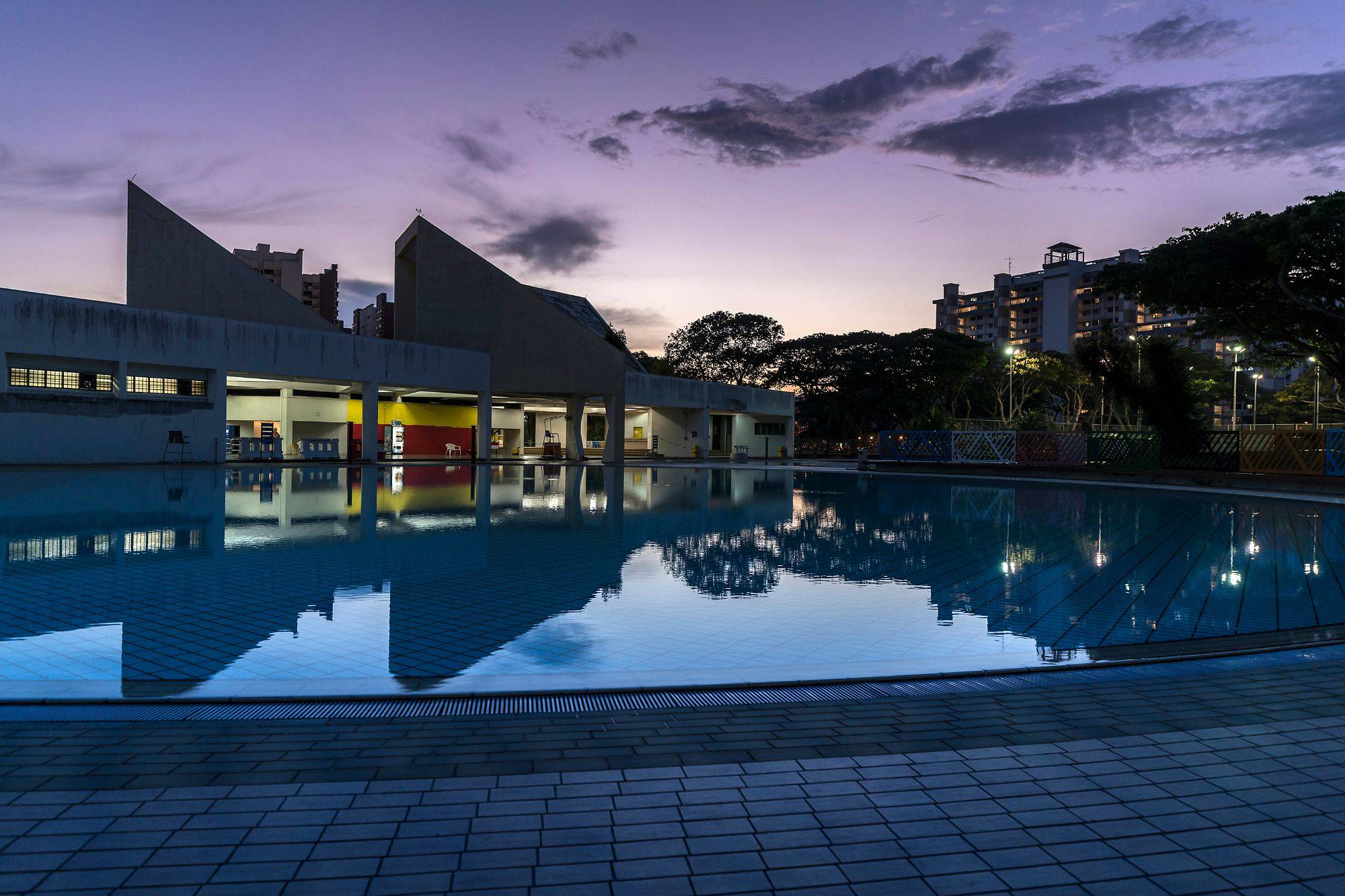
Darren Soh  Bedok Swimming Complex

Bedok Swimming Complex, which was built in 1981, is now in the process of being torn down, with new all-purpose community hubs such as Heartbeat@Bedok taking over their functions. (Photo: Darren Soh)

Like the housing buildings, some of these landmarks are gone while the fate of others are up in the air.

And Soh – who has also released a book and a collaborative documentary – hopes his images will help get people talking about them.
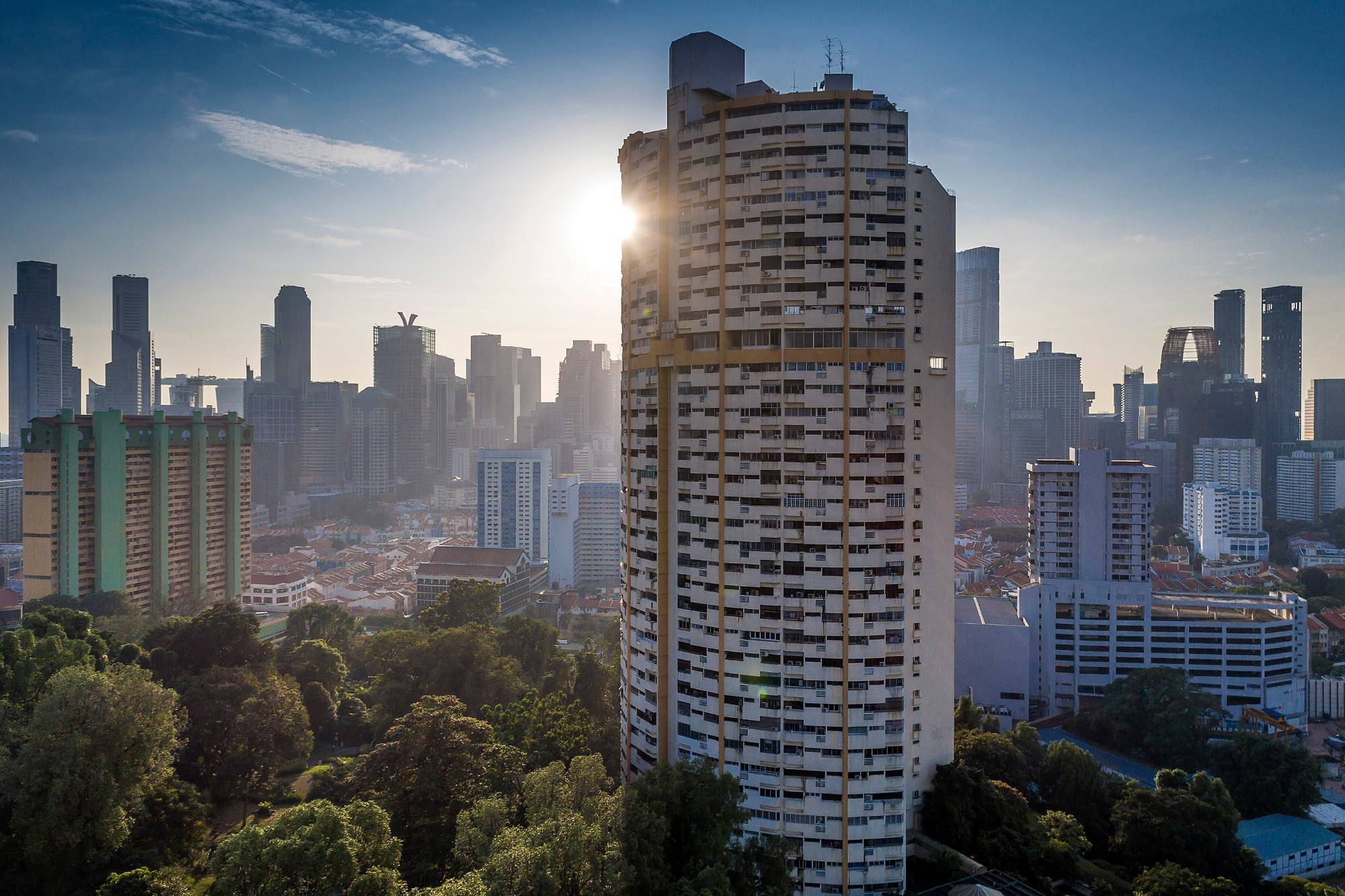
Darren Soh Pearl Bank Apartments

Pearl Bank Apartments, which was built in 1976. After previous failed attempts at an en bloc, it finally came to pass this year. (Photo: Darren Soh)
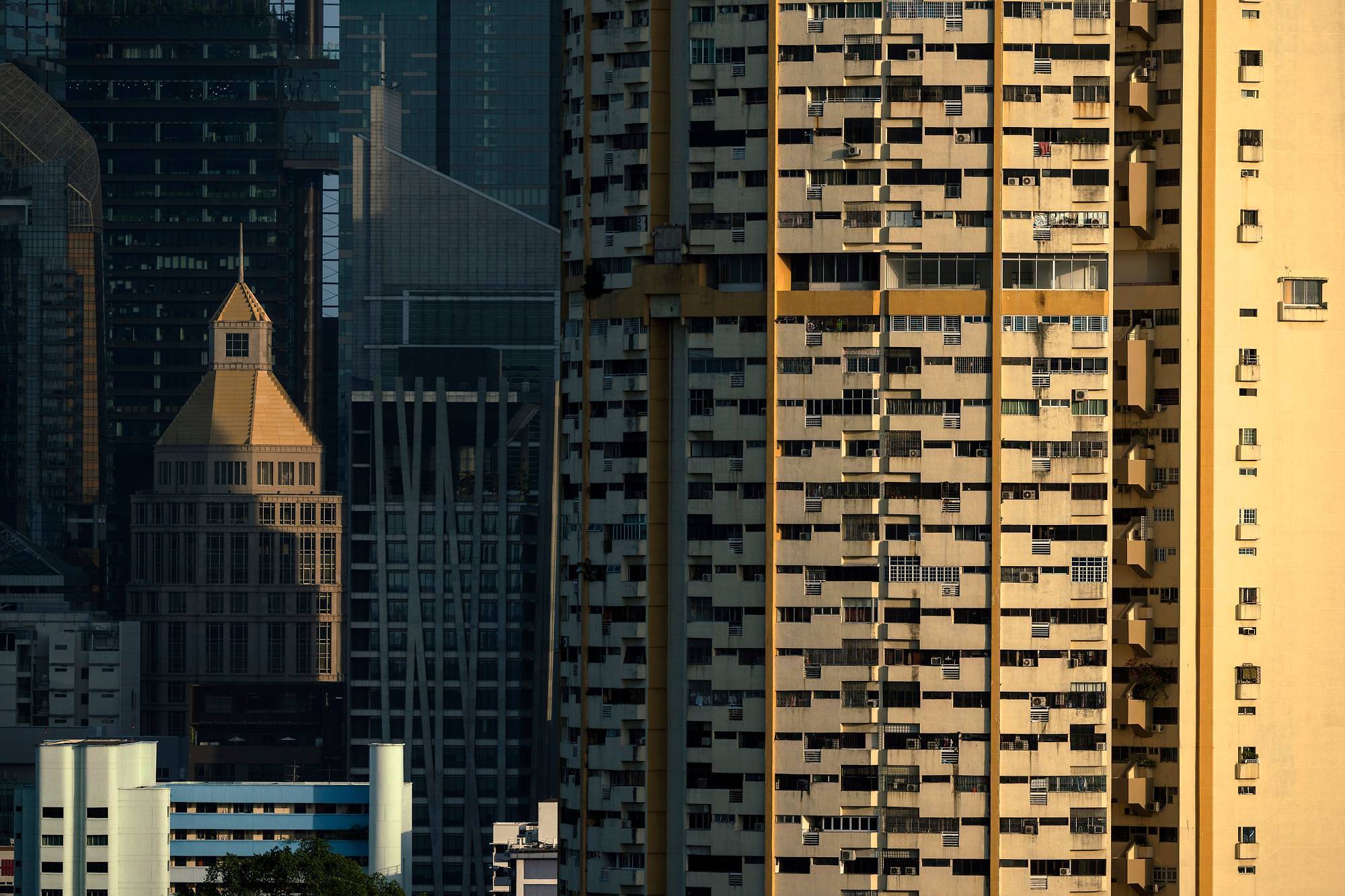
Darren Soh Pearl Bank Apartments 2

Pearl Bank Apartments, which was built in 1976. (Photo: Darren Soh)

“There are 7,000 conserved buildings in Singapore but the fact remains that only 15 of them were built after Independence. We have lots of conserved buildings from the early 20th century, but the message I get is that everything that came after 1965 are not so important,” he said.

“We need to talk about this whole idea of urban renewal and whether there’s another way out, rather than just keep demolishing and building new ones. If some of them can be saved because of more conversations, that would be great.”

TANGLIN HALT AND QUEENSTOWN CINEMA

A professional lensman for the past two decades, Soh’s love of architectural photography began in 2006, when he was commissioned to do a series on Marina Bay for international magazine Monocle. Following the transformation of the site into the future Marina Bay Sands made him realise the value of taking these photos.

Darren Soh Queenstown Cinema

Queenstown Cinema, built in 1977 and demolished in 2013. (Photo: Darren Soh)

On the side, Soh began his personal project of simply documenting Singapore’s old buildings. But, he said, things took a slightly more serious turn a few years ago. In 2013, Queenstown Cinema was demolished and, a year later, came news that Tanglin Halt Estate was to be torn down under HDB’s Selective En bloc Redevelopment Scheme (SERS).

“It was the largest SERS project to date. The government had never announced the demolition of 31 blocks at one go. It was a really large estate and for them to just move everybody, it was like, ‘really?’. The decision-making felt very unilateral,” he said.
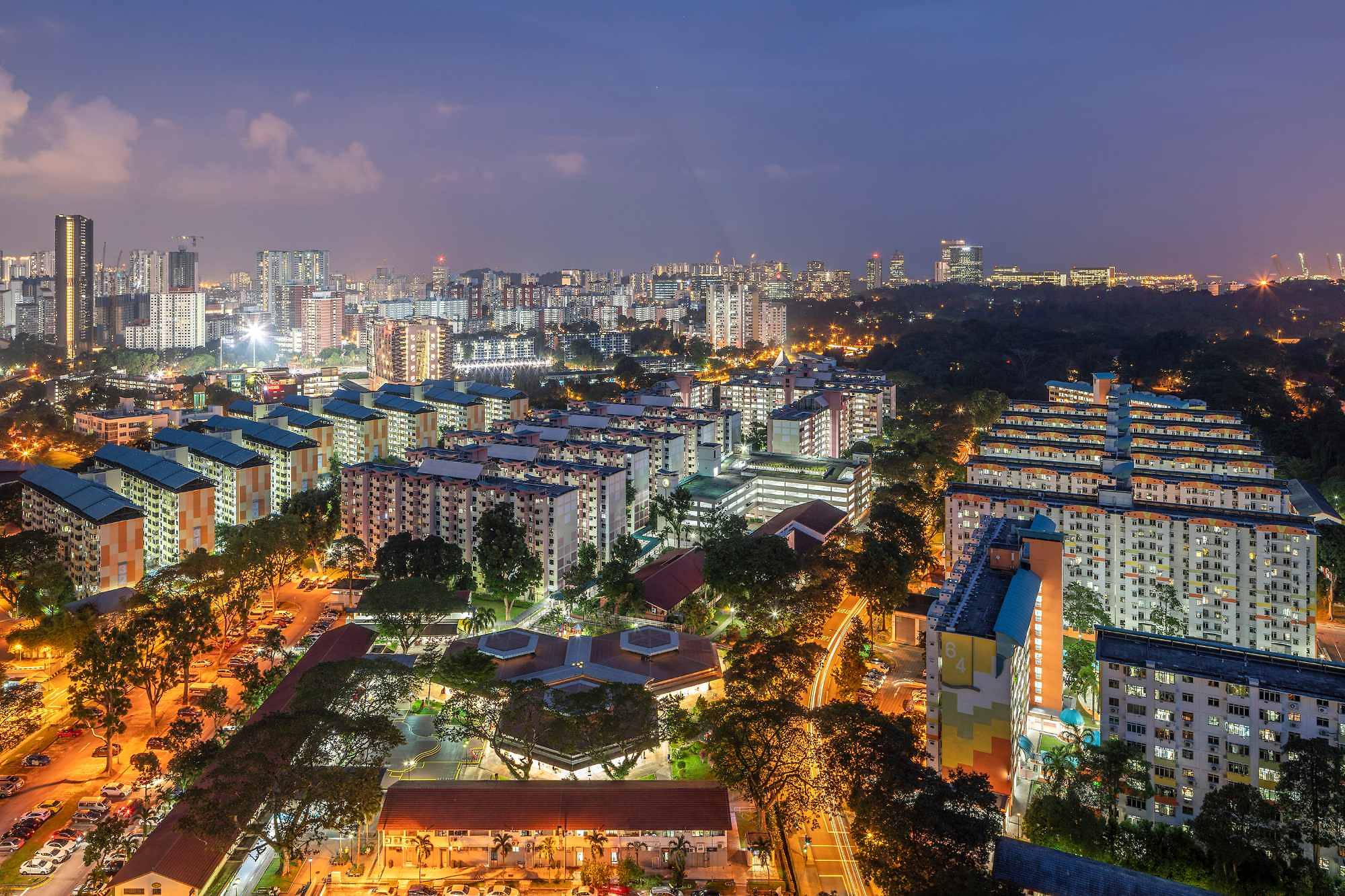
Darren Soh  Tanglin Halt

Tanglin Halt, which was built in 1962, was HDB’s largest Selective En bloc Redevelopment Scheme (SERS) project, which was announced in 2014. (Photo: Darren Soh)

The two developments prompted him to hasten his documentation process – especially when it came to residential buildings.

“I would rapidly go and photograph places that are going en bloc, no matter how insipid they may appear. I also keep telling my friends to let me know when their condos are going en bloc so I can go photograph them,” he said.
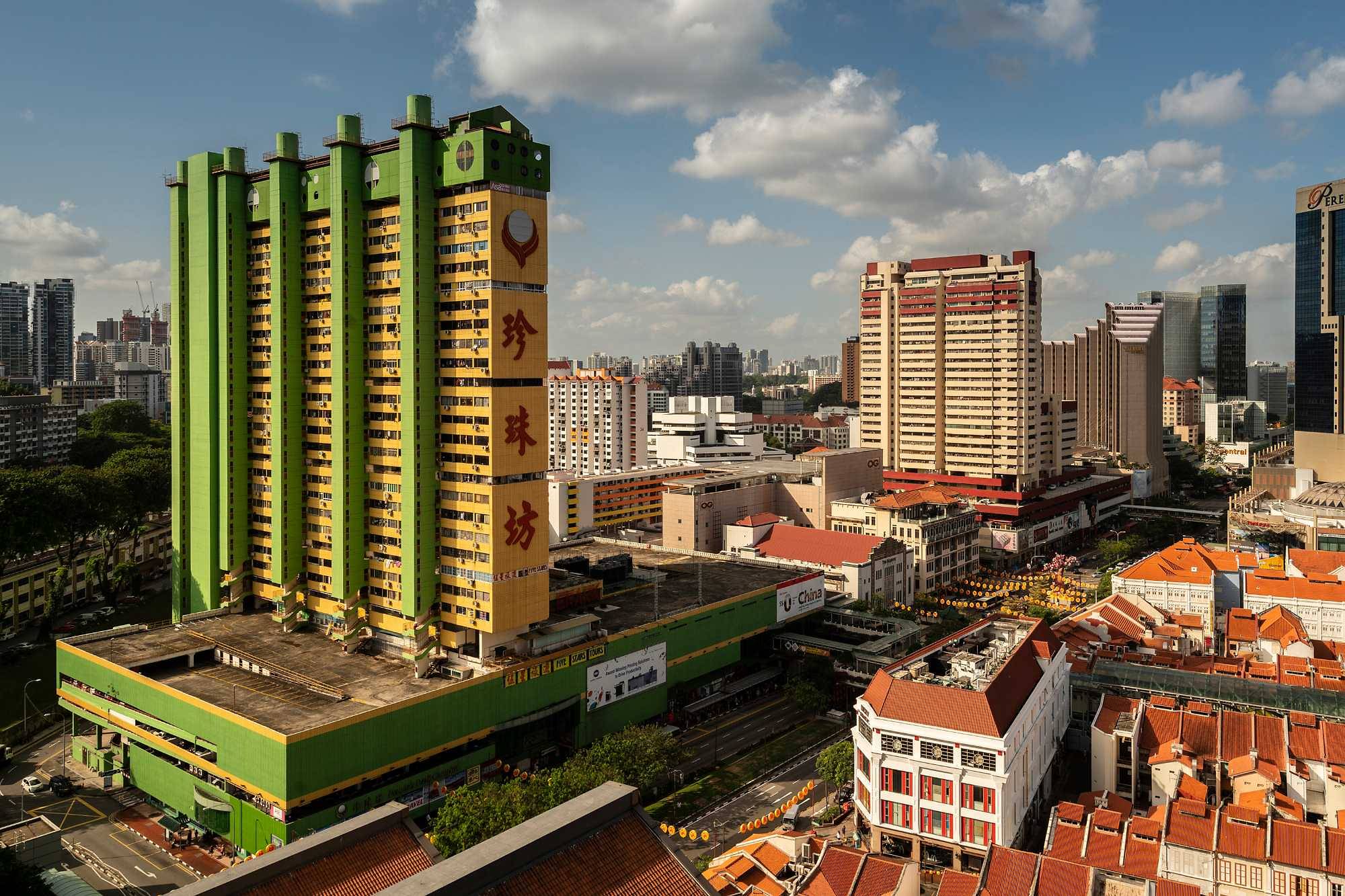
Darren Soh People's Park Complex

People’s Park Complex in Chinatown, which was built in 1970. (Photo: Darren Soh)
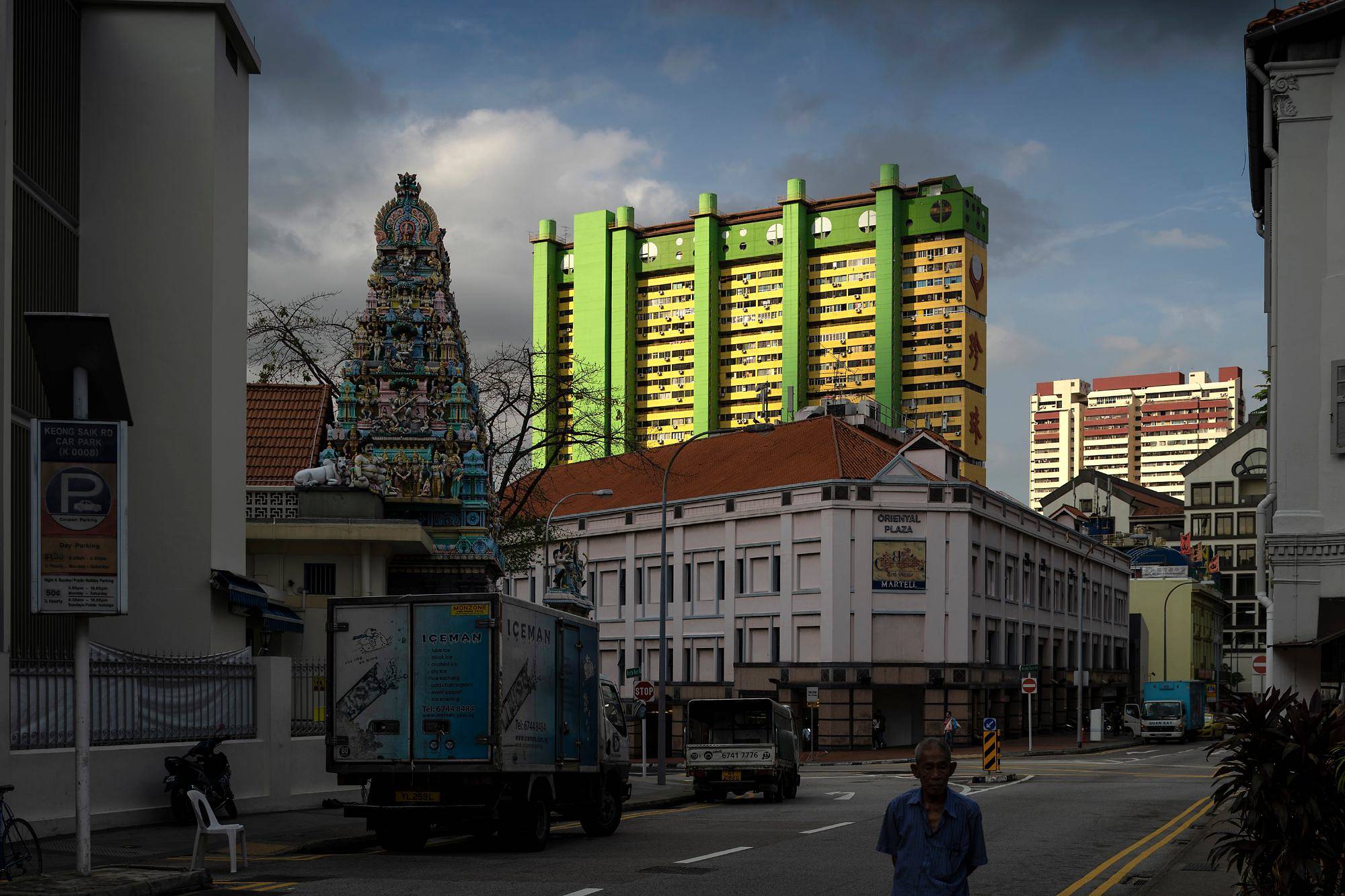
Darren Soh Peoples Park Complex 2

People’s Park Complex in Chinatown, which was built in 1970. (Photo: Darren Soh)

Soh would also scour the newspapers for any en bloc announcements and surf property websites and old HDB annual reports for more information on buildings.

THE SUCCESS OF DAKOTA CRESCENT

Soh acknowledges how complicated things are. It’s a tangled web of issues, he said, from the heritage standpoint to commercial considerations, issues of space and people’s investments.

Reacting to Prime Minister Lee Hsien Loong’s recent National Day Rally speech, where the situation at Tanglin Halt was brought up, Soh said: “He actually gave a very good context to why this is going – that it was built at a time when land use was not optimal so it has to go. I think, in a way, I don’t think he could’ve offered much more in light of what’s already in motion.”
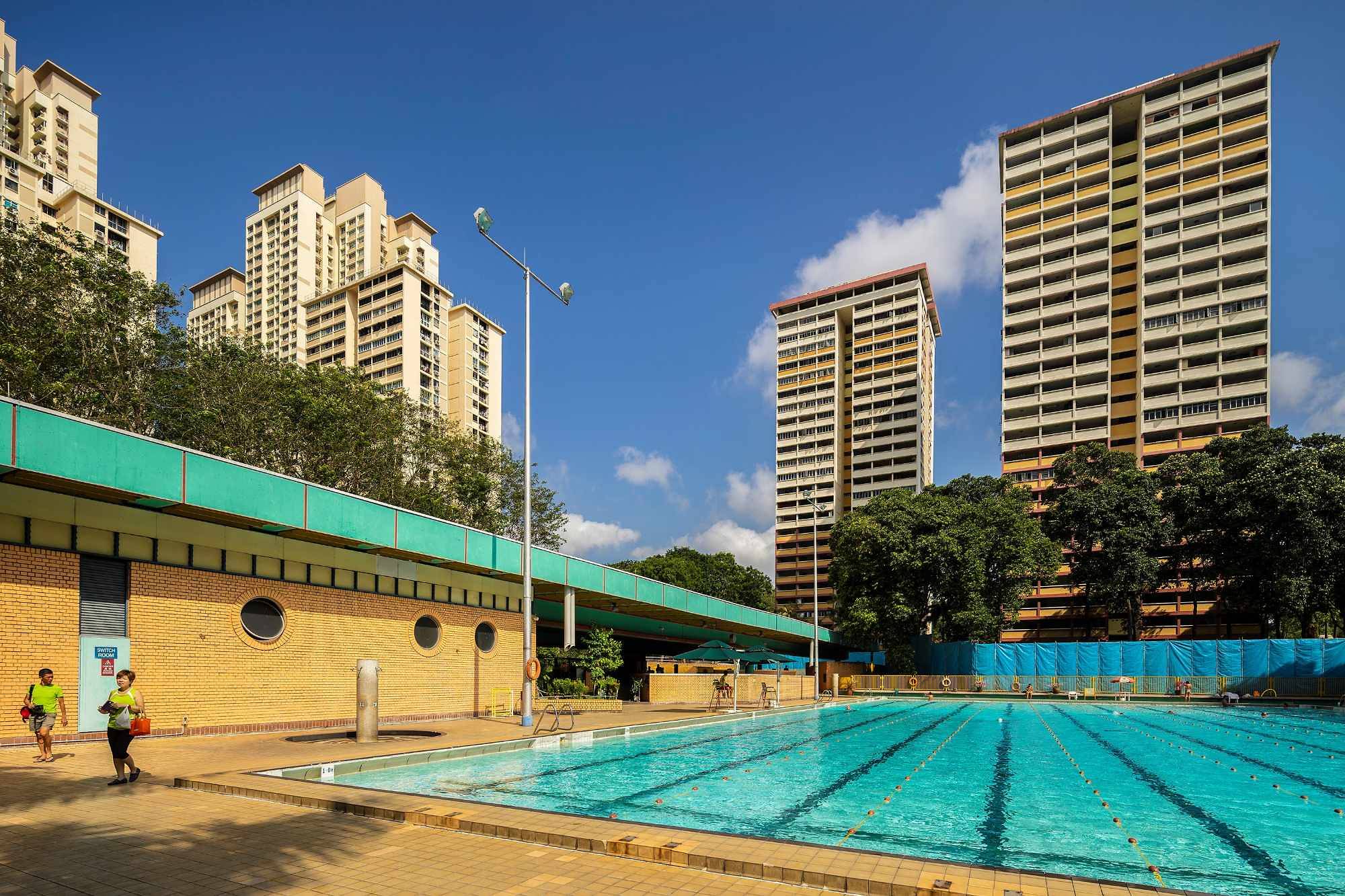
Darren Soh Buona Vista swimming pool

Buona Vista Swimming Complex, which was built in 1976 and demolished in 2014. (Photo: Darren Soh)

He added: “It may not be our problem now but by the time it gets to our kids, everything will be erased. My son is six years old. By the time he gets married or have children, (Tanglin Halt) will be a memory. And while you are given new, taller, more modern flats to live in, it’s a very sobering thought that there’s no physical remnant left (of the old flats).”

But if you’re into saving old buildings, all isn’t completely lost. Soh cited Dakota Crescent as one example of a success story.

“Six of the blocks have been conserved and to me that’s a really big win because it’s unprecedented. There has never been a case before where the government says ‘we’re gonna demolish this’, a bunch of people came to say ‘can you please not?’ and they changed their mind,” he said. “And also, because the MP in the area, Mr Lim Biow Chuan, believed in saving part of it and actively spoke in Parliament.”

YOUR INSTAGRAM PHOTO HELPS

Of course, Soh said he has no illusions that mere photographs would change things just like that. But for him, every single image of these buildings are important – including those you find on Instagram.

Darren Soh 19 Jalan Sultan built 1978

19 Jalan Sultan, built in 1978. (Photo: Darren Soh)

“Somehow, many Instagrammers go to a lot of these places. They may be there just because of aesthetics but the fact remains these pictures exist and are part of an archive. I see that as something good,” he said.

Whatever fate befalls post-Independence buildings, Soh said he’ll continue shooting whatever is there – even if the HDB block doesn’t look special, like his childhood home.
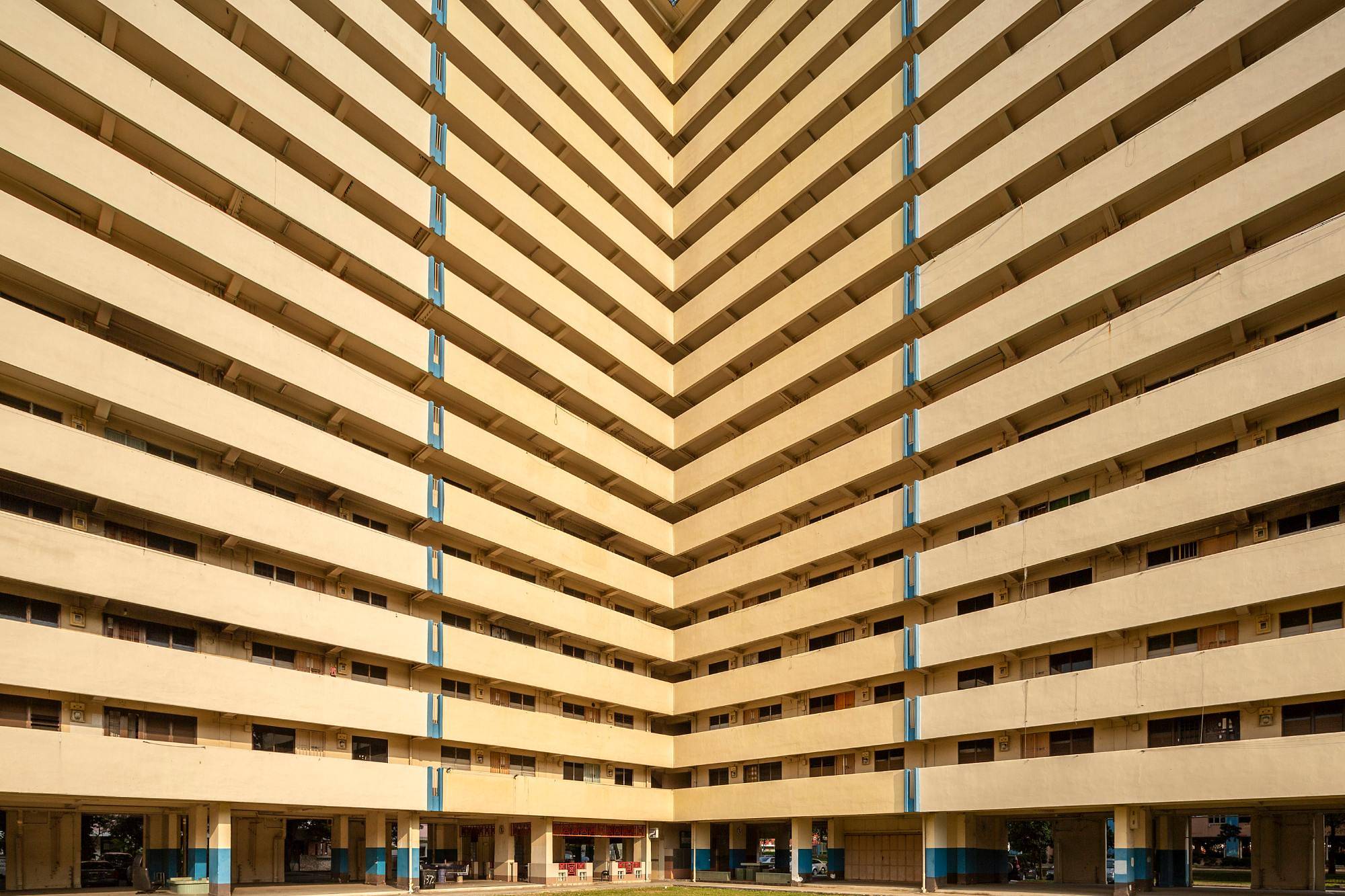
Darren Soh 20 Upper Boon Keng Road built 1975 demolished 2013

20 Upper Boon Keng Road, built in 1975 and demolished in 2013. (Photo: Darren Soh)

“It looks the same to you and I, but someone who has lived there will be able to tell. As long as the images are special to even just one person, it will be enough. I have people writing to me, ‘thank you for photographing this place that nobody wants to. It used to be my home and now it’s gone.’ And that keeps me going.”

Before It All Goes: Architecture From Singapore’s Early Independence Years runs until Sep 29 at Objectifs, 155 Middle Road. Free admission.


Source link

‘A private matter’: Crazy Rich Asians actors react to news that author Kevin Kwan defaulted on NS obligations

0

SINGAPORE: Some of the Singaporean actors from the hit movie Crazy Rich Asians say the news about author Kevin Kwan defaulting on his national service shouldn’t affect the way the film is perceived here.

It emerged on Wednesday (Aug 22) that Kwan – author of the best-selling novel on which the film is based – failed to “register for national service (NS) in 1990, despite notices and letters sent to his overseas address”, according to the Ministry of Defence (MINDEF).  

“Mr Kwan has committed offences under the Enlistment Act, and is liable to a fine of up to S$10,000 and/or imprisonment of up to 3 years upon conviction,” said MINDEF.

The news caused a stir online, with many comments on social media, and some Singaporean cast members of the film spoke up about how this could affect the local audience.

Both Janice Koh, who plays Felicity Young in the movie, and Koh Chieng Mun, who plays Neena Goh, told Channel NewsAsia that this is “a private matter” between Kwan and MINDEF.

“It does not in any way detract from the quality of his book or the movie based on it, which is delighting readers and audiences all over the world,” added Janice Koh.

Crazy Rich Asians Kevin Kwan with his Singapore cast

Actress Tan Kheng Hua and author Kevin Kwan at the Hollywood premiere of Crazy Rich Asians (Photo: Instagram/kevinkwanbooks)

Tan Kheng Hua, who plays Kerry Chu, the mother of protagonist Rachel Chu, agreed.

“Good common sense tells you Kevin Kwan’s gloriously affecting novels and the delightful movie adaptation of it currently connecting people all over the world with joy and positive messages of inclusivity and diversity, and MINDEF, are two completely separate things and should be treated as such,” she said.

For Koh Chieng Mun, the news does not undermine the quality of the best-selling book and critically acclaimed film.

“(Look) how it has been a source of joy and enjoyment to audiences in the United States,” she said. “And now in Asia.”

Crazy Rich Asians' Kevin Kwan and Koh Chieng Mun

Crazy Rich Asians’ author Kevin Kwan with actress Koh Chieng Mun who plays Neena Goh in the film. (Photo: Instagram/kevinkwanbooks)

Actress Amy J. Cheng, who plays Jacqueline Ling in the film, says that ultimately all that matters is an audience making “a strong connection with a solid piece of work”.

“Crazy Rich Asians is currently the No. 1 box office movie in the US. The books have been on The Straits Times best seller list for the past 50 weeks,” she said. “The audience has spoken.”

Kwan’s debut novel about the lives of extremely wealthy Chinese families living in Singapore became an instant global bestseller back in 2013.

The film adaptation, helmed by Asian-American Jon M. Chu with Kwan on board as executive producer, soared to the top of the US box office when it earned US$35 million (S$47.9 million) in its opening five days.

Crazy Rich Asians – the first big, contemporary studio film featuring an all-Asian cast in over 25 years since The Joy Club – has been hailed in Hollywood as a breakthrough for racial representation. The cast boasts Asian actors from all over the world, including Michelle Yeoh, Henry Golding, Constance Wu, Gemma Chan and Ken Jeong.

Supported by the Singapore Tourism Board and the Singapore Film Commission, the movie was largely filmed in Singapore and included nearly 300 film crew members who are Singaporean or Singapore permanent residents.

Kwan reportedly grew up in a multi-generational house in Bukit Timah and attended Anglo Chinese School (Primary) until he was 11, before emigrating to Houston, Texas with his parents and two older brothers.  He is now an American citizen, according to the reports.

He told Channel NewsAsia in a previous interview that while making Crazy Rich Asians, he was “very conscious of trying to showcase Singapore in as positive a light as possible”.

“I really hope Singaporeans will see that this is a love letter to Singapore,” he said. “I wrote what I knew… and I wanted to pay tribute to all types of Singaporeans.”

​​​​​​​​​​​​​​

Source link

Workshop On How To Start Online Business

0

Workshop On How To Start Online Business
from Friday, August 31, 2018 at 7:30 PM to Friday, August 31, 2018 at 10:00 PM

Somerset

Singapore, Singapore

Source link

Commentary: Corporate giving – when cash isn’t always best

0

SINGAPORE: How is corporate giving in Singapore like attending a traditional Chinese wedding?

Cash remains the preferred “gift” for many. And the bigger the ang pow, the better, many think.

Since the launch of the National Volunteer and Philanthropy Centre’s Company of Good programme in 2016, we have engaged over 1,000 businesses in Singapore and gained insight into how companies think about giving back to society.

More of them understand why giving back matters. Companies profit from communities, and it is their responsibility to help communities when in need. Savvy ones also appreciate the benefits giving brings.

But misconceptions still exist, the most striking of which is the assumption that cash is king.

The common thinking is that a company that donates S$1 million has contributed more than one that gives only S$1,000. Think about how our society celebrates hefty dollar donation – with giant cheque-giving ceremonies and charity auctions rewarding the highest bidder.

READ: Singapore shows data can be a force for good, a commentary

WHEN CASH ISN’T KING

To be clear, there is nothing wrong if a company makes monetary contributions. In fact, many non-profits welcome the flexibility of cash.  

Problems start when society over-emphasises monetary giving, leading to narrow definitions of how companies can contribute

SMEs suffer most from this mindset, believing they have nothing to give. “We’re not the big boys. We can’t donate hundreds of thousands,” is a refrain we hear.

But volunteerism, offering assets like venue facilities, or cause advocacy matter just as much. Think F&B companies that educate customers on food wastage and plastic consumption. This social consciousness can be a differentiating factor for smaller brands.

KFC say no to straws sign Singapore

A sign displayed in a KFC outlet in Singapore that says the restaurant will no longer serve plastic straws. (Photo: Chew Hui Min)

Company size doesn’t matter when it comes to the quality of giving. Industries with a small number of employees have volunteerism rates on par with or even higher than those with larger employee pools.

With SMEs making up over 90 per cent of enterprises in Singapore, we need them to believe in their potential to contribute even if they lack deep pockets. It does not benefit Singapore’s giving if our charities remain stuck courting a tiny 1 per cent of large firms and multinationals. 

The thing is businesses are not rapacious beasts who give for cosmetic reasons. Our conversations with companies reveal sincere beliefs about helping those in need.

In fact, cash donations risk feeling transactional especially if they take the form of a CSR manager writing out a cheque without meaningful interaction with the charity.

This reduces the company to an ATM, and the giving becomes emotionally and strategically disconnected from the business. There is little reason to sustain it, especially during recessions when corporate philanthropy budgets come under greater scrutiny. And yet, bad times are when the poor need help the most.

READ: Can the rich be caring? Is there an empathy gap? A commentary

A BROADER VIEW OF GIVING

The good news is that Singapore’s corporate giving scene is gradually maturing. Of the over 700 companies surveyed in NVPC’s inaugural Corporate Giving Survey, a promising 52 per cent are engaged in corporate giving, and a further 31 per cent expressed interest to start.

While cash donations dominate, businesses are clearly exploring other ways of contributing.

Riding on this momentum, perhaps it is time to shift the narrative around corporate giving. Rather than rehashing the mantra of giving more cash, we should have more meaningful conversations around other ways companies can give.

FROM GIVING MORE TO GIVING IN OTHER WAYS

Just like how financial planners recommend a spread of investments, we can encourage companies to consider a diverse giving portfolio to reduce reliance on any one method.

While over 60 per cent of corporate givers still give through cash donations, there is healthy engagement in other ways including in-kind donations (37 per cent) and the purchase of goods and services from non-profits (30 per cent), which came in at second and third place respectively.

Potential givers also show a higher inclination toward volunteerism compared to current givers, with 30 per cent saying they would carry out hands-on volunteerism – the third most popular method, after cash and in-kind donations. 

This willingness to explore other forms of giving is a positive trend society should recognise and celebrate.

Already, we see examples of small firms thinking creatively. Social enterprise The Mindful Company collaborates with charities to create products with inspiring messages around mental wellness. The digitally-savvy team also gives its expertise by informally consulting charity partners on branding and content marketing.

NVPC The mindful company bracelet

“How are you today?” bracelets from Samaritans of Singapore and The Mindful Company collaboration project. (Photo: NVPC)

Elsewhere, we have seen a boutique creative agency that not only does pro-bono work but has leveraged its relationship with media owners to secure advertising spots for an adopted charity – in effect, “giving” through its business networks. 

The definition of “pro-bono” has also gone beyond the legal profession, as tech companies give away complimentary digital and software services, and providing training to non-profit users.

READ: Three stories on why tackling poverty requires active listening, a commentary

GIVING STRATEGICALLY EQUALS GIVING BETTER

Another conversation we should have is whether companies are adopting a strategic orientation toward giving activities. While not necessarily giving more, are they giving more effectively?

Our survey suggests companies may be moving in this direction. 64 per cent of corporate givers currently integrate a giving element into at least one business function, chiefly procurement (30 per cent), followed by staff development, and marketing and branding (28 per cent each). It will be interesting to see if this momentum continues and grows in subsequent years.

A good number are also aligning their social and business objectives. 66 per cent of corporate givers that engaged in volunteerism were motivated by the positive knock-on effects for staff morale – where giving helps achieve goals like recruitment, leadership development and staff retention – while 43 per cent did it because it supported their business model. 

To use an analogy, these companies are making giving part of their “core curriculum” as opposed to a co-curricular activity.

An example is local firm Feng Ming Construction. After realising the limitations of conventional “cheque-book philanthropy”, Feng Ming has shifted towards having staff volunteer with non-profit AWWA to renovate homes for families-in-need.

Feng Ming reaps the benefit of motivated employees, who feel proud to use their skills for good. By relying on in-house expertise, the project is more efficient compared to if it had given the charity cash to hire a sub-contractor.

feng ming staff volunteer

Feng Ming staff volunteers helped to refurbish homes of families-in-need. (Photo: NVPC)

READ: Amid concerns over dollars and cents, is there no room for social responsibility? A commentary

MARRYING PROFIT AND PURPOSE

Companies generally agree that giving is good for business so it’s time to encourage businesses to think about giving differently to overcome perceived resource barriers.

It is a win if businesses can marry profit and purpose, and corporate giving teams are likelier to secure internal buy-in if their giving initiatives fulfil company goals.

The more giving is sustainable, the higher the chance of turning it into a corporate culture.

Once this happens, giving will become intuitive among staff and management, requiring less justification.  That’s something money can’t buy.

Jeffrey Tan is director of Knowledge & Advocacy at the National Volunteer & Philanthropy Centre (NVPC).

Source link

Overworked and low-paid, heavy vehicle drivers an accident waiting to happen

0

SINGAPORE: When a lorry collided with Marcus Loke and two of his friends on West Coast Highway in 2016, he narrowly escaped death.

The first few days in hospital were “very difficult” for the then 17-year-old, who kept wondering about his friends Ong Zi Quan, 19, and Ang Yee Fong, 25. They had been riding to his grandmother’s home on their power-assisted bicycles.

When the police told him about their deaths, he cried, the pain in his heart coming on top of his leg injuries.

READ: West Coast e-bike deaths: Fatigue may have caused driver to fall asleep, says coroner

In April, the driver was charged in court. Today, whenever Mr Loke sees heavy goods vehicles approaching, his first thought is “move aside”. He said: “Sometimes I see those truck drivers and I think they drive a bit too fast.”

(dp) TP truckers 1

Mr Marcus Loke with Talking Point host Diana Ser.

Certainly, heavy vehicles are claiming a disproportionate number of lives. They make up five per cent of the vehicle population but have been involved in three in 10 fatal road accidents in the last two years.

Last year, there were 764 accidents involving heavy vehicles, of which 34 were fatal.

In June, a chain collision set off by a lorry left one person dead along Tanah Merah Coast Road. Two months earlier, a lorry rammed into a father, daughter and their family friend near Yio Chu Kang Station, killing them.

(dp) TP truckers 2

The lorry that ran over three pedestrians at Ang Mo Kio Avenue 6 on April 23.

Why are these vehicles turning the roads into sudden death traps? Are heavy vehicle drivers more reckless? As the programme Talking Point discovers, a vicious circle is at work in the industry, potentially putting other drivers and pedestrians at risk. (Watch the episode here.)

There are also solutions that can help to prevent accidents and make the roads safer, but more could be done.

DRIVEN HARD, WITH LITTLE CHOICE

The experience of Ravi (not his real name), a lorry driver for three years, is instructive. His normal working hours are 8am to 5pm, but the 31-year-old then works five to six hours of overtime to earn more money.

(dp) TP truckers 3

Ms Ser chatting with “Ravi” at 11.45pm, after he finished work.

Driving for that long means he gets tired, as he has to keep pressing and letting out the clutch when there is heavy traffic. His concentration, for example on his blind spots, is gradually affected.

The migrant worker said he has not been involved in any accident but knows of other drivers who have, owing to fatigue and carelessness; for instance, they did not keep a proper lookout for pedestrians.

Ravi is working longer than the limits set by law, which is 12 hours a day and 72 hours of overtime in a month for employees like him. Beyond that, companies must apply to the Manpower Ministry for an exemption.

He understands that is the law, but he said: “Not only I, but many people are working long hours.”

When Talking Point asked other drivers, they too said they sometimes work 14 or 15 hours a day. One of them, who has occasional headaches and back pains as a result, said:

Sometimes I take a tablet (Panadol), sometimes an energy drink.

(dp) TP truckers 4

Another driver who sometimes works more than 12 hours a day.

Another driver, when asked how his boss would respond to complaints of fatigue, cited threats to send him back to his home country.

Their long working day is a “pretty common theme” among migrant workers, said Dr Noorashikin Abdul Rahman, the president of Transient Workers Count Too (TWC2). “These workers don’t have much of a choice.”

With drivers, she noted, the safety issue concerns not only them but also others. She cited a recent case of a driver who told TWC2 that he was forced to work despite having a medical certificate.

“Because of that, he got involved in an accident. So this is something that’s unfair to him,” she added.

The employers have the balance of power. The law is actually clear about the maximum working hours (and) overtime a worker can do, so they should abide by this.

(dp) TP truckers 6

The man killed at Tanah Merah Coast Road was helping the driver of the tipper truck, which had broken down, when the chain collision happened.

INDUSTRY ISSUES

Mr Daniel Chew, a corporate consultant at the Singapore Logistics Association, agreed that the legal requirements as well as the fatigue drivers experience are well known in the industry.

The reason that overwork is still “quite widespread”, he said, is that “many companies are struggling” with a lack of drivers. So they “circumvent” the law by running split shifts.

Workers would start as early as 6am and work for about six hours, followed by a break, before finishing another six hours. “It’s still within the law because the actual working hours are 12,” he added.

“The unfortunate thing is that (during) the four hours in the middle of the day for these drivers, they don’t really take a lot of time to rest. Sometimes they do other work, or they’re involved in other things.”

(dp) TP truckers 5

Mr Daniel Chew.

It is a recipe for disaster, he agreed.

Just a split-second kind of negligence can result in a very serious accident, especially when the vehicle is very big.

The way drivers are paid is another problem. To save money, some employers keep basic salaries low, between S$1,500 and S$2,000 a month. But drivers can increase their income if they make more trips.

To do that, they “must drive fast”, admitted one driver. That is why Mr Chew has previously called for a revamp of the traditional incentive structure, suggesting three alternative models.

These are: Pay by distance completed, regardless of the number of trips made; pay by teams instead of individuals, to reduce the drivers’ competitive nature; and pay by conformance, by rewarding those who drive below the speed limit.

Drivers themselves recognise the current problem, besides the fact that there are those who are reckless. Said one: “Honestly, (being paid per trip) is more dangerous.”

(dp) TP truckers 10


SAFETY TECHNOLOGY

How else can the roads be kept safer? By installing safety devices, as logistics service provider Bok Seng Group has done for its fleet.

READ: Trucking along: Logistics companies invest in tools to improve road safety

Besides gadgets that monitor for speeding, there is anti-fatigue technology, such as an in-vehicle camera pointed at the driver to detect any dozing off. It would make a beeping noise, and he would be jolted awake by a vibration.

(dp) TP truckers 7

Technologies to monitor speeding and fatigue.

A signal would also be sent to the office. If he nods off again, a response centre from the safety technology’s Australian company would call Bok Seng’s health and safety department about the fatigued driver.

“Then we’d call the controller to please check whether this driver is having some problem like drowsiness,” said Bok Seng Group health and safety senior manager Steven Tan, 43.

The installation cost per vehicle is around S$4,000, and the company spent over S$200,000 last year on safety devices. “The cost is a bit pricey, but we can’t compare the price against the cost of a life,” he added.

The result: A 33 per cent drop in cases of driver fatigue within six months, on top of speeding incidents coming down by 80 per cent over the past four years.

(dp) TP truckers 8

Three other companies have speed-tracking devices on trial in 30 vehicles until this month, in partnership with the Traffic Police, which aims to find a technology to complement or replace the speed limiters in heavy vehicles to curb speeding effectively.

READ: Speed-tracking devices for heavy vehicles on trial until August

The combination of speeding and fatigue can have disastrous consequences. Fatigued drivers can suffer from tunnel vision – seeing what is in front but not vehicles or people on the sides.

A tired brain also causes lapses of judgement, like not being able to judge one’s speed or braking distance and turning too early or going too fast while turning, said Singapore Safety Driving Centre operation group leader Low Kar Yoong.

(dp) TP truckers 9

A cardboard cut-out of a pedestrian standing at the kerb. The lorry’s rear tyre would mount the kerb, into the standee, if the driver shows poor judgement while turning.

From her conversations with heavy vehicle drivers, Talking Point host Diana Ser thinks more must be done “to address what appears to be a systemic flaw”.

“Some of our heavy vehicle drivers are downright exhausted, and companies need to be held accountable. After all, one death on the road is one too many,” she said.

Watch this episode of Talking Point here. New episodes every Thursday at 9.30pm on Mediacorp Channel 5.

Source link

Avoid speculating in hope of a ‘big payout’: Lawrence Wong

0

It would be “unproductive” to play up expectations of homeowners due to the Voluntary Early Redevelopment Scheme (VERS), says the National Development Minister.

National Development Minister Lawrence Wong addressed the recently announced Voluntary Early Redevelopment Scheme (VERS) in an interview with Channel NewsAsia’s Talking Point team as well as at REACH’s feedback forum on Tuesday (Aug 21), Afifah Ariffin and Vanessa Lim report. 

SINGAPORE: It would be “unproductive” to play up expectations of homeowners due to the recently announced Voluntary Early Redevelopment Scheme (VERS) – a scheme to take back old Housing Board flats before their leases end, said National Development Minister Lawrence Wong on Tuesday (Aug 21).

“All of us, including the media, (have) to make sure that we don’t play up expectations of the market or … get people all excited and too overly exuberant … thinking that this will help to prop up the resale market,” he told reporters at the sidelines of a REACH feedback forum.

They should also avoid speculating in the market hoping for a “big payout at the end of the day”, he said, adding that the Government will try its best to manage expectations.

READ: Owners of old HDB flats now know ‘there is some future’, say experts

Prime Minister Lee Hsien Loong had announced at the National Day Rally on Sunday that the Government will take back some Housing and Development Board (HDB) flats starting from when they reach 70 years old to redevelop the housing estates.

Homeowners will get to vote on whether they want to move out and will receive compensation if their flats are taken back, Mr Lee had said. However, details of the scheme are still being worked out and it will only be implemented in about 20 years’ time.

Mr Lee had also announced that each Housing Board flat will be upgraded twice under the Home Improvement Programme (HIP) II.

READ: Scheme planned to redevelop more old HDB flats before leases end

On Tuesday, Mr Wong added that the Selective En Bloc Redevelopment Scheme (SERS) will continue to run its course until all remaining sites with high development potential have been cleared.

According to the HDB’s estimates, only about 5 per cent of flats are suitable for SERS.

“There are still more to go but we will eventually reach the limit … once we do that, we will transit to a VERS programme,” Mr Wong said.

He added that the Government will be seeking more feedback on proposed changes to housing policies before the schemes are finetuned.

READ: ‘It would be rash to rush into details now’: Lawrence Wong on new housing policy VERS

Mr Wong was speaking to reporters after a feedback session conducted by REACH on the National Day Rally. The evening’s discussion,  which attracted more than 130 participants, ranged from concerns about the cost of living, to housing and foreign relations.

Addressing the concerns of a forum participant about social divisiveness which could arise when polling is done for VERS, Mr Wong said: “I acknowledge that in this case, stakes are higher … but we have some experience and we will have time to study how to work out the exact mechanisms and how to go about doing it without causing too much division or without creating acrimony within the block itself.”

READ: New VERS scheme could bring about ‘acrimony’ among residents, warns Alex Yam

Leadership renewal for the Government was another area highlighted at the forum chaired by Mr Sam Tan, REACH chairman and Minister of State for Foreign Affairs and for Social and Family Development.

A forum participant asked whether the long-term plans laid out during the National Day Rally can be fulfilled by the next prime minister.

In response, Mr Wong said it is “quite unique” that Singapore is able to plan so far into the future.

“I don’t know of any other country that is planning and thinking about urban rejuvenation at the scale that we are talking about. So this is indeed a long-term plan. It has never been done anywhere in the world. It is going to be more challenging than our first phase of building HDB,” he said.

“But we have a plan and now the key is for the Government and the people to work together to bring about and realise these plans,” he added.

READ: Lease Buyback Scheme to be extended to all HDB flats

On the Lease Buyback Scheme, which was recently expanded to include all HDB flats, Mr Wong said that the take-up rate is “not very high” but it gives elderly homeowners peace of mind should they need to unlock some value from their property for retirement.

“It’s not really about the numbers because not everybody may want to take up this option … But making the option available to every flat owner will … give assurance that whatever happens … there’s always this option that you can exercise,” he added.

Source link

‘Treated as toys’: The groups fighting to save abandoned, abused pet rabbits

0

SINGAPORE: Jackie Fang has had to undergo four surgical operations in the past two years and now requires the aid of a walking stick to get around, but she remains dedicated to rabbit welfare – even though it has come at the expense of her own.

“It was in an open space, and when the rabbit was running about I tried to catch it,” recalled Ms Fang of a routine rescue in 2016. “I thought I was still young and did a goalkeeper dive. It slowed down the run of the rabbit and my rescue partner managed to catch it. We had a rescue plan, but the dive wasn’t part of it.”

During the rescue, she injured her spine, her neck and her right knee, seriously aggravating an old injury. Ms Fang continues to feel the effects today and has lost some of her mobility.

But this isn’t going to stop her or Bunny Wonderland Singapore, her private rabbit rescue group, from carrying out their mission. Established five years ago, 15 volunteers aim to save and find new homes for pet rabbits which have been abandoned or surrendered.

“Bunny Wonderland’s primary objective is to rescue the neglected and the sick animals – we will nurse them back to health and we will put them up for adoption,” said Ms Lynne Tan, who founded the group with Ms Fang.

Rescued rabbit

Bunny Wonderland has been rescuing abandoned rabbits since 2013. (Photo: Matthew Mohan)

Since its inception in 2013, Ms Tan estimates that Bunny Wonderland has rescued between 350 to 400 rabbits and found new homes for many of them.

However, Bunny Wonderland isn’t the only volunteer rabbit rescue group in Singapore. The House Rabbits Society of Singapore (HRSS) is a non-profit group dedicated to rabbit welfare and education about the animals.

The group rescues over a hundred rabbits a year, said vice-president Jacelyn Heng. 

“Just because you don’t see them, it doesn’t mean that they are not there,” said Ms Heng. “If rabbits are abandoned, they will hide first because they are prey animals. They only come out twice – in the early morning when they search for food and in the late evening. These are the two timings we go out to rescue them.”

Rabbits are usually left abandoned in parks, said both rescue groups. A number also have been left in HDB estates, either in cages or wandering among void decks and car parks.

“When people abandon rabbits intentionally, they don’t want them to be found. So they choose very secluded parts of Singapore like parks,” said Ms Tan.

“We had a couple of rabbits found in rubbish bins, people knew about it when they heard rustling sounds (from) inside the rubbish bin. One of them was even wrapped up in a plastic bag and you could see a head popping out.”

House Rabbits Society Singapore

Ms Jacelyn Heng cares for over twenty rabbits at her HDB home. (Photo: Matthew Mohan)

HOPPING AWAY FROM RESPONSIBILITIES

Some people purchase rabbits because they think that the animals are not only cuddly but easy to care for, said Ms Tan.

“It’s quite common for people to walk by pet shops and see very cute rabbits. Of course,  when you see cute things, you just want to have them,” she added. “There’s a misconception that rabbits are small and cute and easy to care for, which is typically what they are marketed as – pocket pets or starting pets for children. It doesn’t take long for people to realise that it is all false, because rabbits will grow.”

Rabbits can also breed very quickly, leading to problems when owners find themselves with an unwanted litter of babies and no means to care for them.

“Two rabbits can easily give birth at the age of five months and every litter could be four to eight rabbits and they could have babies every twenty-eight days,” Ms Tan added. “That’s their gestation period … the poor little rabbit could give birth over and over again. So if you don’t control the population (of your pets), it just grows exponentially.”

Abandoned rabbit poor condition

Mouse, one of the rabbits rescued by House Rabbits Society Singapore, has splayed legs. (Photo: Matthew Mohan)

VULNERABLE TO ATTACK

When unwanted rabbits are left to fend for themselves in the wild, these domestic pets have no chance of survival, said Ms Heng, who has been part of HRSS for fifteen years.

“Rabbits may just be bitten by cats, dogs or predators,” she stressed. “Abandoning them is like sending them to a slow and painful death.”

This has been witnessed first-hand by some of the Bunny Wonderland personnel such as Ms Fang.  

“There was a rescue in Sembawang. We knew about the case and when we rushed down, the two rabbits were already dead. I suspect that they met predators,” she recalled. “Sometimes, it is sad to say – and this is not only in Singapore – that quite a lot of adults don’t recognise that animals are also living things. They treat them as toys.”

The condition that the abandoned rabbits are found in also varies. Some are in reasonably good shape, due to owners taking care of them for an extended period of time before giving them up.

Ms Lynne Tan with a rescued bunny

Ms Lynne Tan interacts with a rescued rabbit. (Photo: Matthew Mohan)

But others which come from breeding farms or from overbreeding cases may not be so lucky.

Ms Fang, who works in the oil and gas industry, estimates that she forks out close to $100,000 annually from her own pocket on medical bills for the rescued rabbits. Bunny Wonderland also raises funds on its Facebook page.

“Owners typically may not know the health of their rabbit – they would tell us that they are fine but when we bring the rabbits to see a doctor, we realise their livers are infected, their kidneys are malfunctioning, they are dehydrated and they are not well. We end up uncovering all these for the owners instead,” added co-founder Ms Tan.

At Bunny Wonderland, the rescued rabbits are nursed back to health at Ms Fang’s home – which is affectionately known as the same name by members of the group. The landed property hosts close to 30 rabbits, most of which are housed in individual play pens where they have space to exercise.

Rabbit Tattoo

A tattoo of a rabbit on Ms Fang’s calf. (Photo: Matthew Mohan)

Most of the rabbits are housed in an airy open area on the ground floor, while others reside in three different spaces upstairs. There is a quarantine room for rabbits which have just been rescued, another where rabbits are kept which require special care due to old age or other issues, and Ms Fang’s bedroom – the ‘Intensive Care Unit’ for rabbits with more serious disabilities such as head tilt.

“Jackie’s home – what she calls Bunny Wonderland – is the primary place where we keep all our rescued rabbits,” said Ms Tan. 

“Typically, once a rabbit is rescued we have no clue what’s going on within them. So we quarantine them, and typically this is done at a vet’s clinic where they can receive the treatments. Then a few days later, we bring them to foster homes and Jackie place is the primary foster home. In times where we need more capacity, we will look out to our volunteers and they are typically the (other) foster homes for our rabbits.”

At both Bunny Wonderland and HRSS, the goal is to find new homes for the abandoned rabbits. While both rescue groups say that the number of abandoned animals continues to hold steady, they take comfort in the fact that attitudes towards rabbits seem to be changing.

“The numbers of abandoned rabbits are not dropping but I do see more rabbit ‘parents’ improving the welfare of the rabbits as the years go by,” said Ms Heng. “They treat their rabbits as more precious (pets) now.”

“We see more people talking about sterilisation of the rabbits, more stepping up to support them choosing adoption over buying a pet,” added Ms Tan. “That itself proves that what we are trying to advocate is heard. We do this because it’s what we are passionate about – it is just part of our life.”

Ask Ms Fang if she could go back to that rabbit rescue where she was injured to do anything differently, and her answer is an emphatic one.

“To me there are no regrets, because I love them.”

Source link

Singapore’s public transport system among best in the world: McKinsey report

0

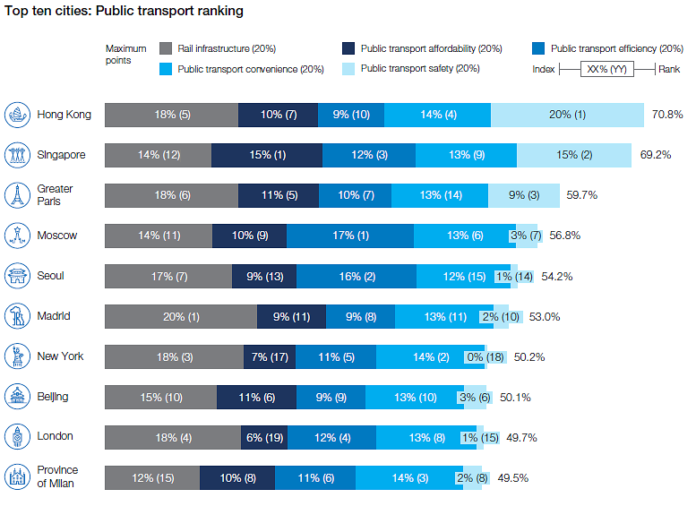
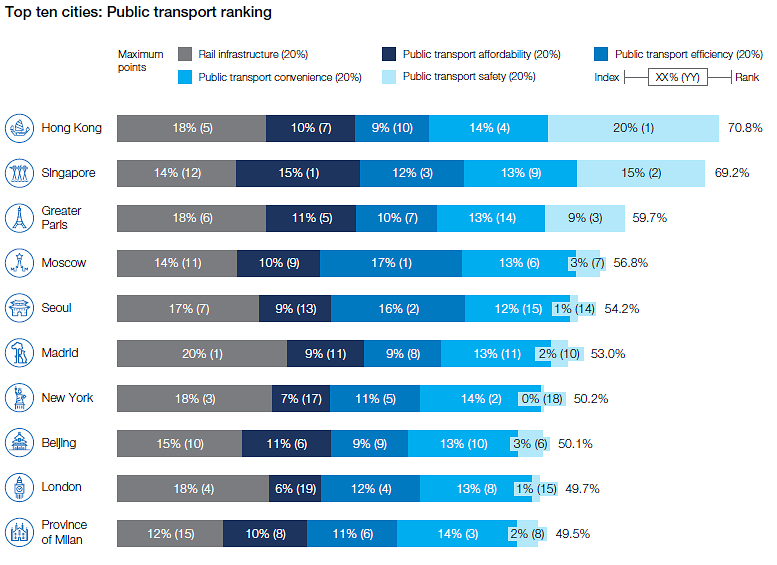
SINGAPORE: Singapore has one of the best and most affordable public transport systems compared with 24 major cities around the world, according to a June report by consulting firm McKinsey.

The report – Elements of success: Urban transportation systems of 24 global cities, assessed the transport systems of 24 cities using more 80 indicators over five main dimensions: Availability, affordability, efficiency, convenience and sustainability.

Some of the indicators include the percentage of the population living or working within 1km of a train station, the cost of a monthly public transport ticket, as a percentage of average income and the average transport waiting time.

The report covered all modes of transport – personal, public, shared, cycling, and walking.

McKinsey public transport top 10 cities

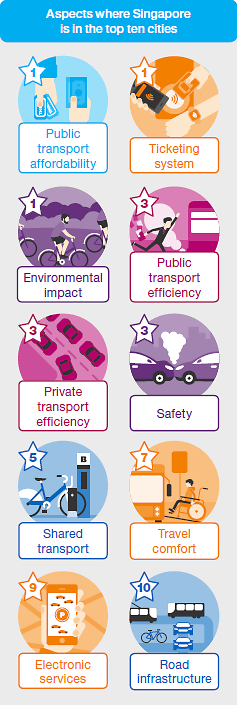
Singapore clinched the top spot for public transport affordability, and also scored well in transport efficiency and safety.

“Singapore has created a best-in-class public transport system, which is accessible,
efficient, convenient, sustainable, and at the same time affordable,” the report said.

The report noted that a major step toward affordability was made in 2013, when the fares were reviewed and new measures were introduced, including a 15 per cent discount on adult fares for low-wage workers, free travel for children and seven other concessions. 

As a result, more than one million public transport passengers benefited from the new schemes, McKinsey said.

The city also scored a high rating for sustainability, with one of the “safest and most ecologically sustainable” public transport systems, according to the report. 

The report also said the convenience and flexibility of the Singaporean ticketing system, using the EZ-Link card, was another “outstanding” feature. 

Singapore top rated areas McKinsey report

HIGH SATISFACTION AMONG SINGAPORE RESIDENTS

In each city included in the report, 400 residents were surveyed on how satisfied they were with the mobility options available to them as well as their sense of whether the system they used was changing for the better. 

Of those surveyed in Singapore, more than 80 per cent said they were satisfied with the overall public transport situation. This was higher than the 71 per cent that was satisfied with the overall situation in private transport.

The McKinsey report stated that Singapore residents were the most satisfied on many of the aspects analysed, as compared to residents globally.

Electronic services, such as trip planners, and their evolution were among the transport features that residents surveyed said they enjoyed the most.

However, the survey respondents were concerned with the affordability of private transport, which the report noted was a result of Singapore’s deliberate car limiting policy.

HONG KONG, SEOUL AND BEIJING ALSO RANKED HIGHLY 

Based on the report, four out of the top 10 cities for public transport were in Asia – aside from Singapore, Hong Kong, Seoul and Beijing also made it onto the list. 

McKinsey said that Hong Kong has one of the best public transport coverage in the world, with 75 per cent of the population and 94 per cent of workplaces being within 1km of a metro station.

Notably, the city scored points for its “advanced” ticketing system, the Octopus chip card, which can be used not only to pay for transport and non-transport services, but is also used for non-payment purposes, such as access control for office buildings.

It also had the highest ranking for public transport safety, with lower rates of public transit fatalities per one million people as compared to other cities. 

Seoul was ranked second among all of the cities for its public transport efficiency, with its progress driven by the optimisation of bus routes and construction of exclusive median bus lanes that increased bus speeds by an average of 30 per cent, according to the report.

The development of an intelligent bus management system also played a crucial role in optimising bus headway and staying on schedule, making bus services more reliable, the report found. 

Beijing ranked among the top 10 across all five dimensions, coming in 10th – ahead of Singapore’s 12th – in terms of its rail infrastructure.

Source link

‘It would be rash to rush into details now’: Lawrence Wong on new housing policy VERS

0

SINGAPORE: After the announcement of the new Voluntary Early Redevelopment Scheme (VERS) for HDB homes, some questions have emerged about it, including how much home owners might receive and whether all flats will be eligible for it.

“It would be rash to rush into details now when some of these things can only happen decades from now,” said National Development Minister Lawrence Wong on Tuesday (Aug 21) in an interview with Channel NewsAsia’s Talking Point team.

“Let’s not get too excited about what is going to be in the VERS package or which flats will get VERS or speculate unnecessarily,” he said when asked about details of the scheme. 

The housing scheme was announced by Prime Minister Lee Hsien Loong during his National Day Rally speech on Sunday.

Under VERS, the Government may buy back older HDB flats before their 99-year leases run out, and compensate residents whose flats are taken back early.

Residents, who have to vote for VERS, can then use the proceeds to buy a new flat. The scheme will only start in about 20 years, Mr Lee said, when some flats reach 70 years old.

READ: NDR 2018 – Scheme planned to redevelop more old HDB flats before leases end

“Obviously there is a lot of interest in what the details would be but this is a very long-term commitment and we will have to study how the implementation is to be done, and how it can be done in a way that is sustainable financially as well,” said Mr Wong.

The rationale for introducing VERS is to allow more HDB households to benefit from redevelopment before their 99-year leases run out. The issue of lease expiry has been a cause for concern among some home owners recently, and Mr Wong revealed that the Government has been looking into the matter for the past two years.

HDB Old Flat Blue Sky

File photo of HDB flats in Singapore.

When asked for his response on whether the VERS announcement was a way of “fobbing off questions on housing” ahead of the next general election, Mr Wong said the Government owes it to Singaporeans to share its plans for the future.

“On the one hand there have been many requests for the Government to share some of its thinking about what roadmap for public housing will be,” he said.

“If we were to hold back and only reveal or announce VERS when the details are ready, that might be 15 years from now, so people might be living with 15 years of uncertainty.”

Mr Wong added: “We have been studying this for some time. Not quite ready with all the details and still a lot more work that needs to be done to work through the operational details and the implementation details.

“But we thought that given concerns that have been raised, we do owe it to Singaporeans to explain at this stage, at the very broad level, our thinking about how we think the next phase of public housing will unfold over the coming years and decades.”

READ: Owners of old HDB flats now know ‘there is some future’: Experts on new housing schemes

HOW WILL GOVERNMENT PAY FOR VERS?

When asked about whether the Government will ask the President to tap into the accumulated reserves to fund VERS, Mr Wong would only say that the scheme needs to be fiscally sustainable.

“It is a significant fiscal expense and whatever we do we will have to make sure that fiscal arrangements for VERS are sustainable, and do not put a heavier burden on the next generation. So those are part of the details that we are working on,” said the minister.

He added: “When we look at policy options, when we review policies, nothing is sacrosanct. You can always look at all the different options – there will always be pros and cons attached to any particular proposed measure, so we will have to review all of the possibilities and eventually work out what is best way forward.”

Mr Wong also touched on the review of CPF rules to provide more flexibility for buyers of shorter-lease flats.

On a suggestion if authorities would consider having CPF restrictions kick in only when there are 30 years left on the lease, instead of the current 60, Mr Wong said: “Well, anything is possible.

“We know what the concerns are, there are many possibilities to address the concerns so I wouldn’t rule out anything at this stage until we have done a proper study, completed the study with the CPF Board.”

Currently, if the remaining lease of a property is less than 60 years, there are restrictions on how much CPF money can be used to buy it.

A home owner can use CPF money if his age plus the number of years left on the lease is at least 80 years – but subject to restrictions.

However, if the remaining lease is less than 30 years, CPF cannot be used at all.

Mr Wong cautioned: “I’m sure Singaporeans know that there is balance to be struck (with CPF retirement adequacy) so we are taking in all the considerations and seeing how best the rules can be updated.”

Catch the interview with National Development Minister Lawrence Wong on Thursday, Aug 23, at 9.30pm on Mediacorp’s Channel 5.

Source link

SMEs to get more help in digital adoption with enhanced 99%SME website

0

SINGAPORE: Small- and medium-sized enterprises (SMEs) that are still grappling with the adoption of digital technologies will soon receive additional help with the return of the annual 99%SME campaign on Tuesday (Aug 21).

Started by Singtel and DBS, the campaign – named 99%SME as SMEs make up 99 per cent of businesses in Singapore – is into its fourth year.

To help SMEs further digitalise their operations, Singtel and DBS will partner the Infocomm Media Development Authority (IMDA) to enhance the e-marketplace on the 99%SME portal from next month.

The e-marketplace, which allows SMEs to list their products for free, is currently powered by online retailer Lazada – a tie-up that was announced last year to help SMEs venture into e-commerce.

With the enhancement, SMEs, especially those that do not know how to set up an online presence, will get instant connection to an e-commerce platform hosted by 99%SME, said DBS group head of SME banking Joyce Tee.

SMEs can also look forward to a separate business-to-business (B2B) marketplace where they can sell their goods and services to large corporate and multinational companies.

Developed by DBS and expected to be launched by the end of 2018, the new platform will also give SMEs access to supply chain connections, financing and payment solutions that are usually only open to large corporates or MNCs.

The development of this “industry-first” portal will be supported by 99%SME partners Mediacorp, Mastercard and Singtel, added Ms Tee.

Chan Chun Sing 99%SME

Minister for Trade and Industry Chan Chun Sing speaking at the event. (Photo: Tang See Kit)

Speaking at the launch as the guest of honour, Minister for Trade and Industry Chan Chun Sing said the digital economy allows SMEs and small countries like Singapore to transcend geographical size and natural resources.

However, he stressed that SMEs should go beyond digitalising current work procedures.

“The great SMEs don’t just digitise their current processes. They use digital services and platforms to transform the way they analyse their markets, design their products and restructure their production processes,” said Mr Chan.

“These are the things that will allow our SMEs to achieve the quantum leap in terms of capabilities.”

Mr Chan also urged MNCs to work alongside local SMEs in going global and innovating work processes, as well as for SMEs to spread the word on embracing the digital economy.

“If we all embrace the digital economy together, we will not only benefit as a SME or individual company (but) we will have the synergy to compete on the basis of Team Singapore.”

Source link