SINGAPORE: About six in 10 people who were eligible to make withdrawals from their Central Provident Fund (CPF) did so upon turning 55.
These were the findings from a longitudinal study on the retirement and healthcare needs of Singapore residents, the first two waves of which were carried out in 2014 and 2016.
A subset of the respondents, totalling 7,200 people who are CPF members aged between 55 and 70, were asked if they had made cash withdrawals from CPF after turning 55 years old.
About four in 10 respondents said they did not make any cash withdrawals after turning 55.
“A sizeable proportion did not make withdrawals after turning 55 years old, hence allowing their funds to continue earning higher CPF interest rates compared to bank savings deposit rates,” the CPF Board said.
According to the CPF Board, those who withdrew from their CPF funds – 58 per cent of members – took out a median amount of S$9,000. The average amount withdrawn was S$33,000.
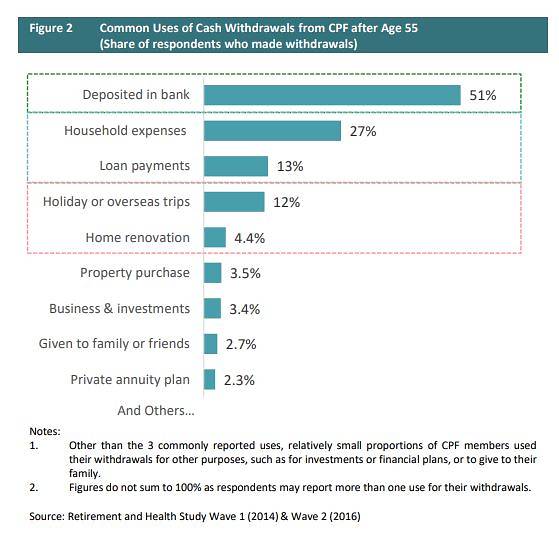
More than half of those who withdrew the money deposited it in a bank or finance company, said the CPF Board.
The median amount deposited was about S$8,000, added the board.
This trend of leaving withdrawals in bank savings accounts could “indicate a desire for liquidity” in the older cohorts as members could only make one withdrawal a year prior to 2014, the CPF Board said.
CPF withdrawal rules have since relaxed and members can receive their withdrawals within a day through PayNow.
Forty per cent of those who withdrew funds said they used the money for immediate needs like household expenses and loan repayments.
The board noted that respondents in this group had more children on average or reported poorer health as compared to the rest of the people polled. Some had used the funds for their children’s education expenses.
“A relatively higher proportion of members in this group also reported poorer health status, with some indicating that the funds withdrawn had been used to pay for medical expenses,” the board said.
The survey also revealed that about 16 per cent of CPF withdrawals was used on big-ticket items like overseas trips or home renovations. However, it was noted that a larger proportion of the respondents in this group were employed at the time of the survey.
Some of them could have viewed the accessibility to their CPF funds as “a source of additional funds to spend on big-ticket items to benefit themselves and their family”, the board said.
The common uses of CPF cash withdrawals according to a study cited by the CPF Board. (Image: CPF Board)
SINGAPORE: A new certification for bus technicians and specialists has been launched to recognise their skills and standardise training in the sector.
The first batch of students, who graduated on Tuesday (Aug 28), comprised of 19 technicians from four operators.
To engage students better and deepen their understanding, the course consists of augmented reality elements and hands-on coursework.
For example, instead of working on a full bus model, as previously done, students now get to study the chassis of a bus in isolation. They also get to see the inside of how an engine works with the help of augmented reality classrooms.
A technician uses smart glasses to scan a QR code on a Volvo engine, which gives him step-by-step maintenance instructions. (Photo: Gwyneth Teo)
The certification supports the Land Transport Industry Transformation Map and the Skills Framework for Public Transport, both of which were launched in the first half of this year.
The frameworks are focused on reskilling and upskilling workers in the bus sector. More than 900 bus technicians and engineers currently working in the industry will be certified under the framework.
Bus technicians can be certified under three levels of expertise – Technical Specialist, Senior Technical Specialist and Master Technical Specialist.
The certification will be conducted twice a year, and will be conferred by the Land Transport Authority and the Institute of Engineers. Training and assessment will be conducted by the Singapore Bus Academy (SBA).
The curriculum was created in consultation with experts from the industry. Previously, individual bus operators conducted their own training.
At the launch, Senior Minister of State for Transport Janil Puthucheary said: “With newer technology adoption, such as electric and autonomous buses, such centralisation of training delivery helps to optimise resources, and ensures consistent delivery of core essential knowledge and skills.”
A Singapore Bus Academy trainer with full-sized model of bus doors. This gives students first-hand experience on how the door sensors work. (Photo: Gwyneth Teo)
At the same time, the SBA is holding a bridging course for technicians who are new to the industry, and as a refresher for experienced technicians.
The courses are run from the new Bus Technical Specialist Certification Centre in Ulu Pandan Bus Depot.
LAUNCHED in 2014, Malaysia’s US$100 billion Forest City project targeted investment from wealthy mainland Chinese property buyers, but the country’s new prime minister has now barred foreign purchase.
Dr Mahathir Mohamad’s Monday announcement came following criticisms of the “eco-city” of high-end condominiums and waterfront villas in the southern state of Johor, roughly an hour away from Singapore.
His remark also came barely a week after he called off two China-developed mega projects worth US$20 billion, potentially stalling the economic ambition of Beijing’s Belt and Road initiative for the affluent Southeast Asian nation.
“One thing is certain, that city that is going to be built cannot be sold to foreigners,” Dr Mahathir told a press conference.
“We are not going to give visas for people to come and live here.
“Our objection is because it was built for foreigners, not built for Malaysians. Most Malaysians are unable to buy those flats.”
The city under development would accommodate 700,000 people and is being built by Country Garden Pacific View (CGPV), a joint venture company between Guangdong-based Hong Kong-listed real estate giant Country Garden (China’s third-largest homebuilder) and a firm partly owned by Johor’s sultan.
The project was due to be completed by 2035.
Many Malaysians have voiced displeasure over the project as it was clearly aimed at wealthy foreign buyers. There were also concerns it would damage the environment and that it was another unwelcome sign of Malaysia losing its sovereignty to Chinese influence.
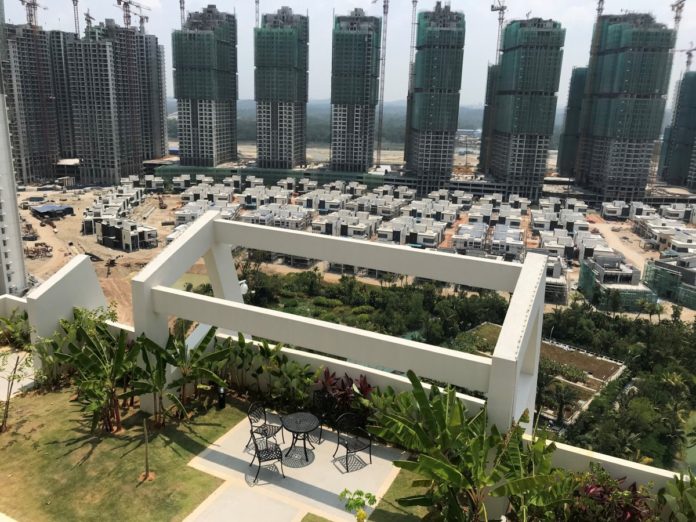
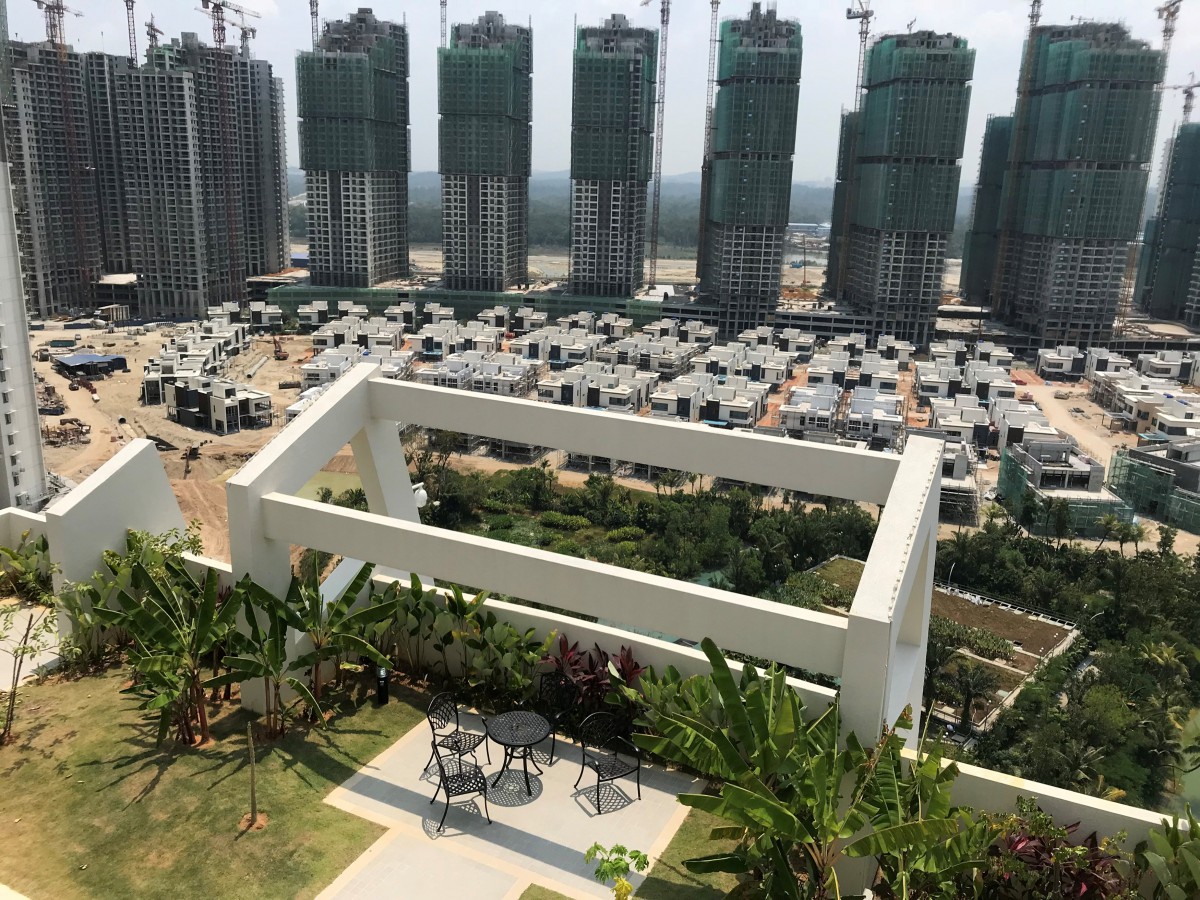
Residential buildings are seen at Forest City in Johor, Malaysia, August 20, 2018. Picture taken Aug 20, 2018. Source: Reuters
Last week, the 93-year-old prime minister announced his administration’s cancellation of the East Coast Rail Link (ECRL) and the Sabah gas pipeline projects on as he wrapped up his five-day visit in Beijing.
Dr Mahathir, who took power in a shock election victory on May 9, had capitalised on popular disquiet about Chinese investment pouring into Malaysia during his election campaign.
According to Reuters, Country Garden Chinese buyers now make up about two-thirds of the owners of the Forest City apartments that have been sold so far, with 20 percent from Malaysia and the rest from 22 other countries including Indonesia, Vietnam and South Korea.
In a speech last December, the prime minister said he hoped Forest City would become an actual forest with baboons and monkeys as residents, local media reported.
The developer of Forest City said there was no such ban under Malaysian laws.
Country Garden Pacificview cited Section 433B of the National Land Code, adding Dr Mahathir’s remarks could have been taken out of context by the media, Free Malaysia Today reported.
SINGAPORE: Gardens by the Bay is set to light up the skies as it celebrates the Mid-Autumn Festival for two weeks from Sep 6 to Sep 24.
Themed Autumn of Fantasies, the festival will feature large-scale lantern sets of mythical creatures, cultural performances, a food street and a fun zone.
One of the display is Leaping over the Dragon’s Gate – the widest lantern display at Gardens by the Bay to date, spanning 70m across with a height of 10.8m. It sits over the waters of the Dragonfly Lake and depicts the legend of the carp transforming into a dragon.
Artist’s impression of Leaping over the Dragon’s Gate. (Photo: Gardens by the Bay)
Other lanterns to look out for include the pairing of The Phoenix and the Peony, which takes centrestage at the Supertree Grove; Wonders of the Underwater World, a display of 126 lanterns shaped like sea creatures; and the Sky Lantern Dreams, which lines the Scented Walk for more than 100m – creating the longest lantern-lined pathway at Gardens by the Bay.
Artist’s impression of the Phoenix and the Peony. (Photo: Gardens by the Bay)
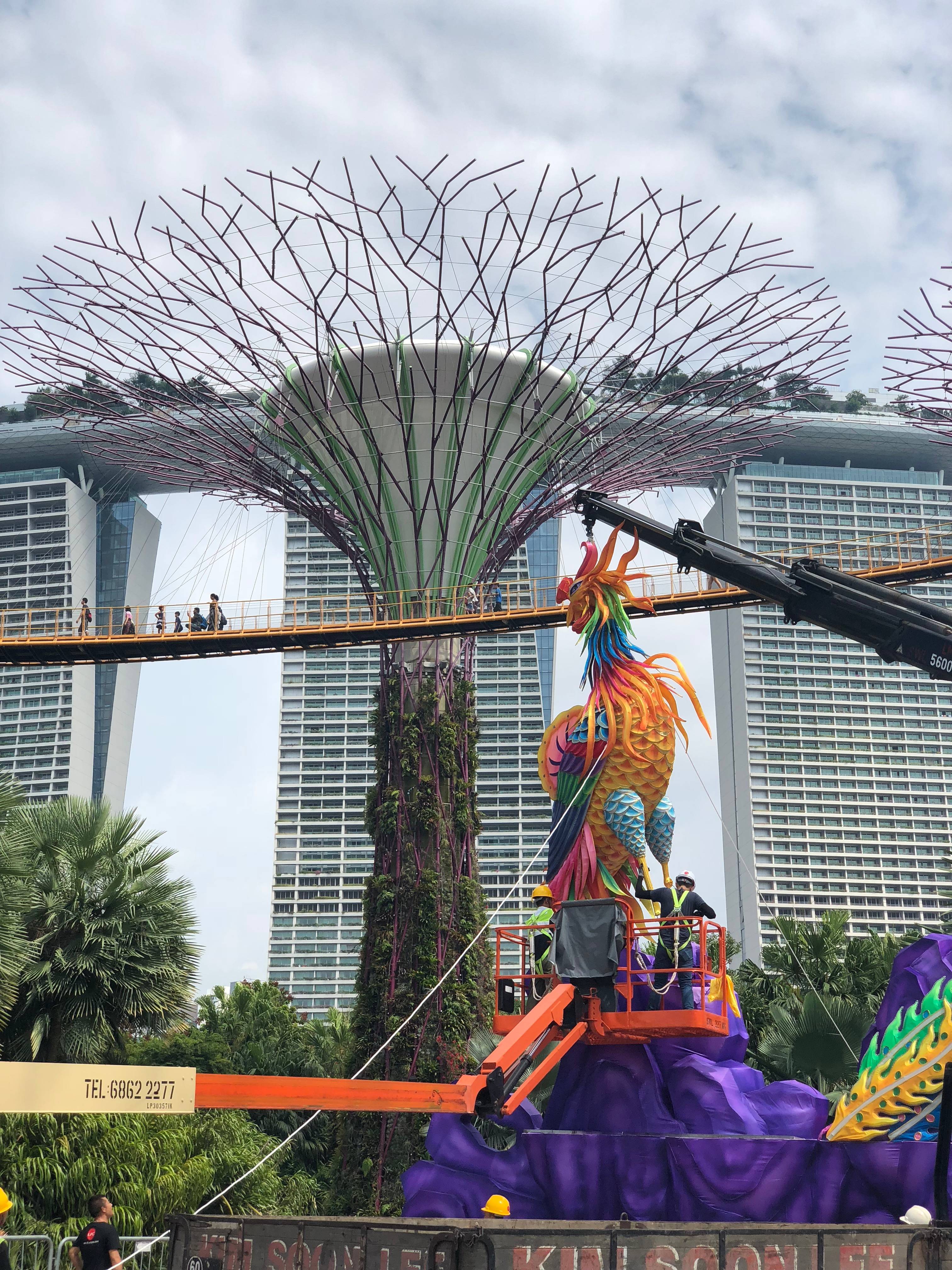
The Phoenix and the Peony lantern display will take centrestage at the SupertreeGrove during Gardens by the Bay’s Mid-Autumn Festival celebration (Photo: Gardens by the Bay)
The Colonnade of Lights will feature 1,000 lanterns hand-painted by various social service organisations, residents from Limbang and members of the Friends of the Gardens programme.
Artist’s impression of the Wonders of the Underwater World. (Photo: Gardens by the Bay)
This year’s celebration will also include multi-cultural performances such as Chinese opera, Malay dance and Indian music.
Visitors can also indulge their inner child at the Fun Zone, which will feature nostalgic childhood games such as goli and kuti kuti.
Artist’s impression of the Jade Rabbits lanterns. (Photo: Gardens by the Bay)
The festival will be launched by Minister for National Development Lawrence Wong on Sep 6.
SINGAPORE has been leveraging technology in an effort to transform the country into a digitally driven economy.
The Smart Nation initiative brings together a tech literate population, businesses, and government agencies, to encourage and develop solutions for addressing urban challenges.
To that end, the Singaporean government is running five core projects aimed at facilitating a quicker adoption of digital innovations.
NDI is a unified database holding citizen information, which is integrated with government systems to enable easy access and interaction between agencies, businesses, and citizens.
It’s powered by SingPass and MyInfo – SingPass is a secure online portal (with a mobile version set to launch soon) for accessing government e-services; MyInfo is a consent-based citizen data management platform.
Users will only have to provide personal information to the government once. They can then use the same information on other approved public and private sector agencies.
E-payments
A contactless payment system for public transport in Singapore. Source: Shutterstock
PayNow is the country’s unified platform for mobile payments. The platform allows for peer-to-peer transfer using just a mobile number or National Registration Identity Card (NRIC) number. A corporate version has also recently been launched for business to business or consumer to business payments.
A unified QR-code, known as the Singapore Quick Response (SGQR) is also being implemented across the country this year, allowing merchants to accept both domestic and foreign payments made on various e-wallets.
SNSP is the infrastructure layer used to collect data for monitoring everything from traffic to water quality. Using an array of sensors and internet of things (IoT)-enabled devices, government agencies can collect data to perform in-depth and cross-domain analysis.
This means they can make decisions on planning public amenities and services for citizens based on real-time insights.
The project has started in Yuhua, the Civic District, and Orchard Road, supporting CCTVs and environmental sensors. The government is planning on leveraging lampposts for the next phase of implementation.
Smart Urban Mobility
Public transport providers SBS Transit and SMRT are equipped with an intelligent fleet management system, relaying real-time information to provide a more accurate estimation of bus times. This allows the operators to optimise bus routes and schedules according to commuter volume.
On-demand bus services are also being trialled. Source: Shutterstock
On-demand bus services are also being trialled in attempts to make public transport systems more dynamic and responsive to commuter needs. One example is crowdsourcing mobile app Beeline, which allows operators to open new routes according to passenger demand.
Autonomous cars are also being trialled as an option for future transport.
Moments of Life
Moments of Life is a mobile app, which allows the government to push relevant services and resources to the citizens in a timely manner.
Using the app, parents can register the birth of their child, apply for Baby Bonus, note their interest in preschool facilities, access a child’s medical records, and receive parenting information customised to the local context.
Screengrab of the Moments of Life app. Source: Smart Nation.
Additional functionalities will be added to cater for more moments in life, including processes related to home purchases. This will encourage better inter-operability between organisations, as well as ensure government agencies are proactive in providing services.
As Singapore moves forward in taking a digital-first approach, the five strategic projects allow citizens and businesses better access to the government, cutting the unnecessary red tapes that cause delays.
The projects also allow individual agencies to take a more proactive approach engaging with its citizens, enabling a collaborative effort for driving the country towards a digital-driven future.
This article first appeared on our sister website Tech Wire Asia.
SINGAPORE: Container truck driver, Mr Yusof Ahmad, heard a “popping” sound as he was climbing down from the cabin of his prime mover.
“I was getting down when one leg went one direction, and the other one didn’t follow,” the Singaporean told Channel NewsAsia. He found out later that he had torn his meniscus.
Mr Yusof said picking up and delivering containers can take a physical toll on him and other drivers, given that many of them are elderly.
Mr Harry Hew, managing director of Union Transport, which also has a container trucking business, corroborated this. He told Channel NewsAsia in a separate interview that among his six Singaporean drivers, the youngest is 55 years old and the oldest, 64.
The physical toll on a greying driving pool is but one of the many challenges the traditional container trucking sector is grappling with as it attempts to reinvent itself in order to remain relevant in the digital age.
THE CHALLENGE IS NOT JUST PHYSICAL
The mental toll is another challenge faced by prime mover drivers like Mr Yusof, who has been working for a small container trucking company for the past two years.
Another is keeping the sleep monster at bay. The long journey involved in transporting a container from Tuas to Changi, for example, meant that he “can get sleepy” while on the roads, Mr Yusof admitted.
“Short trips not so bad, you get up get down, that (makes you) wake up.”
It’s not just staying awake though. Speed plays a part too.
Given that he is paid per trip, the quicker Mr Yusof makes a delivery, the better. Channel NewsAsia spent a morning with the container truck driver and, in that time, he moved a container from Bulim Avenue to Gul Circle before heading to Jalan Buroh to pick up another trailer to haul another container with. He then drove over to a yard at Pioneer Road to pick up a container that was meant for Jurong Island.
Mr Yusof preparing to unload the container at a yard located at Gul Circle.
He also had to contend with the difficulty of finding parking on a two-lane road leading to the container yard at Pioneer Road. There are three container yards in close proximity and the stretch of road can become quite congested with trucks waiting their turn to get into the yards.
It took an hour to pick up the container from the yard, something Mr Yusof said was “quite fast already” considering we could have been stuck there for hours.
His working hours vary, depending on the number of containers the company has to move, but it is about 12 hours on average – the maximum stipulated hours by the Ministry of Manpower. He admitted though that there days when he would drive longer than that.
The issue of overwork among heavy vehicle drivers was placed under the spotlight by a Talking Point episode during which some drivers recounted having to work beyond the 12-hour limit set by the law and migrant workers being threatened to be sent home when complaining of fatigue to their bosses.
Amid it all, Mr Yusof shared that he hoped to keep driving for another five to 10 years as his younger son is still in school and the older one is pursuing varsity education after his NS.
“Usually I’ll just work lah, unless got something urgent,” the 49-year-old said.
FINE MARGINS, COSTLY CHALLENGES
The bosses of these container truck drivers face a different set of challenges that may inadvertently contribute to those faced by Mr Yusof.
Ms Lim Mei Ling, director of Waterfront Services, the company that Mr Yusof works for, told Channel NewsAsia that her small, family-owned business owns eight prime movers and more than 80 trailers and these in themselves pose a challenge: How do you maximise the use of the hardware and, if not in use, how to park them legally without incurring fines from authorities?
“We need to turn around (our jobs) quickly,” Ms Lim explained, “Or else it would mean needing to pay for parking spaces.”
Under the Land Transport Authority’s rules, every owner of a heavy vehicle will be required to hold a Vehicle Parking Certificate as proof that his vehicle has a designated space for overnight parking. This costs about S$160 a month, and excludes the cost of the parking lot, she said.
One of the container yards in Singapore where truck drivers go to pick up empty trailers for their next jobs, or to drop off their containers.
And there are not enough of the cheaper lots operated by URA and HDB to meet demand and she could be on the waiting list for months and even years. Many container trucking companies, particularly the smaller ones, turn to private operators who either tend to charge more or could terminate the agreement at short notice.
Another reason why drivers would need to work above and beyond the stipulated working hours is the size of the container ships that visit Singapore: They have gotten bigger.
So even if they make port calls less frequently, the number of containers they bring in each time has increased – making the peaks and troughs for these container trucking companies that much more pronounced, Mr Sebastian Shen, co-founder of start-up Haulio, explained.
This leads to a more pressing problem: The manpower to drive the trucks.
“We can buy more prime movers, but who will drive them?” Mr Hew pointed out.
As it is, Ms Lim said she only just got the full complement of eight drivers for her fleet, and even then she has to constantly fret over their availability.
To encourage her drivers to turn up each day, the Waterfront director has turned to giving allowances when they start work early (before 7am) or when they work late (after 11pm), as well as dangle incentives so they do not take leave.
On average, she said her drivers receive between S$3,000 and S$6,000 monthly depending on how much they work. Mr Yusof said his average monthly take-home pay is about S$3,500 but it depends on his workload.
Ms Lim said the situation with these drivers are such that they may decide to stop driving or change employers at the drop of the hat, without advance warning. “Here, your notice period is when the driver hands in his keys,” she said.
There are also drivers who may decide that they have earned enough for a certain period of time, and just stop turning up for work. This is the reason why the industry pays drivers on a per trip basis, she explained.
Meanwhile, the talent pool is shrinking with no new blood coming in to replace the aging drivers. Mr Hew said that for his company, even after placing advertisements in the Jobs Bank, the only applicants are those already in the industry and are in their 50s, if not older.
Both companies have been relying heavily on their foreign workers to sustain the business.
They make up at least half of the driver pool and they tend to be called on at times when the local drivers may not be available (such as public holidays or weekends) or physically less suited to the task (such as when moving heavy loads that require much manoeuvring), both Ms Lim and Mr Hew said.
PRIMED FOR DISRUPTION?
Given the challenges faced by the drivers and trucking companies, it appears the industry is primed for a tech disruption. And this is where Haulio, a startup incubated by PSA International’s corporate venture capital arm PSA unBoxed, hopes to reap the rewards.
Mr Shen said there are about 230 haulage companies in Singapore, and of these, about half – mostly the smaller players – have signed up to its platform.
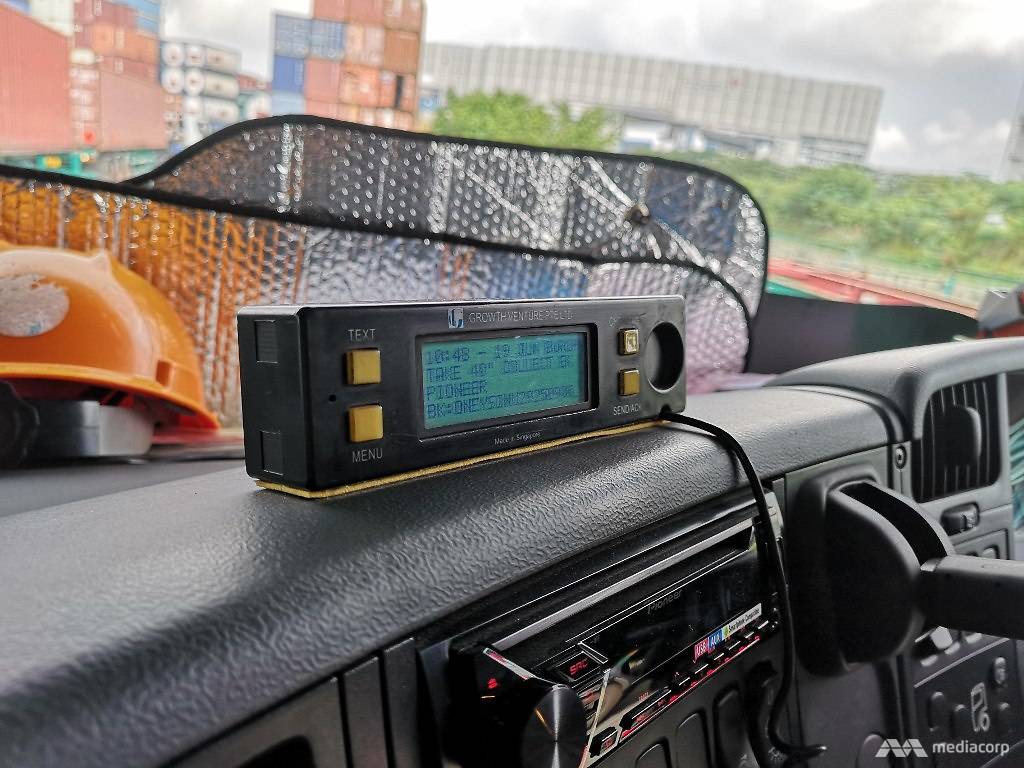
A communications system on Mr Yusof’s dashboard to inform him of traffic and container data from the ports. This, he said, is being phased out in favour of iPads that show more information and also links up with data from the container yards.
Essentially, it hopes to shake the industry up like ride-hailing firms Uber and Grab did for the taxi industry here. With its self-developed algorithm, Haulio looks to match available prime movers to existing jobs posted on its platform with prices set by the companies themselves. It then takes a 3 to 5 per cent cut from a successful match.
Haulio’s Shen said while the Government has championed the need for digitalisation and the move to Industry 4.0, the haulage industry appears to be stuck in 2.0. He shared how he has met business owners who are stuck in the old ways of doing business through “phones and fax machines”.
Then there are those like Waterfront’s Ms Lim who choose to “take each day as it comes”. The daily challenges are already “so big” to deal with, she says, it leaves her with no chance to see how technology could alleviate some of her pain points.
On his end, Mr Shen hopes to create a platform that would have buy-in from drivers, business owners and the wider logistics ecosystem, or as he puts it: “One with an overarching trust.”
Mr Hew, though, was more sceptical of Haulio’s proposition.
Unlike the taxi industry, when a Grab or Uber could easily dispatch the nearest available car or taxi to a commuter who requested a ride, the haulage business is different in that a prime mover driver cannot just pick up a job along the way to another assignment without negative consequences.
“If my driver goes to pick up a job and gets stuck (in a jam) at the container yard picking up the container, then I’d have failed to deliver on my original job to an existing client,” the managing director explained.
But what about driverless trucks announced by the Ministry of Transport and PSA in January last year to alleviate manpower and traffic congestion challenges?
Mr Hew and Mr Yusof said they have seen these driverless trucks deployed within PSA’s ports, but they are confined to specific and clearly demarcated spaces and might not work well outside the port.
It is “very difficult” for these trucks to operate outside the port due to the uncertain traffic conditions as well as fluid situations at the container yards, Mr Hew said.
Rather, as a first step, he suggested PSA be more transparent with the data they already have like vessel arrival and departure times or types of containers on board a vessel. These, he said, are available at a cost to companies but he reckoned it should be made freely available to create more efficiencies.
Mr Yusof filing the necessary paperwork to collect a container from this yard at Pioneer Road. It also served as an impromptu pit-stop to chat with other drivers, grab a drink or go for a short pee or smoke break.
Mr Peter Ho, president of the Container Depot and Logistics Association (Singapore), told Channel NewsAsia that his association had asked PSA to release the information since it had explored the idea of a Container Management System (CMS) in 2012 and that was subsequently launched in 2014.
The information would theoretically close the loop between the ports, the container yards and the trucking companies, but Mr Ho acknowledged that there are differing agendas in the industry though they may want to fix the same problems.
“Like that, how to collaborate?”
When asked to comment on the industry’s efforts to improve processes, a PSA corporate spokesperson simply said that Haulio is in line with the organisation’s vision for the container port of the future, which looks at increased connectivity with the logistics and supply chain industry.
Mr Ho did point out that job-pooling and asset sharing are “great concepts” and CDAS is looking to make this a reality. It told its members, which number more than 70, in June this year that it’s looking to use its existing technologies like CMS, electronic container trucking system (e-CTS) and Transport Integration Platform-Transport Management System (TRIP-TMS) to offer such a service.
The president said unlike profit-driven entities like Haulio or PSA, however, the association would offer this as a value-added service and intends to charge a flat administrative fee if and when such a job-pooling service is rolled out.
“It’s ultimately up to the industry to decide, like it did in the ride-hailing sector with Grab and Uber, which solution it wants to adopt,” he said.
Mr Ho added that beyond the business proposition and technology advances, the most important hurdle to cross is a mindset shift.
“There are many hurdles in terms of mindset shift: From being competitors to collaborators, sharing of competitive knowledge (such as) customer base, providing visibility to another’s available assets, etc,” he said.
“These need to be addressed and resolved before job-pooling or asset-sharing can be effective.”
SINGAPORE: The Housing and Development Board (HDB) has launched 5,101 flats for sale under the August 2018 Build-to-Order (BTO) and Re-Offer of Balance Flats (ROF) exercise, it said in a press release on Tuesday (Aug 28).
The flats include 4,375 BTO units in Punggol and Yishun and another 726 ROF units across various towns and estates, HDB said.
BTO EXERCISE
The BTO flats on offer are spread across four projects in the non-mature towns of Punggol and Yishun.
Eligible first-timer families can enjoy up to S$80,000 of housing grants, comprising the Additional CPF Housing Grant (AHG) (up to S$40,000) and the Special CPF Housing Grant (SHG) (up to S$40,000).
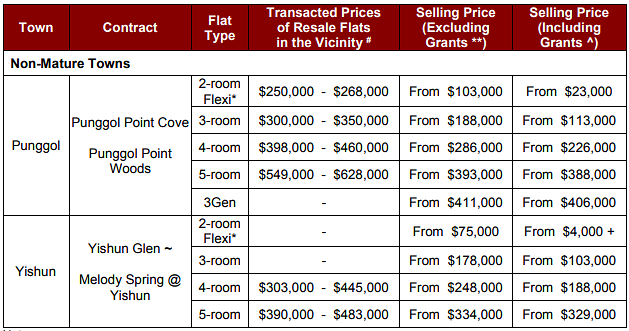
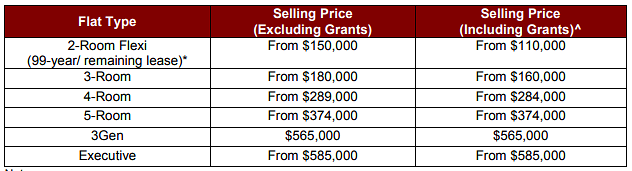
“With these grants, buyers of 2- room Flexi, 3-room, 4-room and 5-room flats could pay as little as $4,000, $103,000, $188,000 and $329,000 respectively,” HDB said.
It added that a wide selection of flats, ranging from 2-room Flexi to Three-Generation (3Gen) flats, is offered to meet the diverse housing needs of first-timers, second-timers, multigeneration families, elderly and singles.
BTO Prices for August 2018. (Table: HDB)
ROF EXERCISE
In addition to the BTO flats, HDB will also offer 726 unselected flats from the November 2017 Sale of Balance Flats (SBF) and February 2018 ROF exercises.
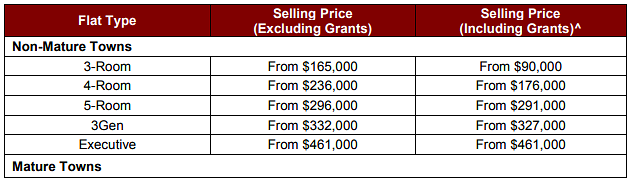
They comprise 67 units of 2-room Flexi, 171 units of 3-room, 294 units of 4-room, 152 units of 5-room, 33 units of 3Gen and 9 units of executive flats across various towns/ estates, said HDB.
“HDB will set aside at least 95 per cent of the flat supply for first-timer families and up to 5 per cent for second-timer families.”
It added that the elderly may apply if they meet the prevailing eligibility conditions to buy a 2-room Flexi flat and that families will enjoy priority for flat selection.
Summary of August 2018 ROF Prices. (Table: HDB)
FLEXIBILITY TO RETAIN S$20,000 IN CPF OA
HDB also announced that flat buyers taking an HDB housing loan will now have the option of retaining up to S$20,000 each in their CPF Ordinary Account (OA).
The remaining CPF OA balance will be used to pay for their flat purchase, said HDB.
“This option will be available to flat buyers who have yet to collect the keys to their new flats, as well as resale applications received from today.”
Previously, buyers would have to fully utilise the balances in their CPF OA to pay for their flat before taking up a loan with HDB.
This move will provide flat buyers with “greater flexibility in using their CPF funds”, said HDB.
It added that the funds can be used for buyers’ monthly mortgage instalments in times of need and will improve retirement adequacy if left unutilised.
Those who wish to use all their CPF OA balances for their flat purchase may continue to do so.
Application for new flats launched in the August 2018 BTO and RFO exercise can be submitted online on the HDB InfoWEB from Aug 28 until Sep 3, HDB said.
It added that the next BTO launch will be in November, where HDB will offer about 3,800 flats in Sembawang, Sengkang, Tampines, Tengah and Yishun.
On Sunday, HDB announced that more than 2,000 flats located at a waterfront housing district in Punggol will be launched this month.
The flats are within the first two housing projects for Punggol Point District and are expected to be completed in 2023.
She mentioned she had to handhold interns to run data, do up the analysis, and prepare a presentation – and in the end the work they submitted was unchecked, sloppy and worthy of a big red F.
On a separate occasion, a Facebook post that went viral drew my attention.
Someone asked one of their interns to top up the paper in the copying machine as it was empty. The intern did just that but it still won’t print.
A few seconds of CSI revealed that the intern had indeed loaded the ream of paper into the machine … with the packaging intact. I guess the intern took his reference from how things work from a Nespresso machine.
An epic facepalm moment for many but I don’t really find it surprising.
I had opportunities to give talks at many different schools over the years. The buildings and locations might be different but one thing is constant – the undergrads are very “lepak” (relaxed).
They are simply there to clock credits, not so much to learn. At first I thought it was me and my monotonous, not newscaster-ready dictation voice.
File photo of Nespresso capsules. (Photo: Xabryna Kek)
But a quick check with the organising lecturer gave me relief – I’m not the only one (that faces nonchalant students, not the voice thing).
And if you think those are isolated cases, I have seen it at university career fairs too – with huge, visible differences between local and foreign students.
The foreign students would be queuing up outside the school hall, waiting anxiously with their pens and notebooks. Once the gate is opened, they would rush from booth to booth, scribbling down pages after pages of notes.
On the other hand, the local students would stroll in just before lunch and after their sleep in. Wandering around in their flip flops, they would peer around for a few minutes and go off to their brunch.
But I get it.
Internships can be a boring bag of stuffs – made worse if the internship was derived from a discipline that you aren’t really passionate about.
Whatever the case it, the past is fixed but the future is waiting for us to mould.
Job seekers at the inaugural Startup Career Fair on Mar 30, 2017. (Photo: Hafiz Ma’il)
FRESH CHALLENGES
For any intern, an internship represents the best possible opportunity to get a headstart in your career and possibly the best way to land a job without all the discrimination and trauma of a job interview.
One of my better hires was an intern who really went beyond her call of duty. She completed her internship with flying colours, went back to complete her third year and we hired her as a full-time staff right away. This is her 10th year with the company.
But that was 2008. At the point where we are today, and with the prevalence of automation, jobs are going to get harder to come by.
According to a study of 46 countries and 800 occupations by the McKinsey Global Institute, up to 800 million global workers will lose their jobs by 2030 and be replaced by automation.
Yet starting salaries for fresh uni grads continue to hit new highs. According to the annual survey of graduates from the National University of Singapore, Nanyang Technological University, and Singapore Management University, fresh grads who found a job took home a median monthly salary of S$3,400, up from S$3,300 in 2016.
Companies can do the math. Increasingly many have switched to hiring people outside of Singapore as they are much cheaper and have the required skills.
Whether to hire a developer in India, or a support staff in Batam, cost-cutting efforts are escalating as businesses grapple with other cost factors that have little alternatives or can’t be outsourced (including rental, or the boss’ Mercedes).
GIVE IT YOUR BEST SHOT
But this cross junction represents a great opportunity for interns who already have a foot in the door to impress the heck out of your potential future employer.
Attendees at a job fair line up for an interview carrying their resumes in leather bags. (Photo: REUTERS/Jason Reed)
Every one of my past interns who left a great impression share a few common traits – they will ask “what else do you need me to do”, they sincerely apologise when they mess up and they truly want to learn.
That means a lot in a corporate environment where taiji masters abound.
At the end of the day, if interns give themselves a chance and take the opportunity to get serious about their internships, their employers will naturally reciprocate.
It still might be mind-numbing work, and the office might not have the kind of pantry that Google or Facebook does, but it teaches you to level up when things are down and out.
Then, you can truly excel when things are going your way and get something out of your internship experience – if not a job, at least a stirling recommendation letter.
Adrian Tan is the co-founder of The Resource Group, a boutique HR consulting agency that specialises in HR and grant consultancy for SMEs. He is the recipient of the SHRI HR Entrepreneur of the Year in 2013 and writes regularly about HR on adriantan.com.sg.
SINGAPORE: When Mr Alan Ng, 50, moved from Ang Mo Kio to Marine Parade four years ago, he was hoping it would be a form of investment.
But Mr Ng, whose estate will be among the first in Singapore to reach lease expiry in less than six decades, was among many Housing and Development Board (HDB) owners who got jittery when the Government made clear last year that not all old flats will be automatically eligible for the Selective En bloc Redevelopment Scheme (Sers), and their prices will come down as their leases dwindle.
The HDB resale market was also spooked by the authorities’ comments as prices fell for six consecutive quarters, before inching up in the second quarter of this year. Following the National Day Rally (NDR) and the ensuing housing announcements, the mood of homeowners including Mr Ng has been somewhat lifted.
Mr Ng said he feels more assured now, as the initiatives will “cushion” the depreciation of ageing flats, and help to protect their value. “It’s better than zero,” he said, referring to the prospect of his flat becoming worthless when the 99-year lease is up.
Property agent Noor Ally, who is handling the sale of a flat at Chai Chee Avenue, agreed that the announcements have provided some comfort for several of his clients.
“(They) know that there is still some value in their (ageing property). While they are still keen on selling, they also know that there are options – like possibly returning it to the Government (through VERS),” he added.
Lease expiry is a challenging issue faced by policymakers in all countries with public housing programmes including China and the United Kingdom for example. To deal with the politically sensitive issue, China, for instance, resorted to automatically renewing the lease of residential land in the eastern city of Wenzhou when it expired last year.
Residential buildings are seen in Wenzhou, Zhejiang Province, China, May 12, 2016. (Photo: REUTERS/Brenda Goh)
In Singapore, where more than 80 per cent of the resident population live in HDB flats, the lease expiry is an even bigger political hot potato, analysts had previously said.
After two years in the making — and much hand-wringing by anxious homeowners — Prime Minister Lee Hsien Loong presented at last Sunday’s NDR the Singapore solution to the complex issue.
RAFT OF MEASURES
At the rally, which is widely seen as the most important political speech of the year, Mr Lee devoted a significant portion of his address on the HDB lease expiry issue.
Among other things, he explained that the lease duration cannot be extended “easily”, and it is better that the Government take back housing blocks when leases expire, demolish them and rebuild new flats for future generations.
Public housing flats are sold with 99-year leases because the government has to be fair to future generations and guard against Singapore from becoming a society split into the haves and the have-nots, said Mr Lee.
He announced a new Voluntary Early Redevelopment Scheme (VERS) which will be rolled out in about 20 years. HDB estates built in the 1970s such as Marine Parade, Bedok and Ang Mo Kio could be among the first in line to undergo VERS.
Unlike the existing Selective En bloc Redevelopment Scheme (SERS), which is decided by the HDB and residents don’t get to vote, VERS will be open to voting. HDB flat owners get to decide if they want the authorities to take back their apartments for redevelopment at around the 70-year mark of their lease.
If they vote to go ahead, the Government will buy back their blocks of flats to redevelop the precinct and the owners may use the sale proceeds to pay for another flat. Otherwise, they continue to live in their homes until the lease runs out.
Every HDB flat can also expect to undergo major upgrading twice during its 99-year lease period, with the new Home Improvement Programme (HIP) II rolled out for ageing units at the 60- to 70-year mark.
At the same time, the HIP scheme — which currently covers flats built up to 1986 — will be extended to blocks constructed up to 1997.
Prime Minister Lee Hsien Loong speaking during the 2018 National Day Rally. (Photo: TODAY/Jason Quah)
Last Monday (Aug 20), National Development Minister Lawrence Wong announced a review of the CPF financing rules on the buying of older flats, and the extension of the Lease Buyback Scheme to five-room and larger flats.
Currently, CPF members cannot use their savings to buy a flat if its remaining lease is less than 30 years. There are also restrictions if they want to use their funds to purchase flats with less than 60 years on its lease, effectively limiting the pool of eligible buyers.
Mr Wong had also said last week that even though many details for VERS will not be ready for some time, the Government felt that it “owed” Singaporeans an early explanation on its thinking for the next phase of public housing.
Experts interviewed said that by airing its thoughts on the complex issue early, the Government achieved another objective: To restore some calm in the HDB resale market, and provide reassurance to homeowners.
“(It is saying) ‘calm down first, please don’t panic, I’ve got schemes,’” said Suntec Real Estate Consultants director of research and consultancy Colin Tan.
Associate Professor Sing Tien Foo added:
The assurance is in the form of the Government’s obligation to acquire back those blocks where residents have voted for and supported VERS.
Assoc Prof Sing, the director of the Institute of Real Estate Studies at the National University of Singapore (NUS), reiterated that this gives homeowners “a right to sell their depreciating assets with decaying leases back to the government, where they may find it difficult to sell the older flats (with limited residual leases) in the resale market”.
A MULTI-PRONG APPROACH FOR A MULTI-FACETED ISSUE
While experts have said that the devil is in the details as far as VERS is concerned, they noted that the long-term housing initiatives serve to tackle different aspects of the lease expiry issue. And in a property market where sentiments drive behaviour, some of the impact can be seen in the near to medium term, even though implementation is some time away.
Taken as a whole, the measures will help to preserve — if not boost — the value of ageing HDB flats, among other outcomes. This helps to reduce the panic among homeowners while increasing demand from prospective buyers, said analysts.
For Singapore University of Social Sciences (SUSS) economist Walter Theseira, the measures address a “common problem” — the danger that the resale market for very old flats will become “effectively non-existent in the future”.
“That is a huge policy problem if it happens, because it means homeowners are locked in – they won’t be able to move because they can’t sell their flats,” said Dr Theseira.
HDB flats in Singapore. (File photo: Marcus Mark Ramos)
“Why is this a danger? Well, the problem is that people won’t buy older flats if they can’t get financing — which the CPF (review) will address — and if they believe the older flat will be forgotten by policymakers and hence will deteriorate rapidly — this is what HIP II and VERS address.”
VERS, in particular, “may prove to be very useful, because it means that if demand for very old flats is very low, the Government can support the market to give owners options for mobility”, Dr Theseira said.
“We have to remember how important housing mobility is and why being able to sell your flat is key to that … if people can’t move closer to work, for their kid’s schools, near their parents or relatives, etc, it means people are stuck,” added Dr Theseira, who noted that the vast majority of Singaporeans need to sell their flat to move, either because of HDB rules or they cannot afford to hold two properties simultaneously.
Agreeing, Fengshan Member of Parliament (MP) Cheryl Chan, who had earlier spoken about the lease expiry issue in the House, pointed out that VERS and HIP II provide options for flat owners “who have difficulty disposing their flats in resale market or who wish to live near their families or at other precincts in Singapore”.
Mr Tan explained that given the finite use of a HDB flat, owners would be guessing “when is the most opportune time to sell their flat and re-invest in a new flat to store their savings”.
The initiatives help to alleviate concerns by stretching or delaying the “optimum sell date” as the Government continually adds value to a flat, he said.
On VERS specifically, Professor Sumit Agarwal from NUS Business School felt that it prevents residents worried about the falling value of their ageing flats from engaging in a competition with their neighbours on who manages to sell their units first — and hence, get the best price.
“There won’t be a tug-of-war of dropping prices. It gives a people a reason to wait (till the flat reaches the 70-year mark),” he added.
Assoc Prof Sing reiterated that while VERS would slow down the rate of depreciation of older flats, HIP II would keep up the quality and living conditions of these units.
How VERS and HIP II will complement each other remains to be seen, as authorities iron out the details.
Some observers have pointed out that it could be a waste of resources for estates to be upgraded via HIP II, only to be sold back to the Government.
File photo of HDB flats under construction. (Photo: Jeremy Long)
But Assoc Prof Sing felt that the two schemes are likely to serve different groups: Residents who are not willing to sell their flats back to the Government under VERS may then see their units undergo HIP II, which allows them to continue living in their spruced-up flats.
On the demand side, Cushman and Wakefield Singapore head of research Christine Li wrote in one commentary that the plans “will help prospective buyers look at resale HDB flats differently”.
Coupled with the possible relaxation of CPF usage, VERS could lead to flat-buyers “becoming less sensitive” to declining HDB leases, she said.
“This could spur demand for older flats in mature estates … (and) sellers of these ageing flats are now in a stronger position to hold on to their asking prices,” she added.
Other experts, including Mr Tan, stressed the need for the loosening of CPF financing rules to breathe new life into the demand for ageing flats.
COMPENSATION: A VITAL PIECE OF THE JIGSAW
With all the main pieces laid out, experts said a key piece of the jigsaw puzzle is the compensation for homeowners under VERS.
This was also borne out from interviews with residents living in older estates who said the amount of money which they would be getting from the Government in return for their units is the top concern on their minds.
“How do they determine the offer price? Nobody knows (at this point),” said Mr Andrew Soh, 59, who has been living in Marine Parade for the past four years.
At the NDR, Mr Lee said the terms for VERS “will be less generous than SERS, because there will be less financial upside”.
Mr Wong has cautioned against speculation over the VERS compensation package and which estates would be selected for the scheme.
“It would be rash to rush into details now when some of these things can only happen decades from now,” he said. “We have 20 years to prepare, so let’s not get too excited.”
Under SERS, the Government earmarks a HDB precinct for redevelopment. According to the HDB’s website, compensation for homeowners will be based on the market value of the flat at the point of the SERS announcement, and “reasonable expenses” to help them move to new replacement flats nearby.
Amid the debate on the lease expiry issue, some observers — including Ms Chan — have suggested getting private developers into the picture.
Among other things, this could result in higher compensation for homeowners.
During the debate on the President’s Address in May, Ms Chan suggested allowing private developers to “top up the land lease of HDB flats for future development”.
Following the latest announcements, Ms Chan said HDB can consider having precincts designated for VERS to be potentially redeveloped by private developers. This could make VERS an attractive option for homeowners, subjected to certain conditions, she said.
“Over time, the Government can also consider taking back leasehold private land plots and re-designating them for public housing. This will ensure better social mix of private and public housing on the long run,” she added.
While some experts welcomed the idea, others cautioned against it.
Referring to the Design, Build and Sell Scheme (DBSS) which has been suspended indefinitely by the Government, Dr Theseira said:
History has shown that when private developers are involved with public housing — like the DBSS — at the end of the day, the public still expects the Government to take responsibility for any shortcomings.
Under the DBSS, developers have to bid for the open land tender and take charge of the entire process of flat design, construction and sale. It was first rolled out in 2005, but suspended six years later following a public outcry over the high selling prices.
Dr Theseira warned that private developers “will only redevelop an area if they believe they can sell the new units for a profit”, after paying the Government and the residents. This may lead to a vicious circle of rising HDB prices, he said.
Assoc Prof Sing said that while private developers can bring in new ideas and ease the Government’s financial outlay on VERS, there will be trade-offs.
“Developers are commercial driven. It’s one part of the reason why DBSS didn’t take off,” he said.
Echoing Dr Theseira’s concern, he noted that private developers will demand “a sufficient return” for any involvement in VERS.
In any case, the margins for a public housing project would be too low for a private developer, Prof Sumit pointed out.
Still, CBRE head of research Desmond Sim said it would be a good idea to get the private sector onboard VERS, if the Government can build in safeguards. This means not letting private developers dictate the land costs, and rebuilding costs, he suggested.
NO PERFECT SOLUTION
Given the complexity of the lease expiry issue and the significant impact it has on Singaporeans, the need for safeguards extends beyond any potential involvement of the private sector.
Potential buyers look at models of a new public housing estate to be constructed in Singapore. (File photo: Reuters/Edgar Su)
With policymakers hammering out the details in the coming years, Mr Sim stressed the need for the various schemes to be “equitable in nature”.
“At the end of the day, (the authorities) need to make sure that there are rules … that will cut off speculation (by investors looking for a windfall),” he said.
To further protect the interest of the public, Mr Sim said the guidelines in general for VERS need to be stricter than en bloc sales for private property, because “we are dealing with a larger public here”.
Nevertheless, Ms Chan felt that the requisite minimum approval for VERS should be lower than the 80 per cent threshold for collective sales in the private property market.
“There being fewer rules to protect (private property) owners … it makes sense to have en bloc decision determined by the vast majority of owners,” she added.
Indeed, Marsiling-Yew Tee Group Representation Constituency MP Alex Yam was among those who had expressed concerns that the acrimony among residents in some private en bloc attempts may spill over to public housing estates going through Vers.
Mr Yam, who chairs the Government Parliamentary Committee for National Development, had questioned:
What sort of percentile are you looking at? Are you looking at the same as the private sector? How do you address the concerns of those who, after going through the VERS, find that they have become in one way or another disenfranchised with this flat?
For all the assurance that VERS provides as a lifeline for owners of ageing flats, the need for voting, however, takes the decision out of their hands, some residents noted.
Mr Ng felt he would “no longer be able to act independently” as a homeowner while his neighbour, Mdm Lim Choo Hin, 56, said it means she does not “have control over (her) own property”.
While most residents and analysts welcomed the Government’s ambitious public housing plans, they acknowledged that lease expiry remains a complex issue with no perfect solution. Many details need to be worked out, they said.
In her commentary, Ms Li noted that a big step has been taken in the right direction, “although the newly announced schemes are still in their infancies”.
“The Government has cleared the air about the fate of HDB flats and sent an important signal – finding the right solution has been a top priority for the Government over the last couple of months and will still be in decades to come,” she added.
For residents like Mr Soh, at least now they see light at the end of the tunnel.
“If (we have to) wait until the 99-year lease expires some 40 to 50 years later, nobody can see (what is going to happen),” he said.
SINGAPORE: A month after veteran civil servant Eddie Teo retired as chairman of the Public Service Commission (PSC), he has been appointed as a member of the Council of Presidential Advisers (CPA).
The council provides advice to President Halimah Yacob before she exercises her discretionary powers on fiscal matters related to Singapore’s past reserves and the appointment of key public office holders.
The President’s Office said in a press release on Monday (Aug 27) that Mr Teo had been appointed, on the advice of Chief Justice Sundaresh Menon, as a member of the CPA from Aug 15 this year to Jun 1, 2020.
He will replace Mr Lee Tzu Yang who stepped down as a member of the council on Aug 6 after taking over Mr Teo’s previous position as chairman of PSC.
Mr Teo was sworn in at the Istana on Monday (Aug 27).
Mdm Halimah said in a post on Facebook that she was “happy” to have Mr Teo join the council.
“I am confident that Mr Teo will serve the council and present fair advice to the President in the exercising of custodial and discretionary powers,” she wrote.
The council comprises eight members and two alternate members. Three members are appointed by the President at her discretion, three are the Prime Minister’s nominees, one is the Chief Justice’s nominee and one is the nominee of the chairman of PSC.
In addition, one alternate member is appointed by the President at her discretion while another is appointed by the President on the advice of the Prime Minister, in consultation with the Chief Justice and the chairman of PSC.