Home Blog Page 942

Strengthen public consultation on ministers’ salaries and MPs’ allowances: Louis Ng goes On the Record

0

SINGAPORE: I first interviewed Louis Ng in 2015, mere months before he was introduced as a political candidate for the People’s Action Party (PAP).  

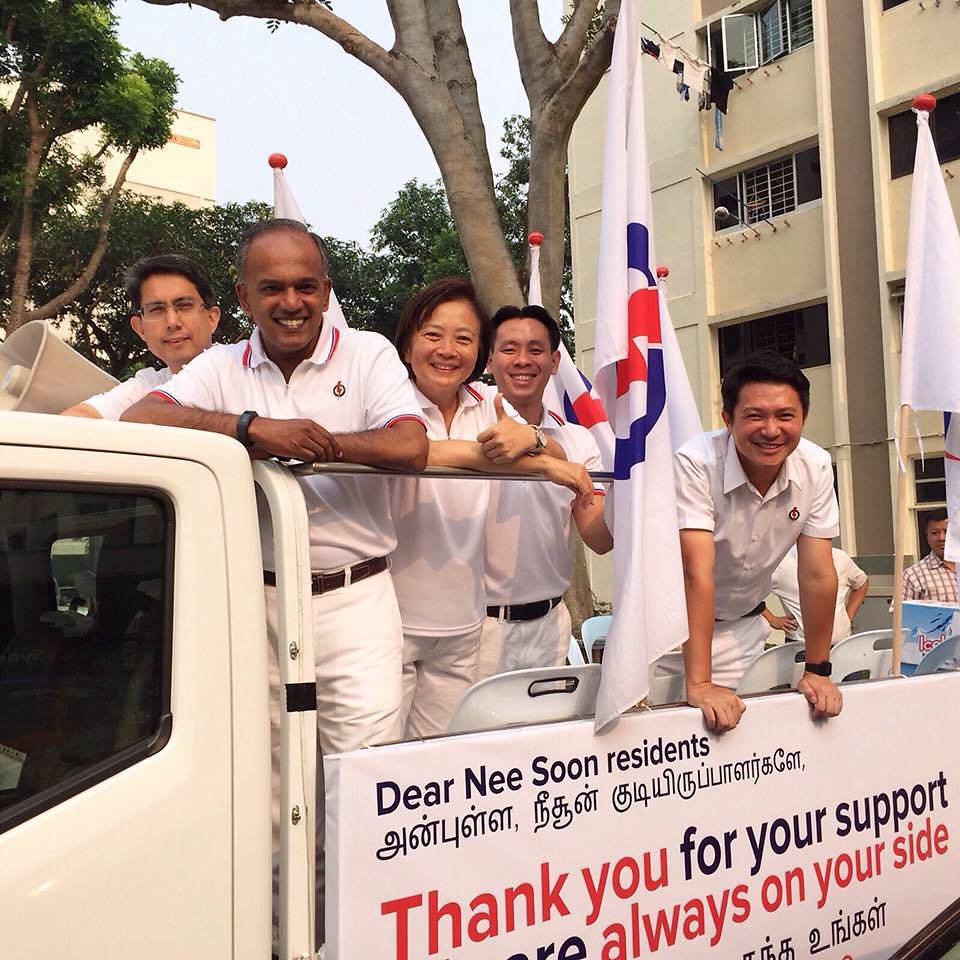
Later that year, he contested in Nee Soon GRC as part of the PAP’s five-member team led by Law and Home Affairs Minister K Shanmugam. 

Now, as I sat down with Mr Ng again, I looked for signs of change – maturity, political savvy, perhaps even weariness.

The truth is the 40-year-old does not seem to have changed much.

Even before he became a Member of Parliament, Mr Ng was comfortable speaking up about issues he felt strongly about.

The only perceptible change is that today he is able to raise a wider range of issues than before he became an MP.

Louis Ng parly 1403 - 2

THE ISSUES CHOOSE HIM

Three years ago, his focus was chiefly on animal rights in his role as founder of the Animal Concerns Research and Education Society (ACRES). 

Today, the issues he raises in Parliament have included the plight of single parents and whether there should be restrictions on smoking within homes to protect neighbours from secondhand smoke.

Indeed, when I ask him what the transition from animal rights activist to politician has been like, he replies swiftly that “there wasn’t much of a transition”.

“As an animal rights activist, it really wasn’t just about the animals for me, but it really was about changing people’s mindsets, about mobilising people to step forward to help the animals.

“So I brought the same skillsets into politics, which is again about mobilising people to step forward, to serve the community, about explaining our policies, about changing mindsets.”

To listen to the full interview, click here

However, the effort to widen his focus is clearly more deliberate.  

“I was understudying (Deputy Speaker and MP) Charles Chong before I became an MP. My last posting was at Joo Chiat and I always remember he told me, ‘Louis, make sure you don’t just talk about animals in Parliament’.

“I realise as an MP, my focus just can’t be on a single issue. I’m here not just to speak up about issues that I’m passionate about, but more importantly, about issues that Singaporeans are passionate about.”

He still raises animal welfare issues in Parliament and remains CEO of ACRES.

But when it comes to other issues, he says he doesn’t choose. The issues choose him. 

“For example, in my meet-the-people sessions and my home visits, one of the first few issues that came to me was the single-parent issue. I had divorced and single unwed mothers and fathers come to me about what they have gone through, all the difficulties they are facing. 

“Sometimes, they feel stigmatised and discriminated against and have difficulties when it comes to housing. Then I started to look into the policies and of course I met up with (gender equality advocacy group) the Association of Women for Action and Research (Aware) and we really looked into the issue.”

In September last year, Mr Ng called for a reform of the public housing policy for single parents. 

In his petition to Parliament, he asked for unmarried parents and their children to be recognised as a family nucleus so that they could be eligible for public housing schemes. The petition, which was signed by seven single parents, also called for the removal of debarment periods which prevent divorced parents from renting flats from the Housing and Development Board (HDB) or owning subsidised flats.

Aware submitted a statement supporting the petition and also made several suggestions.

The petition was turned down in November with the Ministry of National Development saying it had no intention to amend the law and introduce exemptions for unmarried and divorced parents.

However, in March this year, it was announced that divorcees can now buy or own a subsidised flat immediately upon ending their marriage, rather than having to wait three years under previous rules. 

Mr Ng attributes the change to persistence.

“Try and try again. Let’s openly debate these issues. Honest disagreement is often a sign of progress. And that’s what I aim towards. As long as we try, we never lose.”

Next on his list is the issue of younger, single parents.

“It’s really about the single unwed parents who are under 35 because they fall into this horrible hole. For those above 35, discrimination aside, they can still get housing under the singles scheme even though they have children.

“The under-35s really have no option other than staying in a shelter with their kid or trying to rent a room or if they have enough money, try and rent a whole unit. I met a single unwed mother who has been sleeping in a lorry with her child. I’ve managed to get her rental housing now, but she had to come to me for help. Why don’t we just level that playing field for them so that they can qualify for some housing?”

I remark that the policies concerning single parents have been slow to change because of worries that legitimising single parenthood may erode the traditional family unit.

However, in 2016, the Government made some moves towards equalising benefits for single parents by extending to them the full 16-week maternity leave that married mothers enjoy. The children of single parents also now have access to a Child Development Account, a savings scheme to pay for childcare and healthcare costs.

“Now that we have eased some of our policies, there hasn’t been a huge jump in single unwed parents. It’s not true that everybody is going to have babies all of a sudden because the policies are now level. That hasn’t happened and I don’t think that will happen.

“Remember also that there is a child involved and I feel very bad when they come to me at the meet-the-people session. I actually ask the kid to step aside because I have to explain to the mother or the father that actually, under our housing policies, you are not considered a family and that’s why you don’t qualify for a HDB flat.”

Louis Ng_4

“I feel if I have the opportunity to serve, to really help to shape policies, I should enter politics and start speaking up about all these issues,” says Louis Ng. (Photo: Facebook / Louis Ng Kok Wang)

CONSULT THE PUBLIC ON MINISTERS’ SALARIES AND MPS’ ALLOWANCES

While he claims the work he does in politics today is essentially similar to what he did before and continues to do today as an animal rights activist, one thing has certainly changed – his salary.

“At ACRES, I started with S$500 a month for a few years. I think my last-drawn salary there before I joined politics was S$3,460. Now I think it’s S$2,500. S$3,460 included the performance bonus, transport allowance, meal allowance, so we removed all that and now I just get a basic salary at ACRES.”

But my intention in raising this question is to discuss how much his monthly income has been boosted by his annual MP’s allowance of about S$200,000 and how that has changed his life.

“On S$500 before, I had enough to eat. We would buy really cheap furniture and we were under all the low-income grants, but my wife and I were happy as we were doing something that we had always wanted to do.”

His wife works with him as Group Director for Advocacy at ACRES.

He claims that in spite of his MP’s allowance, they remain frugal although they don’t have to scrimp and save as much as before.

“I dress in the same types of clothes every single day. That comes from my dad. He never wore branded clothes. We don’t go on fancy holidays. I think we live and I always remember his philosophy that there’s beauty in giving more than receiving.”

I use this opportunity to ask him about concerns in some quarters that ministers’ salaries and MPs’ allowances are excessive.

“The key is we have to be transparent with what we get. Whatever I do should be subject to public scrutiny. Also, salaries are determined not by us, but by an independent committee. I think transparency and independence are important.”

However, he also thinks the public should have a say in the debate over salaries.

“We debated it in the White Paper and of course the MPs will seek views from the public. But I think we can add a stronger component of public consultation into this whole salary debate. So, not just an independent committee that sits together to decide, but why not an independent committee that also takes views from the public on what they feel should be the right amount, and then present that to Parliament, and then for the MPs to debate this, perhaps for the next White Paper. 

“After all, the public and taxpayers contribute to ministers’ salaries and MPs’ allowances and they should be consulted like how we do public consultations on Bills introduced in Parliament. The key now is to make sure people are heard and feel that they are involved in the decision-making process. The policy-making process has to involve the public.”

He feels that so far, people have not felt like they are a part of this process and some think of it as a case of “own self check own self”.

I put it to him that it is possible that many members of the public would say that MPs and ministers should be paid less than they are now. 

“Let’s put it to a debate. It’s not going to be easy. We’re so polarised now. The views might be very diverse and the committee might not agree with some views. But they should be incorporated into the committee’s report, presented in Parliament and debated before a final decision is made. I believe it will make this process more robust.”

Concerns that lower salaries could affect the Government’s ability to attract the best talent should be similarly debated, he says. 

I ask him what factors he thinks members of the public should consider as they form their opinions on what’s appropriate.

“Understanding the job scope of the MPs or the ministers so that you can gauge how much you feel we should be paid,” he says. 

I remark that inevitably some will be sceptical about whether public consultations, even if conducted, will really influence decision-making. 

“They should factor in the final decision. I’ll give you an example. I’m currently working on a Bill for the Wild Animals and Birds Act. I’ve been putting it through a public consultation. For some of the proposed amendments, I didn’t get majority support. As an MP, I then have to change my views to suit society’s views as well. Now, I’m going to tweak it and put it back into public consultation. We must go through such processes.”

HAS HE SOLD OUT?

While it seems Louis Ng has comfortably settled into his role as an MP and is carefully balancing this with his position as the head of an animal rights advocacy, when news emerged that he would be entering the political sphere three years ago, fellow activists on the ground had wondered what his agenda was.

After all, activists are supposed to be the establishment’s watchdogs rather than joining the establishment.

Some wondered if he was selling out.

“Judge me by my actions over the last three years. I have delivered on my promise. I’m here to speak up, to speak my mind, to listen with my heart and my ears. And that’s what I fully intend to do. That’s my promise to the people and that’s what I’ve done.”

He clearly wants to continue to straddle both spheres – politics and civil society.

“We talk about diversity in politics, but civil society should be equally diverse. There should be people that are purely civil society activists. I think there are people that should straddle both. But you have to remember that ultimately we are on the same side. We all want what’s good for Singapore. We all want what’s good for the progress of this country.”
Louis Ng_3

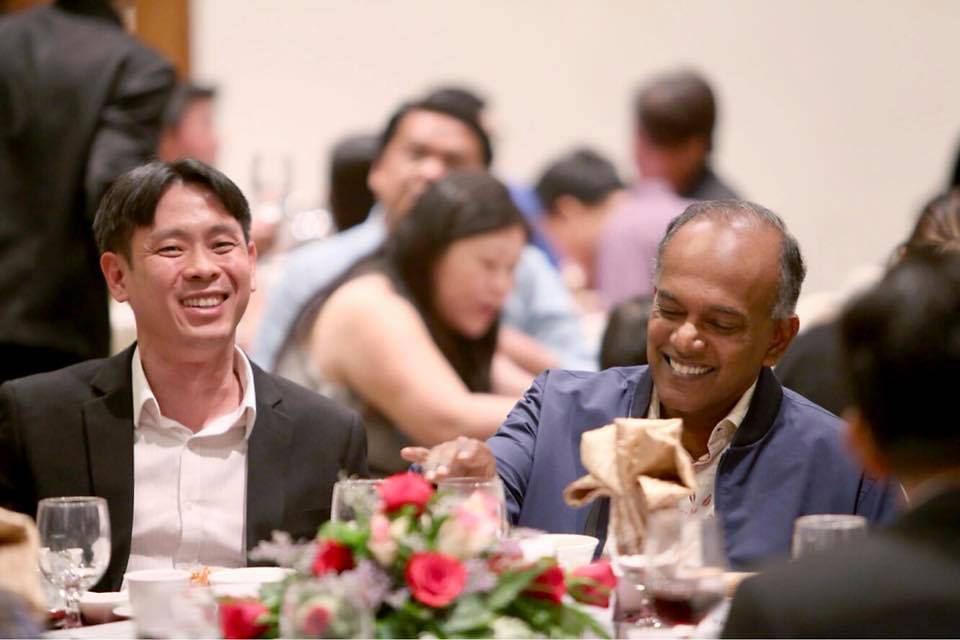
Louis Ng with his mentor, Home Affairs and Law Minister, K Shanmugam. (Photo: Facebook / Louis Ng Kok Wang)

His approach to activism, both in civil society and politics, has gradually transformed from being confrontational to collaborative.

“The turning point was when I started grassroots work through Minister Shanmugan. He sat down with me at the ACRES gala dinner in 2008. He showed me the way where maybe with confrontation, we could get a lot of publicity, but at the end of the day, what are we achieving? He asked us to try a more collaborative approach. I realised we must also try to find that middle ground. If we push and push and we refuse to move on our stand and the Government refuses to move as well, then it’s a stalemate.

“And we tried it, and it worked in the sense that we managed to get quite a lot of policy changes through a lot of the dialogue sessions, through a lot of engagement, closed-door meetings with the ministries, with the agencies. I saw that was the way forward. We can be more collaborative, but at the same time we still can be critical, but criticise constructively.”

He gives me an example of where this approach has worked.

“When we did our rescue work at ACRES, we came across cases of pythons in buildings.  There was one case of a python in one of the hospitals. The police used their patrol car to run over the python. I could have gone all out to criticise and say the police should have done things better. It’s an endangered animal, and it’s non-venomous.

“But instead, we went to the police and we realised that actually our officers weren’t trained at the academy to catch pythons. They were scared at that point, and so we offered them our help. It was a win-win situation where now when you call the police, if there’s a python there, the police activates ACRES. Sometimes they cordon off the area and our guys go in to rescue the animal.”

However, there have been cases where neither collaboration nor confrontation worked.

“For instance, ACRES’ campaign to get Resorts World Sentosa to release its dolphins. We went through many years of campaigning, but the dolphins remain there. But our commitment is that we will continue to raise awareness about this issue. Many people have told me that it looks like we have lost. But my answer always is that we never lose. At least our campaigns have raised awareness and we continue to do this to hopefully see change take place in the future. It’s the same with policy issues.”

WELCOME NAYSAYERS

While doing grassroots work, he realised he could apply his activism to a wider range of problems within the community.

“I feel if I have the opportunity to serve, to really help to shape policies, I should enter politics and start speaking up about all these issues.”

But is that really the best way to effect change in Singapore? Shouldn’t civil society groups have a role to play too?

I put it to him that the Government could change its perceptions and be more receptive to such groups as well. Their concerns and ideas should not be negated simply because they are not in politics or adopt a confrontational approach at times.

“Absolutely. We should welcome the naysayers. I think through criticism we can become better.

“Although I encourage civil society groups to be collaborative, sometimes I think in these heated debates, we tend to forget that civil society activists who speak up so passionately, who sometimes look very angry in the media, are angry and passionate because they care and they might even have a better perspective on particular issues. 

“I think we should be worried when people become silent because that might mean they’ve become apathetic or just given up.”

Louis Ng OTR

MP Louis Ng. (Photo: Goh Chiew Tong)

But he concedes that at times, speaking up has garnered him negative publicity.

Earlier this year, he raised a concern in Parliament about public officers who dare not speak up for fear of getting into trouble.

“They fear that they will be labelled as troublemakers and that their bosses will get angry. They fear it will affect their appraisal and their promotion,” Mr Ng said at the time. “We now need to make sure that they don’t work in a system where they feel they need to be silent, where they feel they need to be ‘Yes sir’ men or women and where they feel that nothing will change even if they speak up.”

His comments drew a sharp rebuttal from Minister for Education Ong Ye Kung, who also leads public service innovation efforts.

Mr Ong said that where public service has fallen short, it will address the problem, but when generalisations that tar the entire service with the same brush are made in public and worse, further spread through media, it does not do justice to officers and it discourages and undermines improvement efforts.

He also urged Mr Ng to do his part.

“If some civil servant tells you they dare not speak up, you can assure them from your own experience that you’ve always spoken up and never got into trouble. If they feel the system does not allow them to make a difference, ask them what is it you want to change,” said Mr Ong.

When I ask Mr Ng about this, he says he accepted the Minister’s feedback.

“I accept it fully. Let’s work together and I can improve. Did I overgeneralise? I would say, yes. But I spoke to over 100 civil servants and since it was a concern I heard, I thought I should follow up. But I agree and I think we can move forward together.”

He says he is heartened by the changes that Mr Ong said have been taking place.

Agencies conduct regular employee engagement surveys, and many carry out regular 360-degree feedback initiatives to better develop public service needs.

There are also systems in place such as a Public Sector Transformation Award which recognises officers who display “constructive discontent” and make the effort to effect transformative change.
Louis Ng_5

Louis Ng with the PAP’s Nee Soon GRC team during the 2015 General Election. (Photo: Facebook / Louis Ng Kok Wang)

DISPEL THE FEAR OF SPEAKING UP

However, is there scope for the Government to do more to dispel the fear of speaking up, not just among civil servants, but also the public? Can it do more to show that it will not be heavy-handed in dealing with dissent?

“I always say that if you keep within the legal limits and are constructive, you shouldn’t fear speaking up. But if you choose to go beyond the legal limits, if you choose to be defamatory, then of course you’ll get into trouble. I’m an example of someone who has spoken up and never got into trouble.”

I remark that some would see Mr Ong’s sharp rebuttal to his comments in Parliament as “getting into trouble”.

“I can see where that’s coming from. I think a lot of people said, ‘See, he spoke up and he got scolded. Case closed.’ But I don’t view this as a singular thing. I spoke up and I shared my constructive criticism about the Government. The Government and the Minister should have his chance to speak up about my speech too and constructively criticise it.”

He reiterates that there needs to be openness on both sides.

“But also the Government needs to realise that policies cannot improve if we don’t have people telling us that we’re wrong, people telling us that we could have done this better, people telling us a policy doesn’t work on the ground. If you close your ears to these views, then Singapore can’t get better.”

SCORING POLITICAL POINTS

We continue talking about some of the issues he has tried to tackle as an MP in the past three years. 

At times, it seems that his actions and initiatives are designed to score maximum political points and make the news.

Just a few months after becoming an MP, he announced that he would be trying out different jobs to “gain some first-hand experience”.
Louis Ng_2

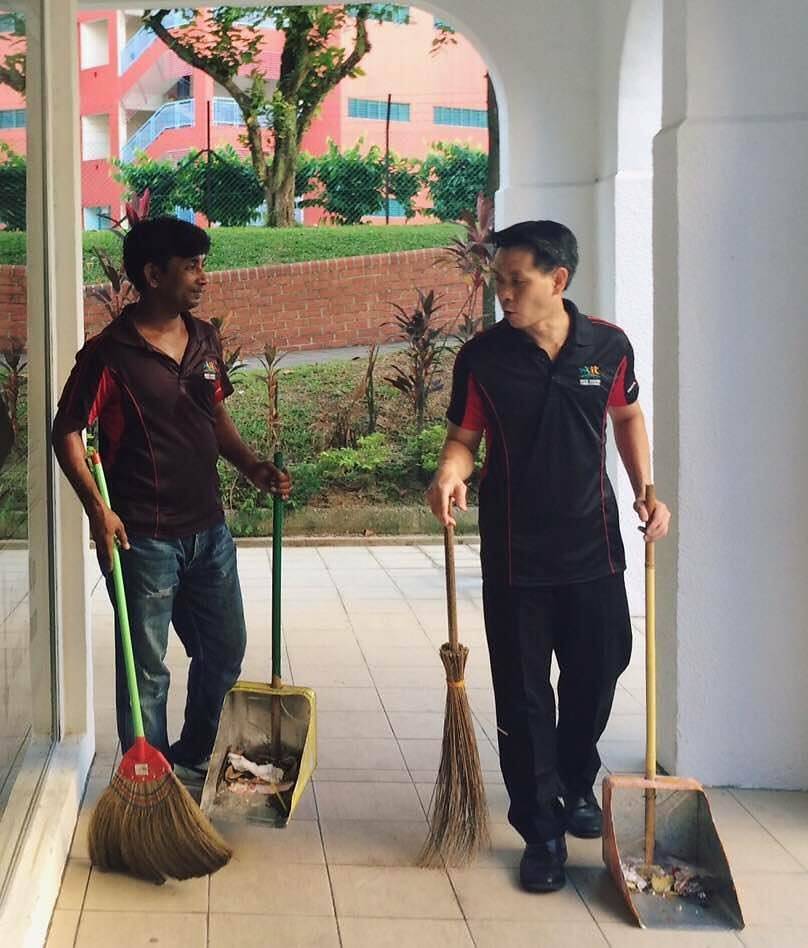
As part of his initiative to try out different jobs within the community, Louis Ng worked as a cleaner. (Photo: Facebook / Louis Ng Kok Wang)

This initiative saw him work as a cleaner, a cardboard collector and a private-hire car driver among other occupations.

When I express my scepticism about his motives for doing this, he claims it was a sincere effort aimed at improving his understanding of issues.

“It has shaped a lot of my thinking in terms of the speeches I’ve shared in Parliament about why some of these groups of people need help. For example, I worked with Hanif, a town council cleaner for a day. And from there, I realised what these migrant workers go through. How they come to Singapore, some of them for a 10-year stretch and never see their families. 

“That led to me speaking up a lot on migrant worker issues. That led me to a shift about how in town councils, we need to look after our cleaners to make sure that their welfare is looked into more.”

He claims the various experiences have fuelled community projects for various groups in his constituency.

Project Hearts is one of them.

“We’re doing monthly outings, mentorship, also trying to build a new children’s corner at my void deck, setting up a soup kitchen there. But really bringing in more holistic help rather than always focusing on just dollars and cents.”

But I point out that often dollars and cents matter.

He concedes this and points out that there are also community scholarships and tuition progress for less privileged children in his constituency.

He also feels the Government can do more to help.

“I think the Government can do more and is doing more. One of the major changes is streamlining assistance schemes so that the people that need help will get help more quickly.”

“I DON’T THINK “WAYANG” SHOULD BE PART OF POLITICS”

I ask him about other instances where he has been accused by some as trying to merely score political points. 

He once made the news for a speech in which he called for parental leave to be extended for parents who have pre-term babies or those who have multiple babies.

Louis Ng with his twin girls, who were born

Nee Soon GRC MP Louis Ng sharing a tender moment with his twin girls, Katie and Poppy, who were born 10 weeks early. (Photo: Facebook / Louis Ng Kok Kwang)

As he talked about his personal challenges in caring for his own pre-term newborn twins, he was seen fighting back tears.

This led to some netizens questioning if an MP would only speak up if he or she is personally affected by a particular issue. Others wondered if he was doing it to soften his constituents’ hearts and gain sympathy.

Singaporeans often refer to it as “wayang”, or putting on an act.

“I don’t think wayang should be part of politics. Sometimes we do choke up in Parliament in delivering the speeches. I urge everyone to see what the context is. Some of the things I’ve shared in parliament are very personal. I share it so that policies can change. The change in policy on parental leave for example, won’t benefit me since I had my kids already. It was really for the benefit of future parents. I was sharing the experience of how difficult and how painful it has been for me and my wife so that others won’t have to go through that same experience.

“But ultimately, everybody has their own views and everybody is entitled to criticise. As an MP, I should be open to public scrutiny, open to criticism. Again, I think that would make me a better MP, a better person. At the end of the day, I’m not here to do what’s popular, but I want to make sure what I do is right. And that’s most important to me.”

As we talk more about his career in politics, he says that while he is concentrating on this and his work in animal welfare, he is already putting in place a succession plan at ACRES.

“I’ve run ACRES for 17 years already. I don’t think it’s healthy for someone to be there and to run it for so many years. It’s now time to make sure I have a succession plan and train the younger generation of staff members who will hopefully take over. For an organisation to sustain in the long term, there need to be fresh ideas and fresh leadership as well.”

For now he has no other career plans except to “focus on being an MP”.

One would think that the effort Mr Ng puts into raising parliamentary questions and staying in the limelight indicates that he has larger political goals. But even if he does, he is not about to admit it. When I ask about his political ambitions and how far he would like to go, he says he is happy with the status quo.

“I’m very happy just speaking up and asking questions. I’ve never had any big ambitions. It’s about being in a position where I can help to shape policies and to speak up for people. That is the most important thing for me.”


Source link

Ordered via Instagram, served in the ‘hood: The chef who wants to unite through briyani and fill the void (deck)

0

SINGAPORE: Seven adults and a toddler sit patiently at an Aljunied Crescent void deck on a breezy Sunday evening. Time ticks by – it has been more than twenty minutes, but there is no complaining, just the occasional glance at watches and handphones.

And then as the lift door opens, conversations are suspended. 

Plastic containers are doled out, crumpled bills exchange hands, and as dusk falls, the loot is quietly trucked off. The deepest cravings have been satisfied – a lucky few have caught the “drop”.

They hail from all parts of Singapore, lured by the promise of tender chunks of meat buried under mounds of fragrant basmati rice, complemented with a side of pineapple pickle. This is briyani so good it was once sold out in 28 seconds.

“I have a guy who takes public transport from Jalan Bahar, orders one packet, comes here and eats in front of me,” said the man behind this phenomenon, Ahmad Zahid. “There was another girl who took a Grab down from Jurong, finished half her packet of briyani here and then went back to finish the rest of it.”

But cooking biryani is a pastime for the 41-year-old, and Zahid doesn’t really care how many takeout boxes are sold – so long as he gets customers down to what he calls his “‘hood” and rediscover the humble void deck.

“When I was growing up, the void deck was the epicentre of all our social activities. It was where we gathered, funerals were here, weddings were held here,” said Zahid, who has lived on the estate since he was born. “I think people have forgotten just how socially significant the void deck used to be. It was a great equaliser.

“Even if customers live in a place where there’s a void deck, they haven’t the same experience as I have had. They see it as an empty space they have to cross before going home.”

A portion of Ahmad Zahid's biryani

A portion of Ahmad Zahid’s mutton biryani costs $10. (Photo: Matthew Mohan)

Those interested in ordering briyani have to first shoot a “follow” request to Zahid’s Instagram account, “globalmatsoulkitchen”. 

“Drops”, where briyani is sold to a limited few, are announced there by posts of stark, almost Dada-esque, Black Metal inspired imagery, accompanied by extended, quirky, captions.

Customers can then send their orders via WhatsApp to Zahid’s mobile number, with orders taken on a first-come-first-served basis. Those who succeed are then texted pick-up instructions, and gather in eager anticipation at a void deck in the Aljunied Crescent neighbourhood.

The special of the day can range from vegan to stingray, honey chicken to mutton briyani.

“You come here and you wait. It doesn’t matter what status you have – you are just like anybody else,” said Zahid confidently. “And I can assure that during the time you spend waiting, out of your comfort zone, it will be worth it.”

Mr Zahid’s briyani draws inspiration from a restaurant in Dubai he visited years ago while on holiday with his then-fiancee.

“It was a very run-down, humble, unassuming kind of place,” he explained. “I looked at the briyani and it was like white rice with brown things below. It was interesting because it was just that and there was no gravy. But, then I dug into it, and I realised, this was what it was all about.

“Having that plate of briyani there, it was almost like time stood still.”

Returning to Singapore with several packets in tow, Zahid spent the next two weeks coming up with with a basic recipe. However, finessing the final formula took close to three years.

Ahmad Zahid waits for his customers

Mr Zahid has biryani “drops” at a void deck in his Aljunied Crescent neightbourhood as and when he whips up a batch. (Photo: Matthew Mohan)

Following encouragement from friends and family, Zahid, a former bartender, began to whip up small batches of briyani during his free time.

In 2015, he made the career switch to full-time cooking and currently works as a chef de partie at Asian restaurant Coriander Leaf. 

“I decided that this could be like a school project that never was,” Zahid added. “Nine months after I started (full-time) cooking, I stopped the Instagram project. And when I was able to juggle both – I reactivated the account and started posting again.”

He draws his inspiration for cooking from two seemingly contrasting sources – religion and black metal.

“The nature of the Muslim is that he is not an island, he is part of society and part of something bigger,” explained Zahid. “There’s always a mention of being inclusive, you have to integrate.

“Food is a conduit for that. It brings people together, it breaks down barriers.”

Zahid quotes the Arabic word ‘Silaturahim’, which can be translated to the word ‘relations’. “Cooking is part of continuing that lineage of relations,’ he added.

Mr Zahid’s Instagram handle also is meant to convey a sense of spirituality – the term “Soul Kitchen” reflects the Sufi traditions of kitchens being places of refuge.

The “almost-elitism” and “standard of excellence” in Black Metal music – in particular the Norwegian bands of the second wave of the 1990s also inspires Zahid to strive for the same standards in the food he makes.

“You knew when these bands produced any albums that it was going to be good,” explained Zahid. “I hope I can achieve the same quality with my cooking.”

Ahmad Zahid's customers wait patiently for their order of biryani

Two of Mr Zahid’s customers (right) wait patiently for their order of biryani. (Photo: Matthew Mohan)

Ironically, it was also a briyani craving which went unfulfilled that got Zahid started on his culinary journey.

“In university, there was one particular day when things were not going great. There’s was this place just down the street where my apartment was, so after school I went to that place because I know they sold biryani,” recalled Mr Zahid, who was studying abroad in Australia then.

“When I went there, they said: ‘I’m sorry, we sold out – we will make a fresh batch, so come back at six o’clock.’ So in anticipation of a good meal, I didn’t eat anything… But when I went down later, they told me that it was not worth making a fresh batch just for one person.

“That’s when I knew instinctively, for sure, that never again would I depend on anybody to cook for me a meal. If I wanted to eat anything, I would learn to make it myself.”

Rather than having to rely on having briyani served up for him, Zahid now has the opportunity to feed a lucky few with his own take on the popular dish. 

A typical work day sees him pull 12-hour shifts, so Zahid takes advantages of off-days in his schedule to prepare for “drops”. “If the next day is an off-day, I’d be preparing the night before. If it’s a lunchtime drop then I’ll be preparing very early. If it’s an evening drop, I’d do a bit of preparation, go to sleep and wake up to continue.”

Mr Zahid, who counts lion dance and playing in black metal bands among his other hobbies, admits that cooking consumes a large chunk of his leisure time.

“I do the preparation, the cooking and the cleaning up,” he said. “By the time cooking starts, you know its going to be hot, you’re going to be thirsty and people are going to keep bugging you on the phone. You have to be in the zone.”

But he plans to continue for the foreseeable future. “(At the void deck), I see customers getting to know each other while waiting, old friends catching up, colleagues meeting after work,” he explained. “This vindicates my decision to have it here. I’ve achieved what I wanted.

“I believe that if you cook from the heart, if you are sincere about it, people will know and taste the difference… This is my labour of love.”

Source link

Getting rid of a pain in the neck: Chiropractic Association calls for regulation of industry

0

SINGAPORE:  Avid mountain biker and golfer Ho Shuwen, suffering from a strain in his neck and back some years ago, walked into a random chiropractor in Bukit Timah Plaza.

Having gone to a chiropractor once before and experienced relief, the 37-year-old business development executive expected the same outcome this time round.

His neck was assessed as being in a bad shape and needing several sessions, so he coughed up more than S$2,000 for 40 treatments. He went diligently three times a week as prescribed for more than a month, but saw no improvement.

He also did not expect what he experienced at the clinic, something he said was like a “conveyor belt system”.

“When I was being adjusted, there was already another person lying on the bench beside me, ready to take my place,” he told Channel NewsAsia.

When he asked why he was not getting better, he was told it was because of one session he missed. He decided to stop the treatment, and approached another chiropractor under the Chiropractic Association (Singapore). He found relief after four sessions, he said.

The association currently has about 30 members, making up a third of live chiropractic companies in Singapore. 

LARGE PACKAGES BUGBEAR OF INDUSTRY

Chiropractic is a form of complementary and alternative treatment technique that started in the United States and touts itself as a natural remedy for problems related to joints.

President of the association Dr Terrence Yap singled out the practice of peddling large packages by non-member chiropractors as something which can undermine the industry.

“These non-member chiropractic companies would actually try to hard-sell, scare the public into thinking that their condition is so bad that they would need a hundred treatments,” he said.

At his clinic on Orchard Road, he whipped out brochures from such establishments that were selling 40 treatments for S$2,400, or 90 treatments for S$4,050 with the addition of one family member, with the option of instalments. They were brought in by clients who wanted to show proof of what they had gone through.

Such packages make chiropractors seem like hair salons, he said. Dr Yap explained the strategy of such “large-package companies”.

Brochures from chiropractic clinic

Companies selling large packages are a bugbear in the industry. (Photo: Jalelah Abu Baker)

“They hire young fresh grads with huge student loans and entice them to come and practise, to earn as much money as they can. And they do this by dangling a commission-based income. So they usually have a basic salary, which is small, and the commission is where it can vary. The more you sell, the higher your income,” he said.

They would put patients on a high-frequency programme to complete the package and attempt to take another package after that, Dr Yap added.

“Some have even dissuaded patients from seeking other forms of treatment in the hope of getting more business, which is a blatant contradiction to all that has been taught in chiropractic schools and the association,” he said. 

The association only allows members to perform a course of 12 treatments.

“Then if the patient still needs to be treated, you need to re-examine them before you continue treatment,” he said.  

This is in line with international industry guidelines, he said. “Usually within 12 treatments, you can safely say that 60 to 80 per cent of the injuries we commonly see will have 50 per cent of relief,” he said.

Channel NewsAsia approached two such “large package companies” to get some insight into their practices, but they did not respond.

CALL FOR REGULATION

Ensuring that a chiropractor in Singapore is legitimate, however, may prove trickier than expected, given that the industry is currently not regulated here.

Dr terrence Yap

President of The Chiropractic Association (Singapore) has called for the industry here to be regulated. (Photo: Jalelah Abu Baker)

Calling for regulation, Dr Yap said: “Being in an unregulated environment means that anybody can call themselves a chiropractor.

“Tomorrow if you were to set up a ‘wellness centre’ and call yourself a chiropractor, no one can do anything about it.”

While the number of complaints made to the association and the Consumers Association of Singapore against chiropractors is low – about 10 so far this year – Dr Yap cautioned against waiting for something to go awry.

“The association strongly believes that the industry should be regulated. It is necessary for public safety and to protect the title of legitimate chiropractors who are working in Singapore,” he said.

He highlighted the death of a woman following chiropractic treatment in Jakarta, Indonesia in 2015. The chiropractor’s licence was revoked in another country at the time. According to media reports on the incident, Jakarta ordered the chain and other chiropractor clinics to close following the death and declared them illegal.

In Singapore, chiropractors are encouraged to practise self-regulation through professional associations like the Chiropractic Association (Singapore), which has developed a code of practice, ethics and advertising guidelines for the profession, the Ministry of Health (MOH) said.

“As the chiropractic field develops, the MOH will continue to assess the risks to patient safety closely and will determine the need to regulate if critical risks to patient safety are identified,” a spokesperson said.

Dr Yap suggested a licensing framework that would allow onlythose registered with a local regulatory body to practise.

However, chairman of the government parliamentary committee for health Dr Chia Shi Lu said that while that could help the industry to progress, one of the challenges to such regulation of the industry is the different standards of chiropractic education in different countries.

UK SHYAM’S CHIROPRACTIC JOURNEY

While there are concerns surrounding some industry players, the current national 100m record holder UK Shyam believes that in the right hands, chiropractic treatment can help. In fact, he experienced that first-hand.

A recurring hamstring injury that did not seem to go away despite regular physiotherapy led him to visit a chiropractor as a “last resort” in 2002.

“Interestingly enough, with one or two manipulations, my injury was cured,” the former sprinter told Channel NewsAsia.

That was a year after Shyam, a full-time athlete then, clocked 10.37s for the 100 metres, beating the previous record by 0.01s.

Since it worked for him, and because he found that chiropractic treatment was “relevant” for a high-impact sport like sprinting, he started to see a chiropractor regularly – at least weekly or fortnightly.

“I chose to do so, because with regard to certain types of injuries, chiropractic manipulation provided immediate pain relief and often allowed me to resume training with good mobility and confidence by the next day,” he said.

He addedthat the injuries he sustained were mostly related to the back, spine and hip, which are under a lot of stress during sprint and weights training.

CHIROPRACTIC TREATMENT AS PART OF RACE PREPARATION

Shyam said he needed to ensure his spine and joints were aligned – which chiropractors seem able to do- before competing because it improved his mobility and joint range.

“It was a fundamental part of my race preparation. It allowed me to maximise my potential to train and compete comfortably, confidently and with full effort,” he said.

Seeing chiropractors at competitions overseas, ready to manipulate athletes before races also proved its efficacy in high-performance sports, as far as he was concerned.

“Once I found out more about the rationale and the principles of the field, it allowed me to understand why it can be so effective in terms of injury prevention and treatment. This is so because it addresses structural issues which are the root cause of our pains and ailments while certain types of other treatments may merely be treating the symptom rather than the cause,” he said.

As someone who exercises recreationally now, after hanging up his boots in 2005, the teacher visits a chiropractor once a month.

Shyam is not the only sportsman to visit chiropractors. Marathoner Ashley Liew and teen swimmer Cherlyn Yeoh are among others who do.

While chiropractic treatment may benefit sportsmen, Shyam said laymen could also benefit, given that even sitting or walking with bad posture could lead to cumulative injuries.

“They just need to ensure that it is a qualified and experienced chiropractor that they are seeing,” he said.

To make sure of proper treatment, Dr Yap suggested researching and making sure the chiropractor is accredited.

“The best assurance for the public for quality and professionalism in practice is to look for chiropractor within the association. All members are vetted before granting admission and they need to agree to the rules and regulation of the association,” he said.

He also suggested that the public scrutinise their chiropractor’s degree and do a google search. 

“If you don’t see it accredited on Council of Chiropractic Education, then alarm bells should be ringing. Ask the chiropractor if they are from an accredited college or university.” 

Source link

Commentary: Don’t complain about rules for bikes and PMDs until we’ve proven we can be responsible

0

SINGAPORE: Could too many restrictions discourage the adoption of alternative modes of transportation and slow our progress towards a car-lite nation?

When it was announced earlier this month that all motorised personal mobility devices (PMDs) must meet fire safety standards by 2021 to ensure public safety, a number of PMD users and retailers were clearly displeased.

It’s completely understandable.

If you had just purchased one of these devices and planned to use it for several years, finding out that it does not meet new standards and will be deemed illegal soon, is disappointing to say the least.

ARE THE RULES WARRANTED?

But this rule was introduced for a reason.

There have been 80 fire incidents involving motorised PMDs since 2016 and data released by the Singapore Civil Defence Force (SCDF) earlier this year showed that e-scooters were involved in 40 fires last year, an increase of nearly 350 per cent from nine such cases in 2016.

However, naturally retailers have also taken issue with the new fire safety standard – UL2272.

Mr Victor Lee, general manager of Falcon PEV, one of the leading distributors of PMDs in Singapore told Channel NewsAsia that having a blanket rule and insisting that all e-scooters conform to UL2272 is flawed.

He questioned its relevance since it is a technical standard developed by an independent US certification company, suggesting that the authorities instead impose an international safety standard approved by the International Electrotechnical Commission.

READ: Users, retailers blast new PMD fire safety rule

Sticker for fire safety compliance

Sample of a sticker to indicate that the device is UL2272 compliant, (Photo: UL.com) 

While he may be right, the fact remains that safety standards are vital.

According to the Ministry of Transport, the devices sold in Singapore today do not conform to any reliable safety standard.

Even if the authorities were to implement an international standard instead of a US one, the industry would have had to undergo a change. 

Other retailers have said that they’re seeing a decline in sales due to various other regulations that have been introduced including mandatory registration for e-scooters, speed limits and measures against illegal modifications. 

But let’s again consider why these were introduced. 

From January to September 2017, there were about 110 accidents involving PMDs. Of these, 30 involved pedestrians on footpaths and walkways. Accidents involving such devices can be serious. 

For instance, in 2016, a 19-year-old electric scooter rider collided into a pedestrian, leaving her with brain injuries and in a coma. 

In light of this, one could argue that the new rules and regulations are warranted to ensure better behaviour and accountability among users. 

READ: How oBike, Grab-Uber merger were managed shows we haven’t gotten disruption right, a commentary

E-scooter accident Kembangan MRT

Photos of the accident circulating online showed an e-scooter under the front wheel of a black Lexus.

BUT LET’S NOT GO TOO FAR 

Those who argue that too many restrictions could discourage the adoption of alternative modes of transportation are not wrong. 

But even active mobility advocates in the community often express ambivalence when legislation is introduced. 

For instance, when it was announced that from early next year, the speed limit for PMDs and bicycles travelling on footpaths will be reduced to 10kmh from the current 15kmh, many said the lower speed limit would be difficult to comply with and might lead to many giving up using such devices. 

However, they also conceded that the speed limits would make footpaths safer for all users.

Singapore is not alone in implementing rules for alternative transportation modes. Cities in the US and countries in Europe do so as well.

For instance, in Spain, those riding in pedestrian areas have to keep within a speed limit of 10kmh and 30kmh on bike tracks and trails.

The US city of Seattle is exploring a 15mph speed limit for e-bikes on bike trails. 

However, there needs to be a balance when it comes to rules and this is something that the Ministry of Transport seems to acknowledge as well. 

For instance, in 2016, then-Senior Minister of State for Transport Josephine Teo said that the Active Mobility Advisory Panel was of the view that “registration and compulsory insurance would be too onerous and costly for the vast majority of cyclists and personal mobility device users who behave responsibly and safely”.   

At the time, it was announced that only power-assisted bicycles, which “travel on roads and are more prone to modification” should be registered. 

It was only this year that it was announced e-scooters would need to be registered too. 

e-scooter file

An e-scooter rider on a shared path. (File photo: TODAY)

The Government seems to be taking a progressive approach to this. Much of it seems to be informed by feedback and statistics. 

TOWARDS RESPONSIBLE BEHAVIOUR AND COMMON SENSE 

While rules and regulations indeed should not go overboard, they certainly should be in place to ensure that only the right people – those who realise the responsibility associated with using such devices – continue to use them. 

Ms Teo also pointed out that in many cases, “safety is also about practising common sense, for example, by moving in a single file when the path is narrow, slowing down in crowded areas, and not switching between footpaths and roads suddenly”. 

The failure of many users to exercise this sense has in fact led to calls from some quarters to ban such devices altogether especially along narrow footpaths. 

Some might argue this is the best solution to our current woes. 

In the meantime, while pedestrians, cyclists and PMD users attempt to co-exist and until the majority of users develop common sense and a sense of responsibility and accountability, the rules, enforcement and penalties will be instrumental in shaping behaviour. 

We may see declining sales as prices of such devices increase due to fire safety standards compliance, or fewer people using them as a result of speed limits and other restrictions, but it is certainly better than having large numbers of unruly, reckless users and unsafe devices on footpaths and roads. 

If this means a deceleration of our progress towards a car-lite nation, so be it.

Bharati Jagdish is the host of Channel NewsAsia Digital News’ hard-hitting On The Record, a weekly interview with thought leaders across Singapore, and The Pulse, Channel NewsAsia’s weekly podcast that discusses the hottest issues of the week.

Source link

Commentary: Mind the varied impact of HDB schemes on different groups of home owners

0

SINGAPORE: Almost 60 years since the Housing Development Board (HDB) was established, a new concern has arisen – expiring leases of old HDB flats. 

While most flats in Singapore have a remaining lease of at least 60 years, many home owners are concerned that the value of their flat will depreciate over time, trapping and eroding the equity in them. 

Concerns over depreciating values have been further expressed by prospective homebuyers over the past year, with many who view the range of impacted flats to be those with less than 50 years left on their leases, to even homes that have leases of more than 60 years left. 

The possibility of many shunning HDB flats with shorter leases arise from concerns that current homebuyers may not be able to sell their units in an extreme scenario after the minimum occupation period is over.

READ: Strong political commitment to housing is precisely what younger Singaporeans need, a commentary

TOWNS MOST IMPACTED

The impact of expiring leases can be expected to hit first- and second-generation satellite towns first and foremost, including Bukit Merah, Queenstown, Geylang and Toa Payoh, which have a large number of units with less than 50 years of lease remaining. 

Following on, other towns set to be affected include Ang Mo Kio, Bedok, Kallang Whampoa, Clementi, Jurong West and Marine Parade, which have a significant share of HDB flats that have leases of between 50 and 60 years remaining. 

According to HDB’s 2013 Sample Household Survey, these towns also have a higher proportion of elderly residents, a number that is likely to increase as more in the baby boomer generation approach retirement and become less mobile financially and physically.

READ: Windfalls and bailouts should not be an expected part of the public housing equation, a commentary

HDB flats in Toa Payoh file

HDB flats in Toa Payoh. (File photo: TODAY)

LESS OF A WORRY IN THE PAST

Interestingly, the impact of the expiring leases was a lesser worry in the past. In Toa Payoh, prices of HDB flats with expiring leases moved in tandem with the rest of the market. 

Prices for these flats were also supported, among other reasons, as both homebuyers and sellers perceived such older flats to be likely candidates for selection for redevelopment under the Selective En bloc Redevelopment Scheme (SERS). 

Under SERS, residents in selected older housing estates have the opportunity to move to a new home with a fresh 99-year lease, as well as receive a package comprising compensation and rehousing benefits.

The differences in prices of HDB flats between those with leases of less than 60 years remaining, and those with more than 60 years left, only emerged in 2015.

Lee Nai Jia housing figure 1 average prices of hdb

Average prices of HDB flats (S$ per sq ft floor area) with remaining lease tenure of less than 60 years and more than 60 years in Toa Payoh. (Graphic: Author provided. Source: Data.gov, HDB. Prices are in S$.)

One of the possible reasons for the divergence could be due to prospective buyers gravitating to flats of longer tenure under weaker market conditions, as they become more discerning. 

It is also possible that it reflected lagged effects from concerns when then National Development Minister Khaw Boon Wan broached the topic in 2013 and 2014. 

Since then, HDB flats with more than 60-year leases in Toa Payoh started appreciating, while prices of older flats continued to descend. 

OLDER FLATS DEPRECIATING IN VALUE

When a Facebook post in March 2017 by the Minister of National Development Lawrence Wong expounded that not all aged flats will undergo SERS, more prospective buyers began avoiding older flats. 

The average unit price of 3-room HDB flats with less than 60 years of lease transacted at 8.5 per cent lower in the first seven months of 2018, compared to the average unit price of an equivalent flat that transacted in 2017. 

In contrast, prices of 3-room HDB flats with more than 60 years remaining on their leases rose by 3.6 per cent, over the same period. 

hdb hub flats

Members of the public looking at a BTO flat model at the HDB Hub. (Photo: TODAY/Wee Teck Hian)

The depreciating prices of old flats are most keenly felt in the 3-room HDB market segment, where home owners are also more vulnerable, on average. 

The depreciating value of such flats with expiring leases will mean a potential contraction in wealth for home owners, who may also face greater difficulty in the extraction of housing equity if money is needed urgently.

When comparing the average unit price of 3-room HDB flats in established estates, these price trends have been largely consistent.  

Lee Nai Jia housing figure 2 average prices per st ft less than 60

Average unit price per sq ft for 3-room HDB flats with less than 60 years lease remaining. (Graphic: Author provided. Source: HDB, Data.gov. Prices are in S$.)

Lee Nai Jia housing figure 2 average prices per st ft less than 60 (1)

Average unit price per sq ft for 3-room HDB flats with more than 60 years lease remaining. (Graphic: Author provided. Source: HDB, Data.gov Prices are in S$)

Due to the lack of controls in this basic comparison, the declining price trend for 3-room HDB flats could be due to a self-selection bias, whereby buyers have been purchasing units in older conditions at lower prices, or as a result of the expiring lease effect. 

Notwithstanding, both assumptions have longer standing social implications. 

First, with aspirations of upgrading or intentions to move closer to family, many flat owners are unlikely to live for longer periods in their Build-to-Order HDB flats and will likely start planning to move out after hitting the minimum occupation period. 

Building community spirit within the precinct will be tough, as people uphold physical mobility and the ability to move if necessary, when it comes to housing.

READ: A tale of one HDB flat across two generations, a commentary

Second, low-income households who can only afford older but cheaper flats will find it harder to monetise their flats when they need to cash out.

But with the new measures announced at National Day Rally, HDB home owners should expect a lower chance of their homes depreciating linearly over time, and can look forward to an avenue to monetise their properties, despite the older leases. 

The new policies will also help slow down the physical obsolescence of flats that have less than 60 years of lease remaining – good news for older home owners who lack the financial and physical ability to move out. 

MIND THE IMPACT OF SCHEMES ON VARIOUS GROUPS

Notwithstanding, the devil is in the details, and the Government will have to determine how these new policies should be implemented. 

For the Voluntary Early Redevelopment Scheme (VERS), besides deciding on the level of home owners’ consensus and the corresponding compensation package, the scheme should bear in mind that some home owners may also be more affected than others, in particular those who may have to pay sellers’ stamp duties and a resale levy if VERS occurs shortly after they purchase an impacted home. 

Should these home owners be further compensated if VERS pays out less than market value for these homes? If they make up a significant number, how else would the Government intervene to prevent these sellers from voting “no” and holding the other residents hostage?

As some of such HDB home owners belong to the low- or lower end of the middle-income group, having to fork out an extra sum offhand may also impose financial difficulties on them. 

Additionally, home owners who are retired and do not have much capital may have difficulty getting a new flat of similar size to their current home, due to financing regulations.

READ: Many ways to make a house a home but no easy fixes to housing vulnerable families, a commentary

SG elderly ice cream man flat

A man walks in his one-room HDB flat.

For the expanded Home Improvement Programme (HIP II), ongoing improvement works mean that those working will have to either allocate days of leave to oversee contractors or risk leaving their doors open with no one at home. 

While the process for improvement works have been largely streamlined, the monitoring time required will still place a strain on low-income households, who likely work longer hours and have fewer leave days available. 

READ: What a ‘Housing Redevelopment Board’ will do for mature estates, a commentary

Despite uncertainty on how VERS and HIP II will play out, both may be the most important housing policies introduced in modern day Singapore. 

While the new policies may not appeal to all, and there are many ifs and buts along the way that must to be untangled, it is a step towards ensuring Singapore’s housing programme remains sustainable, and our future generations have access to quality, affordable housing.  

Lee Nai Jia is senior director and head of research at Knight Frank Singapore.

Source link

A dream unfolds for artist living in IMH, with a special exhibition and meeting

0

SINGAPORE: It was a dream come true, 40 years in the making – and Sim Kah Lim had the right man to share it with, making the momentous event all the more poignant.

In the 1970s, visual artist Choo Keng Kwang took a young boy of 10 who was painting scenes of the Singapore River under his wing, giving the budding artist tips.

That boy, however, disappeared from public view, his dream of becoming an artist unfulfilled.

He was diagnosed with schizophrenia and, for over three decades, has been warded in the Institute of Mental Health (IMH), where he has painted the Singapore he remembered from behind its walls.

READ AND WATCH: In a mental ward for nearly 35 years, he paints old Singapore from memory – and he dreams

But bit by bit, his extraordinary works gained notice, and this month, he took another step towards realising his long-awaited dream, with an exhibition of some 30 pieces of his works.

IMH artist Kah Lim 1

Most of the paintings on exhibition are of the historical Singapore River, Victoria Memorial Hall and open-air markets of Chinatown.

And on Thursday, for the first time in four decades, mentor and former student met – and fell into that old relationship, almost as if no time had passed at all.

“Do you still draw, teacher?” Mr Sim, 50, asked shyly in Mandarin.

“Do I look like I can?” Mr Choo, 87, replied with a smile from his wheelchair. He is one of Singapore’s first-generation artists, best known for his oil paintings, which can command six-figure sums.

And after all these years, he remains a hero to the younger man, who remembers his rendition of pigeons and the Singapore River.

IMH artist Kah Lim 2

Upon hearing that Mr Choo Keng Kwang had arrived, Mr Sim hotfooted it to his mentor and shook hands.

The surprise meeting was organised by Goshen Art Gallery, where the exhibition-cum-sale of Mr Sim’s pieces – some never before seen in public – is on until the end of the month.

This comes on the heels of his first – and smaller – art display in July, which was for an exhibition highlighting the importance of mental health, organised by Temasek’s staff-driven volunteer initiative T-Touch.

LEARNING FROM THE BEST

Mr Sim had always dreamt of showcasing – and selling – his art. But as people milled about Goshen’s showroom, his attention was focused only on his mentor as Mr Choo pored over his paintings and gave him advice.

IMH artist Kah Lim 3

He should “relax his brush strokes” and not clutter the backgrounds of his paintings. “To be an artist, one shouldn’t be in a rush,” Mr Choo said as his ward hung on to his every word.

He even compared Mr Sim’s tense style to tormented Dutch painter Vincent van Gogh, who had been confined to a French asylum and, similar to Mr Sim, spent many days painting in the asylum gardens.

Mr Sim’s sister, Cindy, recalled how her brother showed promise as a painter since very young, and their father took him frequently to the Singapore River to practise.

Some of the eminent local artists there every Sunday were Mr Choo, Mr Ong Kim Seng and the late Ong Chye Cho.

IMH artist Kah Lim 4

Engrossed in conversation.

“He was there the whole day. He had no one at home to learn (painting) from, so he went to the Singapore River to look for (them),” said Ms Sim.

She added that he often spoke of Mr Choo as a talented artist who was willing to share his knowledge.

Goshen showcases Mr Choo’s pieces regularly and hopes to do the same for Mr Sim, whose paintings on show are mostly of the historical Singapore River, Victoria Memorial Hall and open-air markets of Chinatown.

The art gallery’s co-founder Faith Lum-Yu said the exhibition was to fulfil Mr Sim’s dream and help him reintegrate into society.

(dn) IMH painter follow-up 2

When Ms Faith Lum-Yu first met Mr Sim, she was struck by his talent and his knowledge of the old Singaporean painters.

His works are selling for between S$1,500 and S$7,600, and part of the proceeds will go towards the gallery’s social enterprise ArtSE, which provides employment for individuals with special needs, especially artists.

Ms Lum-Yu had earlier offered him a job with ArtSE and, together with his sister, is working with the IMH on this possibility.

Mr Sim’s exhibition is on until Sept 30, from 11am to 8pm, at 7 Fraser Street, #01-04, S(189356).

Source link

Singapore leaders, China Vice Premier Han Zheng reaffirm good progress in bilateral cooperation

0

SINGAPORE: Visiting Chinese Vice Premier Han Zheng met Singapore President Halimah Yacob and Prime Minister Lee Hsien Loong at the Istana on Friday (Sep 21), the last day of his three-day official visit.

In his meeting with Mdm Halimah, both sides reaffirmed the longstanding and multi-faceted relations between Singapore and China, underpinned by regular high-level exchanges, robust economic linkages and close people-to-people ties, said the Ministry of Foreign Affairs (MFA) in a press statement. 

They also welcomed the growing cooperation under the Belt and Road initiative, which was discussed extensively at the 14th Joint Council for Bilateral Cooperation (JCBC) meeting on Thursday.

The JCBC is the highest-level forum between Singapore and China, and it is co-chaired by Mr Han and Singapore Deputy Prime Minister Teo Chee Hean. 

Han Zheng meeting Halimah Yacob

China’s Vice Premier Han Zheng calls on President Halimah Yacob at the Istana on Sep 21, 2018. (Photo: MFA)

READ: China-Singapore trade agreement upgrade to be concluded by year-end

Meanwhile, Mr Han and Mr Lee reaffirmed the good progress made in bilateral cooperation across diverse fields, including the Belt and Road initiative as well as in connectivity and financial cooperation. 

“They welcomed the plan to establish a Singapore-Shanghai cooperation council at the minister-mayoral level, as well as supported the proposal to enhance legal and judicial cooperation between our two countries under the Belt and Road initiative,” said MFA. 

Mr Han, Mdm Halimah and Mr Lee, in their separate meetings, also said they looked forward to the conclusion of negotiations on an upgrade to the China-Singapore Free Trade Agreement by the time Chinese Premier Li Keqiang makes an official visit to Singapore in November. 

Mr Li will be here in conjunction with the 33rd ASEAN Summit and Related Summits.

Source link

COI for SingHealth cyberattack: IT gaps, staff missteps contributed to incident, says Solicitor-General

0

SINGAPORE: A series of gaps in SingHealth’s mission-critical IT systems and staff missteps contributed to Singapore’s most serious breach of personal data that happened in June this year, according to Solicitor-General Kwek Mean Luck on Friday (Sep 21).

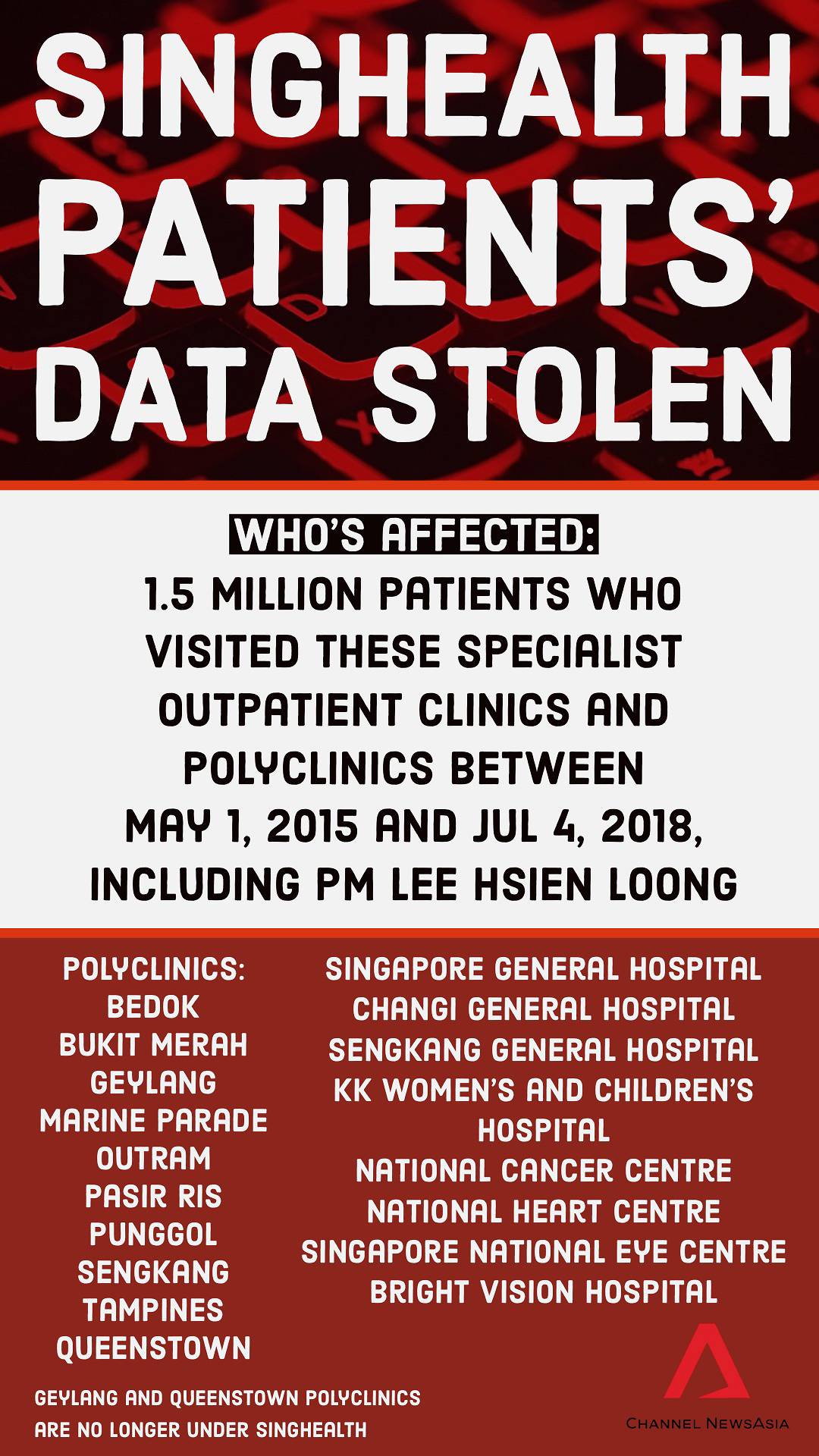
Giving his opening statement at the start of the Committee of Inquiry’s (COI) public hearings, Solicitor-General Kwek detailed how SingHealth’s network, particularly its electronic medical records (EMR) software system, was targeted in this cyberattack, which saw 1.5 million patient records accessed and 160,000 of those having their outpatient dispensed medicines’ records taken. 

“The COI will hear that the cyberattack had characteristics that are typical of an advanced persistent threat (APT) attack, utilising advanced and sophisticated tools, including customised malware that evaded SingHealth’s antivirus software and security defences,” said Mr Kwek, who is leading the process of presenting evidence at the COI.

READ: Singapore health system hit by ‘most serious breach of personal data’ in cyberattack; PM Lee’s data targeted

READ: Commentary: SingHealth data breach should give us pause to think what else might be vulnerable

EMR SYSTEM TARGETED

The Solicitor-General identified the healthcare provider’s Sunrise Clinical Manager (SCM) software solution from Allscript Healthcare Solutions in the statement, saying it was implemented in 1999 and managed by Integrated Health Information System (IHIS) – the central IT agency for the health care sector. 

The EMR contained in SingHealth’s SCM database includes:

Patient demographic data, clinical episode information, doctors’, nurses’ and clinicians’ orders, results, clinical documentation, vital signs, medical alerts and allergies, diagnosis and health issues, vaccination details, discharge summaries, medical certificates and outpatient medication dispensed.

As at July 2018, the database contained patient data belong to more than 5.01 million unique patients, Solicitor-General Kwek said. 

He added that before June 2017, the SCM application and servers holding the EMR were on Citrix servers and hosted at Singapore General Hospital. A month later, the system at SGH was decommissioned and migrated to the Healthcare-Cloud (H-Cloud) – the public healthcare’s first private cloud set up in 2014. 

With the migration, the SCM client app, database and security servers were all within H-Cloud environment. But there was still an open network connection from the Citrix server farm at SGH to the SCM database server in H-Cloud, which was a vulnerability that the cyberattacker later exploited.

SingHealth cyberattack: What data was stolen

GENESIS OF AN ATTACK

The cyberattacker had actually gained an initial presence in SingHealth’s network as early as August 2017 by “infecting workstations”, the Solicitor-General said. 

“The attacker was able to gain access to an end-user workstation via a publicly available hacking tool because the workstation was running on a version of Microsoft Outlook that was not patched to address the use of that hacking tool,” he said, citing CSA’s findings.

Between December 2017 and May 2018, the attacker made use moved sideways in the network, making use of malware planted in one of the initially infected workstations to gain remote access to and control of the workstation. He then used that computer to distribute malware to infect other computers.

“The Cyber Security Agency of Singapore’s (CSA) assessment is that the attacker moved in a targeted manner, planning his route in the network to reach the SCM database, which was the attacker’s ultimate objective,” he said. 

The agency’s director for National Cyber Incident Response Centre Dan Hock Yau will share with the committee how the attacker used a modus operandi that effectively bypassed IHIS’ security measures, which were deemed “sufficient to prevent a conventional attack” but not one of this nature, the Solicitor-General said. 

From May to June this year, the attacker used a compromised workstation and some Citrix local administrator accounts to remotely log in to Citrix servers in SGH. CSA found that one of those Citrix local administrator accounts had protection measures, including a password – P@ssw0rd – that could be easily deciphered.

Solicitor-General Kwek said at this point, the attacker had not yet obtained SCM database credentials that would have allowed him to log in. In fact, the attacker had made multiple failed attempts to log in to the databased “using either non-existent user accounts or user accounts that had insufficient privileges to gain access”. 

This was another of the network inadequacies highlighted by CSA’s Mr Dan, who said the attacker was able to run bulk queries because the system did not have existing rules or controls to detect such behaviour or the illegitimate use of certain SQL programmes, he pointed out. 

SOFTWARE FLAW FLAGGED IN 2014

The Allscripts SCM software was mentioned as there is evidence there was “insecure coding vulnerability” in it and it is “highly probable” the vulnerability allowed the attacker to easily retrieve SCM database credentials from the Citrix server on H-Cloud, which can then be used to log in to the database. 

And IHIS was said to have known of this back in 2014. 

Former employee Zhao Hainan had informed a commercial competitor of Allscripts about the existence of the vulnerability in general terms, the Solicitor-General said, adding “it appears that no action was taken by IHIS management personnel who were aware of his exploits to investigate or remedy the vulnerability he had found”. 

The cyberattacker eventually managed to access a H-Cloud Citrix server through which users were accessing the SCM database, and CSA hypothesised that it is probable that the perpetrator stole the needed credentials through this avenue. The SCM databased was successfully accessed on Jun 26 but no queries were made on that date, he added. 

HITTING JACKPOT

The real activity started the day after, when the attacker began sending queries to the database up till Jul 4, running “numerous bulk SQL queries from the SGH Citrix server against the SCM database server (via the open network connection)”. These activities were only terminated by IHIS database administrator Katherine Tan on Jul 4.

The data unlawfully accessed and exfiltrated from Jun 27 to Jul 4 this year belonged to 1,495,367 patients comprising their demographic records. The attackers also made off with 2,001,008 dispensed medication records pertaining to about 159,000 of these patients, said Solicitor-General Kwek. 

SingHealth cyberattack: Who's affected 2

On the attacker’s profile, he said CSA has ascertained them to be a “skilled and sophisticated threat actor and that the tactics, techniques and procedures as well as some of the tools and malware used by the attacker fit the profile of an APT group that (the agency) has previously encountered in other investigations”. 

In light of national security considerations, the committee will hear its grounds for attribution in a private hearing, he added. 

STAFF MISSTEPS

The Solicitor-General also outlined three time periods to consider when assessing the immediate responses to the cyberattack.

From Jun 11, 2018, when IHIS staff first became aware of attempts at unauthorised access to the SCM database; 

From Jul 4 to Jul 9, when IHIS staff became aware of and terminated SQL queries run by the attacker on the database, and first notifying senior management of the activities on the night of the 9th;

From Jul 10, when IHIS senior management, SingHealth, the Ministry of Health and CSA were brought on board to Jul 20 when the incident was first made public.

Of the first period, Solicitor-General Kwek said the committee will hear from IHIS about how despite taking the initiative for actions like changing passwords and shutting down a Citrix server at SGH, these were “nevertheless piecemeal and inadequate”.

For the second time period, he said the evidence will show that despite what the staff knew from mid-June, they “did not fully appreciate that multiple cybersecurity incidents culminating in a breach of the SCM database were occurring”. As such, they did not report the incident in a timely manner as required under CSA’s National Cyber Incident Response Framework.

“Given that the SCM system is a critical infrastructure information (CII) system, a cybersecurity incident occurring in the SCM system would in fact be considered a Category 1 incident under the NCIRF and require verbal reporting by the sector lead to CSA within two hours,” the Solicitor-General said. 

Among the first two witnesses for the public hearing on Friday is IHIS assistant director (Infra Services – Systems Management) Lim Yuan Woh, who had first discovered on Jun 11 that certain accounts had been compromised, he added.

Solicitor-General Kwek said in conclusion that as the evidence is presented before the committee, “it will be apparent that more could have been done to deter the cyberattack”. 

“At the same time, it is also important to bear in mind that this was a highly sophisticated and persistent attack, planned and executed with patience,” he said.

“In the spirt of the inquiry of this COI, the focus is not on fault-finding but on probing and learning, so that we can identify are as that would strengthen the defences of our organisations against future cyberattacks.”

Source link

‘Some think those with intellectual disabilities are crazy … you have to break down those walls’: New MINDS chief

0

SINGAPORE: Barely two months in and already Sally May Tan is under no illusions about her new job as CEO of the Movement for the Intellectually Disabled of Singapore (MINDS).

“Let’s be honest. There are lots of people who just don’t care,” said the 54-year-old, whose career spans management roles in a diverse range of industries, including advertising, consumer goods, oil and energy, wellness and private education.

She can now add to her portfolio one of Singapore’s oldest and largest voluntary welfare organisations, founded in 1962 and now boasting 17 facilities and more than 700 staff to serve close to 2,400 beneficiaries.

This is but a fraction of what MINDS estimates as up to 150,000 persons with intellectual disabilities (PWIDs) in Singapore. So in a bid to “bring the organisation forward and to a different level”, the non-profit plumped for a fresh approach via the corporate smarts of Ms Tan.

Her predecessor Mr Keh Eng Song left a decade-long legacy of setting up multiple day-activity centres (DACs) before retiring in 2017. Former NTUC Link chief Tony Tan See-Boon then took over briefly but had to leave due to family circumstances. Enter Ms Tan, who sees herself carrying out “not so much revolution than evolution”.

“Our beneficiaries are facing a world that’s changing all the time,” she told Channel NewsAsia. “The families who care for them are very concerned, wondering how their children are going to cope in, say, a cashless society.

“We take a lot of things for granted, like topping up a cashcard – but for PWIDs, they have to understand how to do it step-by-step, using repetition, and we must also create a safe environment for them to learn this.”

minds ceo 2

“You have to see people for their abilities, not just disabilities,” says Ms Tan, here with beneficiaries of the MINDS Bakers programme which sells handmade treats for events. (Photo: Justin Ong)

SO “PEOPLE WON’T FIND THEM ‘WEIRD’”

Fortunately, the Singapore government has been forward-looking in discussing policies for PWIDs and “putting money where its mouth is”, said Ms Tan, pointing to the Enabling Masterplan – a national initiative for developing the disability sector, now in its third iteration since kicking off in 2007.

Instead it is at the micro, everyday level where a “huge challenge” exists. She explained: “Some years ago, a survey of people on the street asked how they view PWIDs. The results were quite shocking – people either avoid or are scared of them.

“Yes, you will have people who think they’re crazy. In a way I don’t blame them, but you have to break down those walls. Sometimes it’s nothing more than just ignorance and lack of awareness.”

Added Ms Tan: “For instance, a lot of kids intrinsically like to help others, unless I tell them ‘don’t go near that PWID, in case he hurts you’ – then I start to imprint that fear in my child.

“So it’s very, very clear that the more we hide PWIDs from society, how will everyone learn? But the more we try to integrate them by encouraging interaction, bringing them to do activities outside etc. … then people won’t find them ‘weird’.”

She acknowledged that “for any social cause, no matter how hard you try, there will always be a percentage of the population” remaining indifferent.

But at the same time there are more than 700 MINDS volunteers – some “who’ve been here for decades, are still passionate and not even paid” – to be thankful for and, going forward, Ms Tan will be “hanging her hopes” on the millennials.

“From all the surveys I’ve read, there’s a large part of them who don’t want to behave like my generation and only worry about the ‘4Cs’. There are a lot who really want to do social work,” she said.

“So we have to be out there on social media and challenge ourselves to be more relevant, because the responsibility is on us to do better and to talk to these people.”

minds ceo 1

Ms Tan says: “All the PWIDs’ families and caregivers want is for their children to be as normal; as mainstream as possible.” Under the MINDS Craft programme, beneficiaries pictured here bulk-produce individualised art pieces for sale (Photo: Justin Ong)

“OPEN YOUR HEART”

Ms Tan’s priority for now is to see through a slew of initiatives already in the pipeline before she joined.

These include a pioneering “integrated lifespan curriculum” in collaboration with the University of Sydney, to offer lifelong learning to PWIDs above 18 years old. “It gives them purpose and measurable outcomes rather than just learning skills which is what most do at the DACs,” said Ms Tan. “PWIDs must continue to be stimulated otherwise they might regress, and we’ve seen cases of that.”

Another first: Starting in October, “customised respite care” for caregivers to have time off while trained volunteers help look after the PWIDs inside their own homes. This frees up the caregivers to leave the house for a few hours – whether to attend a learning course, have exercise time or run errands.

MINDS is also looking to launch six books next year in a novel project to teach primary school kids about PWIDs.

“At the end of the day, the Government funds us so we have to be good stewards of this public money and make sure that our beneficiaries really, really benefit from what we give to them,” said Ms Tan.

The difficulty behind achieving this goal lies in how “you cannot lump everyone with intellectual disability into one big group”.

“Every beneficiary is very unique, and they change over time, so that’s why we have so many allied health professionals working on each case. It takes a village, literally,” she outlined.

“But one of our biggest joys is when we have a beneficiary going into open employment, and their families are also very happy to see their child be able to take transport to work, buy food, have good work ethic, not be isolated, and then come home safely – all by themselves.”

How can the public help? By taking the first step to recognise the simple fact that “there are a lot of people in need in our society”, Ms Tan replied.

“Carve out some time in your busy lives to do something. Whether at the school or workplace, many organisations have CSR (corporate social responsibility) programmes – make good use of that. By taking action, that’s when the heart opens up more.

“And after all, being able to relate to the needy is the humane thing to do.”

Source link

Commentary: Hard to grapple with dementia when early signs are often neglected

0

SINGAPORE: The World Health Organisation (WHO) estimates that dementia currently affects 47 million people worldwide resulting in US$818 billion (S$1.12 trillion) in cost, which is mostly borne by the families of those affected. It is also the 7th leading cause of death in the world.

Last year, the WHO called for a global action plan on the public health response to dementia.

In Singapore, one in 10 elderly above the age of 60 has dementia, according to a Well-being of the Singapore Elderly (WiSE) study conducted by the Institute of Mental Health published in 2015.

READ: He’s 48, and already grappling with dementia

HELP IDENTIFY DEMENTIA EARLY

Dementia is a group of disorders which interferes with how the brain normally functions, with the most common and well-known being Alzheimer’s disease.

The severity of problems faced by a person with dementia directly correlates with the degree of damage to the brain cells.

So, identifying this condition early through a general practitioner or polyclinic doctor should become one of the priorities for an individual or their family. Early identification of dementia can help slow down the progression of the condition.

In the early stages, patients can make decisions, allowing healthcare professionals to involve them in the planning of their future care, address legal matters like making a will and drawing up a lasting power of attorney. 

The latter enables the family to act as a legal deputy to safeguard the patient’s personal welfare, property and affairs as the condition progresses and he or she is unable to make decisions.

READ: Singaporeans plan our whole lives, so why not our deaths? A commentary

The World Health Organization says 36 million people around the world suffer from some form of

The World Health Organisation says most of those around the world who suffer from some form of dementia do so because of Alzheimer’s. (Photo: AFP/Sébastien Bozon)

The medical community can also work with patients and caregivers on the support they require and link them up with resources in the community that they can tap on, like day care centres.

But most people with the illness do not come to medical attention as they are not aware that they have a problem, and may be contented with their situation. Some are just unwilling to go to the doctor for a check-up.

Their reluctance to accept help can cause a lot of stress for caregivers.

DEMENTIA CAN’T BE PREVENTED, BUT CAN BE DELAYED

I wish I could say that dementia can be prevented but the short answer is no, because the single most important risk factor for developing the disease is increasing age.

Compared to elderly aged 60 to 74 years, the likelihood of dementia for those aged 75 to 84 years is 4.3 times higher, and for those 85 years and above, it is 18.4 times higher.

But several things can delay the onset or slow down the progression.

Advice given for chronic diseases like diabetes, high blood pressure and cholesterol holds good for dementia as well. This includes adopting a healthy lifestyle with regular mental and physical exercises and a well-balanced diet, stopping smoking, reducing alcohol intake, reducing life stressors and improving the quality of social relationships.

It is also important to go for health checks at least once a year even if no medical problems are encountered and more frequently as suggested by the doctor for existing illnesses.

According to the World Health Organization, dementia affects some 47.5 million people worldwide --

According to the World Health Organisation, dementia affects some 47.5 million people worldwide — with 7.7 million new cases every year. (Photo: AFP/Sébastien Bozon)

BEWARE DEPRESSION, PARANOIA, ANXIETY

People who suffer from dementia will become increasingly dependent on family members. They can develop depression and other psychological problems that include paranoia and anxiety.

They may also develop behavioural problems such as agitation, aggression, disinhibition, shouting and sleep disturbances.

If such behaviours are present then family members need to bring them to the attention of the doctors as early as possible as these symptoms tend to progress and can cause caregivers more stress. 

Fortunately, most can be effectively managed with a package of care which includes medication, day care, structured routines and home help to assist in activities of daily living. 

READ: Dementia caregivers put on a brave front – while watching loved ones fade away, a commentary.

KEEP DEMENTIA PATIENTS ACTIVE

All is not lost when someone is diagnosed with dementia. Keeping people with dementia occupied and engaged can help maintain their quality of life.

Learning a new skill can be difficult for them, so caregivers should encourage them to do things they are familiar with and keep up with daily activities.

If they used to enjoy doing crossword puzzles, get them to pick it up again. They may not be able to do complex puzzles like before, but they can try their hand at simpler ones.

Having a daily routine and sticking with it will also help both the patient and caregiver. Adapting to changes in routine requires the use of short-term memory, which is impaired for those with the condition so they’ll have a problem coping and may feel distressed and confused.

Japan dementia

A man adjusting the jacket of his dementia-stricken wife. (File photo: AFP/Behrouz Mehri)

A LITTLE CAN GO A LONG WAY

Dementia is a chronic illness which progresses over several years, so timely support and assistance to the caregiver is of vital importance.

The patient may eventually need 24-hour care in a nursing home but this does not imply that the family has failed, but more a recognition that their care needs have progressed beyond what can be provided at home.

Even if the patient resides in a nursing home, this does not prevent the family from visiting and collaborating with the staff in providing optimum care.  

The world is grappling with the problems of an ageing population including dementia.

There are international collaborations in research to find a drug to prevent dementia. Governments are building dementia-friendly communities. Hospitals are providing early diagnosis, treatments and advice on optimum care, and welfare organisations are providing help, advice and support to patients and caregivers.

However, each one of us can also make our own little contribution in combating this disease. In the end what really matters is the quality of life one has.

Dr Richard Goveas is consultant at the department of Geriatric Psychiatry at the Institute of Mental Health in Singapore.

Source link