SINGAPORE: Traffic conditions along Punggol East are set to ease as a new road connecting Punggol Central to the Tampines Expressway (TPE) and the Kallang-Paya Lebar Expressway (KPE) was launched on Sunday (Nov 25) – almost a year ahead of schedule.
There is also a new connection from KPE leading to Punggol Central and Lorong Halus for motorists entering Punggol Town.
According to the Land Transport Authority (LTA), the use of advanced technologies and construction methods allowed it to save time and manpower, making it possible to complete the road ahead of schedule. It was originally planned to open in the third quarter of 2019.
Even as the construction process was expedited with the help of technology, it was not without obstacles. According to Hwa Seng Builder, the contractor of the project, there were constraints due to the road’s location near the Paya Lebar Air Base.
Map showing a new link road connecting Punggol Central to the Tampines Expressway (TPE) and the Kallang-Paya Lebar Expressway (KPE). (Image: LTA)
Mr Ali Abdullah, a safety officer at Hwa Seng Builder, said his team had to work around restrictions imposed by the Ministry of Defence.
“We had to work nights, in the wee hours of the morning, and our crane had to boom down at somewhere around 4-5am in order to accommodate the flight path route,” said Mr Ali.
He said that given the hilly terrain of the area, Hwa Seng Builder’s crane, when fully extended, would restrict the flight path of aircraft flying in and out of the Paya Lebar Air Base. The contractor was able to overcome those restrictions by working round the clock.
The new roads are welcomed by motorists, most of whom expect it to improve traffic conditions. Before the roads were opened, motorists coming from Punggol Central would have to drive through Punggol East to access the TPE – which caused traffic jams during peak periods. Those slip roads leading to the TPE and KPE were decommissioned as the new roads were opened.
“It’s about four traffic lights before I can make a U-turn,” said Ms Rohana Amran, a Punggol resident referring to the peak-hour jams along Punggol East. “So with this road, we hope that it can ease the congestion.”
Another Punggol resident, Ms Michelle Koay, was optimistic that traffic conditions would be alleviated, but said the real test is when school reopens in January.
Speaking to Channel NewsAsia, Member of Parliament for Pasir Ris – Punggol GRC Ng Chee Meng said launching the new link during the school holidays gives motorists time to familiarise themselves ahead of the new year.
“This is part of our planning, to let residents have a few weeks to get used to the system without the hustle and bustle of morning life,“ said Mr Ng. “So by the time Jan 2 comes, residents will be more used to the road.”
The LTA is also working to construct another vehicular bridge across Sungei Serangoon, flyovers across TPE and KPE, and a new road from Lorong Halus to Pasir Ris Industrial Drive 1 to improve traffic conditions in and out of Punggol. Those are expected to be completed by the second quarter of 2021.
SINGAPORE: In recent years, more people have been adding more plants to their plate. And the growing awareness of the role of animal agriculture’s (using animals for meat, eggs and dairy) as a leading driver of global warming is part of the reason.
Animal agriculture, as Good Food Institute Director Bruce Friedrich points out in his TED talk, is incredibly inefficient: Even the most efficient animal, chickens, requires nine calories of feed to produce just one calorie of meat.
Using animals to produce food is a form of food waste. Those who believe in this cause may have cut their meat intake in a move to tackle the food wastage problem.
The treatment of animals constitutes another reason some people are increasing their consumption of plant foods. Thanks to the Internet, the closed doors of the meat, dairy, and egg production facilities have opened to expose the suffering of the animals trapped in this system.
As important as environment and animal welfare issues are, health may be the primary motivation driving this shift towards plant-based foods.
(Photo by Anna Pelzer on Unsplash)
Research demonstrates how eating plants can boost our health by raising antioxidant levels, lowering weight and cholesterol, and reducing risk of chronic diseases, such as diabetes, heart disease, certain cancers and dementia.
Celebrities and athletes endorsing and experimenting with plant-based foods also makes it a trendy choice, especially among young people.
Whatever the reason, it’s encouraging to see people around the world taking steps on this path to healthier living and a greener planet. But more should consider changing to a more plant-based and less meat diet, as it could also help them fulfil their roles as responsible citizens of the world.
MORE PLANTS ON OUR PLATES TO SLOW CLIMATE CHANGE
Most people think of plant-based eating as strictly a binary choice. Either you are an all-in vegan and never touch any foods from animals, or you eat meat, eggs and dairy in every meal.
In reality, people’s diet choices range along a wide continuum. For example, “welfarists” look for food from animals whose lives are at least slightly better than those of their peers on factory farms; for instance, welfarists might eat cage-free chicken eggs.
Further along the continuum are “reducetarians” who are committed to eat less meat, eggs, and dairy in every meal. For instance at an Economy Rice stall, they may choose two vegetables and one meat or egg, instead of one vegetable, one meat and one egg. They may even go plant-based one day a week.
Food displayed at an economic rice stall in Singapore. (Photo: Khoo Bee Khim)
“Flexitarian” represents another stop along the diet continuum. This group usually eat plant-based meals, but not always. For instance, every Sunday, they take some of their grandfather’s famous oyster porridge.
Regardless of where one is in the continuum of animal-based food consumption, just the act of reducing meat contributes to the changes we need to slow climate change.
Flexitarian diets offer perhaps the best current destination for many people’s food journey. A recent study published in the journal Nature explained that people shifting to a flexitarian diet could hold climate change below 2 degrees Celsius by halving greenhouse gas emissions from livestock.
What can be done to make Singapore an easier place to be flexitarian? Protein is one of people’s big concerns. Fortunately, there has been an explosion of innovation within the alternative protein space.
In addition to new products made from plants and fungi, food scientists are now even growing meat from cells rather than entire animals, and have already succeeded in producing the first “clean meat”, or lab-grown burgers.
Vegetarian, but tastes like meat (Photo: Impossible Foods)
In Singapore, food manufacturing incubator, Innovate360, provides start-ups with the training, facilities, and support to bring more sustainable products to market. This comes on the heels of National University of Singapore’s recent launch of a new S$110 million dollar laboratory to develop plant-based versions of satay and other favourite foods.
These efforts to develop alternatives to animal-based foods will provide more plant-based food options for Singaporeans.
Obtaining our food without the involvement of animals also avoids possible contamination and bacteria from animals’ bodily processes, such as excretion, that can cause health problems. This means that lab-grown meat is cleaner than meat from slaughtered animals.
While some meat alternatives are currently offered at premium prices, as the technology matures and production scales, prices should fall to match those of traditionally grown animal foods.
Additionally, many plant-based foods are very reasonably priced. There is already a wide range of these affordable, easy to find plant-based options in Singapore. Local fruits and vegetables, tofu, tempeh, and other legume based foods, such as peanuts, and grains, such as oats and brown rice, are all examples of these foods.
EVEN MORE DELICIOUS PLANT FOODS ARE COMING
To help Singaporeans eat less meat, Singapore Health Promotion Board (HPB) use of subsidies to promote healthier eating can be further extended.
Many still fall short of HPB’s recommendation of two daily servings each of fruits and vegetables. According to the National Nutrition Survey, which was last done in 2010, only one in four adult Singapore residents met the Dietary Guidelines.
Tofu and tempeh are some easy to find plant-based options in Singapore. (Photo: Unsplash/Chelsea London Phillips)
Increasing subsidies at the wholesale or retail levels could support HPB’s efforts to boost consumption of these vital foods. In other words, people need carrots to eat more carrots.
As a country that prides itself on our discerning palate and vibrant food culture, Singapore is a place where boosting the availability of tasty plant-based options takes on special significance.
Fortunately, HPB provides a model for innovation, in the form of a previous initiative which trained chefs in hawker centres and restaurants to prepare healthier foods, such as cooking with less oil. A part of this capacity-building programme was a certification scheme that helped consumers identify stalls with healthier, yet tasty, options.
A similar approach merits consideration for expanding the plant-based foods space: A concerted training programme that helps chefs across Singapore expand their menus’ selection of delicious plant-based dishes that taste better and remain faithful to our culinary traditions.
The global rise of fast food and food delivery is testament to just how much consumers value convenience, and if plant-based foods are to compete with other options in Singapore, they need to be just as convenient as their animal-based alternatives.
To help Singaporeans quickly and easily sink their teeth into delicious and healthy options, a certification scheme could be paired with a culinary programme, heightening the visibility of eateries which take pride in serving sustainable and healthy food.
A display of healthier food options. (Photo: Facebook/Health Promotion Board)
Portugal provides an example of government action to make life easier for those who choose to go vegan by making it compulsory for schools and hospitals to provide plant-based options.
In Ghent, Belgium, plant-based eating is especially encouraged every Thursday, and free vegetarian and vegan cooking workshops are provided for students, teachers and parents.
IMPROVING HEALTH AND ENVIRONMENT
The suggestions outlined above are ambitious, no doubt, but the payoffs from promoting flexitarian or less meat diet are equally appetising.
An up to a whopping US$31 trillion dollars by 2050 was the savings estimated by Oxford University researchers in terms of improved health and environmental protection of a global shift towards plant-based diets.
After all, each life is precious, and each healthier person means a happier person with a happier family. Change seldom feels easy, but putting more plants on our plate just feels right.
It’s entirely possible that promoting flexitarian options here would have effects far beyond Singapore’s borders. We have the infrastructure, talent and drive to pioneer models of the future of food that could play a crucial role in leading others towards a greener and healthier tomorrow.
Dr George Jacobs is long-time president of the Vegetarian Society in Singapore. Peter Lewis is a recent graduate of Yale-NUS college and now works with Karana, a plant-based foods start-up.
SINGAPORE: Every time her four children passed by the provision shop downstairs, they would ask her to buy packet drinks for them. Every time, Mdm Mary Yeo would reply, “No, not today.”
The first time the divorcee received financial assistance from the Social Service Office, her first thought as she sat at home alone, pondering what to do with the money, was their wistful request the night before.
“I rushed down to the provision shop, and I bought quite a lot of drinks,” said the 47-year-old. “The next day, I bought (more).”
After three days, she had bought S$400 worth of drinks – 40 cartons – “because that same thing kept coming” to mind.
“I just didn’t think of anything else,” said Mdm Yeo, who was left with about a third of the S$650 she was given. “It was quite scary … (I was) quite stressed.”
Mdm Mary Yeo.
She did not know it then, but she was experiencing one of the common effects of poverty: A kind of tunnel vision that focused her mind on only one thing.
From being broke and seeing her children deprived of packet drinks, her mind started obsessing about what her family was missing.
As experts told the programme Why It Matters, poverty is complex and is not only about not having enough to buy the things that one needs, such as food, clothing and shelter. (Watch it tomorrow, Nov 26, at 8pm.)
The problem of scarce resources has consequences that make long-term decision-making difficult, owing to what the financial stress does to the mind. Poverty even has biological effects.
While there are schemes in Singapore meant to help the needy get back on their feet, the odds are stacked against them in more ways than people imagine – and in ways that might require policy redesign.
POVERTY PLUNDERS PERSPECTIVE
Ask Singaporeans why poor people are poor, and the most likely answers are poor health, laziness and lack of higher education – at least, that is what 1,000 respondents told Channel NewsAsia in July in a survey on class divisions.
This attitude stems from a spirit of self-reliance – that in Singapore, people make their own luck, or bucks.
But when people have financial woes, there is more to consider. Owing to what is called the scarcity mindset, one’s attention gets consumed by immediate problems, and one’s best long-term interests are rarely considered.
And the more problems one has, the lower one’s bandwidth is, according to The Therapy Room director and principal psychologist Geraldine Tan. This means not strategising or analysing tasks well, which is more likely to result in inferior choices.
Ms Geraldine Tan.
“When you’re stressed – a lot more negative emotions, which are very heavy – it might impede your cognitive functioning,” she explained.
“If you’re constantly bugged by having to think when the next meal is going to be on the table … the problem is compounded and perpetuated. It’s very hard to break out of it, and it affects their work.”
Dealing with bread-and-butter issues that one cannot solve may make a person anxious and frustrated or even depressed.
Many people, when faced with stressful situations, may go on their mobile phones or watch Netflix, but when the poor are distracted from what they need to do, they are seen as procrastinating or being lazy, said Ms Tan.
“It looks like an attitude problem, but it’s not an attitude problem because all these were happening, (which) we can’t visibly see,” she added.
How much impact can having so little have? Research from Princeton University has claimed that the dip in cognitive function in a person preoccupied with money problems is similar to a 13-point drop in IQ.
IT CUTS BACK CHOICES
Being poor can also be expensive, which is a reality Mdm Noridah Abdul Rahman faces as she raises five children in a one-room rental flat on a single income of less than S$1,500 a month.
She receives S$420 from the Community Care Endowment Fund (ComCare), so when she goes grocery shopping, she ensures that she does not exceed her weekly budget of about S$100 for groceries.
In her case, it may not be question of whether she is making the most of the financial assistance, but rather whether she can.
For example, she usually buys one pack of diapers to keep within the week’s budget, even though she could save about S$3 per pack by paying S$45.95 for two, instead of S$26.25 for one.
She is also losing out on grocery cashback deals, pointed out Ms Valerie Kor, an editor at MoneySmart, one of Singapore’s largest financial portals.
There is, for instance, the Bank of China (BOC) Sheng Siong card, which gives holders a 7 per cent cash rebate on in-store spending, while the POSB Everyday card offers a 5 per cent cashback with no minimum spending.
But as these are credit cards, the qualifying annual income is $$30,000. If Mdm Noridah had the BOC Sheng Siong card, she could save about S$35, assuming a monthly expenditure of S$500. That would cover one week of her rent.
Missing out on bulk buying, shopping discounts and cashback is just one example. Incurring penalties because of a backlog of bill payments, such as for utilities, is another fact of life for the poor.
The deficits pile up and spill over into the next month. The cycle continues, and so does the list of everyday situations where a cash shortage can create a shortage of choice.
For example, the Why It Matters producers asked two groups – those earning more than S$2,000 a month and those earning less – what they would do if their fridge broke down.
Those from the first group said they would decide within a day to buy a new fridge, with a budget of around S$1,000, for example, or just “the best kind of fridge for the best kind of money”.
Those from the other income group said they would have to wait for payday first, try to fix the fridge instead, or failing that, get the cheapest one available or a second-hand fridge.
When this group was asked what they would do for a sprained ankle, one person said he would “use a walking stick or something for support”, while another would use a “home remedy” because seeing a doctor is “very expensive”.
IT TAKES YEARS AWAY FROM LIFE
Through cycles of time, the effects of poverty can also be physiological. For example, National University of Singapore researchers have found that it is linked to ageing.
Based on a study of 1,158 undergraduates, Professor Richard Ebstein from the NUS Department of Psychology noted that the DNA of students here who were from a lower socio-economic class had shorter “telomeres” than those whose families had more money.
A telomere is a physical end of a chromosome, much like plastic tubes at the end of a shoelace that prevent it from unravelling.
“It’s the same function, essentially, that a telomere has: To kind of protect the end of a chromosome and prevent damage,” Prof Ebstein said, explaining that telomere length is an index of ageing.
“These students – and they’re healthy – are just ageing faster than other students.”
Hence the implications of poverty are long term and may not manifest until adulthood.
“Even at 22 years old, if you’ve come from a poor background, and you’ve been accepted into NUS, you’re still a bit more stressed out and worn out, even though you’re successful in school,” he added.
“Poverty is not just (about) not having enough money. It has consequences for your actual physical and mental health.”
WHAT’S NEEDED: SECOND CHANCES
Financial assistance can ease conditions for the poor, and in Singapore, this comes in various forms, including public rental housing at subsidised rates, utilities grants, additional home ownership grants, child and student care subsidies and the Community Health Assistance Scheme.
From April last year to this March, about 79,500 Singaporeans received ComCare assistance for low-income households.
As the margin of error for people living on the margins tends to be slim, sociology professor Sulfikar Amir believes that only with a resilient social structure would the consequence of their mistakes not worsen their economic outlook.
The Nanyang Technological University associate professor suggests social policies should be designed in the same way airplane cockpits are designed with backups for engines and other critical safety equipment.
“We need to create a system that’s fully resilient. We should have this multi-layered defence mechanism in which, in a situation where one (policy) fails, there’s a backup to support the people who are affected by this policy,” he explained.
He cited a single mother needing to improve her skills but having to look after her two children: She would need more time to complete her lessons.
Public policy should be customised or tolerant of such situations, he said, in a way that buys the poor second chances.
The clash between going for skills development and attending to family matters was an example also given by Mr Aaron Yeoh, the founder of social enterprise Etch Empathy, which conducts poverty simulation exercises for schools and corporations.
He agreed that the social system must turn things around for the poor, who otherwise risk each slip-up becoming a series of more setbacks.
“It’s a long journey, so sometimes when the support isn’t there, and when the journey’s too tough for them, they might drop out halfway,” he said.
“Society could recognise that an unforeseen situation might happen. So if there’s more flexibility for them, that might help.”
This episode of Why It Matters will air tomorrow, Nov 26, at 8pm. Or watch it here.
SINGAPORE: Tenants, if there is anything that you need to know before you rent a home, it is this: Rental rates are always negotiable.
Not only is nothing set in stone, negotiation margins – the difference between asking price and the price the landlord is willing to accept – can be rather large, making it worth your while in learning the techniques in negotiating rent before you make your offer.
Negotiating rent Step #1: Research rental prices and trends
Whether faced by a landlord’s agent or the actual landlord, your negotiation counterpart will in all likelihood know very well what the rental property market trends are, and what the market rate for the room or apartment is at the time.
To level the playing field, you should know the information as well. There are a variety of ways to go about this, but you can view past rental transaction prices for properties on the 99.co property portal when you view a listing. Cross-referencing will give you a good indication of the going rate of a rental apartment/room, as well as whether prices have been trending up or down for a given area.
In addition, the Urban Redevelopment Authority (URA) publishes quarterly reports that sheds light on which direction rental prices have been moving.
Negotiating rent Step #2: Know your bargaining position
While the price trends differ between neighbourhoods and even between different developments within the district, the general trend has been that rental supply is higher than demand. Right now, the market remains a tenant’s market. This means that the market is in your favour and your bargaining position is good.
When the rental market is in an upward swing and landlords find their property hotly contested by prospective tenants, they will have the power to play tenants out against each other and request higher renting fees. If, however, the rental market is sluggish and the property runs the risk of being vacant, landlords will have to be more accommodating and settle for lower rental fees.
Your homework would have informed you about the state of the rental market, whether the unit/development in question is popular, and whether your bargaining position is good.
When you are equipped, no landlord or agent will be able to unscrupulously lease you a S$1,100/month room for S$1,400. And while the right negotiation margins are probably still a bit uncertain, you will have a general idea of what to pay and what not to pay for your next place.
When negotiating rental, consider the neighbourhood in which the apartment is located. (Image: Google Maps)
Negotiating rent Step #3: Play hard to get
Between truth and lies, right and wrong, fibs, facts and fiction lie vast plains of ambiguity – and it is here that you should be negotiating your rental.
Homework and an analysis of your bargaining position can only bring you so far. At some point you will have to take the jump and join in the game of negotiation.
Before and during your viewing, do not give away how much you love and want to rent the unit or how much you are really willing to pay for it.
The landlord’s advantage is with you not knowing the lowest price he/she will settle for, so do not undermine your advantage by revealing the highest price you are willing to pay.
Here is what to do during the viewing, regardless of whether you like the place or not:
1. Ask all the necessary basic questions (for example, location, utilities, last maintenance, condo facilities and policy)
2. Don’t reveal you have your own furniture when viewing an unfurnished or partially-furnished unit
3. Ask the landlord’s asking price (even if you’ve already seen it on the listing)
4. Ask if it is negotiable (even if it already looks a good deal)
5. Regardless of their reply, say you will take time to consider before deciding whether to make an offer. Do not make an offer on the spot.
6. Mention you have another property to view in the same area.
Negotiating rent Step #4: Get into the good books of the landlord’s agent
While viewing the property, it is also a good idea to engage the landlord’s agent in conversation.
Drop hints that you will be a responsible tenant (such as asking if cleaning equipment is provided). If you are renting a room, ask about noise levels as you prefer a peaceful and quiet environment.
Why build rapport with the landlord’s agent? Well, when you put the landlord’s agent at ease by showing that you are an reliable and trouble-free tenant, he/she will be more inclined to vouch for you to the client as the preferred tenant choice.
Getting in their good books could prove especially important considering there may be competing offers at the same price.
From speaking to property agents, we understand that it is quite common for landlords to accept a slightly lower offer just because they like the tenant better.
Negotiating rent Step #5: Assess your bargaining position
If you really like the apartment and have managed to build a rapport with the landlord’s agent or the landlord in a short space of time, you can now appear interested, but not too interested.
Mention how much you like the apartment, but also mention that you are still deciding between a few choices.
If everything has been going well so far, the landlord or agent will respond by reiterating the benefits of this particular unit you are viewing. That is when you know that you have the bargaining power on your side. The landlord is now more willing to negotiate, even if it means slightly lowering his/her minimum acceptable price.
Negotiating rent Step #6: Play around with the variables
After the viewing, when not in the presence of the landlord, you should be able to state your intended offer price.
Before you do so, remember it is not all about money. During offer and negotiation, you may suggest playing around with how utilities and furniture are incorporated as part of the eventual Tenancy Agreement (TA).
For instance, if you intend to bring in or buy your own furniture anyway, say that you’re wondering if the landlord can lower the price further by not furnishing the unit/room.
If the landlord expresses unwillingness to lower the rent beyond a certain figure, you may also ask that the unit comes with specific furniture as part of the rental.
Landlords, in these cases, are inclined to say yes because the supplied furniture can be used for subsequent tenants.
Negotiating rent Step #7: Use that ace up your sleeve
Unless you snagged a fantastic deal right away, take some time to mull it over at home before agreeing to sign the Letter of Intent (LOI).
Doing so not only gives you some time to genuinely think it over, but it also puts you in the position to deal your last cards of the game.
If the revised asking price is still too high for your liking, call up the agent and say that you are undecided between two units and ask whether the landlord can quote a final price, while mentioning the price you have in mind having done your homework.
This is the final round of negotiation. If the lowered rental gets within an acceptable range of the price you have in mind together with the terms you want, it is time to make a final offer and seal that deal.
The negotiating master – kind of
The seven steps above show one thing: doing your homework will help you win half the battle. Not only does it prevent nasty surprises, it gives you leverage for later negotiation, for example “I know that the landlord is not including utilities as part of the rent, but a neighbouring tenant I’ve spoken to is paying a similar price with all utilities inclusive. Might the landlord be willing to reconsider?”
While we won’t all turn into top-notch salesmen or world-class negotiators overnight, we can take these best practices and help us secure a competitive rental rate for our next home.
SINGAPORE: Shalom Lim, 23, suffers from Duchenne Muscular Dystrophy, a degenerative muscular disease.
He has been using a wheelchair to get around since he was six years old, but as his condition worsened, he found it a struggle to complete his exams.
“In Primary 4, I experienced some difficulty in keeping up with the time,” said Shalom. “One of the exams I did in class, I didn’t have time to finish it. So the teacher gave me more time. I was still in the class and I didn’t feel very comfortable. In the end, they allowed me to have a separate room.”
Shalom Lim has been using a wheelchair to get around since he was six years old. (Photo: Grace Lim)
In secondary school, Shalom found it impossible to do his science practical assessments at all. So in Secondary 3, he applied to be exempted from the component for his O-Levels. This was approved in Secondary 4, after months of anxious waiting.
“The Ministry of Education (MOE) requested for assessments done by an occupational therapist to show that I wasn’t able to do the O-Level science practical exams on my own.
“We were wondering why there was a need for such a letter when I could clearly show them I had mobility issues,” he recalled. “In the end, they granted us the exemption only after we sent in a few requests.”
Last year, about 5,000 students – or 4 per cent of those sitting for national exams – applied for such special provisions or what is called “access arrangements”, which include extra time, larger print on exam papers or even a scribe.
The number of such applications has doubled over the last decade, MOE told Channel NewsAsia, adding that this is due in part to greater awareness of the access arrangements available.
There has also been a growing number of students with special educational needs in mainstream schools, as there is now greater access to diagnosis such as through the school-based dyslexia remediation programme that was fully rolled out to all primary schools in 2016.
Shalom Lim told Channel NewsAsia that he wished requests for special exam provisions coild be made more seamless. (Photo: Grace Lim)
Requests for special exam provisions are evaluated by a panel, which will look at reports from a health professional and the student’s teacher, as well as school exam results to gauge how the student is coping academically.
While this process is meant to make sure that proper checks are in place, it can also result in a long wait as in Shalom’s case.
“I think they could be less strict about it. And make it more seamless for us,” said Shalom. “At that time, we wished they would have given it (the exemption) faster without a need to engage an occupational therapist. I do hope that they have made the procedure easier for us.”
“PLEASE DON’T COME’’
Exams are just one hurdle for students like Shalom.
Currently, 57 primary schools offer barrier-free accessibility for students with physical disabilities, according to MOE’s website. That is less than one-third of primary schools in Singapore. And the figure goes down as students move up.
Those preparing for the A-Levels or the International Baccalaureate have just three barrier-free options – Raffles Institution, Millennia Institute and Anglo-Chinese School (Independent).
Shalom’s mother, Mrs Grace Lim, said that was one reason why they chose to take the polytechnic route after his O-Levels.
“None of the junior colleges were welcoming or had the accessibility to support him at that point in 2012. I remember approaching at least two JCs and they said: ‘We are not set up to support a person in a wheelchair, so please don’t come’.”
Still, Mrs Lim stressed that some schools have been willing to go the extra mile for her son, even if they lacked the necessary infrastructure at the start. For instance, staff members at his primary school carried him up and down the stairs, until a sponsor stepped in to pay for a ramp. His secondary school already had ramps installed, and when he got into polytechnic, Shalom’s course manager took them around campus and showed them the accessible routes.
Both mother and son believe things have improved.
Today, all mainstream schools can provide some form of support for students with mild special educational needs, including learning difficulties like dyslexia.
According to MOE, most primary and secondary schools have at least one allied educator who is trained to help these students. There are also designated mainstream schools that can provide specialised support for specific disabilities, such as hearing loss or visual impairment.
At the higher level, all Institute of Technical Education colleges, polytechnics and autonomous universities now have support offices that work with academic staff to provide course counselling, classroom support and access arrangements.
Shalom is now taking a Criminology and Security degree course offered by the University of Liverpool, which is conducted at Singapore Institute of Technology. The varsity has given him three extra years to complete his degree and excused him from internships, which are typically graded.
Mrs Lim noted that while schools have become more informed about how they can help, the family often had to take the lead by constantly engaging them on Shalom’s needs.
“We are more proactive and pre-emptive because we wanted our child to have a very good education experience,” said Mrs Lim. “Life is tough enough as it is for him already, and we wanted to make it as seamless as possible.”
COPING WHEN ILLNESS HITS
For those whose condition isn’t visible, it might be even more important to voice their needs.
Take 20-year-old Rayna Tan for instance. While she looks like a regular polytechnic student, she was born with biliary atresia, a liver condition which prevents toxins from being flushed out well.
Rayna Tan had to drop out of her polytechnic course after a major operation, but the school allowed her to continue with her studies a year later. It even granted her extended deadlines for projects. (Photo: Deborah Wong)
Two years ago, her mother donated part of her liver to her after a bout of infections threatened her life.
“I actually went through a transplant, but I would say the toughest period would be post-transplant when I had a lot of complications. I had to stay in the hospital and receive antibiotics through a drip, so it meant my days were packed with hospital visits and I wouldn’t have time for school,” Rayna said.
She withdrew from her Visual Effects course at Ngee Ann Polytechnic to recuperate, but after a year in limbo, the family approached the polytechnic, which agreed to let her pick up where she left off.
“Even though I withdrew, the school still allowed me to return without a proper admission. So they did all the paperwork after I was already attending classes,” she said.
Rayna was also assigned one of her course lecturers as her adviser.
“Every year, the school conducts training for the staff like basic counselling, or how to create a nurturing environment for students with vulnerabilities. In Rayna’s case, we as lecturers stepped in to discuss how to help her,” said her adviser Jeffrey Zauhari.
Rayna Tan had to withdraw from her Visual Effects course at Ngee Ann Polytechnic (NP) to recuperate. (Photo: Rayna Tan)
Mr Jeffrey said he gives Rayna extended deadlines for projects if she’s not feeling well or has a medical appointment.
He added that it is easier for him to know what she needs as she is willing to speak up.
“In Rayna’s case, I was notified by the school, so I used a differentiated learning approach to help her individually when she has problems in class. Rayna is the type who raises her hand to ask questions. She is very diligent. So it’s easier for me to help her in that sense,” he said.
According to MOE, post-secondary education institutions like the polytechnics provide support for students who miss school for extended periods due to medical reasons.
In some cases, school employees who have been assigned as their personal mentors will meet them at least once a month to help them with the transition back to school. The ministry added that some schools also provide additional lessons to help them catch up.
Mr Jeffrey noted that it is important for parents to flag their child’s condition, to make it easier for the school to identify and help those who need support.
“Once we identify the vulnerable students, we’ll monitor them. We have para-counsellors in schools for me to refer to if I cannot handle the students myself. We also collaboratively discuss how to help them, because these students need consistent monitoring throughout all the modules.”
“I DON’T KNOW IF THE OUTSIDE WORLD WILL BE UNDERSTANDING”
Rayna has one more year to graduation, barring any more lengthy hospital stays.
A polytechnic student has five years to complete a diploma at a subsidised fee, and Rayna has already dropped out once. While the school has assured her that concessions will be made if needed, she worries that the focus on attendance could be an issue.
“There are days I feel tired and I really need to rest a bit more, but I would still have to go to school,” she said.
Rayna is also worried about what would happen after she enters the workforce, as the infections can hit suddenly and last for prolonged periods.
“I don’t know when they will come. So I worry about the commitment level to internships and work life next time, because I don’t know if the outside world will be as understanding as the school.
“My hope is that companies and people would be more understanding towards people with medical illnesses, especially if you can’t see it on the outside,” said Rayna.
“People will judge and question why this person always takes MC. Sometimes it’s because it gets very tiring.”
SINGAPORE: Visitors to Gardens by the Bay can look forward to a new floral-themed exhibit called Floral Fantasy as well as a Japanese-inspired garden.
The attractions are part of efforts to expand Gardens by the Bay’s offerings, as it looks to welcome more visitors.
On Saturday (Nov 24), it received its 50 millionth visitor since opening in June 2012.
By the end of 2018, yearly visitorship is expected to hit 12 million people, said Gardens by the Bay, adding that about half of these visits are by local residents.
Floral Fantasy will showcase four themed garden landscapes, along with a 4D multi-sensorial ride immersing visitors in a dragonfly’s flight through the gardens.
It sits on a 5,000 sq m space outside Bayfront station, under the iconic lattice framework. There will also be an indoor and outdoor event space, which will host weekend pop-up markets and community events.
This will open on Apr 14 next year, as part of the revamped Bayfront precinct.
The other new attraction, called Serene Garden, opened to the public on Saturday.
The minimalism-inspired garden was designed by Japanese landscape designer Jun-ichi Inada, and features a mini waterfall and 160 rocks sourced from the town of Niyodogawa town on Shikoku island in Japan.
At the Serene Garden, 160 textured rocks were sourced from Shikoku island in Japan. (Photo: Wendy Wong)
The Japanese-themed garden is a 10-minute walk from Bayfront station, and features a mini waterfall. (Photo: Wendy Wong)
Work is ongoing to build a tea pavilion for visitors to rest in the shade. It is expected to be ready in the first half of next year.
Said CEO of Gardens by the Bay Felix Loh: “Many of our visitors have given feedback that Gardens by the Bay is getting crowded because of our popularity, especially during weekends.
“We are grateful for the love and support shown by Singaporeans through our formative years, and hope that these new thematic spaces help to spread out our offerings, as well as provide even more interesting experiences for our visitors.”
SINGAPORE: Having a twin means endless comparisons, and it is worse when there is a great disparity in height. Hafiz Mohd Taufik, for example, is seven centimetres shorter than his twin brother Hakim.
At 139cm tall, this 12-year-old is also shorter than most boys his age; he is in the bottom 10th percentile. Even his younger 10-year-old brother is catching up with him. And Hafiz is unhappy with the situation.
“I feel that I should be taller,” he said. “(When) I go to secondary school … I’ll never get a girlfriend.”
He has sometimes been teased, bullied and excluded when he plays sports. He was once even nicknamed a mouse.
Hafiz and Hakim.
He is so affected by his height that his parents have let him start on a growth hormone treatment, which is both expensive and painful.
In fact, growth is of concern to many parents here. Of those surveyed in June by Abbott and the Singapore Nutrition and Dietetics Association, 42 per cent were concerned about whether their children were growing less than others of the same age.
Just over 1,000 parents with children aged two to six were asked about their knowledge of expected annual height and weight increments.
And when height becomes an issue, some parents are going to great lengths – including growth hormone injections – to add inches to their children’s height, as the programme Talking Point discovers. (Watch the episode here.)
Administering the injection
NIGHTLY INJECTIONS
In the case of Hafiz, who has been shorter than his twin brother since the age of five, he went for a series of X-rays when he was around 10.
And it was established that his bone age was at least two years younger than his real age, said his parents. This means his body would be smaller than his actual age.
While this is common, and most children would catch up with their peers when they enter puberty, Hafiz could not wait any longer.
The hormone injections now being administered to him every night stimulate the liver to produce IGF-1, a growth-related protein.
The growth hormone delivery device.
“(It) looks as if he’s very keen,” said his father Mohd Taufik Saydeh. “He’s the one who said, ‘I want, I want, okay let’s do it.’”
Since the injections started three months ago, Hafiz has grown by 1cm – slow progress that costs the family more than S$1,000 a month.
Asked if it was worth it, mother Norhayati Mohd Ali said yes because she could “see the effect”. But her son is not optimistic, even though he was initially excited.
“(I have) no hopes because I know it won’t work. My parents (will be) wasting money for nothing,” he sighed.
FEW GENUINE MEDICAL CASES
Dr Andrew Sng, an associate consultant specialising in child development at the National University Hospital’s Division of Paediatric Endocrinology, has seen an increase of about 20 per cent in the number of referrals for height-related issues since last year.
A quarter of these parents come on their own accord.
This could be because when parents compare their children with others and find that theirs is the shortest in class, they would consult a doctor to find out if anything is wrong, said Dr Sng.
Dr Andrew Sng (left) with Talking Point presenter Steven Chia.
But how many of them have a genuine medical issue? “From my experience, it’s very rare,” he said.
Height is measured as a variable … and it’s a diverse variable. And any child who is actually among the third to the 97th percentile is considered normal.
This means a child who falls below the third percentile would be deemed short. But this is a statistical definition and “by no means implies that this child has an illness”, he added.
Factors such as genetics, poor nutrition and a deficiency in certain hormones can affect a child’s growth, said senior consultant Loke Kah Yin, the head of paediatric endocrinology at the NUH, in a TODAY report last year.
According to the same report, some one in 3,500 children do not produce enough of the growth hormone for normal development – a condition known as growth hormone deficiency.
But generally, if a child is growing at least 4cm to 6cm a year, there should be little cause for concern, explained Dr Sng.
HORMONE TREATMENT NOT FOR ALL
Medical issues aside, there can be a stigma to being short. “People will definitely underestimate you,” said mother Edwina Tan, who is short herself and whose nine-year-old son Grayden, at 121cm, is the shortest in class.
Mrs Edwina Tan told Mr Chia she has noticed that her son Grayden was shorter than most of his friends since pre-school.
Based on national statistics, the average height of a Singaporean child at his age is 130cm. But to help him punch above his weight – or height – Grayden has been learning Chinese martial arts since he was three.
Said his mother: “I concentrated a lot on building his self-esteem … and not allowing him to feel that his self-worth is based solely on his height, just so he doesn’t feel that being short makes him any less capable than his friends.”
While some parents may opt for growth hormone treatment, it does not work for everyone. And there are side effects.
Grayden and his taller classmates. At birth, he was within the third percentile in the growth chart.
NUH paediatric endocrinology consultant Yvonne Lim, who has seen the number of children taking hormone injections double over the past four years, said this treatment is likely to work if a child is already lacking in the growth hormone.
“Then there’ll be a dramatic improvement in the height gain,” she added.
“However, there’s this group of children (with) what we call ‘idiopathic short stature’. That means the underlying cause of the short stature is not known … So in this group of children, the growth hormone treatment is (just) an option.”
Studies have shown that with this treatment, they can grow only about 3.5cm to 7.5cm, while the transient side effects include water retention, leg swelling and headaches. It can also increase the risks of scoliosis and diabetes.
Dr Yvonne Lim.
PEANUT SOUP SOLUTION?
When short stature does become a big issue, some parents may also resort to other measures. These include feeding their children an egg a day and giving them less plant-based milk but more dried fruits and peanuts.
So are these facts or myths?
Dr Low Yen Ling, the director of research and development at the Abbott Nutrition Asia-Pacific Centre, said that when it came to eggs, there is scientific evidence that such consumption “can help to improve the height of young children”.
“This is most likely because it’s a nutritious food, which provides high-quality protein, and it also has a variety of vitamins and minerals,” she said. “So an egg a day is a good thing … from a nutrition standpoint.”
What Grayden’s mother has asked him to do often is to jump, for height gain. Exercise does help children to grow.
Cow’s milk may be better than plant-based milk because plant-based protein tends to be lower in quality, added Dr Low.
As for eating different kinds of peanuts, or peanut root soup, to help children grow taller, it is a myth. “This is a traditional belief, but there’s no scientific evidence that drinking peanut root soup would help,” she said.
Watch this episode of Talking Point here. New episodes on Channel 5 every Thursday night.
SINGAPORE: Mixed martial arts exponent Amir Khan was aiming to be the first Singapore citizen to win a ONE Championship world title on Friday night (Nov 23), but the 24-year-old fell short after a bruising encounter against Filipino veteran Eduard Folayang.
Khan lost to Folayang by unanimous decision after five rounds at the lighweight (up to 77kg) world title bout during ONE’s “Conquest of Champions” event in Manila.
Khan was second favourite throughout the fight, struggling to cope with the home favourite’s spinning heel kicks and reverse elbows.
Folayang, who came into the bout with a record of 20 wins and six losses, stuck to his game plan of pinning his Singaporean opponent against the cage before striking him relentlessly.
Khan was cornered against the cage for large parts of the bout. (Photo: ONE Championship)
Before the fight, Khan predicted that Folayang would struggle against his lanky frame, however the Filipino’s range of attack was not impeded. By the third round, Folayang’s blows on Khan’s chin had left the latter with a bloody gash on his cheek.
All three judges voted Folayang as the winner of the bout after 25 minutes of fighting.
Khan, who needed medical attention after the fight, looked distraught as he told reporters that he needed to recover and review the fight to learn what went wrong.
“I need to go back and look at it. I think I did well keeping my distance but I got sucked into his game, getting elbows from him during the clinch. I have to go back, look and recover and see what’s next,” said Khan.
The defeat is Khan’s fourth in his professional MMA career.
And while there were a healthy volume of resale flat sale transactions in the last quarter, transaction prices in the HDB resale market have remained stagnant.
We take a look at what 2019 might have in store for the HDB resale market.
As we mentioned, the volume of resale flat transactions has increased. According to URA numbers, 7,063 HDB resale units were sold in third quarter of this year. That is an increase of about 21 per cent year-on-year, creating one of the highest peaks in HDB resale transaction volume since 2010.
Regardless, resale flat prices are mostly flat. Overall resale prices slipped 0.1 per cent, undoing a 0.1 per cent gain in the second quarter.
Moving forward in 2019, we are likely to see more of the same, unless Brexit and China-US trade tensions end up wrecking the market. We are on the verge of seeing the outcomes of these events.
Here are 4 things we’re likely to see for HDB resale market in 2019:
1. New property curbs could bolster the HDB resale market
HDB resale flats have started to look more affordable, at least relatively, thanks to the last round of cooling measures.
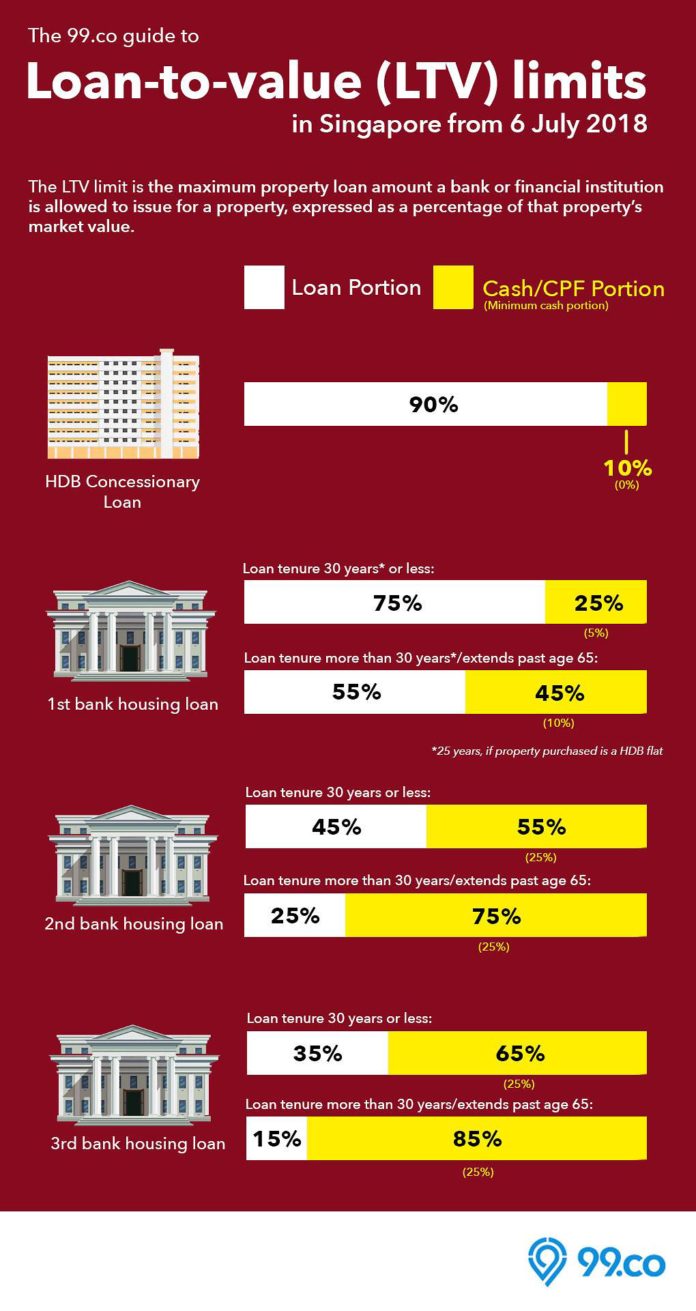
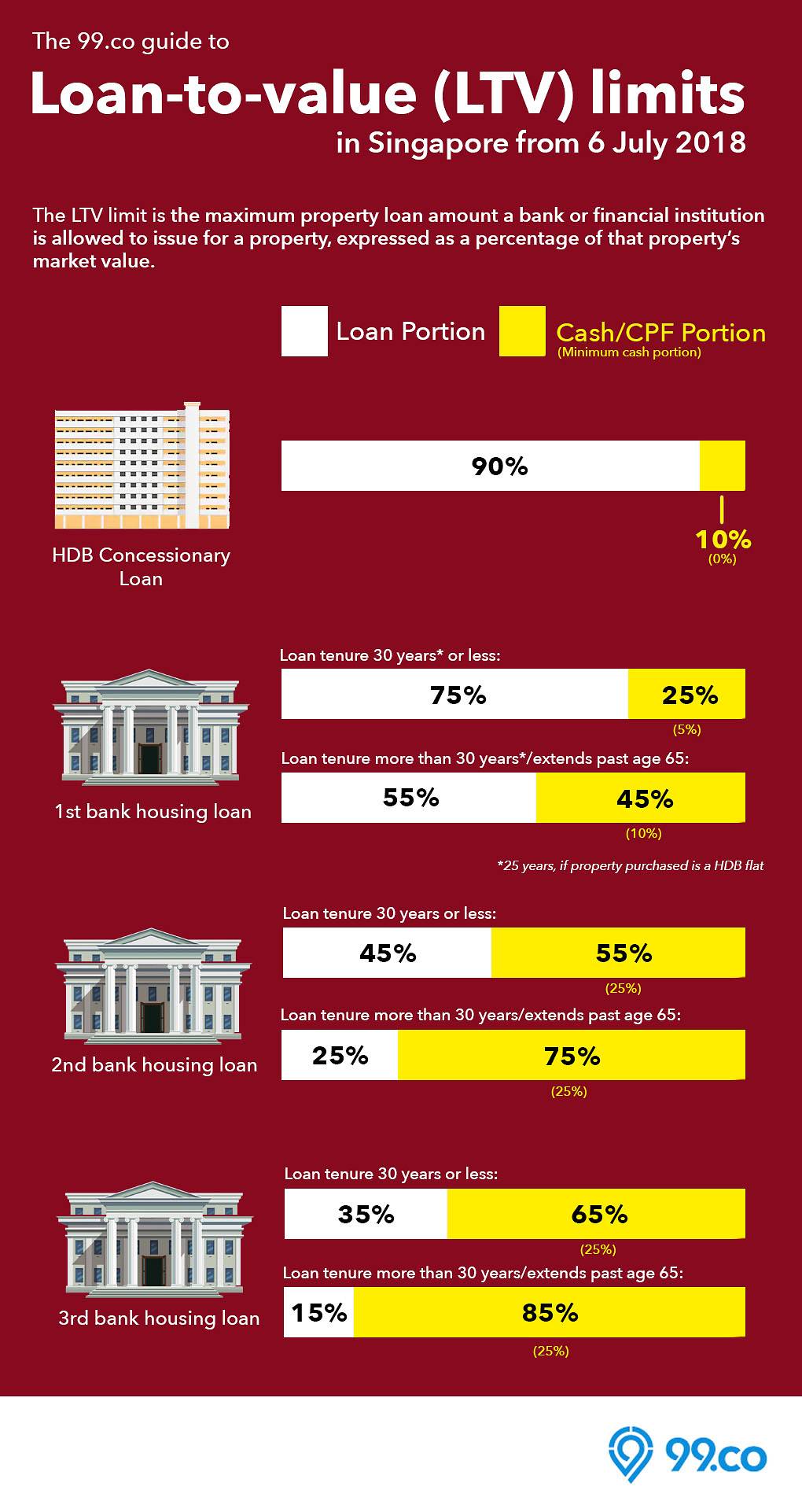
Even first-time buyers of private property now have a maximum loan-to-value (LTV) ratio of 75 per cent, down from 80 per cent previously. For a mass market condo in the S$1 million range, this translates to roughly another S$50,000 needed in cash or CPF.
That said, buyers of HDB resale flats can still turn to HDB Concessionary Loans, subject to eligibility conditions. HDB loans can finance up to 90 per cent of the flat price, with the remaining 10 per cent coming from cash or CPF.
This makes a huge difference for new couples, who typically have a lot of costs to plan for (for example, first child, first car, wedding debts). The lower cash outlay from an HDB loan may be justification enough for them to seek out an HDB resale flat for a first home instead of a condo, especially if they exceed the income ceiling to qualify for a Build-to-Order (BTO) flat, or are tired of balloting unsuccessfully for one.
In fact, the group of sandwiched Singaporeans who bust the income ceiling for a new flat, but are not wealthy enough to manage private property prices, is in significant numbers. They are simply unable to stomach the added 5 per cent downpayment to buy a condo.
We expect the lower cash outlay needed for resale flats will continue to be attractive to first time buyers, sandwiched buyers, and some upgraders, and this will keep demand for HDB resale flats from falling below sustainable levels. This could just be enough to prevent further downward price pressures for the HDB resale market.
2. But, at the same time, we won’t see the same enthusiasm for older resale units that we saw back in 2013
While many of us assume that older flats in mature areas have always been valued higher, this isn’t true.
The trend of paying more for older flats really began in 2002; that was when public awareness of the benefits of certain HDB schemes, such as the Selective En-Bloc Redevelopment Scheme (SERS, originally announced as far back as 1995) really started to kick in.
From there on it started to climb, and by the time of the last property peak in 2013, Cash Over Valuation (COV) in excess of S$30,000 would not have raised a single eyebrow.
We’re raising this reminder for two reasons:
First, remember it is not an inherent or fundamental fact that older flats are always worth more. Sentiment is a big part of it, and that can change. Our valuing – and sometimes overvaluing – of old flats is something that began less than two decades ago, and one of the main causes was SERS.
We don’t dispute that key attractions of older flats are size and amenities – but there also used to be the lingering belief that, if the lease ran out, SERS would kick in and rescue the situation.
With the announcement of VERS, and the fact that only around 5 per cent of estates today qualify for SERS, that belief that is now quashed. Instead it is replaced by fears of what will happen when the 99-year lease runs out, along with debates about whether you truly “own” your HDB flat.
We don’t have many details on VERS yet, but we know for a fact that it will not be as generous as SERS, and that it will be voluntary, which means it may not even go through if your neighbours vote against it.
All in, there is now much greater awareness, of what could happen when your flat gets too old. The shorter remaining leases on resale flats will now weigh more on buyers’ thinking, and it could put a dent in the demand for older units and even force prices down.
That said, ageing flats in close proximity to key amenities, such as MRT stations and good schools, may still see a healthy demand as the owners can realistically utilise the units for a decent average rental income after the five-year Minimum Occupation Period (MOP) given they can afford a second property.
Ageing HDB flats close to the MRT station may still see a good demand. (Photo: 99.co)
3. There’s only one EC launch in 2019, which could help sustain HDB resale demand
Coming back to sandwich-class Singaporeans, many of them tend to choose between Executive Condominiums (ECs), and big resale units.
For 2019, there is only one EC launch, at the Sumang Walk area in Punggol. We won’t rehash the quibbles and controversy over this development, except to point out a number of people have complained it is too expensive. We are talking a million dollars for a three-bedroom unit, in Punggol.
That’s not to say it’s bad of course, it is waterfront living (next to the Punggol Waterway). The Punggol Digital District could also raise value of properties in the estate once it’s developed; but we foresee some buyers being hesitant to pay this amount, or are more inclined to wait for the 2020 launch of an EC at Tampines Ave 10.
Of course, compounding the issue is the tighter LTV and rising interest rates for bank loans (there are no HDB loans for ECs).
So, the lack of value ECs, combined with the lack of EC units in general, could leave some of our sandwiched Singaporeans — or even those displaced persons from the 2017 en-bloc fever — to choose bigger HDB resale units as an housing option.
4. HDB could further reduce the number of BTO flats released in 2019
Earlier in 2018, HDB already announced that it was to launch 1,000 fewer BTO units than was originally planned for the rest of this year, citing “stabilising HDB resale prices”.
The first batch of flats in Tengah will be launched from in November in the plantation district. (Photo: HDB)
Moreover, we are probably going to see a lot more launches for BTO projects in 2019 in non-mature estates (read: Tengah). Due to less than favourable locations plus lower odds of successfully balloting for a BTO flat with fewer units released, many BTO hopefuls are likely to “give up” and settle for a HDB resale flat, which isn’t a bad thing given they’d have many more choices on where to live.
So, directly and indirectly, the Government is giving the HDB resale market booster shots. This will continue in 2019, which could even have the effect of nudging the HDB resale price index up a little.
SINGAPORE: It was the wee hours of a sticky Saturday morning and while most residents in her estate were fast asleep, Tampines resident Ms Jane, as she only wanted to be known, was pedalling hard on the eerily deserted roads.
This was not part of her exercise regime. She was patrolling the streets on the lookout for stray dogs which are believed to have attacked and killed at least seven cats at various locations in the estate this month.
Ms Jane said that between June and October, she had known of only two instances of community cats getting killed. Since the attacks escalated, she and a few other fellow residents decided to form a patrol group.
“Basically if we see the group of dogs, we won’t approach them, but we want to update the authorities of their position,” said Ms Jane. “We don’t want the dogs killed because they are living things too.”
Ms Jane is also part of the Support Tampines Cat Caregivers Facebook group, which has close to 300 members. Stray dog sightings are frequently posted in the discussion thread, so that members and cat feeders are alerted.
Ms Jane and Mr Desmond on a patrol. (Photo: Matthew Mohan)
Most sightings this month have been concentrated in the vicinity of Tampines Street 71 as well as Streets 42 and 43.
At about 4am on Nov 3, four stray dogs were said to have mauled a black cat at Blk 432, Tampines Street 43.
“The cat died with its intestines spilled out,” Whydah Ism wrote in Support Tampines Cat Caregivers Facebook group. “It was so gruesome to look at, according to one of the feeders who retrieved the body and buried it. The dogs were about to attack another cat (ginger cat) when a passer-by saw and chased them away.”
In another post dated Nov 9, Facebook user Diana Fuzz wrote that a pack of 11 stray dogs savaged a community cat to death at the void deck of Block 863, Tampines Avenue 5. The attack occurred at 3.20am on Nov 8, she said.
“My dad was on his way to work when it happened right in front of his eyes,” she said. “My mom then came down with the bamboo pole to scare them away but it didn’t stop them from killing the cat.”
One of the cats alleged to have been a victim of stray dog attacks (Photo: Diana Fuzz)
Some residents believe that the attacks have been going for some time. One of those who witnessed these attacks first-hand was Mdm Mariah Marina.
She told Channel NewsAsia she saw “two or three” dogs mauling a community cat at about 6am on Aug 9 at Blk 859, Tampines Avenue 5.
“I saw a group of dogs throwing the cat around. It was still alive – making a lot of noise,” she recalled. “There were two or three guys that came down from the opposite block. They stamped on the ground and the dogs ran away.”
The black cat, whom she had affectionately named Marble, died minutes later.
“It was very violent, very horrible,” she said. “I keep hearing those dogs barking – even now.”
TAKING A TOLL
Three weeks into their efforts, Ms Jane’s seven-member patrol group is already feeling the strain of spending late nights combing the neighbourhood.
The used to patrol daily, now they mostly focus their efforts on Fridays and the weekends.
“It took a toll,” admitted Ms Jane.”When I headed to work after a night of patrolling, I felt like going to the toilet to sleep for the rest of the day.”
The group have tried various means to protect the cats, including bringing them home when stray dogs were spotted in the vicinity.
But with the cats not used to being cooped up in an unfamiliar environment, they sometimes refused to eat and can be traumatised, Ms Jane said.
“We felt ‘heart pain’ for the cats to see them very, very stressed out. But then we know they are more protected in the house,” she said.
A pack of stray dogs spotted at Sunplaza Park on Nov 23. (Photo: Hope Goh/Support Tampines Cat Caregivers)
Members of the patrol group have contacted the Agri-Food & Veterinary Authority of Singapore (AVA) for help.
In an email to the patrol group, the authority said it had been working with animal welfare groups and veterinarians on a “five-year Trap-Neuter-Release-Manage (TNRM) programme to manage the stray dog population in Singapore”.
This programme aims to sterilise more than 70 per cent of the stray dog population islandwide over five years, the email added, with the priority to rehome as many of these dogs as possible. This should lead to a reduction in the number of stray dogs on the streets, added the AVA.
The email also listed advisories on what individuals who encountered stray dogs could do.
The patrol group said it tried contacting animal welfare groups such as Save Our Street Dogs and Animal Lovers League, but did not get a response.
A member of the patrol group also raised the issue to Member of Parliament for Tampines GRC Desmond Choo in an email. According to Ms Jane and based on emails seen by Channel NewsAsia, Mr Choo then notified the town council general manager and the matter was subsequently raised to the AVA.
In its reply, the AVA said it was “monitoring the situation closely”, and working with animal welfare groups to trap “these elusive dogs”.
The AVA has not responded to queries from Channel NewsAsia at the time of writing.
“QUITE CHALLENGING TO MANAGE”
Singapore’s Society for the Prevention of Cruelty to Animals told Channel NewsAsia that the matter has also been brought to its attention.
“It is very distressing to hear of cats being attacked by dogs and these situations can be quite challenging to manage,” said SPCA executive director Jaipal Singh Gill.
“One possibility to mitigate the problem is to shift the feeding sites of both the dogs and cats further from each other, so that there is less overlap of their territories.”
The cats could also be temporarily housed elsewhere, said Dr Gill, “in the hope that the dogs will move on”.
For now, members of the patrol team vow to continue their efforts.
“We just do what we can,” said a 21-year-old member of the team, who wanted to be known only as Desmond.
“We are concerned about the safety of the cats, since some of us have been feeding them for years. We just want them to stay safe.
“It seems like nothing is being done, we will never know if one day we wake up and the cats will just be lying there dead.”