Home Blog Page 893

Commentary: Reviewing the airworthiness of Singapore’s air taxis dreams

0

SINGAPORE: Discussions about flying cars as a mitigating measure to traffic congestion in urban areas like Singapore have been around for a long time.

But in Singapore, it has not taken root because of burning transport issues and cynicism that the city-state might be substituting road traffic congestion with that in the air or that its extravagant price tag will limit access, even if flying cars proliferate here.

But with the announcement that trials for air taxis, as small helicopters employing drone technology, may begin come 2019, it seems this reality is closer at hand.

Still, for short-distance travel by air to be considered a viable form of transportation requires greater numbers. 

Helicopters have been employed in cities for narrow purposes in the most special of circumstances, including the personal travel of the rich and famous, and for transporting the sick and the injured to hospitals, with helipads or special landing areas provided where they are in use.

While the popularity of such services is growing, analysts say there are unlikely to be large

While the popularity of such services is growing, analysts say there are unlikely to be large numbers of helicopter taxis taking to the skies soon as prices will remain a barrier (Photo: AFP/ADEK BERRY)

READ: Flying taxis? Bell Helicopter sees such a service taking off in Singapore

FASTER, CHEAPER, MORE CONVENIENT?

So how widely will these aerial taxis be used? Consider whether commuters will find them a safe, convenient and cost-effective ride.

The traveller considers the commute to be wasted time and wishes to cut it down, which the aerial taxi accomplishes by avoiding road traffic jams. However, without the widespread availability and use of aerial taxis, fares will not be competitive enough to attract commuters.

READ: Stressful and rushed but the daily commute is no waste of time, a commentary

And how convenient might they be? Let us compare the process of commuting by an aerial taxi with a normal taxi. For one, you can’t flag down an aerial taxi.

Even if you book one on an app or over a phone, the aerial taxi cannot go to your specific location as it has to land at designated open fields, landing sites or flat rooftop of buildings nearest to where you are, far away from wandering people.

The number of landing sites can be increased by using specific areas in the numerous surface off-street car parks but the challenge remains to de-conflict vehicles in the car park.

By having to walk to specific landing sites, you are no different from walking to a bus stop or train station and will take some time to get to and from the landing site – which will need to be compensated by hopefully a faster travel time by air using the shortest route possible.

READ: In London, better to walk than drive or wait for a bus, a commentary

Yet consider this – a taxi stand concept for the aerial taxis across key neighbourhoods in Singapore. These could be allocated space at some popular designated landing sites to park and wait for passengers. You could queue up to catch one of these taxis.

taxi stock pix

File picture of taxis in Singapore. (Photo: TODAY)

All this might be a chicken-and-egg discussion. With great numbers, air travel might not be as expeditious. If many aerial taxis approach the landing site simultaneously, drivers will have to queue up to land as advised by air traffic control, posing potential delays to your journey.

TRUST IN UNMANNED VEHICLES

The key question remains for the unmanned aerial taxis trialled in Singapore – do you trust driverless technology?

Let us compare these with driverless cars. Despite many years of trials, the completely unmanned car has yet to take off in a meaningful way. 

Granted that it has to operate in a more complicated environment than an unmanned drone in the air, whose technology is well-proven, the psychological threshold commuters need to cross to make unmanned aerial taxis a commercially viable option is higher.

In the event of an unfortunate accident, commuters may walk away unscathed from an unmanned car, but not from an aerial taxi. Modern aeroplanes may travel on autopilot for a large part of their journeys, but there is a pilot to take over in an emergency.

Yet issues regarding air safety, and in managing interference with the flight paths of other aircraft and the dangers during taking off and landing, can be mitigated.

If aerial manned taxis are made to cruise at low altitudes in places where they do not interfere with the flight paths of our three airports; and they are subjected to strict controls by a central aerial control, these issues can be managed.

A WHILE LONGER BUT NOT TOO LONG

On the whole, it seems while like the march of technology and new methods of doing things cannot be halted, it will take some time and effort before driverless vehicles and regulated aerial travel in cities become commonplace.

Visitors to the IAA can be taken for a spin in driverless cars

A front passenger’s view in a driverless car. (Photo: AFP/Daniel Roland)

READ: Will my driverless car know what to do when honked at? A commentary

Many countries and leading companies are already moving into these unchartered territories albeit cautiously.

While the lack of low-cost manufacturing have made mass production of these vehicles elusive, accelerating advances in this greenfield aeronautical technology space may make them more ubiquitous in the future. 

Uber held a second flying taxi conference this year, showcasing concept images that Embraer and Pipistrel Aircraft are planning to build for the ride-hailing company’s ambitious projects. The ride-hailing giant expects to begin testing of its urban air taxis in Dallas, Los Angels and Dubai in 2020.

In China, Huawei has developed the world’s first one-passenger air taxi that can act as an aerial ambulance, in collaboration with Chinese drone company eHang.

The Japanese government too is looking to create the laws and infrastructure needed to put flying cars into the sky in the next decade.

POSITIVE SIGNS IN SINGAPORE

Will Singapore follow suit? Singapore’s track record in land transportation shows we have bucked the trend to stay ahead of the curve and embrace new transport technologies in past instances. 

Singapore was one of the first to apply peak period pricing to manage congestion in the city in the 1970s, when it was mere talk in other cities.

ERP gantry

An ERP gantry in Singapore. (File photo: Ngau Kai Yan)

After a spirited and heated debate, the country also built the mass rapid transit system in the 1980s despite vigorous opposition, and constructed road tunnels in the 1990s against conventional wisdom at that point. We are none the worse for implementing these schemes.

It is heartening to see regulations evolve in tandem, where disruption in Singapore has typically seen laws play catch-up in most instances including in the bike-sharing and ride-hailing sectors.

Where the Civil Aviation Authority of Singapore has proposed enhancements to laws governing their use to public safety, plans to issue licenses for drones weighing above 25kg – the kinds that unmanned aerial taxis will require – including the certification of the airworthiness of the aircraft and licenses for operators and pilots suggest authorities are looking into safety standards and competence frameworks for their operation.

“These aerial vehicles will ply dedicated aerial corridors, with different alttudes designed for different routes”, said then Permanent Secretary for Transport Pang Kin Keong, highlighting also that the Government has factored them into future national plans.

READ: Pang Kin Keong’s commentary on Singapore’s impending urban mobility revolution

There is also great private sector enthusiasm to see this vision’s realisation.

Backed by tech titan Intel and auto giant Daimler, German company Volocopter, which is running the trials in Singapore, had earlier said it would be setting up a product design and engineering team to support expansion plans. 

Local reports also suggest it is seeking to partner real estate developers and mobility providers to develop infrastructure that supports flight testing.

Volocopter

The Volocopter 2X. (Photo: Nikolay Kazakov, Karlsruhe)

The advent of driverless cars and driverless aerial taxis in the foreseeable future will probably see the end of our taxis with their chatty, opinionated cabbies who have graced our roads for more than seven decades.

But there is much to look forward to.

Gopinath Menon is a transport consultant who is also a Senior Research Fellow at the Centre for Infrastructural Systems of the Nanyang Technological University, Singapore.
Source link

4 arrested for stealing S$30,000 worth of apparel, accessories

0

SINGAPORE: Four people, believed to be part of a foreign crime syndicate, have been arrested for allegedly stealing S$30,000 worth of items, including apparel and accessories, the police said on Tuesday (Nov 27).

The police received a report from a retailer along Smith Street on Monday, claiming that items had been stolen from the store.

Following ground enquiries, officers from the Central Police Division identified the suspects and arrested them on the same day. The suspects, two men and two women, are aged between 27 and 41.

Shop theft 2

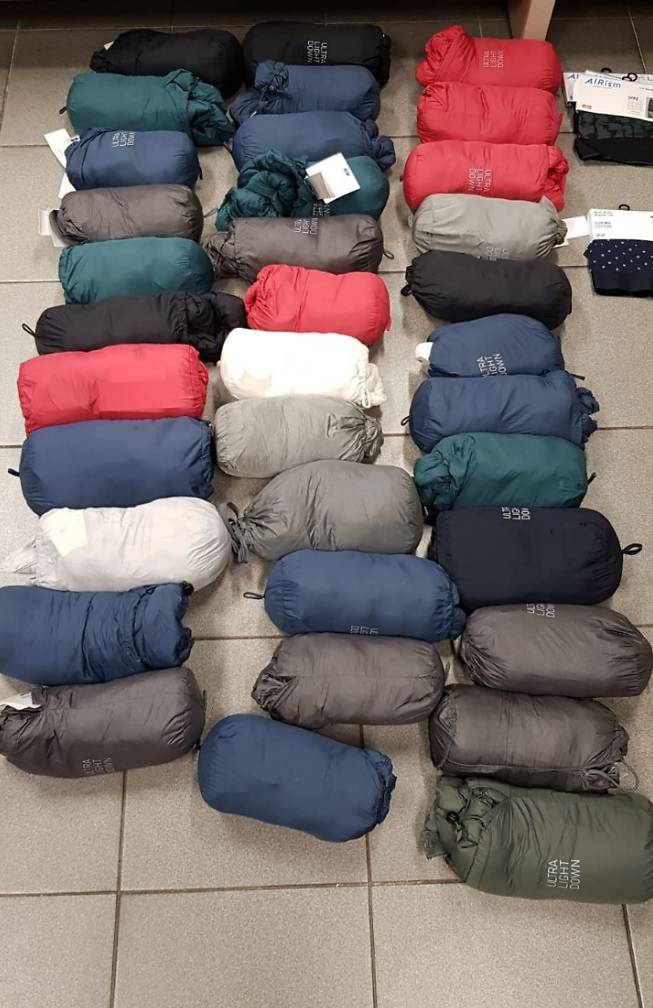
Some of the items that were seized. (Photo: Singapore Police Force)

More than 1,000 items, including branded apparel, were recovered and seized as case exhibits. The items have an estimated total value of about S$30,000.

Preliminary investigations revealed that the suspects are believed to be part of a foreign crime syndicate and were involved in other similar cases across Singapore.

The four suspects will be charged in court on Wednesday with theft in dwelling with common intention and fraudulent possession with common intention. If convicted, they face a maximum sentence of eight years’ jail and a fine.

Source link

Singapore’s approach to war on diabetes ‘generally in right direction’: Health Minister Gan Kim Yong

0

SINGAPORE: One of the important takeaways from the two-day global conference on diabetes that Singapore hosted this week is that the city’s approach to tackling the epidemic is “generally in the right direction”, Health Minister Gan Kim Yong said on Tuesday (Nov 27).

Speaking to reporters at the end of the Ministerial Conference on Diabetes at the Grand Copthorne Waterfront Hotel, Mr Gan also said that the war against diabetes is winnable, provided stakeholders work together to prevent and manage the disease.

The conference was attended by health ministers, senior government officials, academics and thought leaders from 18 countries and regions, including from Finland, the United Kingdom, Thailand, and the World Health Organisation.

“Although the challenges are great and involve many stakeholders, if we are able to rally the support, and move together among all the stakeholders across borders, collaboration among countries, I think we will be able to make headway in this war,” he said.

This is “provided that we can work together, provided that we are persistent and we are steadfast in our efforts to tackle this problem”, he said.

READ: Are we winning in the war against diabetes yet?

Singapore declared a war on diabetes in 2016. Almost half a million Singaporeans live with diabetes, higher than the global prevalence.

Mr Gan also acknowledged that the war on diabetes will be a long one, as opposed to a “quick battle”, but added that “what is important is that there is hope that we can go forward”.

gan kim yong

Health Minister Gan Kim Yong speaking to reporters at the end of the Ministerial Conference on Diabetes. (Photo: Jalelah Abu Baker)

SUGAR TAX NOT TO COLLECT REVENUE

Turning the conversation to sugar tax, which has previously been floated as a way to discourage unhealthy behaviour, Mr Gan said that the purpose of such a tax would be to encourage manufacturers to reformulate their drinks and consumers to opt for lower-sugar drinks – instead of for revenue collection.

“If they (manufacturers) are able to reduce their sugar content, then they may be able to enjoy a lower tax rate, or not be taxable at all. There are different forms of tax structures so the idea is to really encourage manufacturers to reformulate,” Mr Gan said.

It is important for Singapore to consult and gather feedback from stakeholders, producers, consumers as well as retailers to have a sense of their concerns, and to determine if such a tax would be suitable for the country, he added.

When asked if salt- which came up as a concern in the recently released National Nutrition Survey– should also be taxed, Mr Gan said that the salt challenge is a “more complex one”.

He added, however, that many of the efforts in fighting diabetes apply to salt as well, as those who are conscious about sugar are likely to be conscious about salt as well.

File photograph of soft drinks bottles displayed on a shelf in a shop in London

Soft drinks bottles displayed on a shelf in a shop in London. (Photo: Reuters)

MAKING LABELS WORK

One way in which Singapore is exploring to help consumers make more informed decisions about the items they consume is product labels.

“How can we label it such that there is enough information, but not too much information? If you give too much information, the consumer is unable to compare the product. You have too little information, the decision might also not be accurate,” he said.

Mr Gan gave examples of a grading system based on factors such as salt, sugar and nutrition, and a “traffic light” system, which marks green as healthy, orange as moderate and red as dangerous.

While the Government continues to work on beating diabetes, Mr Gan cautioned against focusing on short-term results, which, even if positive, may be a result of past efforts or a general shift in consumption patterns.

“The real results of the efforts in the war on diabetes are not going to be felt. It’s going to be five, 10, 15 years later, because habits are difficult to change. Even if you change habits, the outcome of your health will not be immediate,” he said. 

STRENGTHENING THE PRIMARY CARE LANDSCAPE

Aside from diabetes, participants in the global conference were interested in ways to strengthen the primary care landscape, an area that Singapore is also focused on and eager to learn more about from other countries, he said.

While Singapore has a Primary Care Network (PCN) scheme that encourages general practitioner (GP) clinics to organise themselves into networks that support more holistic and team-based care, the initiative has teething problems that need to be ironed out,he said.

The PCN scheme was piloted in 2012 and scaled up in January this year.

“There are different groupings, and not all of them are operating on the same model, and there is still a need to level up their capability, to ensure that they are able to cope with the ageing population and surge in chronic disease prevalence,” he elaborated.

When it came to learning from other countries’ systems, he referred to a plan in Hong Kong to introduce district centres that oversee GPs in one area, outsourced to private operators. He said the idea is interesting, and that he would like to know what the outcome would be.

“There’s a lot more that we can do, and we need to continue to step up,” he said. However, it is not about adding measures and initiatives, he cautioned.

“The general approach is similar, but we need to tweak it, we need to adjust it to our context,” he said, adding that Singapore “cannot copy wholesale”.

Source link

A leadership team with complementary strengths: Goh Chok Tong on Heng Swee Keat and Chan Chun Sing

0

SINGAPORE: In his first comments on the appointment of Finance Minister Heng Swee Keat as the People’s Action Party’s (PAP) first assistant secretary-general, Emeritus Senior Minister Goh Chok Tong said that Mr Heng and Mr Chan Chun Sing, chosen as his deputy, have complementary strengths.

Speaking to Channel NewsAsia on Monday (Nov 26) to discuss his newly published authorised biography Tall Order, Mr Goh noted that while Mr Heng’s strengths lay in his strong experience in governance, he “hasn’t quite been exposed to the mobilisation of people, working with the PAP, the NTUC (National Trades Union Congress), and working with the PA (People’s Association)”.

“Chan Chun Sing has that,” Mr Goh added.

The former prime minister recognised that Mr Chan would have “experience in running some ministries, but his strengths so far have been exposed in those mobilisation areas”.

“So, the two will work very well, they’ll complement one another,” Mr Goh said.

Mr Goh’s comments came days after Mr Heng was appointed as the PAP’s first assistant secretary-general, in a move that indicates the finance minister is the clear frontrunner to replace Mr Lee Hsien Loong as Prime Minister. Mr Chan was appointed second assistant secretary-general, with Mr Heng choosing Mr Chan to be his deputy.

WATCH: Heng Swee Keat and Chan Chun Sing on new PAP appointments

READ: PAP assistant secretary-general appointment a precursor to becoming Singapore’s next PM, analysts say

chan chun sing and heng swee keat

PAP’s second assistant secretary-general Chan Chun Sing and first assistant secretary-general Heng Swee Keat at a news conference on Nov 23, 2018. (Photo: Hanidah Amin)

Mr Goh’s comments echo those of Mr Lee, who said the two new assistant secretaries-general have “complementary strengths, and make a strong pairing”.

Asked if he felt the younger fourth-generation (4G) leaders may have made their choices for the PAP’s new leadership based on this complementarity between Mr Heng and Mr Chan, Mr Goh demurred.

“That’s not quite so,” he said.

“The ministers and office holders decided on who should be leading the team. So Mr Heng Swee Keat was chosen to be the leader, and Mr Heng, in my view, quite wisely chose to complement himself.”

In his interview with Channel NewsAsia, Mr Goh was asked if the party’s eventual decision to back Mr Heng could simply have been delayed, given the stroke that he had suffered in May 2016.

“I would think so,” he said. “I think without the stroke they would probably have come to a decision earlier, maybe about six to nine months earlier.”

READ: PAP appoints Heng Swee Keat first assistant secretary-general

READ: Heng Swee Keat and Chan Chun Sing ‘make a strong pairing’, says PM Lee

UNDERSTANDING LEADERSHIP TRANSITION

 The issue of timelines in the PAP’s leadership transition was one that Mr Goh had himself raised, most specifically in his public intervention on Facebook on New Year’s Eve last year.

Writing at the time, Mr Goh had said that: “One urgent challenge I would like to see settled is our fourth-generation leadership.

“Every succession is different, but one thing remains the same: Each cohort will have to pick one amongst themselves to lead, and support him. I hope the current cohort will do so in six to nine months’ time.

“Then PM can formally designate their choice as his potential successor before 2018 ends.”

READ: ESM Goh’s New Year wish –settling Singapore’s fourth-generation leadership

Asked why he had chosen to intervene at that point, Mr Goh brought the issue back to his early political experience, where he was first introduced to “managed political succession”, first to introduce candidates to politics, and thereafter to manage transitions between leaders.

Mr Goh added that by his calculations, based on Mr Lee’s intention to step down by the age of 70, the current transition had at that time “taken a little longer”.

Nonetheless, with the party’s decision having since been taken, Mr Goh said: “I am very happy that they have decided now to pick the leaders. Obviously, the team players are very good, the individual players are very good.

“But they were a team under Prime Minister Lee Hsien Loong. So now they have to be a team, under a new leader.”

ESM Goh Chok Tong (1)

Interview with Emeritus Senior Minister Goh Chok Tong at the Istana on Monday (Nov 26). (Photo: Hanidah Amin)

THE PAP APPROACH TO “TEAMWORK”

In his remarks following the announcement of his appointment, Mr Heng had pointed to the importance of the overall PAP leadership team in delivering on governance for Singapore.

“I’m deeply conscious of the heavy responsibility I’m taking on, leading the party and governing Singapore are massive and complex tasks,” he said.

“No one person can do it alone, not even Mr Lee Kuan Yew who had the help of able, stout-hearted colleagues. I’m heartened that I have the backing of a strong team.”

These were comments echoed by the 32 younger political leaders who endorsed Mr Heng as their leader. In their statement issued following the leadership announcement, the group referenced the strong group dynamic, and pledged to “continue to work cohesively as a team”, and being “united in our purpose of serving Singaporeans to the best of our abilities”. 

Asked to explain the underlying PAP psyche in highlighting the ultimate importance of the team, Mr Goh said: “To run the country, you need the whole team, and of course if there are many people who could form a cabinet and there is a strong man, it’s good; that means there is a strong leader.

“But strong leaders need a team to get things done,” he added.

“So Mr Lee Kuan Yew was a strong man, but he needed core members to help him: Goh Keng Swee, Rajaratnam, Othman Wok, they were the core members of his team, but beyond them, we had a larger team: Ong Pang Boon, Toh Chin Chye, Chua Sian Chin, the other ministers. So you do need a team to run a country. 

“No matter how good a man is, your reach cannot be that wide to understand the issues, cannot be comprehensive, cannot be total. You need a team.”

READ: Political experience, likeable character put Heng Swee Keat in good stead to be PM, analysts say

Using the analogy of a football team, Mr Goh said: “You can have a brilliant striker, but he himself would not be able to win. You need teamwork.”

With the analogy of the football team, Mr Goh was asked whether the PAP could, at some point in the future, have a personality within the party who states at the outset: “I want to be captain one day. I know I can be captain, and I know I can rally the team around me.”

“Well, I think so,” Mr Goh replied. “I think there must come a time where somebody says I want to be the leader.

“But they cannot command that. To be a leader, people must support him.”

Looking at individual strengths, Mr Goh said Mr Heng has the ability to deal with a crisis, raising the example of when Mr Heng was the managing director of the Monetary Authority of Singapore, and himself the chairman.

“I saw how he worked,” said Mr Goh, referencing Mr Heng’s work during the global financial crisis. “I think he could take crisis, and he could manage crisis.”

More from the interview with Mr Goh Chok Tong will be published this weekend.

Source link

KPE, Geylang flash floods caused by lapses at nearby construction site: PUB

0

SINGAPORE: PUB will take action against a construction firm for failing to maintain the drainage on one of its construction sites, leading to flash floods in Geylang on Nov 11, the national water agency said in a statement on Tuesday (Nov 27).

The floods affected Geylang Lorong 23 and the Kallang-Paya Lebar Expressway (KPE) slip road to the Pan-Island Expressway (towards Changi).

“Enforcement action” will be taken against construction contractor, Straits Construction Singapore (SCS), for the lack of proper maintenance of the drainage system within their site, PUB added.

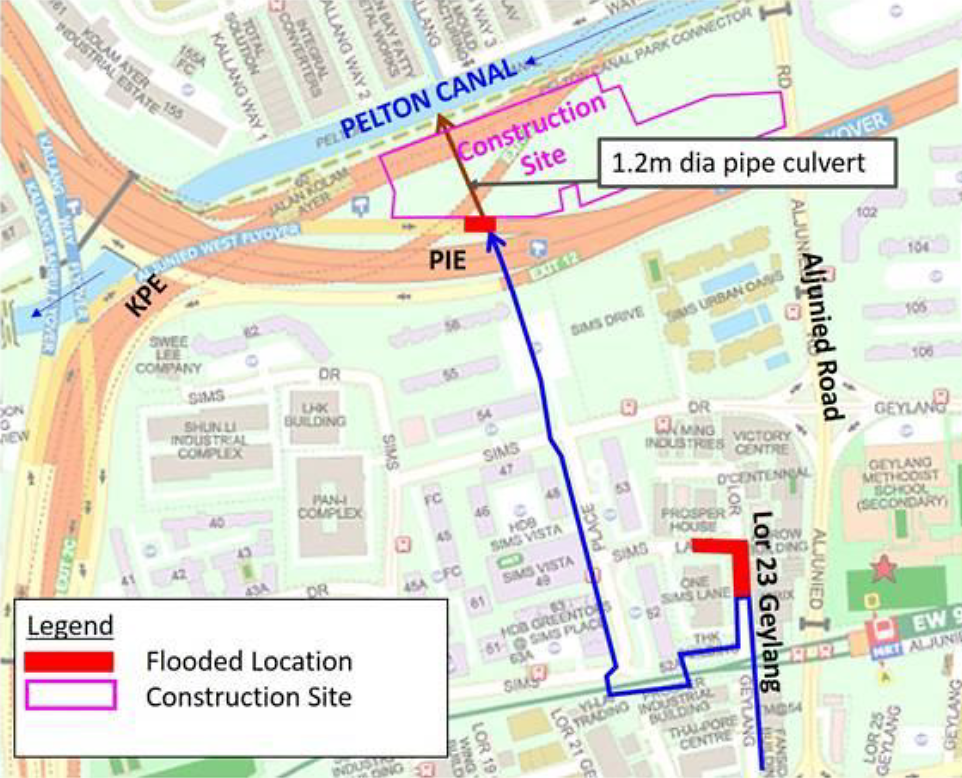
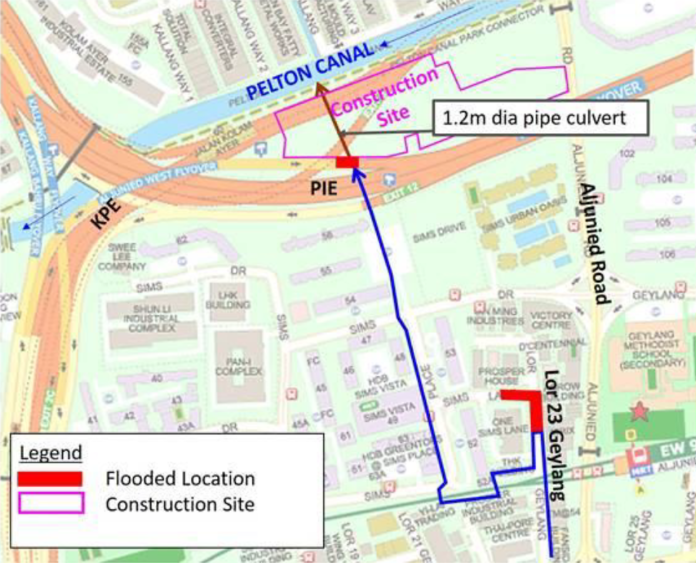
Stormwater collected at drains along Geylang Lorong 23 flows through Sims Place and Sims Drive, and into a drain at the KPE slip road, before being discharged into Pelton Canal through a pipe drain.

map of drainage flashfloods geylang kpe

Map of drainage that was choked, causing flashfloods in Geylang and in KPE slip road. (Image: PUB)

The 1.2m-wide pipe drain, which runs through the construction site, was found to be choked, PUB investigations concluded.

“SCS is required to take proper measures to maintain the flow capacity of this pipe drain as construction is underway,” the statement said.

All developers and contractors of work sites are to “ensure that drains within their development sites are free of silt, debris, litter and leaves will not hesitate to take actions against those who fail to comply”, PUB added.

“PUB will not hesitate to take actions against those who fail to comply.”

Source link

28 people arrested over gambling activities

0

SINGAPORE: Police arrested 28 people for suspected involvement in gambling activities after a two-day operation conducted on Nov 23 and 24.

In a news release on Tuesday (Nov 27), police said five men and two women, aged between 54 and 85, were arrested along Race Course Road for illegal bookmaking and punting under the Betting Act. 

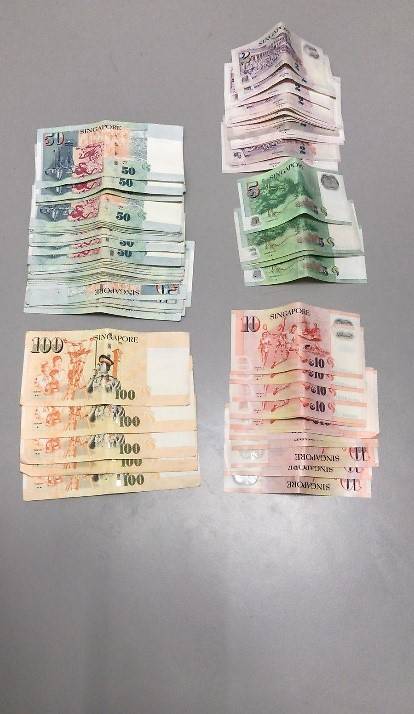
In addition, S$12,781 in cash was seized.

Another 10 men and 11 women, aged between 37 and 78, were arrested along Jalan Besar and Temple Street, for offences under the Common Gaming Houses Act, said the police.

Gambling paraphernalia were also seized as case exhibits.

Investigations were ongoing.

28 people arrested over gambling activities 1

Authorities also seized S$12,781 in cash. (Photo: Singapore Police Force)

Under the Betting Act, anyone convicted of betting with a bookmaker could be fined up to S$5,000, jailed for up to six months, or both.

Anyone found to be involved in bookmaking could be fined between S$20,000 and S$200,000 and could also be jailed for up to five years.

Under the Common Gaming Housese Act, anyone convicted of gaming in public could be fined up to S$5,000, jailed for up to six months, or both.

“The police take a serious view on all forms of illegal gambling activities and will continue to take tough enforcement action against those who are involved in such activities,” the news release said.

Source link

CNA Lifestyle Experiences: An early Christmas feast cooked by stars Li Nanxing, Deanna Yusoff and Singapore MasterChef Zander Ng

0

Five CNA Lifestyle Facebook followers and their guests got a chance to taste the culinary delights from these celebrities at The Fullerton Hotel’s charity buffet dinner – the latest edition of exclusive CNA Lifestyle events.

Celebs Singapore MasterChef Zander Ng and actors Li Nanxing and Deanna Yusoff

Singapore MasterChef Zander Ng and actors Li Nanxing and Deanna Yusoff, along with The Fullerton General Manager Giovanni Viterale, all cooked for a good cause at the charity buffet dinner. (Photo: Genevieve Loh)

It’s beginning to look a lot like Christmas… especially at the latest exclusive CNA Lifestyle Experience held at The Fullerton Hotel last Friday evening (Nov 23)

Five CNA Lifestyle Facebook followers and their three invited guests respectively were wined and dined at this year’s The Fullerton Knight & Stars Charity Cook-out dinner at Town Restaurant.

CNA Lifestyle Experiences Fullerton teddy bear tree light up

The light-up of Fullerton Hotel’s record breaking teddy bear tree. (Photo: Genevieve Loh)

The night of revelries began with a front-row view of the hotel’s annual Christmas light-up ceremony – which saw the unveiling of the record-breaking five metre-tall Fullerton teddy bear collectibles Christmas tree and hotel staff coming together in a candle-lit march-in.

READ: CNA Lifestyle Experiences has Formula 1 superstar Sebastian Vettel meeting and racing his Singapore fans

The Fullerton Hotel teddy bear Christmast tree (Photo: Genevieve Loh)

The Fullerton Hotel teddy bear Christmast tree (Photo: Genevieve Loh)

The merry-making then continued as our winners embarked on some serious festive feasting, starting with the culinary offerings of stars Li Nanxing, Zander Ng and Zander Ng, who were all on hand to personally cook and serve up their dishes.

The Fullerton Li Nanxing wowed fans with his signature Assam Fish

Actor Li Nanxing wowed fans with his signature Assam Fish (Photo: Genevieve Loh)

In line with the restaurant’s Christmas in the Tropics buffet theme, veteran actor and self-professed foodie Li Nanxing wowed fans with his signature Assam Fish while gamely posing with fans for selfies.

CNA Lifestyle Experiences Fullerton Li Nanxing's Assam Fish

Li Nanxing’s signature Assam Fish (Photo: Genevieve Loh) 

Malaysian actress Deanna Yusoff served up her special Chicken Liver Pate while Singapore’s first MasterChef Zander Ng was a crowd-favourite with his delicious Wagyu Beef Rendang paired with Nasi Uduk.

CNA Lifestyle Experiences Fullerton Zander Ng's Wagyu Beef Rendang paired with Nasi Uduk

Singapore MasterChef Zander Ng’s Wagyu Beef Rendang paired with Nasi Uduk. (Photo: Genevieve Loh)

Deanna Yusoff's Chicken Liver Pate

Deanna Yusoff’s Chicken Liver Pate (Photo: Genevieve Loh)

The stars cooked up a storm for a good cause – a portion of proceeds from the charity buffet dinner was donated to Reach Community Services, a non-profit which focuses on at-risk youth, family and the elderly.

CNA Lifestyle Experiences Fullerton Giovanni Viterale

Giovanni Viterale, General Manager of The Fullerton Hotels and Resorts, whipping up a well-loved Italian classic Orecchiette con Broccoli Aglio e Gamberi. (Photo: Genevieve Loh)

General Manager of The Fullerton Hotels and Resorts Giovanni Viterale – who was knighted in 2016 with the Order of the Star of Italy – also donned chef whites for the evening. He whipped up a well-loved Italian classic Orecchiette con Broccoli Aglio e Gamberi (Orecchiette Pasta with Prawns and Broccoli) to contribute to the good cause.

The CNA Lifestyle Experience winners also got to enjoy a smorgasbord of Fullerton’s Christmas signatures alongside the familiar buffet offerings of fresh pasta station and seafood bar –courtesy of executive chef Michael Gremer and his culinary team.

CNA Lifestyle Experiences Fullerton Nasi Lemak Turkey

Nasi Lemak Turkey (Photo: Genevieve Loh)

Highlights include the Nasi Lemak Christmas Turkey, which is crisped with ikan bilis and comes with coconut rice, onion sambal, egg and cucumber; Manuka Soy Glazed Champagne Ham with spiced pineapple chutney and a juicy Beef Wellington, all carved on request by a chef.

CNA Lifestyle Fullerton Beef Wellington

Beef Wellington (Photo: Genevieve Loh)

There were also Glühwein (mulled wine), as well as individually plated special dishes of seared Hokkaido scallops, lobster bisque, truffle risotto with parmesan cheese and a Mont Blanc dessert, all served up with red and white wine to ring in the festive season.

This edition of CNA Lifestyle Experiences is made possible by The Fullerton Hotel Singapore. Follow CNA Lifestyle on Facebook for access to more exclusive experiences.

READ: What happened during our last CNA Lifestyle Experiences at the one Michelin-starred Alma by Juan Almador

Source link

Commentary: Who on earth still buys counterfeit branded goods?

0

SINGAPORE: Luohu in China, Ladies Street in Hong Kong, Dongdaemun in Korea, and pasar malams in Singapore.

These are all places one can find counterfeit products. A 21-year-old man was recently arrested for allegedly importing more than S$520,000 worth of counterfeit products.

In another local news report, some counterfeit branded goods found in a pop-up store in Raffles City, which include handbags, clothes and accessories, came with a price tag of nearly S$10,000.

These are mind-boggling numbers. Why pay $$10,000 for a counterfeit Hermes bag when the same amount of money can get you many good quality bags, albeit not a Hermes?

HUGE MARKET

Clearly, there is still a significant market for counterfeit products around the world. The Organisation for Economic Co-operation and Development (OECD) reported that international trade in counterfeit and pirated products has increased from US$250 billion in 2008 to US$1 trillion in 2016. 

To some extent, the advent of e-commerce has spurred the growth of the counterfeit trade as these products sellers now have a bigger platform to reach potential buyers.

Consumers can now also purchase counterfeit products in the “safety” of their own home, without risking the possibility of being seen purchasing counterfeit products.

READ: ‘Ababis’ and ‘Star Wnrs’: Knockoffs thrive in China e-commerce

Chinese retail giant Alibaba's Taobao app is home to a treasure trove of knockoffs

Chinese retail giant Alibaba’s Taobao app is home to a treasure trove of knockoffs. (Photo: AFP/Fred Dufour)

What is interesting is this increase in counterfeit trade comes on the back of numerous campaigns by regulators and brand owners to discourage consumers from buying counterfeit products.

READ: Man arrested for allegedly selling fake luxury watches and accessories online

Branded goods manufacturers are constantly thinking of ways to thwart counterfeit goods sellers, for example, by date stamping the products with special codes. However, such measures will only be effective against consumers who buy counterfeit products unknowingly.

Broadly speaking, there are two types of counterfeit consumption – deceptive and non-deceptive.

Deceptive counterfeiting happens when consumers buy counterfeit products under the impression that the product is authentic. In such situations, regulation and measures used to differentiate the authentic products from the fakes will be helpful.

However, a broader piece of the problem comes from non-deceptive counterfeit consumption. In such situations, consumers actively search for and purchase counterfeit products.

BUYING COUNTERFEITS KNOWINGLY

Intuitively, one assumes buyers of counterfeit products come from developing countries and within each country, the lower-income group. Such intuition is driven in part by the assumption that people buy counterfeit products because they cannot afford to buy the “real” thing.

However, much research has shown that this is not true. Local news reports described in detail how high profile businesswomen and executives are among the purchasers of counterfeit bags. 

After all, how many people can afford S$10,000 for a bag, counterfeit or otherwise? Such phenomenon is not restricted to Singapore. Apparently, such behaviour is also common among rich tai tais in Hong Kong.

Gold Adidas sneakers for sale at Sungei Road market

Fake or real? – A Gold Adidas sneaker goes on sale at a street market

READ: The invisibility of the poor in Crazy Rich Hong Kong, a commentary

Thus, though financial scarcity may be a driver of counterfeit consumption, it does not appear to be the most crucial reason why people buy counterfeit products. Counterfeit consumption is driven by more insidious societal pressure and individuals’ mindsets.

Two groups of buyers fall in this category – one group, driven by impression management concerns, and another who buys counterfeit products as they do not price in the value of intangible attributes such as product development costs.

SOCIAL INEQUALITY AND ASPIRATIONS

Recently, there has been discussion about rising social inequality in Singapore. As a society, Singapore faces the issue of disparity between the haves and the have-nots. What is the implication of this for the consumption of counterfeit products?

READ: This is what the face of poverty looks like, a commentary

As long as there is a gap in social status, people in the lower echelon of the society will aspire to move up in social status. One way to signal one’s status is through the products one uses.

In a seminal article published many years ago, Professor Russell Belk from York University wrote about how individuals’ possessions constitute part of their extended self. We measure our worth by the products we own and the brands we use. Brands also become a tool for us to fulfill our status enhancement goals.

A couple walk with Hermes shopping bags as they leave a Hermes store in Paris

A couple walk with Hermes shopping bags as they leave a Hermes store in Paris, France, March 21, 2013. (Photo: REUTERS/Philippe Wojazer/File Photo)

This is especially true in Asia. Asian consumers are less concerned about the intrinsic aspects of the brand, such as who the creative director is and his or her vision for the brand, and focus more on how can the brand enhance their status.

This drives the sales of luxury brands, and to a large extent, the secondary market of counterfeit products.

This does not mean consumers have no choice. Consumers can choose not to succumb to such pressures; the choice lies in our hands, but people vary in the extent to which they feel compelled to follow societal norms.

HOW DO YOU PRICE INTANGIBLES?

In addition, a desire for branded goods does not automatically imply a willingness to pay for such products. One key driver of counterfeit consumption is consumers’ perceptions that the high price of the authentic product is unwarranted.

Though many consumers want to be seen carrying a Gucci or Hermes bag, not many are willing to pay its price. Many consumers do not understand or see why they should pay such a high price for an authentic branded bag when they can get a similar version, albeit fake, at a much cheaper price.

Most consumers focus on the tangible aspect of a consumption, for example, the material used to manufacture the product.

A model present a creation by Gucci at a catwalk show in the cloisters of Westminster Abbey in Lond

A model present a creation by Gucci at a catwalk show in the cloisters of Westminster Abbey in London, Britain June 2, 2016. (Photo: REUTERS/Neil Hall)

However, the pricing of such products also take into account the intangibles. The time spent to hand-make the product, the craftsmanship, or the idea behind the collection.

Take for instance the music and movie industry. Many are happy to stream songs and movies online illegally. Consumers do not see the behind-the-scene work needed to bring the movie or song to fruition, and even if they are aware, many do not feel this matters much.

When I asked my undergraduate students whether they feel guilty when they buy counterfeit products, 80 per cent  indicated that they do not feel guilty. That is the core of the problem – many of us do not feel that counterfeiting a product is inherently wrong.

This may to some extent be the key reason behind the normalisation of counterfeit consumption.

There is no stigma when one admits to buying counterfeit products. It is common and in some cases, such buyers are seen as smart shoppers. In such an environment, it is hard to convince consumers otherwise.

CAN WE STEM THE GROWTH IN COUNTERFEIT CONSUMPTION?

As long as there is a gap between the haves and have-not in the society, as long as we measure our worth by the brands we own, and as long as we downplay the behind-the scene-effort, there will always be a demand for counterfeit consumption.

FILE PHOTO: Woman with a Louis Vuitton-branded shopping bag looks towards the entrance of a branch

A woman with a Louis Vuitton-branded shopping bag looks towards the entrance of a branch store by LVMH Moet Hennessy Louis Vuitton in Vienna, Austria October 4, 2018. (Photo: REUTERS/Lisi Niesner/File Photo)

Any time there is demand, there will be suppliers who will try to cash in on the demand. Thus, to reduce counterfeit consumption, regulation is not sufficient. A mindset shift is needed.

We need people to stop using products and brands to signal their status and identity. We need to increase awareness that the price they pay include behind-the-scene efforts from people they do not see.

Unfortunately, this is easier said than done, particularly in Asia where attaining a higher status is the perennial goal of many. Maybe attitudes will shift with generational change.

There is some preliminary indications from industry reports that millennials and Generation Z are more socially aware and less status conscious than baby boomers. They are less likely to define themselves based on the things they own.

Until that day dawns on us, I think counterfeit products are here to stay.

Sharon Ng is associate professor at the Division of Marketing and International Business at Nanyang Technological University.

Source link

Airbus delivers first A330neo in Boeing 787 dogfight

0

Airbus delivered its first A330neo jet to TAP Portugal on Monday as it seeks to trump U.S. rival Boeing in the fiercely competitive battle at the lower end of the market for long-haul jets.

An Airbus A330neo is pictured on its final assembly line at Airbus headquarters in Colomiers, near

An Airbus A330neo is pictured on its final assembly line at Airbus headquarters in Colomiers, near Toulouse, France, November 26, 2018. REUTERS/Regis Duvignau

TOULOUSE, France: Europe’s Airbus delivered its first A330neo jet to TAP Portugal on Monday as it seeks to trump U.S. rival Boeing in the fiercely competitive battle at the lower end of the market for long-haul jets.

The face-off between the A330neo and Boeing 787 pits two generations of jetliner against each other in one of the most crowded but potentially lucrative parts of the aircraft market, predicted to represent US$1 trillion in sales over 20 years.

The A330neo offers fuel savings through new engines from Rolls-Royce , though these have been delayed by industrial problems at the British supplier.

Airbus planemaking chief Guillaume Faury said he expected Airbus to catch up on delayed A330neo deliveries by end-2019.

Sales of the A330neo have also fallen short of expectations as Boeing places its 787, but Faury predicted these would pick up following the first delivery.

“The A330neo will in my view get more traction when it is in service,” he told reporters.

One of the earliest and largest customers for the A330neo, leasing firm Avolon which financed the first TAP aircraft, said Airbus still needed to win more orders.

“It is a soft (order) backlog. We would prefer if there were more airplanes sold to more customers – wouldn’t anybody?,” Avolon Chief Executive Domhnal Slattery told Reuters.

“But the thing that is giving us comfort is that the replacement wave for the (earlier) A330-200 hasn’t really kicked in and it should kick in this year, next year and the year after.”

Airbus recently won A330neo orders from Kuwait Airways and Delta Air Lines, but Delta said it had deferred some deliveries of the newer A350 and industry sources say Kuwait had been given flexibility to delay or cancel A350s in return for its support.

MID-MARKET STRATEGY

The A330neo – sporting a newer cabin and larger engines than existing A330 long-haul jets – is the latest gambit in a battle between Airbus and Boeing over the fiercely contested ‘middle of the market,’ sitting between long-haul and medium-haul planes.

Boeing is weighing proposals to develop a dedicated jet carrying 220-270 people in a development analysts say could damage the A330, the most profitable Airbus wide-body model.

Airbus is attempting to close its jaws around the same part of the market through a combination of the 250-300-seat A330neo at the top end and the smaller A321neo underneath.

The dogfight between plane giants has been one of the most intense for years, prompting European claims that Boeing is trying to drive the A330neo out of the market to make way for its potential new jet. “Boeing failed in its mission to kill the A330,” Airbus twin-aisle marketing head Crawford Hamilton said.

Boeing rejected this. “We are focused on delivering the most capable, most efficient and versatile airplanes to airlines around the world,” a spokesman said.

Boeing says it has won 65 percent of wide-body orders in the last 5 years. Airbus says the A330 won some 50 percent of orders contested against the 787 since the A330neo version was launched in 2014. Both firms select data to support marketing campaigns.

The aircraft delivered to TAP Portugal on Monday is the 298-seat A330-900neo, the larger of two versions developed by Airbus and one that dominates the tally of 242 aircraft on order.

Of these, 28 are officially earmarked for IranAir but Airbus says these won’t be delivered any time soon due to renewed U.S sanctions, which apply to all jets using significant U.S. parts.

The smaller A330-800neo took its first flight this month.

(Reporting by Tim Hepher; Editing by David Goodman and Adrian Croft)

Source link

Despite app ban, business as usual at TV box shops in Sim Lim Square

0

SINGAPORE: Shops in Sim Lim Square are continuing to sell TV boxes that allow users to stream premium content like movies, TV shows and live sports channels for a one-time fee.

This is despite the High Court ordering Internet Service providers to block access to streaming applications that come pre-loaded in these TV boxes, which are also known as Android boxes.

One app that has been banned is UBTV, which is pre-loaded in a type of TV box called Ubox. UBTV is owned by China-based company Unblock Tech.

Channel NewsAsia visited a shop selling Uboxes on Monday (Nov 26), posing as a customer. The sales assistant there said the UBTV app still works fine. “It’s blocked by your network provider, but it can still work,” she said.

Ubox TV box

The Ubox packaging. (Photo: Facebook)

During setup, she said users can circumvent the ban by installing a pre-loaded app which alters users’ Domain Name System (DNS) settings.

“You always have to run this first,” she added, demonstrating how to install the app, which then showed the user’s new DNS setting. “As long as you have this information, it shows that it’s already linked.”

The sales assistant then installed other streaming apps which successfully played live premium TV channels. Some could also download Hollywood movies released as recently as this year.

The shop was selling the Ubox plus a one-year warranty for S$198.

Another shop in the mall displayed a small sign advertising Unblock TV near the TV boxes it was selling. The sign boasted more than 1,000 live TV channels from countries like Singapore, Malaysia and Japan.

The sales assistant there declined comment after this reporter identified himself. Soon after, another sales assistant denied that his shop sold UBTV. “We don’t sell the illegal ones,” he said.

“WE CANNOT DO ILLEGAL THINGS”

Two other shops in Sim Lim Square were also selling TV boxes which they said are unaffected by the ban because the pre-loaded apps are legal.

While TV boxes containing decoders that allow viewers to stream premium content for free are illegal, the law is not as clear when it comes to other types of TV boxes that use these so-called legal apps.

Two TV box sellers, An-Nahl and Synnex Trading, were in January charged with “wilfully infringing” the copyright of four companies, representing a chance for the Courts to clarify its legal position on the use of such boxes.

An-Nahl’s director Abdul Najib Abdul Aziz has indicated that he would like to contest the charges against him and his company. The trial is fixed for April next year.

Back in Sim Lim Square, the sales assistant at Sync Mart on the third floor said his ATTV Box is unaffected by the ban as it is “connected to the Singapore server”.

“UBTV is on the Hong Kong server and acts as a decoder. So they blocked it already,” said the assistant, who declined to be named. “(The ATTV Box) is still legal because you pay for the box, and the movies or live channels will have advertisements. They earn money from the advertisements.”

U-Rock TV box

The U-Rock packaging. (Photo: Facebook)

CH2 Technologies on the fourth floor was selling a TV box called U-Rock, which the sales assistant said was also unaffected by the ban.

“It’s legal, working and you don’t need to pay a subscription,” said the staff member, who declined to be named. “We cannot do illegal things.”

Both the ATTV Box and U-Rock come with an app called Swift Stream, which allows users to watch live channels from countries like India, France, USA and the UK. It also had options for sports and science programmes.

The ATTV Box and U-Rock, which were advertised as local brands, were selling for S$129 and S$118, respectively.

NETIZENS DETERMINED

Meanwhile, netizens have also found a similar way to work around the ban, by changing the DNS settings on their TV box or Internet router.

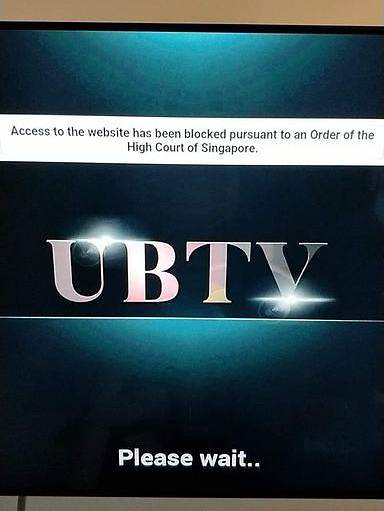
UBTV banned in Singapore

A user photo showing that access to UBTV has been blocked. (Photo: Facebook)

In the New TV Box SG Facebook group, one member commented on a post announcing the ban, saying: “Don’t need VPN, just change DNS.” Another in the same thread replied: “Thanks for the great tip! Working great.”

On another post regarding the ban, another member commented that he would rather pay for an alternative way to watch premium content. “Telcos are marking up their cable TV packages way too much,” he lamented.

Source link