Singapore Art Week 2019
from Saturday, January 19, 2019 at 12:00 AM to Sunday, January 27, 2019 at 12:00 AM
from Saturday, January 19, 2019 at 12:00 AM to Sunday, January 27, 2019 at 12:00 AM
Civic District Vicinity
Singapore, Singapore
SINGAPORE: In a bid to cut overall sugar intake, the Ministry of Health (MOH) has started consulting the public on four possible measures that include banning and taxing some pre-packaged sugar-sweetened beverages (SSBs).
The other proposed measures are tightening regulations on the advertising of less healthy food and drinks to children, and implementing a mandatory front-of-package label that indicates how healthy the SSB is.

On average, Singaporeans currently consume more than 1,500 teaspoons of sugar from pre-packaged sugar-sweetened beverages every year.
SSBs refer to drinks containing added sugar as well as juices with naturally occurring sugars. Pre-packaged SSBs include dry mixes like three-in-one coffee powder, cordial, soft drinks, isotonic drinks, commercial fruit juices and regular yoghurt drinks.
Pre-packaged SSBs do not include bubble tea and freshly-brewed drinks like a Starbucks frappucino or teh from a hawker centre.
WHY NOW?
The public consultation comes as Singapore has the highest prevalence of diabetes among developed nations, with almost one in nine people having the illness.
“High sugar intake is linked to increased risk of obesity and diabetes,” MOH said in a media release on Tuesday (Dec 4). “The number of Singapore residents with diabetes is projected to reach one million by 2050 if nothing is done to curb the rising trend.”
Singaporeans are also consuming an average of 12 teaspoons (60g) of sugar every day, with more than half of this coming from SSBs. Of this source, pre-packaged SSBs make up 64 per cent.
Furthermore, medium and higher sugar products – defined as those with at least four teaspoons of sugar per 250ml serving – make up more than half of the total sales of pre-packaged SSBs in Singapore.
Diabetes is currently the second leading cause of ill health of Singapore, behind Ischemic Heart Disease. (Photo: Reuters/Muhammad Hamed)
While Health Promotion Board (HPB) chief executive officer Zee Yoong Kang said the Government has made “quite significant progress” in tackling diabetes through voluntary measures and public education, he said more can be done to reduce the proportion of higher sugar drinks in the market.
According to GlobalData, 80 per cent of all pre-packaged non-alcoholic drinks sold in Singapore are SSBs, with the remainder being pre-packaged water.
“So now we are looking to consult the public on whether we can take a more regulatory-style approach to try to reduce the sugar content in these drinks,” Mr Zee added.
BANNING HIGHER SUGAR PRE-PACKAGED SSBs
The first measure under consideration is implementing a nationwide ban on the sale of higher sugar pre-packaged SSBs, which contain at least 5.5 teaspoons of sugar per 250ml serving, to discourage consumption.
The proposed measures come as the Government looks to step up its war on diabetes.
While SSBs with more than three teaspoons of sugar per 250ml serving cannot be sold in schools and on Government premises, MOH said consumers can still get these drinks elsewhere.
Furthermore, MOH said the public has called for the industry to lower its sugar threshold further, following a pledge by seven major SSB producers last year.
These producers, which include Coca-Cola, Nestle and Yeo Hiap Seng, pledged to limit the sugar content in their Singapore-sold products to no more than six teaspoons per 250ml serving. However, MOH said many drinks in the market still contain high levels of sugar.
TAXING MANUFACTURERS AND IMPORTERS
The second measure is imposing a tax on manufacturers and importers of pre-packaged SSBs to encourage the industry to reformulate and reduce sugar content in their products. This could help alter the public’s palate and reduce demand for sweet drinks, Mr Zee said.
According to the World Cancer Research Fund Nourishing database, about 45 jurisdictions including Brunei, Thailand and Mexico have imposed taxes on sugar-sweetened beverages. (Photo: Pixabay/igorovsyannykov)
“Globally, jurisdictions have required manufacturers and importers to pay duties around 10 to 35 per cent of the SSB retail price,” MOH said. This means that for a 250ml SSB, the tax would range from S$0.05 to S$0.18.
While MOH acknowledged that manufacturers might pass the tax on to consumers, it said consumers can still choose from a “wide range of options”, including water or healthier SSBs unaffected by the tax.
If the tax is passed on, Mr Zee said he hopes “the increase in price would also serve to encourage consumers to choose the many other alternatives that hopefully will come on and have less sugar”.
The tax itself can come in a flat or tiered form. A flat tax would involve the same rate for all SSBs containing sugar levels beyond a certain threshold. A tiered tax would involve lower rates for SSBs with lower sugar levels.
MOH said a flat tax would be simpler to understand and easier to implement, although manufacturers would see less incentive to drastically reduce sugar levels in their products and compromise taste.
In contrast, a tiered tax would provide more targets for the industry to reduce sugar levels progressively.
This year, the United Kingdom imposed a two-tier tax on SSB manufacturers: £0.04 (S$0.07) per 250ml for SSBs with 2.5 teaspoons of sugar or more, and £0.06 per 250ml for SSBs with four teaspoons of sugar or more.
According to UK government data, this has resulted in more than half of the manufacturers reducing the sugar in their drinks. The proportion of SSB products in the UK market with four teaspoons of sugar or more also dropped from 57 to 42 per cent two years after the announcement.
MOH stated that the tax will not be a form of revenue generation, adding that the Government will continue to support manufacturers which choose to reformulate.
TIGHTENING ADVERTISING REGULATIONS
The third measure is tightening the regulations on the advertising of less healthy food and drinks to children to reduce consumption.
This includes making current restrictions mandatory and expanding them to include more television time-belts and mass media channels, or banning such advertising across all time-belts and channels.
Singapore has voluntary guidelines to limit such advertising to specific television time-belts. For example, the restrictions apply to Okto from 9am to 9pm on weekdays. Online, there are limited restrictions on four children’s websites and none on social media.
“Children are increasingly exposed to advertisements outside these restrictions,” MOH stated.
MANDATORY FRONT-OF-PACK NUTRITION LABEL
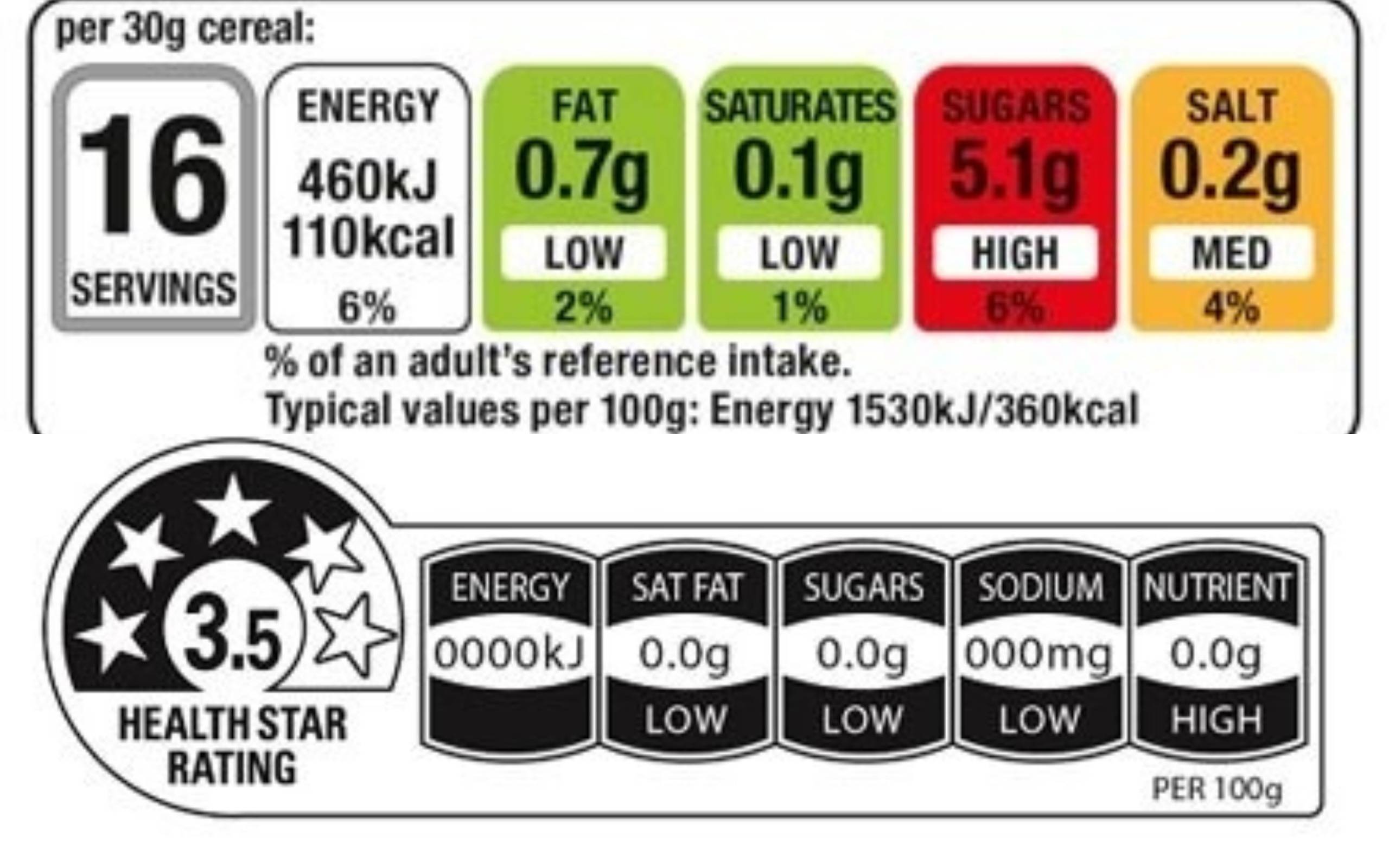
The fourth measure is introducing a mandatory front-of-pack nutrition label to help consumers make healthier choices. These labels, which are found in countries like France, Australia and New Zealand, can mark out the full range of SSBs, from healthier to less healthy.
These front-of-pack nutrition labels are found in countries like Ecuador, South Korea and New Zealand. (Photo: MOH)
“Evidence has shown that front-of-pack nutrition summary labels, as compared to a full listing of nutrition information, are more effective in helping consumers easily identify products with higher sugar content and/or poorer nutrition quality,” MOH said.
The labels can also complement the Healthier Choice Symbol programme, which is voluntary and only indicates the healthier choices, the ministry added.
WHEN WILL THE MEASURES BE IMPLEMENTED?
MOH said the four measures are not mutually exclusive, meaning they could be implemented in different combinations. Depending on public feedback, none of the measures could be implemented as well.
The public can submit their views and other suggestions through the REACH website from Tuesday till Jan 25, 6pm next year. As part of the consultation, MOH and HPB will also organise dialogues with the public as well as the SSB and advertising industry.
And if a potential implementation proves successful, Mr Zee said there is scope to expand the measures to other types of SSBs.
When asked when the measures could possibly be implemented, MOH declined to commit to a timeline, stating that it wants to gather public feedback first. But overseas experience indicates that imposing something like a tax on SSBs could take between two to three years.
Still, Mr Zee rejected the notion that given Singapore’s growing diabetes problem, the country is too slow in implementing these measures.
“All our measures show that Singapore has been leading the world in terms of sugar reduction through voluntary measures,” he said, pointing out that sugar content in drinks has gone down “very significantly” over the past decade.
“I think it is not because we feel that we have not made enough progress, but we really want to do more to get the sugar down as low as possible.”
The multi-year agreement will see collaboration between CNA Lifestyle and Singapore Tatler across multiple platforms.
In front are Mediacorp Editor-In-Chief Walter Fernandez (left) and Edipresse Media Singapore Managing Director Corinne Ng. At the back are (from left) Phin Wong (Supervising Editor, CNA Lifestyle, Mediacorp), Indranil Sarkar (Lead, Partnerships & New Businesses, Mediacorp), Parminder Singh (Chief Commercial & Digital Officer, Mediacorp), Stephanie Tay (General Manager – Commercial, Edipresse Media Singapore), Selvamani Loganathan (Financial Controller, Edipresse Media Singapore). (Photo: Mediacorp)
SINGAPORE: Mediacorp and luxury media group Edipresse Media Singapore (EMS) will be collaborating to create more luxury content and experiences for Singapore audiences.
The agreement between the two companies, which was announced on Tue (Dec 4), will bring together the former’s multi-platform audience reach and editorial expertise with the latter’s own know-how in providing premium lifestyle content and event experiences.
Under the multi-year agreement, CNA Lifestyle’s luxury segment will collaborate with EMS’ Singapore Tatler division for content experiences across digital editorial content, TV, live radio and events. These will also be available on the platforms of both companies.
The commercial teams of both companies will also be working together to reach out to advertisers keen on engaging premium audiences across online and offline platforms.
Mediacorp’s editor-in-chief Walter Fernandez (left) and Edipresse Media Singapore managing director Corinne Ng. (Photo: Mediacorp)
“Collaboration is a hallmark of today’s rapidly changing media landscape. With Singapore Tatler’s strong heritage of over 36 years coupled with Mediacorp’s extensive reach, we are able to provide unique insights into the current luxury landscape and inspiring lifestyle experiences to our audience of discerning individuals,” said Corinne Ng, Edipresse Media Singapore’s managing director.
Mediacorp’s editor-in-chief Walter Fernandez added: “The partnership is a strategic collaboration which will benefit both companies. Working with Singapore Tatler will help CNA Lifestyle to expand its range of lifestyle-related content and better serve its audience online, on air and in the events space. This partnership is testament to the ambitions of CNA Lifestyle to be the largest lifestyle destination in Singapore, and a major player in the region.”
CNA Lifestyle was launched on Sep 18 to provide PMEBs (professionals, managers, executives and businessmen) with the latest in dining, travel, style, wellness and what’s trending in the lifestyle and entertainment landscape in Singapore and across Asia.
In October alone, content from CNAlifestyle.com pulled in 2.9 million page views and 1.4 million unique visitors.
Mediacorp will bring the luxury content co-produced with Edipresse Media into its portfolio of digital assets, which include over 40 products in four languages (English, Mandarin, Malay and Tamil).
The deal is part of the Mediacorp Partner Network initiative by Mediacorp, which is aimed at delivering a richer experience for consumers and advertisers in Singapore through partnerships with different organisations.
THE number of expatriates moving to Southeast Asia in recent years has increased significantly owing to increased job opportunities and high growth emerging markets in the region.
With better infrastructure and amenities mushrooming in the region’s main urban centres over the past decade alone, coupled with attractive higher living standards comparable to western equivalents, it is little wonder why foreign expatriates are arriving in droves to live and work in Southeast Asian nations.
And with migration comes the need for the foreign workers to find a place they can call home, especially in places where they can mix and mingle among each other in the host nation.
SEE ALSO: Here are the best Asian cities for expats
With that in mind, the Asian Correspondent has come up with a list of five popular districts for expat living and accommodation.
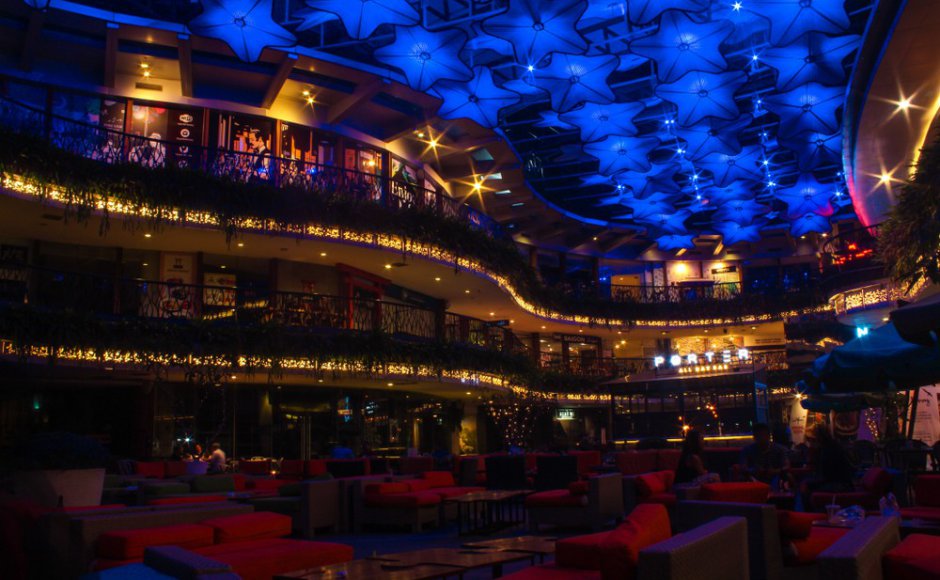
The construction of Kemang Village in 2013 has given the area a modern-yet-charming village vibe. SOurce: Shutterstock
Situated along the streets of Jalan Kemang Raya and Jalan Kemang, southwest of Jakarta’s city-centre, Kemang is an attractive are for expats due to its proximity to renowned international schools and an array of popular western restaurants and night spots. The myriad of luxury villas and condominiums also make it ideal for the expat community there which are closely knit. The construction of Kemang Village in 2013 has given the area a charming village vibe while imported food was easily accessible at sundry shops that have English-speaking staff.
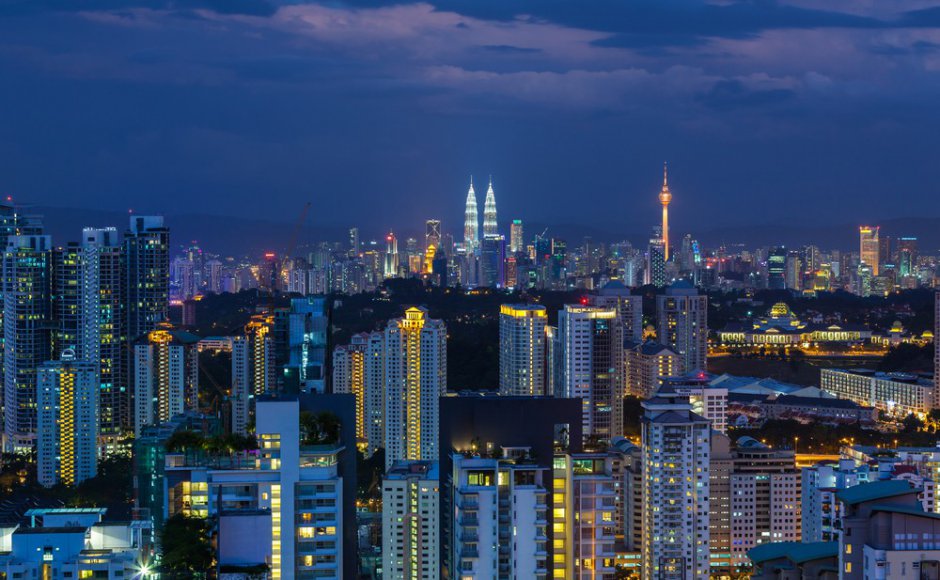
Mont Kiara is attractive due to the availability of international schools, shopping centres and entertainment outlets. Source: Shutterstock
Known for its high-end accommodation, Mont Kiara which sits on the periphery of the Malaysian capital’s city centre offers deluxe bungalows, townhouses and is sprawled with high-rise apartments. Those vying to stay in the city for the long term find Mont Kiara attractive due to the availability of international schools, shopping centres and entertainment outlets.
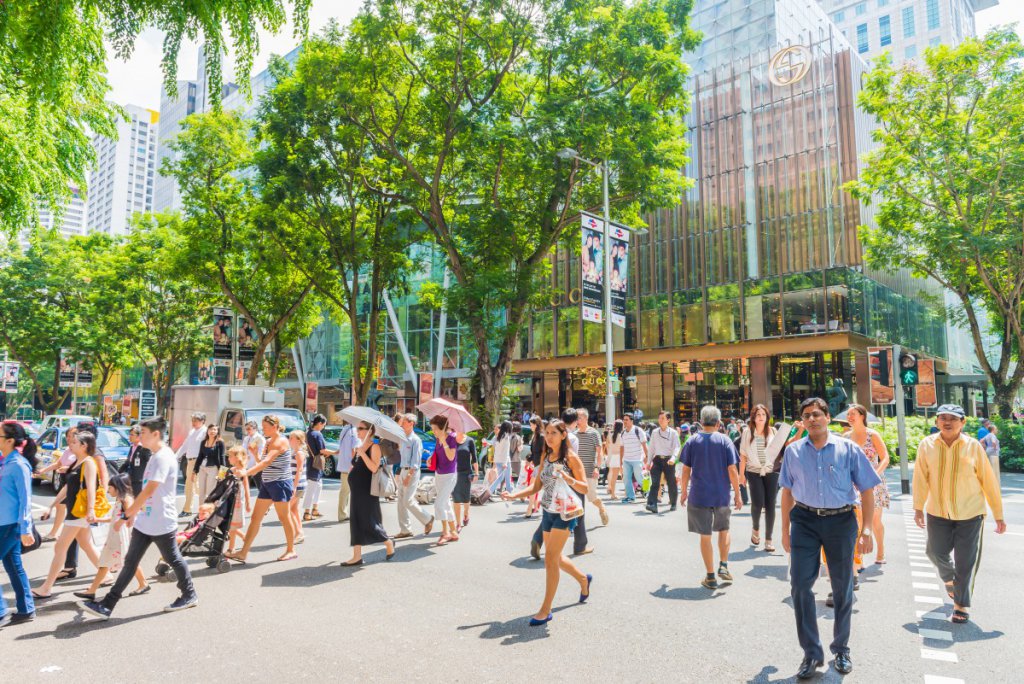
A crowd walks along Orchard Road in Singapore. Source: Shutterstock
Singapore’s iconic orchard road offers unrivalled access to amenities in the island-city. According to Expat Living, while Orchard Road is a hive of activity, the surrounding neighbourhoods are surprisingly quaint. While rent here comes at a premium rate, residents have Orchard Road’s famous shopping malls at their doorstep, not to mention the variety of cinemas, restaurants, hotels, and other services on offer. The efficient public transportation system in the area also allows one to get by their working lives in the country without having to buy their own vehicle.
SEE ALSO: Hong Kong no longer the most expensive city in Asia for expats
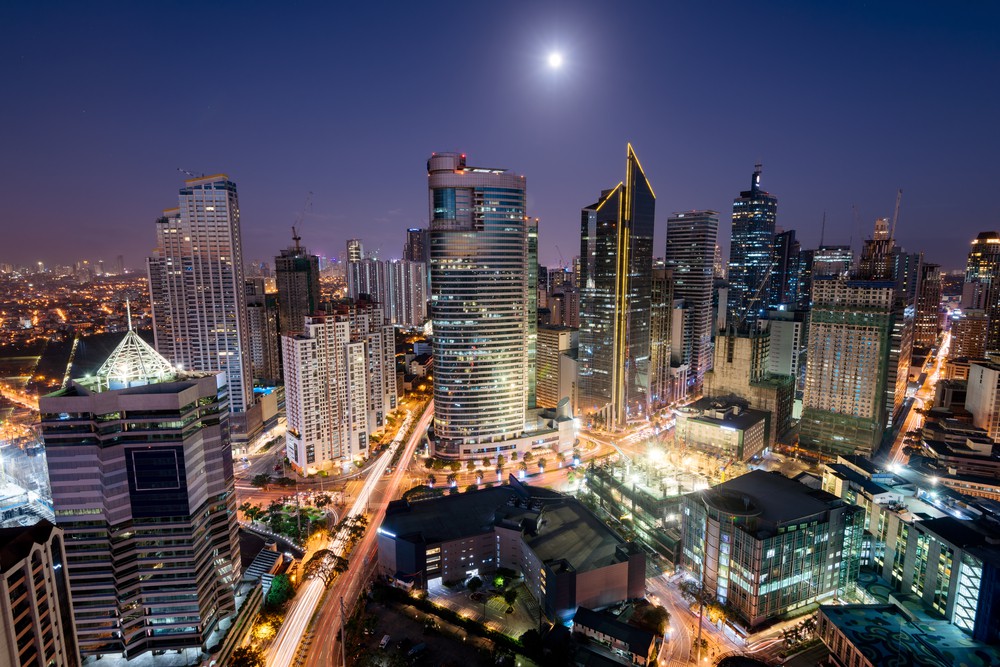
Makati Skyline at night. Makati is a city in the Philippines` Metro Manila region and the country`s financial hub. It`s known for the skyscrapers and shopping malls. Source: Shutterstock
The bulk of expatriates living in Manila’s famed Makati district comprise American and European expatriates and retirees who have settled in the country for an extended period of time. Known for its safety, Makati also provides plenty of business office spaces, making the central business district the heart through which the capital’s economy flows, according to website Rent In Makati. Most expats would opt for a condominium unit in locations such as Rockwell, Salcedo Village, and Legaspi Village, among others.
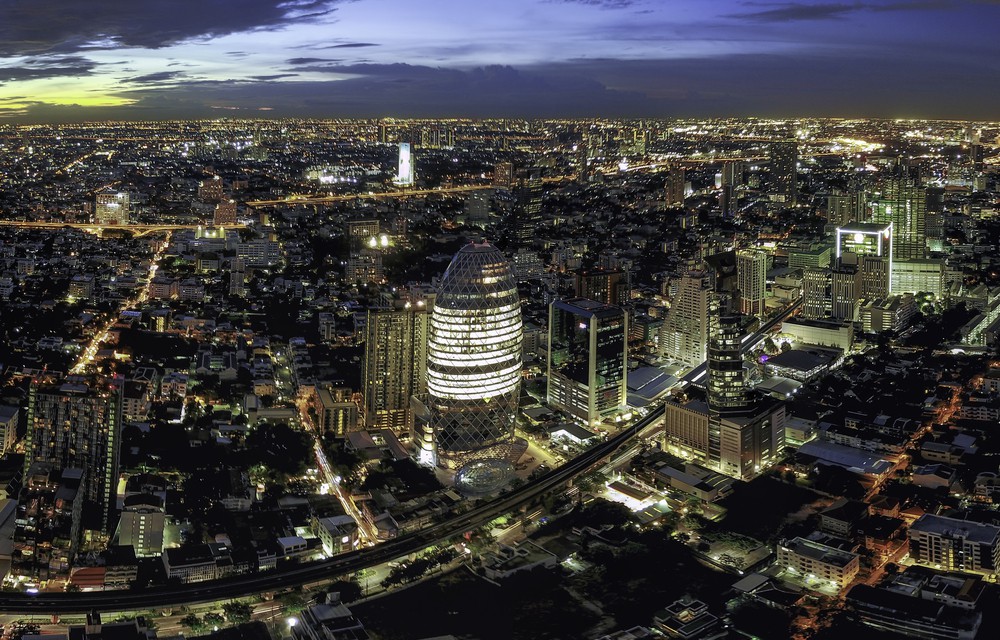
Great coffee shops and a large range of western foods also allows expats feel close to home. Source: Shutterstock
Sometimes spelled ‘Aree’, the district is making its name as a rising expat hub in the Thai capital. According to findthaiproperty.com, Ari is an ideal destination for expats and their families due to the accessibility of some of the city’s best restaurants and bars. Great coffee shops and a large range of western food outlets also allows expats feel close to home. With the pace of life being slower than other parts of the city, Ari is considered a great place for expats moving in with their families.
SINGAPORE: MacPherson’s facade may have changed over the years, but the Housing Board estate still holds poignant memories for residents such as Mr Phua Soo Kiah.
After all, it was where he met the love of his life.
Fifty three years ago, Mr Phua’s late father opened Phoo Huat provision shop at Block 36, Balam Road. His son, the fourth of five boys, would spend time after work helping his father out, delivering goods to neighbours and residents.
“It was a very good environment to live in growing up,” Mr Phua recalled. “There was that mutual trust and community spirit … Neighbours would help each other out, take care of each other’s children and we were all very close.”
One of the residents he would deliver goods to would be his future mother-in-law. “She was a very nice woman,” recalled Mr Phua. “I would notice her daughter around and keep an eye out for her.”
Mr Phua tied the knot with Mdm Teo Quee Huay in 1980 and he continued to help his father in the shop, before taking over the place in 2006.
“It has a special place in my heart,” Mr Phua recalled. “I wanted to take over to keep the memory of my father alive.”
While Mr Phua has since sold off the store, the couple plans to remain MacPherson residents.
“I won’t move,” he said. “My children already have homes elsewhere, and they’ve asked if we want to move in with them. But I think it’s better here.
“I never thought as a child that MacPherson would be the way it is today.”
Mr Phua Soo Kiah and Mdm Teo Quee Huay first met in MacPherson, and have spent most of their life working and living in the estate. (Photo: Matthew Mohan)
Formed as an electoral division during the first general election in post-independent Singapore, MacPherson celebrates its 50th anniversary this year.
The constituency marked the occasion with a community event last month, unveiling a new mobile app (MacPherson Cares) with functions that connect residents to digital doctors and volunteers.
Starting off with approximately 13,000 residents living in 1 to 3-room public housing within Jalan Persiaran Keliling (known today as Circuit Road) and Paya Lebar Way, today the estate spans 1.9 sq km and is home to a population of about 46,000 and counting.
“Some people may think MacPherson is very old … With an old estate, things obviously suffer wear and tear, and give a sense of a dated feel,” said Member of Parliament for the area Ms Tin Pei Ling.
“But it is a place where there’s a lot of heritage and, because of our rich heritage, it gives us the confidence to imagine the future as well, and try new things.
“In the seven to eight years that I’ve been (working) here in MacPherson, (I’ve noticed) there’s that human bond which is very strong,” Ms Tin told Channel NewsAsia. “So many of them have stayed here for decades since their youth and, for some, since they were born. The kind of emotional attachment, the sentiment that they have towards MacPherson is very deep and strong.
“If you look at housing estates, what really makes it come to life are the people. Otherwise, it’s just concrete brick and mortar. It’s the people who give MacPherson its soul.”
One of the first HDB estates built in Singapore, as MacPherson has aged, so it has benefited from measures such as the Main Upgrading Programme (MUP), Home Improvement Programme (HIP), Neighbourhood Renewal Programme (NRP), and Lift Upgrading Programme (LUP) among others.
A total of about 15,200 flats in 125 blocks have benefited from or will stand to benefit from the MUP, HIP and LUP, said HDB.
These programmes cover home improvement works such as the replacement of pipes, repairs to spalling concrete, the installation of elderly-friendly features as well as the provision of direct lift access on every floor. Additionally, 32 blocks have been announced for NRP, which is implemented by the town council, for block and precinct improvements.
MacPherson MP Tin Pei Ling poses for a photograph at a dragon playground in her estate. (Photo: Matthew Mohan)
While infrastructural developments are a step in the right direction, there is also a need to provide for low-income residents in the estate, said Ms Tin.
“Generally speaking, this estate will see a greater share of residents who need a greater push resources-wise as well as encouragement,” said Ms Tin. “It’s not necessarily easy for people to get back on their feet sometimes after they fall. So there’s much work for us to do.
“But we’re grateful that we’ve been receiving from kind-hearted individuals and organisations. So, myself, and my grassroots work with them to see how we can reach these households – especially the old and children of underprivileged and complex family backgrounds.”
Organisations such as Thye Hua Kwan Moral Charities as well as Methodist Welfare Services (Charis Ace) are among those also provide help for the community and grassroots leaders also work in tandem with these groups.
“They have their programmes and we have ours and where we see its useful we try to collaborate,” said Ms Tin. “We are very thankful for their strong support so far.”
Ms Tin and grassroots leaders also take it upon themselves to identify areas of need and implement solutions.
Residential units at a HDB block in MacPherson. (Photo: Matthew Mohan)
Even as attempts are made to maintain the old estate, new life is being breathed into MacPherson.
New HDB developments such as the recently completed Built-To-Order (BTO) project MacPherson Residency, as well as MacPherson Spring, another BTO project currently under construction, mean that the demographic of the estate will be constantly evolving.
“We are expecting an influx of some young families, said Ms Tin. “And even so, we also do have young people and young kids and we want to engage them more.”
One of the ways to do this so is through arts and culture, she explained.
“We have ‘casual’ Fridays and Saturdays where we get local bands to come and perform at different places – usually outdoors in the housing estates,” said Ms Tin. “It’s a very casual, very hipster type (event) and we do see different profiles of residents coming down – youth, young families.”
Art installations are another way to jazz up the neighbourhood. Take the void deck art gallery at Block 56, Pipit Road. Painted in vivid yellow and blue hues, the gallery, the first segment of which was painted in 2011, features reproductions of Van Gogh’s paintings.
“While we want to introduce new and fun things, we also want to introduce it in such a way that it’s popular with the masses, such that different age groups find it acceptable, easy to embrace,” said Ms Tin.
“But, because we partnered (arts charity) Social Creatives back then, they brought in people familiar with Van Gogh so there was careful curation of pieces, and careful design of the void deck made it feel like a proper gallery,” said Ms Tin, who also gave the example of a resident who was won over after initially writing in to express concern over the gallery.
Other initiatives have including the painting of pavements, photography projects as well as community art projects.
85-year-old MacPherson resident Mdm Chonbi Ismail refuses to move elsewhere, saying that she enjoys the comfort of the estate. (Photo: Matthew Mohan)
‘
Change has brought with it convenience for residents such as Mdm Chonbi Ismail, who has been quick to welcome the new.
“I’m happy here – the market is very near, the bus stop is very near, you can go anywhere you want to, it’s easy,” she said. “Last time there were no shops, I had to take a bus to Geylang. But now, there are plenty.”
The 85-year-old may live alone but she is not short of company. Her son meets her daily, dropping off breakfast before he begins work. Her grandsons also visit on a regular basis. There’s also the Thye Hua Kwan Senior Activity Centre below her block where Mdm Chonbi catches up with friends.
“This house is special for me, I like it here and I’m happy… I sleep very well,” said Mdm Chonbi, who lives in a one-room flat.
A resident in the estate for over 40 years, Mdm Chonbi wouldn’t dream of moving – even if she’s offered a much bigger space. When she spends the night at her son’s flat, she returns home immediately the next morning.
“I wouldn’t care even if it’s a big house,” Mdm Chonbi said with a laugh. “My niece stays in Changi – in a big house. She also tells me to come to stay with her, but I don’t want to.”
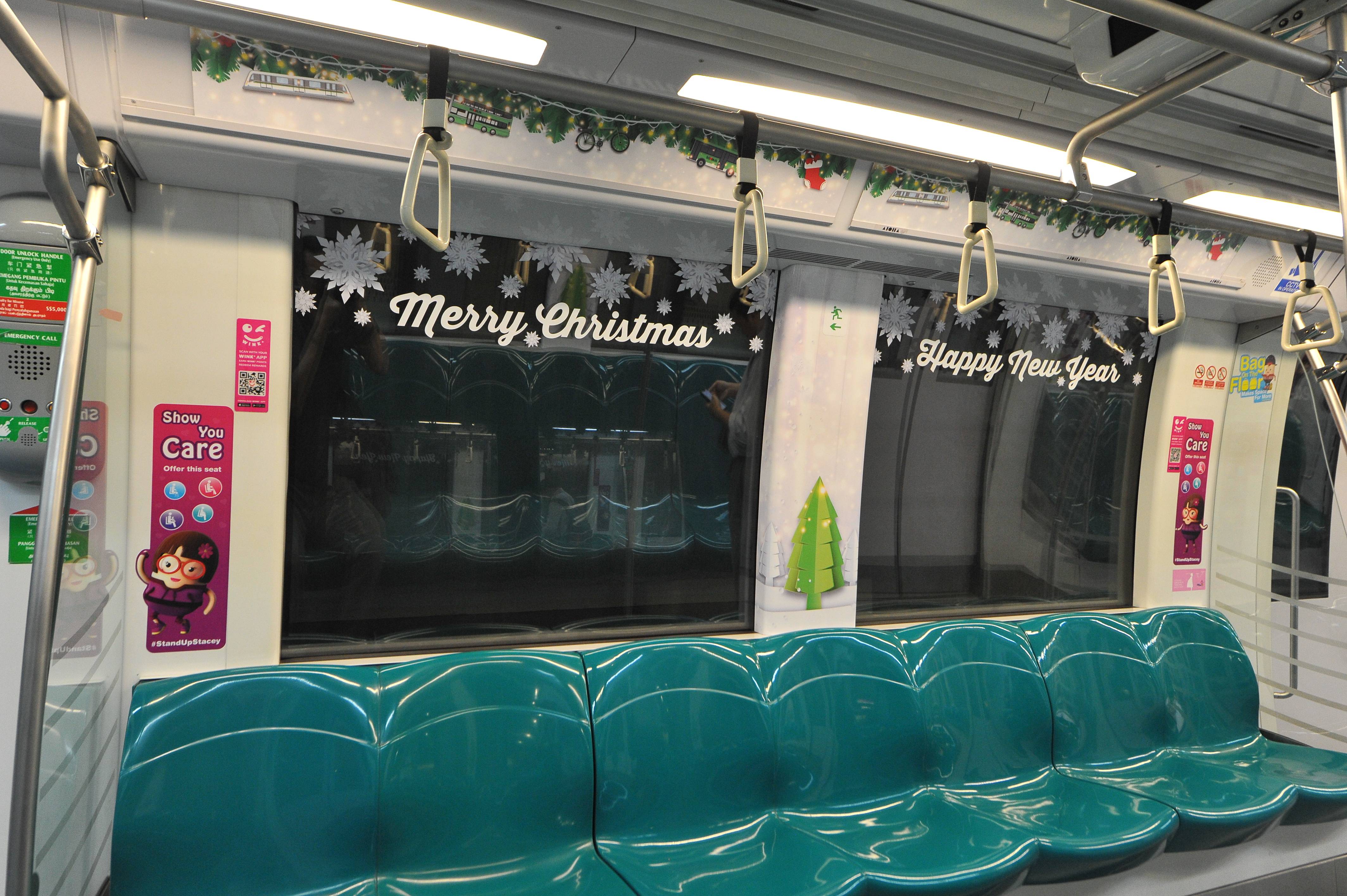
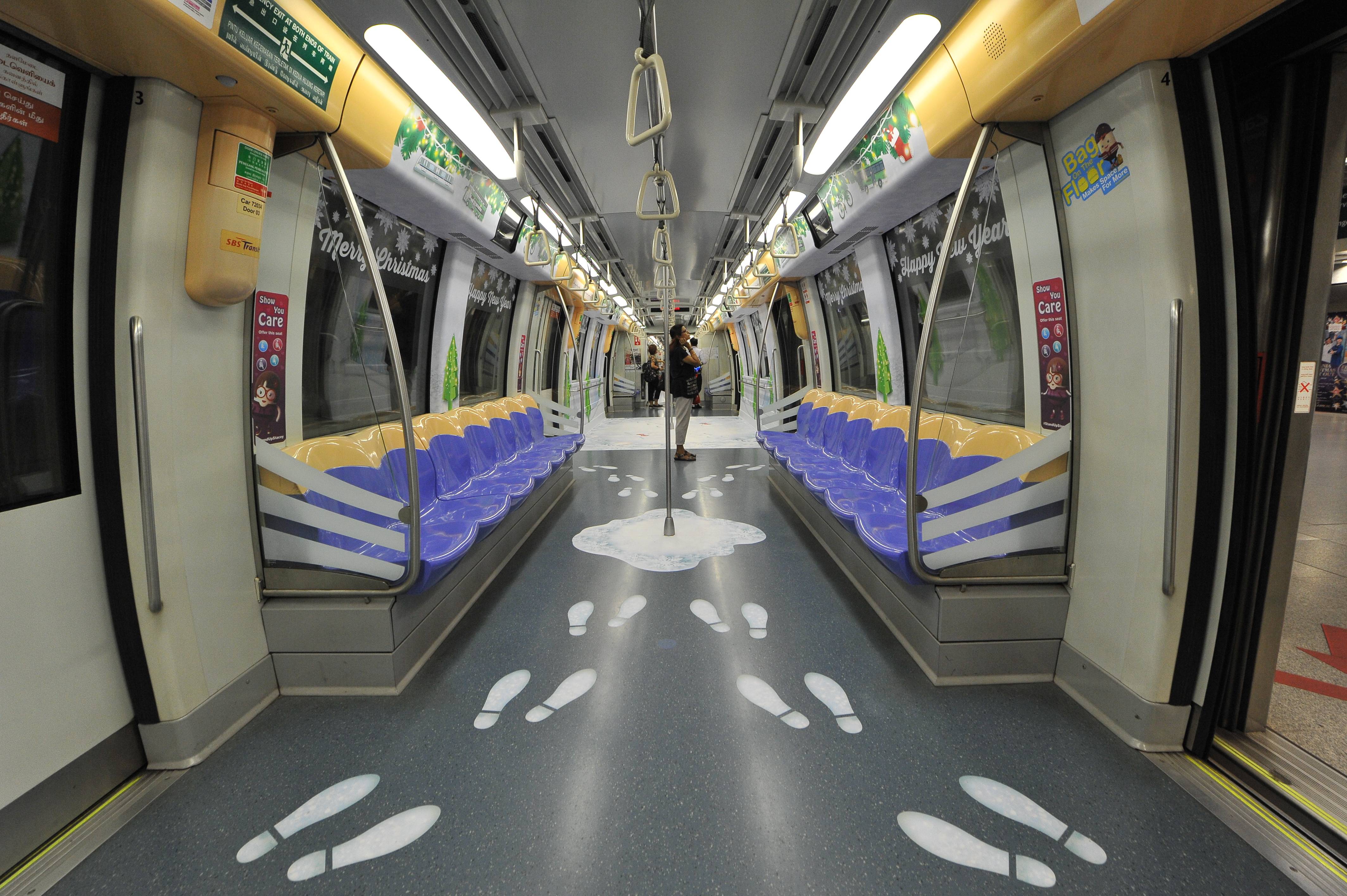
SINGAPORE: There won’t be reindeer drawing them, but trains and buses in Singapore will be covered in “snow” from now until Dec 30.
Commuters will be able to ride in a “winter wonderland” on all five train lines, said the Land Transport Authority (LTA) on Monday (Dec 3).
Transport and festive motifs like a candy cane in a stocking on a Christmas-themed train. (Photo: Land Transport Authority)
Greetings for the festive season on a Christmas-themed train. (Photo: Land Transport Authority)
Commuters can catch these festive themed trains until Dec 30, 2018.
Serangoon, Newton, Dhoby Ghaut, Orchard and Somerset MRT stations will be decked out with Christmas decorations.
Ang Mo Kio and Bedok Integrated Transport Hubs as well as eight bus services – numbers 5, 7, 61, 65, 106, 174, 197 and 972 – have also been decorated with wintry motifs that include pine trees and snowflakes.
The Christmas decorations at Dhoby Ghaut MRT station. (Photo: Land Transport Authority)
Eight bus services also feature the Christmas decorations. (Photo: Land Transport Authority)
LTA said the themed trains and buses were launched in collaboration with SBS Transit and SMRT.
Prime Minister Lee Hsien Loong says he will still take the lead for the People’s Action Party at the next General Election in terms of setting the agenda, working out the policies and campaigning for the party.
Prime Minister Lee Hsien Loong arrives at the ASEM leaders summit in Brussels, Belgium on Oct 19, 2018. (File photo: Reuters)
BUENOS AIRES: Singapore Prime Minister Lee Hsien Loong said he will still lead the People’s Action Party (PAP) in the next General Election, although the fourth-generation (4G) leaders will “very much be in the thick of things”.
“I think taking the lead in the sense of setting the agenda, working out the policies, preparing the manifesto, making the pitch to the public, and actively campaigning during the election and organising the election,” said Mr Lee.
Speaking to reporters at the end of his five-day visit to Argentina on Saturday (Dec 1), where he attended the G20 Leaders’ Summit from Nov 30 to Dec 1, Mr Lee added that the country’s ruling party has a depth of experience going into the polls.
Mr Lee said that it is not just the experienced leaders who can lead, as the younger crop also possesses both the capability and willingness to take Singapore into the future.
“The fact that we are going into an election with a team which has depth – it’s not just the present leaders, who are in their late 50s, early 60s – but also the next generation of leaders, 40s, 50s, ready to take over,” he said.
“I think that’s a very strong message, which goes beyond any specific policies and manifesto items or promises, but the commitment is we are here to serve and not just for now, but to serve into the future and you can rely on us.”
In November, the PAP appointed a new slate of office bearers in its Central Executive Committee, with the so-called 4G leaders making up the bulk of the new team. Singapore’s general election must be held by April 2021.
Finance Minister Heng Swee Keat became the party’s first assistant secretary-general, paving the way for him to be the future leader of the party. Trade and Industry Minister Chan Chun Sing was appointed the second assistant secretary-general.
PRIORITY IS TO WIN ELECTION: PM LEE
When asked about the plans for Mr Heng, Mr Lee said the priority is to win the election first.
“After that, if all goes according to plan, well, the succession happens within the PAP,” he said.
“There are no surprises. I very much hope we will work out that way. It’s a mechanism which has worked well for Singapore. It has provided stability, continuity as well as renewal and updating of persons – individuals, leadership as well as content for our policies. But it depends on the party staying together and the party winning elections.”
Asked when the next Cabinet reshuffle will take place, Mr Lee only said that he will do so “in due course”, adding that a reasonable time would be after next year’s Budget. The Budget speech is typically delivered by the finance minister in February or March.
Finance Minister Heng Swee Keat, who was also in Buenos Aires with Mr Lee, told reporters that the younger ministers will meet in January to discuss long-term issues that Singapore needs to address.
Following the discussions, the team will then consult Singaporeans on the topics that will shape the country’s future.
“We want to build on the Our Singapore Conversation. But at the same time, we want to have some time to look at what are some fundamental, long-term issues that as a country, we need to address, as a society, we need to address,” said Mr Heng.

SINGAPORE: There will be increased checks on food establishments during the festive season, the National Environment Agency (NEA) and the Agri-Food & Veterinary Authority of Singapore (AVA) said on Monday (Dec 3).
The checks will prioritise licensees that provide catering services and other premises with substantial catering operations in December, the agencies said in a joint statement.
Ahead of an expected increase in the number of consumers dining out and ordering catered food, the agencies said they will remind food operators of good hygiene practices during food preparation and handling.
The emphasis on caterers comes after three mass food poisoning incidents in November.
Last week, more than 130 students and teachers fell ill after consuming food prepared by FoodTalks Caterer and Manufacturer while attending a kids’ camp.
A bento set supplied by FoodTalks Caterer and Manufacturer. (Photo: FoodTalks)
Restaurant group TungLok’s catering arm had their licence suspended after 190 people fell ill with symptoms of gastroenteritis, authorities said on Nov 24.
Earlier, a SATS officer died after consuming food from restaurant chain Spize’s River Valley outlet. He was among 81 people who fell sick after eating food supplied by the restaurant.
TungLok Catering, Spize’s River Valley outlet have had their licences suspended, while FoodTalks remains under investigation.
Authorities also reminded members of the public to consume catered food within the stipulated “consume by” period.
This is set at within four hours of the time the food is placed at the “temperature danger zone” of between 5 and 60 degrees Celsius. Caterers are required to time-stamp to meals to keep consumers informed of the “consume by” time.
“Every catered meal carries an inherent risk as the food is not consumed immediately after it is prepared,” the agencies said.
The NEA said it will also engage representatives from the Association of Catering Professionals Singapore and the Restaurant Association of Singapore about the importance of food hygiene and safety.
As of the end of November, the NEA has carried out over 73,000 inspections on food establishments, taken more than 2,600 enforcement actions against those who flouted hygiene regulations and suspended 84 licences.
AVA has carried out over 9,000 inspections on food manufacturers, taken action against close to 500 licensees and suspended 13 licences this year.
SINGAPORE: Authorities in Singapore and China have smashed a transnational vice syndicate and arrested 201 suspects, said the Singapore Police Force (SPF) in a news release on Monday (Dec 3).
The joint operation, conducted by Singapore police and China’s Ministry of Public Security (MPS), took place between Oct 22 and Nov 23.
A total of 83 locations in Singapore and in various parts of China were raided simultaneously, said Singapore police.
Twelve men and 173 women were arrested in Singapore for offences under the Women’s Charter. The rest of the suspects were arrested in China.
According to preliminary investigations, the vice syndicate in China operated a website which advertised sexual services of Chinese women in Singapore.
The syndicate is also believed to have made arrangements for the women to travel to Singapore, where they allegedly carried out vice activities in private apartments and HDB flats in the heartlands, said the police.
Screengrab from a video showing raid to crack down on a transnational vice syndicate. (Image: SPF)
During the raids in Singapore, nearly S$70,000 in cash, laptops and mobile phones were seized, while nearly RMB$420,000 (S$83,300) in cash was seized in China.
“This successful joint operation is a result of the close collaboration between the SPF and the MPS, People’s Republic of China,” said Florence Chua, Deputy Commissioner of Police (Investigation & Intelligence) and concurrent director of the Criminal Investigation Department.
“I would like to thank the MPS for their strong and unequivocal support, which was instrumental in crippling this syndicate.”
The police added that property owners play an important role in preventing vice activities, and reminded them to conduct regular checks on their tenants.
Those who knowingly rent their property to any person for vice-related activities face a jail term of up to three years and a fine of up to S$3,000.
Repeat offenders face a jail term of up to five years and a maximum fine of S$10,000.
SINGAPORE: The Islamic Religious Council of Singapore (MUIS) will have a new senior management team from next year, with Mr Esa Masood replacing retiring chief executive Abdul Razak Maricar.
In a statement on Monday (Dec 3), MUIS said Mr Abdul Razak, 64, has prepared his team for transition and renewal.
“Succession planning has always been a priority in MUIS, as it strives to ensure continuity in service while adapting to changing context and needs for the nation and the Singaporean Muslim community,” Mr Abdul Razak said.
“I have confidence in my staff, in particular the management team which Muis has built over time.”
MUIS’ senior management team (from left): Dr Mohamed Fatris Bakaram (Mufti of Singapore), Mr Esa Masood (Incoming Chief Executive), Hj Abdul Razak Maricar (Current Chief Executive) and Dr Albakri Ahmad (Deputy Chief Executive).
Mr Esa, currently deputy chief of MUIS, joined the organisation in late 2017. He has been overseeing sectors such as the mosque, social development and Islamic education, MUIS said.
The 39-year-old has held leadership positions in various organisations including the Ministry of Trade and Industry, the Ministry of Education and the Early Childhood Development Agency.
Commenting on the leadership transition, Mr Esa said: “I have been very fortunate to have benefited from the mentorship of Abdul Razak and his wealth of experience during my time in MUIS, and I also benefitted from Mufti and the MUIS senior management.
“We will continue to work together with the Muslim community, through our various platforms, to strengthen the community’s religious life. We also hope to further strengthen ties with other faith communities as part of a multi-racial and multi-cultural Singapore that we hold very dear to us.”
Mr Abdul Razak, who has been MUIS CEO since August 2013, is retiring after more than four decades in public service.