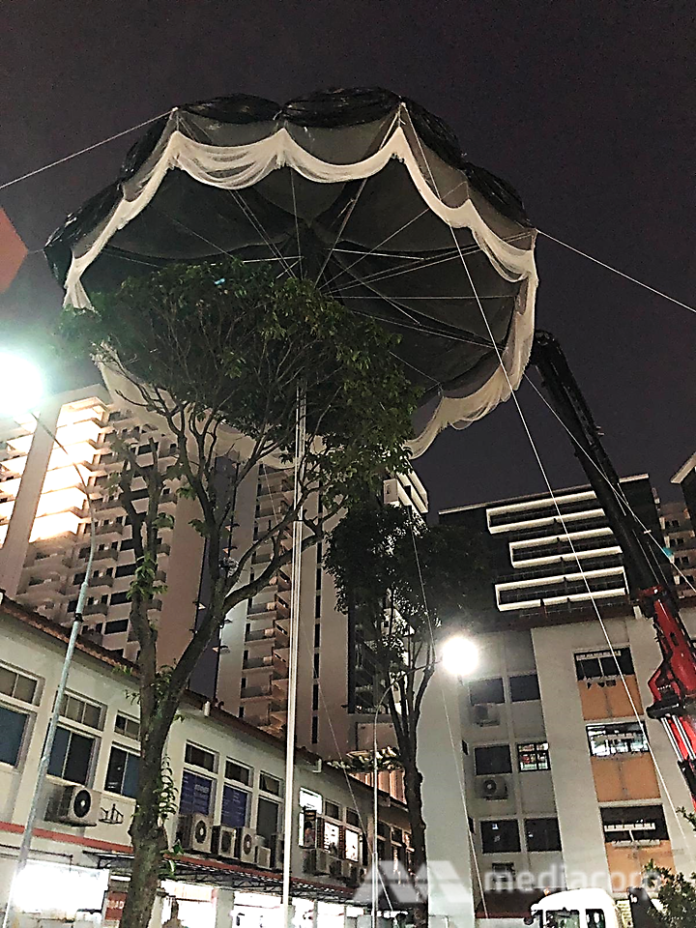
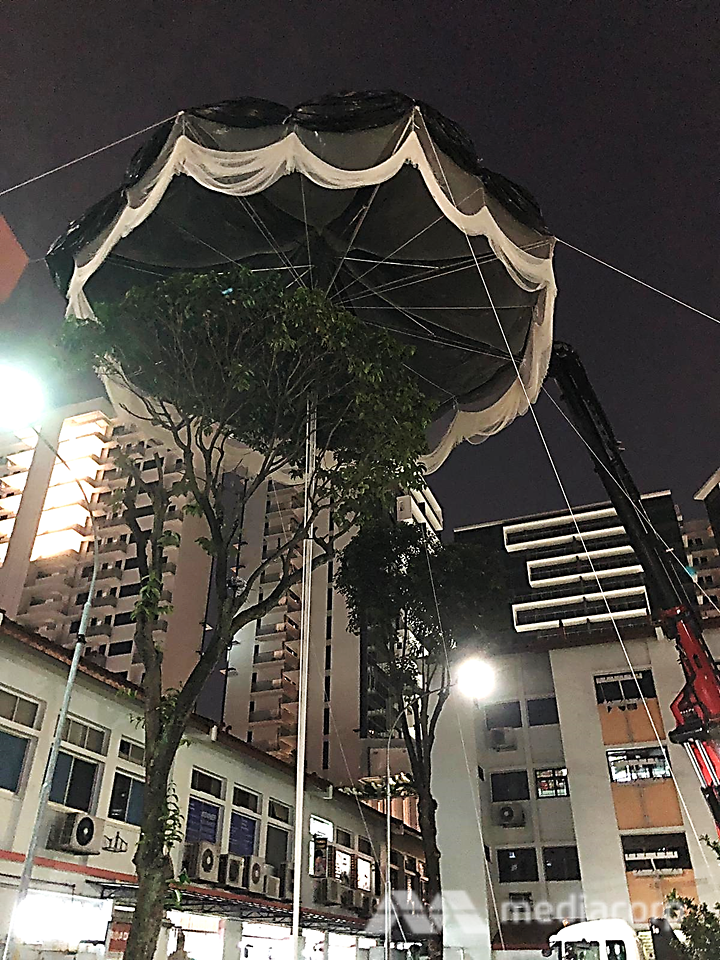
SINGAPORE: A new method to control the Javan Myna population by trapping them in a giant net and culling them using carbon dioxide was being trialed in Potong Pasir, following complaints by residents about the noise made by such birds.
The “roost net system” was installed on Thursday (Dec 27) near Block 146 Potong Pasir Avenue 1, said the Agri-Food and Veterinary Authority (AVA). It has since been taken down and AVA said it will look into deploying the system in other areas where required.
There are currently about 2,800 mynas roosting in the area, said AVA, adding that the non-native, invasive bird species can cause hygiene and noise issues.
They can also pose a threat to native bird species as they compete for nesting and food resources.
EARLIER MEASURES HAD “LIMITED” SUCCESS
Potong Pasir’s Member of Parliament Sitoh Yih Pin said he started receiving feedback and complaints from residents about the noise about two years ago.
The town council had previously engaged AVA to explore solutions to manage the situation.
These include pruning Angsana trees near homes to disrupt the roosting of mynas, as well as a four-day trial in 2017 using lasers to deter mynas from their roost trees.
Thees measures, however, had “limited” success, said Mr Sitoh.
In response to Channel NewsAsia’s queries, AVA said on Friday that the laser method was not a feasible long-term solution as it worked only when its officers were present daily to point lasers at the mynas when they returned to roost.
“It was observed that the mynas would return after we stopped pointing lasers at their roost trees. It was also possible that mynas would become de-sensitised to the lasers following repeated application,” AVA added.
A giant trap trialed by AVA to control the Javan Myna population in Potong Pasir. (Photo: Regina Goh)
It appears the bird situation has worsened.
“Around September this year, the mynas migrated to the nearby Potong Pasir heartland area after the trees in Upper Serangoon Road were hard-pruned,” said Mr Sitoh.
“Since then, we received feedback and complaints about similar myna noise disturbances from residents living along Potong Pasir Avenue 2, Woodsville Close and Leicester Road,” he said, adding that about 1,000 households have been affected by the noise from the birds.
Apart from the trialing the roost net system, AVA said the National Parks Board is exploring the possibility of replacing existing trees with those with structural forms that are less preferred by the birds, such as trees with crowns that are less dense.
Managing such species of birds requires a “holistic approach”, AVA said, adding that the public should dispose of food scraps properly and avoid feeding the Javan Mynas.
SINGAPORE: Ten months after they were told to stop brewing beer in their residential hall in Nanyang Technological University (NTU), Mr Rahul Immandira, Mr Abilash Subbaraman and Mr Heetesh Alwani have decided not to call it quits and are gearing up to bring their specialty beer brand to the market.
Binjai Brew – named after NTU’s Binjai Hall where the three engineering students started their beer-making journey last September – will hold a launch event on Saturday (Dec 29) to mark its months-long journey to becoming legitimate.
Earlier in February, the 25-year-olds were asked by the university to put a stop to their brewing activities in campus, which they were told fell foul of the regulations governing home-brewing of fermented liquors.
While they did as they were told, they never stopped thinking about how they could continue, recalled the trio in an interview with Channel NewsAsia earlier this week.
Now, by partnering a local contract brewer, three flavours perfected by the friends in their dormitory’s pantry, as well as an unused corner in a NTU chemistry lab, are ready to hit the market.
FROM DREAM TO DRINK
The journey to becoming beer makers started from a summer internship that Mr Immandira had at a small brewery in California last year. While he was not paid, the three-month stint opened him up to the world of craft beer.
“My main task was to find a better way to sanitise the tanks but my manager gave me the freedom to try out other tasks in the brewery, like running the equipment,” said the chemical engineering student. “That’s how I realised that there can be so many different styles (of beer) and they taste good.”
When he returned to Singapore, he roped in his close friends Mr Subbaraman and Mr Alwani to give beer-brewing a shot.
“Everyone in class was like ‘How did you get an internship at a brewery? Do you know how to make beer now?’ So I thought why not just try making something,” Mr Immandira continued with a grin.
In less than a week, the trio assembled the basic tools they needed, such as a 10-litre brewing pot and a beer fermenter, as well as ingredients like malted barley, hops and yeast from local home-brewing supply stores.
Their first attempt resulted in an “insanely alcoholic” brew after they misinterpreted the ratio of ingredients. “Let’s just say it’s good for parties but not good enough as a beer,” recalled Mr Immandira.
But they got better and began experimenting with different styles of beers by tweaking recipes they found online. Along the way, they also started improvising on their tools.
For instance, they built a cold box to better control the temperature during the fermentation process – a factor that will “make or break” a good brew, said Mr Subbaraman.
“For the first few batches, we’d bring it down to our classrooms to cool with the air con. But we obviously can’t do that all the time and we couldn’t control the temperature … So our cold box has a temperature probe connected to a microprocessor, which is in turn connected to WiFi for us to control the temperature online via Google Sheets.”
(Left) The cold box built by Binjai Brew founders to control temperature during the fermentation process. (Right) The beer fermenter seen in one-half of the cold box. (Photos: Binjai Brew)
Slowly, beer-brewing became a much-needed “creative outlet” to let off stress as the trio, all in their fourth year of studies, went about their final-year projects.
“When we got together, we are just trying new things and even if messed up, it was OK,” said Mr Alwani. “It’s the freedom to get things wrong that was refreshing for us.”
By the time February got around – five months after they started – the three friends had brewed about 10 batches of beer on campus. With each batch ranging from 10 to 20 litres, the dormitory-brewed alcoholic beverage became shared among friends who gave the trio positive feedback.
“We were doing different kinds of ales and with that kind of volume, we can’t drink them all,” said Mr Immandira. “We let our friends try them and they thought it was something different from what’s available in the market.”
Then one day, they were called in for a meeting with a resident hall fellow and were told that they needed to stop their brewing activities.
In Singapore, individuals do not require a licence to home-brew beer and other fermented liquors as long as they meet a set of conditions. This includes the brewer being 18 years old and above, ensuring that the manufactured liquor is only for personal use, and the home-brewing is done in the brewer’s home, according to the Singapore Customs’ website.
In the case of the NTU students, the brewing process was not done at home and money was also being offered by some of their friends for the beer.
While they admitted to feeling “disappointed”, the trio said they agreed with the university’s decision.
“We thought home-brewing could apply to hostels but in the end it was quite clear that it didn’t,” said Mr Subbaraman. “We understood where (NTU) was coming from so we stopped and packed up.”
They stressed, however, that they never intended to sell their beer.
According to Mr Immandira, some friends had insisted on paying them around S$3 to S$4 a bottle “but not everyone did”. Some of their beer was also made for a local charity event last November.
Sticking pieces of paper with their brand name “Binjai Brew” on to beer bottles with double-sided tape was also “done for fun”. “We thought we’d make the bottles look nicer so that we can take fun shots for Instagram.”
A bottle of Binjai Brew taken against a building in Singapore’s Nanyang Technological University. (Photo: Binjai Brew)
BREWING A BUSINESS
But just when they thought it was the end, their beer-brewing gig was reported by campus newspaper Nanyang Chronicle in April and the story was later picked up by the Straits Times.
“After that, many people reached out to us. We were really surprised and touched,” Mr Immandira. These included partnership proposals from local breweries and words of encouragement from members of the public.
“This got us thinking if and how we should take this forward legally.”
One option would be to get a microbrewery license. But taken together with the rental of a brewery and relevant equipment, the staggering start-up cost gave the trio second thoughts.
According to Singapore Customs, a microbrewery is defined as a small-scale brewery that ferments or manufactures less than 1.8 million litres of ale, beer, stout or porter per year. The annual licence fee is S$8,400.
Eventually, they settled on contract brewing where they could engage a licensed brewer to make the beer based on their recipes. It was a faster and less-costly start-up model, the trio said.
The three friends have so far put in a five-figure sum from their savings.
As a start, three flavours – an India pale lager, an Altbier and a French Saison picked from their previous dormitory-made concoctions – will be rolled out. The first batch of about 3,000 cans will be available for sale at Saturday’s launch event, as well as on their website.
“Our approach is familiar beer that’s slightly different,” said Mr Alwani when asked to describe the brand. “There’ll be small surprises that will help a newcomer to craft beer to digest.”
The three flavours under Binjai Beer that will be launched on Saturday. (Photo: Tang See Kit)
The three friends said they will give themselves at least a year to make things work. Mr Subbaraman and Mr Alwani, who have graduated from NTU a few months ago, will be helming the business while Mr Immandira completes an internship in the United Kingdom.
If sales “gain enough traction”, they plan to apply for a microbrewery license – a goal that may not be out of reach with authorities mulling a tweak in the current licensing regime.
In response to Channel NewsAsia’s queries, the Ministry of Trade and Industry (MTI) said its Pro-Enterprise Panel (PEP) is working with Singapore Customs to reduce barriers to entry for microbreweries.
A tiered licensing approach is one initiative that authorities are considering as it could lower the entry barriers for small-scale start-ups and help encourage entrepreneurship in the long run, MTI said.
“As the craft beer industry continues to grow, the PEP will work with other agencies to review regulations (or) frameworks where possible to facilitate the entry of new ideas and products into the market, while meeting regulatory needs,” added the spokesperson.
But for now, the trio behind Binjai Brew are focused on making sure their first launch event takes off.
“What if no one turns up?” quipped Immandira, drawing laughter from his friends. “It’s quite sad if we have to drink the beer ourselves.”
Looking back, nonetheless, it has been a journey of “funny and useful realisations” for the three friends who are not even avid beer drinkers to start. But apart from learning how to appreciate the fermented beverage, all three agreed that they’ve gained valuable life lessons as well.
“For me, its learning about resilience, learning how to deal with rejections, and the ups and downs of trying to create a product,” said Mr Alwani.
The three friends behind Binjai Brew plan to give themselves at least a year to make the business work. (Photo: Tang See Kit)
Nodding, Mr Immandira added that their beer-brewing experience “with a scare in the middle” has forced them out of their comfort zones, such as attending an industry conference for craft brewers held in Manila.
“We are not particularly sociable people so the conference, to be honest, was very socially tiring,” he said.
“But we realised that if we put ourselves out there, it will increase the chances of finding something or someone that can help us make things work. In fact, that was where we met someone who later introduced us to the contract brewer that we are working with right now.”
Leading up to the launch event tomorrow, the three friends have been busy with the canning process of their beer.
Despite the long hours, they said it’s all worthwhile.
“Back when we were in school, we used to wake up at 7am to start brewing beer. To be honest, I don’t think we even wake up at 7am to go for our morning lectures sometimes,” quipped Mr Immandira.
“But when you find something that you like, you will put in the effort to make it work. You’ll probably never do the same if it’s just for the money so if you want to make something work, do what you like and it’ll be a lot easier.”
He added, with a smile: “I don’t think we are feeling the pressure of starting out a business yet. I’ll like to think we are just putting our beer in nicer cans now.”
SO you’re a film buff with a busy work schedule and hardly any time to head to the local theatre for a dose of the latest Hollywood blockbuster or heart-tickling rom-com.
You also live in a mid-sized apartment or flat and crave for the cinematic experience once in a while, or simply want to relive golden classics like the Godfather or Reservoir Dogs. Well, look no further, as this household in Boon Lay — a regular neighbourhood in the West Region of Singapore — has brought the big screen into their living room, thanks to a budget-friendly interior design company.
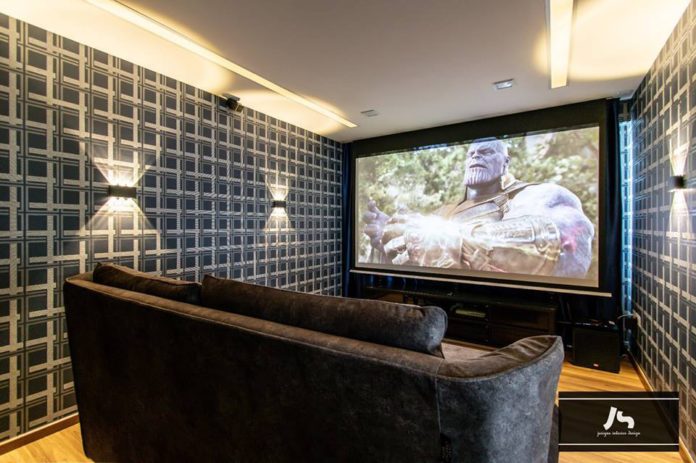
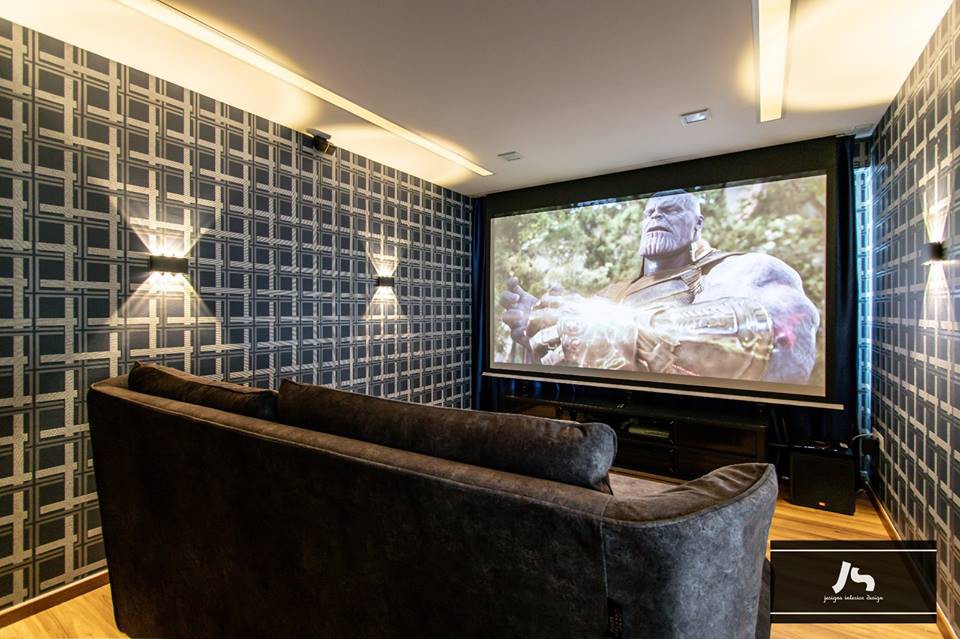
Life-sized Thanos! Source: Facebook
A Facebook post by interior design studio, Jesigns Interior Design, on Wednesday had garnered the attention of many in the city-state, showing a series of pictures of a typical Singaporean flat that was transformed into a complete home theatre.
Despite the limited space in the four-bedroom unit, the company somehow manage to install most of the fittings you would commonly find in cinemas.
When not in use, the projector screen is simply drawn up along with the curtains to allow the enjoyment of the sunlight or the view outside.
Just before the action begins, the projection screen is rolled down while the popcorn, blue ray disc player, and surround sound system are prepared.
Within a few minutes, everything is set and off they go for the next one-and-a-half hours of cinematic bliss. The lights could be turned off or dimmed for an even more authentic experience.
Like so.
The kitchen across the hallway also carries a similar vibe.
WHILE much of South East Asia’s economy faced some headwinds in 2018, the majority of real estate markets in the region and in the Asia Pacific at large remained dynamic with investors and occupiers both continuing to be active, international real estate agency Knight Frank said.
It said trade tensions, such as the on-going tussle between China and the US, could influence decision making for corporates looking at office space, while structural changes are also likely to continue as co-working and co-living become more commonplace across the APAC markets.
Knight Frank pointed out that the Asia Pacific remained the top-performing world region, with a 6.2 percent increase in residential property price growth over the 12 months period to the third quarter of 2018, up from 3.3 percent a year ago,” it said.
“While the Asia Pacific region continues to lead the world in residential price growth this quarter, its pole position is looking more at risk following the introduction of cooling measures, rising interest rates, and waning buyer sentiment,” Knight Frank Asia-Pacific research head Nicholas Holt said.
Singapore
Prime residential prices in Singapore rose 9.1 percent in this to S$3,480 (US$2,533) per square foot following a strong performance in the first half of the year as buyers returned to the market in force.
“However, this trend was abruptly cut short in July when the government introduced new cooling measures. While the market has come to a standstill, a severe price correction in 2019 is unlikely given the city’s stable economic fundamentals,” Knight Frank said in the report.
Modern luxury villa with swimming pool in Bali, Indonesia. Source: Artashes/Shutterstock
Kuala Lumpur, Malaysia
Prices in Kuala Lumpur’s prime housing market are generally holding firm more property launches were expected amid improved market sentiment.
The slight increase in stamp duty and real property gains tax (RPGT) rates as announced in the Government’s Budget 2019 is unlikely to have significant impact on the market, the report said.
There is, however, a growing “mismatch” in supply and demand coupled with rising financing costs that would will continue to “impinge on price growth as the market finds its equilibrium.”
“In contrast, the exemptions and initiatives, in particular the waiver of stamp duty on the instrument of transfer and loan agreement for residential …are expected to kick-start the housing market moving into 2019 and beyond.”
These involved homes valued up to RM300,000 (US$71,828) for a two-year period and the six-month waiver of stamp duty charges for properties priced from RM300,001 to RM1 million (US$250,000).
The prime housing market in the Indonesian capital rose 0.7 percent to IDR61.7 million (US$4,232) per square meter as the market entered a traditionally quiet period prior to Indonesia’s Presidential elections in 2019, the report said,
“In the near term, the market will remain quiet up until H2 2019 from the April elections and May Ramadan season before picking up in H2 2019 as long-term fundamentals remain sound; infrastructure growth and improving domestic consumption.”
Bangkok, Thailand
With its prime housing market prices falling 0.6 percent in to THB353,889 (US$10,859) per square meters this year, the government’s tighter lending rules allowed the market to take a breather in the second half of the year.
“In 2019, we believe the latest policy will have a greater impact on the lower to mid-market segments compared to the high-end luxury given the latter’s buyer composition have stronger balance sheets,” Knight Frank said.
Manila, Philippines
Manila’s prime housing market prices rose 11.1 percent this year to PHP290,000 (US$5,504) per square meter after the government announced aggressive infrastructure spending policy dubbed – “Build! Build! Build!”
“Going forward, sentiment is expected to remain supportive on further infrastructure spending and improving economic conditions; IMF forecasts 6.7% 2019 GDP growth – one of the fastest in the region,” the report said.
SINGAPORE: With a massive crowd expected to flock to the Marina Bay area on New Year’s Eve, the Singapore Police Force (SPF) is not taking any chances in keeping Singapore safe during the celebrations.
Last year, organisers estimated that between 400,000 and 500,000 people thronged the area.
With several countdown events being held simultaneously at the Marina Bay area and the Civic District this year, crowd management measures are all the more critical.
In all, 700 police officers – similar to last year – will be deployed to maintain order.
These include specialist officers from the Emergency Response Teams, In-Situ Reaction Teams and Special Operations Command, who will conduct high-visibility patrols at pre-identified locations with either high foot traffic or large congregations.
A total of 700 police officers – similar to last year – will be deployed to maintain order. (Photo: Cheryl Goh)
“We have not allocated more officers per se, but we’re working more closely with the event organisers to put in more measures,” said Deputy Assistant Commissioner of Police Gregory Tan, who oversees the Central Division.
“So that will mean that we’ll have a better handle on the public areas which people are allowed to gather at. We’ll be able to respond quickly and efficiently,” Mr Tan said.
“We’re looking at achieving a higher level of effectiveness with the same amount of officers or even fewer than previous years,” he added.
Meanwhile, with the Infrastructure Protection Act that came into force on Dec 18, the public needs to respect any enforcement action by authorities.
This act gives security personnel powers to deal with threats in areas surrounding Singapore’s critical infrastructure and iconic buildings, such as Marina Bay Sands.
“The Act has provisions for special powers that allow the police and even auxiliary police to do random bag checks when required, and also to eject people who are deemed to be suspicious or who are perhaps behaving in a way that’s not in compliance with regulations for the greater public interest,” said security consultant Dr Graham Ong-Webb.
“When this happens, members of the public of course have to accommodate this and be understanding.”
The police will also deploy an Unmanned Aerial Vehicle (UAV) to be their eyes in the sky, as part of efforts to leverage technology to support officers during major operations.
The UAV can travel at 20m per second, and will rove over the Marina Bay area.
The drone, which was trialed last year, has a high-definition camera that can capture and transmit pictures of the ground to the police command post.
It also has blinkers, search lights and an audio warning system to allow the police to communicate with the public if necessary.
The police will also install more than 20km of yellow fences and barricades to direct both human and vehicular traffic in the area.
Nine hundred tonnes of concrete blocks will also be set up to deter and block potential hostile vehicles.
The police will install more than 20km of yellow fences and barricades to direct both human and vehicular traffic in the area. (Photo: Cheryl Goh)
Meanwhile, event organisers of the Marina Bay Carnival are also gearing up for a peak crowd on New Year’s Eve.
The carnival site, located next to Marina Bay Sands, can accommodate between 6,000 and 7,000 people at any one time, but organisers expect close to 50,000 people to pass through throughout the day.
Lead of the carnival’s organising team Barnabas Chia spoke of measures including bag checks, designated exit and entry points and strict crowd control.
“For this year, we’ve brought in more rides and more games, and these are higher capacity rides and games and these can help to spread the crowd more evenly throughout the entire site,” he said.
“We’ll have site monitors on both sides, at the entrance and at the exit, and for every five people that leave, we’ll let five people in.”
They advise visitors to bring smaller bags to the event so they can clear the security bag check at the entrance more quickly. Plainclothes security personnel will also conduct random bag checks within the carnival grounds.
SINGAPORE: More financial aid will be given to lower- and middle-income students in independent schools from April next year.
Education Minister Ong Ye Kung announced higher fee subsidies and a new scholarship on Thursday (Dec 27) on the sidelines of the Appointment and Appreciation Ceremony for Principals.
The aim is to ensure students can pursue their aspirations regardless of financial background.
School fees at independent schools cost between S$3,600 and S$6,600 each year, while school fees at Government and Government-aided schools cost between S$300 and S$396, according to the Ministry of Education (MOE).
For about 2,400 students who received the Independent School Bursary this year, the school fees were heavily subsidised.
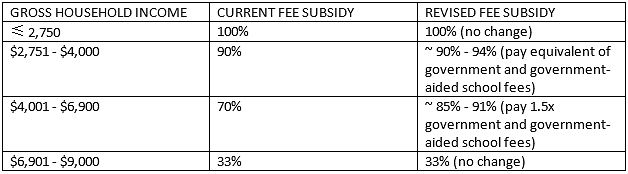
Come April 2019, the breakdown of the fee subsidies under the bursary scheme will be expanded:
Table showing breakdown of fee subsidies under the Independent School Bursary. (Source: Ministry of Education)
Under this new scheme, students from households with a gross monthly income of more than S$2,750 or per capita income of more than S$690 will pay a multiple of fees for Government and Government-aided Schools, from zero to 1.5 times, depending on household income levels.
For example, a student from a middle-income family who used to pay more than S$1,000 per year, will now pay 1.5 times the fees of Government and Government-aided Schools. This comes up to about S$450 a year.
Previously, students had to pay a percentage of independent school fees.
There will be no change for independent school students in the lowest income tier as they already enjoy a 100 per cent subsidy for school fees.
Students in the highest income tier will also continue to receive a fee subsidy of 33 per cent.
The changes will apply to all eight independent schools: Anglo-Chinese School (Independent), Hwa Chong Institution, Methodist Girls’ School, Nanyang Girls’ High School, Raffles Girls’ School, Raffles Institution, Singapore Chinese Girls’ School, and St Joseph’s Institution.
Two specialised independent schools – NUS High School and the School of Science and Technology are also covered under the bursary.
The School of the Arts and Singapore Sports School are not covered because they offer their own financial assistance schemes.
The initiatives will also extend to eligible students already in the independent schools.
TACKLING PROBLEM OF INEQUALITY
Mr Ong said the initiatives are to help tackle the problem of inequality.
One of the task force’s initiative is to address the cost of attending independent schools.
He said some students opt out of popular schools despite being eligible for admission because students and parents from lower income families are worried about out-of-pocket expenses such as equipment for co-curricular activities or student-initiated projects.
“Popular schools, such as certain independent schools, are attracting a greater proportion of students from families with higher socio-economic status. So diversity in these schools has gone down over the years,” Mr Ong said.
“These are significant steps we are taking to enhance the diversity of independent schools, while preserving their meritorious culture,” he added.
NEW UPLIFT SCHOLARSHIP
MOE will also introduce an UPLIFT scholarship for independent school students from low-income families.
Those with a gross household income of up to S$2,750 or per capita income of up to S$690 will be eligible for the scholarship.
The scholarship will provide a cash award of S$800 per year for two groups of students from low-income families: Academically strong students who are Edusave Scholarship recipients and students who are admitted to independent schools through the Direct School Admission.
The scholarship will be for the full duration of studies in the independent schools.
Mr Kevin Ang, who assumed his first posting as principal of Bukit View Secondary School in October, said the past few months have been challenging and rewarding. His last posting was as vice-principal of Clementi Town Secondary School and before that he was the vice-principal of Anglo-Chinese Junior College.
“The first three months of being in Bukit View Secondary has both been challenging and rewarding. As you can imagine, being posted to a new school, where you don’t know the school well and you don’t know the people whom you are expected to lead, will present itself many challenges,” Mr Ang said.
“So in the first few weeks, I spent a lot of time getting to know the school, its history, culture and programme,” he added.
On the other hand, former Anderson Primary School Principal Ng Wie Pin will be moving to a new school – New Town Primary.
Mdm Ng wants to bring over some of her former school’s initiatives such as having an art gallery and a programme that uses art to teach other subjects.
“I hope to also encourage my teachers as well as students to look at the subjects that they learn, or anything that they learn, in a more flexible as well as open-minded manner, so that they are able to draw interesting connections,” she said.
MOE said the process of appointing and rotating principals allows schools to benefit from new perspectives and sharing of best practices.
SINGAPORE: Following warnings by the Indonesian authorities to stay away from the erupting Anak Krakatoa volcano, Singapore’s Ministry of Foreign Affairs (MFA) on Thursday (Dec 27) urged Singaporeans to defer travelling to affected areas.
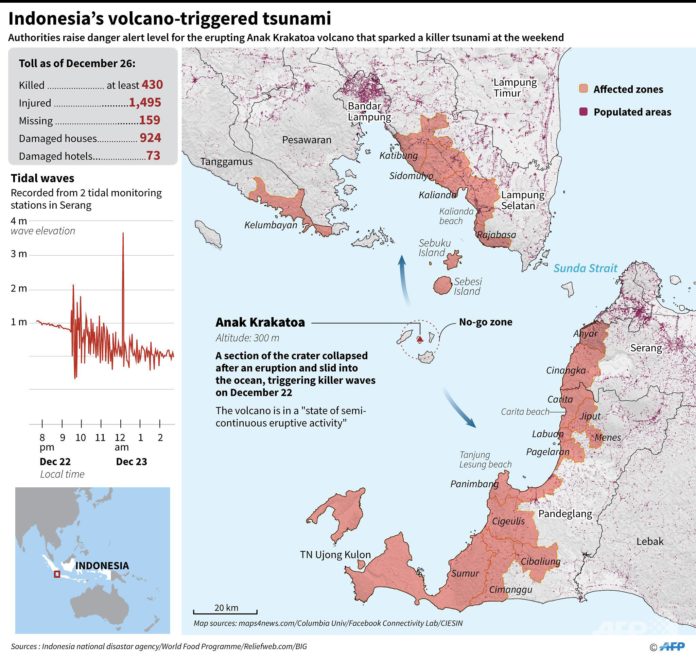
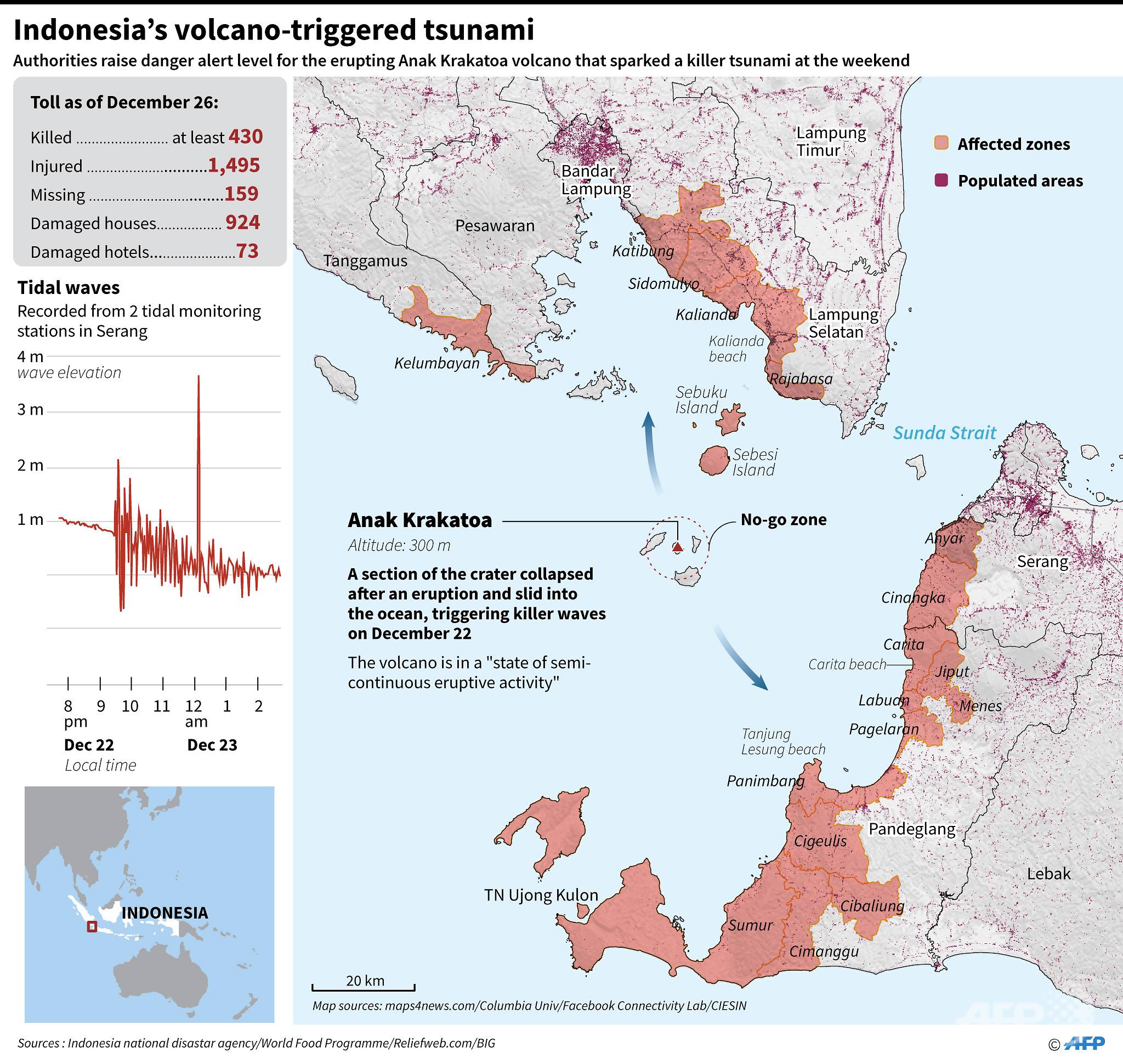
A crater collapse on the volcanic island on Saturday sent waves of up to 5m smashing into the coast on Indonesia’s Sunda Strait, killing more than 400 people.
Indonesian authorities on Thursday raised the alert status of the volcano to the second-highest level.
They have also called for flights around the erupting volcano to be rerouted and imposed an exclusion zone of 5km around the crater of Mount Anak Krakatoa.
Close-up map showing the tsunami-affected areas around Sunda Strait, populated areas, and height of tidal waves monitored on Dec 22 to 23. (Graphic: AFP / Gal ROMA AND Laurence Chu)
The public have been urged to stay at least 1km away from the Sunda Strait shoreline in case of another tsunami.
In a travel notice, MFA said: “Singaporeans should defer all travels to the affected areas.
“Those in the vicinity of the affected areas are advised to monitor local news and developments closely, particularly for further advice and instructions from the Indonesian authorities.”
“Singaporeans are advised to take all the necessary precautions for their personal safety, including purchasing comprehensive travel and medical insurance,” it added.
MFA also advised Singaporeans to stay in touch with family and friends.
Travellers who have not yet registered with MFA can do so electronically via its website at https://eregister.mfa.gov.sg/.
Those who need urgent consular assistance may contact the Singapore Embassy in Jakarta, the Singapore Consulate in Medan or the 24-hour MFA duty office.
SINGAPORE: What does Inuka the polar bear have in common with the Trump-Kim summit?
The bear from the Singapore Zoo and the historic summit were both among the top trending local news topics in Singapore for 2018, according to Google Trends.
Following the historic Singapore summit between Donald Trump and Kim Jong Un, progress on North Korea’s denuclearisation has stalled, with both sides accusing each other of acting in bad faith AFP/SAUL LOEB
The Trump-Kim summit, the historical event in June that saw US President Donald Trump and North Korean leader Kim Jong Un meeting for the first time, topped local news topic trends in Singapore this year.
The Summit made global headlines as both leaders signed a document in which both committed to work towards the complete denuclearisation of the Korean Peninsula.
According to Google Trends, there was a sustained interest in the topic over the year, although there was a drastic jump in May and June.
From politics to Hollywood, the hugely popular movie Crazy Rich Asians came in second for trending local news, with a heightened interest in August – when the movie premiered.
The Aug 7 premiere was a momentous event for Singapore as it was the first time a contingent of local talent were in the spotlight in Hollywood.
The movie was also the first major Hollywood studio movie in years to feature an all-Asian cast – a game-changer for Hollywood in terms of diversity.
The cast at the Singapore premiere for Crazy Rich Asians at the Capitol Theatre on Aug 21, 2018. (Photo: Genevieve Loh)
Aside from local news stories, Google Trends also provided an insight into what Internet users in Singapore frequently searched for.
With France winning the World Cup in a gripping fashion and the German defending champions crashing out, the action-packed football event topped the list of trending searches in Singapore.
France’s forward Kylian Mbappe kisses the World Cup trophy after France beat Croatia 4-2 in the Moscow final on July 15 AFP
The Malaysian general elections came in second on the list. Malaysian Prime Minister Mohamad Mahathir’s Pakatan Harapan pulled off an unprecedented victory that brought Barisan Nasional’s decades-long domination in Malaysian politics to a sudden end in May.
Malaysian prime minister Mahathir Mohamad celebrates with other leaders of his Pakatan Harapan coalition during a press conference following the 14th general elections in Kuala Lumpur on early May 10, 2018. (Photo: AFP/Manan Vatsyayana)
Supporters of Pakatan Harapan outside the national palace following the coalition’s victory during the 14th Malaysia general elections. (Photo: AFP/Manan Vatsayana)
Former Malaysian Prime Minister Najib Razak, who suffered a shock defeat in the elections in May and has been embroiled in the 1MDB corruption saga, was fourth on the list of top trending searches in Singapore.
But there was slightly more interest in this year’s Australian Open, which came in third.
Stan Lee rose through the ranks to become a comics writer, and eventually led the Marvel empire for decades as its publisher (Photo: AFP/Behrouz MEHRI)
The fifth on the list of top trending searches in Singapore in 2018 was the death of Stan Lee, creator of Spider-Man and other Marvel superheroes. He died at the age of 95.
It was a year in which we lost prominent personalities in entertainment, fashion, literature and food. CNA Lifestyle looks back at them all, from Stephen Hawking to Stan Lee.
On a global scale, Google Trends noted that the world searched for feel-good, uplifting stories, including the heroic rescue of the Thai under-16 football team from a cave and India overturning a ban on gay sex.
Since the ‘Wild Boars’ were freed from the Tham Luang cave in northern Thailand two months ago, there has been a frenzy of media interest in the feel-good rescue tale AFP/Lillian SUWANRUMPHA
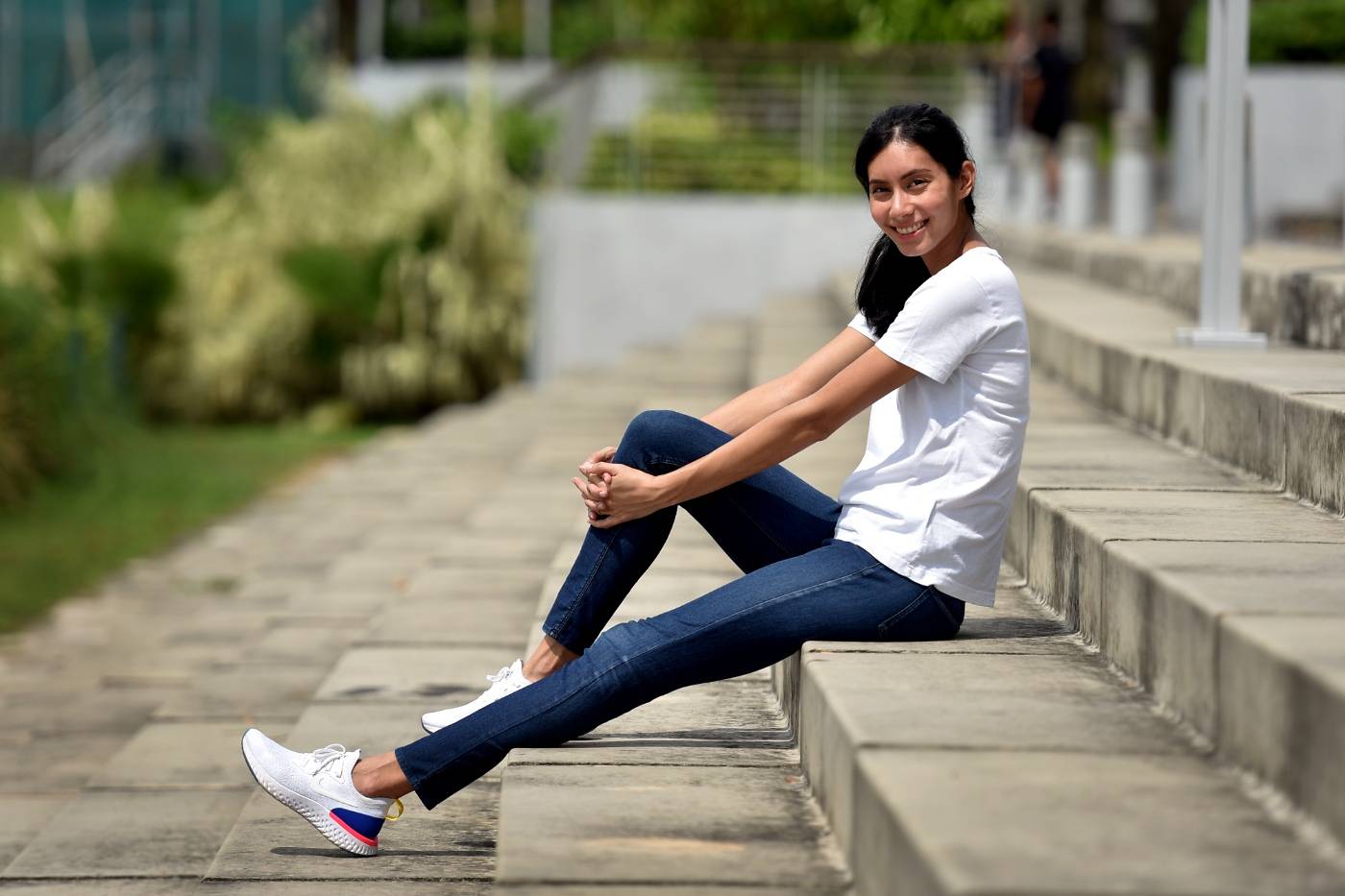
SINGAPORE: None of the students at Catholic Junior College knew one of their PE teachers was a Southeast Asian cycling champion. That was until Dinah Chan’s colleagues gleefully tipped them off, and a quick Google search later it went from “Ms Chan, give chance please?” to “Ms Chan, can you sign my bicycle for me?”.
“I’d really rather not. I’m a normal person, a normal person,” the 32-year-old laughed as she recounted what she told her newly starstruck students. That “normal” status is something she has savoured since retiring in February this year, after nearly a decade representing Singapore – of which half was spent as the local face of cycling.
“I do miss the time spent hanging out with my national teammates – they were like family,” said Chan, who made headlines when she struck SEA Games gold in 2013 – three months after being hit by a car. “But for me it was really easy to transition out. I had so many things I wanted to do after retiring.
“And now, I don’t have to feel guilty for not training, for being tired, for staying out late, for eating nonsense.”
Chan competing in Copenhagen in 2011 (Photo: AFP/Jonathan Nackstrand)
Former track-and-field standout Dipna Lim Prasad, 27, has also experienced a smooth adjustment since ending a 13-year stint as a national athlete in September.
The Singapore record-holder for both 400m and 400m hurdles is mulling over potential job offers, while keeping in mind her priority to start a family with her husband, former national sprinter Poh Seng Song.
But stepping down from high-level sport can be difficult too, according to ex-national rower Saiyidah Aisyah, who was a 2013 SEA Games champion and 2016 Olympian.
“I know of a few athletes who went or are going through this low point in their lives and find it so hard to talk about it,” said the 30-year-old, who spent 13 years competing for Singapore. “I think I was a little mentally and emotionally distressed.”
She insisted on not being labelled as retired, citing “unfinished business” – has not raced for Singapore in over two years and is no longer carded by governing body Sport Singapore, which removes her eligibility for funding and other assistance.
“When you retire from sport, you’re probably poorer than your peers,” said Aisyah. “It feels like you start from square one in terms of career and life. That’s why athlete retirement is hard, but many people don’t realise that and it is sadly hardly spoken about.
“It’s not really a thing yet in Singapore, but with more and more athletes training full-time, post-retirement support is so important.”
Lim Prasad in action at the 2017 SEA Games (Photo: SNOC)
SEA CHANGE IN ORDER
Purely in terms of securing a job, national athletes can bank on a Sports Excellence Business (spexBusiness) Network, which matches them with almost 60 prospective employers. Hundreds of sportspeople have benefitted from the programme so far.
Aisyah, Chan and Lim Prasad also acknowledged active athletes “definitely have less to worry about” – thanks to initiatives such as campaign funding schemes and the Sports Excellence (spex) Scholarship, which provides financial and developmental aid for an elite crop of national athletes.
“Things have improved since we started, and we got a lot more support than before,” said Chan. “But there’s still a long way to go; a lot more to grow.”
Said Lim Prasad, who is vice-chair of the Singapore National Olympic Council’s (SNOC) athletes’ commission: “It takes a long time to bring about a full shift in mindset from ‘admin-centric’ to ‘athlete-centric’, but those sports that have done so have grown exponentially.”
Both admitted that the exact method for engineering such transformation remains “a big question mark”.
“We can debate for days and we wouldn’t come up with an answer,” Lim Prasad quipped. “We’ve been doing it at every level – from the athletes’ commission to focus groups and up to ministries – asking what will be a catalyst for change in Singapore sports.
“But there’s really no one thing. Everything works together, and you don’t really know which string to pull first to accelerate change for everything else.”
“So it’s really a lot about collaboration between people who can work together and know what they’re doing,” she added. “And to keep trying, even if it takes years to figure out.”
Dwindling motivation, run-ins with officials, financial concerns and wanting to start a family were among the reasons Lim Prasad mentioned in retiring (Photo: Jeremy Long)
Aisyah, who started a crowdfunding campaign en route to Rio 2016 and was selected as a spexScholar a month later, agreed. “People are very quick in pointing fingers and blaming the Government, but the only way we can build a successful sporting nation is when people come together to raise an athlete.
“Like how people helped me in my Olympic journey … It would not have been possible without the support from Singaporeans and two years on, I am still very grateful.”
Big-picture issues aside, the next best thing national athletes can do is keep their heads down and focus on the work, said Lim Prasad, while pointing to how her genuine love for running saw her through a rough start – where she couldn’t even make the school team – and down the road, the “politics and drama” of dealing with sports officials.
Chan, meanwhile, said it would also help to recognise that sport was not everything. “It’s just a part of your life, there’s more to life,” she said. “You’re not in a bubble, you’re in the world.”
Aisyah’s advice to athletes: “Continue to believe in yourself no matter what how hard the going gets, because there may be a point where belief is the only thing you have left.” (Photo courtesy of Saiyidah Aisyah)
RISE ABOVE
Nonetheless, it was barely minutes into the interview when the former cyclist admitted, unprompted, that her legs were “starting to get itchy already” and she would definitely like to race again.
That will not happen soon as Chan is still recovering – though almost completely healed now – from the chronic fatigue syndrome which plagued her for nearly three years.
Aisyah, too, declared she was “not done with being an athlete” – even if currently tied up in plans to wed her fiancé, write a book and pursue personal training certification.
While Lim Prasad did not close the door on a future return, she said it would be impossible to predict how her priorities or physical condition would change after having children.
But she was crystal clear that any career revival would not be motivated by the pursuit of SEA Games gold that has thus far eluded the three-time silver medallist.
“It was never about the medal,” said Lim Prasad. “I know the colour matters in terms of funding etc., but I’ve always pegged my success to my improvements.
“I genuinely wasn’t good enough for gold, and that’s that. But I’m very happy with my timings and that’s all I really can ask for.”
“If I ever come back, it would be for a new goal, a new event – the 800m,” she continued.
Feeling guilty from being away from family for too long, Chan had already wanted to call it quits in 2017 (Photo: Jeremy Long)
For now, Lim Prasad’s focus falls squarely on giving back, whether at the grassroots stage by redistributing sports footwear to needy kids through her social movement In My Shoes, or at the level of national athletes by invoking change in the ecosystem through her SNOC role.
“It’s about how I can continue to contribute community,” she said, expressing a common thread with the others.
Chan, a self-professed “innate” teacher, wants to someday explore the field of neurophysics to help people with spinal cord injuries move their limbs again.
And Aisyah is working on starting a group to support retiring athletes – not only in terms of finding employment, but in psychological aspects which she has already signed up to get a master’s degree in.
Chan, Lim Prasad and Aisyah may have made their names on a bike, boat or in sprinting spikes. But by extending their sporting drive and commitment into efforts to rally and raise society at large, they are proving themselves more than athletes – and perhaps, more than just “normal” human beings.
In a press release, the agency said bike-sharing users will have to make the additional step of scanning the QR code at designated parking areas to properly end their trips.
Should they fail to do so, they will have to pay an additional S$5 each time and, after three strikes in a year, they will be banned from using all such services for a month.
These bans will also increase based on the frequency of the transgression: Users who fail to park and scan six times in 12 months will be banned for three months, while a nine-time offender will be banned for six months.
A year-long ban awaits those who flout the parking rule 12 times in a year, according to LTA.
“This is part of the new bicycle-sharing licensing regime to encourage responsible parking habits and manage the disamenities brought about by indiscriminate parking of shared bicycles,” the agency said.
In the lead up to the implementation, some bike-share operators have added beta functionalities to help their users get comfortable with the new system, LTA added.
Local start-up SG Bike, for example, will launch this feature in its app from Friday but will not charge the S$5 fee for failing to park properly during this acclimatisation period.
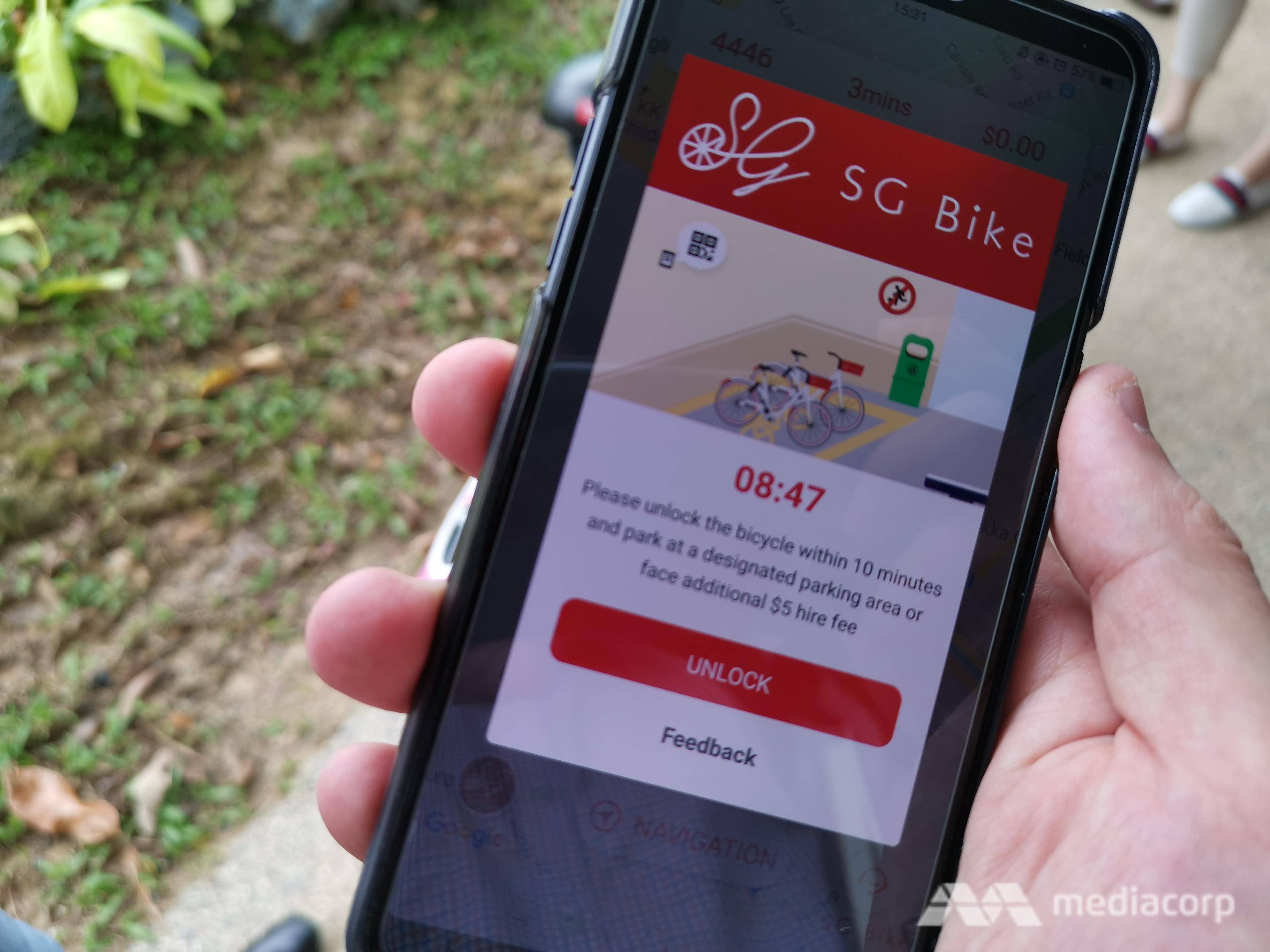
During a demonstration of the new feature, SG Bike CTO David Lim shared how the app will send out an app alert if users scan the wrong QR code or try to park their bikes outside the designated area.
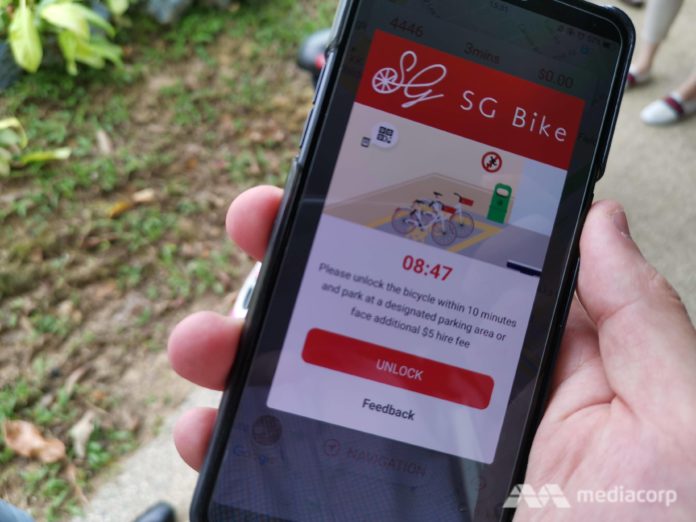
SG Bike will be rolling out the new QR code parking feature in its app from Friday (Dec 28).
In the latter scenario, the notification would read: “Please unlock the bicycle within 10 minutes and park at a designated parking area or face additional S$5 hire fee.”
LTA had in September announced that full licences were granted to Ofo, Mobike and SG Bike, while sandbox licences were awarded to Anywheel, GrabCycle and Qiqi Zhixiang.
ARE SINGAPOREANS STILL USING SHARED BIKES?
Asked how the company has been faring since its launch in August 2017, SG Bike’s chief operating officer Sean Tay told Channel NewsAsia on Thursday that it is doing “much better” now than when it first started.
He said the start-up has about 3,000 bicycles in its fleet today, and the average daily usage rate is about 3,000 rides.
By comparison, daily usage at the start was “probably less than a couple of hundred” based on observation though it did not have the right equipment to track the metric then, Mr Tay added.
SG Bike’s experience appears more positive than what LTA had previously observed.
In the September announcement on awarding licences, the agency pointed out that the utilisation rate for shared bicycles in Singapore, which number more than 100,000, is low.
It said the average usage rate here is slightly more than one trip per day, which pales in comparison with that of cities like New York City and Chicago where each bicycle is used about three to six times a day.
The bike-sharing industry continues to be in a nascent state and even big operators like Ofo and oBike are struggling.
China-based Ofo is facing calls for refunds from millions in China while founder Dai Wei was recently placed on a credit blacklist while contemplating declaring bankruptcy.
Its Singapore-registered rival oBike is in even worse shape. The company had in July appointed liquidators here as it folded its operations and caused a furore among its subscribers, who were trying to get their deposits back.

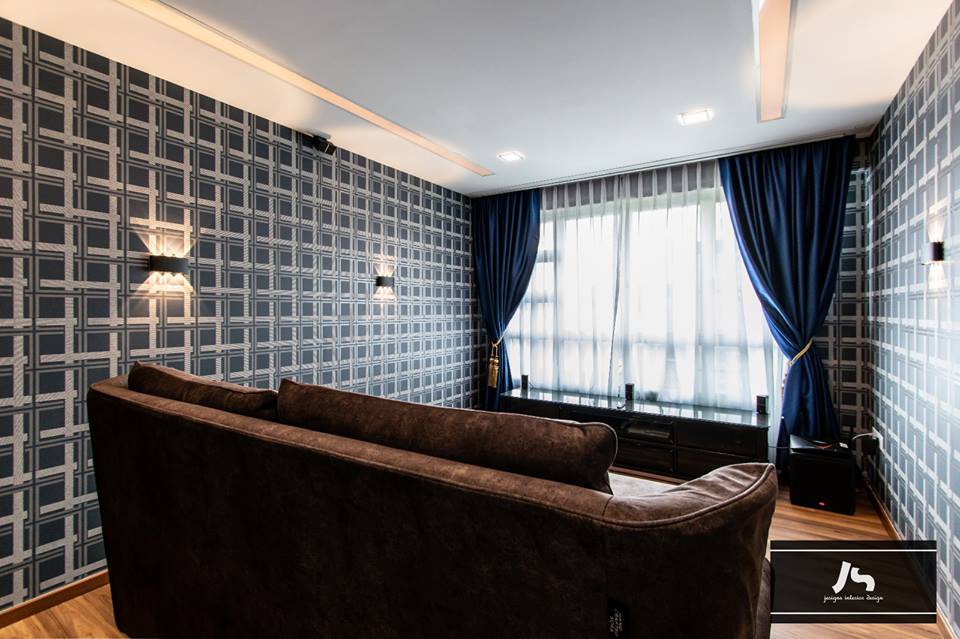
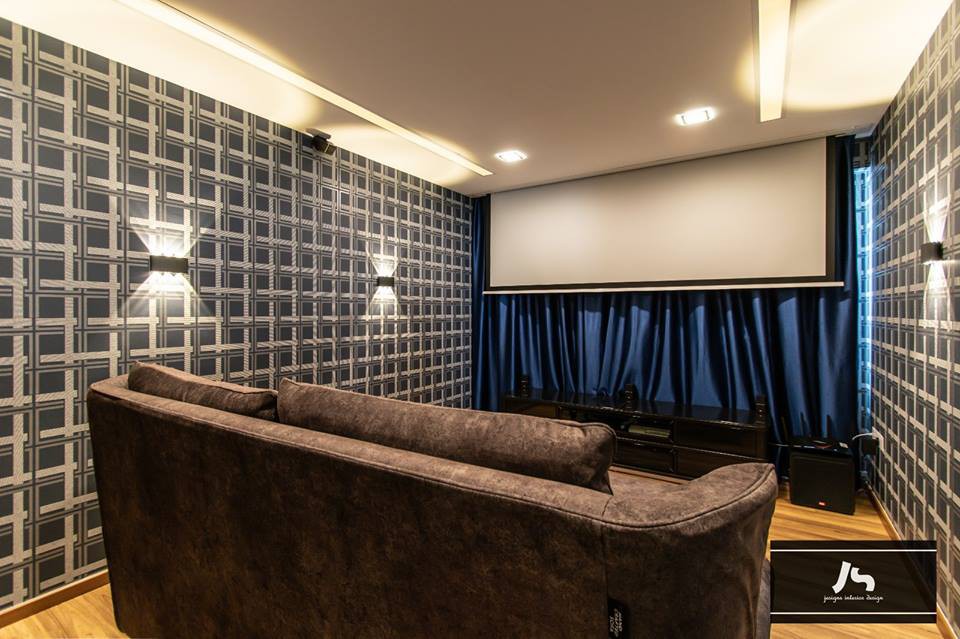
 Within a few minutes, everything is set and off they go for the next one-and-a-half hours of cinematic bliss. The lights could be turned off or dimmed for an even more authentic experience.