SINGAPOREAN Prime Minister Lee Hsien Loong has warned that the trade war between the US and China could impact the growth of the affluent city-state.
In his New Year’s message, Lee expressed that the trade tensions between the two major superpowers could force others to pick sides.
With Singapore being highly dependent on trade, Lee’s message reflected his government’s challenge of maintaining close ties with both Beijing and Washington.
“These tensions will cause problems for the world, and make it harder for countries to be friends with both,” Lee said in a statement issued by the Prime Minister’s office.
Despite concerns of a cooling economy, Lee touted the Singaporean economy’s performance for 2018.
“Our economy grew steadily at 3.3% — close to 2017, and above our expectations,” he said, as quoted by Nikkei Asian Review.
However, he pointed out “major uncertainties in the global economy, with growing trade conflicts, nervous financial markets and signs of slowing growth.”
According to Reuters, Singapore has forecast GDP growth for 2018 to come in at between 3.0 percent and 3.5 percent versus a three-year high of 3.6 percent the previous year.
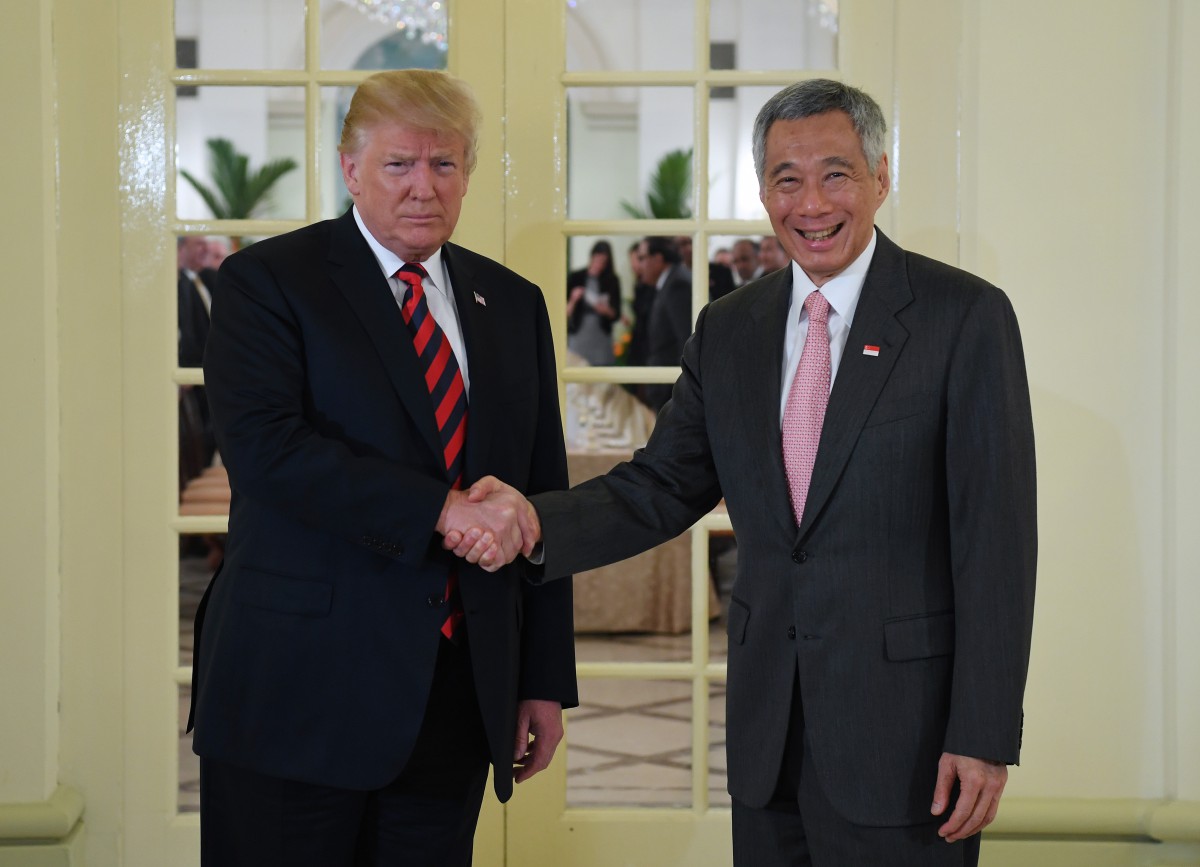
US President Donald Trump (L) shakes hands with Singapore’s Prime Minister Lee Hsien Loong (R) during his visit to The Istana, the official residence of the prime minister, in Singapore on June 11, 2018. Source: AFP
Lee reiterated the government’s forecast for GDP growth in 2019 to be between 1.5 percent and 3.5 percent.
Some economists noted while Singapore’s economic growth is expected to slow in 2019, the city-state could expand at a robust pace.
On its relationship with neighbouring countries, Singapore is facing a diplomatic row with its closest neighbour Malaysia on several issues, including maritime and airspace disputes and a decades-old water supply agreement.
The issues between the two countries emerged after Malaysian Prime Minister Dr Mahathir Mohamad returned to power after defeating the long-ruling Barisan Nasional coalition led by Najib Razak.
Despite Malaysia’s claims, Lee insists the issues be handled through negotiations. Next week, both Malaysian and Singapore officials are expected to meet in the city-state to resolve the claims of the two countries.
“We will deal with all these matters calmly and constructively,” Lee said.
SINGAPORE: A one-stop mobile app that was launched on Wednesday (Jan 2) now allows schools to update parents on programmes and activities, as well provides a platform for performing administrative matters.
The digital service – Parents Gateway – was developed in partnership with the Government Technology Agency (GovTech) and the Ministry of Education (MOE).
It will be progressively rolled out to all schools by the end of the year.
Education Minister Ong Ye Kung launched the app at Huamin Primary School, one of the first schools to pilot the programme.
As part of Singapore’s smart nation initiative, he said one of the benefits of the programme is that parents with children in different schools can use the same platform to complete administrative processes.
“For teachers too, I think this is a major improvement,” said Mr Ong. “I really hope using this Gateway, we can cut down on administrative work for our teachers.
“This hopefully frees up more time for our teachers so that they can better focus on what they are good at, which is teaching.”
Education Minister Ong Ye Kung launched the app at Huamin Primary School, one of the first schools to pilot the programme. (Photo: Tan Si Hui)
Available on IoS and Android, parents can use their SingPass accounts, SMS 2FA or OneKey Token to gain access to Parents Gateway.
They will be able to receive information and perform administrative functions such as providing consent for their children to participate in school activities.
Additional services, such as completing travel declarations and updating contact details, will be added to the portal incrementally and be ready by the end of 2019.
The initiative was first piloted in 10 schools in 2017, with 56 more schools joining the Early Adopters programme last year.
These schools will work towards rolling out Parents Gateway to the entire school by the first quarter of this year.
For parents who may not own a smartphone or have internet access in their homes, Mr Ong said MOE will always have a parallel system where paper forms are still accepted.
INDONESIAN ride-hailing company Gojek will finally begin operating in the Philippines, Singapore and Thailand this year, fulfilling its plans for expansion in Southeast Asia and entering a market monopolised by regional rival Grab.
The entry into the three countries comes after the company began operating in Vietnam, continuing the growth its app-based ride-hailing service that was established eight years ago, according to the Jakarta Post.
Gojek’s Sumatra chapter regional corporate communications head Teuku Parvinada said the company began implementing its plans to expand in ASEAN countries and would continue the effort in 2019.
“Gojek has been penetrating the ASEAN region. It is in Vietnam and will start in Singapore, Thailand and the Philippines,” Parivanda said.
The company also touts its app-based GoFood meal delivery service as the largest in the world and which will likely make a foray into the ASEAN countries.
“Hopefully it could give Indonesia more leverage because this product originated in Indonesia,” Parvinanda said.
In Indonesia alone, GoJek boasts more than one million drivers. According to the Jakarta Post, micro, small and medium business (UMKM) operators had benefited greatly from GoJek’s spillover effect, despite creating online-based transportation causing turmoil in the country earlier.
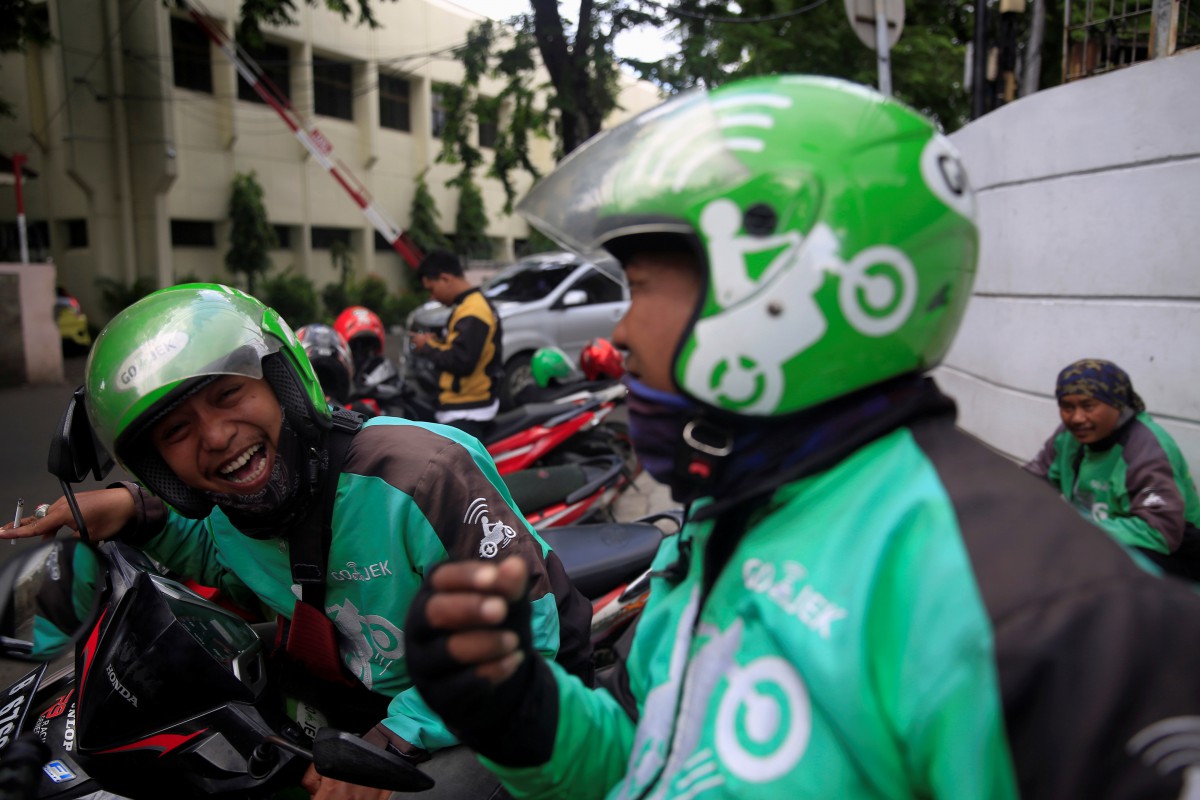
(File) A Gojek driver shares jokes with his colleague while waiting for customers along a street in Jakarta, Indonesia, December 15, 2017. Source: Reuters/Beawiharta
“Our real goal is to expand access for the UMKM. Previously, 82 percent of UMKM partnering with us had no access to food delivery services. Finally, they are now helped by GoFood services,” Parvinanda said recently.
Research from University of Indonesia’s Demographic Institute in 2017 found that GoJek had contributed some Rp 9.9 trillion (US$684 million) to the national economy.
In Singapore, Gojek has already introduced dynamic where prices increase or decrease based on demand, the Straits Times reported.
The company said dynamic pricing would help shorten waiting times for both commuters and drivers.
And while prices could spike during high-demand periods, Gojek said users can be assured that rides would “remain competitively priced”.
GoJek, which launched a beta version of its app in the city-state in November – had earlier said that it would not use dynamic pricing during the initial weeks of operations.
“Dynamic pricing has now been introduced as part of our continued beta phase,” a Gojek spokesman was quoted as saying.
“This is part of Gojek’s ongoing programme to improve user experience in Singapore as we fine-tune our service to ensure it remains competitively priced, while meeting the needs of Singaporeans,” she added.
Last month, Lim Kell Jay, the Singapore head for Grab, had told local media his company did would not likely go on price war with Gojek.
Grab has dominated the ride-hailing market in Southeast Asia since the departure of Uber after the former put up fierce competition with the American firm through incentives for passengers and drivers.
SINGAPORE: At first glance, the toy library at a Punggol void deck looks like any other children’s playroom.
But look closer, and there are differences. The rubber mat that lines the floor also climbs up the wall, as tall as a child, a sequined backdrop shines attractively, and there are little textured squares that look tempting to touch.
The difference is that the room is being designed with special needs children in mind. It is the hope of the volunteers that the room will lend a safe space for social interaction for children with conditions like autism and other developmental issues.
The room has yet to open to the public, with the final touches being put in.
The seed was planted when Member of Parliament for the Punggol West ward Sun Xueling spoke to parents with special needs children in her ward. When she asked the parents what activities they bring their children out for, they said they often keep their children at home and play with them in that known, safe environment.
Ms Sun was saddened to hear that, she told Channel NewsAsia. “That sparked off an idea to start a toy library where children with special needs can play together, where they can also play with children of other abilities and their parents can find mutual support,” Ms Sun said.
SETTING UP A ROOM FOR SPECIAL NEEDS CHILDREN
She enlisted the help of Ms Annette Chua, 34, who cares for two nephews who have autism, and her own son who is suspected to be on the spectrum as well.
Speaking to Channel NewsAsia, Ms Chua said that work on the room about a year ago with the help of special needs educator and behavioural therapist Nur Aisyah Churimi and co-founder of a special needs centre Yang Ling.
Toys were sourced through donations, and sorted by Ms Aisyah. She picked out toys that make sounds and have texture, which is helpful in training them to better handle their senses.
“They are very sensitive to sound, touch and light, so these sensory items can help them to learn. Once the brain can accept the different senses, they will be able to explore,” she said.
The sequined backdrop, which marks a “cosy corner” is also not to decorate the place. Instead, it’s designed to calm a child who may be having a meltdown or a tantrum. It is common for children with developmental special needs like autism to lose control of their emotions when they get too excited, she explained.
“When they touch the sequins, the children experience a calming sensation,” she said, adding that the relative darkness of the area gives them their own space.
The rubber padding that comes up to the height of a child is to prevent injuries in case the children try to knock their heads on the wall. The volunteers hope that the room, where parents will accompany their children, will give parents the opportunity to bond with their children, as well as meet other parents.
They also hope that the room will be a place where other children can interact with people who are different from them.
INCREASING SUPPORT FOR PEOPLE WITH SPECIAL NEEDS, CAREGIVERS
Ms Chua said that the establishment of the room is a mark of the improving support for special needs children and their families. Notably, there are more inclusive preschools now, compared to when she started her search for help five years ago, she said.
She said that while there has been more help from the Government, what also helps is the strong community help from fellow parents and guardians in the same boat as her. She is in a WhatsApp chat group with about 70 others, and this is where they share and ask for help regarding their charges without fear of judgment or prejudice.
She also finds that people are more open to speaking about special needs, and that awareness among people has also grown.
President of the Autism Resource Centre Denise Phua agreed that things have improved over the past decade.
There was a “clear and explicit resolve” by Mr Lee Hsien Loong when he assumed the role of prime minister about 14 years ago. He committed to make Singapore an inclusive society and to put focus on the disability sector, said Ms Phua, a Member of Parliament who is known to champion the special needs cause.
Ms Phua, who also is supervisor to the Boards of Pathlight and Eden, which cater to students with autism, referred as positive tangible changes the increase in the number of early intervention centres and the number of spaces, more financial help and supervision for special schools, three job centres set up under SG Enable, an agency dedicated to enabling persons with disabilities.
GOVERNMENT EFFORTS IN THE SECTOR
The Ministry of Social and Family Development (MSF) which oversees the sector said that there are more than 3,000 children in the Early Intervention Programme for Infants & Children (EIPIC) compared to 900 a decade ago.
In 2003, the Government started providing funding for the programme which includes therapy and educational support services to help them overcome developmental delays as far as possible.
While access to EIPIC services has improved, an MSF spokesperson said the agency continues to review and enhance these service, and that there is scope to calibrate EIPIC service delivery to better cater to varying needs.
The toys were selected based on what would be appropriate for children with special needs. (Photo: Jalelah Abu Baker)
“We are exploring an intervention model for children who have made sufficient progress in EIPIC to proceed to receive early intervention support within their mainstream preschool,” she said.
This would be different from the current EIPIC service model, which does not provide for differentiated delivery of services for children with higher or lower-than-average developmental needs.
On employment, she said to date, SG Enable and its partners have worked with more than 1,000 employers to hire persons with disabilities. MSF supports private sector employers who hire persons with disabilities, the spokesperson added.
“While we recognise that not all persons with disabilities will be able to participate in or secure employment opportunities in the open market, we are working with stakeholders to explore and create alternative employment models and inclusive business models for those who are work-capable,” she said.
SECTOR COULD DO WITH IMPROVEMENTS
Despite the improvements, Ms Phua said more can be done. She outlined areas that are lacking and need improvement.
One is the support model in mainstream schools.
There is a need to study and review the existing support model, adequacy level and the optimal support level for students with special needs within primary schools, secondary schools and institutions of higher learning.
When it comes to adults with disabilities, Ms Phua also noted that while much attention has been provided through the SkillsFuture Movement and the Industry Transformation Maps for the typical adult Singaporean, not enough has been done for those with special needs.
People with special needs are not being employed enough in jobs that suit them, she added. She also said that the responsibility cannot be the MSF’s alone.
“It is now time to consider if there is a need to legislate so employers bear some responsibility in recruiting and developing staff with disabilities,” she said.
She gave the example of Australian cities that have set public service disability employment targets as part of an economic participation plan for persons with disabilities. She acknowledged however that such quota schemes, when not properly implemented, can backfire and result in cheating or just lip service.
Still, she said reformed schemes that allow a quota to be met not just by direct hire, but by working and encouraging an employer to contract with, for example, a sheltered workshop of the disabled for supplies or services is a possible solution.
THE IMPORTANCE OF SUITABLE EMPLOYMENT
Ms Koh Soek Ying, 52, who has a 22-year-old son with autism, agreed that more employment help is needed for people with special needs, especially when they are not considered “high-functioning” but are still employable, given more support and training.
Her son, for example, is cognitively non-verbal, which means that while he is able to think, he is not able to articulate his thoughts.
This could result in him having meltdowns, and behaving like a child even though he is an adult. He may also walk off from any situation when he gets too overwhelmed- his way of coping.
Getting employers and colleagues to understand his behaviour may not be easy, she said.
She also said the assessment that was used on her son at a special education school to gauge if he was ready for vocational training may not be suitable, given that it was originally developed for lower-skilled workers who want to upgrade themselves. A more customised assessment tool can be developed specifically for this purpose, she suggested.
She now employs her son at her social enterprise, Mustard Tree, and conducts workshops for people with special needs, in order to teach them skills like craft-making.
“They learn slower. The environment and support system may not be adequate. There’s a need to redefine employment when it comes to those with special needs,” she said.
SINGAPORE: Singapore ratcheted up the heat against tobacco in 2018, to the delight of many in the country.
With a slew of measures making it harder for one to light up or start smoking, Singapore appears to be systematically de-normalising tobacco use as a habit, and painting it as a socially unacceptable and undesirable activity.
THE TIDE TURNS
A series of moves undertaken in 2018 have turned the tide as the nation made huge strides in its campaign against tobacco.
Apart from hiking up excise taxes on all tobacco products in February 2018 to make smoking more financially costly, the Smoking Act was amended to make it more difficult to smoke in public spaces.
File photo of a “No Smoking” sign in Singapore. (Photo: Elizabeth Khor)
The passed amendments additionally bans smoking in reservoirs and parks, compounds of autonomous universities and private education institutions, and more recently, public areas within the Orchard Road precinct, with the latter to be implemented come Jan 1, 2019.
Authorities also moved swiftly to make smoking less pleasurable and accessible.
A proposed enhancement to the Tobacco Act that mandates graphic health warning labels on tobacco product packaging was announced last October. Authorities intend to slap on mandatory standardised packaging on all tobacco products with enlarged graphic health warning labels.
Changes to the same Act had earlier banned point-of-sale display of tobacco products in August 2017, which strengthened Singapore’s comprehensive ban on tobacco advertisements, promotion and sponsorship implemented since 1971.
A ban on the possession, purchase and use of imitation and alternative tobacco products kicked in in February 2018. This comes on top of earlier legislation prohibiting the import and sale of imitation tobacco products such as electronic nicotine delivery systems.
Most significantly, the minimum legal age for the purchase of tobacco products will be progressively raised from 18 to 21, over 2019 to 2021.
File photo of a consumer looking at tobacco products.
A CLEAR, CONSISTENT MESSAGE
The suite of tobacco control measures sends a clear, consistent simple message: Smoking harms. After all, tobacco use remains the leading cause of preventable death worldwide.
If this is the case, why is the introduction of any new measure often met with criticisms that it is ineffective or politically motivated? Singapore is also not the only country to have introduced a range of aggressive measures to tackle smoking.
The World Health Organisation (WHO) in 2017 published a guideline on the “best buy” interventions for the prevention and control of non-communicable diseases such as diabetes, cardiovascular diseases and cancer. A “best buy” is a policy action that has been evaluated to be cost-effective and ought to be implemented.
These “best buys” include increasing excise taxes and prices of tobacco products; eliminating exposure to second-hand tobacco smoke in indoor workplaces, public places, public transport; and the implementation of plain or standardised packaging and large graphic health warnings on all tobacco packages.
They also involve the enactment and enforcement of comprehensive bans on tobacco advertising, promotion and sponsorship, and the use of mass media campaigns that educate the public about the harms of smoking, tobacco use and second-hand smoke.
Sounds familiar? Singapore’s stance against tobacco is very much aligned to international recommendations and best practices.
TARGETING THREE GROUPS
These measures, as well as those implemented in Singapore, are meant to work as a package to target different segments in the population, specifically, non-smokers, smokers who aim to kick the habit, and smokers who presently have no intention to quit.
High school students look at a mock up of plain cigarette packaging before the start of a news conference in Ottawa, Ontario, Canada, May 31, 2016. (Photo: REUTERS/Chris Wattie)
Anti-tobacco policies that are relevant to non-smokers, including standardised packaging and the raising of the minimum legal age, are aimed at discouraging experimentation and initiation, and minimising harm from second-hand and third-hand smoke.
One can even argue that the entire suite of tobacco control measures seeks to uncompromisingly de-normalise the image of smoking, to deter smoking initiation.
For smokers aiming to kick the habit, point-of-sale display bans and comprehensive prohibitions on advertising also minimise visual triggers to nicotine addiction, in addition to eliminating the promotion of tobacco.
The smoking ban in public areas creates additional barriers to one seeking to light up, which can be a much-needed psychological disincentive to this group of smokers.
Any criticism levelled at the futility of these measures on smokers with no intention to quit is misguided, as they were never formulated with the primary intention of targeting this group in the first place.
No doubt this group now faces huge inconveniences as a result of new measures, but the majority of these policies are to prevent people from joining, as well as to facilitate exiting, this group of smokers.
CURBS ON SMOKING CAN STILL BE BOOSTED
There certainly is a lot more we can do to drive down the smoking rate in Singapore.
First, we can consider a ban on all flavoured cigarettes, including those with menthol. The cooling effect from menthol additives masks the harshness from cigarette smoke, thereby decreasing irritation and actually makes smoking initiation more likely, especially among adolescent youths.
A sign is seen for a no smoking zone outside an office building in Singapore on Nov 27, 2017. (Photo: AFP/Roslan Rahman)
Numerous governments worldwide, including the United States and the European Parliament, have either seriously considered or have made firm commitments to outlaw flavoured cigarettes.
The Canadian province of Ontario banned menthol cigarettes in 2017 and early data suggests this has influenced smokers to kick the smoking habit. In a study of 1,000 smokers in Ontario, 1 in ten said they would quit smoking, but 4 in 10 attempted to quit smoking after the ban was implemented.
A public consultation on banning the sale of menthol and other flavoured cigarettes was conducted in December 2015. Perhaps it is timely to review and consider this move seriously.
One other concept previously discussed is the establishment of a smoke-free generation. Presently, the minimum legal age to smoke has been raised year-on-year from 18 to 21 from 2019 to 2021.
If this is allowed to proceed indefinitely, there will come a point in time when smoking in Singapore is no longer legally allowed, effectively outlawing smoking altogether while recognising and respecting the choices faced by existing smokers.
This strategy is easy to pen down in a commentary but operationally challenging to implement and enforce when the minimum legal age is a rolling number and in managing the social supply of cigarettes from older friends, relatives or even foreigners. The authorities and public will have to be open-minded enough to endure decades of enforcement chaos to achieve a longer-term vision.
A compromise is to continue the increase of the minimum legal age until 25. After all, there is a wealth of scientific evidence to suggest that smoking initiation rates drops considerably at that age.
RAISE THE PRICE OF CIGARETTES
A less harsh lever is the appropriate use of aggressive taxation to drive up the price and decrease the affordability of tobacco products, as was recommended as a WHO “best buy”.
Cigarette butts in an ashtray in Los Angeles, California, May 31, 2012. (Photo: REUTERS/Jonathan Alcorn)
After all, the retail price for a pack of 20 cigarettes in Singapore is the highest in Asia, but still below countries such as Australia, New Zealand, Norway, and the United Kingdom, countries with the lowest smoking prevalence, according to a WHO benchmark survey performed in 2016.
Raising the price of tobacco products reduces smoking initiation among adolescents and youths, and exerts a strong, tangible disincentive for existing smokers to continue the habit. Even for the persistent smoker, price increases can have the effect of reducing consumption.
Opponents to policies such as banning specific tobacco products, aggressive taxation, or the enactment of a tobacco-free society have been quick to state that these measures drive up smuggling and illicit trade on contraband cigarettes. No doubt stiff penalties for buyers, sellers, and importers of contraband cigarettes are needed as strong deterrents.
But let us be clear, cigarette smuggling exists in almost every country worldwide regardless of the tax levied, given the opportunity for high profits.
THE STEADY ANNIHILATION OF SMOKING
Will we be able to deter all cigarette trafficking activities even with the harshest penalties? We know the answer from looking at drug trafficking in Singapore.
The Government of Singapore possesses an international reputation for setting policies with long-term objectives in mind that do not pander to populist sentiments.
This is best reflected in our tobacco control policies, with the adoption of evidence-based approaches that stride gradually but steadily towards the annihilation of smoking as an acceptable social practice.
Dr Teo Yik Ying is dean of the Saw Swee Hock School of Public Health at the National University of Singapore.
SINGAPORE: New Year’s Eve may have kicked off with a wet start, thanks to showers across the Marina Bay area in the late afternoon and intermittent drizzling throughout the night, but Singapore was still all set to ring in the New Year with a dazzling fireworks display over its skyline.
Revellers at the Esplanade Waterfront came prepared with umbrellas, ponchos and picnic mats, undeterred by the elements.
Revellers at the Esplanade Waterfront came prepared with umbrellas, ponchos and picnic mats. (Photo: Brandon Tanoto)
Shutterbugs came with ziplock and plastic bags to protect their cameras and photographic gear as they steadfastly guarded their prime photo-taking spots.
Shutterbugs alike, came with ziplocks and plastic bags to protect their shooting equipment and gear as they stood firmly to guard their prime picture spots. (Photo: Brandon Tanoto)
A reveller takes photos of the dazzling fireworks display with his mobile phone. (Photo: Brandon Tanoto)
The display was part of the countdown show held at the Float @ Marina Bay titled Star Island Singapore by Japanese entertainment conglomerate Avex Group.
The show featured light displays, taiko drummers, fire performers and motocross stunts with 3D surround sound.
Entry to the show set participants back by between S$38 and S$148.
Those who were not to keen to splurge on Star Island tickets were able to catch the display over at the Esplanade.
Revellers were able to catch the display over at the Esplanade. (Photo: Brandon Tanoto)
They were also able to groove to the numbers by local singer Nick Zavior, thumping batucada beats by Bloco Singapura and a blend of percussion and eclectic tunes by NovoBloco – all for free.
Over at the Promontory, the Mediacorp’s Let’s Celebrate 2019 countdown concert was also free for the public for the first time.
Landmarks including The Fullerton Hotel Singapore, the ArtScience Museum and the Merlion lent their facades for light projections shows throughout the night.
BEEFED UP POLICE PRESENCE
To protect those in the area ushering in 2019, security measures like bag checks, and designated entry and exit points were put in place.
A drone was also officially deployed by the police for the first time.
The unmanned aerial vehicle, which acted as eyes in the air for the police, is fitted with a high definition camera and is able to monitor and capture pictures of the crowd and send them back to command post.
Some 700 police officers also kept a watchful eye on the ground, while police coast guards were on patrol at sea.
More than 20km of fences and barricades were also set up to direct both human and vehicular traffic.
Some 900 tonnes of sturdy concrete blocks were used to deter and block any hostile vehicles as well.
Members of the public respected the security measures by the authorities, following their directions and exiting the party grounds in a safe and organised manner.
CROWDS A BOON FOR BUSINESSES IN AREA
With the area drawing large crowds of hundreds of thousands, eateries around Marina Bay also ushered in 2019 with an early windfall, with some seeing all their tables filled.
Italian bistro Supply and Demand at the Esplanade saw a faster pace of bookings leading up to the celebrations.
The restaurant’s manager, Wu Si Han, said: “The bookings this year were much better than last year, we had a lot of booking inquiries from overseas, way in advance since last month. We’ve had to have more staff to cater to the demand.”
Makansutra Gluttons Bay also saw huge crowds, and the food centre said it was not worried about competition from other eateries in the area.
Makansutra founder K.F. Seetoh said: “We live off each other. Our crowds spill onto them, and theirs spill onto ours. We’re a tag team. We’ve been doing this for 13 years, they know our rhythm and we know theirs and everybody has their instrument to play to create this ‘makan’ music here at the Esplanade.”
Most eateries in the Esplanade area also extended their businesses hours till 3am on New Year’s Eve.
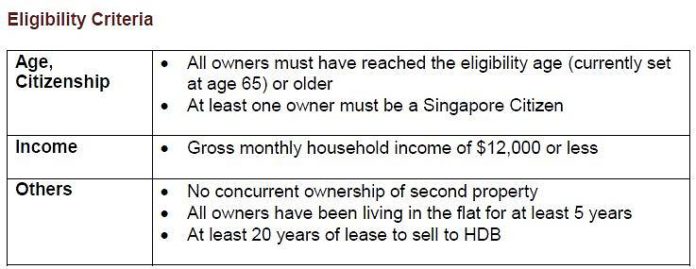
SINGAPORE: The Lease Buyback Scheme (LBS) will be extended to all HDB flat types from Jan 1, 2019, the Housing Development Board (HDB) said.
LBS allows older flat owners to sell part of their flat’s lease back to the Housing and Development Board (HDB) to boost their retirement income.
Previously available to only those in four-room or smaller HDB flats, National Development Minister Lawrence Wong announced in August that it would be made available to all HDB flats.
With the extension, senior owners of 5-room and larger flats can take up the LBS to monetise their flat, HDB said.
The board expects about 34,000 households to benefit from this extension, bringing the total number of LBS-eligible households to about 130,000.
Households in five-room and larger flats that participate in the LBS will receive a cash bonus of up to S$5,000 on top of the proceeds from selling part of their flat’s lease back to HDB.
Those with four-room HDB flats can get up to S$10,000 and those in three-room flats, up to S$20,000.
After taking up the LBS, seniors may still rent out spare bedrooms to supplement their retirement income.
HDB also highlighted other housing-related options for seniors to supplement their retirement income further.
If they do not take up the LBS, they can rent out their whole flat or they may right-size to a smaller flat with the option of applying for the Silver Housing Bonus.
Seniors who are interested in taking up the LBS or any housing monetisation option can do so by making an appointment at an HDB branch, the board said.
For more information on the LBS, the public can visit HDB’s InfoWEB or call HDB at 1800-225-5432 between 8am and 5pm from Mondays to Fridays.
“Singapore and Malaysia must manage specific problems, however difficult, while preserving the overall relationship,” Prime Minister Lee Hsien Loong says.
Malaysian Prime Minister Mahathir Mohamad shakes hands with Singapore Prime Minister Lee Hsien Loong during a meeting on the sidelines of ASEAN summit in Singapore on Nov 12, 2018. (Photo: AFP)
(Updated: )
Bookmark
SINGAPORE: Singapore will deal with disputes with Malaysia “calmly and constructively”, said Prime Minister Lee Hsien Loong on Monday (Dec 31), as he expressed confidence that a new generation of Singaporeans will learn to “collectively protect our vital interests while living in peace and friendship with our neighbours”.
The prime minister, in his New Year message, highlighted how the country is tending to relations with immediate neighbours Malaysia and Indonesia.
With Malaysia, which formed a new government following elections this May, Mr Lee noted that several issues have recently arisen between the two countries, “as they will from time to time between two close neighbours tightly bound by history, economics, culture and kinship”.
“The new disputes on maritime boundaries, following provocative intrusions into our territorial waters, and on airspace, particularly the Instrument Landing System (ILS) rules for Seletar Airport, are more difficult to resolve,” the prime minister said.
The way to do so is through equality and mutual respect, upholding international commitments and the rule of law, he said.
Pointing to past episodes of bilateral tensions, he said older Singaporeans will remember that they would unite as one people, standing their ground calmly but firmly, when rough patches hit.
“I am confident that this time too Singaporeans will work closely together to keep relations with Malaysia stable, and a new generation will learn how to collectively protect our vital interests while living in peace and friendship with our neighbours,” Mr Lee said.
Mr Lee sounded a note of caution, saying “the tide of geopolitics ebbs and flows” and pointed to tense relations between the US and China as a cause for concern.
“These tensions will cause problems for the world, and make it harder for countries to be friends with both,” he said.
“If countries are forced to choose sides, the open and connected global order will be further divided, hurting one and all.”
ANOTHER year is coming to a close. In these late December days, people are looking to the future and wondering what 2019 has in store for them. But before jumping to that, it’s worth taking some time to reflect on 2018 – and what a year it’s been!
It has been 12 months filled with political intrigue, election upsets, and stark climate warnings. In between all the madness – of which there was plenty – there were some truly historic moments. Moments future generations will read about in history books as they look back at today’s world and try to understand what the hell was going on.
Here are our top historic events of 2018:
April: Inter-Korean Summit and the Panmunjom Declaration
North Korea’s leader Kim Jong Un (L) shaking hands with South Korea’s President Moon Jae-in (R) at the Military Demarcation Line that divides their countries ahead of their summit at the truce village of Panmunjom. April 27, 2018. Source: Korea Summit Press Pool/AFP
On April 27, after months of escalating aggressive rhetoric, Kim Jong Un became the first North Korean leader to cross into South Korea since a ceasefire was reached in the Korean War in 1953.
The move solidified this inter-Korean summit’s place in the history books.
When greeting Kim ahead of their talks, South Korean President Moon Jae-in returned the gesture by hopping across the border and stepping momentarily into North Korea.
The two seemed to get along famously, strolling together in the surroundings of Peace House where the meeting was held. And rounding of the day-long event with a symbolic tree planting on the heavily fortified border dividing their countries.
The result of the discussions was the Panmunjom Declaration that made pledges of cooperation and peace.
The two sides are technically still in conflict as the Korean War was only halted with an armistice, rather than a peace treaty. This made the pair’s pledge to sign a full peace treaty particularly significant. However, the timeline given for this to happen was the end of the year, and with only one day left to go, it looks like it’s a bust.
May: Malaysia’s General Election
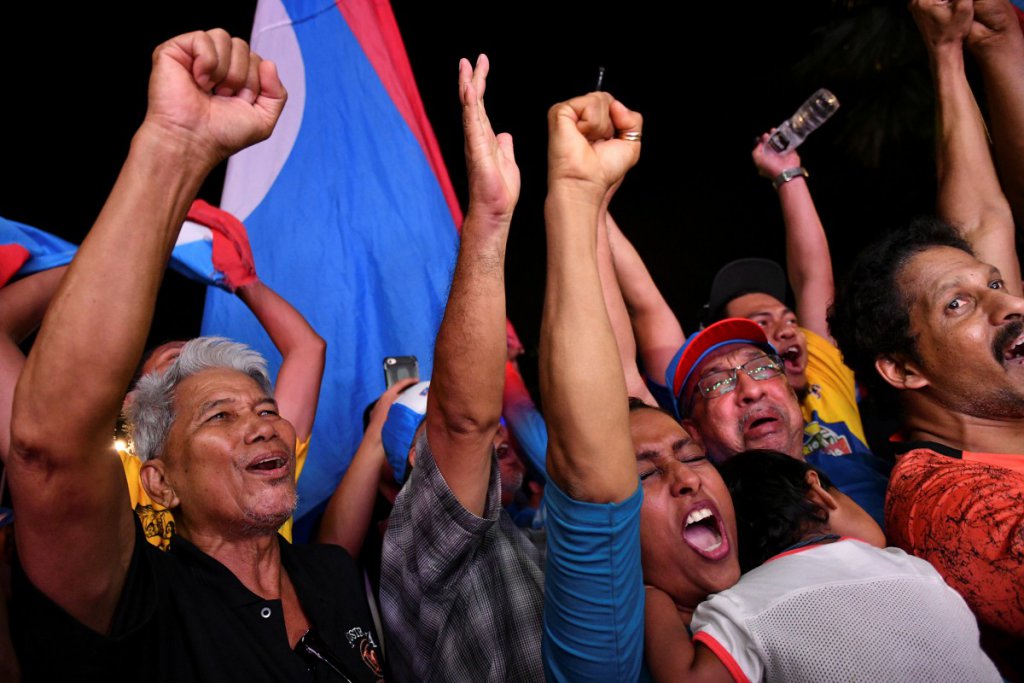
Supporters of Mahathir Mohamad, former Malaysian prime minister and opposition candidate for Pakatan Harapan (Alliance of Hope), celebrate the victory in general election outside the hotel, where Mahathir Mohamad held news conference, in Petaling Jaya, Malaysia, May 10, 2018. Source: Reuters/Stringer
For the first time since its independence in 1957, Malaysia saw an opposition coalition achieve victory in a May 9 election in which the odds were greatly stacked against them.
It was a momentous occasion that saw the now defeated Barisan Nasional coalition lose to Pakatan Harapan in an outcome that would shock Malaysians and send ripples around the world.
Former prime minister Najib Razak fought desperately to cling to his seat of power, knowing should he lose he could face charges over a corruption scandal that plagued his final years in power.
In the lead up to the election, there were accusations of election tampering with the ruling party buying votes, erasing people from the voter register, and remapping electoral districts.
In a desperate final bid to win over voters, Najib announced a day before the vote that all citizens under 26 years of age would be exempt from paying income tax and the whole country would receive two days public holiday if he was victorious.
But all was in vain as current prime minister Mahathir Mohamad led the new guys to a convincing victory.
The result was hailed as a success for democracy and a beacon of people power by international media. It gained Malaysia much-warranted applause for ending a 61-year rule with a smooth transition of power.
June: Trump-Kim Summit
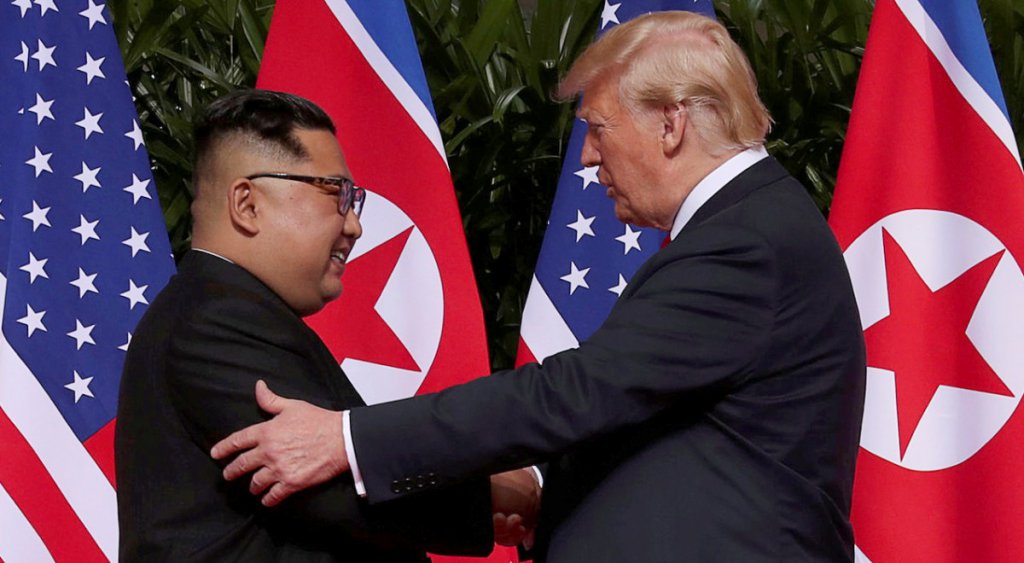
US President Donald Trump shakes hands with North Korean leader Kim Jong Un at the Capella Hotel on Sentosa island in Singapore June 12, 2018. Source: Reuters/Jonathan Ernst
June brought us the summit the world had been waiting for. After months of dramatic, often childish, name calling and nuclear threats, US President Donald Trump and North Korean leader Kim Jong Un finally came face to face.
After much deliberation, Singapore was the chosen destination and the city state unfurled the welcome mat for two of the world’s most controversial political figures.
The anticipation was high and excitement was thick in the air as the two clasped hands for the first time at the Capella Hotel on Sentosa island. But the meeting only lasted a surprisingly short few hours, during which the pair enjoyed a joint lunch and wandered through the hotel grounds.
Despite the attention of the world trained on them, the outcome of the meet was mostly hot wind and little substance.
The pair signed a joint statement pledging to build on US-North Korea relations, try to bring peace to the Korean peninsula, and work towards denuclearisation.
Disregarding the fact little concrete progress has been made since the summit, Trump still got his winning talking points and Kim got his photo-op with the first sitting US president ever to meet with a leader of the North Korea regime. So both came away happy.
Ongoing: The US-China Trade War
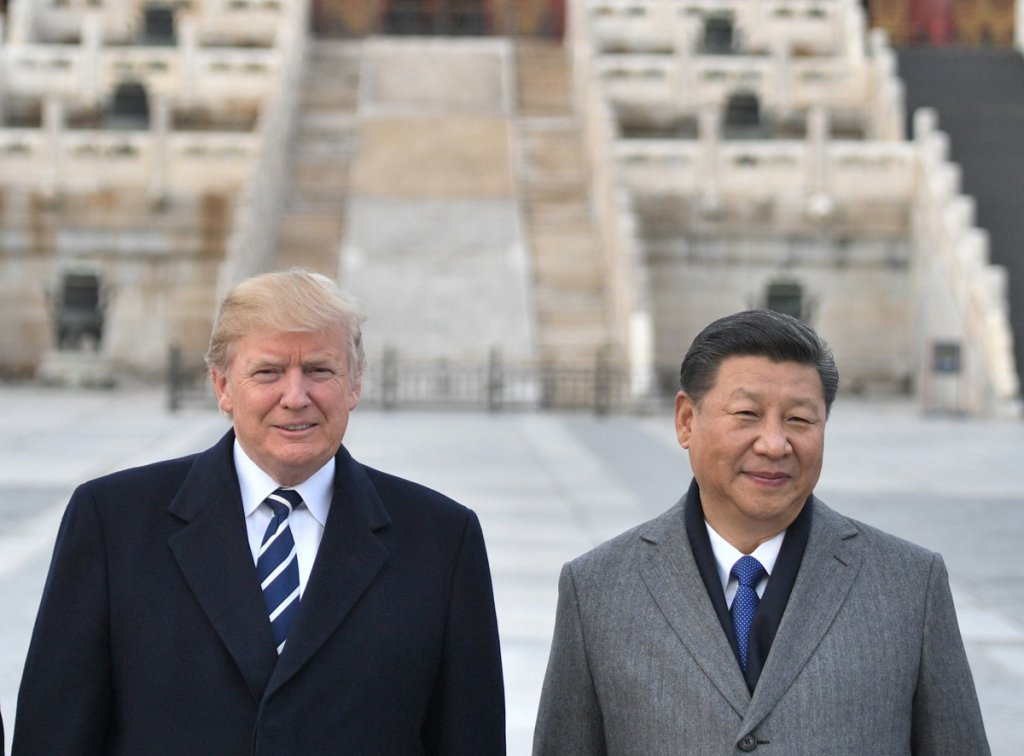
US President Donald Trump and Chinese President Xi Jinping pose at the Forbidden City in Beijing. November 8, 2017. Source: Jim Watson/AFP
In early July, US President Donald Trump followed through on months of threats to impose sweeping tariff hikes on China for its alleged unfair trade practices.
The US has already slapped tariffs on US$250 billion worth of Chinese products. China has set tariffs on US$110 billion worth of US goods, and is threatening qualitative measures that would affect US businesses operating in China.
The two recently called a 90-day truce after their discussions at the G20 meeting in November. Trump has made it clear, however, that should they fail to reach an agreement, he won’t hesitate to impose his planned 25 percent tariff on an additional US$250 billion of Chinese exports.
Despite the truce, both sides still appear to be on different pages when it comes to expectations. If the deadline isn’t met, it’s likely US-China trade tensions will erupt into a full-blown trade war. China’s own Ministry of Commerce warned that the dispute may even lead to “the largest trade war in economic history to date”.
The spat caused the International Monetary Fund (IMF) to lower the world’s projected economic growth for 2019 by 0.2 percent.
Predicting a global crisis in the coming months, second in command at Chinese industry leader Alibaba Joe Tsai said:
“We are so integrated that the pain is going to be felt all over the world. Everybody is going to feel the pain.”
October: Climate change – the point of no return
Firefighters try to extinguish flames during a wildfire at the village of Kineta, near Athens, on July 24, 2018. Source: Valerie Gache/AFP
Future generations looking back at 2018 may well see with clarity that this was the year we were warned, could have acted, but chose not to. Assuming, of course, there are future generations to ponder this.
In October, the Intergovernmental Panel on Climate Change released its most urgent call to action yet in the face of devastating global warming. In the report, climate scientists warned the planet had only 12 years before reaching the critical 1.5-degree Celsius limit set out in the Paris Agreement. After this point, we face catastrophic and irreversible climate damage.
Scientists have shown the planet is hurtling towards the point of no return at alarming speed, with carbon dioxide emissions from fossil fuels and industry projected to reach record levels in 2018.
Those in the know have repeatedly reiterated that the time to act is now.
It’s easy to believe them as 2018 will also be known as the year the world burned. Countless extreme weather events struck across every continent, leaving millions facing the ravages of forest fires, drought, typhoons, and heatwaves.
Given the dire warnings, it was with great frustration that concerned onlookers viewed the government leaders’ lackadaisical response at United Nations Climate Change Conference in December.
The delegates may have given themselves a standing ovation for their efforts, but the final agreement lacked any sense of urgency and was labelled “morally unacceptable” by climate scientists.
MARKET researchers have found that plenty of Southeast Asia’s nouveau riche spends lavishly, but their buying habits of those in the region tend to be nuanced and don’t necessarily fall within certain expectations.
Most of us reading this have either watched or at least heard of one this year’s biggest romantic comedies, Crazy Rich Asians, which depicts the opulent lifestyles of the regions high-net-worth individuals (HNWI).
While much of the story focused on the jet-setting lifestyles of the segment of wealthy elites, the HNWI make up for a minority of a wealthy group dubbed as the “mass affluent”.
But who are they?
The Boston Consulting Group (BCG) noted that to identify the mass affluent market of Southeast Asia, it was important to cast aside typical stereotypes: HNWI who inherited their wealth or made their big bucks in property and security trades, and the ultrarich who are characterised in Crazy Rich Asians.
BCG’s Center for Customer Insight recent research findings pointed out that the majority of mass-affluent consumers are young and savvy. The research was based on a survey of 6,000 affluent consumers and extensive qualitative research in six major ASEAN countries.
The research found that two-thirds of those surveyed were under 40 years of age while more than three-quarters had experienced upward social mobility in earning their wealth as professionals or business owners in the past 10 years.
The mass affluent in this region are new-comers to the world of luxury goods, and many of them are upgrading to premium products in terms of items such as personal care, food and beverage, and footwear.
(File) Author Kevin Kwan arrives at Warner Bros. Pictures’ “Crazy Rich Asians” Premiere at TCL Chinese Theatre IMAX on Aug 7, 2018 in Hollywood, California. Emma McIntyre/Getty Images/AFP.
“So, these consumers are relevant not only for luxury brands, such as Chanel and Diageo but also for companies such as Johnson & Johnson, Procter & Gamble, Heineken and Adidas,” the report stated.
And while having deeper pockets than ever before, the majority of the segment of consumers were still wary of the things they buy. This includes doing thorough research on their desired goods before making a decision.
Their research on whether or not the items were worth the price often comes through the use of digital media, but they are also said to enjoy “immersive” purchasing experience and reserve a high share of their spending while travelling overseas.
Why do they matter?
In times of economic volatility, BCG pointed out that the mass affluent tends to have better buying propensity compared to the middle class.
When it comes to being more digital connectivity, the mass affluent were more engaged than other segments as it was found that nearly 60 percent of Thais and an astounding 88 percent of Filipinos shopped online.
The report also noted that the mass affluent take 12 international trips a year on average, buying more than 40 percent of items such as watches, skincare products and cosmetics overseas.
Aparna Bharadwaj, a partner who leads the firm’s Center for Customer Insight (CCI) and BCG’s marketing, sales and pricing practice in Southeast Asia, recently told The Edge that remarkably high proportion of the region’s mass-affluent consumers share similar values and preferences, even though they remain separated by language, culture and distance.
This was largely owing to their frequent travel and social media use.
“We were quite surprised to see how relatively homogenous the mass-affluent consumers are. The middle class, for example, are very different by markets and carry a strong country influence in their preferences, shopping behaviour, choice of brands and attitude towards price,” she was quoted as saying.
“In contrast, the mass affluent have similar preference on many dimensions. For example, they overwhelmingly prefer exclusive or limited edition products, they usually plan their luxury purchases and they care about quality and not just brands. This means that they are very amenable to a pan-regional strategy [by consumer companies].”
She added: “Unlike the middle class, they do not always require a country-by-country strategy. They are well-travelled consumers and have formed their views by moving across geographies and markets.”
Aparna said it is important for all consumer product companies to tap into the mass affluent, adding companies that have ‘masstige’ (mass prestige) or premium offers should pay close attention to this market.
“But even mass market companies could have compelling propositions for the mass affluent because we are talking about a highly accessible market, not the high-net-worth individuals,” she said.
“Given this group has a 20 percent to 40 percent share of household wealth in Southeast Asian countries, which is likely to be a 40 percent to 65 percent share of wealth by 2030, they are a large and highly significant market for most categories.”
The report in the Edge noted that the mass affluent account for roughly half of all spending in categories such as leisure travel, watches and cars across the region.
Aparna says companies can seize competitive advantage in “one of the world’s greatest emerging mega markets” by better understanding the mass affluent market.