Home Blog Page 870

The Big Read: Sharing economy — the next big thing that never was?

0

SINGAPORE: The sharing economy held much promise when it burst onto the scene in the not-too-distant past, opening up an avenue for people to earn an income by sharing their underused resources with others.

Consumers, too, embraced it in a big way, hoovering up goods and services in nearly every area imaginable — from point-to-point transport and bicycles to accommodation and co-working spaces — typically at low cost.

But more than a decade after it began its meteoric rise across the globe, the collaborative movement has come under siege, including here in Singapore.

The hype surrounding the sharing economy is fading rapidly, as its original ideals have taken a back seat to the relentless corporate pursuit of profits.

Fuelled by the rise of digital technologies — which allowed owners of goods to be matched quickly with those who needed them — the sharing economy was meant to spur higher levels of social efficiency.

“Idle resources can be wasted if they are not put to proper use and stay idle. So, in principle, as a starting point, a sharing economy is a good way of social allocation,” said Associate Professor Lawrence Loh of the National University of Singapore (NUS) Business School.

Assoc Prof Loh, who helms the school’s Centre for Governance, Institutions and Organisations, added that there are merits in the true spirit of sharing, which happens away from the market-based system.

Dr Tom Chen, a senior lecturer at the University of Newcastle in Australia, said there is no agreed definition of the sharing economy, though most experts concur that it entails peer-to-peer sharing.

He believes sharing-economy services, however, must meet several conditions: They must have access to idle resources, bring value to various stakeholders, including customers, who are engaged via a digital platform.

While the sharing economy was said to have emerged in the mid-2000s, it was the 2008 global economic recession that pushed scores of people to latch on to collaborative consumption.

Around the world, many found sharing or renting more economical than buying. Those displaced from their jobs also discovered a way to make a living.

It was during this time that mobile applications and online platforms — such as American home-sharing firm Airbnb and ride-sharing app Uber — sprouted up to meet demand.

In the years after, competitors offering similar services mushroomed across the globe.

As these ventures gained ground, they attracted large capital injections from investors, which set off bruising battles for market share in a race for profits.

That was when things started to go downhill, and few had anticipated the harm big money involvement would cause.

A ComfortDelgro taxi passes Uber and Grab offices in Singapore

A ComfortDelgro taxi passes Uber and Grab offices in Singapore, Mar 26, 2018. (Photo: Reuters/Edgar Su)

‘SEIZED BY BIG MONEY’

In a commentary for The Guardian in November last year, writer and researcher Evgeny Morozov said sharing services worked well at least in the beginning, as those offering goods and services found a way to monetise their idle resources and users received discounts on rides, meals and bookings.

But the fairytale has since come to an end. “The initial lofty objectives that legitimised their activities will give way to the prosaic and occasionally violent imperative imposed by the iron law of competition: The quest for profitability,” Mr Morozov wrote in the article titled From Airbnb to city bikes, the ‘sharing economy’ has been seized by big money.

Even so, industry players and experts are divided on the effects of big money on the sharing economy.

Mr Patrick Wong, president of the Sharing Economy Association (Singapore), noted that the public fallouts involving sharing services could happen in other industries, too. The association has about 35 members, including food-delivery service Foodpanda and bicycle-sharing firm Mobike.

Big money has sped up innovation and the adoption of sharing services, and firms have to put customer needs “at the front”, said Mr Wong, who is also the country manager of GoGoVan Singapore, a sharing platform for logistics. “All these businesses have to make money to continue to run and innovate, but at the end of the day, they are providing value,” he added.

However, investors with deep pockets expect returns on investment, and are at odds with the spirit of sharing, said Mr Rykel Lim, director of GBikes, which operated a bicycle-sharing service in Singapore until last year

NUS Business School distinguished professor Ivan Png said that founders and venture capitalists both wanted more growth, and “pure peer-to-peer sharing did not satisfy them”

Associate Professor Renuka Mahadevan, from the University of Queensland in Australia, argued that online-platform companies never really shared those objectives to begin with.

“They have always operated as any firm would — to maximise profits. These firms did not intend to run a charity organisation,” said Assoc Prof Mahadevan, an economist whose research has covered Airbnb and Uber in Australia.

Economist Walter Theseira of the Singapore University of Social Sciences said firms such as Uber quickly realised that it was not economically feasible to operate their businesses in a manner consistent with the initial sharing objectives, which were “largely a marketing ploy”.

To deliver a reliable car-sharing service, for instance, firms could not rely on vehicle owners driving part-time to supplement their incomes.

“There simply weren’t enough of them available … There may have been enough to provide some alternative to taxi services, but definitely not enough to fuel rapid growth and take over the market share of traditional taxi services,” added Associate Professor Theseira.

Therefore, firms such as Uber and its regional rival Grab resorted to business strategies that “completely walked back the original sharing economy concept”. These included providing rental vehicles to drivers offering ride-sharing services, and devising incentive and reward schemes to woo full-time drivers, he added.

A Grab taxi drives on a street in Hanoi

A Grab taxi drives on a street in Hanoi, Vietnam on Oct 29, 2018. (Photo: Reuters/Kham)

In an email responses, a Grab spokesperson said drivers have full control over the vehicles they use, be they taxis, buses, their own cars, or those they lease from GrabRentals, its car-rental arm, or car companies. They can also choose to provide for-profit or not-for-profit services. She added:

Regardless of definitions, our end goal is to drive greater transport efficiency and accessibility, and to help build a cleaner, greener city by using a combination of mobility services.

Industry players and experts said firms are, however, in a catch-22 situation when it comes to funding.

While bottomline-obsessed investors may force companies to make compromises, Mr Lim of GBikes said they need funds to acquire assets, such as bicycles, to run their businesses.

Assoc Prof Theseira believes that the presence of big money increases the likelihood that a service will be of high quality, and maximises its potential. “When you have a lack of scale, it means that you cannot really make an effective difference in the market,” he added.

Some owners of smaller-scale platforms are, however, willing to keep their services away from the clutches of revenue-focused investors, so that their vision is not eroded.

Mr Chuan Wei Zhang, 32, launched peer-to-peer sharing app Lendor in late 2017 with his wife, Ms Pauline Lim, also 32.

They wanted to rekindle the “kampung spirit” of yore, in which people borrowed many items from one another, including soy sauce and salt, at a time when resources were limited.

The platform is free for users, and lists more than 3,000 items, including baby prams, gaming consoles and printers.

The couple poured more than S$60,000 of their own money into developing the app, as well as to cover marketing and server costs, among other things. They also received a S$20,000 grant from the National Environment Agency.

While they hope to meet investors who can help them grow the platform, Mr Chuan said that many investors they had met asked to see their “revenues and margins”.

“Unfortunately, the majority of the investors are looking for bottomlines. It’s the dollars and cents at the end of the day … We tend to avoid those (investors),” said Mr Chuan, who is also a lecturer at Nanyang Polytechnic’s School of Interactive and Digital Media.

“We are happy to run it as a community project, but we will of course be happier if we can meet someone who can bring this to another level.”

Others, too, have had to turn down offers because the visions of investors did not square with theirs.

Mr Herry Pudjianto, 38, founder of Rent Tycoons, a peer-to-peer rental portal, said his firm turned down a S$100,000 investment from an investor two years ago.

Instead of being at an investor’s beck and call, Mr Pudjianto said that at times, there is “non-monetary satisfaction when you are able to help people by sharing things”.

“As long as I can stick to my true principles, I’m still very happy if the company is not making money or just making enough,” he said.

The sharing economy has permeated a multitude of sectors, including land transport, accommodation and co-working spaces, and rentals of household and other items.

Carousell founders

The co-founders of mobile classifieds marketplace Carousell. (Photo: Carousell)

CAR- AND BICYCLE-SHARING

The proliferation of car- and bicycle-sharing services globally has profoundly altered how people move around, compared with a decade ago.

In Southeast Asia, Uber and Grab initially dominated the point-to-point transport sector until March last year, when Grab gobbled up Uber in a controversial takeover.

Ride-sharing platforms saw thriving demand because they were cheaper than traditional taxis.

Assoc Prof Mahadevan of the University of Queensland said demand then drove supply, providing platforms with the much-needed impetus to start maximising profits, as any business would.

Besides the ease with which customers may register to book rides, the apps also provided a means for drivers with no other option to earn an income. Flexible work hours were a “major plus” for Uber drivers, she added.

In Singapore, many, including the young, signed up to be Grab and Uber drivers several years ago, tempted by attractive incentives trotted out by the firms. For retrenched workers, it also became a lifeline between jobs.

READ: With Grab’s super app ambitions, who will it eat for lunch? A commentary

The tide, however, turned last year, after Grab reduced its incentives for drivers significantly in the wake of its Uber takeover. Those wishing to leave the industry owing to the poor prospects were left in a quandary as they struggled to land jobs after years inn the driver’s seat. 

There was also concern over underemployment. “Many young people, even university graduates, became Uber drivers,” said Prof Png of NUS. “This is a poor way to start a career.”

Motorcycle taxi riders from Go-Jek and Grab protesting in April in Jakarta.

One of the protests, in April 2018. (Photo: Reuters/Darren Whiteside)

While ride-sharing services were initially seen as a cheaper alternative to taxis, passengers began to bear the brunt of higher fares here after Grab took away promotions following its high-profile acquisition of Uber.

Others have taken issue with the firms’ dynamic-pricing model where fares surge when demand goes up, which they said ran counter to the sharing concept. Said GBikes’ Mr Lim: 

The sharing economy is meant to bring down prices for people, not bring them up. So it annoys me when I see prices surge three times what a taxi fare would have cost.

Outside Asia, Uber is banned in some jurisdictions for various reasons, including malpractices. For instance, it was forced to pull out of Bulgaria in September 2015 after it drew heavy criticism for unfair practices and permitting its drivers to work without a taxi or professional driver’s licence.

With ride-sharing firms now leasing vehicles to drivers, there is also little difference between how they and taxi firms operate, said Assoc Prof Theseira.

However, he said firms like Grab would not be in Singapore had the traditional taxi firms got “their act together”.

Grab and Uber’s main innovations were their ability to better match supply and demand via a mobile app rather than street hails, and dynamic pricing. “The sole reason for Grab and Uber’s existence is the failure of our taxi companies to implement business ideas which … (have been) very successful in other countries,” he added.

READ: On both sides of the Causeway, Grab’s grand ambition hits road bumps, a commentary

Cars aside, bicycle-sharing has also lost some of its lustre. Some firms are battling cash-flow problems, while others have left markets completely. Caught off guard, users are scrambling to recover the money they have deposited with these firms.

In Singapore, Chinese firm Ofo, which is backed by conglomerate Alibaba, owes more than S$700,000 to at least two firms for logistics services.

The firms have not been paid by the embattled operator, which is facing cash-flow problems, for at least three months.

Ofo is also facing difficulties in China, with irate customers demanding refunds of their deposits.

READ: Lessons from the fall of once-mighty bike-sharing giants , a commentary

In June last year, another Singapore-registered bicycle-sharing company, oBike, pulled out abruptly from the Republic, citing difficulty in meeting rules to tackle indiscriminate parking laid out by the authorities.

Since then, oBike users have tried unsuccessfully to get their deposits returned and vendors have not been paid money owed to them.

Assoc Prof Loh said that because they own the bicycle fleets, operators such as Ofo are, strictly speaking, not providing a shared service, but bicycle rentals made available everywhere.

bike sharing AMK

A man with an oBike at a bicycle parking lot in Ang Mo Kio. (Photo: Kenneth Lim) 

“People call (this) a sharing economy when, in fact, it is not … The definition has moved into territories that give it the wrong sense of the word,” he added.

On the woes bedevilling the bicycle-sharing firms, Assoc Prof Theseira attributed them to “too much investor money” chasing a business concept that was executed by companies with no fiscal discipline.

“They over-expanded recklessly and then they collapsed,” he added.

READ:  Grab, the new ruler in town, and the paradox of scaling a business, a commentary

SHARING HOME AND WORK SPACES

Riding on the demand for a wallet-friendly alternative to hotels, shared accommodation also took off in a big way.

Set up in 2008, Airbnb is today a household name, allowing hosts to rent their places out whenever they like and at low cost to them.

It also promotes a “social element”, where locals interact with foreign guests who seek a local flavour during their stay, said Assoc Prof Mahadevan.

Airbnb, she added, has also been a “godsend” for tourism in areas where there is a lack of appropriate hotel accommodation, such as in rural and remote areas of Australia.

Assoc Prof Mahadevan noted that big profits become a worry when they are made by online-platform firms at the expense of providing a level playing field against their established competitors.

Berlin has begun restricting private property rentals through Airbnb and similar online platforms,

(Photo: AFP/John MacDougall)

For example, hotels may find it unfair that they are losing out because their rivals like those renting out their homes on Airbnb do not have to bear the same costs, such as for insurance.

Others said Airbnb’s objective of encouraging social interactions has also been eroded somewhat.

READ: Is Airbnb sharing or plain old commercial letting? What regulation needs to consider,  a commentary

Mr Eric Tan, 24, co-founder of peer-to-peer renting app Sharent, said: “The value Airbnb delivers is actually the host hosting (you) and the experience of talking to the host … but now, you move into (your Airbnb apartment), you get the keys from the letter box and that’s it.”

Platforms like Airbnb have also run into regulatory hurdles in countries like Singapore, where there are concerns about their potential impact on residential neighbourhoods.

Right now, private residential properties in the Republic are subject to a minimum rental period of three consecutive months.

The authorities have, however, proposed a regulatory framework — which went up for public consultation last year — that could allow owners of private residential properties to lease their apartments for short-term stays, provided a large-enough proportion of owners agree to the new use category.

Under the proposed framework, strata-titled properties such as condominiums and apartments governed by management corporations will need at least 80 per cent share value approval for this to be applied to their properties.

READ: Airbnb can’t be Robin Hood, it must obey Singapore’s ‘house rules’, a commentary

In 2016, a woman in Singapore went to great lengths — including hiring a private investigator — to take her neighbour to task for hosting paying Airbnb guests, a practice that unsettled her. Last year, two Airbnb hosts — who became the first to be hauled to court since laws were passed to address unauthorised short-term rentals — were fined S$60,000 each.

Meanwhile, co-working spaces are also doing steady business, driven mainly by rising demand from corporate users.

Such spaces — dominated by operators like WeWork and JustCo — formed 27.1 per cent of total office leasing demand in Singapore at the end of August last year. This was a huge rise from the 14.7 per cent in 2017, and 6.9 per cent in 2016, based on data from Cushman & Wakefield, a real estate consultancy.

Spacemob

There are about 50 co-working space locations in Singapore, an increase compared to the 40 from a year ago, according to property consultancy Cushman and Wakefield. (Photo: Spacemob’s Facebook page)

With the major players establishing a stronghold in the market, independent co-working spaces are becoming less active, and some have been sold to the bigger boys, said Mr Jeremy Lim, 29, co-founder of 21Moonstone, a small co-working space for artists in Serangoon.

He acknowledged that users have benefited from more competitive rates with the presence of major operators, though smaller spaces like his are unable to dish out discounts to the same extent.

READ: Don’t fall prey to the seductive lure of fancy co-working spaces, a commentary

Hence, independent players have had to develop a niche. “The reason people come to us today is not so much about what kind of amenities we have … but it is more about the people who you can see and connections you can make,” he added.

That is the value that has never changed since the whole co-working movement started.

PEER-TO-PEER RENTAL

In the face of upheavals in other areas, peer-to-peer renting platforms that allow people to share everything from electrical tools to Christmas trees appear to be the last bastions of the sharing economy.

The operating models vary. Some, like Lendor, do not take a cut from owners and users, with the platform sustained by funds from the co-founders’ own pockets.

Others, such as Rent Tycoons and Sharent, take a 20 per cent commission on the rental fees to cover marketing, payment and other costs.

Mr Pudjianto of Rent Tycoons, which was set up in 2011, said the platform could easily have generated data on the top items being rented, and buy those items to compete with their own users at slightly lower rates.

“But that defeats our own purpose, because we would like to promote sharing,” he said, adding that his portal also aims to encourage interaction with neighbours.

READ: In 2019, online marketplaces will change the way you and the government shop, a commentary

For Mr Chuan and Ms Lim of Lendor, they were driven by a desire to do more for the environment, and reduce excessive consumption and waste.

“People can start de-owning things, and at the same time, declutter their homes,” said Mr Chuan.

It also provides a means for those drawing lower wages to rent items they otherwise cannot afford, such as hospital-grade breast pumps.

Ms Lim, an adjunct lecturer in fashion design at the Lasalle College of the Arts, said: “It could be a lifeline for low-income families and mothers who need them, because it is pretty pricey to pay for a breast pump and to own it, and you probably only need it for a couple of months to a year.”

Mr Tan from Sharent, which launched in October last year, said the platform is exploring concepts such as rentals of luxury items, like tailored suits and watches, for those who may not be able to afford these goods for school parties or ad hoc events.

clothes on rack

(Photo: Unsplash/Artem Bali)

READ: Save the earth, rent your clothes instead of buying them, a commentary

NEED FOR CHECKS AND BALANCES

Despite the problems that have cropped up in recent years, the sharing economy — in its purist form or not — is here to stay as digital technologies continue to pervade many aspects of everyday life.

However, there is a need for checks and balances, so that sharing-economy firms operate in line with the acceptable behaviour of traditional firms, said Assoc Prof Mahadevan.

Online-platform firms, she said, are not bound by the rules of typical firms, and there is no ombudsman to look into complaints and take them to task.

“There needs to be appropriate regulation to check on the greed and practices and neglect of these sharing-economy online-platform firms,” she said.

Assoc Prof Theseira noted that the Singapore Government would have been criticised heavily for killing innovation if it had devised strict regulations governing, say, bicycle-sharing in the earlier stages of growth.

But given that the public had been harmed on account of the upheavals in the industry, he said regulations could have protected the deposits consumers placed with firms.

Following oBike’s withdrawal from Singapore, the Government announced that the transport authorities would study the need for bicycle-sharing operators to place a security deposit or performance bond if they require users to lodge a deposit to use their services.

Still, Assoc Prof Theseira said a balance must be struck as smaller businesses, which may rely on deposits to run their operations, may struggle to make ends meet. The way forward is to examine the overall framework for business regulation here so as to better protect consumers, while not raising business costs, he added.

Agreeing, Assoc Prof Loh said the key is to raise awareness among consumers of their rights and protection, and what they should look out for when dealing with sharing services

“Ultimately, the consumer has to bear the brunt of caveat emptor,” he added, referring to the “buyer beware” principle.

Source link

She loses her fingers and toes, but not the will to fight for her son

0

SINGAPORE: She was supposed to go back into hospital because her hand wounds were infected, but she put it off. Her son’s preschool graduation was the next day.

“I might not be able to see his other graduations. I’d rather fight, and go and see (this one),” said Ms Nur Zakiah Jaafar. “It’s only kindergarten, but it’s still something that he has achieved.”

Her mother was “nervous” about how sick her daughter might feel. It would be the pain, however, that the 34-year-old would have to fight off, more than anything. And she did, for her son Ahmad.

“I couldn’t believe that was my six-year-old (on stage) without me,” she said that day when emotion overcame everything else, bringing smiles on her face despite her condition.

“Seeing him perform up there with his friends was definitely worth every pain that I felt today, and because I know I wouldn’t be able to go back in time.”

Ahmad receiving his scroll at his preschool graduation, with mum Nur Zakiah Jaafar in attendance.

Ms Zakiah suffers from Raynaud’s phenomenon and Buerger’s disease, a rare disorder affecting blood vessels in the arms and legs. Arteries and veins become inflamed and blocked, causing tissue damage that can lead to gangrene. There is no cure.

She has lost all her fingers, except her thumbs, and all her toes.

But she has not lost her determination to be a good mother, even if it might mean sacrificing what is left of her limbs, as On The Red Dot finds out in following three families struggling against rare disabilities.

IN INTENSE PAIN

Ms Zakiah’s medical condition started out as small blisters on her feet, when she was about 14 or 15. “The GP told us that maybe I wasn’t wearing proper footwear,” she recalled. “So we didn’t give it much thought.”

As she grew older, the wounds got bigger. About five years had passed when she was admitted to hospital for a thorough check-up and was diagnosed.

The turning point came in 2014, when sores on her right leg got “so bad” that doctors wanted to amputate it. She refused.

“That’s when I realised that this was getting serious,” she said. “I started staying in hospital a bit longer each time, and the antibiotics got a bit stronger … and the pain kept getting intense.”

Now, when the home nurse tends to her wounds, Ms Zakiah is left whimpering in pain on her bed. “The apprehension starts every night before the nurse actually comes … It creates a bit of nightmare for me,” she said.

“Before she comes, I’ll take a dose of morphine so that it would help me to be calmer.”

But it cannot stop her from crying as her dressing is changed. “The pain is like having someone rip off your skin, and then putting salt on it,” she said.

Her mother is there by her side, with the soothing words “don’t cry, dear”. Ahmad is close by, too – usually not saying much, but Ms Zakiah can see “he’s sad and afraid”.

“He sees that something’s wrong with Mummy, but he can’t do anything about it,” she added.

After his graduation day, she called for the ambulance to take her to hospital, feeling “scared” of what the doctors might tell her about her condition.

Before she left, she told her son tearfully as she kissed him, and he kissed her back: “Don’t be naughty. Stay with grandma. Mummy will always be near you. Mummy will come back soon. Please pray for Mummy’s speedy recovery.”

‘I’LL STILL BE HERE’

On her fifth day in hospital, there was an update on her condition: The antibiotic she had been given was not really controlling or preventing the infection, said a doctor.

So upon discharge from hospital, she was given another antibiotic – making it two antibiotics together – so that the infection would not worsen.

Back at home, she said: “I never thought that I’d be in this state … I took writing for granted because when you have fingers you don’t really see them there.

“Then suddenly (they get) taken away … You have to depend on other people to feed you.”

Ms Zakiah, an animal lover, used to work at the Singapore Zoo. That was where she met Ms Siti Aizura Kadel, who has been her close friend for nearly 20 years now.

“Back then, she was very jovial, very optimistic,” said Ms Aizura. “Despite her pain, what she’s gone through … the sickness hasn’t changed her.”

But it has taken its toll, as her friend has seen while visiting her during her latest hospitalisation and after she was discharged.

And Ms Aizura told her that, saying: “I don’t like to see you in hospital nowadays because you’re not your normal self … I can see it’s getting worse.”

It is rare that they “talk about sad things”, according to Ms Aizura, and if they do, they “try to joke about it”.

But even a couple of years ago, Ms Zakiah did not think she would lose her fingers, toes and half of her feet.

And her friend sometimes feels that “she doesn’t want people to see her sadness” at not being able to walk or hold her son.

Ms Zakiah admitted: “It’s easy to sink into, and be sucked into, depression. So it’s good that you have someone to pull you out.”

So she hopes their friendship will continue for “the next 40, 50 years”. “A few lost limbs, but I’ll still be here,” she said, reducing her friend to tears.

“You (better) make sure,” said Ms Aizura. “We need to see him (Ahmad) grow up.”

Ms Zakiah, a divorcee, replied: “We will … together.”

HER FIRST BEST FRIEND

If Ms Aizura is the sister she never had, then her 68-year-old mother Musliah Ahmad is the “first best friend” she has known.

“My mum and I have been very close because she was a divorcee as well, so she raised me and my brother with the help of my uncles,” said Ms Zakiah.

“We normally discuss anything under the sun. And sometimes there’s something bothering me, or there’s something that she’s upset about … or sometimes it may be just an opinion we need out of each other.”

She tries not to show her mother how much pain she is in, although it is hard.

“Sometimes I feel as if I’m being a burden to the family because of my illness. You see, it’s supposed to be me looking after my mum at this age,” she said.

“Now, she helps me to bathe, transfer me from the wheelchair to the bed, or she has to push me around.”

Mdm Musliah would not have it any other way. “How can I not love her?” she said. “Even though I’m tired, I see her smile (and) I forget everything.”

And her love does bring out her daughter’s smile, like the time Ms Zakiah playfully asked her, “How about a piggyback? Piggyback!”

Mdm Musliah also cooks, which helps to save money. Their family copes with the S$250 or so in Central Provident Fund money that she gets every month, and about S$350 from the Islamic Religious Council of Singapore (Muis).

As she is not working, and her daughter can no longer do so, the Medical Endowment Fund (Medifund) pays for the hospital bills and medications.

They also rely on their savings. And recently, Muis volunteered to pay for some makeovers in their flat.

Ms Zakiah “doesn’t dare” to plan long-term, taking “each day as it passes”. What she has learnt, however, is that disease is not “a one-person fight”.

“It involves everybody around you,” she said. And of her mum, she said this: “I’d never ever in a million years change her to someone else.”

For Mdm Musliah’s part, she still harbours hope that “one day, Zakiah will be fully recovered”. With her voice trembling with emotion, she added: “I’m very, very scared of losing her.”

‘EVERY DAY IS A GIFT’

Ms Zakiah made it home from hospital in time to spend her birthday with the family, which made her mother “very happy”.

And as a surprise, the On The Red Dot team threw a party for them with their relatives and friends. “(It) was a really big surprise,” she admitted. “The set-up was beautiful and the food was definitely great.

“When I saw everyone there, I was pretty touched … Everybody’s so busy, but they made time to come over and to celebrate with me.”

Her brother’s family was there, as was Ms Aizura’s, and some of the neighbours. “Everyone got a present. So it went pretty well,” said Ms Zakiah. “After everybody left, my mum actually tried on her abaya.

“Ahmad also asked us to open his present … He definitely enjoyed the birthday party as much as I did.”

Source link

Commentary: Succeed in your career, settle down, buy a BTO. Is this Singaporean dream outdated?

0

SINGAPORE: If you’re Singaporean, you’re told from day one that you need to be successful in order to get someone of the opposite sex to fancy you.

If you add in the common connotations of success in Singapore: Educated, economically well off and good looking, you’ll end up with the typical Singaporean dream – a paper chase and career ladder climb.

FINDING SOMEONE SPECIAL

Singaporeans want to settle down. More than eight in 10 singles in Singapore say they want to get married, a survey of almost 3,000 singles published in 2017 by the National Population and Talent Division revealed.

But most cite not being able to find a suitable partner as a key reason for remaining single, the same survey showed. Might we be too picky in choosing someone?

READ: The age-old currency of modern dating, a commentary

Yet, dating opportunities for the average Singaporean are limited by demographics and geography. From personal experience, I’ll argue that most couples pair up in their younger days, at school, in university or polytechnic.

Unless one continually makes a deliberate effort to create connections with others outside of your demographics, once you enter the workforce, your choices are limited. Dating apps can help but only to an extent.

This sometimes leads to one being incentivised to stay in an unhealthy relationship, because of the fears of not meeting someone else better – meaning after we finally find someone, we become reluctant to let them go.

couple man and woman socialising flirting at a cafe

A couple on a date. (Photo: Unsplash/rawpixel)

The reality is even if you were successful, rich and good looking, you might still lack the opportunity to be with someone else you can really see a long-term future with – because what if you’re not good enough for them?

That’s the problem I faced in my early in twenties so I understand and empathise with the young Singaporean guy in his climb up the career ladder to achieve a respectable social status. After all, that’s borne out of a culture that perceives wealth, status and money as important metrics of success.

It is an inevitable cultural narrative that all Singaporean guys brush up against.

READ: Government matchmaking programmes need a rethink to get singles to mingle, a commentary

ECONOMICS MAKES DATING TOUGH IN SINGAPORE

But let’s really address the elephant in the room that’s impacting the culture of dating in Singapore and the inertia that sets in once you find yourself in a relationship: The expected trajectory of seeing someone that should culminate in applying for a Build-to-Order (BTO) HDB flat.

We all know the seamless storyline we’re expected to conform to – find someone nice, get over the rough patches and settle down after a few years while applying for a BTO before getting married.

One of the top reasons Singaporeans cancel their BTO flat purchase is because they split before collecting their keys, according to data collected by a popular financial blog in Singapore.

The pressure to purchase public housing should not fuel our decision to settle down but if we’re honest, it does.

HDB flats in Toa Payoh file

HDB flats in Toa Payoh. (File photo: TODAY)

For Singaporeans who find it difficult to find someone, public housing considerations might incentivise you to rush into a long-term commitment the first chance you get.

Instead of figuring out if you’re both right for each other, it can cause you to gloss over differences in values and interests that should have long been red flags. 

Getting into a relationship sometimes create powerful constraints that makes it very difficult to get out because of the depth of the investment you’ve made with someone without realising what you’re truly getting yourself into.

We all want that fairy tale ending but there’s a difference between a couple who looks like they have a successful and loving relationship, and a couple who actually does.

READ: The Lease Buyback scheme can give singles more housing options, a commentary

WHEN MORE GET MARRIED LATER, A GOOD THING

Many of our life choices from what to study to our career paths are influenced by our parents.

When a huge part of your life revolves around making decisions in seeking your parents’ approval and relying on them for support, you may not have developed the emotional maturity required for a long-term relationship. 

There’s also something to be said about emotional independence, where many stay with their parents until they get married.

Singapore is reported to have declining birth rates and couples are choosing to settle down later, as the median age of those who get married have gone up to 30 for men and 28 for women. 

file photo of a baby

File photo. (Photo: Wikimedia Commons)

Apart from more having a higher level of emotional maturity before taking the plunge, there are two more reasons why this may not be entirely a negative thing.

Research around the world have shown that later marriages and declining birth rates are par for the course for developed, modern economies. 

A popular argument suggests when people have more disposable income and economic opportunities, they are more willing to put off marriages and courtships and focus on individual pursuits.

Second, for the majority of human history, most marriages were arranged by families for economic gains and survival.

Singapore is an advanced country, which means to say that more Singaporeans now have a personal choice about who they see and are exercising these – including the option to settle down later in life with someone for love.

Wedding ring

File photo of a ring being placed on a finger.  (Photo: AFP)

READ: Getting married in an era of consumerism, a commentary

AN OUTDATED SINGAPORE DREAM?

However, back to the HDB question, if Singaporeans are economically well off, then why are we still making choices based on housing?

My gut feel is that Singaporeans may be too rushed to live that “Singaporean dream”, to chase one of the success metrics determined by a cultural narrative: Your own house.

Dating someone shouldn’t mean that you have to confirm, chop stamp that this person is someone you want to settle down with.

Lifelong compatibility, genuine affection and financial stability should be carefully considered factors when it comes to finding someone to get married to. These are important elements for a healthy, lasting partnership, in addition to understanding your partner’s goals, fears and values.

READ: Want more babies? Help couples build stronger marriages first, a commentary

To land a date should be easier. You don’t need to be particularly rich, good looking or have a ton of qualifications, though you also can’t be a bum.

You also need to have things going for you: Goals, an aim and the ability to converse and present yourself in a positive way – ingredients that should afford you more opportunities to evaluate if your date can be more than that.

But to settle down should be a separate, deliberate decision. Ultimately, keep in mind the societal pressures and be wary about chasing that Singapore dream too hard.

Marcus Neo Kai Jie runs a dating consulting company and is currently studying psychology at the Singapore University of Social Science.

Source link

Commentary: In 2019, online marketplaces will change the way you and the government shop

0

SINGAPORE: 2018 has been a significant year for e-commerce. Just recently, we saw record breaking global sales numbers with US$7.9 billion transacted across Cyber Monday in the US and US$30.8 billion on Alibaba alone on Singles Day

Analysts are predicting e-commerce to be the fastest growing global retail channel in the next few years, and Southeast Asia looks set to see tremendous industry growth in the next few years. 

The region’s e-commerce market looks set to hit US$102 billion by 2025 from US$23 billion in 2018, fuelled by the 350 million internet users in the region and with growth led by Indonesia, Vietnam and Thailand. 

Here in Singapore, with our high internet penetration rate, we are the second highest in the Asia-Pacific in overseas purchases, and the second largest ride-hailing services market in value despite our small base. 

Our digital infrastructure and status as a finance and business hub has also attracted internet economy companies to set up headquarters here, bringing in US$16 billion in investment and providing residents easy access to e-commerce services from giants such as Lazada, Grab and Shopee. 

From its humble beginning in the 1990s, e-commerce has had a significant impact on the real world, with its convenience and choice changing how products and services are sold and bought. 

Today, we are at an inflection point where up-and-coming technologies and the increasing rate of digitalisation will fundamentally change the way individual consumers, businesses and governments buy and sell goods, and even how e-commerce is conducted. 

Better and broader availability of smartphones and cheaper, faster and always-on internet connectivity will mean better and quicker access to on-demand and time-sensitive services. 

READ: How can businesses thrive in today’s digital world? A commentary

It will also mean that a lot of time-consuming tasks such as discovering and buying necessities and supplies can be done quickly and easily; saving time, improving productivity and lives. 

file photo phone woman 5

File photo of a mobile phone. (Photo: Xabryna Kek)

​​​​​​​

#1 MORE AND BIGGER MEGA MARKETPLACES OFFERING DIVERSE PRODUCTS AND SERVICES    

In 2019, one key trend we expect is that mega marketplaces will grow bigger.

E-commerce players will expand their online marketplaces to provide buyers with more choice and product and service categories, expanding beyond their traditional core businesses and trying to provide a one-stop-shop for online purchases. 

China’s WeChat, which started off as just a chat app, now allows users to buy food, book transport, get directions and get updates on sales and purchase through the app. 

READ: A page from a playbook on China’s online consumer market, a commentary

Back home, Grab and Go-Jek are competing to become Southeast Asia’s super app, with both initially starting out as a transportation service marketplace and now offering food delivery, payments and even ticketing and groceries. 

Marketplaces will also be used by other non-marketplace businesses as a value-added offering to their core business. Banks in Singapore, for example, have launched marketplaces for their banking customers to purchase necessities and supplies online, providing additional value to their customer base and linking them to their core financial products. 

UOB has created an online marketplace for its SME customers to buy business essentials from stationery, travel bookings and insurance while enjoying bulk-purchase deal prices. 

OCBC has created a marketplace using analytics to handpick the most relevant motherhood related products for mothers and mums-to-be, and DBS has launched online marketplaces for electricity and direct seller to buyer car purchases that also provide information to payments and financing options at their digital bank.

OCBC launches online marketplace for mums

Partners in the online marketplace venture. From left: Mr Elvin Too (NTUC Fairprice), Ms Donna Chua (Robinsons Group), Mr Dennis Tan (OCBC), Dr Beng Teck Liang (Singapore Medical Group) and Ms Athena Lee (Doctor Anywhere). (Photo: Noella Chye)

#2 MORE HYPER-LOCAL, HYPER-VERTICAL MARKETPLACES WITH SPECIALISED DIFFERENTIATORS

On the other hand, this leaves room for even more specialisation: Hyper-local, hyper-vertical marketplaces will take advantage of the gap in the market from mega marketplaces taking a broader view; focusing on just one category or function or in a specific area. 

One reason these hyper-local marketplaces form is because they rely on the physical proximity between buyers and sellers, as well as knowledge of local customs. 

Carousell, initially created for students who wanted to sell items in university to each other, worked especially well in the city-state of Singapore in its initial stages because buyers and sellers, both based in Singapore, typically chose mutually convenient locations like train stations to exchange second-hand items for cash. 

Another is the need for local relevance for the marketplace. An example of a highly specialised local marketplace is MakanSharing in Malaysia, where people can find home-cooked food in Malaysia. 

Niche freelance marketplaces which allow for local hires are continually popping up, the likes of which include creatives and media freelancer site CreativesAtWork and personal trainer marketplace GoTrainer.

One telling sign of the importance of local relevance in the APAC region is how the more localised Grab beat the globalised Uber throughout the APAC region. 

Grab, with more focus on the local market, had an edge when adapting to local conditions. 

grabfresh

Screengrab of a video showing the new Grab app interface with a grocery delivery option.

READ: Grab, the new ruler in town, and the paradox of scaling a business, a commentary

READ: With Grab’s super app ambitions, who will it eat for lunch? A commentary

One differentiator Grab leveraged on was to allow their drivers to collect cash, which sped them along the region where passengers were not as credit-card savvy as their counterparts in the US.

#3 B2G E-COMMERCE: PUBLIC SECTOR INITIATIVES DRIVEN BY PRIVATE SECTOR MARKETPLACES

From specialisation in products, we will also see specialisation in buyers: With the biggest being in the government sector. We will see governments like India and New Zealand roll out online marketplaces.

Governments in Singapore (which has used GeBIZ since 2000) and the US are already tapping on online marketplaces for their procurement needs, and they will likely in turn feel an increasing pressure for usability and flexibility in their procurement processes as expectations of user experience rise across the board because of marketplaces like Amazon for government, as well as the individual procurement officer’s use of private sector marketplaces in their personal lives. 

We will also see traditionally public sector initiatives being taken on by commercially-driven, private sector companies, to ensure commercial sustainability in these programmes. 

This year, Arcadier was chosen by the United Nations to source and distribute critical non-communicable disease medicine and supplies to over 100 countries through a private, global online marketplace. One important objective is to become commercially viable – critical medications which might potentially save millions of lives cannot depend on goodwill and donations alone.

#4 RETURN OF OFFLINE RETAIL TO COMPLEMENT ONLINE

Another key trend is the return of offline retail, with retailers seeing it as complementary to online offerings. We’re seeing large retail players and small shops experimenting with this, after years of focusing on their online experience. 

We have been seeing a trend of pop-up stores in malls run by online businesses that allow for lower investments and greater exposure while helping stave off consumer scepticism with a physical presence. 

But it’s not just pop-ups that will become more common, but also permanent, brick-and-mortar stores that allow e-commerce business to attract walk-in patrons, while also doubling up as a warehouse and fulfilment station for the delivery of online purchases. 

Players that started in the online space such as HonestBee, a Singapore-based online grocery and food delivery service, are investing in their own brick and mortar store, with e-commerce giant Taobao opening a physical store so consumers can see and touch products instead of relying just on pictures.

Nomadx Plaza Singapura shop store taobao mall 2

Taobao’s first physical store in Singapore. (Photo: Hanidah Amin)

E-commerce players who can pull together an integrated retail experience will rise to the top. 

#5 MATURING TECHNOLOGIES LIKE MACHINE LEARNING WILL ENHANCE E-COMMERCE

But growth and change will also bring about fresh challenges for marketplace operators. Two of the biggest issues for e-commerce today is trust and discoverability. 

With billions of products and services being sold on a multitude of websites, buyers question the authenticity of seller’s claims amidst a sea of similarly strong claims. New technologies, which are coming into maturity can help with that. 

Marketplaces are investing millions into artificial intelligence (AI) and machine learning to help their customers find products faster and with better relevance, and help sellers set competitive pricing. 

Natural language processing capabilities can create AI chat bots that help customers quickly find the services and products they want in the online marketplace, especially in on-demand, time-sensitive services such as ride hailing. 

AI-driven analytics can quickly pinpoint fraudulent transactions and prevent fraud. Combining AI and Wall Street high-frequency trading techniques, companies such as CashShield helps secures transactions and consumer accounts from cybercriminals, without the need for human intervention.

2019 will be another exciting year for e-commerce. This same time next year, we expect that there will again be talk about record-breaking volumes for Singles day and Cyber Monday. 

But as the years go by, with e-commerce being more established and becoming the default platform for all aspects of buying and selling, from consumer, to businesses and government, we expect that we will just be calling it “commerce”. 

Dinuke Ranasinghe is chief executive officer and co-founder of Singapore-based marketplace builder Arcadier. 

Source link

5 arrested for drink-driving in islandwide Traffic Police operation

0

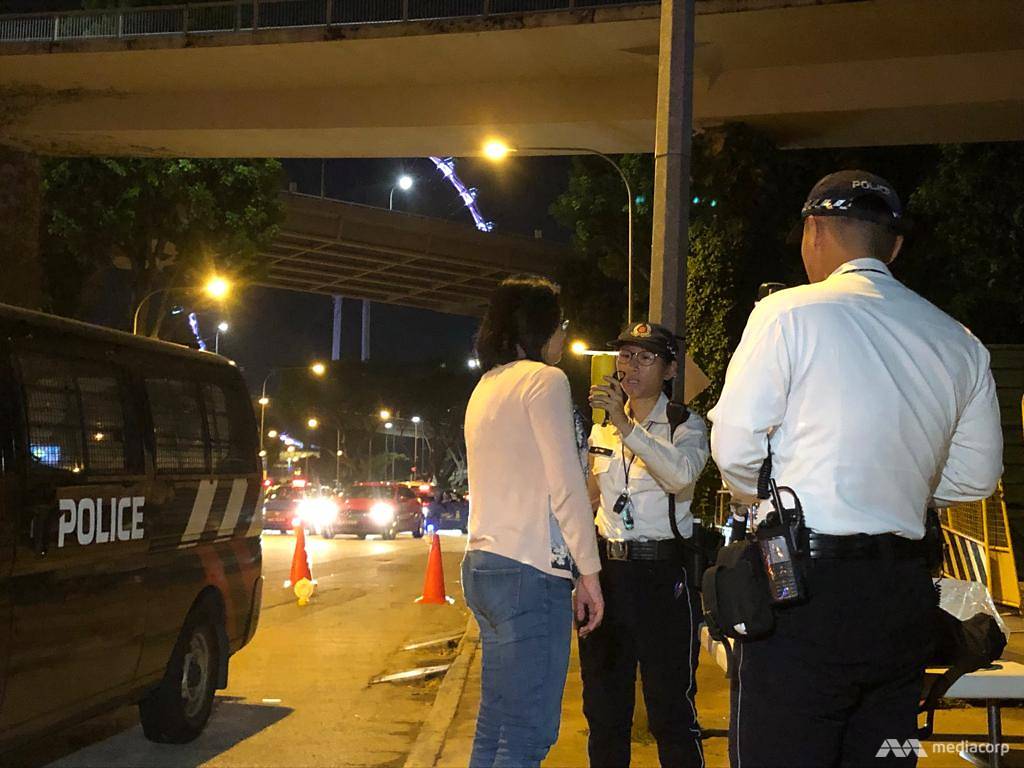
SINGAPORE: Five people were arrested for drink-driving following an islandwide operation conducted by the Traffic Police on Friday evening (Jan 4).

Four men and a woman aged between 21 and 49 failed Breathalyser tests after they were stopped by the police. 

A total of 30 drivers were stopped and tested for alcohol consumption as part of an anti-drink driving enforcement operation. The highest Breath Evidential Analyser test result was 55mg of alcohol per 100ml of breath, exceeding the prescribed legal limit of 35mg of alcohol.

READ: Authorities considering stiffer penalties for drink-driving offenders: Sun Xueling

The operation came amid an increase in the number of drink-driving related accidents in the first nine months of last year. There were 126 accidents related to drink-driving from January to September 2018, which is a 22.3 per cent increase from the same period in 2017.

drink driving operation traffic police Singapore (1)

Traffic Police conducting a Breathalyzer test on a driver on Jan 4, 2019. (Photo: Vanessa Lim)

More than 1,500 individuals were apprehended between January and September last year.

The number of casualties involved in such accidents has also increased, with 160 in the first nine months of last year, up from 126 in the same period the year before.

To tackle this, the police said they will continue their enforcement efforts but also continue educating and engaging with the public.

“We are focusing our efforts on targeted user groups such as motorcyclists, heavy vehicle companies, the transport associations as well as the driving schools,” said Traffic Police Deputy Commander Anthony Yap.

READ: Traffic Police to trial new cameras that detect illegal U-turns, vehicles stopping in yellow box junctions

READ: Claims of on-the-spot cash fines for traffic summons ‘false’, say police

“We are also partnering with entertainment outlets to display collateral to discourage drink-driving, and working with (them) to provide complimentary valet services to send intoxicated patrons back home,” he added.

Ms Sun Xueling, Senior Parliamentary Secretary for Home Affairs and National Development, said in December that the authorities are considering stiffer penalties for drink-drivers amid an increase in accidents.

This may include heftier fines, longer driving disqualification periods and lengthier jail terms.

Currently, first-time offenders face a fine of S$1,000 to S$5,000 and may be banned from driving for at least a year. Repeat offenders may be fined up to S$30,000 and imprisoned for up to three years.

Source link

Platinium Dogs Club case: Shanmugam pledges thorough investigation, due process

0

SINGAPORE: Home Affairs and Law Minister K Shanmugam pledged on Saturday (Jan 5) that there will be a “thorough investigation” into Platinium Dogs Club, the pet boarding centre accused of mistreating animals.

Platinium Dogs Club was raided by authorities last Saturday following several complaints that animals under its care had been ill-treated.

One pet owner said her dog had died under the facility’s care. In addition, a search is ongoing for Shetland sheepdog Prince, who went missing while he was boarded at the centre.

Platinium missing dog

Poster for missing Shetland sheepdog Prince, who disappeared after he was boarded at Platinium Dogs Club. (Photo: Jeremy Long) 

READ: AVA investigates pet boarding service Platinium Dogs Club for alleged mistreatment

In a Facebook post on Saturday, Mr Shanmugam said the Agri-Food and Veterinary Authority (AVA) and the police are investigating “several serious allegations” against Platinium Dogs Club.

“Singaporeans can rest assured: there will be thorough investigations and there will be due process. Anyone who has engaged in illegal acts will face the consequences,” he wrote.

“There are also allegations that some people, in response, have also acted wrongly, and taken the law into their own hands. Those allegations will also be investigated,” he added.

On Wednesday, a 40-year-old man was taken to hospital after he was hit by a car in front of Platinium Dogs Club.

According to the police, the man claimed that the vehicle hit him as it was reversing out of the pet boarding centre, a semi-detached house at 7 Galistan Avenue in Bukit Panjang. 

READ: Regulation of pet boarding facilities a ‘grey area’, say operators

The man was among a group of people who had gathered outside the pet boarding centre, the police said. He is believed to be a volunteer who was helping one of the pet owners who had come to the centre to confront the owner.

The 33-year-old driver of the vehicle, along with a group of seven women and four men, including the injured man, are assisting with police investigations.

Source link

Regulation of pet boarding facilities a ‘grey area’, say operators

0

SINGAPORE: The alleged abuses at pet boarding centre Platinium Dogs Club have thrown into question how such facilities are regulated in Singapore, with some operators calling for clearer guidelines.

Platinium Dogs Club at 7 Galistan Avenue was raided by the Agri-Food and Veterinary Authority (AVA) on Saturday (Dec 29) following several complaints that animals under its care were ill-treated.

Pet owners complained of mistreatment, with one owner asserting that her dog had died under the facility’s care. In addition, a search is ongoing for Shetland sheepdog Prince, who went missing while he was boarded at the centre.

The series of incidents has led concerned animal lovers to call for harsher measures, with a petition set up on Thursday to “seek justice” for animal victims of abuse. It has garnered nearly 40,000 signatures as of Friday evening.

READ: AVA investigates pet boarding service Platinium Dogs Club for alleged mistreatment

READ: Man taken to hospital after car accident outside Platinium Dogs Club

But while AVA licences are required for pet shops and pet farms, no licence is required to run a pet boarding centre or hotel.

Unlike pet farms – some of which have commercial pet boarding facilities – pet boarders do not have to comply with AVA licensing conditions nor are they subject to regular spot checks.

“I have a farm licence. AVA allows me to do boarding at the premises,” said a spokesperson for commercial boarding facility Mutts and Mittens, which is located at AVA’s The Animal Lodge.

“If you have a shophouse, you somehow manage to convince URA (Urban Redevelopment Authority) to give you the pet boarding usage, you can set it up.”

For those not running pet farms, regulation when setting up a pet boarding facility centres around URA approval.

AVA and URA told Channel NewsAsia that commercial pet boarding facilities should be located in “suitable” farm areas or on commercial premises, so as not to cause “dis-amenities” to surrounding residents.

“It’s quite a grey area,” the general manager of dog-care centre Sunny Heights Derrick Tan told Channel NewsAsia.

Home boarding of pets is illegal, said Mr Tan, who is also the president of animal welfare group Voices for Animals, but this is because a residential property would have to be licensed for commercial use by the URA.

Authorities said that p​​​​lanning approval from URA is required before operators can use premises for commercial pet boarding, adding that unauthorised uses would be investigated and action taken if necessary.

ANIMAL WELFARE?

Meanwhile, founder of the Nekoya Cat Hotel chain Debrah Lau told Channel NewsAsia that since she started two years ago, she has not been subject to any oversight from AVA.

“To my understanding and to this day, the AVA has no restrictions or requirements from us to comply with if we want to open a boarding facility in Singapore,” she said.

Two of her outlets – one at Centropod, which is no longer occupied, and one at King Albert Park – have been located in shopping centres.

When setting these up, Ms Lau said she was directed to send a query to URA.

While she had to submit a proposal outlining how they will prevent disturbances to their neighbours, it had nothing to do with animal welfare, she pointed out.

“For example, noise created by cats is an issue when we discuss if a cat boarding facility is suitable for operation inside a shopping centre. I will then seek to assure URA that I will install glass doors to buffer sound, keep the cats in (an) enclosed space,” she said. 

“This differs from how I will ensure that the cat is comfortably cared for … To buffer sound, I can keep it in a cardboard box and tape it up. Or, I can choose to keep the cat happy and comfortable in a separate room.”

The AVA does have a code of animal welfare for the pet industry, which – among other standards – sets out “minimum standards and best practices” for pet boarders. This includes things such as kennel dimensions, exercise provision and hygiene standards. However, flouting the code is not an offence.

“Although failure to meet a minimum standard in the code is not an offence, it can be used to support prosecution or other enforcement actions for animal welfare cases,” said AVA when the code was announced in 2016.

READ: AVA issues new code of animal welfare for pet industry

When asked whether authorities had conducted enforcement, Ms Lau said her outlets had undergone spot checks, but these were done by URA and were not related to animal welfare.

“I believe it’s just to check we are not causing any nuisance (to neighbours). They were quite surprised we had cats,” she said.

Platinium dogs club house 3

Pet boarding centre Platinium Dogs Club located at 7 Galistan Avenue. (Photo: Jeremy Long) 

Marketing director of pet grooming and pet hotel services provider Petopia Richard Wee said that since it started eight years ago, the facility has not experienced any spot checks, but he would welcome them.

“They usually conduct checks when someone complains against your facility and you’re meant to provide evidence supporting your complaints,” he said.

“It’s not stipulated like, every three months they come and check. That is something we would welcome.”

Animal cruelty laws are good but preemptive measures are needed to prevent abuse, said Petopia’s executive director Marcus Khoo.

“We need preemptive measures,” he said. “The laws are good, at least it makes people accountable … but we need to put in preemptive measures to prevent animals being abused in the first place.”

Current legislation is not enough to prevent abuse, added Ms Lau.

“As it is, there is no licensing, no checks,” she said. “A fool could declare their pet boarding facility open, not have the relevant experience to operate it and still be allowed to take money for such advertised services.”

Platinium dogs club house 2 AVA notice

A notice by AVA outside Platinium Dogs club, instructing the tenants that they are not allowed to have any animals on the premises. (Photo: Jeremy Long) 

“MAYBE WE FEEL IN SINGAPORE IT’S VERY WELL-REGULATED”

Even so, there are clear penalties for animal abuse, points out Dr Jaipal Singh Gill, executive director for the Society for the Prevention of Cruelty to Animals (SPCA).

“What is very clear is there are definitely penalties for breaching duty of care to an animal,” he said.

The Platinium Dogs Clubs incident is a “reminder for every pet owner that there are some bad apples in the pet industry”, he said, adding that pet owners should do their due diligence.

“Maybe there’s a bit of complacency there, maybe we feel in Singapore it’s very well-regulated, these places must be approved,” he said.

Platinium dogs club house 5 with childcare centre

Exterior of pet boarding centre Platinium Dogs Club, which is located at 7 Galistan Avenue. (Photo: Jeremy Long) 

Meanwhile Malina Tjhin, general manager of dog welfare organisation Save Our Street Dogs, said pet boarding abuse incidents are not that common, but the latest incident was a reminder of the importance of regulation.

“It’s a reminder to the authorities that they need to have better and stronger regulation governing all (these) businesses dealing with animals because they’re dealing with lives – it’s not a product,” she said.

In its response, AVA pointed out that under the Animal and Birds Act, those who fail in their duty of care towards animals in the course of conducting an animal-related business could be fined up to S$40,000 and/or jailed for up to two years.

It said it would continue to review its regulations to safeguard animal health and welfare in animal establishments.

Source link

Sweeter than soda? The hidden sugars in bubble tea

0

SINGAPORE: Bubble tea is a beverage that remains hugely popular in Singapore, with some people willing to queue for 30 minutes or more to get their favourite cup, but its potential impact on people’s health has largely slipped under the radar.

However, for those fans who are also concerned about their diet and how it could impact their overall health, digging a little deeper into what goes into bubble tea could be worthwhile.

The sweetest varieties could contain more sugar than some soft drinks, which have frequently come under fire for containing too much sugar.

For instance, a 500ml cup of brown sugar boba milk can contain about 92g of sugar, about three times more than the amount of sugar in a 320ml can of Coca Cola.

This was one of the findings in an experiment commissioned by Channel NewsAsia and conducted by students enrolled in the Applied Food Science and Nutrition diploma course at Temasek Polytechnic.

Channel NewsAsia went to six popular bubble tea brands and got a variety of drinks. Armed with just a few drops of the drink and a device called a refractometer, which measures the amount of dissolved sugar in liquids, the students were able to detect each beverage’s level of sweetness, excluding pearls and toppings.

The experiment did not distinguish between naturally-occurring sugars and added sugars. 

The results showed that some bubble teas could have a detrimental impact on one’s health if consumed too often.

Sugar in bubble tea

​​​​​​​

MADE-TO-ORDER DRINKS MAY SLIP UNDER RADAR

Experts warned that a lack of knowledge of how much sugar goes into each cup of bubble tea could mislead people into thinking it is healthier compared to soft drinks, experts said.

The Ministry of Health (MOH) has started consulting the public on four possible measures that include banning and taxing some pre-packaged sugar-sweetened beverages (SSBs) like soft drinks. This is to try and cut Singaporeans’ overall sugar intake in an ongoing fight against diabetes. Almost half a million Singaporeans live with diabetes, higher than the global prevalence.

However, freshly-prepared drinks are excluded from the public consultation.

“There is a lot of attention given to soft drinks, but it is the unlabelled products that slip under the radar,” said Functional Medicine Certified Health Coach at The Nutrition Clinic Bonnie Rogers.

READ: Confessions of a bubble tea addict: Not good for me, but it’s been good to me

As bubble tea, like other sweet made-to-order drinks, are liquids, people tend not to think of them as part of their daily consumption and they often get consumed between meals, Ms Rogers added.

Given that the Health Promotion Board (HPB) recommends that a female with a 1,800 kcal daily energy requirement limit sugar calories to no more than 180kcal, equivalent to 45g, one cup of bubble tea could easily account for a whole day’s sugar intake.

Applied Food Science and Nutrition lecturer at Temasek Polytechnic Siti Saifa said even when there are options for the level of sweetness, choosing quarter or half sugar could still be too much sugar in a day.

She also noted that sugar that is contained in the pearls, toppings and even fruits added to the bubble tea were not tested in the experiment. 

Both experts said it is worrying that teenagers and younger children are in the lines that form at some bubble tea shops.

“If we look at the addictive nature of sugar it is not surprising that these are drinks are popular and a lot of parents see this as a healthy option compared to soft drinks,” Ms Rogers said.

But the reality is that the amount of sugar in one drink is “astounding”, she said.

“When you add other sources of sugar from snacks and even complex sugars from rice and fruit, paired with more inactivity in children and adults in general it paints a scary picture,” she added.

DRINKING BUBBLE TEA FOR THE VARIETY, SUGAR RUSH

Grab driver Tan Hongming frequently gets his drinks with the full sugar option, especially when he finds that the tea leaves used are bitter.

The 31-year-old drinks bubble tea once a week now, down from his daily habit when bubble tea shops were more accessible to him when he was working in the IT industry at Toa Payoh. But still, he has three cups at a go.

“Most people find it too sweet, but for myself, I find the sweeter, the better,” he said.

READ: Diabetes risk, weight gain: The possible bitter effects of too many sugary drinks

The colours and variety are what tempt him to keep buying bubble tea, he said.

“I want to try the different drinks. There are so many different types and toppings,” he said. He added that he tends to consume the drinks when he feels sleepy.

THE LURE OF SWEET DRINKS

There could be a reason why consumers like Mr Tan may be seeking drinks like bubble tea. These have a rollercoaster effect on the body, said Ms Rogers.

“It picks you up and then drastically lowers your blood sugar making you tired, hungry and in search for your next sugary pick me up,” she said.

In the context of a bigger picture, if a person is not sleeping well, under a lot of stress or eating a high-carbohydrate diet, the body will crave sugar to keep on going. 

With options like bubble tea being relatively affordable as well as so easily accessible it is easy to see how they gain popularity, she said.

HEALTH IS A PERSONAL RESPONSIBILITY

When asked about the consumption of sugary drinks like bubble tea, Health Minister Gan Kim Yong said that consumers are free to make their own choices. The Government’s focus is on making consumers more aware of the consequences of their choices.

“We also want to avoid becoming too tight on the regulations because we really don’t want to take away choice unnecessarily. We want to give people choice but at the same time, we want to help people make the right choice,” he said on the sidelines of the first Ministerial Conference on Diabetes held here in November 2018 which was attended by international delegates.

READ: Singapore’s approach to war on diabetes ‘generally in right direction’: Health Minister Gan Kim Yong

The primary approach must be to make healthy living and healthier choice the norm and to educate the public about the health nature of food that they are consuming, Mr Gan added.

“Health is still a personal responsibility. The person who benefits most is yourself, and therefore you need to be responsible,” he said.

If you must get your bubble tea fix, Ms Saifa suggested opting for lower sugar amounts where possible and choosing the smallest cup.

“You can’t make the change to taking less sugar overnight. You can do it step by step,” she said.

Source link

UK government ‘closer to getting a deal’ on Brexit than people think: Jeremy Hunt

0

SINGAPORE: Prime Minister Theresa May’s government is closer to reaching a deal on Brexit than people think, said UK Foreign Secretary Jeremy Hunt on Friday (Jan 4). 

“I think we are perhaps closer to getting a deal than many people appreciate although we had some difficulties in parliament just before Christmas,” Mr Hunt said in an exclusive interview with Channel NewsAsia’s Conversation With.

“The reality is that the agreement with the European Union is 585 pages and there’s really only one issue that is giving difficulty to the parliamentarians, which relates to the border between Northern Ireland and the Republic of Ireland,” he added.

Mr Hunt is in Singapore on a two-day official visit.

With fewer than 100 days to go until Britain must leave the European Union, it is still unclear if parliament will agree to pass Mrs May’s EU divorce deal. 

Many UK lawmakers – including those from the ruling Conservative Party – remain deeply hostile to the agreement and have threatened to oppose the deal in a parliamentary vote scheduled for the week starting Jan 14.

READ: What next if UK MPs reject Brexit deal?

If the Bill fails to pass, the prospect of the UK leaving the union without an exit treaty or any transition arrangements is more likely, and Britain’s future political, economic and social relations with the EU will hang in the balance.

The UK is scheduled to leave the EU at 11pm local time on Mar 29.  

Anti-Brexit protestors gather outside Downing Street, on Whitehall in central London

Anti-Brexit protestors gather outside Downing Street, on Whitehall in central London, Britain January 2, 2019. REUTERS/Henry Nicholls

Mr Hunt sought to downplay the possibility of the deal falling through.

He said: “It’s going to be heavy pounding for the next few weeks but … the history of negotiations with the EU is that often things are sorted out at the last minute at 4 o’clock in the morning.

“I don’t think anyone wants the disruption that would come from not having a deal.”

Prime Minister May has said a second referendum would be a "gross betrayal" of British

Prime Minister May has said a second referendum would be a “gross betrayal” of British democracy AFP/HO

While opposition lawmakers hope to reject the withdrawal deal and force a second referendum that could completely stop Brexit, Mr Hunt reiterated that this will not be on the cards. A second referendum would go against the people’s will and “threaten the core of (Britain’s) democracy”, he said.

“The British people have already decided what they want to do in one referendum. They’ve told us that they want to leave the EU and in particular they want to gain control, full control of our laws, our borders,” said the foreign secretary.

“The political class in Britain did not take people’s concerns particularly about immigration as seriously as they wanted … if that same political class were to see it to unpick Brexit through another referendum, I think that would make people very angry indeed,” he added.

READ: Commentary: Britain’s Brexit process approaches roller coaster endgame

UK INFLUENCE IN ASIA

A few days ago, UK Defence Secretary Gavin Williamson caused a stir after stating that the UK could become a “true global player” post-Brexit by opening new military bases in the Caribbean and Far East. Some commentators have suggested that this might include military bases in Southeast Asia such as in Singapore. 

When asked if he had discussed that possibility with the Singapore government on his visit here, Mr Hunt avoided giving any answer on whether that specific issue had been raised.

“I think what (UK Defence Secretary) Gavin Williamson was saying is that we intend to increase our commitment to the security of Asia in the years that lie ahead and part of the opportunity of Brexit is for Britain to rediscover some of its global links that perhaps we haven’t put much focus and energy on in the past,” Mr Hunt added.

READ: Commentary: Brexit is bringing the UK back to Southeast Asia. Will Asian countries buy it?

The foreign secretary also said Great Britain supports a “rules-based international order” – a phrase which some foreign policy analysts said is often used to hit out at China due to its involvement in South China Sea tensions.

The South China Sea is the second-busiest sea lane in the world, and is the subject of a simmering territorial dispute among the Philippines, China, Malaysia, Taiwan, Vietnam and Brunei. 

In 2016, the Permanent Court of Arbitration in the Hague unanimously found in favour of the Philippines against China in the disputed waters. China refused to recognise the ruling.

The dispute has also taken much wider international overtones with the United States and many of its Western allies arguing that there are fundamental freedom of navigation and “rules-based international order” issues at stake.

When asked if the UK wanted to compete with China and the US in having influence in Asia, the UK foreign secretary said: “I wouldn’t use the word compete. I want us to play our role … We’re not a superpower but by the same merit, if we don’t want to overestimate our own strength and influence, we shouldn’t underestimated it either and I think countries all over the world look to Great Britain to play a positive role in upholding and supporting a rules-based international order.”

READ: Britain can punch above its weight even after Brexit: Foreign Secretary

“I VERY MUCH DOUBT THAT”: HUNT ON BEING NEXT PM

In recent weeks, as criticisms mounted against Prime Minister May’s leadership during the Brexit crisis, British media have touted Mr Hunt as her potential successor.

Britain's Foreign Secretary Jeremy Hunt leaves Downing Street, London

Britain’s Foreign Secretary Jeremy Hunt leaves Downing Street in London on Dec 18, 2018. (Photo: Reuters/Henry Nicholls)

Before becoming foreign secretary in July, Mr Hunt had served as the UK’s health secretary for six years.

When asked about the possibility of him becoming the next prime minister, Mr Hunt said: “I very much doubt that.”

He added: “(Prime Minister May) is doing a very difficult job right now. It is me and my colleagues’ jobs to be supporting her rather than speculating about who will replace her.”

Watch the full interview on Conversation With on Monday, Jan 7 at 7pm SIN/HK.

Source link
