Home Blog Page 869

Lee Hsien Yang says wife was never Lee Kuan Yew’s lawyer

0

SINGAPORE: Mr Lee Hsien Yang on Monday (Jan 7) questioned the decision by the Attorney-General’s Chambers (AGC) to refer a case involving his wife, lawyer Lee Suet Fern, to the Law Society.

The AGC had alleged “possible professional misconduct” by Mrs Lee in the preparation of the last will of Mr Lee Kuan Yew – Singapore’s founding prime minister and the late father of Mr Lee and Prime Minister Lee Hsien Loong.

READ: AGC alleges ‘possible professional misconduct’ by Lee Hsien Yang’s wife

READ: 38 Oxley Road committee: Interest in Lee Kuan Yew’s will confined to understanding his wishes, says Indranee

In a Facebook post, Mr Lee Hsien Yang said his wife was never Lee Kuan Yew’s lawyer.

“Our father’s private will was executed some five years ago. Our father informed his entire family and his lawyers at Lee & Lee when he completed his will and kept his will at Lee & Lee,” Mr Lee wrote.

“Lee & Lee had been our father’s lawyers for all his wills since his first will in 1995. That first will was drafted by our mother, Kwa Geok Choo, who was then the principal beneficiary under our father’s will.”

The AGC had said in a media statement earlier on Monday that Mrs Lee Suet Fern appeared to have prepared the late Mr Lee’s last will and arranged for him to execute it, despite the fact that her husband Lee Hsien Yang was a beneficiary.

“Mr Lee Hsien Yang’s share increased under the Last Will. AGC also noted that Mr Lee Hsien Yang had said publicly that the Last Will was drafted by Ms Kwa Kim Lee of M/s Lee & Lee. However Ms Kwa Kim Lee has denied that she drafted it,” the statement added.

Under the legal profession’s rules of conduct, lawyers are not allowed to place themselves in a position of conflict, AGC said.

READ: Lee Suet Fern steps down as managing partner in law firm

In his Facebook post, Mr Lee also said AGC’s assertion that his wife refused to respond to the allegations was untrue.

“AGC should release the full correspondence,” he wrote, while questioning the timing of the AGC’s move.

“No one has complained from the outset on the process and circumstances of our father’s signing his final will – not Lee Kuan Yew, not his estate which stands in his shoes after his death, not any of the beneficiaries, including Lee Hsien Loong, who was advised by Lucien Wong, now AG.

“The will was proven in court in 2015 with no issues raised; all parties have acted in accordance with the will since then,” he added.

“What public interest is being served by AGC here? Why waste public resources on a private matter, and after all this time? Why is AGC rushing this case in 2019 when the facts were known by all parties for years?”

This is the latest development in a long-running dispute between PM Lee and his siblings, Mr Lee Hsien Yang and Dr Lee Wei Ling, over their family home at 38 Oxley Road and the preparation of his last will.

READ: Dispute over 38 Oxley Road: A timeline of events

LONG-RUNNING DISPUTE

The dispute first spilled into the public domain on Jun 14, 2017, when Mr Lee and Dr Lee issued a statement on Facebook, reiterating their father’s wish for the house to eventually be demolished.

They also accused their brother, PM Lee, of wanting to preserve the house “to inherit (Lee Kuan Yew’s) credibility”.

38 Oxley Road

38 Oxley Road. (Photo: Howard Law) 

On Jun 15 2017, PM Lee made public the summary of a statutory declaration he had submitted to a ministerial committee set up to consider options for the house. The summary included emails from Mrs Lee Suet Fern and Mr Lee Hsien Yang to Mr Lee Kuan Yew over the last will.

At issue was the removal and subsequent re-insertion of a clause stating the late Mr Lee’s wish that his house at 38 Oxley Road be demolished after his death. 

PM Lee noted that there was “no evidence that Mr Lee (Kuan Yew) even knew that the Demolition Clause had been re-inserted into the last will”.

The prime minister had also questioned the role Mrs Lee Suet Fern played in the final will.

READ: ‘When private interests and public duties clash’: How PM Lee addressed Oxley family feud in Parliament

Mr Lee Hsien Yang said then that his wife’s law firm, Stamford Law, attended to the attestation of the final will at “Lee Kuan Yew’s explicit request”. He added that PM Lee did not raise any legal challenges to the will in the “many months” after it was read.

Stamford Law is now known as Morgan Lewis Stamford following the merger with Morgan Lewis & Bockius in 2005. Mrs Lee Suet Fern was a former managing partner of Morgan Lewis Stamford.

In a Facebook post late on Sunday, Dr Lee Wei Ling also questioned the AGC’s move.

“Lee Kuan Yew, a highly regarded lawyer, never complained about his will. No beneficiary has complained to the Law Society, not even Hsien Loong who was advised by Lucien Wong (previously his personal lawyer, now AG). Why therefore this new attack on our father’s will? Why is this being initiated now, and by the AGC, after all this time? Our view is that this action is wholly without merit,” Dr Lee wrote.

The ministerial committee that had been set up to examine the future of 38 Oxley Road laid out options for the house early last year, “to help a future government make an informed and considered decision about the property when it becomes necessary”.
Source link

Design Orchard to debut with 61 homegrown brands

0

SINGAPORE: Shoppers will soon be able to get their retail fix from 61 up-and-coming homegrown labels, when local design showcase and incubator Design Orchard opens on Jan 25.

This was announced by Enterprise Singapore, JTC Corporation and the Singapore Tourism Board (STB) on Monday (Jan 7).

Out of the 61 brands being featured, 11 are new or emerging labels that are less than two years old, while 47 are labels that are two to 10 years old. The remaining three are established brands that have been around for more than 10 years.

They were picked from more than 100 entries that were submitted when an open call was made for designers in November 2017.

“The brands were chosen based on their uniqueness, their brand stories, and also the appeal – if we thought it would reach out to more people,” said Mr Dennis Tay, founder of local retailer Naiise, which led the curation, along with government agencies.

At the 9,000 sq ft retail showcase on the first floor of the two-storey development, visitors will be able to buy clothes, accessories, home furnishings, beauty products and food souvenirs.

Some brands on offer include fragrance label Oo La Lab, clothing brand Yacht 21, handbag line Ling Wu and deli-bakery Plain Vanilla.

Design Orchard brands

Sixty-one brands were selected from over 100 entries. 

“Singapore is home to many global brands. As these brands become more ubiquitous, we noticed that more people are drawn to local products with a Singapore story,” said Ms Ranita Sundra, director of Retail and Dining at STB.

“Design Orchard is thus an exciting opportunity for us to profile the best of Singapore talent under one roof at a prime location.”

One emerging brand to be featured is women’s fashion label Qlothè, which was established in 2015.

“Design talents in Singapore are really no fewer than anywhere across the globe,” said Mr Elvynd Soh, founder of the four-year-old label.

“I think there’s currently not enough opportunities for local designers to be put on the map and this is a great channel and opportunity for us.”

MENTORSHIP FOR BUDDING BRANDS

Apart from injecting Singapore’s famed shopping belt with more local brands, the two-storey facility at the junction of Orchard Road and Cairnhill Road also aims to nurture these budding entrepreneurs.

Naiise will be running a mentorship programme for them, covering topics such as marketing, merchandising and expansion strategies.

Nineteen established entrepreneurs, including Spa Esprit Group founder Cynthia Chua and Motherswork founder Sharon Wong, are already on board as mentors.

The Animal Project at Design Orchard

Social enterprise The Animal Project is one of the 61 featured brands.

Six-year-old social enterprise The Animal Project said this opportunity to learn from them was a big draw.

“We hope to learn new things and get expansion plans put in place. Another area we’re looking at is e-commerce and we need to have experts to advise us on this,” said Mr Roland Tay, founder of the label.

SECOND-FLOOR TO HOUSE FASHION INCUBATOR

An incubator area called The Cocoon Space will be operated by the Textile and Fashion Federation (TAFF) on the second floor.

Opening later this year, it will feature co-working spaces, professional sewing equipment and a “fabric library” containing a wide collection of textiles.

TAFF will also run The Bridge Fashion Incubator, a fashion-focused incubation programme meant to cover talent development, training and overseas trips for sourcing and production.

There will also be an amphitheatre on the rooftop to hold events at. When it is not in use, the space will be open to visitors who want a vantage point of Orchard Road.

Design Orchard's rooftop events space

The amphitheatre on the rooftop of Design Orchard.

Source link

NTU associate professor faces charges over alleged road rage incident

0

SINGAPORE: A Nanyang Technological University (NTU) associate professor who allegedly caused a collision is facing charges over the road rage incident that happened in March 2017.

Wang Jianliang, 57, was charged in November with three charges that include mischief, using criminal force and acting rashly.

Wang is accused of braking suddenly twice in front of another driver, Mr Samuel Lim Yong Soon.

They were travelling along the Pan-Island Expressway (PIE) near Pioneer Road North at about 6pm on Mar 16, 2017, according to charge sheets.

Wang’s alleged intentional braking caused Mr Lim’s car to collide into the rear of Wang’s vehicle, endangering Mr Lim’s personal safety, court documents said.

The associate professor at NTU’s School of Electrical & Electronic Engineering then got out of his car and allegedly hit Mr Lim’s car bonnet four times, costing him S$2,171 in damages.

Wang is also accused of grabbing Mr Lim on his right arm. 

He was set to plead guilty to his charges on Monday (Jan 7), but the case was adjourned for the prosecution to review its sentencing position.

The educator, who is represented by defence lawyer Eugene Thuraisingam, is currently out on bail of S$5,000 and will be back in court on Jan 22.

NTU Assoc Prof Wang Jianliang School of Electrical & Electronic Engineering

Nanyang Technological University Associate Prof Wang Jianliang. (Photo: www.ntu.edu.sg)

According to his academic profile on NTU’s website, he has been with NTU since 1990.

The case is the latest in a string of educators facing charges, including a Hwa Chong Institution teacher who has been charged for taking drugs and a Woodgrove Secondary teacher who is accused of misappropriating students’ funds. 

In November, National University of Singapore professor Henry Yeung Wai Chung was fined and banned from driving for driving his Maserati against traffic.

Channel NewsAsia has contacted NTU for more information.

Source link

Construction of Katong Park MRT station: Engineers face space constraints, soft ground

0

To construct the station, LTA engineers have to use stacked tunnels and deep diaphragm walls.

LTA Katong Park MRT station

LTA officials briefing Senior Minister of State Janil Puthucheary and Senior Parliamentary Secretary Baey Yam Keng on the construction of Katong Park station. (Photo: LTA) 

SINGAPORE: At the major arterial junction of Fort Road, Tanjong Rhu Road and Meyer Road, Land Transport Authority (LTA) engineers are attempting a minor feat. 

The area is surrounded by high-rise condominiums, an underground fort and a heritage tree, but authorities are striving to construct Katong Park MRT station, one of 31 stations on the Thomson-East Coast Line.

Senior Minister of State for Transport Janil Puthucheary and Senior Parliamentary Secretary for Transport Baey Yam Keng visited the station’s construction site on Monday morning (Jan 7), where they were briefed on challenges in the building of the station. 

According to LTA, engineers face space constraints due to a narrow construction corridor along Meyer Road, where there are “sensitive structures” such as an underground fort and heritage tree within Katong Park, as well as residential properties. 

READ: Founders’ Memorial MRT station added to Thomson-East Coast Line; 3 stations on track to open in 2019

Also, Meyer Road is busy with bi-directional traffic, with a narrow road width of around 6m. The presence of “numerous underground utilities” undercrossing Fort Road and Meyer Road also means that there is insufficient space for the construction of a launch shaft for a tunnel-boring machine. 

Katong Park construction 1

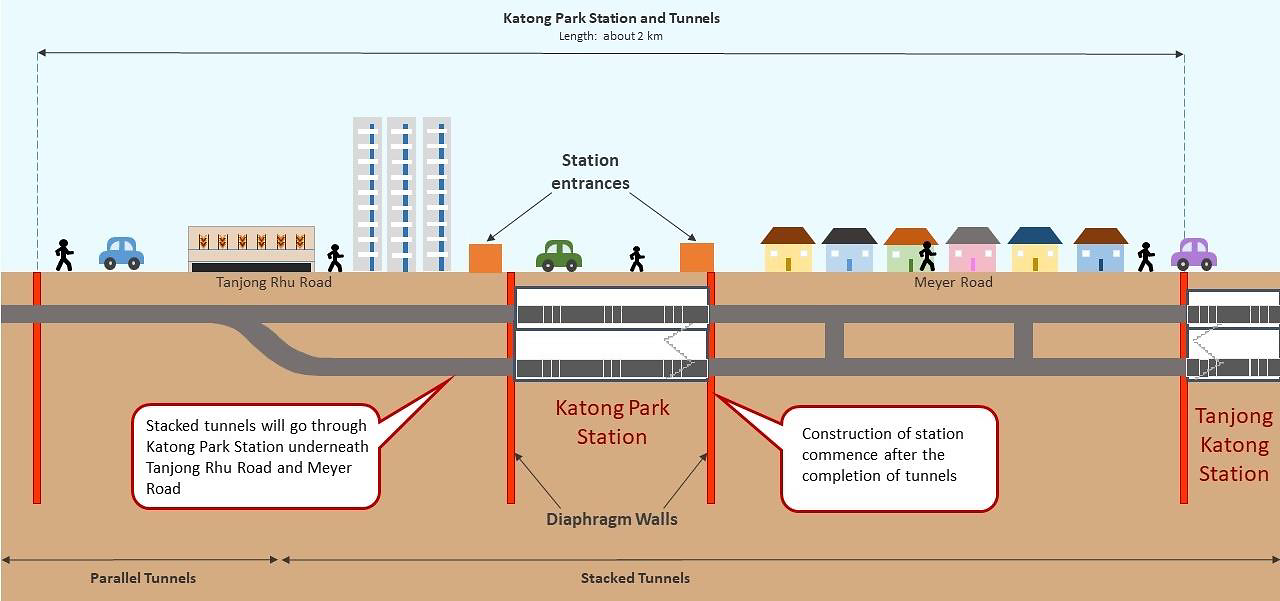
(Source: LTA) 

Engineers have to use a stacked tunnels method, where the Woodlands-bound and Changi-bound tunnels are located on different levels in Katong Park station. This method reduces the overall station footprint and avoids encroaching on adjoining private land, LTA said. 

Hence, similar to the Downtown Line’s Promenade and Stevens stations, commuters will need to go to different levels of the station to board trains travelling in opposite directions. 

Another challenge is that the ground at Katong Park station, which is built on reclaimed land, is primarily soft marine clay. The clay has the same consistency of peanut butter, LTA said. 

Katong Park construction graphic 2

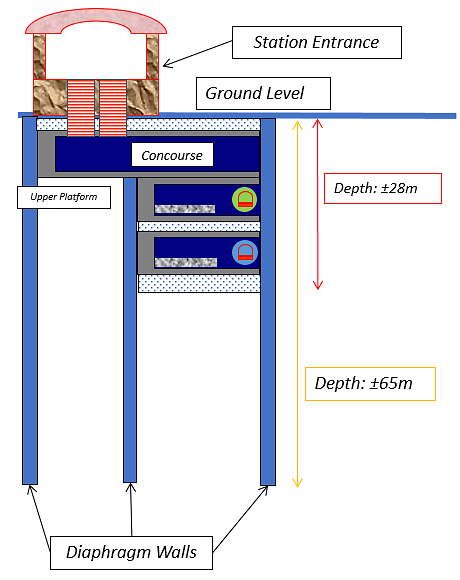
(Source: LTA) 

To minimise construction risks, selected stretches of the ground were strengthened to facilitate tunnelling works and the diaphragm walls for construction were extended 65m underground, beyond the 28m of the station box. 

LTA Katong Park construction

Dr Puthucheary and Mr Baey kickstarted the removal of the Katong Park station’s tunnel lining by using an excavator. (Photo: LTA) 

In addition, LTA also engaged residents and Katong Park users to raise awareness of the construction works. 

Katong Park station is part of the Thomson-East Coast Line’s fourth stage. Other stations include Founders’ Memorial, Tanjong Rhu, Katong Park, Tanjong Katong, Marine Parade, Marine Terrace, Siglap and Bayshore. This stage is presently about 40 per cent complete and scheduled to open in 2023. 

Source link

Founders’ Memorial MRT station added to Thomson-East Coast Line

0

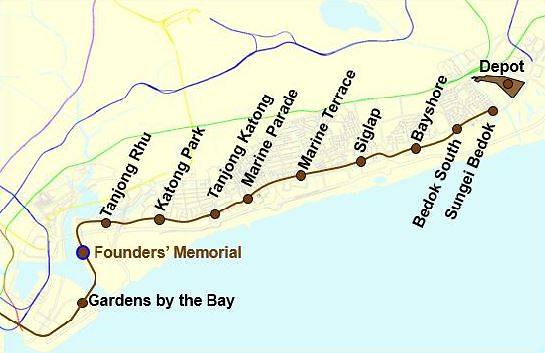
SINGAPORE: A new MRT station will be added to the Thomson-East Coast Line (TEL) to serve the upcoming Founders’ Memorial in Marina Bay, the Land Transport Authority (LTA) announced on Monday (Jan 7).

This station is part of the TEL’s fourth stage and will be located between the Tanjong Rhu and Gardens by the Bay stations. LTA said it will improve accessibility for visitors to the Bay East Garden, where the memorial will be located. 

The new MRT station will open in tandem with the opening of the Founders’ Memorial and serve upcoming residential as well as recreational developments in the area, LTA added. Works on the station will start this year. 

tel map featuring founders' memorial

Map of the Thomson-East Coast Line featuring a new station on the TEL to serve the upcoming Founders’ Memorial in the Marina Bay area. (Map: LTA)

READ: Founders’ Memorial to take 5-hectare site at Bay East Garden

LTA also said on Monday that construction of the TEL is on track, with the first stage of the MRT line scheduled to open later this year. 

“The construction of the TEL is progressing well and commuters can look forward to enjoying the TEL in stages from 2019,” LTA said. 

The first stage of the line – comprising Woodlands North, Woodlands and Woodlands South stations – is about 90 per cent complete, with structural works and track laying in the tunnels already done, LTA added.

Thomson-East Coast Line map

The Thomson-East Coast Line will link up the northern, central and eastern parts of Singapore. (Map: LTA)

READ: Thomson-East Coast Line trains to feature tip-up seats, LCD route maps

The 43km, 31-station TEL will connect commuters living in the eastern part of Singapore such as Siglap and Marine Parade to the city centre, as well as to areas in Thomson and Woodlands. It is expected to be fully operational in 2024.

The second stage of the TEL, which includes Springleaf, Lentor, Mayflower, Bright Hill, Upper Thomson and Caldecott stations, is about 80 per cent complete and on schedule to complete in 2020. 

The third stage, encompassing Mount Pleasant, Stevens, Napier, Orchard Boulevard, Orchard, Great World, Havelock, Outram Park, Maxwell, Shenton Way, Marina Bay, Marina South and Gardens by the Bay stations, is about 70 per cent complete, LTA said. This stage is scheduled to open from 2021 onwards. 

READ: SMRT wins tender to operate Thomson-East Coast Line

The stations for the TEL’s fourth stage include Founders’ Memorial, Tanjong Rhu, Katong Park, Tanjong Katong, Marine Parade, Marine Terrace, Siglap and Bayshore. This stage is about 40 per cent complete and scheduled to open in 2023. 

The fifth and final stage, which encompasses Bedok South and Sungei Bedok stations, is about 25 per cent complete, and scheduled to open by 2024. 

Source link

Southeast Asia doesn’t trust China

0

SOUTHEAST Asian countries, among some of biggest benefactors of Chinese investment, do not trust Beijing and believe their governments should be cautious when negotiating on President Xi Jinping’s flagship Belt and Road Initiative.

Falling into the trap of unsustainable debt was a concern of the 70 percent of respondents who didn’t fully trust the Chinese initiative. The survey, released Monday by the ISEAS-Yusof Ishak Institute, polled 1,008 respondents from all ten nations of the Association of Southeast Asian Nations (asean), drawn from government, academic and business communities, civil society and the media.

This distrust and urge for caution were felt strongest in Malaysia, Thailand and the Philippines.

SEE ALSO: China invading Cambodia? That’s a ‘crazy’ argument, says Hun Sen

The majority of Southeast Asians believe China’s growing interest in the area will place the region under too much Chinese influence and run the risk of falling into an eternal debt trap, which will end up costing them in the long run.

They saw the initiative as a tool to wield control in Asia for their own benefit, with less than one in 10 seeing them as “a benign and benevolent power,” and nearly half saying Beijing possessed “an intent to turn Southeast Asia into its sphere of influence.”

2018-06-06T060504Z_436861800_RC18FC95EE70_RTRMADP_3_CHINA-SILKROAD-CAMBODIA

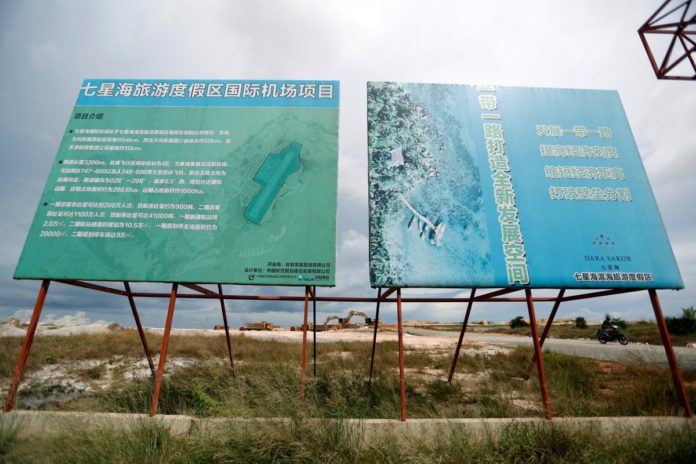
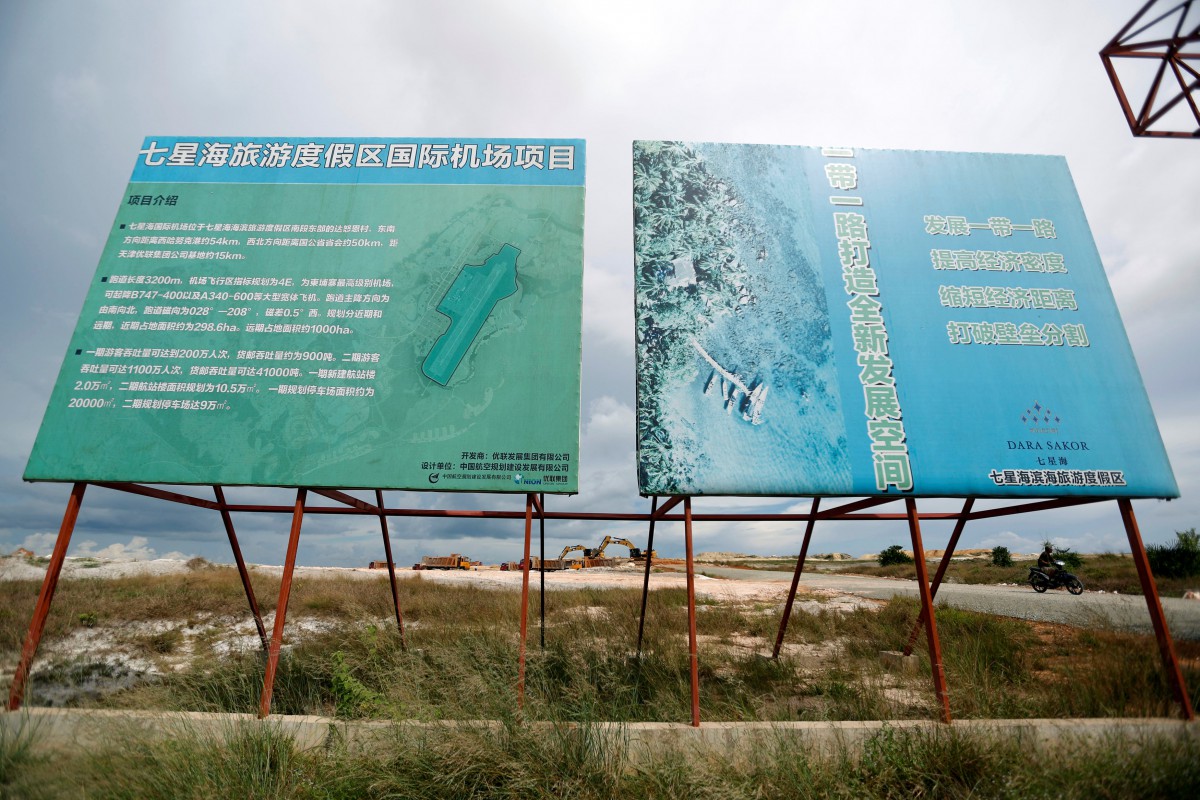
An airport construction site is seen in an area developed by China company Union Development Group at Botum Sakor in Koh Kong province, Cambodia, May 6, 2018. Source: Reuters/Samrang Pring

A 2018 report from the US State Department found Malaysia has been the largest beneficiary of the economic giant’s financial diplomacy in the East Asia Pacific region over a period of 16 years. During this period Beijing spent an estimated US$48 billion on financial diplomacy in the region.

Since then, new prime minister Mahathir Mohamad cancelled US$22 billion-worth of Belt and Road projects in the country, including the East Coast Rail link, and two natural gas pipelines. The country’s soaring national debt was cited as the reason.

Mahathir said in August Malaysia could not repay the money and accused China of “a new version of colonialism.”

SEE ALSO: Saddled with debt, Malaysia nixes two China-backed mega projects

Burma (Myanmar) also sought to scale back a US$7 billion port project in troubled Rakhine state, again out of fears that it involves too much debt for the country to repay. Reaching a compromise, the two signed an agreement in November to go ahead with the project at a reduced cost of US$1.3 billion in the initial phase.

US Vice President Mike Pence warned against countries borrowing from China while he was attending the Asian Pacific Economic Cooperation (APEC) Summit in November.

“Projects they support are often unsustainable and of poor quality.  And too often, they come with strings attached and lead to staggering debt,” said Pence.

2017-08-09T184944Z_689561868_RC1D40AE4E80_RTRMADP_3_MALAYSIA-CHINA-RAILWAY

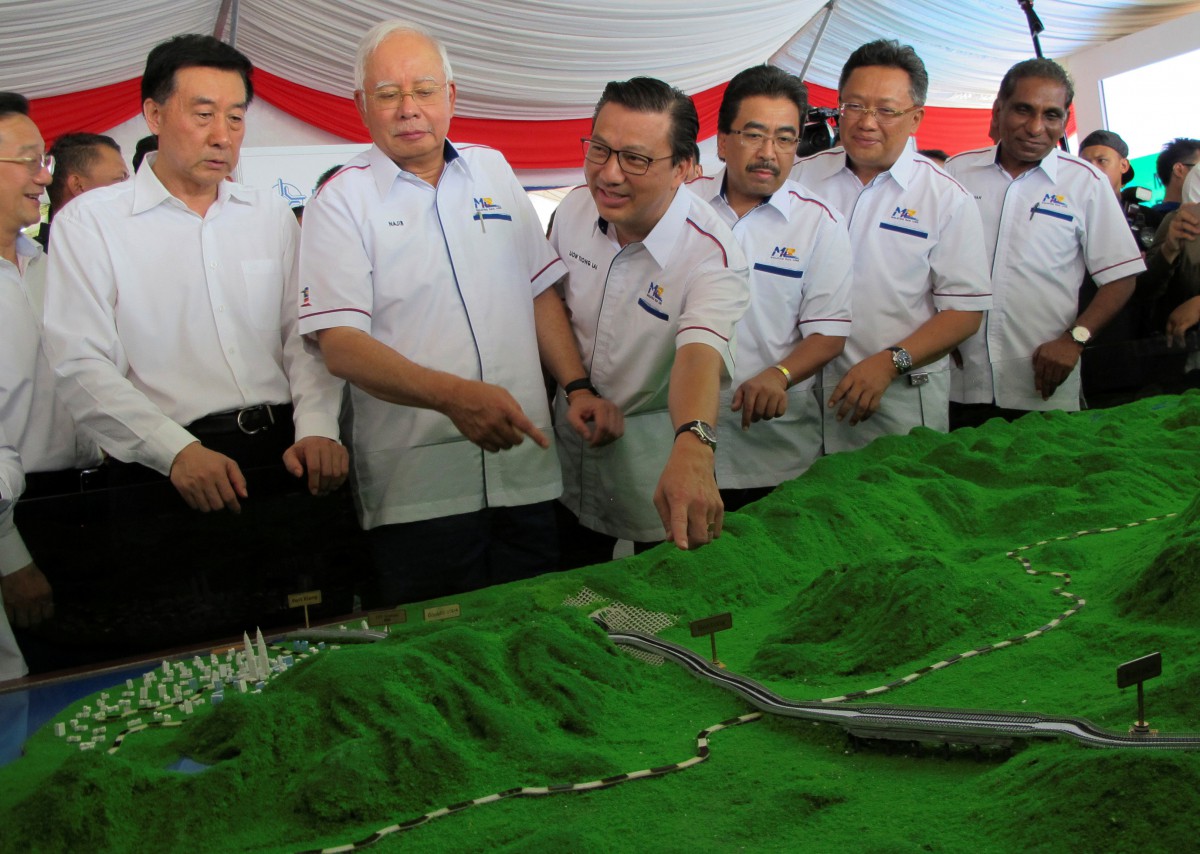
Najib and Transport Minister Liow Tiong Lai look at a model of the East Coast Rail Line at Kuantan, Pahang, Malaysia, on Aug 9, 2017. Source: Reuters

He also proposed the United States as a better option for the region to partner up with. But the ISEAS survey suggests people are also sceptical about America’s commitment.

Six out of 10 respondents said US influence globally had deteriorated from a year ago and two-thirds believed US engagement with Southeast Asia declined. About a third said they had little or no confidence in the US as a strategic partner and provider of regional security.

Washington appears to be ceding power to Beijing in the eyes of the people, with 73 percent believing China is the greatest economic influence in the region. It is also believed to have more influence politically and strategically than the United States.

Source link

Thomson-East Coast Line: 3 stations on track to open in 2019; new station at Founders’ Memorial

0

SINGAPORE: Construction of the Thomson-East Coast Line (TEL) is on track, with the first stage of the MRT line scheduled to open later this year, the Land Transport Authority (LTA) said in a news release on Monday (Jan 7). 

“The construction of the TEL is progressing well and commuters can look forward to enjoying the TEL in stages from 2019,” LTA said. 

The first stage of the TEL – comprising Woodlands North, Woodlands and Woodlands South stations – is about 90 per cent complete, with structural works and track laying in the tunnels already complete, LTA added.

READ: Thomson-East Coast Line trains to feature tip-up seats, LCD route maps

LTA also announced on Monday that it will add a new station on the TEL to serve the upcoming Founders’ Memorial in the Marina Bay area. This station is part of the TEL’s fourth stage and will be located between Tanjong Rhu and Gardens by the Bay stations. LTA said that it will improve accessibility for visitors to the Bay East Garden, where the memorial will be located. 

The station will open in tandem with the opening of the Founders’ Memorial and serve upcoming residential as well a recreational developments in the area, LTA added. Works on the station will commence in 2019. 

tel map featuring founders' memorial

Map of the Thomson-East Coast Line featuring a new station on the TEL to serve the upcoming Founders’ Memorial in the Marina Bay area. (Map: LTA)

Thomson-East Coast Line map

The Thomson-East Coast Line will link up the northern, central and eastern parts of Singapore. (Map: LTA)

The 43km, 31-station TEL will connect commuters living in the eastern part of Singapore such as Siglap and Marine Parade to the city centre, as well as to areas in Thomson and Woodlands. It is expected to be fully operational in 2024.

The second stage of the TEL, which includes Springleaf, Lentor, Mayflower, Bright Hill, Upper Thomson and Caldecott stations, is about 80 per cent complete and on schedule to complete in 2020. 

The third stage, encompassing Mount Pleasant, Stevens, Napier, Orchard Boulevard, Orchard, Great World, Havelock, Outram Park, Maxwell, Shenton Way, Marina Bay, Marina South and Gardens by the Bay stations, is about 70 per cent complete, LTA said. This stage is scheduled to open from 2021 onwards. 

READ: SMRT wins tender to operate Thomson-East Coast Line

The stations for the TEL’s fourth stage include Founders’ Memorial, Tanjong Rhu, Katong Park, Tanjong Katong, Marine Parade, Marine Terrace, Siglap and Bayshore. This stage is about 40 per cent complete and scheduled to open in 2023. 

The fifth and final stage, which encompasses Bedok South and Sungei Bedok stations, is about 25 per cent complete, and scheduled to open by 2024. 

Source link

AGC alleges ‘possible professional misconduct’ by Lee Hsien Yang’s wife

0

SINGAPORE: A case of “possible professional misconduct” by lawyer Lee Suet Fern – wife of Mr Lee Hsien Yang – in the preparation of his father and former prime minister Lee Kuan Yew’s final will has been referred to the Law Society by the Attorney-General’s Chambers (AGC).

“In this case, AGC became aware of a possible case of professional misconduct by Ms Lee. Ms Lee appears to have prepared the Last Will of Mr Lee Kuan Yew and arranged for Mr Lee Kuan Yew to execute it, despite the fact that her husband, Mr Lee Hsien Yang, is one of the beneficiaries under the Last Will,” AGC said in a statement on Monday (Jan 7).

“Mr Lee Hsien Yang’s share increased under the Last Will. AGC also noted that Mr Lee Hsien Yang had said publicly that the Last Will was drafted by Ms Kwa Kim Lee of M/s Lee & Lee. However Ms Kwa Kim Lee has denied that she drafted it.,” it added.

The statement said that the case “does not relate to the validity of the Last Will of Mr Lee Kuan Yew.

Ms Lee, formerly a managing partner with law firm Morgan Lewis Stamford, has been at the centre of a dispute between the late Mr Lee’s children – her husband, Dr Lee Wei Ling and Prime Minister Lee Hsien Loong – over the preparation of their father’s final will.

Lee Hsien Loong, Lee Wei Ling and Lee Hsien Yang

Lee Hsien Loong, Lee Wei Ling and Lee Hsien Yang

Under the legal profession’s rules of conduct, lawyers are not allowed to place themselves in a position of conflict, AGC said.

“Where a person intends to make a significant gift by will to any member of the lawyer’s family, the lawyer must not act for the person and must advise him to obtain independent advice in respect of the gift. This rule applies even if the lawyer is related to the person making the gift,” it said.

According to AGC, Attorney-General Lucien Wong has recused himself from the case and Deputy Attorney-General Lionel Yee is overseeing it. Mr Wong used to be PM Lee’s personal lawyer.

Mr Yee had written to Ms Lee “several times” since October 2018, “asking her to explain her position, and her role (if any) in the preparation of the Last Will”, AGC said.

“However, despite asking for extensions of time to respond, Ms Lee did not answer the questions that AGC had asked,” it said, adding that the matter was then referred to the Law Society.

“The Deputy Attorney-General has also further requested that the matter be referred to a Disciplinary Tribunal,” the statement added.

AGC said it has a “statutory duty to deal with misconduct by lawyers” and that when it becomes aware of the possibility of misconduct, it is required to consider if the matter should be referred to the Law Society.

READ: Dispute over 38 Oxley Road – A timeline of events

“UNPRECEDENTED USE OF SUCH LEGAL PROCESS”: LEE WEI LING

Earlier on Sunday, the late Mr Lee’s daughter Lee Wei Ling took to Facebook to address AGC’s complaint which she called “wholly without merit”.

According to Dr Lee, it “repeats allegations that were made years ago” by PM Lee through his personal lawyer.

“As far as we know, this is an unprecedented use of such legal process involving a private will,” she said.

“Hsien Loong has been unhappy with our father’s will and our father’s wish to demolish his home at 38 Oxley Road. Lee Kuan Yew informed all his children and his lawyer at Lee & Lee when he completed his final will and codicil 5 years ago. In 2015, on Hsien Loong’s urging, the estate secured probate for the will.

“At the time, all parties including Hsien Loong accepted the will as representing Lee Kuan Yew’s true wishes. After probate, in 2016 and 2017, Hsien Loong sought to attack the will through a committee of his ministers,” Dr Lee added.

She went on to question AGC’s move.

“Lee Kuan Yew, a highly regarded lawyer, never complained about his will. No beneficiary has complained to the Law Society, not even Hsien Loong who was advised by Lucien Wong (previously his personal lawyer, now AG). Why therefore this new attack on our father’s will? Why is this being initiated now, and by the AGC, after all this time? Our view is that this action is wholly without merit,” Dr Lee said.

The dispute over the Oxley Road home first spilled into the public domain on Jun 14, 2017, when Mr Lee Hsien Yang and Dr Lee Wei Ling issued a statement on Facebook.

In the post titled “What has happened to Lee Kuan Yew’s values?” the siblings reiterated their father’s wish for the house to be demolished immediately after his death.

They also alleged that their brother, PM Lee, wanted to preserve the house “to inherit (Lee Kuan Yew’s) credibility” and said they had “lost confidence” in him and that they “felt threatened” by his use of his position and influence over the Singapore Government and its agencies to “drive his personal agenda”.

38 Oxley Road illustration

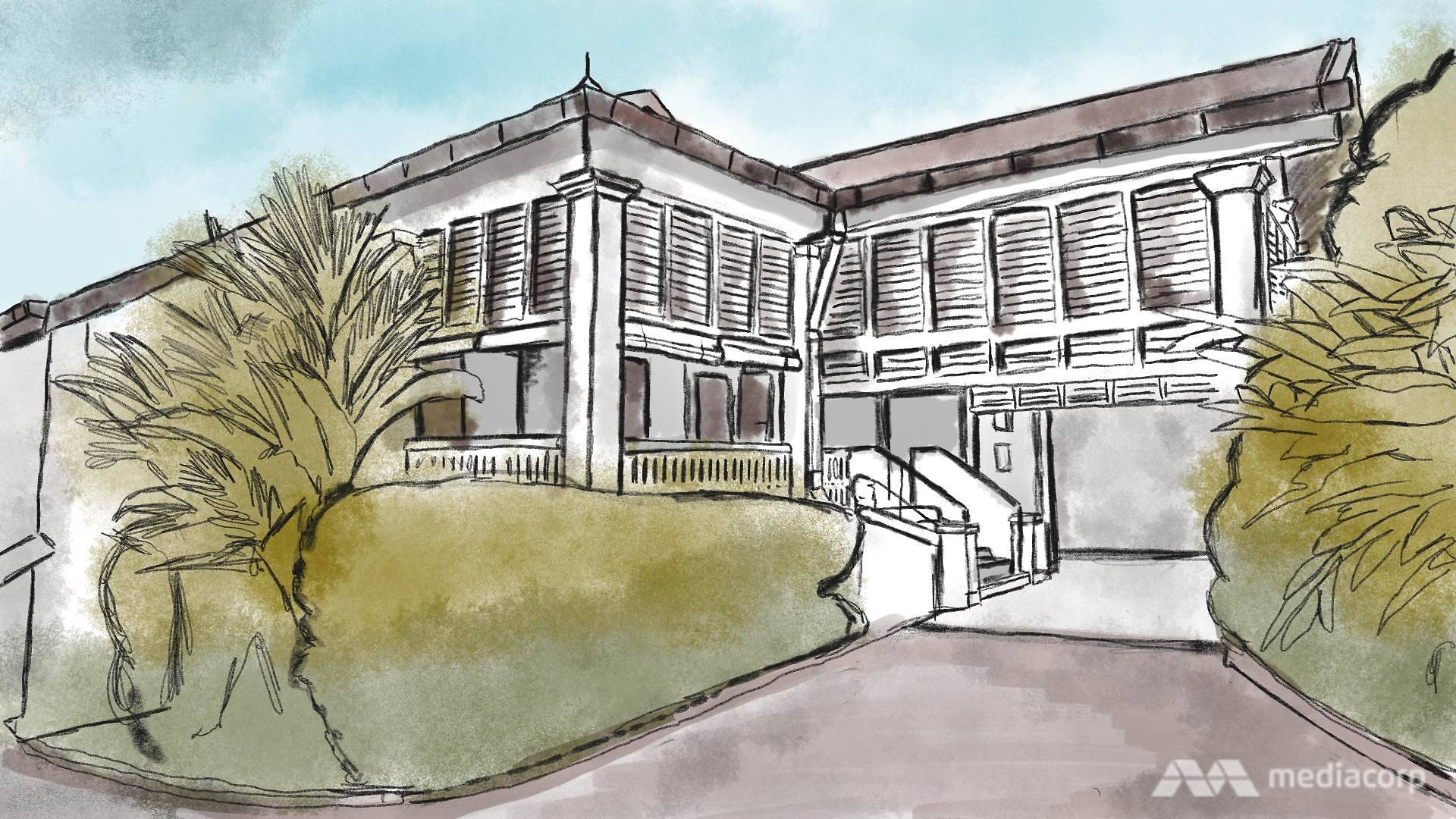
The house at 38 Oxley Road has significant historical, architectural and heritage value, said a report by the ministerial committee on 38 Oxley Road and the National Heritage Board. (Illustration: Kenneth Choy)

PM Lee denied the allegations and subsequently apologised to Singaporeans in a video message, saying he deeply regrets that the dispute has affected the country’s reputation and Singaporeans’ confidence in the Government.

On Jun 15, PM Lee made public the summary of a statutory declaration he submitted to the ministerial committee.

The summary included emails from Ms Lee Suet Fern and Mr Lee Hsien Yang to Mr Lee Kuan Yew over the last will.

At issue, in particular, was the removal and subsequent re-insertion of a clause stating the late Mr Lee’s wish that his house at 38 Oxley Road be demolished after his death, PM Lee noted.

He added that there was “no evidence that Mr Lee (Kuan Yew) even knew that the Demolition Clause had been re-inserted into the last will”. The clause calls for the house to be demolished immediately after the elder Mr Lee’s death, or if Dr Lee is living there, after she moves out.

The Prime Minister added that it appeared that his father had simply wanted to reinstate the equal division of his estate among the three children.

The late Mr Lee had made changes in his sixth and penultimate will to give his only daughter an extra share.

In his final will, however, their father reverted to his earlier decision to give each of his children an equal share, said PM Lee.

PM Lee questioned the role Ms Lee Suet Fern played in the final will.

Mr Lee Hsien Yang responded, saying that his wife’s law firm, Stamford Law, attended to the attestation of the final will at “Lee Kuan Yew’s explicit request”. 

This was then followed by several exchanges between PM Lee and his siblings over allegations, in particular, the preparation of the final will.

PM Lee in parly Jul 4

Prime Minister Lee Hsien Loong delivers his closing statement in Parliament on the Oxley Road dispute between him and his siblings.

On Jul 3 and 4, 2017, PM Lee addressed questions in Parliament on the matter where the party whip was lifted and MPs were urged to “examine the issues thoroughly and question” him on the Cabinet vigorously.

PM Lee issued a ministerial statement rebutting his siblings’ allegations as “entirely baseless”.

On Apr 2, 2018, the ministerial committee – set up to consider possibilities for the Oxley Road home – issued its report laying out the options for the house when Dr Lee no longer lives in it. The report also included the committee’s views that Mr Lee Kuan Yew was open to options other than demolishing the house.

While PM Lee said in a statement that he accepted the committee’s conclusion, his siblings stated that it did not accurately represent their father’s “unwavering” wish for the house to be demolished.

Channel NewsAsia has asked the Law Society for comments on the case involving Ms Lee Suet Fern.

Source link

Powerbank sharing and ‘smart’ helmets: Singapore start-ups aim for CES 2019 splash

0

SINGAPORE: The annual Consumer Electronics Show (CES) in Las Vegas has been a mainstay event of the consumer tech industry for years now, and the upcoming one in January is no different – with self-driving vehicles, artificial intelligence-infused everything and 5G set to be the main buzzwords.

Amid the buzz, a contingent of Singapore companies, including several first-time participants, will be showcasing their offerings at the tech event which starts on Jan 9.

More than a dozen firms will be flying the country’s flag this time round, including the likes of Razer, Creative Technologies and Xmi, which will showcase their next innovations in gaming and audio tech.

There are also those making their debut, with Zimplistic, the company behind the automated flatbread-making machine Rotimatic that was mentioned by Prime Minister Lee Hsien Loong in his National Day Rally in 2016, one of them.

READ: Eight years of stubbornness to give birth to their roti-maker

Then there are the lesser-known participants such as Shareasy with its powerbank rental business and Whyre  of the smart helmet innovation. Channel NewsAsia finds out what these two companies hope to get out of the trip.

POWERBANK SHARING, EASY BREZZE?

For Shareasy CEO Jimmy Goh, its Brezze powerbank sharing business model was something he stumbled upon.

In an interview with Channel NewsAsia ahead of CES, Mr Goh shared how he has been in the 3Cs business – cable, casing and chargers – for about 16 years. But in 2016, he started to explore alternatives to grow the company.

He knew automation was the way to go and was keen to create vending machines for electronics accessories, like those commonly seen at airports like Changi Airport today. It was a trip to China, with the aim of finding makers of these vending machines, that he chanced on the powerbank-sharing model and made him pivot from his original idea.

“We were at an exhibition in China and we saw the AnkerBox (made by Chinese accessories maker Anker),” Mr Goh recounted. He said he broached the idea of bringing AnkerBox to Singapore and other markets in partnership with Anker, but the company was not ready to expand overseas then.

He was smitten by the concept though, and has since ploughed in slightly more than S$1 million to make Brezze a viable business.

The premise was simple: Sign up retail partners who are willing to house Shareasy’s portable charging box at their shops, with consumers using the Brezze app to locate one of the boxes an unlock a powerbank with a scan of the QR code. These powerbanks come with USB Type-C, micro-USB and Apple’s Lightning connectors, which addresses the vast majority of mobile phones in the market today, the CEO said.

“(Brezze) is ideal for those who travel a lot, as they can get a battery pack at one point, say at a train station, and return it at their final destination,” Mr Goh explained.

NETWORKING, NETWORKING, NETWORKING

The company has a team of 14 in China working on developing the app as well as the software behind the charging box. The CEO hopes that, in time and with a critical user base, it will be able to track consumers’ movements as they use the powerbanks and with that, open up further opportunities such as serving ads or promotions via partnerships with retailers.

He acknowledged that the business is still in a nascent stage, as retailers and users are only slowly joining the platform.

In Singapore, the app has seen 14,000 downloads with about 2,000 to 3,000 active monthly users. For it to be sustainable, that figure needs to grow by about 100 times, the CEO estimated.

He also hoped to bring this model to other markets and create a “cross-border powerbank rental system”.

This is where CES comes in, as Mr Goh said the main intention of participating in the upcoming consumer tech trade show is to network and sign up interested partners and bring Brezze to other markets.

It has already inked deals with partners in places like Russia, Japan, Nigeria and the Netherlands, but the jetsetting CEO is not content.

“We still need more partners,” Mr Goh said.

READY, SET, RIDE

Fellow CES participant Whyre, while further back in the development curve, is no less confident it is able to crack open the market for “smart” motorcycle helmets – and improve road safety while at it.

The five-men start-up comprising mostly recent graduates of Singapore University of Technology and Design (SUTD) bagged the top prize at last year’s SUTD 10K Business Innovation Competition with its Omni smart helmet. Not content to just leave it as that, the team led by CEO Tan Yi Shu decided to make a business out of their winning idea.

As it did so, it took on suggestions and feedback. Whyre eventually decided against developing a fully kitted out helmet after comments and wishlists it gathered from the local motorbike-riding community.

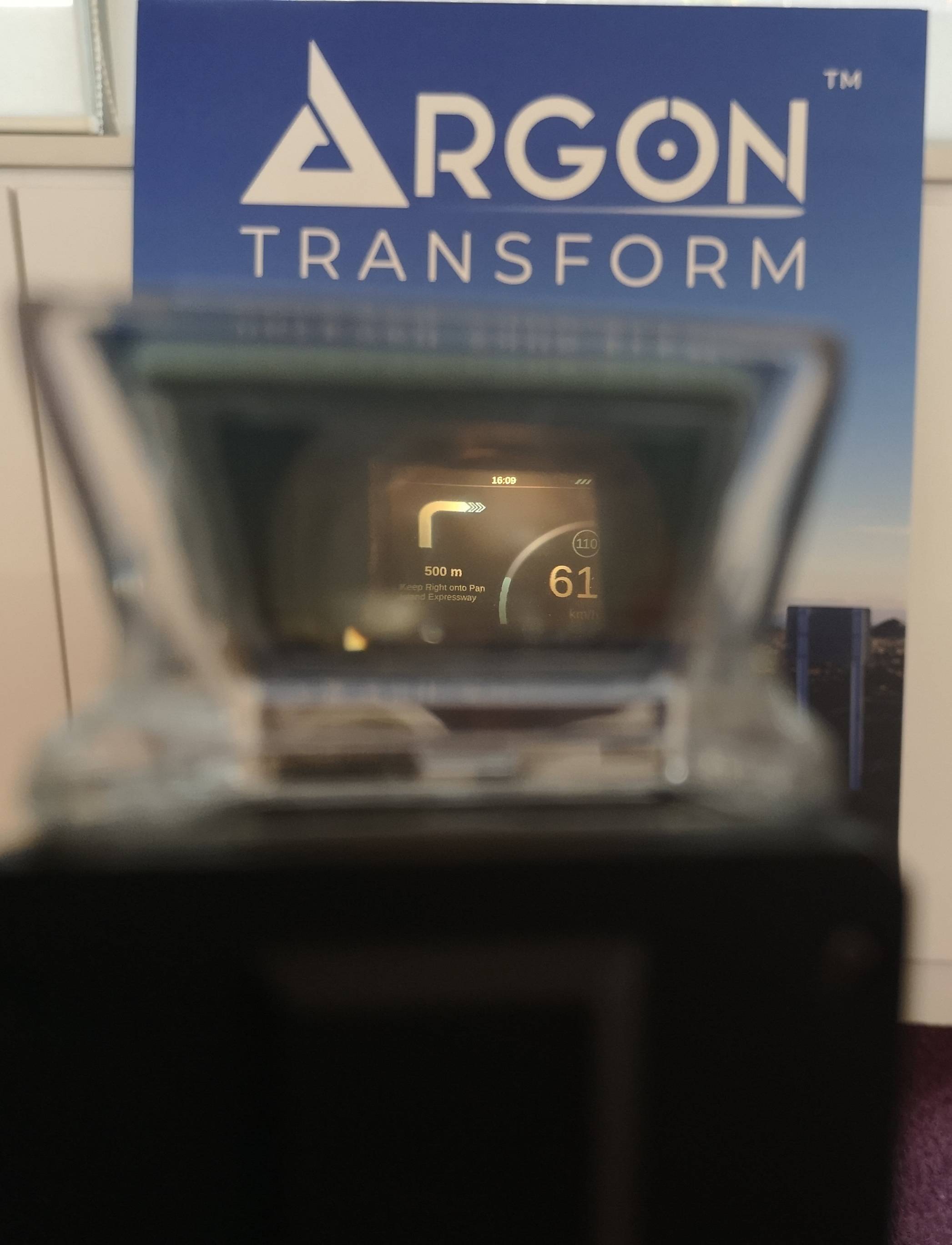
Instead, it worked on creating a two-piece heads-up display (HUD) attachment that would provide rear view, speedometer and real-time map navigation, shared Mr Glen Ong, chief business development officer for the year-old start-up.

Whyre smart helmet HUD 2

The Argon attachment at the front not just serves as a display device, but also houses a front-facing camera to record the ride. 

Chatting with Channel NewsAsia ahead of making their maiden trip to Las Vegas, Mr Ong said its Argon HUD has garnered positive interest, particularly after Whyre showcased its concept at the Singapore Bike Show in August last year.

Without an actual product to show for then, it clinched four deposits of S$149 each from riding enthusiasts, while there were also more than 500 who have registered their interest in the HUD when it does enter the market, he shared.

Argon has a projected retail price of US$649 (S$927.94), comparable with what another vendor Nuviz already has out in the market at US$699, he added.

A full “minimum viable product” was on show when this reporter visited the start-up at its SUTD base, and Mr Ong was keen to point out how Whyre was conscientious in taking on the feedback given.

Whyre smart helmet HUD

Whyre created a simplified turn-by-turn navigation system after speaking to motorbike riders on what they are looking for in a smart helmet, says Mr Glen Ong. (Photo: Whyre)

One example was the map navigation, with riders pointing out they don’t need the full map experience as seen on smartphones. Rather, what they wanted was a simplified turn-by-turn navigation layout that would only require split-second comprehension, he explained, adding this is part of the current prototype.

It also helps that its main corporate investor to date is local optical manufacturing experts Moveon Technologies, allowing it to tap on the latter’s know-how to refine Argon’s display, CEO Tan, who was at the same interview, chimed in. The backer has also put up S$100,000 to advance the start-up’s vision, he added.

CES 2019, then, would be the opportunity to introduce Argon to a wider audience for feedback ahead of plans to crowdfund the actual production before delivering the offering to backers by the middle of next year, Mr Ong said.

New Year, new hopes. It’s no surprise then that Singapore companies like Shareasy and Whyre are hoping to strike proverbial gold at the upcoming CES. If anything, Las Vegas – as a city built in a desert – proves that anything is, indeed, possible.

Source link

Commentary: Where are all the women? The myth of the pipeline problem in Asia’s tech sector

0

SINGAPORE: In the 1970s, the Boston Symphony Orchestra started to implement a blind audition experiment where players were concealed behind a screen to eliminate gender bias and increase diversity. 

Despite this measure, the numbers barely moved at first. 

It wasn’t until players were asked to remove their shoes that women started to make it to next round of auditions. Just the sound of heels clicking on stage resulted in a hiring bias against women regardless of ability.
 
It’s this story that reminds us that employers must fully realise the role and influence they hold over the entire hiring and career progression process. 

In the tech industry where I work in, I believe that tech companies must lead by example in moulding company culture and policy, rather than wait for employee, education or policy to change. 

GENDER SHOULD NOT MATTER

Almost two decades ago, fresh out of school and having just started my first job in China, it did not take long for me to learn that not everyone was afforded the same career opportunities. Witnessing first-hand the existence of inequality and its impact in the corporate world was a career-defining experience. 

READ: The enormous, avoidable waste of human capital caused by gender inequality, a commentary

At the time, diversity and inclusion were not top business priorities, and I made a decision to devote my career to changing that. The technology industry, with its commitment to transformation leading towards a better future, was the platform I chose to drive meaningful change in terms of improving female representation across all professional fields. 

Much has changed since then. The conversation about gender equality has been pushed to the forefront in recent years, sparked fresh and positive changes across multiple industries, and ignited greater awareness about gender bias. But despite these improvements, huge gaps remain. 

A McKinsey study The power of parity: Advancing women’s equality in Asia Pacific shows the Asia Pacific average gender parity score for equality in work is 0.44, compared to a global best of 0.73. 

In the technology industry specifically, female representation decreases as you look up the corporate ladder. 

FILE PHOTO: A woman walks near high-rise buildings in the high-tech business area of Tel Aviv, Isra

A woman walks near high-rise buildings in the high-tech business area of Tel Aviv, Israel, May 15, 2017. (Photo: Reuters/Amir Cohen)

READ: The unequal, unnoticed life of a female worker, a commentary

We know that better gender balance in organisations makes good business sense. Companies that have gender diversity are 21 per cent more likely to have above-average financial returns, according to market research company Forrester. 

Mindful of the known economic benefits and tech’s potential to drive innovative growth opportunities from both a social and economic standpoint, the leadership gender imbalance is a clear missed opportunity. 

There are notable leading female faces in Asia’s tech sector including Grab co-founder Tan Hooi Ling and Pocket Sun, founder of SoGal Ventures who serve as inspiring role models and are paving the way for future female leaders through their innovative work but the gender gap undeniably persists. 

IS IT THE TALENT POOL?

A widely cited reason for this disparity is the pipeline problem – suggesting that the pool of female talent with a science, technology, engineering and mathematics (STEM) education, is limited. There is some truth to this – a PwC study found that women represent only 32 per cent STEM graduates worldwide. 

But the reality is educational qualification in technology isn’t always a prerequisite to join a technology company. Almost six in 10 women in tech did not study computing in university, according to Accenture and Girls Who Code research. 

In fact the problem starts earlier on; a major cause being the stereotypes influencing the career choices and of women. 

Research from UNESCO shows that starting in their early teens, the performance of boys and girls in STEM related subjects begins to shift. Social bias, classroom dynamics, educational material, policies and economic opportunities are some factors driving this behaviour.  

Period hormone menstrual cycle office woman

(Photo: Unsplash/rawpixel)

Overtime, this compounds to produce a performance gap as well as a representation gap when it comes to boys and girls choosing to pursue STEM related subjects.   

With advanced technologies like Artificial Intelligence (AI), companies have enormous amounts of data at our fingertips. We should leverage this data to help us make more informed decisions that allow us to mitigate bias through the process. In some instances, we’re already seeing this play out. 

LinkedIn recently announced new features to help recruiters hire more diverse candidates and ensure they’re not missing out on top applicants who may have previously been overlooked. 

L’Oreal recently announced the implementation of Mya, an intelligent chatbot that interviews and evaluates job candidates. The chatbot is programed to ask objective questions strictly based on performance with an ability to avoid unconscious bias among recruiters.  

Tech companies can make an impact at an early stage by getting involved in programmes that focus on engaging youths, getting girls excited about technology and building interest in STEM at a young age. Girls are 18 per cent more likely to show interest in computing throughout high school and university if they have prior computing experience, according to another Accenture study. 

A good place to start is by partnering with programs such as Girls Who Code to drive interest in careers in technology from young. 

Such programmes can move the needle, not just for the tech industry, but also for the information technology horizontal, where the percentage of female IT leaders remains at 9 per cent, according to a 2017 KPMG survey. 

IS IT THE CHALLENGE OF RETURNING TO WORK?

The gender problem persist the higher we go up the seniority funnel, where women returning to work after taking leave for childcare tend to drop out of the workforce and too often, do not return. 

READ: The myth of the superhero career woman is holding us back, a commentary

san francisco pregnant woman

A woman walks with a child stroller across a pedestrian crossing, in San Francisco, California February 19, 2014. (Photo: Reuters/Robert Galbraith)

READ: Women quit for their husbands too, a commentary

Gaps in their CV from anywhere between three to 10 years makes rehiring after a work hiatus a significant challenge, especially in the tech sector which is often disrupted by huge advances. 

Corporations are often too risk-averse to hire someone without specific experience, no matter their background. Self-perpetuating issues like women being put off by tech as a career as they view the industry as too male dominated also add to the challenges of returning to work. 

But leaders and employees can change this pattern. At Dell, for example, we have started a pilot programme called Career Re-start , which helps us bring talent in and provide support for women returning from career break. Response so far has been optimistic and we’re confident this will help change mindsets moving forward to increase the number of women returning to work successfully.

Companies can also partner with Return to Work organisations such as the NTUC U Family Unit’s Returners Programme or social enterprises such as Mums@Work that offer training programmes and support women in getting back into the workforce.  

Apart from improving the male-to-female ratio, these partnerships expand companies’ access to a huge and valuable talent pool, for an industry that so often face talent shortage.  

READ: ‘Super mums’ have one simple request. Don’t hinder them from returning to work, a commentary

COULD IT BE SUBTLE GENDER BIAS? 

The tech industry is admittedly male-dominated, and has to be aware that subtle gender bias can come through in the hiring process and the way roles are communicated. Vodafone, for instance, reportedly rephrased job ads during a three-month trial last year, and this move increased the number of women hired by 7 per cent. 

What was previously the description for a cloud service operations engineer – “seeing outstanding individuals with a passion for mission-critical technology to help on our aggressive journey to improve our premier network and create synergy” – now reads “seeking extraordinary individuals with real passion for critical technology to help on our bold journey to improve our top-tier network and help create alignment”.

A woman works on her computer in San Francisco

A woman works on her computer in San Francisco, California, U.S., July 16, 2016. (Photo: REUTERS/Gabrielle Lurie)

Research from the University of Waterloo published in the Journal of Personality and Social Psychology has shown that some language in job descriptions can be perceived as more male-oriented which deters many women from applying.  

In these cases, women reported that jobs with more male-oriented language were less appealing and had a lower sense of job fit.  Taking steps to mitigate gender biased language, together with retraining programmes for returners and youth STEM education, can begin to correct the imbalances with far reaching effects.

Gender parity is not a zero-sum game, where one group wins and the other loses. While the tech industry does struggle in some regards to gender equality, as the driving force being transformation across multiple industries touching every aspect of our lives – tech has all the ingredients to get it right. 

Tech companies need to recognise it’s a journey, not a sprint, and if we can work together, we can help change Asia’s gender parity landscape. 
 
Sophie Guerin is Head of Diversity and Inclusion for Asia Pacific, Greater China, and Japan at Dell Technologies.

Source link