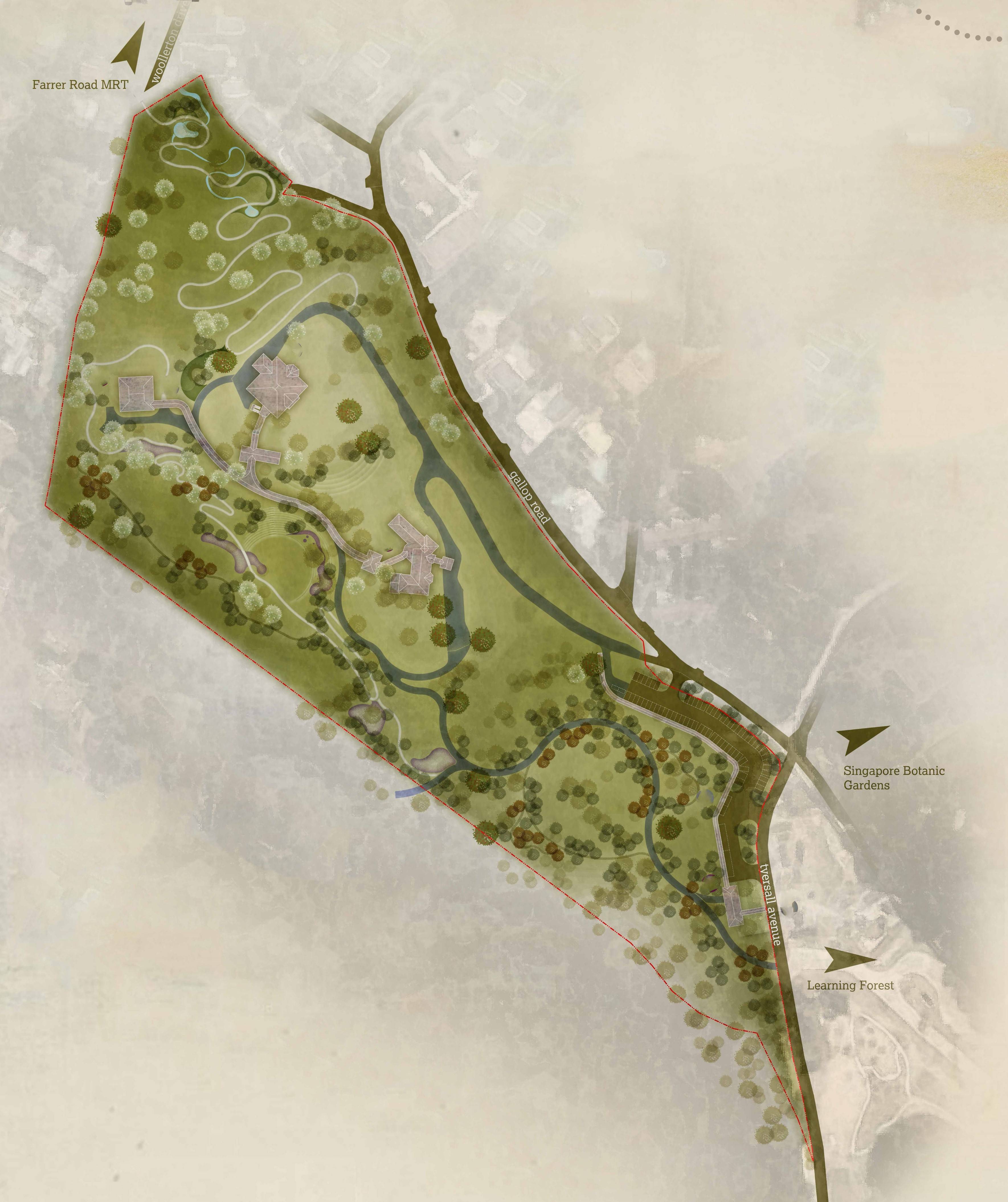
SINGAPORE: The National Parks Board (NParks) on Wednesday (Jan 9) unveiled plans for the Singapore Botanic Gardens’ 8ha Gallop extension, which will open later this year.
The new features include a nature-inspired play area for children, a canopy link bridge, an art gallery and a new arboretum.
Announced in 2015, the Gallop extension will bring the total area of the Singapore Botanic Gardens to 82ha – nearly four times its size when it opened in 1859. This latest expansion is the largest of its kind in its history.
Site map of the planned Gallop extension to the Botanic Gardens. (Image: NParks)
“The Gardens is well-loved by all Singaporeans and also our UNESCO World Heritage Site; it is a beautiful jewel in the heart of our city, for us to enjoy and treasure, develop and improve,” said National Development Minister Lawrence Wong at the unveiling of the plans.
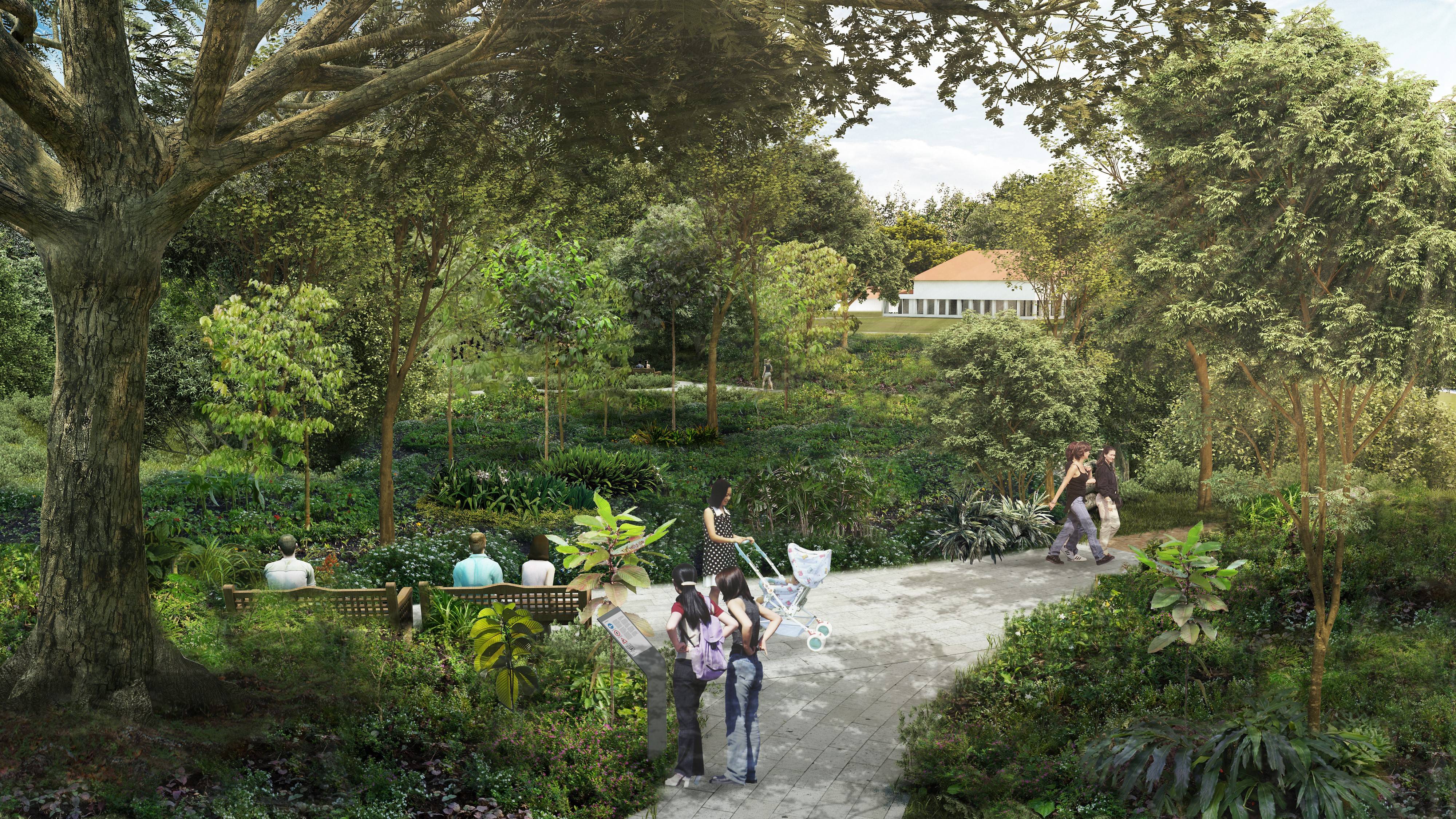
Among the highlights at the new OCBC Arboretum are the dipterocarps, which are giant trees found only in tropical regions.
The 2ha collection of trees, which can grow up to 80m, include several valuable timber species, many of which are threatened by deforestation in Southeast Asia.
Artist impression of OCBC arboretum, part of the planned Gallop extension to the Botanic Gardens. (Image: NParks)
Another addition is the Forest Discovery Centre, which NParks says will serve as an interpretive hub for the conservation of tropical forest ecosystems. Here, visitors will also be able to learn about different forest habitats in Singapore, and how they can contribute to forest restoration efforts.
A new canopy link bridge will improve accessibility at the Singapore Botanic Gardens, as it will connect visitors from the Gardens’ Learning Centre to the Gallop extension.
In a news release, NParks said the Gallop extension will also include a play area for children to learn about native flora and fauna.
“Inspired by the distinctive parts of the trees found within the grounds, the COMO Adventure Grove aims to appeal to the child’s innate desire to explore and connect with nature,” said NParks.
Artist impression of COMO Adventure Cove, part of the planned Gallop extension to the Botanic Gardens. (Image: NParks)
As part of the Singapore Botanic Gardens’ 160th anniversary, a year-long series of festivals, concerts, workshops and tours themed around nature will also be conducted.
SINGAPORE: The Malaysian vessel that had been anchored in Singapore territorial waters off Tuas since Dec 3 last year has returned to the Malaysian port of Tanjung Pelepas.
The Polaris, which belongs to the Malaysia Marine Department, is a buoy-laying vessel that can be used to mark territory or safety hazards.
According to global ship tracking site MarineTraffic, the Polaris started its journey back to Malaysia on Jan 5 at about 10.15am, leaving Singapore waters before stopping at Tanjung Pelepas about an hour later. It has remained there since.
Polaris’ current position indicates it is back in Malaysia waters. (Source: MarineTraffic)
On Tuesday (Jan 8), the foreign ministers of Singapore and Malaysia met in the Republic to discuss, among other matters, maritime issues concerning the port limits of both countries.
To that end, Singapore Foreign Minister Vivian Balakrishnan and his Malaysian counterpart Saifuddin Abdullah agreed to set up a working group to study legal and operational matters, with an aim to de-escalate the situation on the ground and provide a basis for further discussions and negotiations.
The working group will report to the foreign ministers within two months.
The Polaris, a multi-purpose vessel that can stay at sea for 35 days without resupplies, had been parked in Singapore waters since Dec 3, according to Singapore Transport Minister Khaw Boon Wan.
Mr Khaw told reporters on Dec 6 that there had been 14 incursions into Singapore waters in the two weeks before then, after Malaysia extended its Johor Bahru Port Limits in October.
On Dec 7, Malaysia proposed that both countries “cease and desist” from sending assets into what it called a “disputed area”, adding that the action would be undertaken without prejudice to either country’s position on maritime boundary claims.
But later that day Singapore rejected the proposal, reiterating the repeated intrusions by Malaysian vessels and stating that “attempts to create facts on the ground add nothing to Malaysia’s legal case and are unhelpful for an amicable resolution of our maritime boundary issues”.
At their meeting on Tuesday, however, ministers Balakrishnan and Saifuddin welcomed the “positive steps that both sides had agreed on to move these matters forward in a calm and constructive manner”.
It was rated highly for indicators such as broadband, human capital and tax friendliness but was marked down for freedom and short-term rentals, the 2019 International Innovation Scorecard shows.
Nanyang Technological University engineering students engaged in team-based learning. (Photo: NTU)
(Updated: )
Bookmark
LAS VEGAS: Singapore was among 16 countries identified as an “Innovation Champion” by the organisers of annual consumer electronics trade show CES on Tuesday (Jan 8).
In the second edition of its International Innovation Scorecard, the Consumer Technology Association (CTA) said 16 countries ranked in the top tier, with Estonia, Switzerland and Finland achieving the highest composite scores, respectively.
The rest are: Australia, Canada, Denmark, Germany, Israel, Luxembourg, the Netherlands, New Zealand, Norway, Sweden and the United Kingdom.
In the country-level deep-dive report, CTA said Singapore scored highly for being open to innovation and was the first country to test self-driving taxis. It added that more than half of the workforce is highly skilled, while it raised its score in the ride-sharing indicator after passing clear guidelines for ride-sharing operators.
Broadband was another area that ranked well, with CTA noting its mean download speed of fixed and mobile Internet is “fast” at 60.4 Mbps.
The monthly cost of fixed broadband is also considerably lower than countries like Australia and New Zealand: It is 0.5 per cent of gross national income (GNI) per capita, compared with 1.1 per cent and 1.8 per cent, respectively.
The country also topped the diversity scorecard, with immigrants making up 46 per cent of the population, the report showed.
That said, there are areas the country can improve in, the CTA report said.
“Singapore can improve its levels of both personal and political freedom. Also, it could lift its three-month threshold for private rentals and ease strict fines imposed on short-term rental hosts,” it stated.
The International Innovation Scorecard considers a range of indicators to determine the final country ranking, with the 2019 edition adding 23 countries to the list including Malaysia, Vietnam and Indonesia.
SINGAPORE: Just from his social media posts, it was easy to pin down radio deejay Joakim Gomez’s running route, the street he lives at and even the layout of his home.
This came as a surprise to the 987FM radio personality, who had thought “it was harmless information I was sharing about myself”. He declared: “I might just think twice before I post something at home.”
Like many Singaporeans, Mr Gomez is active on social media. He posts live updates on what he’s doing, tweets almost every day and shares pieces of his life with nearly 60,000 people who follow him on Instagram, Twitter and Facebook.
But he was revealing more than he realised.
Radio deejay Joakim Gomez looking at board with information about him pulled out from his social media posts.
Many people are similarly unaware of the extent to which someone with nefarious intent can extract all sorts of information about them from their social media posts, the free Wi-Fi they connect to or something as innocuous as their name card, as the programme Why It Matters discovers.
JUST A LITTLE SOCIAL MEDIA SLEUTHING
Three-quarters of people in Singapore actively use social media on mobile, according to Hootsuite’s We Are Social report last year on global digital trends. By social media penetration, based on monthly active accounts, Singapore ranks third in the world.
In an increasingly cyber world, it is hard to avoid being online. But people often give away parts of themselves unwittingly by allowing people to view, download and share their thoughts, pictures and videos each time they post something.
With a little social media sleuthing, Why It Matters host Joshua Lim was privy to a ton of personal stuff about Mr Gomez – like date of birth, religion and even broadband subscription – before they met.
But it was the tracking down of Mr Gomez’s housing precinct and being correct on where his room, the hall and the window were – from pictures he posted – that ruffled him somewhat.
“To actually get the layout of my house and … almost get my address correct – that one’s a little scary,” he said. “So this is a cause for concern.”
It is potentially a security issue too, as he sometimes tells his listeners when he would be away from home and overseas.
He shares a lot online to connect with his listeners, but he has now begun to think about whether he is oversharing in terms of where he lives.
NOT JUST A NAME CARD
People often do not think about the information on their name cards either, but these contain personal details like the person’s name, email address and, sometimes, personal mobile number – which can be the starting points for criminals.
To illustrate, armed with just Mr Lim’s name and email address, cybersecurity company Horangi found his social media accounts, and pieced together his profile.
Horangi cyber operations consultant Cheng Lai Ki found out where Mr Lim lives, his family background, the model of his mobile phone and even where he went on his honeymoon. This is called open-source intelligence, publicly available information about someone.
Photos of one’s honeymoon destination may be harmless, but what Mr Cheng warns against is to post pictures of one’s mobile phone.
“Knowing the make and model of somebody’s mobile phone, a hacker can essentially log into it by identifying the vulnerabilities it has,” he said.
“Once they have access to your phone, they can read your emails (and) your text messages. They can access your contacts … your camera (and also) know the phone’s location.”
Given enough time, a hacker could find out where that person lives, from the pictures on his phone.
Mr Cheng advised individuals to be aware of what they post, especially with regard to photographs taken in the workplace, where there may be documents strewn on the desk or information on the computer screen.
N.R.I.C. MISUSE
There are other ways in which people could be making themselves vulnerable to criminals. One is through the National Registration Identity Card, which contains an individual’s NRIC number, besides other data such as full name, photograph, thumbprint and home address.
The card can potentially unlock large amounts of information related to the individual, such as his medical records, insurance details and Central Provident Fund account information, according to the Personal Data Protection Commission.
This opens up the dangers of identity theft and fraud.
In the past 14 years, there were three incidents of NRIC misuse. For example, in 2005, a woman withdrew S$50,000 from her friend’s bank account by showing her friend’s NRIC to the staff, convincing them that she was the real deal.
But from Sept 1, organisations cannot collect, use and disclose NRIC data indiscriminately, and will not be allowed to make copies or retain the cards.
ROGUE WI-FI NETWORKS
Another way in which people can open themselves to an attack is through Wi-Fi.
A hacker can set up a rogue Wi-Fi network in public, and once you connect to it, the hacker can see every password you enter and every email you send.
He can also access your contacts and documents in what is called a “man in the middle” attack.
To get free Wi-Fi, people are sometimes asked to download an application first. But a hacker can use this app to access their location via GPS, record their conversations and access their camera and photos – all without them knowing.
According to cybersecurity firm Checkpoint Security, personal data is valuable and can be sold in online black markets. For example, an individual’s passport details and credit card information can sell for about US$30 (S$41).
PHISHING FOR INFORMATION
Finally, phishing is a form of fraud where an attacker pretends to be a reputable person or business entity to induce individuals to reveal their personal information, such as their passwords and credit card numbers.
In Singapore, victims lost at least S$43 million in email impersonations in 2017 – a 70 per cent spike from 2016. There were 328 cases of email impersonation in 2017, an almost 30 per cent jump from 257 cases in 2016.
Most of the victims were businesses who were deceived into transferring money to fraud bank accounts of their business partners.
Mr Wan Ding Yao, president of the White Hat Society from the Singapore Management University, advised individuals not to fill in any financial information when asked to do so because many reputable companies will not simply ask for financial details over a simple email.
“Whenever you are in doubt, always check, either through Google search, or just contacting the company if you are really unsure, and if the information asked of you is of great sensitivity,” he said.
In her book, “Fake it! Your Guide to Digital Self-Defense”, Danish author and journalist Pernille Tranberg suggests sharing our real identities only for official purposes – and switching to pseudo-identities when making accounts for sites and services that we don’t want mining our real data.
This means using a fake name, birth date, email, and even disguising ourselves to avoid facial recognition.
While this might conflict with the terms of service of social media sites like Facebook, which states that one should use their real name, the author advises readers to “disregard that”, as “your privacy is more important”.
SINGAPORE: Four new funeral parlour sites will be progressively launched for development over the next decade to meet an expected increase in demand, the National Environment Agency (NEA) announced on Tuesday (Jan 8).
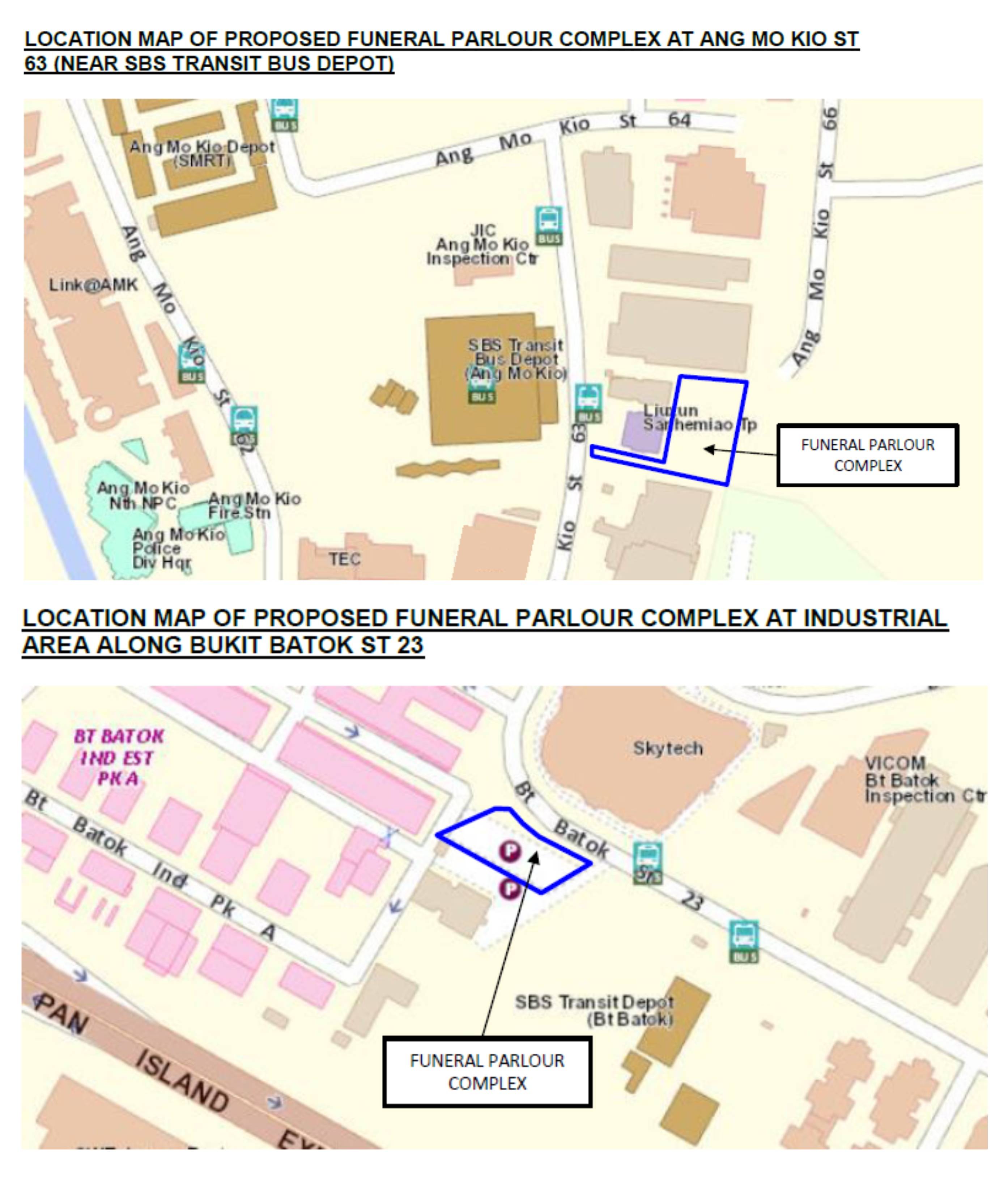
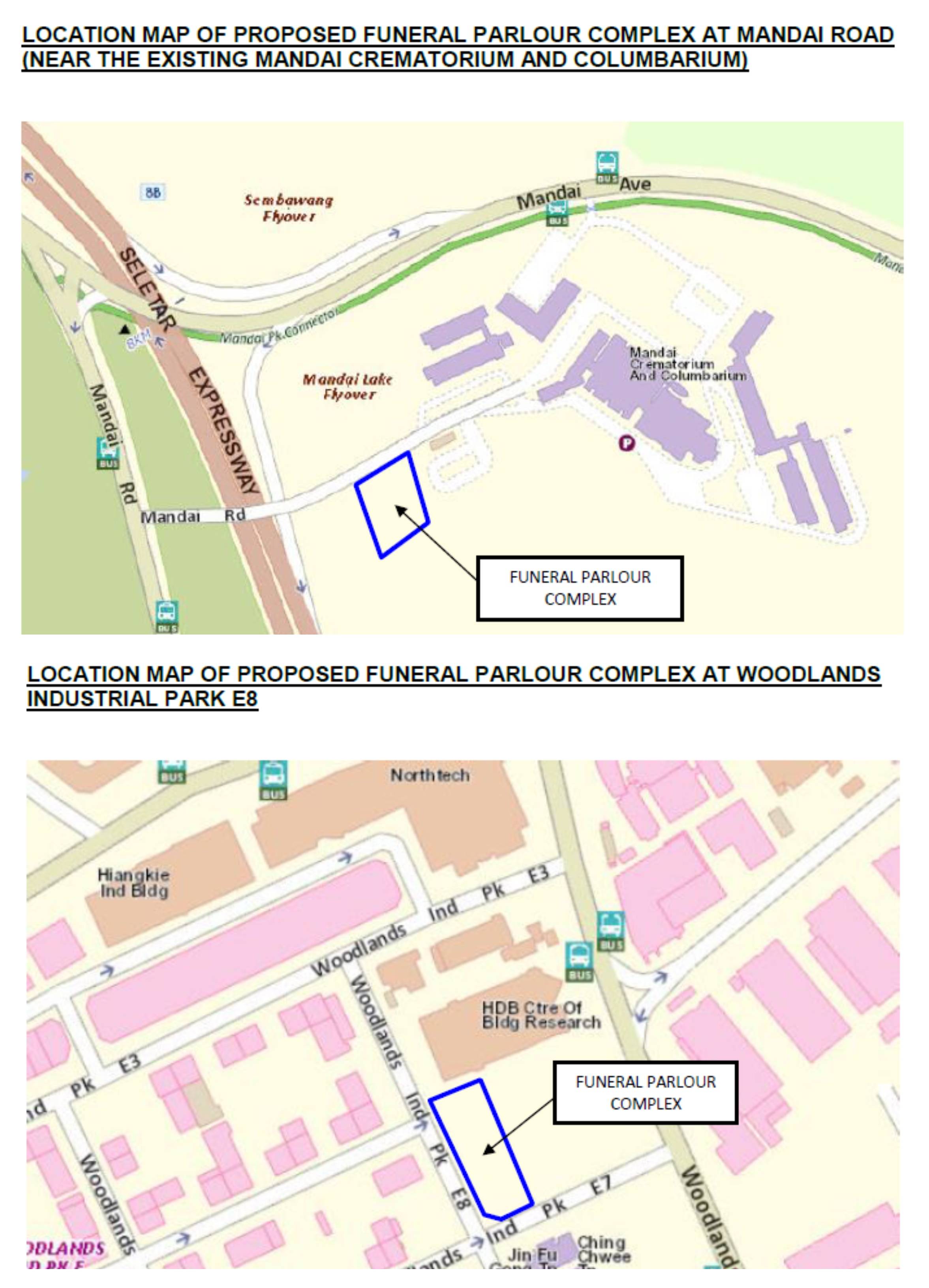
The sites will be located at Ang Mo Kio Street 63 near the SBS Transit bus depot, an industrial area along Bukit Batok Street 23, Mandai Road near the existing Mandai Crematorium and Columbarium, as well as Woodlands Industrial Park E8.
Identified through an inter-agency planning process, the sites are situated in various parts of Singapore “to provide a better distribution of FPs (funeral parlours) for bereaved families and their visitors,” said NEA in a press release.
The agency said that the annual demand for wake spaces is expected to increase in tandem with the rise in resident deaths, which are projected to go up to around 40,000 by 2040.
A map of the proposed funeral parlour complexes at Ang Mo Kio St 63 and the industrial area along Bukit Batok St 23. (Photo: National Environment Agency)
“After-death facilities are an important public infrastructure that accord dignity to the deceased, as well as comfort to bereaved families, in accordance with religious and cultural practices and preferences,” said NEA.
While wakes are mostly held at HDB void decks and multi-purpose pavilions, there is also rising demand for wakes held in purpose-built funeral parlours, said the agency, adding that it will continue to work with land use planners to ensure new funeral spaces are ready ahead of demand.
The upcoming funeral parlour complexes will be “sensitively designed and operated to minimise impact to neighbouring stakeholders”, said NEA, citing features such as adequate parking facilities and visual barriers to keep funeral activities discreet, as well as the confinement of rituals and processions to within the sites wherever possible.
“NEA will be engaging neighbouring stakeholders to gather their feedback and will incorporate the relevant suggestions into the development plans of the respective sites,” it said.
A map of the proposed funeral parlour complexes at Mandai Rd and Woodlands Industrial Park E8. (Photo: National Environment Agency)
“As a small and densely populated city-state, there will always be competing needs for space to meet Singapore’s various developmental needs,” the agency stated. “Some of these developments may require Singaporeans to make some adjustments and accommodation.
“Through advance notice, careful planning and by taking the necessary mitigation measures, agencies will make the best effort to minimise any inconveniences and disamenities arising from these developments as much as possible.”
SINGAPORE: Malaysia will immediately suspend its permanent restricted area in the airspace over Pasir Gudang, while Singapore will similarly suspend its implementation of Instrument Landing System (ILS) procedures for Seletar Airport.
The suspension will be in place for one month in the first instance, said the foreign ministers of both countries in a joint press statement on Tuesday (Jan 8) after meeting in Singapore to discuss bilateral issues, including the ongoing dispute over airspace.
In the meantime, the transport ministers of both countries should meet “soon” for discussions on the permanent restricted area over Pasir Gudang and the ILS procedures to ensure the safety and efficiency of civil aviation, said the joint statement.
Singapore’s Foreign Affairs Minister Vivian Balakrishnan and his Malaysian counterpart Saifuddin Abdullah said they had a “positive and constructive” meeting.
“Both sides reiterated their commitment to preserving the vital relationship between both countries and to improving bilateral ties, on the basis of equality and mutual respect,” said the joint statement.
The two ministers also agreed on the importance of keeping the situation on the ground calm to allow discussions to take place in a conducive atmosphere.
Singapore’s Foreign Affairs Minister Vivian Balakrishnan (right) and his Malaysian counterpart Saifuddin Abdullah meet on Jan 8, 2019. (Photo: Gaya Chandramohan)
On maritime issues involving the port limits of Singapore and Malaysia, both ministers agreed to establish a working group to study and discuss legal and operational matters, in order to de-escalate the situation on the ground and provide a basis for further discussions and negotiations.
The working group will be headed by the Permanent Secretary of the Singapore’s Ministry of Foreign Affairs Chee Wee Kiong and the Secretary-General of the Malaysian Ministry of Foreign Affairs Muhammad Shahrul Ikram Yaakob.
The working group will report to the foreign ministers within two months, the statement said.
It added: “Both foreign ministers were pleased with the progress made at the meeting, and welcomed the positive steps that both sides had agreed on to move these matters forward in a calm and constructive manner.”
Singapore’s Foreign Affairs Minister Vivian Balakrishnan (left) on Tuesday (Jan 8) with his Malaysian counterpart Saifuddin Abdullah. (Photo: Koh Mui Fong/TODAY)
The maritime dispute was sparked by Malaysia’s unilateral decision to extend the Johor Bahru port limits in October, and the subsequent intrusion of Malaysian government vessels in Singapore waters.
Singapore lodged a “strong protest” with the Malaysian government over the port limits which it said encroaches into Singapore’s territorial waters off Tuas. It added in a media statement that Malaysia’s actions are “a serious violation of Singapore’s sovereignty and international law”.
Separately, Malaysia’s transport minister Anthony Loke had said in parliament on Dec 4 that the government wanted to take back control of its “delegated airspace” over southern Johor, citing concerns over sovereignty and national interest.
Malaysia had at the same time objected to Singapore’s publication of ILS procedures for Seletar Airport, saying it would restrict the construction of tall buildings at Johor’s Pasir Gudang, to the north of Seletar Airport.
The ILS procedure refers to an assisted navigational aviation facility at the airport which provides precision vertical and horizontal guidance to flights descending and approaching the runway.
In response, Singapore had said it is not true that ILS procedures for the northerly approach into Seletar Airport amounted to a violation of Malaysia’s sovereignty and international law as its neighbour had alleged.
Singapore’s transport ministry had also reiterated that cross-border airspace management is not incompatible with sovereignty, pointing out that instrument flight procedures for some Malaysian airports also extend into the territories of neighbouring states.
SINGAPORE: The consumer watchdog in Singapore has raised the alert on Danish online retailer Lux International Sales ApS, after receiving complaints by customers who said they were sent payment notices even though they did not agree to the purchases.
“Consumers reported that they had to enter their personal information in order to view their prices of the products. Upon viewing the prices, they did not proceed but were still charged anyway,” said the Consumers Association of Singapore (CASE) in an advisory on Tuesday (Jan 8).
LuxStyle would allegedly post the goods to consumers along with an invoice demanding payment.
CASE said it first started receiving complaints in November 2016, adding that it issued a consumer alert against LuxStyle in May 2017. Since then, there have been an additional 18 complaints against the retailer, said CASE.
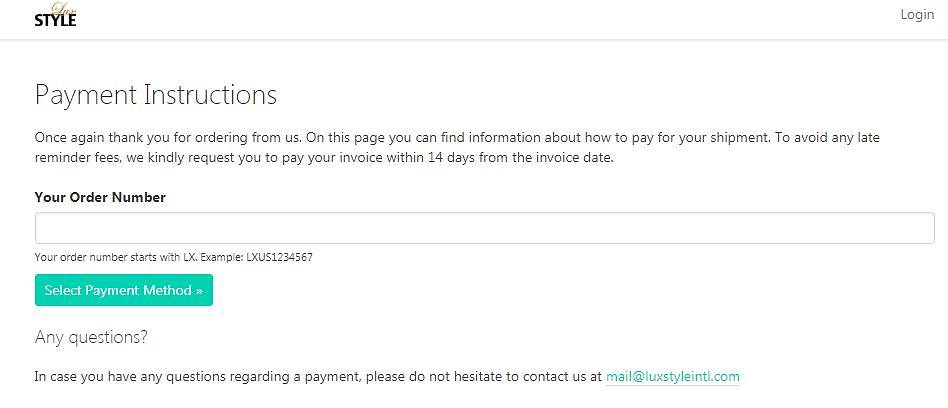
An example of a payment invoice from LuxStyle taken from CASE’s website.
A screengrab of the LuxStyle payment page consumer’s were instructed to go to as stated in the invoices.
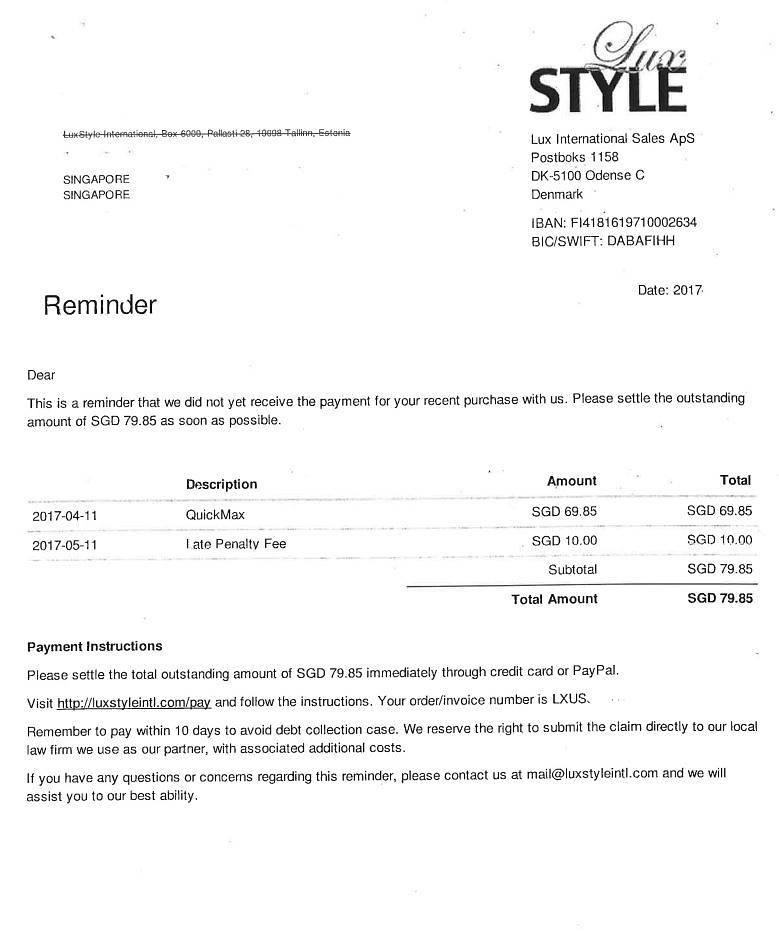
Customers were also sent reminders demanding payment.
When consumers wrote in to say they did not make the order, they were told to return the package at their own cost.
Screengrab of a reminder letter sent to a consumer by LuxStyle, according to CASE.
Last month, CASE said it was alerted to instances where consumers received letters from debt collection agency Collectius CMS, asking for immediate payment for debt allegedly owed to Digital Sourcing ApS, formerly known as LuxStyle.
CASE added that it got in touch with Collectius CMS which has since stopped all related debt recovery action.
“Any consumer who made payment to Collectius CMS on this matter should be refunded in full,” said the consumer watchdog.
“Under the Consumer Protection (Fair Trading) Act, a business cannot assert the right to payment for providing unsolicited goods or services.
“Hence, consumers are not obliged to make payment for unsolicited goods, until and unless they have given express agreement for the purchase,” said CASE.
INTERNATIONAL WATCHDOGS, INTERNET USERS TAKE ACTION
CASE is not the only consumer watchdog that has issued advisories on LuxStyle.
Agencies in Australia, New Zealand, Malaysia, Finland and Denmark have also issued similar warnings.
“LuxStyle advertised its products on social media, directing potential customers to a website that did not display prices unless the consumer entered a mailing address and an email address,” said the Australian Competition and Consumer Commission.
“Consumers have complained that even though they did not proceed to order or purchase the goods and simply closed down the website window after viewing the price of the product, LuxStyle then posted the goods to consumers along with an invoice demanding payment and followed this up with subsequent invoices if consumers did not pay,” it added.
The Danish Consumer Ombudsman said in December 2017 that it had reported Luxstyle ApS and Lux International Sales ApS to the police for “sending unsolicited goods along with a demand for payment”.
A check by Channel NewsAsia showed that the online websites for both LuxStyle New Zealand and Australia were still functioning, with claims of “low shipping costs” worldwide, price matching and five-star reviews from customers.
Screengrab of LuxStyle Australia’s website.
Many consumers have also rallied online through designated Facebook groups to raise awareness about LuxStyle’s practices. These groups feature claims from consumers worldwide on their experiences with the Danish retailer as well as updates on complaints by customers.
Channel NewsAsia has reached out to LuxStyle for comment.
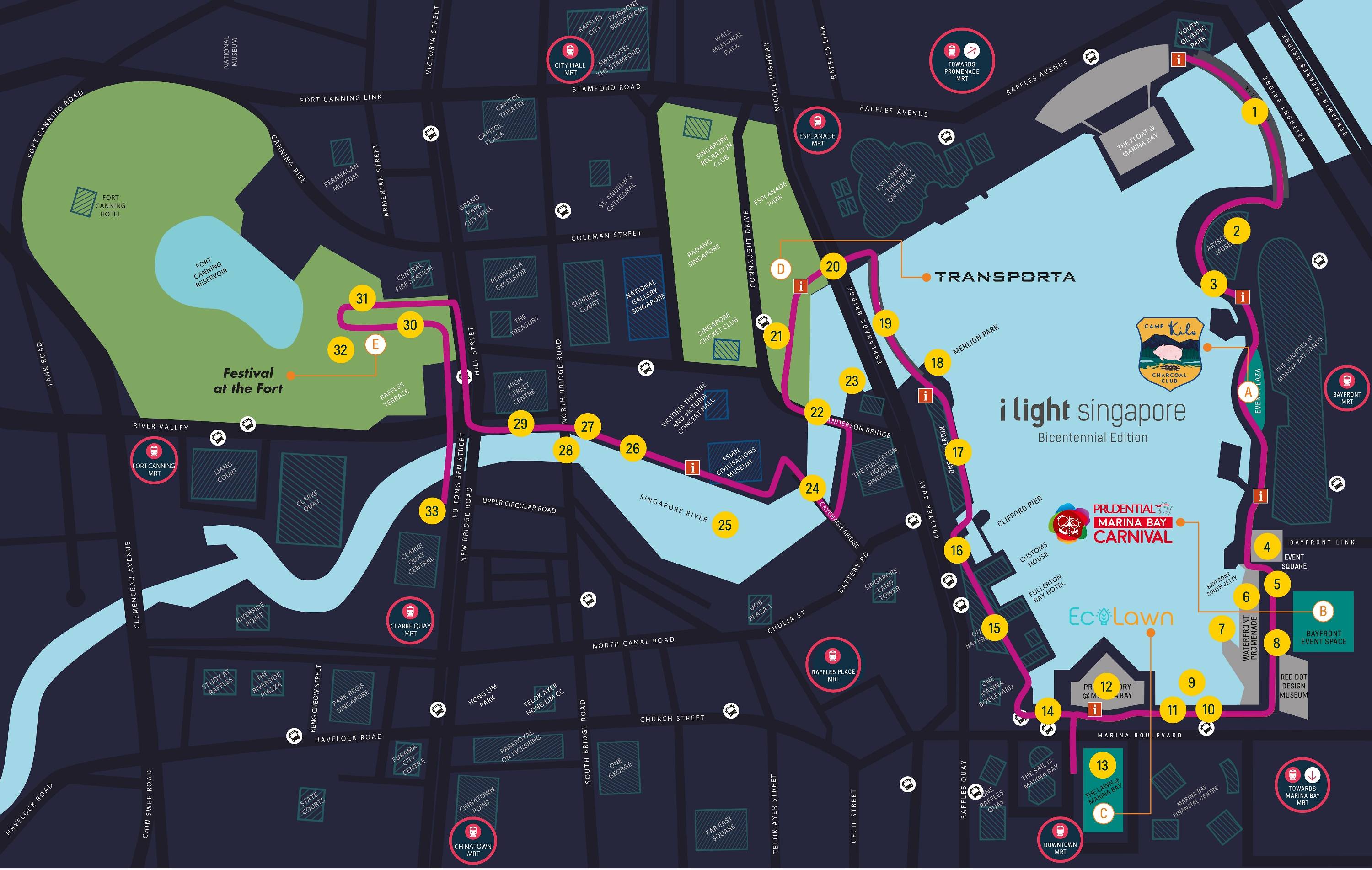
SINGAPORE: The special Bicentennial Edition of the annual i Light Marina Bay art festival will for the first time extend to the historic Raffles Terrace at Fort Canning Park, as Singapore commemorates the 200th anniversary of the arrival of Sir Stamford Raffles on the island.
Running from Jan 28 to Feb 24, this year’s edition will kick-start Singapore’s bicentennial commemoration, with five themed hubs for “a fun, engaging and unique experience”, according to a media release on Tuesday (Jan 8).
The festival is organised by the Urban Redevelopment Authority (URA).
The five hubs located at Fort Canning Park, The Lawn @ Marina Bay, Marina Bay Sands (MBS) Event Plaza, Bayfront Event Space and Esplanade Park, will also feature activities that promote environmental sustainability.
For the first time, the historic Raffles Terrace – which has a replica of Sir Stamford Raffles’ residence in 1822 – at Fort Canning Park will play host to the light art installations.
Programme highlights include acoustic music acts and special piano showcases by local talents, roving performances, movie screenings and guided tours of Fort Canning Hill.
Also check out Camp Kilo at Marina Bay Sands Event Plaza, where visitors can enjoy eclectic groovy beats by resident DJs and enjoy outdoor dining “served on biodegradable food ware”.
Camp Kilo @ i Light Singapore – Bicentennial Edition in 2019. (Image: i Light Singapore)
Thrill-seekers can also go on 50 rides and games at the “LED-lit” Prudential Marina Bay Carnival located at Bayfront Event Space.
Meanwhile, The Lawn @ Marina Bay will be transformed into Eco Lawn, where visitors can attend upcycling workshops, or shop at the sustainable lifestyle market. Those in the mood for some exercise can also join in a spot of yoga under a City Gazing Singapore light art installation.
On Feb 2, there will also be percussion music, hip hop dances and martial arts by Republic Polytechnic students at various spots around Marina Bay.
Republic Polytechnic Student Performances at i Light Singapore – Bicentennial Edition in 2019. (Image: i Light Singapore)
The Switch Off, Turn Up campaign, held in conjunction with the festival, will also be back this year, encouraging companies and building owners to save energy by switching off non-essential lighting and turning up their thermostat.
In addition, the festival will also encourage the reduction of single-use plastic straws at the food and beverage establishments around the bay.
At Esplanade Park, visitors can explore Transporta, which features “kaleidoscopic spaces … revolving around the space-time continuum”. The experience is designed by Singaporean artists based on the festival theme of Bridges of Time.
Sails Aloft by Studio Biangle, one of the artworks featured in i Light Singapore – Bicentennial Edition in 2019. (Image: i Light Singapore)
Six bridges along Singapore River and Marina Bay will also be turned into venues for artworks, the festival organiser announced earlier.
Elgin Bridge, Cavenagh Bridge, Anderson Bridge, Esplanade Bridge, Jubilee Bridge and The Helix bridge will – for the first time – feature artworks from five countries, including Singapore.
“Collectively, the artworks inspire inspire hope and optimism as we acknowledge the past, celebrate our present, while looking to the future by sparking conversations on the development of Singapore and the world around us,” said the event organiser.
Map of i Light Singapore – Bicentennial Edition artworks in 2019. (Image: i Light Singapore)
The artworks on the bridges are part of 33 “sustainable light art installations” featured in the festival, 17 of which are by Singaporean artists or feature Singapore-related content. On top of local artists, artists from 14 countries will participate in the festival.
Visitors can sign up for paid guided tours of the festival by foot or boat on the i Light Singapore website, or go on a self-guided audio tour by downloading the VoiceMap app.
The festival will be open from 7.30pm to 11pm daily, and till 12am on Fridays and Saturdays. General admission to the festival is free.
IN recent months, tens of thousands of Singaporeans have attended government-organised workshops that would help them find courses that could expand their skill sets and uplift their careers.
Known as the SkillsFuture Advice programme, the government has reached over 50,000 Singaporeans within a few months, allowing attendees to develop their education, training and job prospects.
The programme is aimed those from all walks of the employment spectrum, from fresh graduates to working professionals, mid-career switchers, to retired seniors, Business Times reported.
The project involves 90-minute talks conducted in English, Mandarin, Malay and Tamil at community centres and clubs scattered around the city-state.
Launched in October, the series of talks are part of a wider scheme of courses offered by SkillsFuture, a statutory body under the Ministry of Education which provides training and upgrading skills to keep up with the ever-changing technological advancements in the workforce.
Skills future currently offers more than 400 courses, mostly conducted by institutes of higher learning (IHLs), which the targeted groups can attend to hone their skills in their chosen disciplines.
The government began expanding the Skillsfuture programme in 2017, aiming to train over 50,000 Singaporeans annually in specific areas that were industry-relevant.
On average, each course would take up 25 training hours while participants can opt to take part in basic, intermediate and advanced proficiency levels for the programmes.
Citizens and permanent residents who want to participate can receive up of 70 percent of subsidies on course fees, but most of the entry-level courses were already inexpensive, costing less than S$500 (US$365).
During an event to mark the anniversary of SkillsFuture Advice, Education Minister Ong Ye Kung said all five community development councils involved in the programme managed to reach out to 6,000 individuals in the first year and exceeded that goal.
Ong lauded Finance Minister Heng Swee Keat who announced a renewed focus on economic transformation ahead of the upcoming national budget where the latter has vowed to companies, especially small-to-medium enterprises (SMEs), to cope with it.
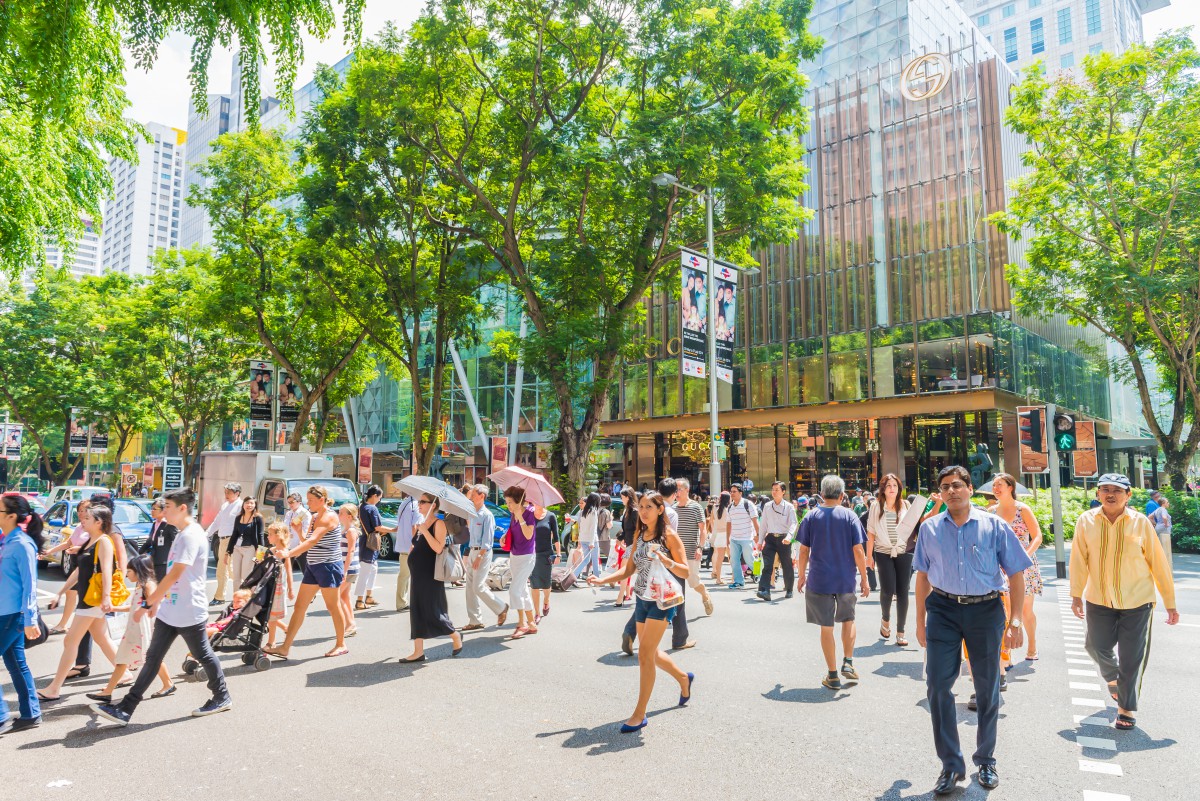
A crowd walks along Orchard Road in Singapore. Source: Shutterstock
“It is important – when we look at SMEs, they make up 99 per cent of all our enterprises, they hire about 65 per cent of all employees, but I think there is still room for SMEs to be more productive,” he was quoted as saying.
Therefore, we will see how we can use SkillsFuture as a national movement to help upgrade our SMEs.”
Mayor of North West District, said 40 percent of the workshop participants have undertaken at least one skills upgrading programme or were planning to do so.
“Indeed it is very encouraging that Singaporeans want to take the opportunity to upgrade themselves,” he said.
“By 2020, we hope to conduct at least 1,000 workshops for Singaporeans to empower more residents to better take charge of their skills upgrading and career development.
“It is important that every Singaporean adopts lifelong learning as part of our living habit and continue to learn.”
SINGAPORE: The year-end monsoon season typically sets off alarm bells to watch for flooding, particularly in Singapore, once beset by images of an Orchard Road ponding incident.
Although such incidents evince snarls and flare up tempers, in other cities, people have developed creative responses to floods.
In Thailand, we have witnessed how the recent tropical storm Pabuk resulted in heavy floods and left more than 30,000 people in evacuation shelters. This is an example of the severe impact of a single, very unusual weather event for which resilience is much needed.
A man inspects storm damage to his house in southern Thailand. (Photo: AFP/Madaree Tohlala)
DEALING WITH CLIMATE CHANGE
The reality is that climate change will bring to bear unpredictable and unprecedented weather patterns.
So it is fortuitous that the United National Climate Change Conference organised in Poland in early December 2018 united once again most countries on what should be a coordinated and effective response on adaptation, mitigation and preparedness for coping with climate change.
Climate change has a global reach and is impacting societies all over the world. Extreme climatological events such as floods, droughts and hurricanes are affecting more cities.
In 2018, there were repeated extreme events, including flash floods in countries as far away as United States, India and Japan; in the desert (in the ancient cities of Petra and Madaba in Jordan, as well as in Iraq, Kuwait and Qatar) and countries in the tropics like Malaysia and Singapore.
Given the increasing intensity and frequency of storms, most developed countries are looking at how floods can be best mitigated since total control is neither possible nor desirable from an economic viewpoint.
The question then arises as how best flood risks can be managed to protect both populations and assets.
MULTI-PRONGED FLOOD MITIGATION STRATEGIES
Flood mitigation strategies are multi-pronged. They include short, middle, and long-term policies, and involve reviewing the role of institutions, financial aspects and infrastructure development.
Large infrastructure for flood mitigation includes storm surge barriers to protect ports and cities, found in Rotterdam and around the Thames Barrier in London, or very large underground channels, such as the Metropolitan Area Outer Underground Discharge Channel in Tokyo.
Levees, extensive networks of canals and other underground storage for excess flood waters also help protect the growing cities of the world against extreme rainfall.
Intense rainfall triggered huge landslides and flash floods in Hiroshima, Okayama, Kyoto and other regions. (Photo: AFP)
In the face of change, cities in Europe, Australia, Japan, United States and Canada have developed flood-mitigation plans that have become essential tools for land-use, which help governments, industries, developers and populations to prepare for and respond to flood emergencies.
FLOOD MITIGATION IN SINGAPORE
Singapore, being a low-lying island state, has had to develop flood mitigation measures for several decades. This has been very effective. For example, in 2018, there are only 30 hectares of flood-prone areas, less than 10 per cent of what used to be during the 1970s.
Like in many parts of the world, the city-state has experienced a far greater occurrence of intense storms amid increasing rainfall intensities. In tandem, its overall strategy has grown progressively more comprehensive.
PUB, the National Water Agency, has developed a broader management approach for rainwater or stormwater that is multi-pronged – mandating flood protection requirements for new development and redevelopment projects, the development of drainage infrastructure ahead of construction, and continuous monitoring and improvements of the drainage system.
Its strategy additionally incorporates the development and maintenance of an extensive network of 8,000 km of drains, the systematic widening and deepening of existing drains and canals and periodic updating of the code of practice of surface water drainage which specifies minimum engineering requirements for such systems.
But even with the best built infrastructure and systems, last-mile human intervention is particularly crucial. It was only slightly more than a year ago that poor maintenance of a water pumping system led to a malfunction that catalysed an MRT tunnel flooding at Bishan MRT station.
A view of the Bishan MRT tunnel which flooded on Oct 7, 2017 (File photo: LTA)
Furthermore, road levels as well as ground levels for new developments, crest levels for entrances to basements and underground facilities have been raised, and mechanical flood protection measures such as flood barriers have been installed.
Working jointly with property developers to implement local measures and reduce the speed of rainwater reaching the public drainage system can be particularly effective, with knock-on benefits. Implementation has resulted in attractive green roofs and rain gardens.
BOOSTING AWARENESS AND EDUCATION
Not everything is about water management; much of the solution lies in how people respond to such events. People should thus be aware of possible impact, safety concerns, and should have as much information as possible on potential risks and the most appropriate responses.
In the case of Tokyo, for example, low-lying wards have prepared hazard maps outlining areas at risk of flooding. The government is trying to ensure that every person has access to the maps and thus is making them available both online and in hard copy.
These maps show how deep floodwater would likely be for each area and how long each area could be affected, perhaps even remaining underwater.
Residents of Tokyo’s Katsushika ward show a floating boat which they keep for a possible flood in Tokyo, Japan on Aug 24, 2018. (Photo: REUTERS/Kim Kyung-Hoon)
Infrastructure development, although essential, can protect population only to a certain point. Resilience requires continuous education and awareness programmes that provide information on what people should and should not do, when there is a flood.
In this, the public sector, public and private developers, industries and society need to have a broader understanding of extreme weather events and how they can be best managed. Enhancing awareness is a crucial first step in working jointly towards mitigation and adaptation measures that can ensure business, even societal, continuity in the longer term.
CONTINUING IMPROVEMENTS
Let’s face it. Due to climate change, floods are becoming more intense and frequent in many parts of the world. This is a fait accompli that all societies must learn how to cope with appropriately.
File photo of a flood in Singapore. (Photo: Hsann Aung Naing)
There was a time when floods, related risks and impact were indications of lack of proper preparedness. While this continues to be the case in numerous countries, Singapore has reached a new level of flood mitigation and preparedness.
Singapore must continue reviewing and updating its flood mitigation policies. Such strategies should also include critical efforts to bolster population preparedness, education and awareness.
Approaches must also remain flexible, cost-effective, contribute to improvements in social, economic and environmental terms, and engage the public at large. Best-tested practices from flood-prone advanced cities like Tokyo can help inform Singapore’s approach.
Cecilia Tortajada, Senior Research Fellow, Institute of Water Policy, Lee Kuan Yew School of Public Policy, National University of Singapore. Editor-in-Chief of the International Journal of Water Resources Development. Asit K. Biswas is Distinguished Visiting Professor of the same School.