Home Blog Page 860

What’s being done to keep your catered food safe

0

SINGAPORE: It is lunchtime at the Republic’s largest events caterer. But before the kitchen operations employees can eat, there is a daily pledge to take. It is a work safety pledge, and it includes food safety.

“I will ensure the safety of the food and uphold the quality of Neo Group. I will handle every task with integrity,” they recite, among other things.

With the company’s two central kitchens able to feed some 60,000 people in a day, there is no understating the need to be conscious about the dangers that can lurk in food preparation.

For all caterers, big or small, the rules are stringent; for instance, caterers must not use the same utensils to handle raw and cooked food, nor should they handle food with their bare hands. They must also timestamp catered meals.

The penalty for handling food with bare hands is a S$400 fine and six demerit points.

The penalty for handling food with bare hands is a S$400 fine and six demerit points.

Caterers can get their licence suspended if they commit such hygiene-related offences. But as the past two months have shown, lapses and mass food poisoning still occur.

Over 700 people fell ill, 61 were hospitalised and one man died in four outbreaks involving four caterers, including Spize, Tung Lok and Mandarin Orchard Hotel. The death of 38-year-old Fadli Salleh was the fourth such tragedy in a decade.

READ: No links found between food poisoning cases at Mandarin Orchard, FoodTalks, Tung Lok and Spize

READ: Food poisoning: Can you really avoid it?

So, ahead of the Chinese New Year festivities, the programme Talking Point finds out what goes on behind the scenes of catering kitchens, from the food preparations to the deliveries, and what gaps in processes could lead to contamination.

The programme Talking Point finds out what goes on behind the scenes of catering kitchens.

RED FOR RAW MEAT, YELLOW FOR COOKED FOOD

Talking Point wrote to several companies, but only Neo Group – Singapore’s only publicly listed caterer – allowed host Steven Chia inside to work as an assistant for two days.

And one of the first things he learnt was the need for health and hygiene checks on his temperature and fingernails before work began.

There are various standard operating procedures; for example, chopping boards have different colours for different purposes, like red for raw meat and yellow for cooked food, to prevent cross-contamination.

There are also different preparation rooms for different foods, such as one for meat and another for vegetables.

The Neo Group has different preparation rooms for different foods, such as one for vegetables.

The vegetable preparation room.

As the staff have different stations to take care of each day, they wear different caps, “so that we can recognise which department they’re from”, explained Neo Group operations manager Tris Thio.

And if they are in the wrong room, they can be caught on closed-circuit television cameras. “You’d have to write a report on why you’ve done it and how to ensure that you won’t do it again,” said Ms Thio.

Of course we’d send the operator for counselling – he’d just have to go through the whole hygiene process again.

As mistakes can be difficult to avoid, especially during peak periods, several processes have been automated.

For example, every station has a computerised kiosk, a screen that tells the chefs when to prepare a dish, what time it must be ready and the number of pax the event is for, cited Ms Thio.

Neo Group has a chef kiosk at every food station to tell the chefs when to prepare a dish.

The chef kiosk screen.

“We used to have log sheets … but it was quite messy,” she added.

“We’d fill in the wrong timing – or in the wrong slots – (and) the wrong batches as well. So with this (kiosk), just with a touch, we’d record the time that they finish preparing the food.”

The timings are important because caterers are required to inform consumers of the recommended “consume by” time, set at four hours from the time a cooked dish is placed in the “temperature danger zone” of between 5°C and 60°C.

This is why, at Neo Group, each dish is cooked by a different chef. It ensures that the dishes come out at the same time, besides preventing cross-contamination.

After cooking, a sample of each dish is kept so that it can be sent for lab tests in case of food poisoning.

After cooking, a sample is kept so that it can be sent for lab tests in case of food poisoning.

A curry sample.

Then the last leg of the catering process is delivery, which Mr Chia said “can be more unpredictable than (being) in the kitchen”.

“You’ve got bad weather, bad traffic – anything can happen. And even after the food has been delivered safely, you can’t really control what happens next,” he said after delivering orders.

DISHES ‘JUST SITTING THERE’

According to Neo Group’s Jessie Ong, who has been in the business for over a decade, ensuring food safety is “more complex” for a caterer than for a restaurant, owing to the size of the orders.

“We have a lot more layers when it comes to delivering food to our customers,” said the assistant director of marketing and business development.

Talking Point host Steven Chia talking to Neo Group operations manager Tris Thio.

Mr Steven Chia with Ms Tris Thio.

Her company also has resources to spend, such as on its automation processes to reduce human error. For example, just the hardware for its kiosk system cost about S$100,000.

Some caterers, however, may struggle more with resource constraints, as Ms Lily Lim had seen when she was working in food and beverage establishments for over 13 years. These ranged from caterers with fewer than 20 employees to large hotels.

Now a home caterer, she said Neo Group’s “one chef, one dish” policy was “not really” common because of the manpower involved.

I’ve witnessed, especially during the festive season, because they were so jam-packed with orders and everything needed to be rushed out … dishes (for lunch) were already ready by 8am or 10am and just sitting there.

She was surprised at the recent string of food poisoning cases involving big, reputable companies, but at the same time she said: “When you have a company (with) a lot of employees … you need to keep a really tight ship.”

Talking Point host Steven Chia with Ms Lily Lim, who worked in F&B establishments for over 13 years.

Mr Chia with Ms Lily Lim.

Usually, caterers struggle a bit when they are busy, agreed Mr Mohd Kalil, who does business development for Eatz Catering, whose kitchen can handle up to 30 orders a day.

His is one of 13 catering companies at Gourmet East Kitchen, which is a six-storey industrial complex in Bedok, one of many food zoned factories across Singapore where these small to mid-range companies are situated.

Asked if the kitchen staff have only one role each day, Eatz Group general manager Mani Kandan replied that it depended on the order. So sometimes the chefs have to prepare their own ingredients.

Addressing the potential issue of cross-contamination, Mr Kalil said: “The chefs are well-trained. They went for the food hygiene course.”

Added Mr Mani: “We’d train our chefs very seriously.”

Ms Lim believes that companies take more orders than they can handle during the festive period, however, which means hiring additional staff. And she doubts if even half of them have a food hygiene certificate.

Home caterer Lily Lim thinks catering companies take more festive orders than they can handle.

“Manpower is such an issue in the food business,” she said. “If you get someone knocking on the door, (it’s) like, ‘Yay, I welcome you with open arms.’”

A CAUTIONARY TALE FOR CATERERS

In the case of Spize’s River Valley outlet, a month-long investigation by the National Environment Agency (NEA) and the Agri-Food and Veterinary Authority found that seven of the 35 food handlers were unregistered, and also detected six types of pathogens.

READ: Salmonella behind Spize mass food poisoning incident; outlet to be shut

“Probably because they weren’t certified … they didn’t really know how to handle food in a hygienic way,” said Nanyang Polytechnic’s School of Chemical and Life Sciences deputy director Richard Khaw.

NYP’s School of Chemical and Life Sciences deputy director Richard Khaw is a food safety expert.

Mr Richard Khaw.

An expert on food safety and microbiology, he analysed what could have gone on in the Spize kitchen for its catered bento boxes to have caused 47 people to be hospitalised, including Mr Fadli, who died after eight days.

On how salmonella, a micro-organism found in contaminated raw or undercooked food, could have got on the raw chicken samples, he said infected chickens may not show any symptoms, but cooking them thoroughly would have killed the bacteria.

Salmonella, unlike mould and yeast, is undetectable to the eye. And it could have got on Spize’s belacan egg fried rice through cross-contamination if, for example, the raw and cooked food were not kept separate during the preparation, he explained.

There were also faecal coliforms – bacteria found in human and animal faeces – on the knives and chopping boards. These could have come from raw vegetables irrigated with water that contained faecal contaminants, said Mr Khaw.

Bacteria such as salmonella and faecal coliforms were detected in Spize’s River Valley outlet.

Bacteria.

The food handlers may also have had poor hygiene practices, “for example going to the washroom and not washing their hands properly”. He added: “Then they’d contaminate all the chopping boards, the knives or even the surfaces.”

The NEA’s previous inspection of the Spize outlet, in October, found only one fault: The restaurant did not have enough rubbish bin covers. Its hygiene grade, along with that for Tung Lok Catering and Mandarin Orchard, was an A.

These are “snapshot” gradings, however, and “the truth is that the NEA can’t be there 24/7”, said NEA deputy director-general of environmental public health Chew Ming Fai in reply to the question of how effective these checks are.

“The onus is on the operators themselves to make sure that the proper staff are trained, that they have audit systems in place and that these processes are adhered to,” he added.

The NEA shut down Spize in River Valley last month and will press charges against the operator.

The NEA shut down Spize’s River Valley outlet last month and will press charges against the operator.

More than 2,400 checks on caterers were conducted last year, with establishments getting inspected at least twice a year. And in 2020, the NEA will have a gold, silver and bronze regime, which will look at the premises’ track record.

READ: Stiffer fines among tougher penalties introduced for food poisoning cases: NEA, AVA

Currently, the agency also has a Food Hygiene Officer scheme, in which the larger premises are required to have an on-site officer who is trained to conduct hygiene audits.

As to whether such audits would be lax, Mr Chew pointed to what would be in the operators’ interests.

“The business impact and loss of reputation if you’re suspended are additional impacts that the caterer himself, beyond whatever the government can impose as penalties, has to bear,” he said.

Watch this episode of Talking Point here. New episodes on Channel 5 every Thursday at 9.30pm.

Neo Group allowed Talking Point host Steven Chia to work as catering assistant for two days.

Mr Chia learnt that caterers must take orders “within their capacity” and handle food with “care and discipline”, and that consumers should “follow the timestamp” for catered meals, otherwise a delicious spread might become the “poison that kills”.
Source link

Dyson to move corporate head office to Singapore

0

SINGAPORE: British technology firm Dyson announced late Tuesday (Jan 22) night that it will move its corporate head office to Singapore to “reflect the increasing importance of Asia” to its business.

In a press release, the privately owned company known for its bladeless fans and bagless vacuum cleaners said: “An increasing majority of Dyson’s customers and all of our manufacturing operations are now in Asia; this shift has been occurring for some time and will quicken as Dyson brings its electric vehicle to market. 

“As a result, an increasing proportion of Dyson’s executive team is going to be based in Singapore; positioning them to make the right decisions for Dyson in a quick and efficient way.” 

READ: British technology company Dyson to build electric car in Singapore

Dyson also announced investment plans, including the expansion of the Singapore Technology Centre to double its current size, as well as the Malaysia Design Centre’s fifth phase of development. 

Winding Machine

Dyson’s digital motors are manufactured in Singapore. (Photo: Dyson)

Much of its product development will remain in southwest England.

It said that there will be construction of new laboratories in the United Kingdom, to cater for the growth of Dyson’s energy storage research and robotics programme.

Malmesbury, the location of its original headquarters, as well as Hullavington, London and Bristol, will “continue to be core creative and engineering parts of Dyson”, it said.

READ: Peek inside Dyson’s high-tech R&D facility in Singapore

The company said the move from Britain was not driven by Brexit or any tax implications. It already manufacturers products in Asia and will build its new electric car in Singapore.

Chief executive Jim Rowan said the group was seeing the biggest demand for its products like air purifiers and hairdryers as well as cleaners in Asia.

“It allows us to make sure we will be putting our best efforts to secure those opportunities, as well as keeping an eye on those investments, especially EV (electric vehicles) and batteries,” he said.

Rowan, who is already based in Singapore, will be joined by other senior executives. Among them is Roland Krueger, who has been president of the Infiniti Motor Company and senior vice-president of Nissan Motor Co since January 2015. 

Krueger will join Dyson in April to “oversee all aspects of the automotive project as it approaches launch”, the company revealed. 

The move comes as Dyson said its annual profit had broken through the 1 billion pound barrier for the first time, driven by strong demand in China and other Asian countries.

Source link

Islamic State-linked plots in region down; terror threat to Singapore still high: MHA

0

SINGAPORE: The most pressing terrorism threat to Singapore continues to come from Islamic State, even though the number of plots directed by the militant group fell in the region in 2018.

This is according to the Ministry of Home Affairs’ (MHA) latest terrorism threat assessment report which was released on Tuesday (Jan 22).

It warned that other groups such as Jemaah Islamiyah (JI) and Al-Qaeda (AQ) are regrouping.

“In Southeast Asia, there is the possibility that JI, which is aligned with AQ, may resume planning attacks,” said MHA.

The ministry added that while there is “no credible intelligence” of a terror attack being planned against Singapore, the possibility cannot be ruled out. “The terrorism threat to Singapore remains high,” said MHA.

READ: Commentary: Radicalisation not a threat that can be flushed out

THREAT FROM HOME-GROWN, SELF-RADICALISED INDIVIDUALS

MHA noted that even though Islamic State has suffered heavy territorial losses in Iraq and Syria, its virulent ideology persists online and continues to attract supporters in Singapore.

In the past two years, eight self-radicalised individuals – including two women and one youth – were dealt with under the Internal Security Act (ISA), said MHA, bringing the total number of Singaporeans dealt with under this law to 22 since 2015.

In comparison, between 2007 and 2014, there were 11 such radicalised Singaporeans dealt with under the ISA.

However, not all eight cases in the past two years were related to Islamic State, said MHA. Three of them were “influenced by other terrorist rhetoric” and wanted to participate in armed violence in conflict zones in other parts of the world.

In addition, MHA said it continued to detect radicalisation among foreigners living and working in Singapore.

Since 2015, 14 Indonesian domestic workers have been repatriated after they were found to have been radicalised.

Last year, three Malaysian work permit holders were arrested for their suspected involvement in terrorism-related activities. All three were repatriated to Malaysia.

READ: Self-radicalised Malaysian man arrested under ISA, repatriated from Singapore: MHA

None of the foreigners investigated had any plans to carry out attacks in Singapore, said MHA.

SINGAPOREAN MILITANT MEGAT SHAHDAN BELIEVED KILLED

A Singaporean militant who was featured in two Islamic State propaganda videos released in 2017 is believed to be dead, said MHA. 

Megat Shahdan Abdul Samad shot into the spotlight after he was seen in one of the videos, along with two other Southeast Asian militants, executing three “agents of the crusader coalition”.

Islamic State fighter from Singapore video screengrab

Screengrab from an Islamic State video showing a Singaporean. (Image: Facebook)

In the other video, Megat Shahdan, who left Singapore in 2014 to work in the Middle East, was seen loading artillery shells onto a military truck and calling for people to join Islamic State.

READ: MUIS condemns video of Singaporean Islamic State fighter executing man

“Based on available information, Megat Shahdan is believed to have been killed,” said MHA on Tuesday.

THREAT FROM OTHER EXTREMIST GROUPS

The threat of Islamic State-inspired attacks persists, as the group’s sympathisers continue to be active, said MHA. 

The ministry pointed to Islamic State-linked group Jemaah Ansharut Daulah (JAD) in Indonesia, which was responsible for coordinated bombings in Surabaya in May last year. The bombings, which killed 28 people (including the perpetrators), are the deadliest Islamic State-linked attacks in Indonesia to date.

JAD was disbanded by a court in Indonesia last July for “conducting terrorism” and affiliating itself with Islamic State.

READ: Indonesian court disbands Islamic State-linked group for ‘terrorism’

Islamic State continues to portray Southeast Asia as part of its “global caliphate” and has started to refer to its “East Asia” division in its propaganda, which could attract foreign pro-Islamic State militants to travel to the region, said MHA.

“ISIS’ persistent interest in the region raises the threat to Singapore,” MHA added, referring to Islamic State which is also known as Islamic State of Iraq and Syria (ISIS). 

“Singaporeans may also be radicalised by ISIS’ propaganda and take up arms for ISIS.”

In addition, there are signs that other extremist groups including Al-Qaeda and Jemaah Islamiyah have been regrouping and may launch large-scale attacks again, said MHA.

“The international focus on countering ISIS has provided AQ with the space to rebuild its capabilities,” said the ministry. 

“JI members have been joining pro-AQ groups in Syria to acquire combat skills and experience. JI continues to attract supporters in the region.”

MAJORITY OF SINGAPOREANS DON’T SEE TERROR THREAT AS IMMINENT

While authorities have put measures in place to enhance Singapore’s counter-terrorism abilities, MHA said that it is important for Singaporeans not to become complacent.

A survey conducted by the ministry in June and July last year found that close to 60 per cent of respondents recognised that Singapore was a target for terror attacks.

However, only around 20 per cent felt that a threat was imminent, that an attack might occur in Singapore within the next five years.

The survey, which was conducted via a series of face-to-face interviews, involved 2,010 Singapore citizens and permanent residents aged 15 years and above, and was representative of the national population.

Source link

S$2 million grant to encourage zero-waste living

0

SINGAPORE: A new S$2 million grant has been launched to help people and organisations raise awareness of zero-waste living in Singapore.

The Ministry of Environment and Water Resources (MEWR) has announced the Towards Zero Waste grant will be made available from Feb 1 as the country accelerates its efforts to become a zero-waste nation. 

More than seven million tonnes of waste was generated in Singapore in 2017, according to the latest statistics from the National Environment Agency (NEA). 

Funding will be issued for initiatives that drive two components – waste reduction and recycling. They must focus on any of the three areas: packaging waste, food waste and electrical and electronic waste, or cover efforts that encourage right recycling in households.

Members of the public, interest groups, non-governmental organisations (NGOs), grassroots organisations and corporations are eligible to apply for the grant. 

READ: NYP team turns coffee waste into fire retardant

“We hope to support ground-up initiatives from the people, public and private sectors that will rally the community to take positive actions,” said Dr Amy Khor, Senior Minister of State for the Environment and Water Resources, during a visit to the SembWaste Materials Recovery Facility on Tuesday.

“I encourage individuals and groups with good ideas for reducing waste and recycling right to come forward to apply for this grant.”

Workers sorting out recyclables at the SembWaste Materials Recovery Facility

Workers sorting out recyclables at the SembWaste Materials Recovery Facility on Tuesday (Jan 22). (Photo: Junn Loh)

Singapore has blue recycling bins in housing estates islandwide, but some 40 per cent of the load collected is tainted with liquid or food waste, according to the NEA.

These contaminated items cannot be recycled and are typically sent to incinerators.

2019 has been designated as Singapore’s Year Towards Zero Waste. The campaign aims to raise awareness of waste issues and the need to conserve precious resources, with the S$2 million grant the latest in a slew of initiatives being rolled out.

Source link

Commentary: Was Singapore’s announcement to buy a small number of F-35s too slow, too tentative?

0

SINGAPORE: The announcement on Friday (Jan 18) by Defence Minister Dr Ng Eng Hen that Singapore will acquire a “small number” of Lockheed-Martin F-35 Lightning II Joint Strike Fighter (JSF) has unsurprisingly garnered a lot of interest among defence watchers at home and overseas.

The Ministry of Defence (MINDEF) announced that following a technical evaluation by the Republic of Singapore Air Force (RSAF) and Defence Science and Technology Agency (DSTA), the F-35 has been identified as the most suitable replacement to maintain the RSAF’s capabilities. 

It added that the technical evaluation also concluded that the RSAF should first purchase a small number of F-35 JSFs for a full evaluation of their capabilities and suitability before deciding on a full fleet. In the next phase, MINDEF will discuss details with relevant parties in the US before confirming its decision to acquire the F-35 JSFs for Singapore’s defence capabilities.

WHY BUY SO FEW?

The MINDEF news release still leaves some questions unanswered, as it did not reveal the number of aircraft the RSAF is initially purchasing or the number its seeking for its future fleet. It also did not disclose the variant or variants of the F-35 out of the three available that Singapore will acquire.

Ng Eng Hen file photo

File photo of Singapore Defence Minister Ng Eng Hen.

READ: The F-35 Joint Strike Fighter will change the rules of the air power game, a commentary

The decision to buy a small number of F-35s for further evaluation has also raised eyebrows, with a foreign aerospace commentator claiming that this was unprecedented and that MINDEF was still not fully convinced by the F-35.

However, this may not necessarily be the case, when other countries share a similar procurement schedule. The Netherlands took delivery of two F-35s in 2013 for operational testing and evaluation as well as training in the US before committing to the first of a total of 37 aircraft in 2015 with the first deliveries expected later this year. (There is also speculation in Dutch defence circles that they may eventually purchase about 50 to 60 to replace their fleet of about 60 F-16s.)

Singapore itself has also set such a precedent when introducing a new capability into the SAF. It acquired one used submarine from Sweden in the late 1990s, ostensibly to evaluate the suitability of the Challenger-class submarines in regional waters before acquiring three similar boats in 1997. 

It also acquired two more newer Archer-class submarines in 2005, barely three years after the initial four submarines entered service with the Republic of Singapore Navy (RSN).

It is therefore unlikely that MINDEF’s decision for a small buy signifies a lack of confidence in the F-35 or even that Singapore might somehow walk away from buying more aircraft in the future, given that it has been known to have been evaluating the type since 2013.

The then-head of the F-35 Joint Programme Office, Lieutenant-General Christopher Bogdan, had told this writer in 2015 that Singapore had been very thorough in its evaluation, in line with its reputation in defence industry circles.

He also revealed that Singapore had requested information on all three variants of the F-35 during its evaluation, although most previous reports have said that the Short Take-Off Vertical Landing (STOVL) F-35B was the type Singapore was most interested in.

TIME NEEDED TO INTEGRATE NEW CAPABILITIES

That MINDEF has chosen to take this procurement route with the F-35 is instead perhaps an acknowledgement of what F-35 pilots have called its “game changing” capabilities, and that as a result, it needs to carry out such an evaluation to fully understand and examine how to maximise its capabilities in Singapore’s somewhat unique security context given the F-35 will be the first time the RSAF will be operating a stealth aircraft.

READ: How the fifth-generation fighter jet can take RSAF to the next level

F-35 stealth

The F-35 hides all its fuel and weapons inside its skin of stealth. (Photo: Lockheed Martin/Angel DelCueto)

These capabilities include stealthy characteristics that are designed to make it difficult for adversaries to detect it by radar or intercept its electronic signature, as well as its advanced sensor fusion and its unique Distributed Aperture System, essentially a set of cameras that beam images to the F-35 pilot’s cutting-edge helmet, providing him with an all-round 360-degree view of the aircraft’s surroundings.

READ: The Republic of Singapore Air Force’s likely new fighter jet, a commentary

In addition, if Singapore does choose to buy the STOVL F-35B as reported, it will also represent the first time that it will be operating a combat aircraft with such capabilities, adding to the need for MINDEF to evaluate how these unique capabilities will fit into its existing doctrine and systems.

The US Marine Corps and United Kingdom already operate the F-35B. The B variant has also been selected by Italy and Japan, although these operators intend to use their aircraft for shipboard operations.

Given that Singapore’s reported interest in the F-35B is for very different reasons from the other operators (i.e. to reduce the RSAF’s need for long runways to generate airpower given Singapore’s shortage of land and strategic depth), it would further add to the need for the RSAF to assess the variant’s capabilities in such scenarios. 

That Singapore has also asked for information on the other variants of the F-35, the Conventional Take-Off and Landing (CTOL) F-35A and the F-35C for the US Navy’s nuclear-powered aircraft carriers, also suggests that MINDEF is cognisant of some of the trade-offs designers have had to make for the F-35B in exchange for its STOVL capability, which enables an F-35B loaded with weapons and fuel to take off from a runway as short as 183m according to its official design requirements.

These trade-offs include reduced manoeuvrability, range and weapons capability, due to the weight and space occupied by the lift fan located behind the pilot, which provides a significant amount of the downward thrust that allows the F-35B to take off from short runways and land vertically.

As a result, some users like Italy and Japan have opted for a mixed fleet of F-35As and Bs. The F-35A is also cheaper to acquire than the B variant, although this will be offset by higher sustainment costs, associated with having to maintain spares and other support equipment for both variants.

A man looks at a model of Lockheed Martin's F-35 fighter jet during Japan Aerospace 2016 air s

A man looks at a model of Lockheed Martin’s F-35 fighter jet during Japan Aerospace 2016 air show in Tokyo, Japan, october 12, 2016. (Photo: REUTERS/Kim Kyung-Hoon)

As a result of these trade-offs, it cannot be ruled out the Singapore may eventually opt for a mixed fleet of F-35As and Bs. What we will most likely see will be the purchase of a small batch of F-35s with the first handful for the evaluation and possibly some other for training, most likely in the US where international F-35 training programmes are already running.

This will eventually rise to a full squadron, with a second and possibly third squadron to replace the RSAF’s three squadrons worth of F-16s, spread over several years.

NO RUSH TO BUY IN ONE SHOT

Buying the aircraft across several batches in a multi-year buy will be in line with what other F-35 operators are doing and is similar to what Singapore has done with its F-15 and F-16 purchases previously.

This has the advantage of allowing the RSAF to introduce the new type and train its crews gradually, take advantage of further drops in the aircraft unit price as orders stream through, while at the same time avoiding spikes and troughs in Singapore’s defence spending. 

Entering the programme at this time, with an intention to replace the F-16s which are due to start retiring in the 2030s, also reduces risk as the F-35 programme comes to the end of its development cycle, which in earlier years saw its share of well-publicised problems that included delays, missed deadlines and budget overruns.

The US Marine Corps has declared Initial Operating Capability with its F-35Bs in 2017, with one of its squadrons already permanently stationed in Japan and another operating out at sea off the Middle East from a US Navy ship.

Other operators such as Australia, Japan and the United Kingdom have already started operating their aircraft in their home countries.

Meanwhile, the US Department of Defence is on the verge of giving the go-ahead for full-scale production of the F-35 to start as the developmental testing phase enters the final straight, although the Governmental Accountability Office in the US, which provides oversight of government programmes and spending, would like to see some outstanding deficiencies to be fixed before that happens.


Lockheed Martin F-35B fighter jet

A pilot climbs down from the cockpit of a US Marine Corps Lockheed Martin F-35B fighter jet. (REUTERS/Peter Nicholls)

Also still in development is the F-35’s Autonomic Logistics Information System, the JSF’s operating system software used for mission planning, repairs and the ordering of spare parts. This has proved to be more problematic, with cyber vulnerabilities and deficiencies still being addressed and still runs a risk of schedule delays to its development.

However, again, with Singapore looking only to put its new fighter into service in the 2030s when the F-35 will already be in full service with several countries, there appears to be little reason to believe that the system will not be a lot more mature by that time. 

NEXT MILESTONES TO WATCH

We are unlikely to see an announcement of the total number of F-35s Singapore will eventually purchase. Just like its purchase of more batches of F-16s and F-15s over the years without announcing the actual final numbers, there are deterrence advantages to keeping the actual number of a country’s fighter jets secret.

We might see MINDEF ask for options to purchase more to be factored into its first F-35 contract with Lockheed Martin, as we can expect the RSAF to consider over time a plethora of factors including its airpower doctrine, its operational needs and budget, and in ensuring the timely replacement of older fighter aircraft, as well as the lowering of costs of the F-35 as the programme gains maturity and more orders form programme partners.

In the coming months, we may see an estimate of the number of fighters Singapore has requested though it may not reflect the number eventually bought – when the US Defence Security Cooperation Agency releases a notification to Congress when the State Department approves the request. (And the sale is considered approved if Congress does not block 15 days after the notification is issued.)

Singapore has chosen the US-built F-35 fighter jet over rivals from Europe and China

Singapore has chosen the US-built F-35 fighter jet over rivals from Europe and China (Photo: AFP/JACK GUEZ)

But we may also expect an announcement of how many Singapore may be purchasing for its full evaluation when the US Defence Department awards a contract to Lockheed Martin to build the aircraft as part of a multinational production lot, although in past contract awards, the typical practice is to lump all non-US aircraft into one figure without breaking down the number of aircraft being built for each country. 

This number may also be revealed by Singapore at Budget 2019 – since this purchase will take up a huge share of the defence budget if purchased over this fiscal year and following Finance Minister Heng Swee Keat’s mention that security will be a key area in the nation’s budget just last week.

Mike Yeo is the Asia reporter for US-based defence publication Defense News.

Source link

Food-tech lab innovating with lower GI rice and bread to tackle diabetes

0

SINGAPORE: A food-tech laboratory focusing on creating lower glycemic index (GI) food staples, such as rice and bread, was launched on Monday (Jan 21), with the aim of incorporating new ingredient blends into everyday foods.

Opened by local start-up Alchemy Foodtech, the lab aims to develop its ingredient blends, comprising natural plant fibres and extracts, to help lower the GI of rice, bread and other carbohydrate foods without changing their taste and texture. 

READ: Singapore’s approach to war on diabetes ‘generally in right direction’: Health Minister Gan Kim Yong

The move could help with Singapore’s war on diabetes, as one in nine Singaporeans with type 2 diabetes typically developed the disease due to an unhealthy diet and lifestyle. High GI food, such as refined white rice, bread and noodles, spike blood glucose levels quickly.

“Many people know what are the healthier foods they should be eating and that diabetes is a function of poor diet,” said Mr Alan Phua, CEO of Alchemy Foodtech. “But it’s actually doing it every single day, every single meal that makes it difficult. Giving up your favourite food like white rice for brown rice, or having chicken rice with brown rice – these are things people find very hard to accept.” 

Using technology so that the “sensory aspect” of familiar food does not change will help people switch to a healthier diet, he said.

“With the opening of our new laboratory, we are well positioned to partner with food manufacturers in the region to create healthier products with the same great taste,” Mr Phua added.

READ: Need to tackle ‘basic problem’ in human psychology in diabetes battle: DPM Tharman

The startup’s proprietary ingredient blend, called 5ibrePlus, took three and a half years to develop and involved both engineering trials and human clinical studies.

The tasteless powder ingredient can be added to food, such as breads and noodles, without changing its taste, colour or texture. A variation – shaped into grains – can also be added to jasmine white rice to lower its GI to that of brown rice.

alchemy food

Samples of lower GI food. (Photo: Wendy Wong)

Adding 10 per cent of the grain-shaped ingredient blend into a serving of jasmine white rice would lower its GI to the same level as brown rice, while increasing its fibre content by 12 times, said Alchemy Foodtech’s chief technology officer Verleen Goh.

While adding the ingredient blend into a serving of rice could raise costs by 30 to 50 per cent, Ms Goh said this is likely to go down as it scales up production.

The company is partnering four food manufacturers to develop lower GI versions of their food products, including bakery manufacturer Gardenia and bun manufacturer Lim Kee. It is also in discussions with a rice producer.

READ: Commentary: Unable to look sideways? Unusual signs of diabetes often unnoticed, ignored or denied

It also started a pilot partnership with restaurant chain Han’s F&B Group in January to develop a lower GI version of its fried rice. 

“Their product 5ibreGrain doesn’t alter the taste of our product. That also doesn’t alter the way we prepare … our current food,” said Mr Simon Siah, general manager of Han’s F&B Group.

Set up in 2015, Alchemy Foodtech secured S$2.5 million in funding last September to help fuel its development of lower GI foods and manufacturing capabilities.

Meanwhile, the Government will continue to support food-related innovation and review regulations where needed, said Senior Minister of State for Trade and Industry Chee Hong Tat on the sidelines of the lab’s launch.

“The Singapore brand name is well regarded and trusted around the world, and food is one area we can bring together our strengths and research in food manufacturing and healthcare,” said Mr Chee.

“Many of our rules are there for a good reason because we want to protect safety of consumers and ensure there’s fair competition. But at the same time, as things evolve, we need to review our rules on a regular basis and ensure … the system as a whole stays nimble in supporting new startups and business ideas.”

Source link

Scoot flight from Gold Coast to Singapore diverted after passenger causes disruption

0

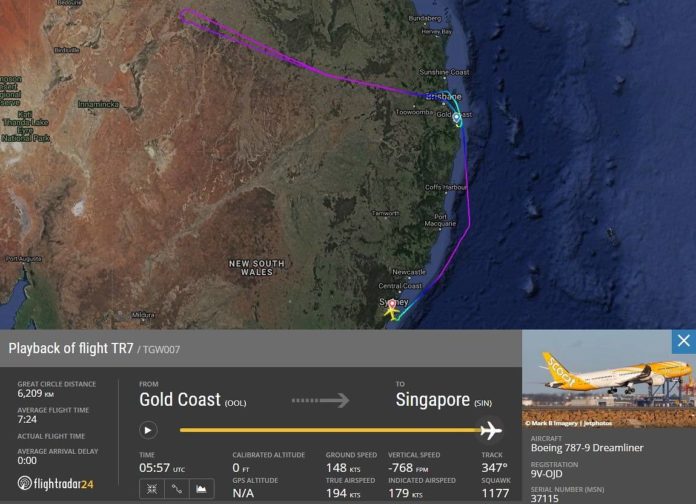
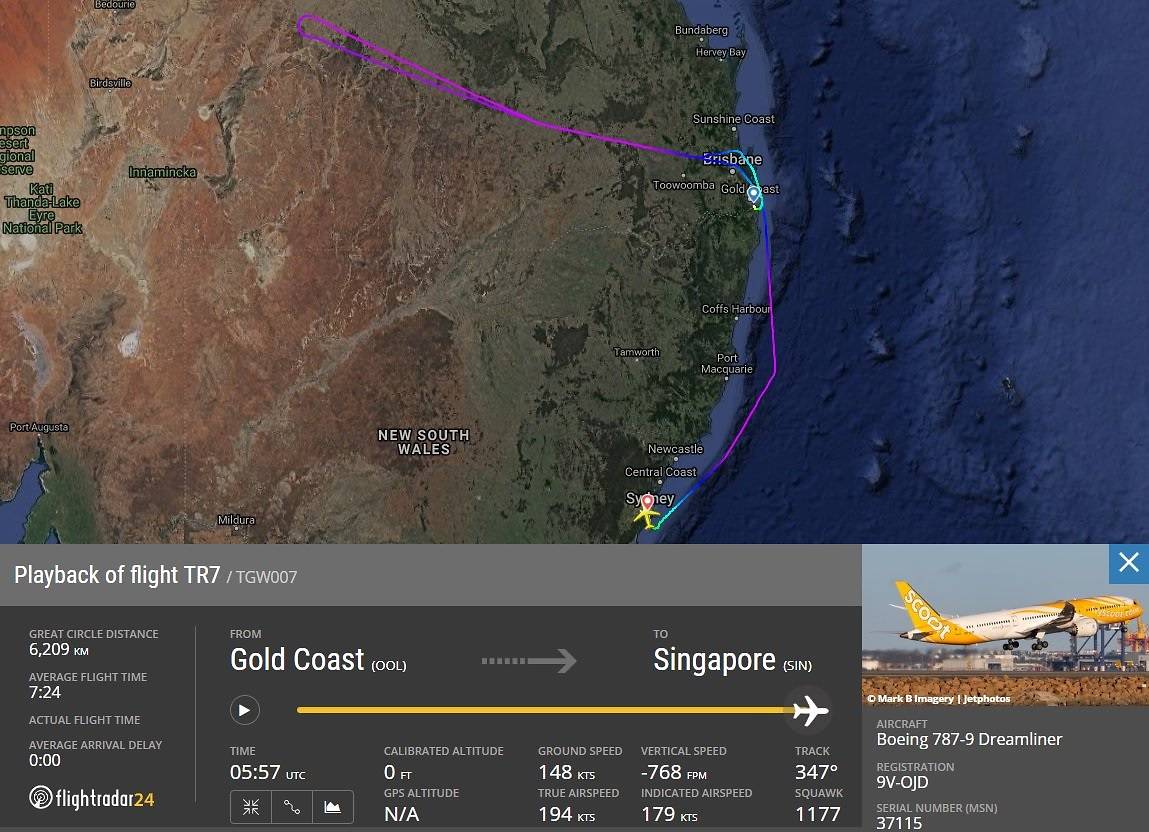
SYDNEY: A Scoot flight heading to Singapore from Australia’s Gold Coast was diverted to Sydney Airport on Monday (Jan 21) after an Australian man caused disruption on board.

Flight TR7 was diverted to Sydney Airport about 1 hour and 20 minutes into its journey.

“The aforementioned passenger was disembarked and handed over to local law enforcement personnel upon landing,” Scoot said in a statement.

The airline added that it arranged for the other passengers to fly on Scoot flight TR13 or Singapore Airlines flights SQ242 and SQ288 that were scheduled to depart from Sydney Airport.

Scoot told Channel NewsAsia that contrary to an online report, the diversion was not due to the man “self-harming”.

Flight Radar Scoot Jan 21, 2019

Scoot flight TR7 was diverted to Sydney Airport about 1 hour and 20 minutes into its journey. (Image: Flight Radar)

Source link

Charged S$5 for parking in a proper zone: Bike-share users report issues with new QR-code system

0

SINGAPORE: Hastily wiping drops of sweat from my smartphone screen, I fumbled with my Mobike app at a bus stop along Changi Road, trying desperately to scan the QR code and end my trip.

I had just cycled more than 2km from my home and wanted nothing more than to get off the bike and proceed with the rest of my journey to work by bus.

But I couldn’t.

Instead, I spent the next 15 minutes standing over the QR code in the stipulated parking zone with my mobile phone, scanning it from various angles in the hope that I’d see the message that meant I’d officially ended my bicycle trip. 

It didn’t work – the app would not recognise the code, and my mobile phone displayed a “verification failed” notice each time I tried.

I finally gave up and proceeded to board the bus.

Five minutes later, I received a notification from Mobike that I had to pay a S$5 “service fee” for parking outside a parking zone.

Verification failed Mobike

The app displayed the same error page after attempting to validate the QR-code. (Photo: Amir Yusof) 

READ: QR-code system for bike-sharing kicks in

TEETHING PROBLEMS

This added step of scanning the QR code after locking the shared bicycle is part of a new measure implemented by the Land Transport Authority (LTA), which kicked in last Monday (Jan 14).

The move aims to encourage responsible parking habits and manage the disamenities brought about by indiscriminate parking of shared bicycles.

But users have complained that the system needs fine tuning, after some of them were charged service fees despite parking in the stipulated boxes. 

Mobike parked correctly

Mr Tan parked his bicycle at the designated zone, but his app failed to detect the QR code. (Photo: Amir Yusof) 

Mobike user Royston Tan told Channel NewsAsia that he failed to scan the QR code on at least two occasions despite parking at the right zones, and was charged S$5 each time.

He subsequently emailed Mobike’s customer service team for a refund, including photo evidence that the bicycles were parked in the stipulated parking spaces.

In its reply to Mr Tan, Mobike said it waived the fees, and pledged to report “these faulty QR codes” to LTA.

“We understand that there are a lot of factors that affect the implementation of the said rules. However, we are considering valid reasons and waiving of the said service fee,” Mobike said in its reply.

Displeased with the situation, Mr Tan said authorities should check and ensure that the codes are functional before enforcing the measures.

“LTA should postpone the implementation until it has fixed the QR codes problems,” he said.

PENALTIES INCREASE RISK OF BAN

Another bike-share user Ms Linda Yap told Channel NewsAsia that she has stopped using such services after she was charged S$5 for parking in a stipulated parking zone at an HDB void deck in Hougang.

“I gave up because it’s just not worth the trouble. I’m getting penalised, and risk getting banned for following these very stringent rules. What’s the point?” said the 28-year-old musician.

According to LTA’s regulations, users who fail to park and scan six times in 12 months will be banned for three months, while a nine-time offender will be banned for six months. Meanwhile, those who flout the parking rule 12 times in 12 months will be given a year-long ban. 

READ: Bike-sharing users need to park and scan their rides, or face fines, from next month

BIKE-SHARING COMPANIES AWARE OF ISSUES
Bike-sharing companies Mobike, SG Bike and Anywheel, who have all been awarded licences to operate in Singapore, said that they are aware that some of their customers have been “unfairly” charged. 

Mobike Singapore country manager Sharon Meng said that the company has received similar feedback from users, and has validated and refunded several disputed charges.

She highlighted that users can submit their appeals to Mobike’s customer support team through email or the app. 

Meanwhile, SG Bike marketing director Benjamin Oh highlighted that users were “generally unaware” of how the system works, leading to some of them “misunderstanding” why they were being charged. 

“Most of the affected users thought that they only needed to park the bicycle at the designated areas, and did not realise that they have to also scan the QR Code to end their trip. As a result, this led to the additional S$5 hire fee, which … is actually a misunderstanding,” said Mr Oh.

Mr Oh said SG Bike has refunded the additional S$5 to these users and are reaching out to them to explain how the system works.

NO QR CODES AT SOME PARKING ZONES 

Additionally, commuters have also reported coming across stipulated parking zones that do not have QR codes.

One such location is at a bus stop along Punggol Way, Mr Tan told Channel NewsAsia, adding that the bike-sharing parking zone was marked out by a yellow box, but there wasn’t a QR code for commuters to scan.

Missing QR-code at Punggol

As of last Friday (Jan 18), Channel NewsAsia has verified that this parking zone along Punggol Way did not have a QR-code. (Photo: Royston Tan). 

Other users have voiced similar concerns on Mobike’s Facebook page, after trying to parked their shared bicycles at designated parking lots at East Coast Park and Gul Circle.

Missing QR-code bike sharing

(Source: Facebook) 

Mobike missing QR code ECP

(Source: Facebook) 

Missing QR-code Gul circle

(Source: Facebook) 

Mobike, Anywheel and SG Bike told Channel NewsAsia that they have received complaints from users on the lack of QR codes at some parking zones, and are working closely with LTA to resolve this issue.

However, SG Bike marketing director Benjamin Oh have assured users that they “need not worry” as long as the bicycles are parked in the designated areas. 

“All they have to do is report the issue to us by taking a photograph of the area to show that the QR code is missing and our customer support team will be able to process it,” said Mr Oh.

He added that SG Bike is ramping up efforts to help its users adjust to the new system, by dispatching crew members on site to help commuters, and sending app notifications to users to explain the added step of scanning the QR code after locking the bicycle.

“We are also working on an update on our app to make it more user-friendly for users to scan the QR code after ending their trip and locking up the bicycle,” added Mr Oh. 

Channel NewsAsia has reached out to LTA for comment on the lack of QR codes at some parking zones and possible compensation for users who have been unfairly penalised despite parking at the designated areas.   

Source link

Commentary: The ocean is changing – it’s getting more acidic

0

WASHINGTON: Ocean acidification, a change in the ocean’s chemistry, is increasingly posing a threat to ocean health.

While this change may be invisible, its effects are not. It is creating conditions that threaten a range of marine species and ecosystems, and thus the economies of coastal communities. All life on earth would eventually be affected as an increasingly warm and acidic ocean produces less oxygen.

There is therefore an urgent need to build resilience against ocean acidification to protect the marine biodiversity on which we depend on for food, development and recreation.

ACIDIC OCEAN

The ocean, which historically had a background pH of 8.2 has grown 25 per cent more acidic over the last two centuries.

The growth of carbon emissions since the Industrial Revolution has been directly tied to this trend known as ocean acidification. Carbon dioxide emitted into the atmosphere is absorbed by the ocean, increasing its acidity level.

Ocean acidification threatens the economic, social, and cultural health of all nations that depend on healthy fisheries, coral reefs, kelp forests, and coastal tourism. It also poses a risk to ecosystem integrity, food security, trade and commerce, tourism and infrastructure, and other human needs.

READ: World’s oceans are heating up at a quickening pace: Study

Ocean acidification is expected to globally cost US$1 trillion per year in financial losses stemming from food web disturbances, mortality of commercially valuable species, loss of coastal protection provided by coral reefs, and the disruption of other ecosystem services by the year 2100.

Until recently the sea provided Myanmar's Moken people with everything they needed: a base for

Until recently the sea provided Myanmar’s Moken people with everything they needed: a base for boats they lived in, fish and seafood to eat and bounty such as pearls to trade with islanders for fuel and rice. (Photo: AFP/Ye Aung THU)

MARINE LIFE DYING EARLY

Most ocean life evolved within a relatively narrow band of variations in ocean temperature, chemistry and depth. As the ocean becomes more acidic, a number of marine species and processes are affected.

Shellfish, corals, snails and other species that rely on calcium carbonate to build their shells are unable to build these structures and may even begin to dissolve. 

The shellfish industry in the US Pacific Northwest has had to implement strategies to reduce the significant mortality of juvenile shellfish.

READ: Rising temperatures will make Southeast Asian economies sweat, a commentary

Of greater concern globally, ocean acidification causes deformities and mortality in sea butterflies (pteropods), the small creatures that form the basis of the whole food web in the ocean. Even a relatively small regional loss of pteropods affects all marine life.

Ocean acidification has also been shown to alter fish behaviour and cause mortality at early life stages in fish. 

Corals are extremely sensitive to temperature change with rapidly warming waters causing bleaching

Corals are extremely sensitive to temperature change with rapidly warming waters causing bleaching (Photo: AFP/TONY KARUMBA)

Some reef, and fin fish, such as the pacific salmon, are observed to be unable to differentiate between prey and predator chemical signals, causing them to swim towards rather than away from danger.

UNDERSTANDING HOW THE OCEAN IS CHANGING

Let us be clear that the effects of ocean acidification can only be truly mitigated by reducing greenhouse gas emissions, reducing polluted runoff from the land, and restoring both global fisheries and the supporting coastal habitats such as mangroves, seagrass meadows, and coastal marshes – all of which is costly even if they provide huge benefits. 

READ: Climate change needs better storytelling to address severe threats, a commentary

But we cannot take action without fully understanding how and where ocean chemistry is changing. Change in ocean chemistry differs geographically, temporally and seasonally. Ocean pH also varies regionally and locally.

About 93 percent of excess heat -- trapped around the Earth by greenhouse gases that come from the

About 93 percent of excess heat – trapped around the Earth by greenhouse gases that come from the burning of fossil fuels – accumulates in the world’s oceans. (Photo: AFP/Brian Bielmann)

We need to begin with knowing how to monitor, monitoring, and sharing that data in standardised ways to understand regional and global trends. From there, data can be analysed and used to inform a response.

Understanding ocean acidification at a global scale is still relatively new. 

A Global Ocean Acidification Observing Network established in 2012 has helped to establish a common set of standards for the global scientific community’s monitoring and sharing of data, even as it educated and engaged the community in understanding the potential effects of ocean acidification. 

It has grown since to a network of over 500 scientists from 83 countries as of 2018, to support and expand the capacity of scientists and their home countries to address the challenges presented by ocean acidification. 

The Ocean Foundation (TOF), in partnership with the Global Ocean Acidification Observing Network and many others, established the International Ocean Acidification Initiative to further one goal listed in the United Nations’ Sustainable Development Goals that calls on countries to “conserve and sustainably use the oceans, seas and marine resources for sustainable development”.

More specifically, the foundation is focusing on a target to minimise and address the effects of ocean acidification through enhanced scientific and policy response cooperation at all levels.

Warming ocean waters pose a risk for sea anemones, which provide shelter to orange-fin anemonefish,

Warming ocean waters pose a risk for sea anemones, which provide shelter to orange-fin anemonefish, more commonly known as clownfish (Photo: AFP/TARIK TINAZAY)

COLLECTING OCEAN DATA

Although there is an internationally established methodology and standards, the trouble lies in getting countries to collate the necessary data.

TOF, which first began facilitating ocean acidification policy development in the United States, is helping countries in implementing the methodology, and advancing similar initiatives regarding effective measures to tackle ocean acidification around the world.

The foundation has created an aggregation of best practices for legislative approaches by policymakers, who through workshop participation, learn the potential ecological, social and economic impacts of ocean acidification on their specific countries, explore the policy solutions that have been successfully implemented elsewhere, and develop specific policy actions tailored to the needs of their own communities.

In Fiji, we have also trained entry and mid-career scientists from many Pacific Island Nations to measure, monitor and understand the effects of ocean acidification. They were provided with field and lab kits to do so, and to report their data to the global network.

A view of ocean water in Stavanger

A view of ocean water in Stavanger, Norway, July 30, 2018. Picture taken July 30, 2018. (Photo: REUTERS/Clodagh Kilcoyne)


The kit includes a pH sensor, a laptop to gather and upload the data, and the field and lab equipment and chemicals to confirm or verify findings. This training was done in previous years in Africa, and in 2019, will include countries from the Caribbean and Latin America.

Trained Fijian scientists are now able to measure ocean chemistry, and will be researching the effects of ocean acidification on ecologically and commercially important species, using methods that adhere to international standards.

All of this work is still in its early stages, with many countries just developing the capacity to understand what is happening in national waters as a result of excess carbon emissions.

The Ocean Foundation trained scientist in Fiji, ocean acidification

Trainers from the Ocean Foundation training Fiji scientist in a laboratory (Photo: The Ocean Foundation)

INCREASING REGIONAL CAPACITY

ASEAN countries, representing more than 630 million people, can increase their own capacity to monitor and respond to ocean acidification to meet UN goals and the needs of shellfish farmers, artisanal fishers and dive tourism operations. 

As a lead in to this, a UNESCO training in Phuket, Thailand in 2016, featured expert discussions and practical demonstrations aimed at reviewing and testing a set of consistent, comparable and cost-effective standard operating procedures that could be used to monitor the ecological impacts of ocean acidification on coral reef ecosystems.

Singapore, as a maritime nation, too can be a force against this threat. In July 2016, Singapore launched its Climate Action Plan, recognising climate change’s destructive effects. The Singapore Permanent Mission to the United Nations also highlighted that: 

Climate change is one of the greatest challenges of our time. Its harmful effects, such as ocean warming, ocean acidification as well as consequent impacts such as sea level rise, cannot be overstated, especially where small island developing States such as ours are concerned.

It is our hope that other countries will become part of a Pacific-wide effort to protect their coastal communities and nearshore waters to the extent possible from the effects of changing ocean chemistry.

sea turtle sea

The baby turtle was first found as a hatchling, in a batch of eggs on one of the Southern Islands of Singapore. (Photo: NParks)

READ: Climate talks pass baton in race to stop global warming

Restoring coastal ecosystems is a necessary strategy for better ocean health and can begin even before the nature of chemistry change in national waters is fully understood. 

Mangroves, seagrass meadows and coastal marshes support healthy fisheries and coral reef system — which in turn support economic activities. This can be a win for the ocean and for all of us.

Mark J Spalding is President of The Ocean Foundation and member of the Ocean Studies Board of the National Academies of Sciences, Engineering, and Medicine. He is serving on the Sargasso Sea Commission. Mark is also a Senior Fellow at the Centre for the Blue Economy, at the Middlebury Institute of International Studies.

Source link

The Big Read: Rise of the machine — how technology is disrupting Singapore’s law firms

0

SINGAPORE: Last year, a man-versus-machine showdown took place in the United States. 20 top corporate lawyers from across the country were pitted against an artificial intelligence (AI) software developed by legal technology firm LawGeex, where they reviewed and approved everyday contracts over a period of two months.

The results were astounding. The AI notched a 94 per cent accuracy rate, compared to the human lawyers’ 85 per cent. For one of the tasks — to review five non-disclosure agreements — the five human lawyers took more than 90 minutes.

The longest time taken by an individual lawyer was 156 minutes and the shortest 51 minutes. In contrast, the AI took a mere 26 seconds.

While AI is unlikely to replace human lawyers anytime soon, if at all, the outcome reflects how this cutting-edge technology can play an important role in the Bar.

Indeed, other forms of technology have already made their presence felt in Singapore’s legal sector.

For the past decade, local firm VanillaLaw’s stable of lawyers have called every part of the island their workplace.

VanillaLaw’s founder and managing director Mark Goh likened the firm’s office at Tai Seng to that of a “taxi dispatch centre”, where his current group of six lawyers clock in in the morning, then head out to meet their clients and work remotely.

“The technology and tools are there, so why not?” Mr Goh said, referring to the firm’s move to digitise its operations, and create its own smart document assembly and management software which has resulted in time and cost savings.

As technology continues its relentless march forward, law firms big and small here are not spared from its impact — and the disruption it brings. Those which are reluctant to embrace new technology not only risk being outrun by their more tech-savvy competitors, but also losing clients who want more bang for the buck.

READ: Lawyers may have to grapple with big data soon, a commentary

Speaking at the opening of the legal year on Jan 7, Chief Justice Sundaresh Menon reiterated that technology has changed the way the legal sector works.

It is already transforming how and where disputes are resolved — and who should resolve them. It has also made available credible and cheaper alternatives for legal clients requiring general tasks, such as document review or project management, he pointed out.

“In tandem with this, a culture of ‘self-sourcing’ will likely take hold amongst members of the public,” said CJ Menon, adding that such trends will “impact the practice of law and the demand for legal services”.

This was not the first time that the Chief Justice had spoken about the technological wave sweeping the legal fraternity, but the urgency of the message has increased.

Chief Justice Sundaresh Menon

Chief Justice Sundaresh Menon speaking at a sentencing conference on Thursday (Oct 26).

In his address at the opening of the legal year in 2016, Chief Justice Menon said that Singapore was among the “frontrunners in incorporating technology in the administration of justice”. He added that the effective implementation of newer technological advances means that the courts of the future will be very different from their present-day iterations.

A year later, Chief Justice Menon touched on the issue of disruption caused by technology. He cautioned then that while the legal practice has not experienced the same extent of disruption as other industries and professions, “the day of reckoning can no longer be put off, because dramatic developments will force us to rethink entire areas of practice”.

Last year, he again brought up the topic, stressing that “it is with some urgency that we must begin to imagine what (technological disruption) will mean for the practice of law”.

OTHERS MOVING AHEAD

Around the world, legal and judicial systems are embracing technological changes.

For example, American courts have already used AI to “assess the risk of recidivism in criminal cases”, the Chief Justice said in his address earlier this month.

Chinese courts, meanwhile, are piloting an AI-assisted system, which can conduct deviation analysis for judges by comparing draft judgments with past precedents.

He also noted that the US and Canada have already seen the emergence of “legal technicians” who, though not legally trained, are able to provide services for less complex legal tasks with the help of technology.

A recent Forbes article highlighted how AI and machine learning are transforming the legal sector in the US, such as conducting research and reviewing contracts.

The article also cited how AI can help automate divorce proceedings, such as through Wevorce, an online solution that provides couples on the cusp of separation with self-guided modules.

Couples can define their “optimal outcomes” and the software — powered by AI — guides them through a series of modules before reaching the outcome.

In the United Kingdom, “tech innovation spaces” and legal tech start-ups have emerged to support the legal technology development, according to its law society.

Austrian lawyer and privacy activist Schrems prepares his laptop during a Reuters interview in Vien

Austrian lawyer and privacy activist Max Schrems prepares his laptop during a Reuters interview in a cafe in Vienna, Austria, May 22, 2018. (Photo: REUTERS/Heinz-Peter Bader)

SINGAPORE PLAYING CATCH-UP

Here in Singapore, things have been moving slower in comparison, several observers and practitioners say.

Responding to queries, LawTech.Asia noted that while interest in technology among Singapore law firms is healthy, “this interest has also been relatively slower in translating to adoption or implementation”.

The online publication — which examines the role of technology, law and policy in South-east Asia — said that comparatively, some countries within the Asia-Pacific region, such as Australia and New Zealand, have seen increasing levels of interest translating into adoption of new technology.

Still, it noted: 

As the technological priorities of each country’s economy and legal profession can be different, the uptake rate of legal technology for each country may vary across the region.

Ms Stefanie Lim, assistant director of legal productivity and innovation at the Law Society of Singapore (LawSoc), said technological initiatives are “very much on the radar” of law firms here.

The 2018 Legal Technology Survey, which the LawSoc commissioned, found that 72 per cent of decision makers here indicated that they saw the need to increase the adoption of legal technology.

But Ms Lim noted that as compared to the global legal sector, Singapore law firms are “still in the early stages of responding to this disruptive force”.

A check with several law firms in Singapore showed varying degrees of technological adoption.

Larger law firms said they have begun investing in technological initiatives such as automation, artificial intelligence and cloud computing.

Dentons Rodyk, for example, has co-developed an AI tool with a technology partner, to cut down the time needed to complete time-sensitive engagements.

WongPartnership created a document automation software in 2017, and has recently adopted document management technologies.

Rajah & Tann, meanwhile, created a legal tech subsidiary, called Rajah & Tann Technologies, which brings together lawyers and IT professionals to work on areas such as forensics and cybersecurity, and provides tech-enabled legal solutions.

But while technological adoption carries much promise for the larger firms, it is a different story for their smaller counterparts where some are having difficulty investing in new technologies, which can be costly at the outset.

Singapore workers-raffles

A worker walks past Raffles Place MRT.

Still, there have been some exceptions: VanillaLaw, for instance, launched in 2016 its own smart document assembly and management software, called VanillaLaw Docs. Mr Goh described it as “just a simple algorithm” that helps its clients — usually small and medium-sized enterprises — draft agreements for their businesses.

Mr Goh believes that the fear of teaming up with others, as well as established mindsets, are holding back smaller law firms from embracing technology.

“The conversation now is (akin to) putting the cart before the horse. You are talking about technological tools, but you are not talking about how these tools are going to interact with the collaborative partner,” Mr Goh said.

He noted that the cost of networking has gone down so low that there is no excuse for smaller law firms not to collaborate with one another.

The only reason they are not collaborating is not cost, it is fear and mindset.

Mr Goh, who started his law firm as a sole proprietor in 1994, said that technology is “meant for the smaller (firms) to collaborate”, but smaller companies are “too fearful” to exploit its benefits.

“(Instead) the bigger law firms are the ones investing. Once they create the investment, they control who has access to it, and they own the technology that was supposed to liberate the smaller law firms. This is the trend I am worried about now,” he said.

He added that smaller firms might find it difficult to adopt newer forms of technology since it may be harder for them to “visualise how it can help them”.

The traditional mindset of many lawyers, such as their preference for a precedent-based approach, and inertia on the firms’ part are also hindering Singapore’s legal sector from taking bold strides into the technological arena, said the observers and practitioners.

“There is always a psychological barrier to (take the) plunge,” said Mr Amolat Singh of Amolat & Partners.

LawTech.Asia said the legal profession is often seen as “having a relatively more risk-averse, precedent-based approach” towards adopting technology.

This may be due to the inherent nature of working in a precedent-based legal system.

Apart from a general reluctance to make the technological leap, other factors include costs and a lack in specialised knowledge, said LawSoc’s Ms Lim.

LawTech.Asia also cited the industry’s highly-regulated nature as a factor, which may cause some practitioners to wonder about “the regulatory consequences of adopting new and untested technologies”.

business person walking with satchel

(Photo: Unsplash/Marten Bjork)

However, Mr Genesis Shen, director at Templars Law, pointed out that his firm would not adopt new technologies for their own sake.

“There is currently a lot of hype in the market for these snazzy technologies and untested start-ups, but we do not intend to jump on the bandwagon,” he said.

He felt that the pace of technological adoption in Singapore’s legal sector is “just right”. Costs and “sufficient real-world results” must be factors which law firms need to look at before adopting new technology, he stressed.

Similarly, Denton Rodyk’s innovation and knowledge management solutions manager Rocio Perez urged law firms to “avoid ‘magical thinking’ around technology, or undertake technology projects because they ‘might be interesting’”.

After all, unless a problem or opportunity — such as one that is related to technological adoption — is of “high-enough priority”, an organisation will rarely want to endure the “growing pains that accompany change”, he said.

READ: New habits, strategies and skills needed as global economy sands shift, a commentary

THE RISKS OF INERTIA

While law firms here should leverage technology in the best possible ways, LawTech.Asia noted that those that do not may risk being outgunned by their international competitors, many of whom have already made strides in technological adoption.

Moreover, as clients become increasingly sophisticated and knowledgeable about technology, “they will be more discerning about the law firms that are utilising technology to provide better services at lower cost”, LawTech.Asia said.

Potentially, the industry laggards could be disadvantaged and see their bottom lines suffer, it added.

In his 2019 speech, Chief Justice Menon warned that the competition to provide legal services will intensify in the near future, as technological trends start to make their impact felt.

Online dispute resolution systems, adopted by e-commerce platforms, are helping to resolve simple and low-value consumer disputes, he pointed out.

In December last year, OCBC Bank also rolled out a free online service for Singapore citizens and residents aged 21 and above to prepare their wills within 10 minutes on their computers, laptops or mobile devices.

“We shouldn’t be surprised if members of the public come increasingly to attempt to resolve at least some legal issues with the aid of technology, in the same way that many individuals today seek out medical information themselves using the Internet,” said the Chief Justice.

With ever-evolving technology here to stay, help is at hand to give Singapore firms which want to embrace it a leg-up.

There is a variety of financial schemes and grants available for firms to defray the costs of technological adoption, said the LawSoc.

In March 2017, the Ministry of Law, LawSoc, and the then-Spring Singapore launched a S$2.8 million subsidy scheme Tech Start for Law as well as the SmartLaw Assist scheme to help defray costs for smaller firms.

MinLaw

A picture of the Ministry of Law. (Photo: Ministry of Law website)

Mr Jonathan Yuen, a partner at Rajah & Tann, said that more than grants and funding schemes, what is more critical is “a mindset change as to how technology can be harnessed and made a natural part of the workflow of lawyers”.

He added: “Ultimately, a mindset change needs to come from within — legal practitioners must themselves be convinced that partnering with, rather than resisting, technology and other types of structural changes will be beneficial in the long term.”

Templars Law’s Mr Shen believes that market forces will sort themselves out. A new technology will eventually be widely available and adopted, and firms that take the lead in embracing cutting-edge technology will have “both the high risk and high reward of being the first-mover”, he said.

CAN TECH RESOLVE CURRENT WOES?

The role of technology will go some way in helping to change — or improve — work processes, said law firms and observers.

But the jury is still out on whether technology can help resolve some pressing issues plaguing Singapore’s legal industry, such as a glut of law graduates and long working hours leading to burnout among young lawyers.

Chief Justice Menon said in his speech earlier this month that while competition will intensify, technology will “significantly reduce the hours required for certain types of legal work”.

“The upshot is that law firms can expect to feel the pressure to operate on a leaner basis and they should start rethinking their traditional billing and cost structures as technology obviates certain forms of legal work, and in many other ways alters the face of legal practice,” he added.

Lawyers and law firms interviewed agreed that new technologies can potentially help improve productivity in the sector.

READ: Core to growth, yet productivity has lost its shine, a commentary

LawSoc’s Ms Lim noted that technologies such as AI can help reduce lawyers’ workload for routine tasks, “so that they can be freed up to deliver higher-level and bespoke legal services to their clients”.

WMH Law Corporation managing director Wilbur Lim predicted that new technologies will take over the work traditionally performed by junior associates at a law firm.

“However, lawyers should not see such technologies as impediments. Rather, the aforesaid technologies could allow junior associates to take on more substantive legal work at the outset, which will greatly assist in their growth as a professional,” he said.

Allen & Gledhill, meanwhile, said that the adoption of technology will “invariably reduce the number of traditional legal roles”, but could give rise to new roles — and more varied opportunities — for law graduates.

A junior lawyer with two years’ work experience, who declined to be named, felt that technology would go some way in changing her workflow. But she was worried that it “might end up even replacing the need to hire a junior lawyer altogether”.

Indeed, some lawyers noted the risk of technology exacerbating the supply glut.

“When processes are streamlined, there would be less need for the big firms to hire multiple junior lawyers to go through the documents manually. The glut of lawyers is more likely to be resolved naturally by market forces,” said Mr Shen from Templars Law.

While technology may take over some of the tasks which lawyers perform now, the notion of a law firm staffed only with robots would likely remain a fantasy.

Amid the rise of technology, law firm structures will “become a lot flatter”. However, “top quality legal brains will continue to command top dollar”, said TSMP Law Corporation joint managing partner Stefanie Yuen Thio. She pointed out:

We develop very close client relationships and handle difficult cases. These are skills that would be hard for technology to replace.

Mr Goh from VanillaLaw drew a parallel with autonomous vehicles: When such vehicles came out in the market, there was concern that it would replace drivers totally, but the reality is that there is still the need for human judgment.

Similarly, in the legal profession, the “explicit knowledge” of lawyering — which can be expressed in words and numbers — is an area that can be automated or replaced by technology. However, the “tacit knowledge” — gained from personal experience — will still require a human being, he said.

LawSoc’s Ms Lim noted that it is a “valid concern” that machines could take over low-level tasks performed by lawyers. But the exercise of professional judgment, for instance, still requires humans, she said.

“The ability of machines to take over these domains is still uncertain and, in any event, a long way off,” she added.

Instead of a ‘machine-vs-human’ perspective, the legal profession should be looking at a ‘lawyer plus machine’ value proposition, (like) how machines can augment lawyers to deliver better legal services to their clients.

Source link