Home Blog Page 859

Commentary: How world sensation BTS took K-pop fandom to a whole new level

0

SEOUL: Fans of the K-pop sensation BTS are called “Army”. That moniker is an indication of just how dedicated they are to supporting the group.

This past weekend, the BTS Army displayed that dedication when they gathered outside National Stadium starting the day before their adored performers took the stage, with fans converging on the venue to shop for BTS merchandise and pose for photos in a pop-booth.

THE WORLD LOVES THEM

K-pop has long been a massive industry, with a bevy of successful acts whose fans organise themselves into tribes with their own customs and conventions, but BTS have brought the genre’s fandom to a new level.

BTS Concert: Fans recce area

Fans have been gathering around the National Stadium as early as Thursday (Jan 17), two days before the actual concert, to familiarise themselves with the location and get early access to BTS merchandise. (Photo: Alif Amsyar)

READ: K-pop group BTS ‘worth US$3.6 billion a year’ to South Korea

The group’s achievements, since debuting in 2013, are unprecedented for a Korean-language act, and too numerous to recite in one place.

While South Korean groups, such as Wonder Girls and Girls’ Generation, who were huge at home never found sustained popularity in western countries, BTS has basked in recognition from abroad, including the English-speaking world, a rare achievement for an Asian act.

A few highlights from just last year: BTS music topped the charts in multiple countries including the US, leading the New York Times to declare that “BTS (has) Conquered America”; the group held a sold-out show in London; and the BBC went as far as to deem them “the Beatles for the 21st Century.”

READ: Do K-pop stars hold the key to moving North Korean leader Kim Jong Un? A commentary

BUT THEY PROVE THEY CAN STILL BE VULNERABLE

In August, when member J-Hope made a roughly two-second cameo in a video by the biggest rapper in the world, Drake, Armys displayed their resolve to support the group in any endeavor, bombarding YouTube with celebratory comments, with at least one comment to the effect of:

It’s funny how there are more JHope fans than Drake fans here.

Of all the year’s highlights, one is particularly noteworthy, and provides clues to the group’s ability to inspire such fervour in their fans.

Last September, BTS member RM gave a speech at the United Nations in New York, in and of itself a noteworthy feat, given that K-pop groups generally sing syrupy love songs and aren’t known for tackling tricky global topics that fall under the United Nation’s purview.

RM took the podium to speak on issues related to youth health and well-being.

(Given the group’s wide appeal and the upbeat nature of their lyrics, UNICEF had recruited BTS as partners in an initiative to get more young people into education, training or employment.)

BTS group leader RM speaking at the UN General Assembly

Kim Nam-jun, better known as RM, of K-Pop band BTS speaking during a meeting focused on youth issues at the United Nations. (Photo: AFP/Mark Garten)

While at the pulpit, RM, whose real name is Kim Nam-jun, didn’t pretend to be a policy expert.

Instead he told his own story of growing up in a suburb of Seoul and rising to fame as a member of the group. He discussed the sacrifices he made on the road to fame, and how there were times he considered giving it all up.

We’ve all heard such stories from successful entertainers before, but a more novel part of his speech came when he described how, around age nine or 10, he lost the wonderment of childhood. He stopped gazing in awe at the stars each night and began seeing himself how he imagined other people saw him.

“I tried to jam myself into moulds that other people made,” he said.

He concluded with an admonition to everyone listening to embrace who they are, and express themselves on their own terms.

In spreading their empowering message, it helps that BTS aren’t some typical cheesy public service announcement mascot but made of seven young men who have worked hard in their field to get to where they are.

The members have the good looks and smooth dance moves required for success in the genre, and are skilled vocalists. Their choice to speak openly about vulnerability, from a position of strength, is part of what makes them fresh.

READ: Southeast Asia’s romance with Korean drama shows, a commentary

BTS’ RISE ALSO A STORY ABOUT THE SURGE IN MUSIC STREAMING

It is impossible to tell the story of BTS without discussing the overall changes in the music industry, in particular, the rise of streaming. Last year, industry standard bearer Billboard changed the way it determines its chart rankings, increasing the relative value of online streams.

Kpop boyband BTS

Kpop group BTS accepts an award onstage during the 2018 Billboard Music Awards at MGM Grand Garden Arena. (Photo: Ethan Miller/Getty Images/AFP)

Given how many K-pop fans live in countries with widespread access to fast WiFi, like South Korean and Singapore, such metrics are well-designed for documenting BTS’ popularity.

And in today’s K-pop landscape, many fans are personally invested in their chosen group to the extent that they make deliberate efforts to push them up streaming charts. When BTS drops a song or video, Armys deploy to YouTube and streaming platforms like soldiers in pursuit of the number one spot.

BUT BTS’ SUCCESS IS ALSO PLACING THE K-POP INDUSTRY UNDER GREATER SCRUTINY

It warrants mentioning that K-pop, as an industry, has a lot to answer for.

The big companies that run the show have been accused many times of treating their performers like slaves, forcing them to maintain arduous schedules of practice and performance, while limiting their access to outside friends or family members, and forbidding them from dating.

BTS are a product of this system. Unlike the Beatles, they don’t have an organic origin story: They were put together by their management after a series of auditions.

For every BTS, there are many more failed attempts at stardom. The industry’s history is littered with stories of broken dreams, of aspiring performers who accuse their management of abuse, or of not giving paying them money they are owed.

It is possible that over the years, such unflattering stories will trickle out and sully the BTS brand. The current atmosphere of celebration may come to seem naive in retrospect.

BTS OFFERS FANS HOPE AND A SENSE OF CONNECTION

Nevertheless, we live in an era where many find it hard to find acceptance in a group that is welcoming and supportive. K-pop fans of student age find their schools to be places of fierce competition for grades and prestige.

Boy band BTS -- a K-Pop sensation that is on a North American tour -- will address the United

Boy band BTS fans takes a photo outside a concert venue during their North American tour (Photo: AFP/Rachel Luna)

For those who are working age, the job market can be even tougher, with a dearth of stable jobs in most countries. When the game is to stand out and be noticed, fewer young people are likely to lean on each other for support, or admit to struggling, as RM did in his speech.  

Therefore, fandom can offer a sense of connection more meaningful than the consumption of music as entertainment, or the fascination that comes with observing celebrity.

Perhaps when fans, such as those who gathered outside National Stadium, stock up on merchandise that bears their idols’ likenesses they are doing so in an effort to feel closer to them, and to others who share their passion.  

At the concert in Singapore, and wherever BTS performs around the globe, the audience sings along to the refrain of their hit Idol, which states plainly: 

You can’t stop me loving myself.

That is a sentiment that many appreciate hearing, and that resonates powerfully in any language.

Steven Borowiec is the politics editor of Korea Expose.

Source link

Death of Aloysius Pang in SAF training accident: What we know so far

0

SINGAPORE: Home-grown actor Aloysius Pang died on Wednesday (Jan 23), four days after he was seriously injured in an accident during an SAF military training exercise in New Zealand, where he was on reservist duty.

The accident happened on Saturday at 2.05pm Singapore time.

READ: Actor Aloysius Pang dies after sustaining serious injuries in SAF training accident

Here’s what we know so far in the wake of the incident.

HOW WAS HE INJURED?

When the accident happened, Pang, along with two other SAF personnel, was carrying out repair work inside a Singapore Self-Propelled Howitzer (SSPH), which is an artillery gun mounted on an armoured chassis.

singapore self-propelled howitzer 1 primus

A Singapore Self-Propelled Howitzer 1 Primus. (Photo: MINDEF) 

According to a statement from the Ministry of Defence (MINDEF) on Wednesday, Pang sustained injuries when the gun barrel was lowered. 

HOW SERIOUS WERE HIS INJURIES?

Pang, 28, who held the rank of Corporal First Class (National Service), was injured in the chest and abdominal areas, said MINDEF. He was conscious while he was evacuated from Waiouru Camp Medical Centre to Waikato Hospital.

He underwent abdominal surgery on Saturday evening, and it was completed at 11.40pm Singapore time.

A “follow-up relook surgery” was successfully done on Monday, said MINDEF.

Pang had been in stable condition and was breathing on his own after that surgery, according to Tan Tock Seng Hospital’s chief of trauma and acute care surgery, Dr Teo Li Tserng, who was flown to New Zealand to help the medical team there.

READ: Aloysius Pang sustained chest, abdominal injuries during SAF training exercise: MINDEF

Pang’s mother spoke to him, and arrangements were also made for his father and brother to fly to New Zealand.

On Wednesday (Jan 23) however, Pang’s condition worsened. He underwent a third surgery and was transferred to the intensive care unit, MINDEF said.

Defence Minister Ng Eng Hen added in a Facebook post that Pang’s condition was “very serious”, and that he needed artificial life support for his lungs, kidneys and heart. 

Despite surgeons’ attempts to repair his damaged organs, CFC (NS) Pang succumbed to his injuries.

WHAT HAPPENS NOW?

An independent Committee of Inquiry will be convened to investigate the circumstances leading to the incident. 

A press conference will be held on Jan 24 to present the preliminary findings, and will be chaired by Melvyn Ong, the Chief of Defence Force.

The SAF will make arrangements to bring the body of the late CFC (NS) Pang back to Singapore.

WHY WAS HE TRAINING IN NEW ZEALAND?

The actor, a familiar face on local Mandarin television, had been on reservist duty.

Before he left for New Zealand, he wrote on Facebook in a Jan 5 post: “Off to serve our country. Back at the end of the month! May not be able to post much when I’m there so (wait for me to return) yeah.”

Pang, an armament technician from the 268th Battalion Singapore Artillery, was participating in Exercise Thunder Warrior at New Zealand’s Waiouru Training Area when the incident happened.

Exercise Thunder Warrior is an annual artillery live-firing exercise which has been conducted since 1997.

This year’s exercise, which runs from Jan 5 to Feb 2, involves more than 500 personnel from the 268th and 24th Battalions, Singapore Artillery.

Source link

Actor Aloysius Pang dies after sustaining serious injuries in SAF training accident

0

An independent Committee of Inquiry will be convened to investigate the circumstances leading to the incident, MINDEF said in a statement announcing Pang’s death.

File photo of Aloysius Pang 5

File photo of actor Aloysius Pang. (Photo: Facebook / Aloysius 冯伟衷)

SINGAPORE: Actor Aloysius Pang has died after sustaining serious injuries during a Singapore Armed Forces (SAF) training exercise in New Zealand, the Ministry of Defence (MINDEF) said in a statement on Wednesday (Jan 23) night. 

An independent Committee of Inquiry will be convened to investigate the circumstances leading to the incident, MINDEF added.

28-year-old Pang died at 8.45pm that evening at Waikato Hospital in Hamilton, where he was receiving treatment, the statement said. 

He had been carrying out repair work inside a Singapore Self-Propelled Howitzer – an artillery gun mounted on an armoured chassis – with two other SAF personnel when the accident happened at the Waiouru Training Area on Jan 19.

“Unfortunately, CFC Pang sustained injuries when the gun barrel was lowered,” said MINDEF. 

He was evacuated to Waikato Hospital, a regional trauma centre, where he underwent a number of surgeries to treat his injuries. Tan Tock Seng Hospital’s chief of trauma and acute care surgery, Dr Teo Li Tserng, was flown in to assist the New Zealand medical team tending to Pang. 

“Despite surgical attempts to repair damaged organs putting him on artificial life support, CFC (NS) Pang succumbed to the injuries and passed away,” said MINDEF. 

The SAF will be making arrangements to bring Pang’s body back to Singapore, said the ministry.

“The Ministry of Defence and the SAF extend their deepest condolences to the family of CFC (NS) Pang and will continue to render assistance and support in their time of loss,” the ministry added. 

“A DIFFICULT TIME”

In a post uploaded to Pang’s Instagram page on Wednesday night, his family wrote that the days following the accident had been “a difficult time”. 

“Throughout the past few days in the hospital, it has been a difficult time for us,” the post read. 

“Every (piece of) news that was brought upon us since his last op was devastating with little signs of hope on his recovery. We all broke down when the medical team spoke to us that his condition was worsening and we should be prepared for the worst. 

“We’re going to lose a brother. And my parents are going to lose their precious son whom (sic) is only 28.”

This is a developing story. Please refresh for updates.

READ: SAF training accident involving actor Aloysius Pang: What we know so far

Source link

oBike liquidators ‘working actively’ with investor to kick-start refund process

0

SINGAPORE: oBike’s liquidators said on Wednesday (Jan 23) that it is “working actively” with the bike-sharing company’s new investor to finalise an agreement that will see creditors retrieve their money.

Speaking at a meeting with creditors on Wednesday afternoon, senior managing director for liquidators FTI Consulting, Mr Joshua Taylor, explained that his team has met with oBike’s new investor thrice to provide the necessary information and has even provided a draft agreement.

Once the agreement is signed, Mr Taylor said the two parties will kick-start a process that could see creditors retrieve their money within two months.

These creditors include users who previously paid a S$49 deposit to use oBike services, as well as former vendors for the bike-sharing company.

Mr Taylor did not identify the investor, but TODAY reported last week that he is Costa Rican national Oscar Moises Chaves.

TODAY also reported that Mr Chaves has a 66.9 per cent stake in oBike’s global business, excluding the Singapore entity being liquidated.

READ: oBike stops operations in Singapore, cites difficulties meeting new LTA regulations

While Mr Chaves is determined to fulfil the firm’s obligations to its creditors, repayment in Singapore – where oBike is in liquidation – has hit an “impasse”, according to the report.

Mr Chaves also reportedly said that he was waiting for FTI Consulting to provide a full breakdown of the amounts owed to parties in Singapore.

oBike creditors meeting

Mr Joshua Taylor addressing around 20 oBike creditors at the meeting on Wednesday (Jan 23). (Photo: Amir Yusof)  

One of the creditors, Mr Gabriel Teo, who represented logistics company The Lorry, asked at the meeting about the progress of talks with the investor.

Mr Taylor replied: “It doesn’t automatically happen. We have provided information, we have provided a draft agreement to finalise this negotiation that we are talking about in terms of deposit holders. Once it’s signed, we will be able to notify via the media that an agreement has been signed, and then step up the process in terms of how people might collect their funds.”

“NO SIGNIFICANT DELAYS ON OUR PART”

Mr Taylor also confirmed that the liquidators met the investor last October, last November and last week to supply any information that was requested.

“I don’t think there’s been any significant delays on our part. There may have been some delays between meetings (but) whatever has been requested will be provided,” he added. 

At the meeting, Mr Taylor confirmed that as of noon on Wednesday, FTI Consulting has received S$760,000 worth of claims from creditors in Singapore. 

But he noted that based on oBike’s books and records, the company had more than 220,000 deposit holders in Singapore with claims amounting to around S$8.9 million. 

Mr Taylor added that the liquidators have recovered around S$540,000 by selling the company’s bicycles and recouping funds held by third-party service providers. 

Source link

From fanboy to beating the favourite: Singapore’s badminton sensation is just getting started

0

SINGAPORE: At one point during the battle between pretender and contender, even the television commentator is left flabbergasted.

“How did that happen? How? No way! Please show us a replay of that,” pleads the man on the mic.

Turn back the clock five seconds, and the smash has the precision of a metronome and the brute force of a sledgehammer. Its target? The backhand of a back-pedaling opponent.

Lin Dan is on the hunt. 

He is a two-time Olympic champion and five-time World Champion, but is about to finish one-time loser to an unheralded qualifier.

For although Lin’s shot would be a killer blow against most opponents, Singapore’s Loh Kean Yew is on the other side of the net.

He flicks his return. The shuttlecock drops, the crowd roar, the commentators shout their disbelief and Kean Yew pumps his fist. 

Three years ago, Kean Yew would have considered himself lucky to have snapped a photo with Lin, let alone shared the same court. 

But somehow, at the Thailand Masters final, the fan stunned the favourite.

THE BEST OF BOTH WORLDS

Born in Malaysia but groomed in Singapore, Kean Yew’s victory over ‘Super’ Dan has seen an online tussle among netizens for ownership of the young giant-killer.

Chendol, Nasi Lemak – and now add Loh Kean Yew to the list. Not that he is too bothered by it.

“I just find it very funny – every time I read these comments I just laugh,” said Kean Yew. “I’m just playing and I just want to win.

“Both Singapore and Malaysia are important, and have played a very big part in my growth.”

The 21-year-old has come a long way from a kid who would use the gate outside his home as a net when playing badminton.

“I remember that around the age of four, I would play at the front gate with my brothers,” Kean Yew recalled. “My neighbour would play with us. When I was young he would let us win and gave one of his medals. 

“It was actually a swimming medal but I was young and didn’t know what it was. I was just happy to get a medal.”

But it wasn’t long before the precocious youngster was winning competitions for real.

“When my mother came to pick up my older brother Kean Hean from badminton practice, I would be the one going to tell him it was time to go home,” said Kean Yew, who was eight at the time. “It would seem like they were having a lot of fun and the players would ask me when I would join them.

“Once I started playing, I starting winning and was more focused. At the age of ten, that academy had a competition which I won. After a few months, there was a zonal competition which I also won. I played in the state competition and reached the semifinal– there was one every year, and that was my first official tournament.” 

Loh Kean Yew

Kean Yew is Singapore’s newest sporting sensation. (Photo: Matthew Mohan)

But at the age of 13, it was time for a move across the Causeway. Convinced by the parents of another Penang-born shuttler Terry Hee, Kean Yew’s parents first tried to enroll his older brother in the Singapore Sports School.

“Terry and my brother are the same age, they were badminton partners and (our families are) quite close,” said Kean Yew. “Terry came over to Singapore to study first (and) after one year here, his parents told mine that the Sports School was not bad and they could try sending Kean Hean there.”

Kean Hean eventually wound up studying at Monfort Secondary School but it was Kean Yew who received a scholarship the following year after catching the eye of the Sport School’s coach.

“The first two weeks were very fun because there were no parents,” said Kean Yew with a laugh. “But I missed home – I cried by myself for a few nights before calling my mum and crying some more.

“But after that night where I let my emotions out, I stopped crying and calling – until my mum had to call me!”

Despite a grueling schedule of training sessions, lessons, more training sessions and then supervised study time, Kean Yew thrived in his new environment. 

“I want to really thank the Sports School, they are really part of my growth,” he said. “I was a foreigner but almost everybody took care of me very well.”

Having his older brother around also helped, added Kean Yew.

“It was very important have somebody who understands what you are going through,” he said. “He would send me to school when it was time to check in (Kean Yew was boarding at the school). I don’t really know how to go there alone and was scared to go back. He sent me from Sengkang to Woodlands and would go back by himself.”

Both Kean Hean and Kean Yew would eventually become Singapore citizens several years later.

“It wasn’t easy making the decision as I would be away from my parents, but for our education and career, coming to Singapore was necessary,” Kean Yew said. 

“I have no regrets coming here, becoming a Singaporean and serving national service. I have spent many years here and I feel like a Singaporean. And I’m proud to wear the Singapore flag on my chest.”

But serving National Service did not come without sacrifices, revealed Kean Yew.

“Sometimes, I could only train once a week,” he said. “Its quite tough because my ‘feel’ will be gone …You lose your touch… It’s hard to train during NS. But i made up my mind that badminton is more important to me. So any free time I had when I booked out, instead of meeting my friends, i would rush to train. Badminton is my life.”

But a three month stint with Denmark’s Langhoj Badminton Club after Kean Yew had reached his operationally ready date (ORD) in October last year meant that he sharpened his skills and expanded his arsenal.

“The club members trained very seriously, they don’t give up on shots, they chiong (go) for everything and always try to learn new things,” he said. “We would talk after we played and find out how we did different things.”

But Kean Yew’s biggest takeaway came from four days of training with the Danish national team.

“I saw how they trained, how intensive it was and how focused they were. They may fool around but when its time to train, they take it really seriously,” he said. 

A chance conversation with former world number one Viktor Axelsen would also see Kean Yew glean a valuable pearl of wisdom.

Loh Kean Yew (3)

Kean Yew was a bronze medalist in the men’s singles and doubles at the 2015 Southeast Asian Games. (Photo: Matthew Mohan)

“I asked him about how he handled pressure. He told me you shouldn’t care what others say, because they are not in your shoes, and you can’t stop them from saying what they say,” recalled Kean Yew.

THE ‘UNBEATABLE’ LIN

Axelsen’s words would come back to resonate with Kean Yew after his upset of Lin at the Thailand Masters final on Jan 13.

The youngster had slayed some major opponents en route to the final, including Wang Tzu Wei, ranked 28th in the world,  and Brice Leverdez, ranked 27th. 

“Nobody expected me to win and I didn’t expect my win. So I just played without pressure,” said Kean Yew.

His last obstacle would be a man Kean Yew had admired for a long time. He’d even asked for a photograph with the Chinese superstar several years ago when they ran into each other at the Singapore Open.

“I thought ‘Wow! I get to play with Lin Dan.’ I always want to play with the top-level players. I watched him and Lee Chong Wei since young – I only know the two of them,” said Kean Yew. “He seemed really unbeatable.”

But to Kean Yew’s surprise, he could take on Lin. 

Down 19-14 in the first game, Kean Yew reeled off point after point to win 21-19.

“I never think that I would make a comeback, I just took it point by point,” he said. “I was also shocked by the points I was making, I thought he’d be able to get those shots.”

Down again in the second game, Kean Yew pressed and pressed. 

“I told myself not to think so much, even during the last point I didn’t want to think and lose focus,” he added.

Nervous anticipation turned into boundless jubilation when Kean Yew won the second game 21-18.

“I was just happy, so happy,” said Kean Yew, recalling that landmark moment. “I called my mother after that and she was very happy. But I couldn’t really hear what she was saying because she was with friends in a car and they all were screaming about the win!”

HIGH HOPES, LOFTY GOALS

His Instagram followers may have swelled to over 10,000 and some have now began to recognise him on the street, but level-headed Kean Yew is already looking at his next step.

First up will be Singapore National Open Championships from Jan 26 to Feb 1. Among other tournaments, he will also feature in the Singapore Open in April.

“I would like to perform well because those will be on my home ground and I’d like to win something for Singapore,” he said.

“At the end of this year there will be SEA Games and next year there’s the Olympics … It would my first time going to the Olympics and I would be an underdog. But I want to get some results – hopefully medal and go as far as possible. I want to make the best out of it.

“If you set a goal low, once you reach the goal, you’ll feel satisfied and won’t want to go any higher.”

In the days and months to come, the nation’s newest crop of shuttlers will spar under the bright lights of the Singapore Sports School’s huge training centre.

As with any other routine session, shuttlecocks will bounce off racquets, instructions will bounce off the four walls and staring down on the students will be glossy posters of some of the game’s biggest superstars – including a certain Lin Dan.

“I always looked up to those players. I always wanted my face to be there,” recalled Kean Yew. 

After his headline-grabbing victory, he’s on the road to achieving that ambition.

Source link

Jurong Bird Park first in world to breed endangered Solomon Islands ground-doves

0

SINGAPORE: Jurong Bird Park has welcomed four Santa Cruz ground-dove chicks in the past few weeks, marking a world first for the endangered species.

This is the first time that such doves have been successfully bred under human care, Wildlife Reserves Singapore (WRS) – which manages the park – announced in a press release on Wednesday (Jan 23).

The first of the chicks hatched on Dec 31 last year.

First SCGD chick on 31 Dec 2018 - Jurong Bird Park 3

The first of the Santa Cruz ground-dove chicks hatched on Dec 31, 2018. (Photo: Wildlife Reserves Singapore)

The chicks are the offspring of a group of endangered ground-doves that were rescued from Solomon Islands last August and brought to Singapore.

Sixty endangered Santa Cruz ground-doves – probably half of the world’s wild population according to WRS – were “rescued from the clutch of poachers and erupting volcanoes” to form the world’s only assurance colony of such doves in Jurong Bird Park, said WRS.

An assurance colony is a group of threatened animals in captivity.

“The goal is to ultimately re-populate their homeland when circumstances allow,” said WRS.

First SCGD chick two weeks after - Jurong Bird Park 1

For the first time in the world, Santa Cruz ground-doves have been bred under human care. (Photo: Wildlife Reserves Singapore)

Meanwhile, the park has also seen similar success with the critically endangered straw-headed bulbul, one of the most heavily-traded songbirds in Southeast Asia.

It is believed that this species is extinct in half of their range states within Southeast Asia, according to WRS. With just over 200 individuals remaining in the wild according to the local nature community, Singapore is likely the only stronghold of this species, WRS said.

SHB chick doing yoga - Jurong Bird Park 4

A straw-headed bulbul chick having a stretch at Jurong Bird Park’s breeding and research centre. (Photo: Wildlife Reserves Singapore)

Over the past two years, Jurong Bird Park has bred four straw-headed bulbuls, with the last chick arriving in July last year.

Both the straw-headed bulbuls and the Santa Cruz ground-doves can be seen at the park’s Wings of Asia exhibit.

Straw-headed bulbul chick almost fledgling

A straw-headed bulbul chick that is nearly a fledgling, which is when they gain their first flight feathers. (Photo: Wildlife Reserves Singapore)

Source link

New framework helps organisations ensure AI solutions are ethical: IMDA

0

DAVOS-KLOSTERS, Switzerland: Singapore has introduced a framework to guide private sector organisations on how they use artificial intelligence (AI) solutions ethically.

The Model Artificial Intelligence Governance Framework was unveiled by Communications and Information Minister S Iswaran at the World Economic Forum (WEF) Annual Meeting in Davos on Tuesday (Jan 22). It comes as AI plays an increasing role in Singapore’s digital economy.

The framework will help organisations ensure the AI solutions they employ take into account human needs and activities first, before using automated functions to support them.

According to the Infocomm Media Development Authority (IMDA), the guide will make AI solutions more transparent, explainable and fair to consumers, and in turn, make it more accepted.

READ: How technology is disrupting Singapore’s law firms

Mr Iswaran said: “This is help to our businesses say look, if I want to get into AI, I have to think about these issues, and make sure that whether it’s in terms of my internal governance and measures and processes, risk management, or if it’s automated decision making, what are the risks and how do I manage it and my operational processes, my customer management? All of this has to be addressed.”

When asked about the significance of revealing the framework at the World Economic Forum Annual Meeting, Mr Iswaran said it allows Singapore to underscore its role in driving the ethical and responsible deployment of AI, as well as gathering global feedback on the initiative.

“Davos is a gathering of global industry leaders and leaders from government and it is a place where Singapore has always had a certain mind share in terms of our abilities to contribute to cutting edge developments and governance in terms of policies and how we’re able to think into the future in collaboration with the industry,” he said.

Logo of the World Economic Forum is seen in Davos

FILE PHOTO: Logo of the World Economic Forum (WEF) is seen in Davos, Switzerland Januar 12, 2019. REUTERS/Arnd Wiegmann

Mr Iswaran said the response from WEF participants has been favourable because the framework pinpoints issues around AI that the world is concerned about.

Organisations can begin adopting the framework and the guidelines within.

IMDA described the framework as a ‘living document’, which will evolve together with changes in the digital economy.

“This is not a set of prescriptive rules. This is a framework model for companies to use and I think AI technology is too new and nascent to have firm rules but this is a good approach to shape the principles that will govern it,” Mr Iswaran said.

A measurement matrix will also be developed for regulators and certification bodies globally to assess whether organisations are responsibly deploying AI.

READ: US-China trade war ‘should not slow’ Belt and Road Initiative’s momentum: Heng Swee Keat

This will be done under an agreement inked between IMDA, the Smart Nation and Digital Government Office and the WEF Centre for the Fourth Industrial Revolution (C4IR).

Mr V K Rajah, chairman of the Advisory Council on the Ethical Use of AI and Data, added: “The Advisory Council encourages businesses to pilot the model framework and provide feedback from their implementation experience. 

“We look forward to reviewing the comments from the public consultation and proposing improvements in the next edition.”

IMDA and the C4IR will develop a discussion paper outlining policy options on the facilitation of cross-border data flows under the collaboration.

Source link

These are most expensive countries to live

0

EAST Asia has once again proven to be the most expensive region of Asia to set up home, but is still way behind some European countries when it comes to affordability.

The new 2019 cost of living index places Japan as the sixth most expensive country in the world to live, with Hong Kong and South Korea coming eight and ninth, respectively.

But it was European countries of Switzerland, Iceland and Norway that took the top three places, respectively.

TokyoStreetShutter940

Japan ranked the most expensive country in Asia for cost of living. Source: Shutterstock

The index score is determined by a range of factors, including cost of home rental, cost of groceries, cost of eating out, and purchasing power. The data is then compiled into an index, using the notoriously expensive city of New York City as a benchmark. New York was given an index score of 100, anything above this is more expensive. The index was compiled by Numbeo.

Here is the full top 10 and their cost of living score:

  1. Switzerland – 121.16
  2. Iceland – 101.86
  3. Norway – 100.99
  4. Bahamas – 92.4
  5. Luxembourg – 86.09
  6. Japan – 83.33
  7. Denmark – 81.38
  8. Hong Kong – 78.14
  9. South Korea – 76.93
  10. Ireland – 75.85
shutterstock_591340397

Hong Kong’s notoriously expensive housing market will be seeing ‘cheap’ homes sold in Kowloon beginning next year. BookyBuggy/Shutterstock

Hong Kong is routinely ranked the most expensive city in the world, predominantly for its high-cost housing. The annual Demographia International Housing Affordability Survey, released this week, looked at 309 housing markets in Australia, Canada, Hong Kong, Ireland, New Zealand, Singapore, the UK, and the US.

SEE ALSO: Global financial capitals no longer immune to property slump

Taking data from the third quarter from 2018, researchers divided the median house price by the median household income and found Hong Kong was the most “severely unaffordable major housing market,” followed by Vancouver, Sydney and Melbourne.

In the Numbeo Cost of Living Index, Singapore dropped 15 places from the middle of 2018 to the latest 2019 results. The city-state fell from sixth to 21st in the ranking.

Hong Kong, however, shot up in this year’s rankings from 13 to eighth. Switzerland, Iceland, and Norway have consistently remained in the top five.

Source link

New service aims to cut out single-use plastic from takeaways, rent out containers for free

0

SINGAPORE: A new service recently launched in Singapore wants to replace single-use plastic in takeaways with reusable cups and containers that customers can rent technically for free.

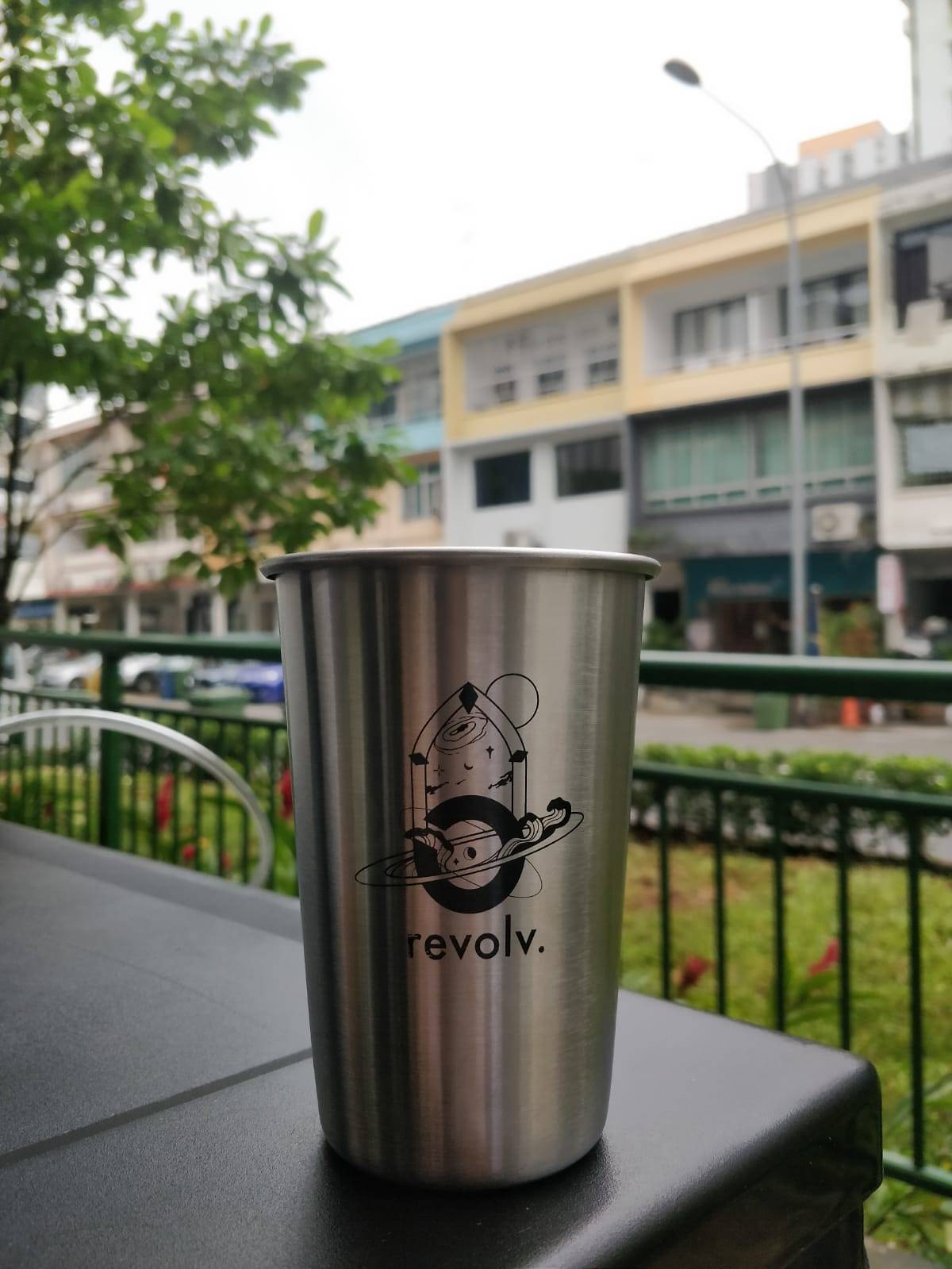
Revolv aims to partner food and beverage outlets by switching the disposables they use for takeaways, like styrofoam cups or plastic containers, with reusables made of stainless steel or glass.

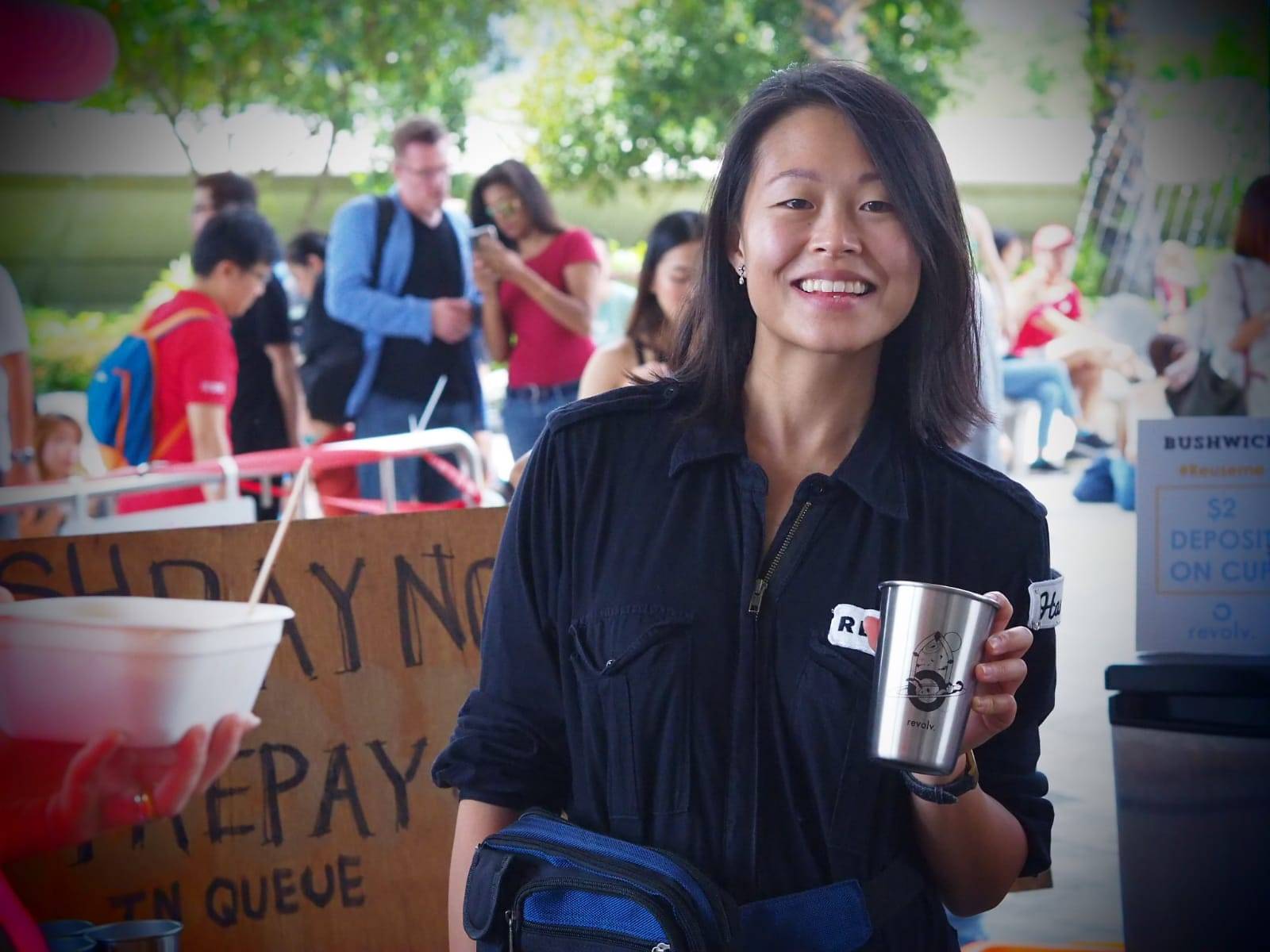
Customers buying a cup of coffee to go, for instance, would pay a deposit for the reusable cup on top of the price of the beverage. They get their deposit back when they return the cup at a location nearby – usually at another participating outlet. No washing is required.

The company made its debut on Sunday (Jan 20) at a sustainable living festival and provided reusable cups for a stall selling organic drinks. The cups were returned to the same stall or at another drop-off point on site.

“The response was unanimously positive,” Revolv’s Singapore lead Jonathan Tostevin told Channel NewsAsia on Tuesday (Jan 22). “People liked the experience of using it and what we were doing.”

This comes as Singapore has declared 2019 as the Year Towards Zero Waste. In 2017, the country produced more than 800,000 tonnes of plastic waste, with only 6 per cent of this being recycled. 

A Singapore Environment Council study published last July also found that Singapore uses 473 million plastic disposable items like takeaway containers each year.

Therein lies the potential demand for Revolv, Mr Tostevin said, noting that Singaporeans “use so much of this stuff”.

“It feels like there’s a growing environmental consciousness in Singapore, but it’s probably still a minority,” he added.

“I think if we can offer a solution that allows people to engage in something that is good for the environment, but doesn’t require them to put in that much effort, then that’s something that would appeal.”

READ: Packaging-free stores sprout in Singapore, but will consumers give them the green light?

Mr Tostevin said it’s also important for customers to enjoy the benefits of using sturdier reusables as compared to flimsy disposables.

WHERE CAN YOU GET IT?

But with Revolv only just starting out in Singapore, the company is looking to ensure that returning its containers is “as easy as putting it in a bin”, Mr Tostevin said.

To that end, he said the company will in the next few months pilot a reusable coffee cup service at three or four environmentally friendly cafes in “pretty contained” areas, where drop-off points can be located close to each other.

Tiong Bahru Eng Watt Street

View of Eng Watt Street in Tiong Bahru. (Photo: Amir Yusof)

Tiong Bahru is one area that could work, Mr Tostevin added, although he declined to reveal specific locations as the company is still identifying the right eateries to work with.

During the pilot, Revolv will study customer and outlet response, and whether there is a need to redesign its products.

The length of the pilot would depend on the response, Mr Tostevin said. “If it works, then we’re about operational timelines, what kind of products we bring in, the capacity in the team, interest from other outlets and when we bring the technology in,” he added.

HOW DO YOU PAY?

While customers participating in the pilot might get physical tokens to indicate they’ve paid the deposit, Mr Tostevin said Revolv’s containers will eventually come with radio-frequency identification (RFID) tags for electronic payment and collection of deposits.

As for how much the deposit is, Mr Tostevin said it will be low enough to facilitate adoption, but high enough to incentivise customers to return the containers. Customers whoz use and return the containers multiple times will also enjoy discounts on their next meal or drink.

READ: More cafes offer discounts to customers who BYO tumblers, but can efforts go further?

This technology can also be used to track each Revolv container as it goes from eatery to customer and back to another eatery.

Mr Tostevin said there will probably be a limit on how long customers can hang on to the containers before returning them, but added that “we’re not trying to make money out of people not returning their containers”.

“I don’t see us adopting an aggressive stance on that,” he said. “Ultimately, we want to incentivise people to put the cups back into the system so that they’re being used.”

CHALLENGES

With potentially hundreds of thousands of containers moving in and out of the system at full scale each day – a scale which Mr Tostevin said is needed for the system to work – he acknowledged that it will be “operationally very intensive”.

Mr Tostevin said he doesn’t want extra labour or transport costs in the system, noting that ideally, the containers move naturally between participating eateries via customers.

READ: From ditching disposables to composting, the women going the extra mile to reduce waste

Washing should also be done by the eateries, although Mr Tostevin recognised that some of these outlets do not have the capacity to do it themselves. In this case, Revolv could provide a cleaning service.

“Once we get the technology on board, perhaps there might be ways that we can distribute that,” he said, stating that a dishwashing service at a participating food court could, for instance, clean Revolv’s containers during off-peak hours.

“We’re looking to provide a platform that is agile and can flex to work in different ways in different parts of the city,” he added.

Revolv reusable cup EarthFest

Revolv containers should ideally be cleaned by participating food and beverage outlets. (Photo: Jacqui Hocking)

Regardless, Mr Tostevin said hygiene is a priority during washing, adding that Revolv will only work with eateries that are compliant with National Environment Agency (NEA) standards.

“If we end up cleaning it ourselves, we obviously will be using commercial companies that clean to NEA guidelines,” he stated. “It’s very important that hygiene standards are maintained on a product that’s being reused.”

WHAT’S IN IT FOR EATERIES

While these are important considerations for eateries looking to come on board, Mr Tostevin stressed that the service will benefit them.

“Instead of buying 10,000 coffee cups currently, they would pay for our service to have a stock of Revolv cups on site and replenished on a regular basis,” he said, pointing out that the containers are also of higher quality.

“It would also simplify their stock management system, so they won’t actually need to worry about an inventory or storage space.”

A commuter carries a disposable coffee cup in London, Britain

A commuter carries a disposable coffee cup in London, Britain, January 5, 2018. REUTERS/Toby Melville

Still, Mr Tostevin said Revolv’s service fee would need to roughly match what eateries are paying for disposables, noting that ultimately, “they’re not going to pay loads more”.

“I don’t want to rule it out forever, but our starting position is we don’t want consumers to pay for this beyond the deposit,” he added.

EXPANSION PLANS

If all goes well, Mr Tostevin said the plan is to expand to more locations.

“We’d also like to see this working, say, in the CBD (Central Business District) area. Working with the corporates, you could see them having a drop-off point on the office floor,” he said. “I can see that model happening quite quickly.”

Revolv also wants to launch in university campuses, with Mr Tostevin highlighting the suitability of a closed, singly managed area with a ready user base.

But the “golden aim”, Mr Tostevin said, is to go into food courts and hawker centres, which are heavy users of styrofoam boxes and plastic containers for takeaways. “The vendors there are operating super low margins, so we got to make it something that works for them,” he added.

Revolv reusable cup housing estate

Revolv plans to expand to universities, corporates and food courts. (Photo: Jonathan Tostevin)

And then there are Singapore’s ubiquitous food delivery services and the packaging waste they produce. Companies like Deliveroo and foodpanda have responded to concerns by making disposable cutlery optional.

“Food delivery is really interesting,” Mr Tostevin said, noting that it could take two to three years to penetrate this market. “It’s something we’d be totally up for, seeing how our system could work for that.”

But Mr Tostevin admitted that there would be different operational challenges, especially as containers are spread across the island, with customers who are even more reluctant to leave their homes.

“It would be interesting to see if you could do something with the logistics system that sends them out,” he added, noting that this could form a sort of collection system for the containers.

BABY STEPS

Beyond that, Mr Tostevin said Revolv aims to eliminate tens of thousands of single-use plastic items from Singapore’s waste stream by the end of the year.

“It does require people to maybe go out of their way slightly, but we want to reduce that as much as possible,” he said. “An openness to try it would be good.”

But for the nine-month-old company with a presence in Bali and Hong Kong – five cafes in Canggu use Revolv cups with an IDR 50,000 (S$4.80) deposit, while two TEDx events in Hong Kong featured Revolv products – every milestone counts.

“It’s really exciting and game-changing if we can start to tackle the takeaway coffee problem,” Mr Tostevin said.

Mr Tostevin also foresees a future where Revolv drop-off points are – like bins – found on every street in Singapore, but said there are “a lot of steps to get to before we get to that point, not least Government, landlord and public support”.

“Ultimately, we don’t want this to be just for hipsters,” he added. “This is something we want to be mainstream.”

Source link

Commentary: Two decades post Asian Financial Crisis, how Southeast Asia can keep up stunning growth

0

SINGAPORE: Southeast Asia’s fortunes have risen tremendously since the Asian Financial Crisis – you only have to look at the gleaming malls and airports that have sprouted in Hanoi, Jakarta and Manila, or the increasingly modern manufacturing sites of Kuala Lumpur, to get a sense of the economic buzz that permeates the region.

But now is not the time to rest easy. On the contrary, policy makers across the region should step up reform efforts designed to boost the Association of Southeast Asian Nations (ASEAN)’s openness and integration.

This is crucial both to shield its economies and businesses from the challenging and tough global backdrop, and to allow them to capture opportunities going forward.

READ: The rebirth of the ASEAN miracle growth model, a commentary

As ASEAN’s Chair in 2019, Thailand – under the theme of Advancing Sustainable Partnerships – has set a positive tone for the region highlighting several areas of focus.

OFFSETTING A GLOBAL TRADE SLOWDOWN 

The policy shifts in the US and China and, its impact on trade, coincides with the cyclical slow-down in electronics trade – one of Southeast Asia’s most integral sectors, equivalent to 25 per cent of the region’s total exports in goods.

No one wins in a trade war but the impact on ASEAN economies can be partly offset if the much-discussed supply chain diversion to Southeast Asia, from the likes of China, US and Korea, materialises. 

READ: As summits approach, winds of trade war hit region, a commentary

China's exports expanded in April but at a slower pace than previous month, while exports

The policy shifts in the US and China and, its impact on trade, coincides with the cyclical slow-down in electronics trade (Photo: AFP/Johannes Eisele)

Supply chain diversion is happening in pockets across Vietnam, Malaysia and Thailand – given they bulk-export the same products impacted by the US-China tariffs – but increasing the ease in which goods and services flow across ASEAN will make the transition more widespread. 

Some important progress has already been made including the imminent launch of the ASEAN-wide self-certification scheme which allows wing certified exporters to self-certify the origin of their exports. 

The ASEAN Single Window that digitises intra-ASEAN trade documents launched across Indonesia, Malaysia, Thailand, Vietnam and Singapore in early 2018, had reduced the number of days it takes to clear cross-border goods flows to one day.

But more needs to be done to smoothen the flow of goods and services across ASEAN. This includes rolling out the window to all ASEAN countries, standardising the cost and time of customs clearance across Southeast Asia and enabling the freer movement of professionals across the region.  

ATTRACTING MORE INBOUND INVESTMENT

ASEAN needs to attract more investment from outside the region. 

While Foreign Direct Investment (FDI) into Southeast Asia has improved post-Global Financial Crisis, the lion’s share has gone to Singapore, Vietnam and Malaysia – not to countries like Thailand, Indonesia or Philippines where supply chains are expected to grow in future. 

The levers to attract investment to ASEAN more widely are clear: Reasonable production costs, stable institutions, improved technological innovation, lowering tariffs and import barriers for production inputs, and increasing labour skills. 

A view of the skyline in Singapore

A view of the skyline in Singapore, Sep 12, 2018. REUTERS/Edgar Su

As the Regional Comprehensive Economic Partnership, is getting closer to a conclusion, the recently-launched Comprehensive and Progressive Agreement for Trans-Pacific Partnership, which came into force in late 2018, is likely to be extended to more countries. 

Upgrading existing trade pacts with the likes of Hong Kong and China are also on the to-do list. Again, these have been earmarked by Thailand as key initiatives in developing ASEAN’s potential. 

READ: TPP a better agreement despite an American-sized hole, a commentary
 
INVESTMENT IN DIGITAL ECONOMY 

Improving digital connectivity, and investment into ASEAN’s digital space to support the region’s burgeoning consumer base, can both shore up the region’s supply chain potential and increase the gravitational pull for multi-nationals and companies. 
 
The Masterplan on ASEAN Connectivity 2025 has stated that between US$220 billion to US$650 billion in additional annual economic impact in ASEAN by 2030 could be injected into ASEAN through new technology and the Internet economy. 

Its potential is clearly understood with US, Chinese and Japanese companies investing in information and communications technology (ICT) over the past two years. But ASEAN’s digital advancements are still mixed. 

For example, in five ASEAN countries, e-commerce represents under 3 per cent or less of total retail sales, compared to China with 23 per cent. 

There have been bright spots though. ASEAN members signed the ASEAN Agreement on E-Commerce in November, one of the first in the world to have such an agreement. 

Chan Chun Sing at a signing ceremony on Monday (Nov 12)

Trade and Industry Minister Chan Chun Sing at the signing ceremony of an e-commerce agreement held on the sidelines of the 17th ASEAN Economic Community (AEC) Council Meeting. (Photo: Jeremy Long)

READ: In 2019, online marketplaces will change the way you and the government shop, a commentary

However, converting agreements to tangibles like a regional electronic payment infrastructure, or enabling the cross-border movement of business, collaboration on cyber security to instil consumer and government confidence, and the development of market access regimes‎ is crucial.

DRIVING A SUSTAINABLE ASEAN 

Perhaps the biggest challenge for ASEAN will come in the form of natural disaster events. Southeast Asia is one of the most natural disaster-prone regions in the world that wreaks social and economic havoc. This has only been exacerbated by climate change in recent years. 

An ISEAS-Yusof Ishak Institute survey found that threats from more intense weather events resulting from climate change were more concerning for ASEAN government and business leaders than economic downturns, terrorism and military tensions.

READ: Typhoon Mangkhut destroys rice, corn and fish – but what has this got to do with Singapore? A commentary

In response, Thailand has flagged that deepening sustainable financing will be a focus for its chairmanship. 

Developing regional incentive frameworks and standards, such as subsidies on the legal and banking advisory costs linked to generating green loans and bonds, will increase the cost effectiveness and attractiveness of these financial instruments for corporates. 

Weather aside, urbanisation will mean that between 2015 and 2030, more than 100 million people region-wide are expected to migrate from the countryside into towns and cities across Southeast Asia. 

So how will Southeast Asia deal with the strain on resources such as food, health, and infrastructure? A key thrust will be Thailand’s commitment to continue the ASEAN Smart Cities Network, started by the Singapore Government, which involves 26 pilot cities sharing best practices on how to build more future-ready and resilient cities.

READ: A piece of Southeast Asia in a Singapore dish, a commentary

What we should expect to see is how Thailand can start concretising the ASEAN Smart Cities Network – launched in April 2018 – from a concept programme to now identifying and scoping specific projects across the pilot cities.

pm lee prayut asean chairmanship handover

Singapore Prime Minister Lee Hsien Loong hands over the ASEAN Chairmanship to Thailand’s Prime Minister Prayut Chan-ocha at the closing ceremony of the ASEAN Summit. (Photo: Jeremy Long) 

The US, Europe and Japan each has also announced funding initiatives in the second half of 2018 aimed at supporting the building of Southeast Asia’s infrastructure as part of their countries’ respective sustainable development programmes. Ensuring projects are transparent and “bankable”, and therefore the debt is sustainable, will be some of the biggest challenges for ASEAN countries.

WHERE TO GO FROM HERE?

ASEAN’s past integration efforts have driven a lot of success for the region as evidenced by the level of geopolitical and economic interest and investment that the region is receiving. But ASEAN needs to quicken the pace in order to give it a larger and stronger political and economic voice amid an increasingly fragmented and protectionist world.

It’s not going to be without distractions as the upcoming national elections in Thailand, Philippines and Indonesia this year will challenge nations to keep their eye on the reform prize.

But businesses are crying out for tangible reform that will smoothen intra-regional trade, encourage international investment and create a sustainable future. 

Achieving these in 2019 will help the region both capitalise and shield itself from global events that are likely to play out over the coming years. 

Tony Cripps is Chief Executive Officer at HSBC Singapore.

Source link