Home Blog Page 850

Series of medallions launched to mark 150th anniversary of the Istana

0

SINGAPORE: President Halimah Yacob on Wednesday (Feb 6) launched a series of medallions to mark the 150th anniversary of the Istana.

A collaboration between the President’s Office and the Singapore Mint, the Istana Souvenir Series consists of five medallion designs featuring the architecture of the buildings within the Istana compounds and significant highlights of the Istana.

A NETS Flashpay card featuring a view of the Istana is also available.

The designs create a “unique opportunity” for Singaporeans to learn more about the history and heritage of the Istana, according to a press release by the President’s Office.

A total of eight different silver medallion and card products with limited mintages are available in the Istana Souvenir Series. 

Istana medallions 2

The series of medallions was launched by President Halimah Yacob on Wednesday (Feb 5). 

Istana medallions flashpay card

The series also includes a NETS Flashpay card. 

This includes five single silver medallions, one card and two special silver medallion sets consisting of various medallion combinations.

One medallion, in the shape of the Istana, is also the only medallion in Singapore to feature the Presidential Crest, according to the Singapore Mint’s website.

Other designs include a depiction of the Istana’s intricate cast-iron centre gate built in 1931 as well as the Changing of Guards parade. 

“Through the medallions and card products, Singaporeans can bring a piece of their memories of the Istana back home with them,” said Mdm Halimah. “Their designs also tell interesting stories about the customs and traditions within the Istana, some of which are not commonly known before this.”

Part of the proceeds from the series’ sale will be donated to the President’s Challenge.

The medallions will be available at Singapore Mint retail outlets from Thursday. More information can be found on the Singapore Mint website.

Source link

MAS wins Central Bank of the Year award

0

SINGAPORE: The Monetary Authority of Singapore (MAS) has won the Central Bank of the Year award, given by London-based publication Central Banking.

MAS stood out because of its “pioneering fintech efforts combined with its consistency of performance in monetary policy, financial stability and supervision”, said the publication on Wednesday (Feb 6).

“The Monetary Authority of Singapore has displayed an enviable track record for monetary and financial stability, implements coherent financial system oversight as a ‘super-regulator’, and has emerged as a pioneer in creating a framework to facilitate next-generation technological and financial innovation,” it said. 

Central Banking noted that in the past year, MAS had tightened its trade-weighted exchange rate and introduced macro-prudential cooling measures, while upgrading its regulatory, supervisory and resolution practices.

“The MAS has placed a keen emphasis on understanding the risks and benefits of new technology,” said Central Banking.

“It has upgraded Singapore’s payments infrastructure and supported pioneering initiatives around cloud computing, artificial intelligence, big data and distributed ledger technology.”

MAS’ managing director Ravi Menon said that the award was a tribute to the central bank’s staff.

“The Monetary Authority of Singapore is honoured to receive the ‘Central Bank of the Year’ award,” he said. “This award is a tribute to the staff of MAS – their unstinting commitment to doing their best and the One MAS spirit of teamwork across the organisation.”

Ravi Menon at the Bloomberg New Economy Forum (2)

Monetary Authority of Singapore’s (MAS) managing director Ravi Menon seen speaking at the inaugural Bloomberg New Economy Forum on Nov 7, 2018. (Photo: Bloomberg New Economy Forum)

“The MAS has proven itself to be a well-structured and agile institution capable of introducing joined-up rulemaking while embracing technological change, all the while seeking to maintain a focus on prudent oversight of financial institutions – for which it has a strong track record,” added chairman of the Central Banking Awards Committee, Christopher Jeffery.

The Central Banking Awards were judged by a panel comprising members of the Central Banking editorial team and editorial advisory board.

READ: MAS managing director Ravi Menon named Asia Pacific central banker of the year

Source link

Animation, QR codes: Digital red packets on the rise this Chinese New Year

0

SINGAPORE: For generations, the handing out of red packets – or hongbaos – containing cash has been a tightly held tradition in the Chinese culture, especially during Chinese New Year. 

The red envelopes are typically printed by banks and businesses and given to clients and customers to use. 

But technology is changing how Chinese families are giving away hongbaos to their relatives, with the gifting of ‘cashless’ red packets gaining traction, according to some banks.

Standard Chartered and Citibank began offering a cashless red packet function over PayNow this year, while DBS Bank has seen the use of its eAng Bao function in its mobile wallet app PayLah! rise sixfold over the past year.

The local bank has also upped the ante this year by piloting what it said is the world’s first loadable QR red packets. 

After users load a cash value into unique QR codes on a physical ‘red packet’, they can give it away to a recipient who can then scan the same QR red packet to automatically transfer the amount into their mobile wallet.

“If you put it on a scale, the eAng Bao is (on one) extreme where it’s totally digital,” said Jeremy Soo, the head of DBS Bank’s consumer banking group (Singapore). 

“You send everything on a digital format, a nice message, but it’s not accompanied by a face-to-face interaction,” said Mr Soo. “However on the other extreme, you see consumers say, ‘no, I must use red packet and new notes’.

“With this QR angbao, we’re able to bridge this gap where we can marry traditional customs … with a QR angbao with value inserted in there So you preserve this whole greeting and exchange and the giving practices that’s been embraced by not only by the Chinese, but any Singaporean today who celebrates Chinese New Year.”

Another business merging technology with tradition this festive season is Hotel Jen at Tanglin, which teamed up with its adopted charity The Little Arts Academy to develop digitally animated red packets.

When scanned using a mobile app, the designs on the red packets digitally animate through the use of augmented reality technology, making the birds printed on the packets come to life.

Hongbao 4

These red packets designed by Hotel Jen become digitally animated on screen when scanned using a mobile app. (Photo: Wendy Wong)

​​​​​​​

Hongbao 1

Caston begins designing red packets for its clients a year beforehand, with distribution to clients taking place a one to two months before the Chinese New Year season. (Photo: Wendy Wong)

INNOVATING WITH TRADITIONAL RED PACKETS

But will digital red packets replace their physical counterparts? Red packet printer Caston, which has been in the business for 30 years, does not think so.

During its heyday, the company printed nearly 70 million envelopes during the Chinese New Year season, and has seen the envelope design trends evolve over the years.

“Twenty, thirty years ago hongbaos are quite simple – just normal paper and gold stamping, gold and red only,” said Caston’s creative director Alvin Tan.

The printer was the first to experiment with more colourful designs and premium paper, raising the bar for the traditionally red and gold envelopes, according to Mr Tan. But competitors quickly caught up, with most red packets now designed with more elaborate embellishments, boasting laser cut designs, gold dust and different textures on each envelope.

Hongbao 2

The printer experiments with different textured paper materials, designs and colours to create “more unique and unusual” red packets, such as the use of gold dust and foil. (Photo: Wendy Wong)

Hongbao 3

Red packets designed 20 to 30 years ago featured plainer designs on cheaper paper material. (Photo: Wendy Wong)

This year, Caston halved its production of red envelopes, due to stiffer competition from other market players, digital hongbaos and with fewer foreign banks distributing red packets to customers this year as well, said Mr Tan. 

Currently, the printer has about 50 clients, including banks, retailers and airlines.

In a bid to better compete, the printer is exploring innovative methods and technology to create more eye-catching red packets, such as the use of three-dimensional designs. Its chief designer added that the art of creating red packets remains invaluable.

“I personally still think that high technology, regardless of how advanced it is, this hongbao is still traditional for the new year,” said Mr Tan.

“This is our Chinese culture – this is the only thing that celebrates our new year. It’s the happiness and fun.”

Source link

‘I get very rude comments about my work, but it’s okay’: Singapore artist Qimmyshimmy

0

SINGAPORE: “You’ll burn in hell and these will be your hellhounds.”

“It’s sickening.”

“Absolutely disturbing and horrid.”

“I’m sorry, but you and all your fans are a bunch of freaks … This is so creepy it’s not art.”

Artist Lim Qixuan may have a 107,000-strong following on Instagram and heaps of praise from fans all over the world, but she regularly gets comments like the above, from people reviled by her work.

Qimmyshimmy5

The 27-year-old artist has a huge following on Instagram thanks to her endearing yet repulsive art pieces. (Photo: Gaya Chandramohan)

Lim, who goes by the online moniker Qimmyshimmy, has made a name for herself fashioning baby heads, organs, eyeballs and other body parts out of clay, and placing them in everyday objects such as sweet wrappers, gumball machines, pies and sardines cans. The juxtaposition of deformity and decapitation against the mundane in a signature pastel-pink hue is meant to provoke a reaction.

The 27-year-old told Channel NewsAsia she “would rather people really love it or really hate it” than create forgettable works.

“I get a lot of very, very rude comments about my work, but it’s okay. It’s fine with me because when I create my art, I don’t really make it to please anyone,” she said. “I enjoy reading comments … just because. I don’t get offended when people don’t like my art. I think that’s one of the reasons why I don’t really get that affected when people don’t like it or like it.

“I think it’s also okay to get bad comments, because in a way you get that spectrum of people who really dislike it and like it, then you generate interesting dialogue.”

She added: “I always tell people to just dance in the rain. Some people are just so uptight that it’s hilarious!”

Qimmyshimmy2

Baby candy. (Photo: Gaya Chandramohan)

Qimmyshimmy3

Baby head gum ball. (Photo: Lim Qixuan)

As she spoke her fingers moved deftly, pinching and pulling till a nose materialised on a cherubic face which she laid down on a plate.

Qimmyshimmy10

Lim pays great attention to detail when sculpting, to ensure each piece looks as realistic as possible. (Photo: Gaya Chandramohan)

The self-described “accidental sculptor” first began creating oven-baked clay sculptures six years ago on the advice of her mentor from Noise Singapore – a youth arts platform organised by the National Arts Council.

It challenged the graphic designer to step out of her comfort zone and to start experimenting with sculptures of futuristic animals. She moved to her current aesthetic, inspired by the sight of discarded pistachio shells one Chinese New Year and imagining baby heads cocooned in them.

Qimmyshimmy9

(Photo: Lim Qixuan)

Said Lim: “Babies are usually something we associate with vulnerability, cuteness and other positive feelings. When I try to take the subject out of its context and put it in a situation where people find it strange or unfamiliar, I think it becomes interesting for people to encounter something or an art work in that way.”

Qimmyshimmy4

Qixuan sculpts one of these baby heads in less than 10 minutes. (Photo: Gaya Chandramohan)

Qimmyshimmy’s pieces command between €800 (S$1,400) to €1,200 (S$2,100) but she doesn’t sell her art to everyone – only to people who understand and appreciate her work, she said.

“I do not want them to become some sort of mass-manufactured item. That’s not how I see my art practice to be, even though that may help my work last longer and also make it more collectable,” Lim stated.

Aside from Singapore, her work has gone on show in places like New York, Melbourne, Milan, Prague and recently, London. 

Qimmyshimmy8

Lim uses makeup on her sculptures instead of paint for a more natural touch. (Photo: Gaya Chandramohan)

​​​​​​​

Having just completed a two-year masters programme in information design in the Netherlands, Lim returned to Singapore, but not without a lot of deliberation.

The attitudes and slower pace of life in the Netherlands spoke to her as a creative professional.

“Whether you’re a designer or an artist, or some kind of cyborg or scientist, they’re not so quick in wanting to place you in a box and put a label on you. 

“So in a way, it opens a lot of doors for hybrid roles and quirkier creations. And there isn’t much pressure to be able to explain your art completely,” she said.

Still, she decided to stick with design in Singapore, with art on the side.

 “Singapore is also very cosmopolitan, so I think there’s this rapid exchange of ideas and cultures and stories that is happening almost every single minute. Singapore is also my home after all and I really hope that can help me find a stronger voice in my art.”

Qimmyshimmy7

A hearty slice of pie from Qimmyshimmy’s Sweet Tooth series. (Photo: Lim Qixuan)

Lim’s biggest fans of her art might be her parents, although it took them some getting used to.

“When I started to sculpt things that looked a little bit creepy or a little bit scary, they were a little hesitant about what I was doing and questioned what I was making. My dad sometimes outright tells me, ‘Don’t do such scary things!’” she said.

She also once alarmed her mother accidentally by forgetting to remove some babies’ heads that had been baking in the kitchen oven. Uncomfortable as they are, they make the effort to attend all her show openings, she said.

“I think I’m one of the lucky few people of who are encouraged to pursue what I like and what I’m interested in. So I really think, underneath all that typical Asian parenting, where they tell you certain things and criticise, they still show their support and encouragement in another way.”

Source link

Singapore Zoo’s Lucy the giraffe dies in childbirth

0

SINGAPORE: Singapore Zoo’s Lucy the giraffe died on Tuesday (Feb 5) after going into cardiac arrest while attempting to deliver her first calf, said Wildlife Reserves Singapore (WRS).

Earlier on Tuesday, WRS said in a Facebook post that Lucy was not able to deliver naturally and that the “chance for survival of the foetus (was) near zero”.

As such, vets and keepers decided to sedate the giraffe in order to extract the foetus.

“In a giraffe, this procedure is complex and fraught with risks,” said WRS, adding that they were looking to help Lucy recover from the ordeal.

Lucy the Giraffe 2

Lucy the giraffe went into cardiac arrest and died on Tuesday evening (Feb 5). (Photo: Facebook / Wildlife Reserves Singapore)

However, in another update shortly after, WRS said that Lucy had gone into cardiac arrest during the process of extracting the foetus. Despite more than 10 minutes of resuscitation efforts, WRS said that Lucy could not be saved and died at 7pm on Tuesday.

“It is with great sadness that we bring the devastating news that we have lost Lucy, our beloved giraffe,” said WRS.

“Rest in peace Lucy. You will always remain in our hearts.”

Lucy the Giraffe 1

Lucy the giraffe died on Tuesday (Feb 5) during childbirth. (Photo: Facebook / Wildlife Reserves Singapore)

It was first announced in October last year that Lucy was pregnant and expecting the arrival of her first calf at the end of January.

The 14-year-old giraffe was confirmed to be pregnant after keepers noticed a bump on her in April.

READ: Singapore Zoo’s Lucy the giraffe expecting first calf next year

WRS also extended its appreciation to Lucy’s keepers and the veterinary team in its Facebook post. 

“For her keepers and the veterinary team who have been monitoring her progress in gestation for the past many months, and who have been on constant watch over her since the last 48 hours, it was a very bitter ending. 

“All of us at WRS would like to show our appreciation and support for Lucy’s care team for their dedication, love and care they have provided to Lucy.”

Source link

Government will strengthen support for young families: Josephine Teo

0

SINGAPORE: The Government will aim to strengthen support for young families, particularly in areas such as childcare provision, said Manpower Minister Josephine Teo on Tuesday (Feb 5).

Speaking during a Chinese New Year visit to healthcare workers and patients at KK Women’s and Children’s Hospital, the minister noted that the Government has been working on strengthening the availability of childcare, ensuring accessibility and quality, and keeping fees affordable. 

Compared to 2012, she added that childcare places have more than doubled. By 2023, the total number of places available will grow to 200,000, she said.

“If you look at the rate at which the childcare sector has expanded, I think it has made a definite difference,” she added.

FERTILITY RATE

Mrs Teo also said that boosting Singapore’s fertility rate would involve not just one area of support.

jo teo giving out oranges

Manpower Minister Josephine Teo handing out oranges on Feb 5, 2019. (Photo: Nisha Abdul Rahim)

The country’s total fertility rate – which measures the average number of children per woman – dropped to 1.16 in 2017, the second lowest ever recorded. 

Mrs Teo said that figures for 2018 were being finalised and would be discussed during the upcoming Committee of Supply Budget debate in Parliament.

“But really, I think it goes beyond the numbers,” said the minister. “What speaks loudly to us is that if you look at certain communities, actually the fertility rate has shown signs of improvement and so that’s encouraging.”

“At the same time, we also get consistent feedback that what is really needed is to strengthen some areas of support,” she added.

These include housing support, childcare and flexible work arrangements, said the minister, adding that these are other areas the Government will continue to work on.

Source link

In pictures: Ringing in the Year of the Pig in Chinatown

0

SINGAPORE: Visitors in Chinatown were treated to a spectacle of street lights, the lingering smell of traditional delicacies and a splendid fireworks display on Monday (Feb 4) – all part of a grand celebration to ring in the Year of the Pig.

For 21-year-old undergraduate Pearlyn Low, her visit to Chinatown this year was a special occasion. She wanted to bring her friend from the United States, Yanti Nanurung, to experience the spirit of Chinatown.

“I had her over for reunion dinner and wanted her to experience another aspect of how Chinese New Year is celebrated in Singapore. The crowd is part of the experience in Chinatown, it adds to the festivities where people just come together after reunion dinners,” Ms Low said.

She added: “People come to walk through the markets and soak in the festivities, and if it wasn’t crowded, it’ll feel lacking and it wouldn’t be that experience”.

Visitors experienced a visual treat of lights ­- that featured larger than life pigs and ingots which brought Chinatown to life. 

CNY 2019: Pig lantern

This year’s centrepiece, the 9m tall and 7.5m wide larger than life pig located at the Upper Cross Street crossroad, is accompanied by some 179 pig lanterns. (Photo: Alif Amsyar)

“We like to experience the culture and we want to experience the ambience of Chinese New Year, it’s exciting. There are a lot of people around from all races and religions, everybody celebrates this festive season and we wanted to be to be part of that,” said IT Director Fitrah Muhammad.

Originally from Jakarta, he now lives in Singapore with his wife and four children. He added that the instalments were “very fascinating”.

CNY 2019: Aerial view of Chinatown

An aerial view of the bustling streets of Chinatown, filled with visitors during the Chinese New Year festive season. (Photo: Alif Amsyar)

To usher in the Year of the Pig, live performances and a rousing countdown celebration was held in the heart of Chinatown. Visitors were entertained by lively performances, skits, as well as interactive games.

CNY 2018: Countdown performance

Visitors watching the Chinatown Chinese New Year Countdown Party featuring MediaCorp artistes through a large monitor screen just a few metres away from the actual stage. (Photo: Alif Amsyar)

CNY 2018: Young visitor

The young ones are not left out as well, riding on her father’s shoulders to get a better view of the performances from the Chinese New Year Countdown Party. (Photo: Alif Amsyar)

And some did not want their pets to miss out on the fun.

CNY 2019: Mario the dog

The Insta-famous Pomeranian, Mario (@mariothepomeranian), all ready for the Chinese New Year; clad in a mini lion dance costume perfect for its size. (Photo: Alif Amsyar)

Even the downpour at the Marina Bay area did not deter visitors from spending time at the 2019 River Hongbao festivity.

Held at The Float, the event is a mainstay on Singapore’s calendar of Chinese New Year celebrations since 1987 and is one of the first major events this year to commemorate the Singapore Bicentennial.

CNY 2019

Many visitors did not let the downpour to hamper their festive spirits and continued to enjoy taking pictures with the larger than life lanterns — this time with the help of an umbrella. (Photo: Alif Amsyar)


CNY 2018: Smiling boy

Despite the rain, which forced many into the sheltered areas of the exhibition, a young visitor continues to put on a smile. (Photo: Alif Amsyar)

CNY 2019: Communities by the river

Visitors can learn more about the “Communities by the River” through informative panels such as this, where information about Chinese immigrants in the past are displayed. (Photo: Alif Amsyar)

CNY 2019: Posing visitor

Many took the opportunity to strike a pose in front of the “Our Garden, Our Home” centrepiece — the largest lantern set on The Float — to get their best pictures of the day. (Photo: Alif Amsyar)

Many decided to join in the celebrations at the River Hongbao after their family reunion dinners, including 28-year-old Li Xinxin.

“This event happens only once in a year, so I’ll normally just come here to enjoy this festive season with my family and friends. 

“I think that the designs are very uniquely Singapore and I wish that Singapore will remain prosperous and for my family and friends to stay healthy,” the education officer said.

CNY 2018: Samsui woman

Visitor Li Xinxin, 28, strikes a pose with the Samsui woman’s costume and props, as part of the interactive and photo-op element of the exhibition. (Photo: Alif Amsyar)

CNY 2019: Peacock lantern

A visitor taking a picture of the majestic display that features a beautiful peacock with a spectacular and colourful tail flowing into a garden of flowers; aptly named Happiness of Springtime. (Photo: Alif Amsyar)

CNY 2019: Wire and loop game

A young visitor tries his best to guide the round loop through the metal wire, without touching the loop against the metal wire. The Bicentennial Dragons Game set-piece consists of two dragons, each shaped like the figure “200” to commemorate Singapore’s Bicentennial. (Photo: Alif Amsyar)

CNY 2019: Fortune god

Standing at 18m tall, this year’s God of Fortune is full of energy as he holds his Ruyi (“as you wish”) ceremonial sceptre in his raised right hand, which is believed to fulfil one’s wishes. On his left, a Chinese scroll with the popular greeting ” Gong Xi Fa Cai”. (Photo: Alif Amsyar)

For some, a visit to the River Hongbao is a yearly affair. 

“Actually, my parents will want to come here every year … we have been here for 15 years consecutively. At least that’s what my mom told me, I also can’t remember,” quipped Ng Yong Yee, a regular at the Republic of Singapore Navy.

Source link

Commentary: Shortening the waiting time for your cab with a driver guidance system

0

SINGAPORE: The taxi industry around the world has suffered huge losses since the emergence of ride-hailing apps. 

In New York, taxi medallion prices collapsed from over US$1 million in 2013 to less than US$200,000 last year, putting many taxi drivers in debt.

A permit to drive a taxi in the US used to be seen as a great investment to many taxi drivers as the value of a medallion, a license issued by authorities to drive a cab, used to double every few years. 

But when ride-hailing cars saturated the market, it led to an exodus of drivers from taxis and killed medallion values, leaving taxi drivers losing hundreds of thousands of dollars in equity and many bankrupt.

In Singapore, the total taxi population has fallen since the arrival of these ride-hailing companies from its 2014 peak of 28,800, to around 20,900 as of November 2018 – a decline of almost 28 per cent.

The good news is the taxi industry in Singapore, is still holding up relatively well compared to other cities. Taxi fleets, consolidated to only a handful of companies, gives them the benefit of scale. 

The top four taxi companies combined own more than 96 per cent of all taxis. Market leader ComfortDelGro has 60 per cent of the total taxi market. 

Singapore taxis have also been investing in technologies early on, providing reliable and efficient booking services even before the entry of Uber and Grab. 

Trips from street hails and taxi queues, which can only be served by taxis, still account for around 70 per cent of all taxi trips, providing a good baseline protection for taxi drivers. 

READ: Grab, the new ruler in town, and the paradox of scaling a business, a commentary

taxi driver (1)

A taxi driver.

However, as ride-hailing apps evolve at neck-breaking speed, Singapore’s taxi industry needs to up its game to stay competitive. 

BALANCING TAXI SUPPLY AND DEMAND

The challenges brought about by disruptive ride-hailing companies are two-fold. On one hand, large numbers of private cars are flooding the market in a short time, creating supply surplus. 

For example, in Singapore, the number of private cars registered for chauffeur service has grown from only 614 in 2013 to over 46,000 in 2017.

READ: As reality dawns on consumers, time to question if private-hire cars advance our car-lite drive, a commentary

On the other hand, most ride-hailing companies utilise innovative approaches such as dynamic pricing mechanism, and surge pricing in particular, to improve demand and supply matching in a bid to lower the waiting time for a ride for passengers.

But dynamic pricing is not the only way to balance demand and supply. 

Our study at the Singapore Management University found that in most hours of the day, vacant taxis are not roaming in the areas where they are needed most. For example, even during rush hour, there is still roughly 20 per cent of taxis available around the city; they are just not positioned at the right place to pick up passengers. 

We also found that providing all drivers with real-time updates on “demand heatmaps” could solve the issue, but only to some degree.

For example, in Singapore, both ComfortDelGro and Grab already provide their drivers with demand heat maps. Unfortunately, these real-time updates, although informative, suffer from the Matthew effect, which results in demand being under-served.

This happens because areas which have high passenger demand naturally attract more drivers, as all drivers are represented with the same information and likely gravitate towards the same places with super high demand. If a sufficient number of drivers react to this information in a similar fashion, they might even overcrowd high-demand areas while leaving low-demand areas under-served.

Grab car heat map

Screenshot of a demand heat map seen by drivers on Grab. The darker the area, the greater passenger demand in the shaded box is. (Photo: Grab)

For example, let’s say 4,000 drivers have demand levels for two regions revealed to them: Region A has 1,500 passenger trip requests while region B has 500 trip requests. If drivers are not anticipating what other drivers might do, upon seeing this information, all drivers would choose to go to Region A, leading to 4,000 drivers crowding in region A and none in region B. 

The end result would be lose-lose for both drivers and passengers, as drivers in region A have only a 37.5 per cent chance of scoring a trip, and all 500 passengers in region B would go unserved. 

The best-case scenario for this example would be to divide drivers into two groups: 3,000 drivers to serve region A and 1,000 drivers to serve region B. In this case, all passengers will be served, and the likelihood of getting passengers in both regions are equalised at 50 per cent. 

EXPERIMENTING WITH A DRIVER GUIDANCE SYSTEM

So how do we achieve this? Drivers make decisions independently and cannot arrive at this service plan by themselves. A central coordinator equipped with required real-time information and computational power will need to process the data to coordinate drivers.

To realise this idea, the research team at the Fujitsu-SMU Urban Computing and Engineering Corp Lab (UNiCEN) has been working on the research and development of a Driver Guidance System (DGS) for taxi drivers for the past 3 years. 

The DGS platform can estimate current taxi supply and demand (for both street-hail and bookings), and predict future taxi supply and demand for the next 30 minutes around Singapore. A sophisticated computational engine then incorporates these predictions to produce recommendations for individual drivers, with the objective of minimising their vacant roaming times. 

DGS is different from the demand heat maps in that we compute the best “personalised recommendation” for each participating driver, without showing the same demand heat map to all of them. To incorporate the latest information, recommendations are re-computed every minute.

The DGS App is designed to be hands-free, requiring no user interaction, and pans and zooms automatically based on the driver’s current location. This would suit drivers busy juggling between multiple apps for booking and routing. 

The driver is shown a recommended area (1km by 1km) with high demand in red and receives more detailed guidance on which streets to roam or which taxi stands to check when he enters the recommended area. 

DGS App, driver interface, shih fen cheng

The DGS App Interface (Photo: Shih-Fen Cheng)

If the driver does not like his recommendation, he can keep driving and the app will generate new suggestions.

Almost 500 taxi drivers, with the help from the National Taxi Association in Singapore, were recruited to install and test the DGS app since September 2017. After more than one year of field trials, we have found that drivers using the DGS have reduced their empty roaming time by almost 27 per cent. 

Based on our observations, drivers experience lower empty roaming time throughout the day and in all areas. However, the DGS is particularly effective when demand is sparser and more unpredictable during off-peak hours and late nights in less dense neighbourhoods, compared to periods of abundant demand, where drivers can easily find passengers even in neighbourhoods with fewer people.

DGS App, Shih Fen Cheng

A breakdown of a driver’s empty roaming time following and not following DGS recommendations, during four periods (6-10am, 10am-5pm, 5pm-12am, 12am-6am). The higher the bar, the longer a driver’s roaming time. (Graph: Shih-Fen Cheng)

USING TECHNOLOGY TO IMPROVE EFFICIENCY

Our field trial of the DGS platform demonstrates that modern data analytics and AI technology can work hand in hand to enable taxis to be more efficient and thus more competitive, even in face of intense competition from ride-hailing apps and without the use of dynamic pricing.

We believe that we have provided a feasible model for other cities to follow if they are looking for solutions to upgrade their embattled taxi industry.

In an age of disruption, doing nothing is not an option. Relying on regulations to protect the taxi industry is also a passive strategy.

As commuters are already used to the hyper-efficiency of hailing rides, the only way forward for the incumbent taxi industry is to harness technology to launch a fierce offensive. Offering taxi drivers some smart guidance can be a start.

Shih-Fen Cheng is associate professor of Information Systems, and deputy director (Research) at Fujitsu-SMU Urban Computing and Engineering Corp Lab in Singapore Management University.

Source link

Understanding youth unemployment and its impact on Asean

0

IN recent years, Southeast Asia has seen a surge in demand for a skilled workforce able to fill looming gaps in industries dependent on new and emerging technologies.

Unfortunately, the supply of such talents in the current labour market has largely fallen short.

As the wider Asian region deals with ageing populations and massive migratory shifts, The Economist predicted an “impending collapse” of the Asian workforce as governments struggle with developing human capital.

To strike a balance in its working populations, Southeast Asia reportedly needs to attract six million workers. By 2030, Thailand would be in dire need of workers between the ages of 15 and 64 and the same goes for neighbouring Singapore, Malaysia and Vietnam.

Trends over the past decade, however, paint a worrying picture, as close to 50 percent of Asian employers found hiring to be difficult amid a backdrop of the highest global talent shortage since 2007.

Structural problem

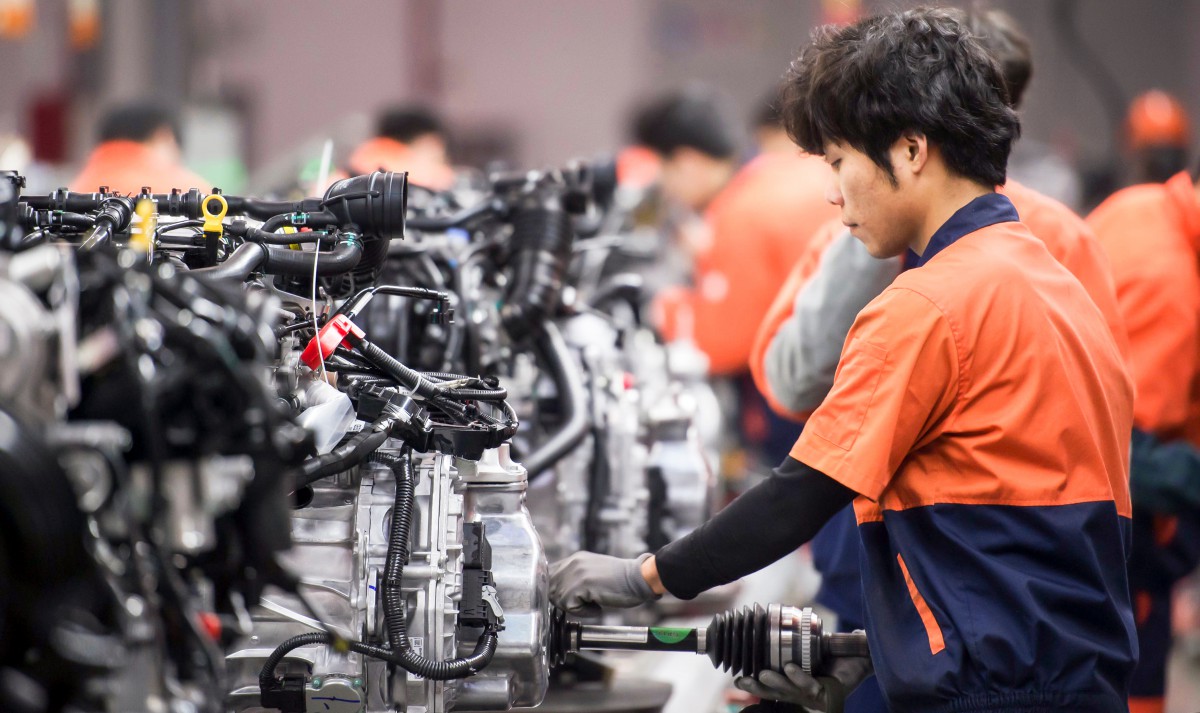
While there is high demand for skilled employees, graduates in the region often don’t measure up, leading to youth unemployment.

In Southeast Asia in 2017, youth unemployment was lowest in Singapore at 4.6 percent, followed by Thailand’s 5.9 percent, Vietnam’s 7 percent and the Philippines’ 7.9 percent, Malaysia’s 10.8 percent and Indonesia’s 15.6 percent.

Commenting on Malaysia’s situation recently, local politician Yeoh Bee Yin noted that the country’s youth unemployment rate is up to three times higher than the national unemployment rate (3.17 percent in 2017). For comparison, 10 out of every 100 youths are unemployed while the same is true for only three in every 100 workers of all ages.
shutterstock_774597796

There’s a growing skills mismatch in Asean’s labour market. Source: Shutterstock

She noted that one in four graduates has remained jobless six months after graduation.

“This implies that our tertiary institutions are not producing the workforce that is needed by the market. There is a mismatch between the supply and demand of the workforce. That is the first structural problem,” she said in an editorial.

“Growing up, we are told that a university degree is a ticket to a successful life, or at least a better life than our parents. It doesn’t apply anymore today. Many of our young people today, even with university degrees, are not earning enough to cope with the rising cost of living.”

This mismatch is real. Of the thousands of available jobs in the country, only 23.5 percent are high-skilled positions suitable for university graduates.

SEE ALSO: How are Southeast Asians today faring differently to their parents?

Earlier this year, Myra, a 29-year-old University of Brighton master’s degree holder described how she was never able to get a job that paid her more than RM3,600 (US$900) a month despite her credentials and years of experience.

“I am so, so upset and disappointed,” she said.

Despite holding degrees, many like Myra live in relative poverty: earning below RM2,700, the living wage recommended by Bank Negara Malaysia, Malaysia’s central bank.

Azzief Khaliq, who holds a Masters in Communications from Universiti Sains Malaysia, said there was little or no incentive for him to work full time as his credentials do not set him apart from those with lower qualifications.

His MA, he said, “is pointless in the workforce.”

“There seems to be an odd lull in that sort of 4 or 5-year employment experience area I find myself in, where it’s either real entry level stuff or stuff that seems to want more out of the employees than I can offer.”

Rising industries

With a combined GDP of US$2.4 trillion, Southeast Asia’s economy is ranked the seventh largest in the world and is pacing itself to rank as the fourth largest by 2050.

However, the progress is stymied by skills shortages, particularly in tech.

The Information Technology (IT) sector is one of the highest on the list of skills that are scarce.

Kimberlyn Lu, Country Manager of recruitment firm Robert Walters Malaysia, said there is a rising demand for quality candidates with niche tech skills in the region.

SEE ALSO: Are Southeast Asia’s education systems preparing workers for the future?

“IT is an industry that is rapidly growing, and candidates with niche skills, such as cloud architects, cybersecurity professionals, data mining and analytics experts for example, are not only sought-after by IT companies, but also traditional companies looking to digitalise,” she told Asian Correspondent.

“The digital economy and growth of online retail has also driven the demand for sales and marketing professionals in the e-commerce sector. Candidates with both digital and merchandising skills are also highly sought-after.”

In human resource, and legal and compliance fields, the firm has also seen companies seeking out talent who not only have specialised knowledge within their fields, but who can also act as business partners, and play strategic roles in building up businesses.

Initiatives
kula

Malaysia’s Human Resources Minister M. Kula Segaran. Source: Facebook

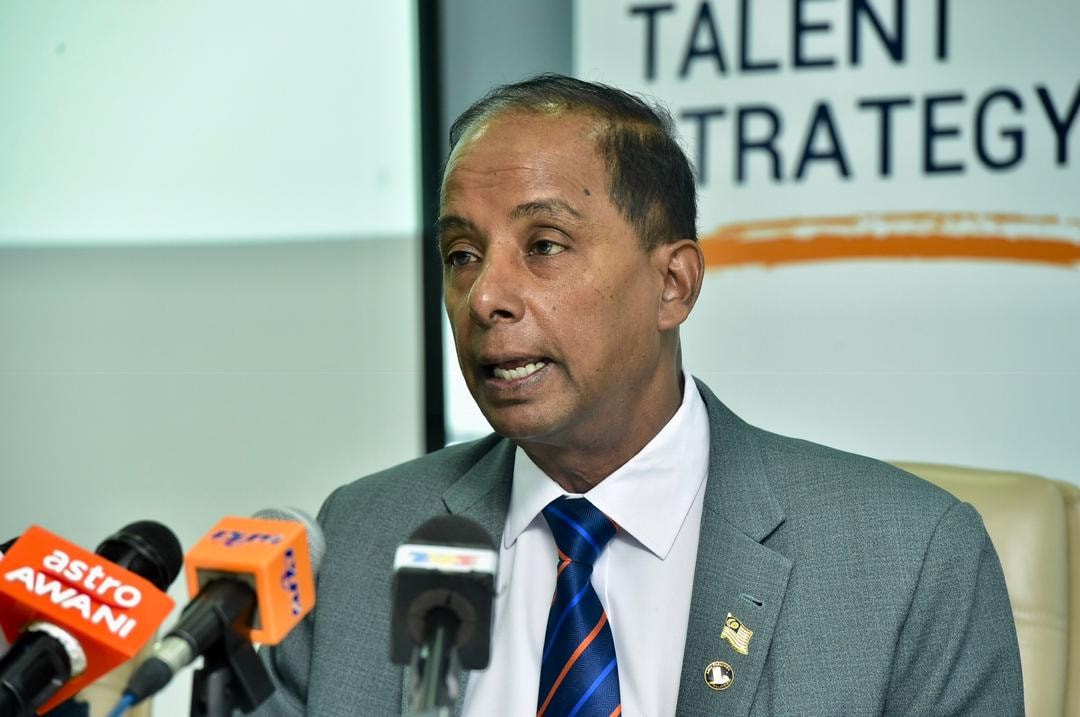
Malaysia’s Human Resource Minister M. Kula Segaran, in a statement to Asian Correspondent, said the country’s youth unemployment rate was not much better or worse than those of advanced economies like Norway (10.1 percent) or Australia (13.5 percent).

“This is due to the fact that job seekers among youth are in a transition period (job-hopping) while actively searching for better and suitable job opportunities.”

Nevertheless, Kula Segaran says his government has been doing its part, including one initiative to provide jobs through www.jobsmalaysia.gov.my targeted at fresh graduates.

In the first six months 2018, a series of jobs fairs and carnivals organised by the ministry helped the placement of 95,387 job seekers, he said.

SEE ALSO: Employment: The 10 most in-demand skills for 2019

The ministry has also established a one-stop centre involving government agencies like JobsMalaysia, the Social Security Organisation (Socso) and Human Resources Development Fund (HRDF) to provide professional consultancy services for jobseeking and training.

Last year, a total of 1,694 trainees were successfully placed in jobs via the Graduates Enhancement Programme For Employability (Generate) programme that equips unemployed graduates with soft skills.

“(This includes) widening apprenticeship and industrial training programmes to increase youth employability through soft-skills enhancement dan on-the-job training programme,” he said.
imf

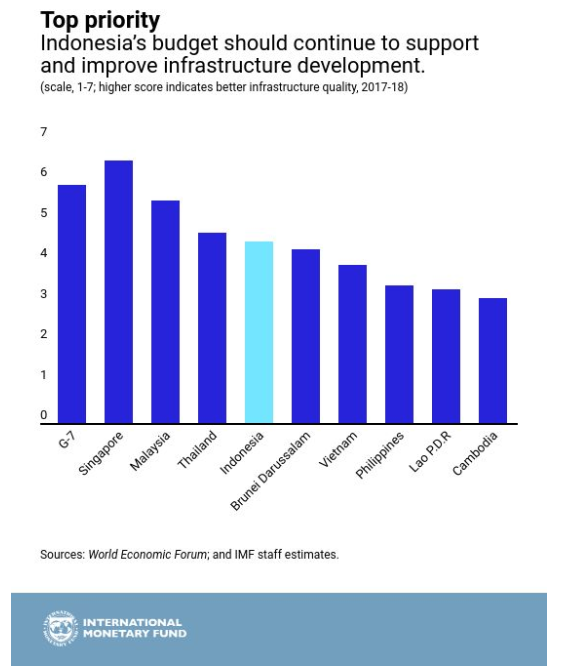
In neighbouring Indonesia where youth employment remains a worrying trend, the median age of the country’s population is 28. And its working-age population as a share to the total population is fast expanding, exponentially increasing the current demand for employment.

To create jobs, the International Monetary Fund has urged the government to prioritise infrastructure development to spur private investment and generate growth, which would, in turn, result in more employment opportunities.

Additionally, the IMF also suggests reducing state control and entry barriers, particularly in the power and transport sectors, as well as lowering trade and foreign direct investment restrictions to boost competitiveness.

“Emphasis should be given to improving coordination among different ministries and local governments to avoid conflicting regulations.”

The republic’s education quality also needs enhancement, which means more efficient spending by strengthening the link between compensation and performance in the education sector.


Source link

Commentary: Don’t stash your child’s hongbao money in the bank. Give them a chance to spend it

0

SINGAPORE: With Chinese New Year closing in on us, have you given thought as to how to handle your children’s hongbao money?

Some parents allow their children free rein and then wonder what they did with all that cash.

Others sweep up (and bank in) all of the hongbao money even faster than you can say gong xi fa cai, for saving towards their children’s education.  

But in today’s consumer-driven, online shopping world, are these strategies enough?

TO STASH OR TO SPEND

Every Chinese New Year, we set aside a large portion of their hongbao money for saving.

Because this runs into the hundreds, we will bank it into our family account, and enter the amounts into a savings spreadsheet, so that the kids can visually track their savings growth. We also offer them an attractive interest rate.

Then we give them S$20 to spend on anything their hearts desire.   

But why allow them to spend S$20? Isn’t it best to save everything for a rainy day?

I’m not arguing against saving, but I’m not sure if swiftly sweeping the hongbao dollars away into a bank account, safely hidden and out of reach, actually helps a child understand its value.

For us, it’s important to give our children some form of practice with managing cold hard cash.

We all know that children learn better when dealing with concrete things. They also learn well through making mistakes.

So what better time to let them handle a bundle of crisp dollar notes than at CNY?

If they don’t get any money to spend at all, then we should be asking: What other opportunities are there for them to practise making money decisions?

In this day and age where you can buy anything at the click of a button, over-controlling their hongbao collection may deprive them of a golden learning opportunity – one that goes beyond the well-contained boundaries of the weekly allowance.

primary school students first day of school 2018 (3)

Students buying food at their school canteen. (File photo: MOE)

MONEY SENSIBILITIES START EARLY

Children can develop sensitivities towards money from a very early age.

I was having tea with my daughter some time ago, when she glanced at my receipt and discovered that I’d been charged for two cups of tea when I only ordered one.

At Primary Two, she was even more vigilant about money than I was. (I didn’t even take a second look at the receipt.)

We didn’t do a lot at that time to train her about money. What we did was use every week’s allowance to teach her how to allocate her leftover coins into her three piggy banks: Save, Share, and Spend.

READ: The year of trials and tribulations, as the parent of a newborn, a commentary

The pre-school and early primary ages are the best years for picking up healthy money habits.

Don’t wait till they hit adolescence to focus on these skills, as it will be all too easy then to give in to temptations in the form of the latest fashion or status symbols. 

This is why we’re affording them this small luxury at Chinese New Year; we want them to practise making purchasing decisions.

Along the way, we guide them by asking questions such as: Are we really stretching our dollar? Are there better value options around? Or is it practical to have in our home?

We also allow them to make mistakes.

READ:  Learning to let go as a parent of a Primary 1 child, a commentary

What they do with the S$20 can be very telling.

Sometimes they get distracted from their goal of a book or toy they’ve been wanting to get, and start spending on a snack or some pretty stationery. Without proper planning, they may end up not having enough for whatever they had planned on getting in the first place. They will have to live with the consequences.

Such mistakes are invaluable in teaching them essential planning and budgeting skills. It’s better that they make mistakes with S$20 now than for them to suffer financial losses in the range of thousands later.

FILE PHOTO:  Children stand at Gymboree store as shoppers buy gifts on Christmas Eve at the Beverly

Two children stand near a 60 percent off sale sign at a Gymboree children’s clothing store on Dec 24, 2008. (Photo: REUTERS/Fred Prouser)

Chinese New Year isn’t the only time where they get to practise making money decisions.

Every year, we work with our children to set two savings goals, where they are allowed to use their savings to purchase two items over the course of the year. These items are capped at S$50 maximum value.

These are opportunities for us to guide them – not just in saving, but also in spending.

Setting short-term goals gives them the motivation to save, knowing that they are working towards something that can be realised in the near future.

Through such planning and goal-oriented habits, our children are practising the skill of delaying gratification.  

It also helps us avoid the head-to-head battles that are often seen in toy stores on weekends – the one where the child cries: “I want it now!”

In a world dominated by instant gratification and with a host of entertainment and pleasure options, delayed gratification is arguably one of the most crucial skills for a child to have.  

READ: This festive season, parents should exercise self-control in giving, a commentary

ESTABLISHING PRUDENT MONEY HABITS

Warren Buffett once said:

The financial habits you develop when you are young are going to go with you into your adulthood.

You only need to look around you to see that this is true.

So whether you allow your child S$2 or S$200 from their hongbao money, what matters is that they get hands-on with managing it.

We can also use examples from everyday life to teach our kids.

For example, how are our children using their money at school? Do they remember to save a portion of their allowance at the end of the week, or set it aside for a goal?

When we’re at the supermarket, do we teach them to compare prices with the value or weight of the grocery items?

Teaching children money skills is an ongoing conversation. One where we can encourage them to question our purchases to gain insights into what we value and how we make decisions as a family.

It also has to come through the real-life experience of managing, and sometimes mis-managing, a small sum of money.

With practice, the next generation will come to internalise the value of saving and spending wisely, grow more generous towards others, and not rush into making financial commitments with money they don’t have.

June Yong is a mother of three, an educational therapist and owner of Mama Wear Papa Shirt, a blog that discusses parenting and education in Singapore.

Source link