Home Blog Page 844

Confined conditions, stressful scenarios, tough training: The life of a Singapore submariner

0

SINGAPORE: A plethora of gauges, indicators and buttons loomed menacingly on the panels in front of me. 

With Military Expert (ME) 2 Ho Kwan Wei looking over my shoulder, I gripped the helm – or steering wheel – to my untrained eye with one sweaty palm, and eased the hydroplane control lever with another.
 
Get this right, and I could already visualise a 51m-long vessel smoothly descending the tropical waters of the Singapore Strait. Get it wrong and I could ground a 1,200 tonne behemoth.
 
The vessel began a gentle lurch downward as I attempted to reach the target depth. ME2 Ho rattled off a series of instructions – I’d have to keep my eye on the gauges and indicators, as well as manage both the helm and the hydroplane control lever, to ensure that the submarine would reach the right course and depth.
 
30, 50 and eventually 60 – the yellow digits which flashed the submarine’s actual depth reminded me of just how out of my own depth I was.
 
“I think we need to increase the depth for him,” ME2 Ho eventually said, as I cracked an embarrassed smile. A few more seconds and I probably would have hit the seabed.
 
It’s just as well that I am not on an actual submarine, but starting off slow with the Submarine Steering and Diving Trainer (SSDT) at the Republic of Singapore Navy’s (RSN) submarine training centre at Changi Naval Base.
 
One of the two SSDTs at the training centre, the simulator provides the crew with training in steering and controlling a submarine, emergency drills as well as co-ordination between crew members in the steering and diving section.

This particular SSDT replicates the steering control console of the RSN’s Challenger class submarine, while the other is used to mimic the console of the RSN’s Archer class submarine.
 
While reporters gave the SSDT a go – to varying degrees of success – a three-man crew of ME2 Ho, ME4 Kelvin Kwok and Captain (CPT) Gabriel Tang executed a series of drills flawlessly.
 
Before sending the simulator into a dive, ME4 Kwok, responsible for the diving console located behind steering controls, opened up the ballast tank to take in water, ensuring the submarine could submerge.
 
Working in tandem with him, ME2 Ho then steered the submarine to the required course and depth. Unlike me, he kept to the set depth – not a metre more or less.
 
Ordered to perform a course change by CPT Tang, the officer of the watch, ME2 Ho, turned the submarine at speed, maintaining its required depth with meticulous precision.
 
As fire breaks out in the control room – another scenario this three-man crew have to battle through – movements remained clockwork. 
 
Darkened masks which simulate the poor visibility due to smoke are donned and ME4 Kwok finds his buttons on the console with nimble fingers, following the proper sequence to react in this emergency situation.
 
The submarine submerges, crisis averted.

Submariners operating the Submarine Combat Tactical Trainer

Submariners from Republic of Singapore Navy operating the Submarine Combat Tactical Trainer. (Photo: MINDEF)

Named after one of the navy’s Challenger-class submarines, the RSS Challenger submarine training centre was launched in 2015. It is a one-stop facility to conduct training for submariners and also features simulators like the SSDT.
 
In another room, submariners are being put through their paces on the Submarine Combat Tactical Trainer. This simulator consists of analysis, surveillance, command and control as well as weapon control consoles.
 
Submariners train here at an individual, cluster and team levels, and learn how to track the movements of vessels above the surface, determine the characteristics of these vessels as well as come up with possible solutions.

WHAT IT TAKES TO BE A SUBMARINER  
 
Not everybody can be part of this elite group – would-be submariners are put through a stringent selection process where they are subjected to cognitive and psychological type tests.
 
“Navigating on the surface is a lot different from navigating underwater,” said Lieutenant Colonel (LTC) Fong Chi Onn, commanding officer of the RSS Swordsman. “Learning to drive a ship – you only have two dimensions of travel. Driving a submarine, you have an additional third dimension, which is the underwater dimension.”
 
On top of having possessing the requisite cognitive abilities, would-be submariners cannot be claustrophobic. They also have to pass physical tests – for one, would-be submariners also cannot be asthmatic.
 
“Submarines are a very complex and psychologically demanding environment to work in. We work and we live in very tight, confined spaces on board,” said LTC Fong. “In totality of the living space on board is less than that of a three-room HDB (Housing Development Board) flat and you’ve got 28 people who move in day in day out, working and living in the same space. So personal space is at a premium.
 
“When we deployed for days and even weeks on end, sometimes we can lose track of day and we can lose track of night …. we rely on equipment to tell us what time it is.”    
 
Those who pass the selection process will then be put through nine months of training. There are various checkpoints interspersed throughout, and individuals who are unable to perform up to standard are cut.
 
The training ends with a “Deep Dive” test, where would-be submariners are subjected to intense mental and physical stresses under controlled conditions.
 
For example, trainees are put through a series of physical tests on board, such as the “Blind Man’s Walk”, where they have to move along the submarine blindfolded, locating key equipment along the way.

LTC Fong Chi Onn, commanding officer of the RSS Swordsman

LTC Fong Chi Onn, commanding officer of the RSS Swordsman. (Photo: Matthew Mohan)

“Teamwork is important, we go through a very stringent series of assessments and tests to qualify to become a submariner but we don’t just need capable and intelligent people. We need strong, capable people who can form then strong teams and work together as one,” said LTC Fong.
 
Becoming a submariner also means time spent away from loved ones.
 
“We don’t have the luxury of picking up a mobile phone and calling back home to see how things are. We don’t have the luxury of going on the internet and sending an email back to see how things are happening back home as well,” LTC Fong said. “It’s quite challenging to keep in touch with family back at home.
 
“Our families have to be strong with the knowledge that we are out there doing what we need to do.”
 
While interpersonal relationships can be often strained, the time spent together often helps submariners build strong friendships, said LTC Fong.
 
“It’s definitely testing on interpersonal relationships, but on the boat as well we also build and forge very strong friendships – with me and my crew … we have grown such a strong understanding that sometimes when I give an order I don’t even have verbally have to say it – I just look in the direction, give him nod and he understands what I need and I understand what he wants.”
 
“So the strength and bond that we have as submariners, the camaraderie, is extremely strong.” 
 
NEW YEAR, NEW SUB

The RSN’s submarine fleet has grown from strength to strength. It acquired its first vessel, a Sjoormen-class submarine from the Royal Swedish Navy in 1995. This was quickly followed by three more of such submarines two years later.
 
After undergoing tropicalisation, these vessels, which were built in the 1960s, were launched as the RSN’s Challenger class submarines.

Two Vastergotland class submarines were the next to be acquired in 2005 and were launched as the RSN’s Archer class. 

READ: ‘Submarines like BMWs’: A closer look at the Navy’s newest, custom-made German submarine

The new kid on the block will be the Type 218SG submarine, a submarine made for Singapore from scratch. The RSN has purchased four of the German manufactured Type 218SGs – the first of which will be launched in Germany on Monday (Feb 18).

The Type 218SGs boast a modern combat system with an improved sonar which listens to sounds like propeller noises and water flow, locates enemies faster and identifies them more accurately. Another improvement is the Type 218SG’s air-independent propulsion (AIP) system, which allows it to last underwater two times longer than RSN’s current submarines.

type 218sg submarine graphic

Technical specifications of the Type 218SG submarine.

The Type 218SGs, which are slated for delivery from 2021 after going through intensive testing, and will eventually replace the Challenger and Archer class submarines.
 
As the RSN gradually transitions to the new platform, new challenges will await the submariners of the RSN’s 171 Squadron. But they remain confident in charting the new course.
 
“It is definitely a challenging job and it is not easy by far,” said LTC Fong, who along with his crew participated in the Singapore-India Maritime Bilateral Exercise in November last year. “But it is also fulfilling and it’s also one of the rare things that not many people get to do.”
Source link

Burning smell detected in northeast Singapore ‘likely’ related to Johor landfill fire: NEA

0

SINGAPORE: A burning smell detected in the northeast of Singapore over the last two days was likely related to a fire at a landfill in Johor, the National Environment Agency (NEA) said on Saturday. This is the second such incident in two weeks.

In response to queries from Channel NewsAsia, NEA said it received nine feedback cases between the evening of Feb 15 and 11pm on Feb 16 regarding the burning smell.

“Eight of the nine feedback cases were received after 6pm on Feb 16. During the last smell episode on Feb 8, NEA had received 31 feedback cases,” the agency said.

On Feb 8 and 9, a fire at the Bandar Tenggara landfill in Johor also resulted in a smoky smell in the eastern parts of Singapore.

NEA added that the Singapore Civil Defence Force (SCDF) confirmed that there was no major fire incident in the northeast of Singapore.

READ: Smoky smell in Singapore’s east caused by Johor landfill fire, says NEA

The Tanjong Langsat landfill in Pasir Gudang

The Tanjong Langsat landfill in Pasir Gudang lies northeast of Punggol. According to NEA, winds have been blowing from the northeast. (Image: Google Maps)

It said that the Department of Environment (DOE) Johor provided an update that while the fire at Bandar Tenggara in southeast Johor had been put out, there was another fire at the Tanjong Langsat landfill in Pasir Gudang.

“The prevailing winds have been blowing from the northeast, and this is expected to persist for the next few days. It is likely that the burning smell detected in the northeast of Singapore is related to this fire,” NEA said.

NEA said that as of 11pm on Saturday, the Pollutant Standards Index (PSI) at the North, East and Central regions ranged from 42 to 48, in the “Good” range, while the 1-hr PM2.5 readings in those regions ranged between 6 to 12µg/m3 (Band I), which is in the “Normal” range.

“The ambient volatile organic compounds levels also continue to remain within safety limits. NEA will continue to monitor the air quality, and will provide updates should there be any change in the situation,” it added.

On Saturday, a Channel NewsAsia reader reported experiencing a burning smell in Punggol.

The reader, who only wanted to be identified as Mr Foo, said he also saw smoke coming from a source that lay northeast of Punggol.

This story came from a reader tip-off. If you would like to send in photos or videos of something newsworthy, WhatsApp our Mediacorp news hotline at +65 8218 8281 or message us on Facebook.

Source link

‘We have never taken a full salary’: Sutachi hawkers to close in March

0

SINGAPORE: In March, Chinatown Complex food centre will undergo renovations and will shut for three months. Alex Ho and Gay Yu Ting who jointly own a stall there are taking that as the cue to close for good.

Mr Ho, 28, and Ms Gay, 32, are behind Sutachi, which offers Japanese-Italian fusion food more commonly found in cafes.

Ingredients in their dishes include foie gras, wagyu beef, squid ink and salmon mentaiko, uncommon in hawker fare.

“We wanted to provide the opportunity for people to try new foods in an affordable setting,” said Ms Gay. 

WATCH: Chinatown Complex to close for renovations in March 2019 

An order of their rice bowl comes with a side of soup, and costs between S$5 and S$7.50. The most expensive item on the menu is a foie gras dish with slices of beef at S$19.50.

The stall opened in December 2017 and was featured on food blogs and review sites for their affordable take on gourmet fusion food. But that did not necessarily translate into consistent profits.

Sutachi food

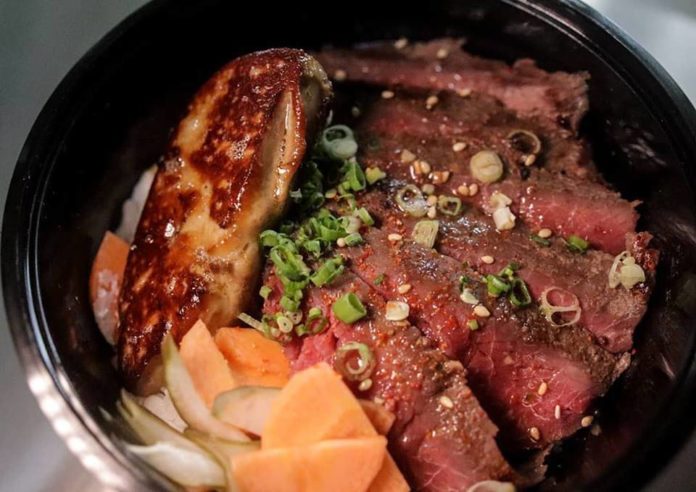
One of Sutachi’s specialties is the Foie Gras Gyu Donburi. It’s also the most expensive item on their menu at S$19.50. (Photo: Sutachi)

“When we opened, the first three months was very good (because) people were interested. Friends came, Eatbook came. That time, we made money. After that, it was survival period,” Ms Gay said. 

“Even though we were popular, we were not popular enough. The stall still could not cover our salaries. We had to take a pay cut. We have never taken a full salary in the last 14 months,” she added.  

BECOMING HAWKERS

Ms Gay worked as an auditor for six years before she decided to pursue her passion in the culinary arts. She enrolled with At-Sunrice GlobalChef Academy where she met her business partner and friend Mr Ho. 

Both of them worked in restaurants and hotels for a few years after graduating from the academy. Mr Ho said he started out with a monthly salary of S$1,600 which grew to S$2,000 by the time he left to set up Sutachi four years later.

“As chefs, we know the food costs, suppliers and how the F&B business works. When you know the food costs, margins and your salary, you know how much the business is making. I asked myself why do I want to continue working for someone else?” said Mr Ho. 

WATCH: A taste of art for diners as part of initiative to make hawker centres more vibrant

They each invested S$15,000 of their own savings into the venture. They chose to set up stall at a hawker centre as it was the most financially viable option, after surveying a range of alternative locations.

“In a hawker centre, we don’t have to pay for the seating or buy any furniture. That’s already saving a lot,” Ms Gay said. 

“The rent at a hawker centre is also more accessible. It is based on how much you are comfortable with bidding at the start,” Mr Ho said. 

Their successful rental bid for the stall at the Chinatown Complex food centre was S$1,000.

Sutachi opening

Sutachi on their opening day. (Photo: Sutachi)

They considered opening a stall at the newer Socially-Conscious Enterprise Hawker Centres (SEHC) where they thought their food would be more well-received but found it to be too expensive. 

They were quoted close to S$4,000 in monthly costs which include S$1,600 for rent. The rest were for conservancy charges, table cleaning and dishwashing fees, rental of a cashless payment system as well as a concept and marketing fee. 

Commentary: Hawkers want to embrace cashless payments but say they need help tackling barriers

“There are too many unnecessary costs. The S$4,000 doesn’t even include utilities, food costs and our salaries. How many bowls do we have to sell to even reach the break-even point,” Mr Ho said. 

In addition, they did not have total control over their menu and food prices and had to contend with stringent contractual terms.

“If we want to change our menu, we have to write a proposal and submit it to management. There will be another round of food tasting and the change is subject to approval,” Ms Gay said. 

“Over here if I want to change, I can just stick ‘not available’ and change right now,” Mr Ho said. 

CRUNCHING THE NUMBERS

They spent more than S$6,000 outfitting their stall, said Ms Gay, who is in charge of the books.

About S$1,500 a month went to rent, utilities and a cleaning service.

The cost of ingredients for their dishes range between S$2,000 and S$3,400 depending on the month, added Ms Gay. 

The stall which operates six days a week also has to make enough sales to pay them a monthly salary of S$2,000 each.

READ: Succeeding as a hawker: Industry veterans say conditions are challenging but not impossible

“With the expenses, it comes up to almost S$8,000. The average price of our food here is S$6. To hit S$8,000, we’ll have to sell about 1,300 rice bowls a month. It’s about 60 a day. When we started the stall, we agreed that our daily target is 50 to 60 bowls or about S$500 a day,” Mr Ho said. 

“It sounds very little but when you actually become a hawker, S$500 is very hard to achieve. When it’s a peak period, we can hit this target. But the thing is, there are too many lull periods,” Ms Gay said. 

These include the June and December school holidays, they said.

Even with the initial success in the first three months, the stall did not make money for both of them to bring home full salaries. 

“I’m doing the accounts so Alex will come and ask me, ‘So how, next week got salary or not?’ And I will say, this month not bad. Both of us will have half a salary of about S$1,000 each,” Ms Gay said. 

At its worst, they have had to take home nothing when Mr Ho went away for reservist. 

“When we get zero, it feels bad but I think the both of us understand the situation,” Ms Gay said. 

“If we were working for someone else then it’s a different story. When you are your own boss, it’s very clear to you if the business is not making money so you have no gripes about not taking a salary,” said Mr Ho. 

CAN THINGS GET BETTER?

Wanting to stem the tide and give their stall a fighting chance, Mr Ho and Ms Gay signed up with several food delivery apps to become more accessible for their customers. 

“We were very open to trying many methods but sales rose by just a little bit. Maybe it rose by 10 per cent? I didn’t really see potential growth in the future,” Ms Gay said. 

Friends who saw their predicament offered many suggestions which they explored.

“A friend said that our food is not suitable for the crowd around the Chinatown area because of the elderly folk. We considered moving to Amoy Street Food Centre where the crowd is mostly office workers,” Mr Ho said. 

“Once we did the calculation, the option to move to Amoy didn’t make sense anymore. Over here we have to sell 50 bowls. If we move to Amoy, and the rent is two or three times higher there, we have to sell 100 or more bowls over there,” he added.

Amoy Street Food Centre also has its operational challenges. 

Catering mostly to only the office crowd, hawker stalls make most of their dime on weekdays and between the 11 am to 2 pm time slot. This according to Ms Gay could make it very difficult for Sutachi to work out there.

“We figured out that every two minutes, we need to serve at least one dish that’s worth S$5. If we shift over there, we must sell our donburi (rice bowls) like cai png, which means that everything is pre-cooked and we just scoop and serve,” Mr Ho said.

Some friends also suggested a change of menu and focus on local food instead. While they agreed it was doable, they also recognised the stiff competition they would face.

WATCH: To save the hawker trade, would you pay more?

READ: Profit margins for hawker fare? As low as 20 to 30 cents

“Imagine you’re at ABC Brickworks Food Centre and you are selling Hokkien Mee. Do you think people will choose to buy from the young person to give them a chance or go directly to buy from the more established hawker?” said Mr Ho. 

“You might earn money when people who visit those famous, established hawkers and find that they are closed for the day. Those people will be like ‘Oh it’s closed but I still want to eat Hokkien Mee so I’m going to try it from another stall’,” said Ms Gay. 

DRAWING A LINE IN THE SAND

“We gave ourselves a year to see if Sutachi would work out. With a year, I have the profit and loss statements to look at. We made our decision based on what we saw. I told Alex that we are still making losses and I feel that the potential growth here is minimal. We’ve already reached our potential,” Ms Gay said. 

The three-month renovation of Chinatown Complex was a huge push factor. After sustaining losses for a year, the duo could not stomach three months without work and earnings. 

“There’s no money coming in and our savings are depleting. We need some kind of livelihood somewhere else,” Mr Ho said. 

Despite the lack of success, Mr Ho and Ms Gay do not see the last 14 months as a waste of their time and money. 

“I don’t think we failed. I take it as one year’s school fees. We still got to learn. We were losing money but we are happy that we managed to stay afloat for a year without having to top-up money or take loans,” said Ms Gay.

Sutachi was a way for them to understand the hawker trade and culture. 

“How and what Singaporeans think of the hawker trade and hawker food … I’ve stepped into a hawker’s shoes and I understand. For example, most are not willing to try new food. In a hawker centre, people want fast, cheap, good food. People who are attracted to fusion food won’t even go to the hawker centres,” Mr Ho said. 

“They would rather pay for the ambience and their Instagram-worthy photos,” Ms Gay chimed in. 

Both are quick to defend themselves against those who say young Singaporeans are not cut out for the tough hawker life.

“I will ask them, but have you supported young hawkers? Are you willing to try their food? If you’re not willing to try their food then how are they going to make money?” said Mr Ho. 

SUPPORT FOR YOUNG HAWKERS

To help support young hawkers like Mr Ho and Ms Gay, the National Environment Agency (NEA) introduced a hawker incubation programme in February last year to help ease difficulties they may have in going into the trade.

Under the programme, pre-fitted stalls are offered for rent for six months at 50 per cent off the market rate. Since its launch, NEA said that it has received more than 40 applications for its 13 incubation stalls. Its applicants are also much younger, with an average age of 34 and the youngest at 27.

Hawkers at NEA-run hawker centres have a median age of 60 years.

READ: New programme launched for aspiring hawkers

READ: ‘I don’t even cook at home’: Young hawker starts his career without any culinary experience

“The programme came out two months after we started Sutachi. If we started our business later, we could have applied to the programme. Maybe it will help to cut some losses,” said Mr Ho. 

“Maybe we’ll have more salary each month, S$250 more each because of the rental subsidies but other than that, I don’t think it will help much,” said Ms Gay. 

Source link

Commentary: Low self-esteem, depression and frequent flare-ups plague growing numbers of eczema sufferers

0

SINGAPORE: I met Jamie* when she was 35. She stopped work after the debilitating rashes from her eczema became unbearable.

Monthly flares left a red scaly rash all over her body and threw her into episodes of intense itches.

In between flares, she suffered from a constant itch and need to scratch, on top of the pain, bleeding and already intense damage to her skin from frequent scratching.

At work she struggled to complete her work assignments, having to stop working every 10 to 20 minutes to scratch. She also could not concentrate, exhausted from the bouts of waking up at night to an overwhelming itch. She took medical leave almost every fortnight.

Then there was 13-year-old Samuel*. Red, scaly rashes that covered his arms and legs affected his confidence. He entered my clinic with his head down, avoiding eye contact throughout the appointment. He had no friends as he avoided socialising at school.

DEBILITATING CONDITION

Those who suffer from this medical scourge have inflamed patches of skin that are itchy, red, cracked, and rough, and blisters sometimes occur. Eczema is particularly common in children but can develop at any age.

Eczema can be crippling for families with young children. Heart-broken parents helplessly watch their children in pain, while exhausted siblings are drained from being woken up at night when their brother or sister wakes to episodes of intense itch, crying, crushed by a condition they have little control over.

Primary school children suffer greatly from the condition. Stress during examination periods can cause more frequent flare-ups. The anxious child – sleep deprived and irritable by morning – may not perform as well as hoped, through no fault of their own.

Apart from frequent sleep disturbances and anxiety, eczema leave many sufferers with low self-esteem and even depression.

READ: Let’s talk about depression, a commentary

depression cognitive behaviour therapy

(Photo: Unsplash/Issam Hammoudi)

During their teenage years, several eczema sufferers end up victims of marginalisation or bullying, as their visible skin condition confers them an inescapable social stigma. Recreational activities are limited, as many tend to avoid sports and outdoor activities, to avoid perspiring and worsening their condition.

READ: Teens with eczema may not follow prescribed treatment regimen

In adults, frequent flare-ups can impair concentration, fuel frequent absenteeism and affect performance at work.

A patient once said to me:

Eczema is not just a skin problem, it scarred my life, inside and out. I wouldn’t wish it on even my worst enemy.

ECZEMA IN SINGAPORE

The occurrence of eczema in Singapore is one of the highest in the world. It is the most common skin condition in Singapore. Yet the occurrence in Primary One children has grown over the past five years.

This is surprisingly common in advanced Asian nations, including Japan where three in 10 infants suffer from the condition.

READ: Demand for help with skin issues on the rise in Singapore

A combination of genetics, abnormal immune system functionality, environmental factors and defects in the skin barrier, contribute to its development.

Research suggests that too clean a living environment may deprive the body of the beneficial bacteria essential for building a strong immune system. When our environment is too clean, the immune system just does not develop the cells needed to fight infections from allergens.

atopic eczema

Eczema is the most common skin condition in Singapore. (Photo: National Skin Centre)

With air-conditioned environments commonplace, the increased amount of time children spend in air-conditioned settings correlates with an increase in occurrence of eczema. Air-conditioners makes a room dry, sucking up moisture from the skin, precipitating eczema symptoms, and drawing air and allergens from the outside environment into the room.

Conversely, studies have also shown that children exposed to nature, whether through living in the countryside, or by having a pet dog at home, have stronger immune systems and are less likely to suffer from eczema.

READ: Exposing your children to dirt boosts their immune system, a commentary

TREATING ECZEMA

Most patients seek help only when their eczema worsens but treatments can prevent new outbreaks apart from relieving certain symptoms.

A reactive treatment applies emollients with anti-inflammatory topical therapy daily to eczema lesions, stopping only after the lesions subsided or cleared completely. A proactive treatment involves a long-term, intermittent application of anti-inflammatory emollients to previously affected areas and unaffected skin.

A proactive treatment is equally, if not more important, as it can reduce the occurrence of flares by almost eight times, according to studies. And as intervals between flares get longer, there is a greater chance of a child outgrowing the eczema.

I cannot emphasise how important it is for parents and children to be educated on good skin care and to treat eczema early. Not realising that areas of normal looking skin does not mean full recovery has been achieved, many discontinue treatment and hope to revert to their pre-eczema routine.

But caring daily for your skin must be a new way of life, including taking extra care to use fragrance-free and dermatologically-tested moisturisers, on top of continuing with proactive treatment.

Moisturiser

(Photo: Pexels/Linda Prebreza)

Generally, patients who use appropriate moisturisers find that their skin becomes less irritable. Small doses of antihistamines also help the itch.

Controlling the environment, ensuing that there is circulation of natural air for instance, or that humidifiers and filters to control external allergens, can also help.

The good news is eczema can usually be outgrown, as the condition goes into remission when the child grows and their immune system matures, generally 50 to 60 per cent of those who have had childhood eczema outgrow their condition.

However, the more severe the condition in childhood, the higher the risk of the disease continuing into adulthood.

WHAT MORE CAN BE DONE?

As a society, we must overcome the shameful stigma that those who suffer from this condition bear. Eczema patients deserve to live a healthy and productive life free from discrimination.

Some help to alleviate the condition can move the needle. Avoiding activities that involve sand, grass and heavily chlorinated water that can exacerbate the condition will help pre-schoolers with eczema.

In primary school and above, children with eczema should be seated under fans or near windows for fresh, circulating air. Giving them options to wear loose, cotton clothing (for example, Physical Education attire) would also go a long way in reducing discomfort, as many school uniforms are made out of synthetic fibers that can trap heat.

Education is also key where the condition is often seen as “contagious” or a result of someone being “dirty”.

A 2-year-old patient of mine, goes to childcare on a daily basis. Initially, the teachers were unsure of how to help. However, her mother taught the teachers how to alleviate the child’s condition by applying moisturisers after showers, keeping her cool and having her stay away from sand pits.

Eczema due to haze

A file photo of a child with eczema showing the condition of her skin on her arm (Photo: Ngau Kai Yan)

The teachers eventually learnt that eczema was not contagious and could be managed. They taught the same to the rest of the patient’s classmates. Soon after, the other toddlers socialised and played together. The patient now enjoys going to school in spite of her condition.

Primary school health education needs to include basic education on skin diseases – since it is most apparent in children at this age.

As the above example showed, parents and teachers themselves need to be equipped with knowledge on the misconceptions about the condition, the facts, and how they can help young children in their care perform tasks required of them.

In the workplace, having an understanding of the condition can go a long way in helping an eczema suffering employee feel supported and remain productive despite the ailments the condition brings.

Flexible hours or work from home options allow patients to create a comfortable work environment that helps manage the condition, for instance. Removing dust and allergen traps like heavy curtains and carpets, and regular air-conditioner maintenance are effective ways to keep the work environment conducive.

When Jamie understood the pathogenesis of eczema, she learnt how to cope with the flare ups, maintain her skin’s moisture and improve her overall condition. Happily, Jamie has since returned to work.

One thing both Jamie and Samuel had in common was the mindset that they have no choice but with this condition for the rest of their lives. They are not the only ones, as many eczema-sufferers are so used to seeing their skin in rashes they give up all hope of normalcy.

But there is optimism for those who suffer from eczema. With treatment, public education and support from those around them, these patients can lead a healthy, productive and stigma-free life.

*Pseudonyms have been used.

Dr Joyce Lim Teng Ee is a dermatologist in private practice at Joyce Lim Skin and Laser Clinic. She recently spoke at the inaugural Asia Derma conference held in Singapore in December 2018.

Source link

For a pay packet, they risk drowning, crocodile attacks and being hit by ships

0

SINGAPORE: Whenever Mr Terrence Lee heads off for work, his family, especially his mother, worries and prays for his safety. And for good reason too.

“Every time we’re in the sea, we fight with many uncertain elements, such as underwater currents, strong winds and even heavy rain,” said the commercial diver, who does anything from underwater inspections to welding to salvage operations.

Then there are marine creatures like jellyfish and crocodiles, as well as poor visibility conditions at times.

There have been at least six commercial diving-related deaths in Singapore since 2010, according to media reports.

READ: 27-year-old diver dies after accident in waters off Pulau Sebarok

Mr Lee himself landed up in hospital once, after he fainted as he surfaced. Yet despite the dangers and demands, it is a job he loves.

Commercial diver Terrence Lee landed up in hospital once, after he fainted as he surfaced.

Mr Terrence Lee.

The risky work of commercial divers like him is highlighted in a four-part series on the programme On The Red Dot. (Watch the episode here.)

HE FELT A CONNECTION

Singapore has about 200 inshore commercial divers, who are certified to dive in Singapore’s waters.

To work as a diver, one must be at least 18, possess a commercial diving “Fit to Dive” medical certificate and a certificate of training in commercial diving, according to the Commercial Diving Association (Singapore) website.

Commercial divers must be at least 18 and have a Fit to Dive certificate, among other qualifications

Mr Lee, 36, was a Singapore Armed Forces regular for 10 years before he was introduced to the world of diving by his uncle, a scuba diving instructor.

Recounting his first dive, he said: “The feeling was like, wow. I felt very connected, very peaceful … It was a very new environment for me: The fish swimming, the depth of the sea, the corals.”

That was when he knew this was for him. But he did not make an immediate career switch owing to the risks involved and the fact that he had two children aged two and one.

“I had to (decide), if I have to give up everything, whether I could sustain and provide enough for the family. It was a little bit of a struggle,” he said.

Commercial diver Terrence Lee on a boat communicating with a diver underwater.

Mr Lee on a boat communicating with a diver.

Finally, two years later, he quit his job to focus on commercial diving.

“Some of my friends might have thought that I was out of my mind, at such a late age, to transition to a new career, to do something people would avoid,” he added.

His job entails him being a jack-of-all-trades: He maintains and repairs vessels, and even does construction work. “I also do underwater cleaning of vessels (and) polishing of vessel propellers,” he cited.

It might seem easy … but to conduct the operation underwater is more complicated.

Commercial divers also maintain the navigational buoys for vessels to manoeuvre safely into Singapore’s ports.

Goods and daily necessities like food arrive on vessels that depend on the work of commercial divers

Goods and daily necessities like food arrive on vessels that depend on the work of commercial divers. (File photo: AFP/Roslan Rahman)

“Our line of work is invisible to the public. They don’t see our existence, and most people don’t really understand what we do,” said Mr Lee. “They imagine that every day, we’re swimming in beautiful water, seeing beautiful marine creatures.”

HELPLESSLY ADRIFT

When in the water, he must be mindful of the hazards around, including passing vessels, and be in good physical and mental condition.

Last May, commercial diver Jake Seet went missing while conducting underwater operations for a vessel in the Western Anchorage, near Sentosa. His body was found two days later, on May 7.

READ: Body of missing diver Jake Seet found in sea off Sentosa

READ: ‘Just jump’: In commercial diving industry, claims of risky practices surface

In June, 27-year-old Mohamed Firdaus died after he was struck by a concrete pile while working on a project in the waters off Pulau Sebarok.

Pulau Sebarok

Pulau Sebarok, off southern Singapore April 18, 2012. (Photo: Reuters/Tim Chong)

Mr Mohd Ismail Sulong was more fortunate. In November, he became entangled in a fishing net while he was working near Pulau Tekong, and because of the currents, he drifted for more than 20 kilometres.

The waters were choppy, recalled the 52-year-old, and he was fearful that a vessel would hit him. By the time he was picked up in Malaysian waters, he had swallowed too much water.

READ: Singaporean diver who drifted off course rescued by Malaysian authorities

He had to undergo an operation once he was back in Singapore, and until he is cleared for diving, he can do only deck work.

Mr Terrence Lee with Mr Mohd Ismail Sulong, who has 15 years of commercial diving experience.

Mr Lee with Mr Mohd Ismail Sulong, who has 15 years of commercial diving experience.

Mr Lee, who bumped into Mr Ismail during a visit to a clinic for his annual check-up, pointed out: “No matter how simple (the job), we need to expect the unexpected.

In this diving industry, most of the accidents occur when people don’t adhere to whatever safety (procedures) are in place, due to overconfidence or … taking shortcuts.

For commercial divers, there is a code of practice set by the authorities, which diving operators must adhere to, and it includes requirements for equipment use and certifications to attain.

Safety, said Mr Lee, is his main priority, and he knows there is little margin for error.

“When we’re facing a situation (underwater), if certain safety procedures aren’t followed, definitely there’s no second chance,” he said. “There’s no chance for … a retake.”

Safety is commercial diver Terrence Lee's main priority and he knows there's little margin for error

FAMILY SUPPORT IS IMPORTANT

Apart from the dangers, his hours are unpredictable. “We have to get to work at odd hours. Sometimes it can be 2am,” he said. “We have to be very flexible.”

So family support is important to this father of four; they “have to understand” what his job entails.

His mother, Mdm Josephine Chang, still struggles to come to terms with what he does. Every time Mr Lee, a commercial diver for eight years, leaves for work, she questions him about his operation details and what time he would end.

Mdm Josephine Chang still struggles to come to terms with her son Terrence Lee's job as a diver.

Mdm Josephine Chang.

“I pray very hard for him. The children also pray very hard,” she said. “He can be at sea for maybe a couple of days and not be reachable … We (can) totally lose track of him.

Many a time, (we) just hope that there’s no bad news.

Tearing as she talked about the time her son was hospitalised, she said: “It was quite scary.”

Yet despite her unease over his vocation, she acknowledged his right to make his own choices.

“If they feel very happy … with what they wanted to do, I’d have no regrets for letting my children choose their own path. Even (if something) negative happens, I think that we take it (as) fate,” she said.

At sea, commercial diver Terrence Lee may not be reachable, which explains his family's anxiety.

If given a choice again, Mr Lee would still be in this profession. “Divers are a unique breed of human beings,” he said. “Some even have nearly encountered death before, but they’re still … looking (forward) to the sea every day.

“We aren’t looking for any fame or recognition in this line … We’re just looking to go to work safely and to return to our families.”

Watch this episode here. On The Red Dot airs on Mediacorp Channel 5 every Friday at 9.30pm.

"Divers are a unique breed of human beings," says commercial diver Terrence Lee.

Source link

Commentary: Bike-sharing e-wallets, peer-to-peer lending and the astronomical rise of shadow banking

0

SINGAPORE: When many Singaporeans lost their deposit to oBike after news of its ghastly exit rocked the nation, consumers awoke to the risks of putting money into an e-wallets and the possibility that they might find theirs emptied all of a sudden, with little recourse for help.

That was more than six months ago yet users who have tried to get a refund on their mandatory deposits are still waiting. A shocking S$8.9 million from oBike owed to users is still outstanding.

oBike liquidators are supposed to have met creditors last month but had earlier warned that “the company’s winding up is still ongoing and no payments or distributions will be made.

READ: oBike’s closure, a cautionary tale about poorly conceived business ideas, a commentary

abandoned obike after end July deadline (1)

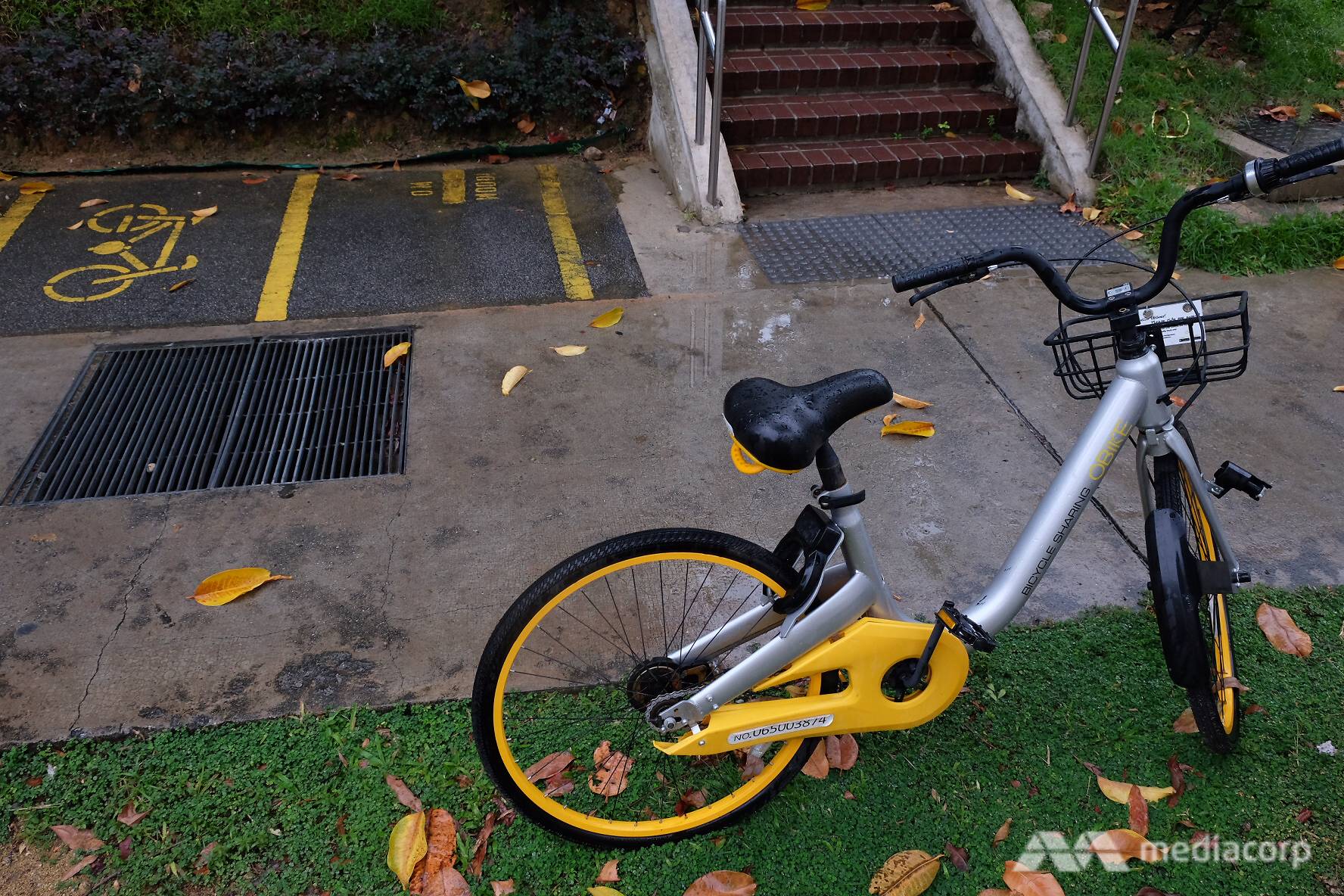
An abandoned oBike bicycle along a footpath in Simei on Aug 1, 2018. (Photo: Matthew Mohan)

RISE OF FINTECH

I was reminded of how much power these companies with e-wallets have at the recent Singapore Fintech Festival where banners and booths of banks such as DBS, OCBC and Bank of China outsized those of fintech companies, yet the vast number of these other fintech companies outstripped their banking counterparts. 

This battle is familiar, not just to consumers and those in the financial industry but also regulators. 

“There will be another financial crisis … but it’s going to look very different from the last one,” said Monetary Authority of Singapore managing director Ravi Menon. “A good part of lending has shifted to non-banks … this is something we need to watch very closely,” he added, pointing also to how lending by banks meanwhile has become more responsible because of tighter regulations. 

READ: ‘Look at where debt has gone’ – MAS chief warns of 3 shifts in global financial risks

Singaporean regulators seem to be gradually grasping the challenges of balancing risk controls with ensuring that regulations do not snuff out innovation. 

THRIVING SHADOW BANKING SECTOR

While traditional banks worldwide have been adapting to greater scrutiny in the aftermath of the 2008 Global Financial Crisis, their rivals in the shadow banking system are also evolving. 

A decade ago, as banking liquidity disappeared overnight, banks turned risk averse to lending money, and shadow micro-financing institutions sprouted overnight to offer quick, easy loans to those willing to pay high interest. 

Ravi Menon at the Bloomberg New Economy Forum (2)

Monetary Authority of Singapore’s (MAS) managing director Ravi Menon seen speaking at the inaugural Bloomberg New Economy Forum on Nov 7, 2018. (Photo: Bloomberg New Economy Forum)

There is a wide range of players in the shadow banking sector – including those that perform banking activities, peer-to-peer landing and offer less than top-grade financial products. 

They are not required to have a banking license, sometimes because the size of their holdings didn’t seem to justify regulatory action, but can opportunistically profit from the interest spread between borrowers and investors through instruments including hedge funds, money market funds and repurchased agreement markets. 

From 2007 to 2011, the estimated size of the broader measure of this global shadow banking system has ballooned. Today, it is valued at US$45 trillion presenting 13 per cent of the world’s financial assets, according to the G20 Financial Stability Board. Half of this market resides in the US but shadow banking has mushroomed in China’s burgeoning economy in recent years. 

In the US and other advanced economies, economists such as Paul Krugman have warned of global amnesia to the fact that the last crisis was partially a result of the loosely regulated market for repurchase agreements (securities involving short-term loans purchase by institutional investors) in the housing sector and the liquidity run on these shadow banks. 

Unlike banks, they are not required to have safeguards such as deposit insurance or exposure limits and are more susceptible to fund runs because they do not receive aid from their central banks if trouble brews. 

The run on these institutions can trigger further fire sales which will eventually contaminate and damage investments in the real economy, with the ensuing vicious spiral wrecking the whole financial system. As a result, regulations on securitisation and shadow banking has been increasingly strict in these advanced countries. 

Regulators in Singapore are waking up to the potential concerns over shadow banking. While the Financial Stability Review of MAS issued from 2007 to 2010 did not really elaborate on how much of the banking sector is filled by these actors, it acknowledged the need to strengthen supervision. 

Singapore financial district

A cyclist pedals along a promenade past the financial district in Singapore on Apr 14, 2015. (Photo: AFP/ROSLAN RAHM

In contrast, MAS’ most recent 2018 report provides more details on non-bank activities including a breakdown of non-bank loans by sector over the years and the loans-to-deposits ratio. 

THE RISE AND RISE OF BIGGER AND BIGGER PLAYERS

A new force is at play in shadow banking, coming in the form of trendy, new fintech including peer-to-peer (P2P) lending, e-wallets and mobile payments just to name a few. 

Technology advantages together with a lighter regulatory burden have helped fintech companies enjoy spectacular growth in underserved sector like the US housing market – and they now account for 44 per cent of lending, with five of the largest ten lenders non-banks. 

A study by Amit Seru at Stanford Graduate School of Business and his coauthors shows the share of shadow banks in the mortgage market has nearly tripled from 2007 to 2015. Big companies dominate the space as fintech firms such as Quicken Loans account for almost a third of shadow bank loan originations in the housing sector by 2015. 

They also show that fintech lenders exploit different algorithms in loan pricing, and originate loans with greater convenience for their borrowers. Contrary to the common belief that technology can lower costs and prices, fintech lenders in fact command an interest rate premium for their services. 

READ: Fintech, banking’s great disruptor. Or is it? A commentary

Convenience, monopoly and the availability of funds to those unable to get a bank loan come with a cost. 

THE SURGE OF CHINESE DIGITAL PAYMENT GIANTS

But to get a sense of how rapidly non-banks can grow, we must turn our eye to China, where the astounding rise of e-wallets and mobile payments have witnessed the fastest growth, thanks to the likes of third-party payment tools Alipay and WeChat Pay. 

Almost too-big-to-fail Ant Financial services, which owns Alipay, is now valued at US$150 billion, after enabling Alipay users to conveniently invest wallet balances in money market funds to earn capital gains. WeChat Pay too launched a similar investment vehicle Lingqian Bao in 2014.

FILE PHOTO: Customer pays cash at a pork stall inside a market in Nantong

A customer pays cash, in front of QR codes for Alipay and Wechat Pay, at a pork stall inside a market in Nantong, Jiangsu province, China August 9, 2018. (Photo: REUTERS/Stringer/File Photo)

Mobile payments in China have surged accordingly by almost 40 percent in the first ten months of 2017 compared to the year before.

Little attention has been paid to the explosion of these shadow banking institutions and their growing linkages with the global economy. 

Chinese P2P lender Paipaidai was one of the first to be listed on the New York Exchange in 2017, and just one among the almost 6,000 in China. 

The Chinese P2P lending market volume reached US$445 billion in 2017, which is still very small compared to the US$448 billion that Chinese banks loaned alone in January 2018.

But Chinese regulators are catching up, with interim measures slapped on online lending in 2016, which give authorities vast enforcement powers including the imposition of criminal penalties.

More ensuing regulations coupled with a series of clampdowns have since dampened the sector, now shrunk to about 1,500 platforms as most foreclosed, became insolvent or had their founders convicted of fraud. For now, the threat of a contagion has been contained, even though small- and medium-sized enterprises borrowing from these lenders may run into financing difficulties as China’s growth slows.

READ: China’s economy is certainly slowing but growth is still robust, a commentary

IN SINGAPORE, CALM WATERS

In Singapore, the shadow banking sector is dominated by trust companies and money market funds. But in recent years, small P2P lending platforms that target small- and medium-sized enterprises have germinated, most founded after 2014. 

According to a study by University of Cambridge and Monash University, P2P business lending has grown from US$0.12 million in 2014 to US$9.43 million in 2015 to US$88.43 million in 2016. 

Since 2016, they have been regulated by MAS under the Securities and Futures Act and the Financial Advisers Act by which they are required to hold a capital market services license. These prompt regulations have helped curb risks in this sector but may have also stiffened financial innovation, reducing the amount lent to US$83.82 million in 2017. 

China has nearly 2,600 platforms described as P2P businesses, according to industry website

In 2016, China has nearly 2,600 platforms described as P2P businesses, according to industry website www.wdzj.com, with transactions valued at around US$150 billion in 2015. (Photo: AFP/Johannes Eisele)

Overall, the boom of P2P lending in Singapore has been rather late and muted without significant risks materialising, compared to the situation in China. 

On the e-wallet front, there are several players in Singapore. Key players Grab, Liquid Group, MatchMove, Razer and TransferWise all have access to Singapore’s real-time payment as participants to the Direct FAST industry working group alongside MAS and some banks. 

There is no Singapore equivalent of AliPay and WeChat Pay but the closest may be GrabPay which allows you to transfer funds to others, pay services and extends to Indonesia, Malaysia, Philippines, Vietnam and Thailand. Grab has also launched Grab Financial last March, and offers lending services as well as insurance to a few Southeast Asian countries. 

READ: With Grab’s super app ambitions, who will it eat for lunch? A commentary

PAYMENT SERVICES A TIMELY MOVE

In this context, the Payment Services Act passed in Parliament in January has been timely. The Act now requires companies that provide digital payment services to be licensed and come under MAS, and imposes limits on how much money can be held in e-wallets and transferred. 

It will also require companies to ringfence funds by forbidding fintech firms from lending funds in users’ e-wallet and fully securing float above S$5 million. 

These are in line with Ravi Menon’s previous comments that “once you take a deposit and lend it out, you become a bank. That’s a clear line that a fintech cannot cross, unless it obtains a banking license”.

This move is part of MAS’s efforts to create a regulatory framework conductive for innovation in fintech, after a long two years of applying a regulatory sandbox to approved fintech companies to encourage experimentation to test promising ideas in the market. The hope is that innovation and regulation in this sector can evolve together, and manage undue risks. 

Signs accepting WeChat Pay and AliPay are displayed at a shop in Singapore

Signs accepting WeChat Pay and AliPay are displayed at a shop in Singapore May 22, 2018. (Photo: REUTERS/Edgar Su/Files)

These moves will definitely help inform authorities’ next steps, looking at the ride-hailing industry where another major player Go-Jek has just entered the market and we can expect competition to heat up as it goes toe-to-toe with Grab. 

READ: Go-Jek’s going places, but is it leaving its riders behind?

Go-Jek had earlier announced a strategic partnership with DBS in regional payment services though it is not clear if that means DBS will provide the wallet for Go-Jek or integrate Go-Jek’s digital wallet Go-Pay into its ecosystem. No doubt, the competition among banks, and bank-partnered tech companies will require some monitoring. 

ROAD AHEAD PAVED WITH MORE QUESTIONS

The fact is that technology has given the shadow banking sector a snazzier cover, leaving regulators with far more complex, ethical challenges. Apart from protecting consumers’ hard-earned money, the rise of digital services, payments and e-wallets also raises questions of data privacy and cybersecurity – and who owns users’ information and data on expenditure habits. 

In the US, tech giants store the information which is not accessible to regulators without them having to jump through huge legal hoops. Yet in China, authorities have access to user data and can use that information to adjust a citizen’s social credit scores, which raises difficult questions of intrusiveness and personal privacy rights. Now that’s something that might get Singaporeans jumpy.

READ: Rating citizens – can China’s social credit system fix its trust deficit? A commentary

Given lessons learnt from China and elsewhere, Singapore regulators are likely to take cautious moves when it comes to regulating the evolving financial services sector including new P2P lending and e-wallet players, not least to safeguard trust in the system, through protecting deposits in these tech platforms. 

A customer uses a smartphone to scan code during pay food using Go Pay at a food counter during Go-

A customer uses a smartphone to scan code during pay food using Go Pay at a food counter during Go-Food festival in Jakarta, Indonesia, October 27, 2018. Picture taken October 27, 2018. (Photo: REUTERS/Beawiharta)

​​​​​​​

At the same time, MAS’s approach to involve non-banks actively and tap on them to shape the sector is also incentivising banks to keep up with new technologies and fostering greater innovation, an approach that is sensible given emergent sensitive issues of information protection and privacy . 

Gloria Yu is Assistant Professor of Finance at the Singapore Management University Lee Kong Chian School of Business.

Source link

Respect teachers’ time: MOE releases guidelines for school-home partnership

0

SINGAPORE: The Ministry of Education (MOE) on Saturday (Feb 16) unveiled a set of guidelines to help parents work with schools to get their children to take ownership of their learning.

The guidelines include having a good home routine and a conducive environment for learning.

Parents are also encouraged to respect the teachers’ time by contacting them only during school hours.

While these pointers are not new, MOE said this is the first time it is issuing clear guidelines, in light of increased parental involvement.

MOE added that the guidelines, which were created in consultation with schools and parents over the past year, are meant to support parents and students following changes in the education landscape, such as the reduced emphasis on grades.

MOE releases guidelines for school-home partnership to help pupils

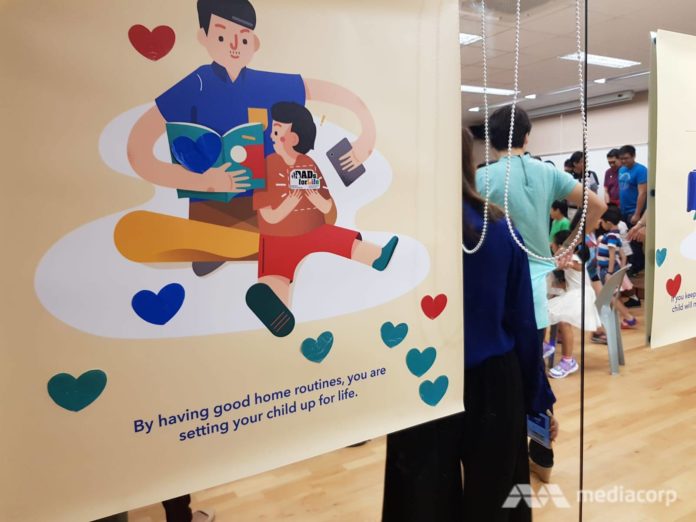
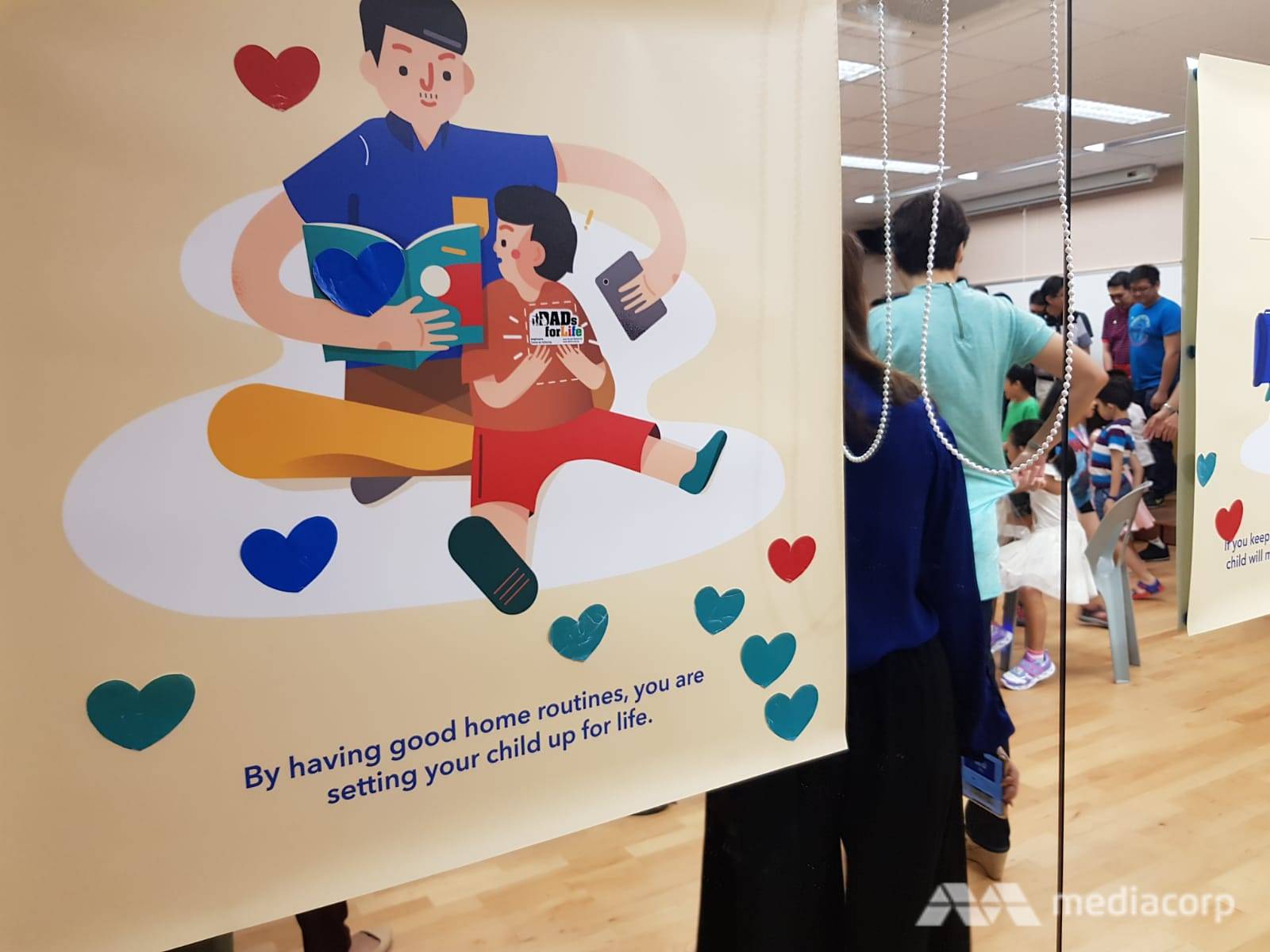
The guidelines include having a good home routine and a conducive environment for learning. (Photo: Deborah Wong)

Senior Parliamentary Secretary for Education, Associate Professor Muhammad Faishal Ibrahim announced the guidelines at Yu Neng Primary School during a parent engagement event.

“There are things beyond academic grades. There are self-management skills, taking ownership, responsibility. Things are changing so fast, you need to be nimble, flexible and you need to have that resilience to reap the opportunities that are there, as well as face challenges,” he said.

Mdm Zuraida Akbar, who has been an educator for about 16 years, welcomed the guidelines. She shared that there are parents who would be too reliant on teachers for updates and information.

To get pupils to play an active role in communication, Mdm Zuraida said she makes sure to leave clear instructions on the board so that the students have sufficient time to pen them down for their parents.

“For parents, it’s also about not letting go, wanting to know whether the child is telling the truth. But we interact with the parents on a regular basis and [also bring them back] to the fact that we want the best for their children, and at the same time, we want them to take responsibility for their learning,” she said.

MOE releases guidelines for school-home partnership Brandon Ng

Brandon Ng, who is a father of two, said allowing children to forget things was essential to character development. (Photo: Deborah Wong)

One of the guidelines also encouraged parents to let their children forget things.

Brandon Ng, who is a father of two, told Channel NewsAsia that despite its simplicity, this point was essential to character development.

“Last year, my daughter forgot to bring one of her books to school. I discussed with my wife to find out what we should do. Should we bring it to the general office for her? But after discussion, we decided to let her face the consequences and learn from the incident. 

“I think it’s okay for them to make mistakes in a safe environment. I rather she does it now than later, where she cannot handle problems on her own,” he said.

Source link

Razer Game Store to cease operations

0

SINGAPORE: Gaming peripherals maker Razer announced on Saturday (Feb 16) that it will cease operations of its digital game distribution platform, the Razer Games Store, by the end of February.

In a news release, its team said: “We regret to announce that Razer Games Store will cease operations on Feb 28, 2019 at 1700hrs UTC+8 as part of the company’s realignment plans.”

It added that it will be “investing in other ways to deliver great content and introduce game promotions through Razer Gold”, referring to its virtual credits system.

Razer Game Store closure

READ: For Razer, entry into China and Malaysia markets could be game on

Regarding the game purchases already made by customers, Razer explained in an FAQ in its press release that they will still work even after closure.

“We will be sending you an email with an archive of all your game purchases where you’ll be able to activate them on Steam or UPlay at your own convenience,” the company added.

The company added that it will still fulfill customers’ pre-orders and that they can still use Razer Gold to continue to buy games online.

Razer said that it “will request” for the deletion of customers’ data by any partners that are no longer working with Razer Game Store.

Less than a year ago, Razer announced its Southeast Asia launch starting with Singapore through online retail store Lazada’s e-commerce platform.

Razer said it chose to partner Lazada instead of launching its game store directly for the Southeast Asia market due in part to the diversity of consumer behaviour in the various individual markets.

Source link

Hyflux CEO Olivia Lum, board offer to give up company stake to other shareholders

0

SINGAPORE: The executive chairman of embattled water treatment company Hyflux and its board members are set to distribute their entire stake of shares and securities in the company to all other shareholders.

In a news release on Saturday (Feb 16), the company said Ms Olivia Lum and its board of directors “intend to contribute their stakes in Hyflux, and all their entitlements as holders of preference shares (PNP) and perpetual capital securities” under the proposed restructuring plan, to be distributed to all other holders.

According to the release, Ms Lum’s entire stake is worth 267 million Hyflux shares and securities. Based on Hyflux’s latest annual report, this represents 34.05 per cent of the company’s ordinary shares as at Mar 14, 2018.

The announcement follows the release of an 18-page reply by Ms Lum to Securities Investors’ Association (Singapore) (SIAS), which on Monday had raised more than 40 questions about, among others, the “large remuneration” she enjoyed amid the company’s financial troubles.

Olivia Lum Hyflux

Hyflux CEO Olivia Lum. (File photo: AFP/Tengku Bahar)

In the latest news release, Ms Lum said she started Hyflux some 30 years ago and that the current situation was “not something I ever envisioned nor is it something I ever wanted”. 

READ: ‘Independent’ investor-only meeting being planned by SIAS for Hyflux’s retail investors

READ: Hyflux extends deadline for stakeholders to file proofs of claims

“We feel for all our stakeholders, and we are deeply aware of and empathise with your unhappiness. We have tried extremely hard to find ways to improve the terms of the Restructuring Plan for the PNP. I have volunteered to give up receiving any management shares in the Company. 

“I have also undertaken that if this Restructuring Plan is approved, all of the interests of mine and the other Board members in Hyflux will be given solely to this group. In this way, it is my hope that they may reap the future benefits which the Salim-Medco consortium deal can offer them,” Ms Lum said.

Lead independent director, Mr Teo Kiang Kok said: “The entire Board is saddened by Hyflux’s current state of affairs. We share the pain of the holders of preference shares and perpetual securities, and we stand together with Olivia and join her in contributing our stakes in Hyflux to the PNP. 

“We have always appreciated Olivia’s leadership and thank her for offering to give up her entire founding stake in the Company to the PNP.”

Source link

Caregivers, professionals welcome additional support for those looking after their loved ones

0

SINGAPORE: Getting a night of uninterrupted sleep is a luxury for Ms Janet Koh Hui Kheng, who takes care of her 85-year-old bedridden mother full-time.

“Ah Mui”, her mother Madam Ng Sook Cheng would call her affectionately, and Ms Koh would be at the older woman’s bedside in a flash, ready to tend to her at all hours of the day – and night. 

Whenever Madam Ng cries for her own mother in the middle of the night, Ms Koh would get up and stroke her hair patiently in order to comfort her.

Madam Ng’s behaviour is not atypical, as she has dementia. She is also paralysed on the right side of her body, and is dependent on Ms Koh for her daily activities. 

Ms Koh, 63, has been taking care of her mother for the past eight years since Madam Ng suffered her first stroke in 2010.

Her mother had requested that Ms Koh take care of her, as she did not want to be looked after by a helper or be put in a nursing home. Upon her request, Ms Koh quit her job as a secretary.

 In 2014, Madam Ng was diagnosed with dementia, and three years later, she suffered a second stroke that left her partially paralysed. 

RELIEF THROUGH RESPITE CARE OPTIONS

While Ms Koh’s cheerful and energetic demeanour belie the heavy responsibilities she carries, she yearns for a good night’s sleep. So it is with excitement that Ms Koh read about a suite of additional support the Government will be providing caregivers.

Under the Caregiver Action Support Plan announced in Parliament recently by the Ministry of Health, there will be more caregiver respite options. 

The Agency for Integrated Care (AIC) will pilot a new night respite service with selected nursing home providers from the second half of 2019.

“Sometimes once I get to sleep only, I have to get up again. I do not know how I’ve managed to survive all these years. I need this,” she said, in anticipation of respite during the night. 

While sleeping through the night gives her something to look forward to, what will help her most is the S$200 Home Caregiving Grant, she said. 

The grant will be introduced at the end of this year, replacing the Foreign Domestic Worker (FDW) grant. Unlike its predecessor, it can be used flexibly. As she does not have a maid and was not able to tap on the FDW grant, Ms Koh is glad for the extra money. 

EXTRA MONEY WILL HELP EASE FINANCIAL BURDEN

Ms Koh, who has wiped out her personal savings, said the grant will come in handy as she is surviving on money from her siblings and Government handouts. 

“That is very useful, helps to release and reduce the stress. Finance issues are always hovering over my head,” she said at her home in Toa Payoh. 

She currently gets by on about S$650 per month. 

The extra money from the grant is likely to go towards groceries or adult diapers, she said, but it can also be used to engage staff from professional caregiving companies. 

Such companies are able to provide trained nurses, or if medical know-how is not needed, companions and individuals to escort care recipients from one place to another.

PLANS GIVE FAMILIES OPTIONS, INCREASE AWARENESS

Those from the professional caregiving industry welcomed the action plan as well. 

Founder of Active Global Caregivers Yorelle Kalika said the amount would provide “significant help” to families who are already receiving subsidised services.

Giving an example of her firm’s home personal care services, she said clients eligible for 80 per cent subsidies typically pay about S$155 for 48 hours of home care per month.

Ms Kalika also said that by giving families the choice to allocate the grant based on their individual needs, it will encourage families to get care sooner in the patient’s journey. 

READ: Government looking at grants for caregivers to the elderly to boost support for community care

“For instance, patients and families would be able to start with day-care services when the care needs are still low to medium,” she said. 

CEO of Caregiver Asia Yeo Wan Ling similarly lauded the flexibility of the grant.

“It puts the decisions back in family’s hands,” she said, explaining that the FDW grant was narrowly focused. 

CEO of Homage Gillian Tee also said that she believes the grant will help catalyse the exploration and consideration of the different types of long-term care services required, including respite care, so primary caregivers can take some time out for self-care.

“I personally am excited at the impact of that, where we can help caregivers prevent burn out and better sustain themselves as they support their loved ones,” she said. 

Ms Koh hoisting her mother onto the bed with a machine

Ms Koh hoisting her mother onto the bed with a machine. (Photo: Jalelah Abu Baker)

Ms Yeo said that the Government’s focus has helped to get people to talk and learn more about ageing. 

“All along, there has not been a lot discourse about two things, home care and respite care. Even though everybody is talking about aged care, not many know alternatives. There’s also a lack of awareness on respite care,” she said. 

Ms Kalika said that there is still some way to go in helping family members understand that it is perfectly fine to engage professional help without feeling guilty.

While Ms Koh said she was initially resentful that she had to quit her job to take care of her mother, she is also grateful to be given that opportunity to spend time with her.

Little things keep her going, like when her mother smiles. Ms Koh said she was especially touched when her mother – who was very critically ill after her second stroke in 2017 – thanked her for her help.

“Dementia can rub off your loved one’s memory, but your love resides in their heart and soul. Cherish the moments you can connect,” she said. 

Source link